Tazkirat al-Awliya / Memorial of the Saints · Companion Guide
圣徒纪
七十二道门,围坐夜谈;最后一个字落地时,那根绷紧的弦断了。
Opening
A woman pushes heaven and hell aside and walks into the desert alone. This is not the opening of a legend — it is Rabia of Basra, a Sufi saint born a poor shepherd girl, the first light Attar sets down in the Memorial of the Saints. She wanted no reward in paradise and flinched at no fire in hell. She wanted God himself, and that single gesture sets the axis for the whole book.
Another man is executed on a scaffold in Baghdad. He says one line before he dies: I am the Truth. It makes the whole book detonate on its last page. In the Sufi tradition his name is Mansur al-Hallaj, and Attar puts him at the very end of the Memorial of the Saints. That placement is not incidental — it is a string pulled taut across seventy-two chapters, snapped in one stroke.
What kind of book this is
Attar wrote the Memorial of the Saints in Nishapur, the great Persian city, in the early thirteenth century. It is his surviving work of prose and one of the source texts you cannot get around in Sufi hagiography. The Persian poet and mystic is best known for The Conference of the Birds, but this book is his prose — he strings together the lives, sayings, anecdotes, and spiritual experiences of dozens of saints into one collection, ordered by the date each saint died, opening with Ja'far al-Sadiq and closing with al-Hallaj.
Later readers of Sufi literature, of Rabia scholarship, of the history of Islamic mysticism, almost all end up back at this book. It is not a novel with a continuous plot. It reads more like a carefully arranged oral archive — the teachings, sayings, and dialogues passed from master to disciple in the Sufi tradition, put to paper on this scale for the first time by Attar's own hand.
People and world
The people in this book are not a procession, they are a mountain range. Seventy-two chapters, dozens of names, most given no more than a few pages, but stacked together they mark out the different altitudes of the Sufi path. Ja'far al-Sadiq opens it, an Imam and jurist who gives the book a foundation of orthodoxy. Rabia and Bayazid each hold a chapter in the middle, pushing divine love and mystical experience toward different extremes. And al-Hallaj closes it out, forcing the relationship between the self and God to the point of rupture.
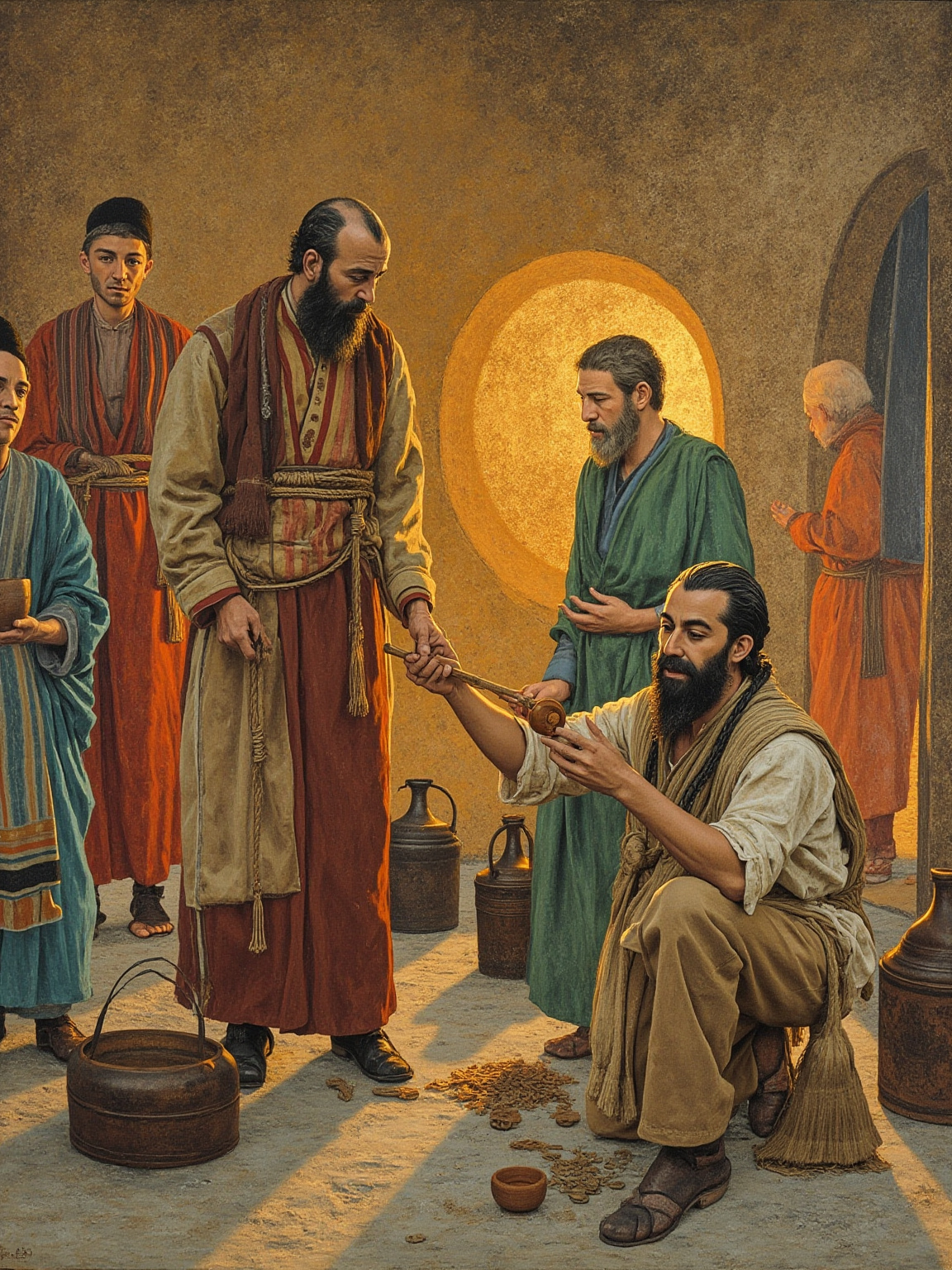
He set down the tales of these saints like a man laying stones for a path—each one small, each one necessary, none of them decoration.
他写下这些圣徒的故事,像一个人在铺路——每一块都小,每一块都不可少,没有一块是装饰。
金句 · 群像章 · 围坐夜谈
Nishapur, where Attar lived, was a major center of learning on the Khorasan silk routes. Sufi orders had already been active there for centuries, elders passing teaching down by word of mouth, disciples sitting in a circle to listen. Attar's writing probably grew straight out of those night-long sessions of storytelling. So the book doesn't read like scholarship. It reads like a man sitting by candlelight, retelling you, one by one, the stories he has heard his whole life.
How it unfolds
The book opens with Ja'far al-Sadiq, a descendant of the Prophet, an Imam, regarded in the Sufi tradition as one of the sources of its inner teaching. Attar puts him first to set a steady baseline: every anecdote, miracle, and cryptic saying that follows continues down this same line of transmission. The first chapter is telling you something before you've even noticed — the book in your hands isn't a grab bag of folklore. It has a pedigree.
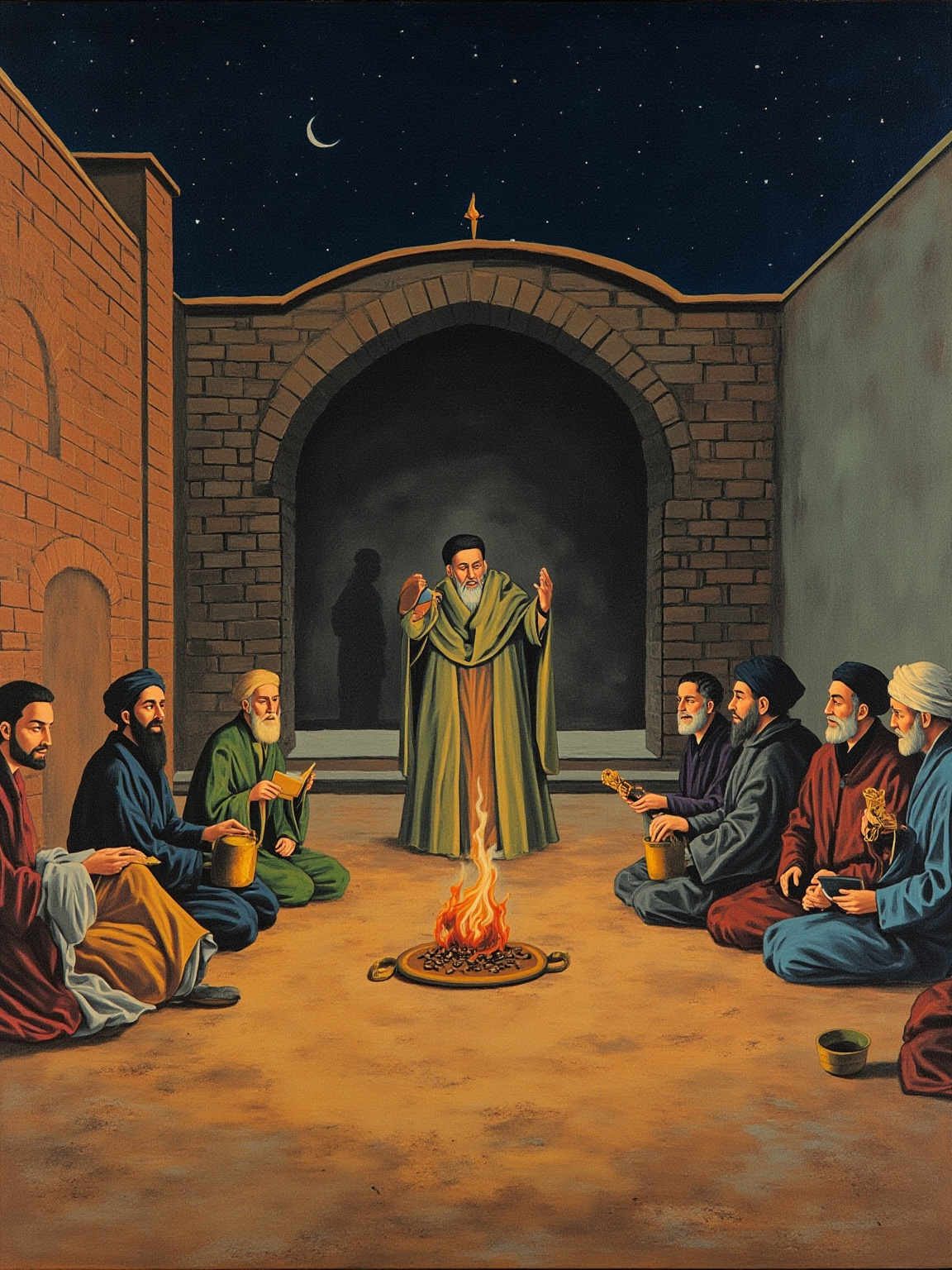
The Imam opened the lineage; the book opened with him, so that every wonder that followed could hang on that single thread.
伊玛目开了传承的头,这本书便从他开篇——此后所有的异迹奇事,都挂在这一根线上。
金句 · 序章 · 传承的线
Then comes Rabia of Basra. She started out herding sheep, never married, and gave her whole life to loving God. Attar records her most famous moment: praying with paradise on her right and hell on her left, she turns her back on both, because all she wants is to see God, not the reward, not fear of the punishment. In a few short lines, the central posture of Sufi divine love is nailed down: love is not a transaction.
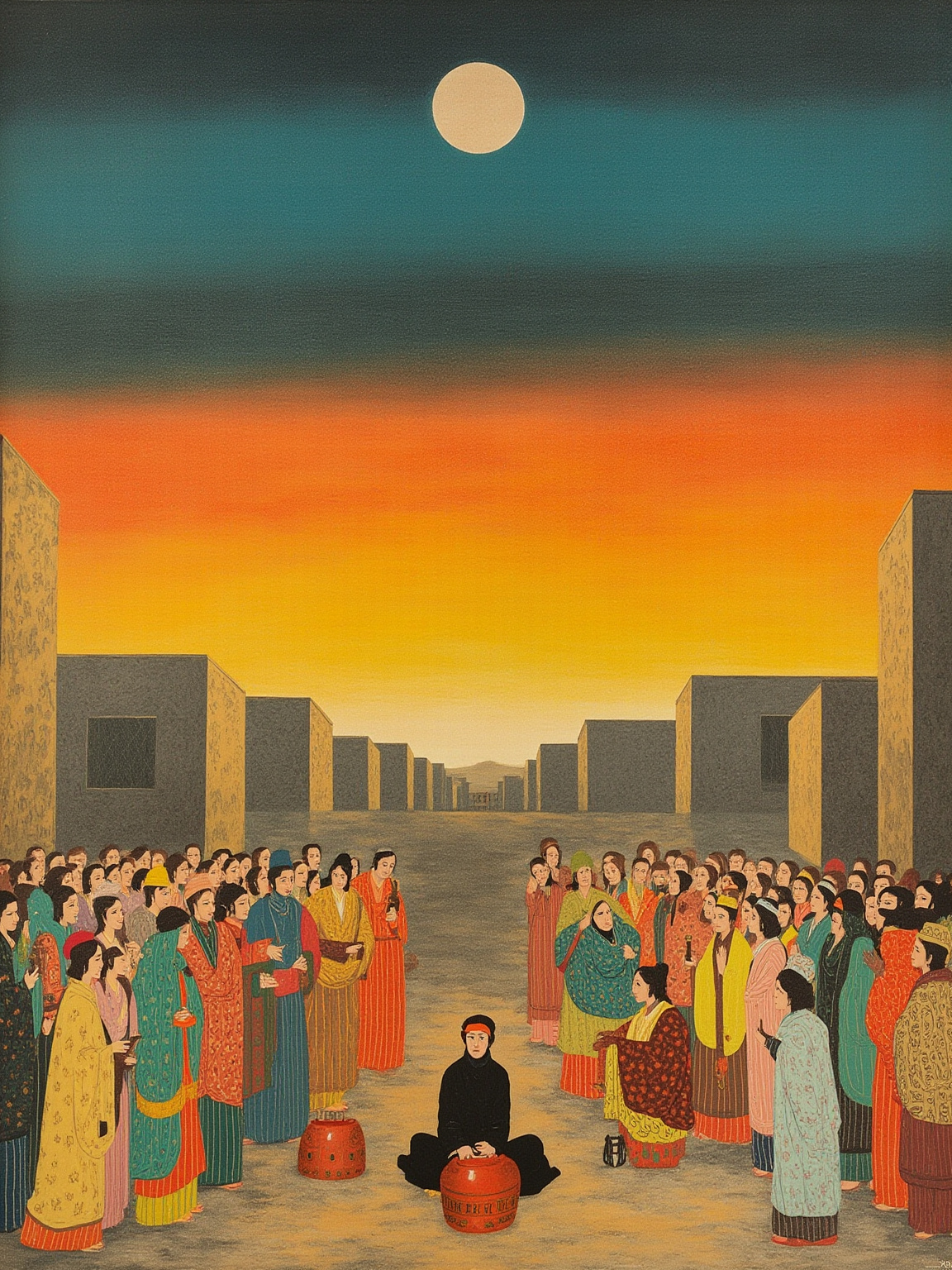
She turned her back on paradise with its rewards and on hell with its fire; she wanted only to see God.
她转身背对有奖赏的天堂,也转身背对有火的地狱;她只想见神。
金句 · 拉比雅章 · 神爱无求
Bayazid Bastami is a different type. In his early years he was a stubborn seeker, and the stories say he practiced long austerities in the city of Bistam, passing again and again through mystical states. The line of his that stops readers cold is: I have died out of myself, and I live forever in the one who loves me. Attar isn't cataloguing his miracles here, he's writing how a man wears himself down to nothing over a lifetime of seeking. The phrase self-annihilation gets a face for the first time in this chapter.
The middle stretch is a run of short chapters on dozens of saints. Some get a single saying, some get a small incident — an elder knocks the bread out of a disciple's hand because his mind has wandered; a saint refuses to let his disciples wait on him and goes out to chop his own firewood; an ascetic is mocked while drawing water at a well and only smiles. Piled together, these small stories give Sufi ethics its texture: humility isn't a doctrine, it's the daily act of handing your bread to someone else.
As the book nears its close, the pressure starts to rise. By putting al-Hallaj in the final chapter, Attar holds back the sharpest question in Sufi mystical experience, where exactly does the self end and God begin, until the very last page.
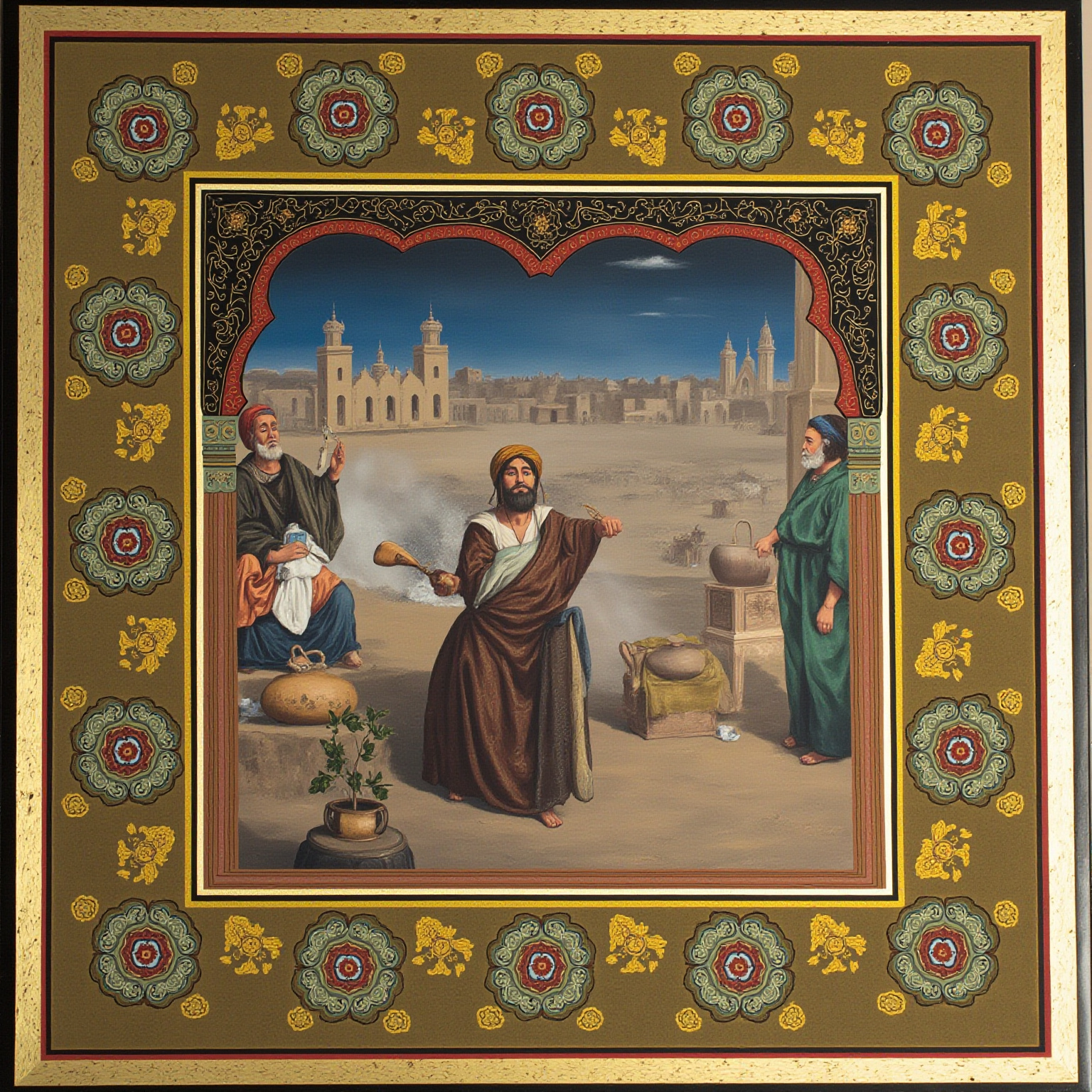
Ana al-Haqq—I am the Truth. They called it heresy; the mystics heard the place where the self burns away.
我即真理——他们听成异端,苏菲人听见了那个自我被烧尽的地方。
金句 · 哈拉智章 · 自我消融的极限
What al-Hallaj said, I am the Truth, is not arrogance in the Sufi context. It is what a man says once mystical experience has dissolved the boundary of his own self: he meant that the one speaking through the word I was God. The religious authorities and official theology of his day heard it differently. They called it heresy and put him to death. Attar doesn't write this into the book to render a verdict. He writes it so the reader has to face the tension directly: a man who loved God to the point of dissolving into him — does he deserve praise, or punishment?
After al-Hallaj, the book simply stops. Attar offers no reconciling coda, no conclusion. He lets that taut string snap on the last word and leaves it there — either you accept the tension, or you put the book down and go think it through yourself. Either way, you won't forget it.
The Memorial of the Saints isn't a book, it's a river — you drift down it, and at the end al-Hallaj's line hits you like a current.
Themes and craft
What this book is really about is the two poles of divine love and self-annihilation. Rabia stands for love in its purest form, she asks for nothing back. Bayazid stands for gradual dissolution, wearing away the self bit by bit over a lifetime of seeking. Al-Hallaj stands for what happens when that line is pushed as far as it will go. Attar never sets these three postures against each other. He places them at different points in the book and lets the reader see for themselves that they are three markers on the same road.
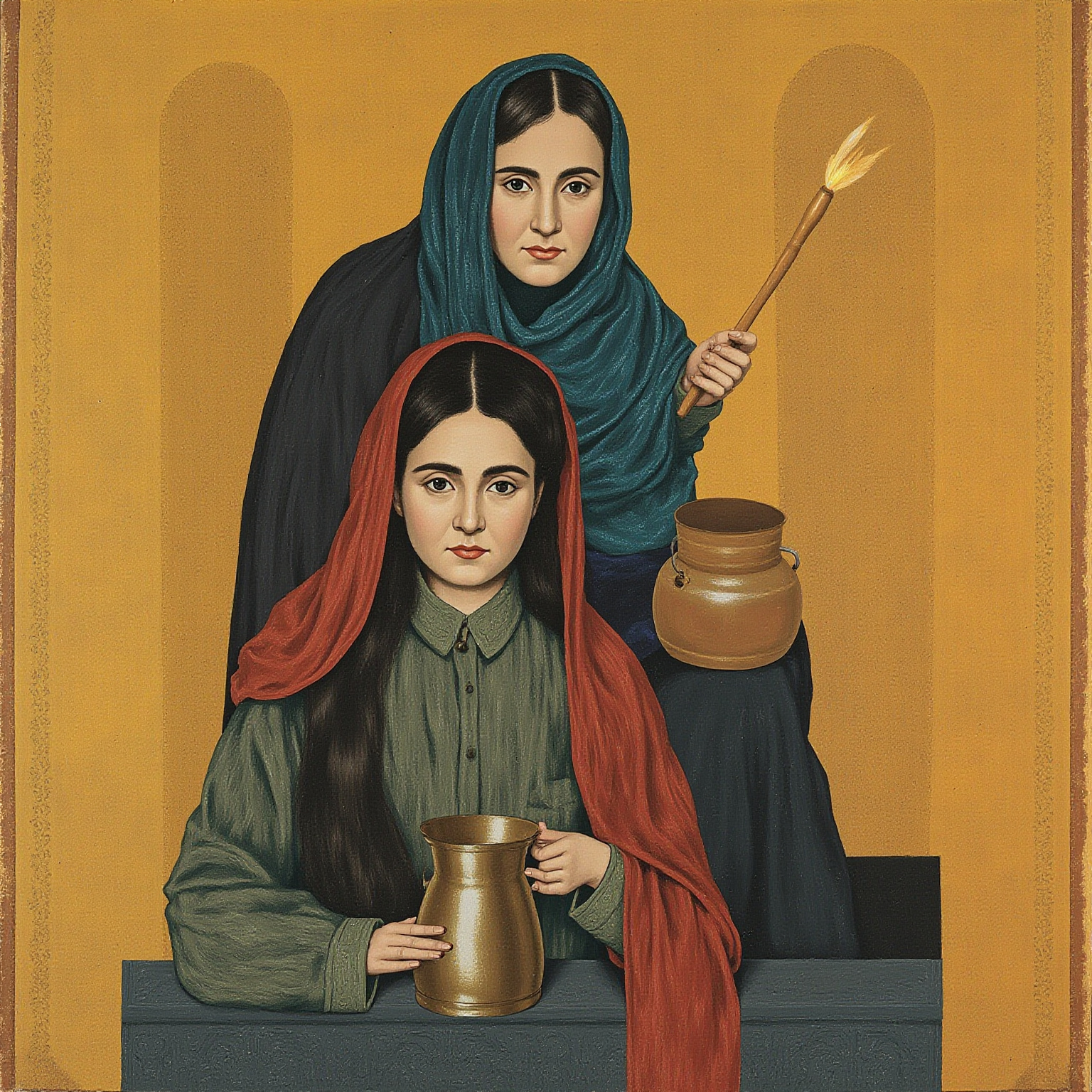
God's love does not bargain; annihilation does not announce itself. One walks toward God until no walker remains.
神爱不计较,消融也不宣告——一个人朝神走去,直到走的那个人不复存在。
金句 · 中段章 · 神爱与消融
Sufi ethics, humility, patience, restraint, tolerance, get hammered home again and again in those short middle chapters. Attar doesn't preach them. He shows them in a single action: a man knocks the bread from a distracted disciple's hand, another refuses to be waited on by his own students. One action does the work of ten adjectives. That's Attar's craft as a storyteller.
There's another contribution easy to overlook: this is a book that puts an oral tradition into writing. Before Attar, Sufi teaching mostly passed from master to disciple by word of mouth. By writing it down, he left later generations a readable archive of that transmission. When you later read Rumi, read Shams, many of the story prototypes you find there trace straight back to this book.
Why read the text itself
A guide can give you the map, but the text gives you the rhythm of listening to a story by candlelight. Attar's touch is short, dense, skips like a stone across water — read the passage where Rabia turns her back on paradise and you'll stop short; read Bayazid's line, I have died out of myself, and you'll want to go back and read the page before it again; and by the time you reach al-Hallaj, the aftershock the whole book leaves behind outlasts any summary. No guide can give you that. Only the text can.
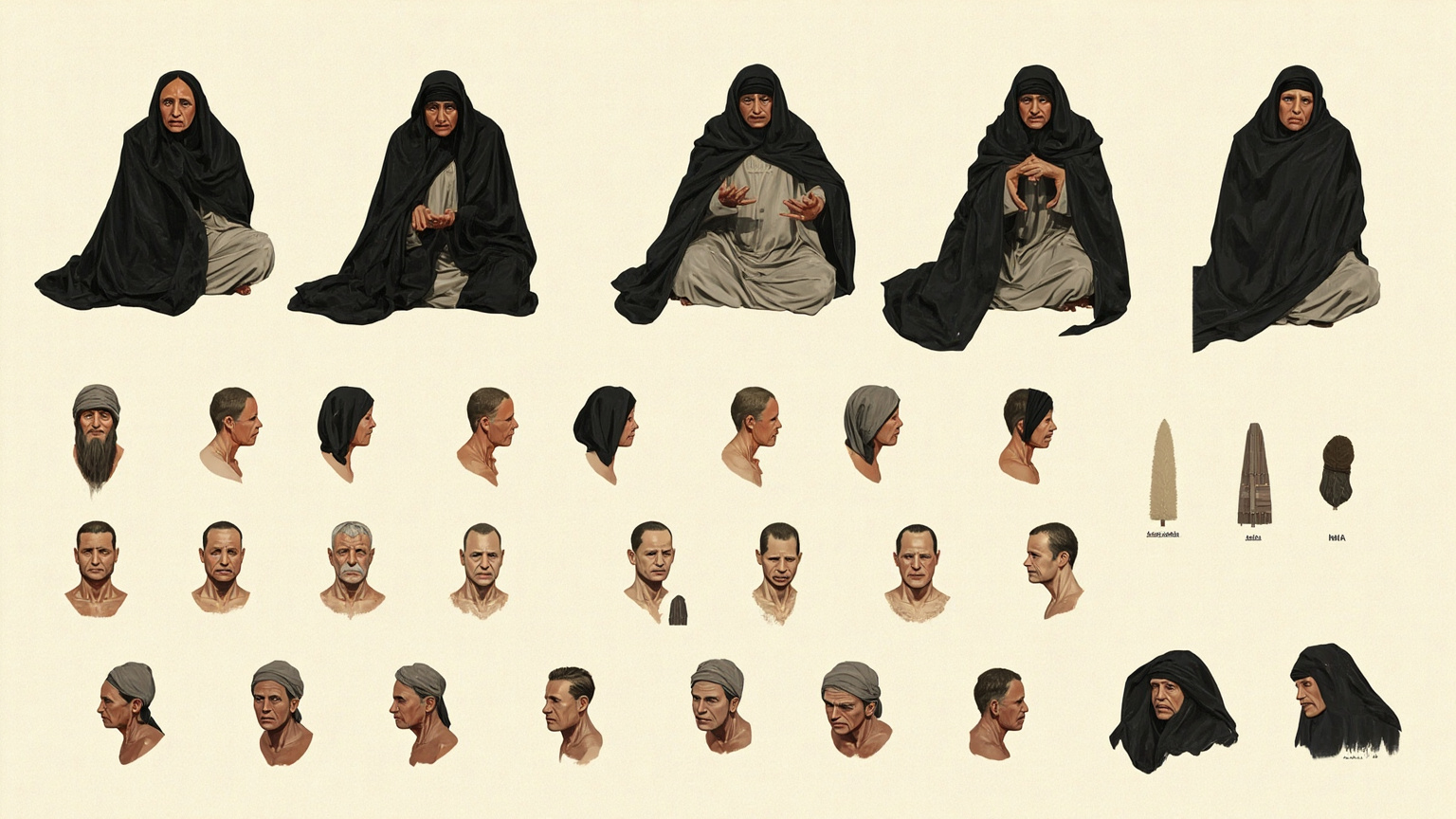
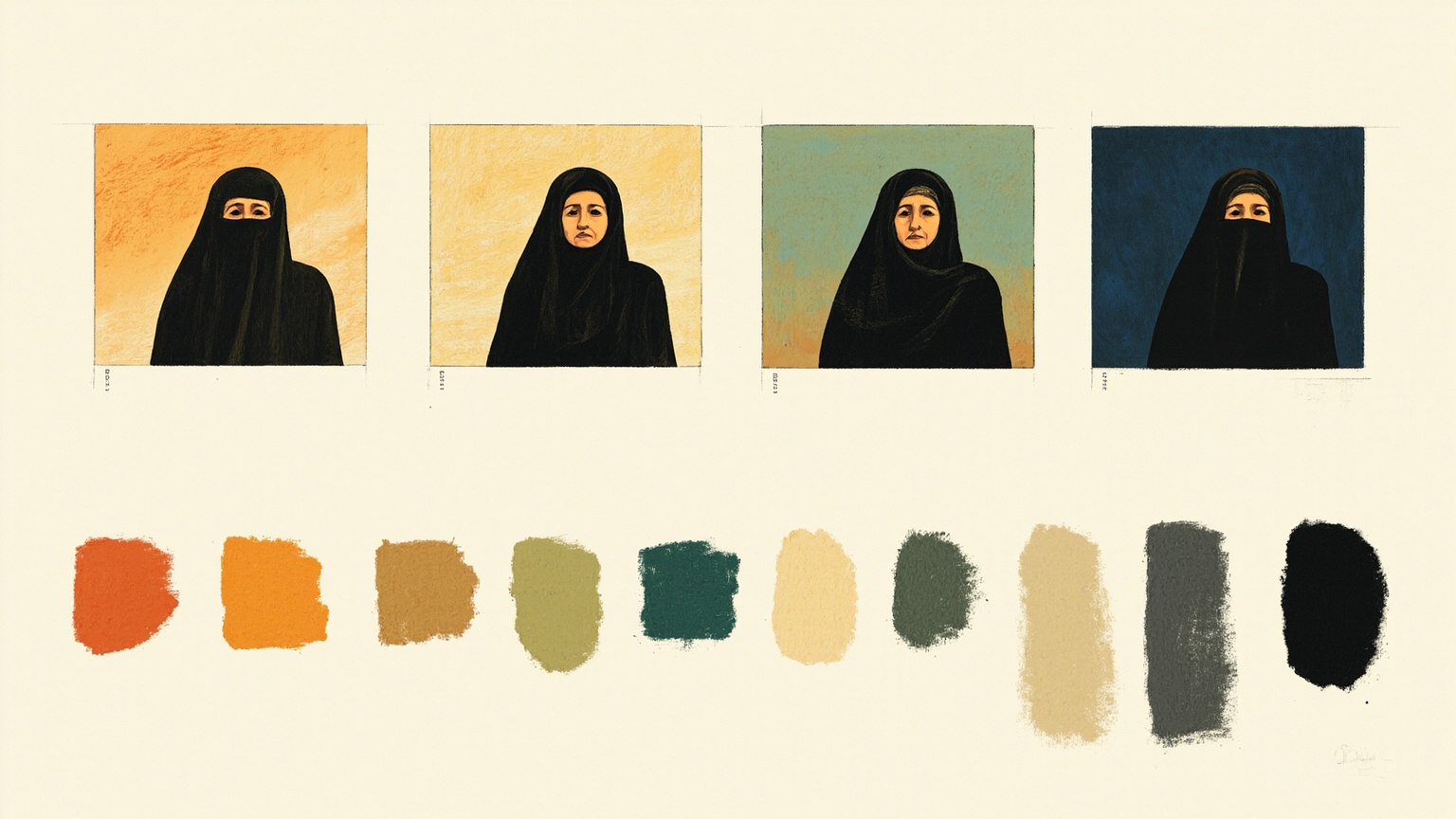
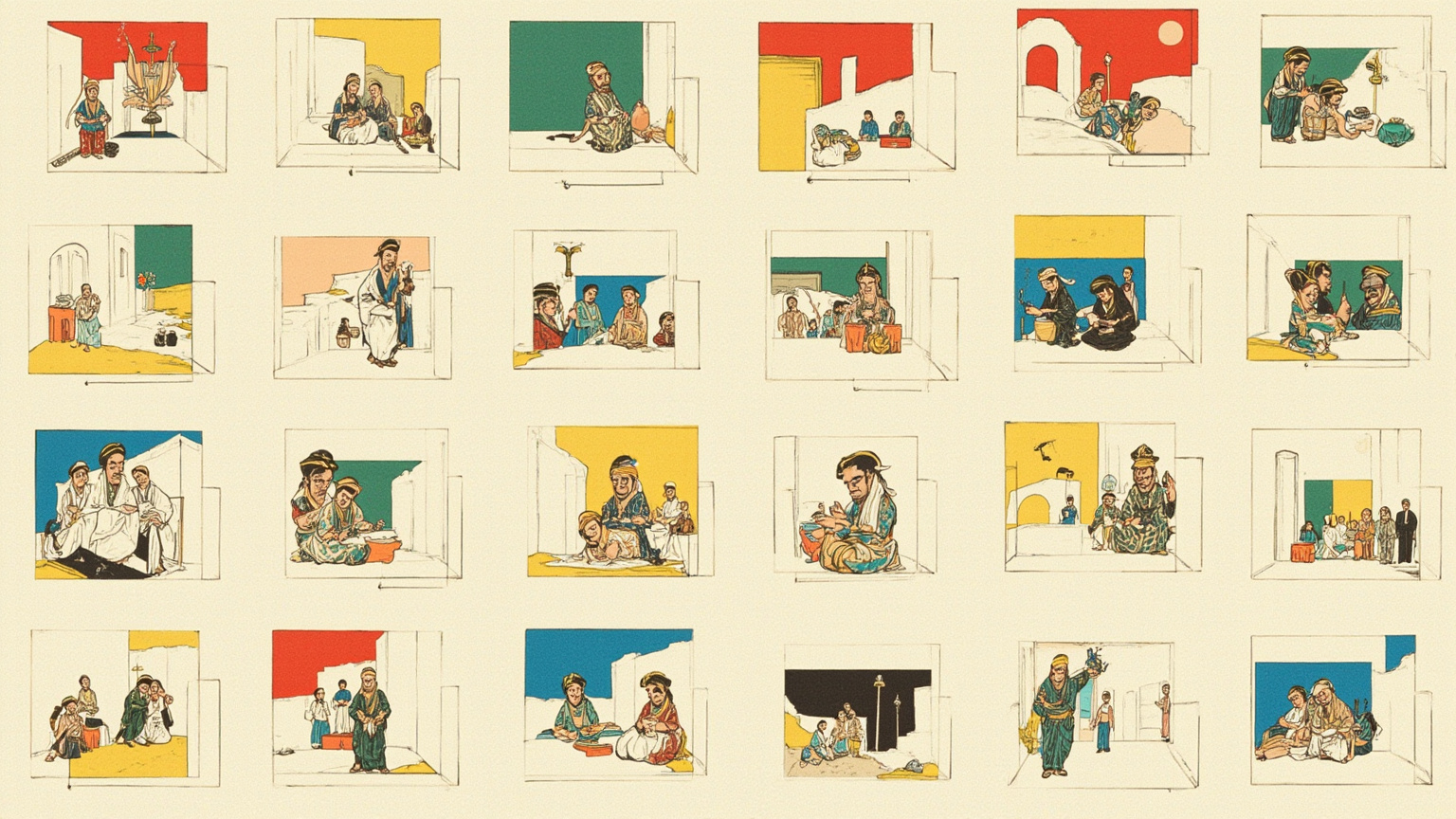
Art Direction4 plates
Before the guide was written, this book got a visual foundation — every illustration you just read grew out of it.