Mhudi (full title: Mhudi: An Epic of the Native Life a Hundred Years Ago) · Companion Guide
姆胡迪
村落在她身后烧成灰烬,彗星划过高原的夜空,两个从火里走出来的年轻人,要在金色长草间重新学会活下去。
I. The Night the Village Burned
The night wind scatters the ash in every direction, and Mhudi crawls out from under a trampled fence. Behind her the whole Barolong village still smokes; farther off, the hoofbeats of the Matabele army fade into the acacia trees. She doesn't know whether her lover Ra-Thaga is still alive — most likely he isn't. All she can do is run.
That is the opening of Mhudi, Sol Plaatje's novel published in 1930. He turns the clock back to the 1830s, to a southern African highveld where the golden grass had not yet been ploughed: Mzilikazi's armies sweeping through village after village, Boer wagon trains beginning to press up from the south. Two young people walk out of the ash, and only then does the story really begin.
II. The First African Novel Written in English
Put this slim book back where it belongs in literary history and it marks a watershed: the first novel in English by a Black South African writer, as far as anyone can establish. It was later reissued in the Heinemann African Writers Series, alongside Achebe and Ngũgĩ — Mhudi is the earliest title on that list. Which means that at the starting line of modern African literature in English stands a young Tswana man. Plaatje's own life had enough roles in it for a separate essay: journalist, lexicographer, translator of Shakespeare into Tswana, founding secretary of the South African Native National Congress. It is Mhudi alone, though, that has kept him remembered as a novelist.
He himself called it a historical romance. Don't let the term fool you into thinking it's just a flight and a love story. The book packs the wars between African peoples in the 1830s, Boer land-taking, and the collective shock of a comet crossing the night sky, all into one young couple's separation and homecoming. Which is why it reads like a parable — the kind with a pulse.
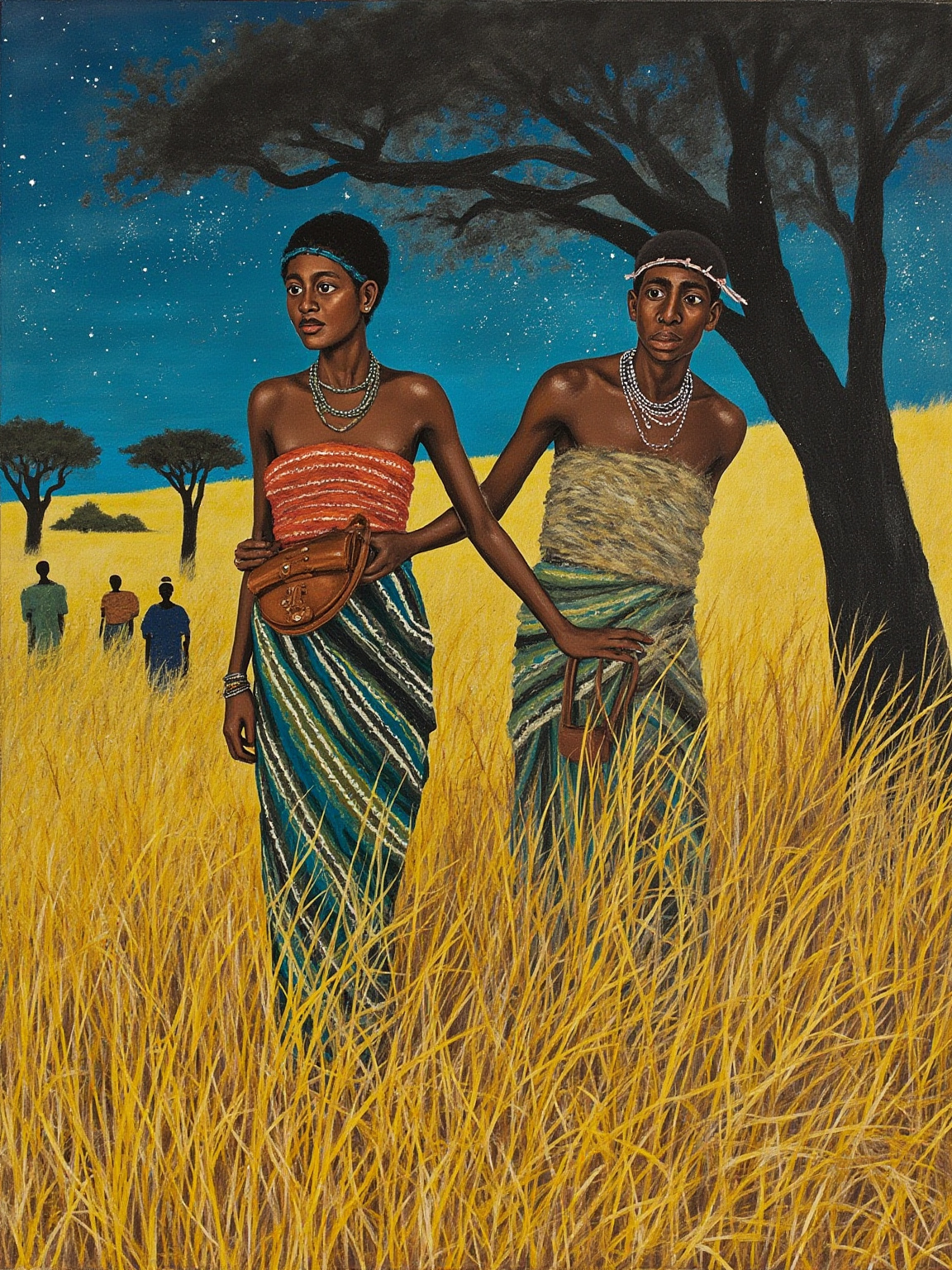
Mhudi crept out from beneath a piece of the broken fence, and without looking behind her she ran and ran, until the village of her birth was a smouldering heap in the distance.
姆胡迪从一段塌陷的篱笆底下钻出来,头也不回地跑,一直跑到生她养她的村落在她身后缩成一堆冒烟的灰烬。
金句 · 开篇 · 村毁之夜
III. Two People, One Throughline
There are only two leads. Ra-Thaga, whom the village calls "the bird man" for his sharp eyes, his speed, his long sight; and Mhudi, whom they call "the reaper." That the book carries her name is no accident. Plaatje hands the title deliberately to a woman: the judgment in this story belongs to her, and so does the decision of where to run — she is not a girl waiting to be saved. Later critics have read her as one of the most durable coming-of-age figures in African fiction, though the figure that first shows up isn't fist-raised and declaiming. She arrives coughing ash, crawling out from under a fallen fence, and deciding, on the spot, where to go.
Their relationship is the book's emotional throughline: each of them escaping alone on the night the village burns, finding each other again in the wilderness of exile, and finally the novel's closing section, headed in plain English "Reunion and the Comfort of Homecoming" — the distance war and strangers have torn open, and the two of them walking it back closed.
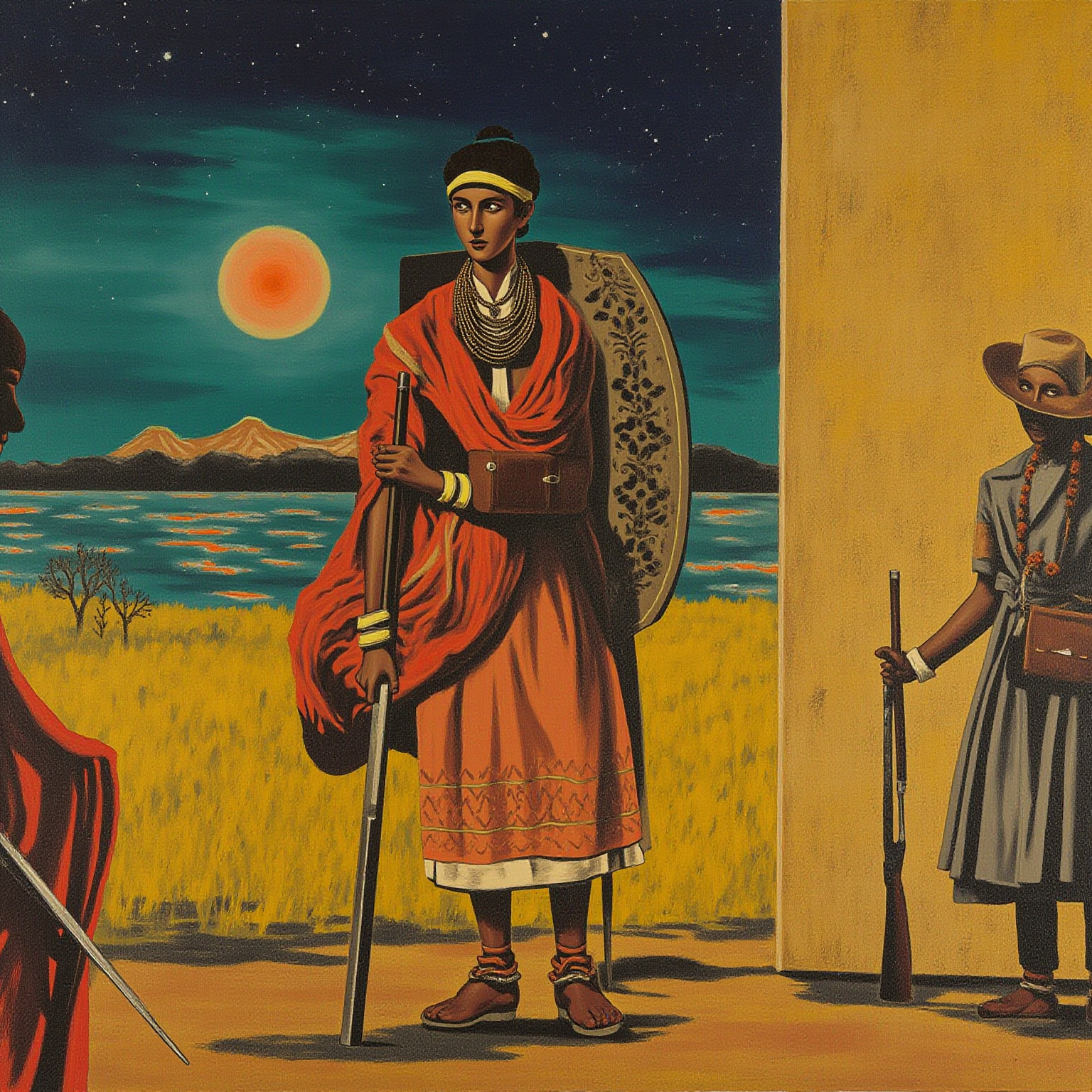
Ra-Thaga had been named by his people the "Bird-man," because his eyes were bright, and he could see far across the yellow grass.
族人替他取名叫「鸟人」,因为他的眼睛亮,他能望穿那片黄色的草。
金句 · 第二章 · 鸟人之名
IV. How the Plot Moves
After the village is destroyed, each believes the other dead. Ra-Thaga runs one way; Mhudi runs another. Plaatje doesn't render the flight as a sequence of events — he renders the grassland itself: the cracked riverbed of the dry season, firelight flickering at night, acacia shadows thrown across the ground. The two of them search for each other through the golden grass, and finally recognize one another through a song that each can complete for the other. This move is worth pausing on: the call-and-response of the Bantu storyteller's oral tradition has just grown, formally, into the skeleton of an English novel.
Before they can catch their breath, the second big scene arrives: the wagon train. Ox-wagons of the Boer Great Trek's vanguard cross the highveld line after line, throwing up white dust that fills the sky. Ra-Thaga and Mhudi see a rifle for the first time — a metal and a sound they've never encountered. The scene is more than a set-piece encounter between cultures; it is the whole 1830s landscape made visible in the act of being measured by a different power.
At the opening of chapter seven, Halley's Comet crosses the night sky. This is not decoration. Plaatje uses the visitor from the heavens to make every African character in the book stop, together, for the first time, and reconsider a single question: what is fate, exactly? Why does the ground also burn in the year the comet appears? The comet chapter is short, but it lifts the unrest that has been building over the previous two chapters straight up to the metaphysical — from here on, the two young people see themselves, and the newly arrived European faces, differently.
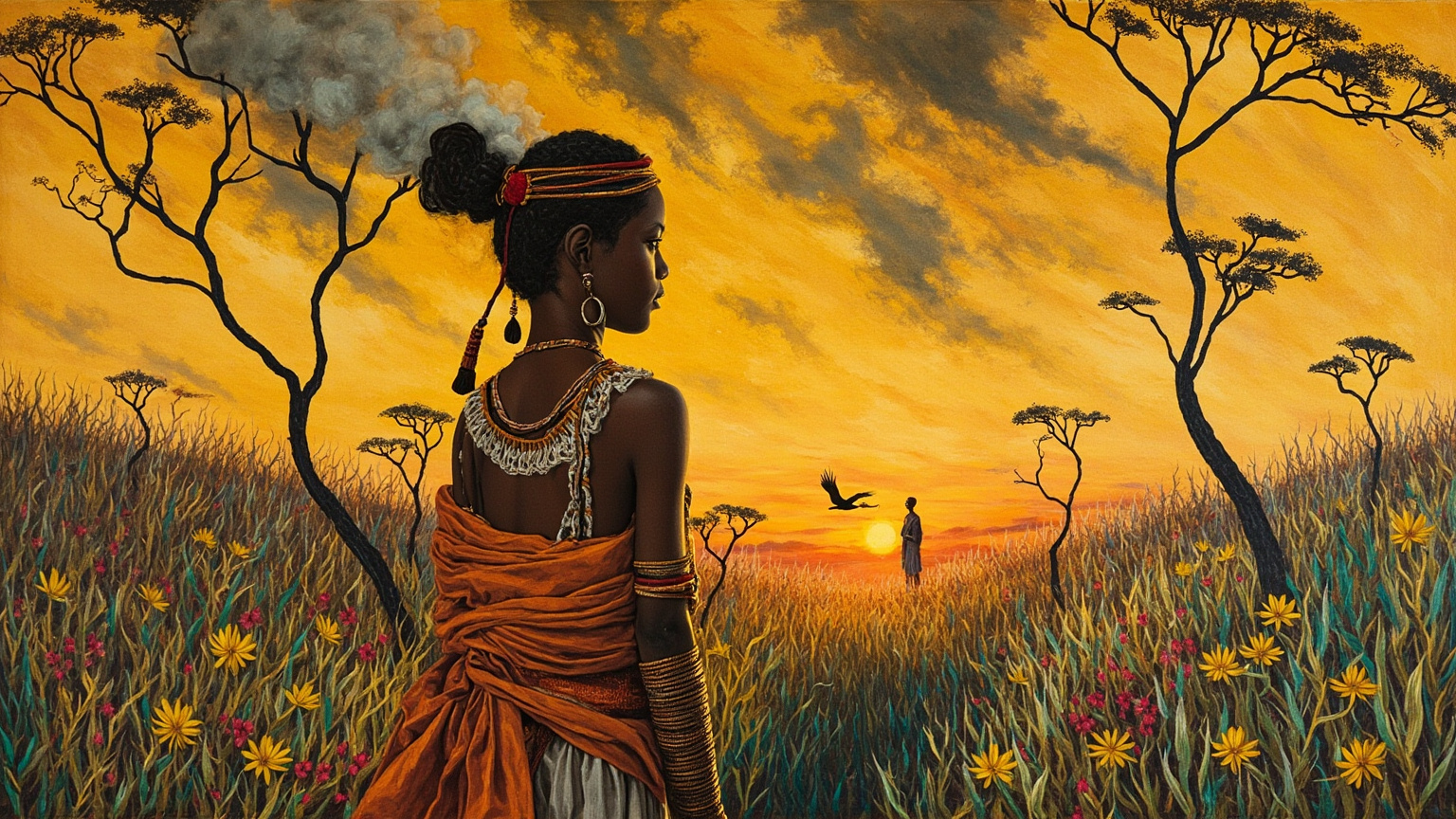
The appearance of the comet inspired no one with any feeling of pleasure; it was regarded as an omen of war, of pestilence, or of famine.
彗星出现,没让任何人感到一丝欢喜——它被看作战、疫、饥的预兆。
金句 · 第八章 · 彗星之夜
The real test comes in the fighting. The Matabele war, and the aftershocks of Moroka's Point, roll toward them one after another. This section carries a striking English subheading — Mhudi's Desperate Gamble. On the most critical night, she makes a decision no one saw coming, and pulls both their lives back from the blade's edge. I stopped short the first time I read this section too. Plaatje puts a woman in charge of the decision in the middle of a war, and what she does on the page reads as composure, not heroics. That composure is the most valuable thing in the whole book.
After the fighting comes another test: how to position yourself toward strangers. Fleeing for their lives, Ra-Thaga and Mhudi form a fragile, hardly equal alliance with the Boer trekkers. Plaatje doesn't paint the Boers as monsters, and he doesn't paint the Barolong as innocent symbols either — what he writes is two groups, each with its own fears and its own needs, agreeing on a particular night not to kill each other, for now. That "for now" carries the book's largest political allegory: alliance between one people and another, between a people and newcomers, is possible, but only possible.
They were neither friends nor foes; they feared each other and traded with each other, and both sides dreaded the day when the truce would end.
他们既非友亦非敌;彼此恐惧,彼此交换,而双方都在心里等着那休战会走到尽头的一天。
金句 · 跨族一章 · 脆弱盟约
The novel's final section carries an almost flat English subheading — Reunion and the Comfort of Homecoming: coming home, coming together, settling. The young people who walked out of the ash walk back into the same land, but not on the same feet they left on. This is not a fairy-tale ending. Plaatje doesn't pretend nothing happened on that highveld a century ago; he simply lets the ending rest on the fact of having somewhere to go home to. What shape does home take? That is the question this book spends three hundred pages actually answering.
V. How Oral Tradition Grew Into the English Novel
The best thing about this book isn't the plot, it's the voice. Plaatje himself said he wanted to write in a form woven from song and prose. So reading the novel, you run into passages that get quoted, repeated, sung back and forth across a fire by two people, in the rhythm of a lament — not a funeral lament, but the kind two living people sing at night to confirm to each other you're still alive. The song sits inside the prose the way bone sits inside flesh. That is why later readers have treated it as the first novel to carry Bantu oral storytelling formally into English fiction: its form is itself a politics.
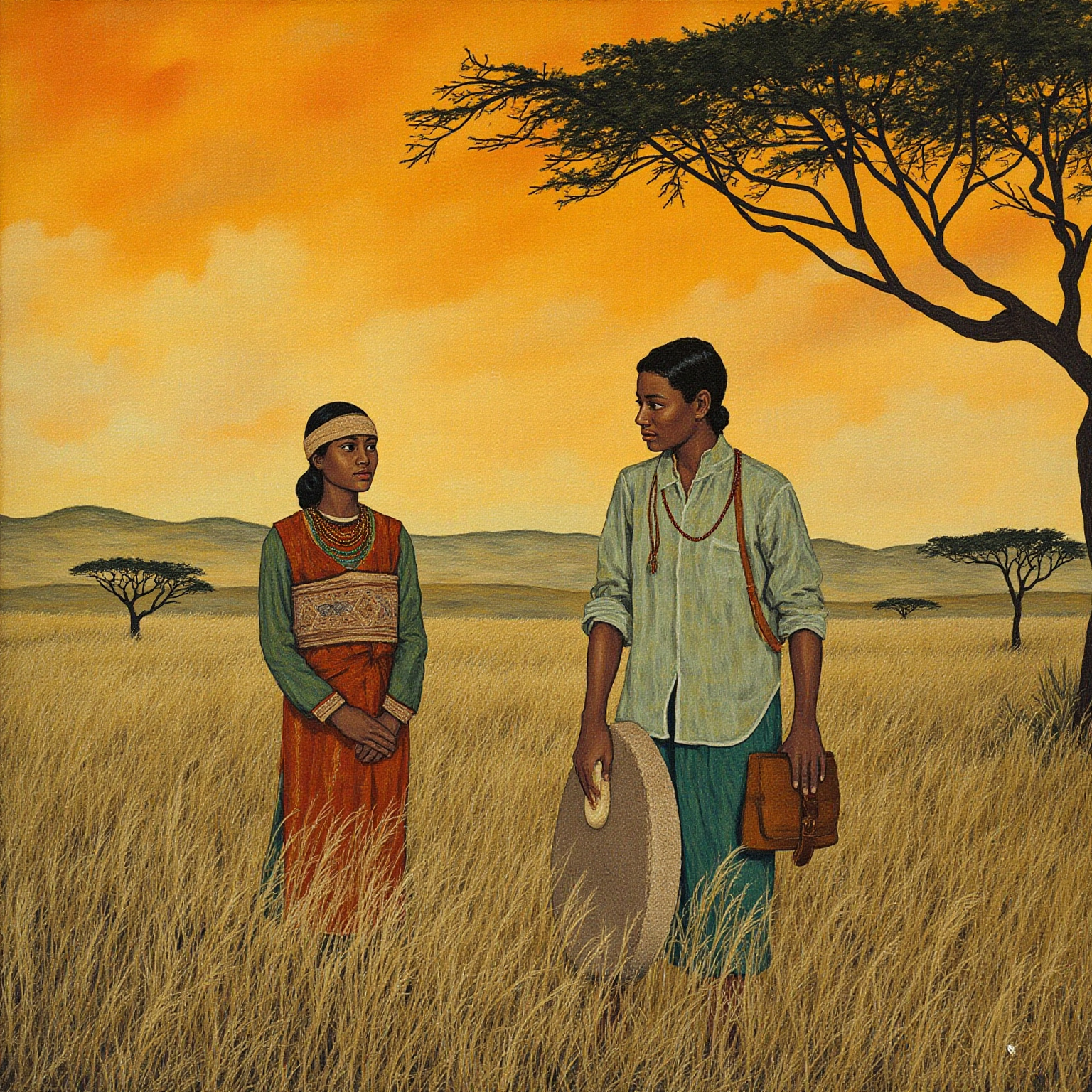
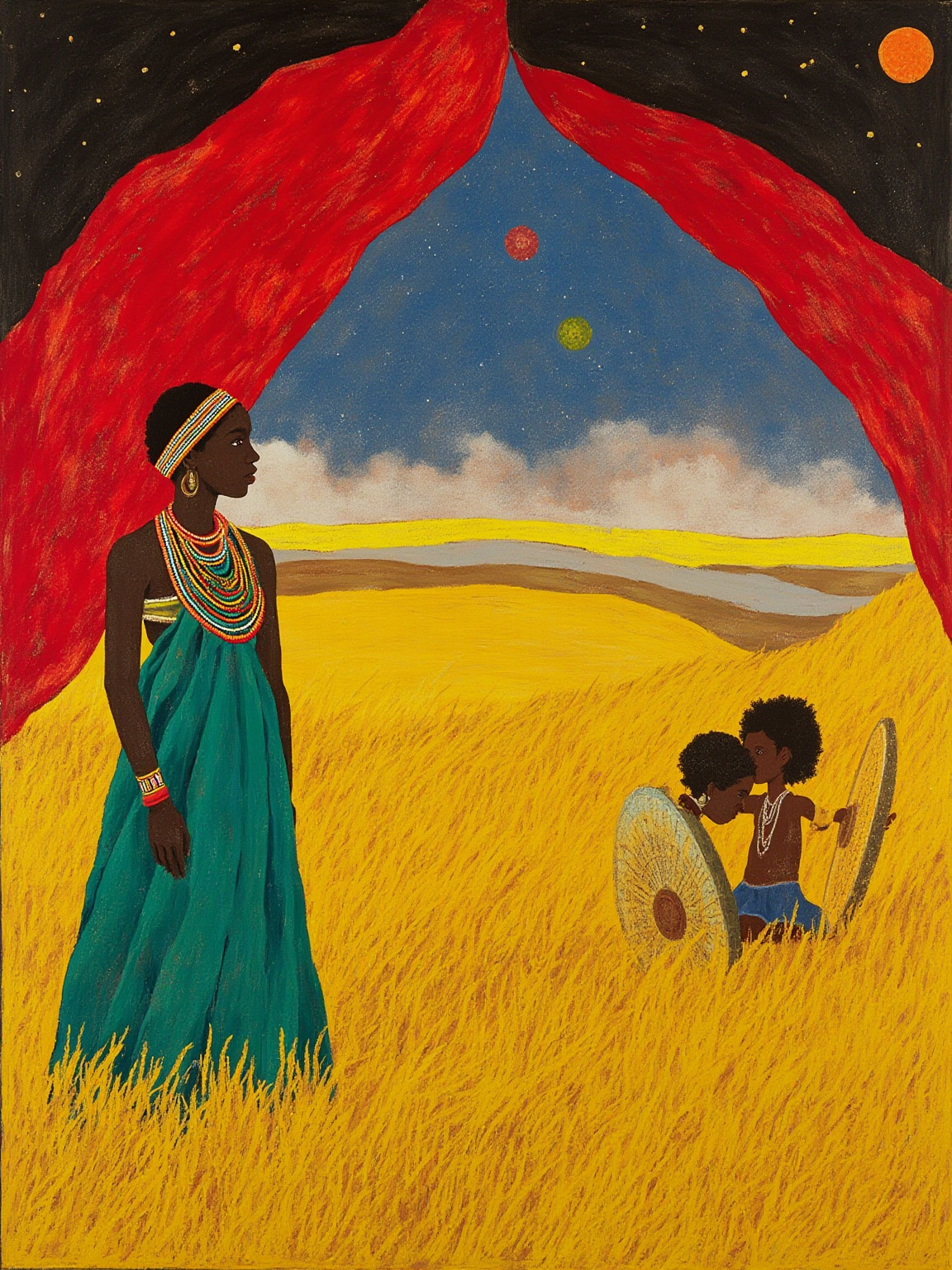
A happy reunion and a contented homecoming: for the young folk who had walked out of the ashes, home was no longer the same place they had left.
重聚,归乡,安顿——可是从灰烬里走出来的年轻人已经回不到当初离开的那一片家了。
金句 · 终章 · 重聚与归乡
Ash is not an ending — this book treats coming home as a posture that takes three hundred pages to reach.
VI. Why It's Still Worth Reading Today
Mhudi works on two levels. On the surface it's a fine historical romance: flight, encounter, a comet, war, a fragile alliance across peoples. Underneath, it's asking a question that still hasn't gone stale: when a land is being ground down by two forces from two directions at once, how does an ordinary person keep from being ground down with it? Mhudi answers with judgment, not heroics, and a belief that refuses to go out. Both are still in short supply on this continent, which is why the book still reads.
VII. What a Guide Can't Give You: The Wind on the Grassland
You already know what Mhudi is about, who wrote it, why it's remembered. But I have to be honest: what a guide can't give you is the physical sense Plaatje builds of the grassland itself — the sound golden grass makes brushing against your shins, the texture underfoot of a cracked riverbed clod in the dry season, the way firelight lights half a face at night and leaves the other half buried in dark. None of that lives in the plot. It lives in the sentences. Knowing the plot will tell you what happened; only opening the book will tell you what it felt like to stand in that grass that year. It isn't a long book. Go read it.
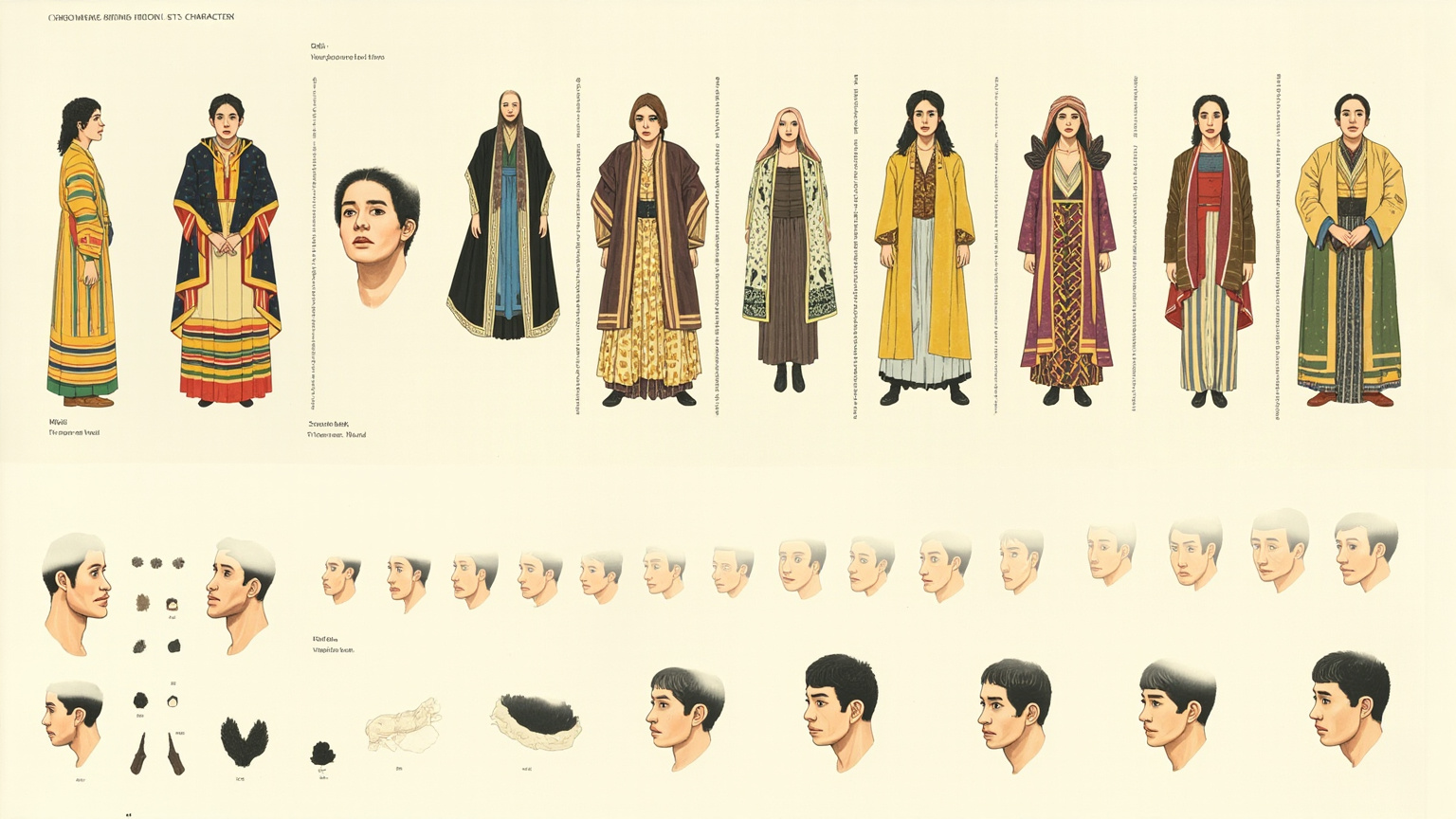
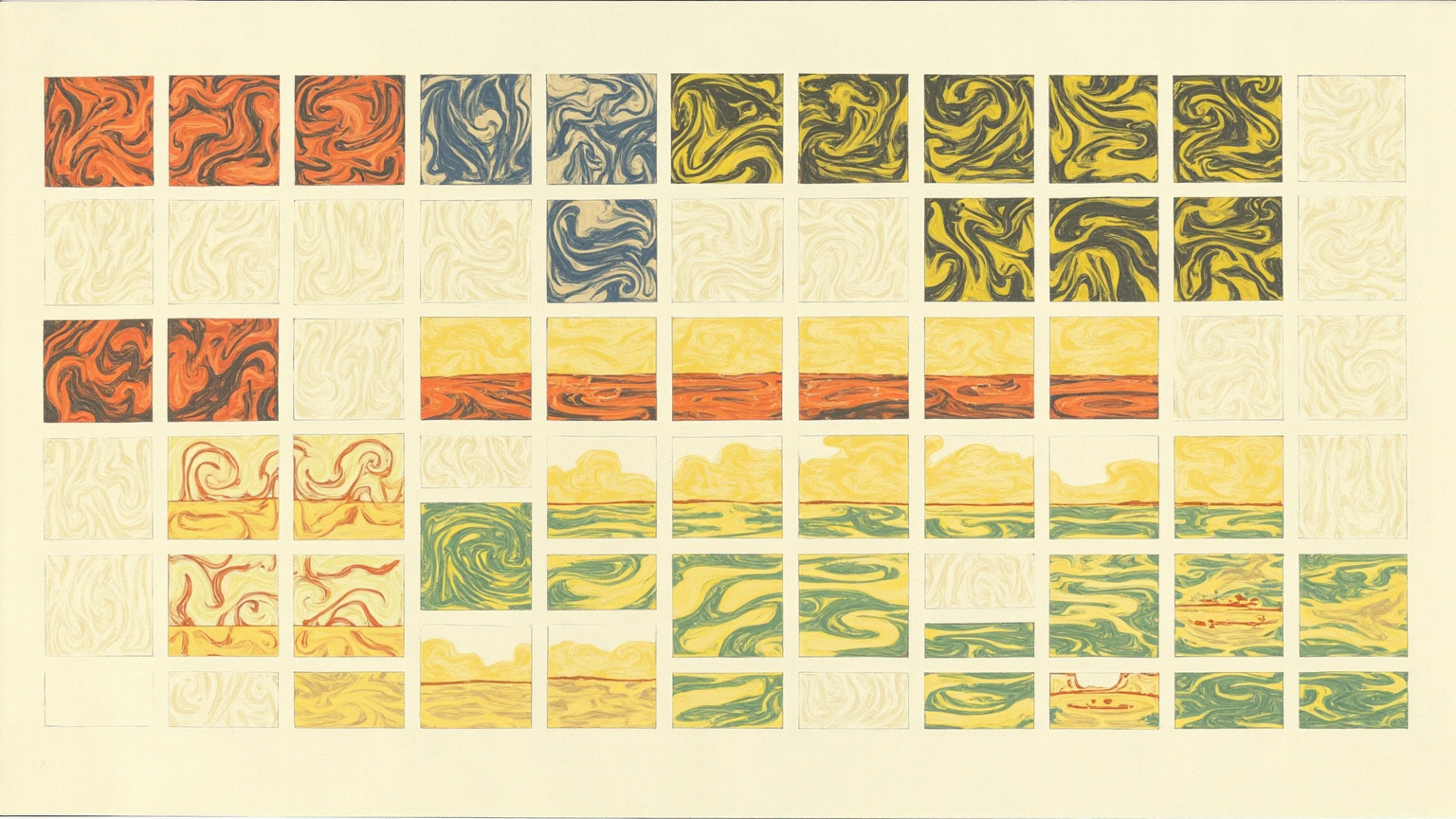
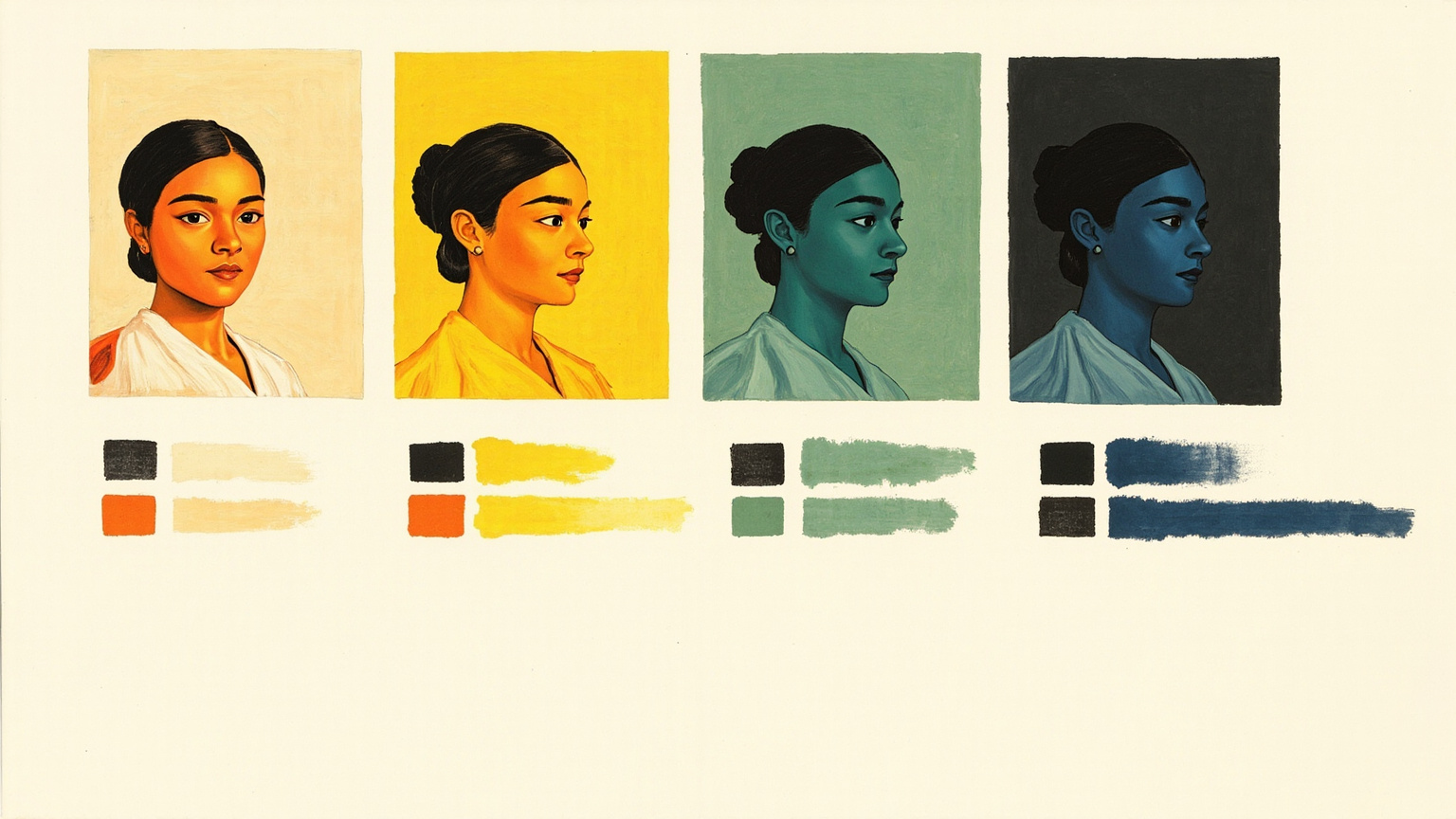
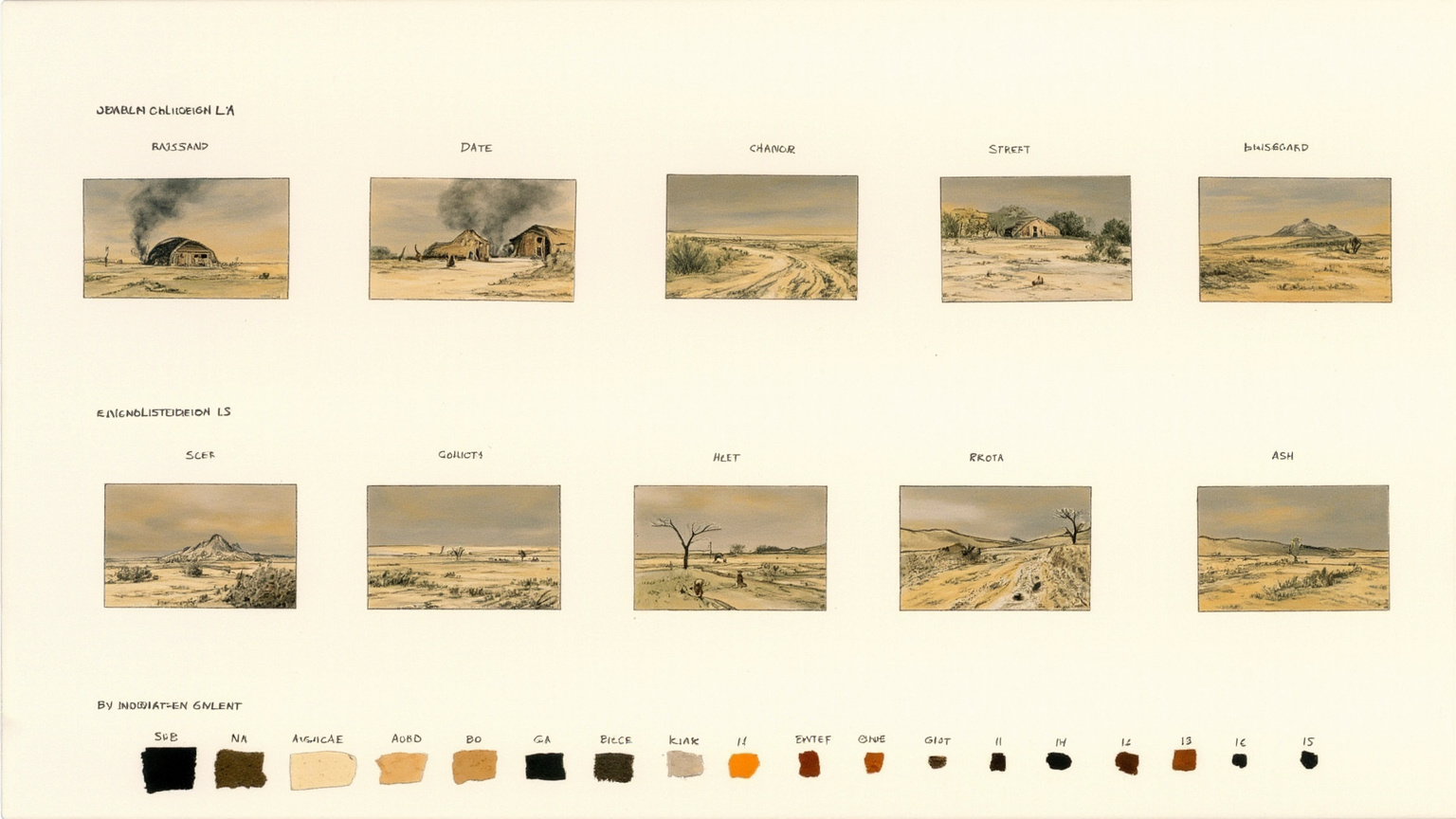
Art Direction4 plates
Before the guide was written, this book got a visual foundation — every illustration you just read grew out of it.