Miss Julie (Fröken Julie / Frøken Julie) · Companion Guide
朱莉小姐
仲夏白夜永不暗透,伯爵厨房里主仆一夜过后,所有位置都已翻转——戏把结局藏在门外,只留一把剃刀响。
A canary hangs from the rafter of the count's kitchen
Push the door open and you get coals under a copper pot, the servants' half-eaten supper, an accordion drifting in from the midsummer bonfire in the yard. The canary's cage hangs from the rafter, high above the floor — the quietest living thing in the play. Outside the window the sky never goes fully dark, just pale and bluish; the farmhands are dancing around the bonfire, and they will dance until morning without needing a lamp. The count is away, and for one night his kitchen splits open along two fault lines: class and sex.
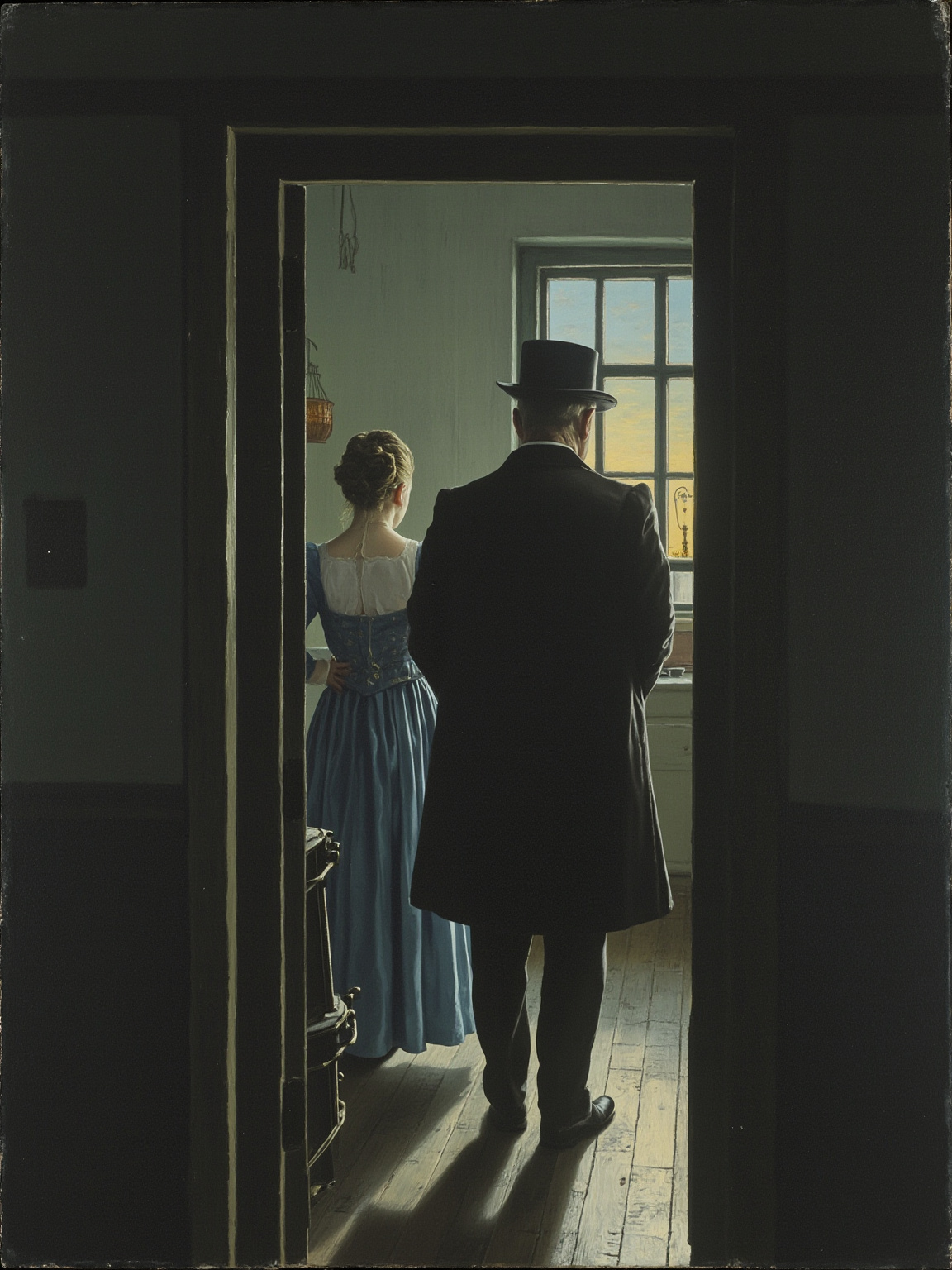
It is a Midsummer Night, and there is a yellow bird in a cage over the doorway.
仲夏之夜,门楣上方悬着一只黄鸟的笼子。
金句 · 舞台指示开篇
What kind of play this is
August Strindberg, a Swede, wrote this one-act play at the end of the nineteenth century. It is counted among the founding works of modern drama, paired with Ibsen's A Doll's House as the two poles of Scandinavian modern theater, though they pull in different directions: Ibsen wrote the social problem, Strindberg drove the knife further in, into the psyche. It premiered in Copenhagen in 1888 and has been staged by drama schools around the world ever since, a fixture of the repertoire. More than a century on, whatever it built in that kitchen still hasn't come down.
Three people in the kitchen, each running their own calculation
Miss Julie, twenty-five, the count's unmarried daughter. Her blood is only half aristocratic — her mother a baseborn foreign noblewoman, her father a Swedish count — and that in-between birth left her both grand and shut out from childhood. She reads Nietzsche, dreams of equality, and despises commoners in her bones all the same. Taming men is a trick she learned from her father and now turns against him. Jean, the count's most trusted valet, a farmer's son. He taught himself French, reads novels, apes the manners of his betters, and works every available advantage to the hilt. Christine, the kitchen maid, engaged to Jean. Plain, devout, proper. She has no need of ambition — the structure has already reserved her a place: the scullery, a farmer's wife, marriage, children. Three people, three different relationships to the same estate machine.
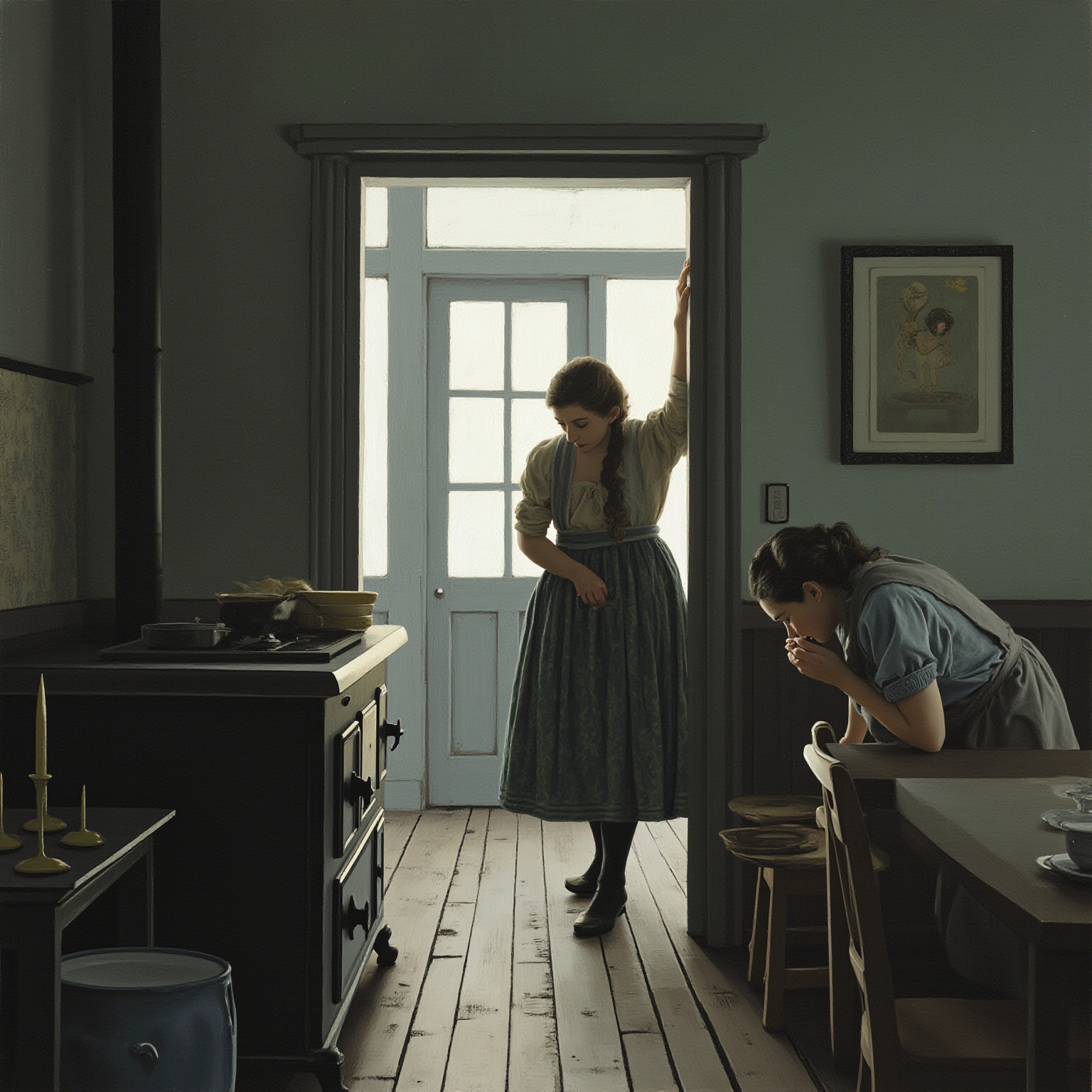
There is something degrading about it—the way I am forced to stand here and watch you eat while I wait on you.
我得站在一旁伺候你吃饭,这本身就带着一种屈辱。
金句 · 厨房 · 朱莉与克里斯蒂娜
Midsummer night, and the count's daughter dances into the kitchen
Jean is sent to bring Julie in from dancing herself into a frenzy, and she beats him back to the house, storming straight from the yard into the kitchen. Her face is flushed from dancing, petals torn from a midsummer bouquet still caught in her hair, her heels so high they seem to be stabbing through the floorboards into the class beneath it. Christine tries to stop her; Julie brushes her aside. This kitchen is somewhere she would never normally set foot — servants' smells, servants' dishes, a servant woman. Jean pulls out a chair and asks her to sit. She refuses, and stands instead. With that standing, the play begins. Don't forget the canary. Its cage is on the rafter, and Jean is the only person in this kitchen who ever touches it. Half the power reversal in the whole play rests on that one flick of the cage door in his hand — the sharp crack of the canary's neck on the chopping block isn't cruelty. It's Jean performing, on the estate's behalf, a small and lethal transfusion.
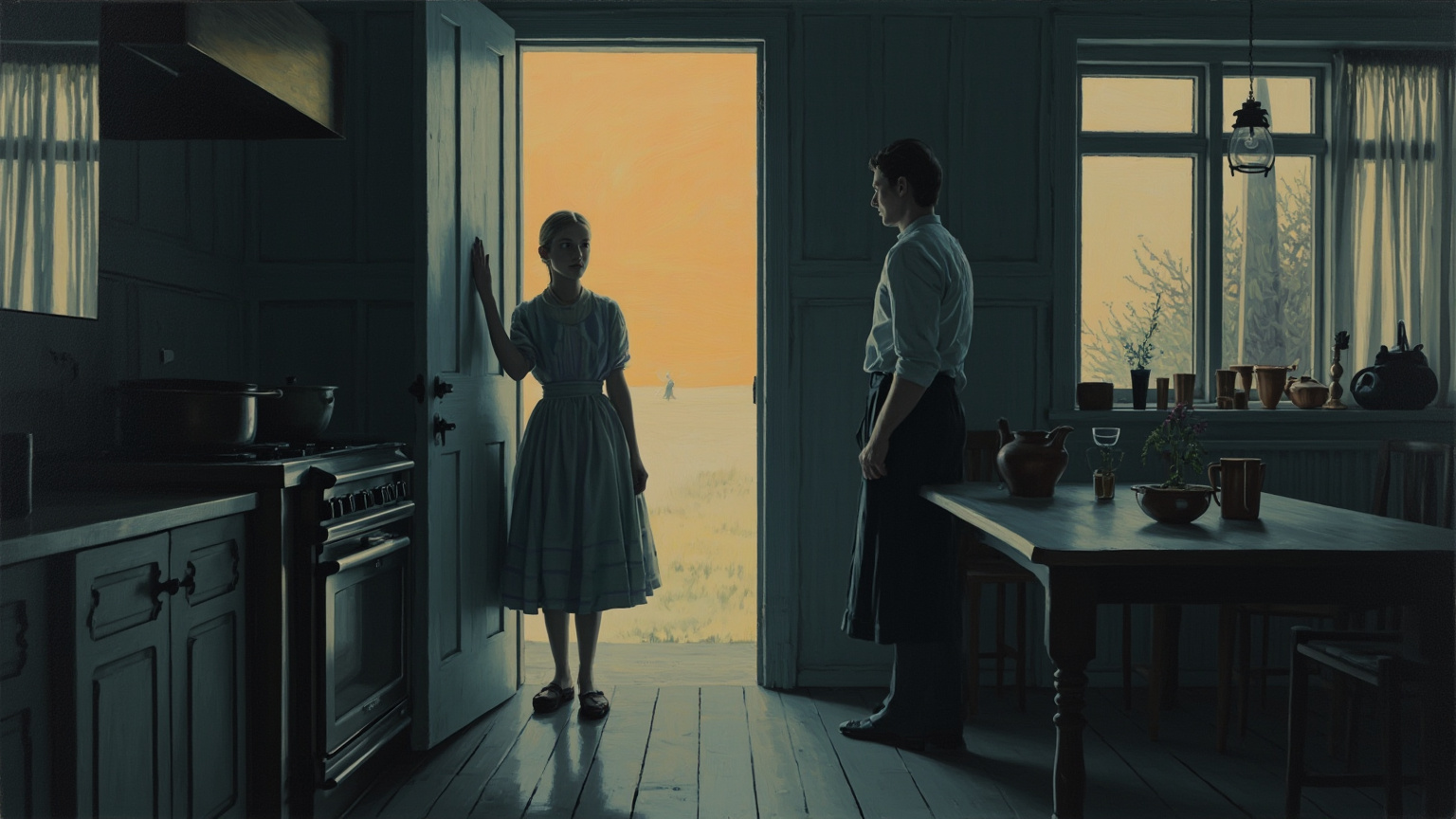
I am the mistress here, while you are the servant—the servant who has dared to lift his hat.
我是这屋子的主人,你是仆人——一个敢动手摘帽子的仆人。
金句 · 朱莉闯入厨房
Jean — how the valet wrote himself into this game
When Jean talks, he switches between French and Swedish; he watches Julie with a restraint that also knows exactly how many cards he's holding. The count once praised him the way you'd praise a son — not real regard, just small change tossed out when the master is in a good mood. Jean has been saving that change: he knows when the count is drunk and when he's sober, which of Julie's lines are flirtation and which are real anger. He isn't cunning by nature. He has learned the master-servant game down to the bone. But the moment Julie turns her man-taming technique on him, Jean's calculations come apart. He wants to win — the trouble is knowing where to stand once he has.
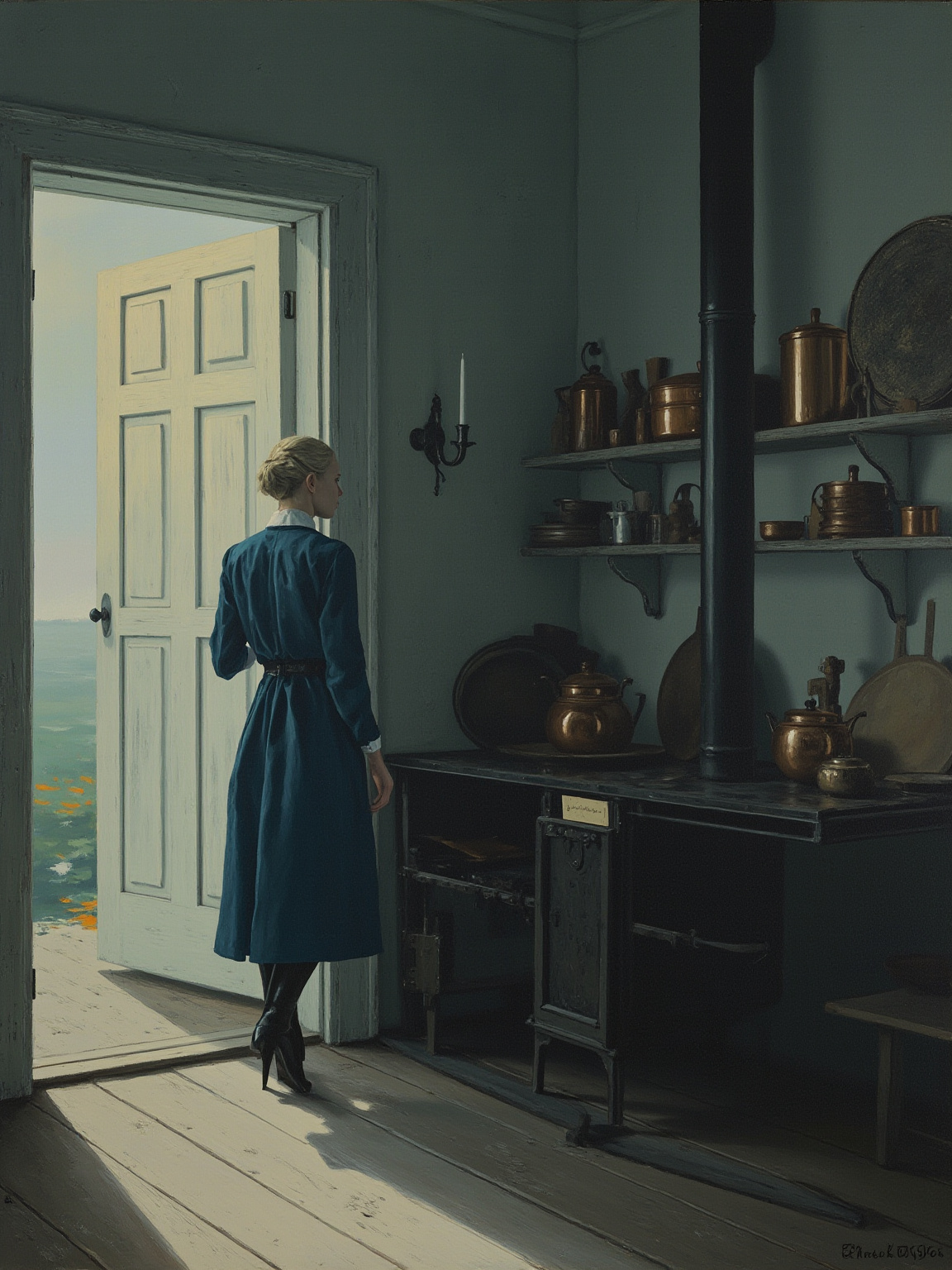
Do you know, Jean, I have read about this in books—how it is possible to forget oneself so completely in the intoxication of dancing.
你知道吗,让,我曾在书上读到过——人如何在舞蹈的迷醉里把自己忘得一干二净。
金句 · 仲夏舞后 · 朱莉
Christine is the quietest nail in this play
Christine has few lines in the whole play, but her presence alone says something: she is not climbing. She is Jean's fiancée, the kind of woman this estate assumes as a default — washing, cooking, raising children, never cast as anyone's leading lady. She finishes the dishes and goes up to bed, while Jean fixes a wedding date behind her back. Understand Christine and you understand the second half of Jean's story: however high he reaches tonight, this door is waiting to catch him at the end of it — a fiancée his own age, a farmer's son's steadiest place within his own class.
After that night, every position turns over
The sky turns from blue-black to pale, and the accordion by the midsummer fire finally stops. Jean holds a razor, standing between the kitchen door and the yard door. By now the tone of the play has shifted entirely — a while ago Julie was giving the orders, running the night from above; now it's Jean setting terms, dividing up the consequences, plotting an escape route, while Julie is the one caught by the pull of her own class, unable to do anything at all. Master and servant, man and woman, strong and weak — all three pairings flip in a single night. Jean wins this round, but he wins it strangely: he is calmer than she is, because he still has Christine's door to go back through. Julie has no door left to name.
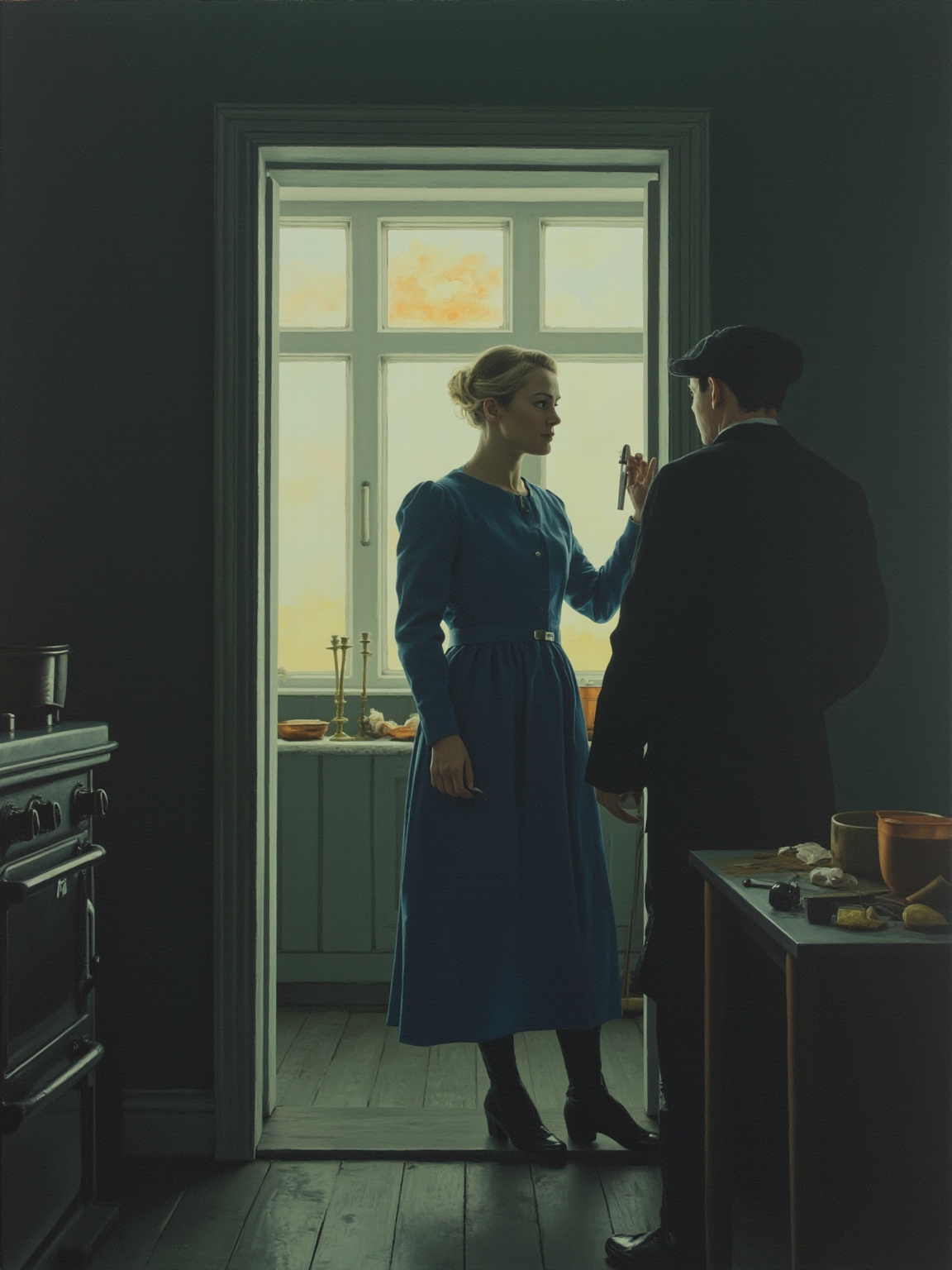
What I have done, I have done—you cannot alter it now.
已经做了的事,便做了——你再也改不回来了。
金句 · 阶级翻转后 · 让对朱莉
The razor sounds outside the door, and the play hides its ending
Strindberg won't let us watch it happen. Jean leaves the kitchen; Julie stays inside. The audience hears only one sound from the yard — the razor. Whether he's shaving or doing something else, the script won't say. Where Julie goes from here is decided by who she now is: a count's daughter who has lost her honor, has no one to answer for her, and is being ground down at once by gossip and by the sheer weight of class — the door back into the main house is shut behind her. Jean returns to the kitchen, sets his things in order, and waits for Christine to come downstairs, ready to marry her and go on being a valet as if nothing happened. The cruelty of the writing is exact: the one who climbed hardest slides back into place with the least trouble, while the one who reached highest has no way back at all.
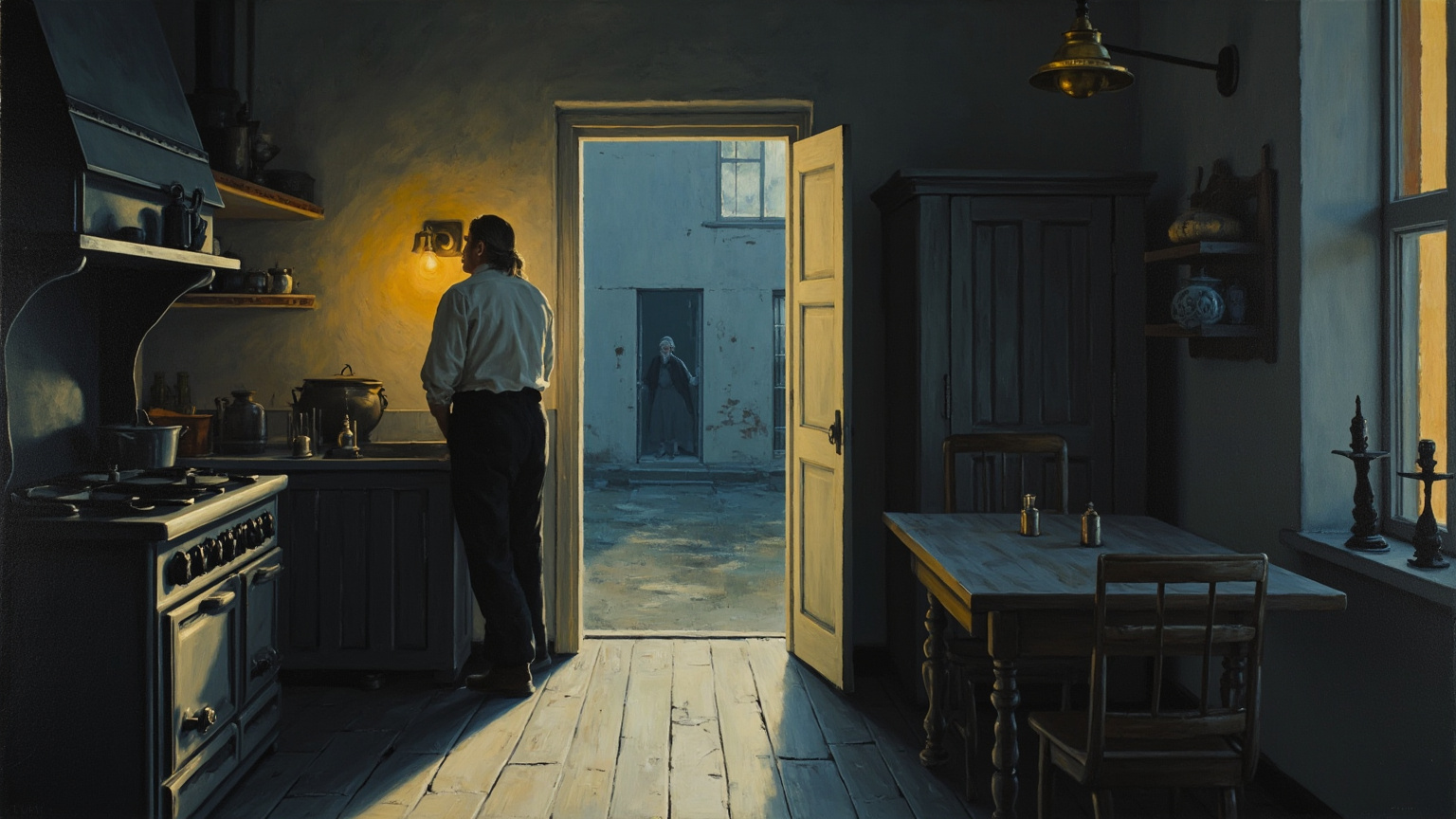
I have heard the lark outside—it is a beautiful morning—the whole world is awake and you are going to sleep.
我听见外面的云雀了——真是个美丽的早晨——万物都已醒来,你却要去睡了。
金句 · 终幕 · 让隔着门
Strindberg's preface: people are made of fragments, not one harmonious whole
The single thing in this play most worth pulling out on its own is the preface Strindberg wrote for it. In it he made a claim that was startling for its time: characters in classical drama are one complete, consistent 'character,' but modern people are not — they are assembled, several pieces tearing at each other within the same night. Set that claim back down in the kitchen and it clicks into place. Julie is not simply rebellious or simply fallen; she is the rebel and the rebel turned on herself, the hand that tames men and the horse being tamed. Jean is not simply ambitious or simply a victim; he is servant and climber, a man swept up in events and, at the same time, the one keeping the clearest count. What matters even more is where this preface stands. Alongside the preface Ibsen wrote for A Doll's House, it is one of the founding documents of modern theater theory: a character is no longer a complete, consistent 'character' but a set of fragments pulling against one another. That claim went on to become standard thinking in modern drama, and it anticipated modern psychology's talk of the divided self and the split personality — in that 1888 preface, Strindberg had already driven this point into the stage directions, decades before Freud's generation got there.
Why this one night has held up for more than a century
One act, one setting — a single kitchen carrying the whole weight of class, sex, and psychology. What has kept it standing this long isn't a strange plot but the way Strindberg renders structural inequality between people both concretely and coldly. A woman who treats men as tools ends up destroyed by her own tool; a man straining upward finds his safest retreat is the very rung he once thought beneath him. The midsummer folk customs do double duty here: gathering seven or nine kinds of flowers, dancing until dawn, a night that never turns fully dark — these old rituals of sex and community give the night's transgression a natural-looking cover. Out in the yard the dancing goes on; inside the kitchen, class and sex have already quietly changed places.
The key to Miss Julie isn't what happens that night. It's which doors each of them still has left to push open once it's over.
You already know how it ends. Why read the play anyway
A guide can hand you a map. It can't hand you the ground. What this play does best lives in the language itself. Strindberg builds the rhythm of the dialogue by mixing French and Swedish, so that the moment a character opens his mouth, his class calculations leak out. His stage directions are spare and exact; the razor sound isn't explained, it's left entirely to the audience. Written more than a hundred years ago, every line still draws blood when you read it today, and no summary can stand in for that. Then there's the current running under the whole play — the canary, the bonfire, the pale night sky, the bell, the boots. Strindberg pairs these objects with his characters, and none of them is decoration; each is a gear in the machine. Only reading the play lets you hear them mesh. Last is the preface. It's short, stands on its own, and is essentially Strindberg's memo to everyone who would go on to write modern drama. Read it, then go back to the play, and you'll see a layer underneath the stage surface, colder and more exact.
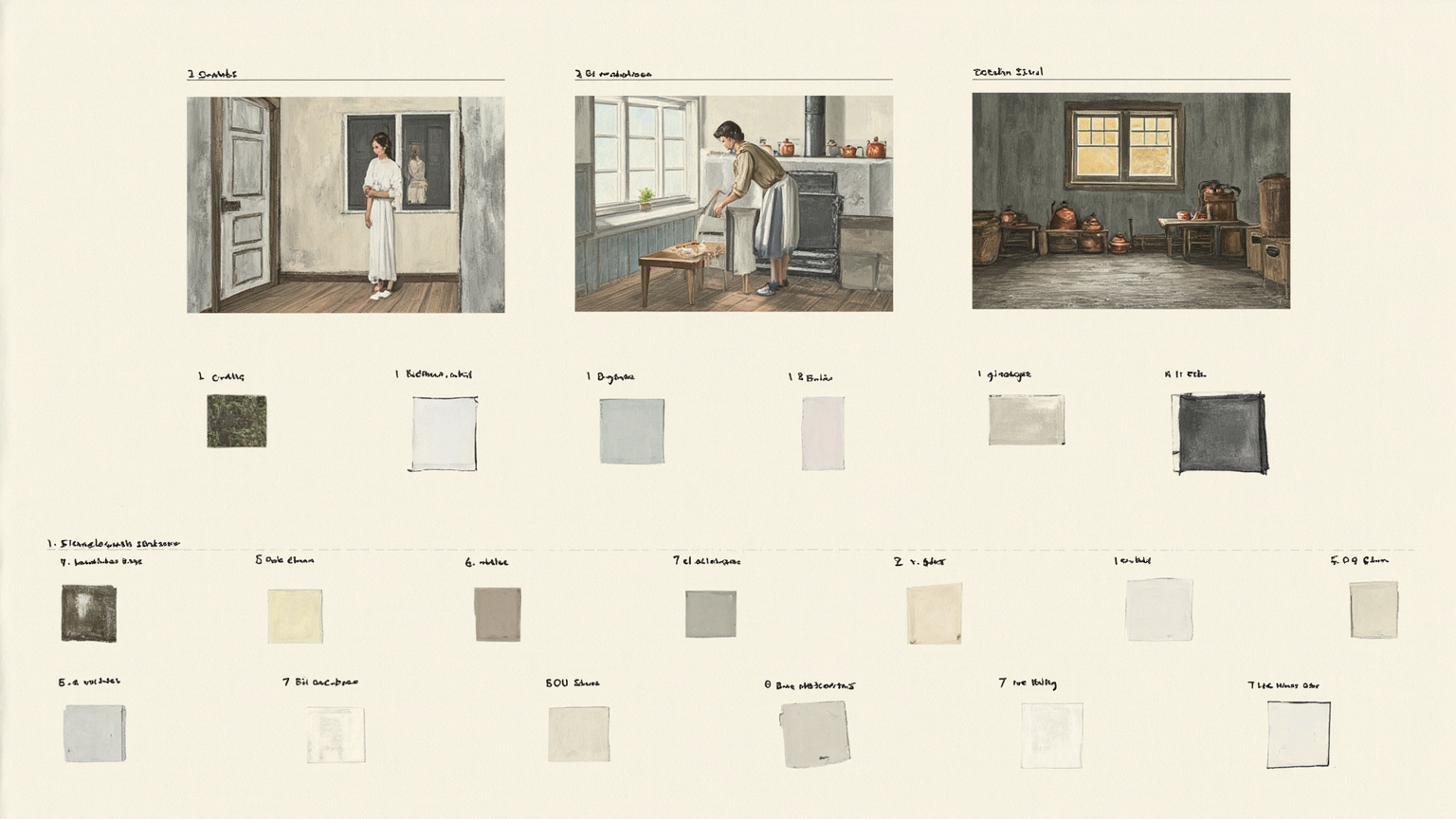
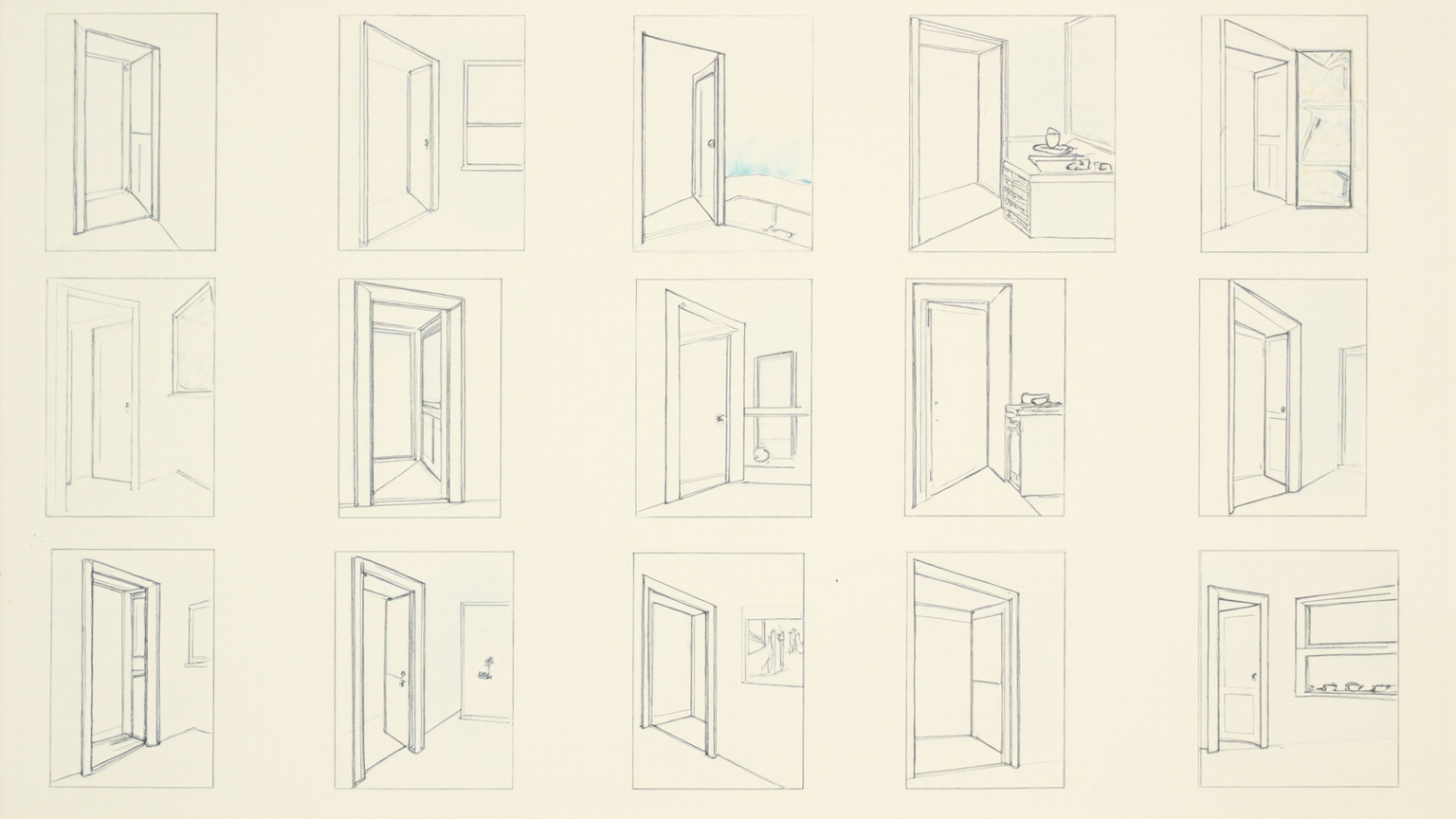
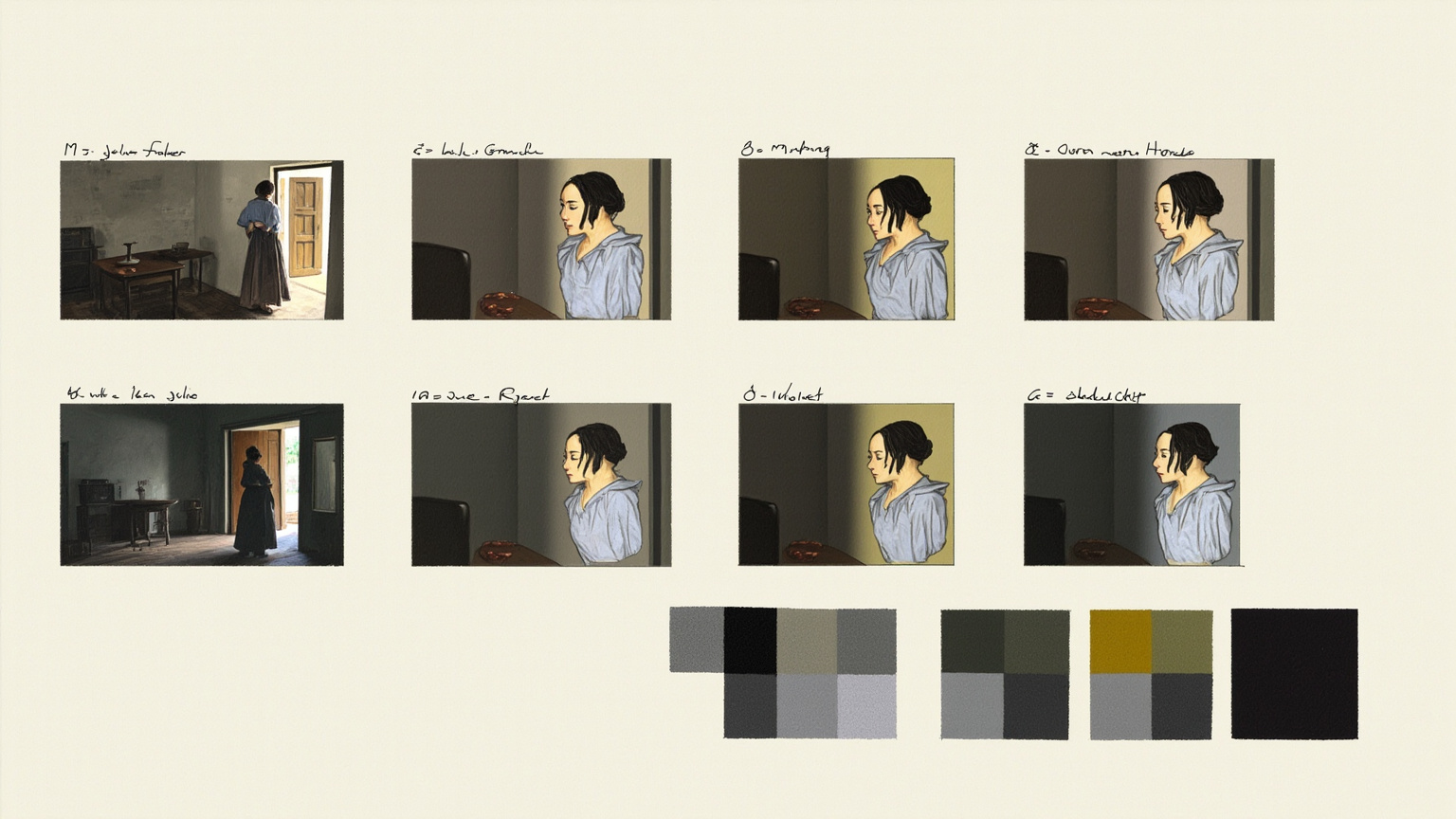
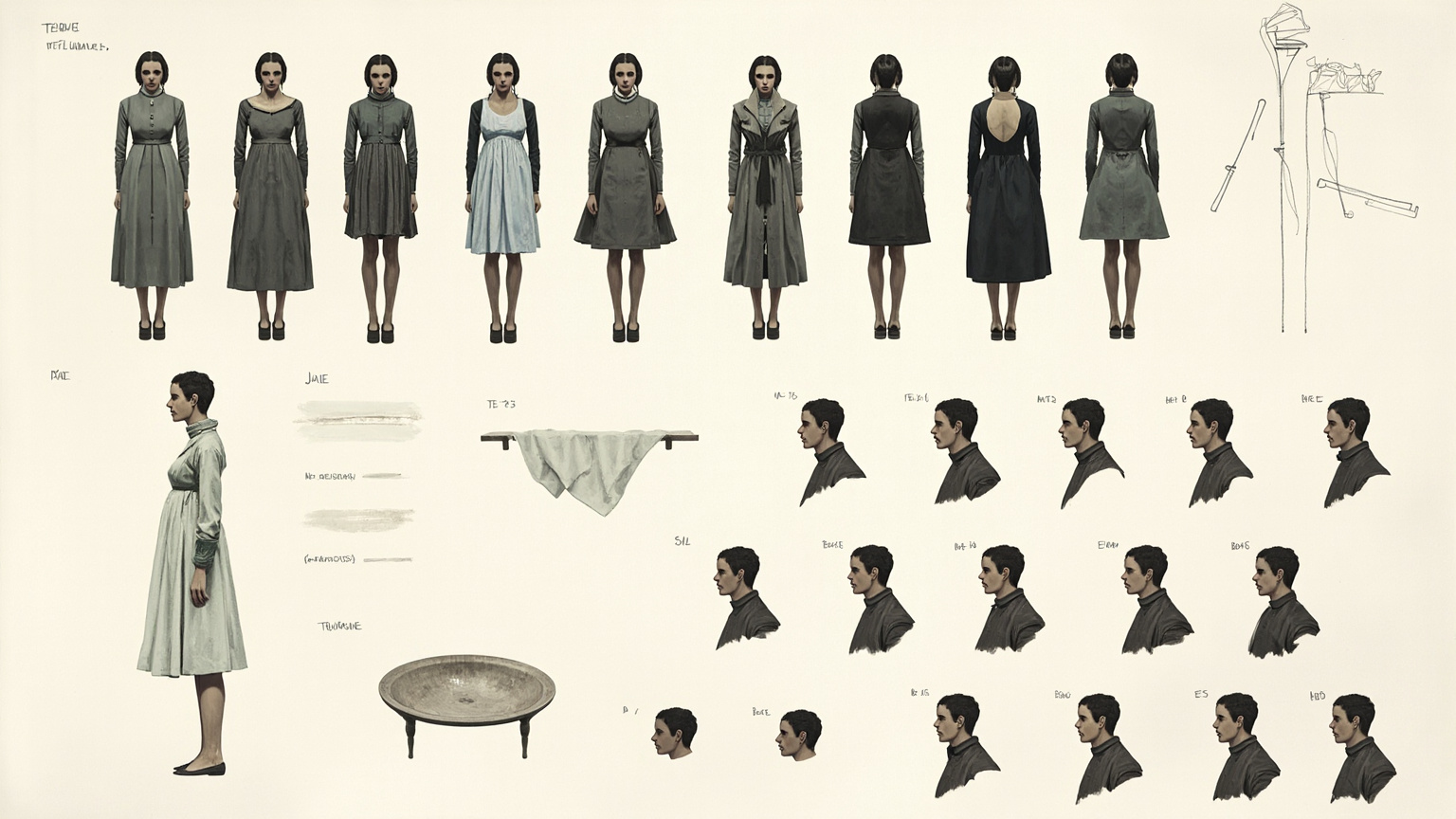
Art Direction4 plates
Before the guide was written, this book got a visual foundation — every illustration you just read grew out of it.