Motl, the Cantor's Son (Motl Peysi dem Khazns) · Companion Guide
莫特尔——领唱人的儿子
九岁男孩絮叨着拖一只铁皮箱子,把东欧小镇、统舱的晕船、埃利斯岛的英文表格,一路讲成一场笑着哭的逃亡喜剧——可惜作者没能让他长大。
Opening: A Trunk, A Torrent of Talk, An Old World
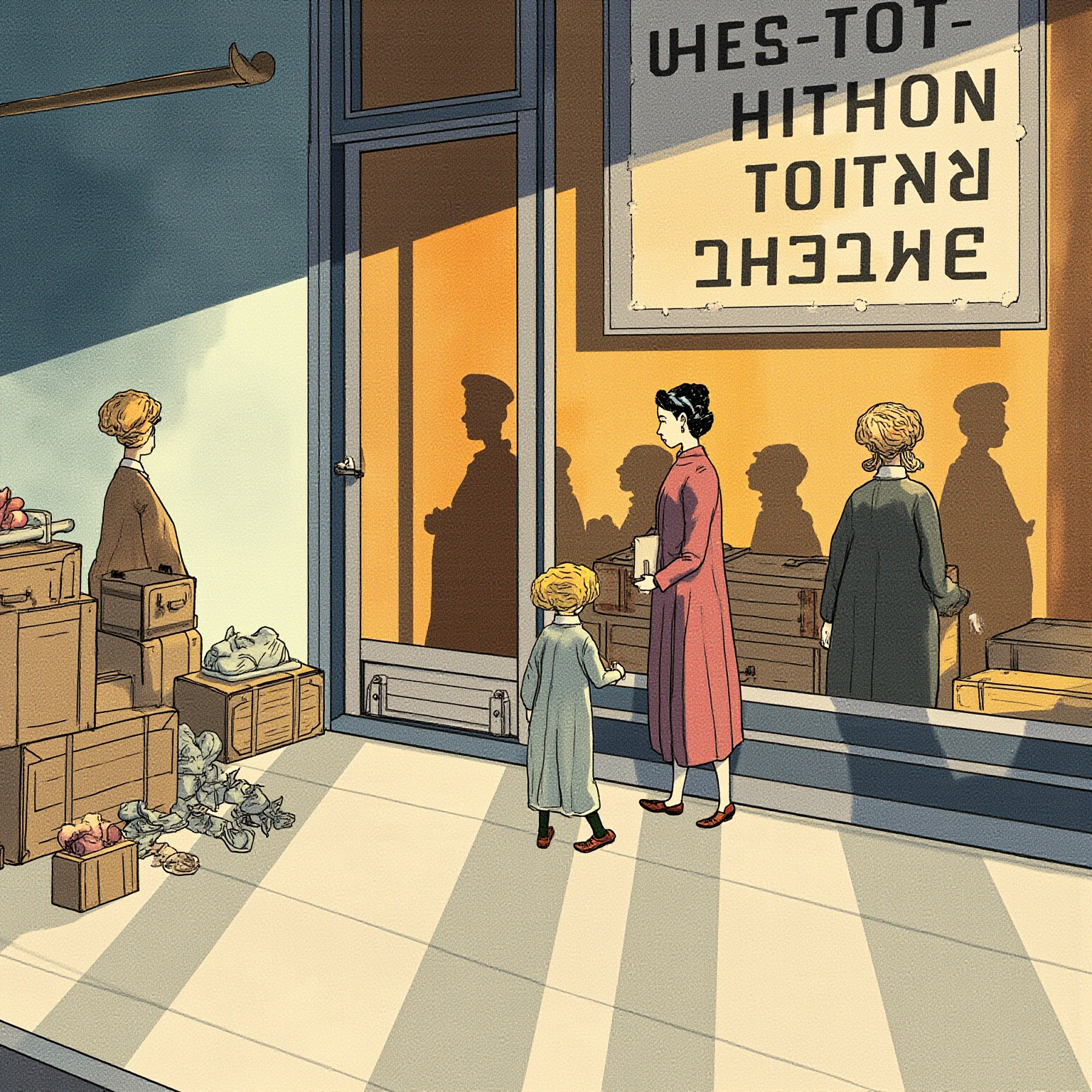
A tin trunk gets dragged over the cobblestones, a faded Jewish label pasted to its lid — the last decent piece of luggage the cantor's family owns. Nine-year-old Motl trails behind it, talking without a pause: his mother's eyes swollen from crying, his older sister's sharp calculations over her dowry, his little sister's trick of demanding to be carried every third step. This is a flight from a shtetl in Eastern Europe to New York, and it is also the whole family's household goods on the move.
One moment he's telling you which tailor back home had the best hands, the next he's jumped to his sister's crying — Motl's mouth is the book's rhythm. He chatters on enough to make you want to close the book, and then you can't, because buried in that chatter is an entire old world being torn up by the roots.
What Kind of Book Is This?
Sholem Aleichem, the master of Yiddish folk humor, was called the Jewish Dickens by Maxim Gorky. He wrote this novel in serial form across the years from the first decade of the twentieth century until his death — and it was never finished, breaking off just as a child arrives in New York, before he has really grown into a man. What survives is the most concrete echo we have of an Old World Jewish shtetl knocking at the door of the New.
On American shelves it sits among the Yiddish literary classics; on a wider shelf it is one of the rare accounts of early-twentieth-century transatlantic Jewish immigration told through a child's eyes. That double identity lets it fill two gaps at once.
Characters and World: A Mouth, A Pile of Luggage, A Flight
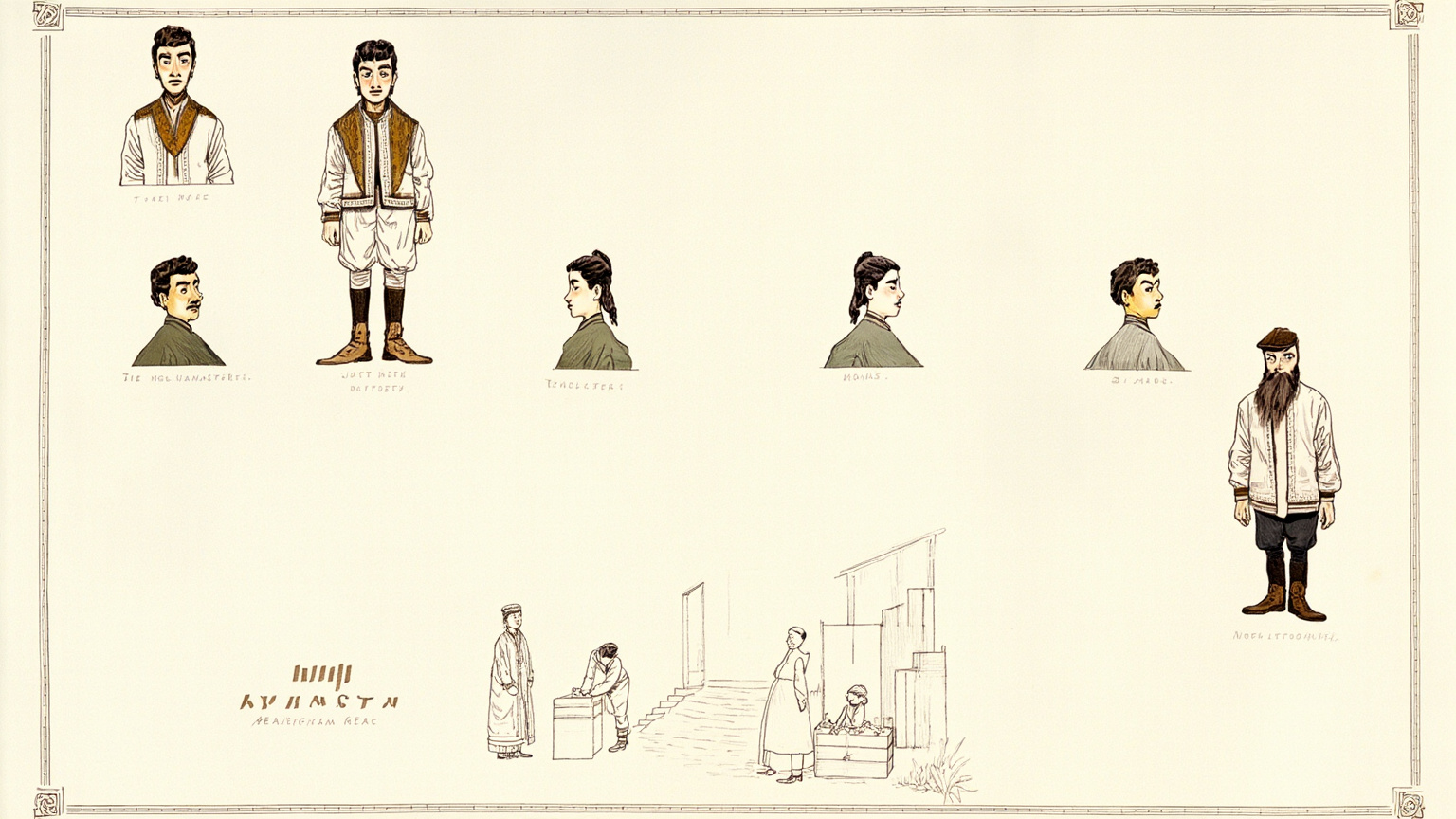
Motl is the book's every eye. He is nine, a nonstop talker, his head full of comparisons, and he is certain his family is the most respectable in town — when his father had just died, he insisted on laying a clean white cloth over the coffin lid, so the cantor could go out looking proper. His mother is the true backbone of this flight: dragging five children, carrying the whole family's luggage, crying and then walking on; weeping is her breathing, walking is her stride. The older sisters spend the journey calculating dowries; the youngest spends it demanding to be carried.
The absent father, the cantor, hangs over the whole book anyway — his outline, though he is gone, looms larger than anyone still standing. He led the prayers in the synagogue, a voice the whole town admired, and his death leaves the family's place in the world empty, with new ground to stake out from nothing. The fellow passengers — a tailor, a cobbler, a stout woman, a bride, a mother with a baby at her breast — are the real faces of the steerage deck, the Eastern European Jews who ride out the roughest stretch of the crossing alongside the Motl family.
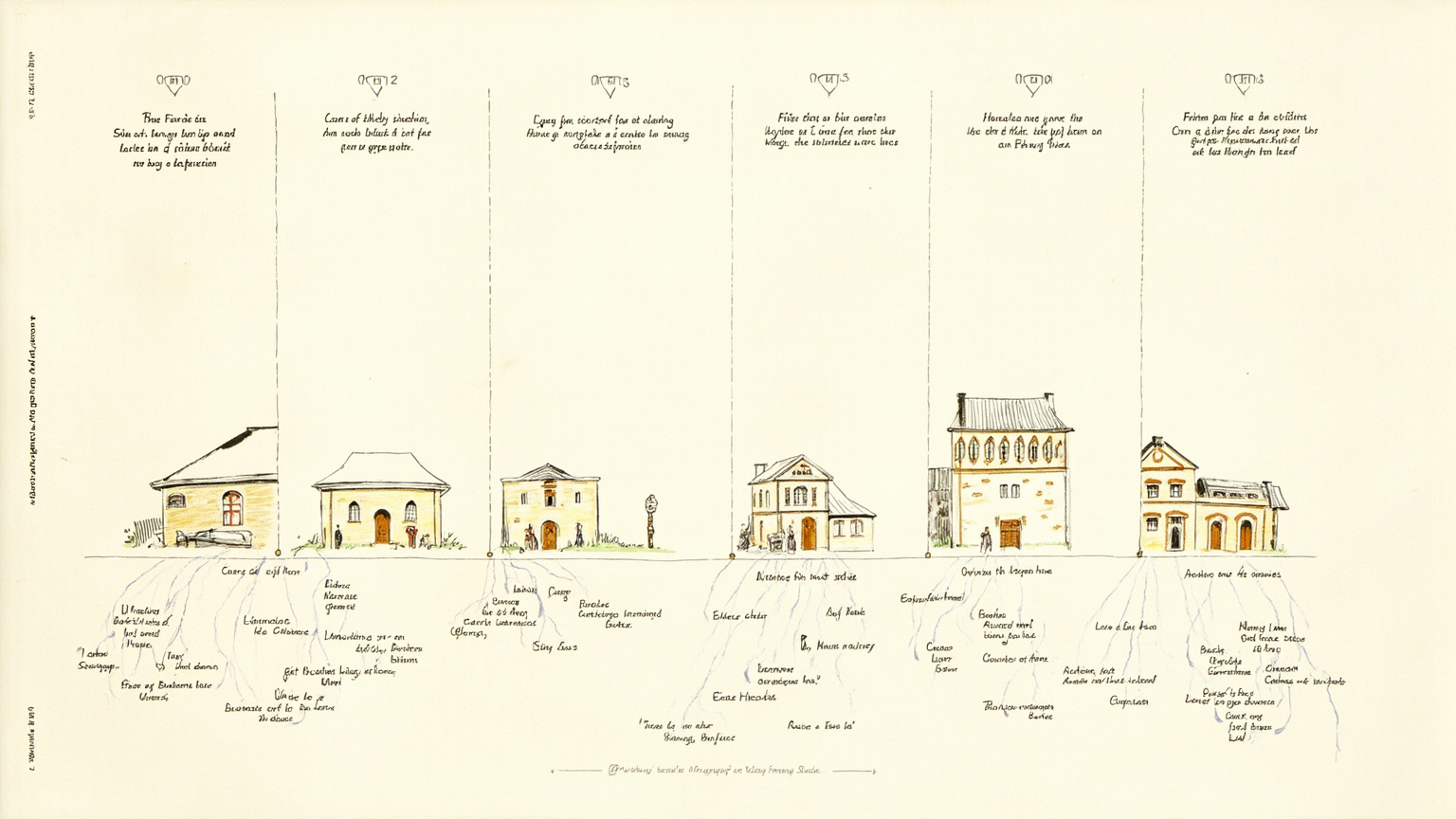
The story's world spans half a map: the cobblestones and wooden shacks of an Eastern European shtetl, the noisy docks of a European port, the steerage deck below the waterline of a transatlantic steamship, the inspection hall on New York's Ellis Island, and finally a Lower East Side tenement crammed with beds. Each stop is a fresh frame, and every frame gets narrated all over again through Motl's mouth.
Leaving the Shtetl: Luggage, Weeping, and an Unfinished Prayer
The story opens not long after the cantor is buried. The town is already unsettled, and one night the mother makes her decision — the children get bundled into a borrowed wagon and they leave before dawn. The shadow of the pogrom never shows its face directly; it hides in the hand the mother clamps over her youngest daughter's ears, in the sound of neighbors shutting their windows in the middle of the night, in the offhand way Motl explains it: we're going to America to find our uncle who owns a shop.
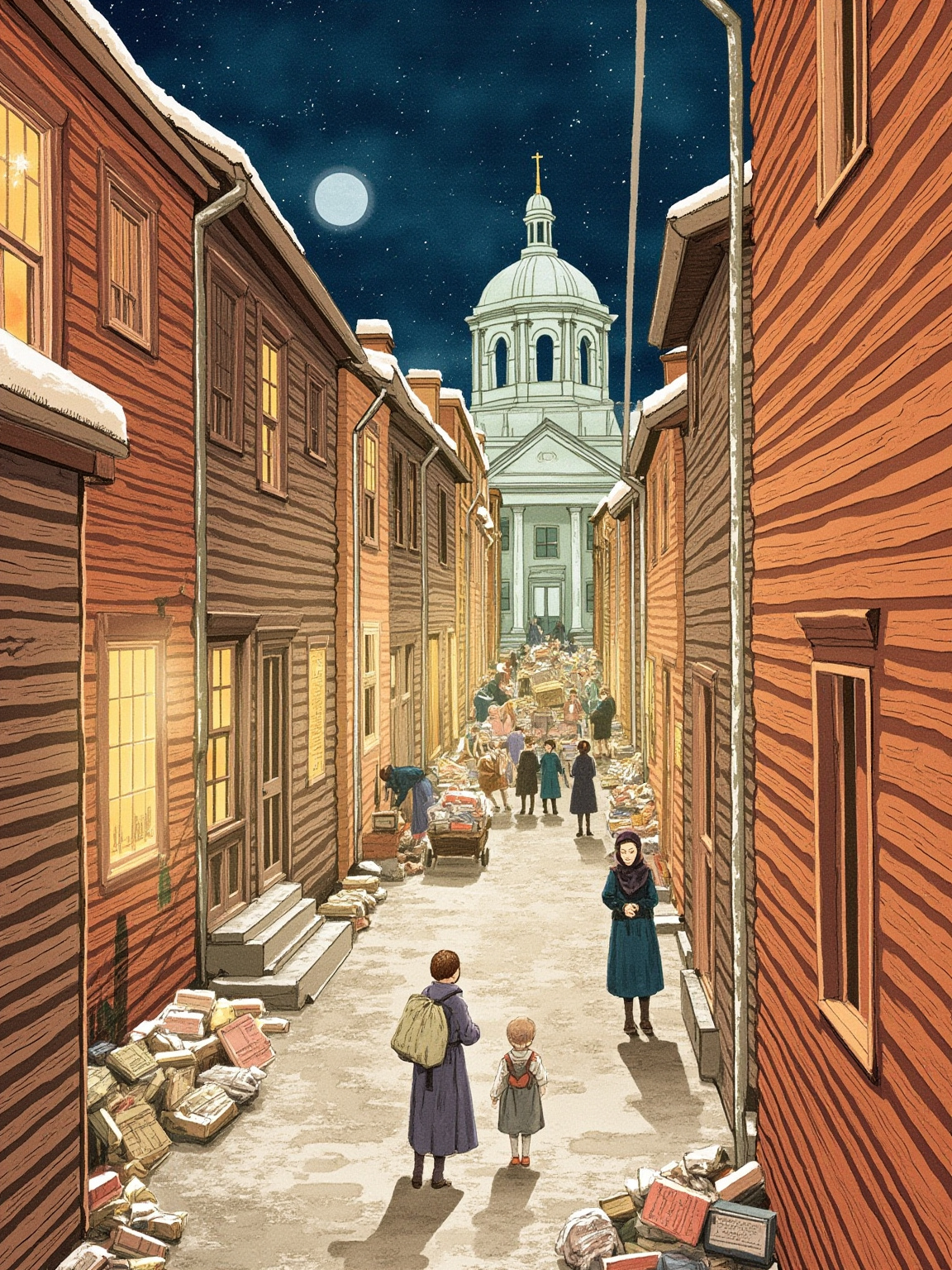
A cantor must always leave his home in the proper way — with a clean white cloth spread over the coffin, so that the cantor may depart in dignity.
一个领唱人,永远要体面地离开这世界——哪怕只在棺材盖上铺一条干净的白布,也要让领唱人走得体体面面。
金句 · 第一章 · 领唱人的白布
The first thing worth watching once they're on the road is the luggage. A tin trunk, bundles, a cradle, a barrel of pickles — the family has strapped nearly half its household to its own back. Motl counts it all out precisely: three pots, five blankets, one rolled-up scroll of the family tree. His mother cries the whole way, mourning the husband she just buried; weeping is her breathing. The oldest sister, already being weighed for a dowry and a match back home, keeps her head down and bites her lip, saying nothing. Motl files every bit of it away in his head, planning to report it all, point by point, to the uncle waiting in New York.
Crammed Into Steerage: Seasickness, Separation, and a Gallery of Strangers
A train carries them to a port somewhere in Europe, and the port packs them into the steerage hold of a transatlantic steamship: the deck below decks, the light dim yellow, the air close, men and women kept apart, children and luggage all jumbled together. Once the seasickness sets in, retching breaks out across the whole hold in waves. What makes Motl worth reading here is that he doesn't complain — he counts. He counts the cat that won't sleep in the stout woman's arms, the bride's wedding dress already crushed flat, the old song a fellow cantor from back home sings into the sea wind up on deck.
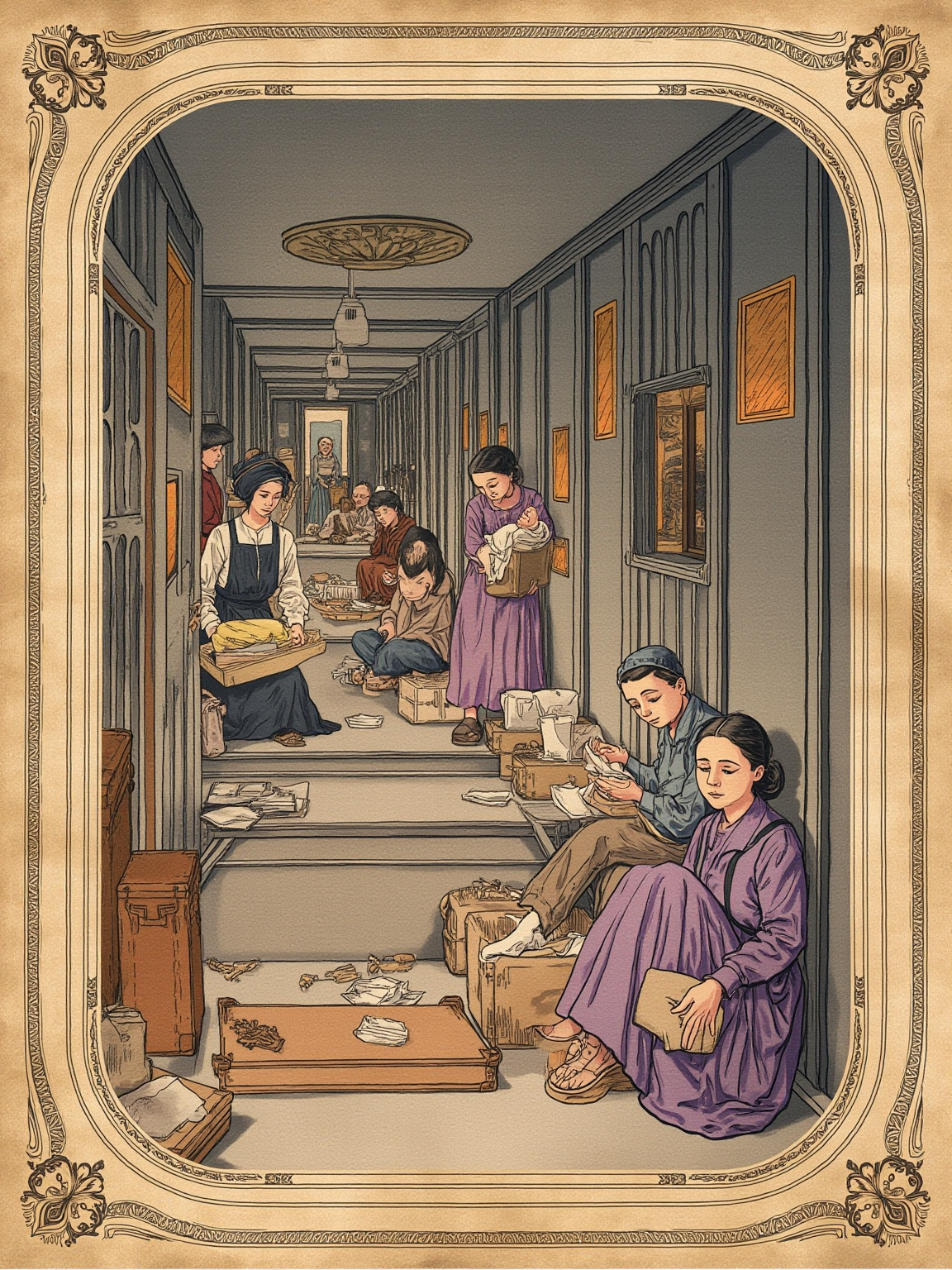
In steerage, the sea is always in the middle of your stomach, and the supper is always on the floor.
在统舱里,大海永远翻腾在你的五脏六腑之间,而晚餐呢,永远躺在地板上。
金句 · 统舱篇 · 晕船的舞会
What's worth watching craft-wise here is the pacing. Every leg of the journey swaps in a new setting and a fresh cast of oddballs, and the narrator strings them together with his eyes and his mouth — a classic picaresque shell. Motl is a picaro in miniature; his chatter is his eye, and every stop trades in a new audience. That structure cuts what should be a heavy flight into episodes small enough to laugh at one at a time.
This is where it first caught me off guard — he tells the seasickness like a dance and the mess line like a race. The hardship is still there, but a child's mouth has worn it down into a tone you can actually live inside.
Ellis Island: America's First Door
When the ship docks, the family still isn't entitled to call itself arrived. The inspection hall on Ellis Island is waiting for them — the long line, the doctor in white gloves, the form covered in English. Motl leads the way with an English he hasn't actually learned yet, and gets swept by an immigration officer's cold stare, again and again. His mother clutches the bundle tighter behind him, nerves fraying, while the youngest wants to be carried.
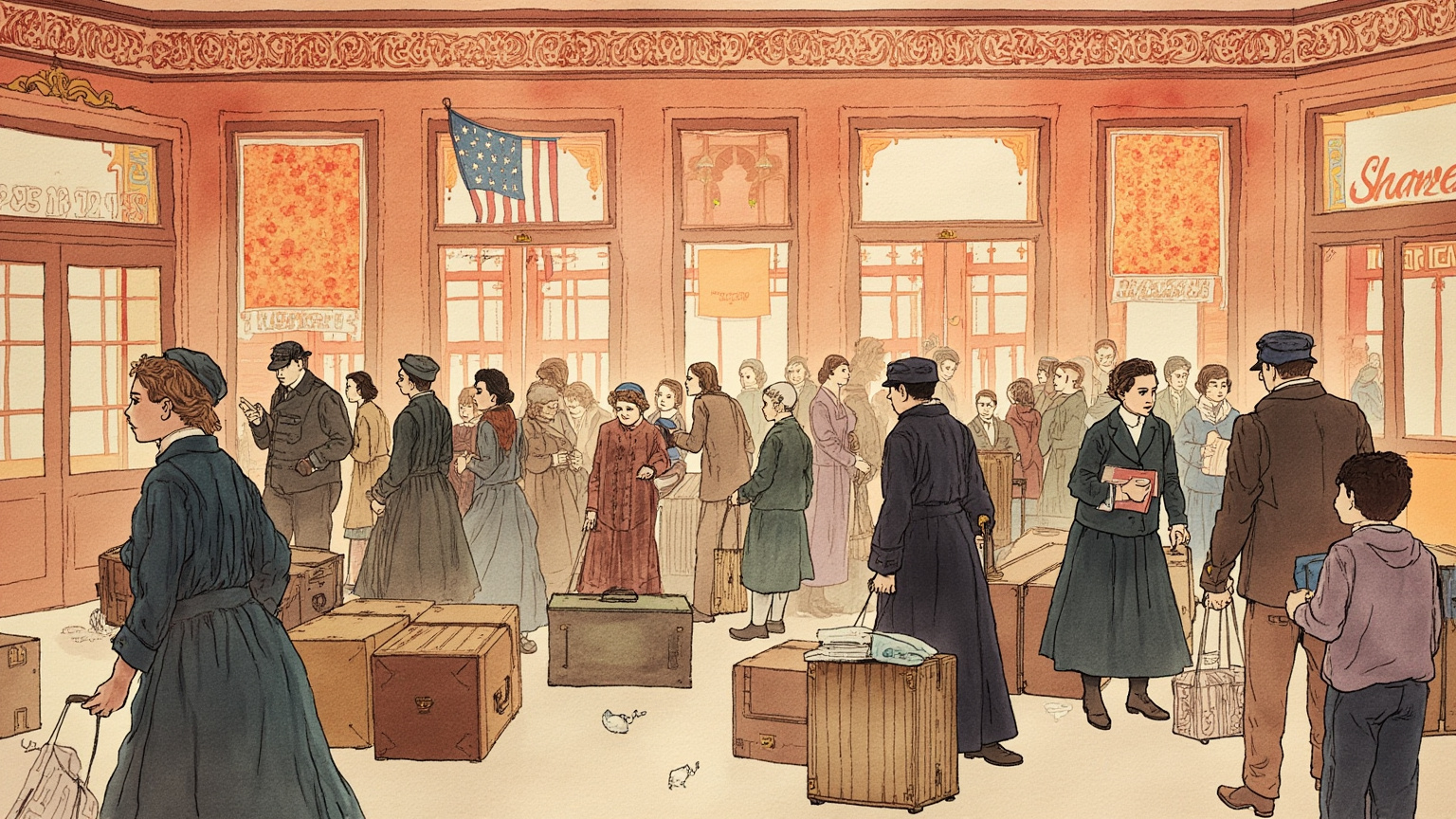
On Ellis Island the doctor wears white gloves and writes everything down in English, and English to a boy from our town is nothing but a lot of gurgle-gurgle.
在埃利斯岛,医生戴着白手套,把什么都用英文写下来——可对我们镇上来的孩子来说,英文从头到尾就是一阵咕噜咕噜。
金句 · 埃利斯岛篇 · 咕噜咕噜的英文
The craft here is a cut. One moment it's still small talk down in steerage, the next the scene has been sliced onto this island where everything runs in English — that instant when language simply stops working, and Motl tells it as both humiliating and funny at once. He renders the incomprehensible English as a kind of babble, and remembers the white-gloved officer's face as the most solemn elder in the synagogue. The trick of this passage is that the threshold of the so-called New World turns out to be a single hand in a white glove.
The Lower East Side: A New Home in a Tenement
Once they're cleared through, the uncle finally leads the family into a tenement on New York's Lower East Side. Narrow stairs, the smell of oil lamps, a room crammed with beds, and someone else's laundry always hanging outside the window. Motl counts as he climbs: eight people in this one, twelve in that one, the uncle's shop on the corner — the new life starts right here in this building.
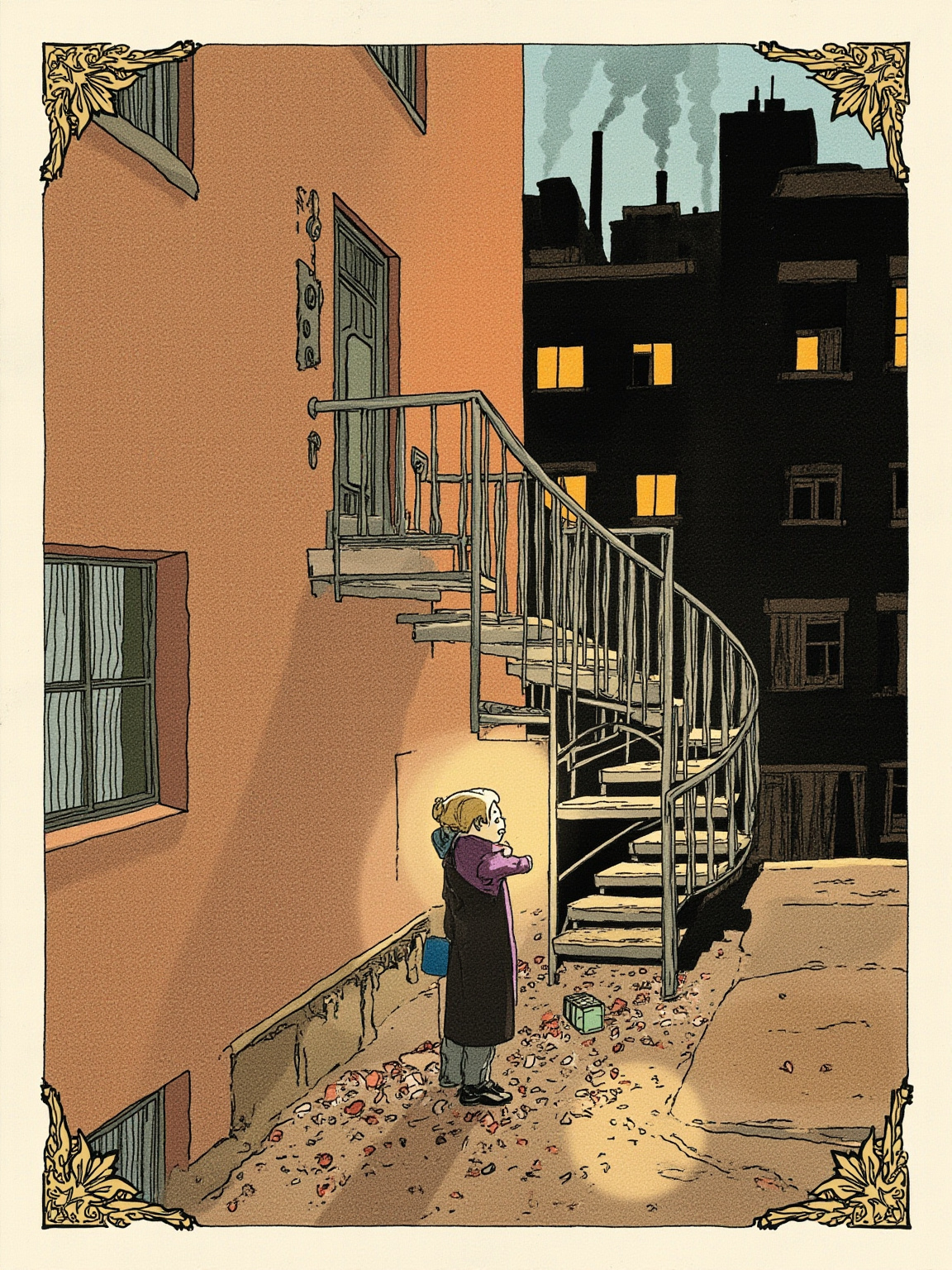
In America the streets are paved with gold, but the staircases of the tenements are paved with sleep — one family on every step, and another family in every bed.
美国的街道据说是用金子铺的,可廉租公寓的楼梯是用瞌睡铺的——每一级台阶住一家人,每一张床再住一家人。
金句 · 下东区篇 · 廉租公寓的楼梯
His mother can finally loosen the arm that's held the bundle this whole way, and starts greeting the uncle's neighbors in English. The sisters take up calculating a new set of dowries. Motl runs downstairs and sets foot on an American street by himself for the first time — horse dung in the middle of the road, newsboys shouting, shop signs full of English he still can't fully read. The Lower East Side has a smell even thicker than steerage.
Cut Short: A Book Fated to Stay Unfinished
The story stops right where Motl is just starting to learn English. Sholem Aleichem died partway through writing it, and the ending never arrived — the last image this master of Yiddish left behind is a nine-year-old boy on a New York street, standing on his toes to read an English sign. The Old World is already behind him. The New World, he has not yet really entered.
Mother, what will become of me?
妈妈,我往后会变成什么样子呢?
金句 · 尾声 · 九岁的门槛
This is the book's central craft move: it refuses, deliberately, to show you a grown Motl. The reader is stuck at that threshold, listening with him to the wagon bells down in the street. The unfinishedness is itself a technique, the author replacing an ending with an absence, handing the whole work of imagining growing up over to the reader instead of writing a conclusion for them. So the book is no longer the author's resolution but a blank each reader has to fill in alone. It refuses to paper over a real history with an invented happy ending — and that history, precisely because it was never finished, has stayed lodged in our throats ever since.
Theme and Technique: Laughing Through Tears, Yiddish's Last Mile
Sholem Aleichem's signature method is what's called laughing through tears — wrapping the shadow of the pogroms, the displacement, the shattered families, all inside the comic shell of a child chattering away, full of jokes. This isn't frivolity, it's force applied backward. The more gleeful Motl's compulsive comparisons get, the heavier the road that never leads back home becomes underneath them.
At a deeper level, the whole book is almost an elegy written in a mother tongue for that same mother tongue. The old world of the Eastern European Jewish shtetl is collapsing, and Yiddish itself is being diluted by English once it crosses the ocean. Motl's chattering Yiddish voice is that language's last bout of chatter before the tide of immigration carries it under.
The cruelest cut in this book is that it never lets you see Motl grow up.
It also quietly overturns the question of who is actually doing the fleeing. With the father gone and the men rendered useless, it's the mother, the sisters, and the little one who actually carry this migration — Motl's chatter lets the reader see these women's shoulders bearing the weight. A point literary criticism tends to overlook: the real heroes of this book are the pieces of luggage that never cry.
Why Read the Original: The Guide Gives You the Map, the Text Is the Ground
This guide has given you the route, the characters, the exact point where it all cuts off. What it cannot give you is Motl's mouth. That chatter, those comparisons, the rhythm that turns seasickness into a dance, only makes you laugh when it's sliding past you line by line in the original. The particular tearful wit of Yiddish is something even a translation struggles to carry over intact. Knowing the plot in advance actually frees your hands to listen for what this book is really singing — a nine-year-old boy's last goodbye to his mother tongue, spoken in that same mother tongue.
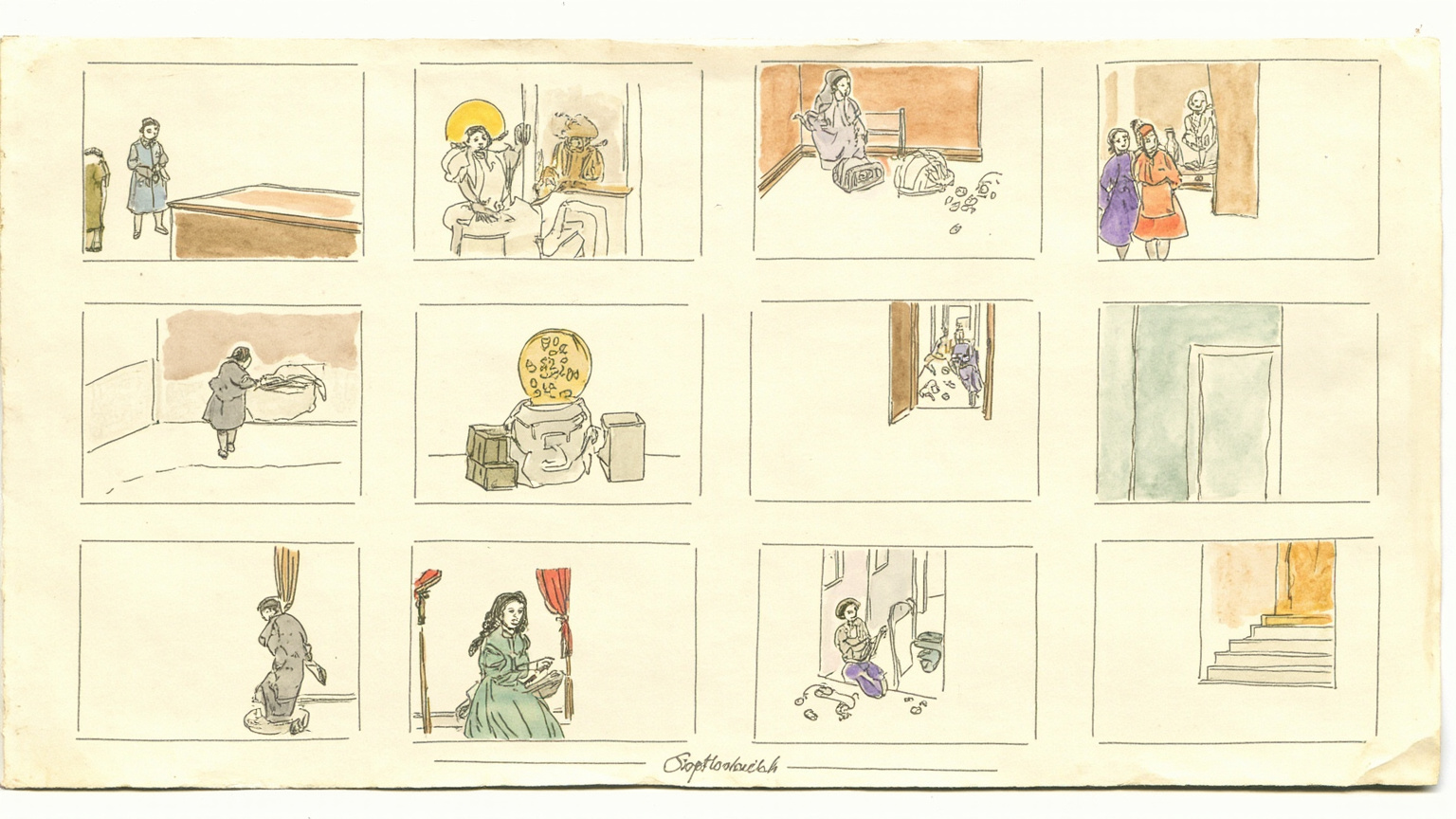
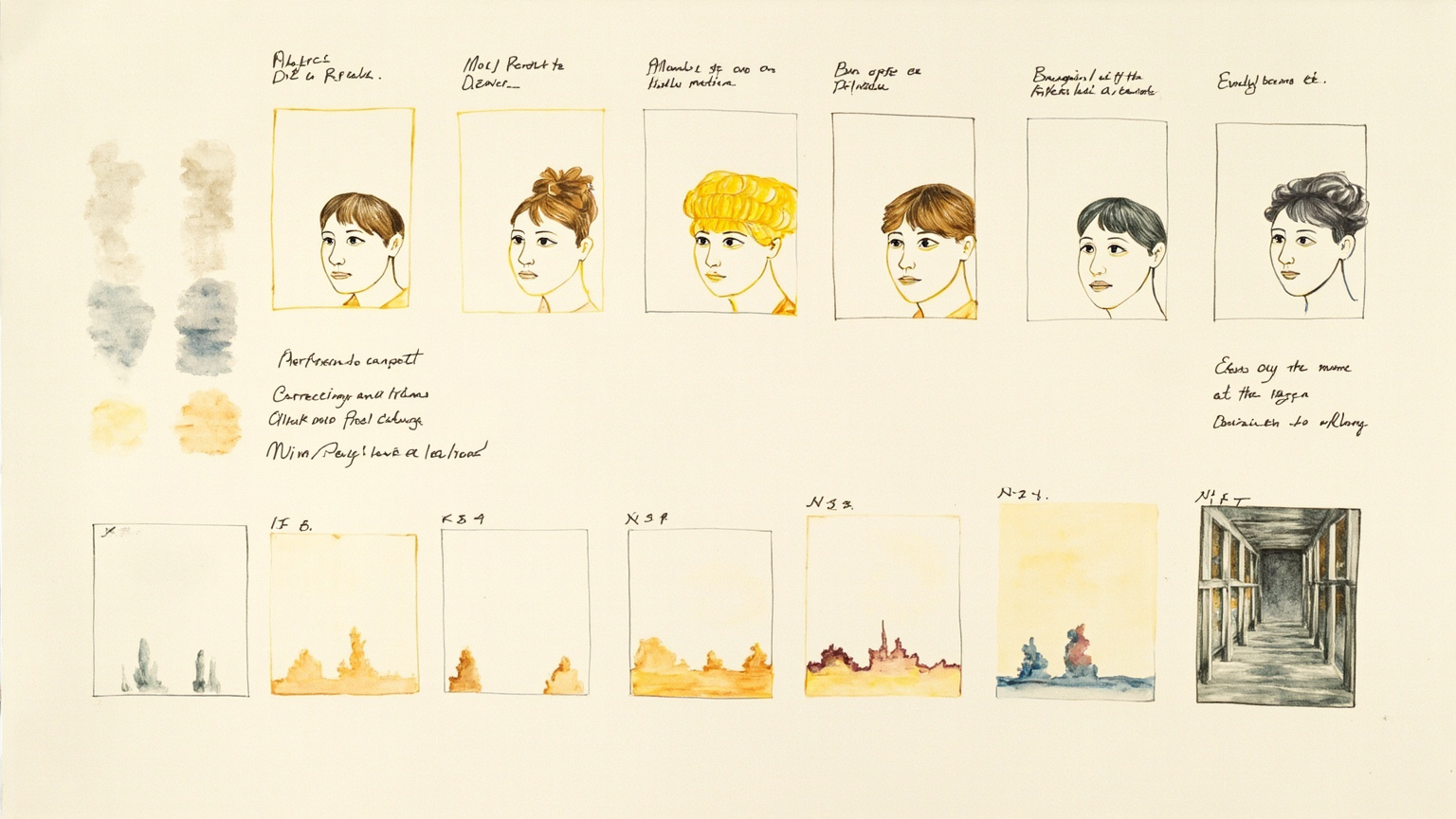
Art Direction4 plates
Before the guide was written, this book got a visual foundation — every illustration you just read grew out of it.