Much Ado About Nothing · Companion Guide
无事生非
西西里阳光下,一桩婚事被流言拦腰折断;两对冤家却在一场偷听里悄悄缴械投降。
Under the Mask, the Tongue Cuts Faster Than the Blade
At the masked ball in Messina, a young officer asks a lady, in front of a hall full of nobles, to guess who he is. She doesn't even lift her mask before her mouth curls up. "I'd guess you're Don John — born to make trouble for everyone around him." The hall breaks into laughter, and she twists the knife again: "Though I'd know that face of yours without guessing." The officer is Benedick, a nobleman from Padua; the one who answers him is Beatrice, niece of their host Leonato and cousin to Hero. It's one of the most famous images in Shakespeare's Much Ado About Nothing — the two of them haven't even started trading real insults yet, and the room has already warmed up around them.
What This Play Is
Much Ado About Nothing was written around 1599, in English, a romantic comedy. Shakespeare sets it in Messina, the capital of Renaissance Sicily, and lets nobles, officers, ladies-in-waiting, and night watchmen take their turns across the same city. It isn't Shakespeare's deepest play, but it's an ancestor later enemies-to-lovers comedies can't get away from — you can trace its lineage through countless romantic comedies, Sleepless in Seattle among them. Wherever two sharp minds trade insults first and admit their feelings second, the pattern started here.
What makes the play stick is three tricks stacked on top of each other: witty dialogue, mistaken identity, and malicious gossip. Inside the warm glow of a Mediterranean festival, it tucks in a wedding scandal that nearly destroys a bride's reputation, then flips everyone around with a faked death and an overheard conversation. It closes with a double wedding, funny, but carrying real weight of forgiveness too.
People and World: Two Couples, a Circle of Conspirators, One Troublemaker
Four threads first, laid out plain. Claudio is a young officer from Florence, engaged to Leonato's daughter Hero. Beatrice is Hero's cousin, who swears she'll die a maid, and still can't help pricking up her ears whenever she and Benedick trade insults. Don John is Messina's illegitimate nobleman, long pushed to the margins and nursing a grudge, determined to wreck Hero's wedding. Dogberry is the local constable, stammering and stuffed with malapropisms, whose bumbling night watch stumbles into catching the real culprits by pure accident. The whole world runs on the rules of Renaissance Italian noble society — honor, chastity, and the family's face matter more than life itself.
Knives at the Ball: The Bickering Pair's First Clash
The story opens at the masked ball in Leonato's house. The nobles are talking about Hero and Claudio's engagement, while Benedick and Beatrice fall straight into verbal combat the moment they meet, one jab, one answer, every word smiling, every line drawing blood. Shakespeare's trick here is sly: by having the two of them run each other down, he's really letting them confirm that the other is sharp enough, funny enough, to be worth fighting. The louder the audience laughs, the more they know something is bound to happen between these two, but whoever drops the thread first loses.
Once the ball breaks up, a few of the nobles hatch a plan in private: hide Benedick in the garden and let him accidentally overhear his friends saying Beatrice is secretly in love with him. They do the same to Beatrice. Each side is left believing the other one fell first, the play's most famous eavesdropping scheme, and the page that generations of romantic comedies have been copying ever since.
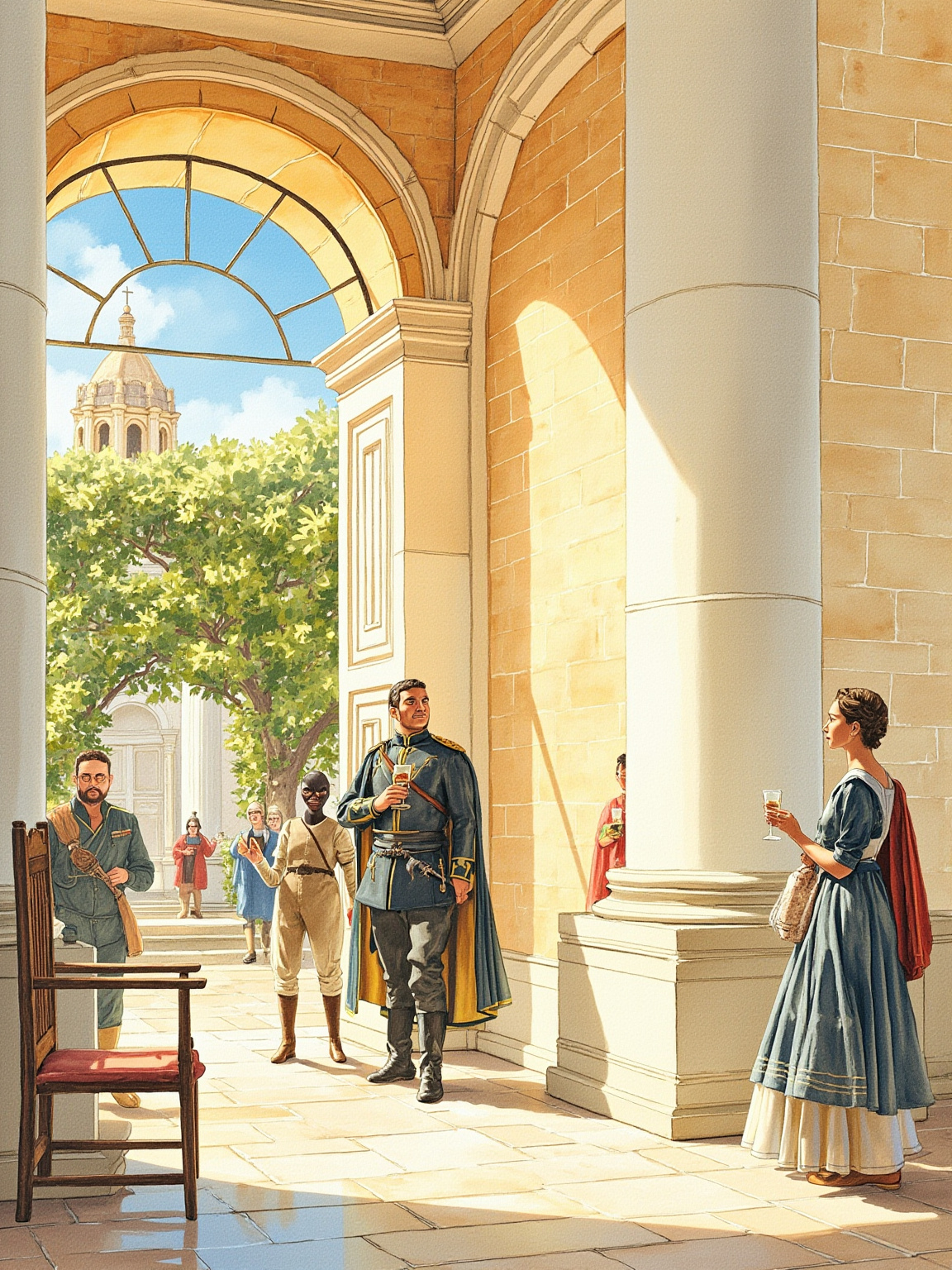
What fire is in mine ears? Can this be true? Stand I condemn'd for pride and scorn so much?
我耳中怎会这般灼热?这话竟是真的吗?我竟真的为了骄傲和刻薄,被判了这么重的罪?
金句 · 第二幕后段 · 培尼狄克听闻贝特丽丝暗中爱慕
False Witness at the Window: One Kiss Wrecks a Wedding
Meanwhile Don John's plot is moving forward. He has his man Borachio approach Hero's gentlewoman Margaret, who has no idea what's going on, and stage an intimate meeting at Hero's bedroom window. Claudio is led to the scene by his friends and sees, from a distance, a man's shadow slip away from Hero's window. That image becomes his proof. The trick of this scene is that the audience already knows the truth from the start; what they're watching is Claudio walk himself into the trap, one step at a time.
The plot is lethal because it strikes the most vulnerable spot there is: a woman's reputation. In that world, a woman's chastity was practically her family's entire fortune. Hero has done nothing wrong, but she can't defend herself, because being seen at the window is, on its own, enough to convict her. Shakespeare doesn't give Hero a chance to argue her case; he lets rumor write the script for her instead.
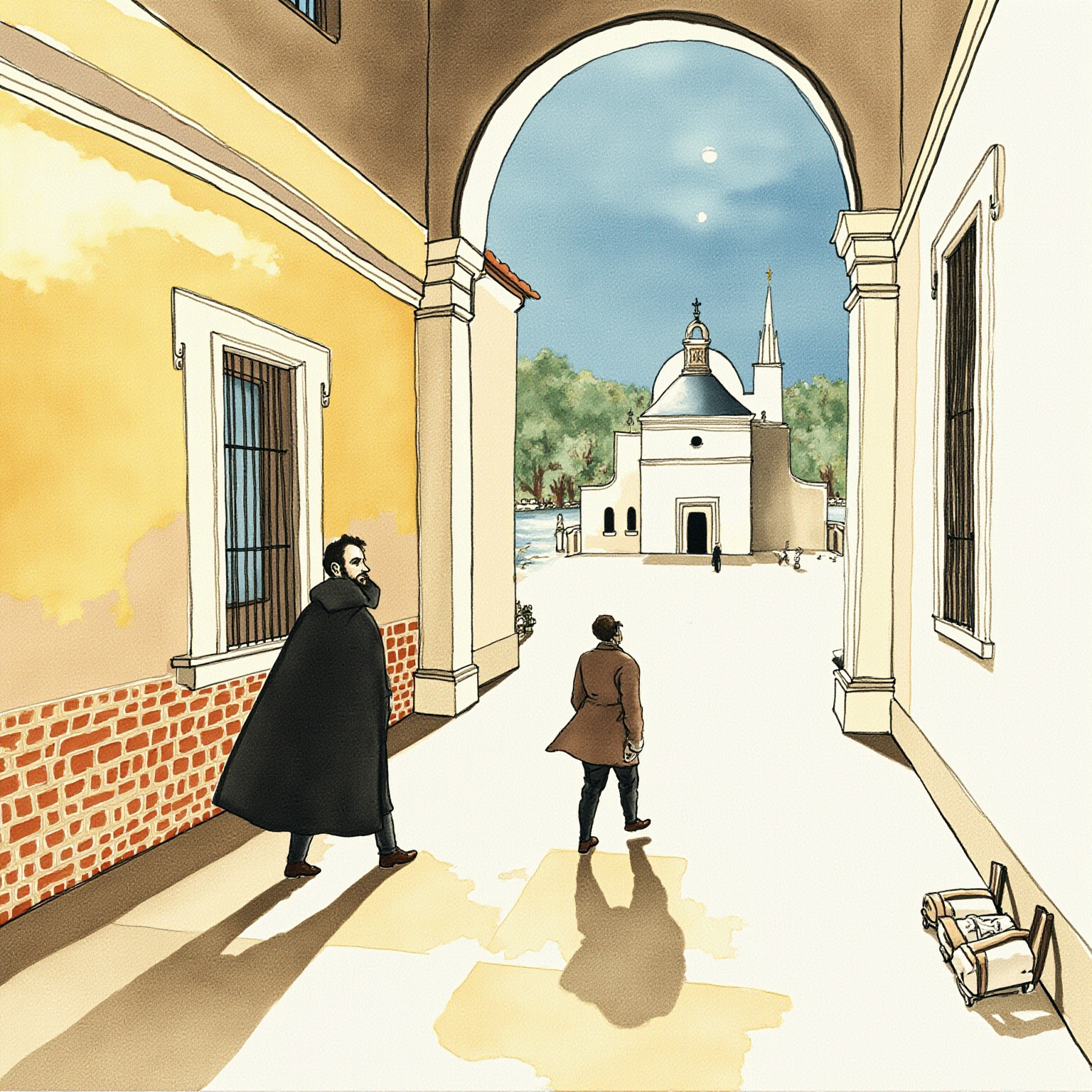
I never tempted her with word or deed, nor can I of such accusation clear me.
我从未用言语或行为引诱过她,我也无法替自己洗清这样的指控。
金句 · 希罗蒙冤段落 · 希罗在众人面前的自辩
Wedding Turns Funeral: Public Humiliation at the Altar
In the church, the wedding reaches the altar. Claudio pulls back Hero's veil in front of everyone and delivers a prepared eulogy: he compares his bride to an unchaste statue and her father to a gray-headed old fool. Before the guests have even understood what's happening, he has already abandoned Hero at the altar. She faints on the spot, and her family rushes her away, then announces to the world that she has died. There's no blood in this scene, no blows. Shakespeare writes it as an emptied church, guttering candles, scattered wedding flowers, overturned chairs. The conflict happens in the silence that follows.
The faked death is not just a plot device. It gives Hero a hidden identity, letting her reappear before Claudio as Leonato's niece, and it gives him a chance to repent without being publicly exposed. The double wedding later on only works because of this disappearance.
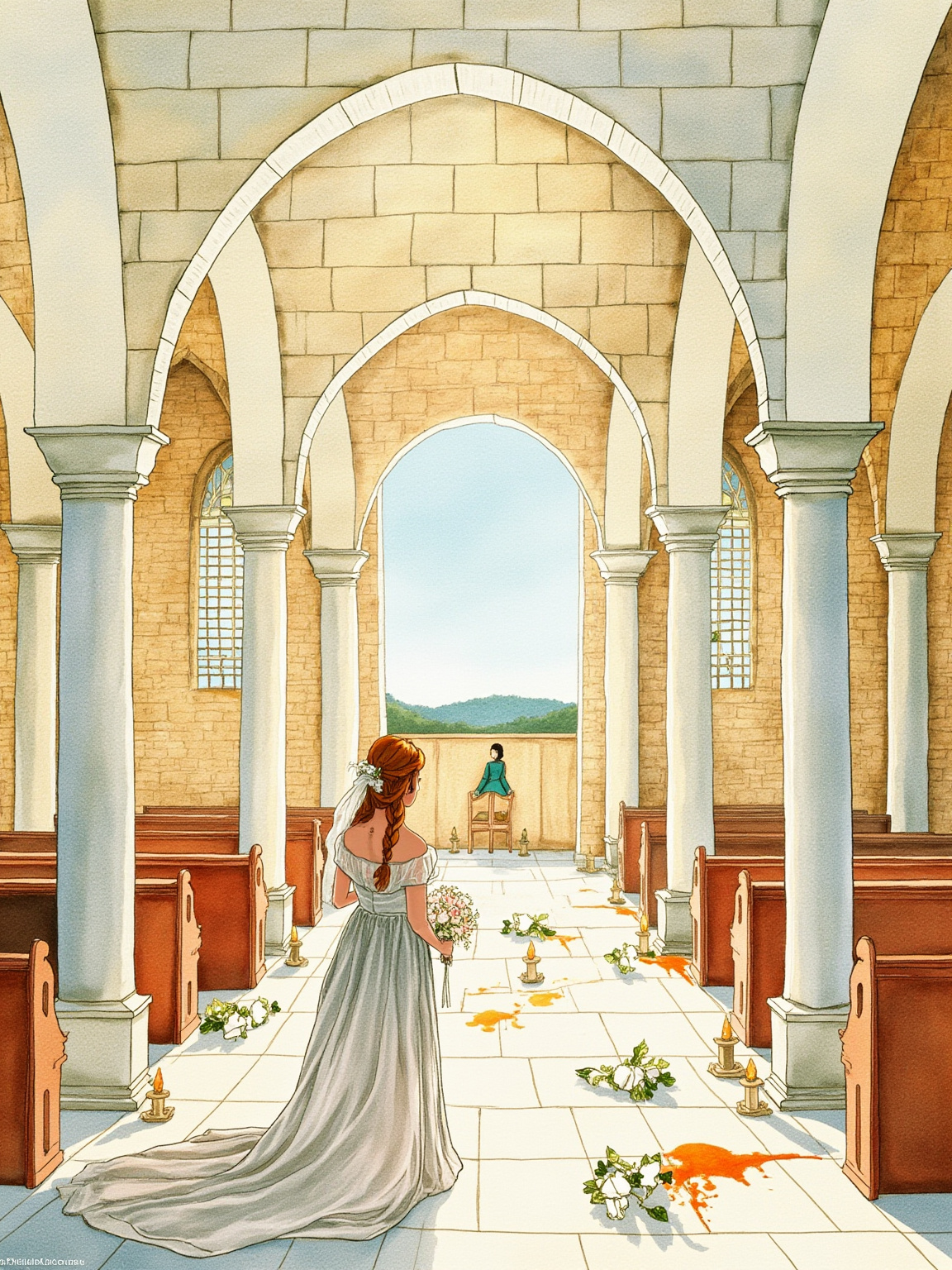
Would you not have me virtuous? Virtue itself turns vice, being misapplied.
您不是要我做个贤德之人吗?贤德若被用错了地方,便也会反过来成了罪名。
金句 · 假死段落 · 希罗之死前后的悲恸与沉默
The Watch Bumbles Into the Truth
Don John's plot could have died quietly, except Borachio can't keep his mouth shut. In a tavern he brags to a friend about the whole staged scene at Hero's window, while the night watch sits within earshot, mugs of ale in hand. The next day Dogberry, the constable whose every sentence trips over its own big words, hauls Borachio and his accomplice straight into a cell. The truth is out within a day.
Dogberry is a wonderful piece of writing: he stumbles over his words, rambles, drowns every sentence in stock phrases, and yet he is one of the two least likely people in the play to crack the case. Shakespeare loves this move in his comedies, letting an overlooked minor character turn the plot, a watchman, a servant, a messenger, someone who moves the ending more than the hero does. This thread yanks the mood back from the tragedy building in the church. The audience is on the verge of tears, and then Borachio gets arrested.
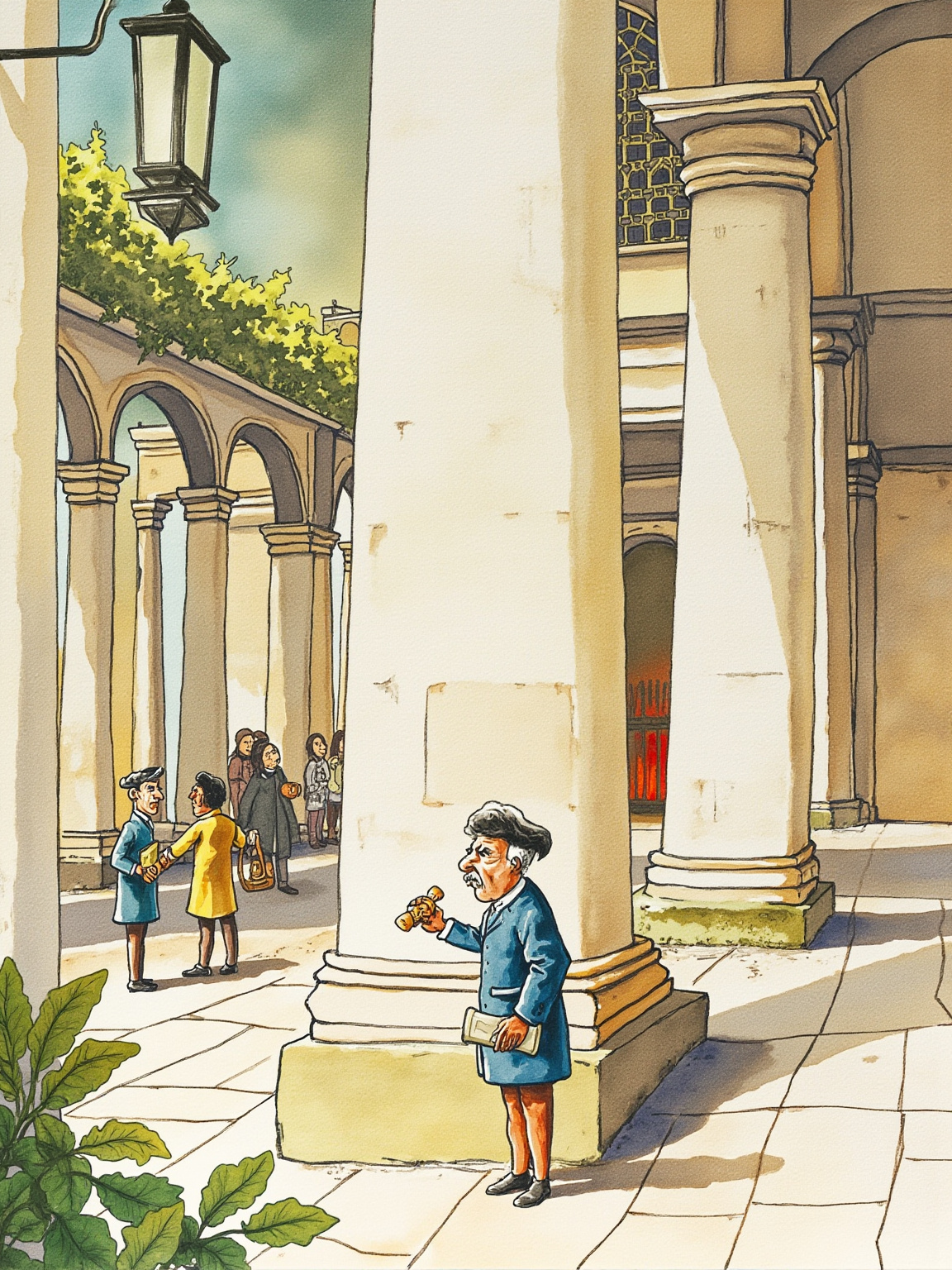
Is our whole dissembly appeared? Then all the war is o'er, and we may smoke at it.
我们这一场假戏,竟都露了馅?那仗也打完了,咱们尽可以坐下来喝一杯。
金句 · 真相大白段落 · 巡夜官道格培里的破案笑谈
The Garden Trap: Two Proud Holdouts, Both Fooled
Before the truth comes out, Leonato's circle has already set its trap in the garden. First Benedick hides behind a tree and overhears Hero and her gentlewoman talking about how much Beatrice supposedly admires him. Then Beatrice hides somewhere else and happens to overhear the same friends describing how lovesick Benedick has become over her. Both of them believe it, not because they have gone soft in the head, but because the words come from friends who would never say such a thing to their faces, which makes the words land harder. Shakespeare keeps this scene restrained: two proud people, each alone, slowly admitting to a tree that they are in love.
What makes the eavesdropping trick work is that it doesn't manufacture love, it waits for love that's already there to surface. Benedick and Beatrice have cared about each other for a long time; neither one would be the first to admit it. The garden scene just plants the news that the other side moved first, and gives each of them an excuse to climb down. The real skill here is getting a pair of proud people to accept love while letting them believe they had no choice in the matter, and the audience, seeing straight through it, enjoys it all the more.
The Veiled Return: A Penitent Groom, a Bride in Disguise
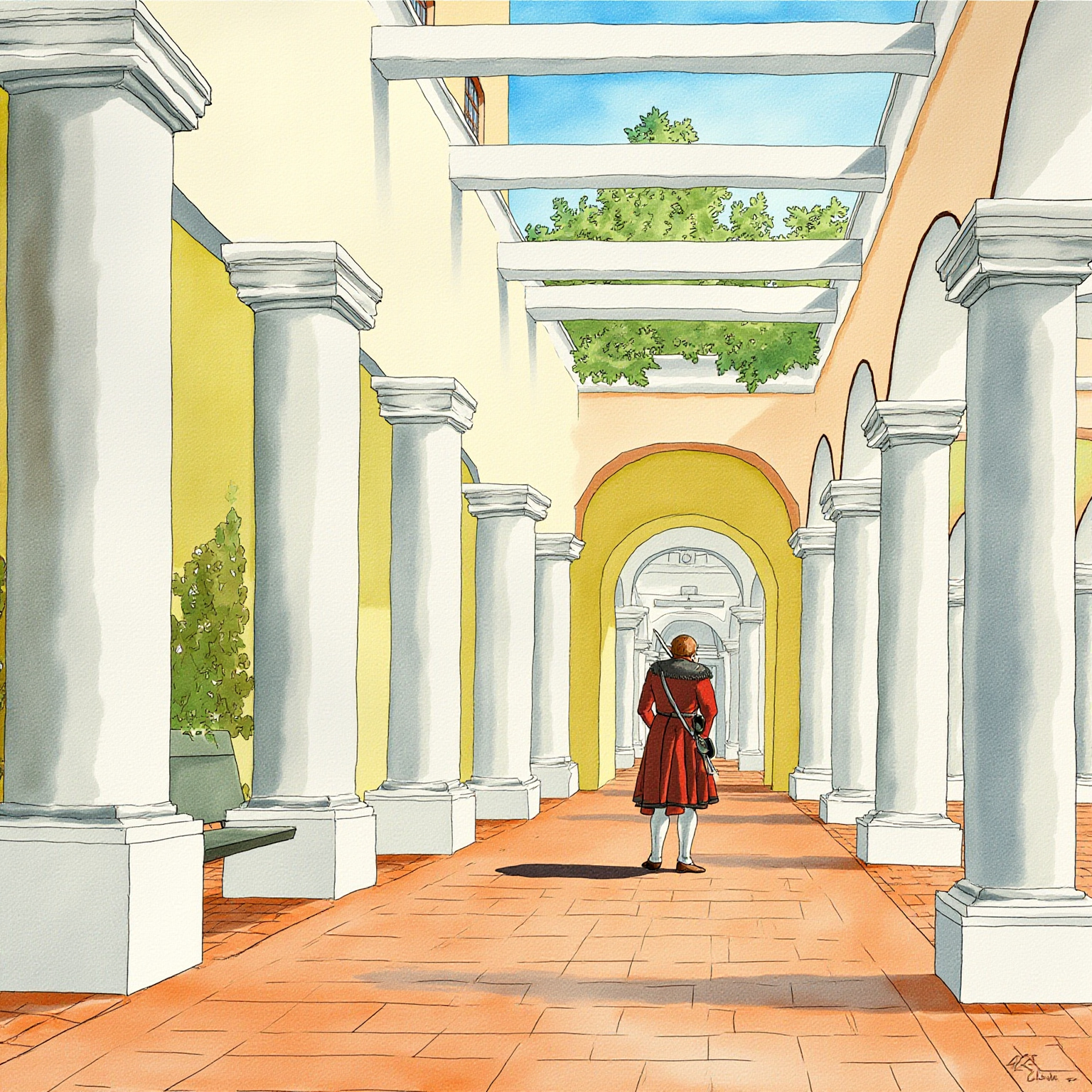
Once the truth is out, Leonato offers Claudio a cruel kind of amends: marry Leonato's niece, who is actually Hero herself behind a veil. Claudio kneels before this false niece and confesses the humiliation he caused, insisting she deserves him more than Hero ever did. Shakespeare keeps the confession spare and deliberately has Claudio praise the fake bride above the real one, so the regret takes on a concrete shape. The moment the veil comes off is one of the quietest few seconds in the whole play.
Hero's silence is the hardest part of this scene to write, and the hardest to play. She doesn't sob or forgive him out loud; she simply stands there and makes Claudio face her. Shakespeare has already made the audience suffer on her behalf for a few minutes, and now he puts her in the position of the victor, without letting that victory turn into revenge. That restraint is why the play still holds up today.
The Double Wedding: Two Marriages, One Resolution
The ending returns to the church. Claudio and Hero renew their engagement, while Benedick and Beatrice announce that they have secretly been engaged all along, one of the play's last sly reversals: the two people who spent the whole play insisting they would never marry turn out to have moved first. Beatrice still can't resist one last jab, insisting he only agreed to marry her because he'd been tricked into it, and Benedick answers by daring her to keep mocking him and see who breaks first. In the end Don John is under guard, his accomplices in custody, the watchmen rewarded, and the whole city turns to celebration.
Shakespeare plays one last trick at the close: he has the pair of squabblers admit, in public, that each only gave in because the other gave in first, and since neither will confess to surrendering, the wedding turns into one more round of trading barbs. This isn't the ordinary happily-ever-after. It's more like two clever people negotiating in public, neither willing to be the one who looks like they care more.
Theme and Craft: A Comic Shell, a Sharp Core
On the surface this is a comedy of sharp tongues and mistaken identity, but underneath it there are three hard bones. The first is rumor and misreading: Don John never has to make Hero actually unfaithful, he only has to make Claudio believe it, which reads almost like a prophecy of the social-media age. The second is language and love: Beatrice and Benedick wrap every tender word in mockery, and whoever unwraps it first loses. The third is reputation and forgiveness: Hero's faked death and her disguise as the niece give this comedy room to handle a question that belongs, by rights, to tragedy: how a woman rebuilds herself after her reputation has been destroyed.
Shakespeare's method here isn't accusation, it's misdirection: the real villain gets caught bragging, a muddled constable solves the case, proud people soften alone in a garden. That arrangement lets the audience think through serious questions while they're still laughing. It's also why Much Ado About Nothing is still staged four hundred years later. It hasn't aged out, because its real subject, how reputation, rumor, and pride coexist with love, gets rewritten by every generation that reads it.
Shakespeare's trick is getting two proud people to accept love while letting them believe it wasn't their choice, and the audience, seeing straight through it, enjoys it more for that.
Why the Play Is Still Worth Reading, Spoilers and All
A guide gives you the map. The play itself is the ground. What this play really lives on is language: every line of Beatrice's carries three barbs pointed in different directions, and Benedick has to parry each one and hand back a new barb within three beats. That rhythm of dialogue is a completely different thing on the page than it is summarized secondhand. The scene where Hero faints in the church has no blood, no shouting, just an empty chair, scattered flowers, and the back of someone kneeling on the floor, and that kind of restraint is more than any plot summary can hold. Once you already know what happens, reading the real text lets you notice the details the tension usually hides: how seriously committed Dogberry is to his stammering, or exactly how many times Beatrice actually says she'll never marry.
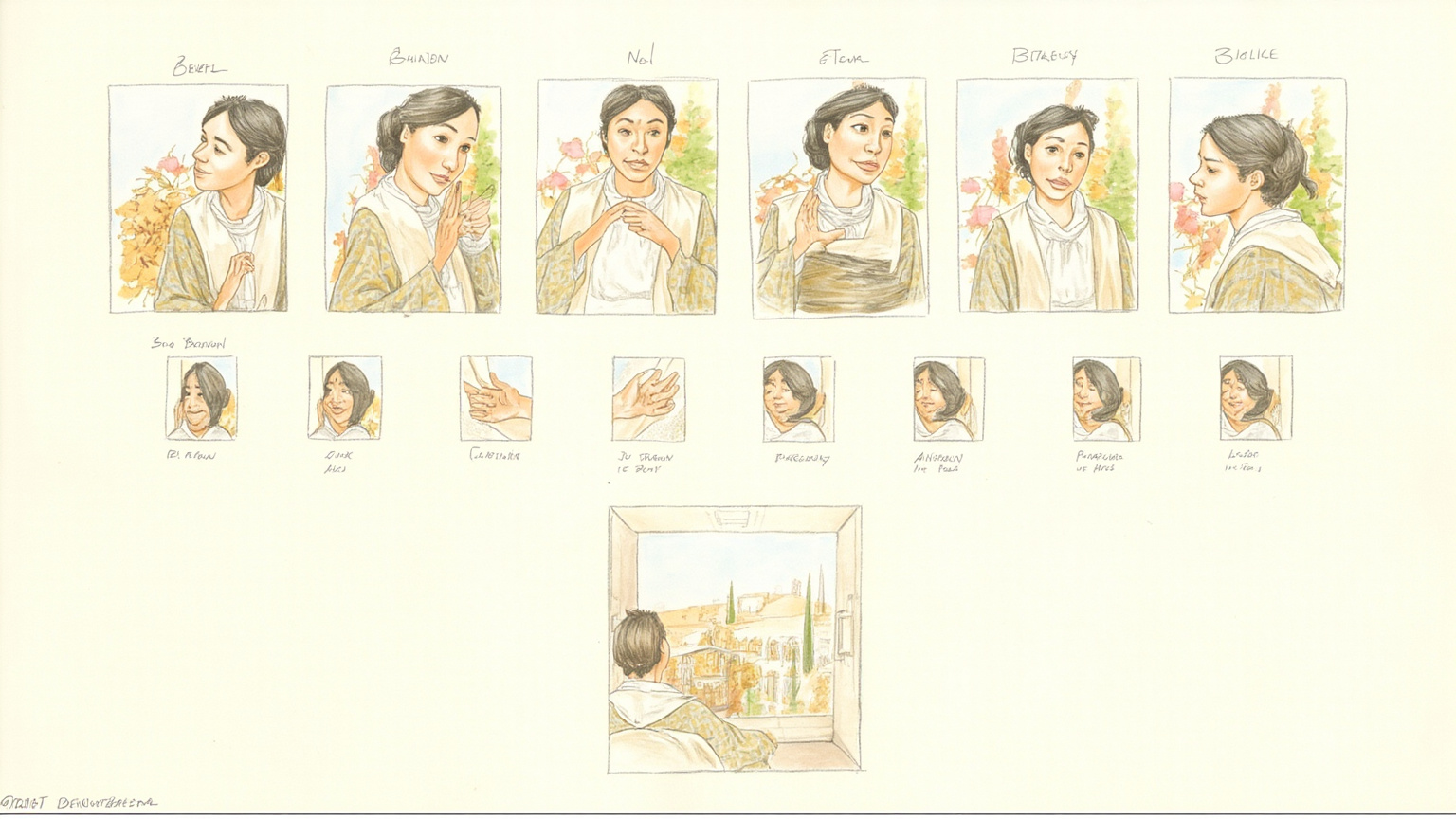
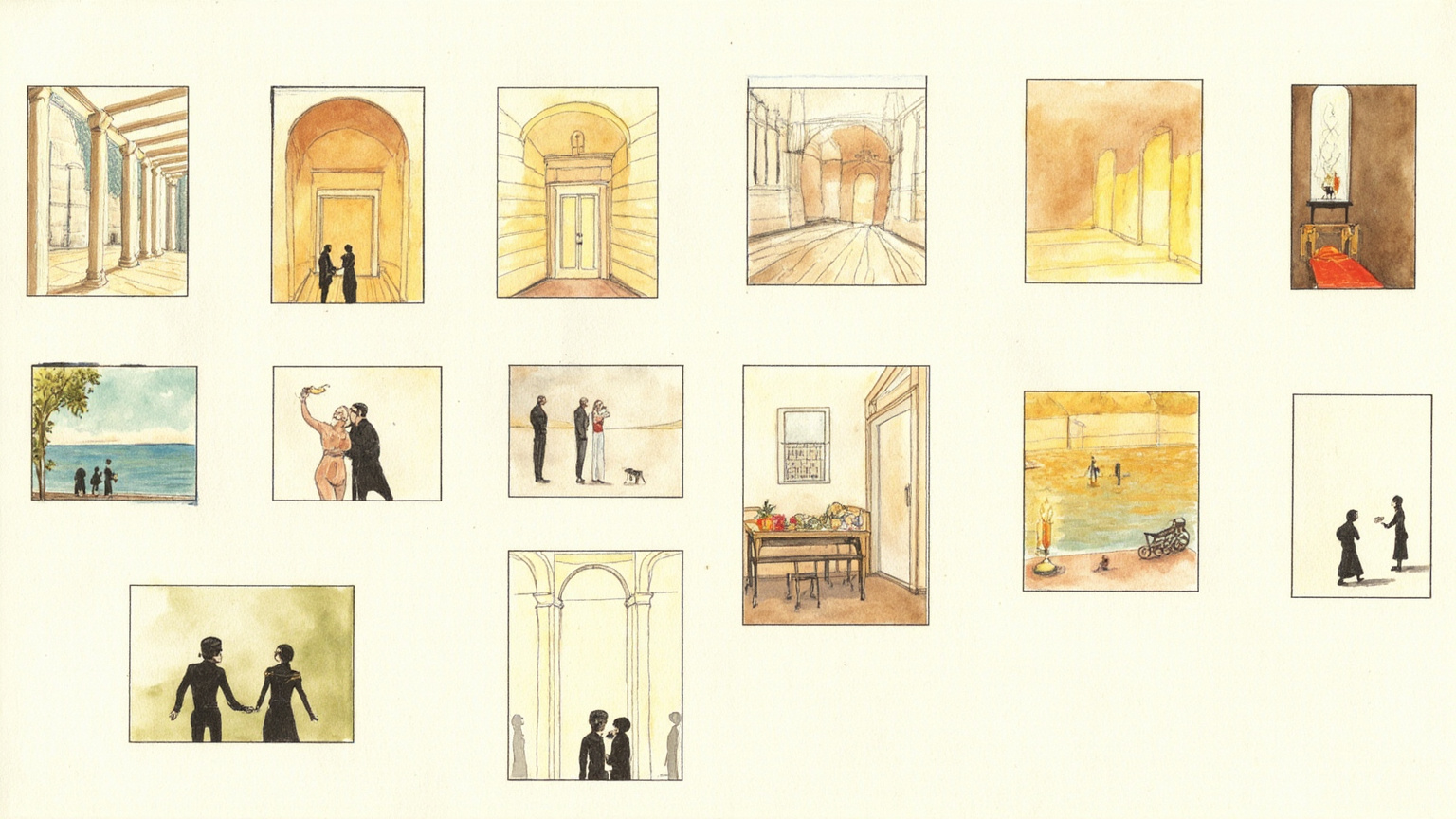
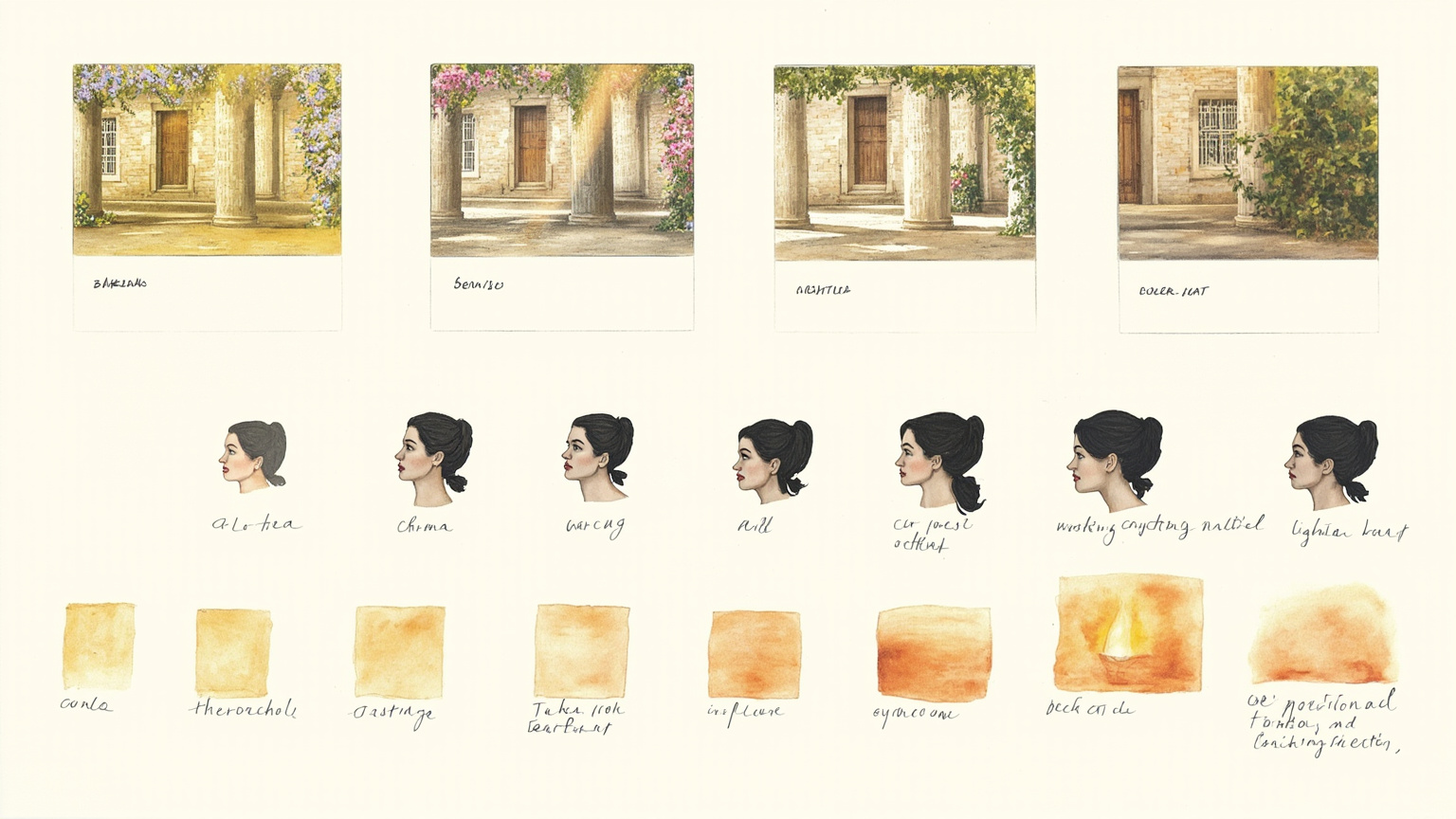
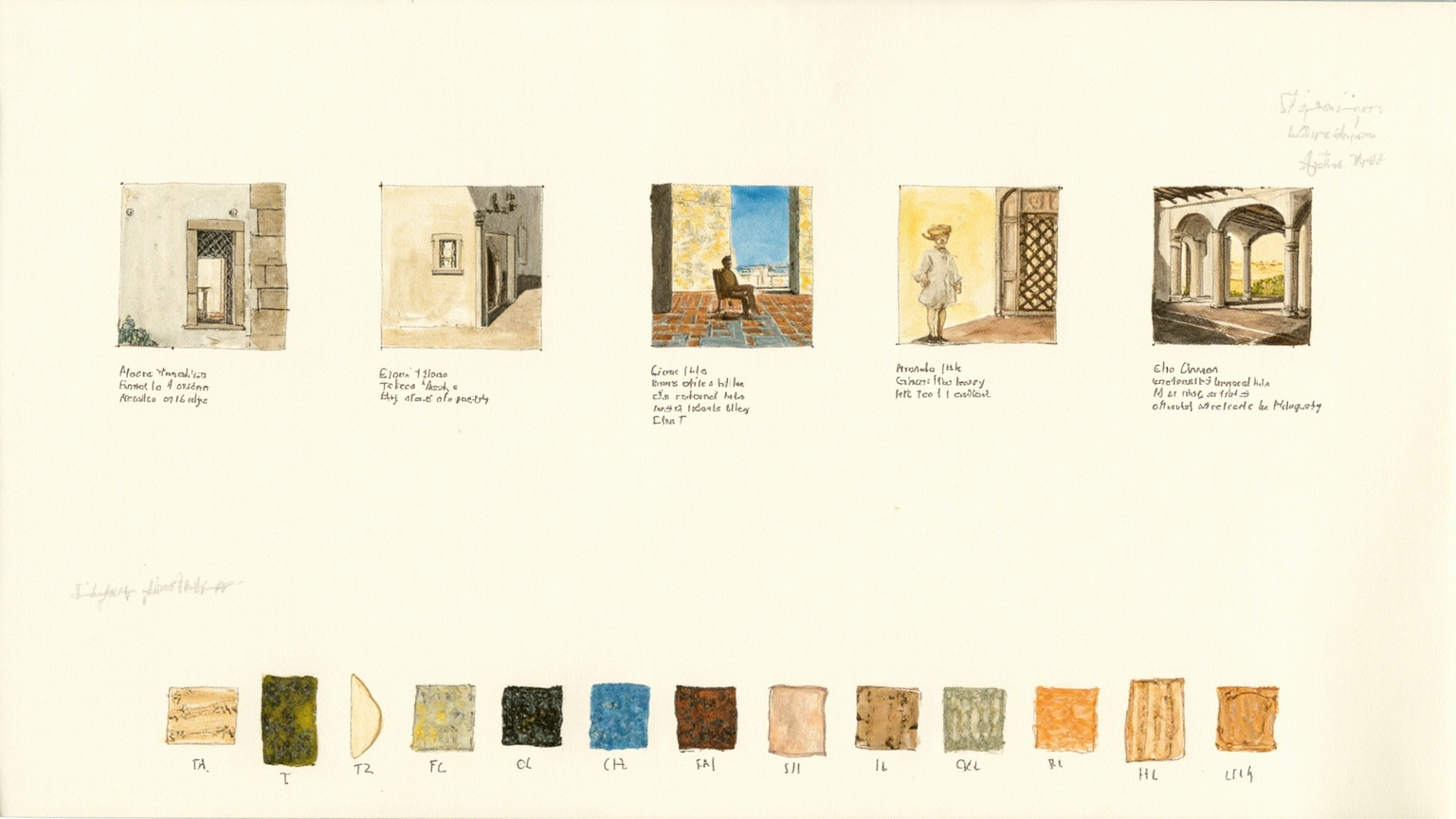
Art Direction4 plates
Before the guide was written, this book got a visual foundation — every illustration you just read grew out of it.