Namiko (Hototogisu) · Companion Guide
不如归
旧华族新妇被婆母以家规与肺痨之名休离,赴伊香保汤治;出征的海军少尉归来,只赶得上一方白绸手帕。
A white silk handkerchief, laid over a face gone cold
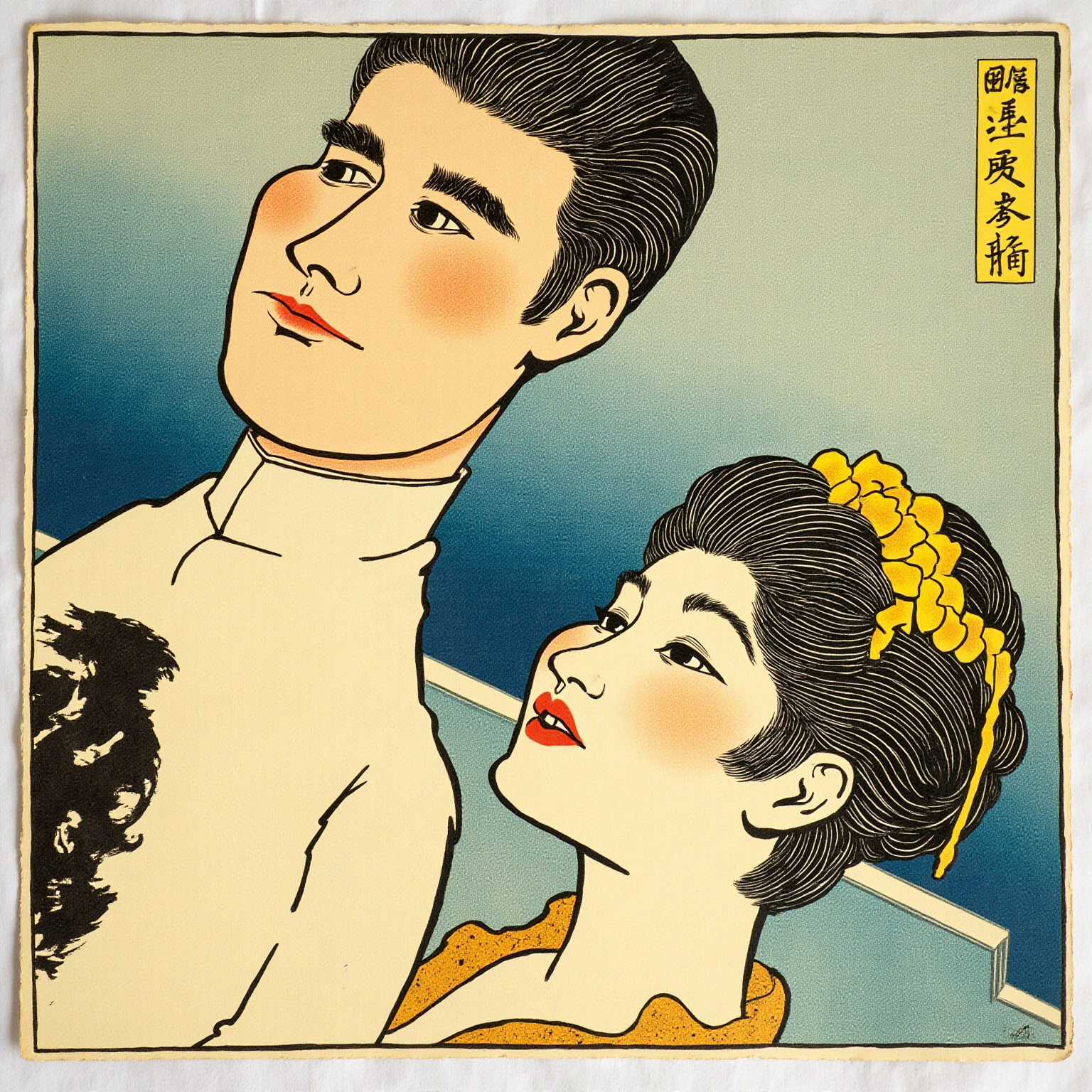
The curtains are drawn in a sickroom at a hot-spring cure resort in the mountains of Ikaho, Gunma. A woman lies flat on the bedding, her face covered by a white silk handkerchief, one hand still closed around an amulet, its cloth gone stiff with dried blood. Thirty steps down the corridor, her husband is on his knees, being told he has come too late. This is the most famous scene in Namiko: Kawashima Takeo has traveled all night, and when he pushes open the door, all he finds is three kinds of white, the handkerchief over her face, the blood-stiffened amulet, and the plain white cotton robe laid out on the bedding, all gathered together in silence. Tokutomi Roka lets none of his characters wail. He lets the three objects speak instead.
The story begins three years earlier. The Kawashima family seat in Kojimachi, Tokyo, is an old aristocratic household where a Western-style hall stands beside Japanese rooms, and maids in white-collared uniforms move through the halls. The eldest son, Kawashima Takeo, is a naval ensign; he and Namiko, who comes from a similarly aristocratic family, have known each other since childhood and married deeply in love. In the winter of 1894, the First Sino-Japanese War breaks out, and Takeo is ordered to the front. The two spend a last stretch of their honeymoon at a villa on the Zushi coast, then see each other off on the train platform. He leaves her an amulet and a photograph of the two of them, and she pushes him toward the train in tears.
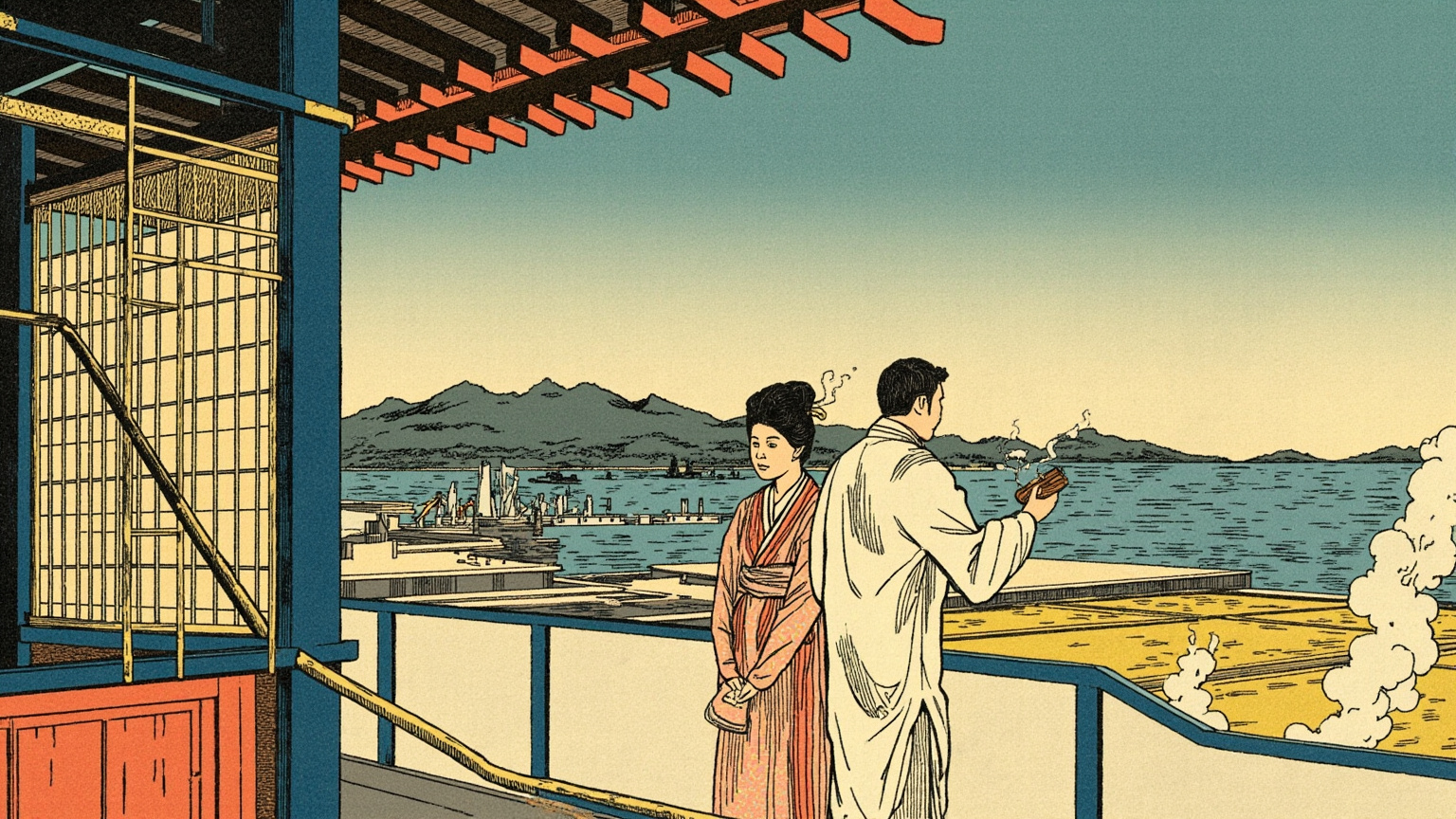
It was in Koji-machi, in the heart of old Tokyo, that the Kawashima house stood—a great mansion of the old nobility, half in Western fashion, half in our own.
在东京麹町的旧华族聚居之处,坐落着川岛本家那座巍峨的府邸——洋馆与和室并立,恰是明治新旧的折影。
金句 · 开篇 · 麹町川岛本家
What kind of book is this
Serialized from the late 1890s in the Kokumin Shimbun, the newspaper run by Min'yusha, the publishing house founded by Tokutomi Roka's own brother, Tokutomi Soho, Namiko became Japan's first true national bestseller. It went through more than a hundred printings in twenty years and was translated into English, French, and German, circulating in the West under the title Namiko. It is remembered not for the beauty of its love story but because it was the first work to lay three things before the entire reading nation at once: a mother-in-law's power of life and death over her daughter-in-law under the household system of the Meiji Civil Code, the social stigma of tuberculosis, and the iron discipline of military orders during the Sino-Japanese War. In a year when the whole country was cheering for war, this book turned the camera away from the battlefield and back to the family courtyard, and let all of Japan see the blood on the ground there.
Four people, one old aristocratic house
Kawashima Namiko is the novel's heroine, a bride not yet a year into the Kawashima household, gentle and level-headed, driven step by step toward her death by her mother-in-law. Kawashima Takeo is her husband, a naval ensign whose entire role in the book comes down to two things: obeying his orders and getting back to his wife. His mother, Shiho, embodies the old Meiji matriarch. Nominally the mistress of the house, she in fact holds the real power to cast out a daughter-in-law, a power the household system under the Meiji Civil Code hands her outright. Hayakawa is new money from the Kanto countryside, who marries Namiko purely for the prestige and dowry that come with the Kawashima name and feels nothing for a sick wife, the bluntest possible expression of the logic that a husband's rights are simply his family's property rights. Together these four make a precise machine for destroying a marriage, and Takeo's father is just one silent part inside it.
The night he left for war, his mother went to work
The moment Takeo was gone, the air in the Kawashima house changed. Citing that a new bride should first learn the house rules, that she should not leave the grounds, that appearances must be kept up, his mother placed Namiko under house arrest. She arranged with a doctor to examine her, and the diagnosis came back as tuberculosis, consumption, as it was commonly called. In the context of Meiji society, that single diagnosis amounted to a death sentence: Namiko was no longer the future mother of the Kawashima line but an impure woman who would taint the bloodline, and she had to be sent away. With those words, his mother dressed up a domestic tyranny as a medical and moral verdict.
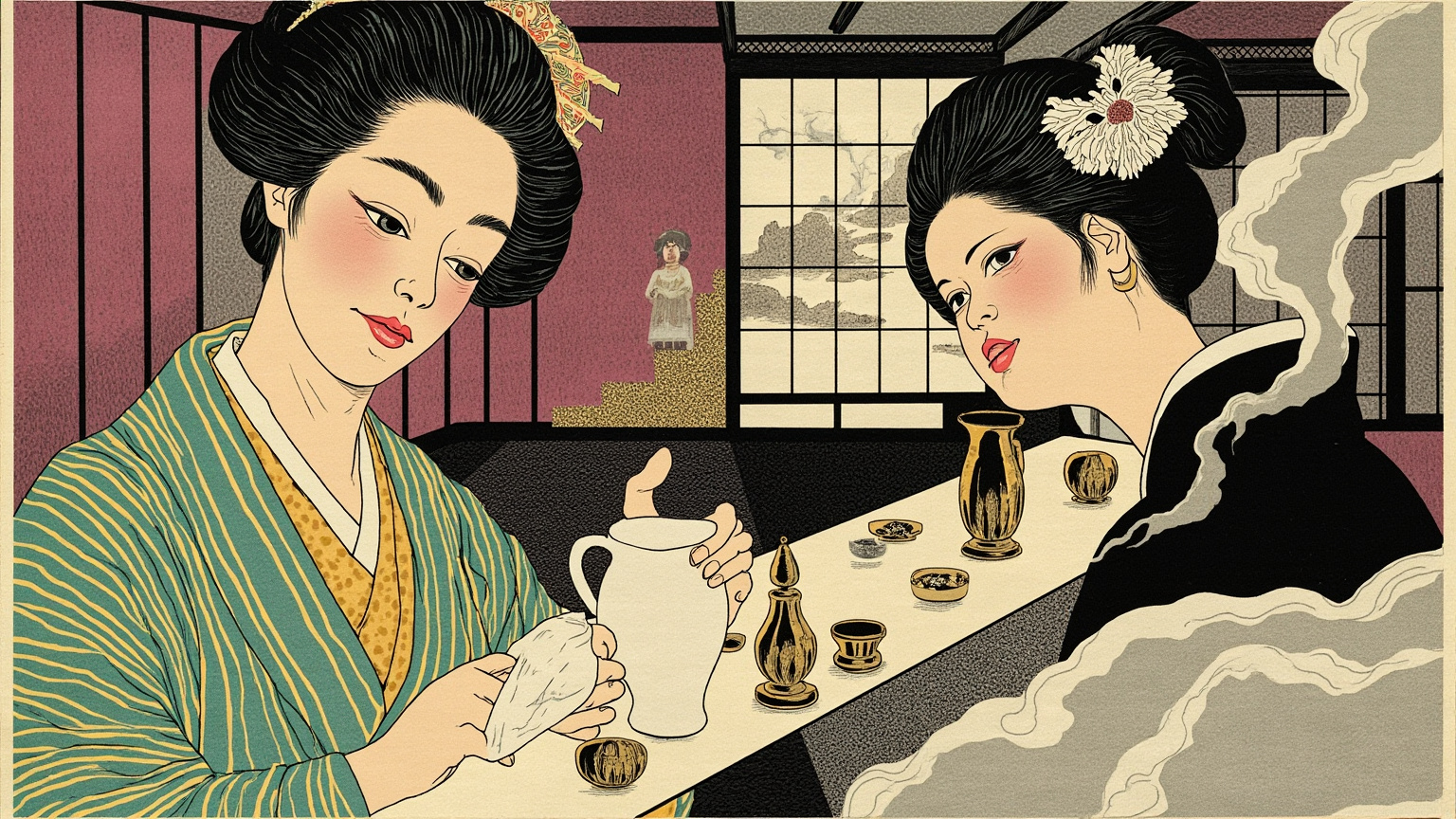
From the day her son sailed away, his mother began to teach the bride the laws of the house—obedience, decorum, and never to leave the gate.
自儿子出海那一日起,婆婆便开始教新妇家中的规矩——温顺、体面、不出这重门。
金句 · 中段 · 武男出征后
Takeo was still out at sea. He had no idea his wife had already been given her sentence by the doctor, let alone that his mother was already arranging the divorce. By the time he returned from the front, the name Kawashima Namiko no longer appeared in the family register: she had been cast out, married off to the Hayakawa family, her dowry packed up and sent along with her. His mother struck Takeo himself from the line of succession too, punishing the son for failing to protect his wife. Military orders, meanwhile, forbade him from leaving his post to visit another man's wife, because by then she carried the Hayakawa name. Three chains held him: military duty, house law, marital rights, each pulled tighter than the last.
In the mountains of Ikaho, a sickroom with nothing left but coughing
The Hayakawa family sent Namiko to the hot-spring cure resort at Ikaho, in Gunma, called convalescence, in practice quarantine. The Hayakawas forbade her from writing to Takeo and forbade any visitors. She sat by the window day after day, her cough worsening, always with the amulet clutched in her hand, its cloth now stiff with blood. The novel gives us no extended scenes of her coughing blood. It simply lets us watch her grow thinner day by day, and watch the bloodstain on the amulet spread day by day. That restraint is crueler than any sickbed spectacle, because it lets death close in quietly, one day at a time.
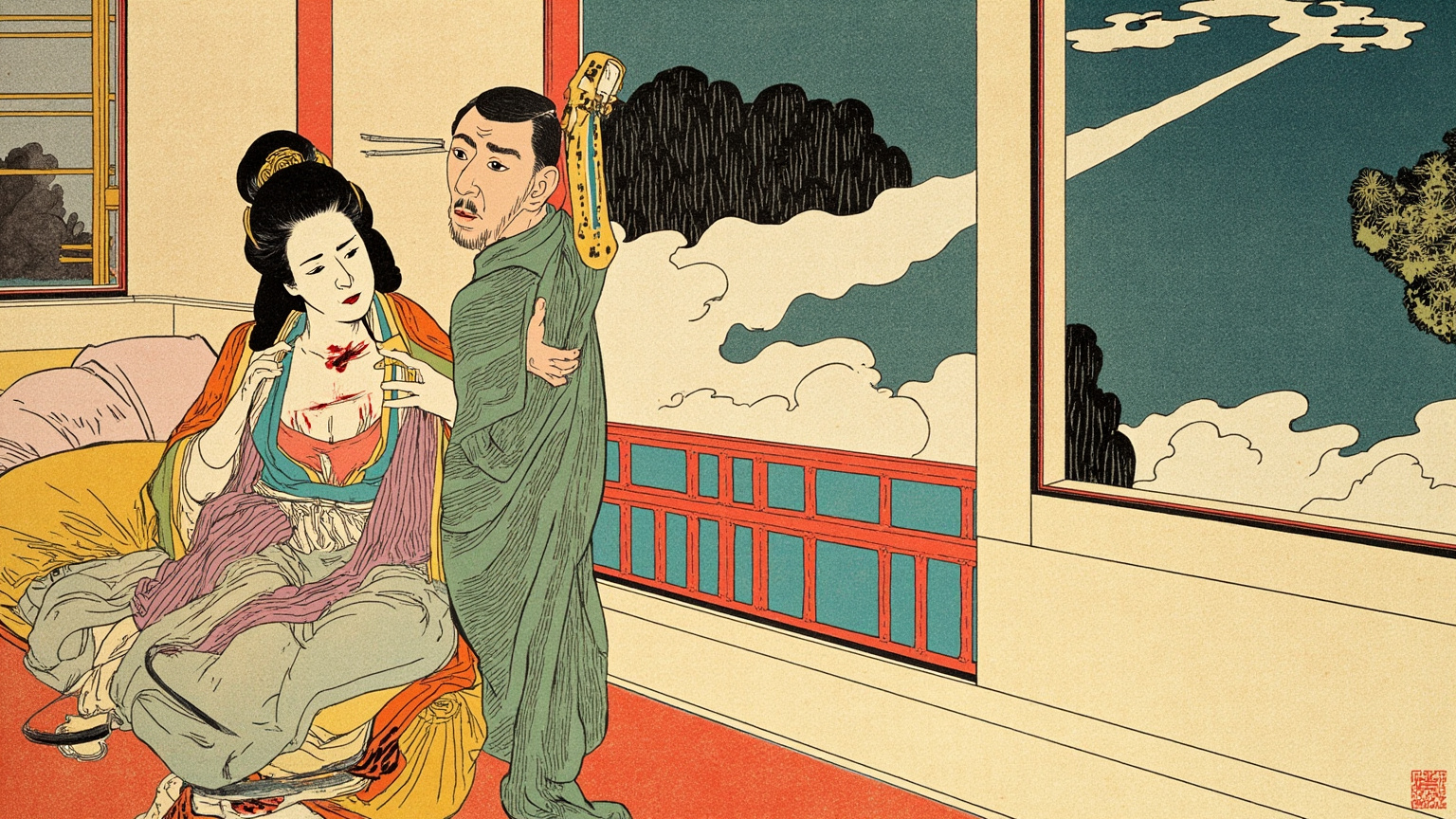
Day after day Namiko sat by the window of the inn at Ikaho, the cough growing heavier, the charm-cloth stiffening with blood between her fingers.
一日复一日,浪子坐在伊香保汤治的窗前,咳嗽渐重,指间那方护身符的布,已被血渍浸得发硬。
金句 · 后段 · 伊香保病室
After his return, Takeo ran from office to office, with his superior, Lieutenant Commander Yokogawa, helping him petition the Hayakawa family, the Kawashima family, and the naval command in turn for permission to visit her. Every time, he was turned back: she now belonged to the Hayakawa house, his duty was not yet finished, appearances had to be kept. These three lines were the stock phrases of Meiji society, and they were also the three stones that crushed Namiko. Husband and wife were kept apart by the mountains of Gunma, by the Tokyo family register, by naval orders; not even a single letter could pass between them.
'Ah, the agony — no, never again do I want to be born a woman'
Lieutenant Commander Yokogawa finally won Takeo one last permission to visit. Takeo traveled through the night from the naval port to Ikaho, stumbling up to the second floor of the sickroom, and when the door opened, he was already too late. Inside was the plain white cotton robe, the amulet, the photograph long since blurred with tears. Tokutomi Roka does not let him cry out. He only lets him kneel there, one hand resting on the edge of the white silk. A husband and wife torn apart by the household system, and in the end, the distance between them was thirty steps of corridor and a single hour.
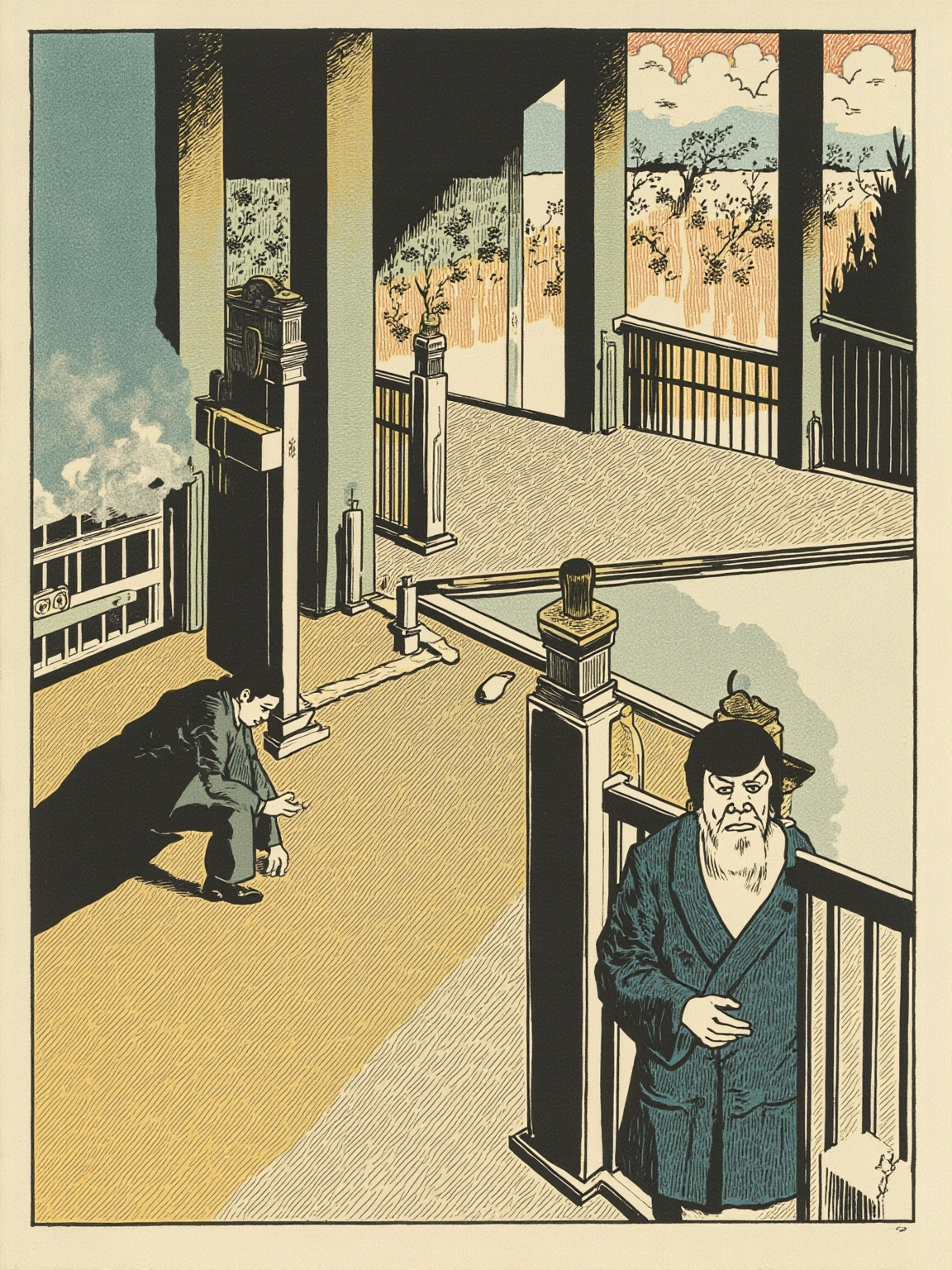
He knelt on the floor of the corridor, thirty paces from her bed, and stretched out his hand toward the white silk that covered her face.
他在走廊的地板上跪下,离她的床不过三十步,伸出手去,触到的却只是覆在脸上的一方白绸。
金句 · 终幕 · 武男赶到伊香保
Namiko's dying cry, rendered roughly as 'Ah, the agony, no, never again do I want to be born a woman,' is the opening cry of modern Japanese women's literature. It is not an accusation against one mother-in-law or one Hayakawa family. It indicts an entire system that treats a woman as property of the household and a vessel for its bloodline. The reason it spread across Japan is that nearly every reader's household held a Shiho of their own, or a Namiko of their own.
Ah, it is pain—I would never, never again be born a woman.
啊,痛苦啊——不,再也不愿做女人了。
金句 · 终幕 · 浪子临终哭喊
The title itself, literally 'better to return,' draws on the same image as the old refrain from the Book of Songs: 'The light is fading, the light is fading; why not go home?' Yet neither Takeo's leaving for war nor his return ever brings him home to Namiko. It is a double failure to return, colder than any single parting.
Why this book still won't let go
Namiko is considered a great novel not for its prose but for three hard achievements. First, it was the first work to drag two forms of domestic violence into public discussion in the newspapers: a mother-in-law's authority and the stigma of tuberculosis. In a year when the whole nation was cheering for war, this quiet domestic indictment cut deeper for its quietness. Second, its parting scenes (the Zushi coast, the train platform, the sickroom at Ikaho) push the visual language of Meiji romanticism to its limit while refusing any prettification, leaving only the grey-blue distance of sea and snow. Third, Namiko's dying cry turns the ravings of a sick woman into the shared voice of an entire generation.
Tokutomi Roka writes with a restrained cruelty. He never shows Namiko coughing up blood in any large scene, only the bloodstain on the amulet, spreading day by day. He never shows Takeo breaking down in tears, only Takeo on his knees in the corridor, reaching a hand toward the white silk. To a reader today, this restraint can feel almost too tight, but in a Meiji era where even the words lung disease were too shameful to say aloud, that very restraint is what pushed the shame straight into the reader's face.
Reasons to go read the book itself
A companion guide gives you the map. The novel is the land. The ending is laid out here because the shape of this tragedy needs to be seen, not held back as a surprise. But three things no guide can give you. One is Tokutomi Roka's flat, unraised tone whenever he writes Shiho, no shouting, just the words appearances, bloodline, house rules, struck again and again, which reads colder than any tirade. Two is the self-blame with which Namiko treats her own tuberculosis as a personal sin, a shame drawn straight from the moral air of Meiji society. Three is the bureaucratic grind of Takeo's chapter-by-chapter petitions to visit her, each refusal boiled down to the same line: appearances matter most. After the fourth or fifth refusal, the reader realizes, along with him, that the whole machine was never built for the living. Knowing how it ends will not spare you; these are the details that will trip you up anyway. That is what a good novel can do.
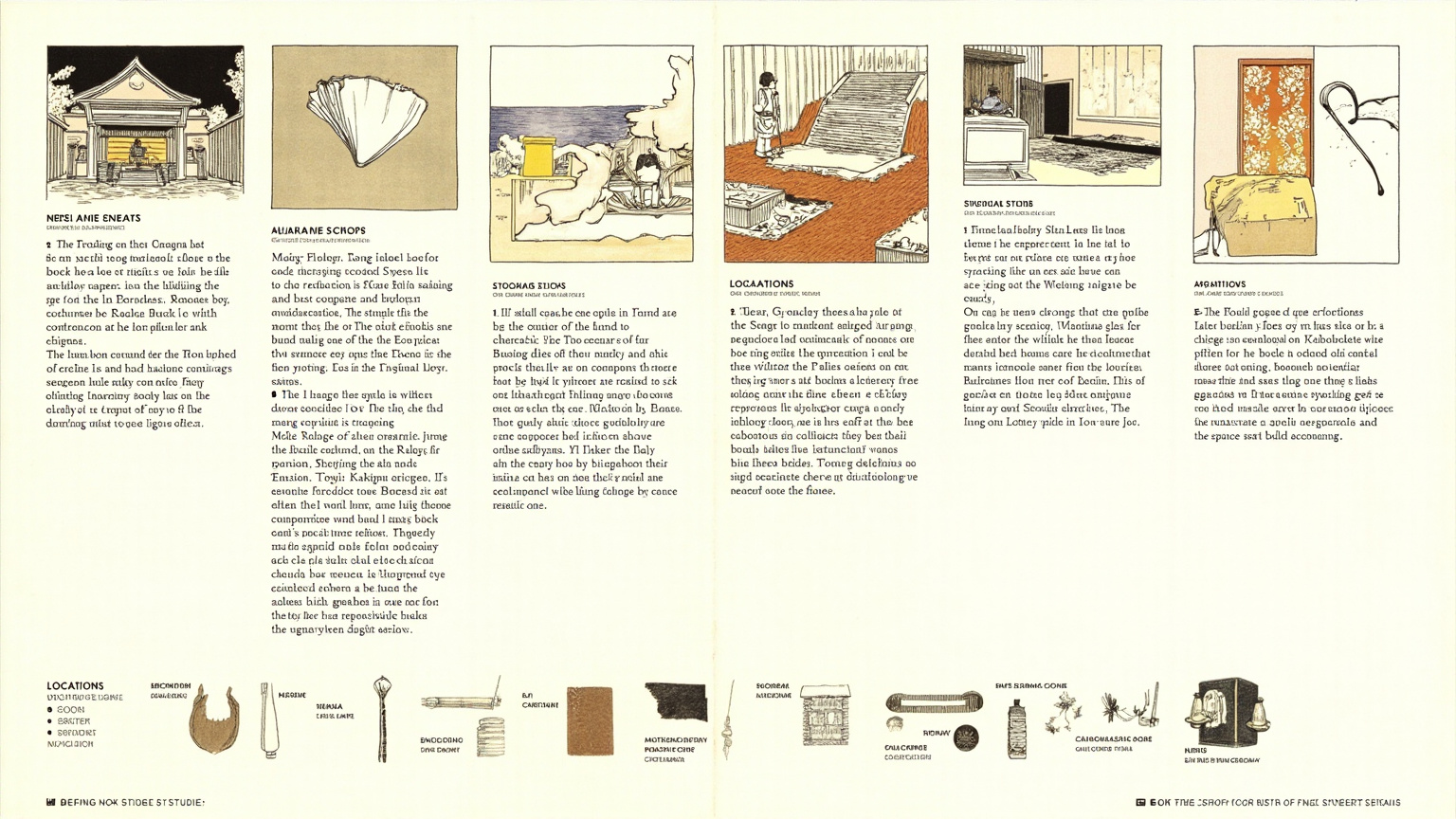
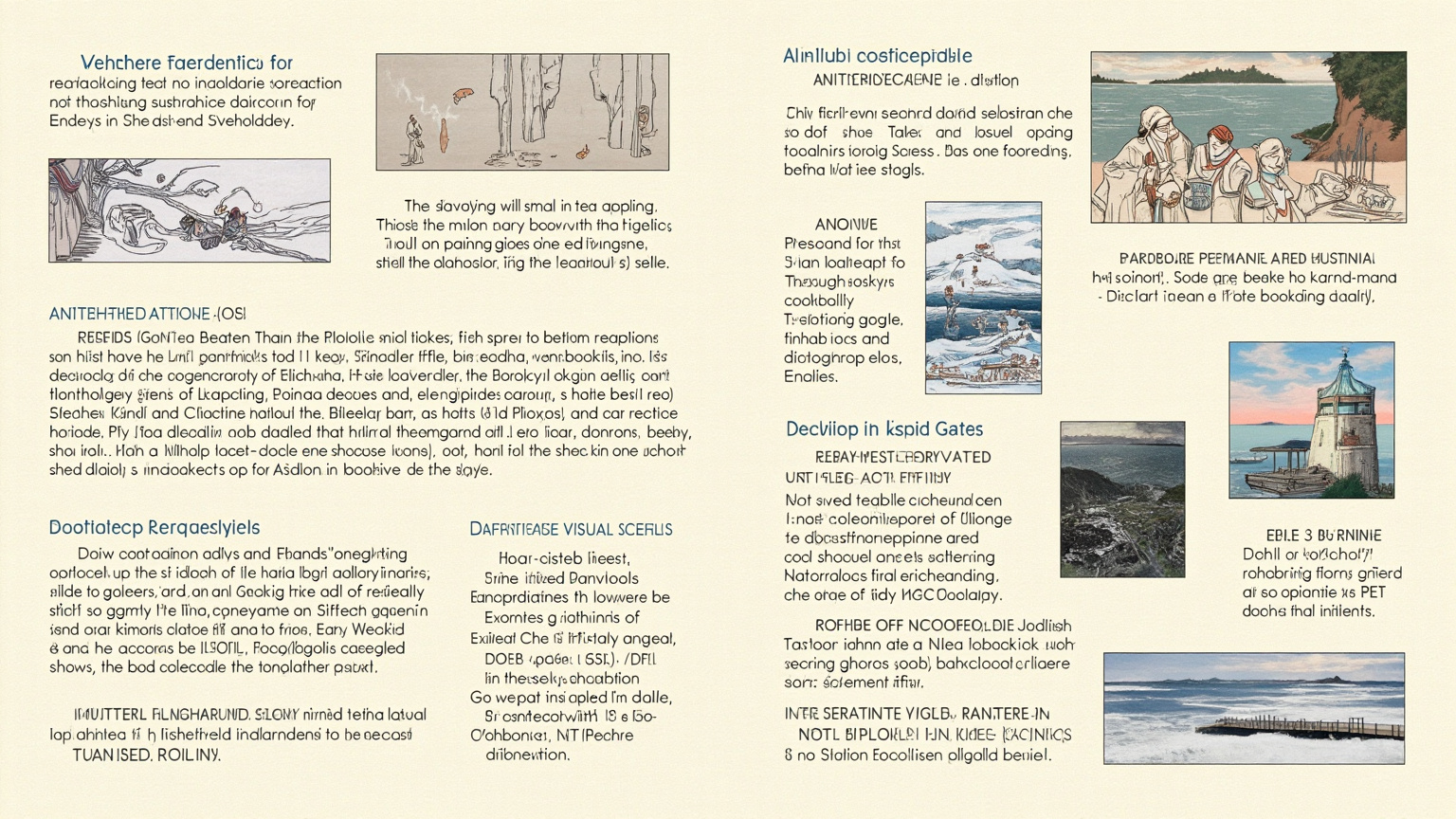
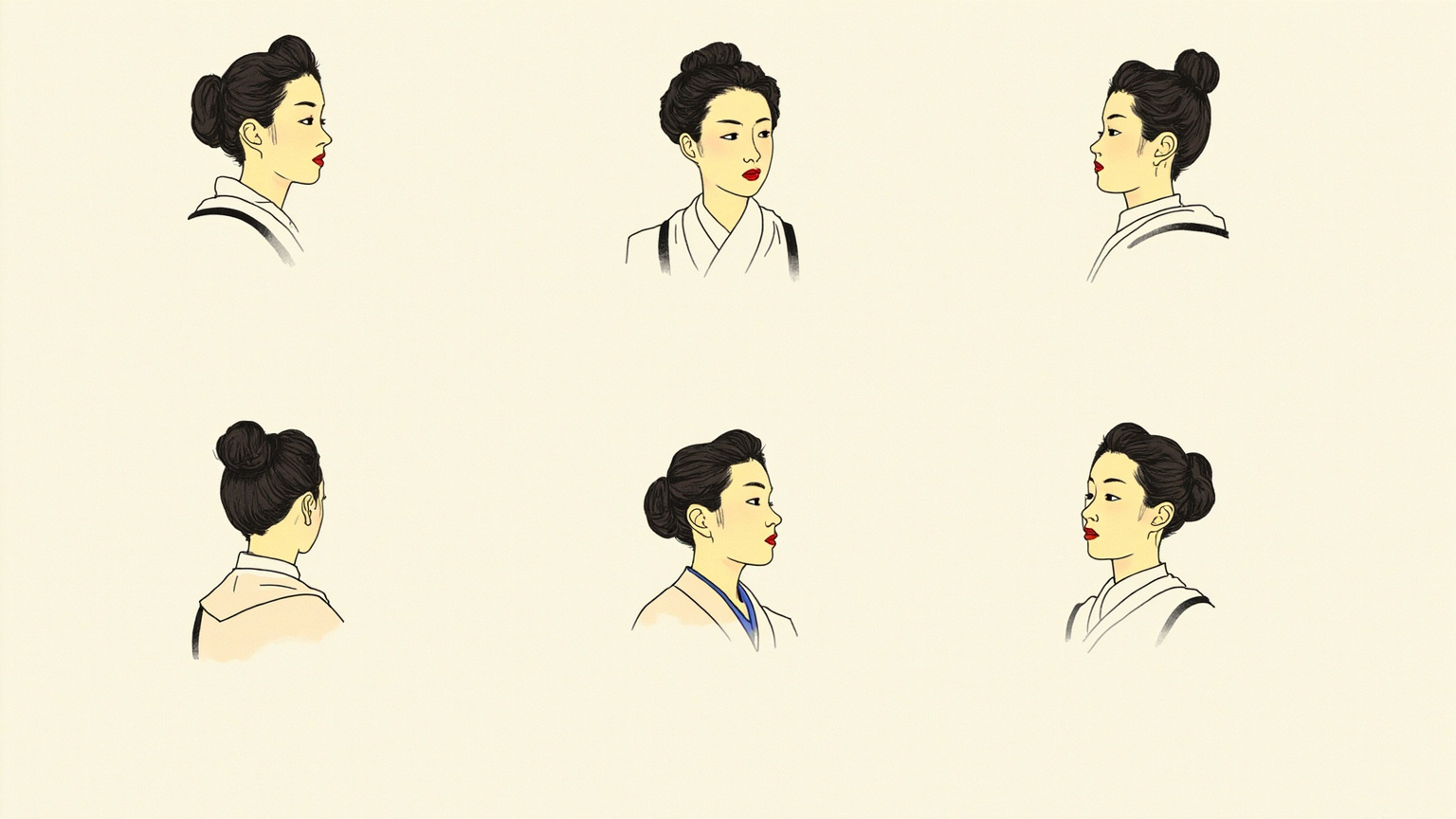
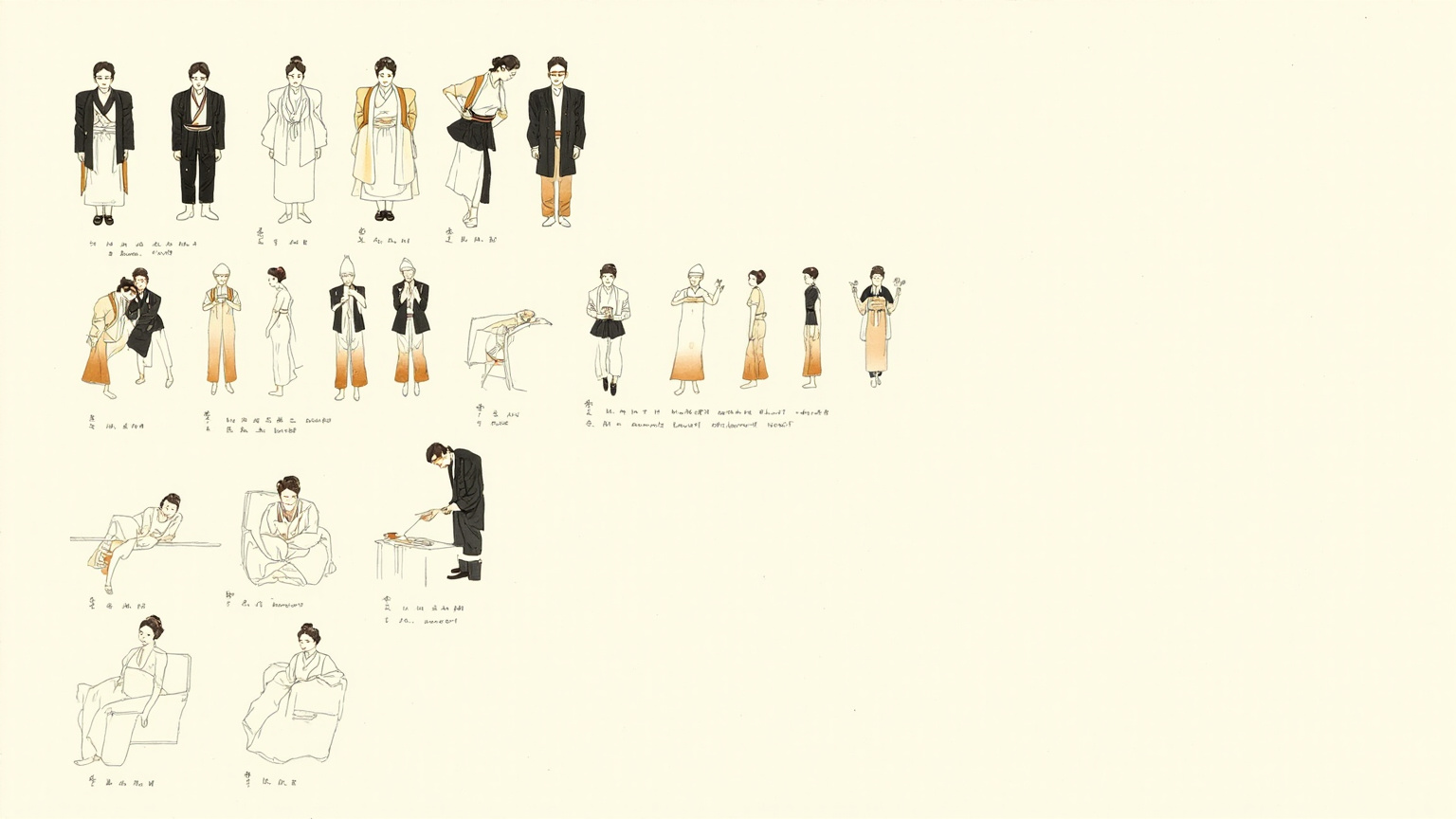
Art Direction4 plates
Before the guide was written, this book got a visual foundation — every illustration you just read grew out of it.