The Nine Cloud Dream (Kuunmong / 구운몽) · Companion Guide
九云梦
衡山松下那一念,铺成八卷大唐;八美齐聚那一瞬,一场火便烧回了莲花峰下的禅房。
Opening: A Smile, Three Hundred Years Deep
In a meditation hut below Lotus Peak on Mount Heng, the pines outside stood still in the windless air. The young monk Xingzhen had been sitting cross-legged all day when a woman from the convent next door passed by and smiled at him. That was all it took. Some string of discipline he had spent years tuning in his own mind went slack, and he knew it had. That night he knelt before his master under the pines and confessed the thought. The master looked at him for a long time, then said only: go and be born again.
That sentence sent him into eight volumes of Tang China. Top scholar, frontier general, the pleasure houses of the south, an imperial princess — he gathered them all in, one after another, until he had reached the very top. Then a fire came, and burned it all into cloud.
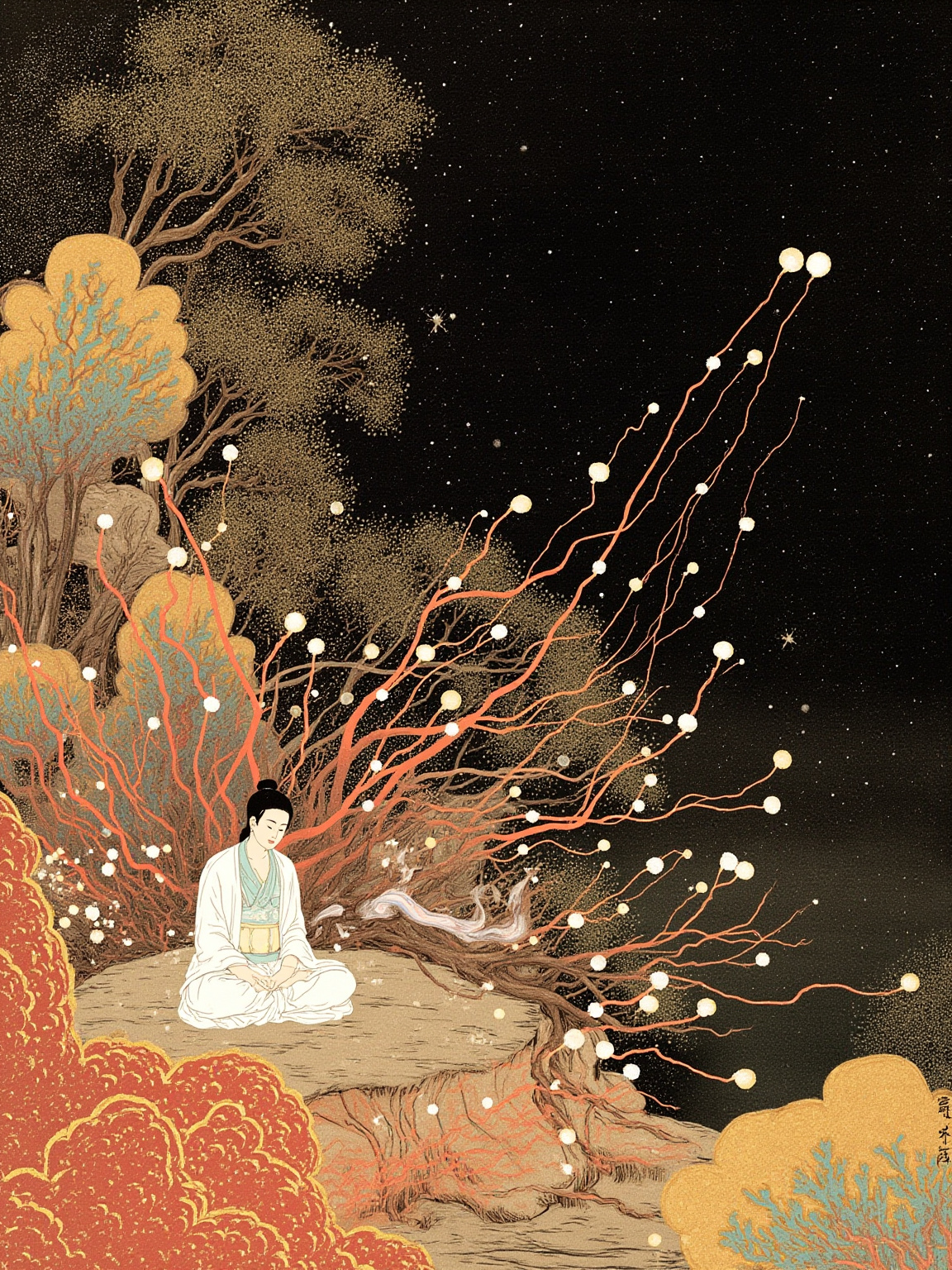
The woman smiled once, and the years of meditation fell away in a breath.
邻庵女子偶过而一笑,数年禅定,一念尽倾。
金句 · 开卷 · 衡山松下
What Kind of Book Is This
The Nine Cloud Dream is a long novel written in literary Chinese by Kim Man-jung, a court official of the late Joseon dynasty, completed in 1687. It had ancestors. Tang writers had already given the world The Governor of Nanke, in which a man dreams his way into an ant kingdom, and The World Inside a Pillow, in which a scholar named Lu Sheng lives out an entire life inside a porcelain pillow. Kim Man-jung took both roots and grafted them together, then packed in eight beauties, an entire frontier, and the whole of Chang'an. The shell is the scholar-beauty romance with frontier heroics that was fashionable in China at the time; what's inside is a rigorous Buddhist parable of awakening.
It was later translated into vernacular Korean and into English, and critics place it on the same shelf as Dream of the Red Chamber, a comparison that also means it arrived a good hundred years before that novel did. Its standing in classical Korean fiction is something like The Scholars plus Strange Tales from a Chinese Studio plus half of Dream of the Red Chamber added together. But the vein of Zen running through its bones belongs to no one but itself.
Characters and World: Eight Women, One Man
The story wears two faces. One is Xingzhen, the monk at Mount Heng whose mind slipped for a moment. The other is Yang Shaoyou, the Tang dynasty scholar he becomes in the dream that follows. They are the same person — one outside the dream, one inside it. That single fact is the axis the whole book turns on, and reading them as two separate characters is the one mistake to avoid.
Eight women surround Yang Shaoyou in this life. His principal wife, Lady Cui, is the daughter of the capital's Minister of Rites, and the steadiest of the eight. Zhang Lizhen is the reigning beauty of the pleasure houses of the Yangtze south, gifted in poetry and music, and the most refined. Lady Yingyang, married during his campaign on the northern frontier, carries the chill of border mountains and cold moons. Gui Chanyue, a princess given to him in marriage by the emperor after his triumphant return, is the grandest and the proudest of the eight. Zheng Qiongbei is the woman whose glance once unsettled Xingzhen in the meditation hall, reincarnated to meet him again, the one whose bond runs deepest. Lanzhu, a Daoist adept, and Qinchuan, a Buddhist nun, walk the last stretch of the dream at his side, both lovers and guides toward the door out.
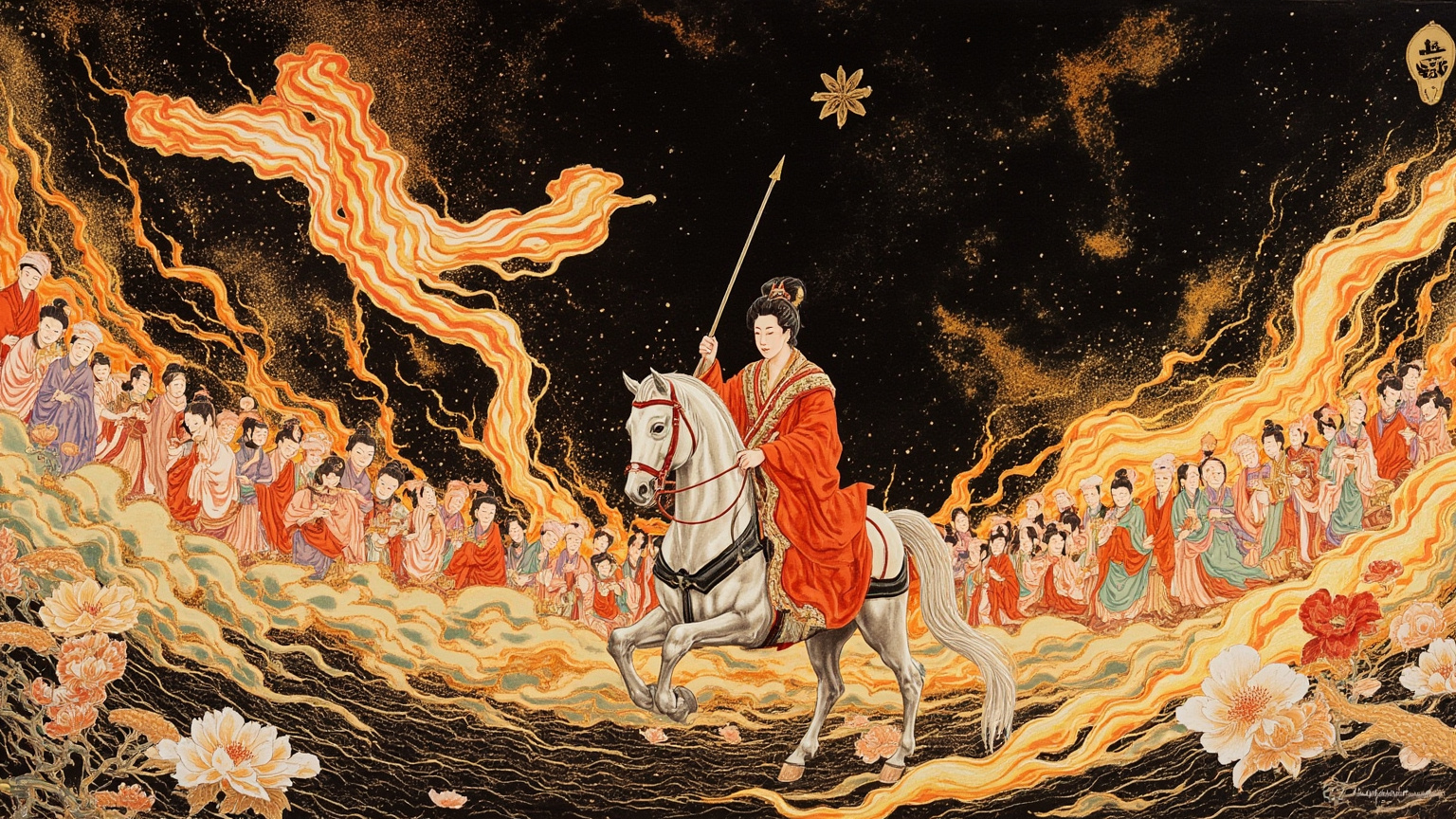
He gathered every blossom the empire could offer, and thought it would last forever.
八美齐收,万种风流,尽揽入怀,恍以为天地从此为我私有。
金句 · 第二卷 · 八美聚长安
Plot: One Thought, Eight Beauties, Nine Heavens, Waking
The story splits into two parts, but they share one skeleton: a dream. The outer part is very short — the meditation hut, the monk, the confession under the pines, the master's one line, go and be born again, and it's over. The inner part is very long. It grows into eight volumes of Tang China.
Yang Shaoyou takes first place in the imperial examination at twenty. He rides a tall horse through the streets of Chang'an with a court flower pinned to his cap, and marries Lady Cui, daughter of Minister of Rites Cui Daocheng, as his principal wife. She is nothing like the ornamental mistress of the back garden that old romances like to trot out — she runs his household, manages his social obligations, and clears his path through the Chang'an bureaucracy. Of the eight beauties, she is the one who looks most like a wife.
The new top scholar turns south, and the road takes him into the Yangtze country. In a spring pavilion among the pleasure houses, Zhang Lizhen (rendered in some translations as Zhang Yuegui) is waiting for him. She writes poetry, plays the zither, and is the kind of confidante the entertainment quarters produce: refinement picked out of the dust, feeling steeped in mist and rain. This stretch of the book has real warmth to it, and none of the leering that hunting for beauty implies. Two clever people are simply recognizing each other in a world built on performance.
Then the road turns north, past the border. Amid the frontier's signal fires he leads troops, wins his battles, and marries the daughter of the Yingyang house, a woman with the grit of northern sand in her. This stretch pushes the whole book past a scholar's romance into something with both pen and sword, and it gives real weight — iron horses, river ice — to what it means for him to throw himself into the world.
Back at court, the emperor is so pleased that he bestows Princess Gui Chanyue of Qiongyuan on him in marriage. The princess thinks highly of herself — beautiful, proud, aloof — and she carries more worldly glamour than any of the other eight. His rank has now reached its peak; he has both the scholar's honors and the general's. What comes after that is the Daoist adept Lanzhu, the Buddhist nun Qinchuan, and Zheng Qiongbei, who keeps meeting him again under different names along the way. The glance that once unsettled Xingzhen in the meditation hall has scattered into several lifetimes of connection, and here, piece by piece, he recognizes his way back to it.
All eight beauties are gathered now — the mansion, the honors, the emperor's favor, the wealth. By this point, the phrase beyond the ninth heaven has carried the man as high as a life can go.
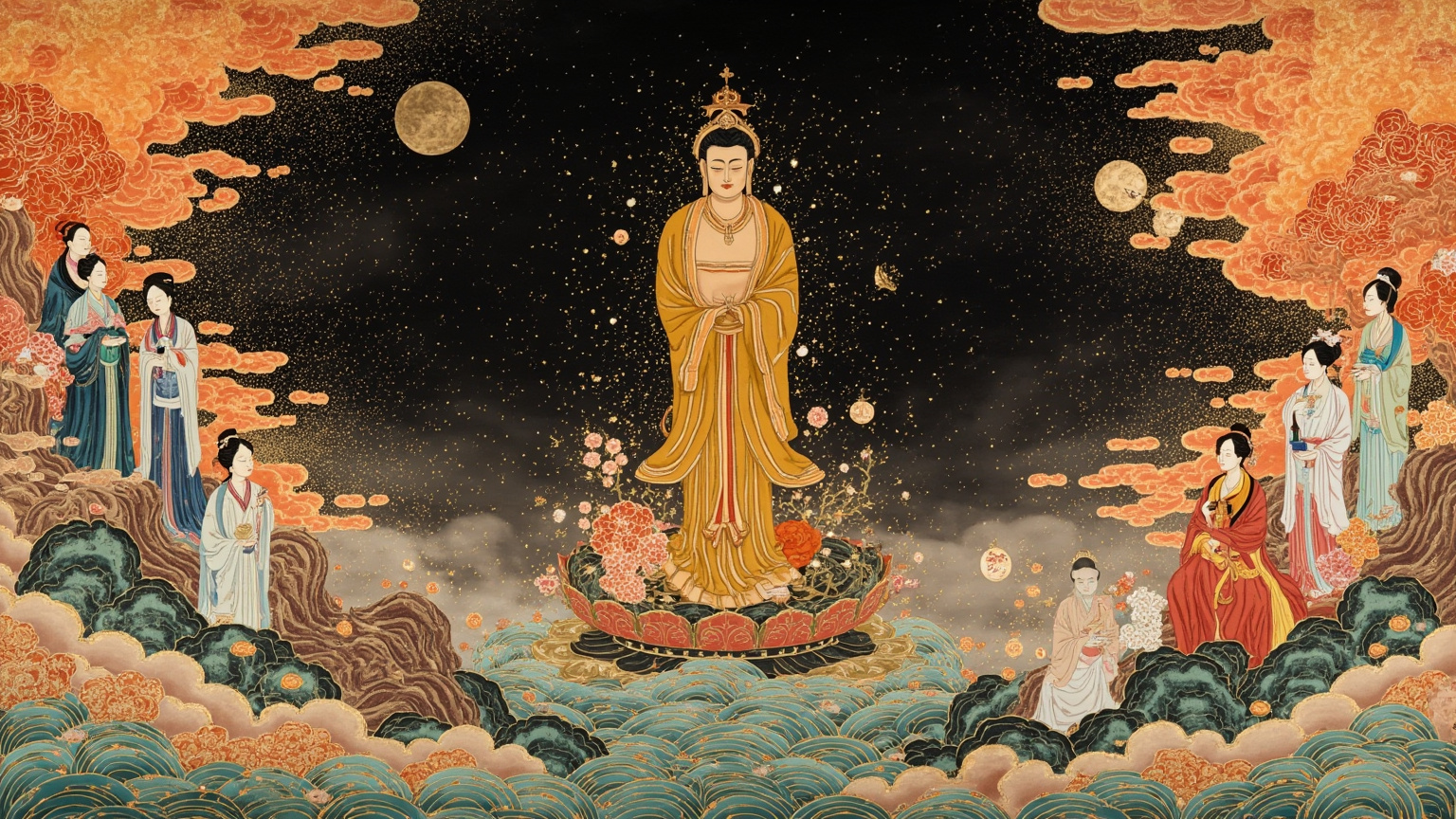
At the very crown of glory, the clouds began to thin beneath him.
九霄云上人正酣,一回首,已是云脚渐空。
金句 · 第七卷 · 九宵将散
Then the fire comes. It isn't a disaster. It's a sign of waking. Flame spreads out from the depths of the mansion, and Lady Cui, Zhang Lizhen, Gui Chanyue, Lanzhu, Qinchuan — one after another, they turn to mist. A lifetime of letters, a lifetime of arms, a lifetime of gold dust and tears: reach for any of it and your hand closes on nothing.
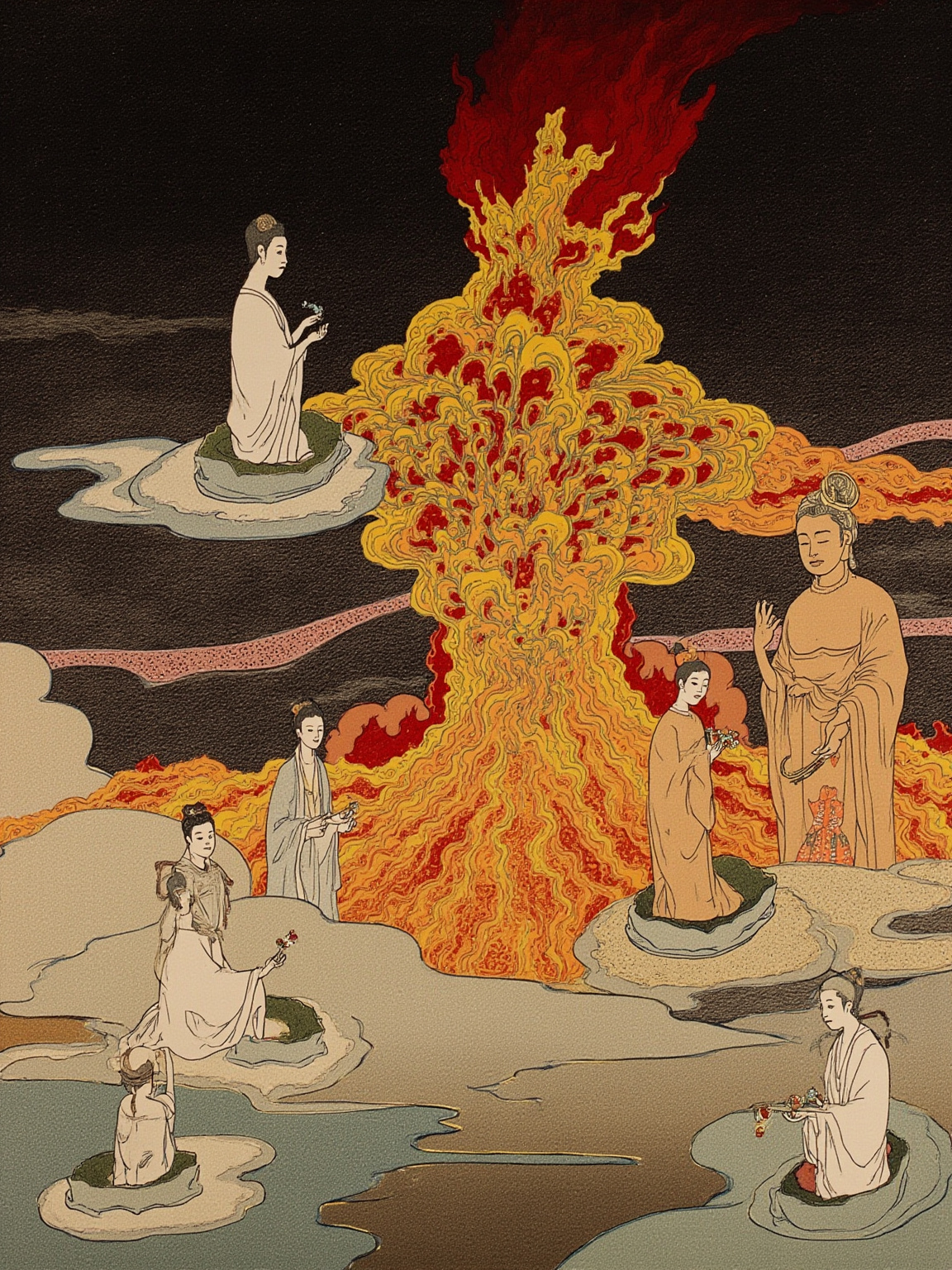
From the depths of the hall, the fire rose—and one by one, they dissolved into cloud.
火从深处起,崔氏、张氏、桂蟾月……一一化为云烟散去。
金句 · 第八卷 · 火烧府邸
In his panic, a Daoist steps out of the dream itself: Master Fuqiu. In his hands is a booklet called the Nine Cloud Register. Page by page, he shows Yang Shaoyou his own earlier life, Xingzhen kneeling under the pines at Mount Heng.
Only then does Yang Shaoyou understand: what he took for a life was only a chain of illusions rolling out of a single dream. What he took for eight beauties were two sets of Buddhist abstractions wearing human shape: the six sense objects of form, sound, scent, taste, touch, and thought; and the eight passions of joy, anger, sorrow, pleasure, love, hatred, desire, and indifference. What he took for the top scholar, the princess, the frontier general, were only a few strokes of ink out beyond the ninth heaven.
He wakes. In the meditation hut at Mount Heng, the pines are still. He is still the young monk Xingzhen who sat cross-legged for a whole day. Eight years, a hundred years, wealth and glory — all of it a flash of light, a spark off flint. His master comes and looks at him once. He says nothing. He picks up a small flower lying in front of him, and smiles.
This is where I first read the phrase held up a flower and smiled. I only learned later that the allusion goes back to the Chan patriarch Kashyapa, who alone understood when the Buddha silently held up a flower before his assembly. Kim Man-jung places it as the very last stroke of Xingzhen's waking, and he is playing the same move: not an argument that persuades you, but a single gesture that closes the whole book.
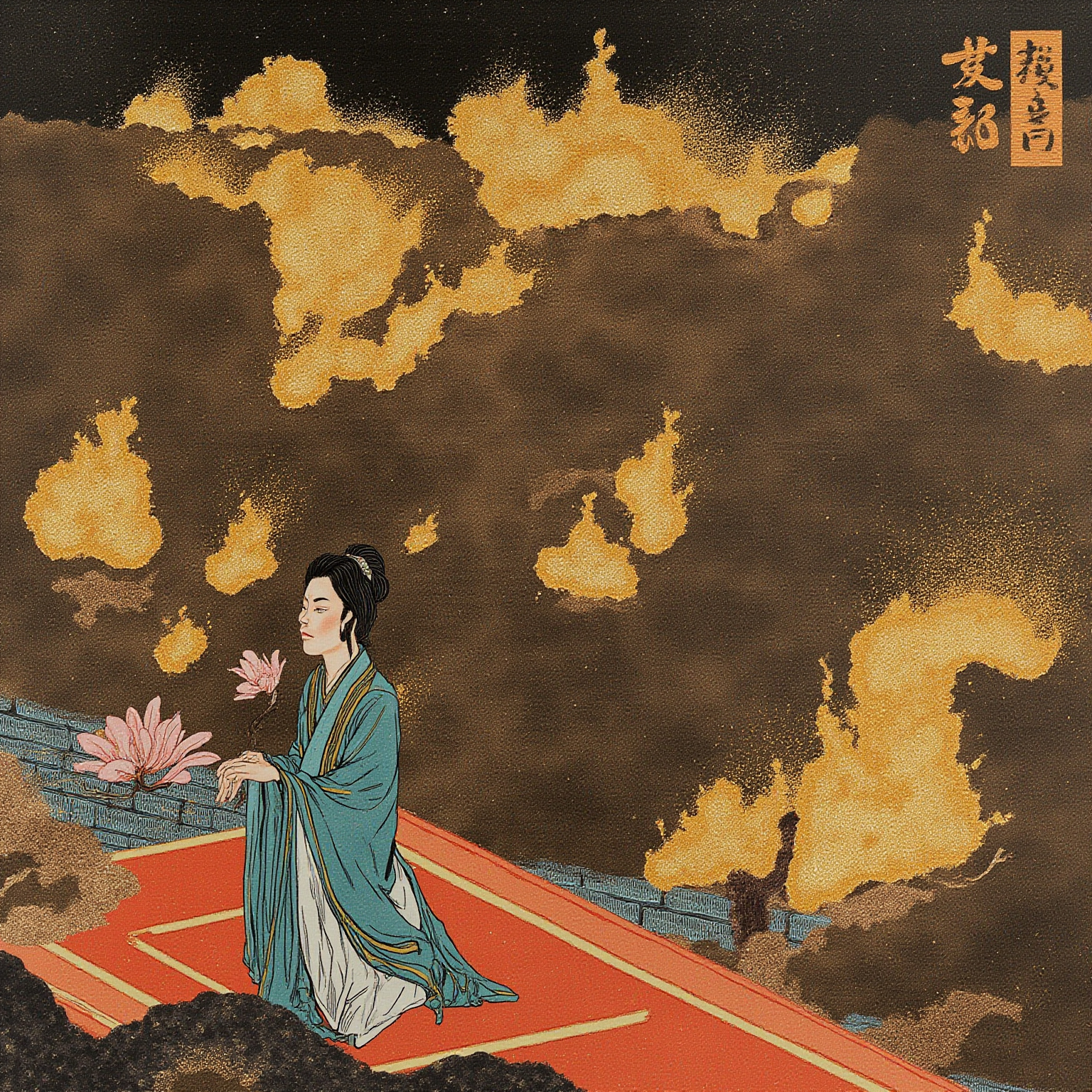
He woke. The pine wind had not stirred, and he was again the monk of twenty summers.
醒时松风如旧,百年富贵不过电光石火。
金句 · 收卷 · 拈花微笑
Theme and Craft: The Mechanics of a Nested Dream
What makes The Nine Cloud Dream powerful isn't what it depicts. A top scholar, beautiful women, the frontier, spiritual awakening — none of that was new to East Asian literature at the time. Its power is in packing all of it into one simple mechanism: the dream. The moment that single word goes in, the eight volumes of Tang China outside it are automatically tinted a certain color. However grand the wealth, it is wealth inside a dream. However deep the love, it lasts only as long as the dream does. That filter does more, and does it more cleanly, than any sermon could.
The eight beauties are the same move played again. They aren't there for glamour. They're symbols. The five desires and eight passions started out as abstract terms in Buddhist scripture, and Kim Man-jung turns each one into a living person: Lady Cui is propriety, Zhang Lizhen is refinement, Lady Yingyang is fierceness, Gui Chanyue is nobility, Zheng Qiongbei is karmic bond, Lanzhu is the Way, Qinchuan is Zen. Read it as nothing more than a scholar-beauty romance, and you've only read the skin of it.
The visual contrast is the quietest move in the book, and the most powerful. The gray-blue meditation hut and the plain moon-white robe at the opening are emptiness. The layered peony reds, palace gold, and feathered court silks inside the dream are form. From the first page to the last, those two palettes pull against each other in front of the reader: the more dazzling the advance, the emptier the retreat.
Zoom out to the larger map, and Kim Man-jung has twisted four separate currents into one river: the Confucian (civil examination and office), the martial (frontier campaign merit), the Buddhist (temple and meditation hall), and the Daoist (Master Fuqiu's revelation). In seventeenth-century Korea, this is the most complete literary synthesis of the unity of the three teachings. Later writers picked up the same theme: Hermann Hesse, in the West, with Siddhartha and Steppenwolf; in China, Dream of the Red Chamber. Same theme, three different books, and no two of them alike.
Worth Reading Even When You Know the Ending
Lay out the whole plot and you've all but emptied The Nine Cloud Dream out. So what's left? What's left is the texture of literary Chinese prose, every stroke landing on bone. What's left is the rush of peony red on the streets of Chang'an during his triumphal ride, the feel of mist and rain soaking the poem-paper in a southern pleasure pavilion, the chill of cold moonlight on iron armor amid the frontier's signal fires. What's left is Xingzhen picking up the flower and smiling: you already know the ending sends him back to the meditation hall, and you will still stop on that page for a long time when you get there.
Everything in the dream is empty — but the smile, the flower held up in one hand, the lines Kim Man-jung actually wrote down: those remain.
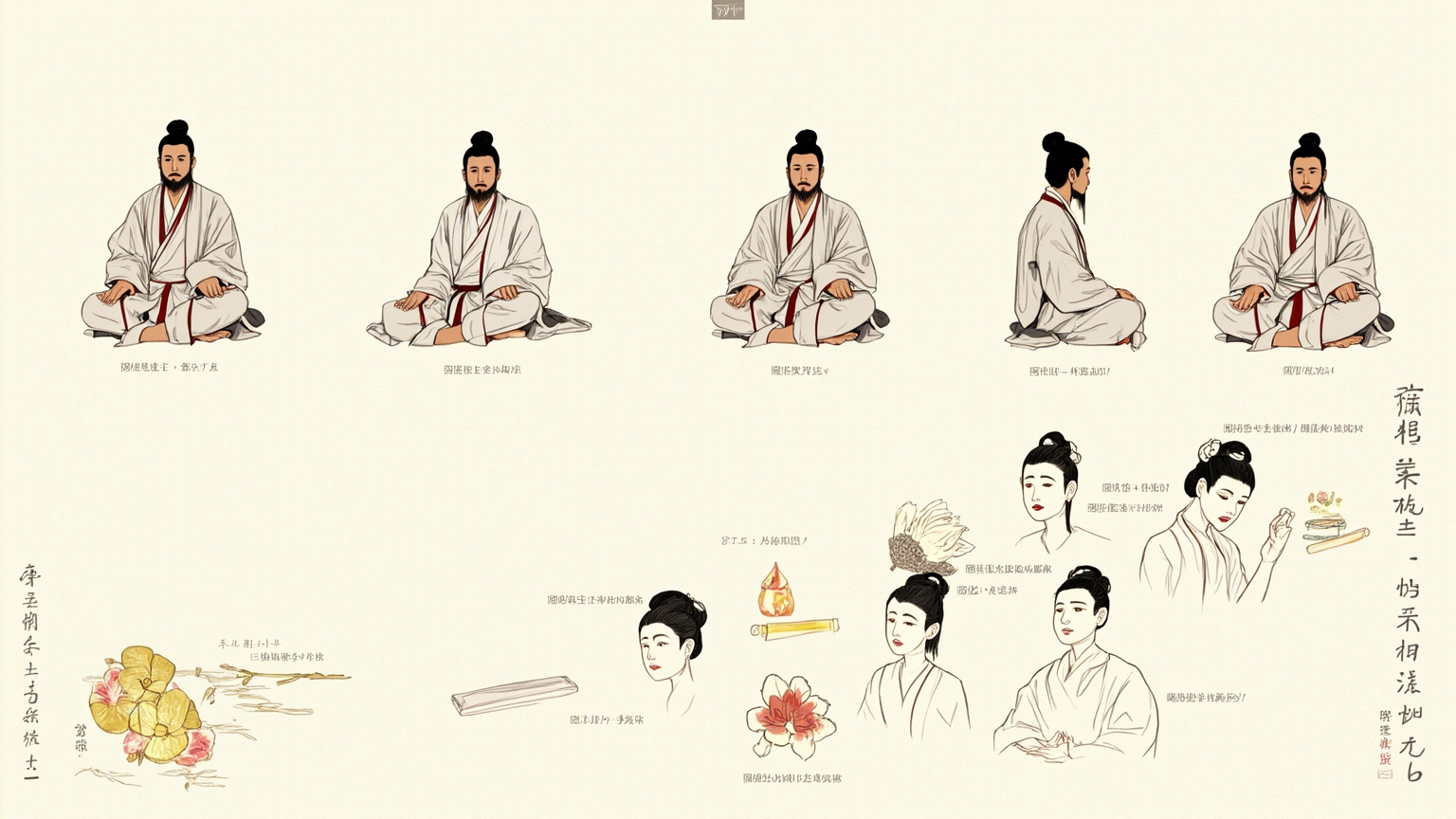
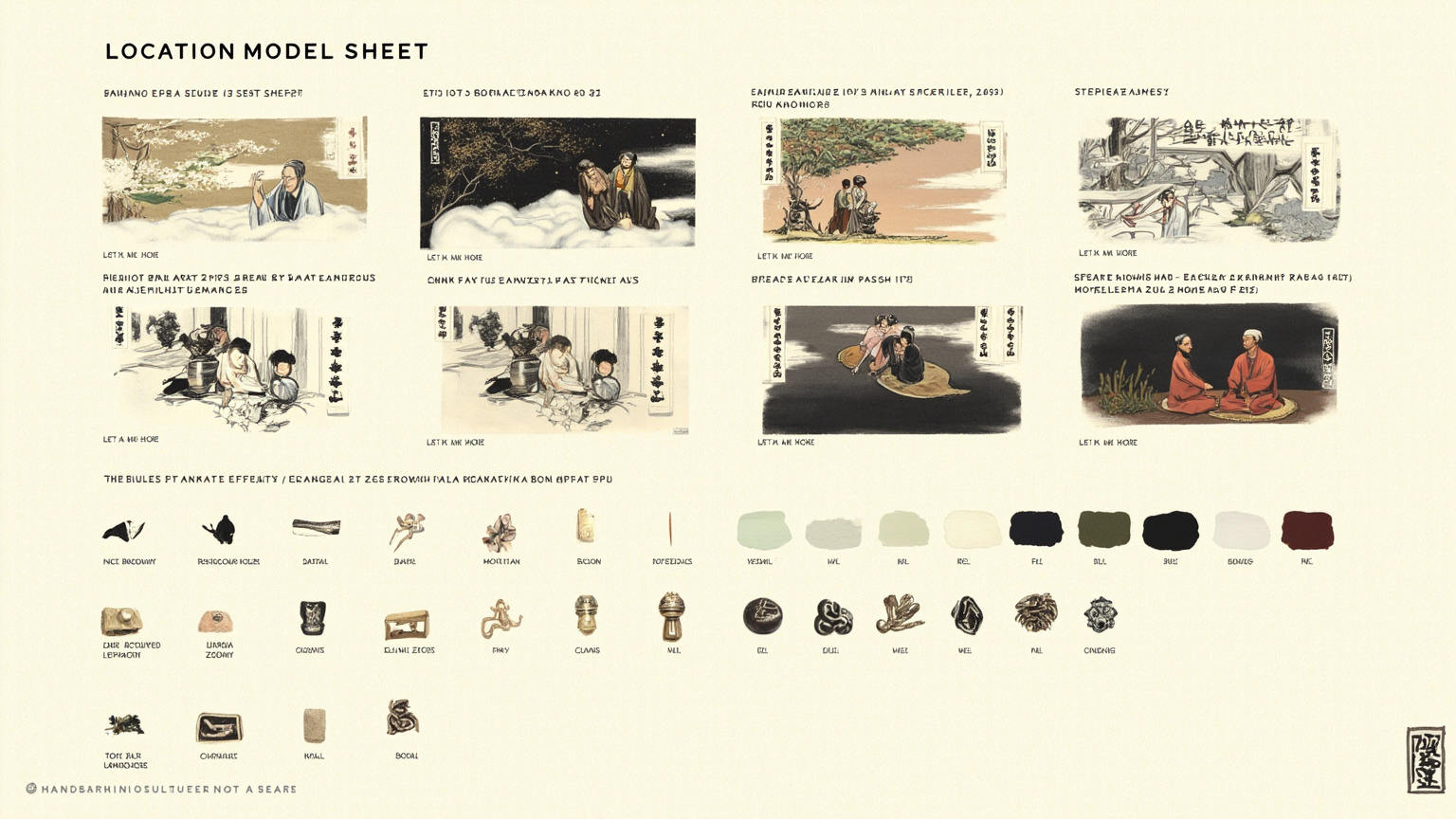
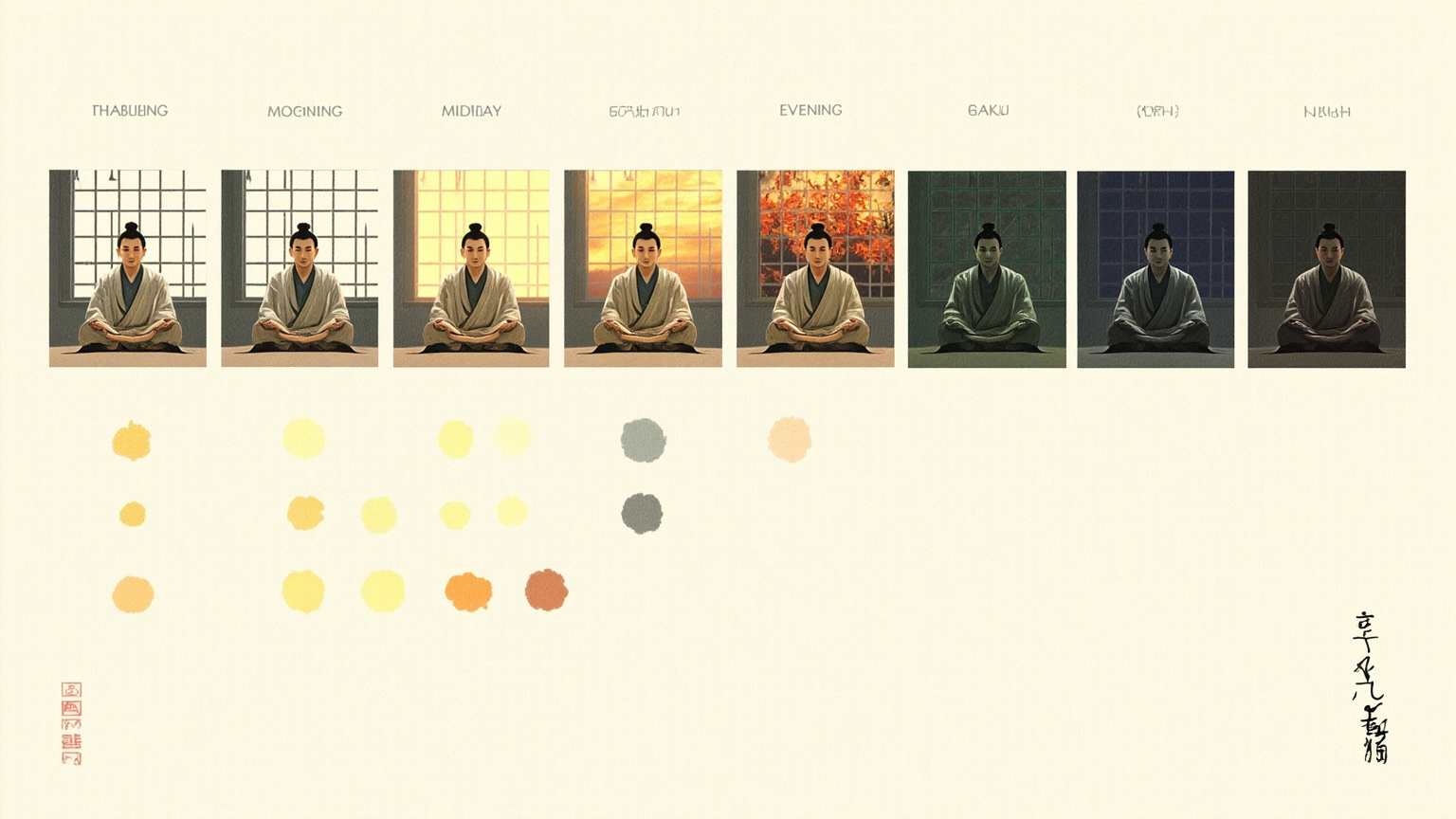
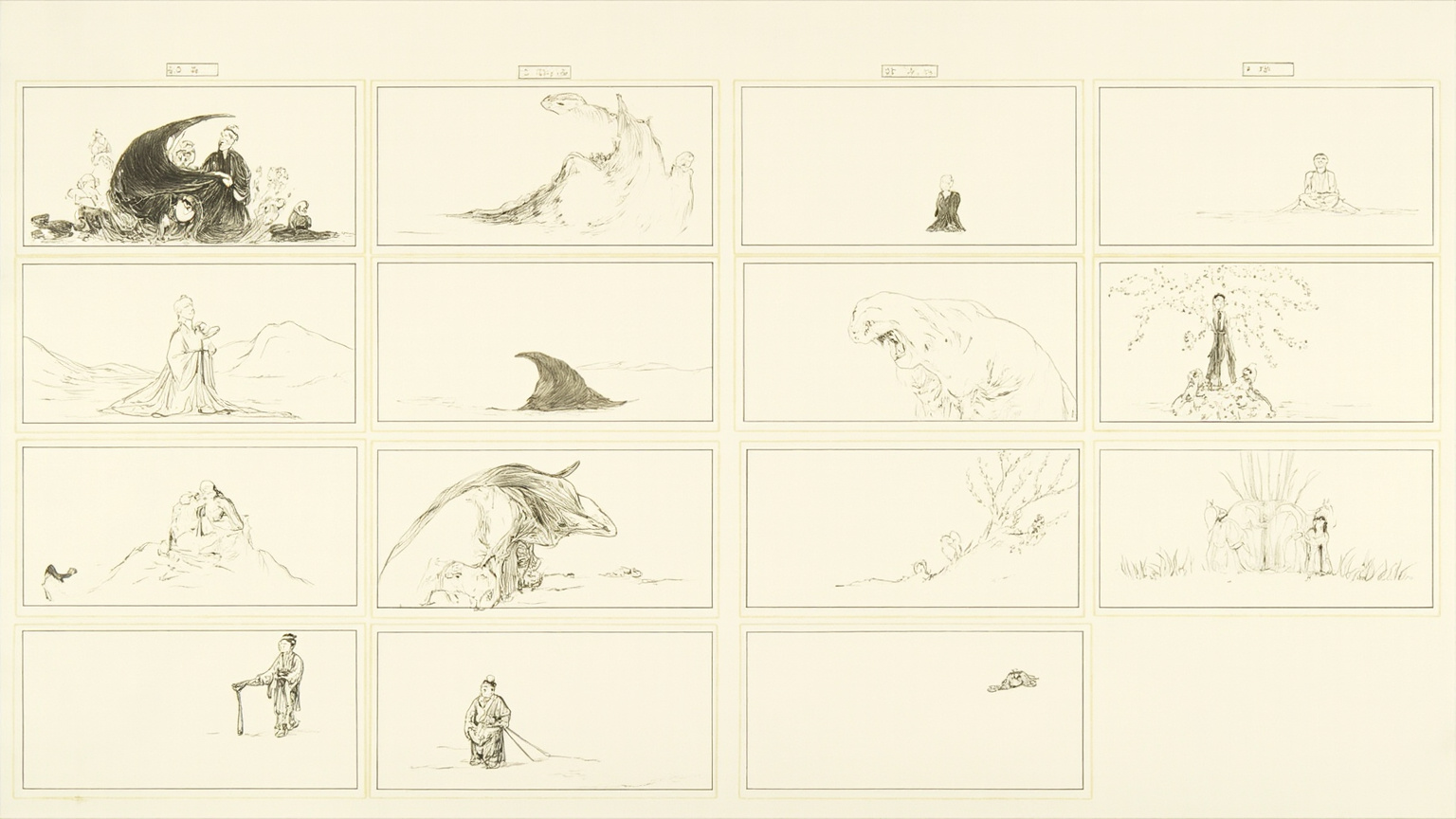
Art Direction4 plates
Before the guide was written, this book got a visual foundation — every illustration you just read grew out of it.