No Exit (Huis Clos) · Companion Guide
禁闭
三个人被锁进一间没有镜子、没有指针的会客室——地狱没有火焰,只有别人在看你。
The moment the door closes, he hears his wife laughing
Jean-Paul Sartre's one-act play No Exit (Huis Clos, first staged in Paris in 1944) opens on a door that will not stay shut. A valet leads Garcin into a drawing room done up in Second Empire style, shuts the door, locks it. Garcin turns back and pushes it — it opens. He steps out and finds the corridor dark and empty, his wife's laughter drifting in from somewhere beyond it. He retreats into the room. He pushes again. It opens again. It is always the same corridor, and no one is ever walking down it. This is not a failed escape. It is escape itself failing to mean anything: the door was never what held him. What holds him is the fact that whatever lies beyond it is just another room exactly like this one.
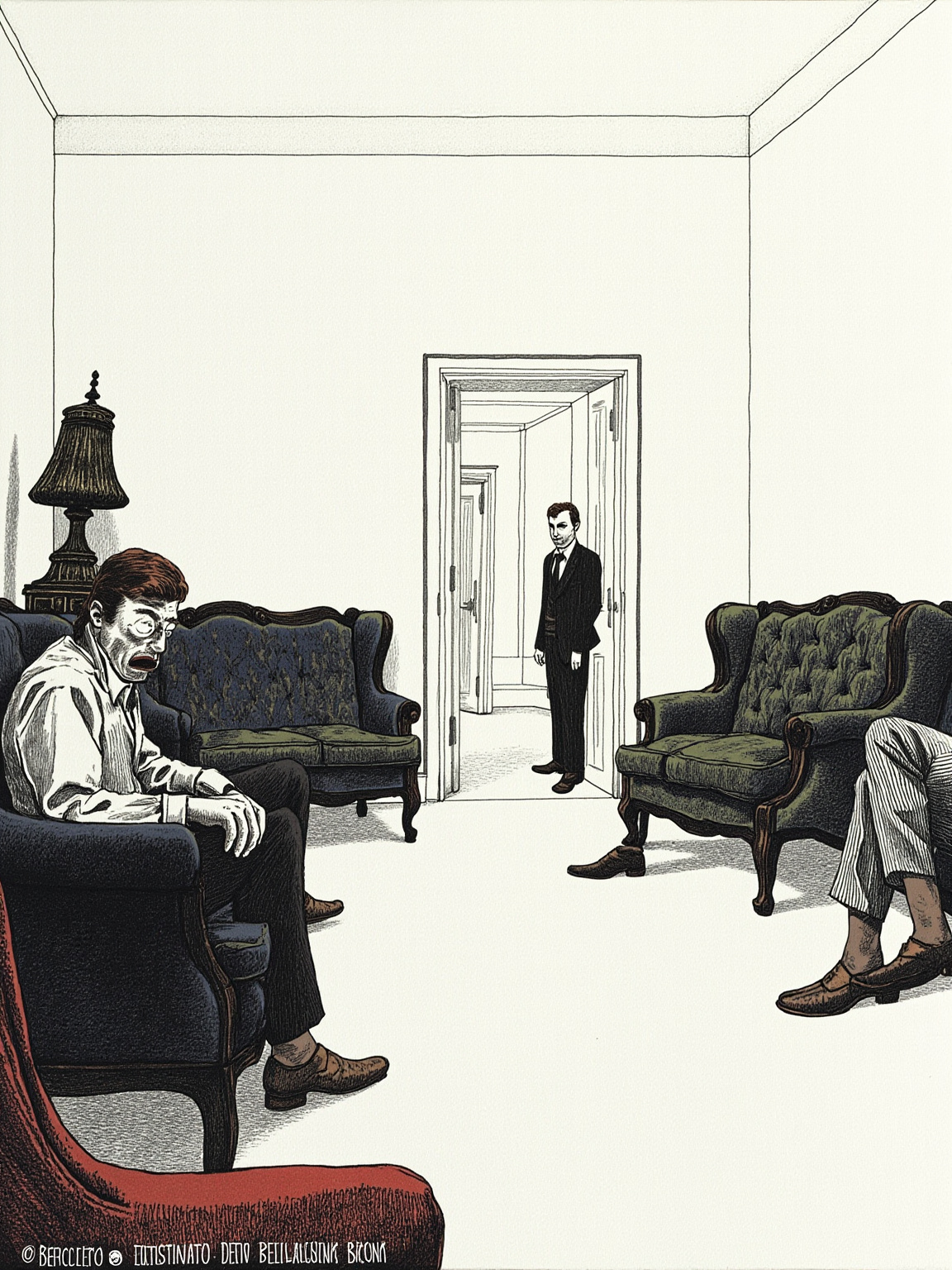
I shan't stay here alone. I'm going out.
我可不愿一个人待在这儿。我要出去。
金句 · 开场 · 加尔森初见门
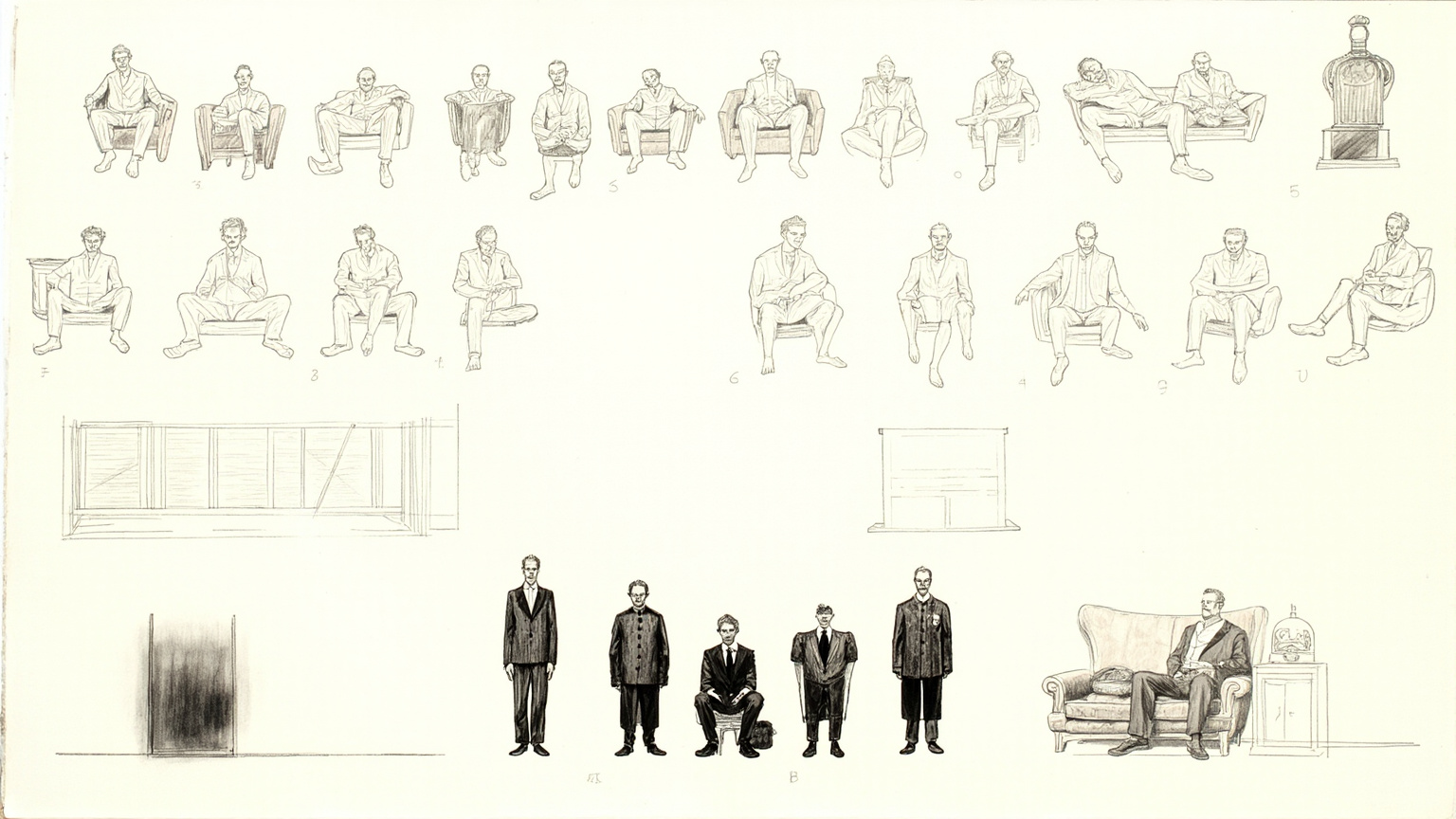
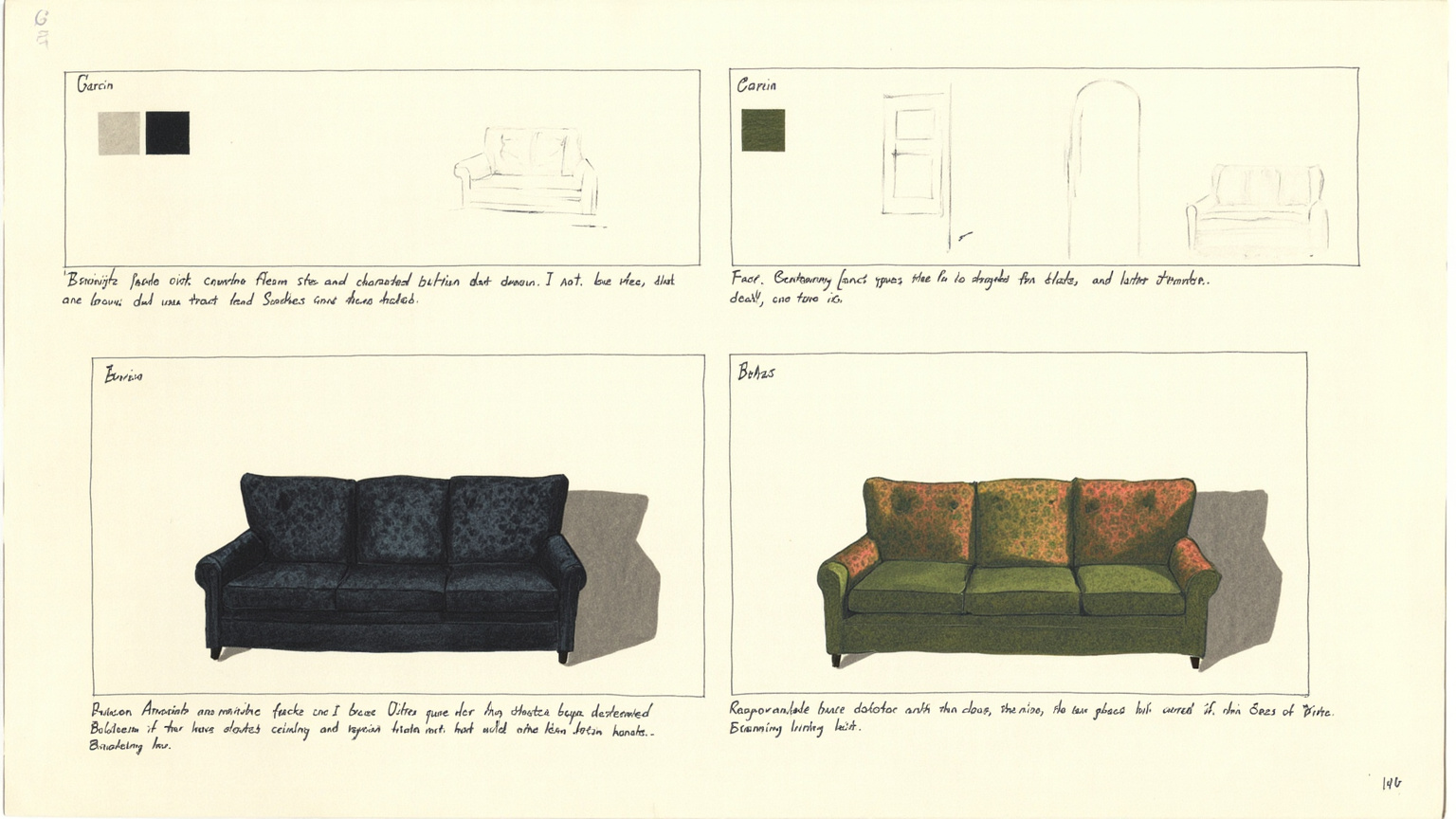
The room's furnishings land on the eye one at a time: three Louis XV armchairs, each a different color; a lamp burning on the ceiling that never goes out; a bronze clock in the corner with no hands. No windows on the walls, no mirrors either. A fire burns in the bronze mantelpiece and gives off no heat. An unbreakable bronze statue stands beside it, looking down coldly on whoever sits below. None of this is set dressing. It is instruments of torture: no way to mark time, since the clock has no hands; no way to see yourself, since there is no mirror; no way out, since there is no window. What is left is one fact that never lets up: someone is watching you.
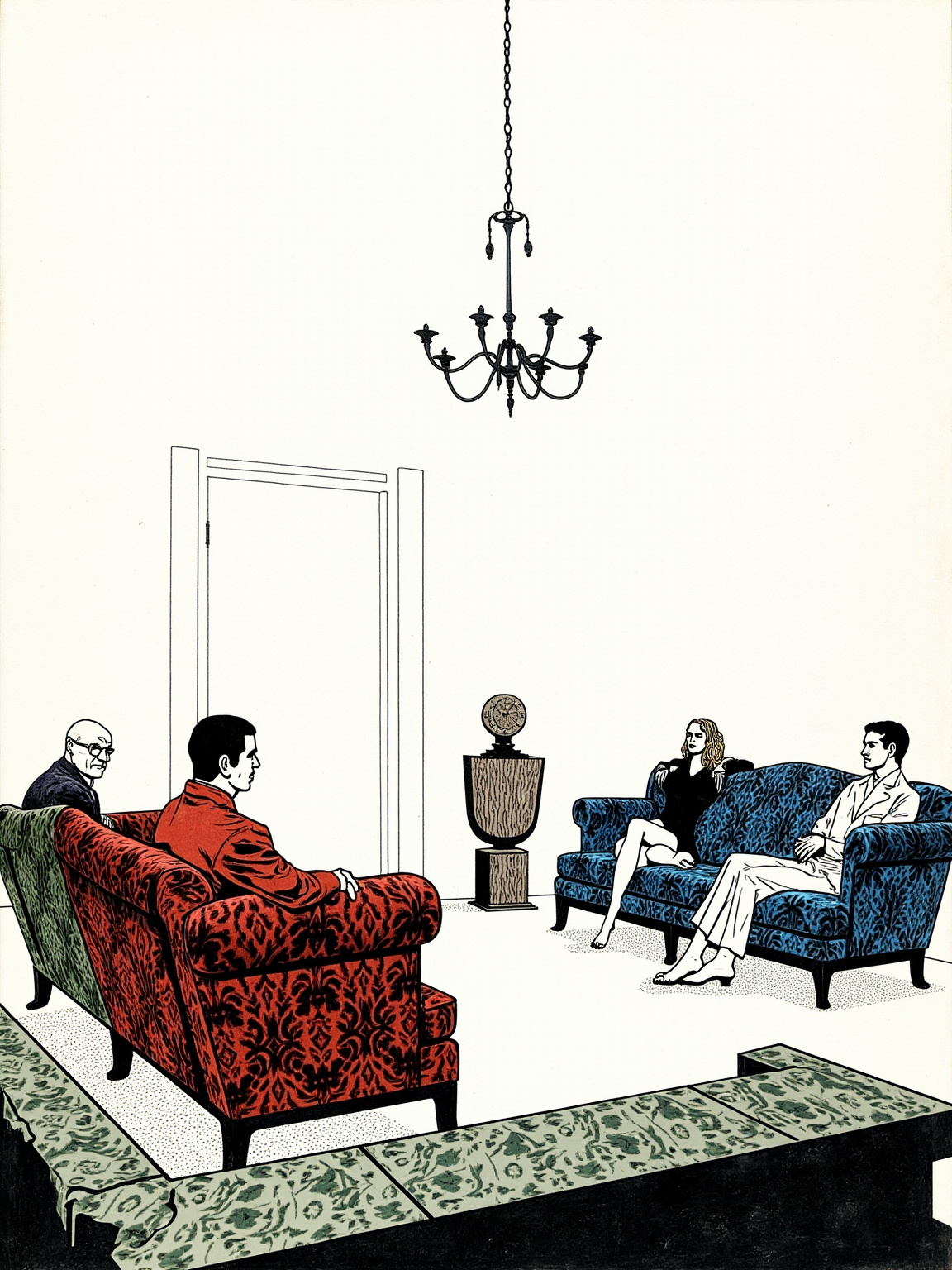
Inez comes in, and hell officially opens its doors
The door opens again, and the valet brings in a second dead woman. Inez, a post office clerk, fixes on the picture hook on the wall the moment she walks in, the spot where a mirror should hang. She is looking for a mirror. Not finding one unsettles her, and not because she is afraid of looking ugly. She is afraid nothing will ever give her face back to her.
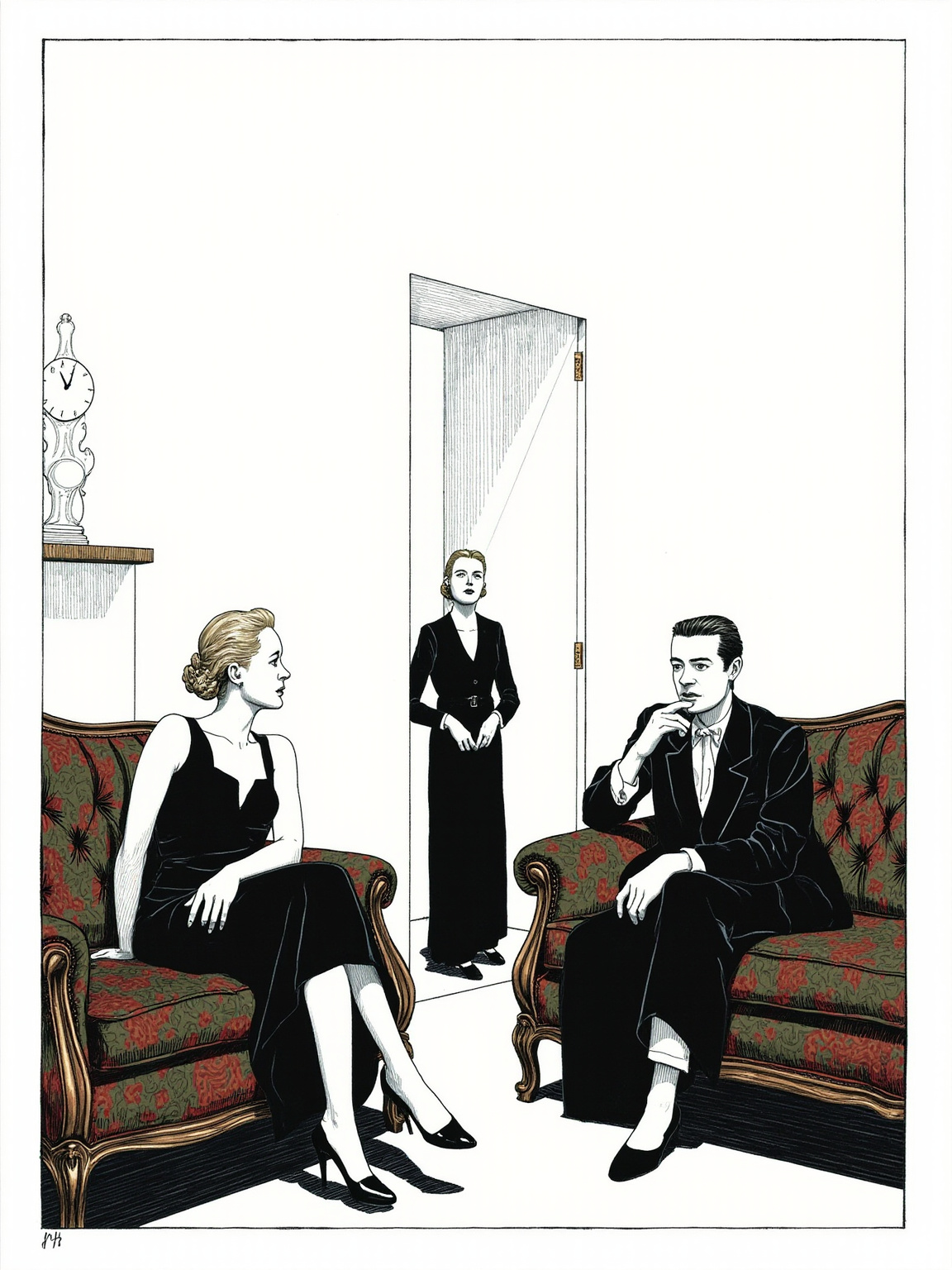
I caught my reflection in the bronze. But I can't see myself as I really am.
我在铜器里瞥见了自己的影子。可我看不见我真正是什么样子。
金句 · 伊内丝入场 · 论没有镜子的墙
The two of them start sizing each other up. Garcin claims he ran an anti-war newspaper, that he was a pacifist, and stays vague about how he died. Inez states her job, post office clerk, in the brisk tone of someone checking your papers. Then she asks one question, and Garcin's smile freezes on his face: "Aren't the dead in hell? What do you think you died of?" The question turns him from a visitor who wandered in by mistake into a prisoner who belongs here. Every calculation he had been running about there being some error collapses at once. The first time I read that line, something went cold down my back too. She isn't interrogating him. She is just naming the one fact he has been running from.
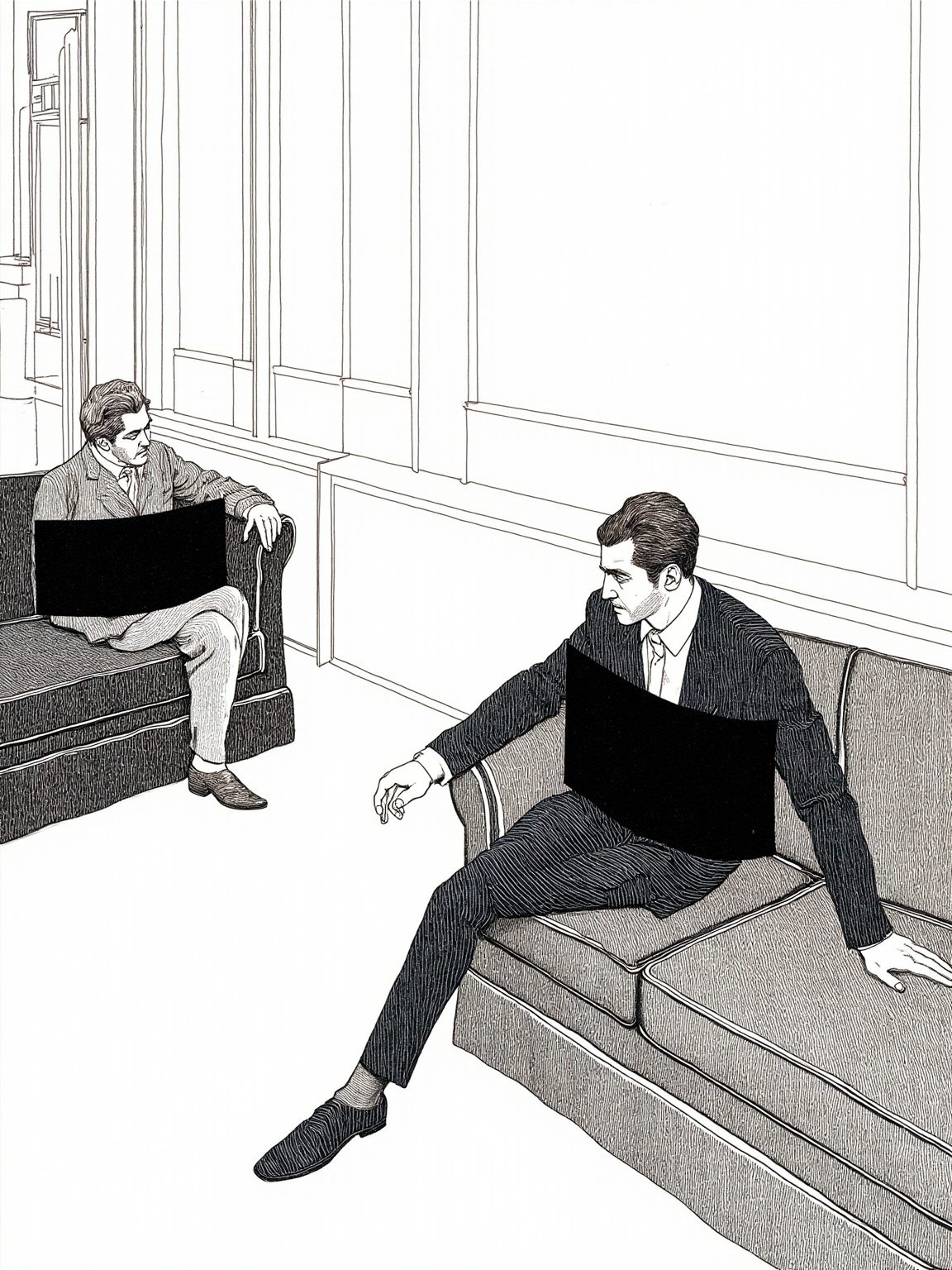
The third one comes in, and the triangle locks shut
Estelle arrives last, carrying herself like provincial gentry, a pearl necklace still around her neck. The door has barely opened before she is hunting for a mirror. There isn't one. She panics, paces the room, searches everywhere, even tries to catch her reflection in the glass of a picture frame. No mirror means no face, and no face means she isn't herself, or at least that is what she believes.
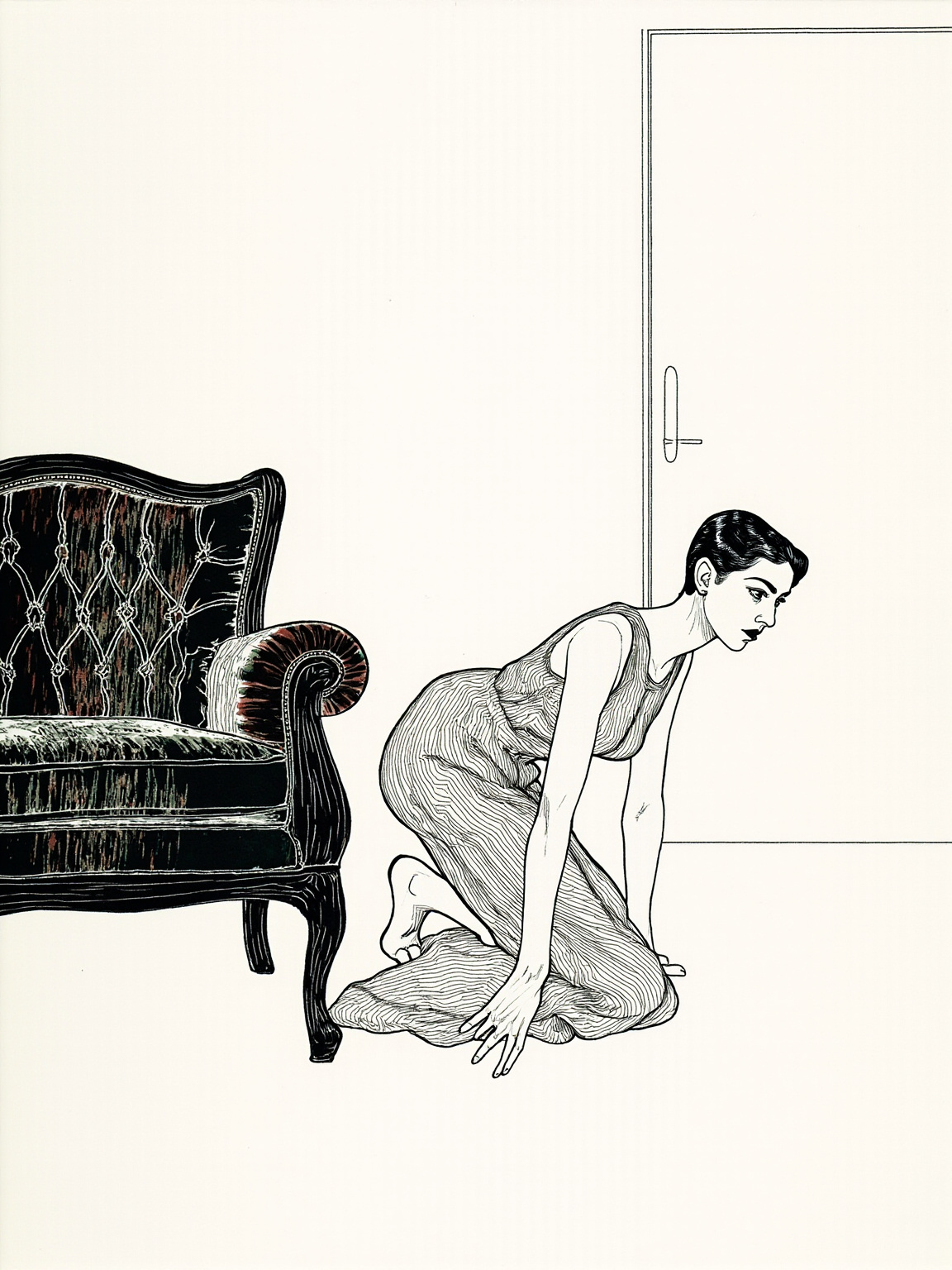
Don't you realize what it means to be quite alone with one's own self?
你难道不明白,独自面对自己,意味着什么?
金句 · 艾斯黛尔入场 · 关于无人凝视的恐惧
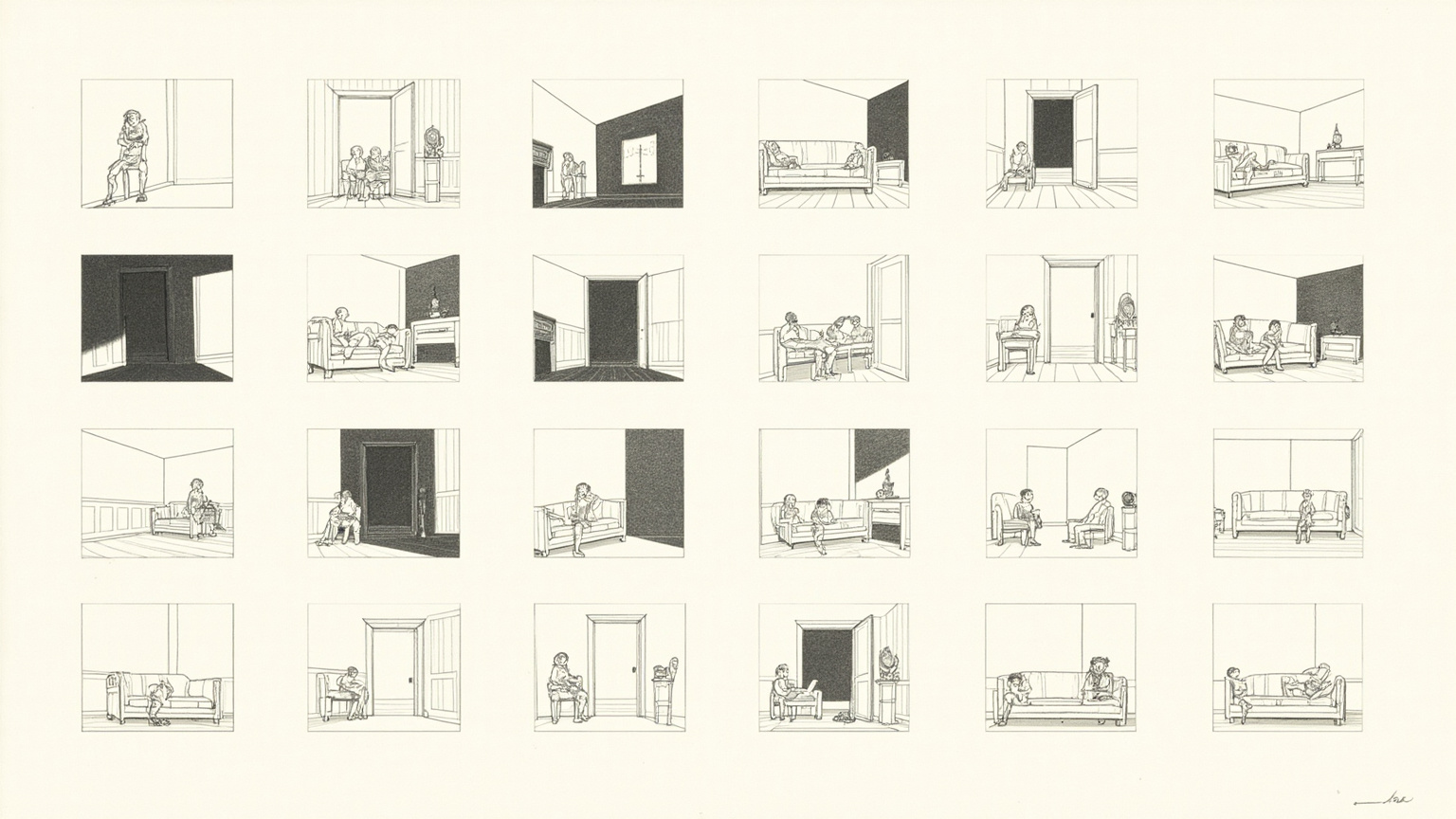
The three of them lock together fast into a precision-made grinder. Garcin needs Estelle to believe he isn't a coward, needs her tenderness to wash away the verdict his dead wife left stamped on him. Estelle needs Garcin to look at her and call her beautiful, needs a man's eyes to confirm that she exists. Inez needs Estelle, and needs her exclusively; her hunger to possess a woman cuts sharper than anything the other two feel. What she wants isn't love, it's to shut another person entirely inside her own gaze. Their three needs form a knot that cannot be undone: Garcin wants a woman to look at him, Inez wants a woman to look at her, Estelle only wants Garcin to look at her. None of them can get the one thing they are asking for.
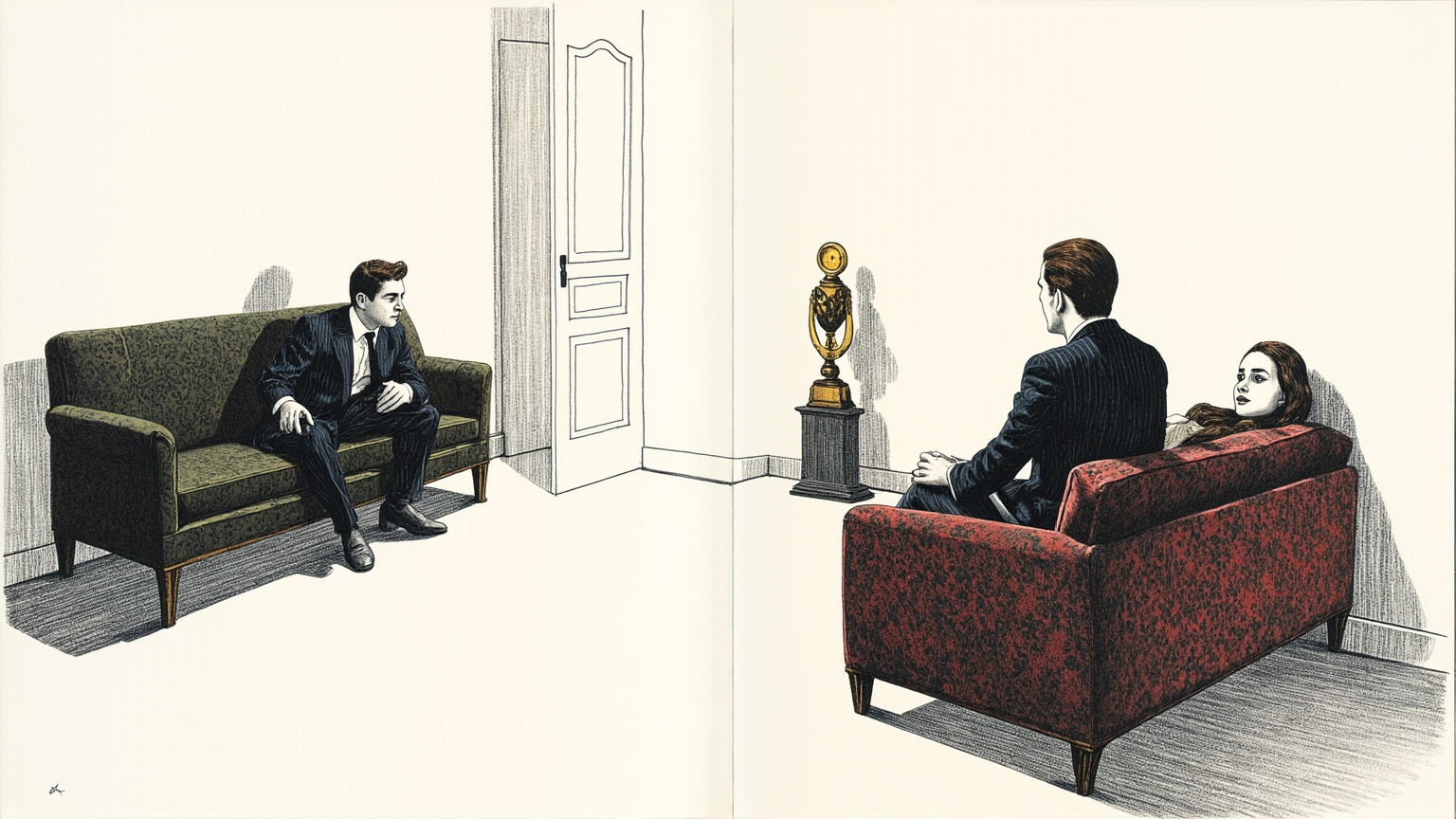
Each of us is a knife that cuts into the other's flesh.
我们每个人都是切入对方血肉里的一把刀。
金句 · 三角咬合 · 三人互为刽子手
Time has stopped, and the door still opens
The clock has no hands. Time itself has been cancelled in this room. The three of them keep asking how long it has been, and the answer is always the same: no one knows. No time means no expectation, and no expectation means no exit, not because the sentence will ever end, but because it never began. It is always happening, and it never moves forward by a single second.
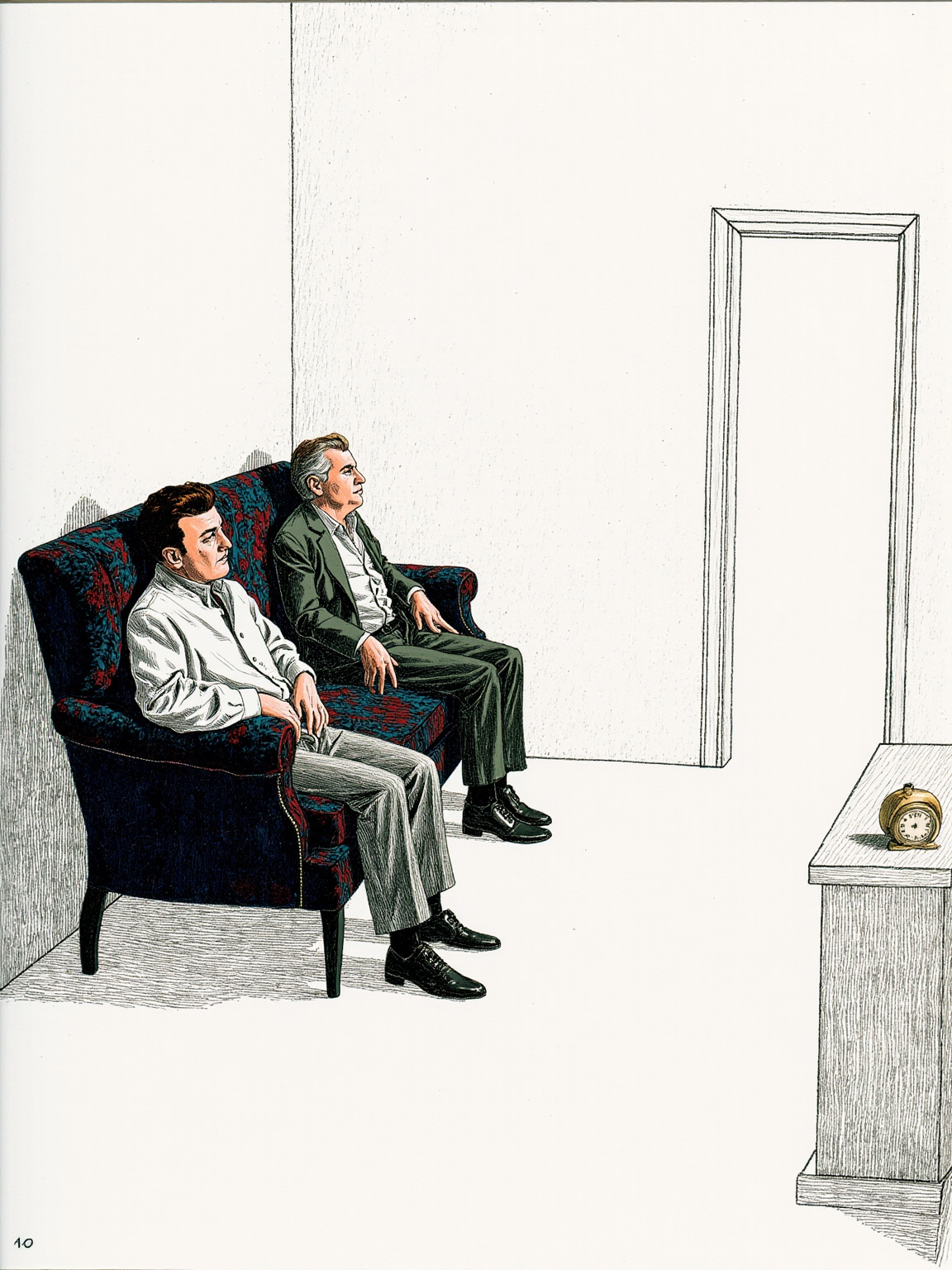
The door gets pushed open once more. It takes more effort than the last time. The corridor is still the same corridor, empty and cold. Push it again and it will take more effort still. And after that? Sartre never lets anyone actually walk out of the frame, but the answer is already written into the room: to escape this place would not mean walking into freedom. It would mean walking into another room exactly like it, under another set of eyes exactly like these, into another version of the same slow pinning-down. Hell does not need walls. It only needs someone else in the room.
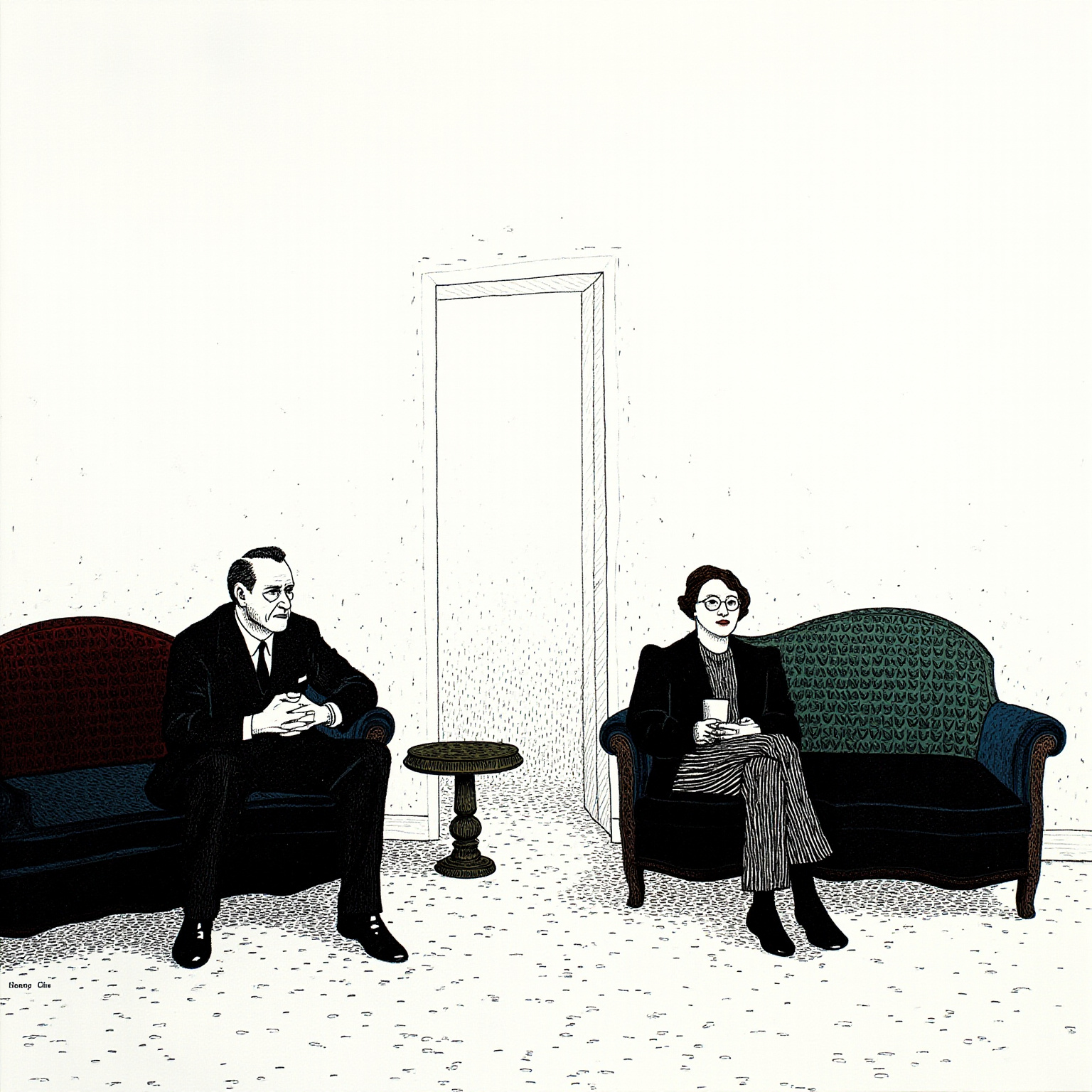
Hell is other people.
他人即地狱。
金句 · 门又被推开 · 走廊依旧空荡
Let's go on
Garcin bursts out laughing. Not a bitter laugh, not a sneer, but the laugh of someone who has finally worked something out. He sits back down on the sofa and says to the two women, "Let's go on." It is not surrender. It is surrender past the point of surrender: he has finally understood how this room actually works. There is no fire here, no chains, no whip. Three armchairs, one lamp that never goes out, and a pair of eyes always watching you: that alone is enough to damn a person forever.
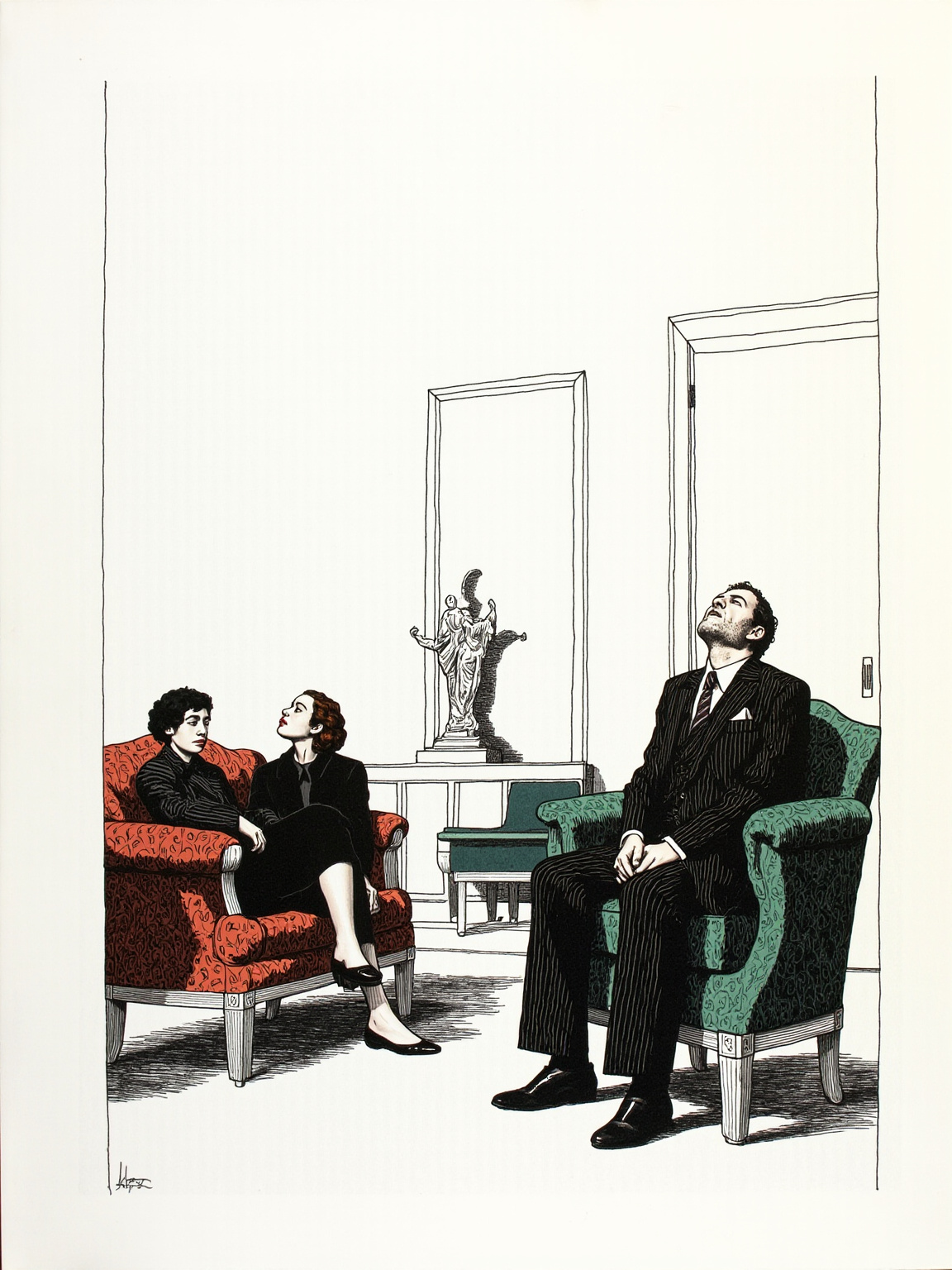
So this is hell. I'd never have believed it. ... So let's go on with the show.
原来这就是地狱。我早该想到。没有任何酷刑——那就继续吧。
金句 · 终幕 · 加尔森坐回沙发
Hell has no need of an executioner. It only needs one more person in the room to watch you.
The dissection room of existentialism
Sartre wrote this play near the end of the Second World War, while the shadow of France's fall was still fresh. He was posing a question to himself as much as to anyone else: what do you think you're resisting? Who do you think you are? Garcin talks pacifism nonstop and still, on the edge of death, cannot stop arguing over whether he counts as a hero. Inez is lucid to the point of cruelty, and knows that being loved, for her, only works if she owns the person outright. Estelle is foolish in a way that is almost endearing; the only moment her world feels real to her is the moment a mirror goes missing. All three are pinned in place by their own lies, and the lies hold so fast because each of them handed the power to judge themselves over to someone else.
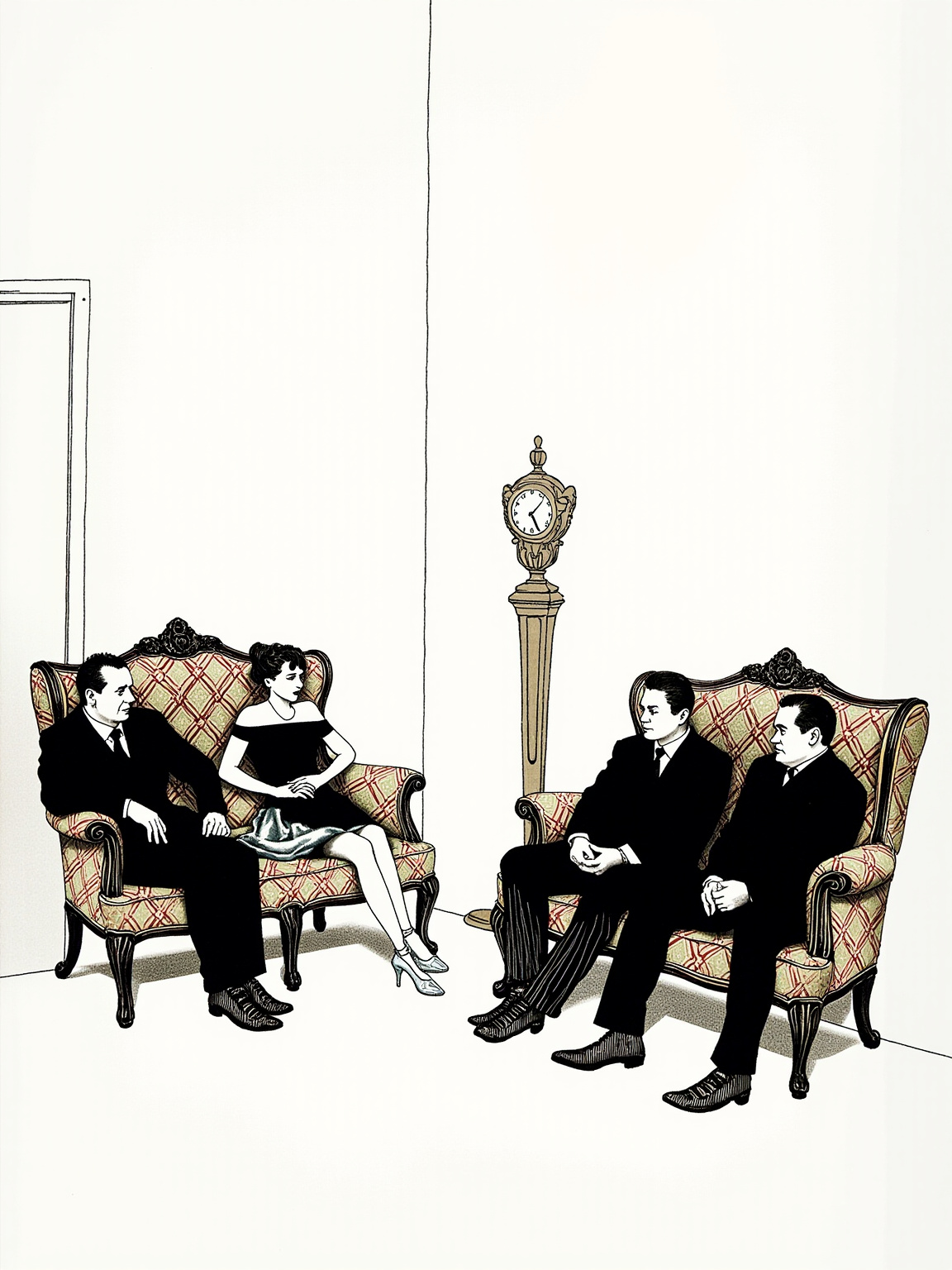
"Hell is other people" gets misread as "other people are annoying to deal with." What Sartre means is much harsher than that. He means that once you hand someone else the power to define you, they will pin you into an image of yourself that isn't true, and the more you need to be seen, the less you can escape their way of seeing you. Freedom was never about getting away from other people's eyes. It was about refusing to hand over the power to judge you in the first place. In this room, not one of the three manages it.
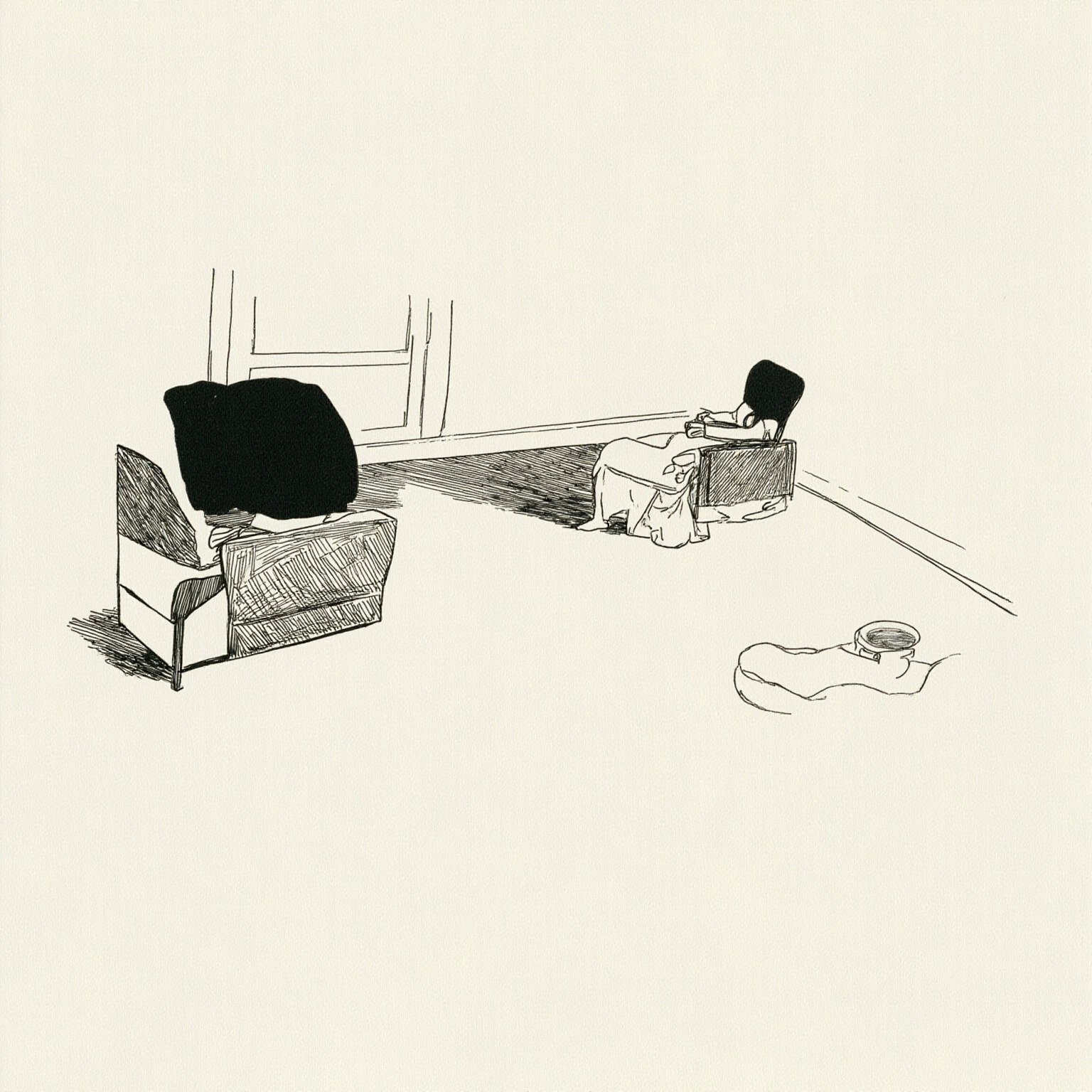
Why read the play once you already know how it ends
The plot is told now. But what makes No Exit hard was never what happens. It is how much weight lands with every line. Sartre compressed all of existentialism into a drawing-room scene with three chairs and no set changes, no jumps in time: three dead people sitting in a circle, skinning each other alive, every line of dialogue a piece of philosophy wearing a body. Reading the play is nothing like reading a guide to it. A guide gives you a map; the text itself is the terrain you can't walk out of. You will catch yourself sliding into one of the three characters as you read, and then go cold, because it turns out you are afraid of going unseen too, or afraid of being seen to death by someone else. What actually keeps you pinned to the page are the sentences that trail off, the half-finished lines, the silences where someone almost says something. The moment Garcin bursts out laughing, what exactly he is laughing at, you will only know once you have read that line yourself.
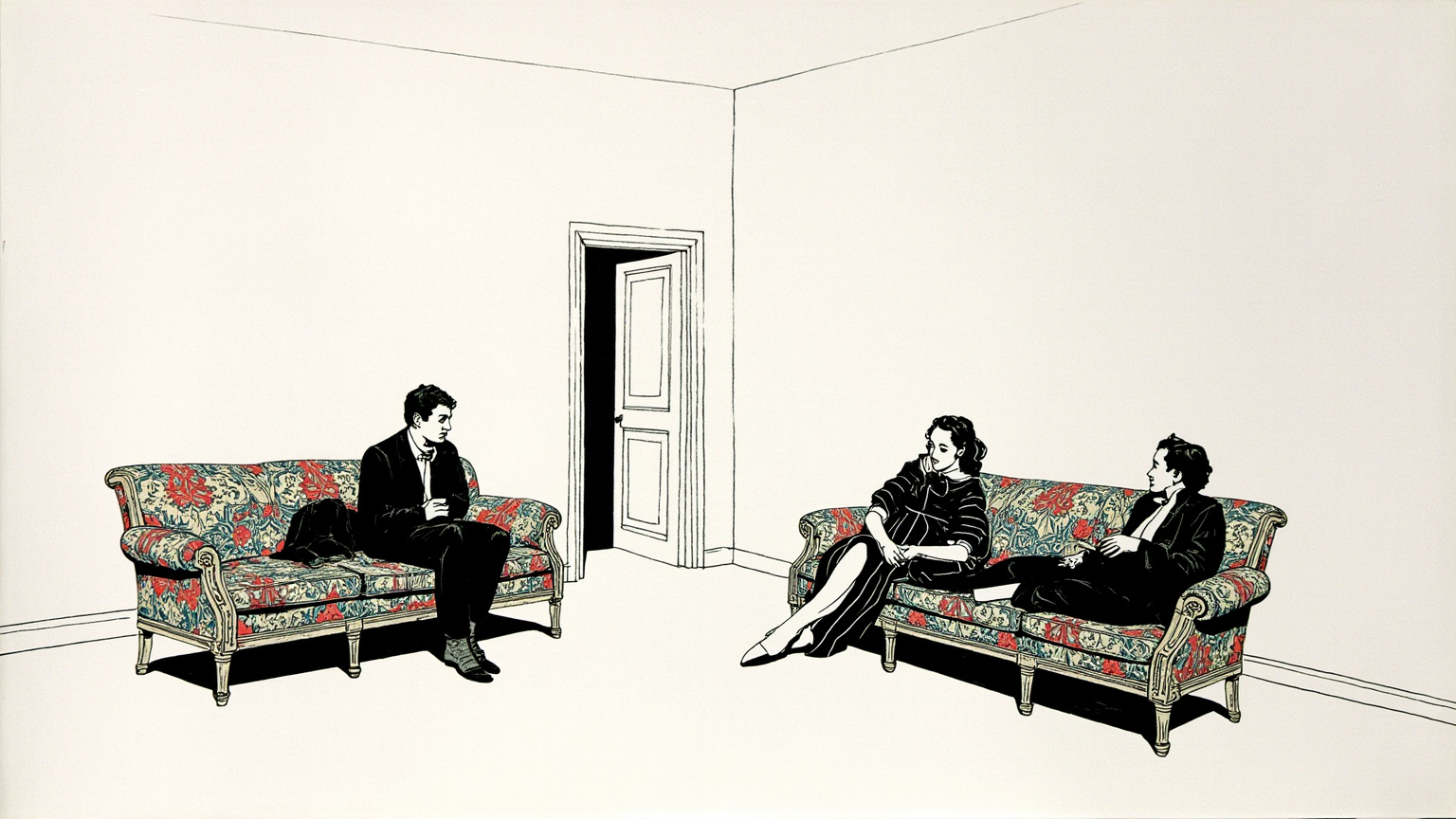
Let's go on. Three words crueler than any torture.
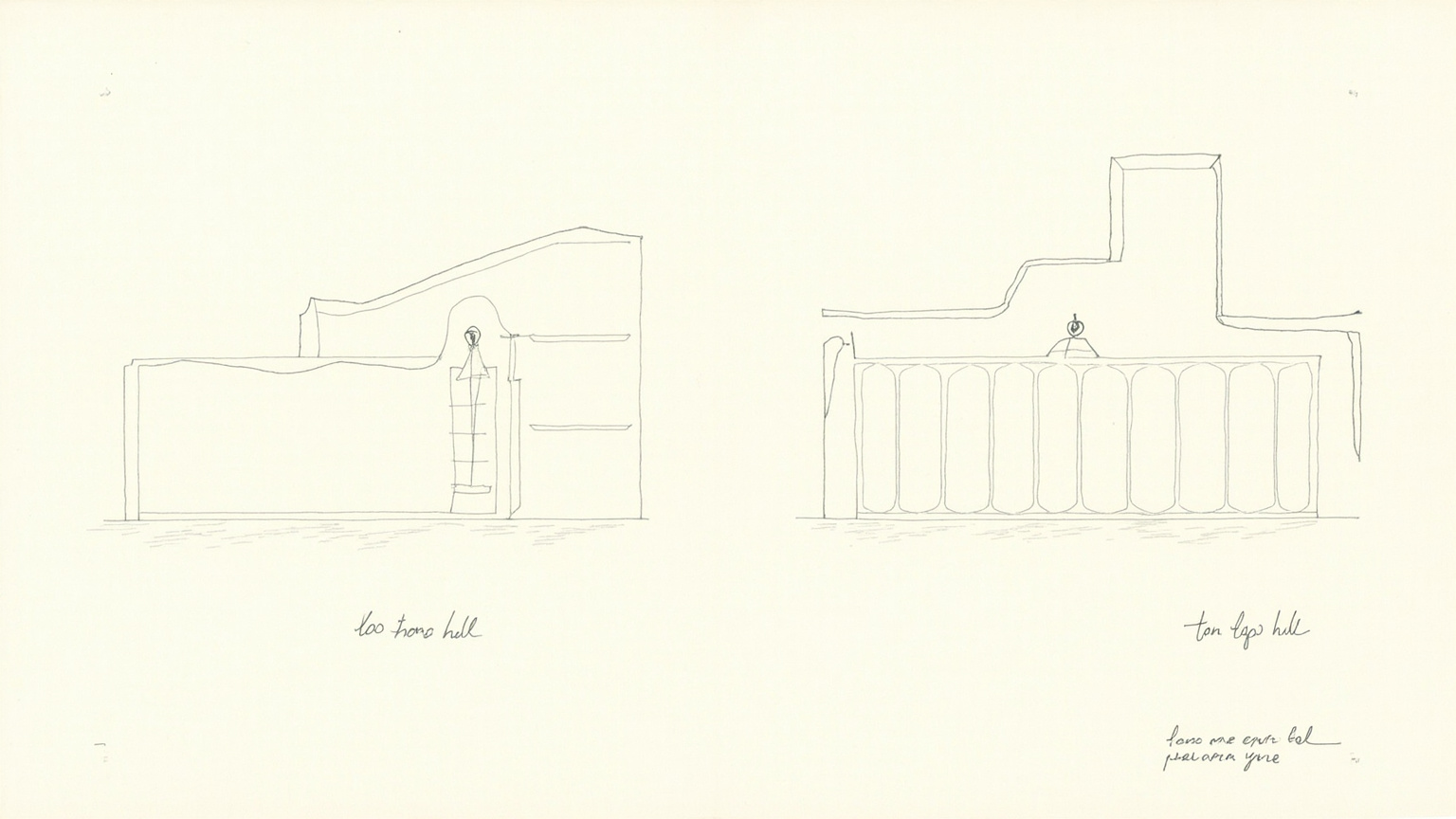
Art Direction4 plates
Before the guide was written, this book got a visual foundation — every illustration you just read grew out of it.