Noli Me Tangere · Companion Guide
不许犯我
一位欧洲学成的富家青年归乡办学,要用启蒙教育撬动殖民末世的教会牢笼,却发现每撬一环,整台机器便反咬一口。
Opening: A Lantern on the River at Night
A tropical river, coconut palms bowing low over the water. The young Ibarra travels by night to a dinner in his honor, a worn holy image his father left him hanging in the cabin. He does not know a poisoned horseshoe nail is hidden behind that image, and he does not know the boat is already staked out by men sent to take him. On the far bank, an exile named Elías is easing a canoe out of the reeds. Ten years earlier, colonial soldiers murdered his father on a false charge; tonight he will step between a stranger and a blade. The book opens with these two boats on the same water: one bound for a celebration, the other for flight.
What Kind of Book Is This
José Rizal was in his early thirties when he had this novel printed at his own expense in Berlin, written in Spanish, its cover carrying no cathedral, only a few water lilies he sketched himself. More than a century later, the Philippine national emblem, its textbooks, its parliamentary speeches still quote it. The book is remembered because it did what no one in Southeast Asia dared do at the time: it wrote colonial society from the church down through the town hall and the marketplace to the living room, and pried open every load-bearing beam so the reader could see what was packed inside, a standing collusion between the friars and the native gentry.
Rizal was twenty-six when he wrote Noli Me Tangere. He took a biopsy of the entire colonial system in one novel, cut out the tissue and hung it up where the whole town could see it.
Characters and World: A Tropical Town Under Late Colonial Rule
The protagonist, Juan Crisóstomo Ibarra, is a rich man's son fresh back from his studies in Europe, his head full of Enlightenment ideas. His plan is simple: build one modern school, and the town needs one less prison. His beloved, María Clara, is the prettiest girl in town, raised from childhood in a convent, devout, gentle, obedient, the perfect daughter the colonial order likes to produce. Her father is one of the wealthiest native landholders, a man who plays every side, bowing to the saints and to the friars alike. Across the table sits Father Dámaso, an old Franciscan hung with colonial decorations and a gold cross, short-tempered, quick to threaten excommunication over nothing. The whole town of San Diego is built out of these few people, plus a mad mother wandering at night with a lantern looking for her children, and an exile whose father was murdered on a false charge, leaving him an orphan.
The town's Catholic church and monastery are both a center of faith and the seat of power. Education is run entirely by the friars, land is locked up by the religious orders, and the local council is carved up between the clergy and the native gentry. This is the cage Ibarra thinks he can pry open with a school.
The Young Man Comes Home, and a Luncheon Lost Before It Starts
Home from his studies, Ibarra's first stop is his mother Simona, a gentle, devout, long-suffering widow with her dead husband's portrait hung above the household shrine. He has brought back architectural plans from Europe and means to build a model school for the town. The invitations go out, and the local governor, the friars, and the gentry all promise to attend. At the luncheon, Father Dámaso brings up, in front of everyone, an old grudge against Ibarra's late father Epitacio, laced with insults to a dead man. Friar and official work together to break up the celebration. A bell tower that never gets to ring, streamers torn down, congratulatory speeches left scattered on the ground: this is the reformer's first battle, and he loses it with what dignity he can manage.
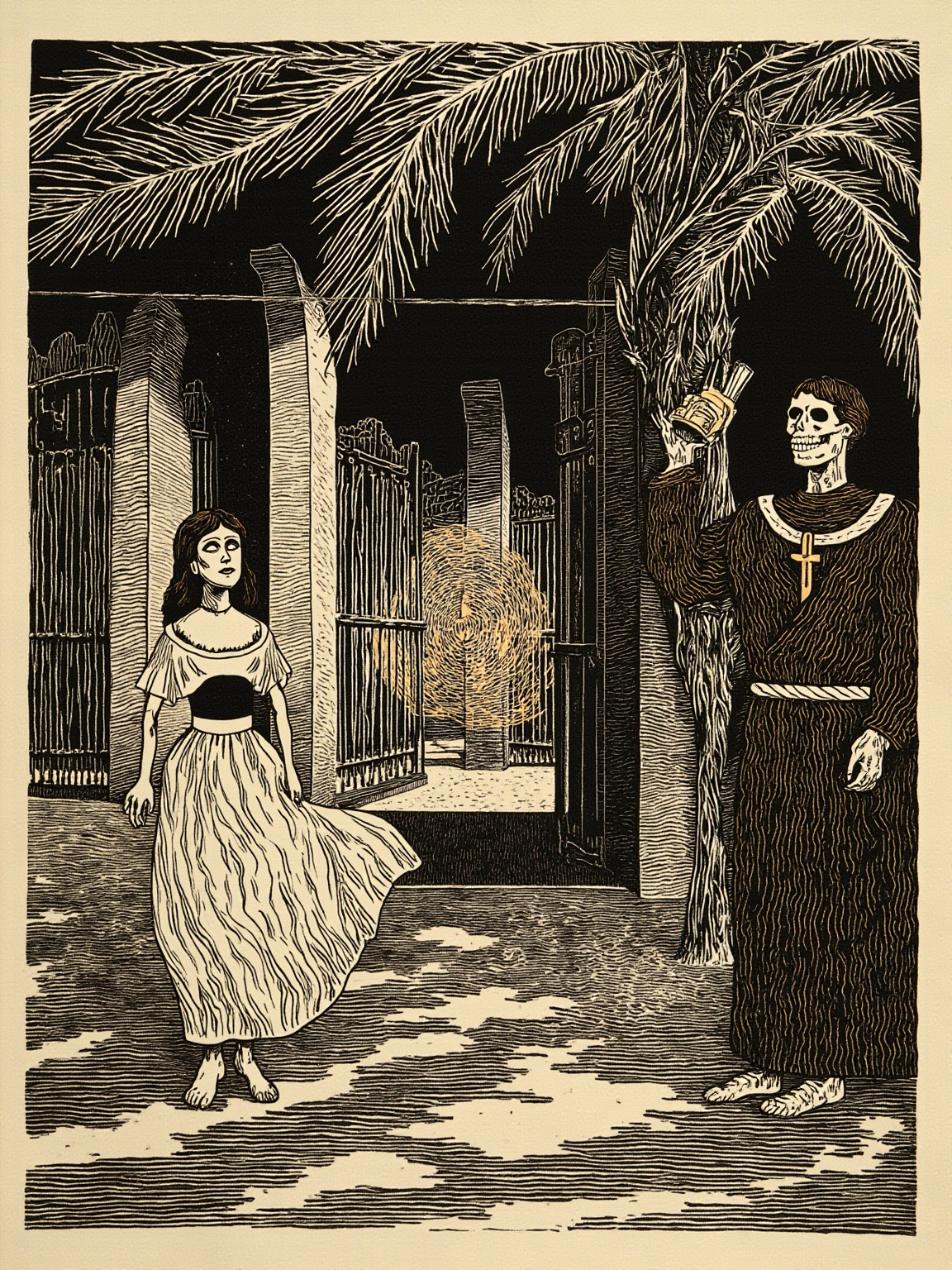
He had studied in Europe, he was returning full of illusions, and on his brow the youth of hope; in his hand a project for a school which he believed would be a beginning of the salvation of his town and his country.
他在欧洲念过书,回来时满怀理想,额上还印着希望的青春;手里握着一份他相信可以救乡救国的建校方案。
金句 · 第5章 · 学校的蓝图
On the River, the Brightest Page in the Book
Any illustrated edition will find its way to this night: Ibarra and María Clara together in a pleasure boat, water lilies drifting on the river, lantern-lit huts along the bank. They grew up together but were rarely alone in the same room, she in the convent, he in Europe. A fishing fire glows at the prow, and somewhere in the distance a Marian procession for the harvest festival drifts past. The cleanest, brightest stretch of youth this colonial world allows gets three pages here. Rizal writes it light so the weight lands harder later.
The Night of the Trap, and an Exile Who Pushes Him Onto a Raft
Not long after the ruined luncheon, Ibarra is framed for sedition. The authorities know which boat he will take and station men to seize him on it. Fog rolls over the river that night, and a canoe slips out of the reeds, Elías at the paddle, the exile whose family the colonial soldiers destroyed. The two men have never met, yet in the dark Elías shoves Ibarra onto a raft, drops back into the river himself, and vanishes under cover of the tide and the reeds. The boat capsizes, the men scatter. Two futures split apart on this single night: Ibarra's path of reform gets crushed in open court, his school dies with it, while Elías's path of violent reckoning stays coiled in the shadows, never once played out on the page, a second possibility Rizal writes into the book and then leaves silent. Both possibilities sit inside the same novel, but the one that actually survives is the stack of pages Father Tai holds at the end: the reformer exits without a word, and passes the fire to the next generation.
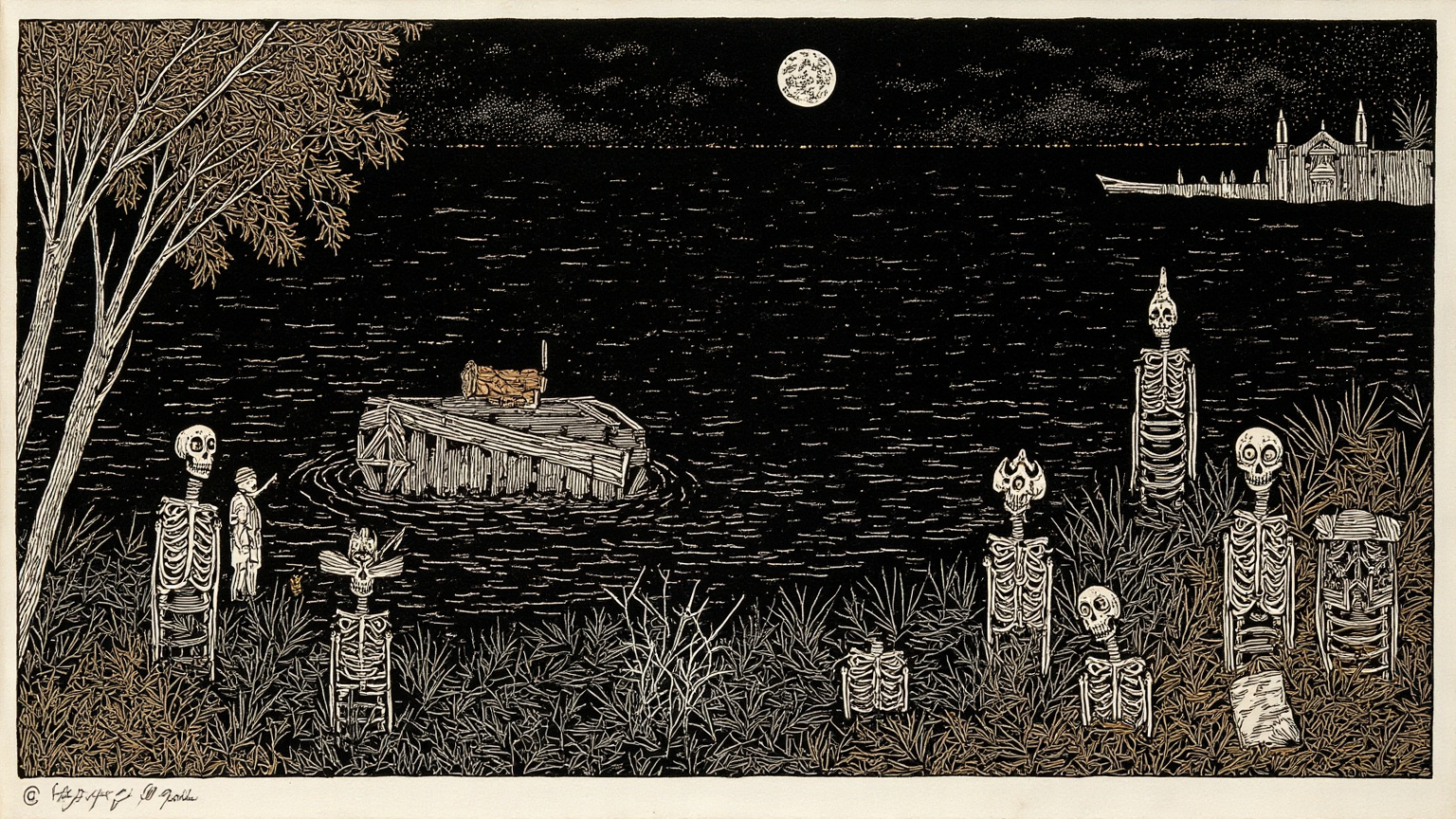
There was no one on the river; the current carried along the solitary boat, while from the banks the fireflies answered each other like little wandering stars.
河上无人,水流推着那一只孤舟;两岸的萤火虫此起彼落,像一群迷途的小星彼此应答。
金句 · 第25章 · 芦苇丛
That same night, a crackdown in the countryside catches up a mother named Sisa. Both her sons are gone, her mind breaks, and she wanders the town after dark with a lantern, calling their names into the empty streets. It is a single frame standing in for everything colonial violence does to the innocent, and it is the bleakest image in the whole novel. Rizal never stages the tragedy scene by scene; one lantern moving through the dark is enough to drive it into the reader.
The Public Trial: Colonial Hypocrisy Exposed, Piece by Piece
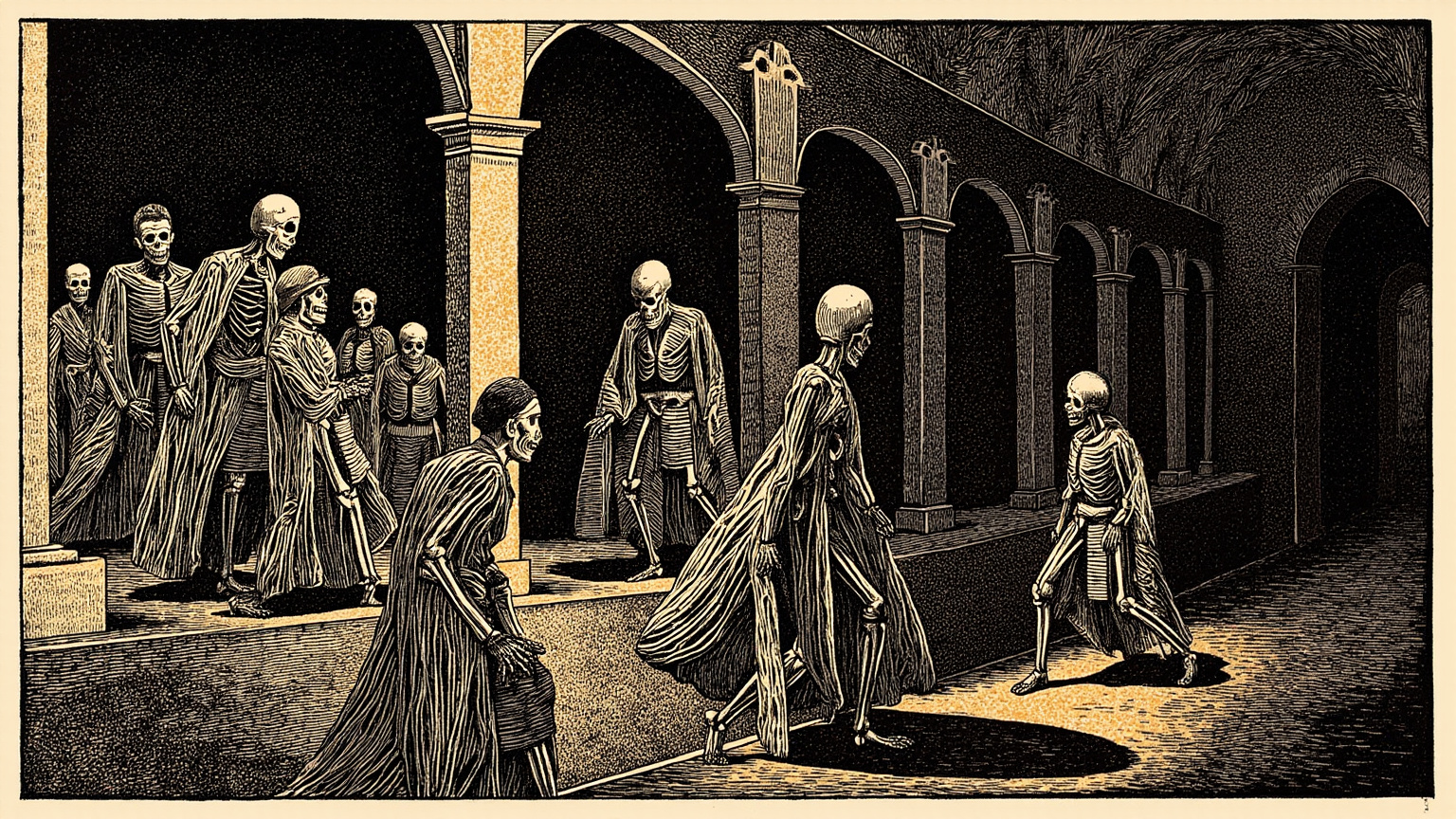
Ibarra is dragged from one prison to another and finally brought to public trial. Colonial officials and friars close ranks against the young man, naming him, surrounding him, humiliating him in open court. Rizal does not let Ibarra rage; he keeps him silent and turns the jury's faces, one by one, toward the reader instead. Words overheard in the confessional, signatures on old letters, warnings once carved into the convent wall, all get pulled out and set side by side. The church's structural hypocrisy does not come apart in one scandal. It comes apart the slow way, cross-examination by cross-examination.
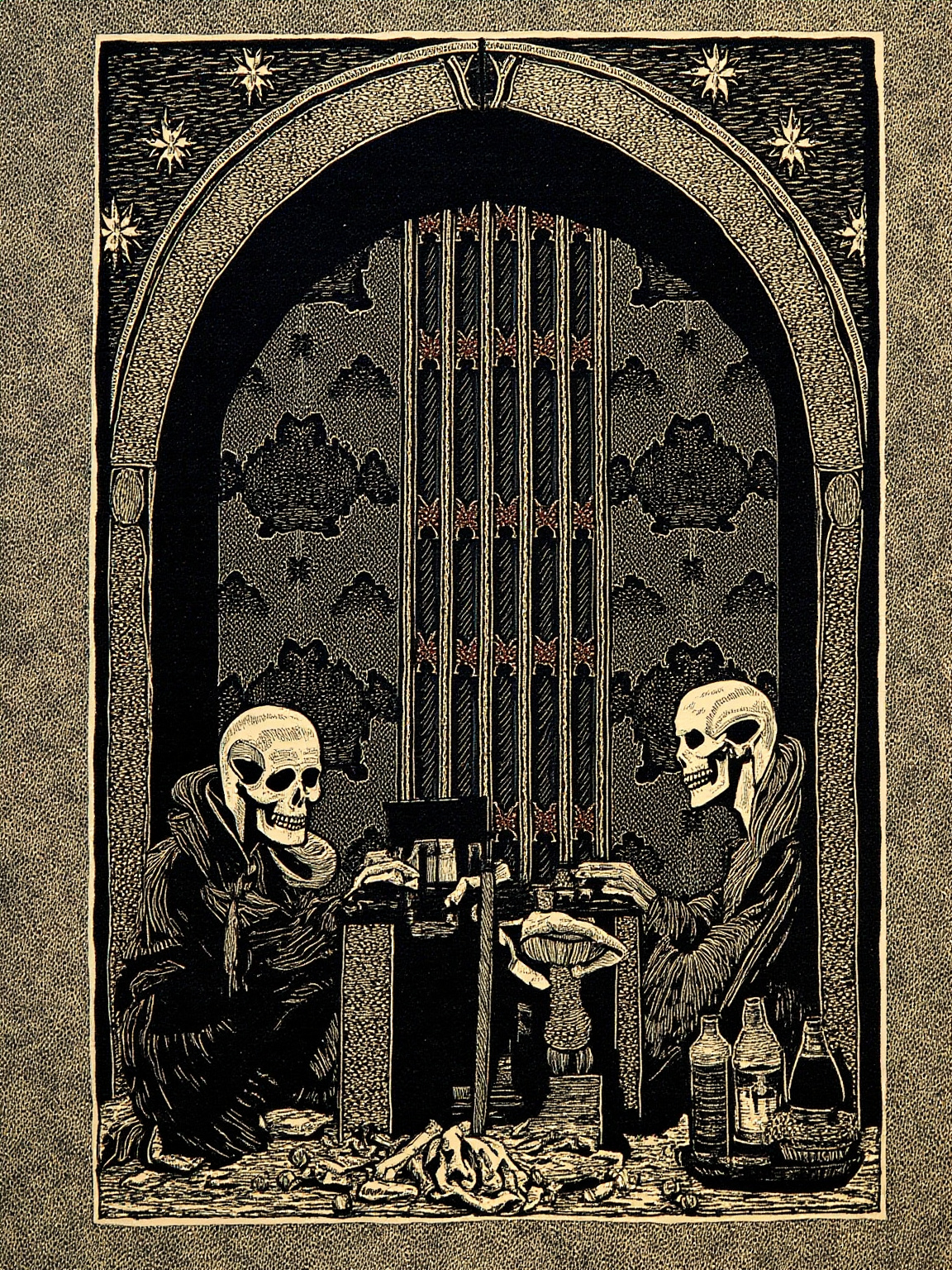
He wished to weep but could not, to protest but he must be silent; he felt that his very voice would be denied him, and that all eyes would be turned away if he dared to speak.
他想哭却哭不出,想抗辩却必须噤声;他感到连自己的声音都要被夺去,只要他一开口,所有的目光都会背转过去。
金句 · 第55章 · 公审
A Parentage Revealed, a Convent, an Exit Without a Word
The final chapters uncover a parentage buried for years: María Clara's mother was once forced by a colonial priest, and María Clara herself turns out to be living proof of that hypocrisy. When she hears the truth, she does not weep or accuse anyone; she withdraws alone into a convent, the only door the colonial order leaves open to a woman who wants another life. Ibarra, ambushed and framed, refuses to confess and refuses the path of violent revenge as well; before the end he hands a stack of manuscripts to his uncle, Father Tai. The uncle, a reform-minded priest, takes the pages at the water's edge, looks out at the sea, and tells the young man to keep the fire alive and wait for the next generation. The reformer leaves without a word. It is not a heroic exit. It is a dignified defeat, and the defeat itself is what gets written down as the fire.
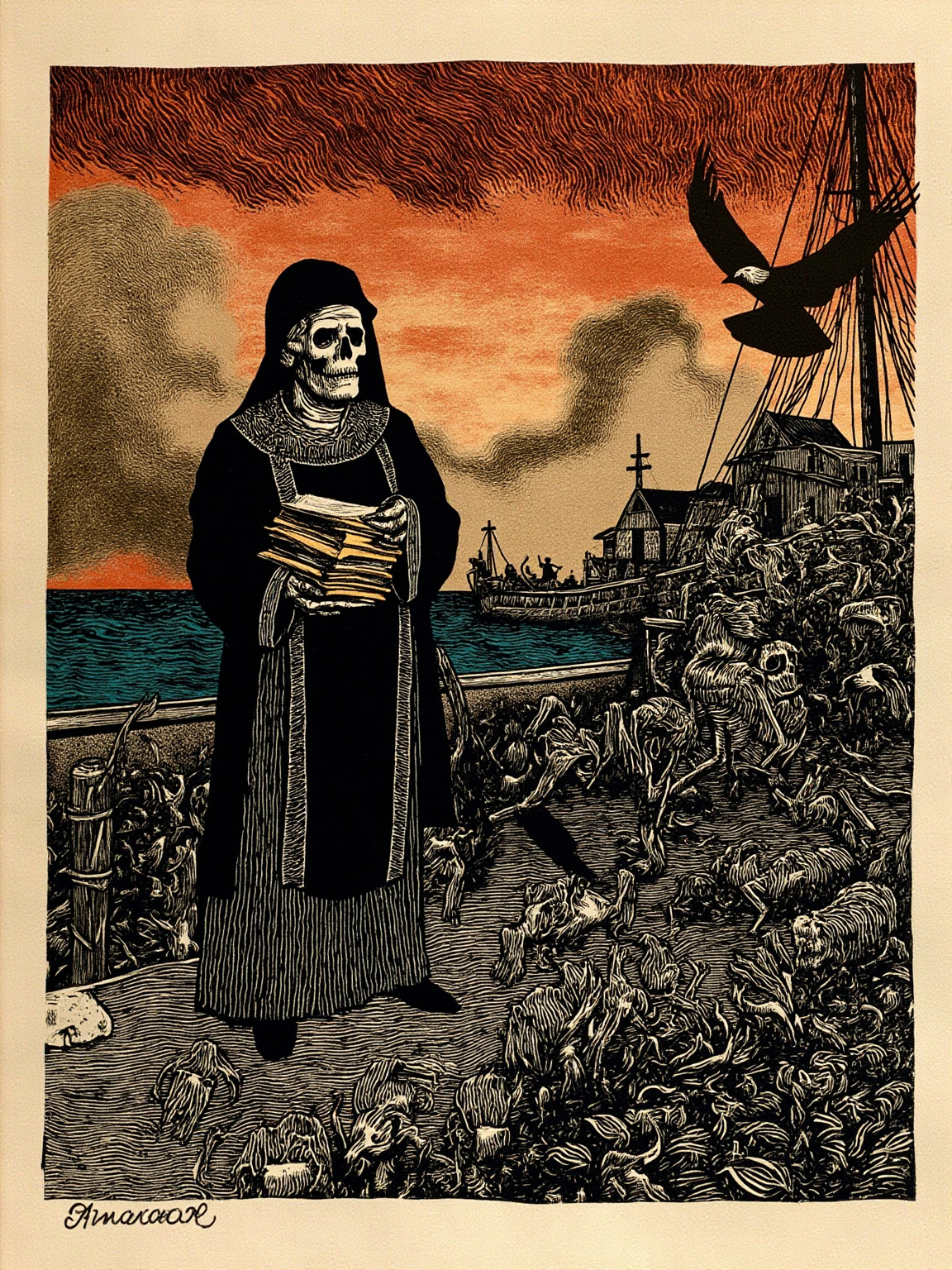
She asked for nothing, she complained of nothing; she entered the convent as one lays down a burden one has carried too long.
她什么也不要,什么也不怨;她走进修道院,像放下一个背得太久的担子。
金句 · 第63章 · 修道院的门
Theme: Cancer, Society, and Touch Me Not
Rizal spells out the title himself. Noli Me Tangere is Latin for words the risen Christ speaks to Mary Magdalene on Easter morning: touch me not. The colonized have already woken up; leave them alone. The line cuts both ways, the colonizer telling the colonized not to resist, and the colonized telling the colonizer not to press any harder. José Rizal was twenty-six when this book went to print in Berlin in 1887. Nine years later the colonial authorities executed him. Filipinos still print his face on their currency and put him in their textbooks, and Noli Me Tangere is where that awakening begins.
What the book is really saying is that colonial society runs as one interlocking machine. Church, officials, native gentry, convent, confessional, a boat ticket, a luncheon, a length of streamer: they look scattered, but they are twisted into a single rope. Ibarra thinks he can reform the whole machine by working loose one gear, and every gear bites back. Elías takes the other road and ends up at the bottom of the river. Rizal offers no answer. He lays the tissue sample out and leaves the next generation to read it and write the rest themselves. The book has been handed down this long because the surgery it describes has never finished.
Why Read the Novel Itself
A companion guide can only give you the skeleton, and a skeleton is a cold thing: colonization, church, reform, violence, defeat. The novel itself holds what the skeleton cannot carry: the noise of the town market, the exact way the water lilies open on the river, the one stray curl at the back of María Clara's neck, the flash of gold cross when Father Dámaso sets his glass down hard on the table, the patch of plaster peeling off the convent wall. A summary flattens all of that; only the original text lets it spring back. And there is a way of reading this book that matters more than any of it: turning the pages while you know the author was twenty-six, and knowing what happens to him nine years later. That is the real taste of this book.
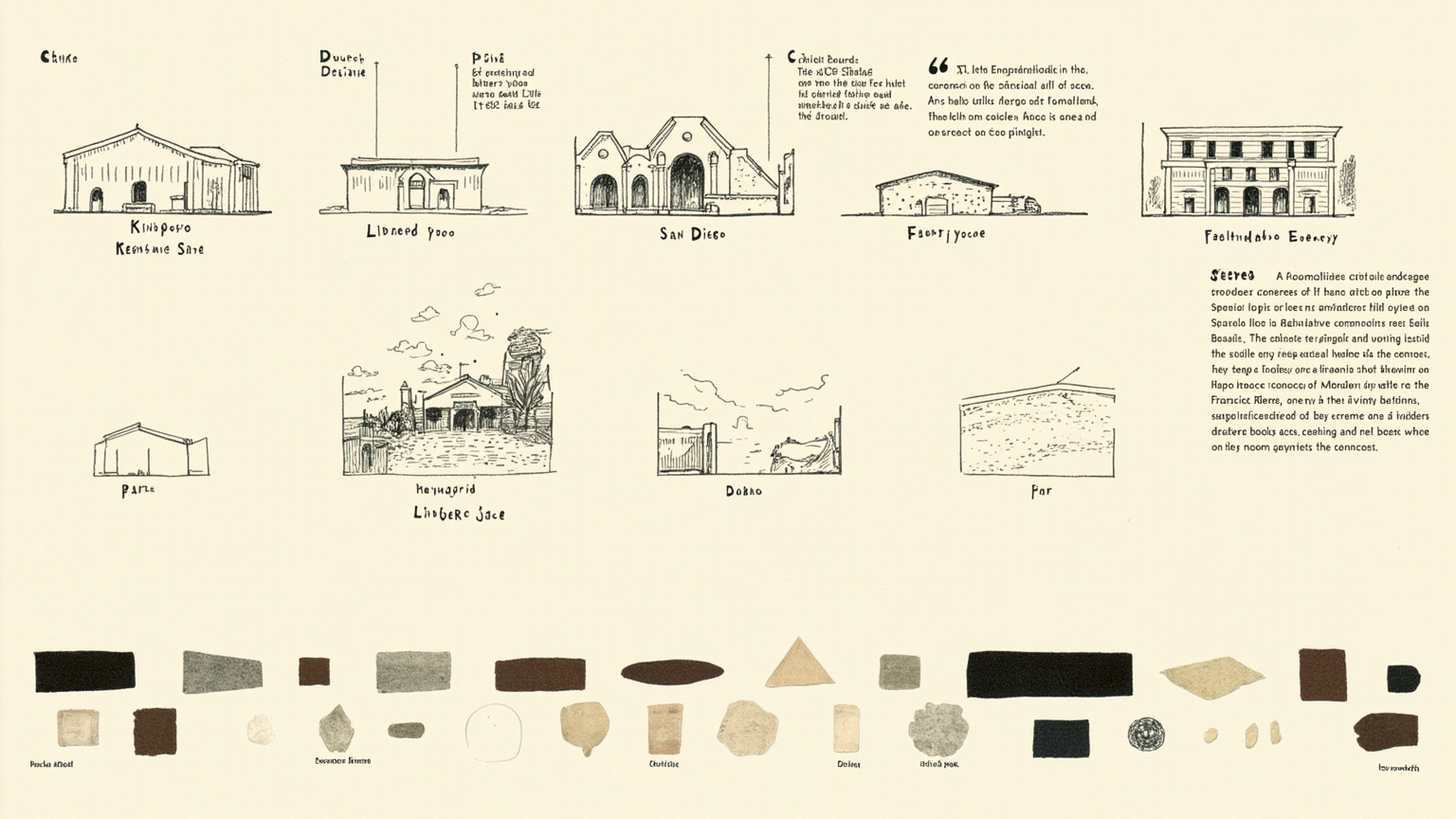
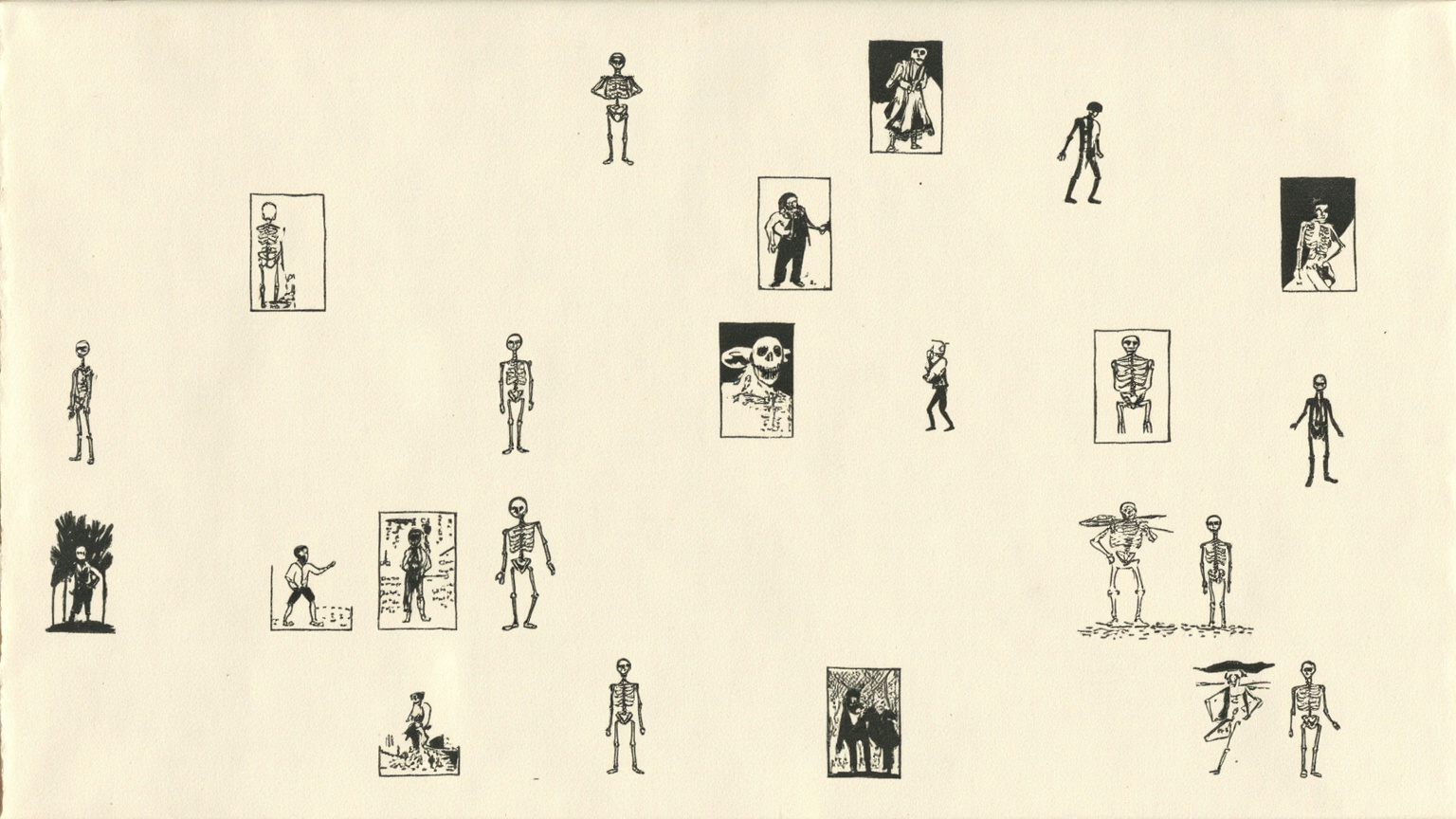
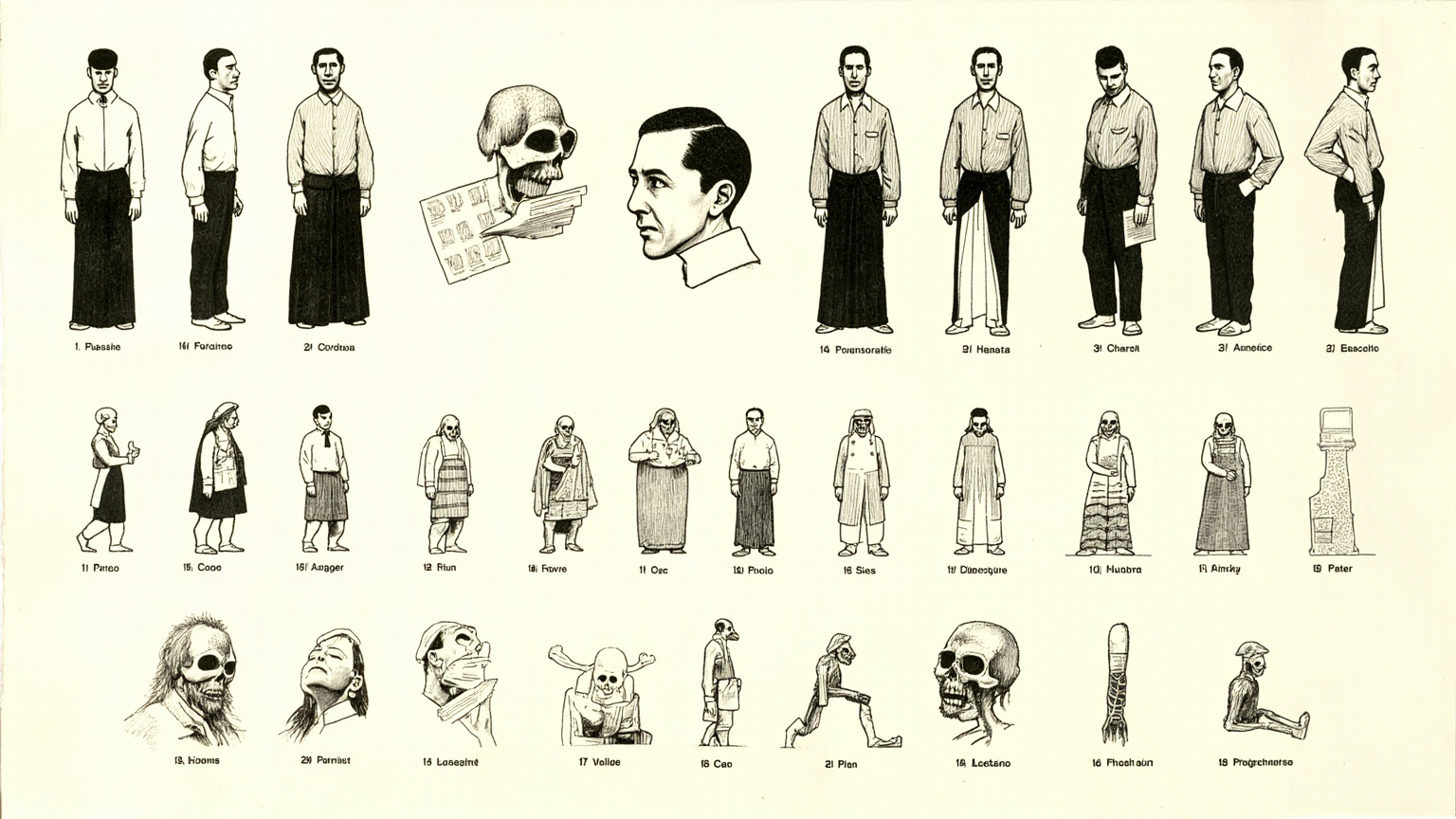
Art Direction4 plates
Before the guide was written, this book got a visual foundation — every illustration you just read grew out of it.