The Platform Sutra of the Sixth Patriarch · Companion Guide
六祖坛经
不识字的岭南樵夫凭一句经文顿然开悟,掀翻千年佛门门第,定义「顿悟」二字
Opening
He set his firewood down at the market gate, caught a line of scripture rolling off a customer's tongue, and froze where he stood.
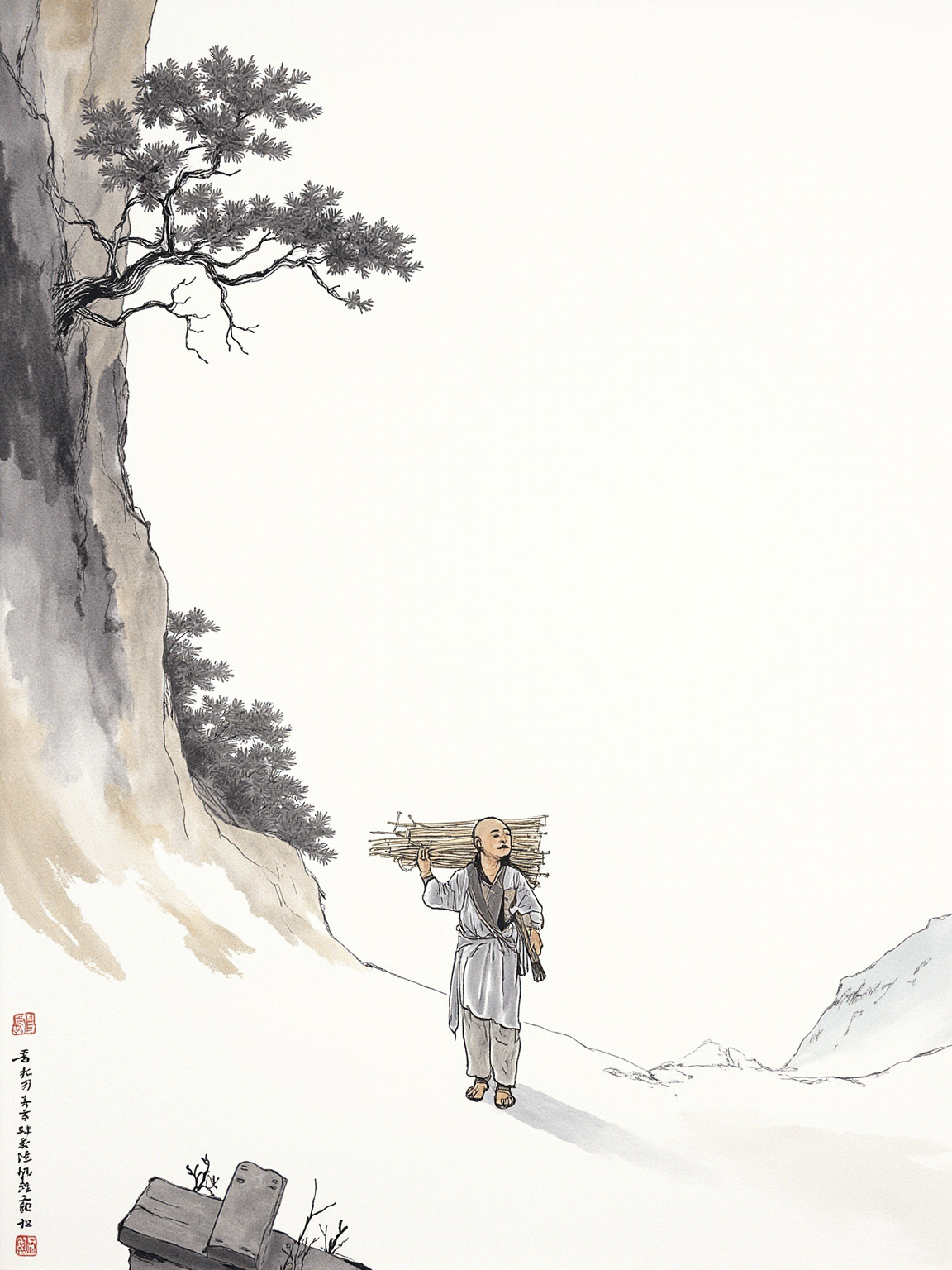
One should give rise to the mind that abides nowhere.
应无所住而生其心。
金句 · 《金刚经》引文 · 开悟之因
It was a line from the Diamond Sutra — "let the mind arise without fixing it on anything." He put down his load, settled his aging mother, and turned north. That single walk shaped the next thirteen hundred years of Chinese Zen.
What kind of book is this
The Platform Sutra is a collection of the Sixth Patriarch Huineng's teachings, assembled after his death by his disciple Fahai. It is the only Chinese Buddhist text written by a Chinese Buddhist that carries the title sutra — a word normally reserved for the words of the Buddha himself.
The text was closed no later than 713, the year Huineng died, though the version read today has been revised and expanded many times since. It is remembered for one move: it tore the question of becoming a Buddha off the scholar's desk, off the monk's rulebook, off the thousand-year staircase of gradual cultivation, and dropped it in front of everyone.
People and world
Huineng started out as a poor, illiterate woodcutter from Xinzhou in Lingnan (roughly today's Xinxing, Guangdong), supporting his mother by cutting and selling firewood. Shenxiu was the senior disciple under the Fifth Patriarch Hongren, first in learning and in standing; by the time Huineng arrived at the monastery, everyone already assumed Shenxiu would inherit the line. The two had been fellow students under the same roof, and each went on to found a different school: the Northern school under Shenxiu, which taught constant polishing, and the Southern school under Huineng, which taught that there was never anything there to polish.
On Huineng's side stand Fahai, who wrote his words down; Huiming, the officer who chased him down the mountain and ended up won over instead; and Wei Qu, the Prefect of Shaozhou, who built him a platform to preach from. Facing him is Zhicheng, sent by Shenxiu to spy on the southern school and converted on the spot instead. The world is Tang-dynasty Lingnan and the south: firewood loads and mountain paths, stone mortars and rice-pounding rooms, preaching platforms and moonlit roads on foot. These are the objects the text keeps returning to.
How the story runs
One. Xinzhou: a line of scripture hits a woodcutter
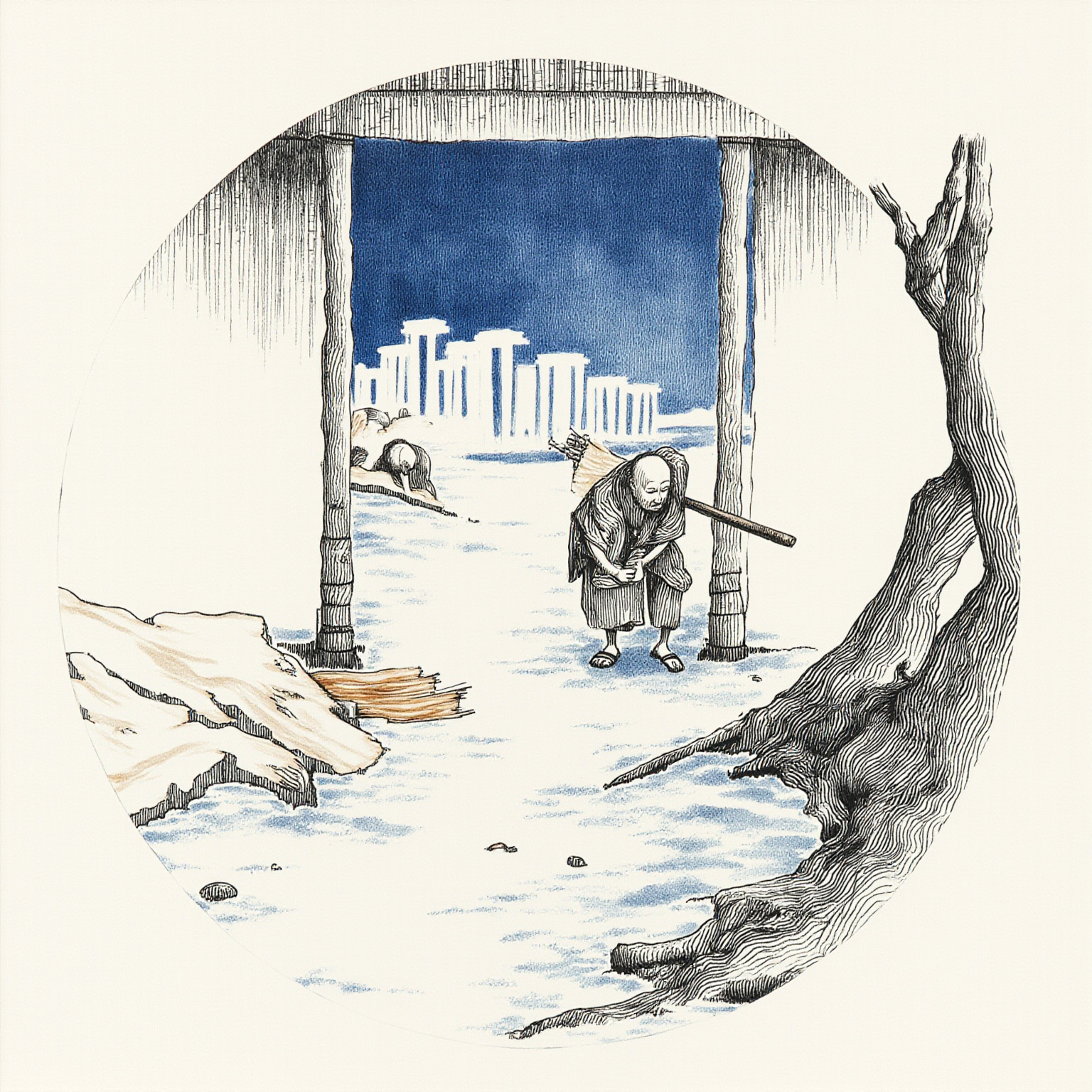
I am a commoner from Xinzhou in Lingnan. I seek nothing but to become a Buddha.
弟子是岭南新州百姓,远来礼师,惟求作佛。
金句 · 行由品 · 黄梅初谒
Huineng was selling firewood in the Xinzhou market when he heard a customer reciting the Diamond Sutra. The line "let the mind arise without fixing it on anything" hit him like a shove to the chest, and a question he had carried for years came loose in an instant. The customer told him Master Hongren at Huangmei could point him toward supreme enlightenment. He went home, settled his mother, packed a little travel money, and headed north.
The step looks casual, but everything else depends on it: an illiterate boy from the southern frontier hears one line and decides he can walk into the finest Zen monastery in the country. No lineage, no credentials, barely able to read — this is the setup for the whole revolution to come.
Two. Huangmei: eight months at the mortar, two verses on a corridor wall
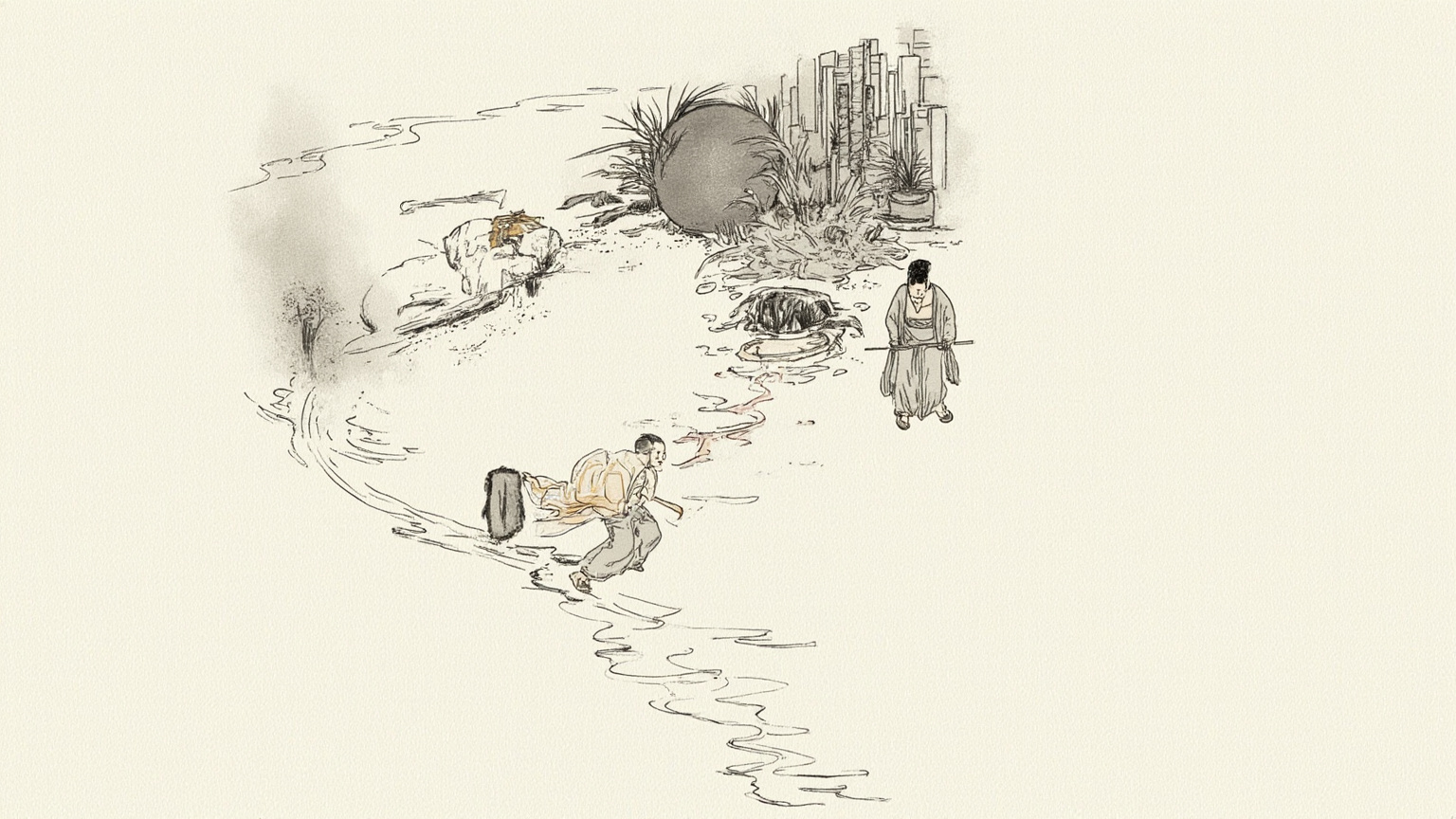
Fundamentally there is not a single thing — where could dust alight?
本来无一物,何处惹尘埃。
金句 · 行由品 · 廊壁偈语
At East Mountain Monastery in Huangmei, the Fifth Patriarch Hongren's first question wasn't about doctrine. He asked, "Where are you from, and what do you want?" Huineng answered, "I'm a commoner from Xinzhou in Lingnan, and I want nothing but to become a Buddha." Hongren sent him to the mortar room out back to pound rice, and kept him there for more than eight months.
Then the moment came. Hongren asked every disciple to write a verse showing what they understood, so he could see who had grasped their own nature. Shenxiu, the presumed heir, wrote his in the middle of the night on a corridor wall: "The body is the Bodhi tree, the mind a bright mirror standing clear. Polish it, hour by hour, and let no dust collect." By morning the whole monastery was reciting it. Hongren's verdict was one line: "He has not seen his own nature." Word reached the mortar room, and Huineng had someone write his answer beside it: "Bodhi has no tree to speak of, no stand holds up the mirror. Nothing was ever there to begin with, so where would dust collect?"
Set side by side, the two verses show what's really at stake. Shenxiu starts from something: a pure mind that has to be kept clean through effort. Huineng starts from nothing — even the idea of a pure essence is just a name, and there was never any surface for dust to land on. When Hongren read Huineng's verse, he called him to his private quarters that night and handed him the robe and bowl in secret.
Three. Dayu Ridge: caught, and let go
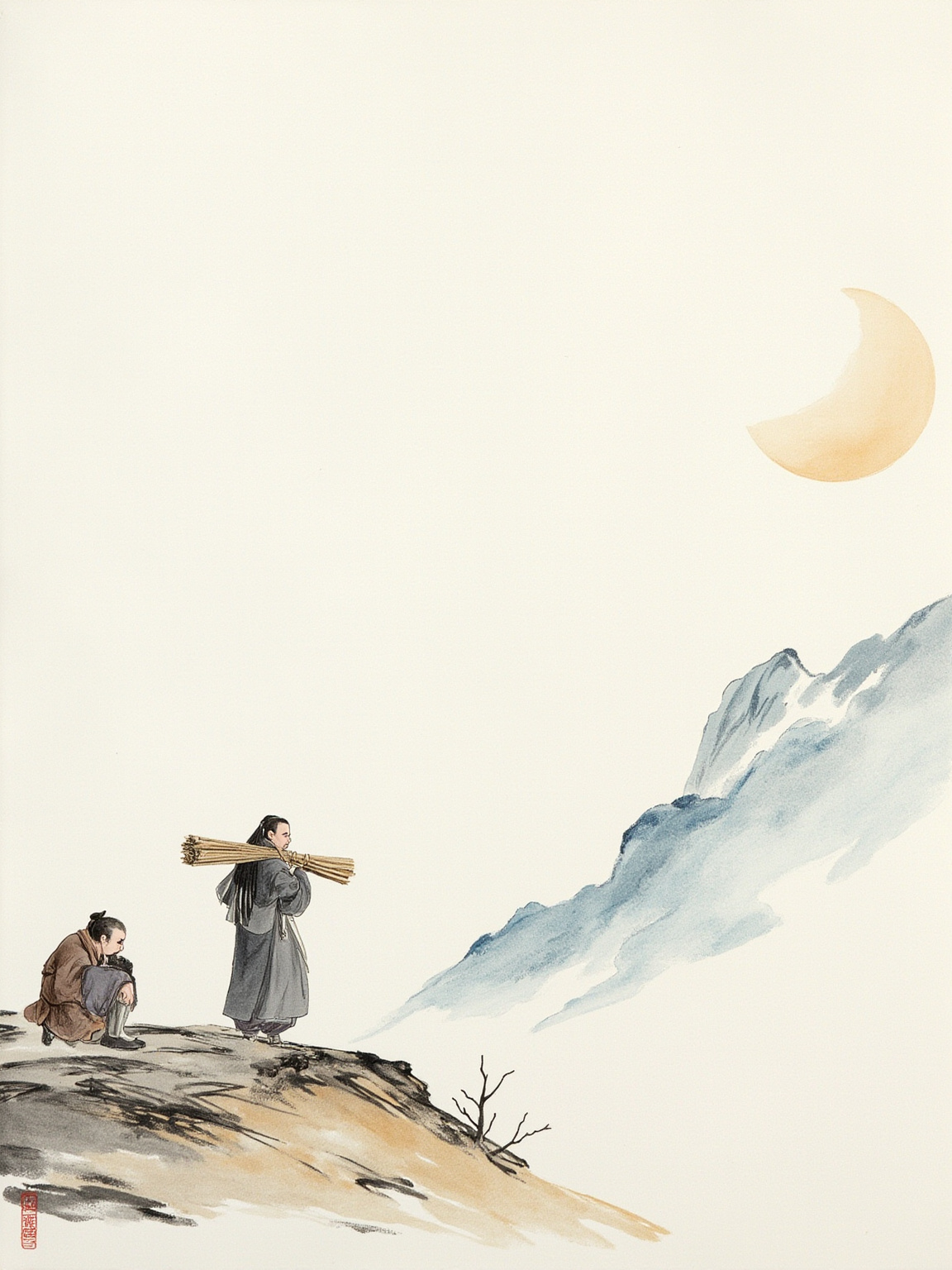
Linger here, monk — speak the Dharma for me.
不须用心,努力听吾说法。
金句 · 遇机缘品 · 大庾岭授受
Huineng carried the robe and bowl south, and at Dayu Ridge a general named Huiming, sent to chase him down, caught up with him. Huiming was young and hot-blooded; he reached for the bowl and couldn't lift it. A single bowl, resting on a rock, and a ranking officer couldn't move it.
Huineng told him to sit and rest, then taught him. Huiming turned on the spot, from the man sent to seize the robe to a man ready to guard it. The scene is built well: he isn't defeated, he's let go of. What no amount of strength could lift was never the bowl. It was his own need to have it.
Four. Fifteen years among hunters
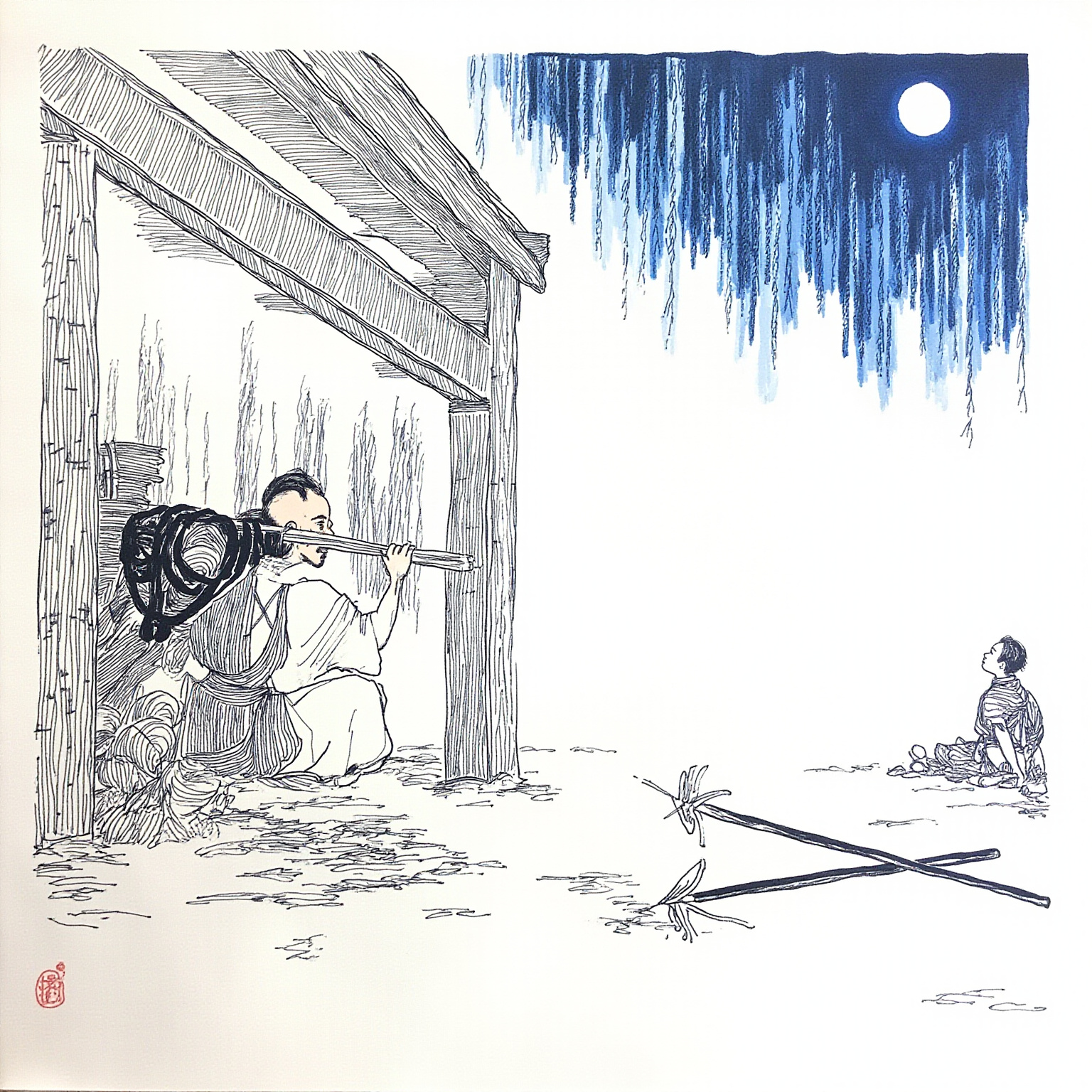
Before they parted, Hongren warned him: "The robe will bring conflict. Go south — stop at Huai, hide at Hui." Huineng stayed hidden for fifteen years, living among hunters and mountain people across Guangdong and Guangxi, teaching whoever crossed his path, claiming no title. When the hunters killed game, he freed what he could and ate his vegetables cooked alongside their meat.
These fifteen years are the part readers skip past fastest and the part that matters most. A man who had just received the robe and bowl chose to disappear into a crowd of illiterate woodcutters. That choice is the doctrine, acted out: becoming a Buddha was never about the title.
Five. The flag, the wind, and Dafan Temple
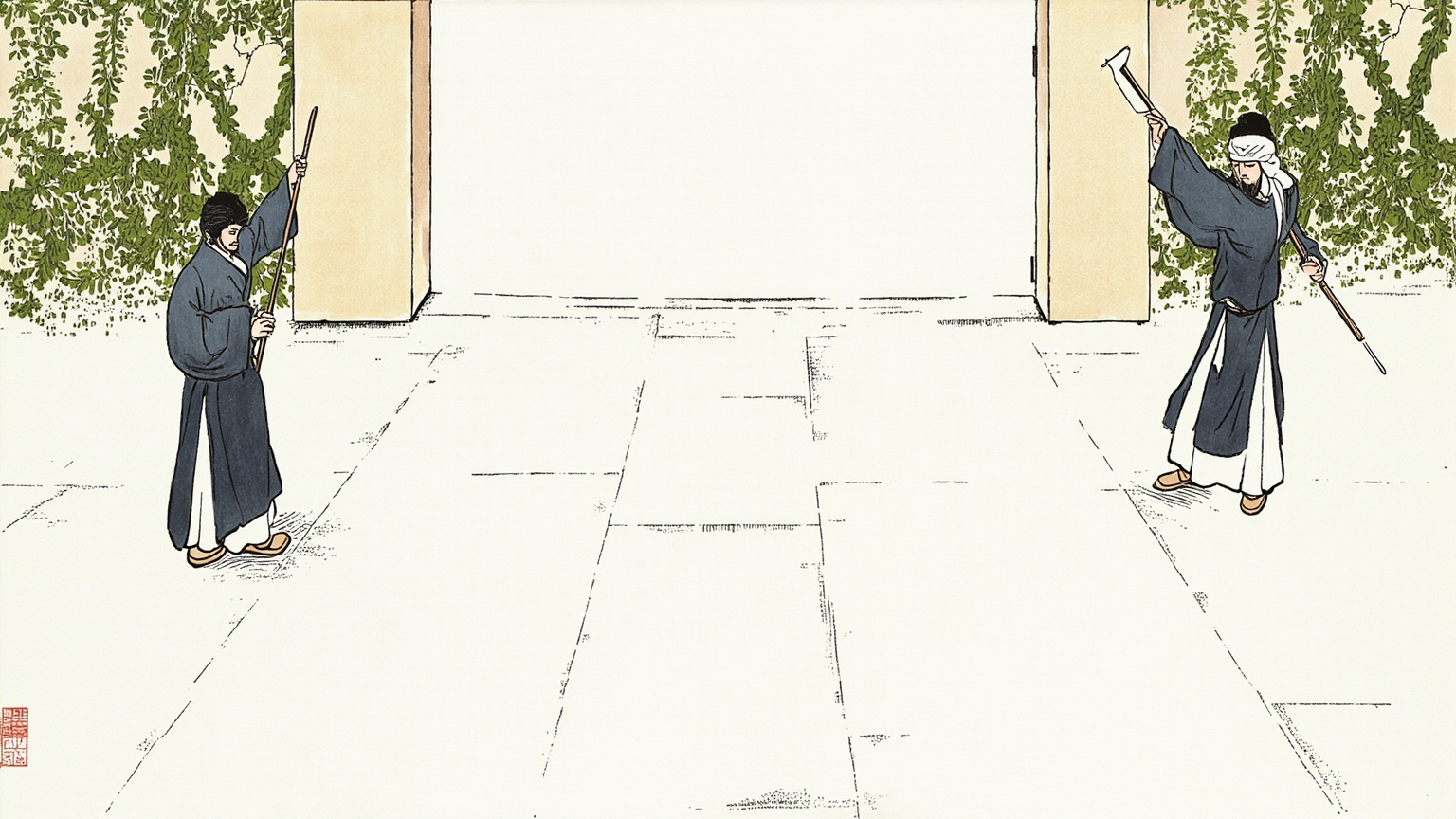
It is not the wind that moves, it is not the banner that moves — it is your mind, honored one, that moves.
不是风动,不是幡动,仁者心动。
金句 · 顿渐品 · 风幡之动
When Huineng came out of hiding, he arrived at Faxing Temple in Guangzhou just as the monk Yinzong was lecturing on the Nirvana Sutra. A gust of wind stirred a temple flag, and two laymen fell into an argument: one said the wind was moving, the other said the flag was moving. Huineng cut in: "It isn't the wind, and it isn't the flag. It's your minds that are moving." The whole hall went quiet.
It isn't a stray bit of philosophy dropped into the scene. Its edge comes from the redirection: both men in the argument were looking outward, and Huineng pulled the camera back to them — the world moves because your mind moves first. Yinzong then shaved his head and ordained him.
Wei Qu, the Prefect of Shaozhou, led a delegation to invite him, and Huineng took his seat at Dafan Temple to teach the Mahaprajnaparamita, the great perfection of wisdom. From then on his platform at Caoxi drew more than a thousand disciples. The Platform Sutra's opening, its backbone, and most of its recorded encounters begin here.
Six. Meeting students where they stand: sudden against gradual
Within my own mind there is the Buddha; this self-Buddha is the true Buddha.
我心自有佛,自佛是真佛。
金句 · 付嘱品 · 自性自度
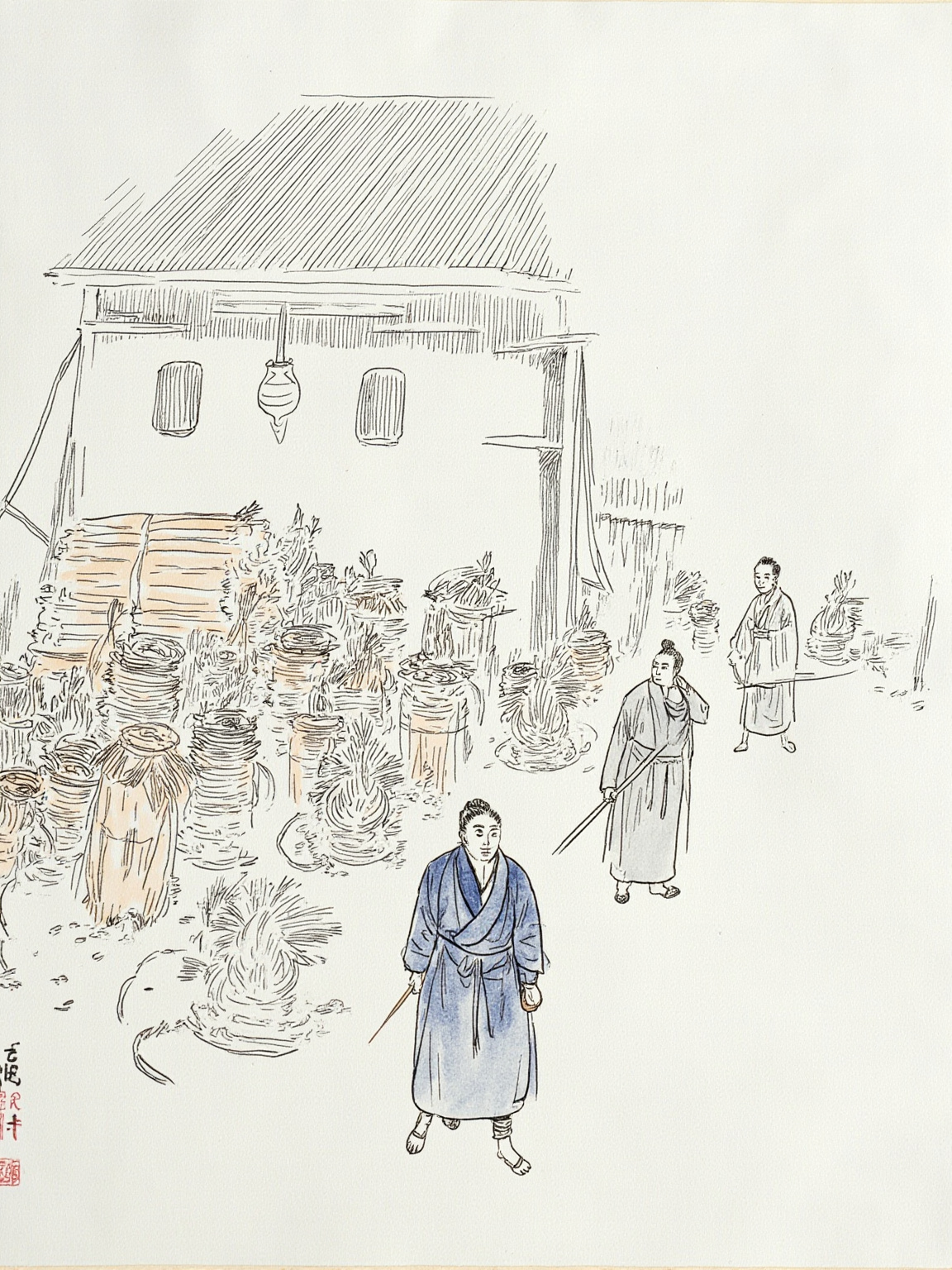
Zhicheng, a disciple of Shenxiu, was sent to Caoxi to spy on what the Southern school was teaching. He sat silent among the crowd, and Huineng spotted him at a glance. Huineng debated him in front of everyone: Shenxiu's teaching that only sentient beings can understand the Buddha, against Huineng's claim that even what has no feeling has Buddha-nature. Zhicheng ended by bowing and changing schools on the spot.
Then there's the monk Yongjia Xuanjue. He reached his own understanding reading the Vimalakirti Sutra, composed his Song of Enlightenment, came to pay his respects, stayed one night, and left, which earned him the nickname Enlightened in One Night. These encounter scenes are the best writing in the text. Nobody is lecturing from above; two people are trading lines, and the truth shows itself in the exchange.
Seven. Final instructions, and passing
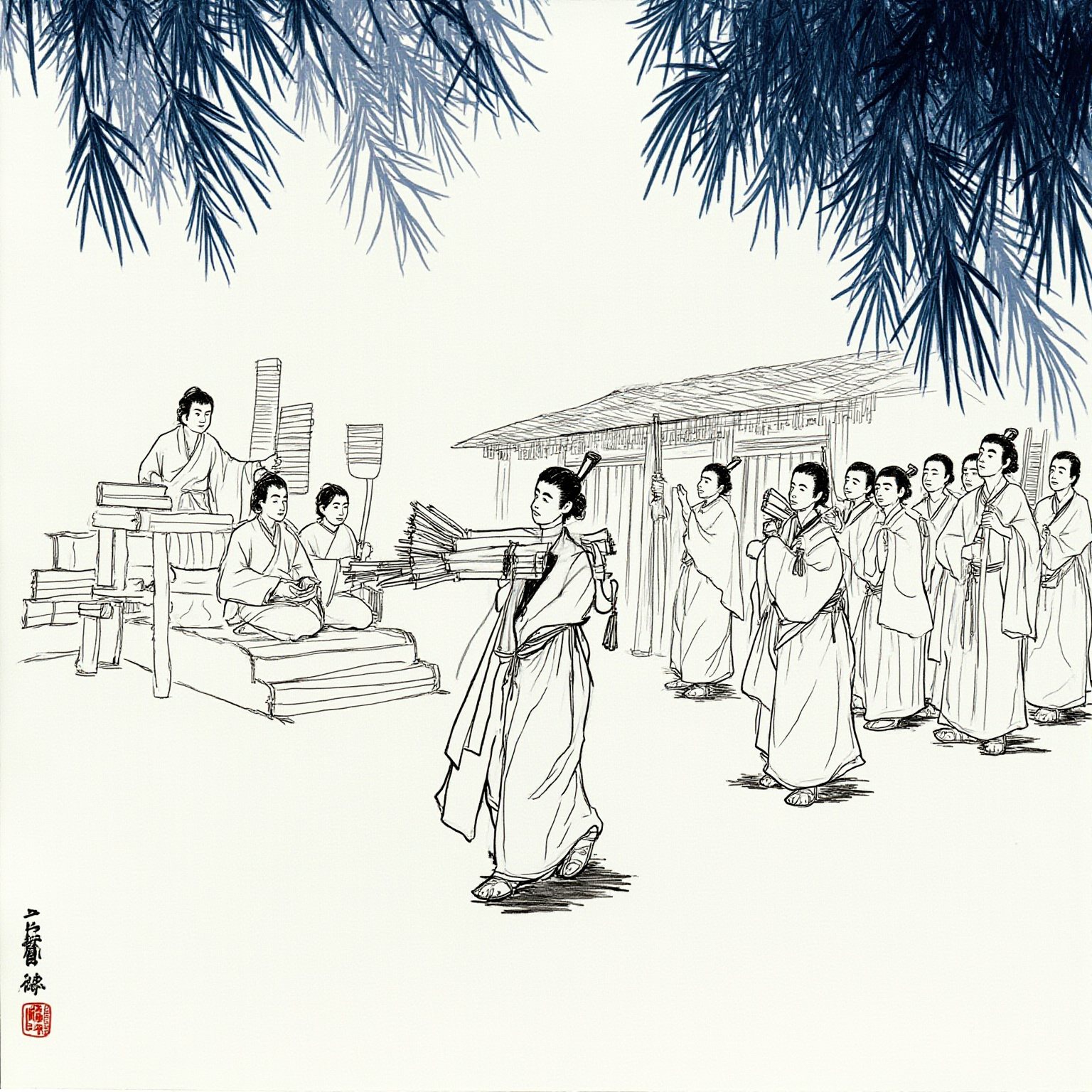
Huineng spent his last years at Baolin Temple in Caoxi, questioned by officials and woodcutters alike. Near the end he gave his final instructions, testing his students with the Thirty-Six Pairs of Opposites: being and nonbeing, motion and stillness, light and dark, going out and coming in, pair after pair, each one left for the student to see through alone. His last words came down to this: "Your own nature saves itself; hold no attribute, cling to nothing."
Huineng died in 713 at Guo'en Temple in Xinzhou. Afterward his disciple Fahai collected his teachings and his exchanges with students into the Platform Sutra. From that point on, sudden enlightenment had a fixed place in Chinese thought, and nobody writing about Zen could get around it again.
Themes and craft
The Platform Sutra is really making one argument: becoming a Buddha is never something you find outside yourself. It lives entirely in this present thought, in your own nature. Huineng's own phrase for it is "my mind already holds a Buddha, and that Buddha is the real one." The Buddha isn't made by anyone else, isn't hidden inside a scripture, isn't sitting on some temple altar. You've been carrying it the whole time. You just don't usually see it.
Three principles follow from that. No reliance on words: the teaching doesn't live in what's spoken or heard. The formless precepts: you don't even need to hold on to the form of the rules. The non-abiding mind: nothing should stick in the mind, not even the word emptiness. Set these three down, and the whole shape Buddhism arrived in from India gets turned over.
The text is credited with moving Chinese Buddhism from aristocrats to commoners, from the mountains into the marketplace. Its strength is simple: it takes something that used to sit far above ordinary people and presses it into every ordinary person's chest. The writing itself is unusual too, closer to dialogue than treatise, closer to a game than a sermon. One line lands, another answers it, and the moment the two collide, you can see which one is real. The first time I read "nothing was ever there to begin with," I went back and reread Shenxiu's verse, and only then understood the two weren't an argument between two men. They were two entire directions toward becoming a Buddha, meeting head-on.
Why you should go read it yourself
An explainer can tell you what this text says. It cannot give you the feeling of being struck awake that comes from reading it yourself. Huineng's exchanges are short, but every one of them forces you to turn a corner in real time — skip that turn, and you haven't actually read any Zen. However well the next essay retells it, no one else can write Shenxiu's verse for you, answer for Huineng, or make that jolt happen in your own head. Once you know the plot, go read the original. It's a different book.
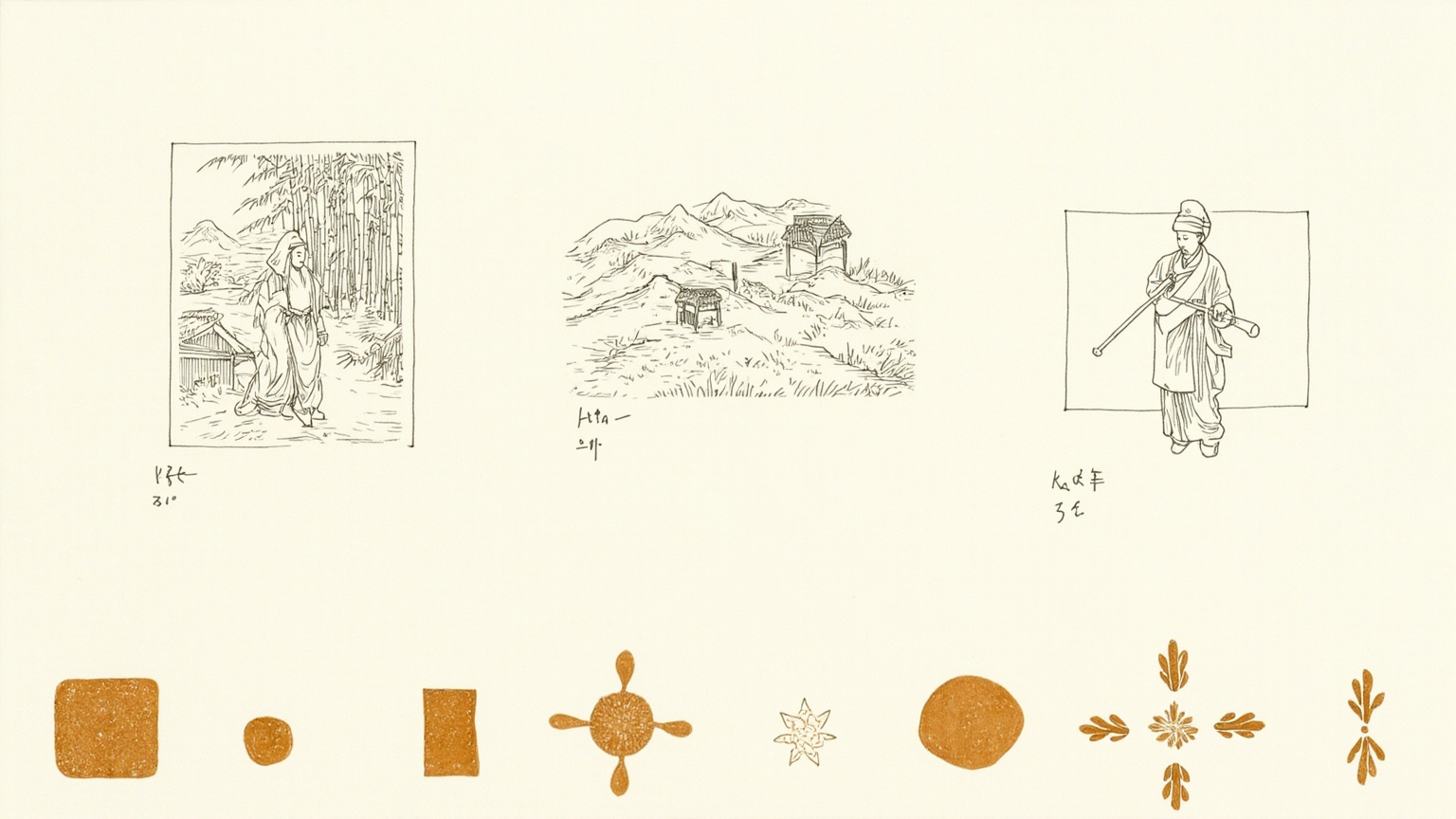
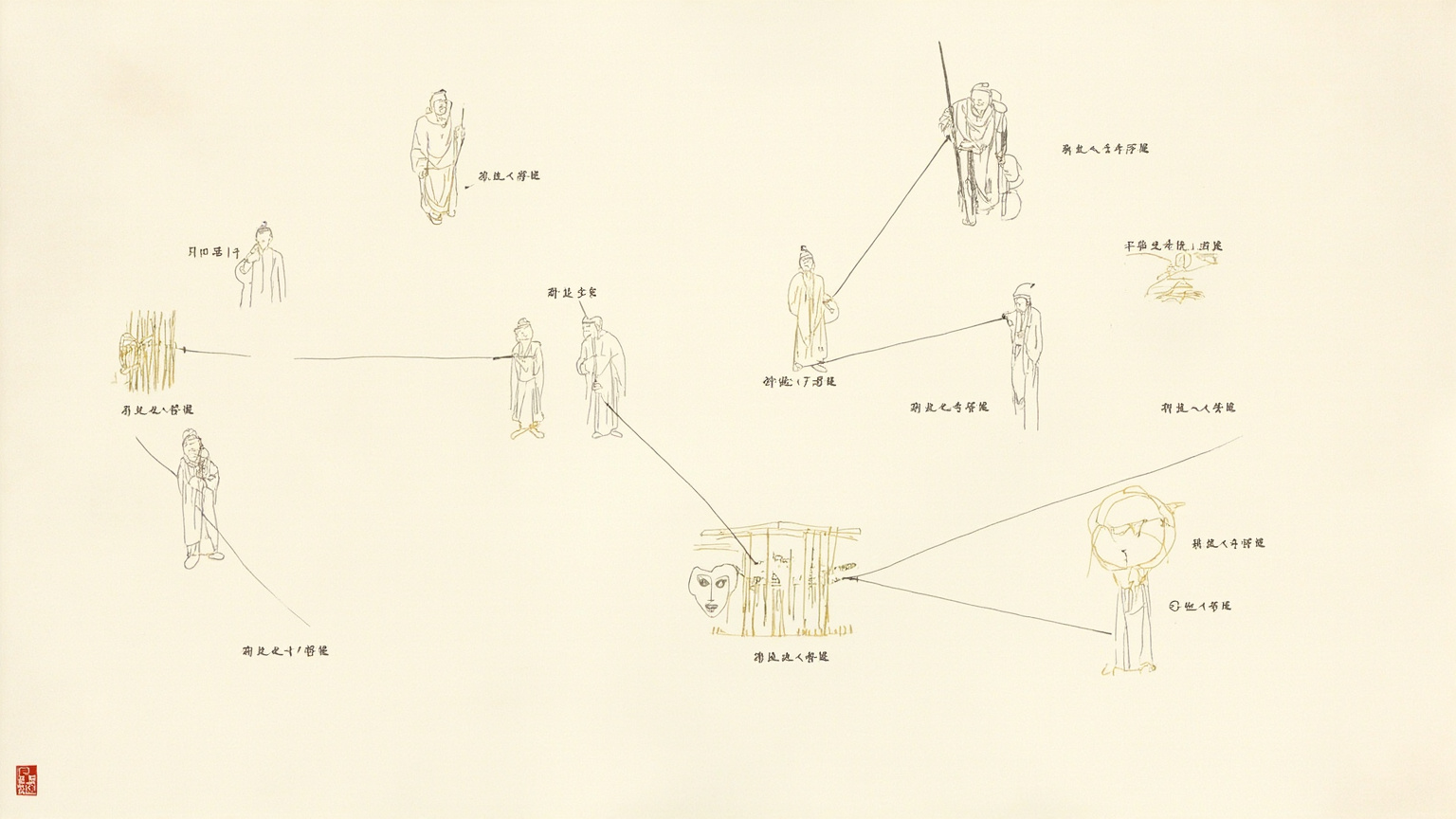
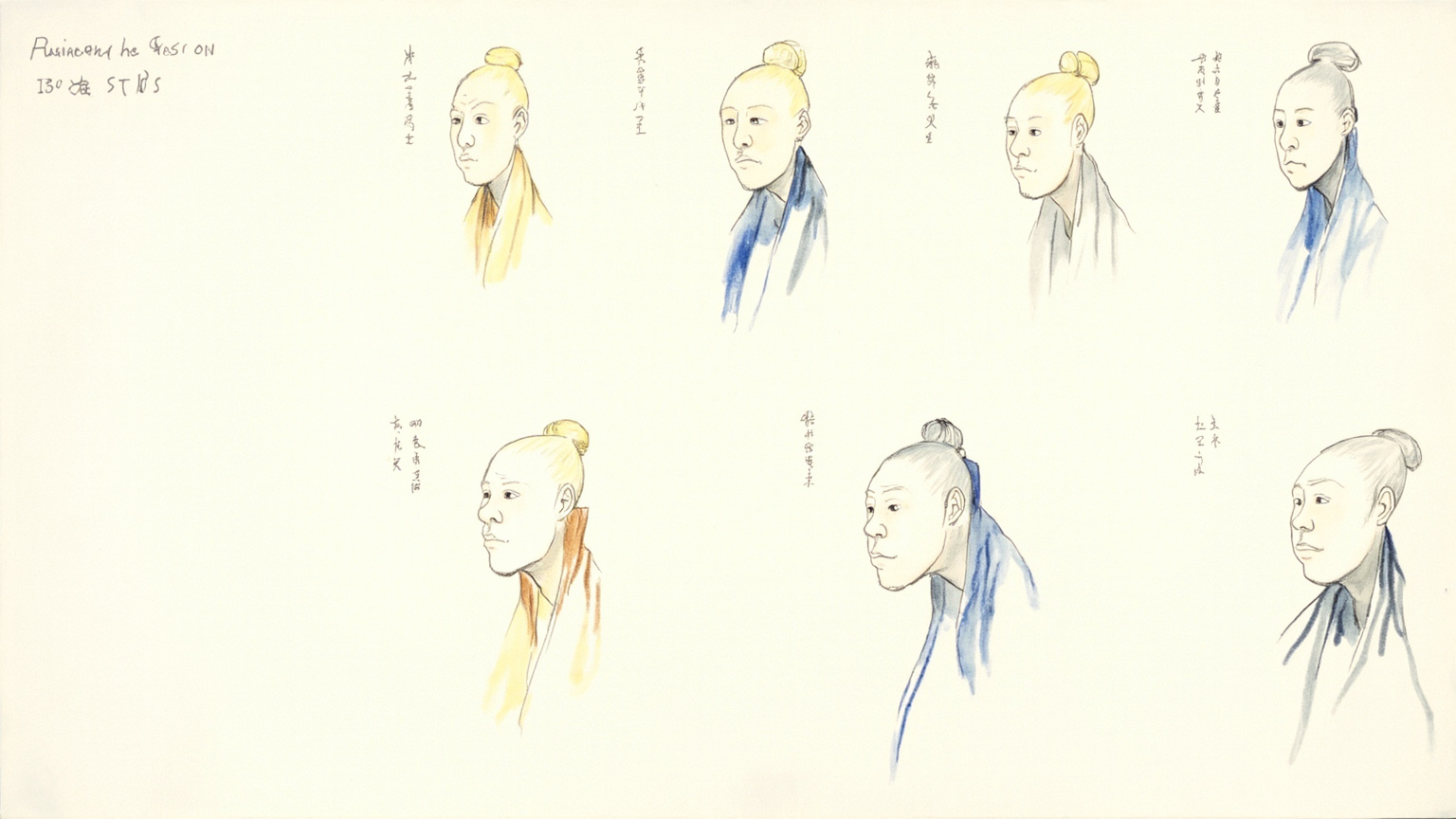
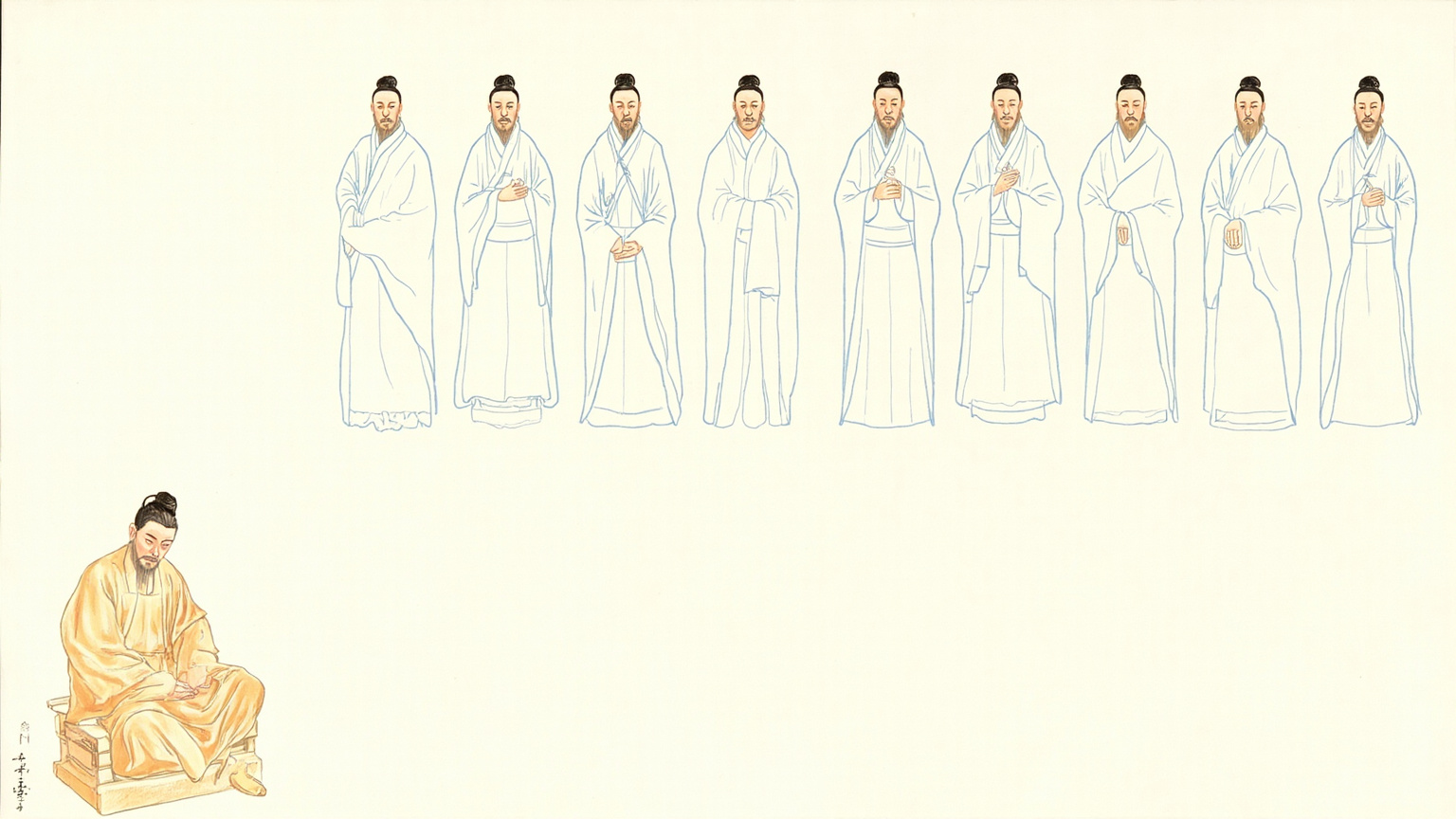
Art Direction4 plates
Before the guide was written, this book got a visual foundation — every illustration you just read grew out of it.