Popol Vuh (Popol Wuj) · Companion Guide
波波尔·乌
头颅高悬于结满果实的冥界之树,玉米面团初塑人形——孪生兄弟自焚献祭,化作日月。
A calabash tree hung with skulls
At the deepest point of the underworld stands a calabash tree. A human head hangs from its trunk, placed there after the lords of Xibalba beheaded him, back before the sun had risen. Later, a pair of brothers rise from that same tree and become the sun and the moon, giving the earth its first day and night. It is one of the most iconic images in the Popol Vuh: the head is not buried, not left on a battlefield, but hung high in a fruit-laden tree, waiting for the day its eyes open again.
The whole book turns around that tree. It is a place of death and a place of rebirth at once. Get that straight and you have the center of the K'iche' Maya worldview.
What kind of book this is, and why it is remembered
The Popol Vuh is an oral myth cycle the K'iche' Maya set down in Latin script in the sixteenth century. Its original title, Popol Wuj, translates roughly as Council Book or Book of the Community. The only complete manuscript that survives dates from the early eighteenth century, transcribed and preserved by the Dominican friar Francisco Ximenez in the Guatemalan highlands, which makes him its copyist, not its author.
It is the only complete text in which a living pre-Columbian Mesoamerican mythology was written down whole by its own people, filling the gap left by a Maya civilization that never had its own Bible. It gets shelved with the great mythic epics of the world, the Finnish Kalevala, the Persian Shahnameh, the Greek Theogony, as the Maya entry on that shelf.
A three-tiered world: sky, earth, underworld
The K'iche' cosmos is three tiers stacked at once. At the top sit the creators, Heart of Sky and Heart of Earth, where Tepeu and Gucumatz plan out the whole universe between them. In the middle lies the human world, roughly today's Guatemalan highlands around the Cuchumatanes mountains and the K'iche' capital of Q'umarkaj, where rainforest, cornfields, and temple pyramids all sit. At the bottom hangs an inverted underworld kingdom, Xibalba, Place of Fright. It holds five houses of death, Dark House, Cold House, Jaguar House, Bat House, Razor House, and an underworld ballcourt.
Hold onto that three-tier structure, because everything that follows moves between them: heroes descend from earth to the underworld and rise from the underworld to the sky. Corn people, meanwhile, stay put in the middle tier, watched over by the gods and coveted by the lords of death alike.
The gods, and three generations of people
There is no single true god in the Popol Vuh, in the monotheistic sense; the work runs on a division of labor among gods. Tepeu and Gucumatz create the world together. Gucumatz, the feathered serpent, embodies thought and planning, and was worshipped across Mesoamerica; later scholars have lined him up with the Aztecs' Quetzalcoatl and the Toltecs' Kukulcan, but in this text he answers to his own name, Gucumatz, not the Aztec one. Down at the human tier, the patron god Tohil can call fire into being just by holding a sacred stone, while the gods of other lineages keep to their own duties.
The characters who really carry the book are twin brothers, Hunahpu and Xbalanque. Their father and uncle were put to death by Xibalba, and the father's head is the one hanging in that calabash tree in the underworld. Their grandmother, Xmucane, Grandmother of Day, raises the twins alone. She is also the one who later makes corn sprout, the Maya myth's stand-in for the earth mother.
Three attempts at making people: mud, wood, corn
Creation did not happen in one pass. The makers tried three times.
The first attempt used mud. The mud people dissolved the moment they touched water; they could not even stand up straight. The second used wood. The wooden people had mouths and hearts, could talk and walk, but could not remember their makers, paid the gods no honor, and never prayed. They were, in effect, unfinished humans. The gods chose to wipe that generation out: they sent a flood, loosed black ants to gnaw the wooden people down, and what little survived became today's forest monkeys. On the third try, the makers shaped true people out of white and yellow corn dough, the origin of corn people, and the mythic root of why the Maya still call themselves that today.
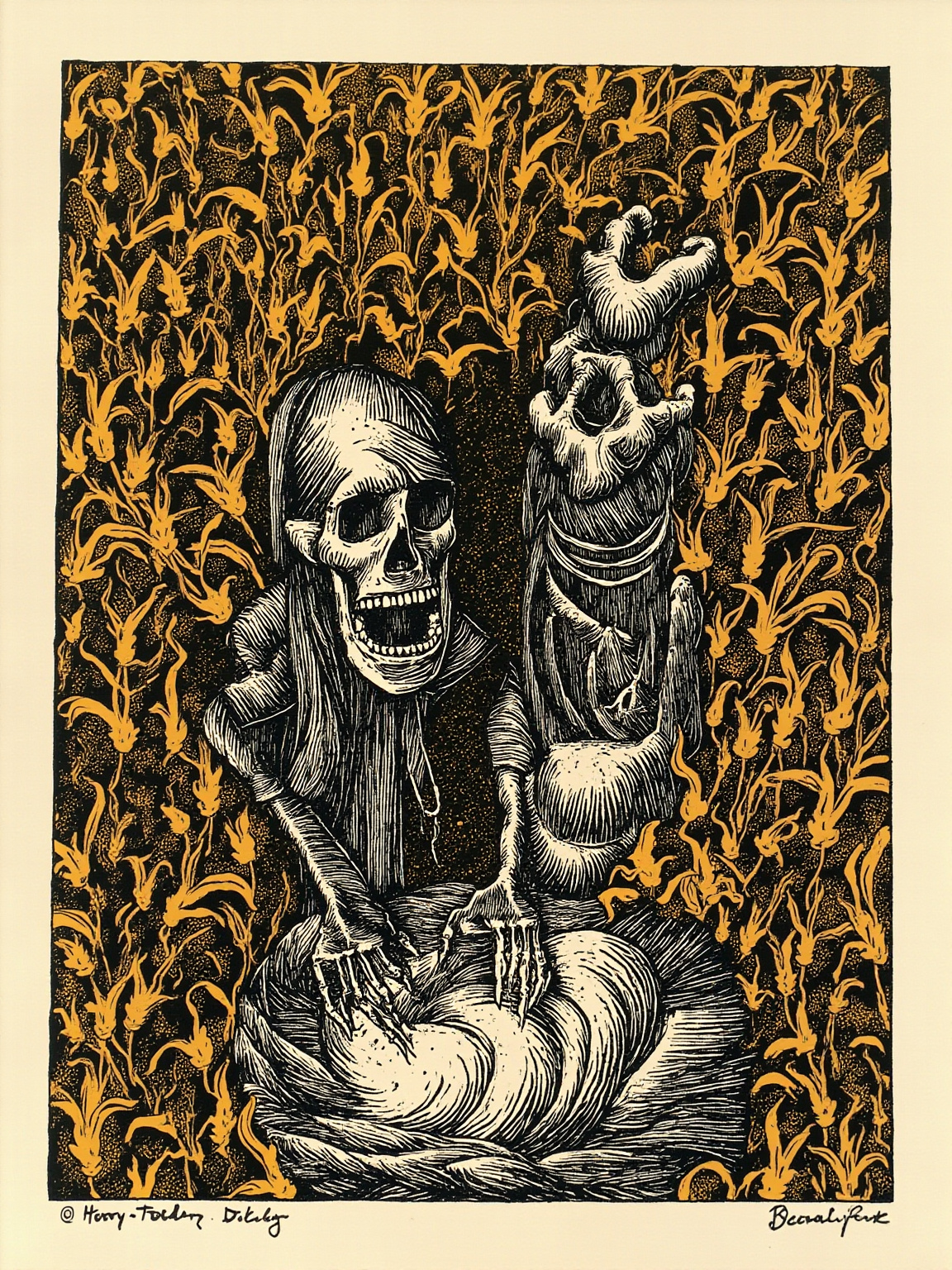
Such was the loss of the first people who were created and formed; their place is nothing, and they are forgotten.
这就是最初那批被造之人的下场,他们曾被塑造、曾被成形,如今连所在之处都不再留下,名字也被遗忘。
金句 · 创世篇 · 三次造人(泥人遇水即溶、木人被洪水吞噬)
The escalation across three tries is the smartest piece of design in the whole book. It is nothing like the Christian pattern of one creation followed by a flood as judgment; instead it breaks down what makes a person a person into three stages. Mud was too soft, wood had no heart, and only corn people ended up with flesh, memory, and gratitude toward the gods all at once.
Descent into the underworld: a head hung in the calabash tree
The heroes' backstory opens with a lost ballgame. Hun-Hunahpu, father of the twins, and his brother command wind and rain in the age before, loud enough to draw the gods' attention, and are summoned to Xibalba for a match. The underworld ballcourt is a gamble with life on the line: they lose, are put to death, and Hun-Hunahpu's head is cut off and hung in a calabash tree in the underworld.
That tree becomes the hinge the whole story turns on. After losing her son, Xmucane is left to raise the twin grandsons born in defiance of heaven, bound from the very start to that tree and to a debt of vengeance still owed to the underworld.
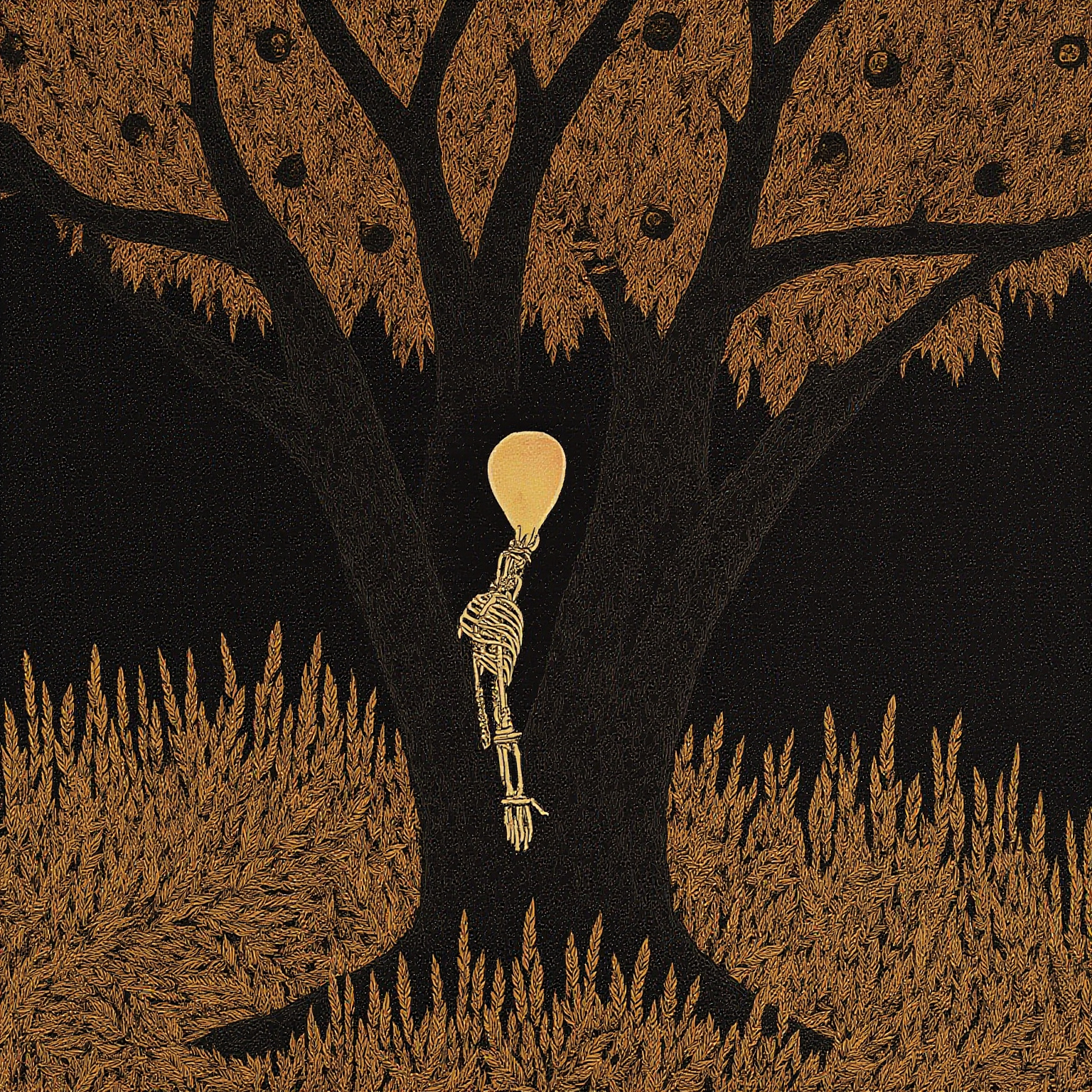
This is the head of one of the lords of Xibalba; it shall never rot, for it is the head of a lord.
这就是西巴尔巴某位君王的头颅——它永不腐烂,因为它是君王之首。
金句 · 英雄前传 · H'un-Hunahpu 头颅悬于葫芦树
Grandmother's house, five houses of death
Grandmother raises the twins in her own house. Gifted from the start, they work through one hardship after another left by the great flood, taming birds and beasts, planting corn to keep her fed and clothed. Eventually they ask to go to Xibalba themselves, to avenge their father and to clear their own name.
The underworld trials are the richest stretch in the whole Popol Vuh. The hero twins fight their way through five houses of death in a row: Dark House blinds you, Cold House freezes you stiff, Jaguar House is floor to ceiling claws, Bat House is a storm of blades, Razor House lines every surface with knives. In Bat House, Hunahpu's head is cut off and hung back in that same calabash tree — his brother tricks the lords of death with a turtle shell disguised as a new head, and only later restores him through corn and cunning.
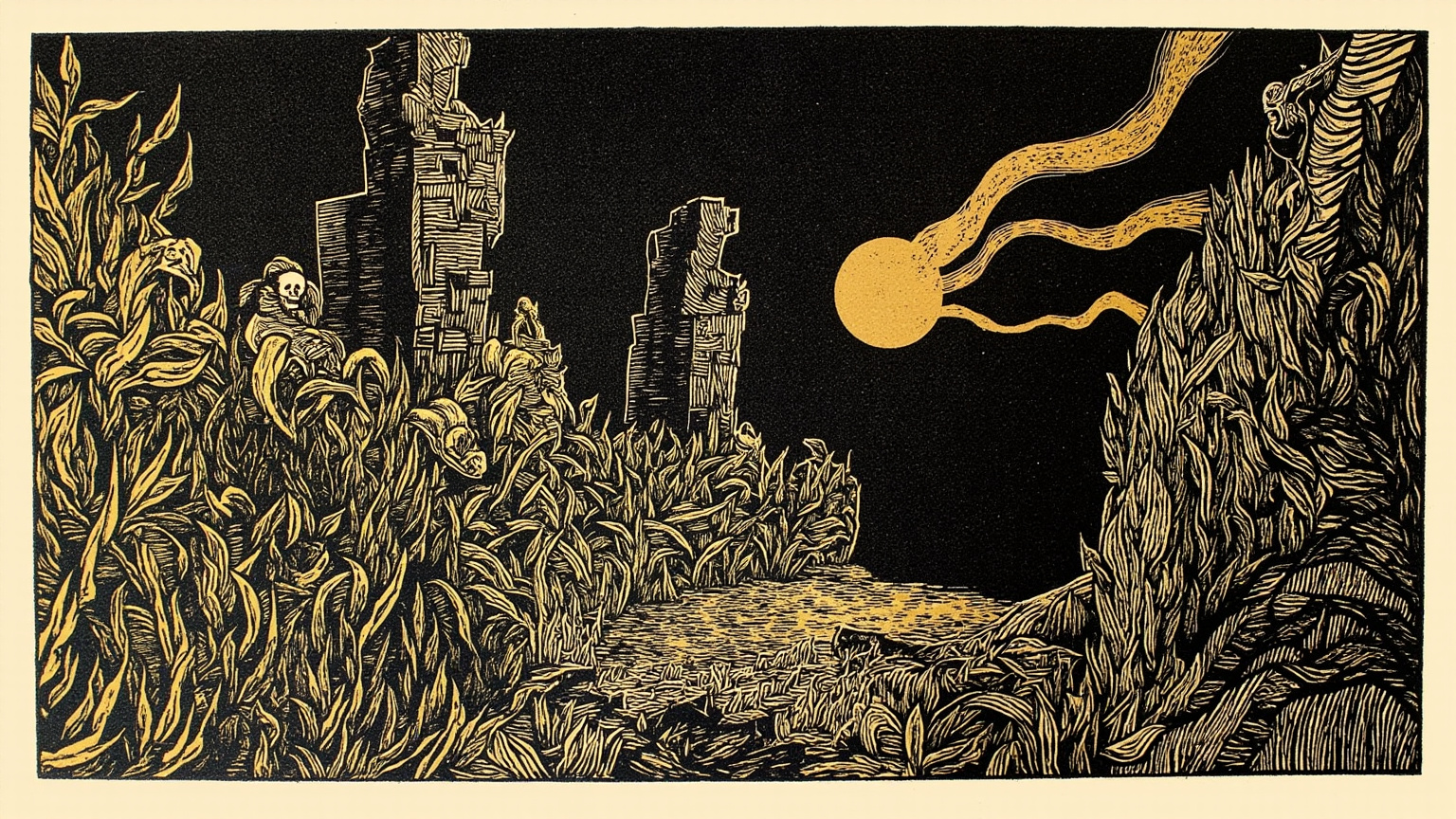
Let no light enter; do not answer when they call you; let only bones be left of you in their houses.
别让一丝光进来;当他们唤你,休要应声——让他们几座宫里只剩下你们的骨头。
金句 · 冥界篇 · 闯五座死亡之宫(黑暗之宫 / 寒颤之宫)
I stopped short the first time I read this: the head does not rot in the ground, it waits, hung high in a fruit tree. That single image scrambles the whole line between dead and alive. To the Maya, the underworld was never just an endpoint.
Sacrifice, trickery, ascent as sun and moon
The final round is a trap the lords of death set for the twins, and it is exactly what turns the whole fight around. The death lords have the brothers burn themselves alive as an offering, then rise again in the shape of fish; convinced they have won, the lords throw a triumphant feast. The twins pull one more trick with a puppet: a dummy stands in as a slain warrior-god while the real brother leaps up behind it and flings a blade-hidden head through the air, cutting down both lords of death where they sit. From then on the two death lords stay buried in Xibalba for good.
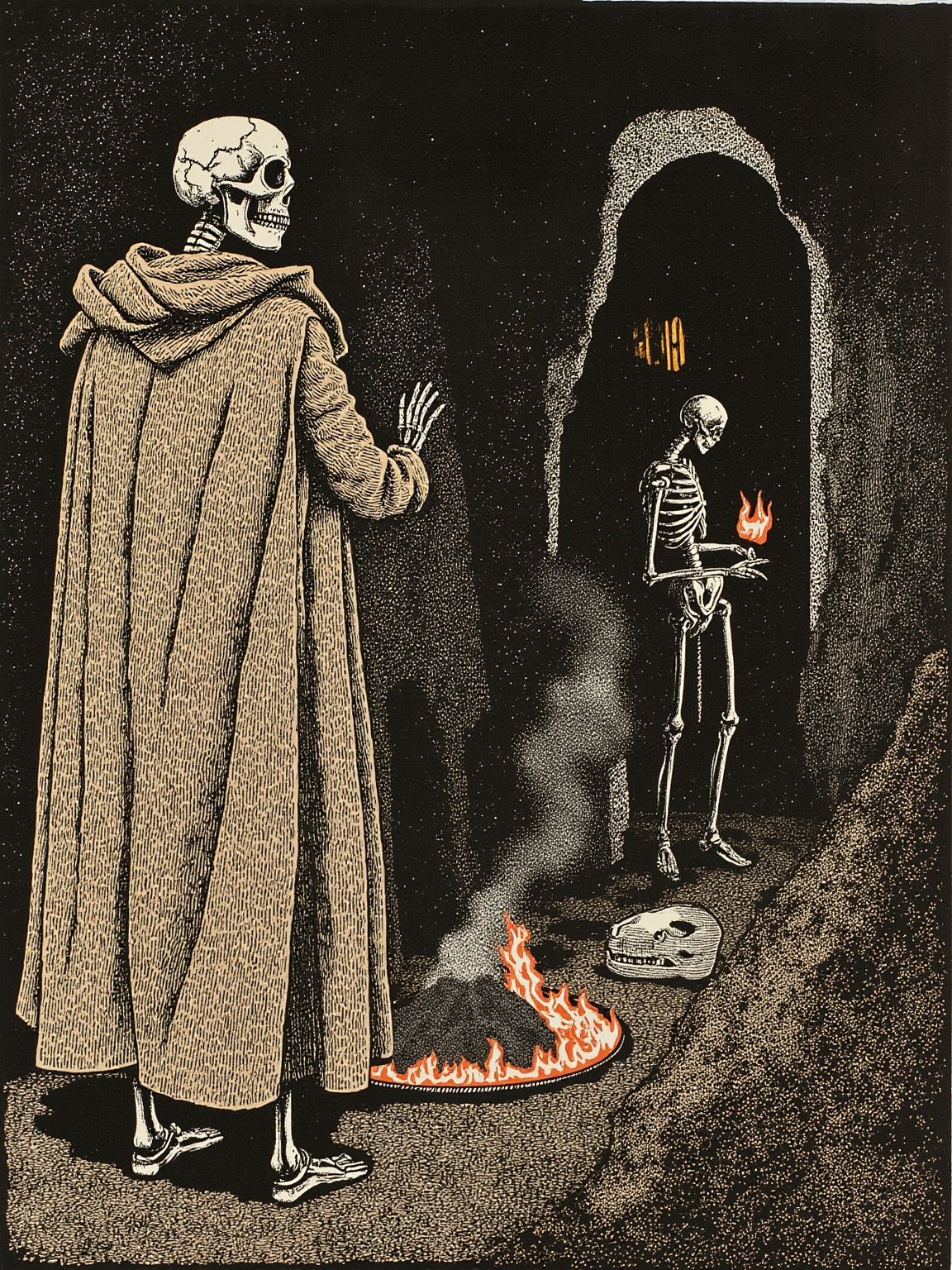
Then they were burned; their hearts were torn out before the face of Hun-Came and Vukub-Came; and then they rose again, transformed into fishes.
于是他们被活活焚死,心脏在 Hun-Came 与 Vukub-Came 面前被生生挖出;随后便重生,化作了鱼。
金句 · 终局 · 自焚献祭与鱼形复活
After the victory, the twins do not stay on earth to receive anyone's worship. They choose to rise back to where the gods are, and are set in the sky as the sun and the moon. Only from that moment does the earth get a real division between day and night. They are mythic heroes, and also the bloodline the royal line traces itself back to.
Origins, kingship, and a living myth
The last third of the book changes register entirely, moving from myth into genealogy. The first four corn men and their four wives, Balam-Quitze, Balam-Acab, Mahucutah, and Iqui-Balam, settle at Q'umarkaj, build temples, receive fire and ritual law from the patron god Tohil, subdue rival peoples, and sort themselves into ranks. This stretch folds Maya calendar, sacrifice, marriage, and naming customs directly into the mythic frame, which is what makes the Popol Vuh both a sacred text and a genealogy at once.
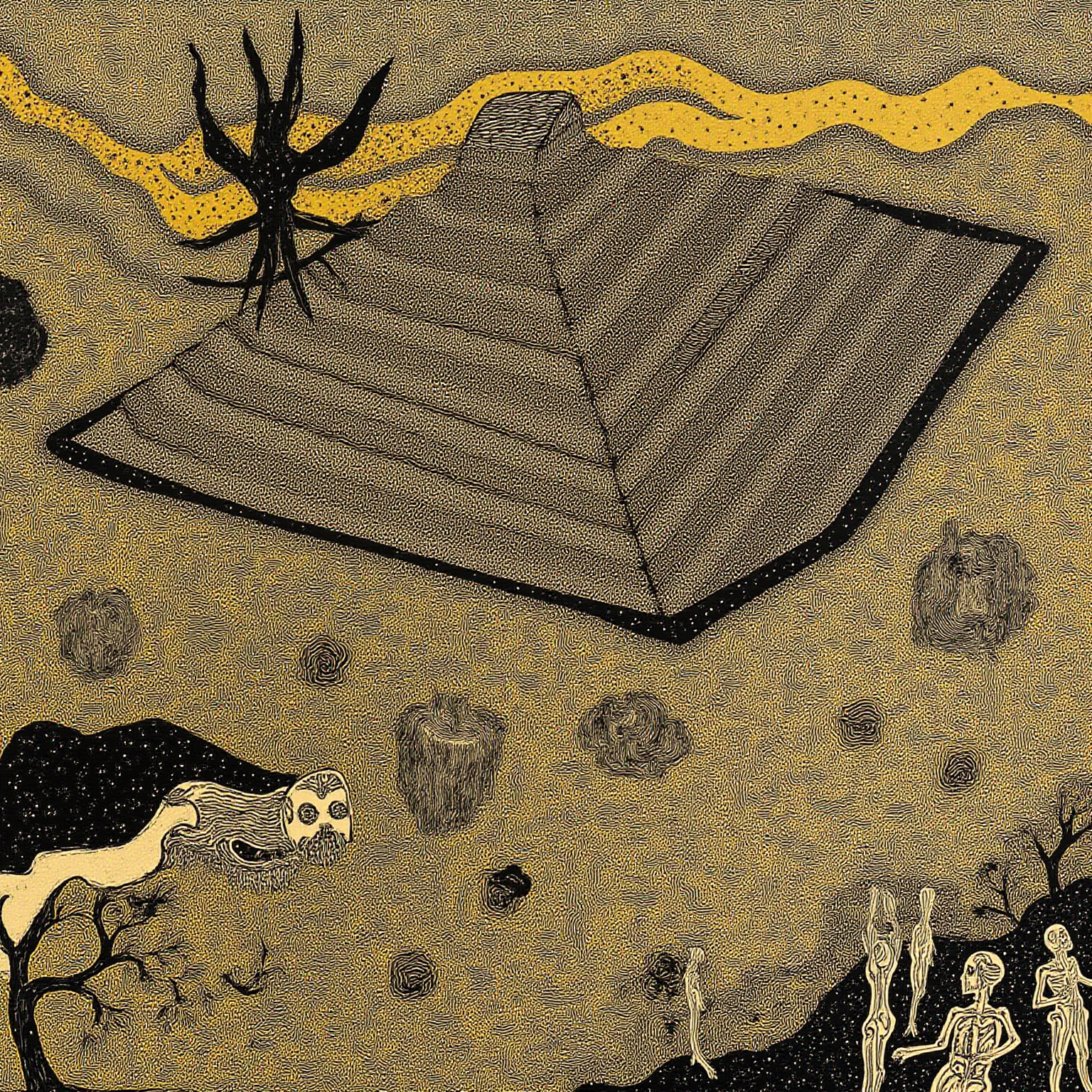
These are the four who were the first to be established; their names were remembered, for they were the first to worship and to give thanks.
这就是最初被立起的四位先祖——他们的名字得以留存,因为他们是第一批向诸神献祭、开口感恩的人。
金句 · 族谱篇 · 玉米人四母四父迁居 Q'umarkaj
So the book carries three identities at once: scripture, genealogy, ritual code. It is both the source of K'iche' royal legitimacy and the root of daily K'iche' ritual life. Even today, Maya communities in the Guatemalan highlands still speak of people made from corn, still offer chicken blood in sacrifice, still read the underworld ballcourt as the struggle between day and night. This is not a fossil. It is a living root.
Why it works
Three things make it good. First, it takes the descent-suffering-transformation-return pattern about as far as it can go: brothers go deep into the underworld, are beheaded, hang from a tree, and come back through corn and cunning, a structure that sits in the deep well of world mythology, with countless later stories running off the same line. Second, its gods coexist rather than reign alone: Tepeu, Gucumatz, Tohil, Awilix each hold their own portfolio, with nothing resembling the monotheistic God, which sets it structurally apart from Christian narrative. Third, it is still alive: the K'iche' use it today to explain who they are and where they came from.
There is one more stroke that gets overlooked: the escalation across the three attempts at people. Mud too soft, wood with no heart, corn finally holding memory. This is the book's answer to what makes a person a person, and the answer is not metaphysical, it is material. It sits right there in a fistful of golden corn dough.
The underworld is not an ending. A head hangs in a fruit-laden tree, waiting to live again: the single most counterintuitive stroke in the Popol Vuh.
Knowing the plot is not the same as reading the text
A guide gives you the map; the text is the ground itself. What you get here is the outline: five houses stormed, a self-immolation, an ascent to sun and moon. In the text itself you read how the dark of the first house feels like a blindfold, how the cold of the second shakes the bones, and the exact weight of a grandmother's tears falling onto a calabash leaf as she looks on that hanging head from the depths of the underworld. No summary ever gets you that physical texture.
There is one more layer a guide cannot give you: the tone the book takes on as a genealogy. Reading through the marriages, the naming, the origins of fire among the first four fathers and mothers, you feel how thoroughly the Maya welded who I am to where I came from, the thing that sets this book apart from Greek or Nordic myth more than anything else, and something only a full read gives you any real sense of.
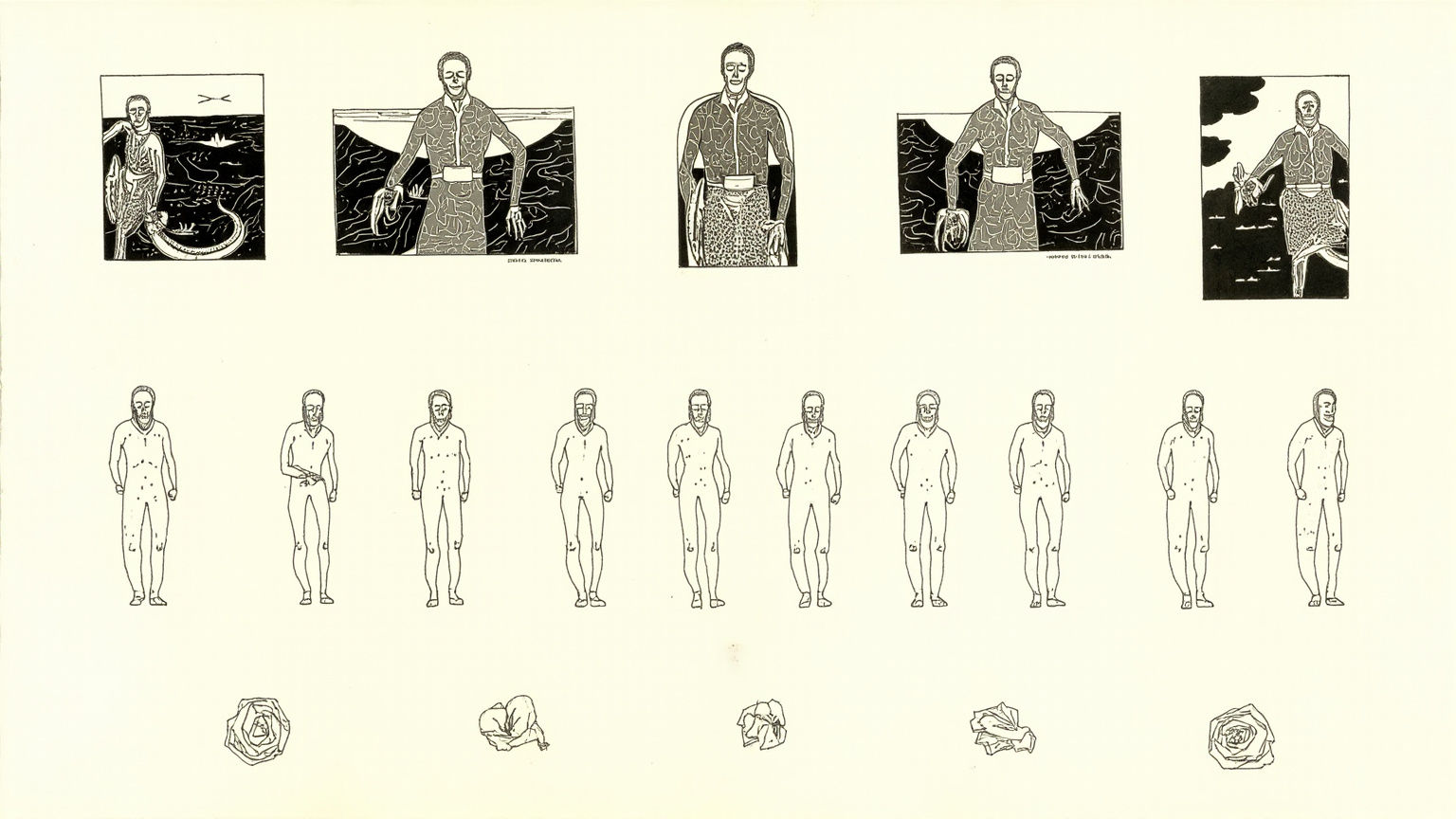
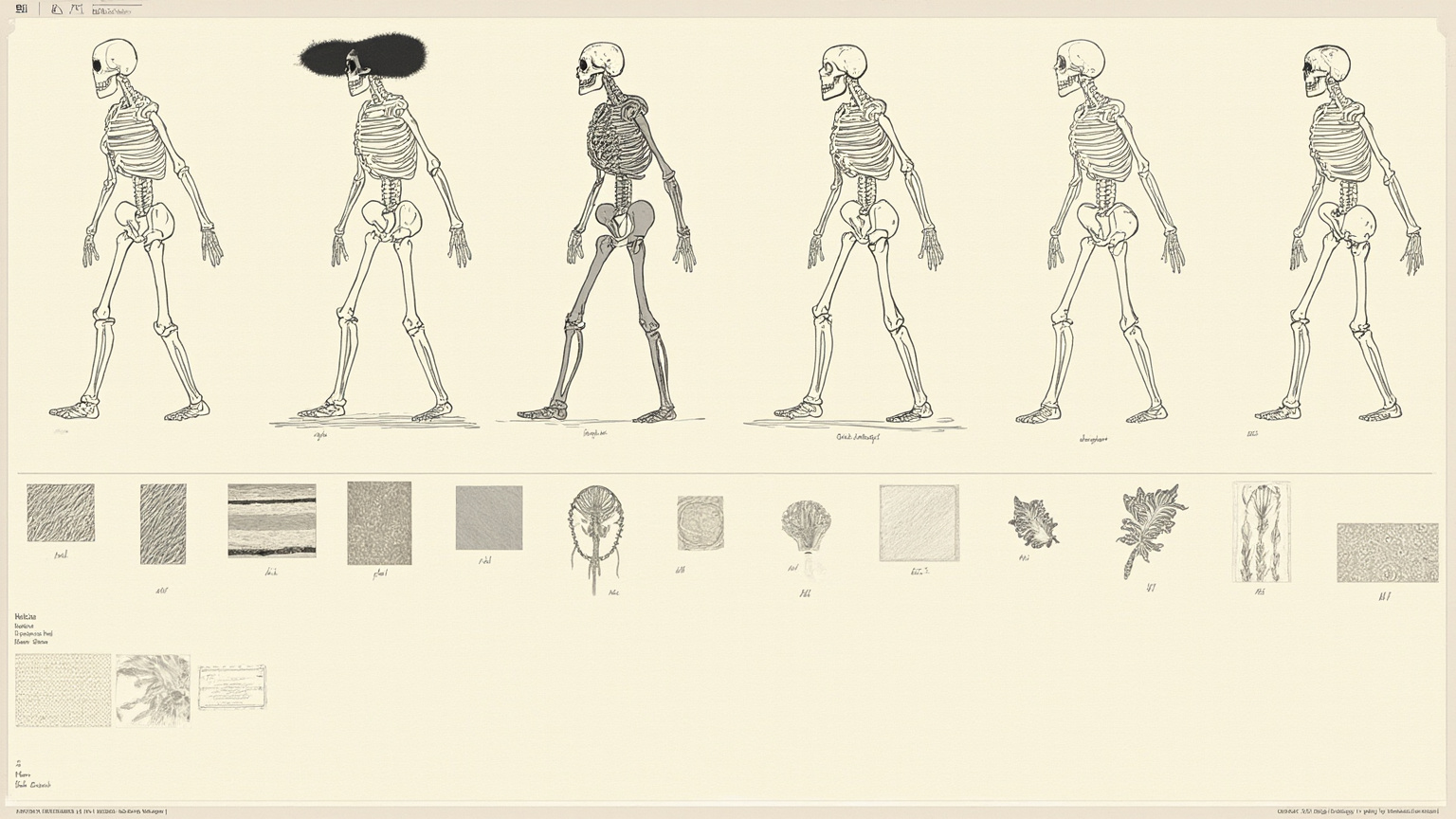
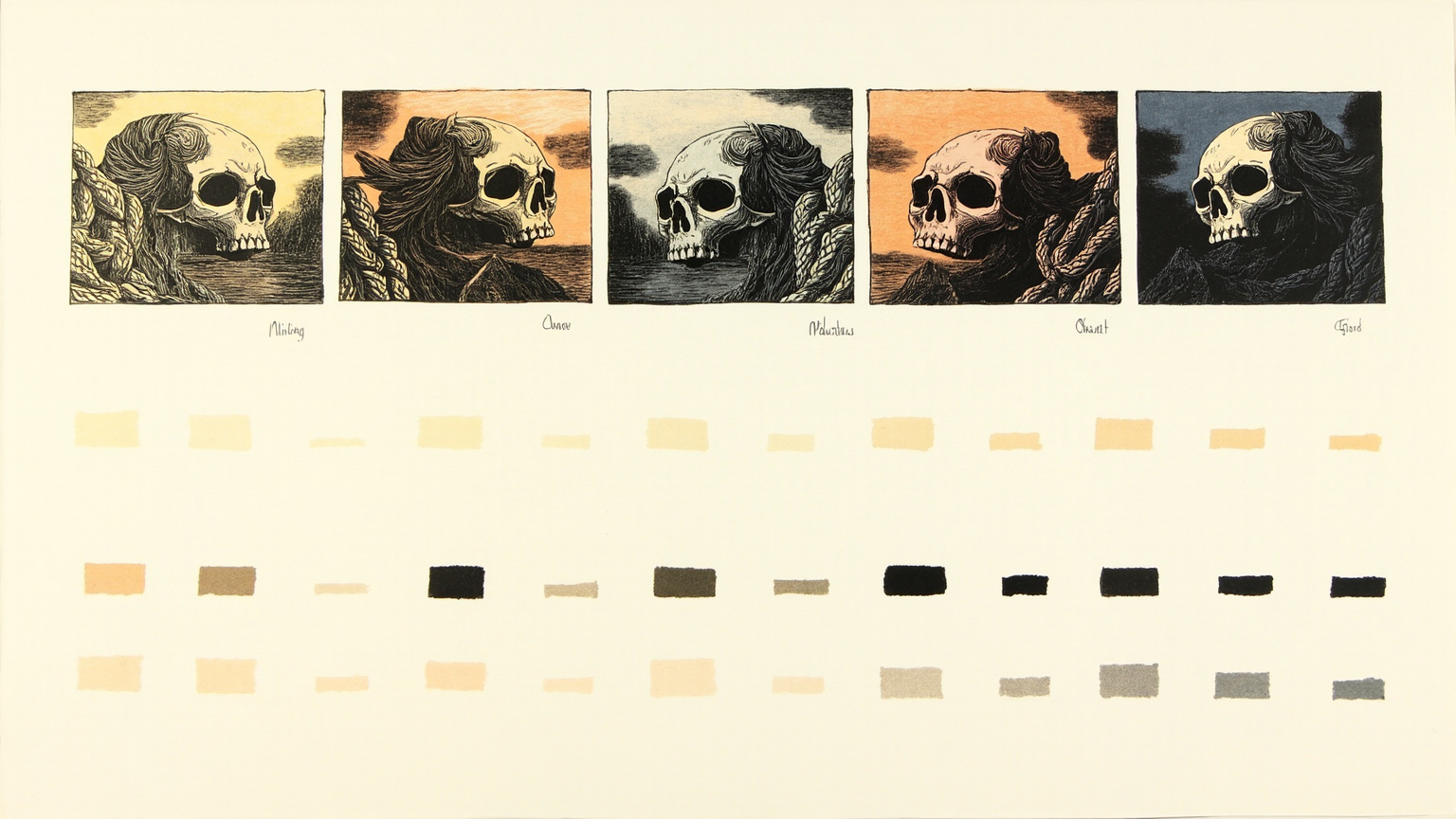
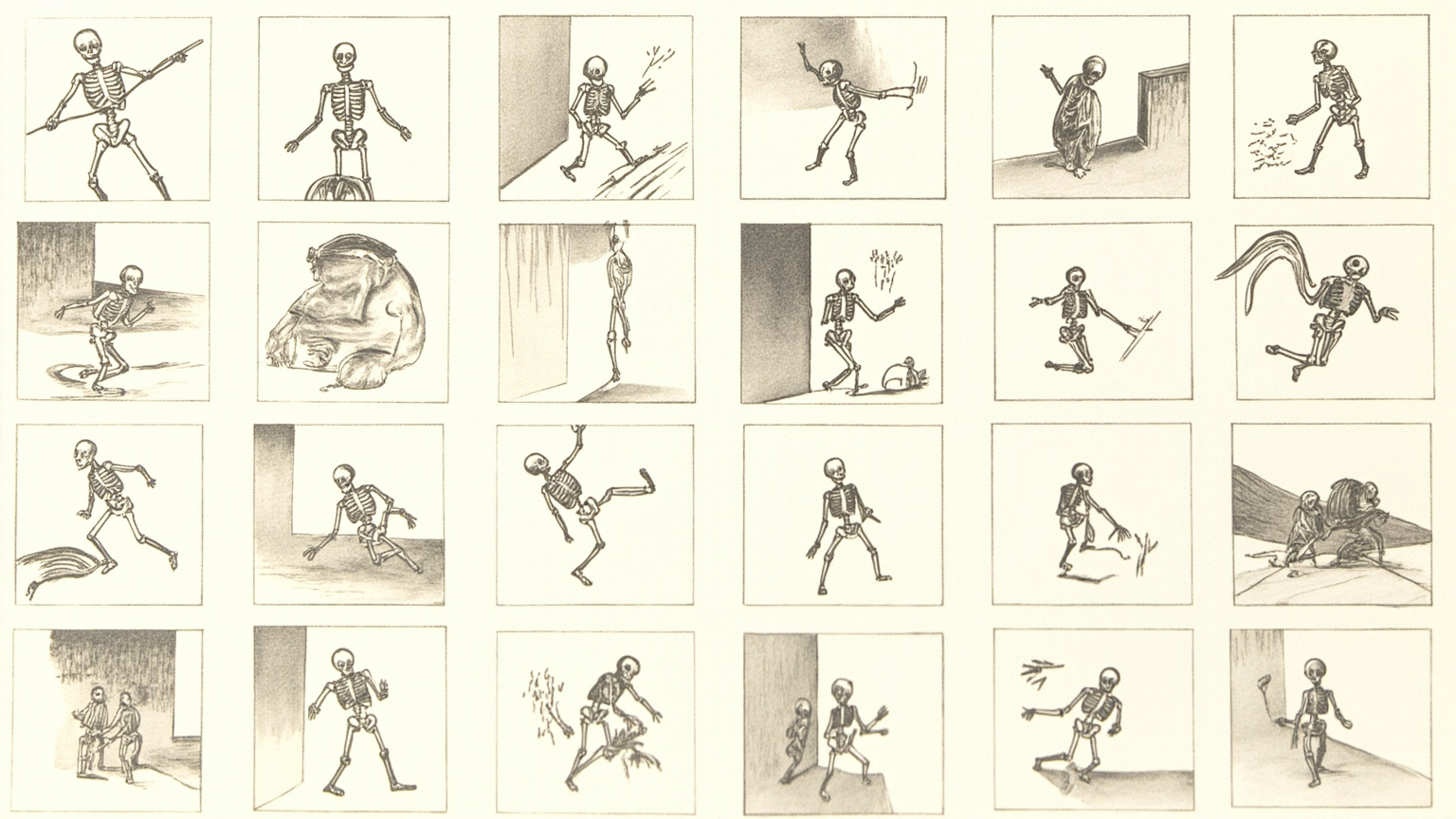
Art Direction4 plates
Before the guide was written, this book got a visual foundation — every illustration you just read grew out of it.