Quo Vadis: A Narrative of the Time of Nero · Companion Guide
你往何处去
一个刚从战场归来的罗马贵族,要从皇帝手里夺走一个属于基督的少女;他在火光与殉道之间,终于听见那句'你往何处去'。
One-Line Hook
Rome burns. An emperor in purple stands on a tower, reciting his own poems to a sea of fire, behind him the screaming citizens and collapsing roofs. He hasn't come to put out the fire—he's come to gather material. The blaze later gets officially attributed to a name—the Christians. The Polish writer Sienkiewicz burns this history into a novel, and from that fire comes a question: where, in this lifetime, is a person supposed to go?
What Book Is This
Quo Vadis, originally titled Quo Vadis, was first published in Polish in 1896. A year later it was translated into English and exploded in the English-speaking world, eventually becoming the standard English translation we read today. The author, Sienkiewicz, was born in mid-nineteenth-century Poland, and this book won him the Nobel Prize in Literature in 1905, with the citation praising its epic idealism. It belongs to a special category—historical fiction devoted specifically to faith, weaving a fictional storyline around the real framework of the Roman Empire, and it continues to be republished to this day.
The People Who Appear and the Rome Beneath Their Feet
The story is set in Rome around 64 AD. The city has two levels: above ground are the emperor's palaces, the aristocrats' courtyards, and the great fire that can reduce a person to ash; below ground are the catacombs dug out by the Christians, where they read scripture by candlelight, break bread, and call each other brother and sister. The protagonist, Marcus Vinicius, has just returned from the war in Armenia—a young military tribune, self-confident and overbearing, who reaches for whatever he wants. His uncle Petronius is an aesthetic arbiter at Nero's side, caustic in speech but sharp in his judgment of people, the most cool-headed observer in the book.
What pulls Vinicius in is a young woman named Ligia at a general's dinner party. Her real name is Callina, meaning lily, a German tribal princess raised as a hostage in a Roman general's household, who has converted to Christianity with a piety that makes those around her uncomfortable. Always at her side is a giant named Ursus, strong enough to bend iron bars, yet gentle as a loyal dog. The emperor Nero considers himself a poet and treats all of Rome as his drafting paper. Empress Poppaea and the Praetorian prefect Tigellinus weave their schemes in the shadows, preparing to push the Christians onto the altar. Hidden in the lower levels are two apostles—Peter, an old fisherman, and Paul, a cosmopolitan preacher who traveled the world. They rarely appear, but the candlelight of the entire catacomb falls on their faces.
Plot Line
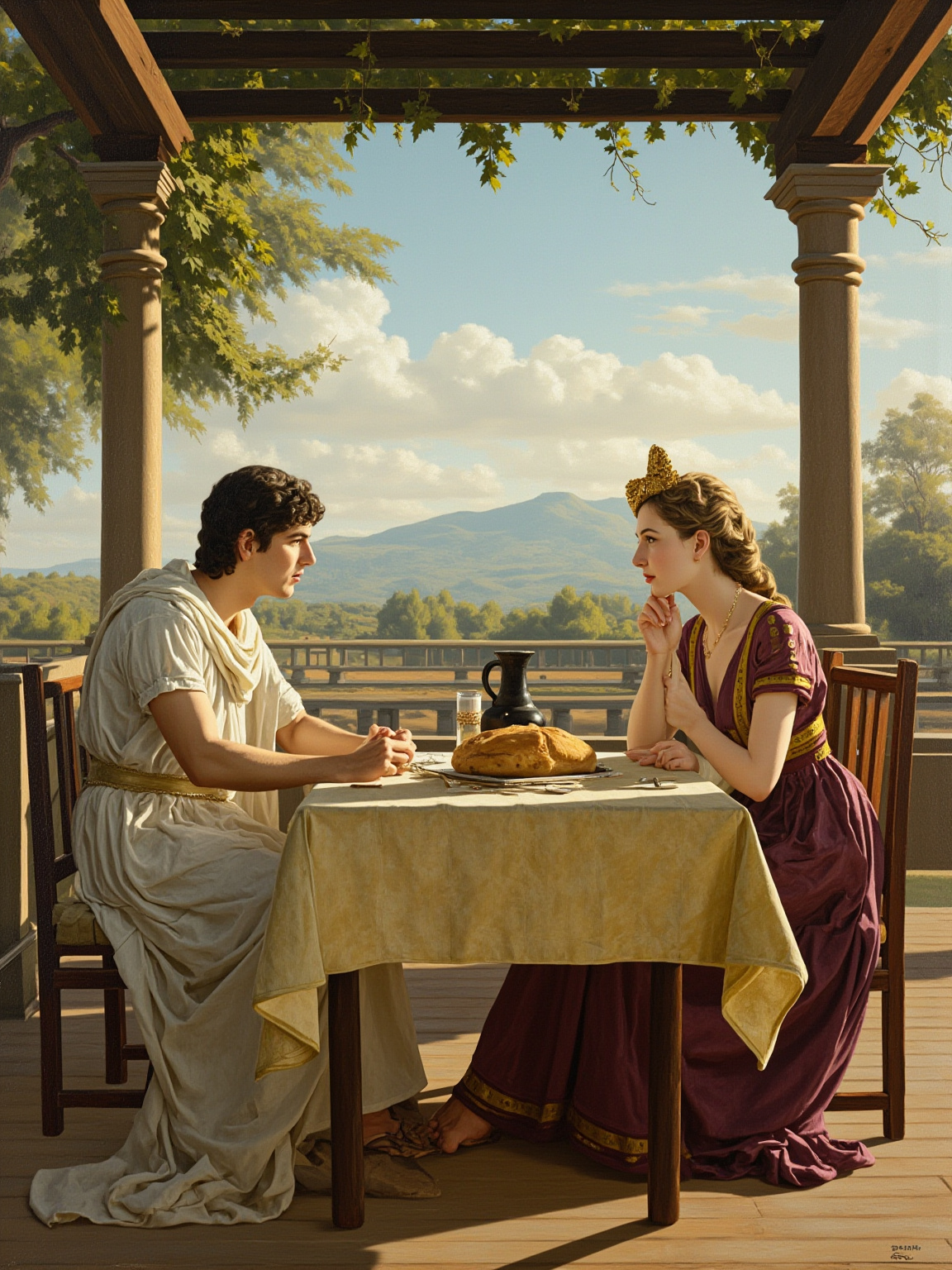
Vinicius freezes the moment he first sees Ligia. He has just returned from battle, still carrying the kill-count and the swagger, and at a dinner at the general's house he spots a quiet girl eating and cannot look away. He isn't looking for love—he's looking to take possession. He goes to his uncle Petronius for advice, and Petronius, drinking, smiles and promises to pull strings at court. It's a brilliant stroke: what should be a romantic opening becomes a scheme of appetite. From the start, the reader understands that this hero carries something dangerous.
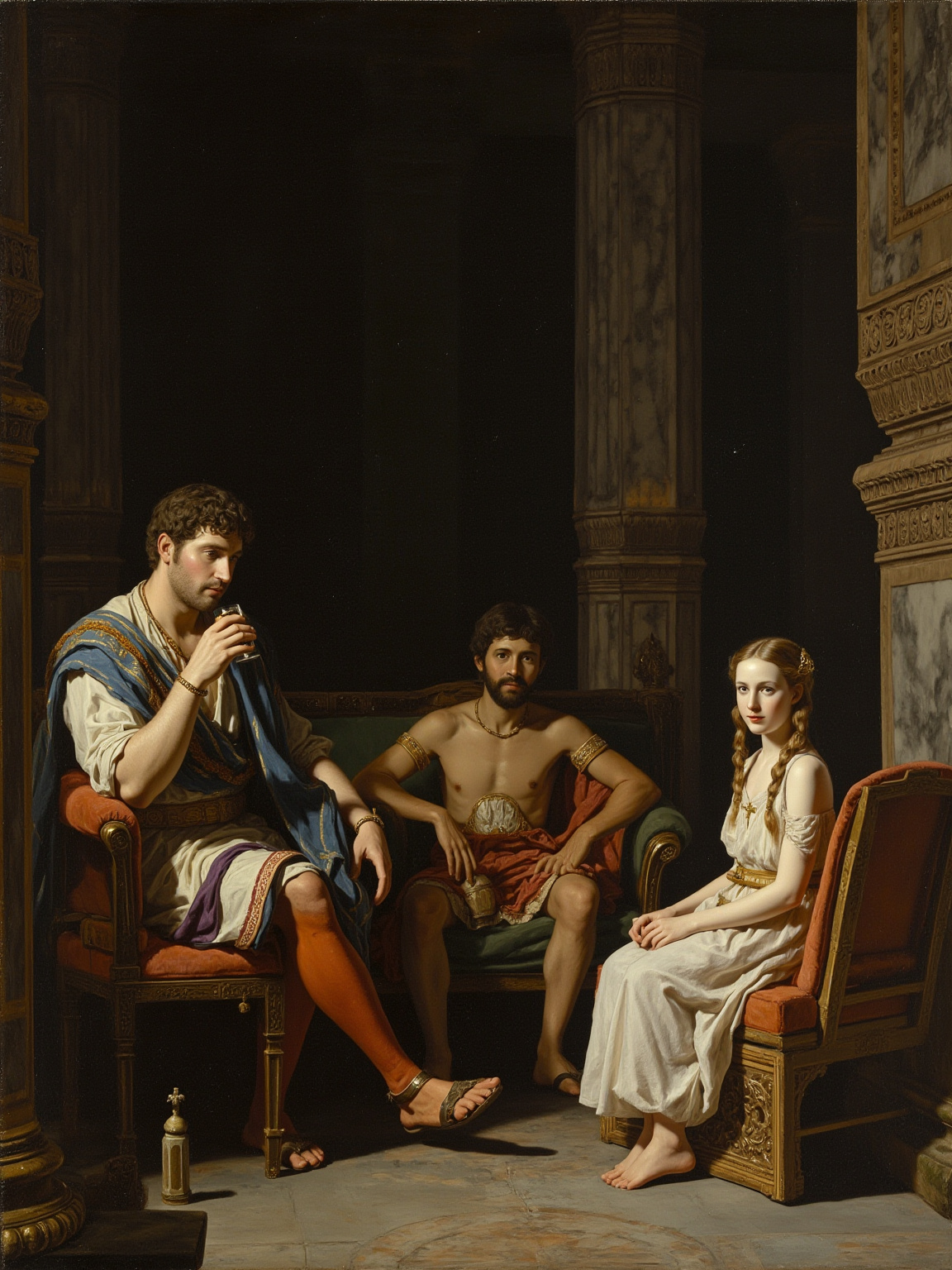
He had never seen so beautiful a creature, neither in Rome nor in all the kingdoms of the East.
他从未见过这样美的人儿,无论在罗马,还是在东方诸国的宫廷。
金句 · 第一部 · 将军府初见
Ligia runs the moment she hears the plan. Ursus lifts her out of Vinicius's sight with one arm, carries her to a Christian hideout outside Rome. Vinicius fails to grab her, and in his fury hires a Greek con man named Chilon to search the city. Chilon is the type who mouths philosophy while taking money and betraying people—but his nose is keen. He sneaks Vinicius into the catacombs, and along the way catches the scent of something else.
Vinicius himself starts heading toward the catacombs. He says he's looking for someone, but inside he is being pried open, bit by bit. He listens to Peter preach, listens to Paul read the letter about love and patience—first time anyone tells him that a man is not built by sword. He doesn't believe it right away. He mocks, he rages, he tries to force his way through—but every time he sees Ligia, the grip in his hands loosens a little. Sienkiewicz draws this line slowly. He refuses to let Vinicius have an epiphany, keeps him tumbling between desire, jealousy, curiosity and disillusionment, and only then does he slowly stand on the other side.
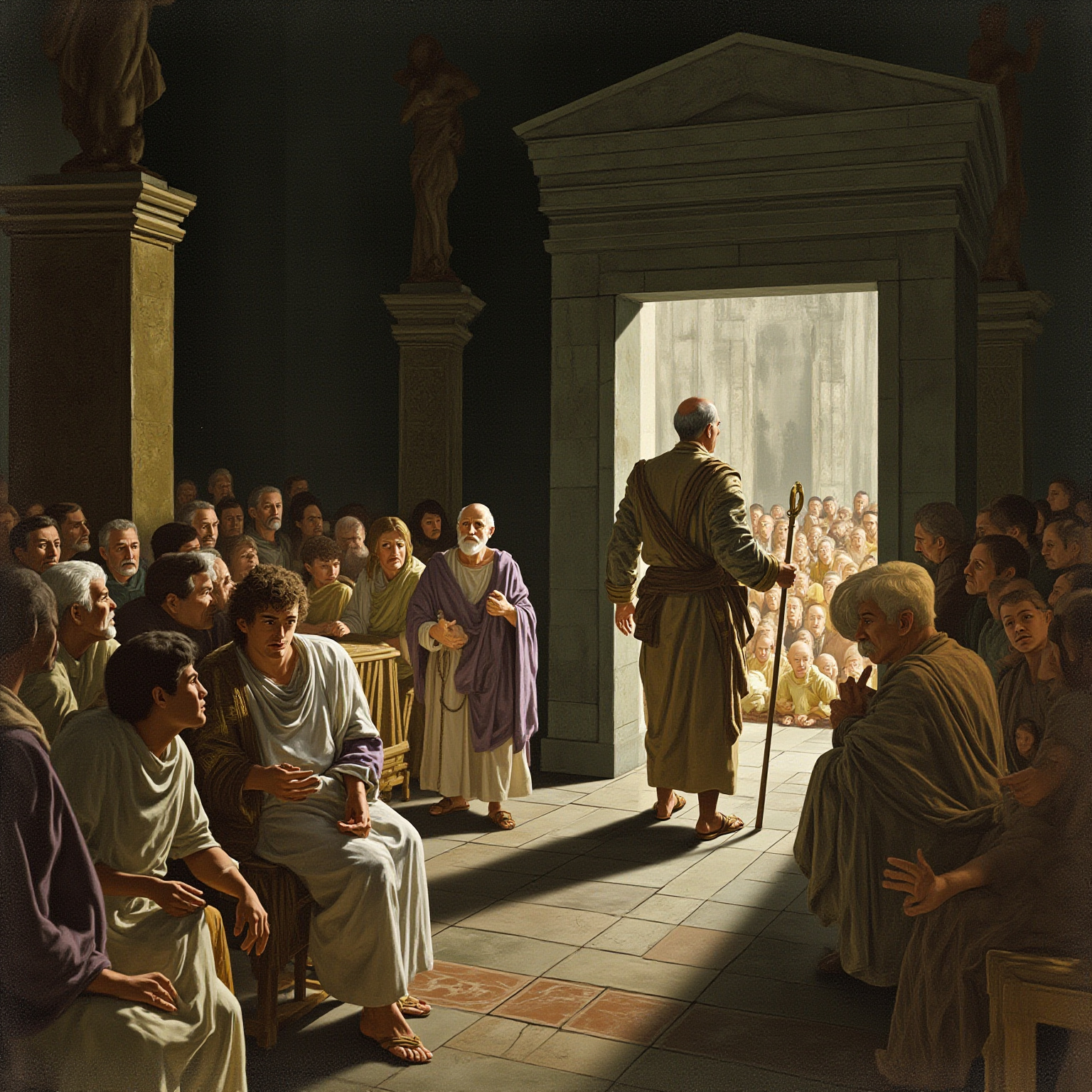
He had been used to thinking the gods were powers to be feared or bribed; here was something he could neither fear nor bribe, and it troubled him more than war.
他从前只以为神明是拿来敬畏或收买的;眼前这一位,威吓不了,也收买不了,竟比一场战事更叫他心慌。
金句 · 第二部 · 墓穴初闻道
Rome catches fire. Not one spot or two—the whole district blazes as one. According to the novel, Nero wanted to compose a poem about Troy burning, so he lit a real fire to see it. Vinicius rages through the flames looking for Ligia, and the moment he finds her, the thought of possessing her is for the first time overridden by another thought—she must not die. He hides her in a villa outside the city and almost chokes to death in the ruins. It's a vicious passage: the author doesn't write that he loves her, only that he won't let her die. Love starts with refusing to let go.
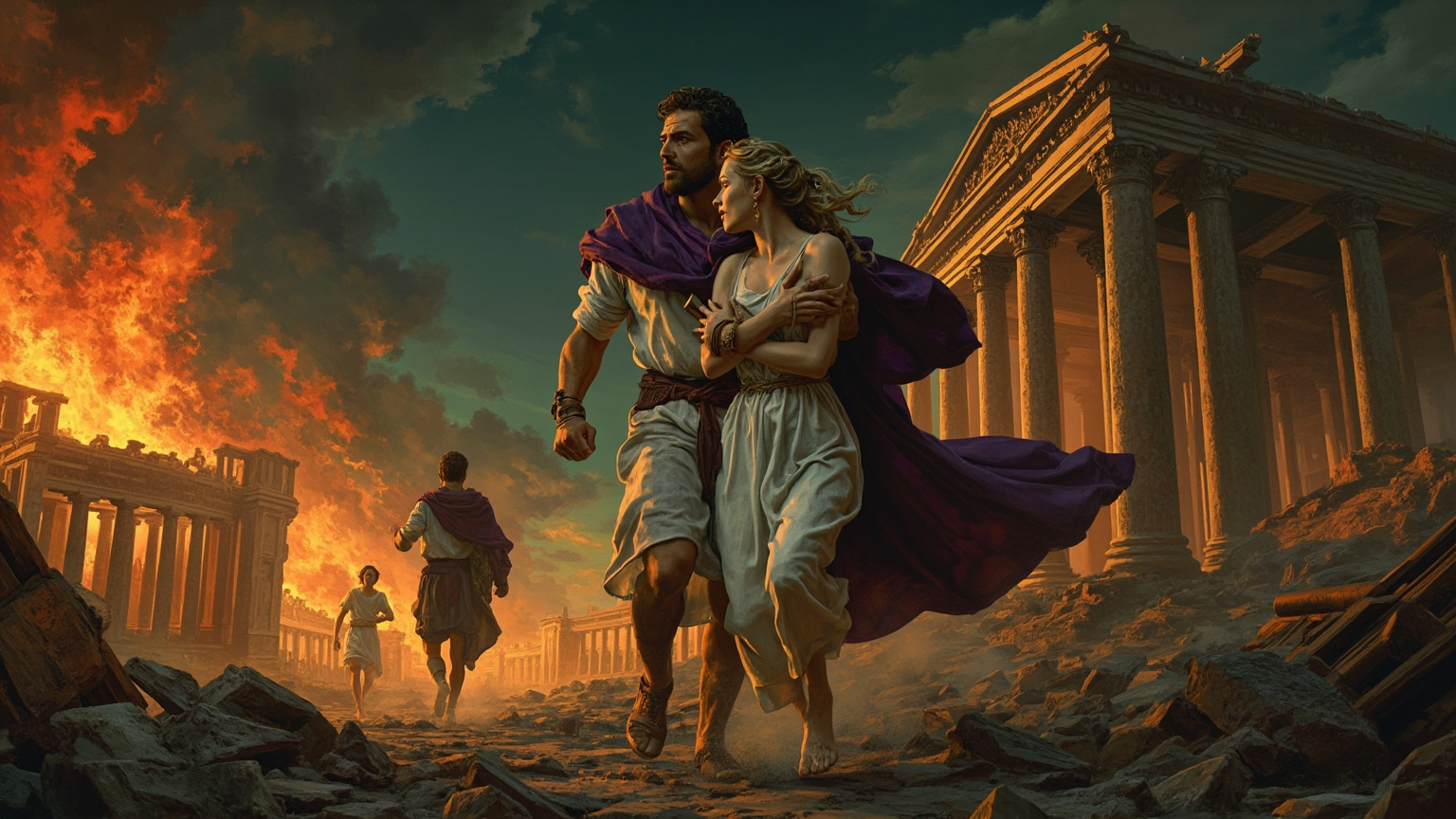
The Emperor stood upon a tower and sang the fall of Ilion, while beneath him the city burned.
皇帝立在高塔之上,对着脚下的大火,唱起伊利翁的陷落。
金句 · 第三部 · 大火中高歌
When the fire finishes, the emperor needs a scapegoat. The Christians are named. The arrests spread from the catacombs across all of Rome. Ligia and Ursus step forward voluntarily to be arrested with their flock—she won't have others die in her place while she hides. Vinicius pulls every court string he has to save her, and all he gets is a public execution: Ligia tied to a stake in the arena's center, a wild bull charging at her. Ursus, empty-handed, steps forward, grips the horns, tears them apart and hurls the bull dead in the sand. The whole crowd rises and shouts to free her. Nero gnashes his teeth but has to wave the signal to untie—and the first thing Ligia says when freed is whether she might be allowed to die with the other Christians.
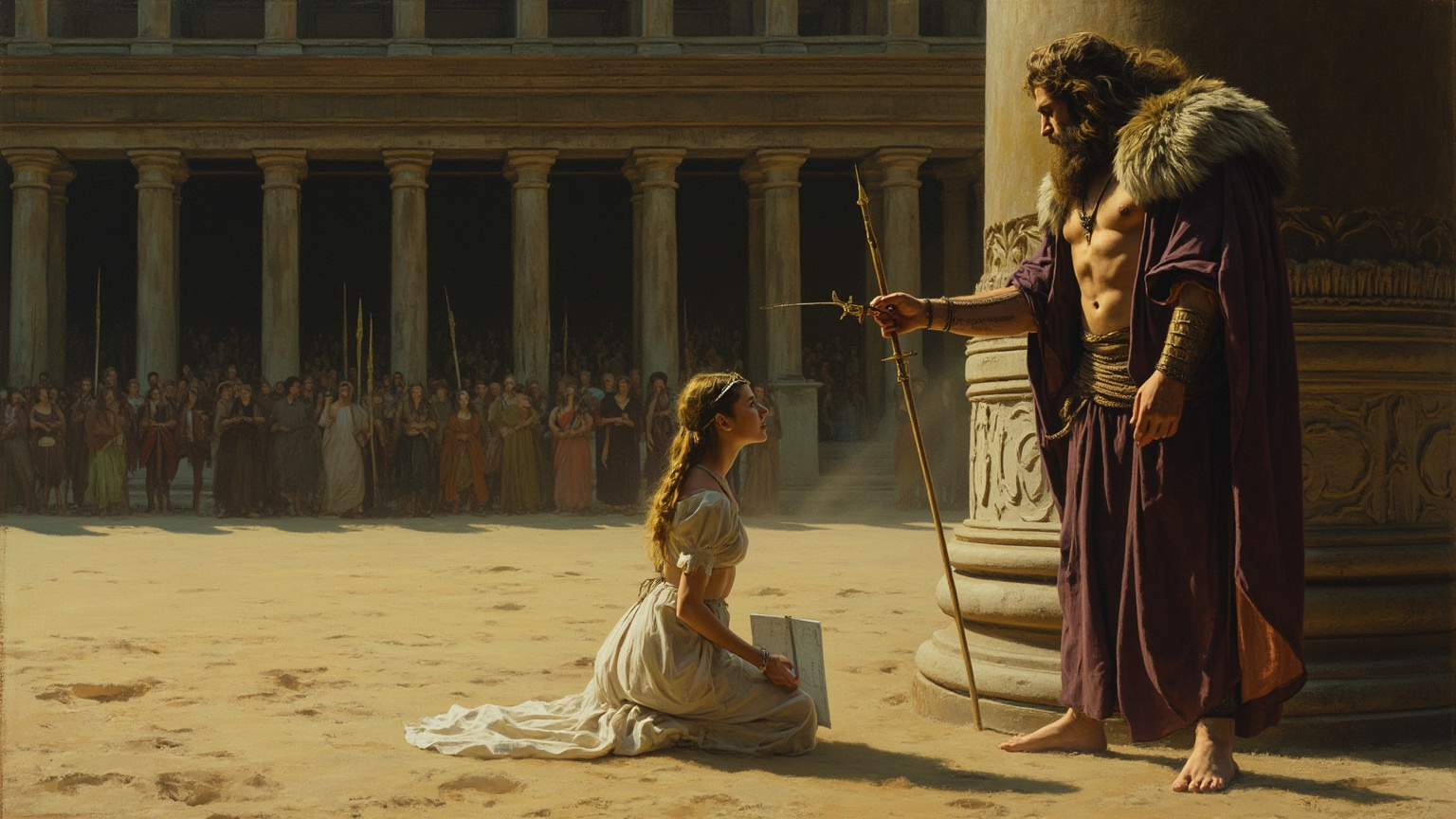
She stood among the horns of the bull, and the people held their breath.
她立在牛角之间,万人的竞技场刹那间没了声息。
金句 · 第四部 · 竞技场殉道
In all this chaos, the quietest scene in the book appears. The Christians urge Peter to flee Rome. The old man listens and sets out. He walks the road outside the city, and in the distance a figure approaches, face obscured by shadow. Peter asks: "Lord, where are you going?" The answer comes: "I am going to Rome, to be crucified again." Peter turns back, walks into the city, and meets his death calmly. Paul is beheaded almost at the same moment. Two different deaths: one on an inverted cross, one by a sword stroke—but both are people who knew they would die and walked back into the city anyway. No fire, no combat in this passage, yet it pushes all the earlier violence in the book into the background.
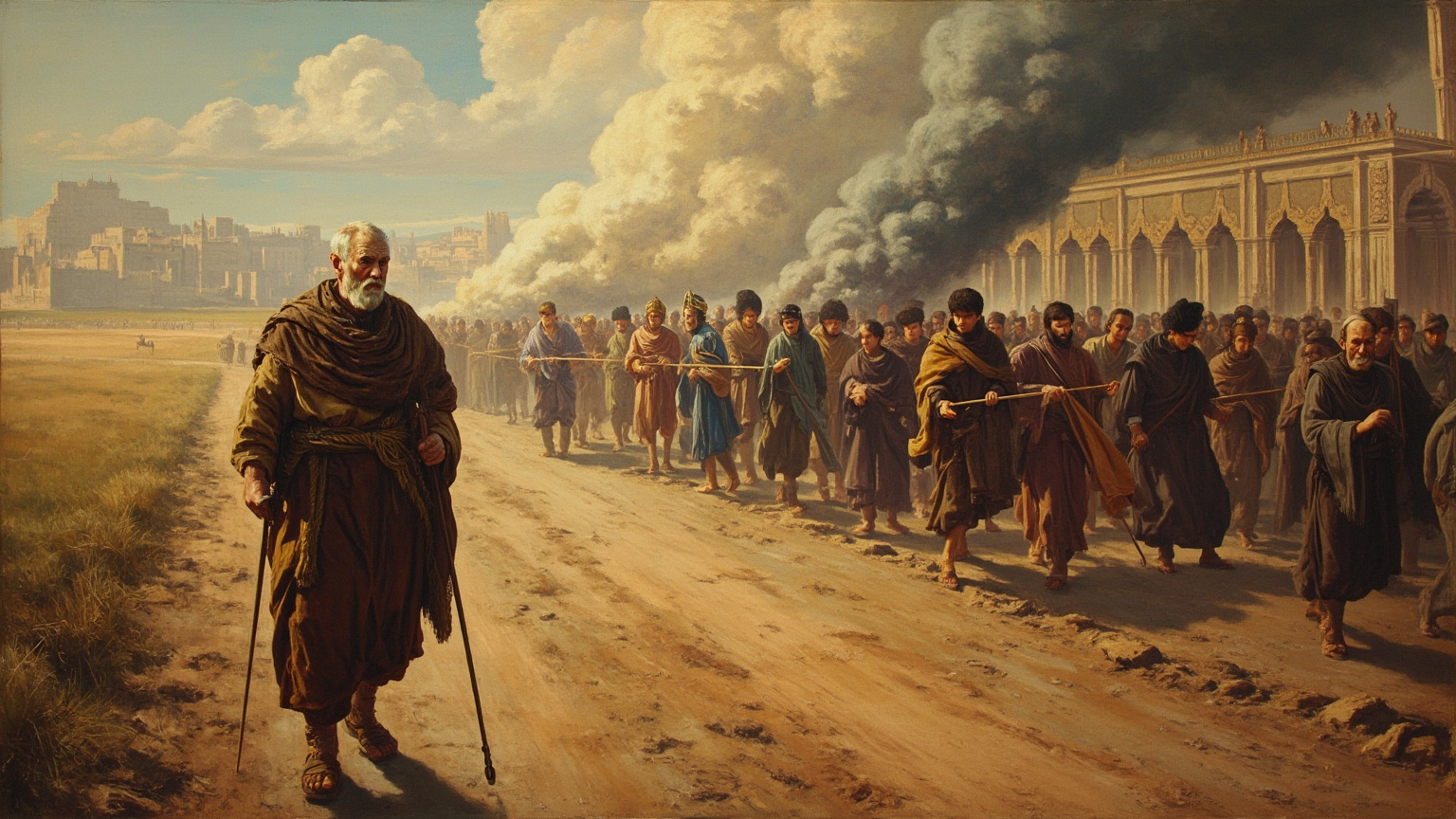
'Lord, whither goest thou?' And He answered: 'I go to Rome, to be crucified anew.'
'主啊,你往何处去?'那一位答他:'我去罗马,再钉一次十字架。'
金句 · 第五部 · 你往何处去
Chilon's thread only truly catches light at the end. He did the dirty work for Vinicius for a few coins, but after hearing sermons in the catacombs and watching Christians fed to lions, his conscience stirs awake, piece by piece. He doesn't slip away quietly. He stands before Nero and shouts for everyone to hear: it was the emperor who burned Rome, you've seized the wrong people. The emperor has him crucified. When he dies, he isn't crying injustice. This is Sienkiewicz's cruellest cut: even the most wretched con man can be scorched into a clean ending by this fire.
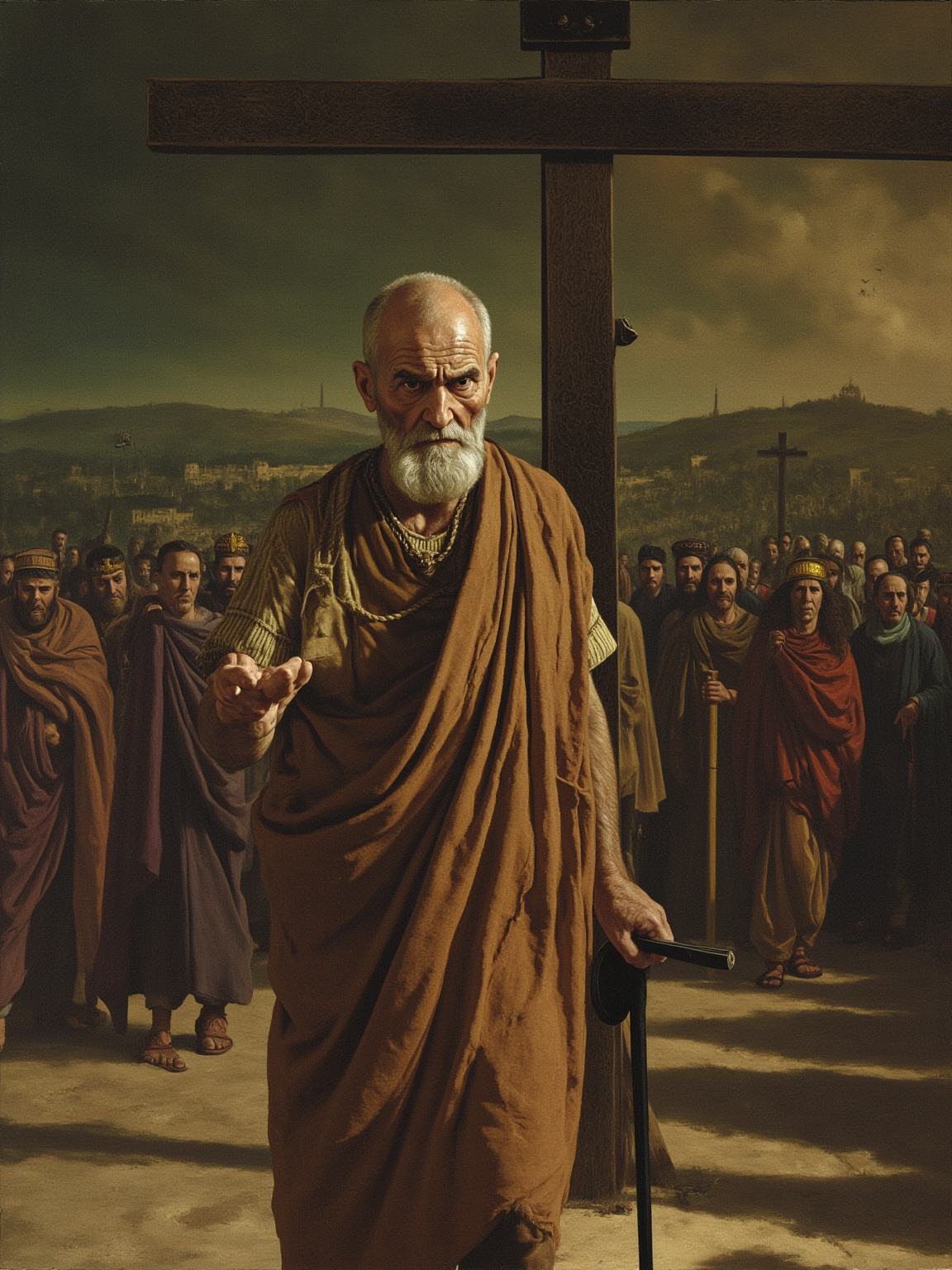
He had taken their silver, and now he paid it back with his blood.
他曾接过他们的银钱,如今用自己一腔血还了回去。
金句 · 第六部 · 基隆良心醒
The final passage: Vinicius and Ligia living in the villa at Benevento. He has believed, been baptized, married her. On Nero's side, everyone has abandoned him, the Senate declares him a public enemy, and he hides in a cellar and has a slave stab him. A tyrant's exit, more makeshift than any poem he ever imagined. The question "Where are you going?" from the title has no answer, but everyone who survives has already answered it with their feet.
What This Book Is Actually About
Superficially it's about the period when Christianity was persecuted by Rome, but look deeper and it's a novel about how a person shifts from one way of living to another. Vinicius's thread is Sienkiewicz's main move: a man who lives by the sword, by his lineage, by desire, gradually comes to live by a force he himself can't quite articulate. This process isn't a lightning strike — it's repeated wrestling. So don't expect a sudden repentance as you read; watch him time and again be forced by reality to let go.
What the author really wanted to construct was a contrast: on one side, Nero, the 'artist' who treated the whole city as his stage and slaughter as his material; on the other, Peter and Paul, people who don't speak, don't defend themselves, just pick up their feet and walk into the city. When Sienkiewicz writes this contrast, his stance isn't actually partisan — Petronius, the non-Christian observer, is written as the smartest person in the whole book. This shows the author understood that faith doesn't equal intelligence, that wise people can tremble before the apocalypse too. In the end, those who survive are the ones willing to die for a promise they cannot see.
Why It's Still Worth Reading Today
The brilliance of this novel lies in its pacing. The first two-thirds is slow work, like a television series building characters, setting, psychology; then the final third suddenly tightens — fire, the arena, the execution ground come crashing down one after another. The reader has already walked hundreds of pages with Vinicius, and now gets dragged into the scene of martyrdom, feeling exactly what Vinicius feels — there's no escaping it. The first time I read the passage where Peter returns to the city, I was stunned for a moment: an old man who had run away, then walks back on his own, no grand speeches, just answering 'I'm going to Rome' — and all the glitz of the entire book up to that point gets gently flattened by this one sentence.
One more practical reason: even if you already know the plot — that Vinicius will convert, that Nero will kill himself, that the words 'Quo Vadis' are coming — when you open the actual text you'll still encounter that smell of a Pole writing about Rome a hundred years ago: the cool of marble, the weight of purple robes, the uncountable candles flickering in the catacombs. These things can only be smelled by sitting in the pages themselves. The commentary gives you a map, but the text is the burning city.
There are two kinds of historical novels: one makes you want to check Wikipedia afterward, the other makes you want to sit quietly for a while. This is the latter.
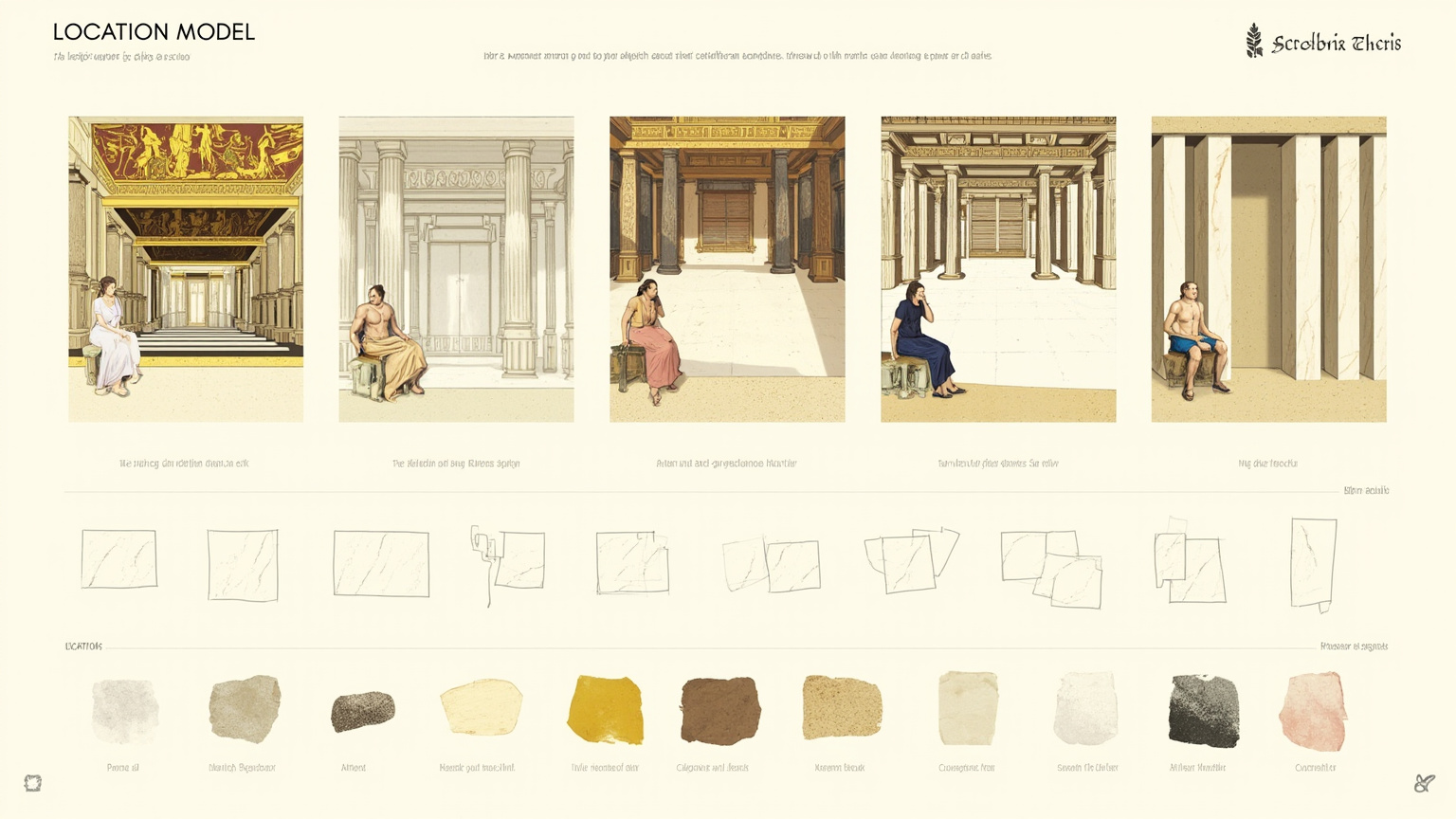
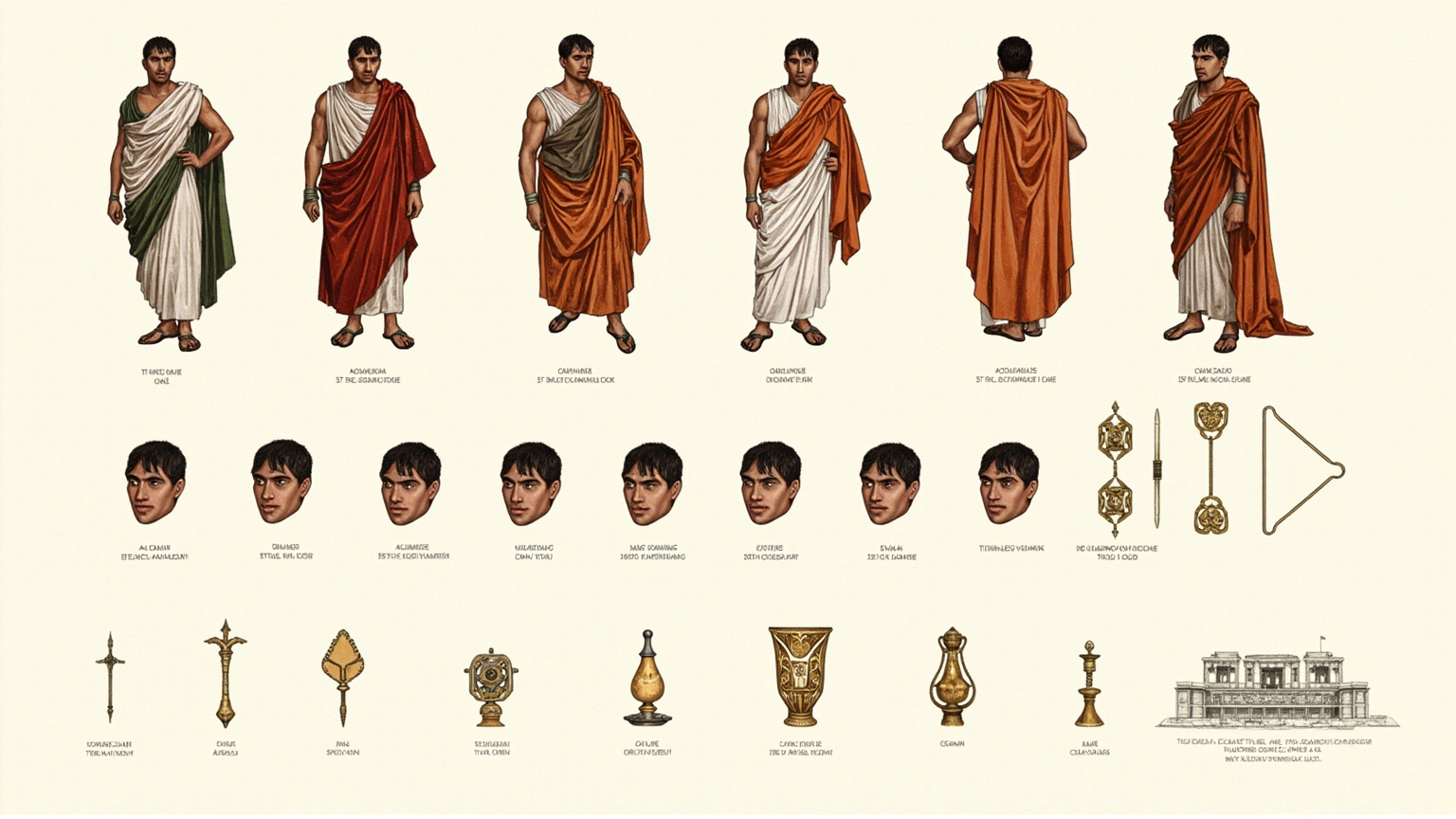
Art Direction4 plates
Before the guide was written, this book got a visual foundation — every illustration you just read grew out of it.