A Record of Buddhist Monasteries in Luoyang (Luòyáng Qiélánjì) · Companion Guide
洛阳伽蓝记
一座已被拆掉的城,被一个人凭记忆重建了一遍——千三百寺尽废,仅余一支笔。
To open: a city that has already been torn down
A hundred miles out, you see the tower first. Nine stories of timber, gilded from top to bottom, its golden disk flashing so bright in the sun you have to look away. Closer in, bells fall out of the clouds, their sound carrying to fields ten miles off. This was the skyline of Luoyang fifteen hundred years ago — and the last time anyone saw the whole of it standing.
What this book is
A Record of Buddhist Monasteries in Luoyang was written in the mid-sixth century, in five scrolls. Its author, Yang Xuanzhi, held a minor court post in Luoyang toward the end of the Northern Wei, something like an attendant courtier, and saw with his own eyes the years when the city's temples stood at their fullest. Luoyang was later destroyed by fire and war. Yang, by then living in Northern Qi territory, could not go back, so he sat down and wrote more than sixty monasteries back onto paper, one at a time, from memory and hearsay. Sangharama is a transliteration of the Sanskrit saṃghārāma, meaning a Buddhist monastery. The book runs in five scrolls, covering the inner city, then east, south, west, and north, and stands as one of the earliest city gazetteers in the world, more complete than any Western capital's written record from the same period. It also doubles as the last full hologram of Northern Wei Luoyang: Buddhism, art, court life, foreign merchants, gardens, streets, all of it packed into five scrolls of temples.
Its place in literary history is as the distant ancestor of the elegy. A city torn down, rebuilt by one man out of memory alone — that motif echoed through Chinese letters ever after, and nearly every poem of ruin and remembrance traces its first shovelful of earth back to this book.
People and world: who built this city, who tore it down
The founder was an emperor, Emperor Xiaowen of the Northern Wei, born Tuoba Hong, who in the late fifth century moved the capital south from Pingcheng, today's Datong, to Luoyang, rebuilt it on a grid of walled wards, and over the following forty-odd years raised more than thirteen hundred Buddhist temples inside and outside the city walls. The prosperous order of Luoyang was his alone to lay down. The real patron, though, was a woman at court: Empress Dowager Hu, who paid for the nine-story timber pagoda at Yongning Temple. The pagoda's extravagance, the empress dowager's power, and the excess of the Northern Wei court all peaked at once, in the hands of the same woman.
At the height of it all there was one passerby: Bodhidharma, a monk from Persia who had walked north from the southern courts. Yongning Temple's fame had drawn him there, but at the foot of the pagoda, seeing the golden disk blazing and its light reaching the clouds, he recited a single verse and turned away, off to Mount Song to face the wall. Yang Xuanzhi places him at this exact moment, and Bodhidharma becomes a sign that whatever has reached its peak is about to turn. The last figure to appear comes after the city has fallen, a farmer working the fields between broken temple foundations, planting in spring and harvesting in autumn. He closes the elegy: temples can be destroyed, pagodas can burn, and still the outline of Luoyang survives, held by one man's pen.
How the story moves: splendor, fire, ruin, rebuilding on paper
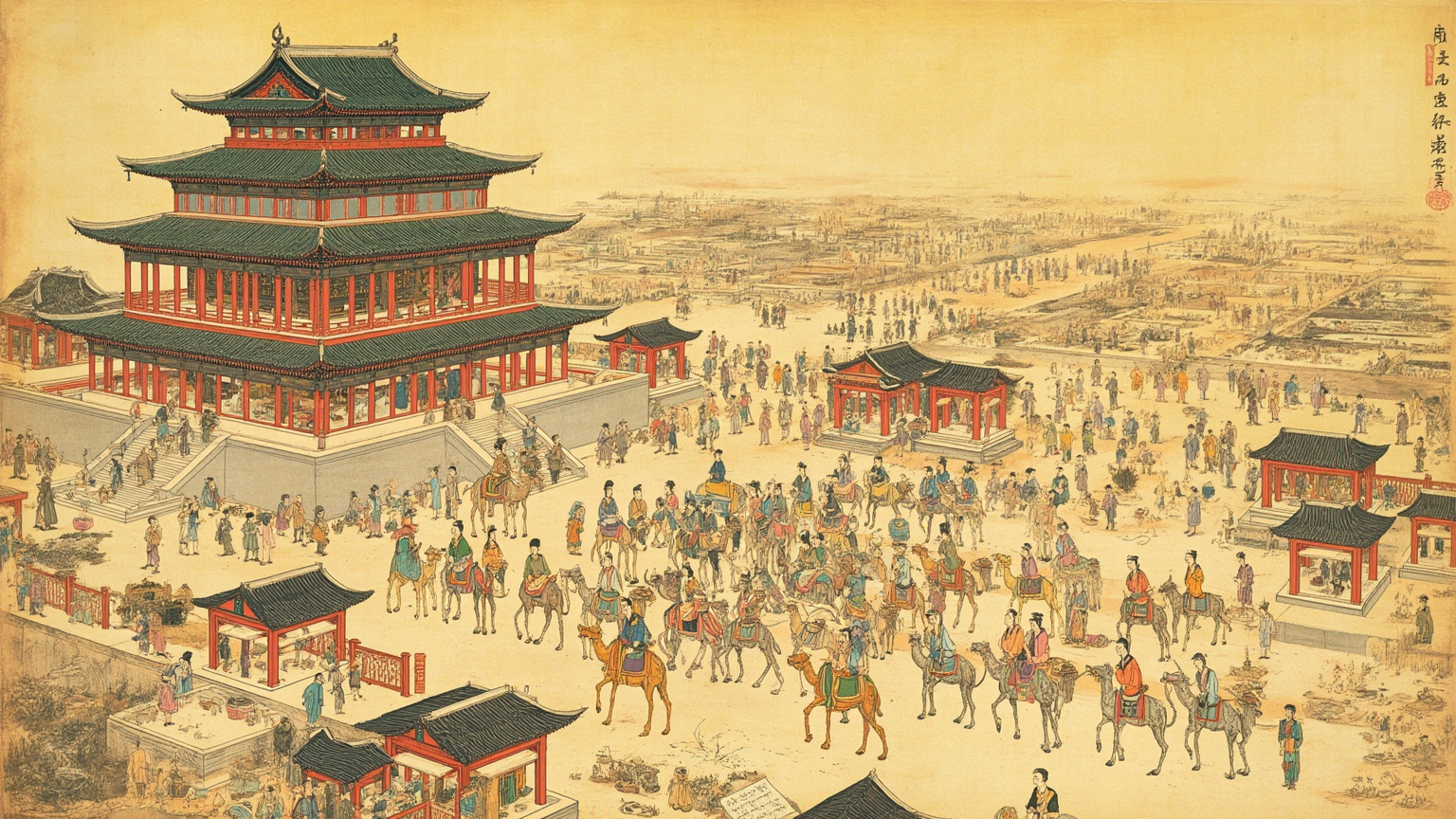
The story opens with Emperor Xiaowen's move of the capital. Luoyang was laid out in neat, square wards, a great bronze camel and bronze figures raised on Bronze Camel Street, foreign merchants leading camels through the markets, spices and gems and wine and woolens piled along the roadside. This is the aerial view of the empire's new capital, and it is also where Yang Xuanzhi's pen begins — he lays out the living city first.
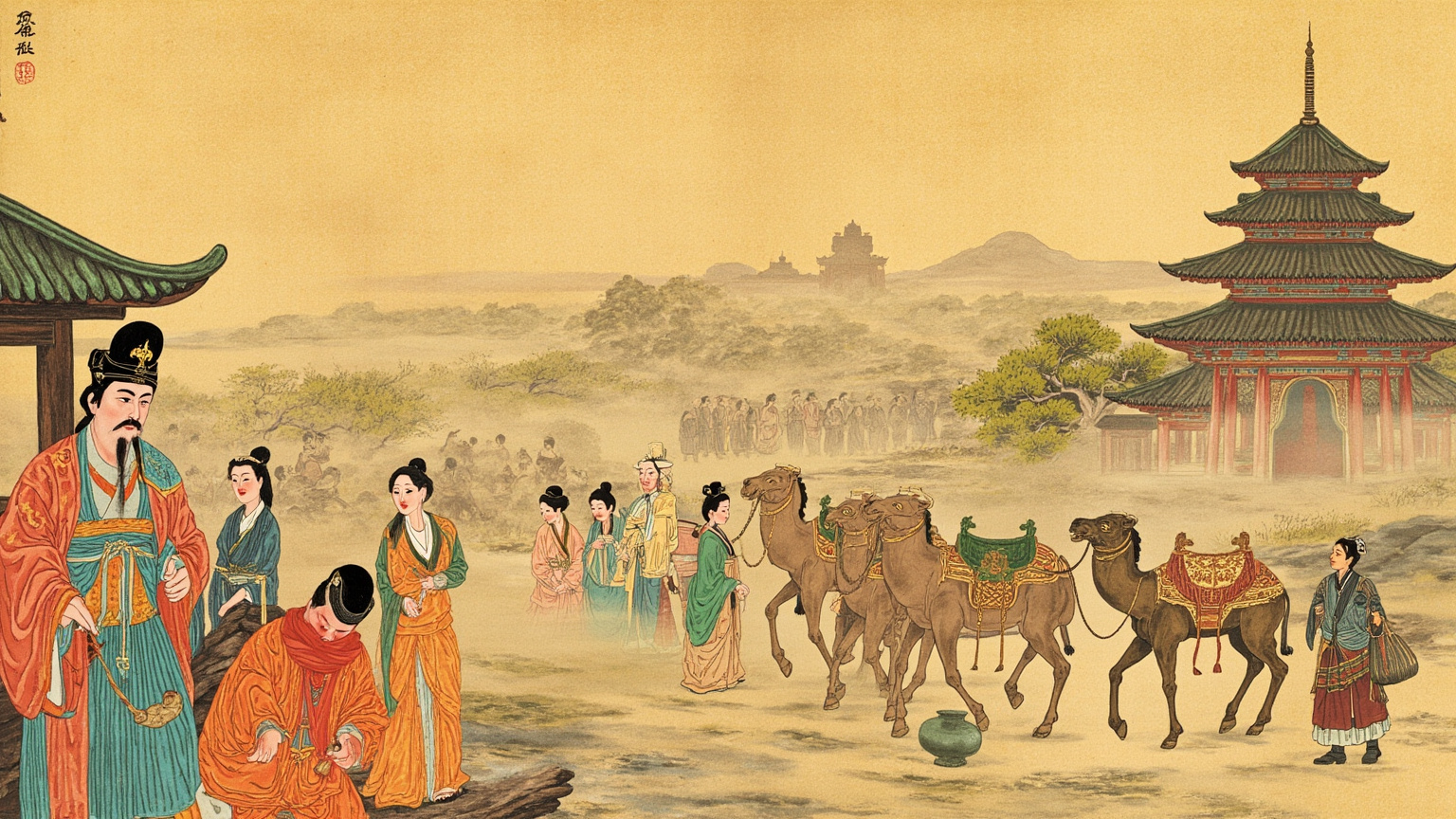
The new capital was laid out in a grid of wards; along the Street of the Bronze Camels stood the great bronze camel and the bronze man.
方里为城,城中立铜驼与铜人,以象其盛。
金句 · 城内卷 · 铜驼街
Yongning Temple is the crown of the whole book. The nine-story timber pagoda stood a hundred zhang tall, visible from a hundred miles outside the capital; ten golden bells hung from its spire, and their ringing carried more than ten miles. The whole structure was timber, its golden disk blinding in the sun, and a portrait of Empress Dowager Hu stood inside it; she was the city's greatest patron. Bodhidharma walked up to the pagoda, took one look at the golden disk, recited his verse, and turned for Mount Song. A shadow crosses the splendor right here: Yang Xuanzhi never says it outright, but the reader can already feel it — once glory has climbed this high, it has nowhere to go but down.
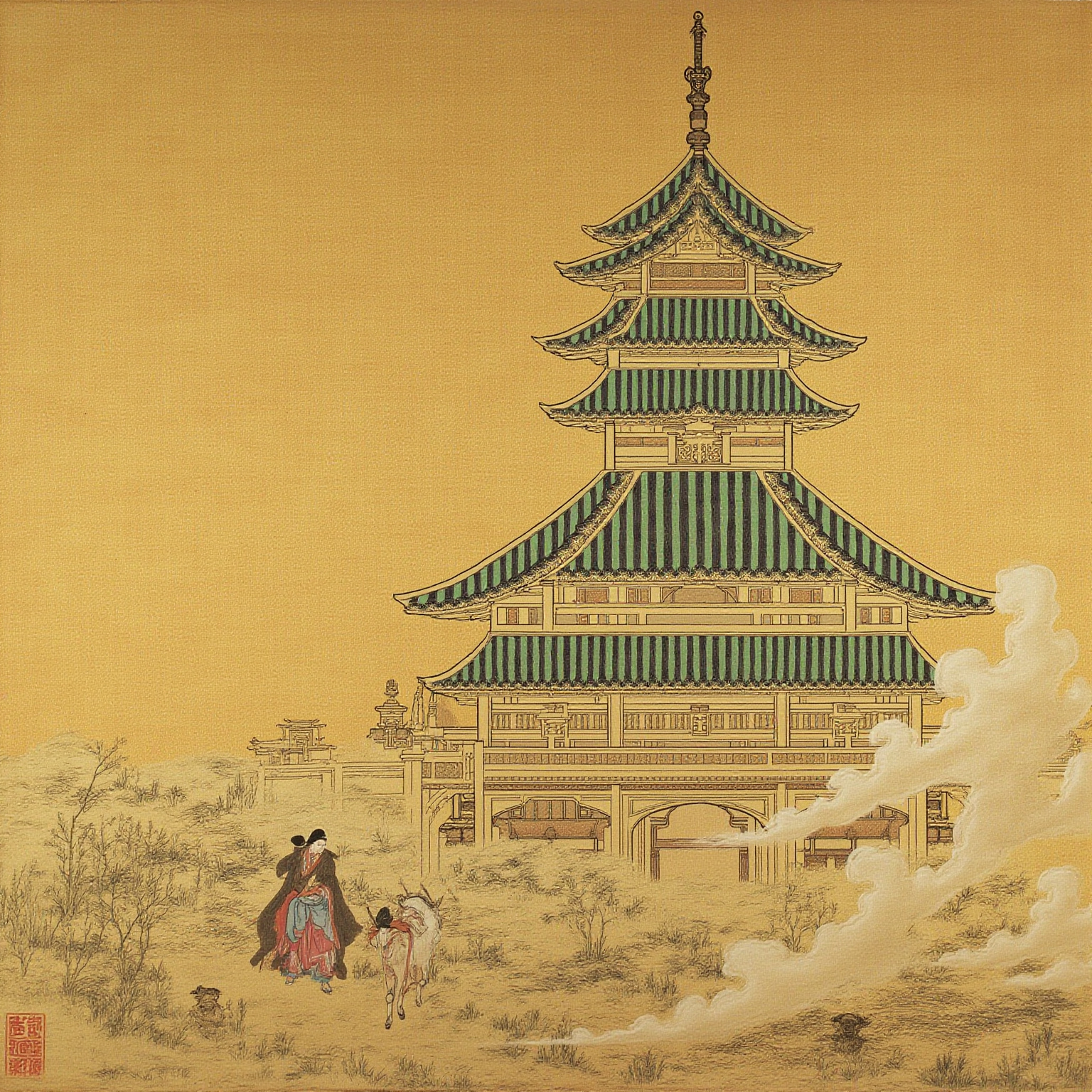
From a hundred li away one could see the nine-storied wooden pagoda; ten golden bells hung on its spire, and their sound traveled more than ten li.
中有九层浮图一所,架木为之,去地一百丈,上有金铎十枚,铎声闻于十里。
金句 · 城内卷 · 永宁寺
Across the five scrolls that follow, Yang Xuanzhi records more than sixty temples one by one, moving through the inner city and then east, south, west, and north, each entry noting location, gate towers, lecture halls, pagodas, statues, and the great sermons given by the abbot of each temple. Incense smoke and chanting fill the city; camel caravans of foreign merchants fill the markets; noble estates fill the gardens; resident foreigners bring their own music and dance. This is Luoyang in full as an international capital, and it is the most lavish stretch of writing in the whole book.
The turn takes a single sentence. The history is plain: in the late 520s, the Qihu warlord Erzhu Rong slaughtered more than a thousand Northern Wei princes and court officials at Heyin, installing and deposing emperors at will, and the central authority of the Northern Wei court collapsed for good. Yang Xuanzhi records this in one line — no account of how it happened, no bodies, no scene. The reader feels a chill reading it: this is how a city begins to fall.
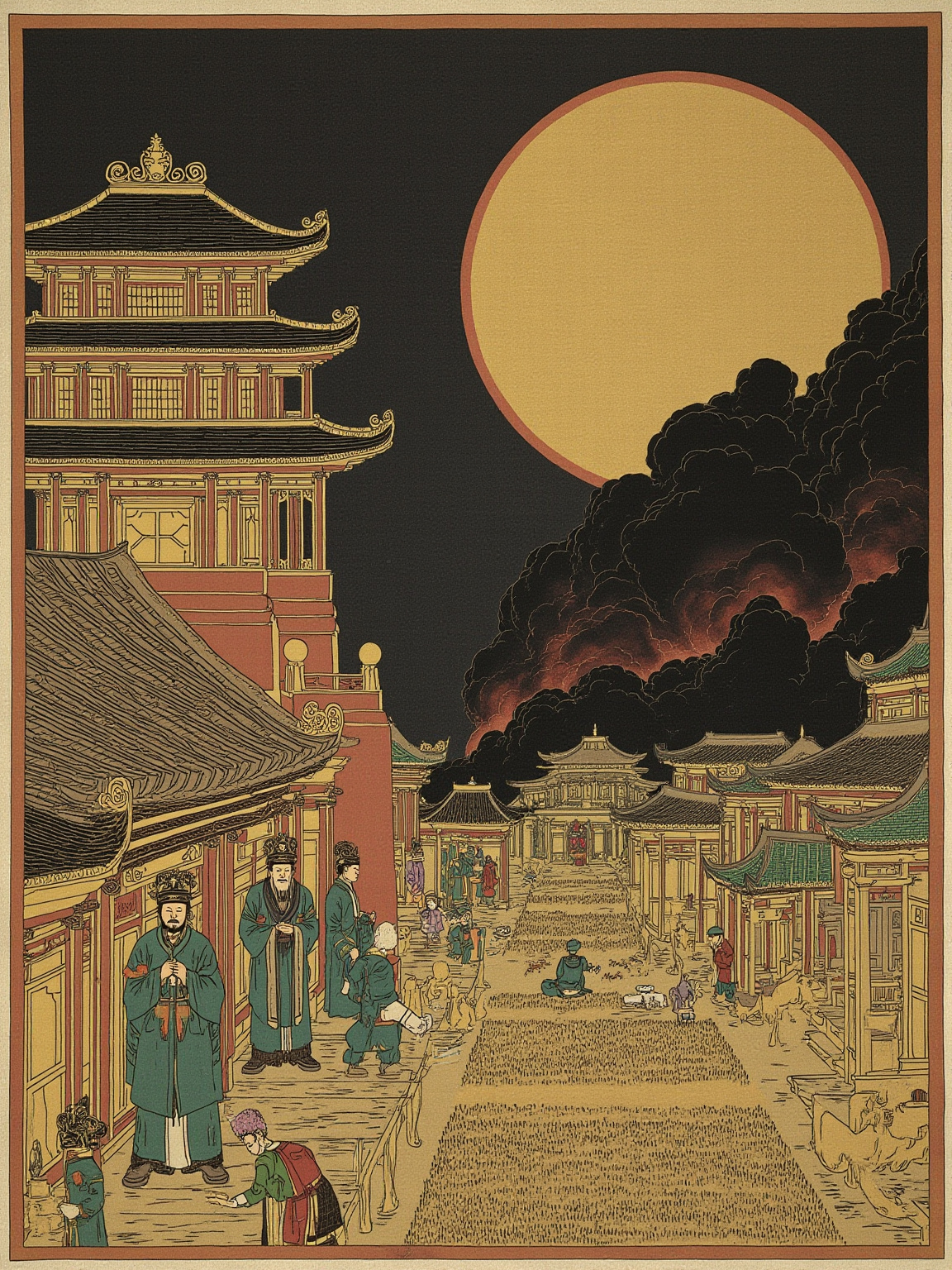
Er Zhurong's soldiers slaughtered more than a thousand princes and ministers of the Wei court by the Yellow River; from that day the house of Wei fell.
尔朱荣纵兵,尽杀王公朝士千余人,自此魏室日衰。
金句 · 城东卷 · 河阴之变
War and fire followed. The Northern Wei split apart, Luoyang stopped being the capital, and more than thirteen hundred temples fell into ruin. The timber pagoda at Yongning burned to the ground in a lightning fire about eighteen years after it was finished, nothing left but the loss of a city and its buildings. Yang Xuanzhi's writing here is extremely restrained: the spire falls, the golden bells hit the ground, the pagoda comes down. No one appears in the fire. He allows the eye only the destruction of the city and its structures.
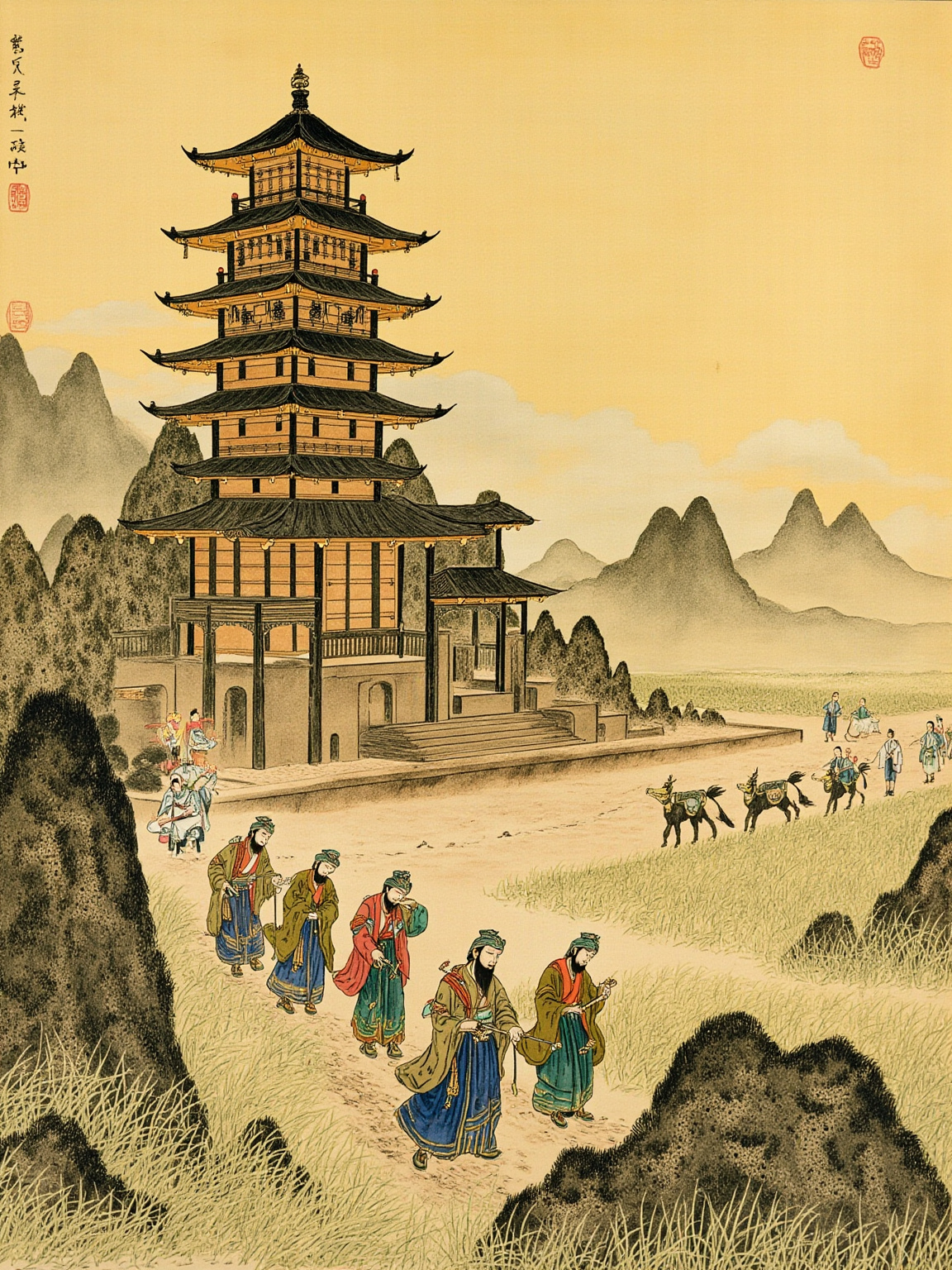
The golden bells dropped from the broken spire; the painted beams fell burning into the empty air.
火初从第八级起,累雨不灭,金盘坠落,铎声遂绝。
金句 · 城内卷 · 永宁寺塔焚
The real craft appears in the ruins. By the time he wrote, Yang Xuanzhi had been away from Luoyang for years, living in Northern Qi territory, working entirely from memory and hearsay to write temples that had become mounds of earth, wheat fields, broken foundations, and weeds back onto the page. Every scroll returns at its end to the ruined site, closing on some version of the line: this temple has become part of such-and-such a ward. The first half of each entry is all splendor, the temple's glory, the pagoda's height, the market's noise, and that one closing line is enough to flip the whole thing into an elegy. Splendor and ruin sitting side by side in the same scroll, describing the same city: that is the book's single greatest piece of craft.
The closing image is not inside a temple but out in a field. The city has fallen, the temples have gone to ruin, the pagoda has burned, but the people farming the old temple grounds are still there, planting in spring and harvesting in autumn as always. Yang Xuanzhi sees the people still in the fields, and stops writing. It is the last thing he leaves us of Luoyang: the city is gone, and the people remain.
Theme and craft: rebuilding a ruined city from memory
What this book is really about is memory. Luoyang was already destroyed, and its author was no longer there — the whole thing is a reconstruction project carried out from a distance, one of the earliest and most complete books of remembrance in Chinese literature. It is not asking what happened to any one temple. It is asking how a city built to excess on religion was dragged down along with the politics that had made it possible. The Heyin massacre, the split of the empire, the war and fire: these were the city's executioners. But Yang Xuanzhi's pen outlasted the blade. He kept what the executioners could not touch.
As prose, it is beautiful. Every scroll opens on a temple at its height and closes on a sigh for its ruin, and the blank space between splendor and ruin is the book's real grammar. It doesn't lean on adjectives; it works through rhythm. The opening lays on gold and blue-green in heavy strokes, the closing drops to a single line about a temple gone to a ward's worth of land, and the reader is left to fall through everything unwritten in between. The details of the Yongning pagoda, the spire, the golden disk, the ten bells, the height of the statues, survive nowhere else in this much detail. Reading it is also an act of rescue: it is the fullest surviving record of one of the world's great works of timber engineering.
The one thing about Luoyang the executioners never touched was Yang Xuanzhi's pen.
Why the text itself is worth reading
A guide like this gives you the map; the text itself is the ground. There is something in this book that only shows up on the actual page, and no plain retelling can carry it over. The passage on Yongning Temple, for instance, moves from the golden disk to the sound of the bells, from the bells to the spire, then turns without warning to Empress Dowager Hu's ruinous wealth, then turns again to Bodhidharma's verse, all in one breath, cut off just as suddenly. That rhythm only exists in the original. And scattered between the temple entries are bits of market gossip, the names of foreign merchants, the layout of private gardens, a living social history of Luoyang. Knowing how it ends doesn't make it less worth reading, because you are not reading for a twist. You are reading to watch a city that no longer exists get written back onto paper, stroke by stroke, by a man who could never go back to it.
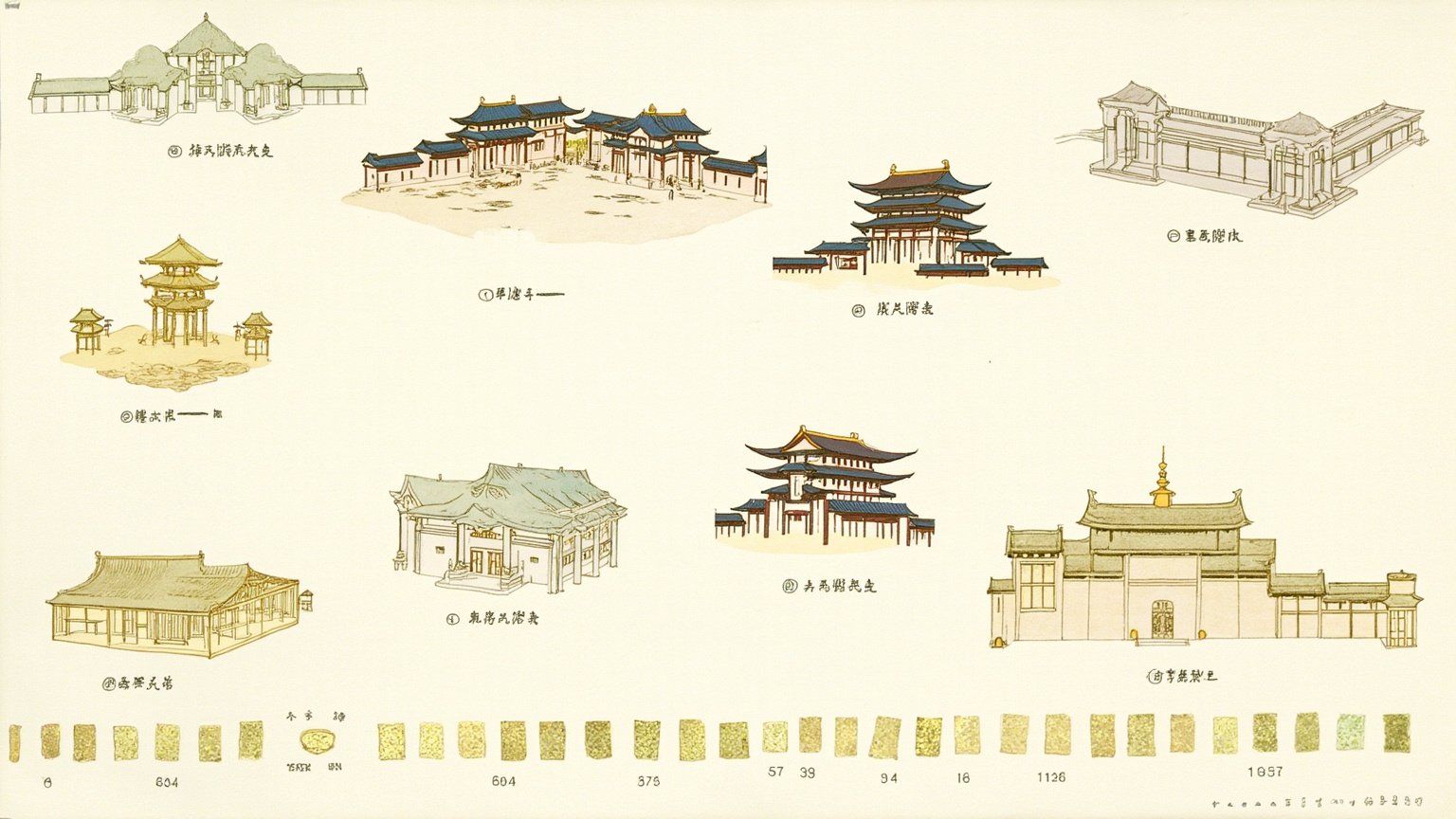
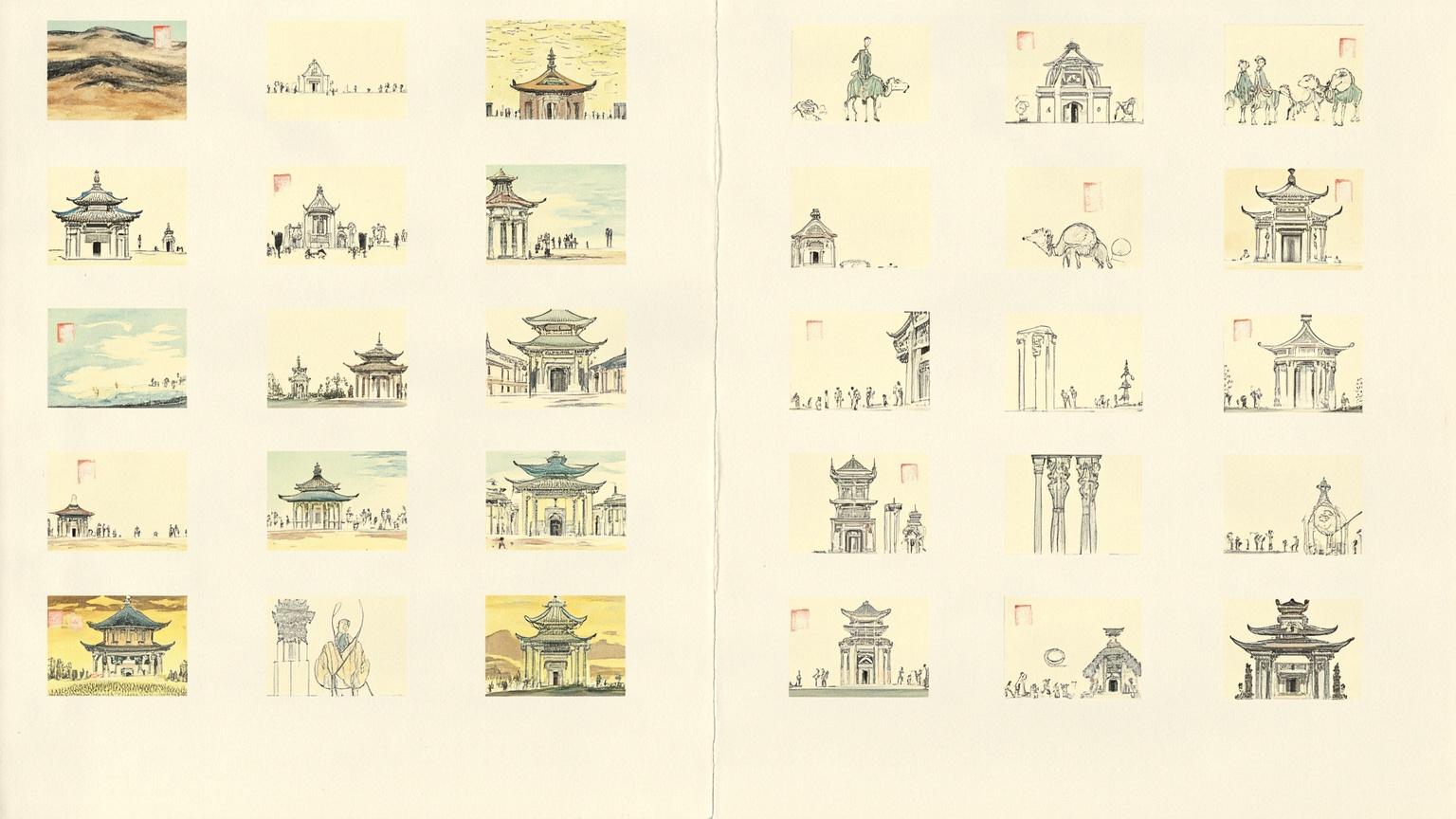
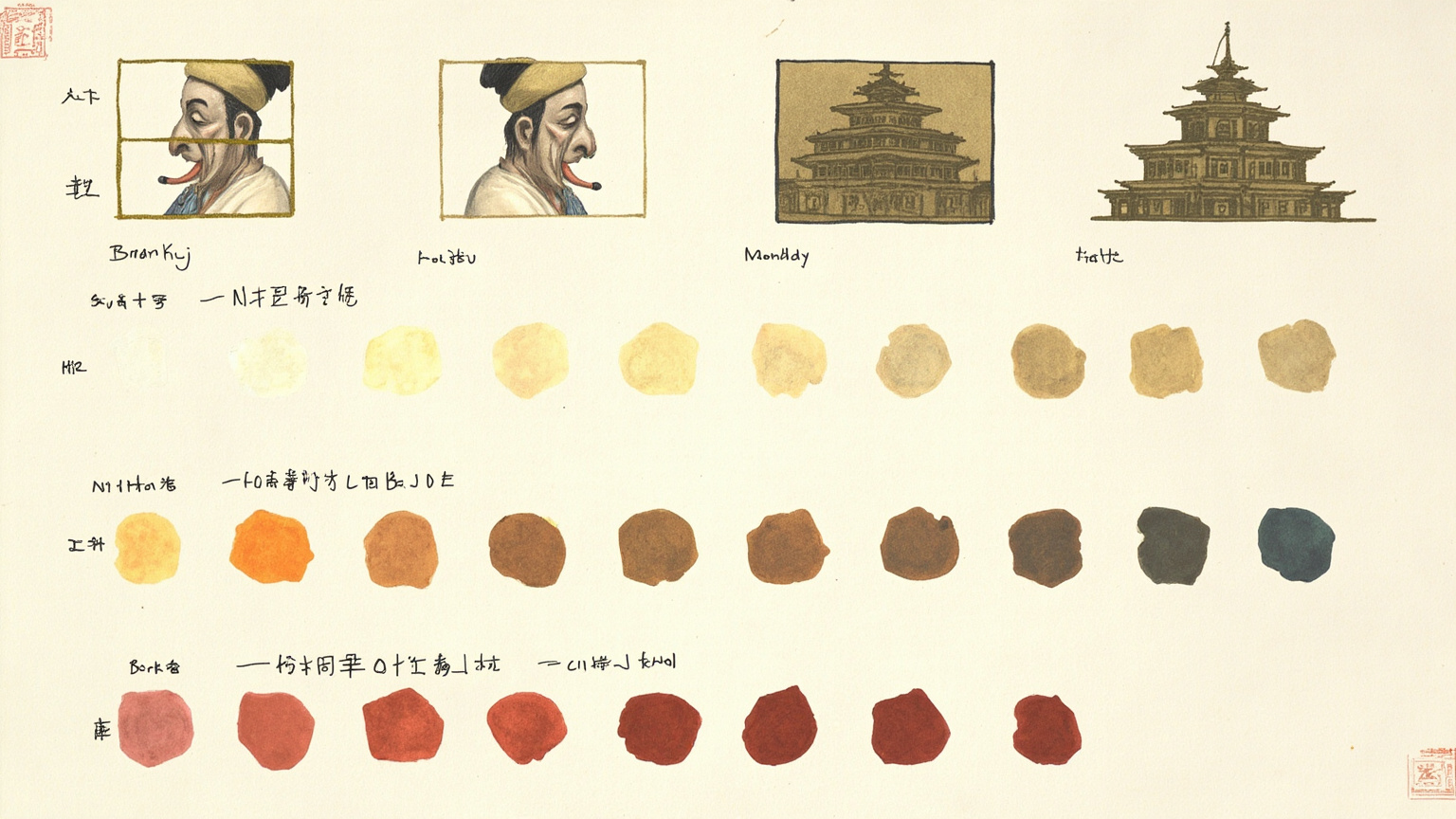
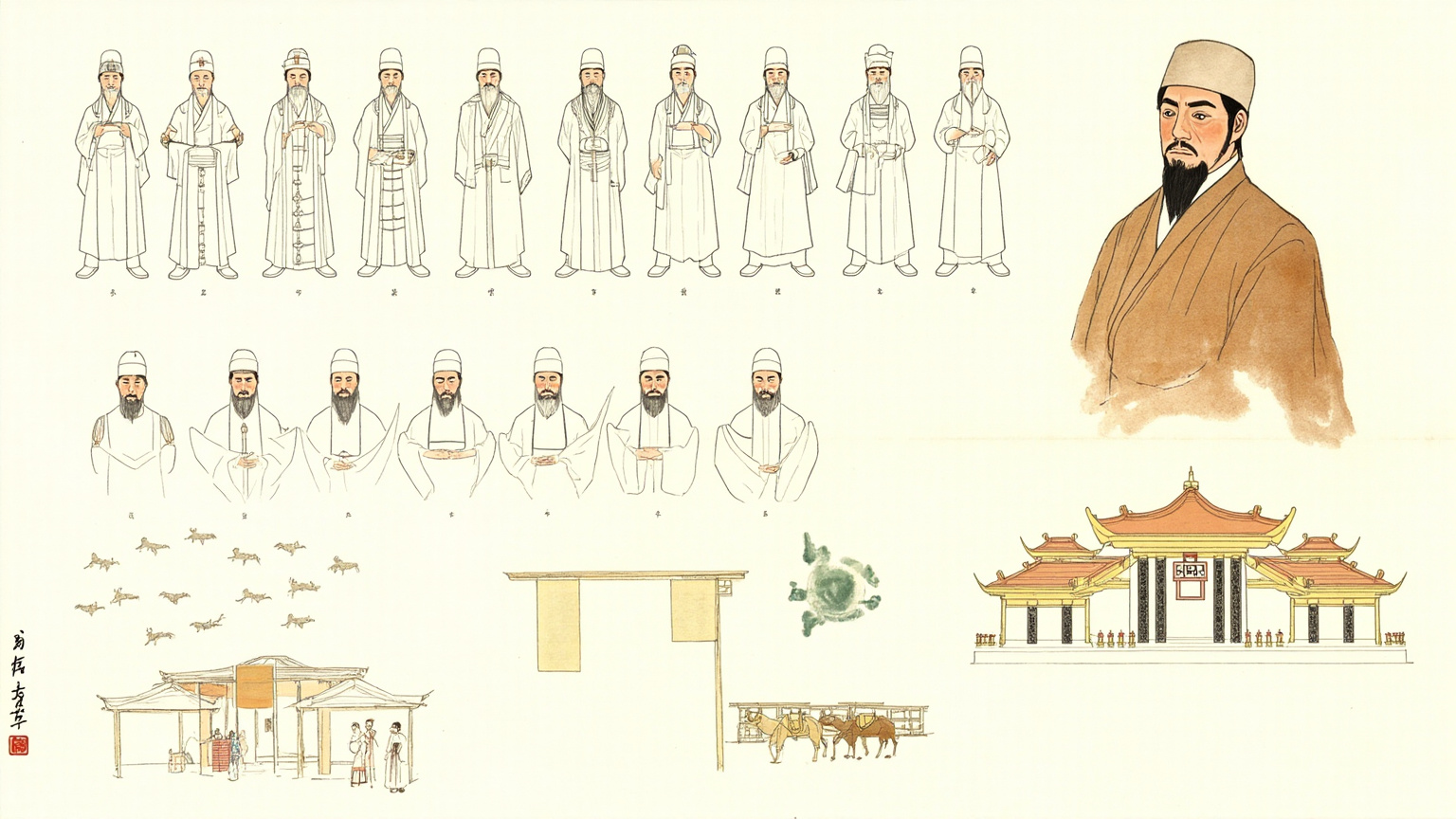
Art Direction4 plates
Before the guide was written, this book got a visual foundation — every illustration you just read grew out of it.