Royal Commentaries of the Incas · Companion Guide
印卡王室述评
一个混血作者把童年听来的口述帝国,逐章压进十七世纪的纸页;黄金、绳结与山脊上的太阳之子,仍在被另一支笔重新点燃。
It begins with the god's face chiseled off Cusco's walls
The day the Spanish took Cusco, the Inca's golden sun idol was melted down into bars and carted off. This book starts from there, but it isn't about the fall. It's about the years before it, about how the Inca built an empire out of a mountain ridge and ran it with astonishing order. Garcilaso, the author, was himself of mixed blood — his father a Spanish officer, his mother of Inca royal descent. He was born in Cusco and grew up inside the Inca nobility, listening to his elders tell the old stories over pots of maize porridge. Years later, sitting in a small town in southern Spain, he turned those stories into this book. That's the hook: the son of the conquered picks up the conqueror's language and explains the conquered people's institutions to the conquerors themselves. The book has survived four hundred years on the strength of that awkward stance.
What kind of book is this
Royal Commentaries of the Incas was published in the early seventeenth century, written in Spanish, and it gave European readers their first inside account of the Andean empire. It isn't a war chronicle, a piece of religious propaganda, or a novel. It's a large-scale cultural history, built by an author raised between two civilizations, who fused the Inca oral tradition he'd heard as a child with what he'd seen firsthand and with the Spanish accounts written before him. Before this book, Europeans who mentioned the Inca mostly knew gold, idols, and strange knotted cords. After it, Cusco's Sun Temple, the stone roads running along the Andean ridgeline, and the ledgers and population records tied into quipu knots finally had a detailed account that could be read and cited. Its place in literary and intellectual history comes down to one sentence: it let the colonized speak, using the colonizer's alphabet, and forced its way into history.
Who's telling it, and whose story is it
The narrator is Garcilaso himself, and his voice runs through the whole book. He isn't relaying a single archive — he's remembering and cross-checking as he goes: which legend which aunt told him as a boy in Cusco, which piece of lore some old Inca acquaintance filled in later, once he was grown. The book's central figures are a line of Inca rulers handed down generation to generation: Manco Cápac, the founder, who by legend built Cusco and laid down the Inca's laws; Pachacuti, the expander, who pushed the empire outward from a single city into the surrounding peoples; Túpac Inca Yupanqui, who kept pushing the borders north; Atahualpa, who rose out of a succession war to rule the region around Quito and was later captured by the Spanish, becoming the marker of the empire's collapse; and Huayna Cápac, the last sovereign, who died amid the upheaval around the time the Spanish arrived. These men aren't biographical subjects so much as specimens of the institutions around them — whenever a new ruler steps onstage, the author uses the occasion to walk you through that reign's administration, taxation, and festivals.
The founder, Cusco, and a root that reaches out of legend
The book opens on the legend of Manco Cápac. The sun god set a man and a woman down on a cliff by Lake Titicaca and told them to drive a golden staff into the earth — wherever it sank in, that ground was the promised land. They tried spot after spot until they reached Cusco, where the staff went in, and the city was founded on that spot. Garcilaso treats the legend with real gravity, because to him Manco Cápac isn't some winged ancestor out of myth but the actual starting point of Inca institutions: he taught men to farm and women to spin, he laid down the rules of governance, set the customs for marriage and burial, and divided up the land. What's worth noticing is that Garcilaso doesn't write this as a fairy tale — he treats it as a founding charter. The institutions grow out of the myth, and their legitimacy grows with them. From here on, Cusco isn't just a place name. It's the navel of the empire's body.
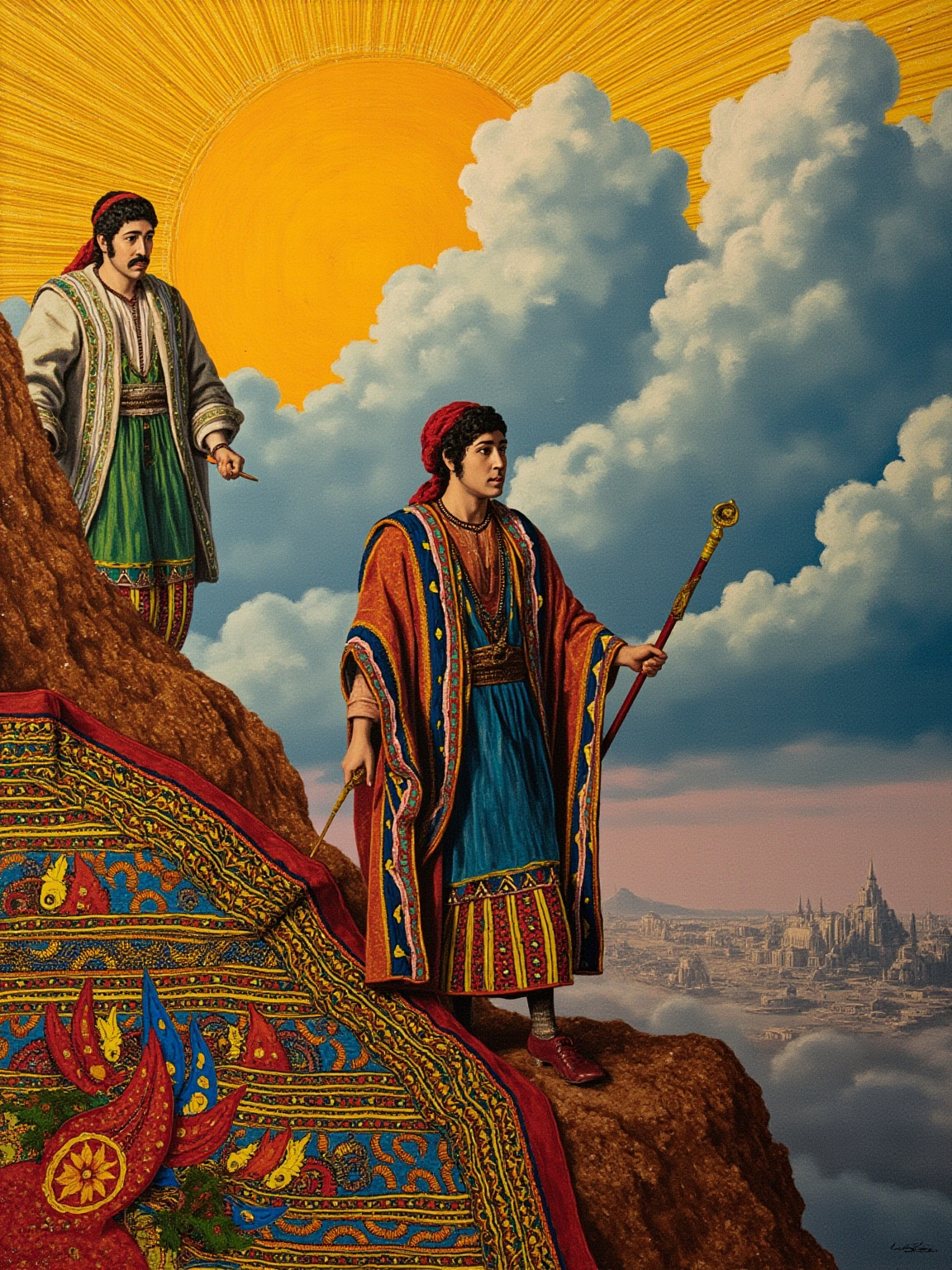
The Sun, their father, took pity on them and sent forth two of his children, a son and a daughter, to civilize and teach those peoples.
太阳为那初民动了怜悯,从自己膝下遣出一双儿女——一男一女——去教化那片人世。
金句 · 第一卷 · 始祖曼科·卡帕克的传说
Right after that, Garcilaso lays out where he's writing from. He isn't copying someone else's archive, and he isn't writing fiction — sitting in a small town in Spain, he stitches together the bedtime stories he heard as a boy from Inca noble uncles and aunts in Cusco, his memory of the local accents and titles, and the Spanish-language material earlier writers had left behind. The passage is restrained, with none of the heroic posturing you might expect — it reads more like a field researcher, thirty years on, filling in his notes. But this is exactly what makes the book's standing as a source so strange: a man of mixed blood, trained fully in Latin and theology, carries the conquered people's memory from one ear to another and writes it back out in the conqueror's syntax.
How an empire actually ran
The middle section is the toughest part of the book: a full panorama of Inca institutions. Administratively, the empire was split into four regions, each subdivided down through further levels, with land allotted according to population — every household received land, farmed it, and paid tax based on its size. Labor service wasn't slavery; it was a rotating duty by household, building roads, terracing fields, working mines, each with its own quota. The laws are spelled out in detail — even small offenses like adultery, theft, and lying carried specific penalties, and Garcilaso stresses that Inca society placed enormous weight on morality and propriety: parents could even be punished for beating their children. What's worth noticing here is the vocabulary — he reaches for terms his Spanish readers already knew, senate, province, governor, and fits an Andean empire into a Roman-Spanish political frame. That translation is an accommodation, and a distortion, but it's also what let sixteenth-century Europeans understand any of it at all.
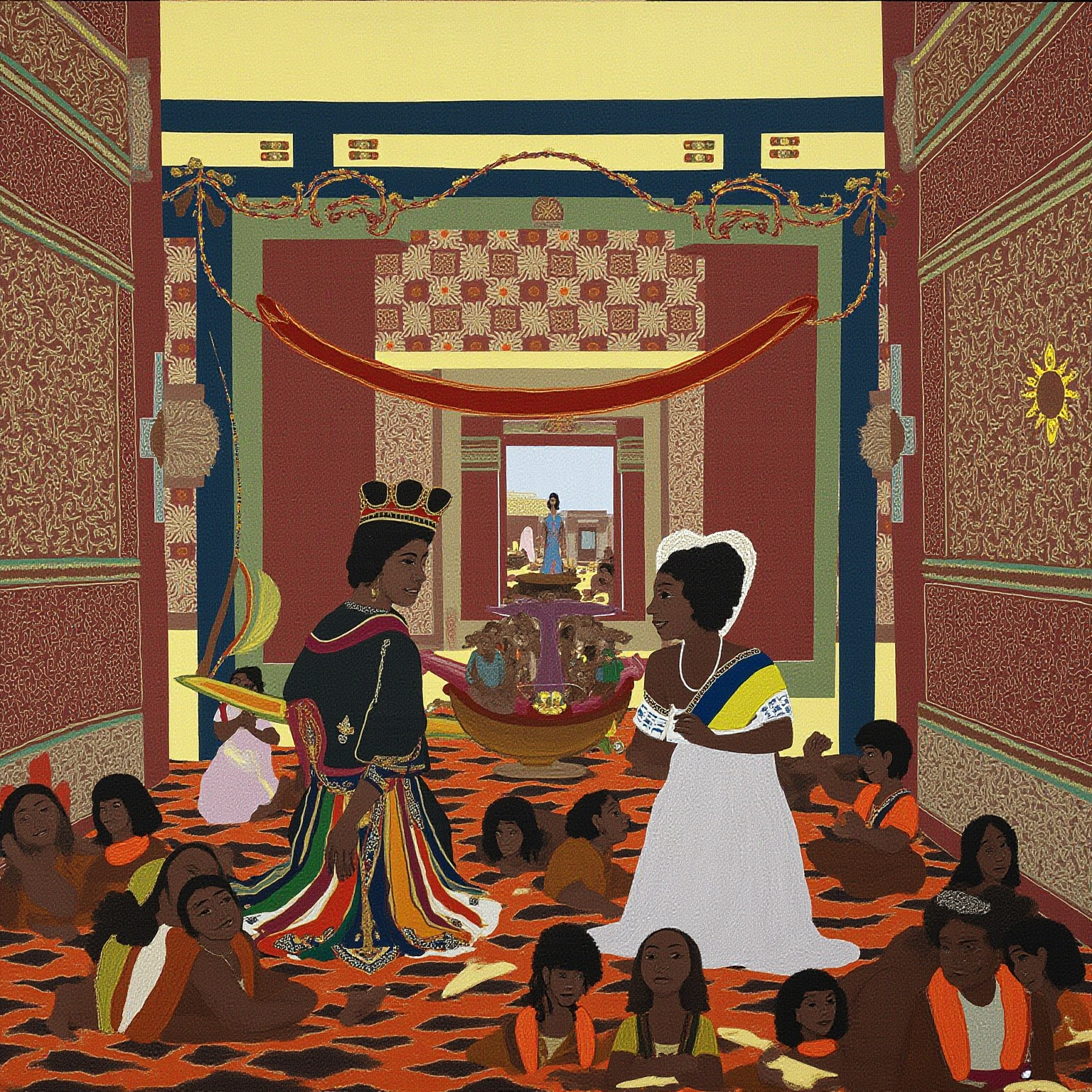
They divided their empire into four quarters, and over each they placed a governor, so that all might be ruled by one law and one measure.
帝国被划作四境,每境各置长官——庶民便在同一道律、同一度量之下过日子。
金句 · 第四卷 · 行政与行省之制
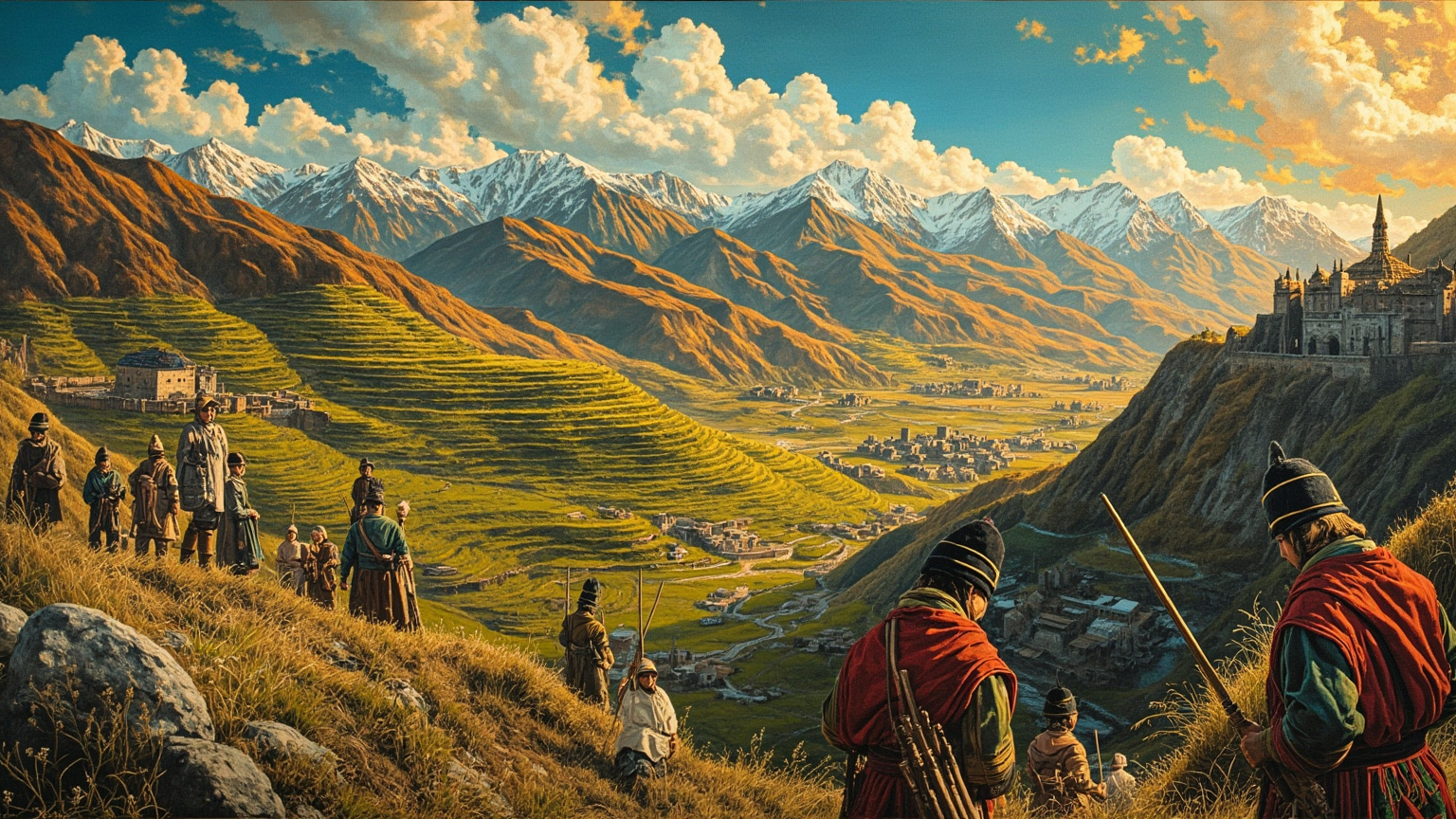
The section on agriculture shows Garcilaso's affections most clearly. He goes to great lengths on terracing — how you build level platforms into a steep slope, how you channel meltwater down from higher ground to irrigate it, how stony ridge-land is made to grow maize, potatoes, quinoa. He even records how the Inca used bird guano as fertilizer, turning poor mountain soil into land that could be farmed year after year. The detail is so thorough it reads less like an account of a lost empire than a farming manual. Carried along by his own enthusiasm, he throws in the royal planting ritual too: the king turning the first furrow with his own hands, a gesture staged for the whole empire to see. Politics and farming end up tied together in the same spring.
The knotted cords — the quipu — are what left European readers most stunned. The Inca had no writing, but they recorded everything in colored knotted cords: population, annual tribute, llama counts, which canal needed clearing in which year. Each color stood for a category, the position and shape of a knot for a quantity, and anything more complex depended on officials trained to recite the code by memory and pass it on by word of mouth. Garcilaso is emphatic that the quipu wasn't decoration — it was the state's ledger and archive, and without it the empire couldn't have managed so much as a proper tax collection. What stands out in the writing is that he describes both the physical form of the quipu and how it was built into the machinery of administration, so the reader understands it as a kind of writing made material, not some heathen curiosity. That restrained curiosity is a rare note of warmth in this book.
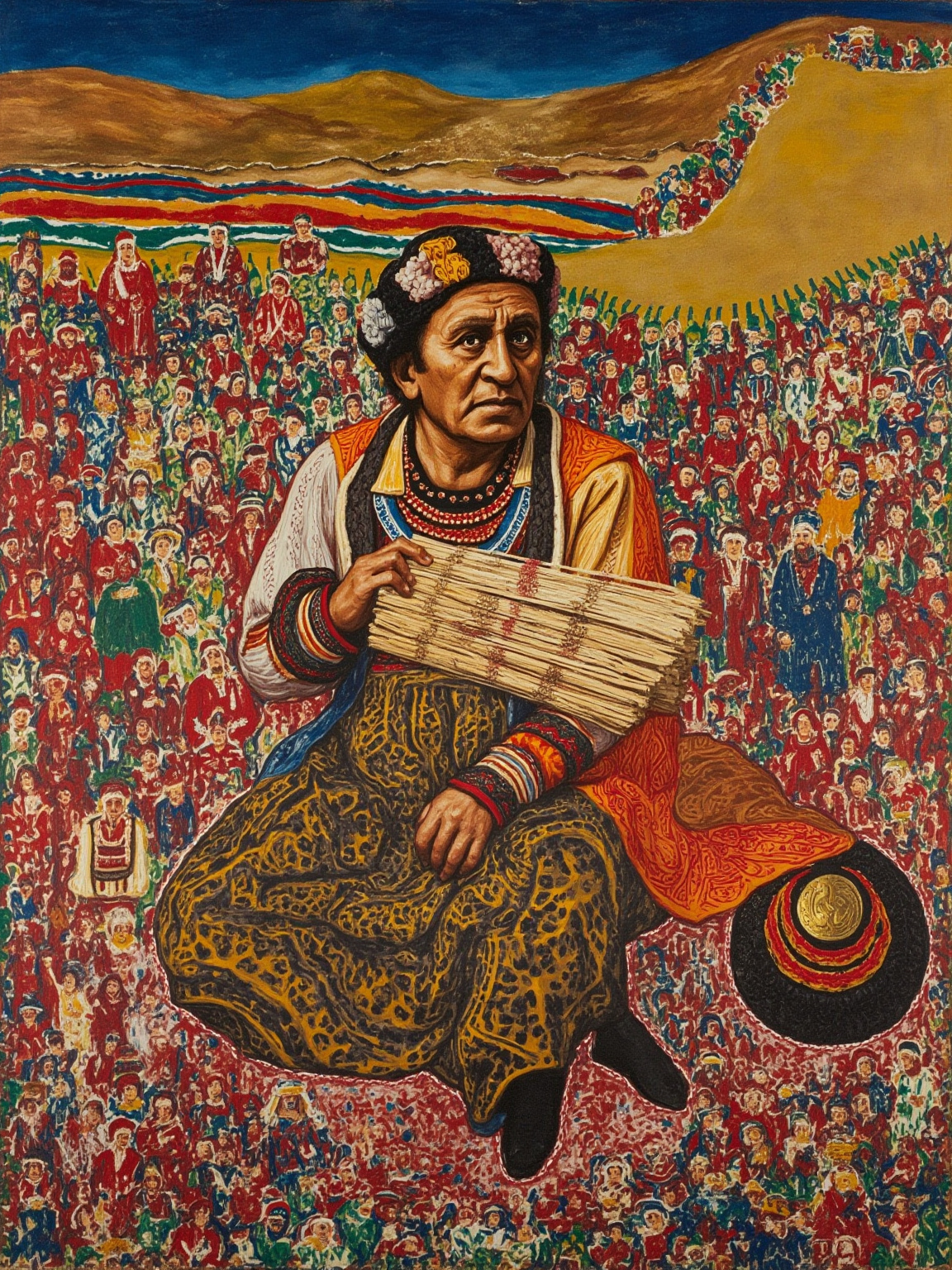
By knots they kept the memory of all their lands, their tribute, their births and deaths, for they had neither letters nor books.
他们用绳结记下一切——田亩、贡赋、生死——因为他们不曾有过一个字母、一本书。
金句 · 第六卷 · 结绳记事奇普之制
Stitching the Andes into a single network
The royal road and its runners are one of Garcilaso's proudest chapters. The Inca built a main road running north to south along the Andean ridge, crossing the vast stretch of the Andean highlands, with relay stations set up all along it. Runners covered a hundred-odd kilometers a day, each handing off to the next. The stations kept stores of grain and spare runners on hand; a messenger would sprint his stretch, then strap the dispatch to the waist of the next man in line. Garcilaso is particularly struck by how fast word traveled — a rebellion, a good harvest, a new king's accession could reach the capital within days, even from the farthest reaches. This road network, like the quipu, was the Inca state's actual nervous system and bloodstream. He writes about it with a bit of an engineer's pride — he'd seen the road himself, and now he's laying it out on paper for Europeans, making the point that the conquered weren't just mountain people who prayed to their gods. They were people who had stitched an entire highland into a single piece of cloth.
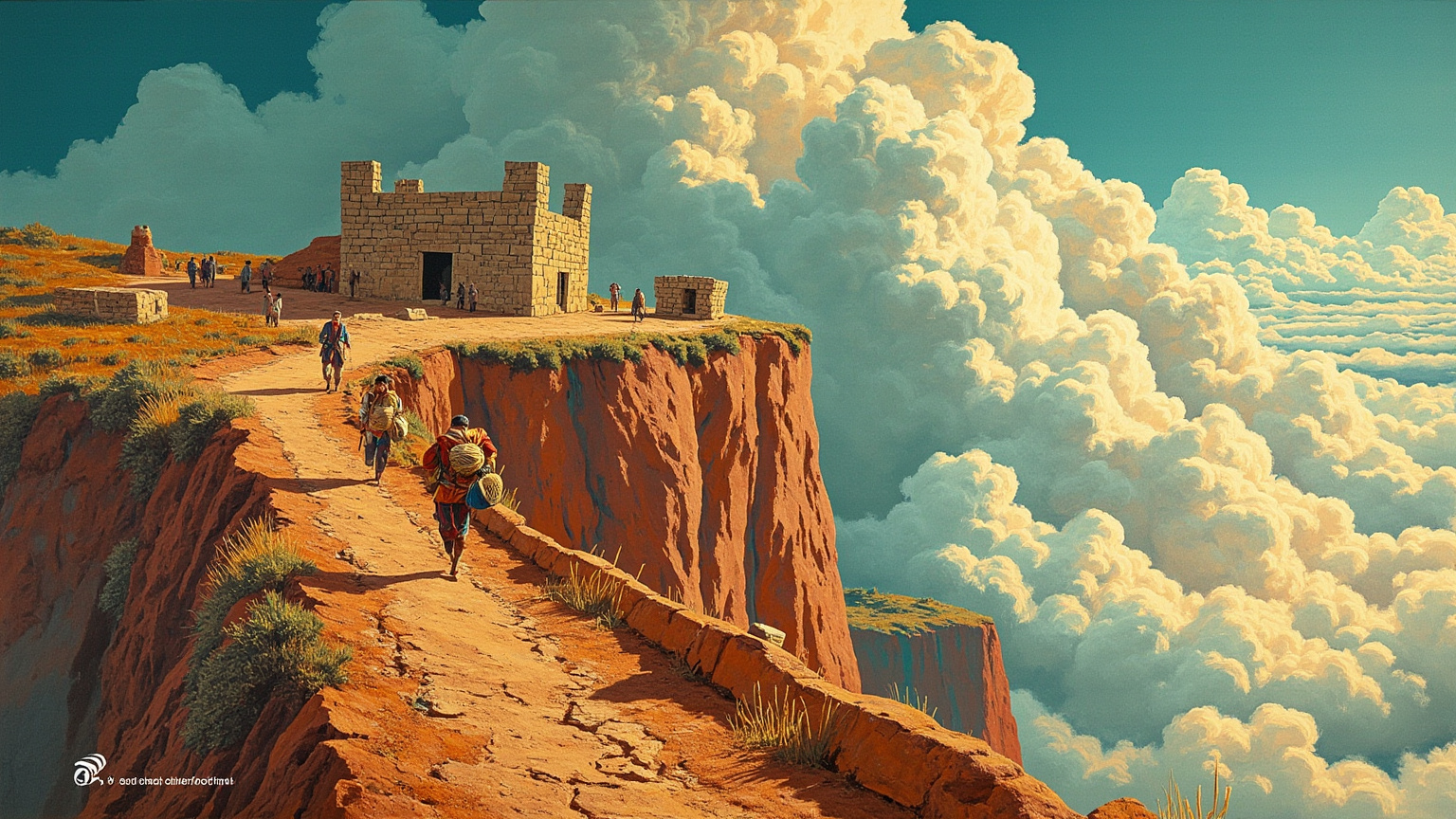
Along the whole length of those royal highways they built storehouses, and stationed runners who passed the message from one to another without ceasing.
沿那两条王室长道,处处筑仓,处处立人——一声传过一声,从不停歇。
金句 · 第七卷 · 王道与驿使之制
The sun, Cusco, and a year of festivals that never stopped
Cusco's Sun Temple is the heart of the book's religious account. Gold leaf covered the walls at its center, a golden idol of the sun god stood on the altar, and the images of past rulers ringed the room. Garcilaso lays out the year's major solar festivals in detail: the winter solstice rite in June, when a black lamb was sacrificed and offerings burned, after which priests read the coming year's fortunes in the entrails; a monthly rite tied to the moon; separate festivals for planting and for harvest. He describes these ceremonies with real reverence, and doesn't hide a kind of nostalgic fondness for Inca religion — but he also knows who he's writing for. He spends page after page explaining how these rituals track the stars, the farming calendar, and the renewal of royal authority, so his Spanish readers understand that sun worship wasn't superstition but a language of legitimacy that had grown up alongside the Inca state itself. What stands out is how closely he lets religion and state ceremony overlap: the king is the sun's stand-in on earth, and every festival is a rehearsal of government.
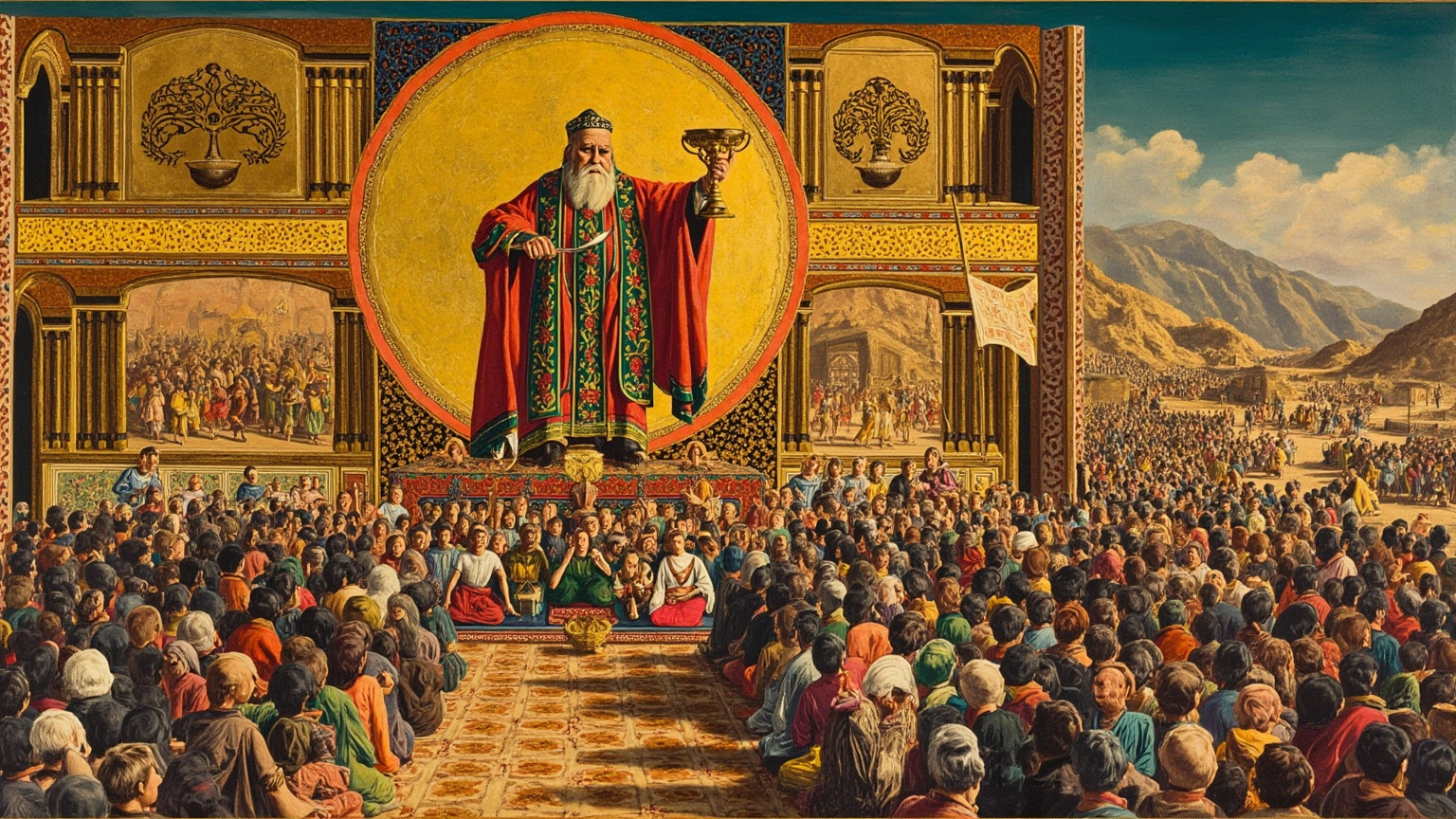
The temple of the Sun in Cuzco was walled with plates of fine gold from top to bottom, and on the high altar stood the figure of the Sun in solid gold.
库斯科太阳神殿,自顶至底,皆以纯金薄片贴壁;高坛之上,太阳的偶像整块赤金铸成。
金句 · 第八卷 · 库斯科太阳神殿
From Pachacuti to Huayna Cápac, the empire's last breath
The dynastic account fills the second half of the book. Pachacuti is the empire's true architect. He conquered, but his deeper legacy was as an institution builder: he rebuilt Cusco, reorganized the provinces, spread the use of the quipu, and extended the road network. Túpac Inca Yupanqui kept expanding, pushing the empire's border into what is now the highlands of Ecuador. By the end of Huayna Cápac's reign, the whole empire was showing signs of exhaustion — plague traveled in along the road network, and not even the royal family was spared. After his death, the empire split between his sons: Atahualpa emerged as the winner of that succession war, and his subsequent capture by the Spanish became the marker of the empire's collapse. Garcilaso's account of these final rulers isn't sentimental. If anything, it's cool-headed. He cares more about what each king built institutionally than about which wars they fought. That's exactly what sets this book apart from an ordinary conquest history.
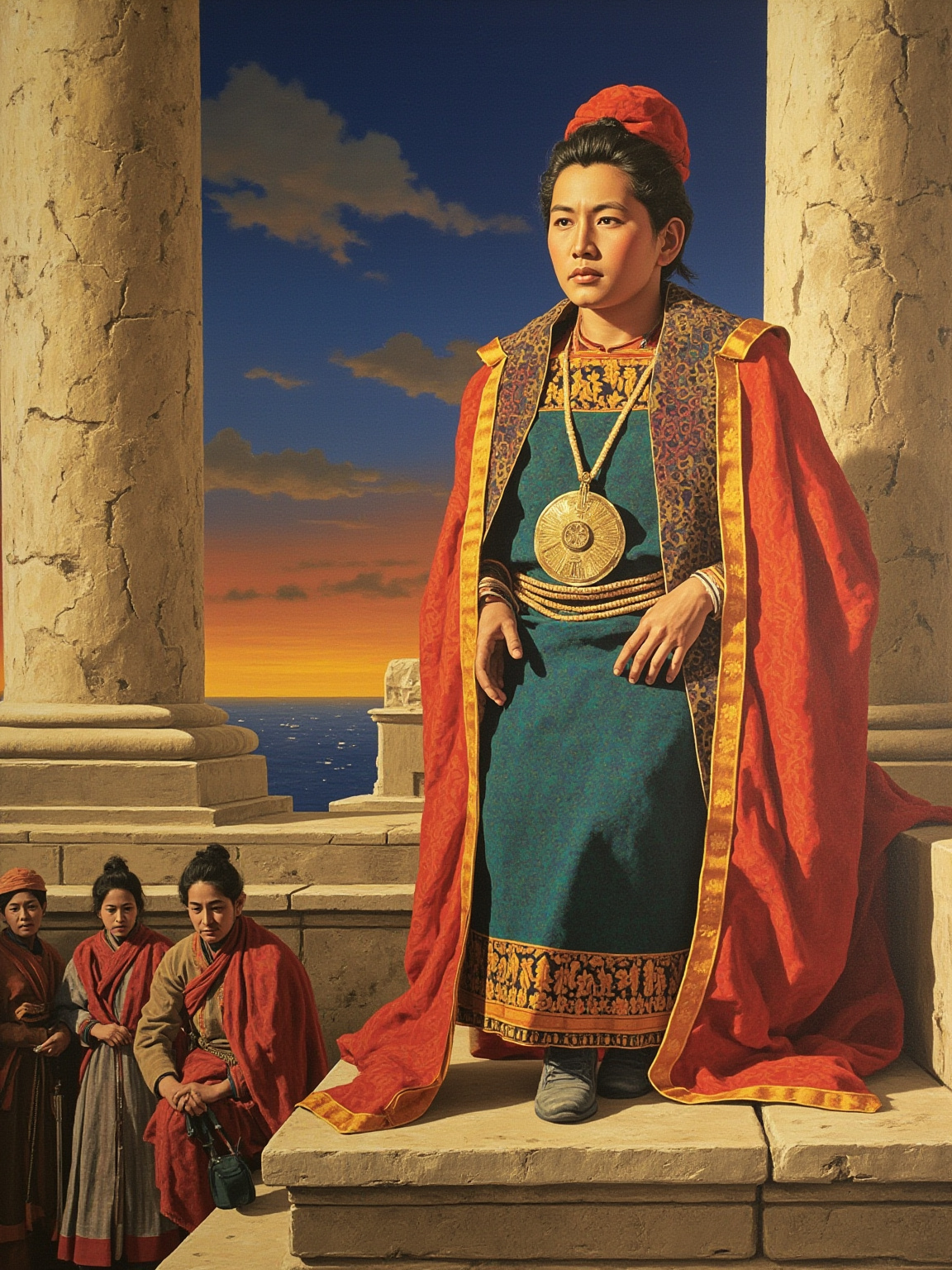
Huaina Ccapac died, and with him the Inca empire began to draw toward its end; for he left his kingdom divided between two sons, which was the seed of civil war.
瓦伊纳·卡帕克崩逝,印加帝国便自此走向尽头——他把国土分给两子,内战的种子,便在那分疆的一刻落下。
金句 · 第九卷 · 瓦伊纳·卡帕克之死与帝国分裂
A book pulled between two worlds
At the level of theme, what Royal Commentaries of the Incas is actually doing is this: it pulls the Inca voice, pushed to the margins by colonial history, back out of the quipu knots, the stone roads, the mountain terraces, and puts it back into public memory. What has kept it alive this long is half the material, half its awkward double position: Garcilaso is neither a pure advocate for the Inca nor a detached Spanish scribe. He's a man carrying both sides on his back as he walks. Reading it today, you should carry at least two questions with you: first, that it genuinely keeps the workings of a lost empire alive; second, that the book is itself a translation, run through the filters of Catholic theology and Spanish historiography, and can't be taken as unmediated source material.
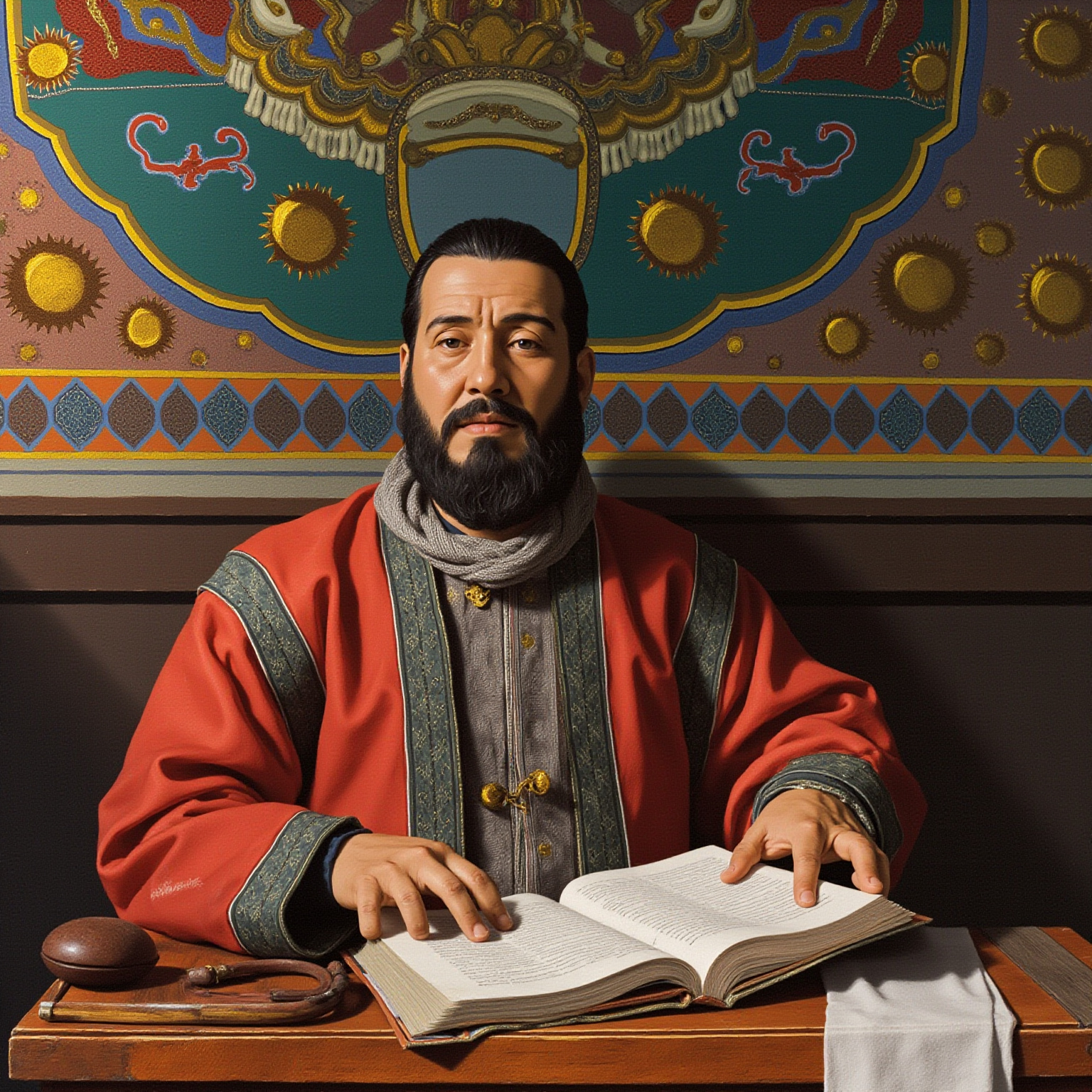
A good book doesn't just tell you what happened. It makes you understand that the people you thought had vanished had woven their ledgers into knots and carved their roads into mountain ridges.
You already know what happens. Here's why you should still read it
An explainer can get you this far: how the quipu recorded things, how long the road ran, what the Sun Temple looked like. But there's one thing no explainer can substitute for — the particular hesitation, warm with Garcilaso's own presence, of a sixteenth-century mixed-blood intellectual caught between two worlds. He's as solemn writing about Manco Cápac as he is tense writing about the Catholic God; one moment he's casting Cusco as a new Rome, the next he can't help slipping in the cadence of his mother's voice telling stories. That double voice is something no summary can deliver. The ceremonial details that look tedious on the page, the custom-lists that seem to repeat themselves — only by working through them slowly do you feel the weight of a man writing his ancestors' biography and saying his own prayers at the same time. You can skim for the plot. To actually hear that voice, you have to sit down and read it page by page.
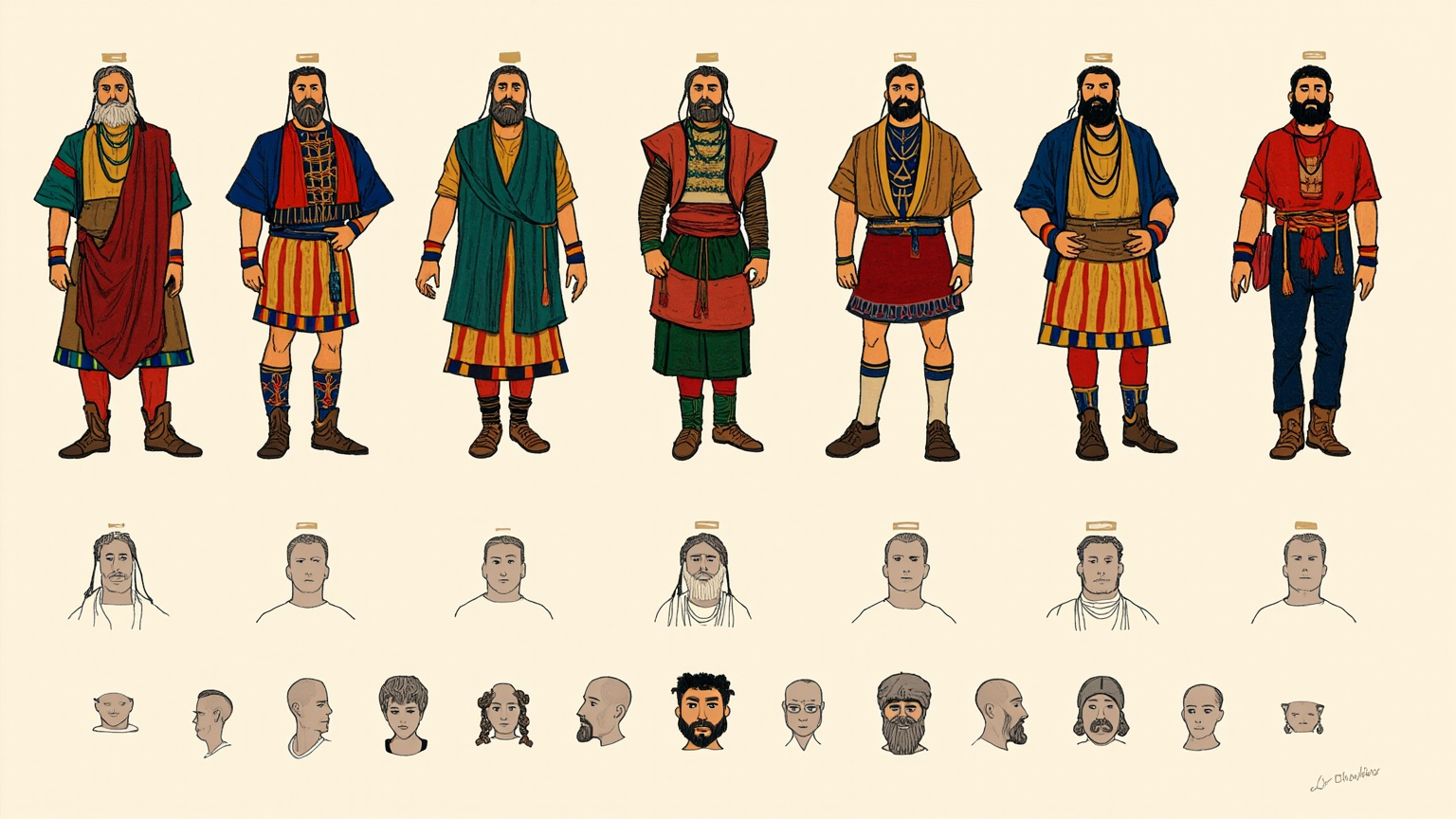
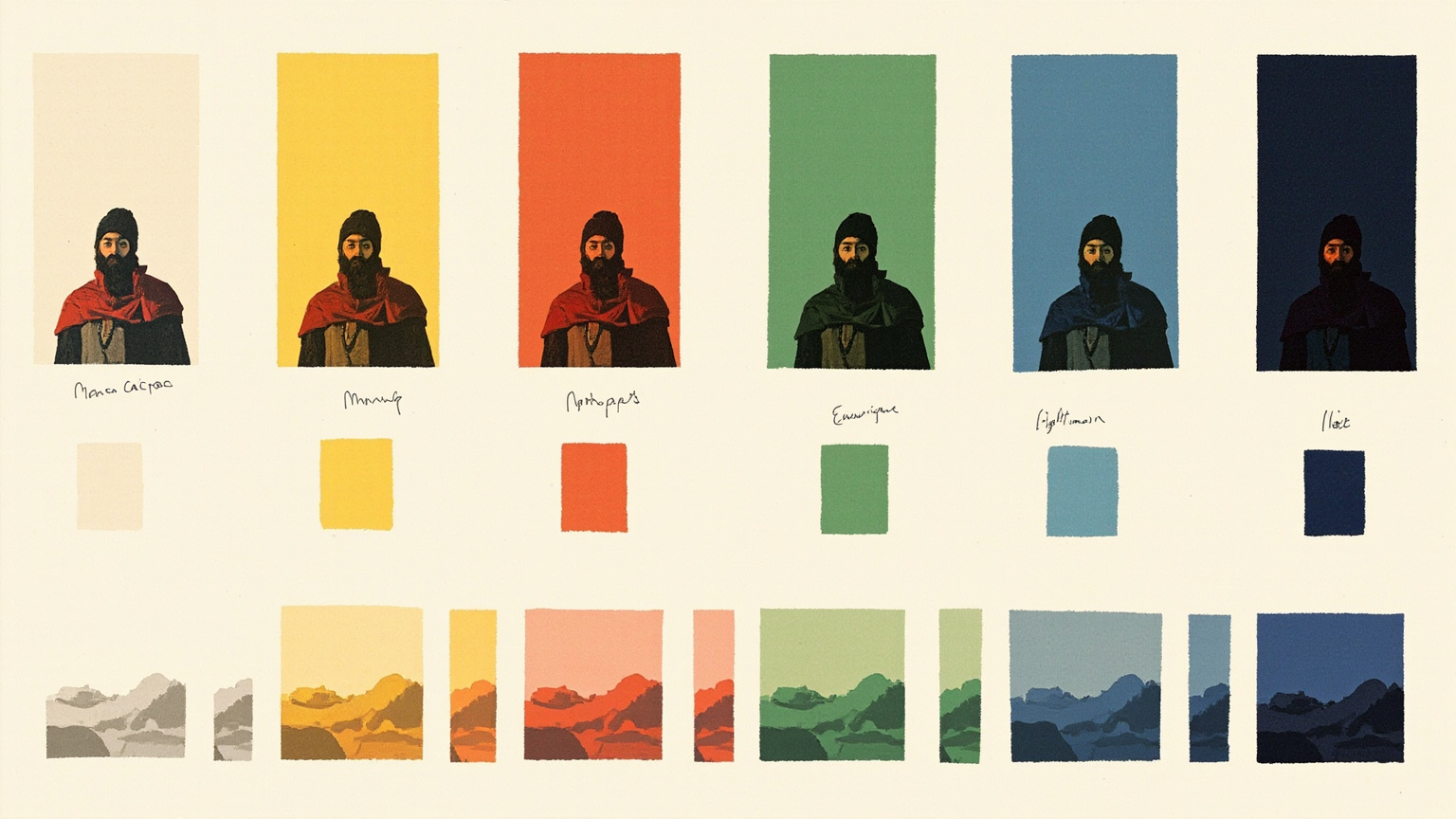
Art Direction4 plates
Before the guide was written, this book got a visual foundation — every illustration you just read grew out of it.