An 1900 deep-water memoir: no engine, no wireless, one man going right around the planet
Text and illustrations produced by the pipeline

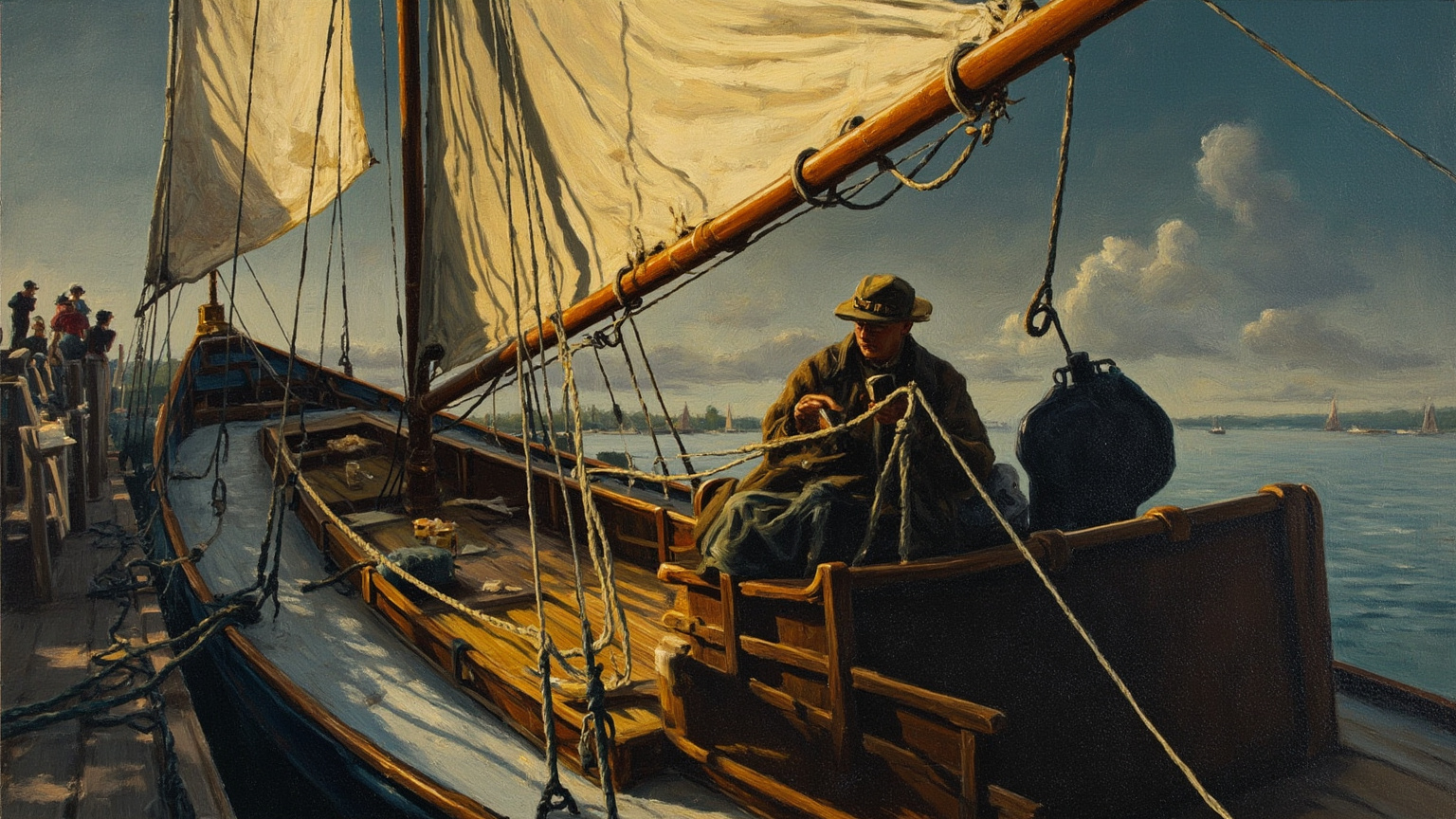
On the wharf at New Bedford sat a boat nobody wanted, its planks swollen with seawater, warped and curling, seaweed growing across the deck. Someone gave it away as scrap to Joshua Slocum, an old sailing captain who had just lost his ship. He spent a winter straightening the planks, stepping the mast back up, and cutting the tiller down to a height he could reach standing. The old eleven-meter sloop would later take a name: the Spray.
Joshua Slocum had spent his working life as a captain running freight along the North American east coast. When his shipowner went under, he became a captain without a ship. Building one was too expensive, buying one was out of reach, so he did what he could: he salvaged what other people had thrown away. He stripped fittings off a forty-meter crane barge and hauled them onto his own small boat, the book's first piece of craft accounting, a record of how one old sailor pieced together an ocean-going vessel out of nothing but experience.
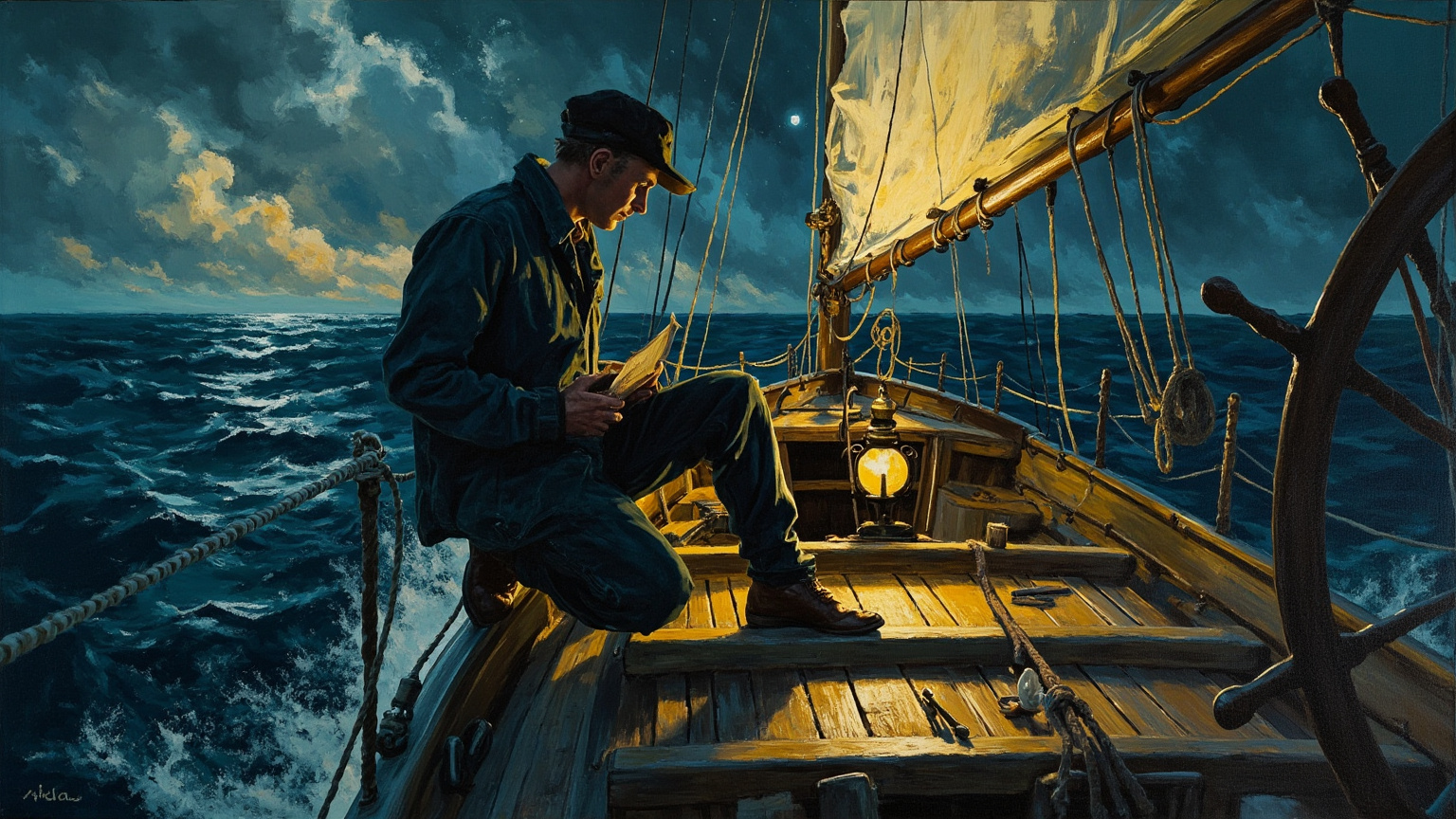
The book came out in 1900, the first memoir ever written of a solo voyage around the world. Slocum was no man of letters, but he kept a fine sailor's account: what force the wind was blowing, how high the swell ran, how to tie off a line, how to fix a rudder. In his cabin sat a dollar clock for a timepiece, an oil lamp, and a crate of books, the whole of his precision instruments.
When he finished, no one alive had done it before. Engines, radio, the telephone were all new inventions of his day, and he used none of them. Everything he carried belonged to an older generation of sailors: a compass, dead reckoning, a nautical almanac, and a small clock that never lied. The book is remembered now not for its close calls but because it walked the road first, on behalf of everyone who would sail alone after him.


Open the book and you run into moments like these: he writes about being pinned to the deck by wind and swell, too rough to hold a pen, a line cutting a red welt across his palm; he spends a whole night talking to a moth that flew aboard for company, then lets it go the next day. These are details too small for any summary to carry, they only live in the text itself. The book is short and loosely written, the kind of thing you can finish in a few afternoons. When you do, you may come away thinking that almost no one has understood better than he did how a person keeps himself together in a place too large and too quiet.
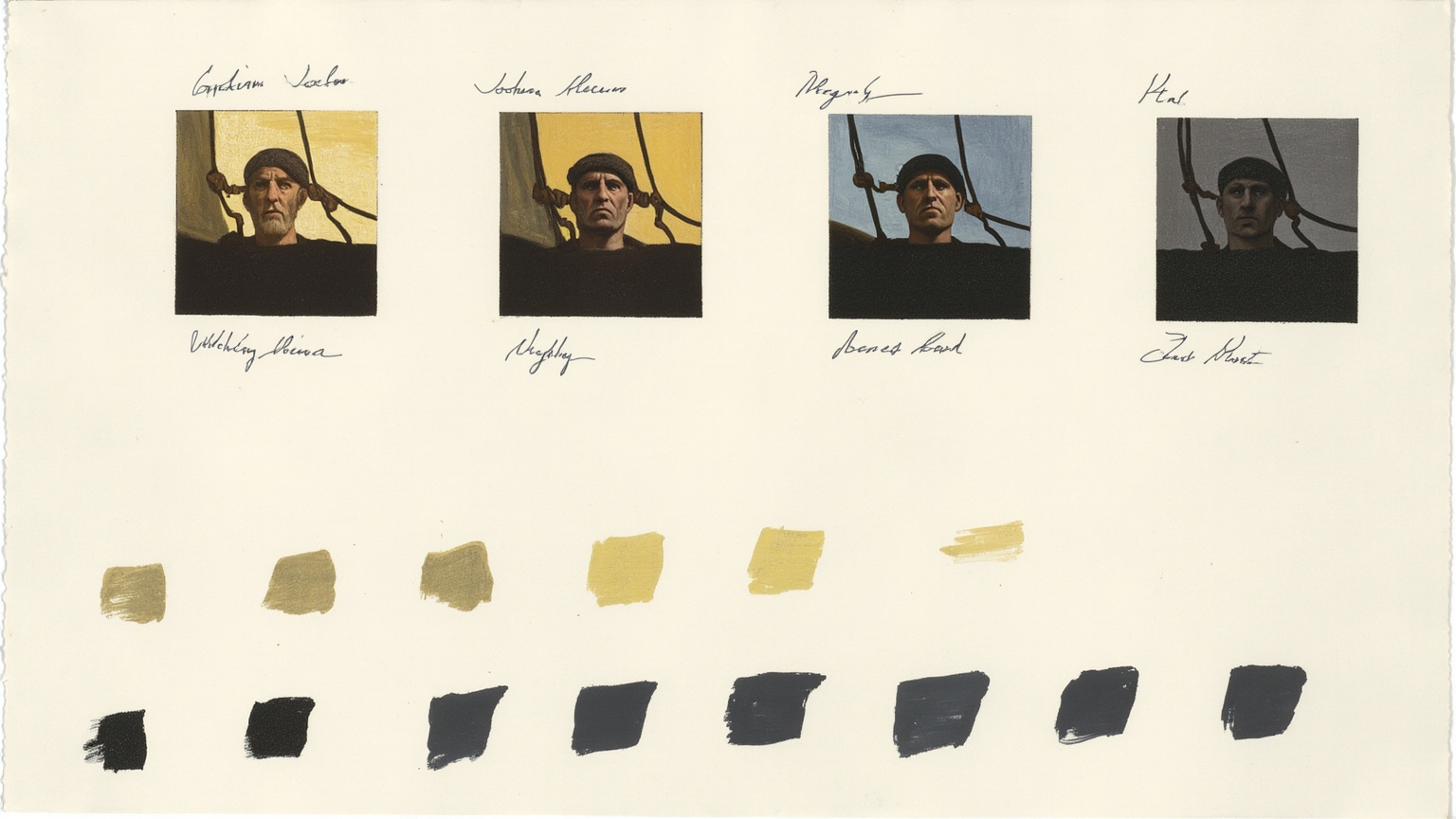
Before the guide was written, this book got a visual foundation — every illustration you just read grew out of it.
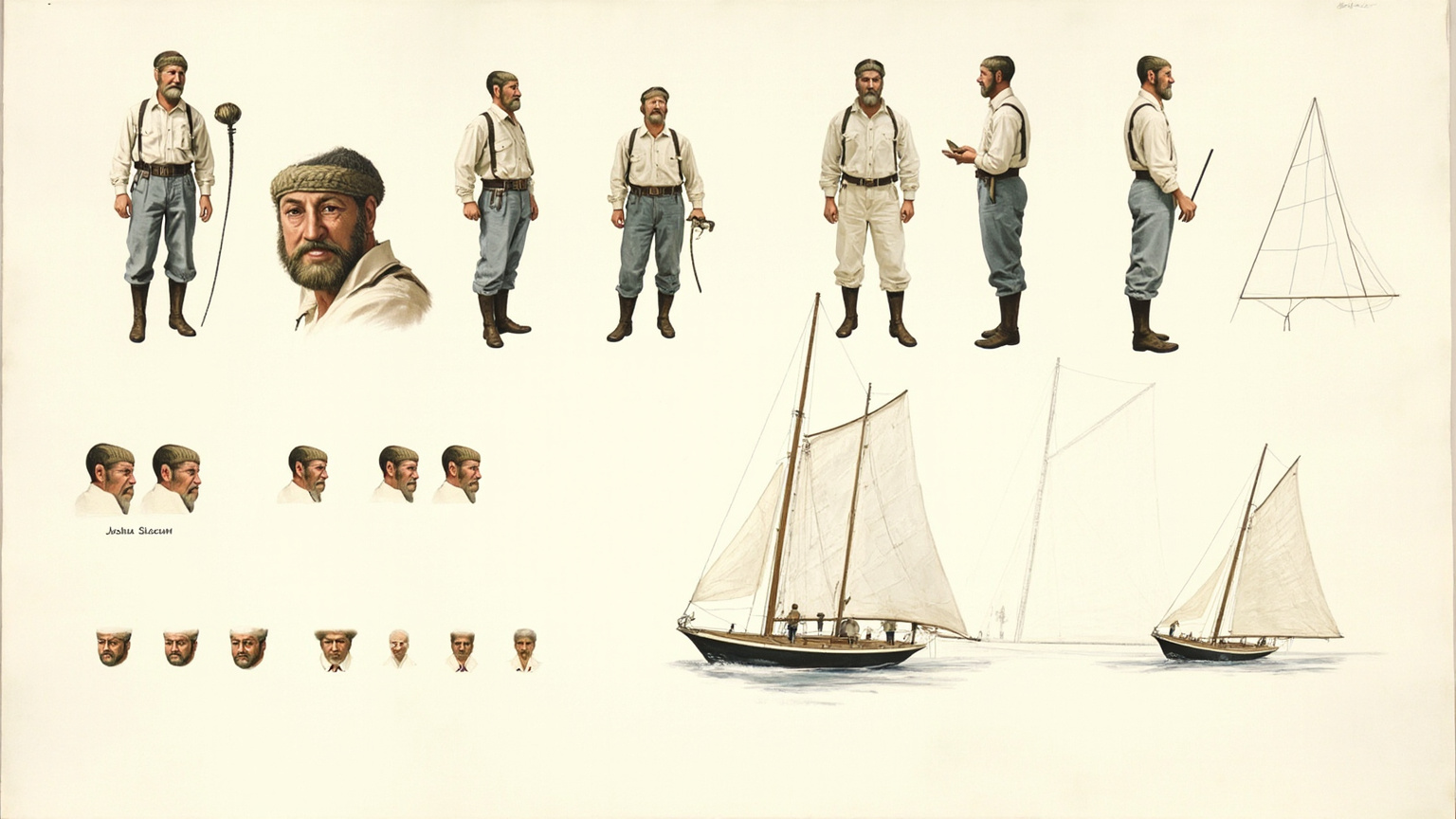
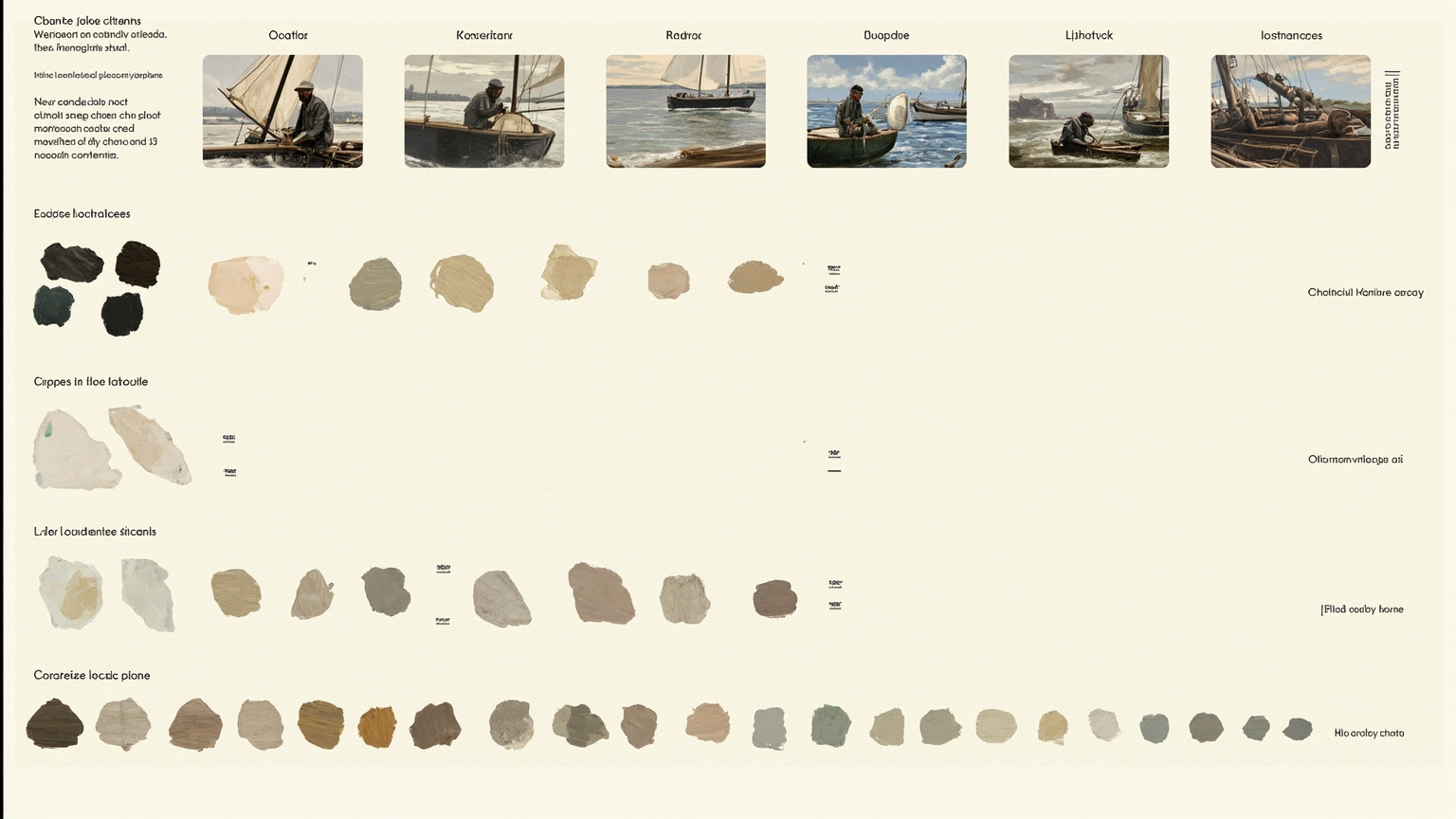
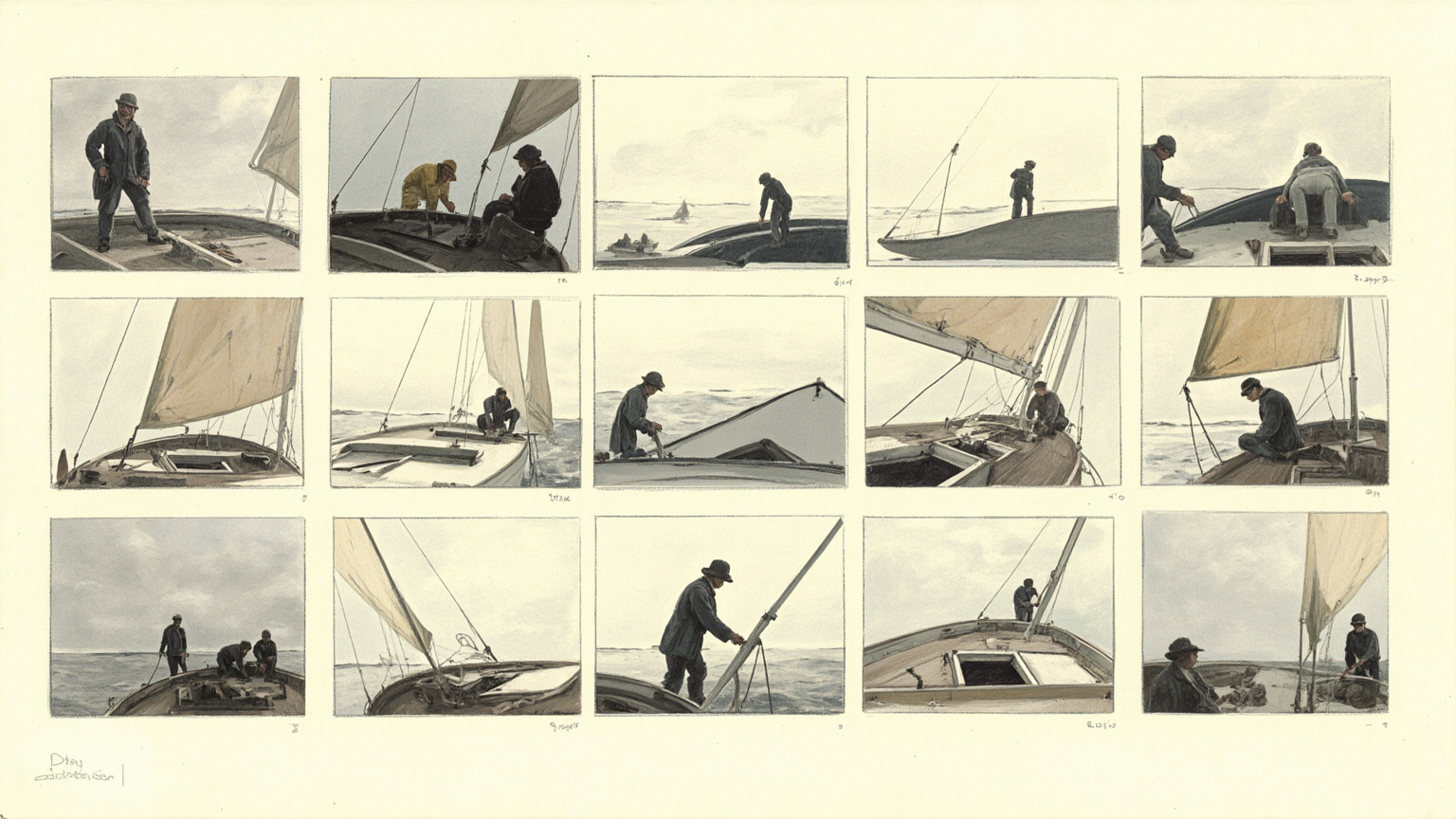
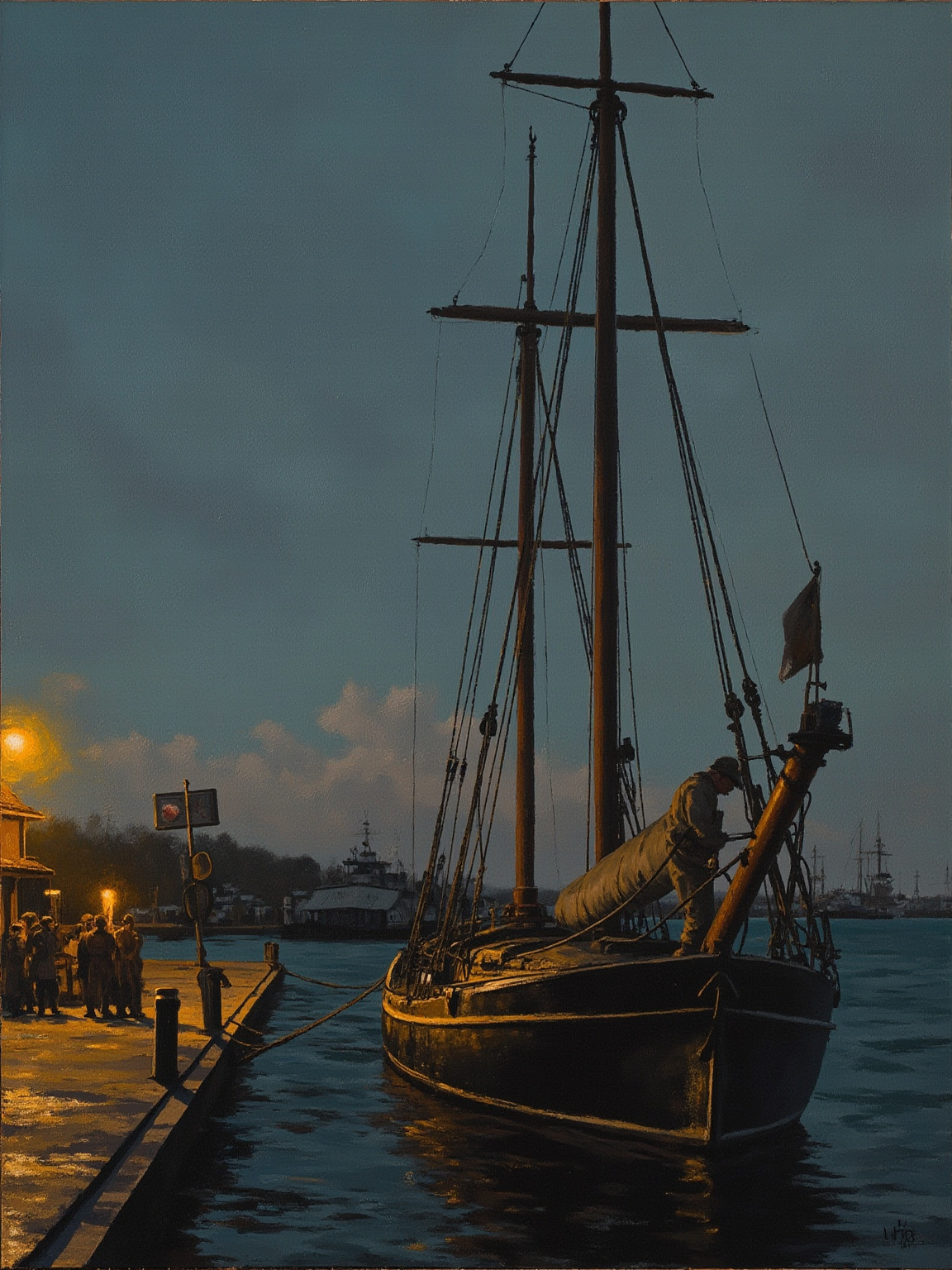
On April 24, 1895, Slocum cast off alone and sailed out of New Bedford, Massachusetts. His course ran south down the Atlantic to the Canary Islands, his first stop for supplies, and there he learned something that would hold true for the rest of the voyage: whenever he made port, a crowd gathered on the wharf. Most people had never seen a man sail a boat across an ocean by himself. The crowd on the dock becomes a running image in this book, following him from New Bedford all the way to Sydney.
South of the Canaries, he entered the Strait of Magellan and the channels of Tierra del Fuego. The water there runs shallow, the wind turns without warning, and the tides twist against each other; he got through on nothing but a compass, a feel for the wind, and a memory of the seabed built over decades. It was here that the book's most retold episode happens: a band of raiders who came aboard barefoot in the night.
Slocum's defense wasn't a gun. Before turning in, he had scattered the deck thick with carpet tacks. Bare feet came down on them, and the raiders went over the side howling. It isn't an action scene, it's an old captain's joke, wit standing in for a weapon, and it's the page of this book people quote most.
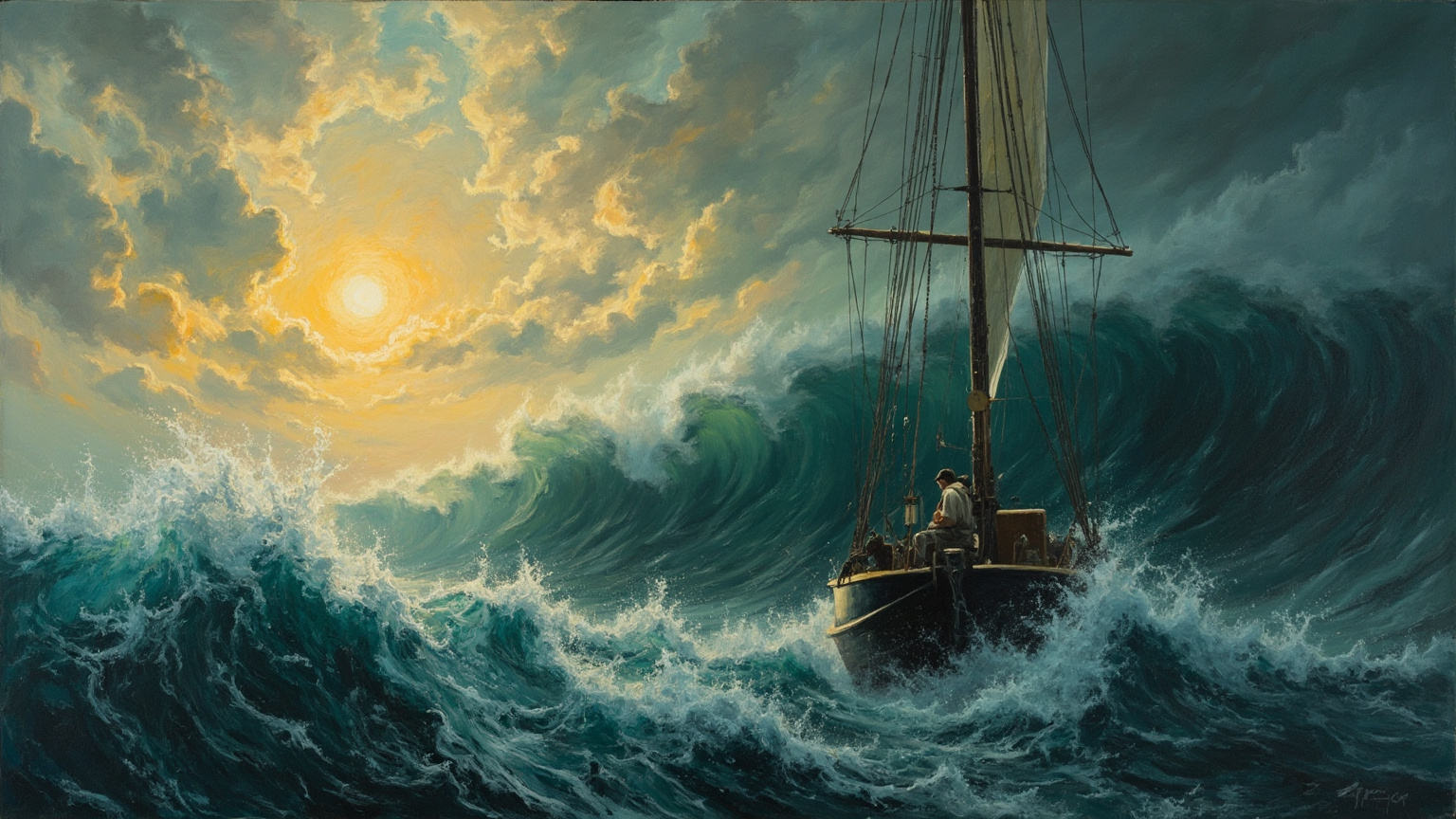
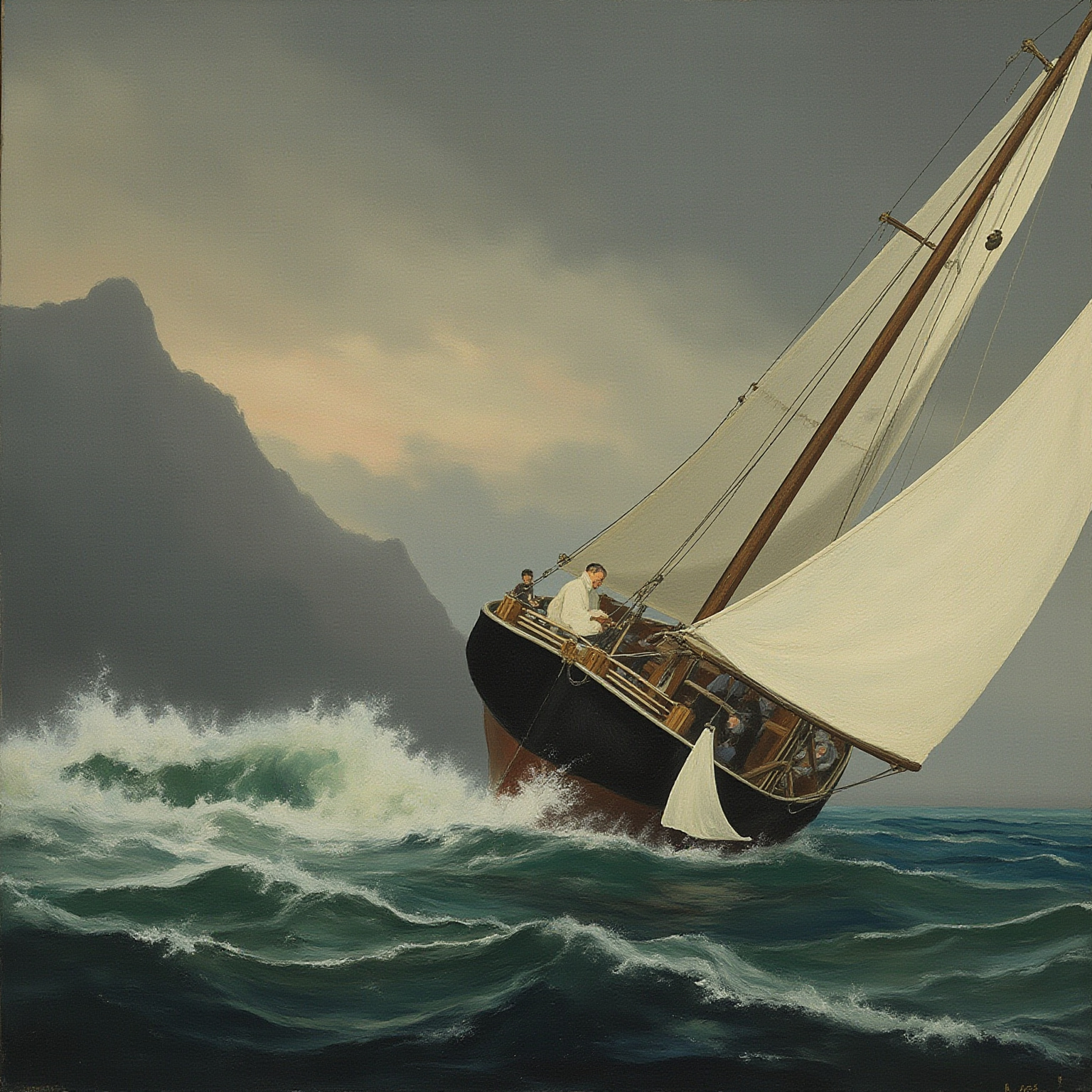
Past Cape Horn lies the famous Roaring Forties, the belt between forty and fifty degrees south where gale-force winds and heavy seas never let up. An old sailboat in that swell is a leaf on the water, and Slocum got through it by reefing sail, reading the helm, and trusting the instinct built over decades on the Atlantic. Once he reached the South Pacific, the route became a string of islands: Chile, Peru, the Galápagos, and further west the Marquesas, the Tuamotus, Tonga, Fiji, Samoa.
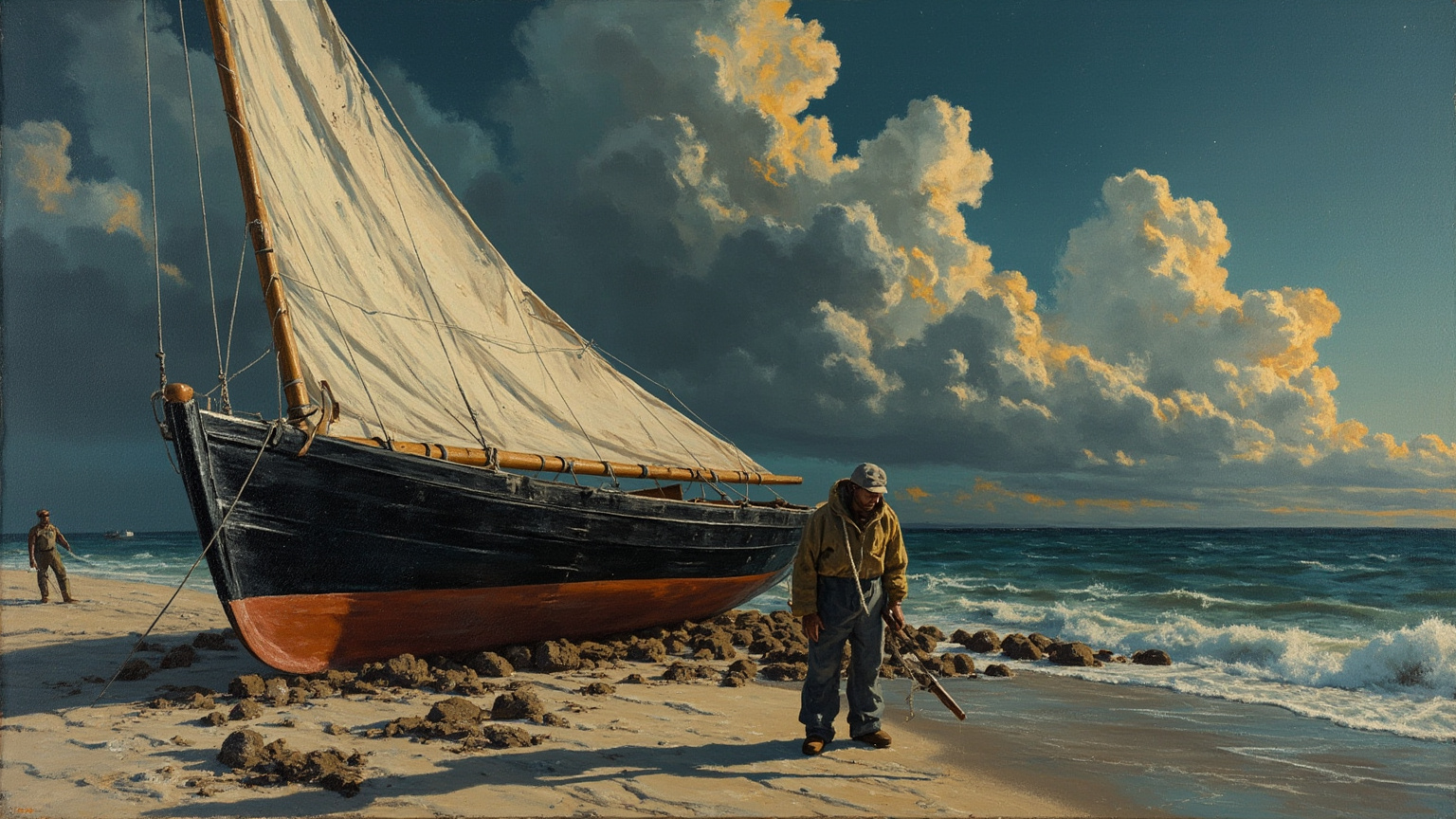
Between the islands lay lagoons. Barnacles had grown thick across the hull, and he had to haul the Spray ashore and scrape it clean before he could sail on. At one stop the locals surrounded him with old Spanish muskets, the story goes they were afraid of the camera. Slocum neither drew a weapon nor backed away. He gave the chief a button, posed for a photograph with the men, and traded a handful of pins and a small mirror for their old guns. The standoff turned into a deal struck on the beach.
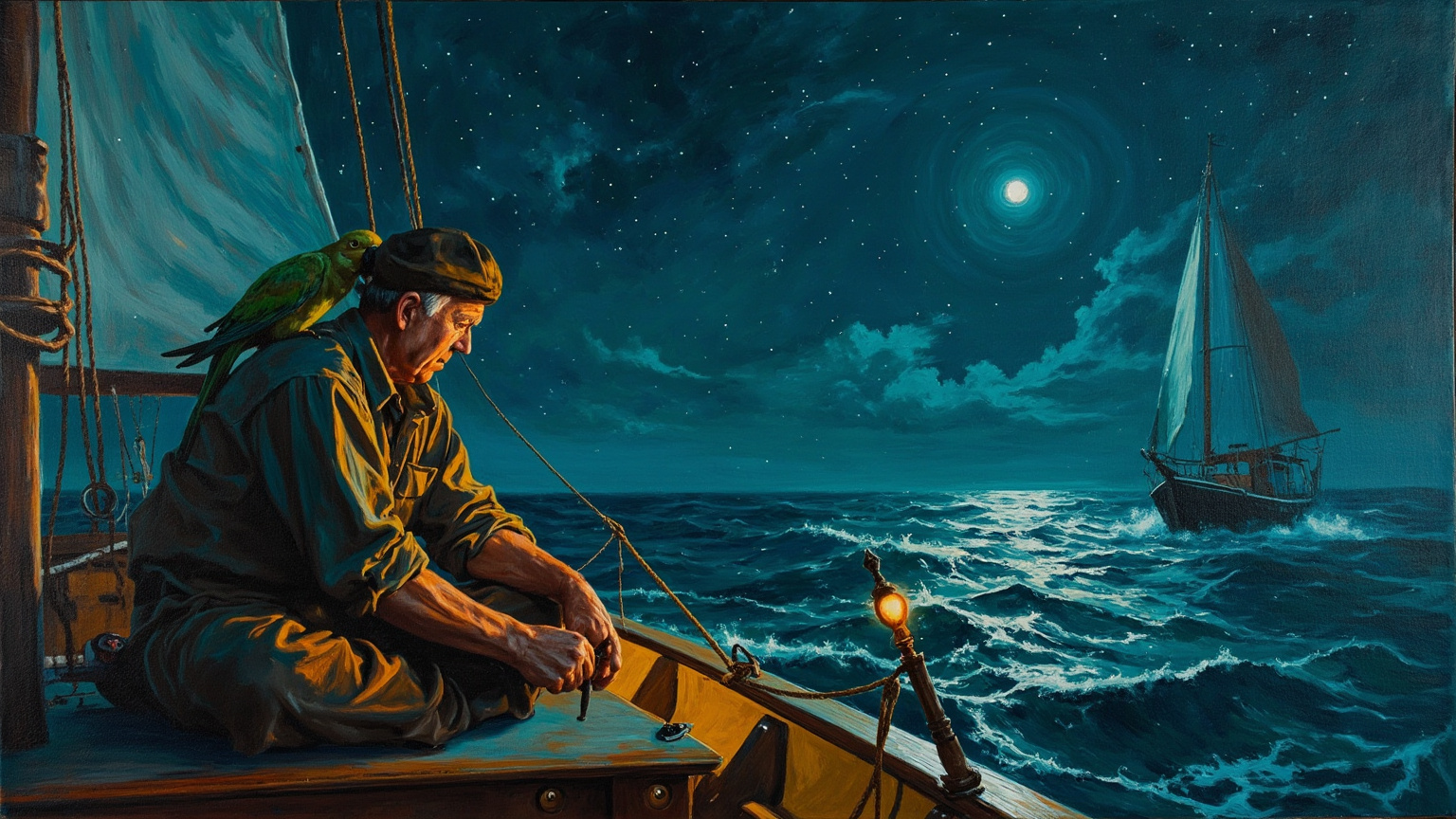
Between the islands of the South Pacific and Sydney, there was a stretch of 118 days when he saw no land at all. It is the quietest and best-known passage in the book. His company was a few moths that flew in at night, seabirds that landed on the rail to rest, and a parrot that turned up aboard from nowhere. He fed it biscuit, talked to it, treated it like a person.
Talking to himself long enough at sea, he conjured up a phantom pilot. It wasn't religion and it wasn't a ghost story. It was something his own tongue invented to talk to, through those 118 days with no land in sight. It is the most affecting passage in the book: humor is the opposite of loneliness, and an old captain in the middle of an ocean kept himself upright on a joke.
By the time he reached Sydney it was the turn of 1896 into 1897, and he had sailed a whole southern summer away. From there he went on west to Tasmania, into the Indian Ocean, past Christmas Island and the Cocos (Keeling) Islands, on to Mauritius, and around the Cape of Good Hope. Every stop meant supplies, and every stop showed him something of colonial harbors, men growing sugarcane, mothers with children on the shore. In the Atlantic he made brief landfalls at Ascension and Saint Helena, and finally ran into a gale off Bermuda.
On June 27, 1898, Slocum sailed the Spray back into New Bedford alone. It was the same wharf he had left three years earlier, and likely much the same crowd standing on it. The voyage had run about forty-six thousand miles, better than seventy thousand kilometers, the first documented solo circumnavigation in human history, done.
He had done it without an engine, without radio, without luck. He had a dollar clock, a nautical almanac, a compass, and the feel an old captain builds over decades. The book records the whole thing as a ledger: how to read the wind, how to count a swell, how to tie a line, how to fix a rudder, how to lay down a chart. It is a remarkably restrained record of seamanship, and it is also the story of an unemployed captain who got through three years of solitude on nothing but a sense of humor.
Its strength has nothing to do with fine writing. It comes from an honest ledger. What Slocum sets down are specific actions: scraping barnacles off the hull with a small iron until it dried in the sun, building himself a little sailing lifeboat by hand, rigging a live-fish well so he could still eat fresh fish weeks out at sea. These details let a reader today see exactly how a nineteenth-century deep-water sailor lived.
What makes this book remarkable isn't that he covered seventy thousand kilometers. It's that he lets a reader today watch a nineteenth-century captain get through three years of solitude with a clock, a compass, and a handful of tacks.
The book's visual world is just as steady. Blue sky and white sail, a lagoon, a wooden wheel, crowds on a dock, charts of every corner of the world, one boat, one man, an enormous sea. It's an image easy to make beautiful and, as it happens, exactly true to scale.