Samguk Yusa (Memorabilia of the Three Kingdoms) · Companion Guide
三国遗事
蒙古铁骑压境之后,一个老僧走进新罗旧地的山林,把被官史删去的建国神话与乡歌,一笔一笔捡回书中。
Opening
Beneath Mount Taebaek a sandalwood tree splits open, and Hwanung, son of the Heavenly King, descends to earth. A bear-turned-woman, Ungnyeo, moved by him, takes human form and marries a grandson of the Heavenly King. Their child is named Wanggeom. At Asadal he raises an altar to heaven and founds Joseon. This is the origin story Koreans tell themselves — and the first time it was ever set down in ink on paper, by an old Goryeo monk who had no way to survive the Mongol invasion and no intention of admitting defeat.
What Kind of Book Is This
Samguk Yusa was written by one man, the monk Iryeon — five fascicles arranged into nine books, in classical Chinese, composed during the reign of Goryeo's King Chungnyeol and printed in the last years of his life. Its place in Korean historiography is a strange one. The official record already existed: Kim Bu-sik had compiled the Samguk Sagi decades earlier, a Confucian dynastic history, state-sponsored, written with Silla as the legitimate line. Iryeon objected to that pruning. Writing as a private scholar, not a court historian, he went back and picked up everything the official history had cut — myths, Buddhist miracles, village lore, native songs. The word yusa in the title, "left-over affairs," is aimed straight at the Samguk Sagi.
Later verdicts split hard. An Jeong-bok, an eighteenth-century Practical Learning scholar of the Joseon dynasty, called it in the preface to his Dongsa Gangmok nothing but "heterodox nonsense," "just strange tales from a minor tradition." And yet in the same breath he admitted the book had filled a real gap in the national history. Today scholars pair it with the Samguk Sagi as the twin pillars of ancient Korean historiography, a storehouse of myth, religion, folklore, and language. The first time I picked up a modern edition, I had the same double take: how does a book dismissed as absurd become the sole original source for a whole stretch of a nation's memory?
Iryeon the Man — Goryeo's National Preceptor, Gleaning the Lost Under Mongol Invasion
His lay name was Kim Gyeonmyeong (also given as Kim Myeonggyeon). He entered the monastery at nine, was known for his scholarship by twenty, and in old age was named National Preceptor by King Chungnyeol — the highest honor a Goryeo court could grant, in a kingdom that had resisted the Mongols for thirty years and then bowed to them in humiliation. What did Iryeon do with that honor? He did not write memorials weighing the costs of war and peace. He did not join the court debates over whether to fight or submit. He shouldered a pack and walked alone through the old Silla lands, into mountain temples, among broken steles, among old people in the villages. One monk, retrieving a silenced people's memory and setting it down in a book.
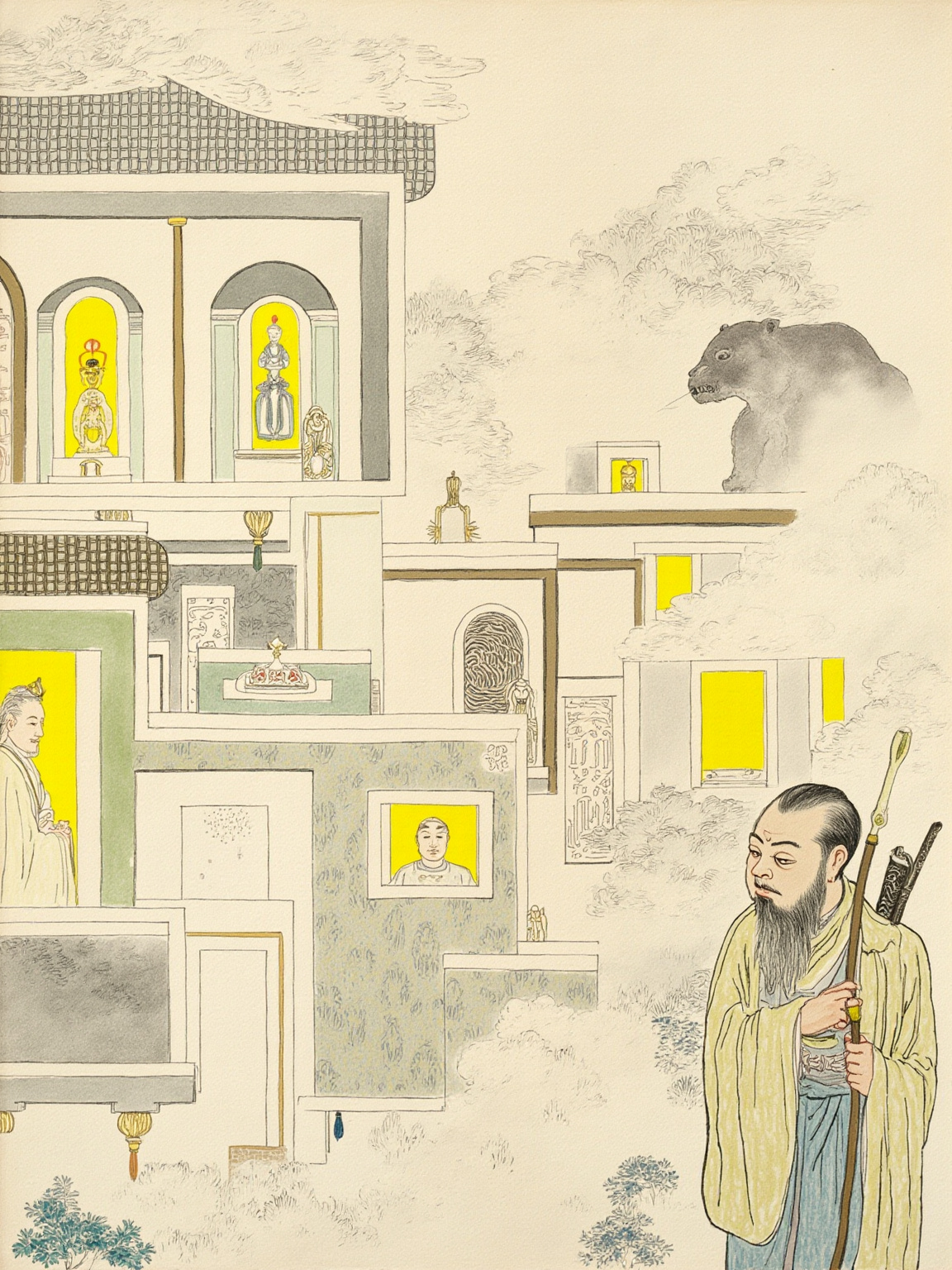
The kingdom had bent its knee to the Mongols for thirty years; what he chose to do was walk into the old Silla hills and copy what the official histories had thrown away.
对蒙屈服三十年之后,国尊一然没有去写奏疏——他转身走进了新罗旧地的山林寺院与残碑之间。
金句 · 王历卷 · 蒙古入侵下的高丽国尊
Wonders Opens the Book, and Dangun Wanggeom — the Founding Blow for a National Origin
The book opens with the Wonders fascicle, and its very first entry is the myth of Dangun Wanggeom founding a state at Asadal and naming it Joseon. That placement carries weight. Consider what came before: the state-sponsored Samguk Sagi, compiled decades earlier, contains no Dangun. Xu Jing, a Song Chinese envoy, gave his Illustrated Account of Goryeo (completed in 1224) a dedicated entry on the founding of the kingdom, and even that leaves Dangun out. Iryeon's entry is the first time the Dangun myth was ever set down as a literary text. Every later telling of Dangun, every account that pushes the origin of the Korean people back past Gija Joseon to more than two thousand years before Christ, traces back to this one page.
Iryeon did not treat this entry as the start of a historical record. He filed it under Wonders — the book of the strange — and told it as the opening of a national narrative instead. That distinction matters. A myth, a literary motif, is not fact confirmed by archaeology. It is the spiritual map a people draws for itself when it has lost the standing to speak, and that map can matter more than fact ever could. It was against the backdrop of Mongol invasion and Goryeo's surrender that Iryeon set down that sandalwood tree at Asadal.
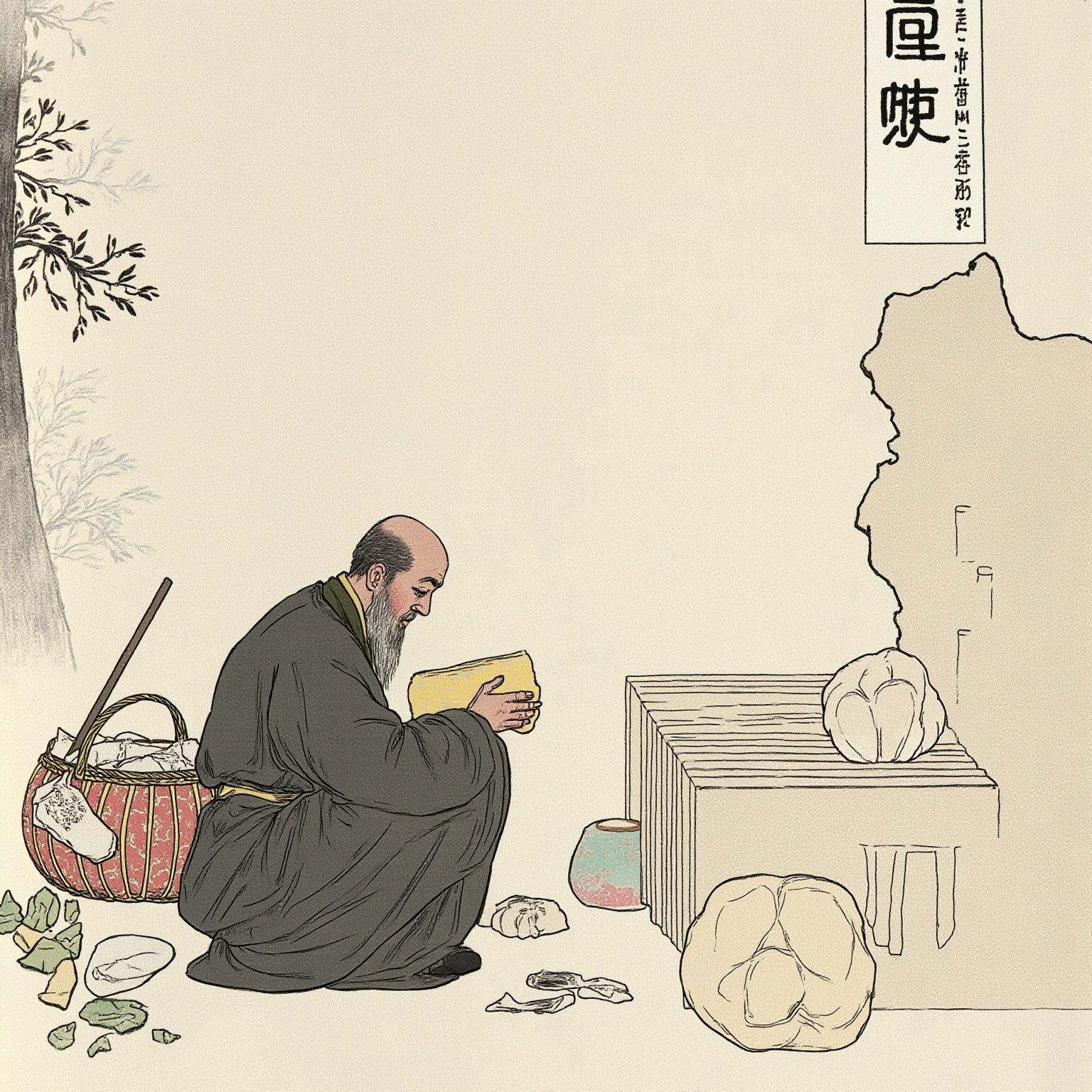
He placed the founding of Joseon by the Bear-woman's son not under History, but under Wonders—and thereby made the nation's beginning a story it could keep retelling.
一然不把檀君开国写入『王历』,而写入『纪异』——把民族的起源,放进了怪异之卷,让它从此可以一再被讲述。
金句 · 纪异卷首 · 檀君王俭开国
Hwanung Descends, Ungnyeo Becomes Human — the Source of a Three-Part Founding Myth
Heavenly god, bear woman, Wanggeom — that three-part sequence is the template later writers have reworked ever since. Hwanung's descent from heaven to the sacred sandalwood tree on Mount Taebaek is the hinge that links the realms of god, human, and bear into one origin story. Ungnyeo, moved by him, takes human form and marries a grandson of the Heavenly King. The son she bears founds a state at Asadal, reigning over Old Joseon, by legend, for fifteen hundred years before stepping down to become a mountain god. Before Samguk Yusa this whole sequence lived only in speech, in scattered inscriptions on stone. Iryeon was the first to give it a written shape with a beginning and an end, a full national origin story.
Five Fascicles, Nine Books — a Structure Built on Gleaning What Was Left Out
The book runs five fascicles across nine books: Wangnyeok, the royal chronology; Gii, wonders; Heungbeop, the rise of the Buddhist faith; Tapsang, pagodas and images; Uihae, monks who explained the doctrine; Sinju, spells; Gamtong, miraculous response; Piun, recluses; Hyoseon, filial devotion. Wangnyeok gives the bare dynastic skeleton. The other eight hold somewhere between a hundred and thirty-eight and a hundred and forty-four entries, and Iryeon crammed them full of myth, Buddhist miracle, native song, and tales of filial piety, taking in whatever came his way. The structure is itself an argument. The Samguk Sagi, cut to the Confucian dynastic-history mold, threw out any myth or Buddhist legend that did not fit the form of official history. Iryeon pulled all of it back, out of the mountain temples and off the broken steles, into his own pages.
From Dangun's founding onward, Iryeon works his way through the origin myths of Mahan, Jinhan, Gaya, Goguryeo, Byeonhan and Baekje, Jinhan and Silla, Unified Silla, and the Later Three Kingdoms — every one of these old states is born from a divine mandate or a strange omen. That approach turns national origin into a motif that can be told and retold, reworked again and again as literature. It does not teach you this is what happened. It teaches you this is the story of where we came from.
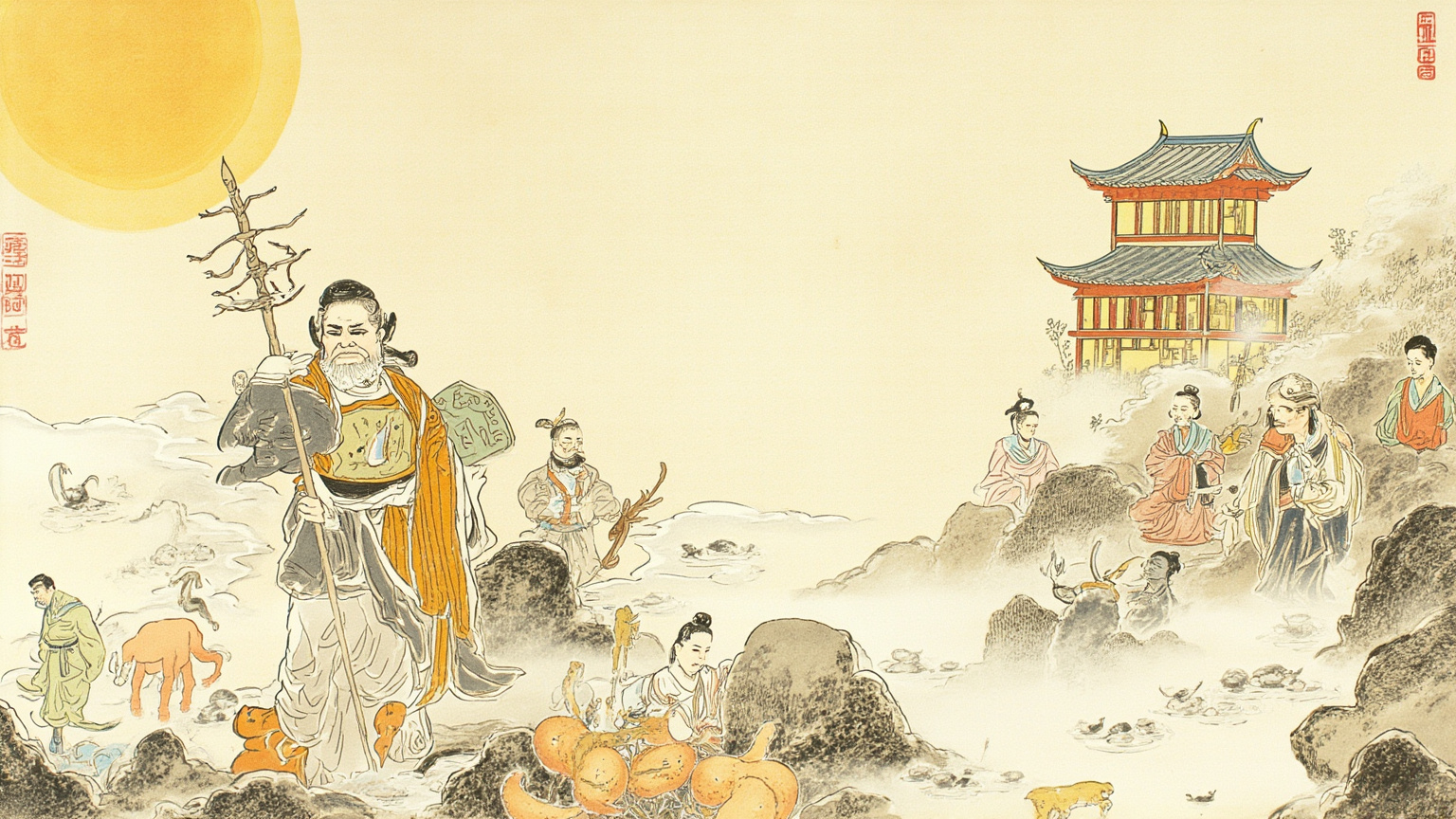
Heaven's son Hwanung descended beneath the sacred sandalwood of Mount Taebaek; the bear took human form; their child Wanggeom built an altar at Asadal—and so Joseon began.
天神之子桓雄降于太白山神檀树下,熊女感化而化为人,所生之子王俭于阿斯达筑坛祭天,是为朝鲜。
金句 · 纪异 · 檀君王俭开国神话
Heungbeop, Tapsang, Sinju, Gamtong — Where Buddhist Miracle Meets the Monks of the Three Kingdoms
Iryeon was a Buddhist monk, and his writing carries a Buddhist frame of miracle and response. Heungbeop tells how Buddhism spread through the Three Kingdoms and into Goryeo. Tapsang, Sinju, and Gamtong record, one after another, the miracles worked through pagodas and Buddhist images, the wonders performed by great monks, the responses summoned by sacred spells. Iryeon writes the strange and the sacred into history side by side. That sits against the Confucian view of history, but it does not really clash with it — in the classical East Asian world, where Confucian, Buddhist, and Daoist threads were already tangled together, gods, buddhas, kings, monks, and commoners had always shared the same stage.
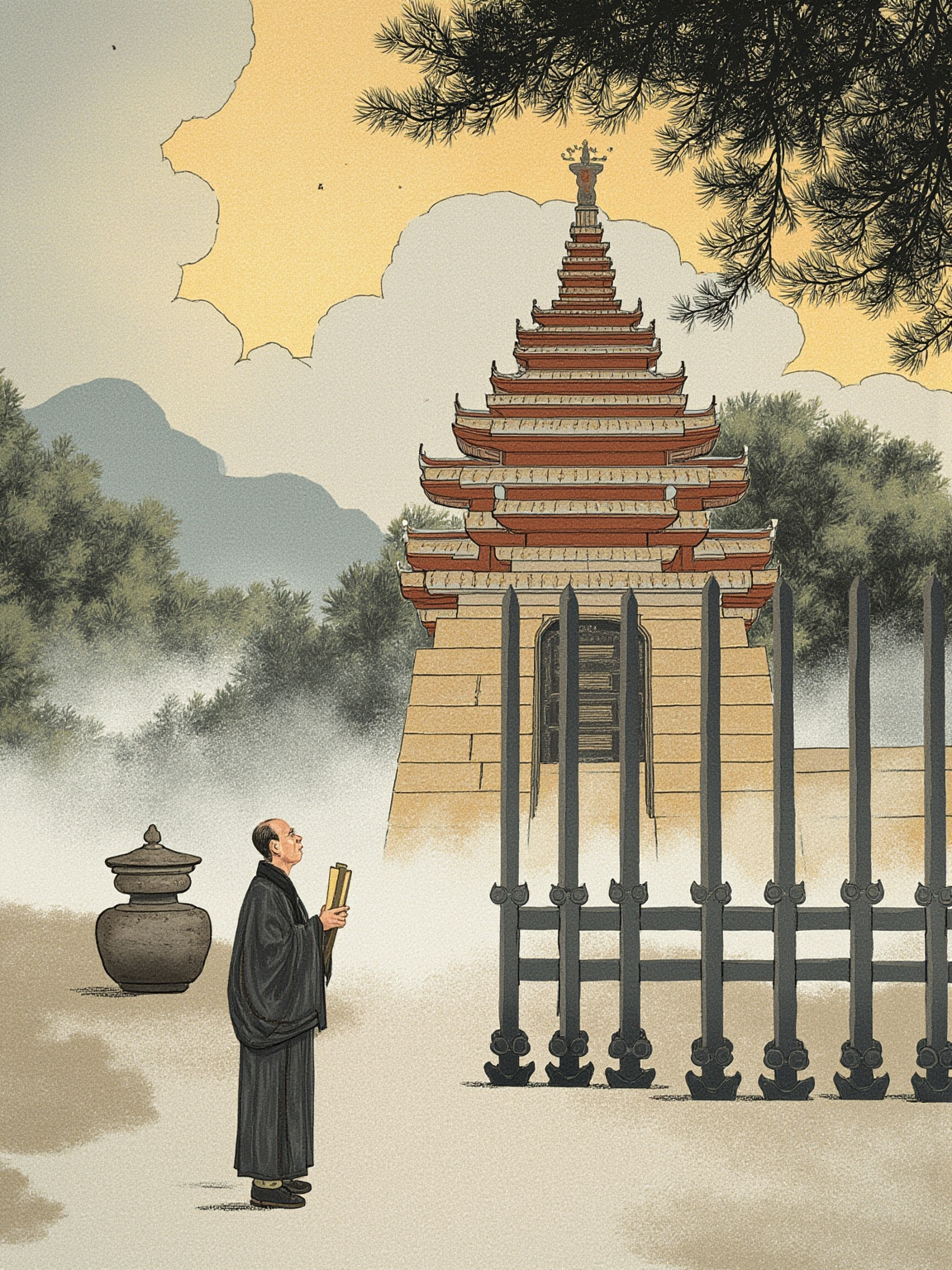
He let the strange and the sacred share the same brushstroke as the righteous—gods, Buddhas, kings, monks and common folk on a single stage written by one monk's hand.
神、佛、王、僧、民共处同一支笔下——一然把怪异、灵验与孝善,一并纳入史笔。
金句 · 兴法·塔像·感通篇 · 佛教灵验与三国高僧
Piun, Hyoseon, and the Hyangga of Silla — Salvaging Village Lore and Literary Motifs
Piun records monks who withdrew into seclusion. Hyoseon collects stray tales of filial devotion. Tucked between them is the most precious material in the whole book: the hyangga, native Silla songs that Iryeon set down using the hyangchal script. These songs are nowhere in an official history like the Samguk Sagi. They lived in the mouths and ears of monks, carved into the walls of temples. Iryeon walked into the mountain temples, among the broken steles, among the village storytellers, and wrote it all down in its original form, which is how this one book became a storehouse for ancient Korean myth, religion, folklore, literature, and language at once.
A Book Judged Both Ways — From "Heterodox Nonsense" to Twin Pillar of the Samguk Sagi
The harshest verdict came from An Jeong-bok in the eighteenth century, who called the book in the preface to his Dongsa Gangmok nothing but heterodox nonsense, just strange tales from a minor tradition. Yet the same hand admitted that its account of the Dangun legend had filled a real gap in the national history. That is not a contradiction. It is exactly what the book is. Samguk Yusa is not official history, and it is not pure fiction dressed as strange tales either. It is unofficial history, sitting between the two, carrying a job that official history could never do.
Today scholars treat Samguk Yusa as a storehouse of myth, religion, folklore, and language, ranked with the Samguk Sagi as one of the two pillars of ancient Korean historiography. The oldest surviving edition is the Gyeongju Jeongdeok print, issued in 1512 by Yi Gyebok, magistrate of Gyeongju — the original early printing is lost. Against the backdrop of Mongol invasion and Goryeo's surrender, a monk who would only be named National Preceptor late in life carried out this rescue work alone, writing a founding memory shared by gods, buddhas, and people back into the national story. Nothing quite like it had been done before in East Asian history.
Theme and Craft — Why This Book Still Rewards Reading Today
What Samguk Yusa is really about is how you rebuild after losing your voice. Its method — gleaning what was left out, folding myth and Buddhist miracle into the historical record, filling the gaps in official history with native songs and tales of filial devotion — amounts to something close to an archaeological rescue of national memory. In the years after thirty years of Mongol invasion ended in Goryeo's surrender, Iryeon did not write political tracts or memorials to the throne. He went back to the mountain temples, searched out old inscriptions, asked old people questions, and wrote the myths down. That choice is the book's real subject. When a people's pride has been broken, the strongest answer is not argument. It is writing the forgotten origin back into the record.
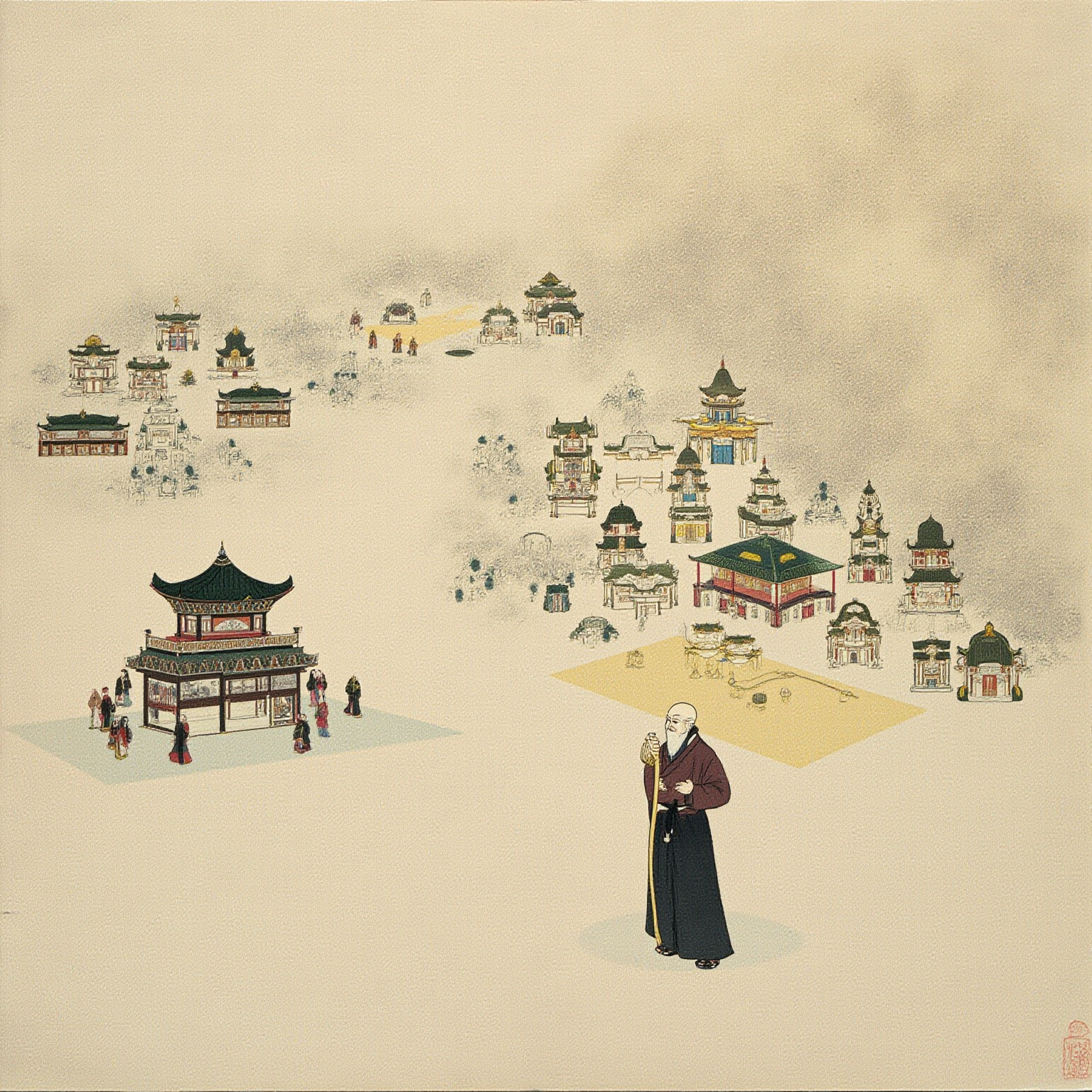
After a tongue has gone silent, the strongest answer is not argument, but to write the forgotten source back into a book.
失语之后最有力的回应,不是争论,是把被遗忘的源头重新写进书里。
金句 · 全书尾声 · 拾遗补阙的史观
As a piece of writing, Iryeon's style has the particular blend that belongs to unofficial history. He writes Buddhist miracle and founding myth in classical Chinese, letting gods, buddhas, kings, monks, and commoners share a page. He records the hyangga of Silla in the hyangchal script, rescuing oral literature into written form. That mixing is not carelessness. It is a deliberate push against the boundaries of what counts as history — Iryeon believed the strange tales and village lore that the Samguk Sagi had cut were part of the national memory all along.
The Hook to Go Read the Original
A companion guide gives you the map. The actual text is the ground. What no summary can replace is the vantage point of an old monk walking between mountain temples, Iryeon rescuing a nation's spiritual map on foot, one journey at a time. The original sets broken inscriptions beside oral legend, strange tales beside Buddhist wonder, and no retelling gets that texture back. Knowing the shape of the Dangun myth, knowing the five fascicles and nine books, is not the same as reading the book itself, because the real weight of it rests on one old monk's feet.
The strongest answer to losing your voice is not argument. It is writing the forgotten origin back into the book.
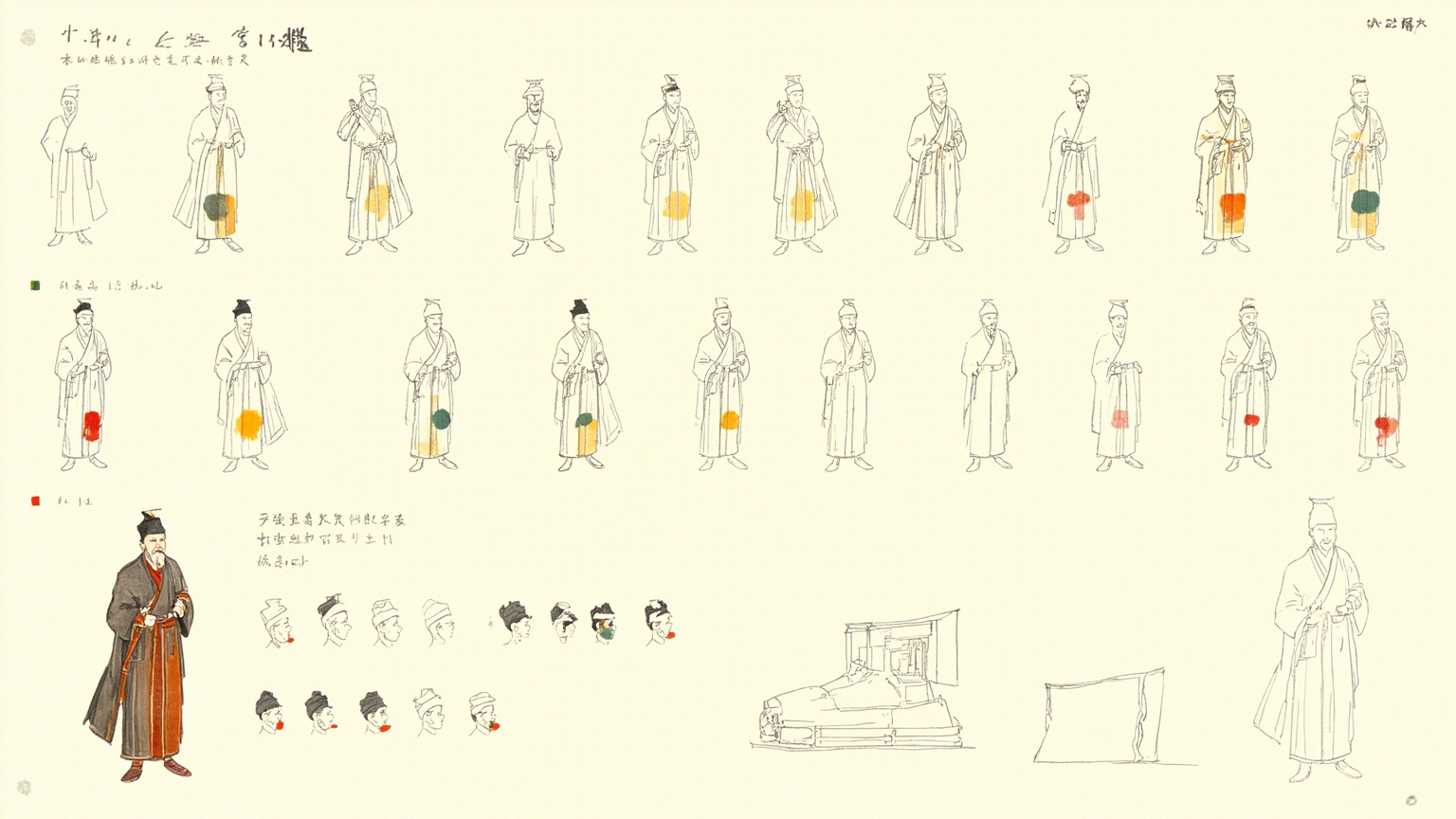
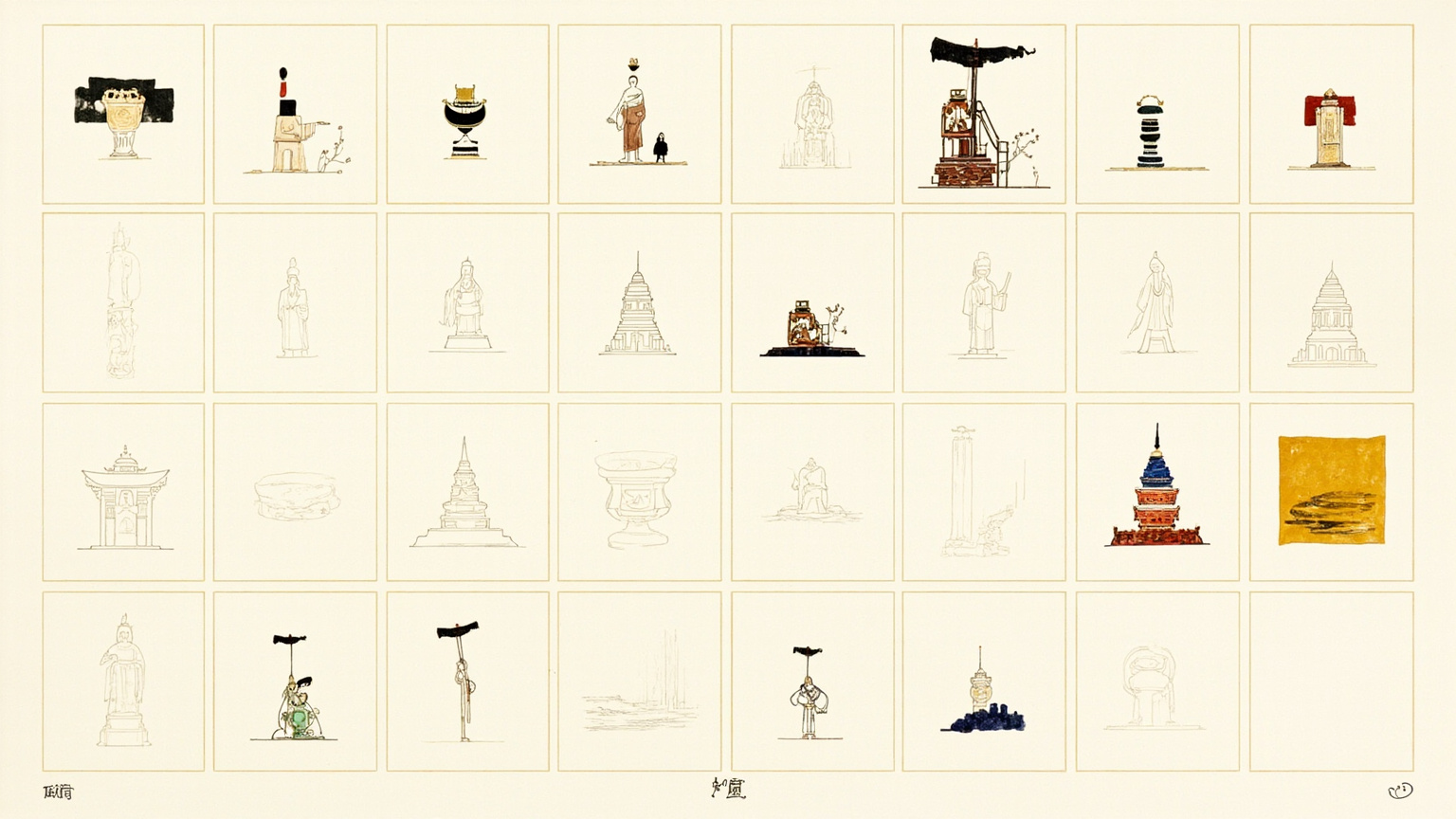
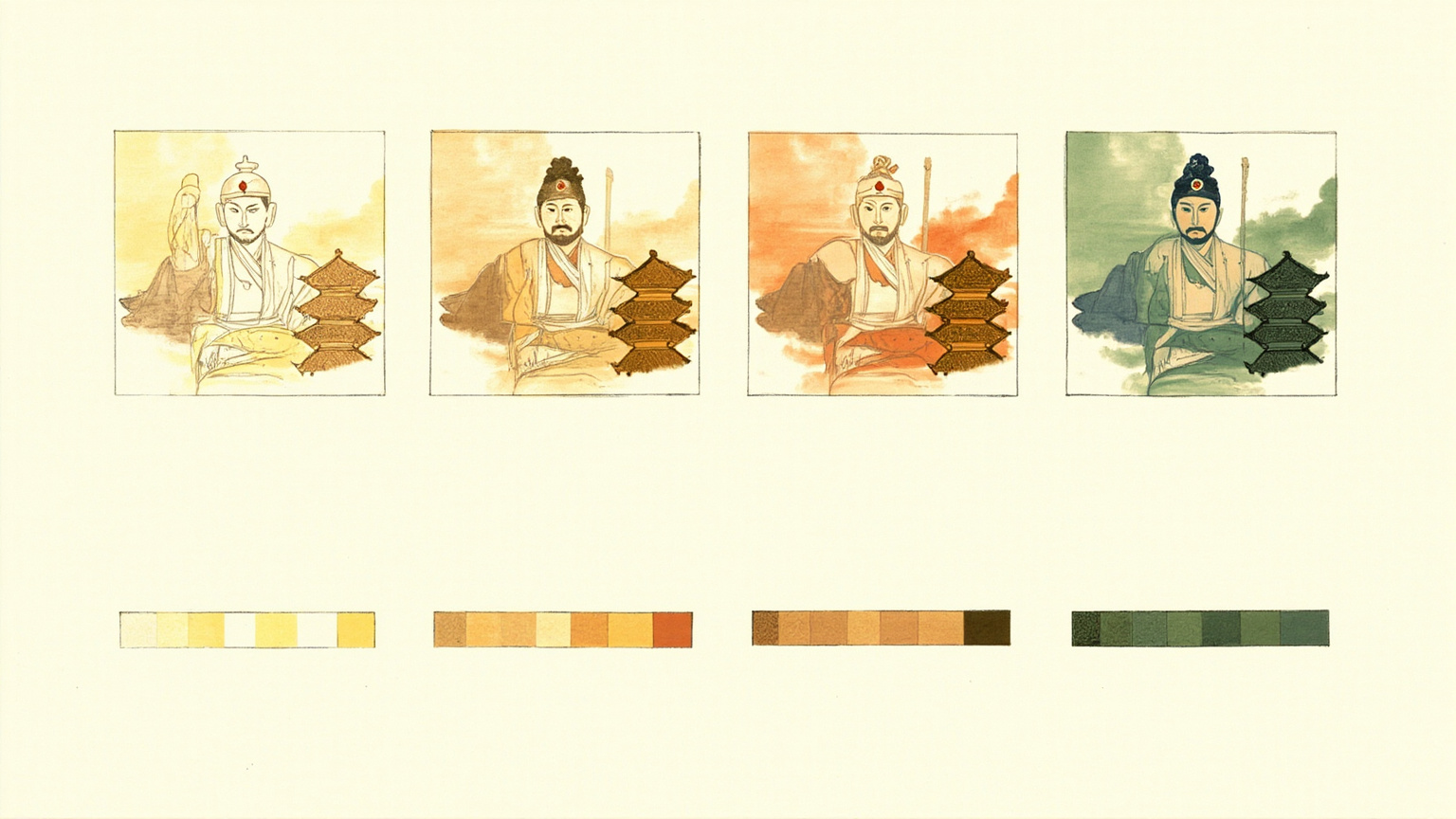
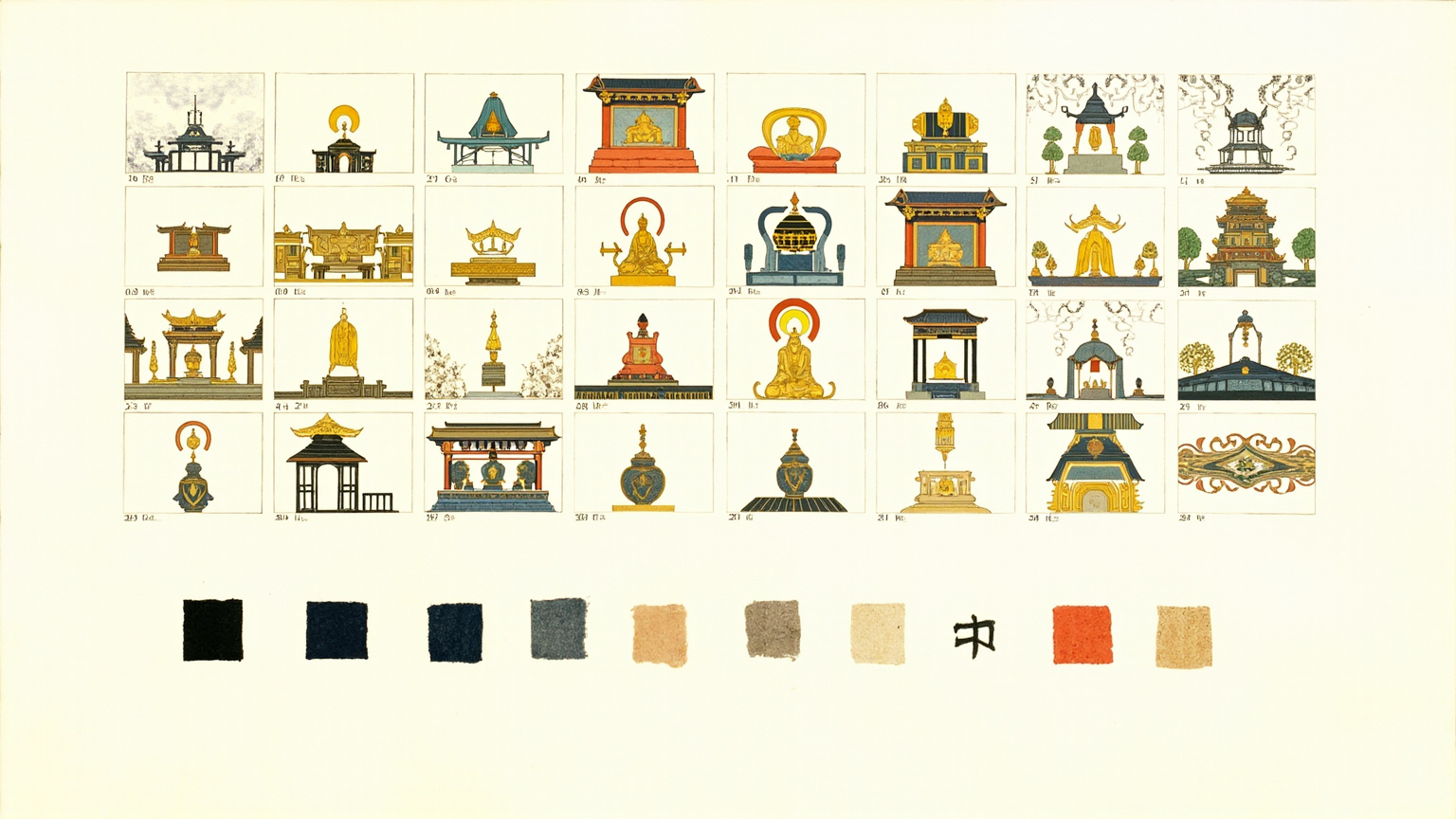
Art Direction4 plates
Before the guide was written, this book got a visual foundation — every illustration you just read grew out of it.