Sand and Foam · Companion Guide
沙与沫
潮线上的字一行行被抹去,唯有醒着的海不曾干涸——纪伯伦用几百行短句,教你认出那个没被抹的自己
Opening: Words on the Tideline
Before dawn, someone is writing on wet sand with a stick. The word isn't finished before a wave comes in and smooths it away. He starts a new line, writes again. Another wave, another erasure. That man and that stick are what Sand and Foam looks like.
What Kind of Book This Is
Kahlil Gibran was born in 1883 in the mountains of Lebanon and died in New York in 1931. Arabic was his native language, but he wrote this book in English, published by Knopf in New York in 1926, when he was just past forty. Gibran was also a painter, and the symbolic, spiritual brushwork of his watercolors and pastels is nearly the same hand at work as the imagery in his prose. Chinese readers usually meet him first through The Prophet; Sand and Foam is the companion volume that followed three years later, shorter, more fragmentary, closer to talking to himself: a few hundred aphorisms, each running one line to a few sentences, loosely grouped, open to any page.
It is remembered because it packs the weight of a whole mountain into a single line. Nine times out of ten, the quotable lines that have circulated on the Chinese internet for decades trace back to this book. It stands as an early model of modern English-language spiritual writing, and it has shaped, at a deep level, the short-sentence, white-space, circling cadence of Chinese spiritual essay writing.
Characters and World: No One, and You
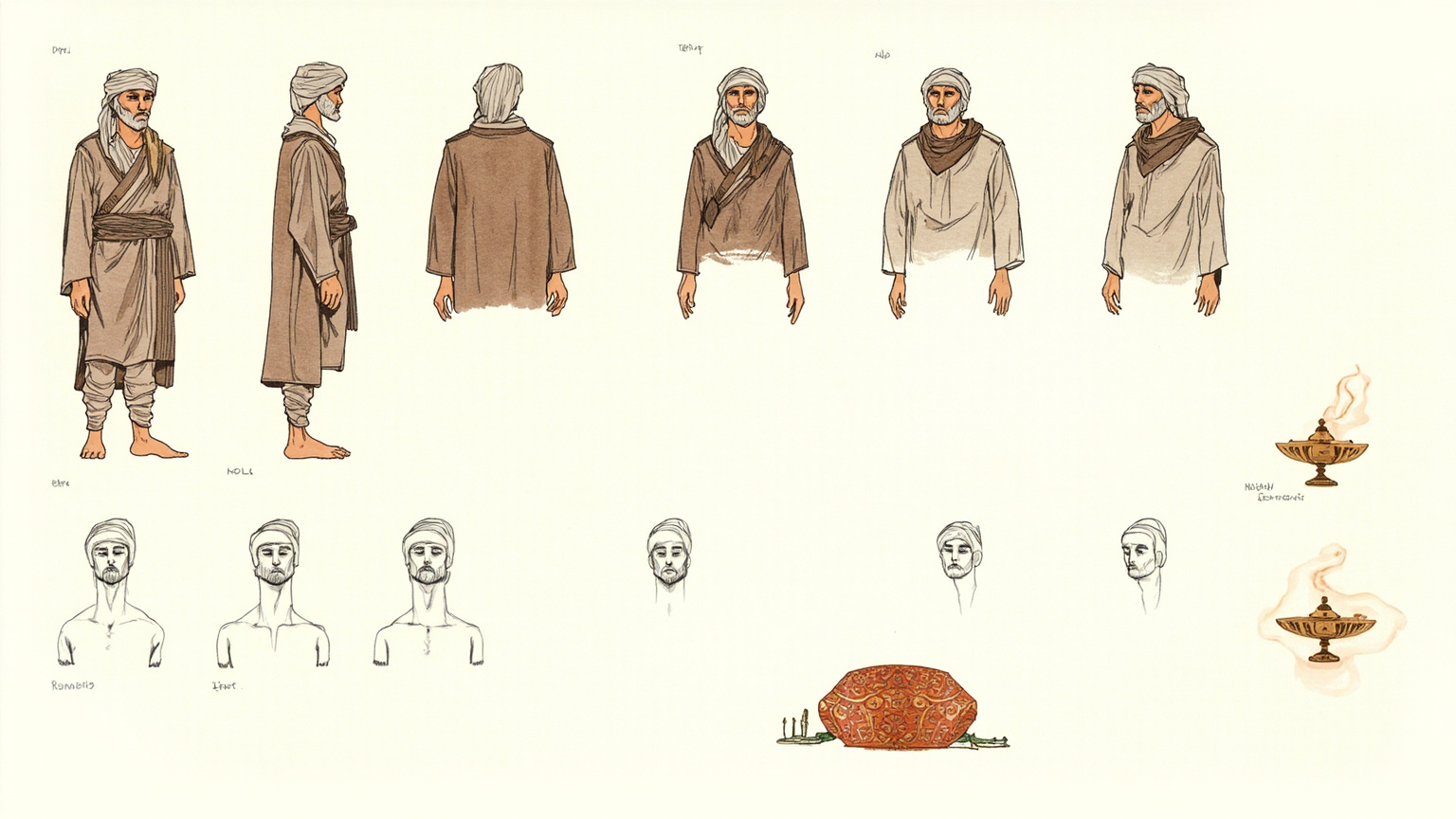
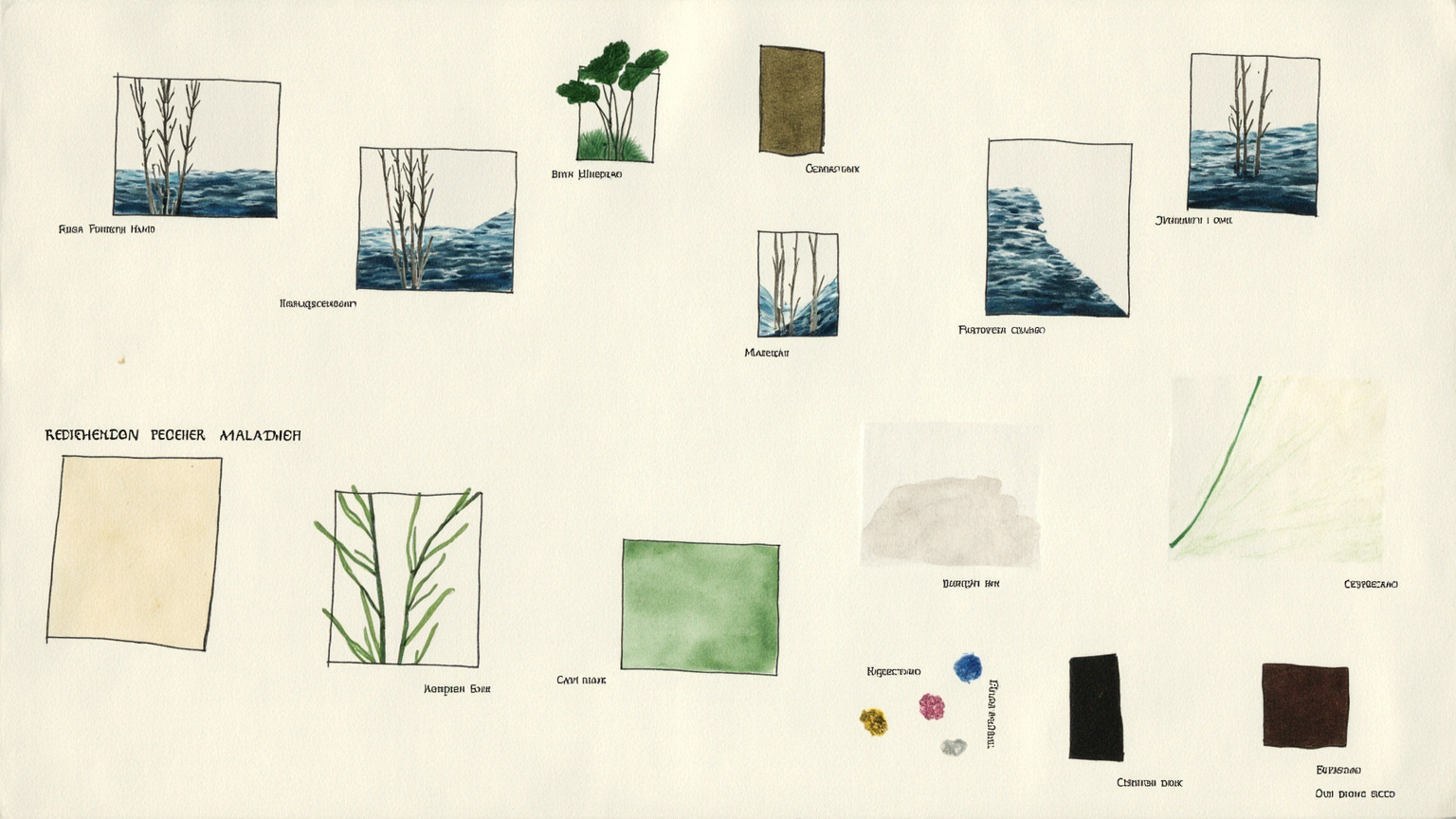
This is a book with no characters. The aphorism form doesn't let anyone step onstage; only generic figures like I, you, he, the child, the prophet, the beggar move through the sentences. So the world here isn't a particular city or a particular era, but a set of recurring images: the cedars of the Lebanese mountains, the shore and surf of the eastern Mediterranean, olive groves in morning fog, a parchment scroll beside an oil lamp, stone steps up a hillside, a new moon overhead. There are no dramatic scenes, only moments recited over and over.
Sand and Foam: The Book's Master Metaphor
The title is itself the answer. Sand is the fine grain along the tideline, the footprints a person leaves on the beach, gone the moment the tide comes in. Foam is the white spray a wave breaks into against the rocks, lasting two or three seconds at most. Sand and foam are what is fleeting: human affairs, feeling, every word you say, every expression that crosses your face.
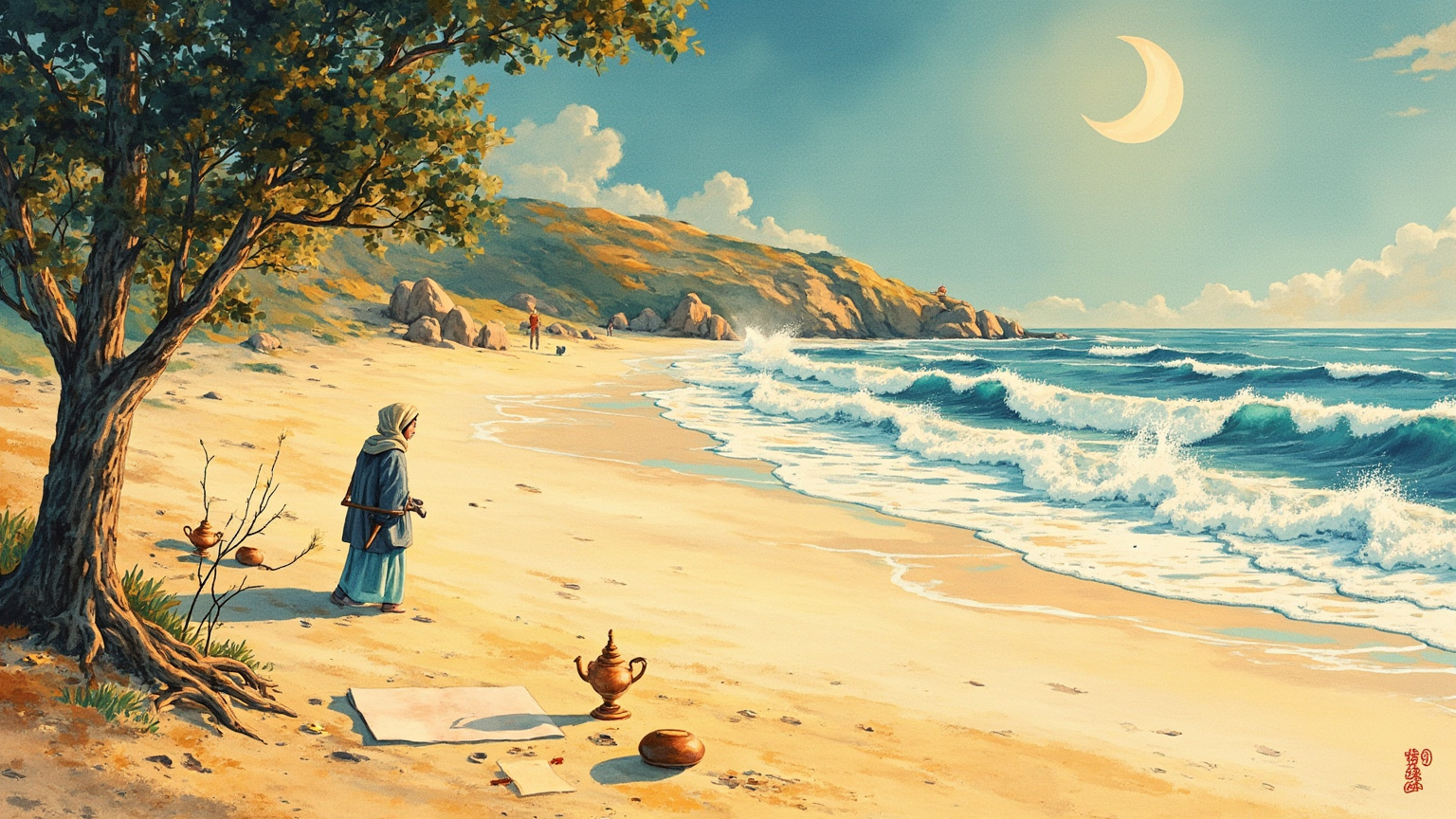
I have been a fisherman; and many a time I have seen the seven-coloured shells deep in the sea-bed, and many a time I have seen the price of pearls.
我曾是个渔人,许多次我看见海底那七彩的贝壳,许多次我看见珍珠的价值。
金句 · 开篇 · 海与拾贝人
And what about the sea, the thing that stays? The sea doesn't speak. The sea is simply there. So the message here goes further than everything passes: something deeper remains after it does. The master metaphor gets turned over again and again through the book: writing on sand, foam as a wave breaking, the sea still being the sea, different words each time, the same hollow underneath.
Love, Giving, and Letting Go
Open the table of contents and you'll run into sections on love, marriage, friendship, children, giving. These have supplied the best-known lines in the Chinese-speaking world. The most quoted one runs roughly like this: love does not exist to be loved back; love is enough on its own, and trying to possess it is what kills it. Giving works the same way: the deeper you give, the fuller you become, and the tighter you clutch, the emptier your hands.
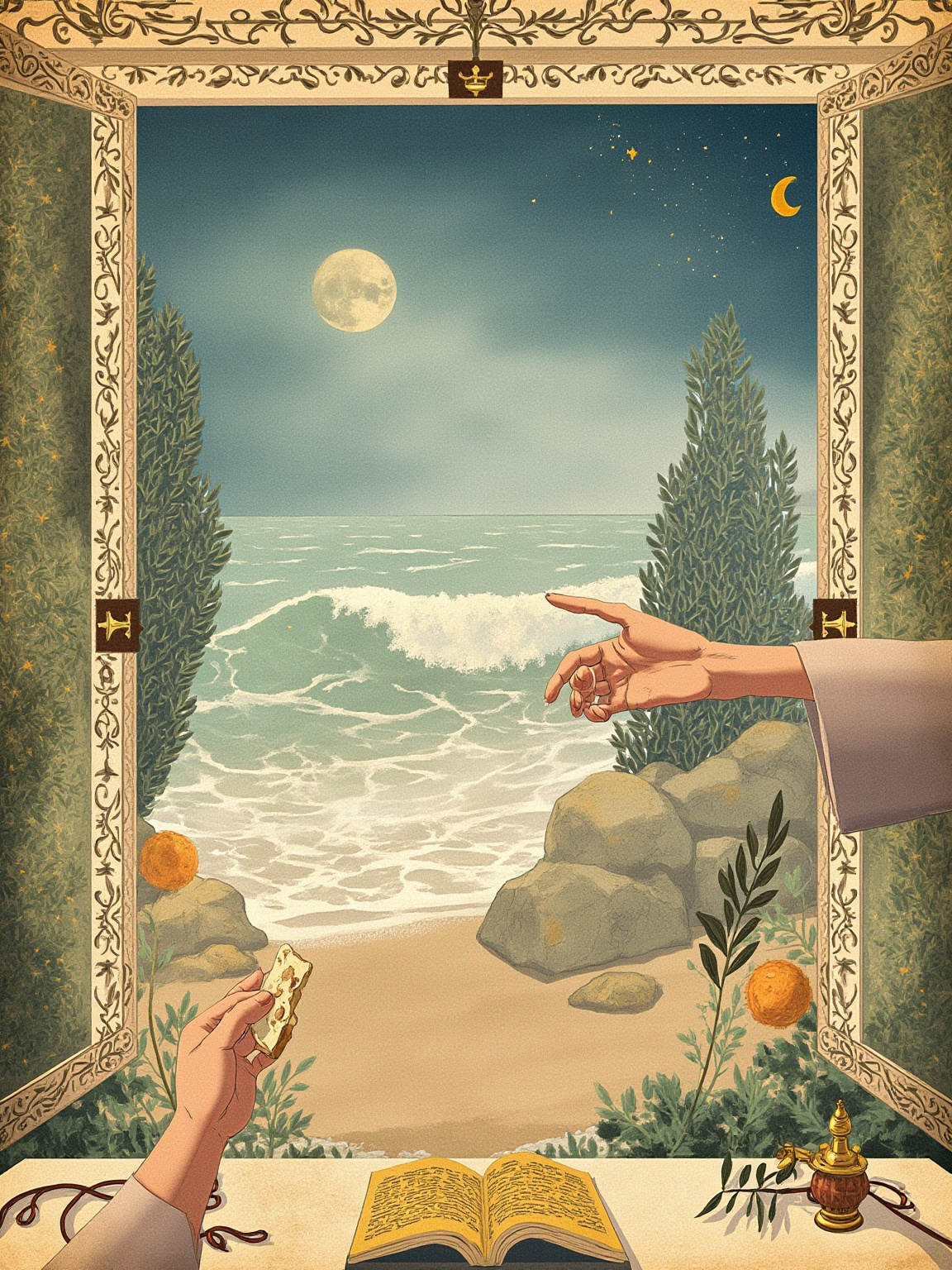
Love possesses not nor would it be possessed; for love is sufficient unto love.
爱不占有,也不被占有;因为爱之于爱者已然足够。
金句 · 论爱 · 给予而非占有
As a stylist, Gibran isn't preaching so much as questioning. He drops big words like love and giving back into ordinary gestures, breaking bread, lighting a lamp, setting a new life back into the world, and then flips the whole thing over in a sentence as short as it can possibly be. That craft, pulling an abstraction down into a concrete act and then turning it inside out, is what rewards a second reading.
The first time I read the section on children, I flipped back through the earlier pages. On the surface it's about parents and children, but what it's actually saying is that you cannot live another person's life for them, not even your own child's.
The Paradox of Self and Solitude
Solitude gets renamed in this book. One of the most quoted lines in this vein says, in effect, that your loneliest moment is exactly the moment you are least alone.
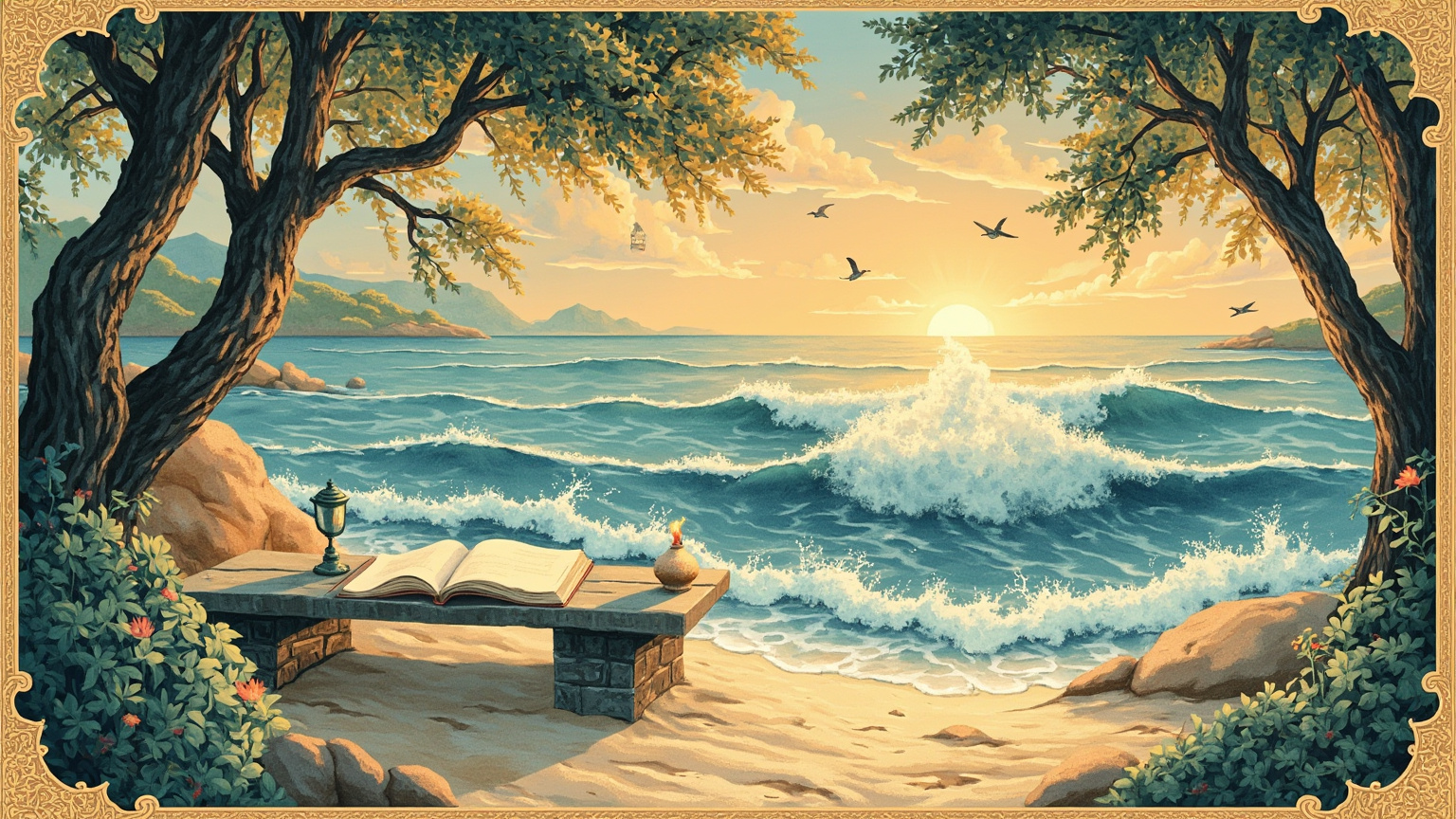
The most lonely is the most alone, and he who is alone is the most beloved of God.
最孤寂的人也是最不孤独的人,而那独处者,是神最钟爱的。
金句 · 论孤独 · 自我与神同在
Solitude has nothing to do with how many people are around; it undoes the crowded feeling of being full of everyone else and empty of yourself. So when you sit alone on a hilltop, by the sea, beside a lamp, with no one to interrupt you, you are actually closest to yourself, closest to God. It folds an Eastern habit of introspection into the short English sentence.
Speech, Silence, and the Unsayable
This is the sharpest vein in the book. Gibran keeps asking how much of what gets said is still true once it's spoken. The two frequently quoted lines, on the half-truth and on saying I understand the sea, both grow out of this vein. A half-truth is more dangerous than an outright lie, because it wears truth's hat; and if you say you understand the sea, that itself proves you don't.
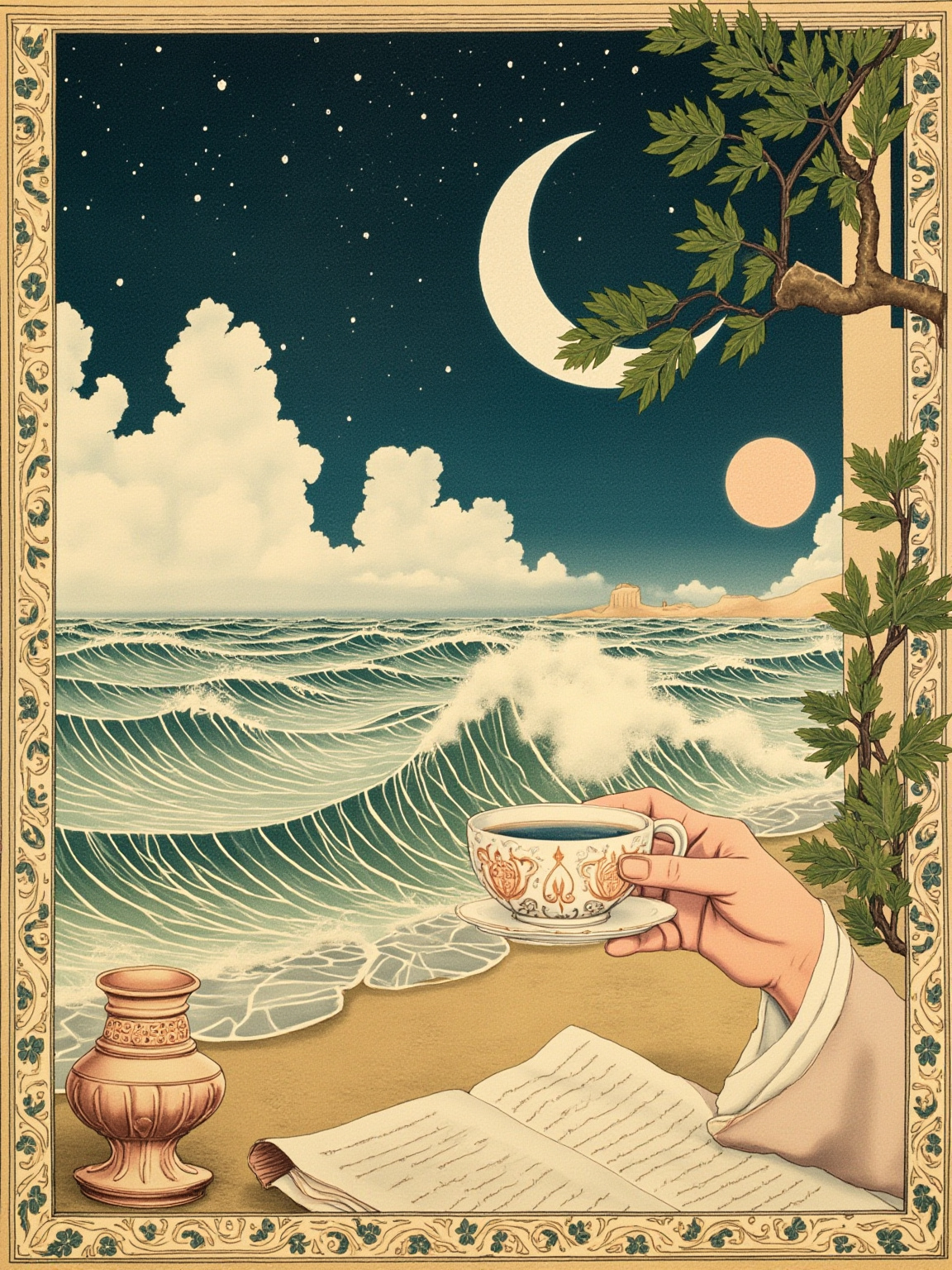
Half of what I say is meaningless; but I say it so that the other half may reach you.
我说的一半是毫无意义的;但我仍说它,好让另一半能抵达你。
金句 · 论言语 · 半个真理
Gibran's favorite device is the return: he takes an image, turns it over, turns it back, the front of it once, the reverse of it once, then front and reverse fused together. Many sections close with a move like Again, on love or Again, on speech, a breathing rhythm rarely found in the aphorism form.
Death, Folded Into the Present
The section on death doesn't take the usual road. It doesn't describe an afterlife or a funeral rite. Instead: would you mourn the dead? Then weep, in your heart, for the living. Death gets relocated into the present moment; when you think about dying, you're actually looking at being alive with fresh eyes.
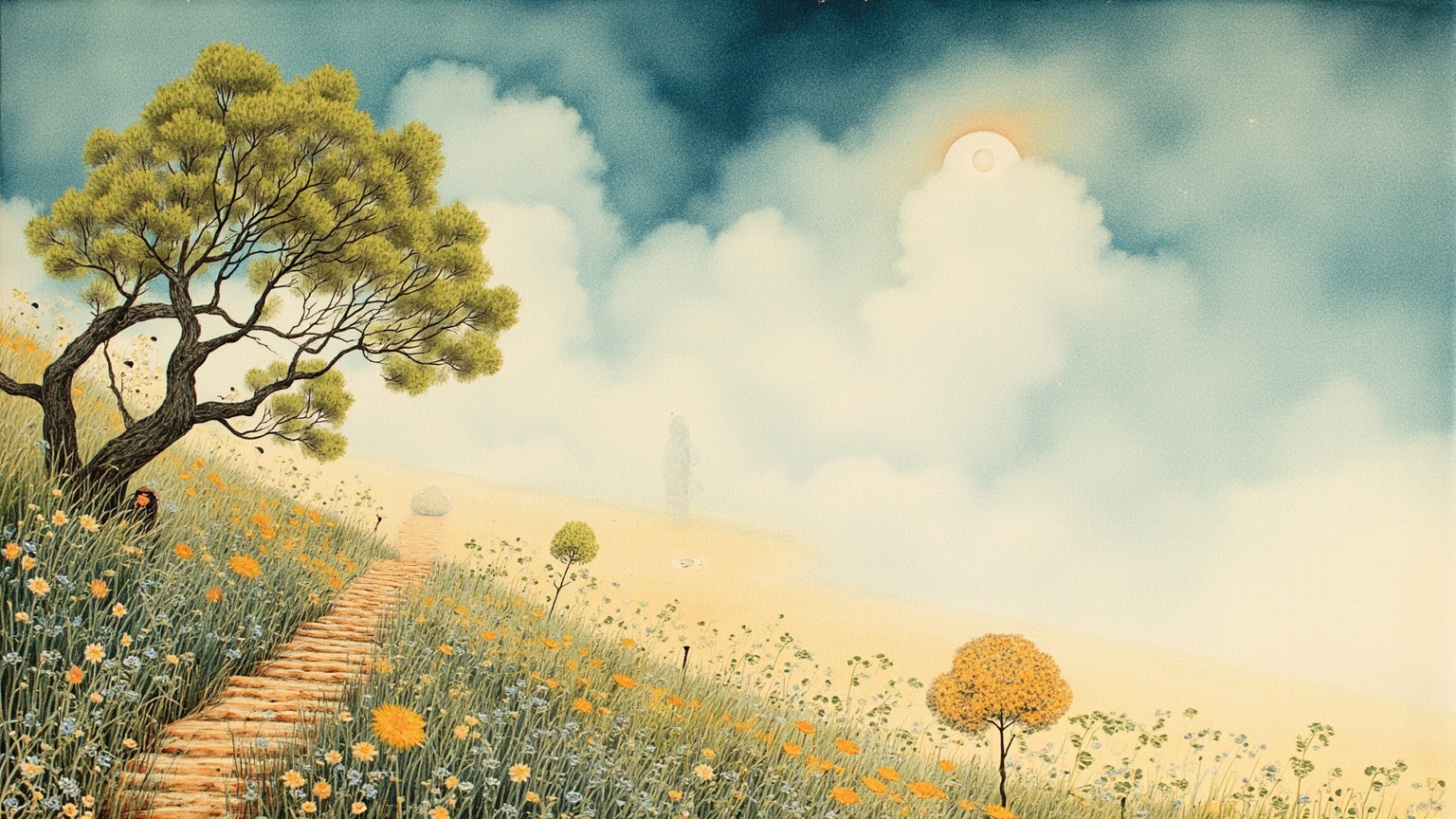
Life is a process of becoming, a process of self-discovery, and those who would truly live must be willing to let go of who they were.
如果你愿意哀悼死者,就在心里为生者哭泣吧——因为死亡已在此刻。
金句 · 论死亡 · 哀悼与活着
A Half-Divine, Half-Human Undercurrent
No single religion runs through the book. What runs through it is something Gibran kneaded together himself: the inward gaze of Eastern Christianity, the union-seeking of Sufi mysticism, a Mediterranean reverence for the natural world. God isn't up in the sky; God is in the stone your hand happens to touch, in the white spray at the instant a wave breaks.
So don't read it as scripture. It reads more like a watercolorist sitting cross-legged by an oil lamp, occasionally saying a line or two out the window.
Closing: I Wake with the Sea
The book's final aphorisms close on the moment the sea and the self become one. Near the end there's a line to the effect that I wake with the sea, and do not sleep again until the sun goes down.
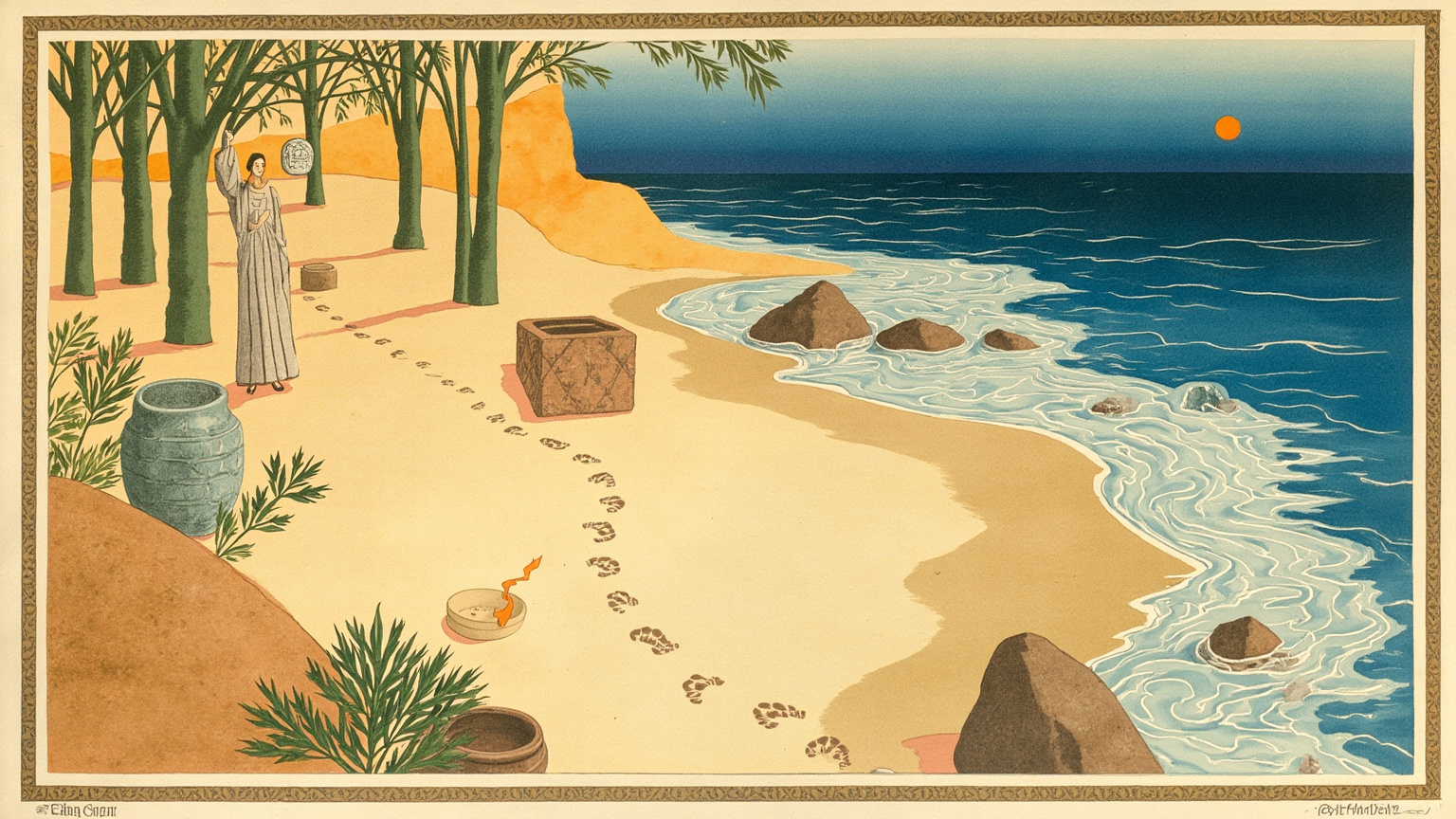
I awoke with the sea and remained awake until dawn, and then I slept with the sea until sunset.
我与海一同醒来,直到日落才再度睡去。
金句 · 尾声 · 我与海合一
The footprints in the sand will be erased. The one who wrote them will be erased. The foam will break back into water. But the one who is awake, awake together with the sea, is not erased. That's where the whole book finally lands: a person is not the mark left behind, a person is the sea, awake.
The one who writes on sand is erased by the tide. The one who wakes with the sea is not — Gibran spends a few hundred lines just getting you to recognize which one you are.
Read the Text Itself: Why It's Still Worth Opening
A companion guide gives you a map; the text itself is the land. No single line in this book is long, but the real experience is what happens to your breathing as you read one line after another. After being translated, paraphrased, and screenshotted more times than anyone can count, you find out that sitting by the sea and actually reading it for ten minutes is nothing like scrolling past a quote card on your phone. What it gives you isn't information. It gives you a rhythm: a wave coming in, a wave going out, your eyelids closing and opening along with it. Knowing the plot in advance won't ruin it, because this book barely has a plot. The only thing that ruins it is turning the pages too fast.
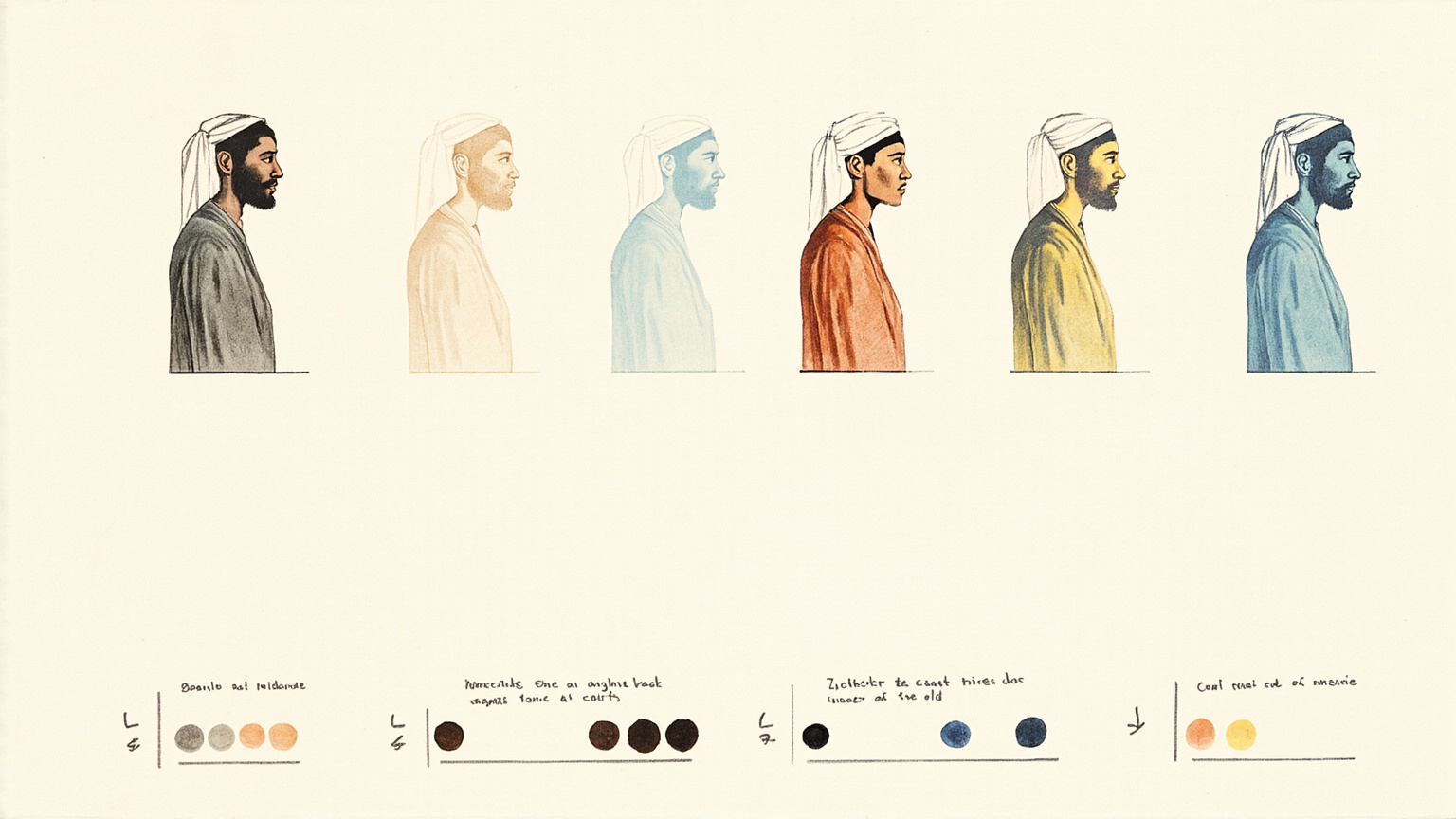
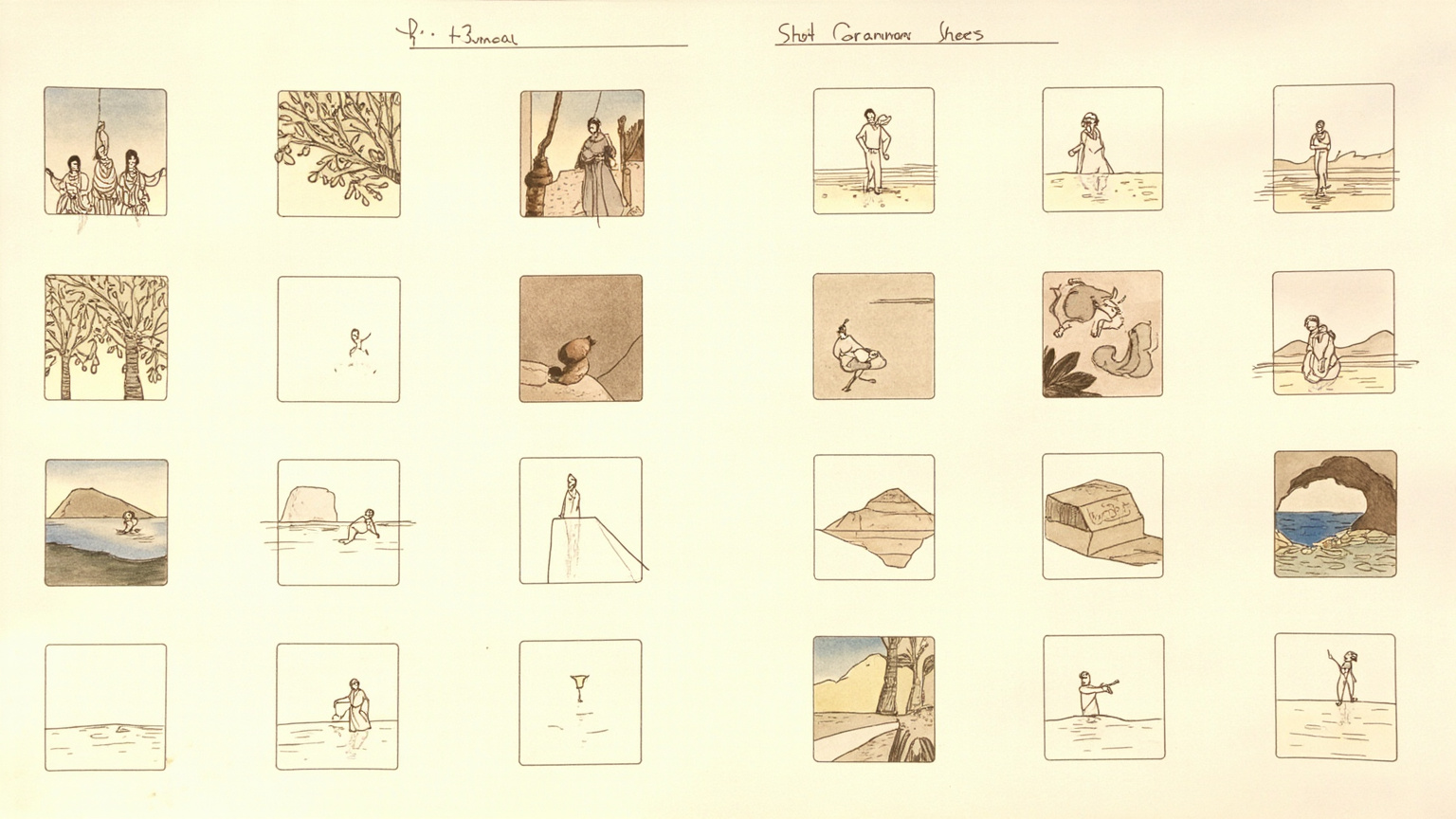
Art Direction4 plates
Before the guide was written, this book got a visual foundation — every illustration you just read grew out of it.