Nobody's Boy (Sans Famille) · Companion Guide
苦儿流浪记
一个被八十法郎卖掉的男孩,牵着小猴、牵着狗,跟着手摇风琴走了八年——他要找的不是家,是路上那些没来得及说再见的人。
Opening
An eight-year-old boy is crying in a stone cottage in rural northern France, calling for his grandmother. No one answers: she was buried three days ago. His foster father closes his fist around eighty francs and pushes the boy out the door, toward an old Italian in a threadbare coat with a hand organ strapped to his back. The boy has no idea he is about to follow this man, a white dog, and a monkey dressed as a tiny foot soldier down country lanes, along canal barges, and through mining shafts, all the way to England. It will take eight years.
What Kind of Book Is This
Nobody's Boy was written by the Frenchman Hector Malot in 1878. It sold enormously well that year and went on to become a national classic of French children's literature. Generation after generation of Chinese readers have paired it with Edmondo De Amicis's Heart as "the two great works of world literature for young readers." The title has been reprinted again and again since Bao Tianxiao's Chinese translation appeared in the early twentieth century, and several generations of children have grown up reading it.
It belongs to the bildungsroman, the Western tradition of tracing a child's path from innocence to understanding. Dickens's Oliver Twist and David Copperfield run in the same current. Malot writes with more warmth, though: Rémi goes hungry, freezes, gets sold from hand to hand, and still never falls into the gutter. Someone along the way always genuinely loves him.
Characters and World
Rémi tells the story. He starts out as a boy who likes hauling stone for his foster father in the countryside, and ends it as a young man who can read, read music, and hold his composure in front of strangers. Two kinds of home drive that change: one temporary, found on the road, and one final, found at the end of it.
The temporary home is Vitalis, an old Italian street performer. His face is cold and his temper is hard; he never says a soft word, yet on rainy days he takes off his own coat and drapes it over the monkey. Traveling with him is a white dog named Capi, who can count, fetch, and play dead, tricks that are often worth a meal, and a monkey named Joli-Coeur, who hates the cold, loves to mimic people, and won't sleep at night unless he burrows into Rémi's coat. What holds them together looks less like an employer and his hires than a family, poor, scraping by side by side.
The final home belongs to Mr. and Mrs. Milligan, an English country family. Mrs. Milligan turns out, at the end, to be the mother who lost Rémi years before. Two waystations sit between the two homes: Barberin, the stonemason foster father in rural northern France, who sells him and later regrets it, and a kindhearted mine owner in southern France, who takes him in and sends him to school. Each of these is an inn where Rémi only stops to rest; he is always passing through.
How the Story Unfolds
The story opens with that transaction. Mother Barberin has just died, and Barberin himself has hurt his leg and can no longer work stone. He takes Rémi to the market and hands him over to Vitalis, who is already waiting there, having come specifically to buy him. Barberin points at the old man with the monkey on a leash and says, "This is your master now. Go with him and you'll eat." Vitalis counts out eighty francs, pats Rémi's head, and leads him away. The old man pays for the boy because he cannot stand to watch him end up on the street. Rémi looks back at his home; the stone cottage has already shrunk to a gray speck.
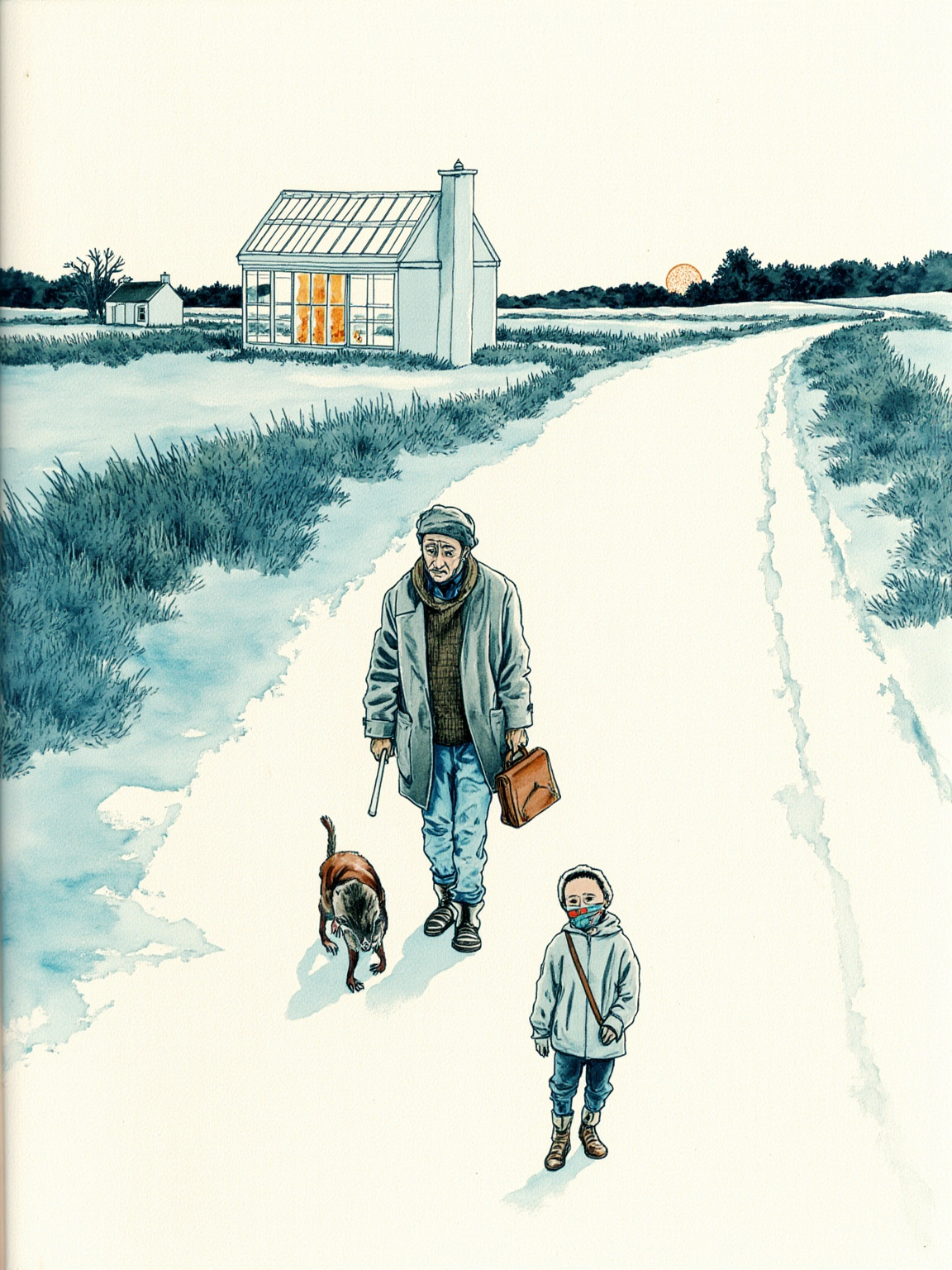
Take him, master; he'll earn his keep.
「这是你师父,跟他走有饭吃。」
金句 · 第1章 · 巴伯兰把雷米交给维塔利斯
Vitalis's first lesson has nothing to do with the violin; it is watching. Watching Capi nose the arithmetic cards to make the crowd laugh, watching Joli-Coeur bow clumsily for coins, watching the way different people reach for their money at the market: generous, tightfisted, in a hurry to move on. Rémi files all of it away in his head. Months pass like this, and he learns to read music, to sing under the night sky from a barge deck, to read a face without being frightened by what he sees there.
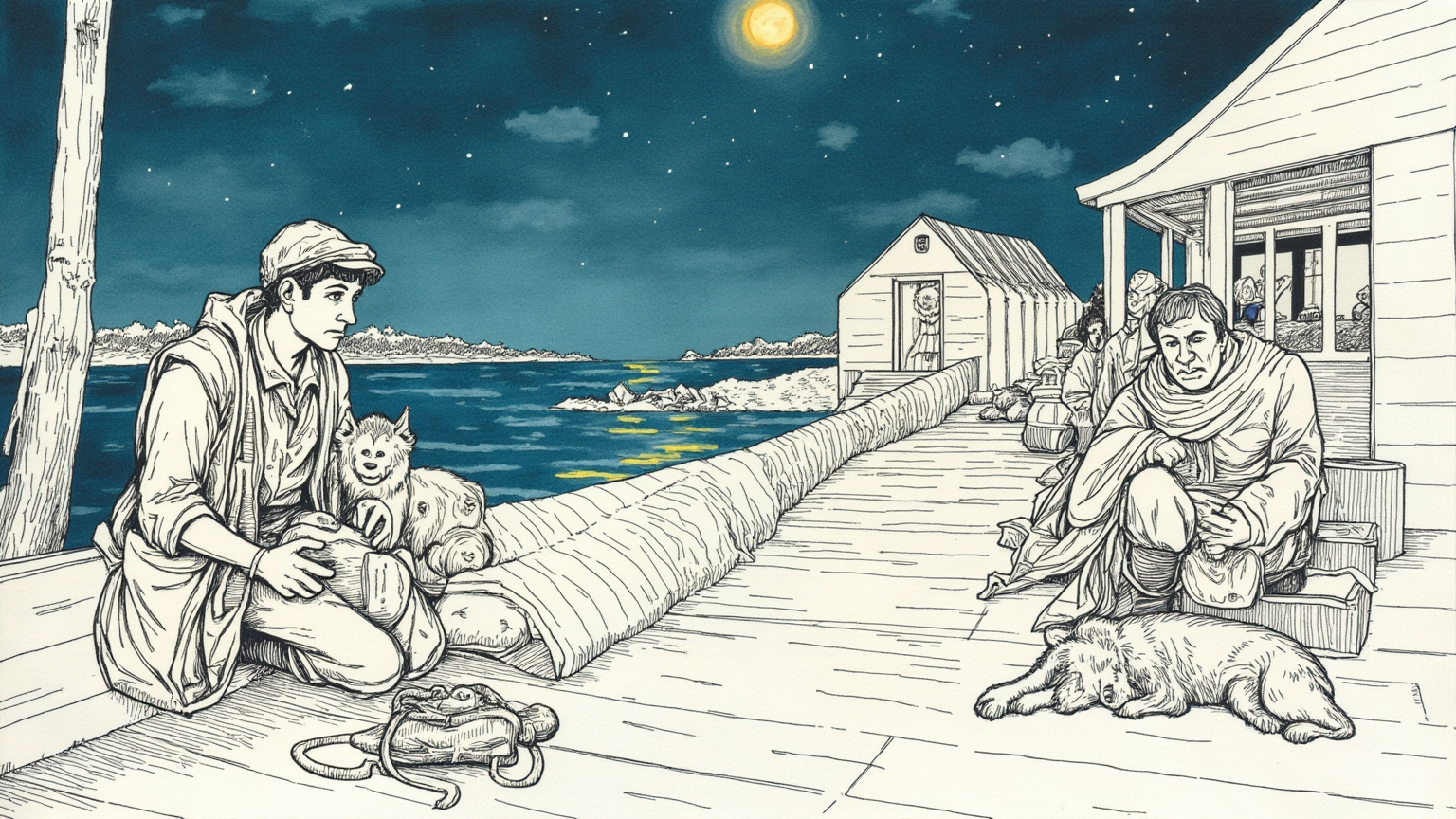
He taught me to look before he taught me to play.
他教我的第一课不是拉琴,是看。
金句 · 第2章 · 维塔利斯在乡间集市上
For a while the troupe takes in a street tough named Arthur. He is a few years older than Rémi, a thief and a schemer, and the two of them fight constantly. He is eventually caught stealing from a market stallholder and sent packing, by the old rule of the road. Rémi walks him as far as the crossroads; Arthur never looks back. It is Rémi's first lesson that some people on the road can only stay for a little while.
The snowstorm gives no warning. Vitalis collapses in the snow, and Rémi can do nothing but cry. A flower grower passing by takes Vitalis into his house and looks after him. Knowing his master has to stay behind to recover, Rémi has no choice but to move on with Capi and Joli-Coeur. It is the first time a stranger has reached out to help him, and the first time he understands that some partings happen so the people you love can survive.
Don't leave the child alone.
「别让孩子一个人。」
金句 · 第5章 · 维塔利斯倒在雪夜
Rémi travels south alone, into the mining country of southern France, where the sky is gray, the roads are black, and child laborers head down into the pits everywhere he looks. There he meets Mattia, a young Italian boy more timid than himself, quicker to cry, his voice shaking even when he talks. Two children with no family band together in the mining town to keep each other warm.
Vitalis recovers, travels south to find him, and the two are reunited at a small inn in the mining district. That night by the fire, master, apprentice, dog, and monkey sit together without a word, just watching the flames. Mattia is there too. Rémi will think back on it often: the warmest night of the whole journey.
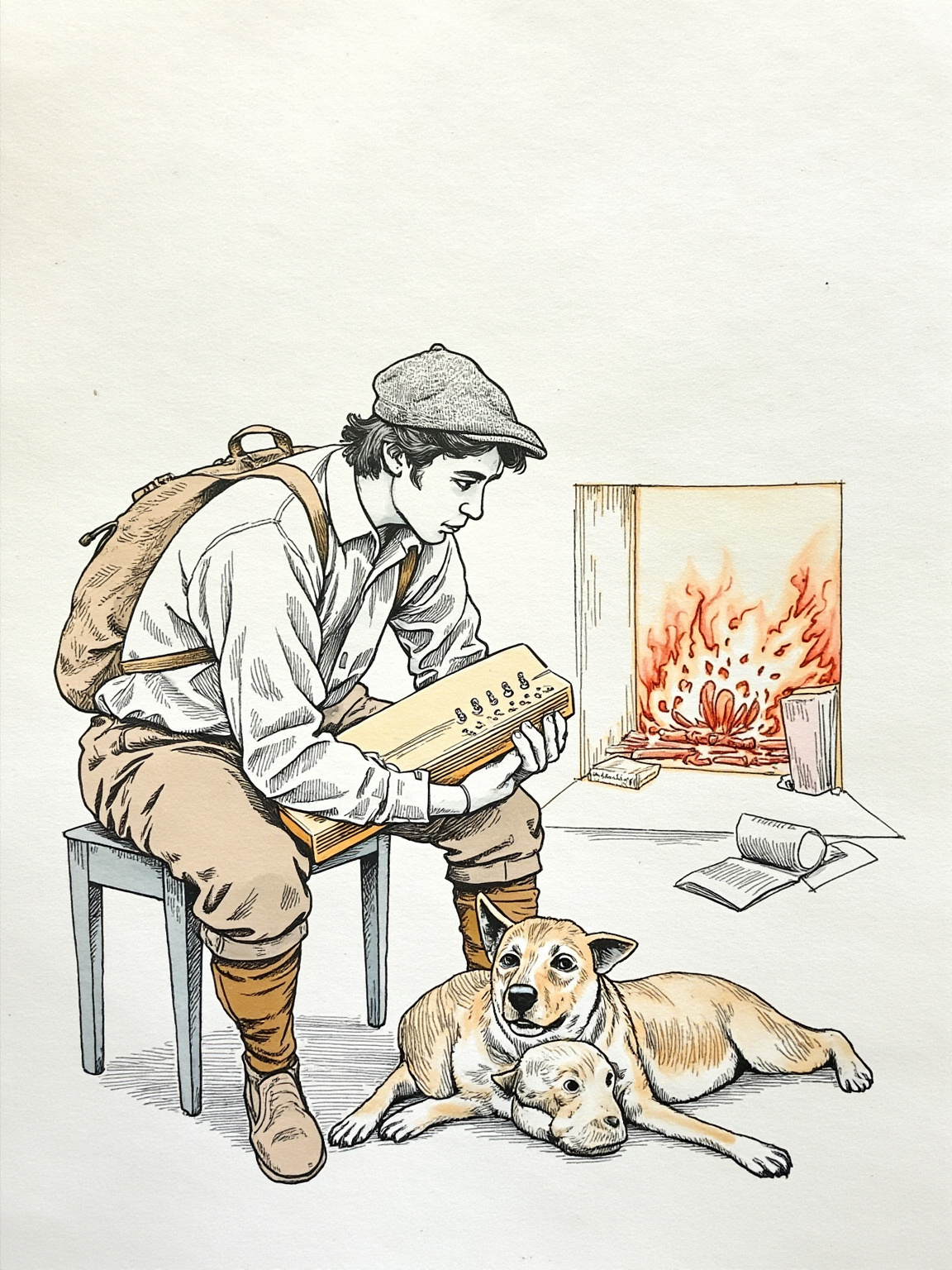
That night by the fire, master, pupil, dog, and monkey sat without a word.
那一晚的篝火边,师父、徒弟、小狗、小猴四个围坐,谁都没说话。
金句 · 第7章 · 矿区小旅馆的重逢
But Vitalis doesn't make it through the winter. Influenza sweeps the mining town; he coughs badly through the night, and by morning, lying in bed, he puts Rémi's hand into the hands of a friend who has rushed to his side, says only, "Don't let the boy be alone," and never wakes again. It is the second time Rémi loses a family. He doesn't cry. He just sits in front of the empty bed for a long time.
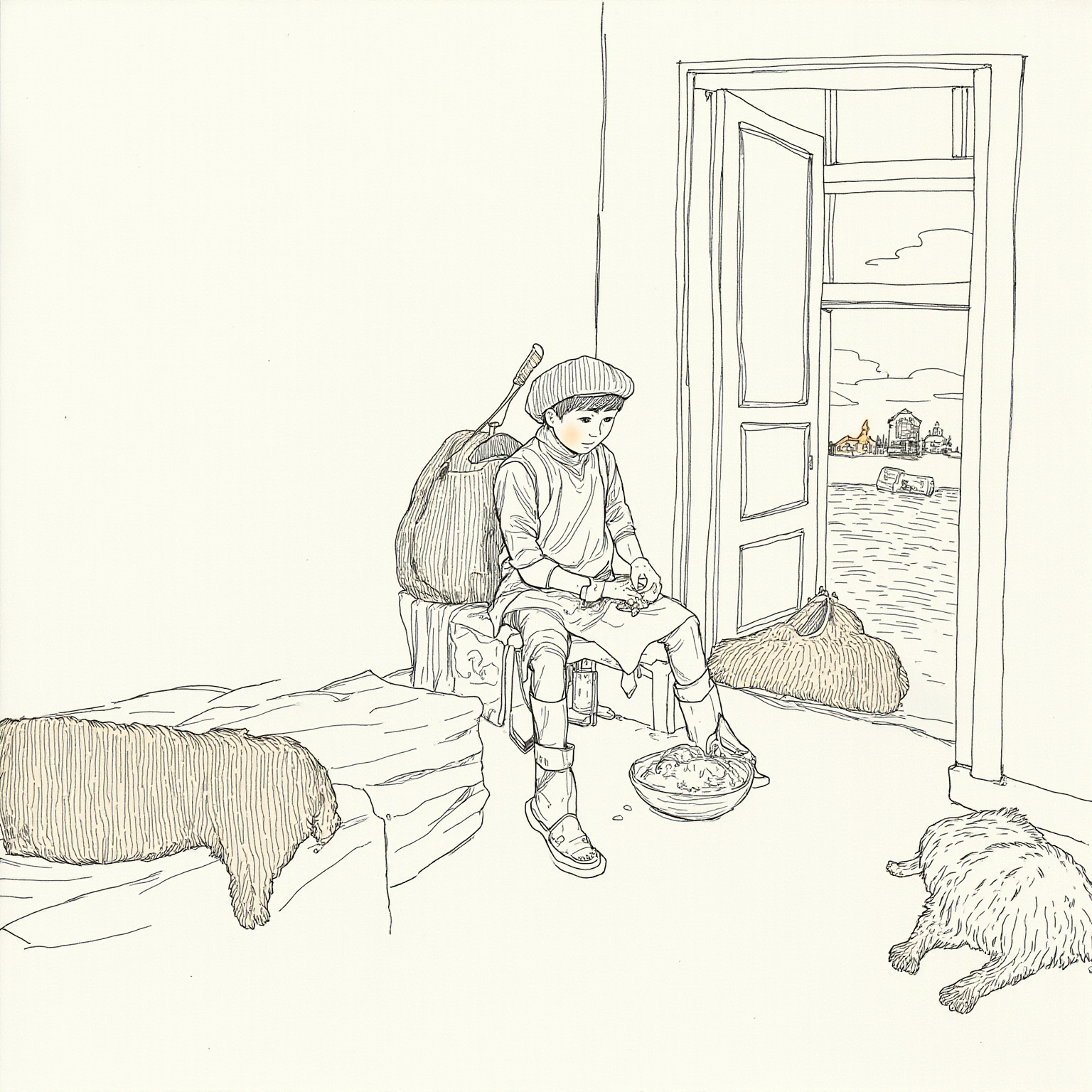
For the second time, I had lost my family.
雷米第二次失去了家人。
金句 · 第8章 · 维塔利斯在矿区离世
A kindhearted mine owner takes Rémi in and enrolls him in the local school. It's the first time Rémi has properly sat in a classroom, and he throws himself at catching up three years of schooling at a sprint. Before this he could barely write his own name in full; he had taught himself, from the ground up, by picking up letters on the road with Vitalis and by memorizing newspapers while busking on the streets of London.
Eventually his travels take him to England, where he becomes a gardener's apprentice on a country estate. The estate's owner is Mr. Milligan, upright and exacting; his wife, Ruth, is gentle and cultured. By day Rémi prunes roses and waters orchids in the greenhouse; by night he reads books his master lends him in the study. On weekends he goes busking on the streets of London to make ends meet: a small performer who can read music and read a crowd can support himself even in a great city.
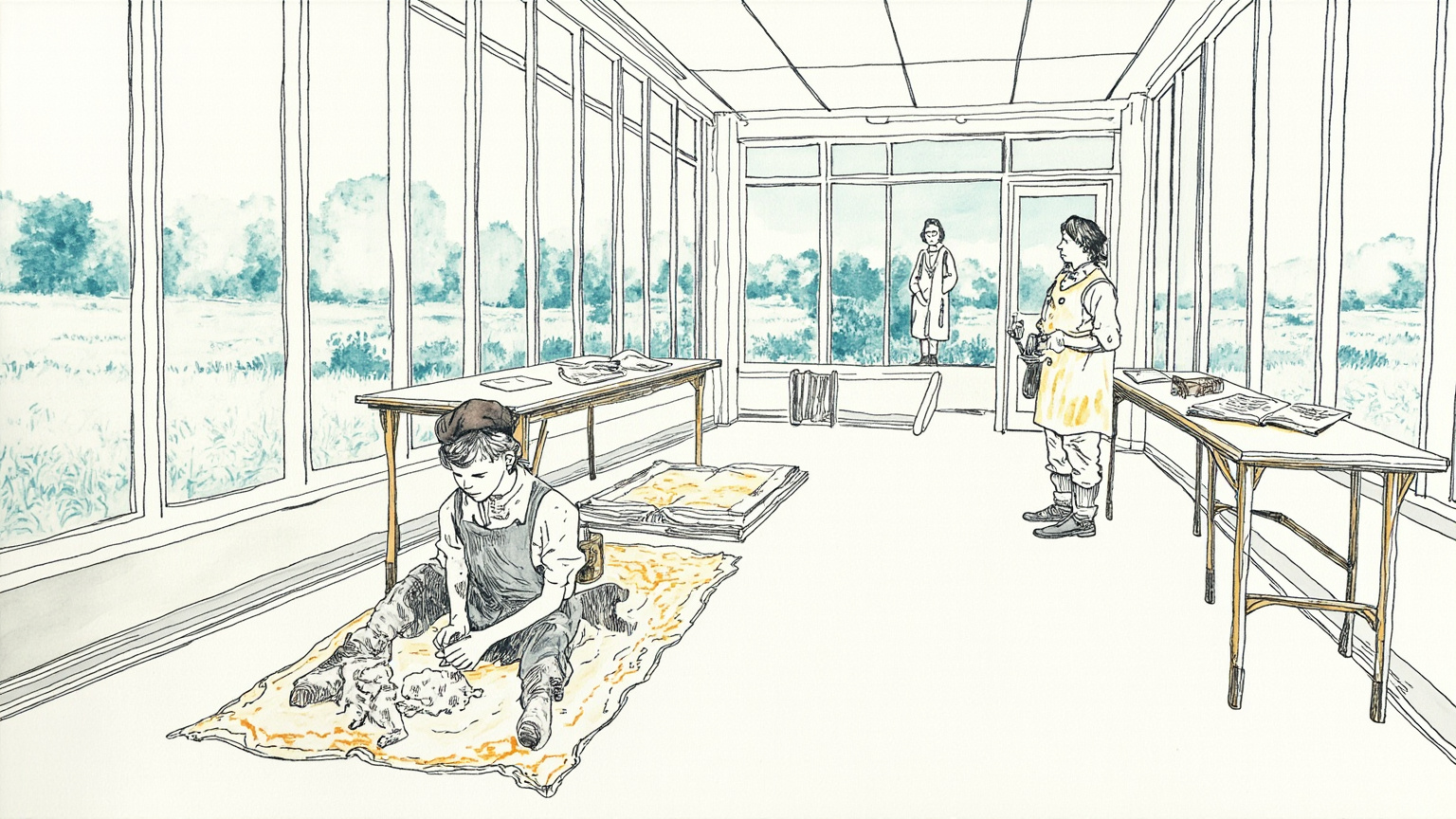
His true parentage surfaces slowly. First a little money slipped inside a newspaper, then unsigned letters, then a look in Mrs. Milligan's eyes she can no longer quite hide. Rémi isn't slow to notice; he simply can't bring himself to force it into the open, afraid that the stability he's finally scraped together will vanish the moment he does.
It finally comes out in a long conversation by the fireplace. Mrs. Milligan takes his hand in hers and says it plainly: he is the son she lost eight years ago. Mr. Milligan has already given his nod. Eight years, a full eight years, and Rémi has walked all the way from an abandoned boy sold for eighty francs back to his own mother's hearth.
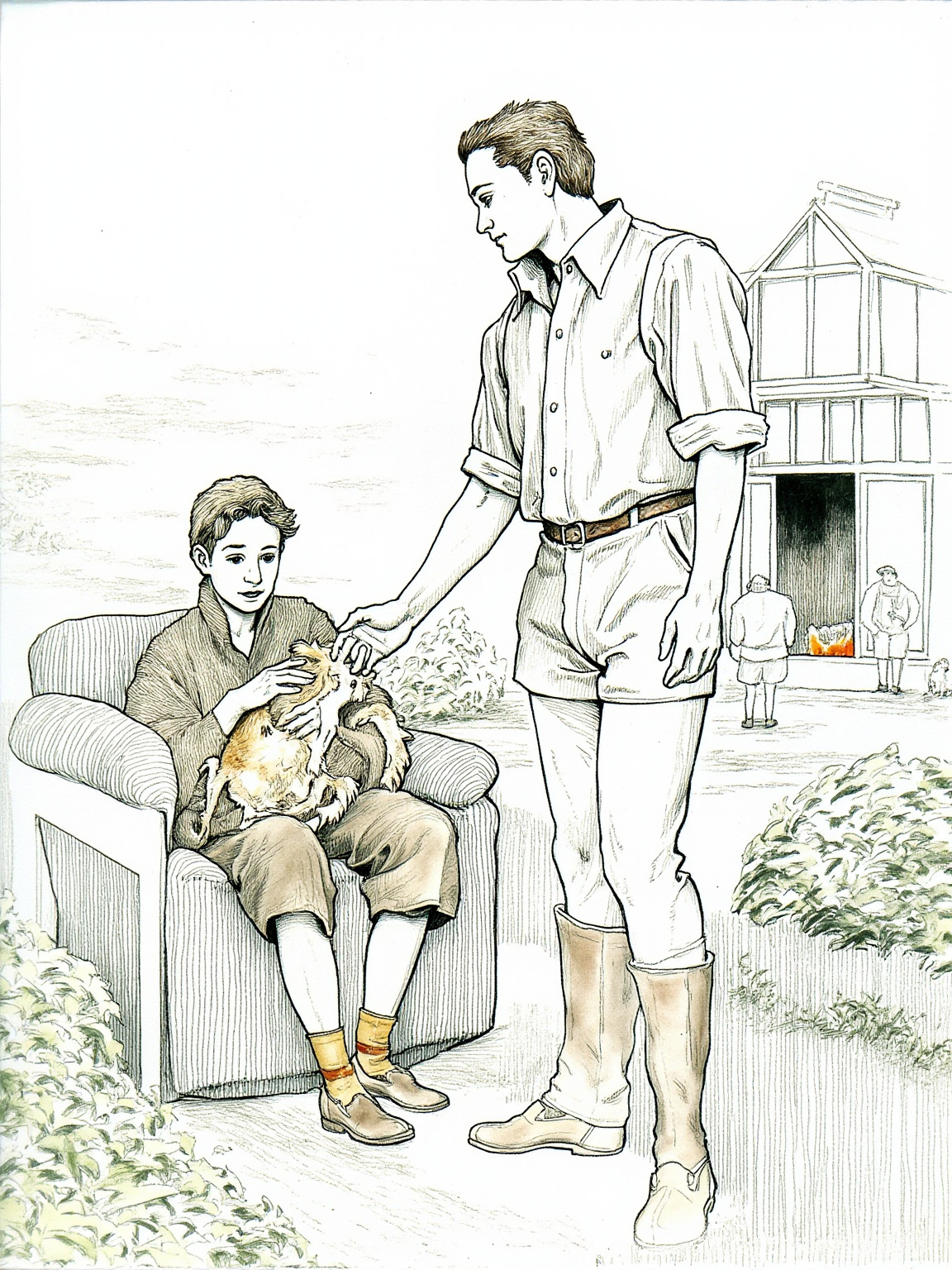
It took eight years to walk from eighty francs back to the fireplace.
八年,整整八年,他从一个被以八十法郎卖掉的弃儿,走回了亲生母亲的壁炉边。
金句 · 尾声 · 米利根庄园
What This Book Is Really About
It is about the two meanings packed into the word home. The first is the temporary kind: a hot meal on the road, a bit of idle talk by someone's fireplace, an animal burrowing into your arms for warmth. This kind of home is poor, unstable, liable to break apart at any moment, but it is real. Rémi's warmest memory isn't in the Milligan estate's greenhouse; it's that night by the fire in the mining district, the four of them sitting together.
The second is the real thing: the home built on blood and belonging. The fireplace, the study, the garden of the Milligan estate are what fate took from him eight years ago and has now given back. The whole book moves back and forth between these two kinds of home: lost, then searched for; found, and only then does he discover how much harder it is to let go of those temporary, threadbare, unwritten homes he found along the way.
It never turns suffering into spectacle. Rémi goes hungry, freezes, performs for coins, loses his master, and yet he is never painted as a pitiable waif begging for sympathy. Malot writes in a warmth particular to nineteenth-century France: miners, orphans, street performers, singing children, the whole cast of the poor, rendered with real humanity instead of gloom. That is the biggest difference between this book and Dickens's approach to the same material.
Why It Works
Malot's hand is steady. He doesn't lean on misery for effect; he leans on real detail: the wind on a barge deck, the ash-gray sky above the mines, frost melting off greenhouse glass. Through details like these, the air of nineteenth-century France seeps in on its own. Rémi's growing up isn't a single overnight change either. It accumulates, over eight years of road, countless market towns, and repeated cycles of loss and being taken in.
This isn't a story about suffering so much as a childhood stretched between having no home on the road and finding one there anyway.
Why Read the Book Itself
A companion guide can tell you what happens. The novel gives you what it felt like in Rémi's body across those eight years on the road: the heat of a winter campfire, the rocking rhythm of a barge, the acrid coal smoke at a mineshaft entrance, the wet-earth smell inside a greenhouse. No summary can hand you any of that. There's also the particular flavor of Vitalis, the gruff old man who scolds you with his mouth and loves you with everything else, which you can only taste by reading the lines yourself. And there's the tenderness Malot keeps hidden: he never lets Rémi wail and thrash in the mining town, only sits him in front of an empty bed for a long time, and that restraint carries more weight than any amount of crying out loud. Once you already know how it ends, reading the novel stops being about whether Rémi makes it home. It becomes about how, step by step, mile by mile, he built up the strength to get there. Walking this road yourself in the actual text is worth ten times more than hearing someone describe it.
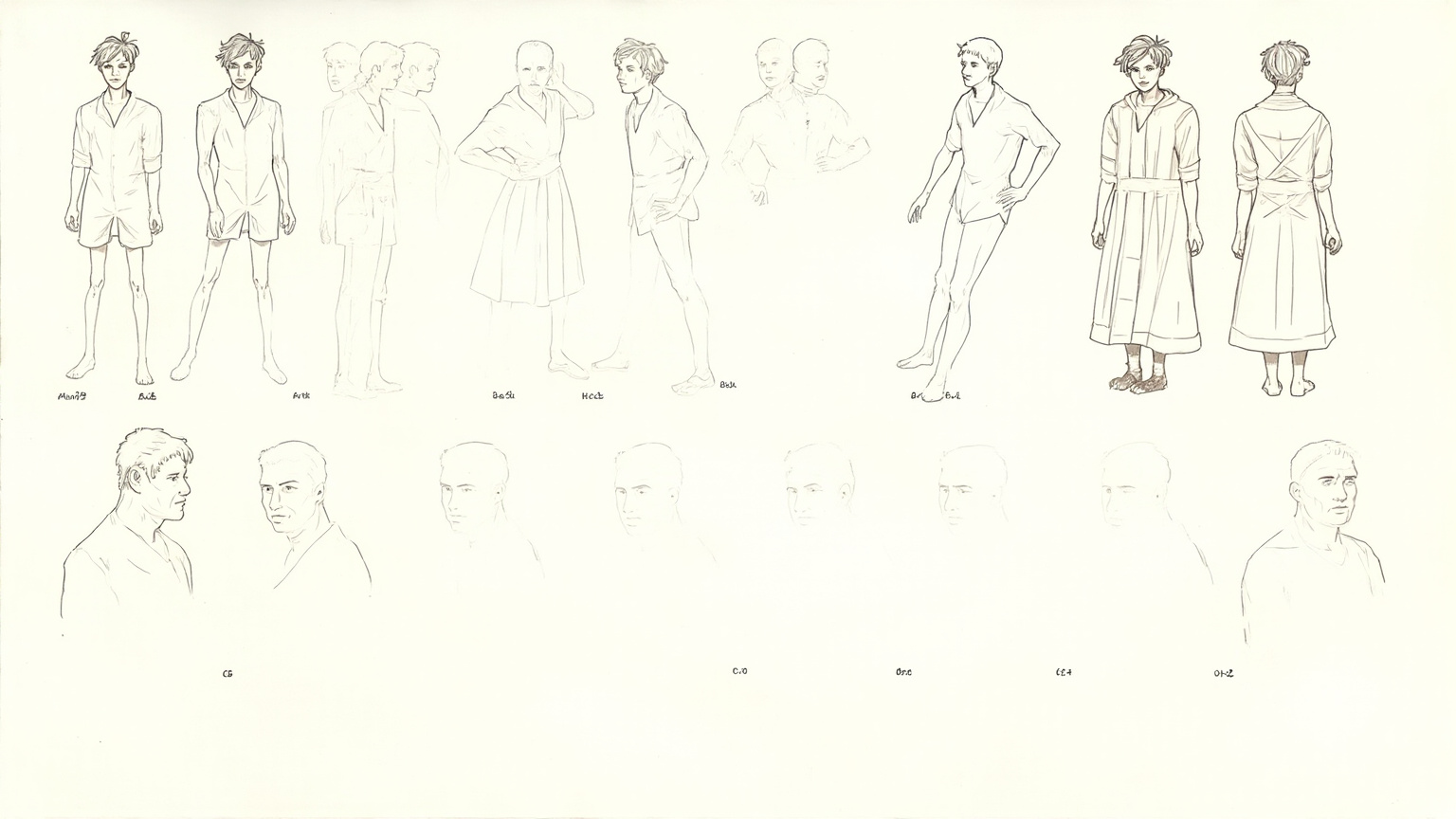
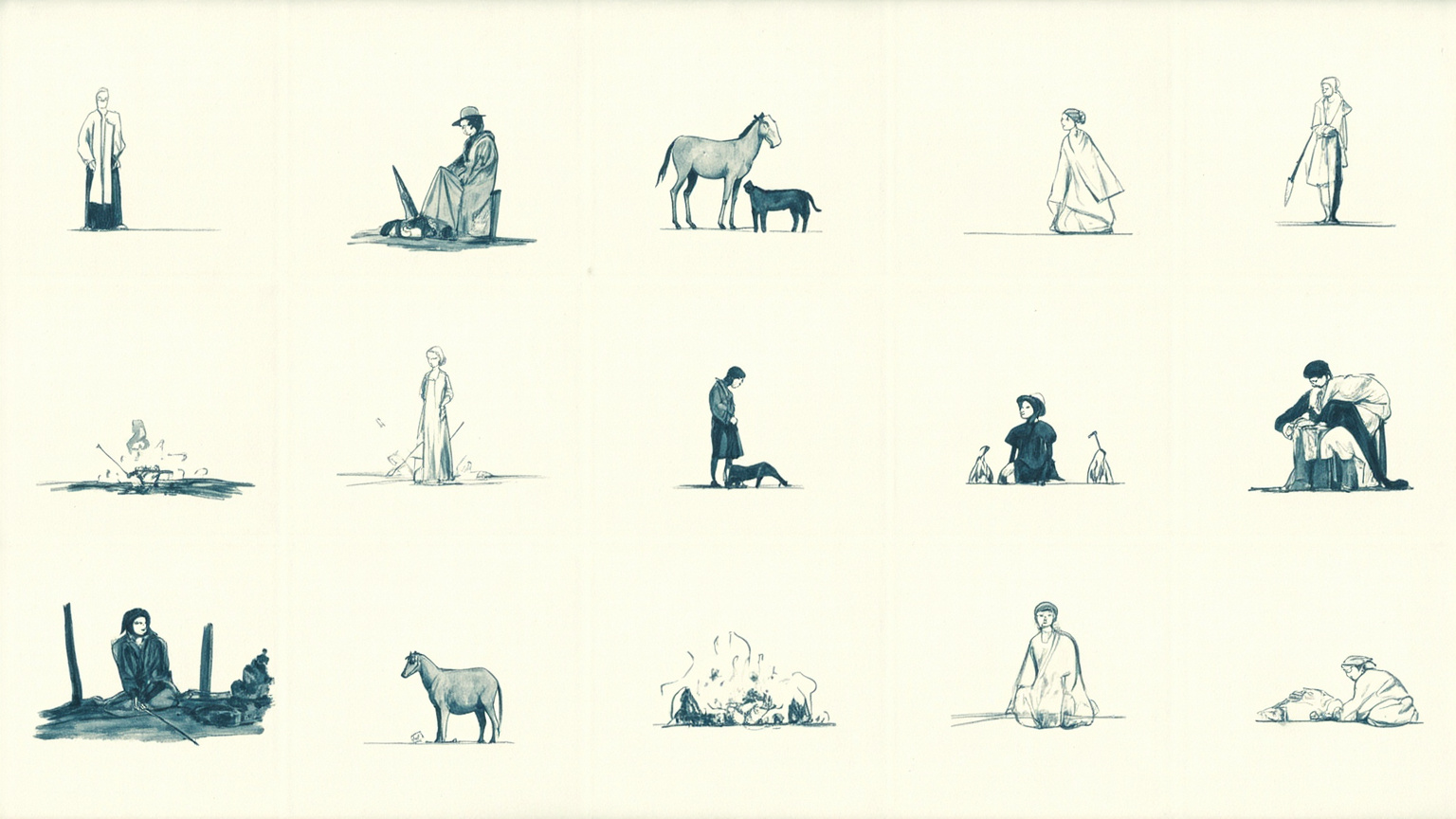
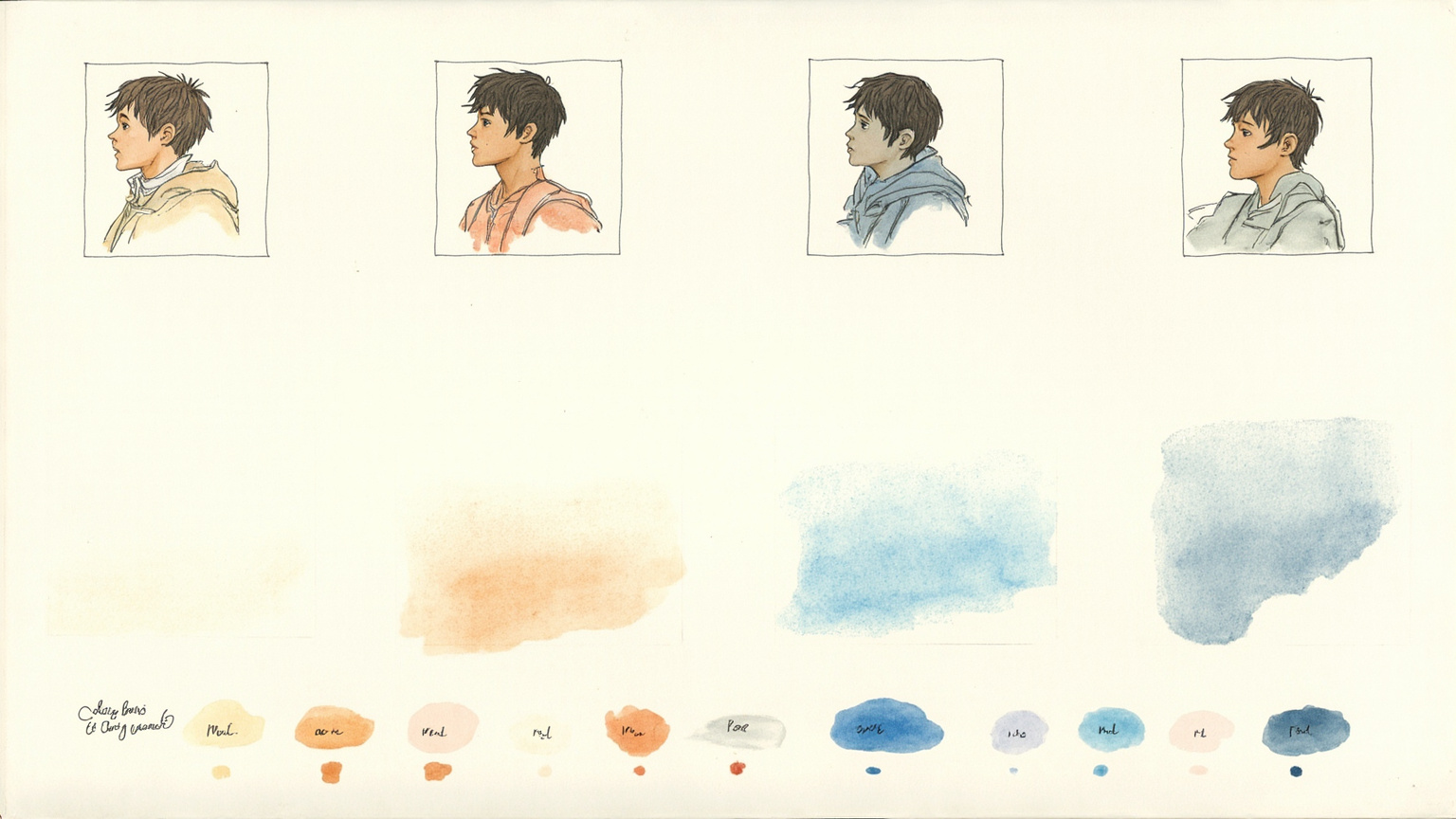
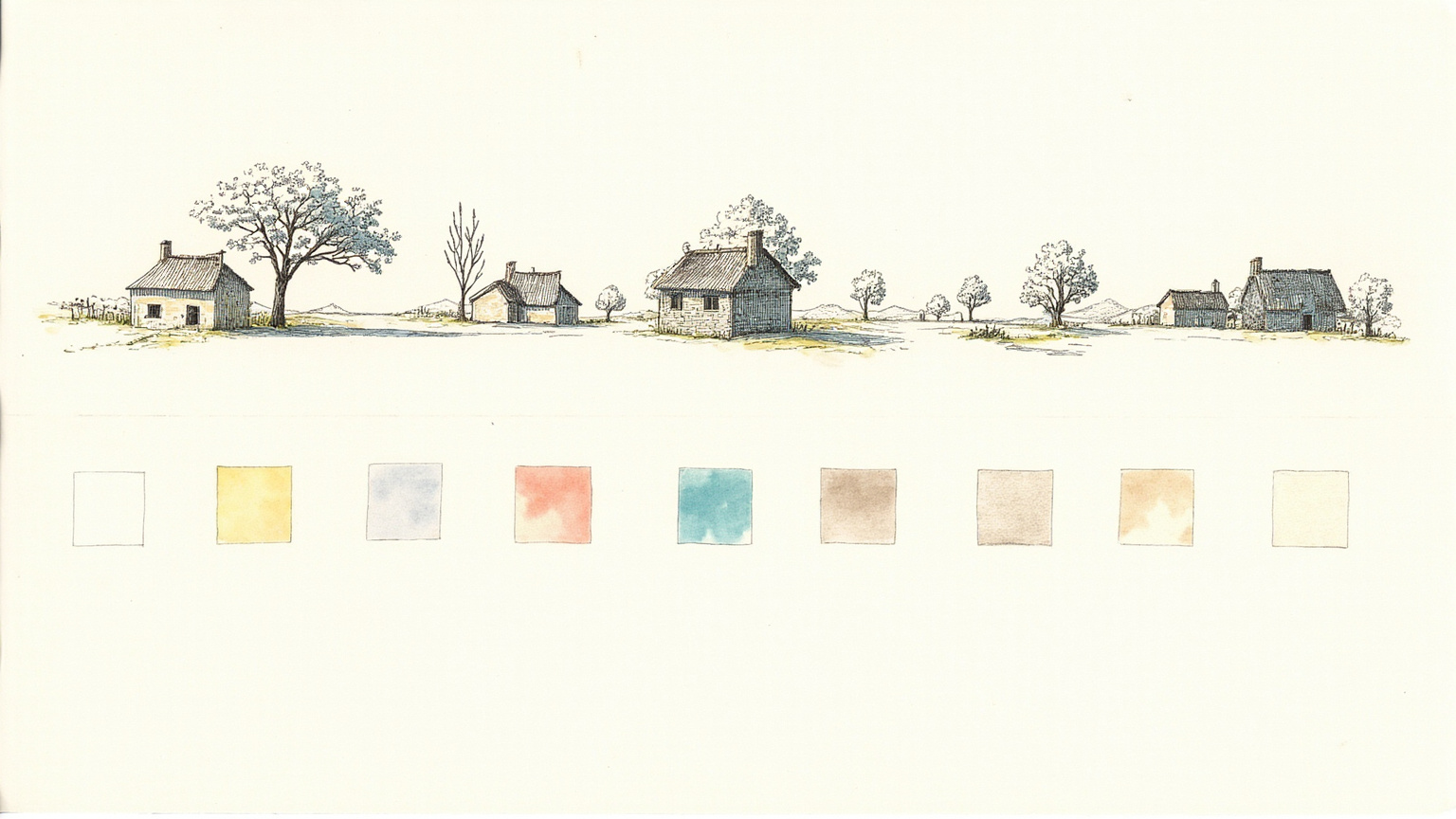
Art Direction4 plates
Before the guide was written, this book got a visual foundation — every illustration you just read grew out of it.