Seven Brothers (Seitsemän veljestä) · Companion Guide
七兄弟
七个不服管教的莽少年,一把火烧了自家农庄逃进芬兰森林;野性撞上秩序,七年光景,长成七个能持家、能认字、能成家的芬兰汉子
Opening: A Torch on Their Own Roof
When the seven boys threw their torches onto the thatched roof of their own farmhouse, they probably thought they had done something magnificent. In the firelight they turned and ran, straight into the black wall of spruce forest behind them. The farm burning behind them was one they had set alight themselves — their mother had just been buried, their father was away, and no one was left to stop them. The fire was rebellion and departure in the same motion.
You have probably never heard of this book, but Finns keep it on the top shelf next to the Kalevala, their national epic. It was written more than a hundred and fifty years ago by a young man who was broke and going nowhere — the first novel ever written in Finnish. Almost no one bought it when it came out, and within a few years the author was dead. It kept getting read anyway, until it became the mirror Finns use to see who they are.
What Kind of Book Is This
The author gave himself the pen name Kivi, Finnish for stone. His real name was Aleksis Stenvall, born in 1834, and he was still under thirty when he wrote this book. By the time it came out in 1870, Finland was a grand duchy under the Russian tsar, with Swedish as the official language while ordinary people spoke Finnish. This book took the voice of those ordinary people and told their daily lives in it, which is why later generations came to call it Finland's national novel.
It is not a tragedy, and it is not a heroic epic. It is a rural comedy that smells of mud. Seven boys skip school, burn down their house, and run for the forest, then eventually come back to dig stones out of the fields, build a house, marry, and raise children — the kind of coming-of-age story that makes you laugh out loud and then catch your breath. Nordic literature has almost nothing else this untamed in tone.
The Seven Brothers
The eldest, Juhani, has the hottest temper and the loudest voice. With their parents gone, he runs the house, and his fists come out fast — quickest to defend his brothers, quickest to start trouble. Tuomas, the second, is all muscle and a beat slow in the head, the easiest of the brothers to fool and the group's built-in comic target. Eero, the third, has a sharp tongue and quick hands; skipping school, picking fights, and cooking up mischief are always his idea, and he is the engine that keeps the whole book rowdy.
Timo, the fourth, is the fastest on his feet and the best climber, running through the forest like a hunting dog. Aapo, the fifth, says the least; when the others boil over into an argument, he sits to one side whittling wood, and somehow looks the steadiest of them all. Simeoni, the sixth, is small and thin and quick to cry out — first to complain of hunger, first to complain of cold, first to collapse from exhaustion, the group's designated wailer. Lauri, the youngest, is still a boy, tagging along behind whatever his brothers do, and he grows up right along with them.
The story is set in inland Finland in the 1830s and '40s, on a remote farm far from any town. Finland was already a Russian grand duchy under the tsar by then, but daily life went on as before: spruce forest so thick it blots out the sky, lake after lake and bog after bog, log houses, sauna huts, stony fields, stands of white birch, snow deep enough in winter to bury a man to the chest. What their father left them was a patch of wilderness and little else. What the boys wanted was to be left alone.
The Plot: From Truancy to Family
The story opens by kicking the rules straight out the door. Their mother has just been buried on the hillside; their father has gone south on business; the seven brothers are left holding the farm. Juhani, the eldest, lays down the law: no lessons, no reading, this is how we live now. The local pastor comes by again and again to talk sense into them and gets cursed off the property every time. Villagers who bring word from the neighboring farms get beaten off it too. Then the town posts a notice ordering the boys into school by force, and that turns out to be the last straw.
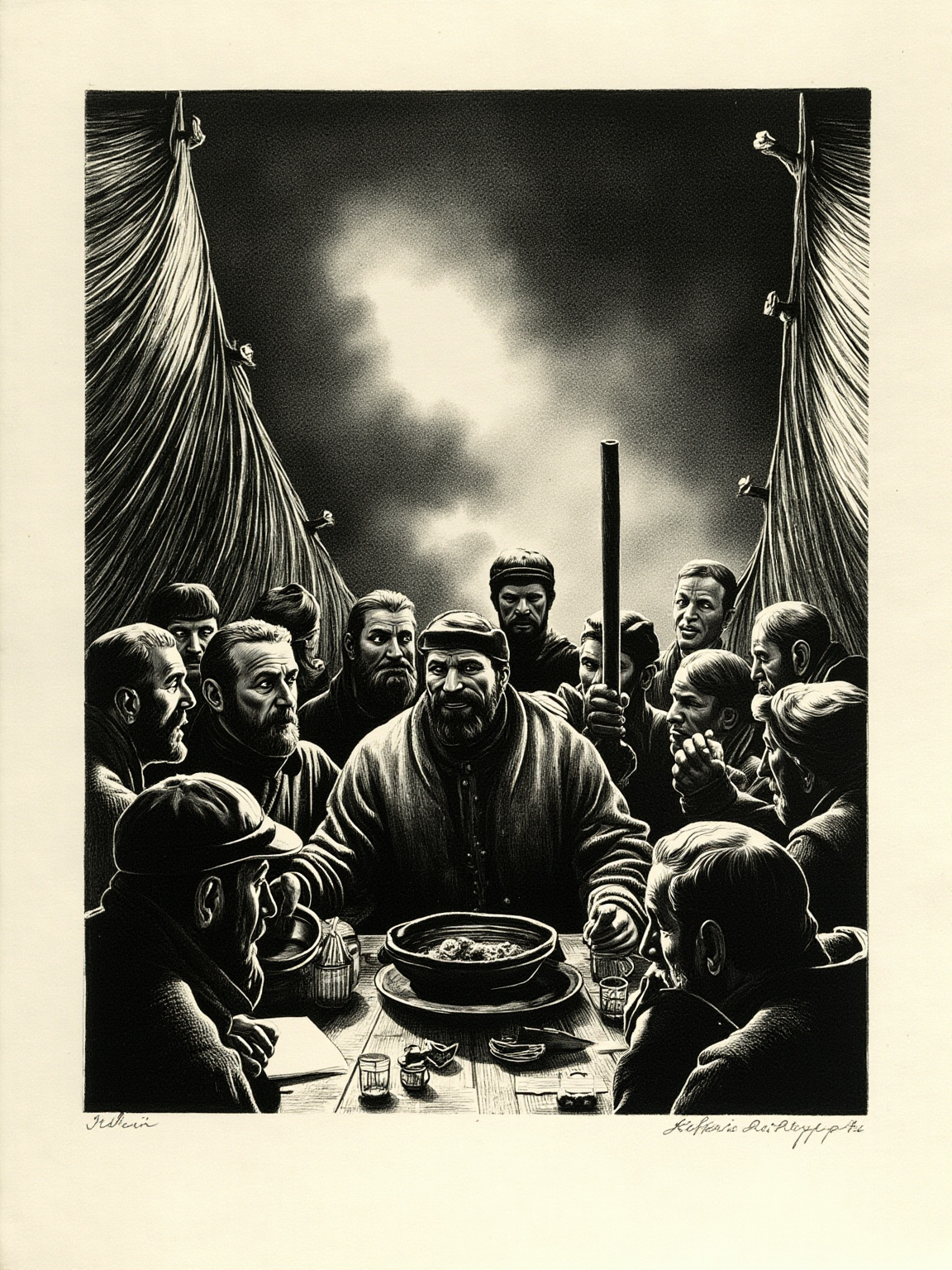
Let us live as we will; we will not learn to read.
我们爱怎么活就怎么活,休想叫我们去念书。
金句 · 开场章 · 拒学
So comes the fire from the opening scene. Under cover of night the brothers set their own farm alight and vanish into the deep forest. This is the pivot the whole book turns on: not wandering off, but tearing themselves out of home by the root and throwing themselves into the wild to see what they're made of. The craft here is sly. Burning down the family home is about as big an event as a book can stage, and Kivi writes it weightless, like boys storming out in a huff, without a trace of elegy.
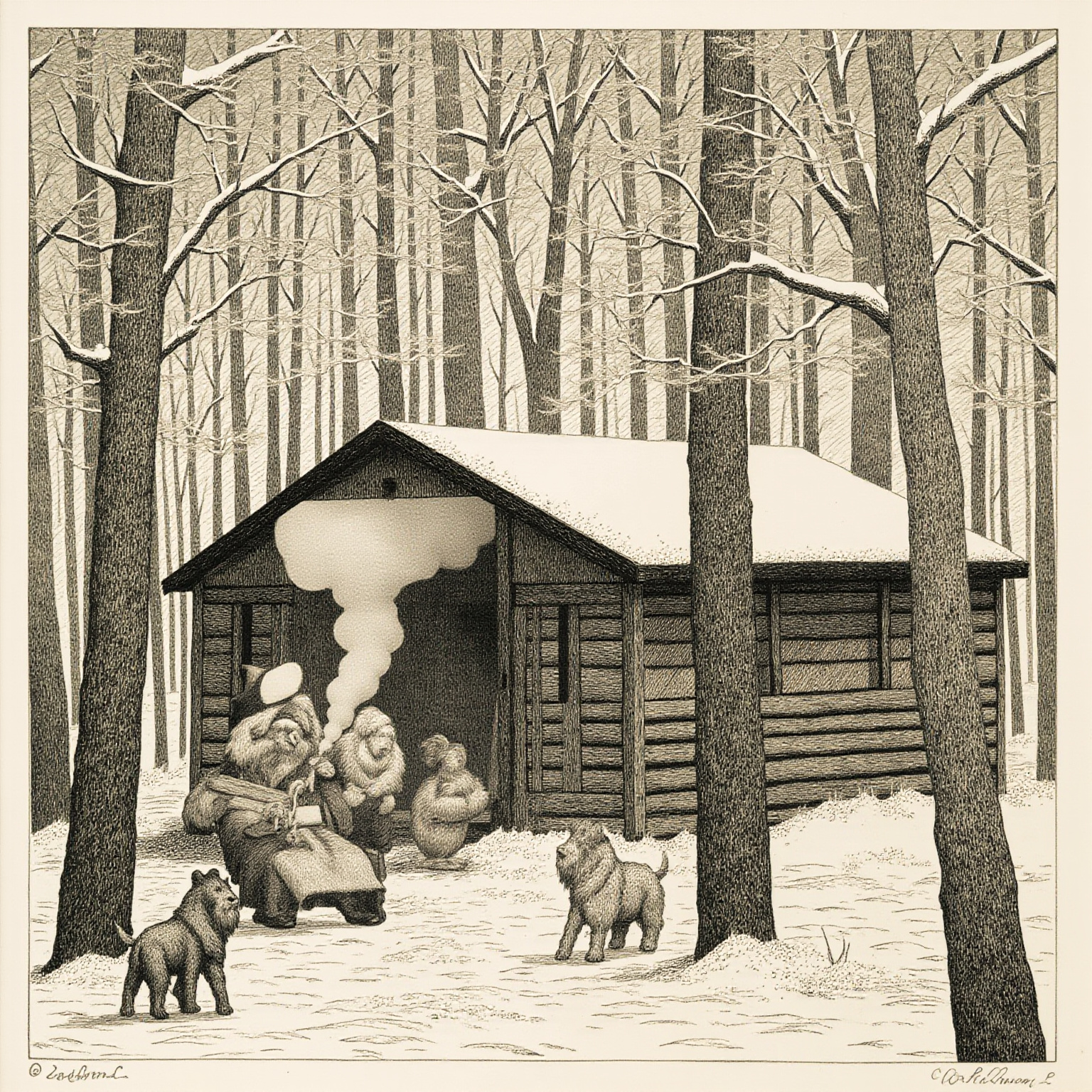
They set fire to their own home and plunged into the black spruce forest.
他们自己动手把家点着了,转身一头扎进那片黑压压的云杉林。
金句 · 第二章 · 焚宅出逃
The forest is where the real hardship starts. First comes the shelter, a lean-to of pine branches that keeps out rain but not wind, and when a Finnish winter night drops to thirty or forty below, the brothers huddle together and still shiver through it. Second comes food: the hunting misses, the traps stay empty, and hunger drives them to gnaw bark. Third, the forest isn't theirs alone; there are wolves. One night the howling closes in around the hut, and the brothers sit up until dawn gripping their axes, knowing that if the fire dies, so do they.
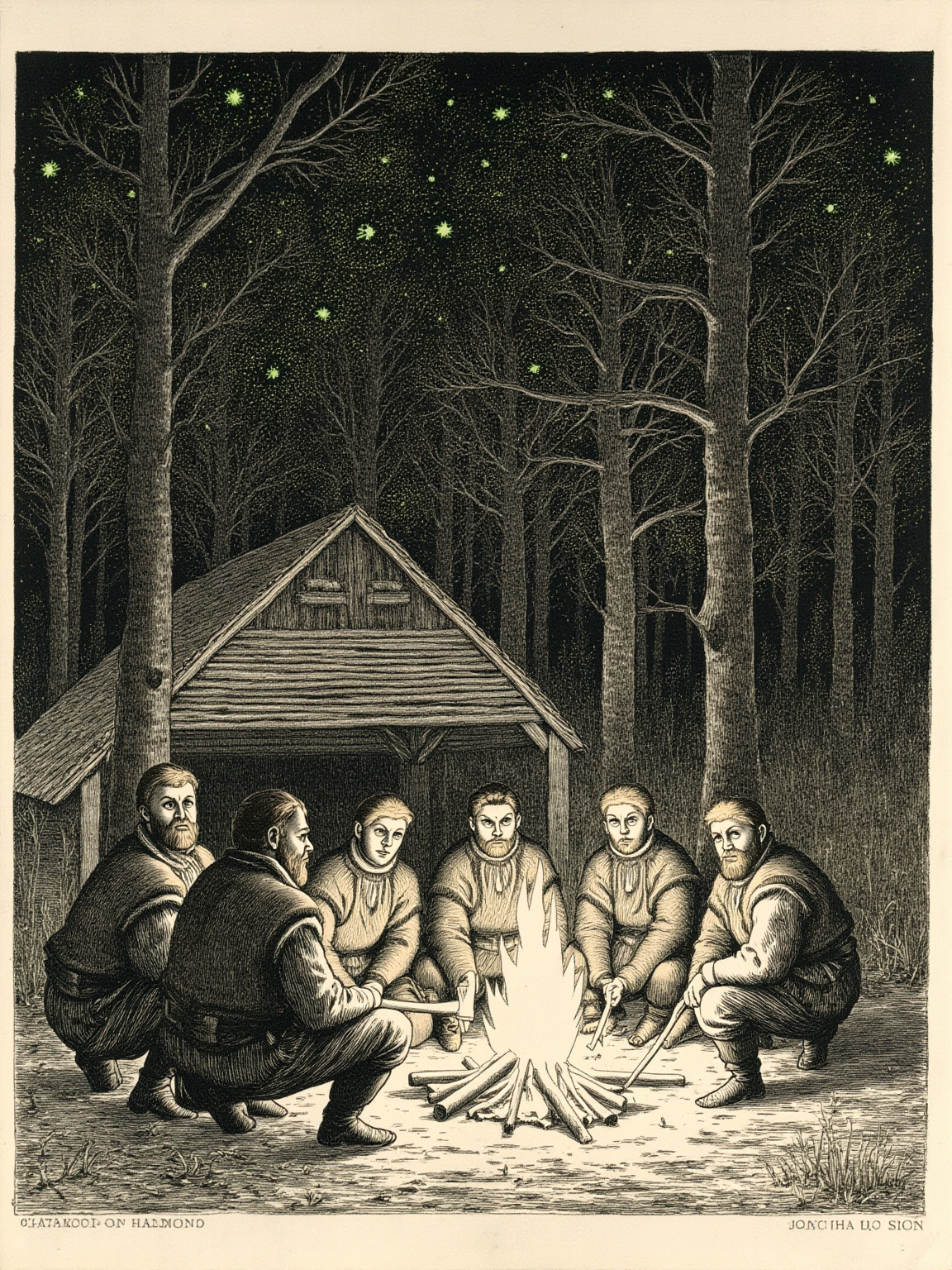
Hunger gnawed at their bellies and the winter night pressed in with its cold of forty degrees.
肚子饿得咕咕叫,零下四十度的冬夜压过来,冻得他们直打哆嗦。
金句 · 荒野章 · 雪夜饥寒
Along the way come episodes that leave you laughing and wincing at once. They tame a wild horse they call Reipo and ride it out hunting, only to be mocked by the neighboring villagers for not knowing basic manners. They sneak out at night to steal potatoes from someone's field and get chased off with a beating. They run into passing hunters and the pastor, mouth off every time, and get the worse of it every time. Kivi never lets these clashes draw real blood; it is cartoon recklessness, seven brothers making fools of themselves together and laughing about it together. The tone holds steady across the whole book: coarse, comic, mud-caked, but never bleak.
The turn comes on a night of thunder and lightning. Lightning strikes the cramped, nest-like hut where they've been sheltering; fire breaks out, a tree comes down, and the brothers nearly freeze to death out in the open. In the firelight, Juhani stops talking tough for the first time. He wakes up to it: raw nerve and brute strength cannot carry a life all the way through. Kivi doesn't reach for a moral here. He writes one gesture instead: Juhani gathers his brothers and starts walking home.
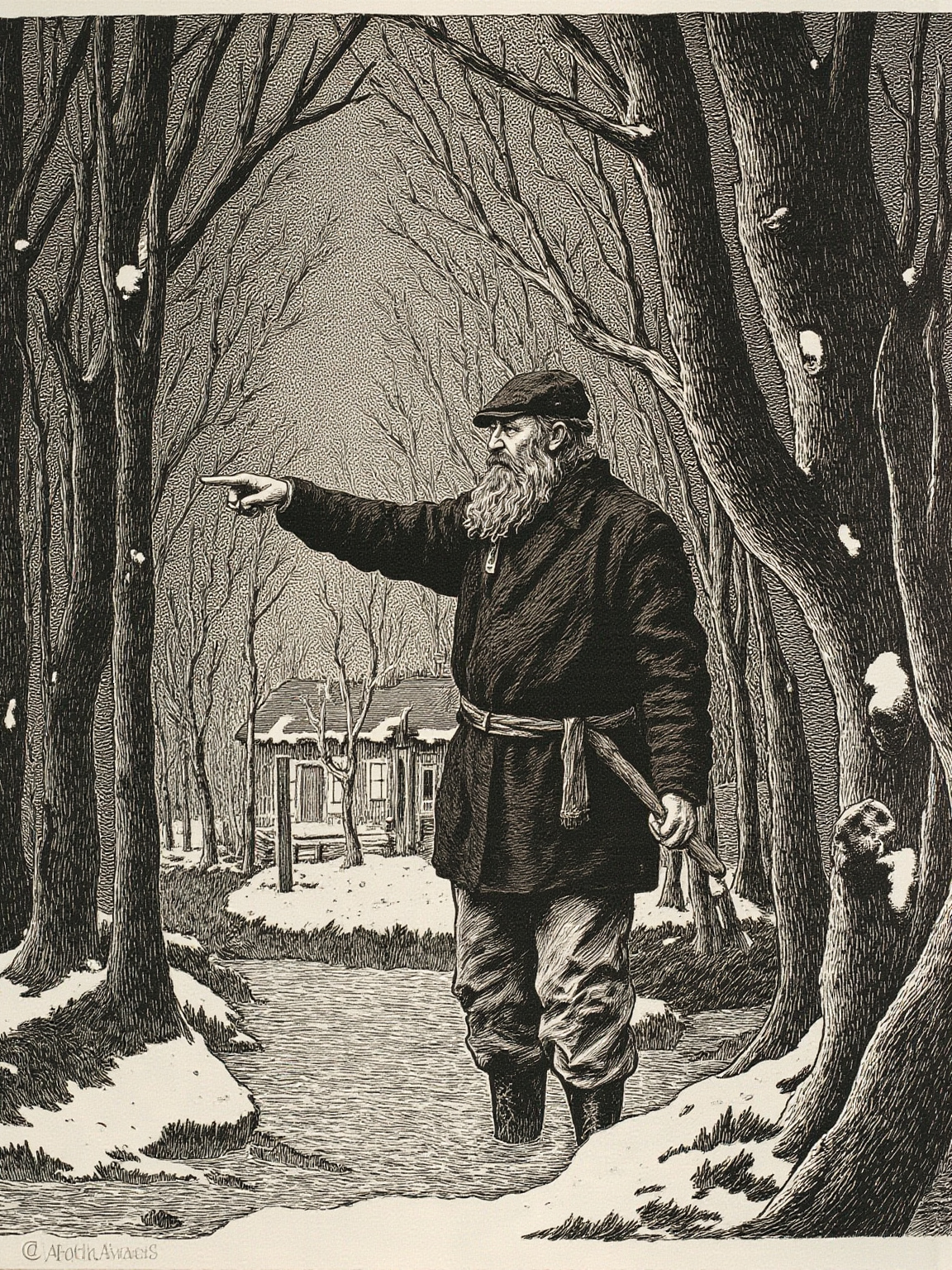
He grasped his brothers by the hand and led them back toward the clearing of their own land.
尤霍一把握住兄弟们的手,领着他们,朝自家那块烧过的林间空地走回去。
金句 · 转折章 · 雷暴醒悟
Back at the site of the farm, what greets them is a stretch of charred ruin, the very thing they burned down with their own hands. Kivi doesn't let them wallow in it, and he doesn't let them repent either. He puts them to work: clearing the stony fields, prying the stones out of the ground one by one; felling spruce to build a new house; digging a root cellar, raising a new sauna hut; using everything the forest taught them to rebuild the home, piece by piece.
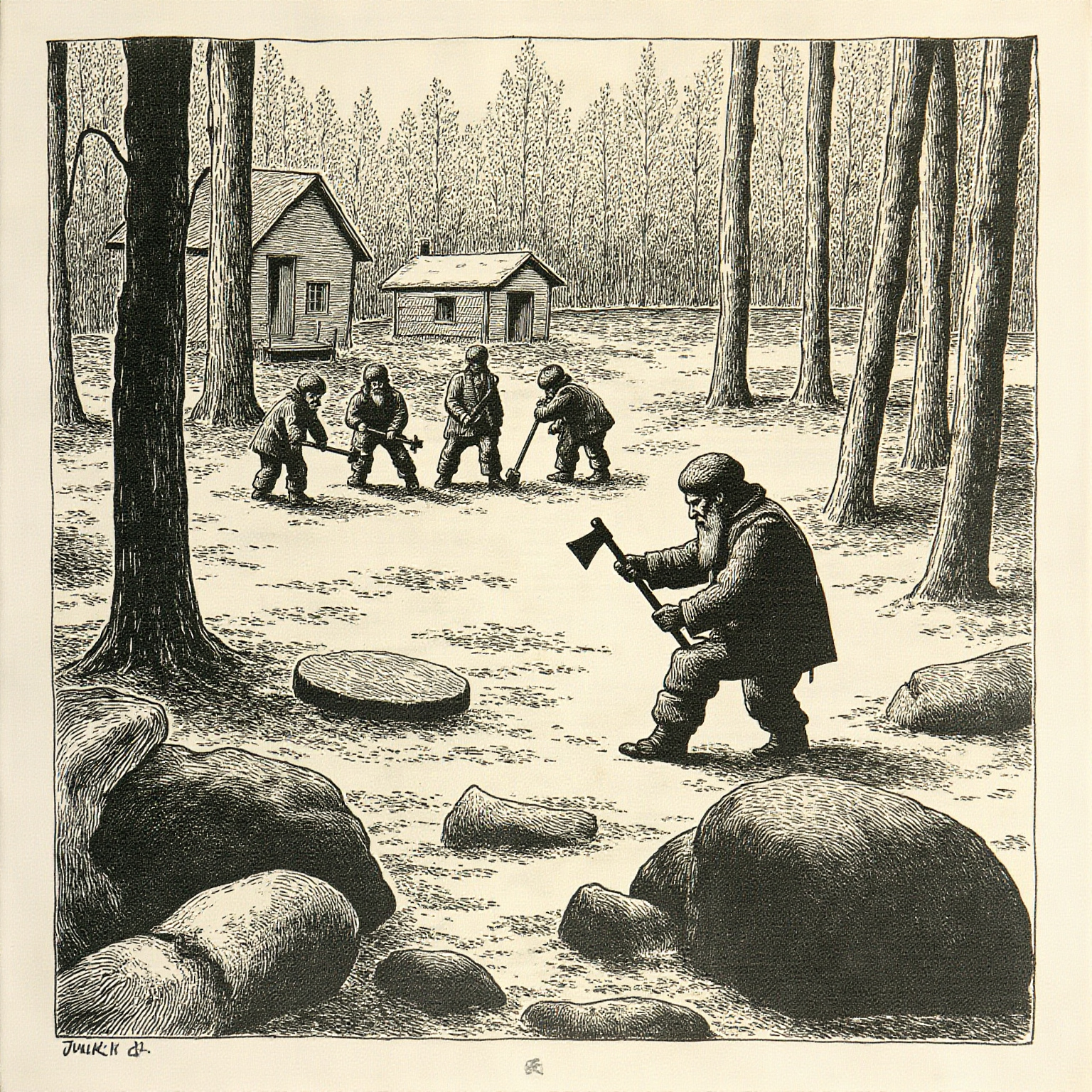
They cleared the stony field stone by stone, and built a new house upon the old ground.
他们一块一块把石头从地里刨出来,在旧地基上,一根根云杉木地盖起新屋。
金句 · 落地章 · 垦石建屋
Building families is even livelier. One by one they marry girls from the neighboring villages, and the house fills up with both laughter and rules. On winter nights they gather around the fire and learn their letters from an old man in the village who can read and write, the very thing they once hated most, they now chase after on their own. When the pastor they once cursed off the property comes calling again, the brothers pour him a cup of tea, proper as anything, and the old grudge is closed. A loose gang of seven becomes, this way, a small, whole community of its own.
The ending lands in spring. Steam rises off the new sauna, a new generation of children runs around the yard, and the seven wild boys have become men who can run a household, read, and stand as equals among their neighbors. Kivi closes the book without fuss: the boys ran into the forest and out of it again, and where they finally settled was a plot of ground they had cleared with their own hands.
What It's Really About, and Why It Lasted
On the surface it's a story of seven troublemakers who straighten out. Underneath, Kivi is writing a particular kind of growing up: not instruction handed down, but lessons earned by running into things head-on. Growing up doesn't only happen in a classroom. Surviving a winter in the forest, prying stones out of a field, that counts too. Wildness and order aren't opposite ends of a line with nothing in between. The middle ground is exactly where the Finnish countryside lives: rough, forceful, funny, and still able to hold its own ground.
In the middle of the nineteenth century, simply writing a novel this long, this wild, and this rooted in ordinary life in Finnish was itself a kind of statement: the people of this land speak this language, live these lives, endure this hardship, and take this kind of joy. More than a hundred and fifty years later, Finns still read it and feel the intimacy of flipping through their own family photo album. That, probably, is what it means to be a national novel.
Wildness and order aren't opposite ends of a line. The middle ground is where the Finnish countryside lives.
Why Read the Book Once You Know the Plot
A summary can give you a map, but no map can draw the green flash of a wolf's eyes reflected in the snow, or the hot, sharp smell of birch smoke in a sauna thick enough to sting your eyes shut. Every comic scene Kivi writes has sound in it, and heat, and the mineral smell of the Finnish countryside's mud, and that only lives, solidly, inside the original prose. No retelling can carry it across. Once you know they burned the house, froze half to death, and came back to break the ground, going in to read for yourself, you will run into turns of phrase you did not see coming even in scenes whose outcome you already know: Kivi reaches for irony at the worst moments and pulls back a notch right at the happiest ones. Each brother makes a fool of himself in his own particular way, and their country speech turns out to be its own kind of music. Go read it. Go listen to it.
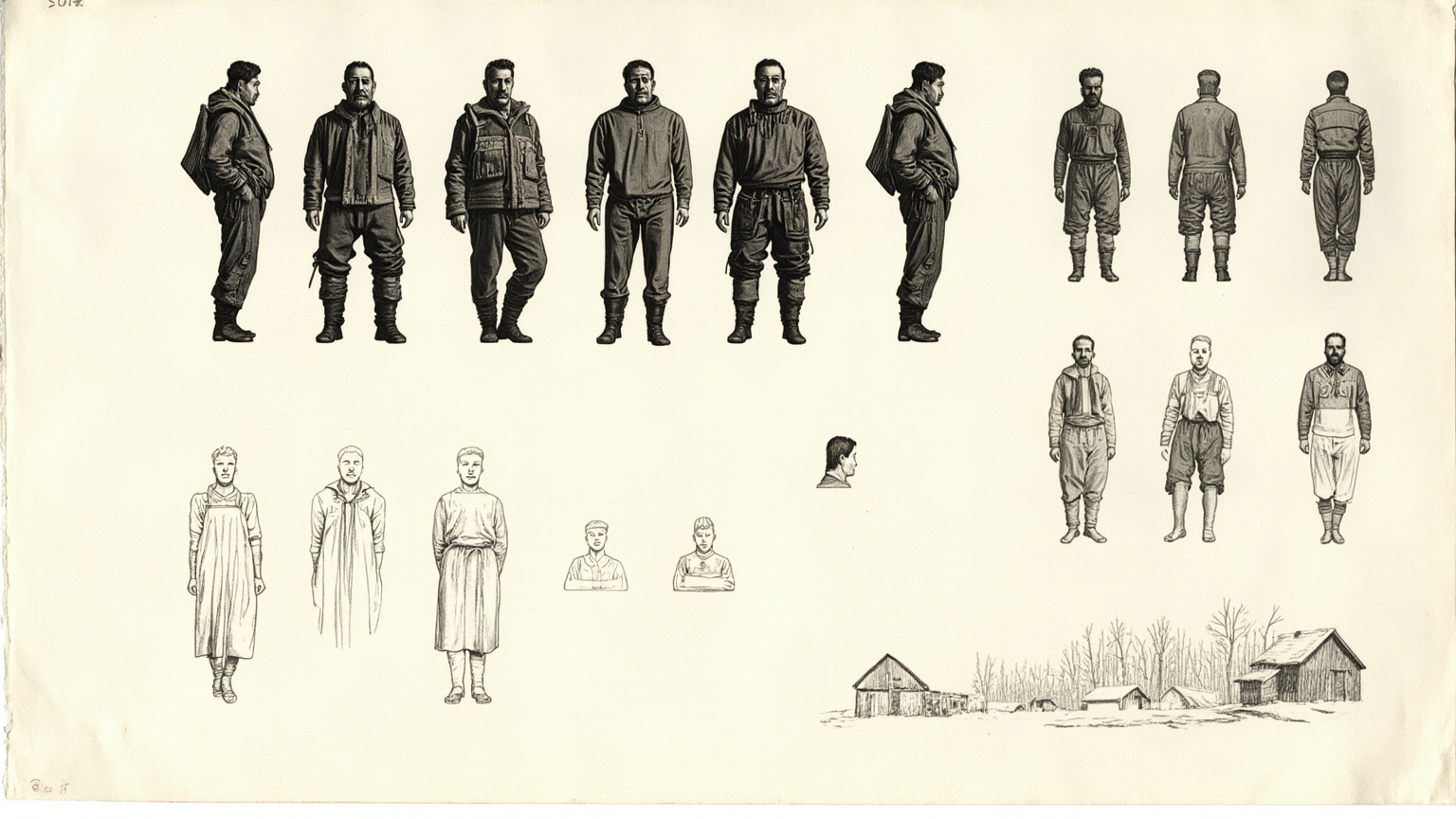
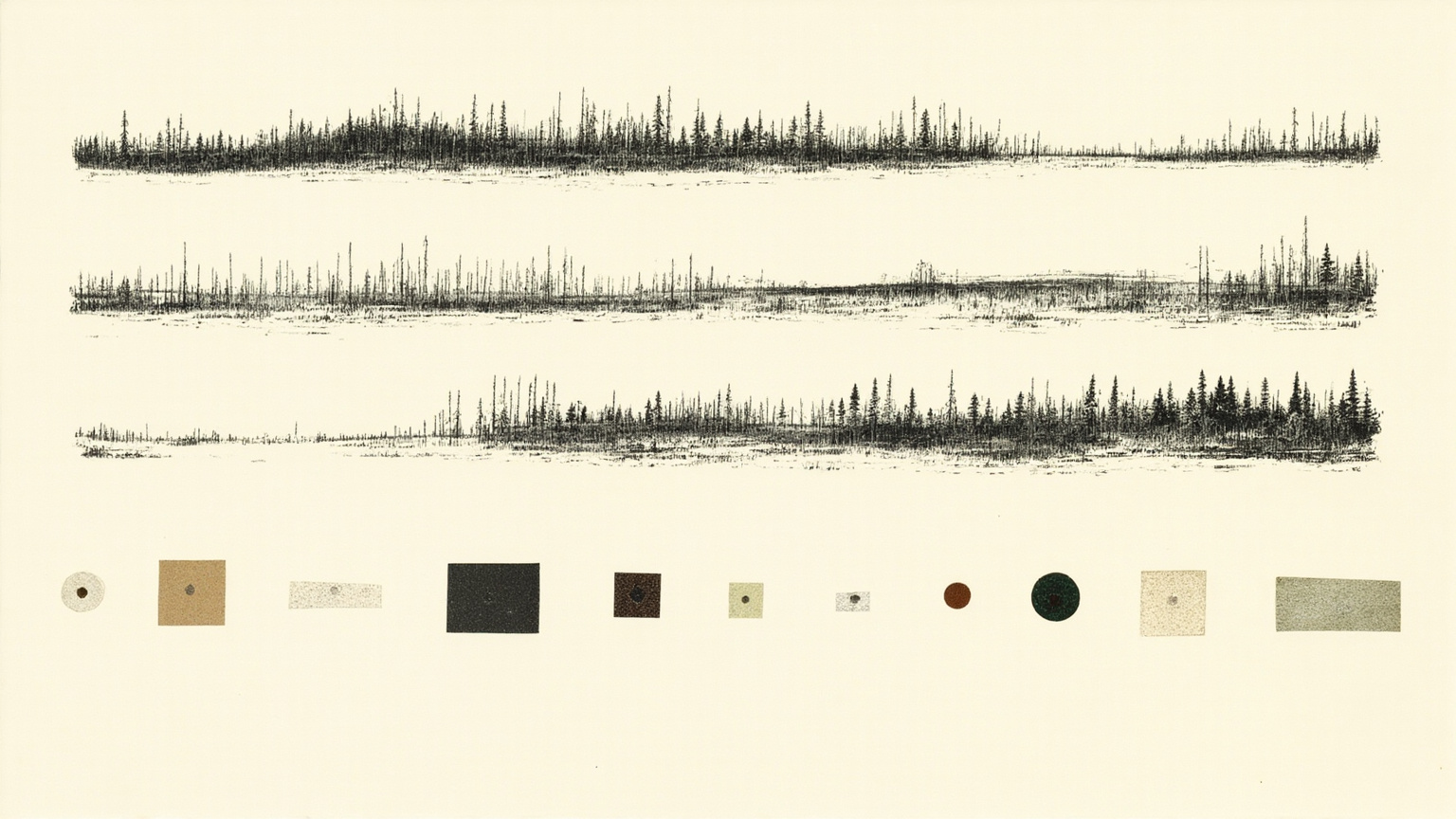
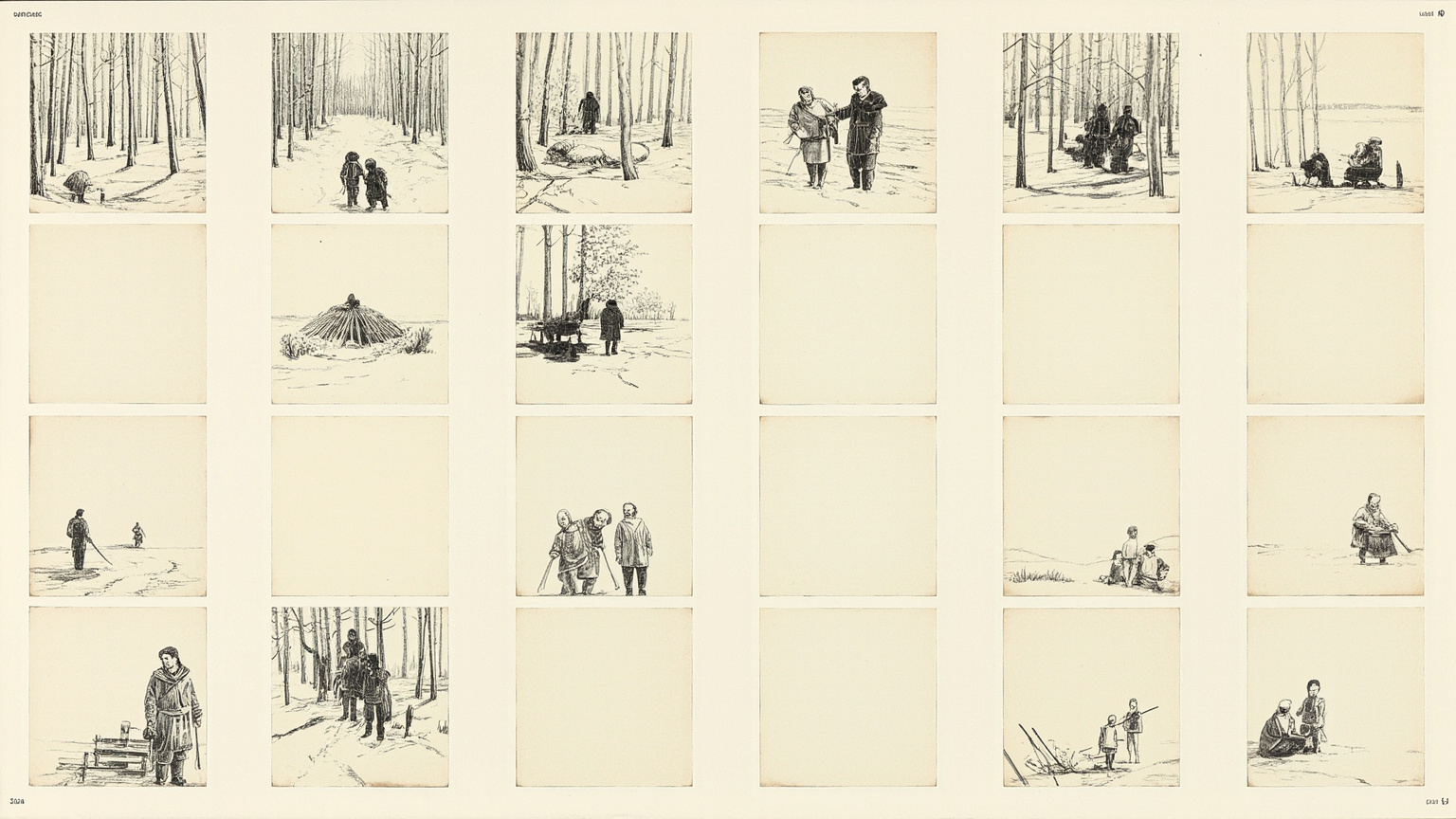
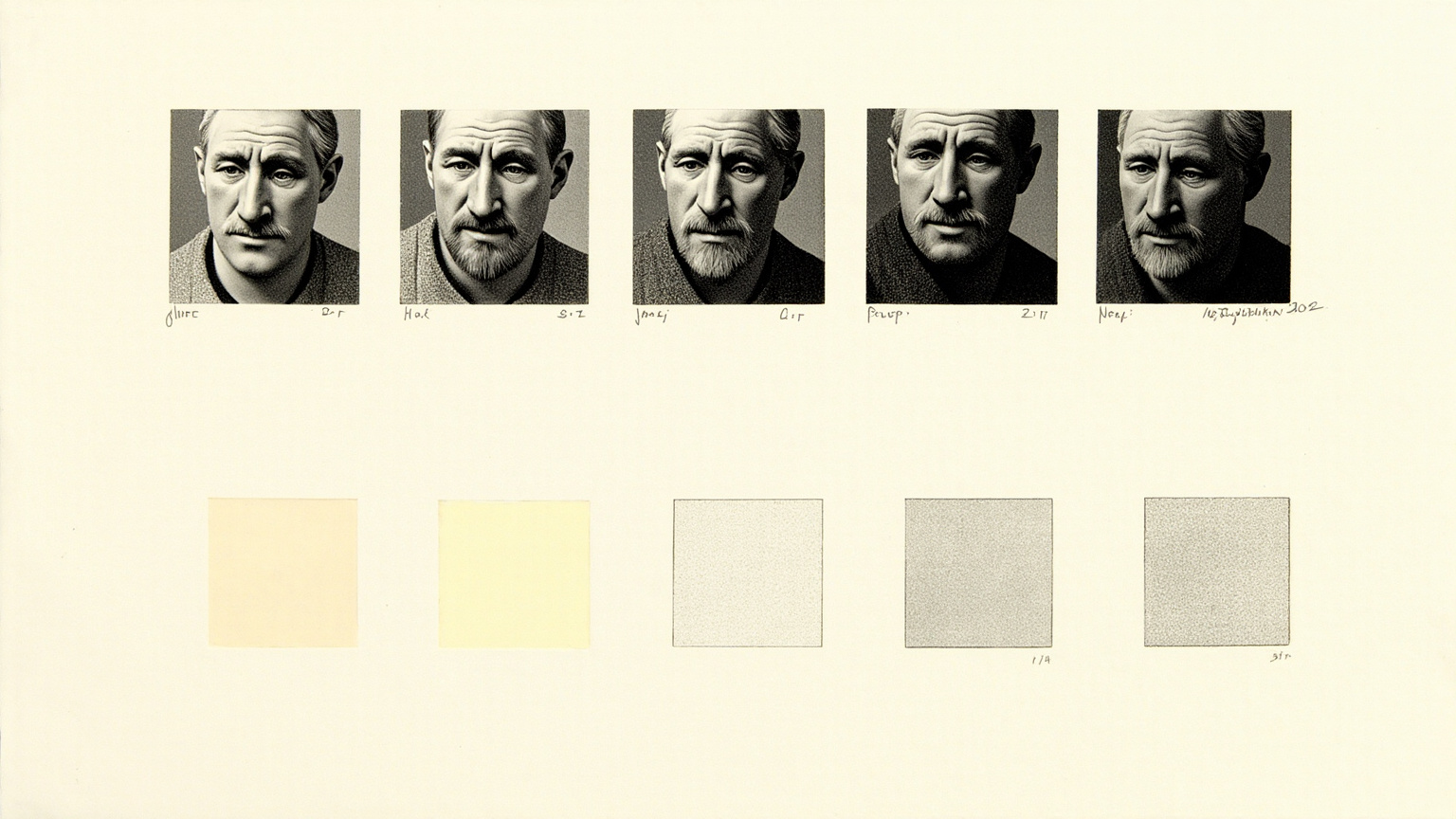
Art Direction4 plates
Before the guide was written, this book got a visual foundation — every illustration you just read grew out of it.