Silappatikaram (Cilappatikaram) / The Tale of an Anklet · Companion Guide
脚镯记
一只珍珠脚镯当庭摔碎,钉死了国王未经审判便杀人的罪,也焚尽了一座王城。
Opening: Something Strikes the Throne
An anklet strikes the golden floor of the Madurai palace, and pearls scatter across the tiles.
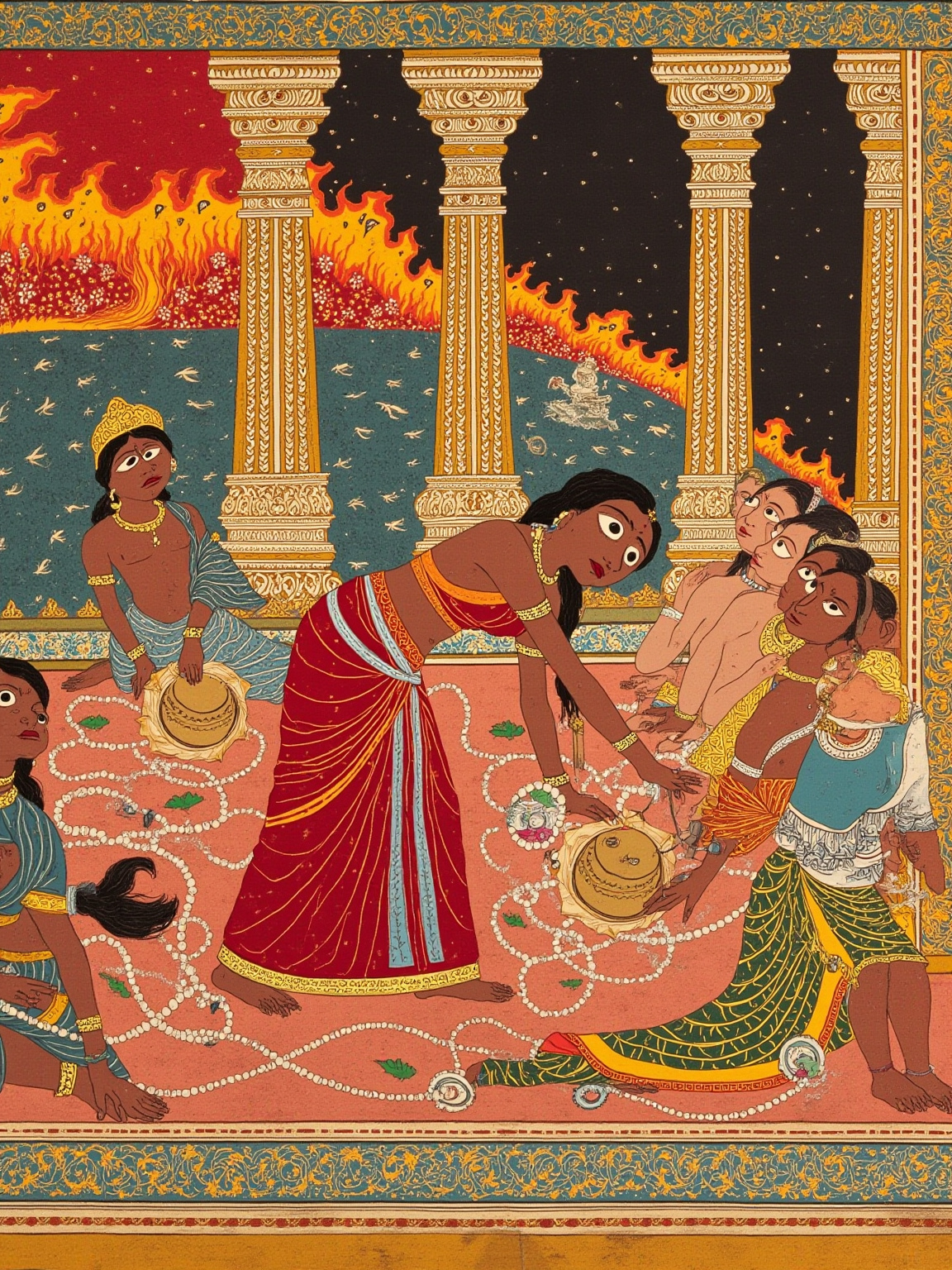
She flung the anklet before the throne, and the pearls within it rolled forth upon the golden floor.
她在王座之前掷下脚镯,镯中所藏的珍珠,滚滚落在金色地砖之上。
金句 · 开篇序诗 · 宝石脚镯之掷
It is the moment in this Tamil epic that will not let you sit still. A merchant's wife, her husband just beheaded on the king's word without so much as a hearing, makes her way to the palace and throws down an anklet before the assembled court — pearls spill out, not the ruby that went missing from the queen's own anklet. Every one of the poem's five thousand-odd lines was written to arrive at this.
What Kind of Book Is This
The Cilappatikaram — the title means something like The Tale of the Anklet — was composed in South India around the fifth century CE. It stands first among the five great Tamil epics, the poem Tamils reach for when they want their own Iliad or Ramayana. Tradition credits it to Ilango Adigal, the monastic name of a renounced prince said to be the brother of the Chera king Chenguttuvan and a Jain ascetic — but no Sangam anthology ever mentions him, and who actually wrote it remains an open question. Set it against the world's epic tradition and it looks strange on purpose: the central figure is not a king, not a warrior, not a god, but a mortal woman from the merchant class. The whole poem moves along the coasts and through the palace halls of South India's three great Tamil kingdoms — Chola, Pandya, Chera — turning one private miscarriage of justice into a shared national memory.
Characters and World
Kovalan, son of a wealthy merchant in the port city of Puhar, marries Kannagi, another merchant's daughter. He spends the marriage not building the family business but pouring himself into the arms of the dancer Madhavi, until the money runs out. Madhavi is Puhar's most celebrated dancing girl, and it is her own song, sung at the singing contest during the festival of Indra, that finally shames him awake. Kannagi is the poem's real protagonist. She is no queen, no goddess — a merchant's daughter in a sari, walking barefoot through the port-city markets. Loyalty and nerve live in the same body: watch how this apparently soft-spoken woman ends up walking alone into a golden hall to face a king. The other half of the tragedy is Nedunchezhiyan, king of Madurai, who orders Kovalan's death on the spot, without a hearing, without a check of the facts. Behind the false charge sits a goldsmith's own scheme: Queen Kopperundevi's ruby anklet has gone missing, and it is the goldsmith who pins the theft on Kovalan, not the other way around. The queen never traced a missing anklet to him — the goldsmith recognized the pearl anklet in Kovalan's hand and went straight to the palace to denounce him.
The story is set in late Sangam-era South India. Puhar is the Chola kingdom's seaport, its goldsmith stalls and shipyards crowded during monsoon season with Arab, Greek, and Tamil traders. Madurai is the inland Pandya capital, its palace built around a hall of gold pillars and a hall for dancers. The Chera kingdom, where the story ends, lies in what is now Kerala. Three cities, three different orders of power set side by side — that is the epic's skeleton.
The Plot
Kovalan and Kannagi's marriage begins respectably enough — two merchant families' children, seen walking together past the goldsmith stalls and shipyards of Puhar. Then Kovalan falls for the dancer Madhavi, and the money pours out like water, until his father's fortune runs dry. It takes a mocking song from Madhavi herself, sung at the singing contest during the festival of Indra, to shame him back to his senses. There is a sharp move in how this is told: it is the mistress, not the weeping wife, who calls the unfaithful husband home. Madhavi sings her song in public, and the whole city hears it — Kovalan has nowhere left to hide. No private pleading could have cut that deep.
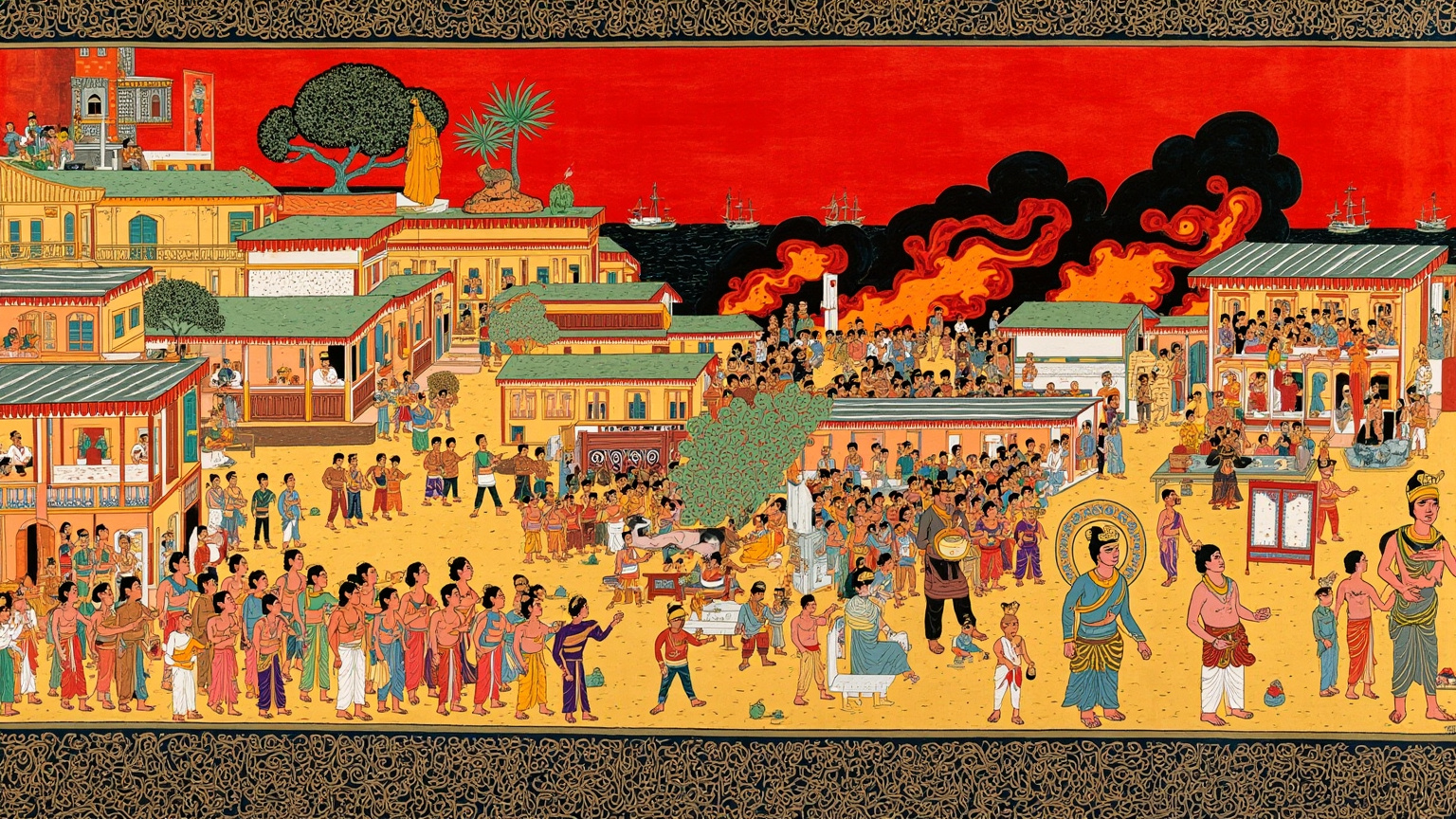
At the festival of Indra she sang and named him openly before the people, shaming him back to his wife.
因陀罗节庆赛歌会上,她一字一句当众点着柯伐兰的名,把他从歌台前骂回妻子身边。
金句 · 因陀罗会歌卷 · 玛达维之歌
Husband and wife reconcile, but the household is already empty. They leave Puhar with nothing, walking overland to Madurai, capital of the Pandya kingdom, to start again. Kannagi slips one jeweled anklet off her own foot — this one filled with pearls — and hands it to Kovalan, to sell in Madurai as their new start. It is the quietest move in the whole poem, and the most fatal. From this moment a piece of jewelry becomes evidence, and everything that follows hangs from it.
Kovalan walks into a goldsmith's shop in Madurai and sets the anklet on the counter. The goldsmith looks up and starts running a different calculation: the palace is offering a reward for whoever stole Queen Kopperundevi's ruby anklet. This pearl anklet is obviously not that one, but here is a poor stranger from out of town who happens to be carrying jewels — a scapegoat, ready-made. The goldsmith turns around and reports Kovalan to the palace. King Nedunchezhiyan orders his death without a check, without a hearing.
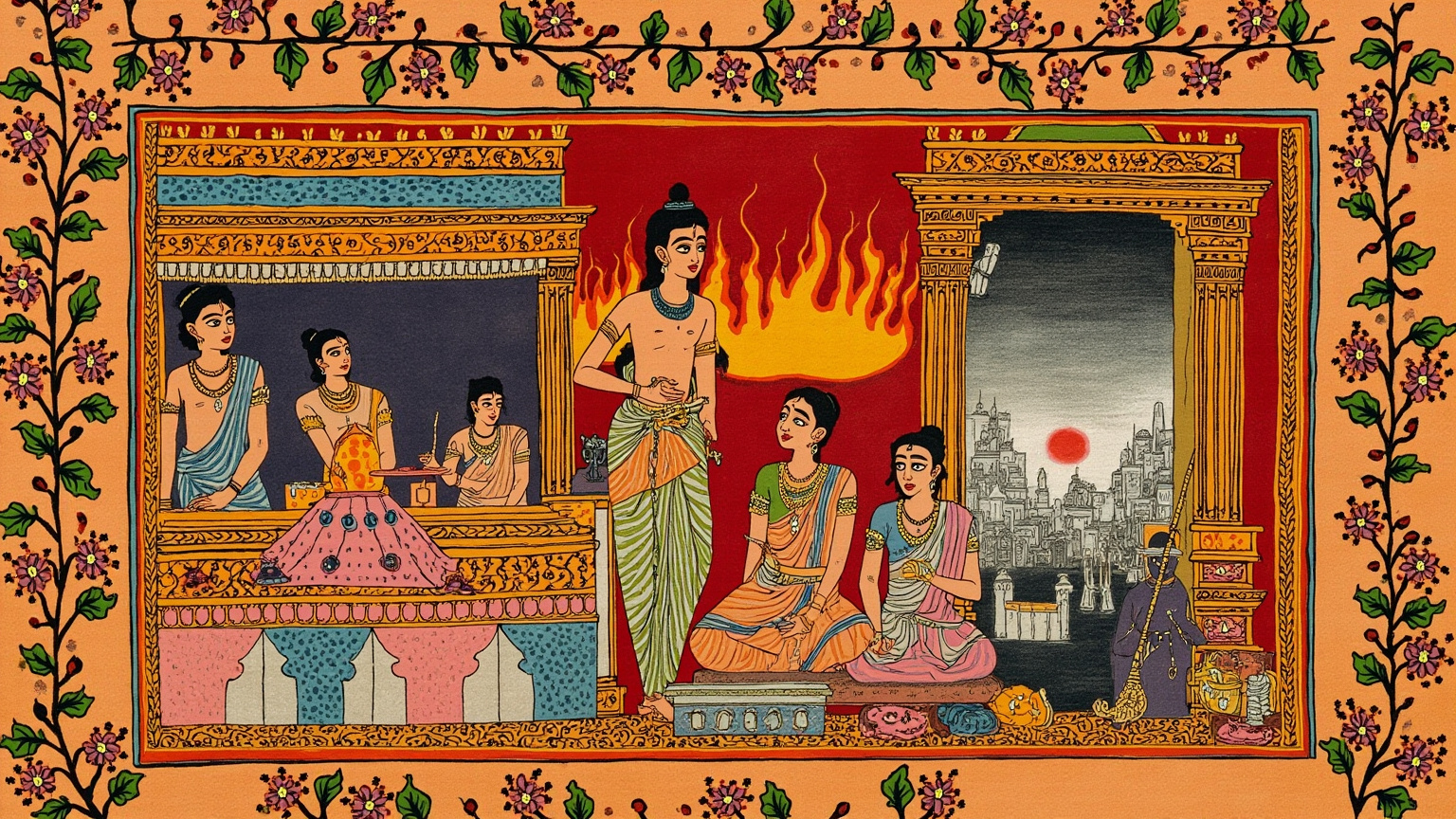
The goldsmith took the anklet, but in his heart he framed another charge against the stranger who bore it.
金商接过脚镯,心中却已为这外乡人另拟了一桩罪名。
金句 · 马杜赖卷 · 金匠之诈
Kannagi waits in Madurai until dark, and her husband never comes home. She works her way through the streets asking after him, until a guard at the city gate finally tells her what happened. She does not cry. She does not make a scene. She turns and walks to the palace. In the hall of gold pillars, the king is holding court, ministers seated all around, and she walks straight in alone, stands before the throne, raises the second anklet over her head — and smashes it on the floor in front of everyone. Pearls scatter across the tiles. Not rubies.
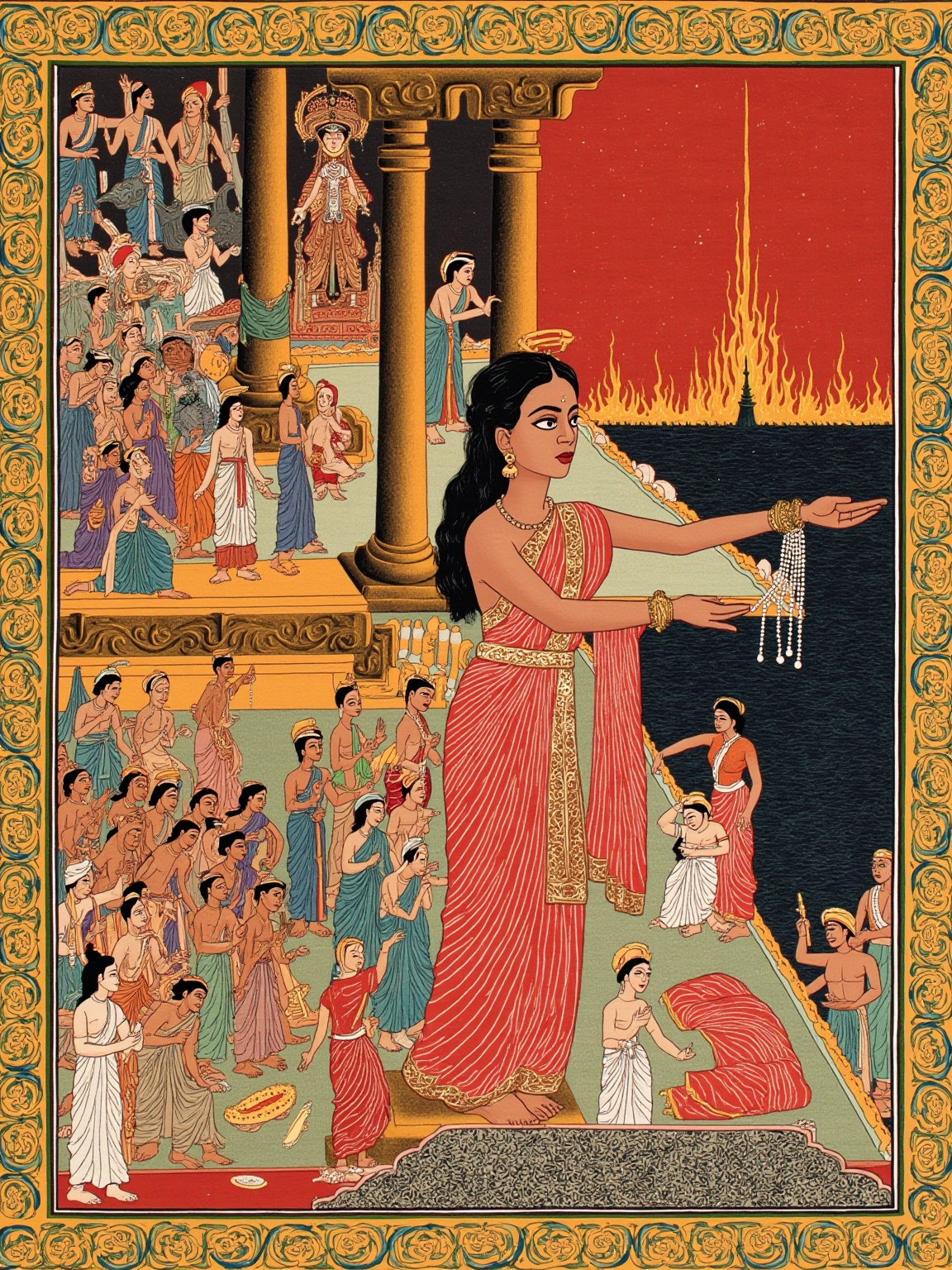
He came down from the throne and died that very night; she cursed the city that had judged her lord.
他从宝座上跌下来,当夜便死;她诅咒这座审判了她夫君的城。
金句 · 马杜赖卷 · 王崩与城咒
Only now does the king understand he killed an innocent man. He falls from his seat and is dead by nightfall. The queen follows him. Kannagi does not stop there. She denounces the whole city of Madurai for its injustice, then turns and curses the city that tried her husband — fire falls from the sky and burns Madurai to ash. The move here cuts even deeper: she does not let the king die alone, she takes the entire city down with him. A merchant's wife's case against royal justice closes with a fire.
Epilogue and Ascension
The epic does not end in Madurai's ashes. The final section moves to the Chera kingdom, where word of Kannagi reaches the third king, Chenguttuvan. He sends men all the way to the Himalayas for stone, has an image of her carved, and builds a temple to house it. The gods come out to meet her, and Kannagi rises to heaven. The story closes there, leaving behind a stone image, a temple, and the name of a merchant's daughter — set down in Tamil memory alongside the standing of the three kingdoms themselves.
Themes and Craft
What the poem is really about is how an anklet turns into an indictment of royal justice. It is not jewelry, it is evidence — falsely accused, sold, thrown down, cracked open in open court, until the charge of killing a man without a hearing is nailed to the king's own throne. Five thousand-odd lines built around one merchant's wife: nothing else in the world's epic tradition does quite that. It also stakes an early claim in literary history, fusing prose and verse in the same work for the first time, setting the template later Tamil narrative poems would follow. Three books for three kingdoms, one private wrong spread out into a shared national memory — that is the technique for turning a tragedy into an epic.
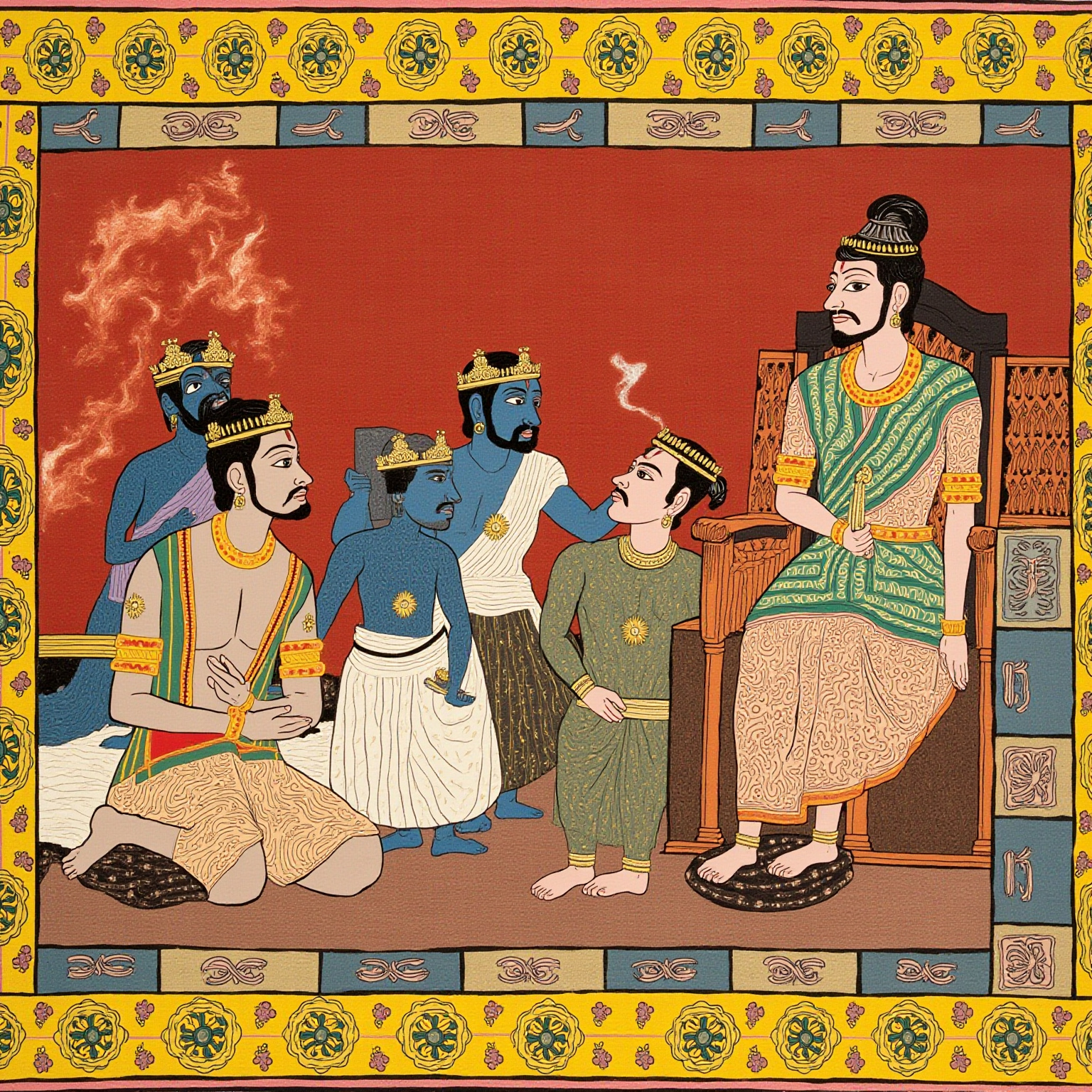
Righteousness departs from the king who slays without trial; virtue is the anklet's true jewel.
君王不审而杀,正义便离其而去;贤德,方是脚镯里真正的珠宝。
金句 · 伦理公理篇 · 三章之首
It is also a moral argument. The author states three principles up front that run through the whole poem: a king who strays from justice will be punished, a virtuous woman deserves honor, and karma tracks down every person without exception. These are not decoration, they are the plot's skeleton — Kovalan's waste, Madhavi's wake-up call, Kannagi's fidelity, the king's wrongful killing, the burning city, the temple raised at the end all land on one of the three. For a reader today, it also does something rare: it hands a mortal woman the role world literature usually reserves for a god or a king — to question power, to render judgment, to decide who lives and dies. Read it and you find loyalty and defiance living in the same person.
Why You Should Still Read the Text
At the singing contest during the festival of Indra, Madhavi does not simply sing — she names Kovalan word by word in front of everyone; in the hall of gold pillars, the anklet Kannagi throws down cracks open on the tiles and pearls roll across the floor to the king's feet. Sound, image, rhythm like that — you only get them by opening the text itself.
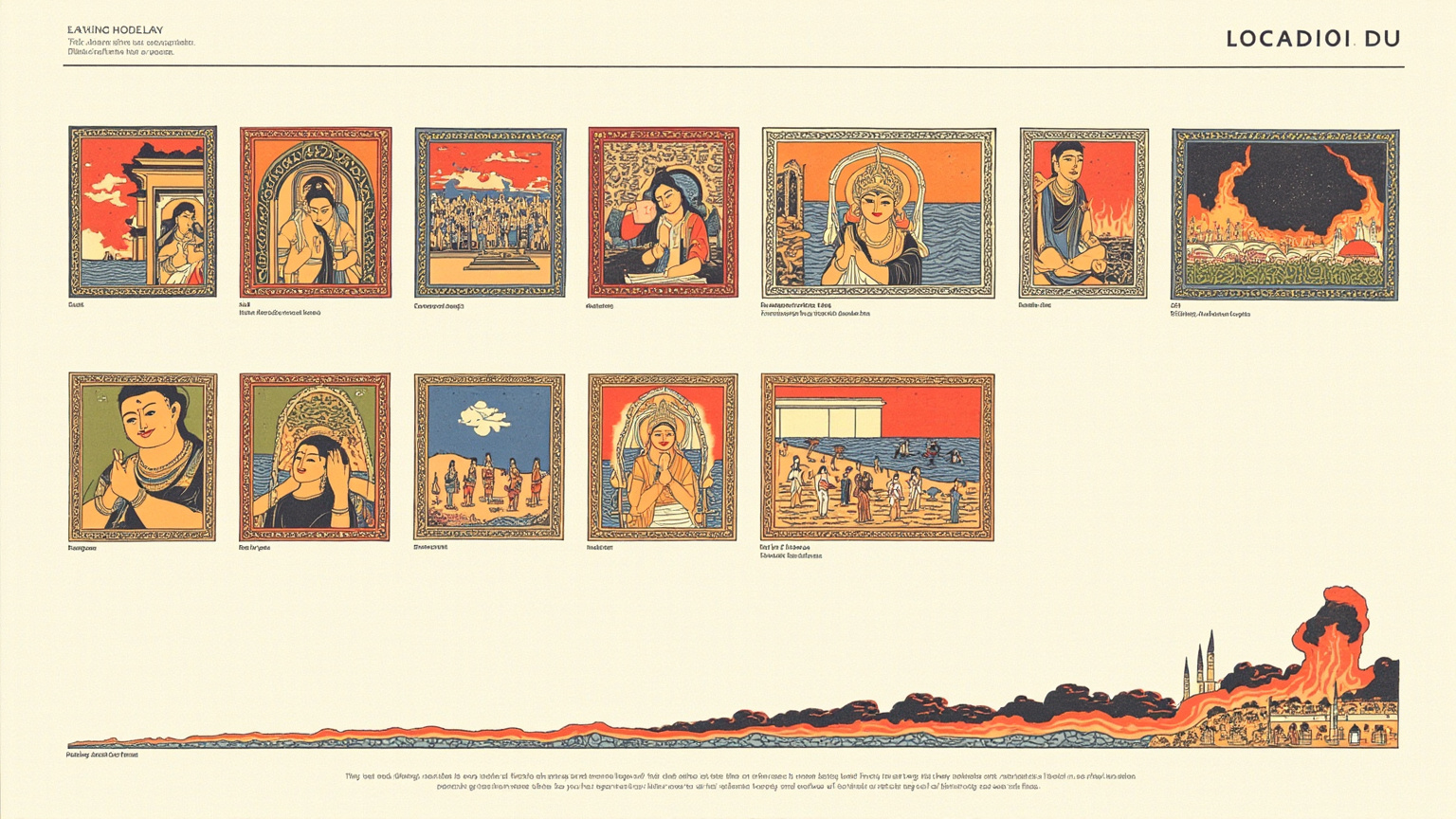
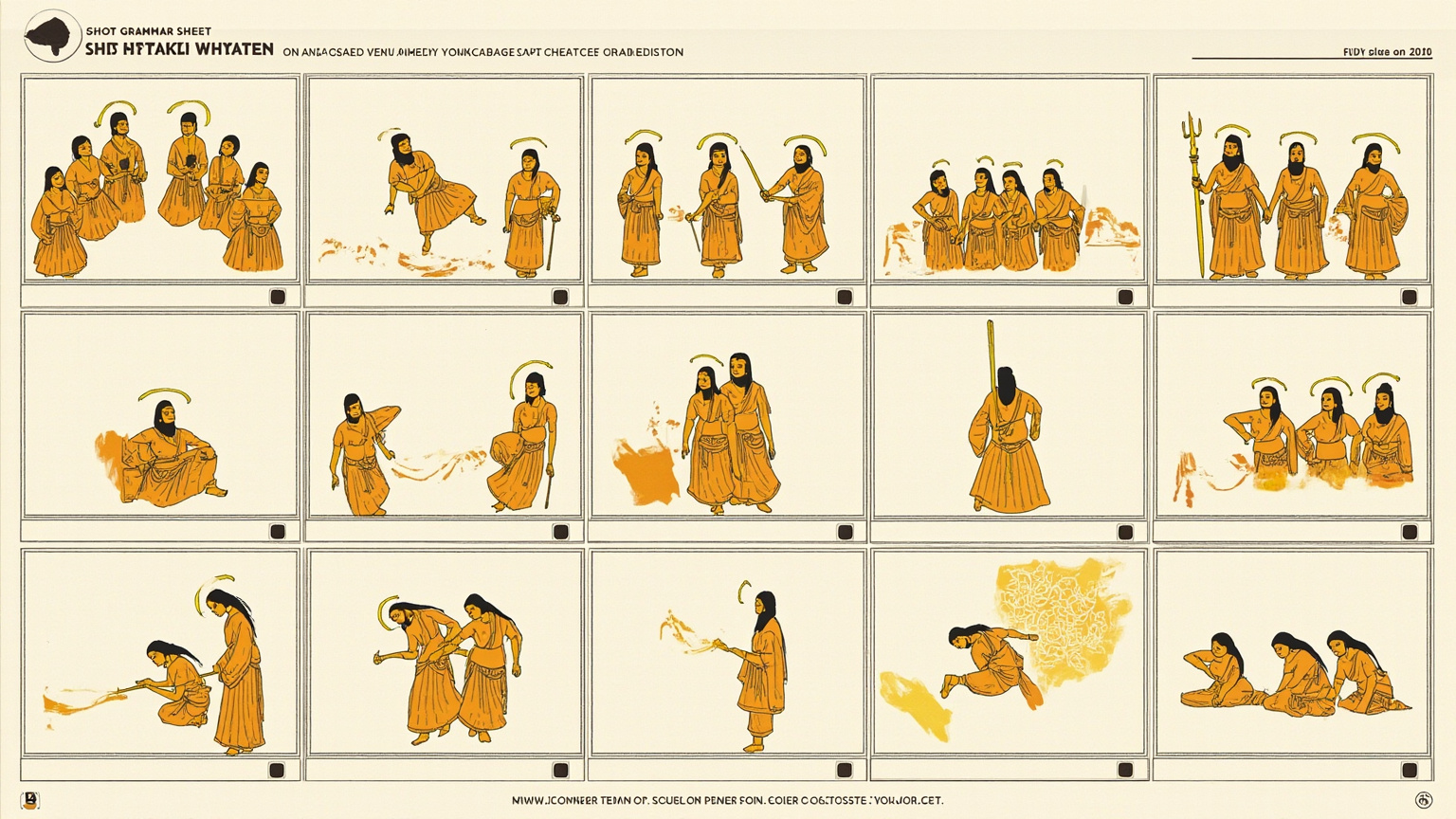
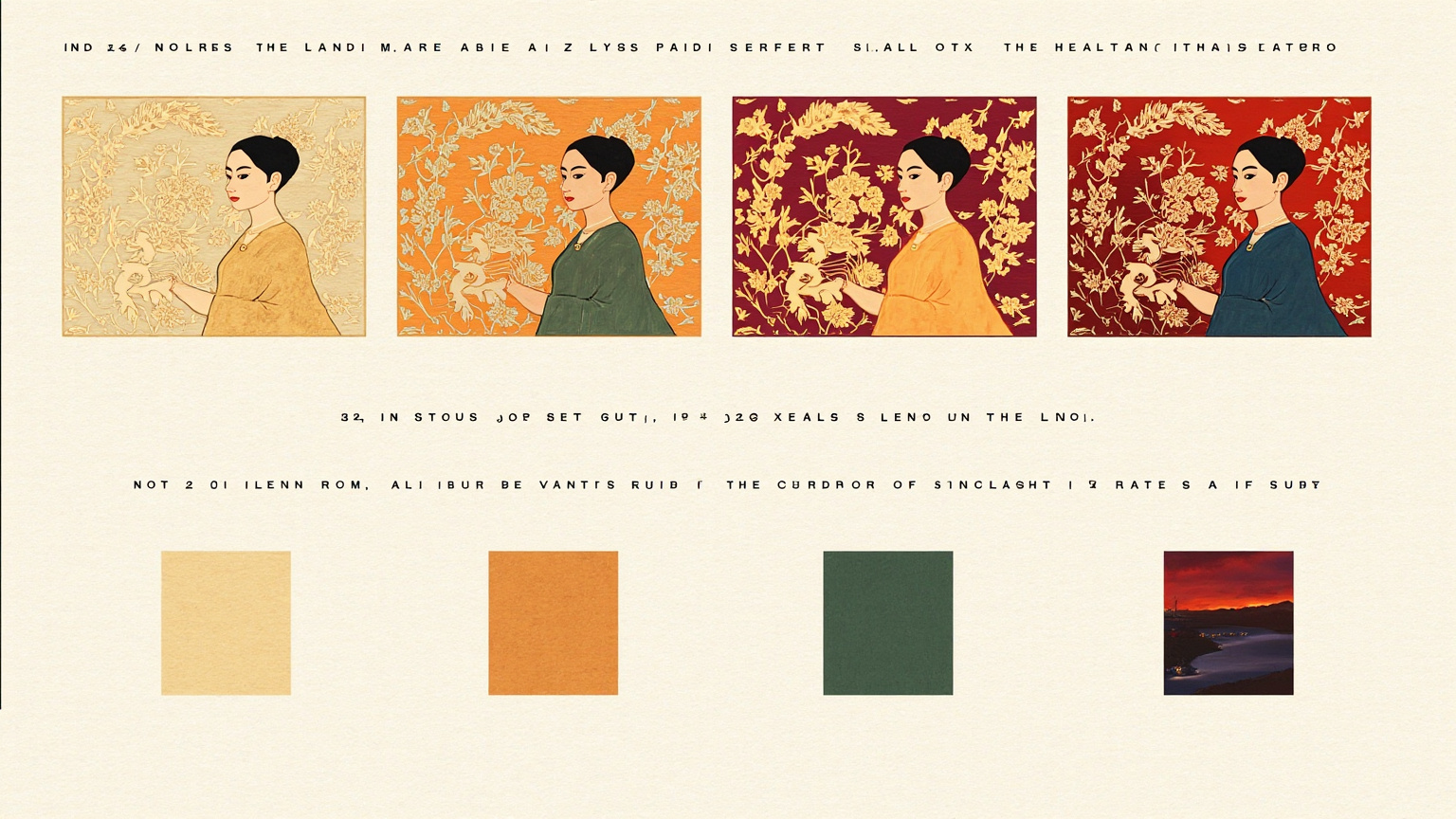
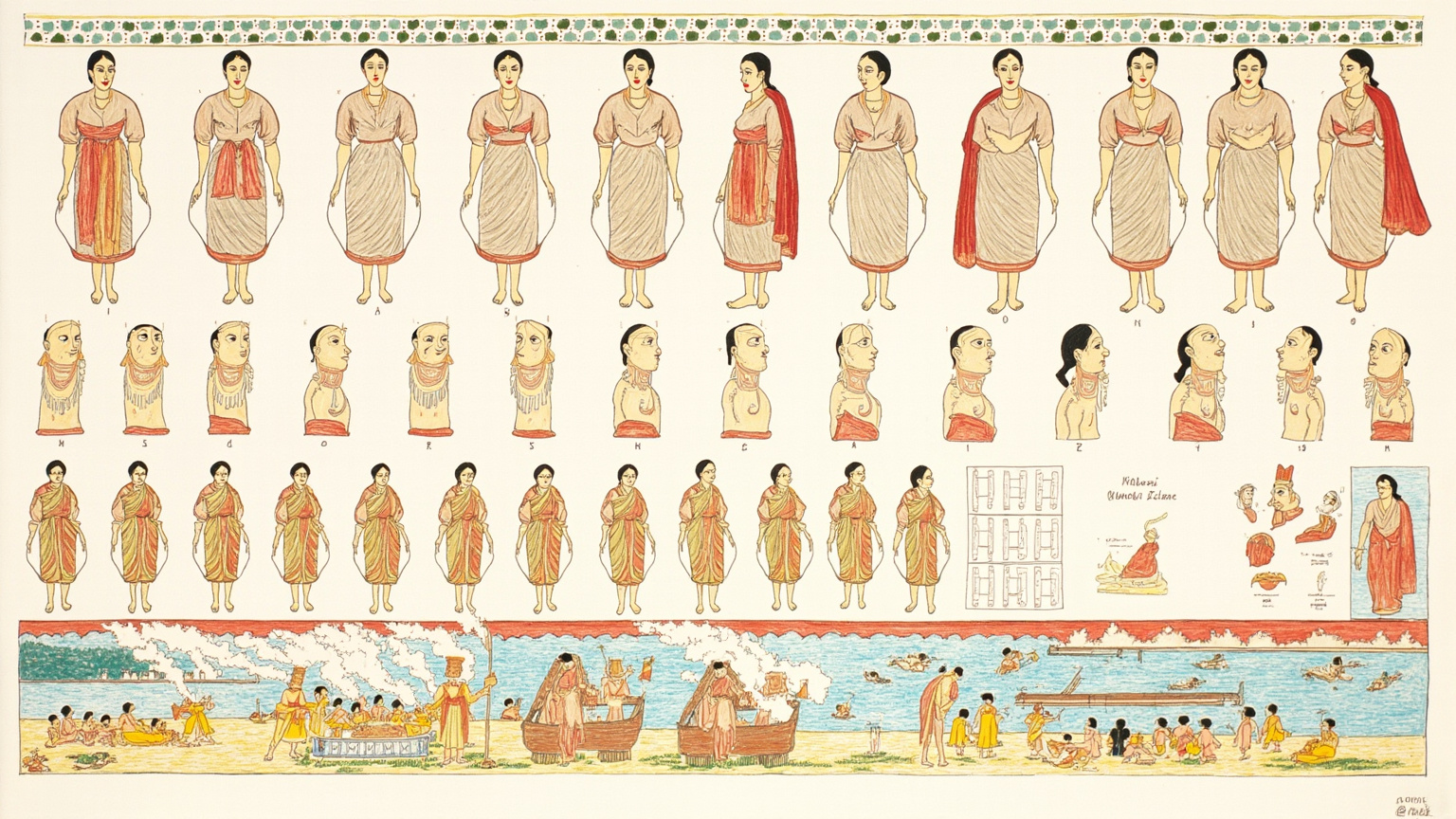
Art Direction4 plates
Before the guide was written, this book got a visual foundation — every illustration you just read grew out of it.