Songs of Kabir (UK title: One Hundred Poems of Kabir) · Companion Guide
卡比尔之歌
一个不识字的织工,在经线与梭子之间唱出那位无名之神——庙宇与清真寺的门槛都被他拆尽。
Opening: A Shuttle, a Singer
A shuttle passes through the warp threads and comes back again. The man sitting behind the loom cannot write his own name, but his mouth never stops — he is singing God. The wind off the Varanasi ghats carries his short lines away, and by the next day someone in the dye works, by the well, at the flatbread ovens, is repeating the same line. The weaver's name was Kabir, born around the middle of the fifteenth century in one of the poorest lanes of that holy city. He lived past seventy and left behind a hundred short poems that have been recited without a break for more than five hundred years.
What Kind of Book This Is
Songs of Kabir is the 1915 English translation compiled by Rabindranath Tagore together with the British mystic Evelyn Underhill, a hundred oral verses gathered into a single volume of devotional poetry. It was the first time this Indian weaver-saint's voice reached English readers on any scale, and generations of Western poets after them — Ezra Pound, Robert Bly, Czesław Miłosz among others — translated and quoted him in turn. Kabir composed in Awadhi, Braj, Bhojpuri, and the other North Indian vernaculars of his day, spoken aloud, never written down. He was illiterate, never wrote a single word himself, and every poem survived through disciples who memorized it and copied it down generation after generation.
The first Indian mystic poet the West read in any numbers was a weaver.
The Man and His World: Loom, Ghat, Minaret, and Temple Spire
Only one voice speaks in these poems — Kabir's own. The marketplace was his audience, the loom his pulpit. He was born into a Muslim weaver's family, never sat in a classroom, and grew up to say things that unsettled both sides. His teacher was the Hindu bhakti guru Ramananda, who is said to have taken him on as a disciple after a single glance, over the objections of his other followers. Kabir's whole worldview was shaped between these two teachers at once: reincarnation and karma borrowed from Hinduism, monotheism and the rejection of idols from Islam.
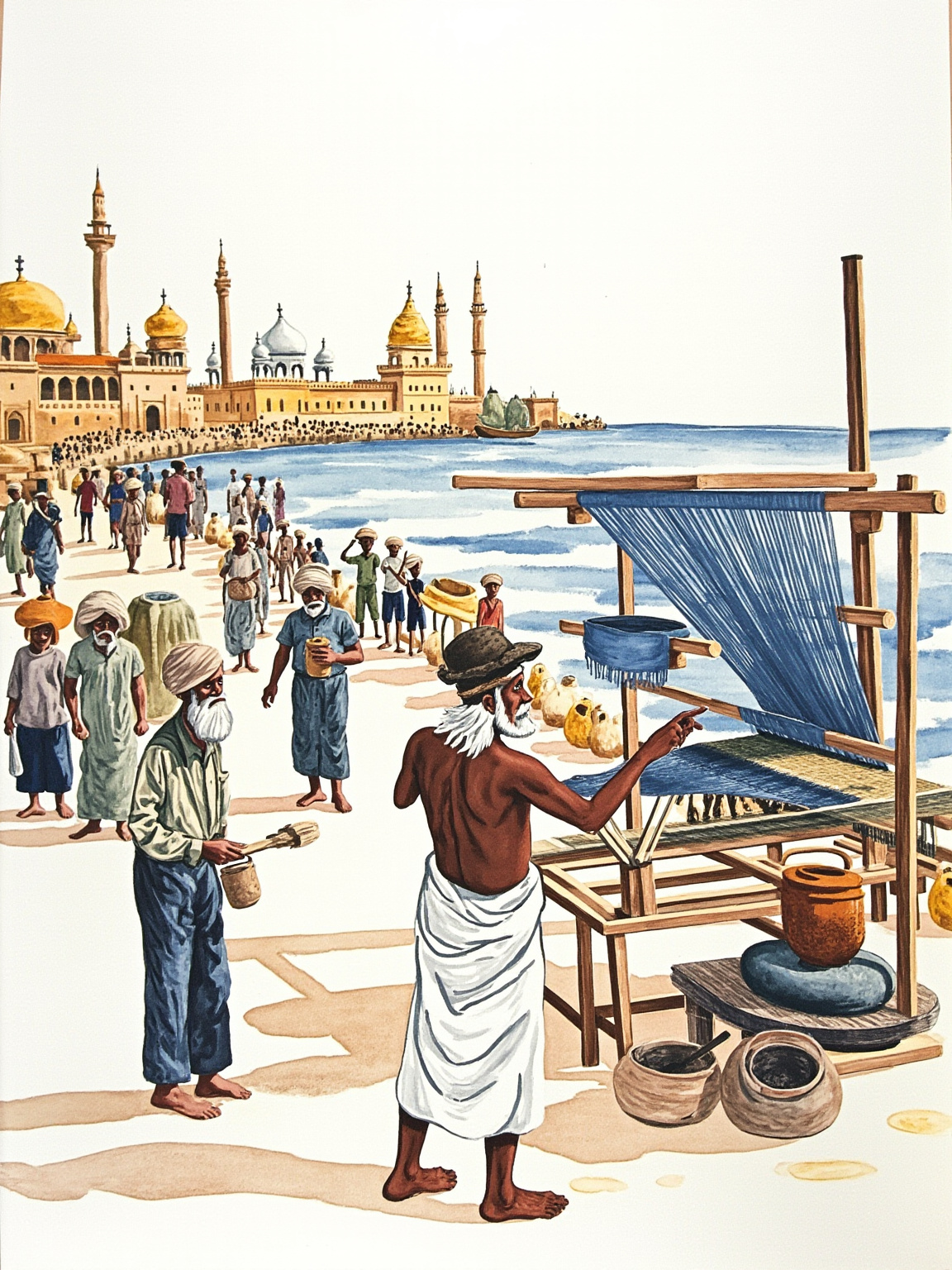
The world of these poems is the marketplace of fifteenth-century Varanasi: looms, dye vats, river stairs, clay pots, peddlers with their loads, wandering ascetics. On the rooflines, minarets and temple spires stood side by side, and Kabir sold cloth, wove, and sang in the shadow of both. He never made a pilgrimage anywhere. His holy ground was the creaking loom in his own house.
The Loom as Sanctuary: Meditating at the Shuttle
Kabir's whole poetics grew out of that loom. Weaving earned him his bread, and he also made it his meditation — weaving, he said, was an outward act, but something else was happening inside him at the same time. The shuttle running through the warp became his readiest figure for the invisible God: the warp threads are name and form, the shuttle is the mind, the finished cloth is this body.
Tearing Down Every Outer Door
Kabir opened fire on every piece of external religious machinery at once. Brahmins reciting the Vedas — he mocked them. Ascetics starving themselves to skin and bone — he mocked them too. Pilgrims prostrating their way to the holy city, he said, came home dirtier than the dust in their own courtyard. Idols, scriptures, elaborate rituals, the threshold outside every mosque and temple: he spared none of it. He was not against religion. He was against pushing God outside the door.
The clay is moldy; the pots are heavy with dirt. Can a pot find the Potter, or a mask see its own face?
泥土发了霉,陶罐覆满尘——罐子怎找得到造它的陶工?面具怎认得回自己的脸?
金句 · 反讽仪式与外在权威 · 陶罐之喻
The first time I read his lines about the ascetics, I stopped short too. He asks what good is all that matted, filthy hair, as if getting the body dirty could bring you any closer to God. I went back and reread the page before it. That sharpness of his isn't scorn. It's the kind of urgency you only hear from someone who still thinks of you as a friend.
Talking About the Unsayable God in the Language of the Street
Kabir faced a real problem: God cannot be named, and any word for him is already wrong. So he found another way, not to say it straight, but to circle it. The warp and shuttle of the loom become the skeleton of the invisible one; the color in the dye vat is name and form; the scale is justice; the ferry is crossing over. He also reached for a very domestic image: a bride waiting for her husband, the soul waiting for the lover who is coming home.
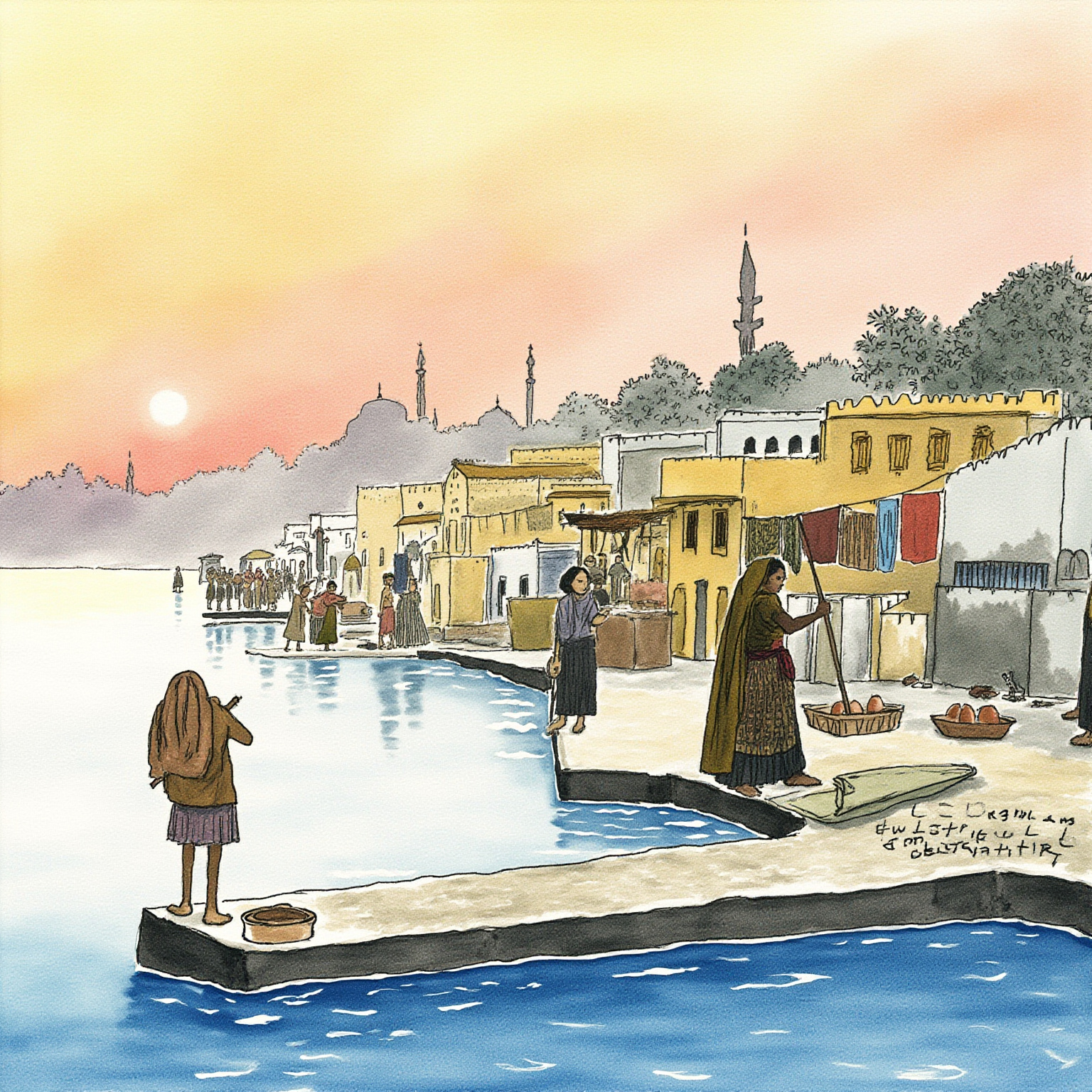
I cannot tell what the Beloved is like, for he is neither manifest nor hidden — no word can say what He is.
我讲不出我的爱人是什么模样——他既不显也不隐,没有一个字能说出他是什么。
金句 · 不可言说之神 · 内光与爱人
Notice the scale of that image. The bride is waiting for a husband who is unseen and has not yet arrived, not for any actual meeting of bodies. This language of the soul waiting for union is common currency in the Indian bhakti movement, but Kabir speaks it the plainest, the way you'd hear it from someone at the corner talking to a neighbor.
Ram and Rahim Are the Same
The line of Kabir's that unsettles both sides most is that Ram and Rahim are the same. Ram is the Hindu prince-god; Rahim is the Merciful One of Islam. He said the two names point to exactly the same being, and that caste and scripture are just different doors into it. So Hindus called him a traitor, Hindus called him a heretic, and Muslims said he wasn't Muslim enough. He took hits from both sides, and he never once stopped.
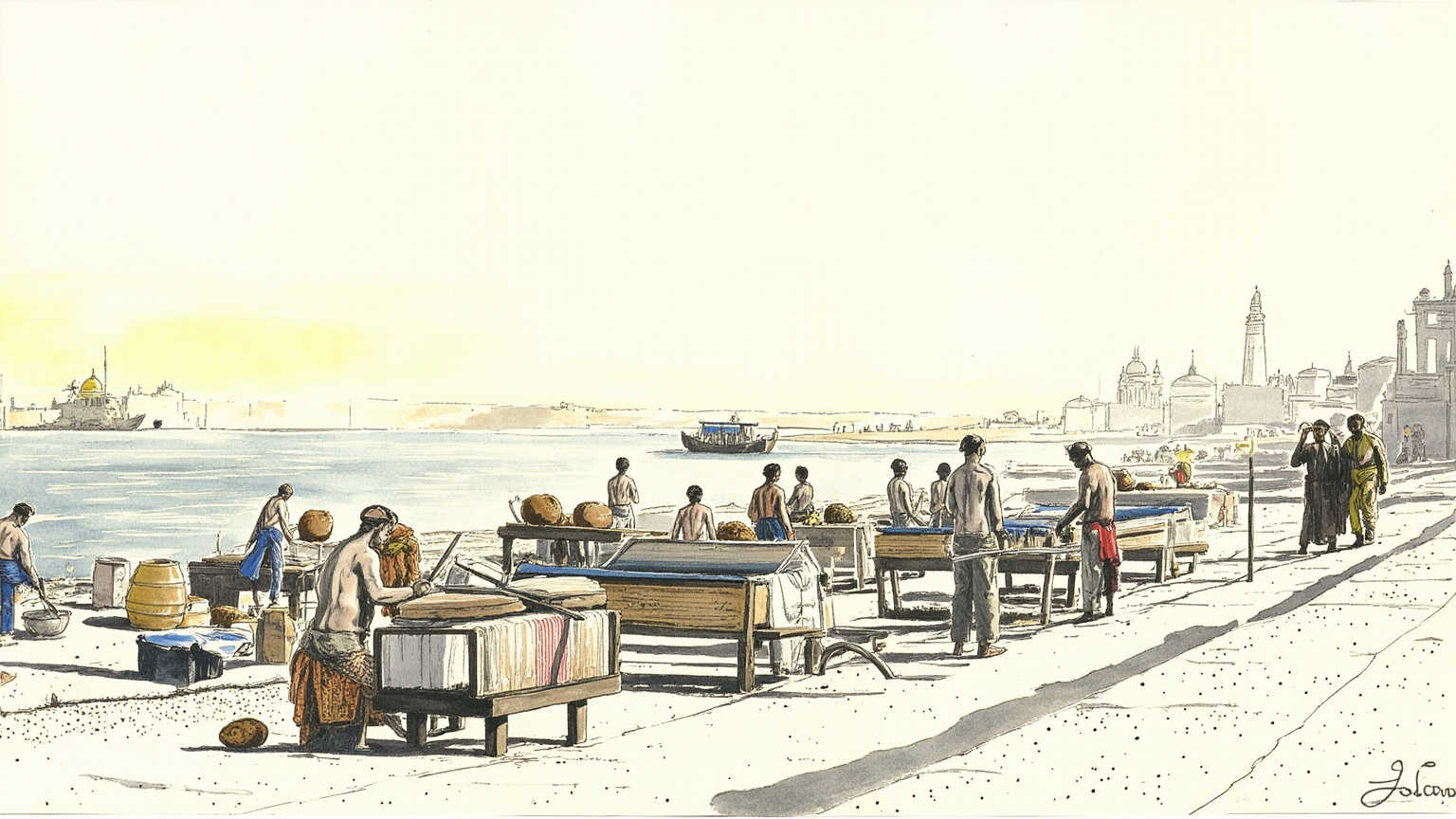
Ram and Rahim are the one same thing; the names are many but the Lord is one.
罗摩与拉希姆本是同一位——名字虽多,主却只有一个。
金句 · 诸神同名 · 跨信仰之眼
His distaste for caste wasn't a theory added on later. It grew up with him from the day he first sat at the loom. A child of a Muslim weaver's family taken on as the disciple of a Hindu guru saw the divide between the two long before anyone in a study ever did.
The True Guru's Cup of Water
Even as Kabir tore down external authority, he kept coming back to one other word: guru. What he wanted wasn't knowledge, but someone who had actually drunk that cup of love himself, could hand it on to you, and could lift the veil from in front of your eyes. This insistence on a true teacher makes him look contradictory, tearing down authority with one hand and propping it back up with the other, but what he was really tearing down was never guidance itself. It was the secondhand version that reaches you after passing through nine sets of hands.
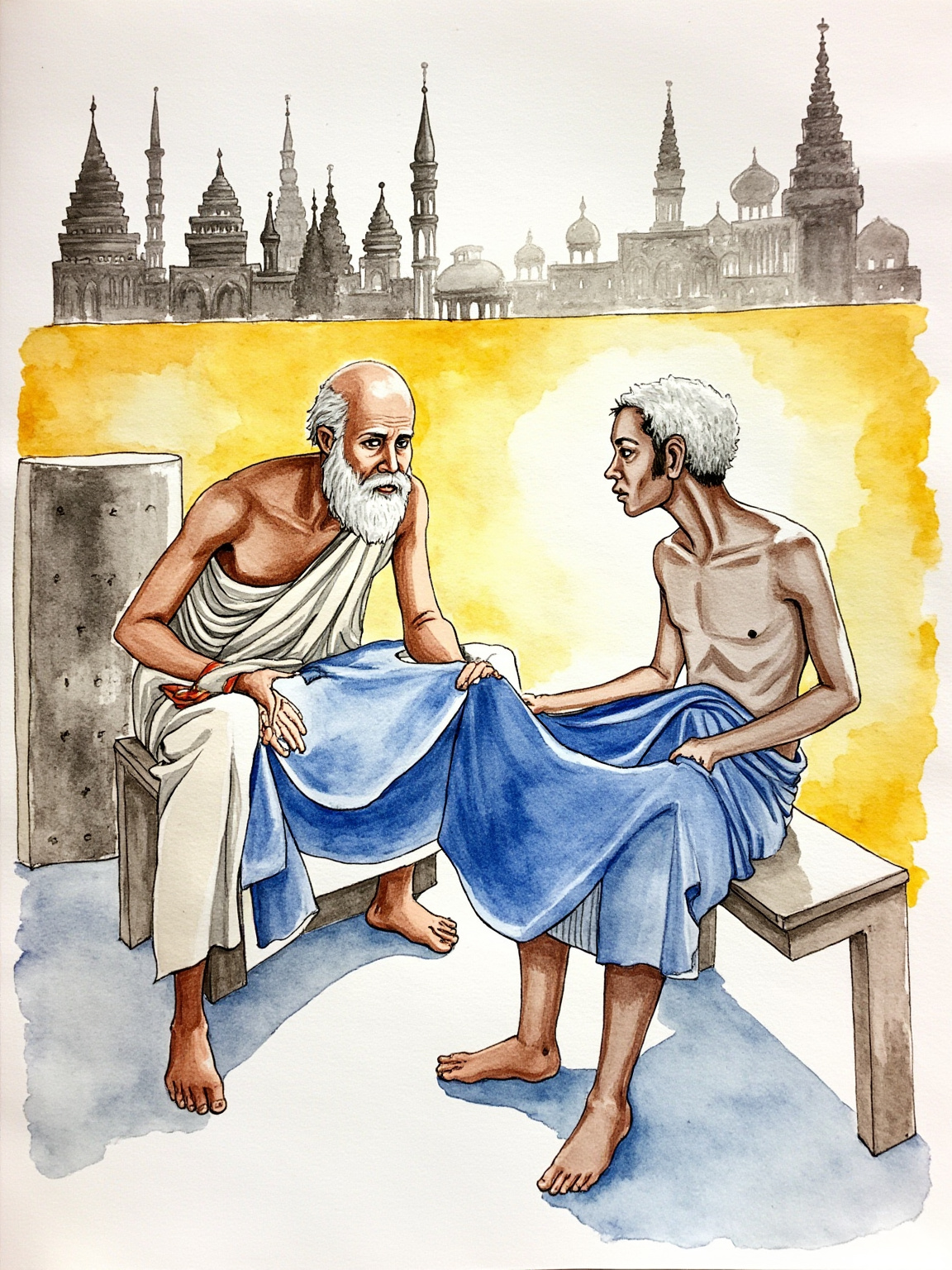
When the Guru comes to my door, my heart begins to tremble; for he has drunk the cup of love himself, and handed it to me.
古鲁走到我门前,我的心便开始颤——他亲自饮下了那杯爱,再递到我唇边。
金句 · 真古鲁之杯 · 上师之恩
The Emptiness in the Final Verse
By the time the hundred poems reach their end, the last one is almost shouted out — I do not come, I do not go, I am not born, I do not die, I am nothing at all, I am not among the living, nor among the dead. Read on its own, it sounds like a defiant string of denials. But come back to it after the ninety-nine poems before it, and it's really Kabir clearing away the last of everything he has been tearing down all along. Even the 'I' that has been singing for a hundred poems has to be let go, because God is not to be found in any kind of 'being' at all.
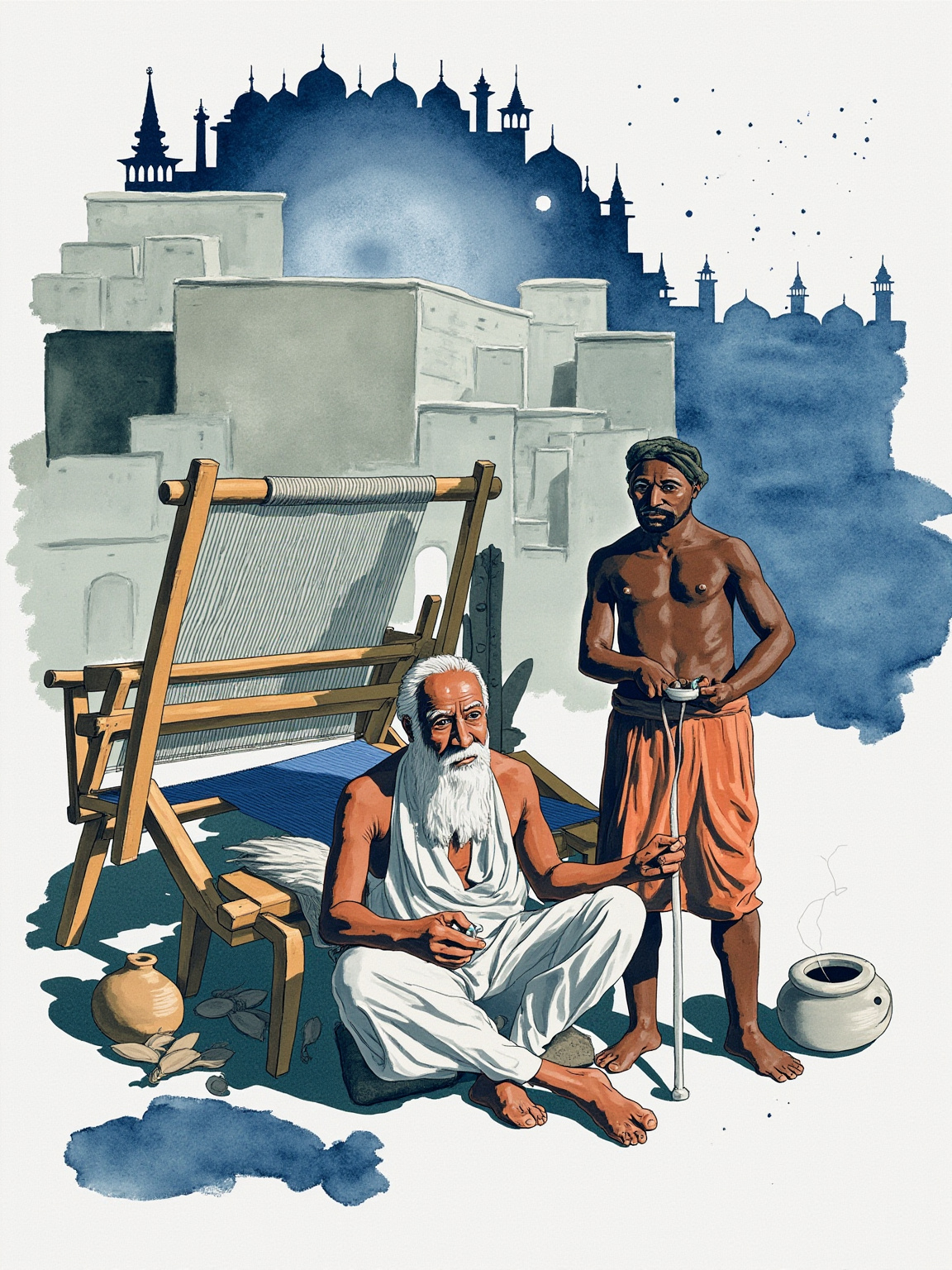
I do not come, I do not go; I am not born, I do not die. I am nothing — I am not among the living, nor among the dead.
我不来,我也不去;我不生,我也不死。我什么都不是——不在生者之中,也不在死者之中。
金句 · 终曲 · 存有本空
Why It Is Remembered
In India, Kabir has long been a household name. The Sikh scripture, the Guru Granth Sahib, includes more than five hundred of his verses. Even today you can still find collections of his poems in bookstores, see his lines printed on calendars sold on the street, hear songs that keep quoting him: you don't need to go to a temple to find God, God is right there at your loom. In the West, this book is what kept him remembered. The 1915 collaboration between Tagore and Underhill put a weaver's voice into English on a Western reader's shelf for the first time, and the long line of poets who came after all walked through that door.
Leaving an Opening
One last honest thing needs to be said. Of these hundred poems, how many are actually Kabir's own words is an open question. The scholar V. K. Mishra's view is that maybe only about six are, and the rest were mostly attributed to him later. But this isn't something to treat as a verdict. It's more like a doorway: in the tradition of the Indian bhakti movement, who wrote a poem was never the important thing. What mattered was whose mouth it kept passing through. Hold on to that thought while you read this book. It will give you something to reach for the moment you hit a line that doesn't quite sound like it came from a weaver.
Why the Poems Are Still Worth Reading Once You Know the Story
A guide like this can tell you what Kabir was against and what he believed, but it can't give you the way one of his short lines gets into your mouth and won't let go. This book isn't meant to be understood from the outside. It's meant to be read. Every poem is short enough to say over to yourself once, and then you walk out onto the street and catch yourself looking at the dye works and the river stairs through Kabir's eyes. That's the most unsettling thing about it: the world in the poems and the world you walk out into turn out to overlap at some corner you didn't expect. Knowing what it says isn't the same as having gone there yourself.
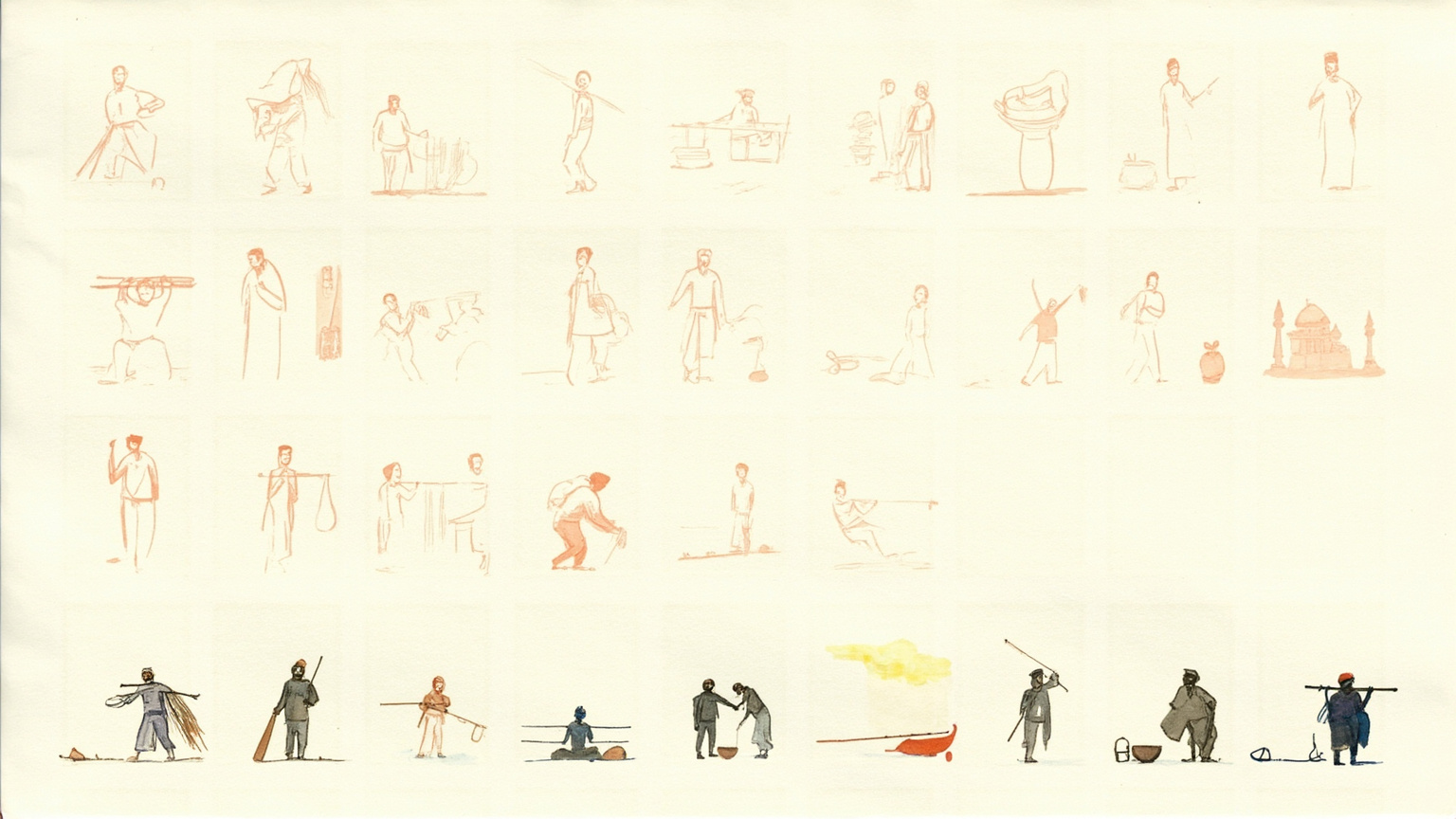
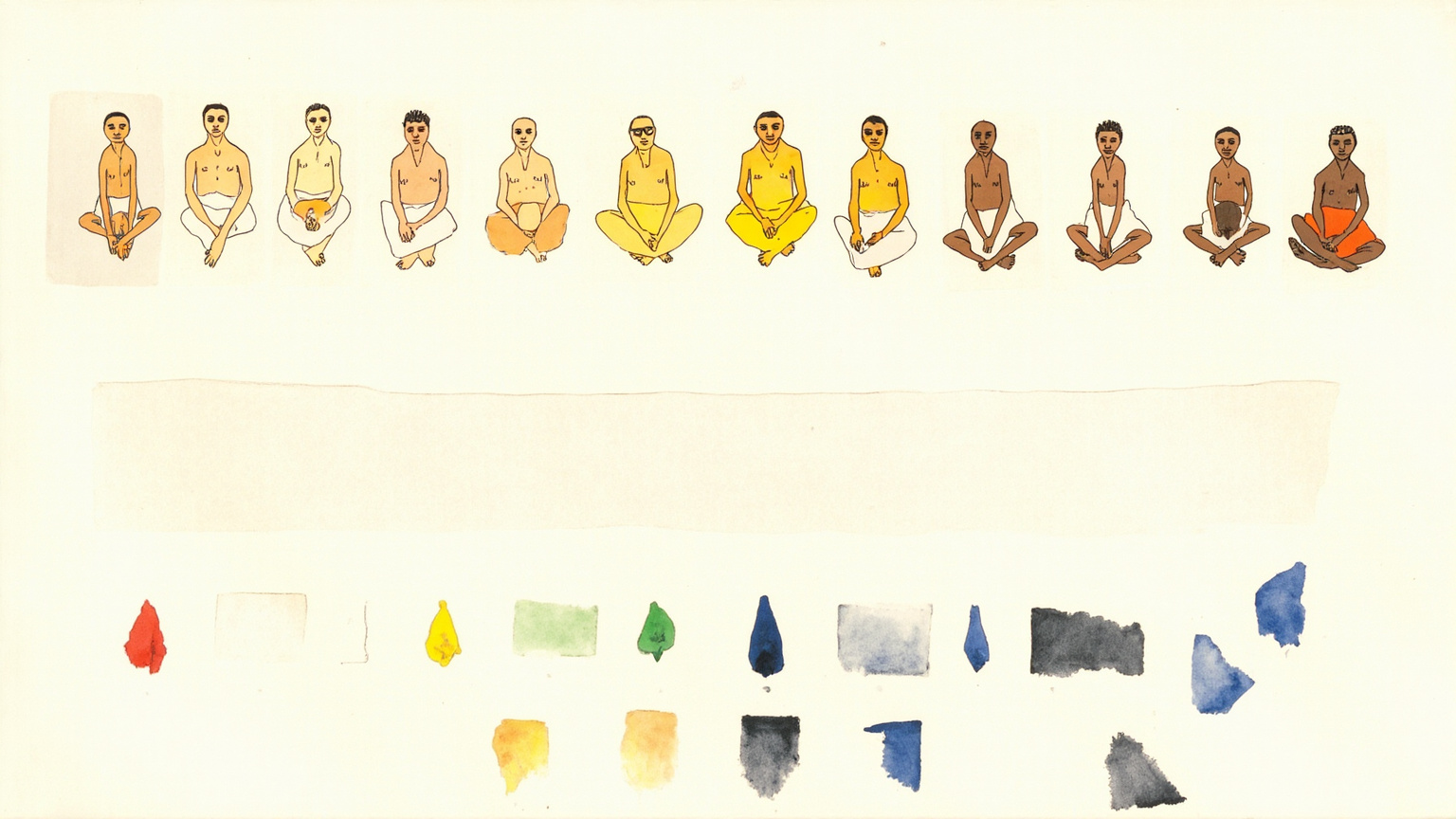
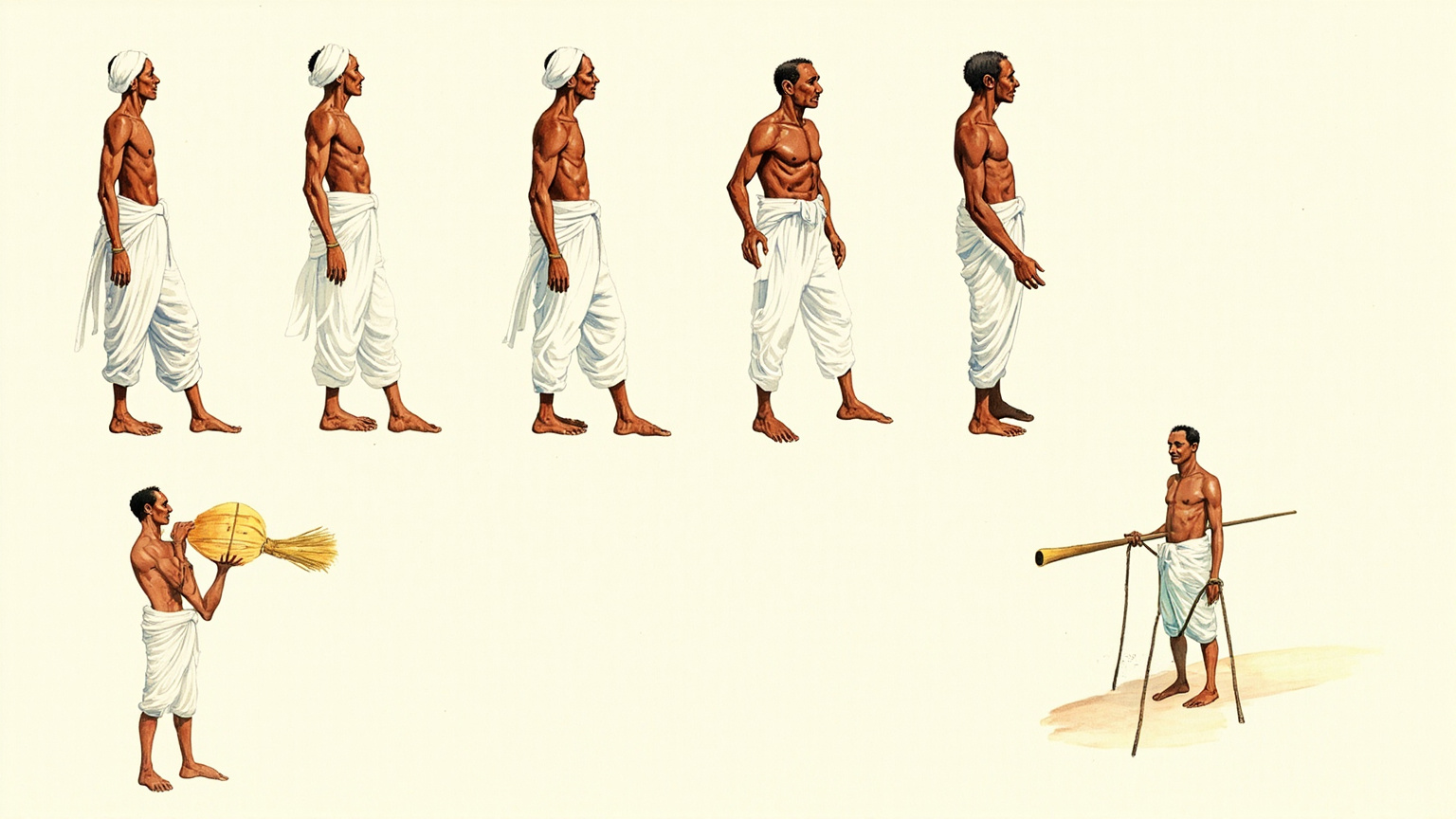
Art Direction4 plates
Before the guide was written, this book got a visual foundation — every illustration you just read grew out of it.