Srikanta (also spelled Srikanto) · Companion Guide
室利甘特
一个孟加拉少年被恒河夜船载出故乡,一生漂泊在地理与精神的往返之间——被接住,又辞别。
Opening
A lantern hangs at the stern of a boat on the Ganges, the water black as an unwiped ink-stick. Below deck lies a boy so ill he can hardly breathe, and on the bank someone waits for him with a lamp — an old friend who has traveled several nights to reach him, a singer known onstage as Piyari.
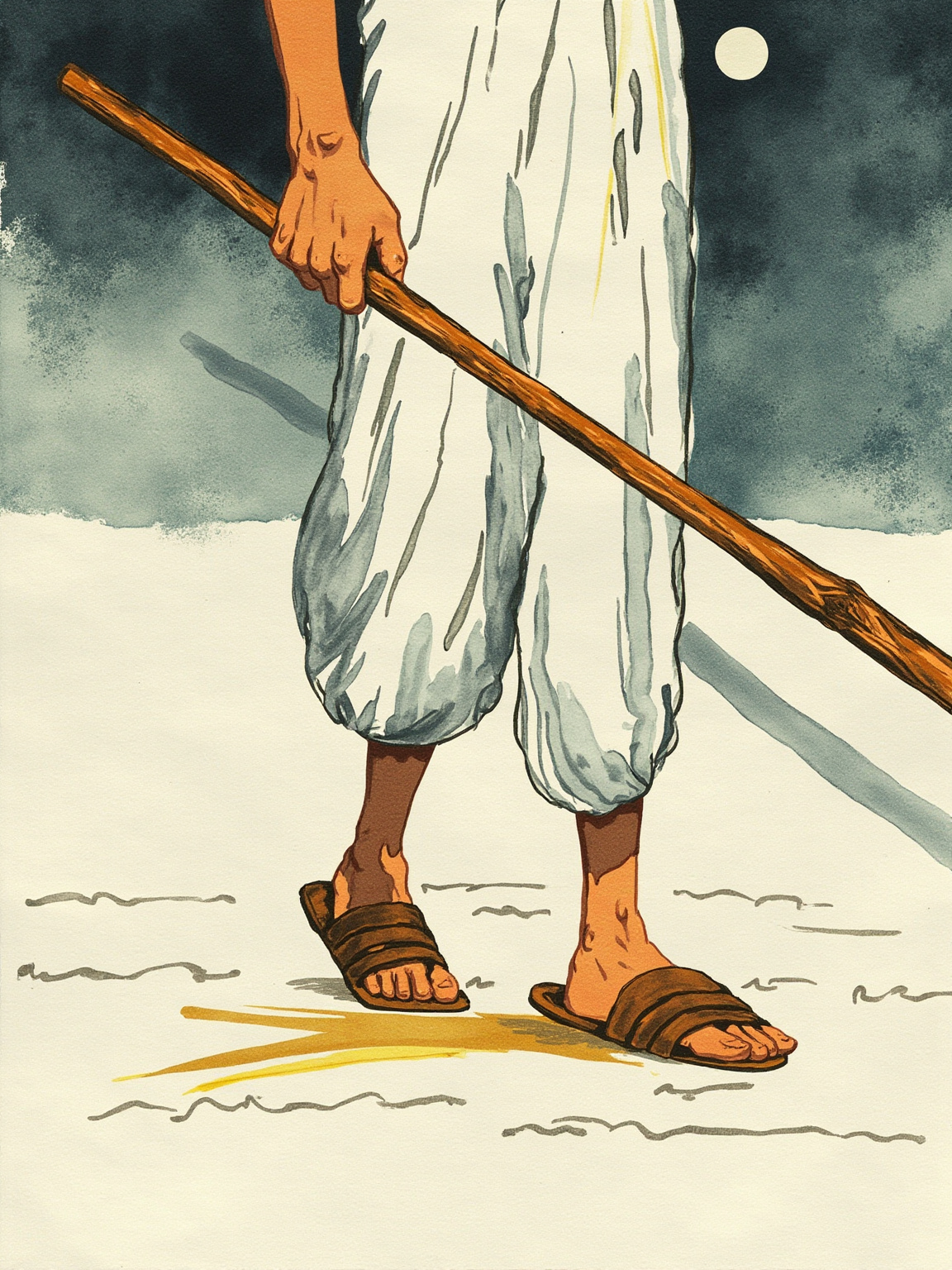
He had felt, all his life, that something within him was always about to set out on a journey.
他这一生都觉得,身体里有什么东西,始终在准备上路。
金句 · 开篇 · 恒河夜船
His name is Srikanta. The whole book follows him along this route — the boy in his uncle's house, the invalid on the night boat on the Ganges, the wanderer in a guesthouse in Rangoon. By the last page you realize his journeys were never only a matter of distance.
What Kind of Book This Is
Srikanta, in the original Bengali শ্রীকান্ত, was written by Sarat Chandra Chattopadhyay. Born in 1876, he died in 1938, and for most of his life he lived on what his writing paid him. After his death, Tagore called him the man who made Bengalis recognize themselves. The book runs to four parts. The first three were serialized in the monthly Bharatbarsha and are known together as the wanderings of Srikanta; the fourth ran in Bichitra. The whole thing took sixteen years to write, from 1917 to 1933.
Its place in Bengali literary history is settled: it is the high point of the semi-autobiographical novel, and it is widely taken as the author's masterwork. The first professional writer in Bengali literature — a man who made his living entirely by the pen — wrote out half a life of a Bengali boy leaving home again and again, and being caught, again and again, by some new place.
People and World
Srikanta is the narrator, and also the self the author sent out into the world in his place. As a boy he lived in his uncle's house, and on a football field he met Indranath, a boy his own age, bold and hungry for adventure — the two became closest friends. The football field at Bhagalpur, the ghats of Patna on the Ganges, the village of Samtia, the old house at Debanandapur, a teak veranda in Rangoon: this is the book's map.
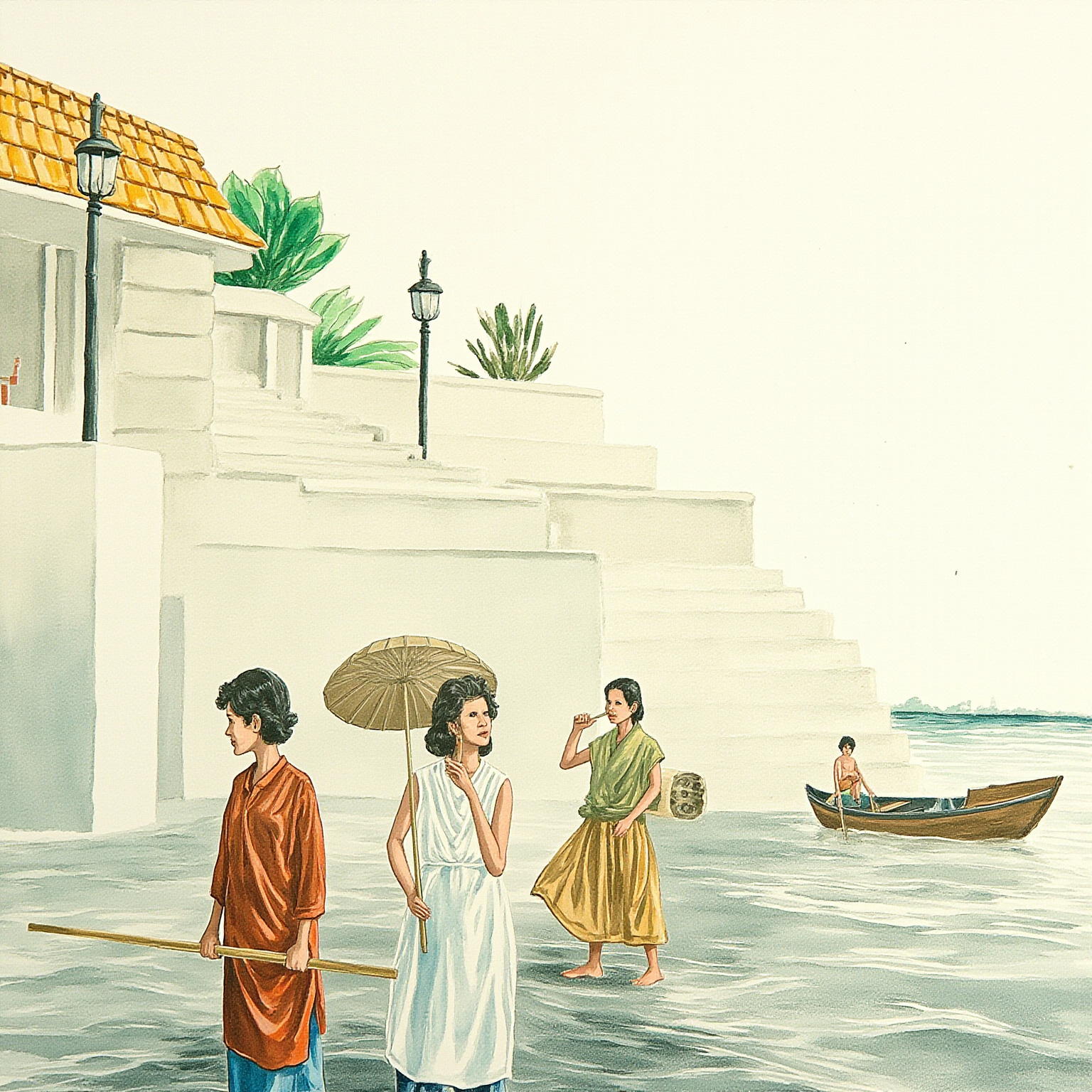
One does not quite know, even now, why a man suddenly vanishes from one's life without a word.
直到今日,人也说不清,为什么一个人会连一句话也不留,就从你的世界里抽身而去。
金句 · 第二部 · 因德拉纳特的出走
Indranath's heart is given to a woman cast out of her caste — Anna Didi, wife to a wandering snake charmer. Later, out hunting with a prince's retinue, Srikanta meets again, inside a tent, a singer performing as Piyari, and recognizes her as Rajlakshmi, a girl he had once been close to as a child. Later still, on the night boat to Rangoon, he meets Abhaya, a young married woman turned away by her own husband, traveling with a man named Rohini. These people circle back through Srikanta's life, scattered across its different stretches of river.
The Plot
As a boy, Srikanta lives in his uncle's house, and nothing much happens. A football match ties him to Indranath — the two are close in age but opposite in temperament, one reckless and quick to act, the other watching from the side. Indranath falls for Anna Didi, the woman her own family cast out of caste for marrying a wandering snake charmer. When money runs short he hands over his own without being asked. Srikanta neither stops him nor talks him out of it. He only files the scene away in the ledger of his wandering.
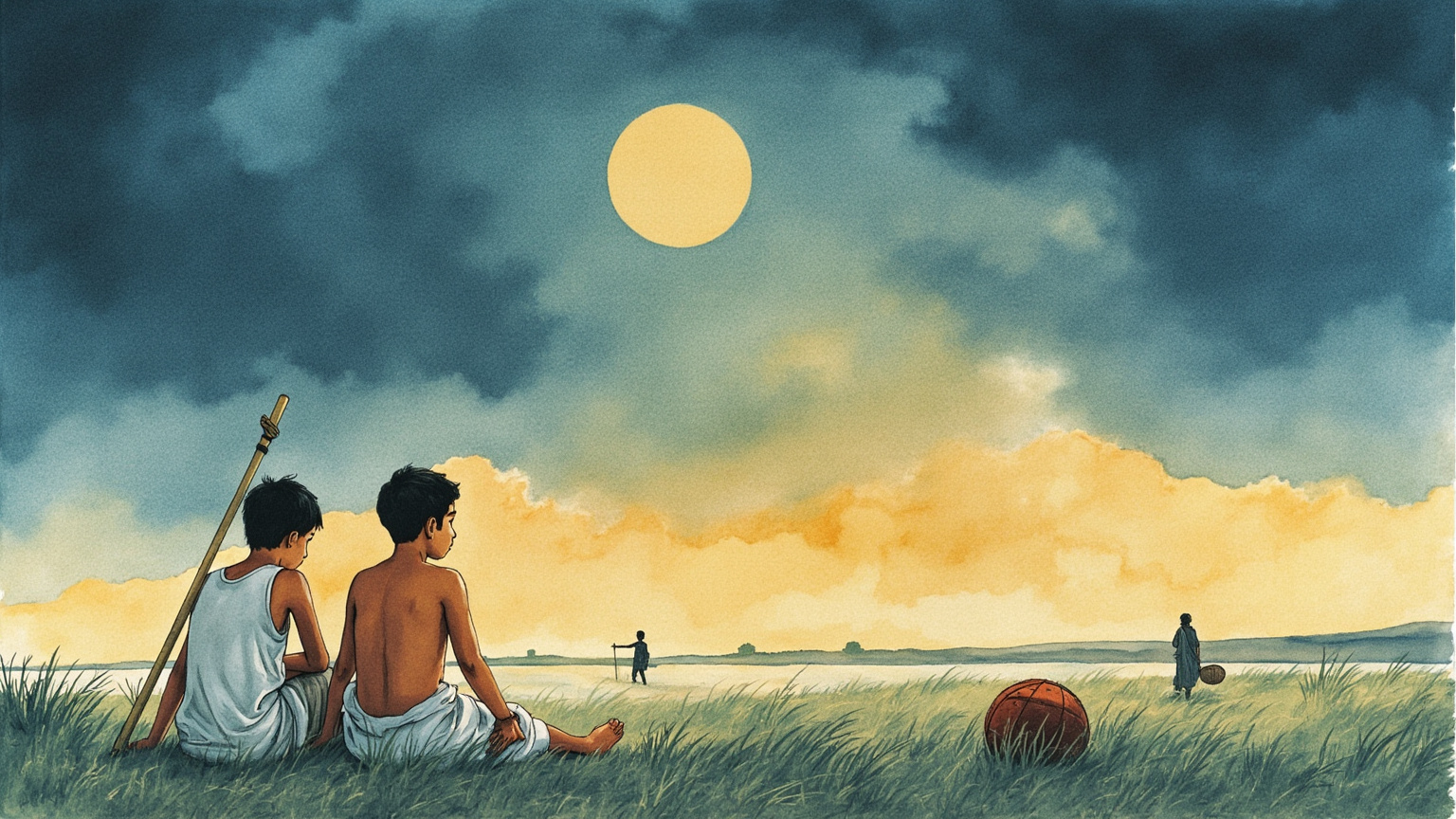
There were faces in the world which one seemed to have loved long, long before one ever met them.
世上有些面孔,仿佛在相遇之前,你就已经爱了很久很久。
金句 · 第二部 · 王子的猎帐
Then they are gone. One day Indranath simply drops out of the story; after her husband dies of a snakebite, Anna Didi vanishes too. This is Srikanta's first lesson in what leaving looks like — not a slammed door, not a farewell, just someone pulled out of your world without so much as a word. It is the book's first template for wandering: even the people closest to you can go without saying anything at all.
Srikanta drifts on. He joins a prince's friend on a hunting trip and sleeps in a tent. The flap lifts and he freezes — the singer pouring tea inside is Rajlakshmi, performing now as Piyari. She was his classmate once, and the old bond has not broken, only moved into another world. A childhood friend turning up as a singer in a prince's hunting camp is the kind of dislocation Bengali fiction rarely allows itself, and Chattopadhyay writes it light, refusing to let the reunion collapse into tears.
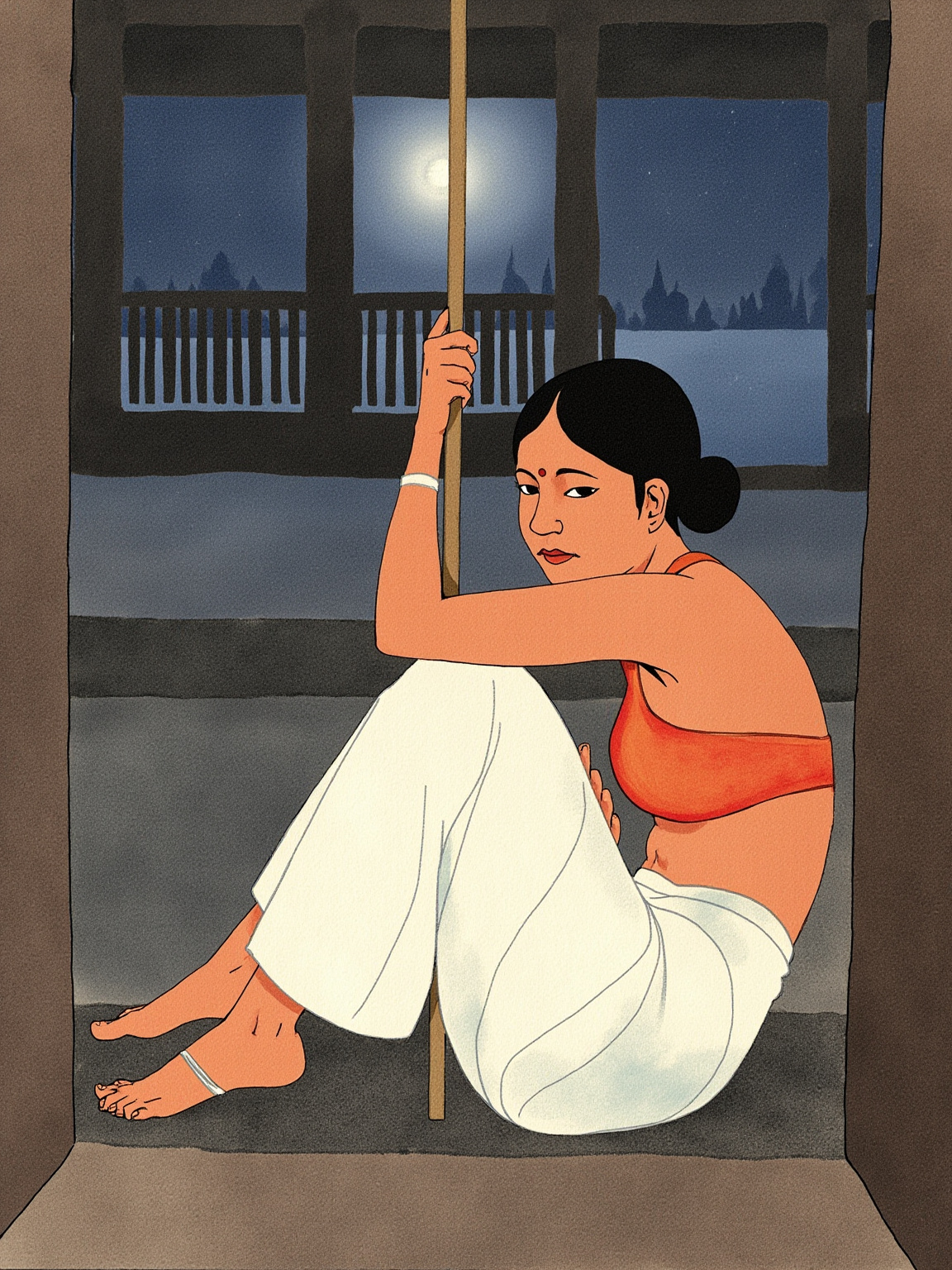
She had come all that distance in the night, only to fetch him back from the edge of death.
她赶了整夜的远路,只是为了把他从死亡的边沿接回来。
金句 · 第二部 · 巴特那的病床
After leaving the hunting party, Srikanta joins a band of wandering ascetics. When he falls ill on the road, word reaches Piyari, who travels several nights from Patna with her adopted son to fetch him. She takes him in and nurses him, and once he is well he takes his leave again. This rhythm repeats through the book: caught, then departed. It is the wanderer's signature move — not that no one will keep him, but that he cannot stay.
Part Two moves out to sea. Srikanta crosses from India to Burma, and on the night boat he meets Abhaya, a young married woman traveling with a man named Rohini. She has come to join her husband in Rangoon, only to learn on arrival that he will not let her through the door. Rohini stays on, and the two build a small life together in Rangoon under the name of husband and wife. Srikanta watches this new arrangement take shape from the sidelines, then drifts on into Rangoon's deeper lanes.
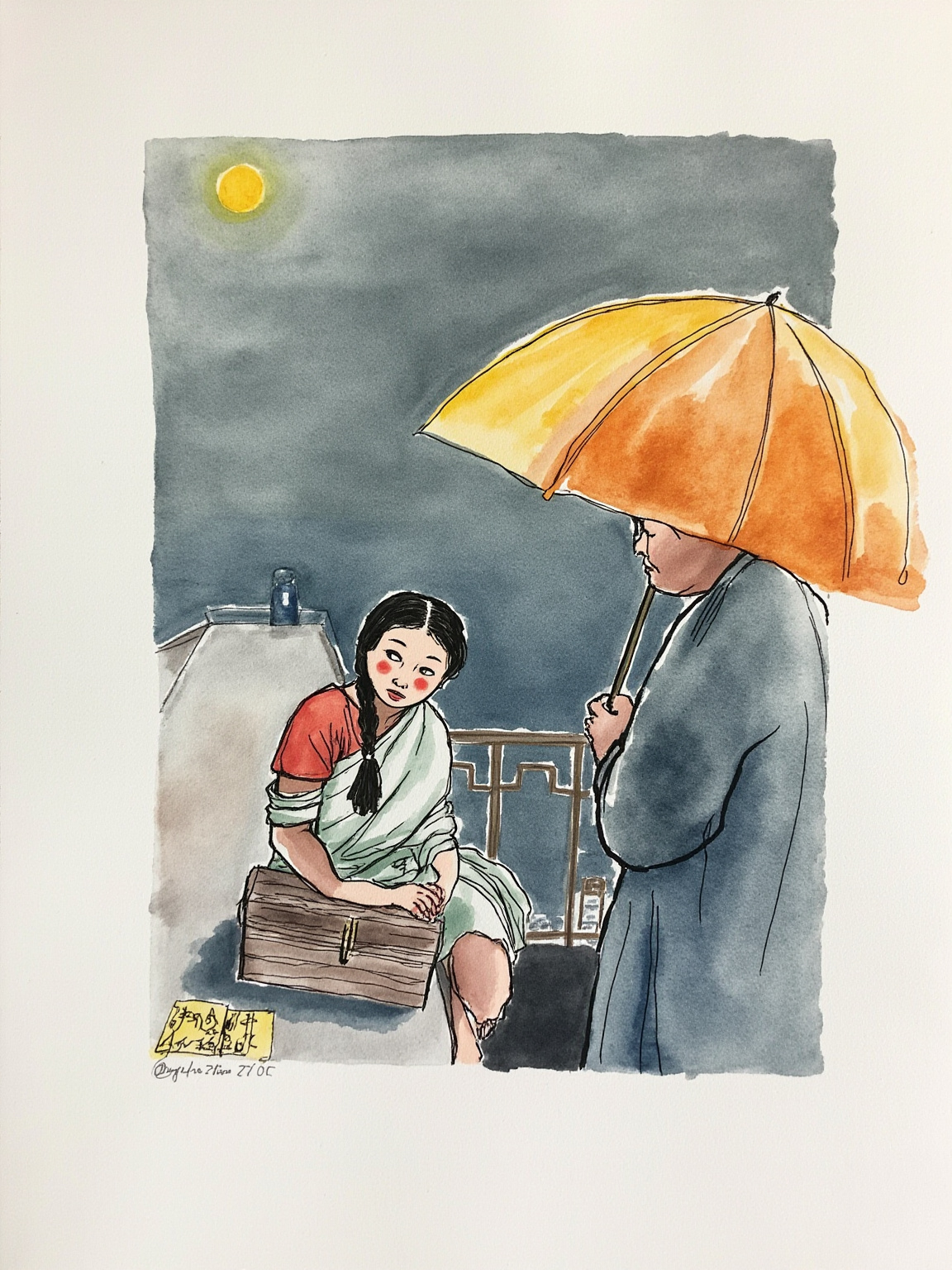
Life, after all, is only a chain of scattered memories — nothing more, nothing less.
一段段散落的回忆,不外如是。
金句 · 第四卷 · 仰光的柚木廊房
After his time in Burma he returns to a village in Bengal, and falls ill again almost at once. The night boat on the Ganges, the cremation ghats, the teak verandas of Rangoon — the same three scenes keep circling back.
Chattopadhyay never wrote this as a story with one thread running through it, and he says as much himself: "scattered memories, nothing more than that." It is not a river running toward some ending but a set of memories pinned to different places — a childhood football field, a prince's tent, the fires of a mendicant camp, a sickbed in Patna, the deck of a night boat, a teak corridor in Rangoon, the old family house at Samtia. None of these pieces is whole on its own. Only put together do they become the life of Srikanta.
Chattopadhyay's own life nearly overlaps with Srikanta's: raised in his uncle's house, gone from home as a young man, time spent in Burma, half a life earned by the pen and lived poor. So reading this book means accepting something up front — it has none of the dramatic rise and fall of a Western picaresque. Its plot is scattered, held together by mood and setting rather than by event. The reader has to piece the Bengali boy's half-life together for himself.
Why It's Considered Great
Tagore paid Chattopadhyay about the highest compliment there is: he made Bengalis recognize themselves. Before him, Bengali fiction ran mostly to myth, history, and family saga. He was the first to write, in the plainest vernacular, what an ordinary Bengali actually felt caught between the pressures of his time. There is no ornate language here, no grand sweep of joy and grief — just a man walking through his life, setting down what he saw, who he met, who took him in and who let him go.
Structurally, he was doing something new — laying a physical journey over a spiritual one. The night boat on the Ganges is a change of location, and also a figure for a man whose interior has not yet settled anywhere; the teak veranda in Rangoon is a stranger's lodging, and also a mirror he keeps returning to for another look at himself. That double structure went on to become one of the more influential moves in modern South Asian literature.
One point that gets overlooked: Chattopadhyay was the first professional writer in the history of Bengali literature. The poets and writers before him mostly had family land or a government salary behind them. He lived on his writing alone, and often ran up debts to get by. That reality of selling prose to eat left no room for invention — every detail had to be pried loose from actual life. It is also why his plain style, almost bare, is so hard to put down.
Theme: Wandering, Geographic and Spiritual
Srikanta spends his whole life moving between being caught and being let go. Indranath draws him in, then vanishes; Piyari nurses him back from illness, and he leaves her again for home; Abhaya and Rohini's improvised household takes him in briefly, and then he walks on alone, farther still. Wandering here is more than leaving and coming home — it's the condition of a life that never stops moving, being held by someone or something and then letting go, over and over.
It is also an honest specimen of the semi-autobiographical form. Chattopadhyay lays the whole operation bare for the reader — his own real experience, filled out with invention, with nothing hidden and nothing dressed up. That honesty was rare in early twentieth century South Asian writing, where most memoirists raised their protagonist above the crowd. He did the opposite, writing an ordinary Bengali man as genuinely ordinary, ordinary enough that you can see a trace of yourself in him.
Why the Summary Isn't the Book
A synopsis gives you the skeleton; what actually moves you in this book is the flesh. Chattopadhyay's prose is plain to the point of austerity, yet it leaves a smell that lingers long after you close the book — diesel on the night boat on the Ganges, the sun-baked tang of teak on a Rangoon veranda, a faint trace of sandalwood drifting off the cremation ghats. None of that comes through in a summary. You have to open the book yourself to catch it.
There are also the moments Chattopadhyay leaves deliberately blank. How Piyari recognizes Srikanta, what the two of them actually say to each other that night in the tent, what happened on the morning Indranath walked out — none of it is spelled out. He leaves it for you to fill in between the lines. And what a reader fills in on their own often unsettles more than anything the author could have written outright.
The Ending
Srikanta falls ill for the last time in the old family house at Samtia. The sound of the Ganges has been there from the first page — in chapter one he lies sick on the night boat out of Patna, and it is this boy gasping for breath inside the sound of water that Piyari waits for on the bank with her lantern. That sound follows him through the teak verandas of Rangoon and back again to the old house at Samtia. By the end you realize what a wanderer is actually returning to is not some distant place, but the place he keeps leaving and keeps hearing that water from.
"Scattered memories, nothing more than that" — Chattopadhyay's own footnote to this half-life of wandering. When you close the book, what stays in your ears is, most likely, that sound of water.
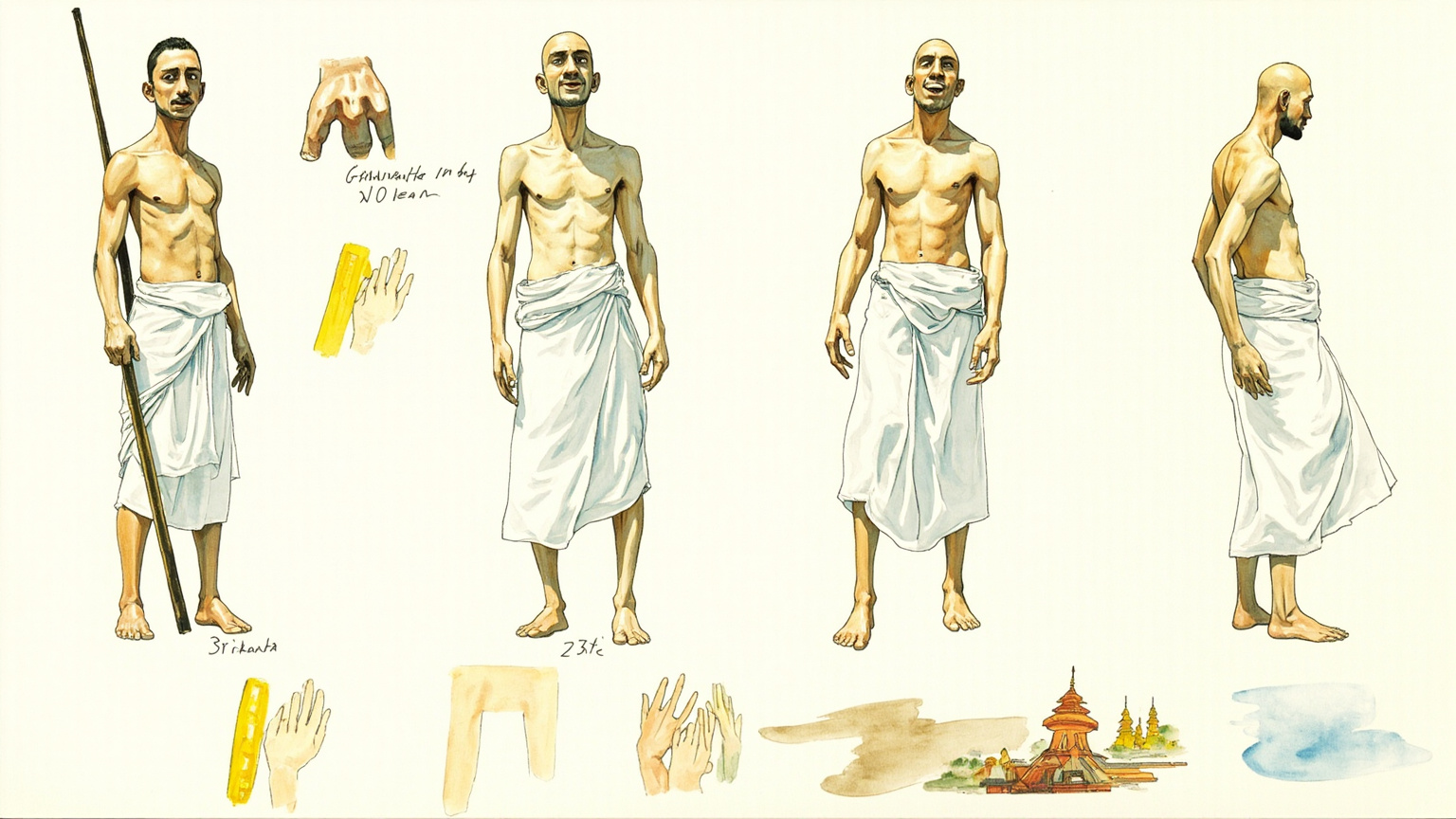
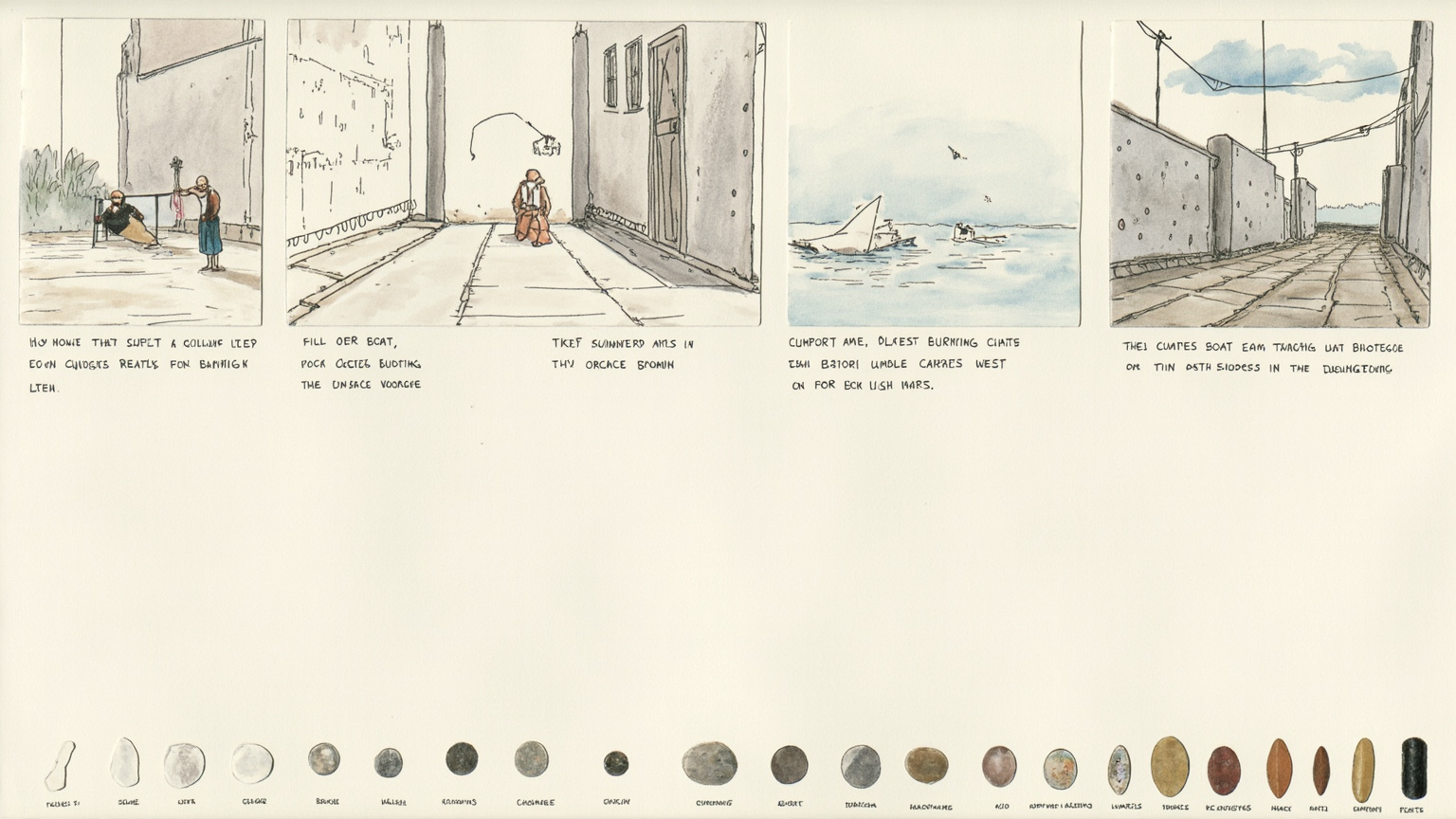
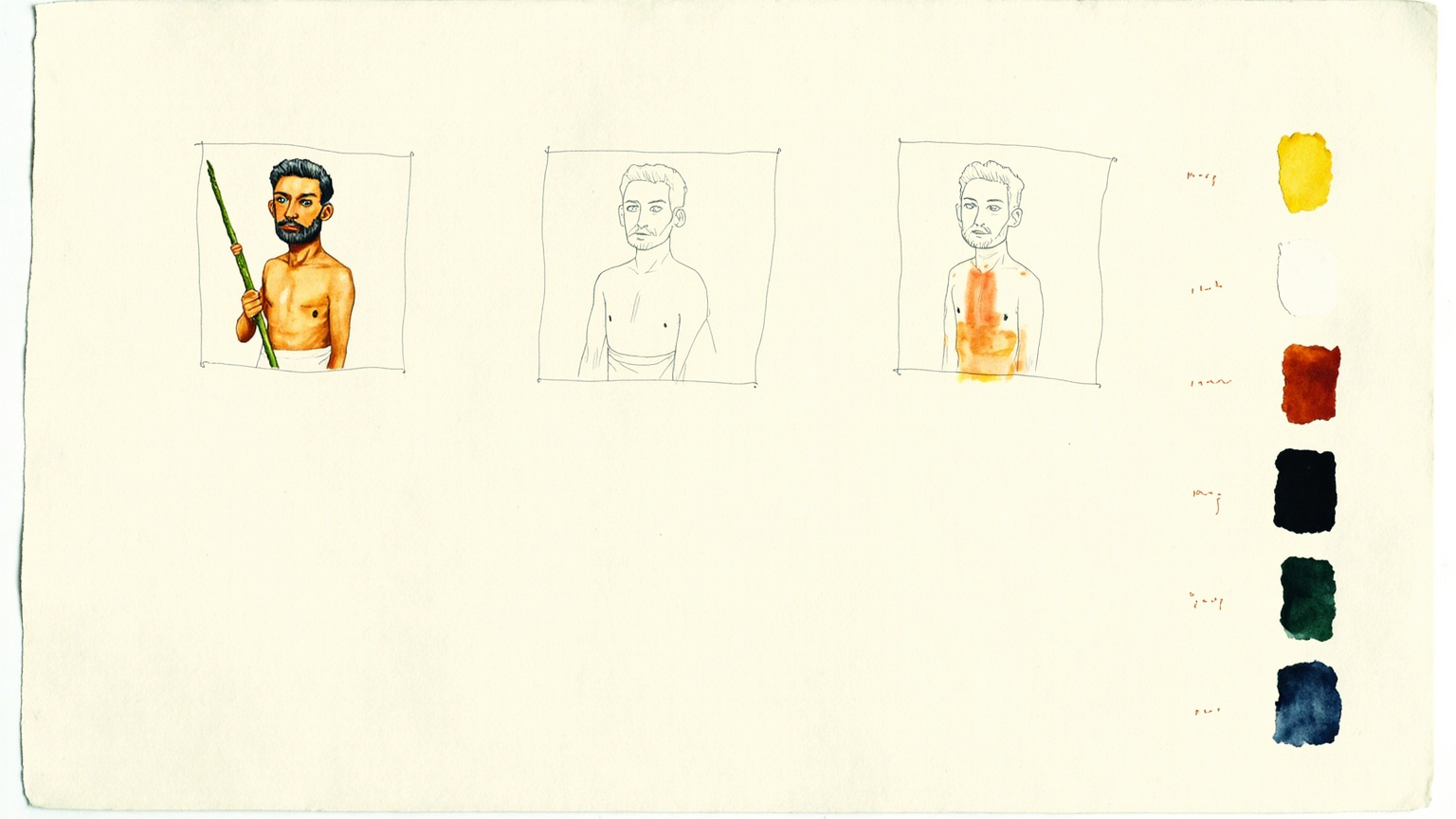
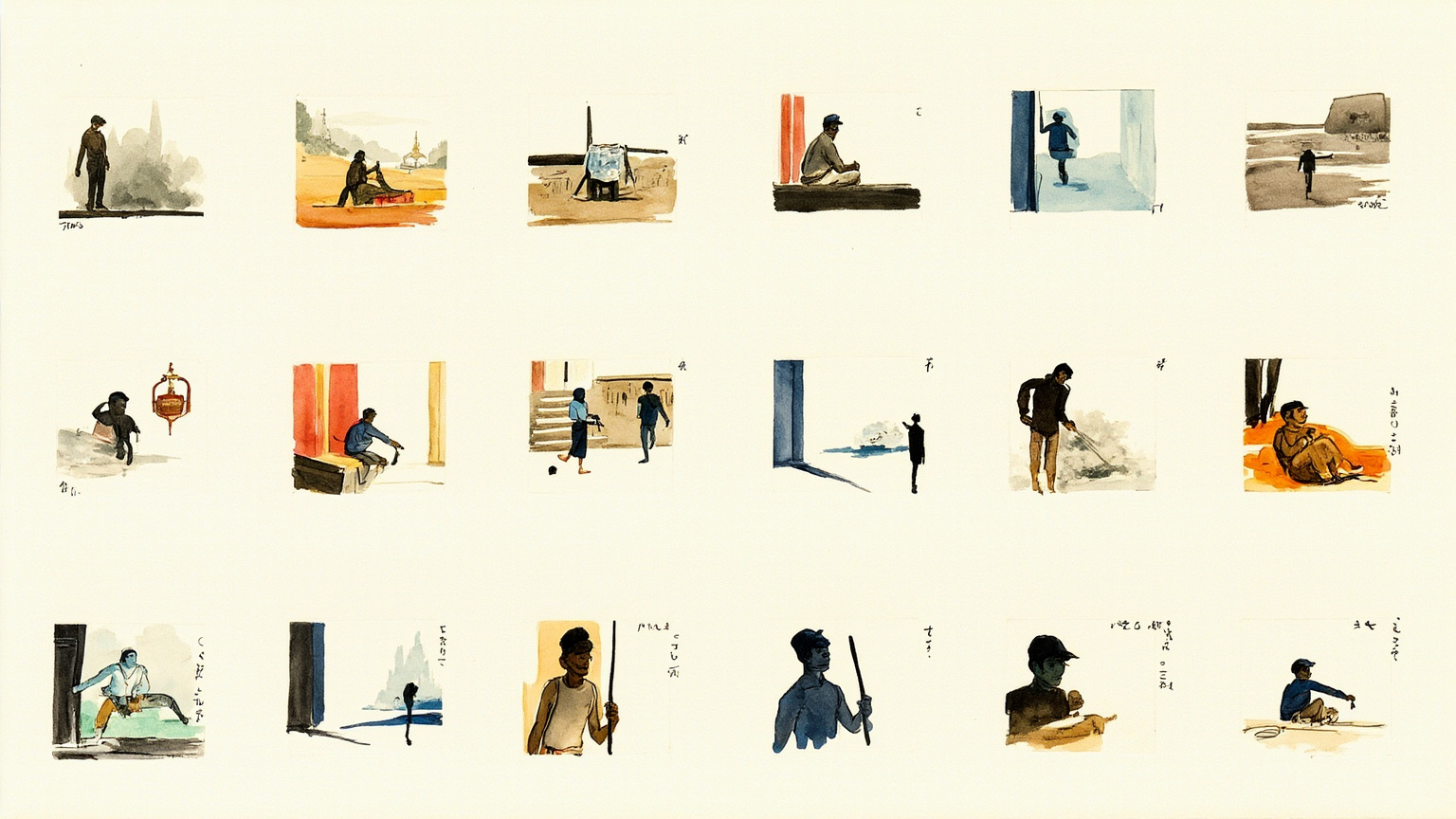
Art Direction4 plates
Before the guide was written, this book got a visual foundation — every illustration you just read grew out of it.