Su Dongpo's Notes (Dongpo Zhilin) · Companion Guide
东坡志林
一贬再贬的路上,他把仕途惨败活成旷达笑话——从黄州江岸到海南海角,琐碎生活本身就是他的道。
One: The Line He Brought Back from Hainan
Su Shi was sixty-three, standing on the shore at Danzhou, Hainan, having just been marched across the Qiongzhou Strait to what everyone at the time considered the edge of the civilized world. He looked around and wrote nine words: this journey has been the strangest, most wondrous of my life. A banishment that should have broken him, he turned into the best trip he ever took. The Dongpo Zhilin is the record of a man who kept getting exiled and kept laughing the whole way.
Two: What Kind of Book Is This
The Dongpo Zhilin is a collection of jottings from the late years of Su Shi, the great writer of the Northern Song, assembled after his death from the scattered pages he wrote during his years in exile. At his peak he served as a Hanlin academician; at his lowest he was dumped on Hainan Island living on coconuts. His fortunes rose and fell three times over, and along the way he mastered poetry, prose, calligraphy, painting, Buddhism, and Daoism all at once. The book tells no single story. It simply piles everything in front of the reader at once: moonlit boat rides during exile, insomnia journals, notes on eating lychees, ghost stories, and sparring matches with a Buddhist monk.
It's an outlier in Chinese literary history — other exiled officials wrote laments; he wrote punchlines. Read it a thousand years later and you notice something strange: this Song-dynasty man's way of handling a life in ruins runs oddly parallel to Camus's Stranger. His career collapsed, and instead of complaining about it, he lived it as a joke. It's the high-water mark, in the literature of the Chinese scholar-official, for making the heaviest things look weightless.
Three: People and World
There's only one narrator running through the whole book: Su Shi himself. His courtesy name was Zizhan; he took the sobriquet Dongpo, East Slope, and he was born in Meishan, in Meizhou. At forty-four he was arrested over the Crow Terrace poetry case and nearly died in the imperial prison before being banished to Huangzhou, in Hubei. That's where he started calling himself Dongpo, and from there his name tracked his own map of exile: Huangzhou, then Huizhou, then Danzhou, heading south the whole way, until there was no more land left to send him to.
A handful of people walked the exile road with him. Zhaoyun, his concubine, had been at his side since Huangzhou and stayed his last real emotional anchor until she died in the south. Su Guo, his third son, followed him all the way to Hainan and was the family member closest to him through the whole ordeal. The Chan monk Foyin was his favorite sparring partner outside official life, and the two of them left behind a pile of jokes at each other's expense. And the farmers, old countrymen, and Li tribespeople of Huizhou and Danzhou turned out to be his real teachers and friends: they taught him to brew wine, showed him how to eat lychees, and talked health and longevity with him at the edge of their fields. The court had shut its doors on him. The world outside it turned out to be livelier.
Four: The Arc — A Scattered Life from Huangzhou to Hainan
The Crow Terrace poetry case: from the court to the riverbank at Red Cliff. In 1079 the imperial prison nearly killed him. Once he got out, he was dumped in Huangzhou with an empty title, deputy commissioner of the local militia, a post that didn't even carry the authority to sign his own name to a document. From forty-four onward he lived in a farmhouse by the river that he called Snow Hall, farming his own plot, brewing his own wine, cooking his own meat. His career had gone off a cliff, and from that day his writing changed — the court wouldn't let him govern, so he poured everything he had into essays, poems, and colophons instead. The richest stretch of the Dongpo Zhilin comes straight out of these five years in Huangzhou.
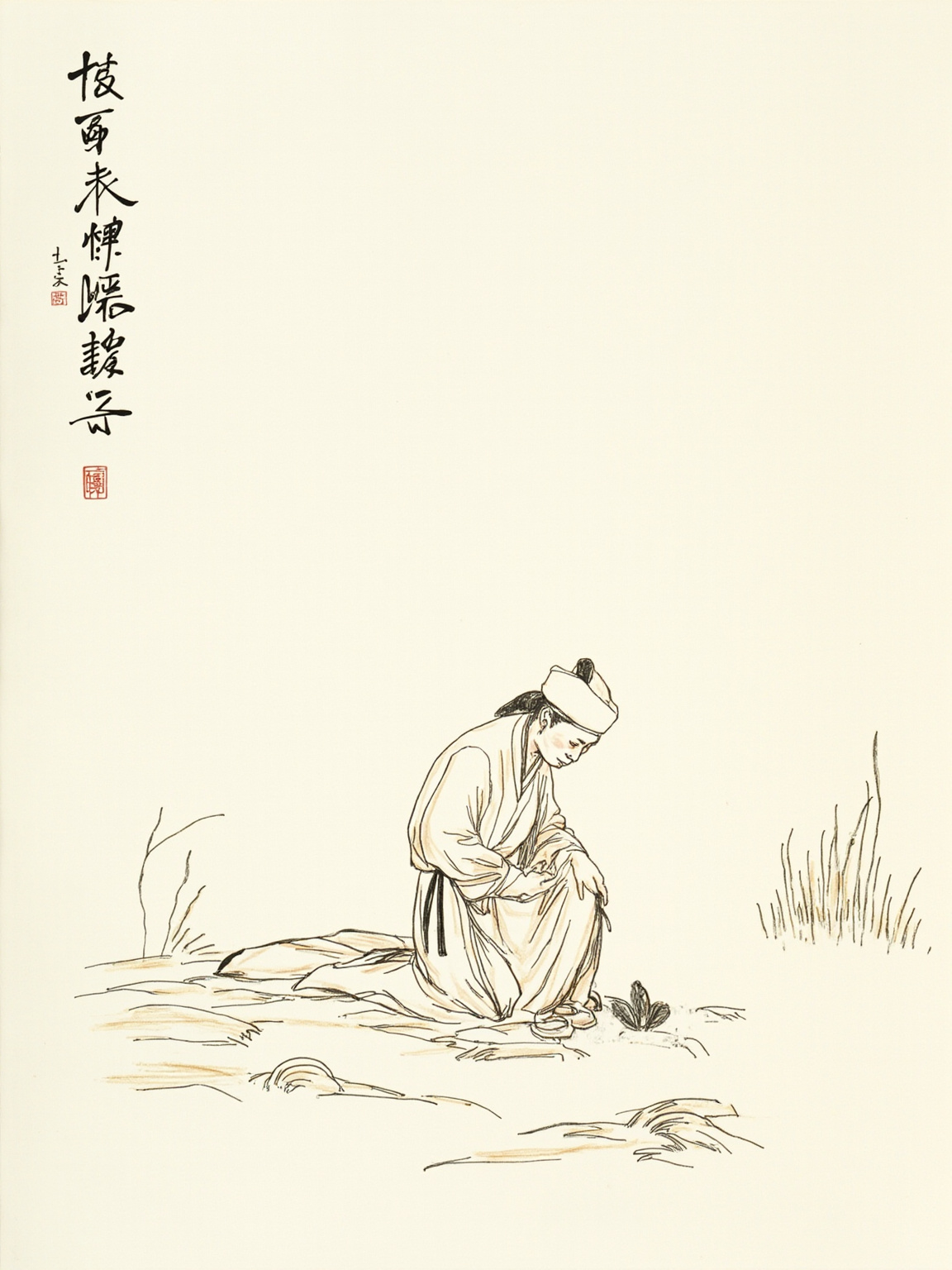
A single night in the imperial prison nearly cost me my life; so I came to the Yangtze, took up a hoe, and began to live.
自笑平生为口忙,老来事业转荒唐。长江绕郭知鱼美,好竹连山觉笋香。
金句 · 黄州雪堂 · 东坡居士自况
Moonlight at Red Cliff, and the bedrock of his equanimity. There was an outcrop on the Yangtze at Huangzhou called Red Nose Cliff, where Su Shi liked to take a boat out. One moonlit night in 1082, he sailed the river with friends, watched the moon on the water, and thought of Zhou Yu and the wars of the Three Kingdoms — out of that night came the Former and Latter Rhapsodies on Red Cliff and the lyric Meditation on the Past at Red Cliff. But the Dongpo Zhilin version is more personal. He isn't trying to write a hero. He's trying to answer, after grieving how brief a human life is, how to live that brevity without it crushing you. The sharpest line in the Rhapsodies comes right after a companion breaks down crying on the boat, and Su Shi answers him: only the clear wind over the river and the bright moon between the hills — sound to the ear, color to the eye, and nobody owns either one, because between heaven and earth everything has its master except the wind and the moon, which are free. That line takes the wreck of his career and hands it back to nature.
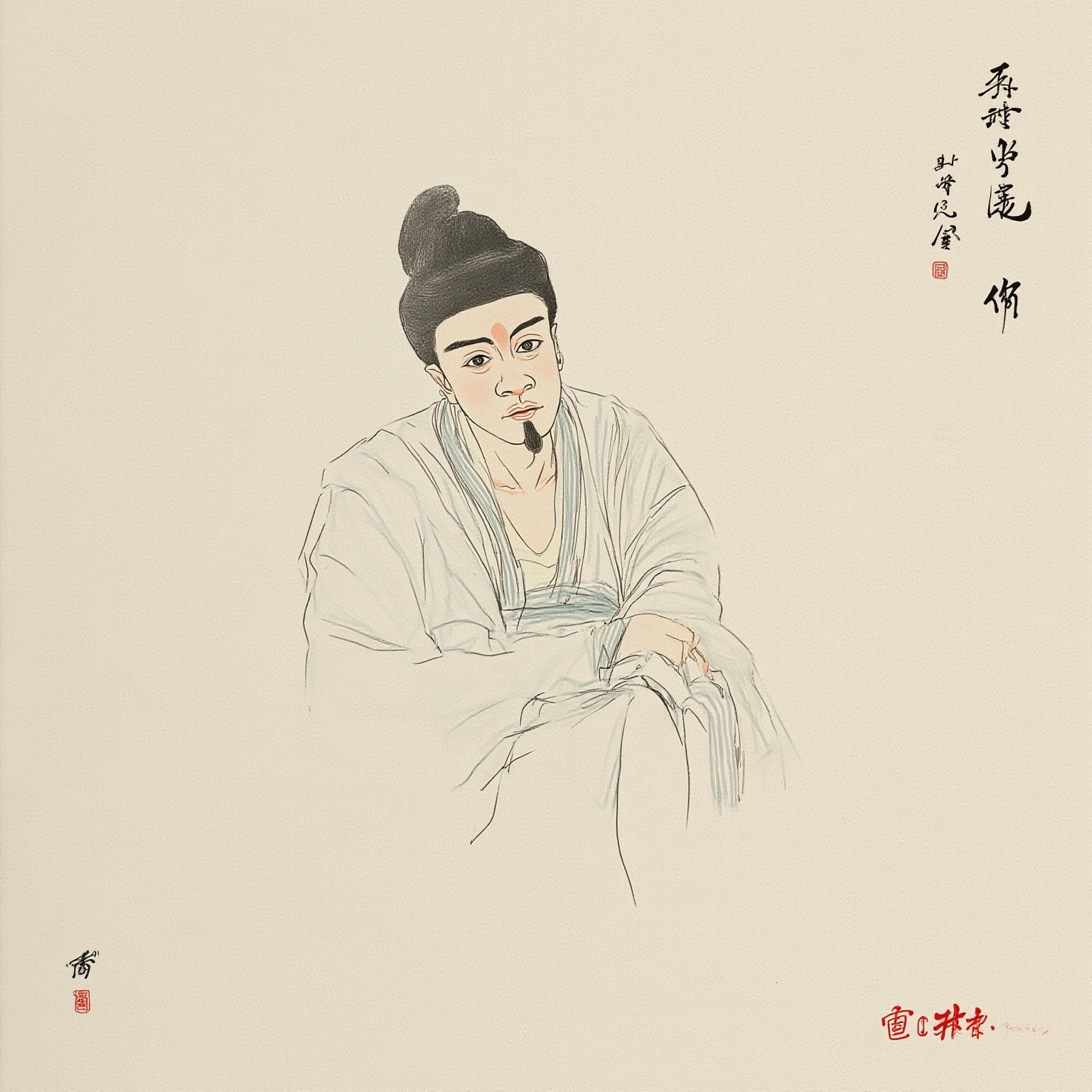
All I ask of the river and the moon is this: lend me your long flow, and I shall borrow nothing more.
惟江上之清风,与山间之明月,耳得之而为声,目遇之而成色,取之无禁,用之不竭。
金句 · 前赤壁赋 · 苏子泛舟答客
Snow Hall, answering a guest: the small stuff is the doctrine. Snow Hall in Huangzhou was where Su Shi received visitors. There he wrote an odd little piece, Snow Hall: A Guest's Question Answered, sitting a friend down for a formal talk on what life most resembles, then taking the question apart point by point. Look at the rest of the Dongpo Zhilin and the same move happens everywhere — the smallest things get treated as philosophy. He writes about how to breathe through insomnia, what to take for his health, how to cook this or that cut of meat, ghosts and spirits without ever milking them for drama, dreams without ever nailing down what they meant. In one piece he records seeing a ghost at night; by the end of it the ghost is gone and he shrugs, I never believed in this stuff anyway. That take-it-or-leave-it looseness is rare in Chinese notebook literature.
Huizhou, the deep south: the stretch that least resembles an exile. In 1094 Su Shi was pushed out of court again, this time to Huizhou in Guangdong, thousands of miles from the capital, warm and thick with lychees. He wrote the famous line — if I can eat three hundred lychees a day, I'll gladly be a man of the far south for the rest of my life. But the Dongpo Zhilin doesn't dwell on the hardship of the south. It dwells on his conversations with the local farmers and old countrymen, men who taught him to brew wine, played chess with him, talked health with him. One old farmer becomes a genuine friend and teacher on the page. This is the lightest stretch of writing in the whole book, and it barely reads like exile at all.
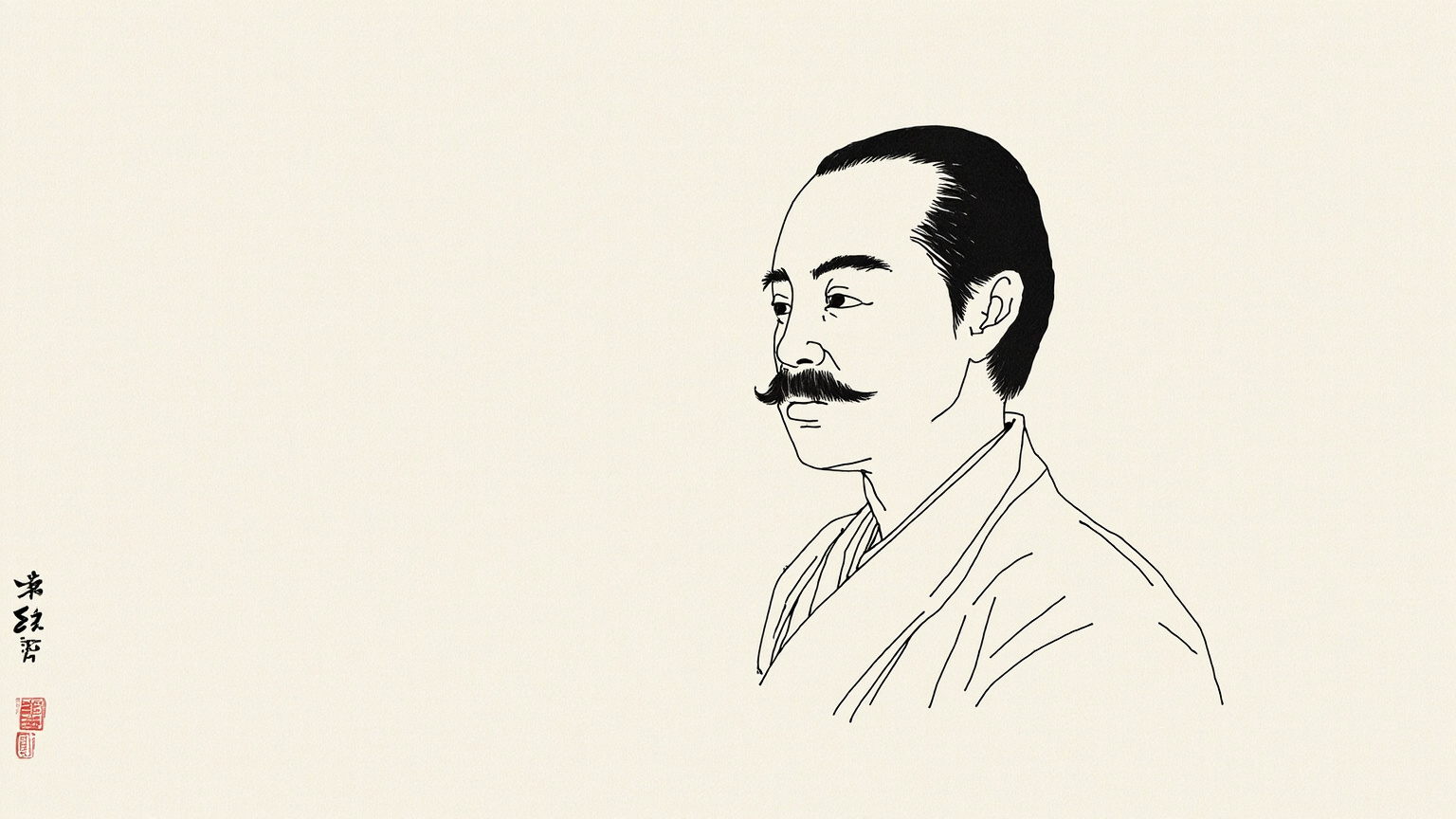
Let me eat my three hundred lychees each day, and I shall gladly remain a man of Lingnan for all my years.
日啖荔枝三百颗,不辞长作岭南人。
金句 · 惠州岭南 · 食荔枝
The death of Zhaoyun: the one tenderness that withered on the road. Less than two years into his exile at Huizhou, Zhaoyun fell gravely ill. She had been at his side since Huangzhou and never made it back to Qiantang. On her deathbed she kept repeating one line about him: you've spent your whole life getting yourself banished, and you've never once admitted you were wrong, that belly of yours really is just full of things out of step with the times. After she died, Su Shi wrote her funeral elegy, and there was no one left in Huizhou who could match his equanimity the way she had. It's the heaviest passage in the Dongpo Zhilin, and even here he doesn't complain — he simply sets it down, and right next to it notes what he ate that night.
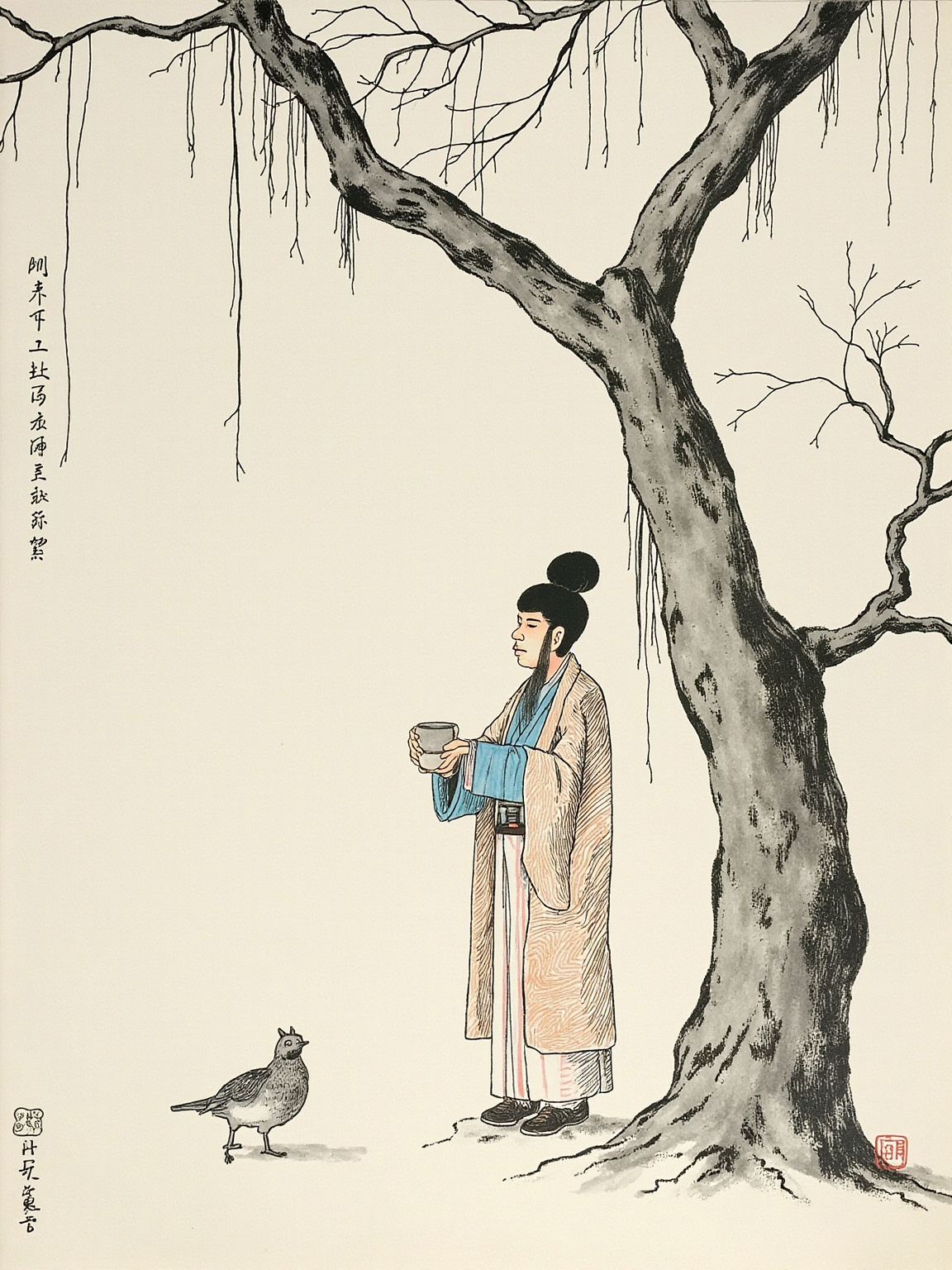
Danzhou, Hainan: equanimity at the edge of the earth. In 1098, sixty-one years old, Su Shi was marched across the Qiongzhou Strait to Danzhou on Hainan. Almost no one from the central plains would set foot there voluntarily — this was the actual edge of the known world. But the Dongpo Zhilin writes Danzhou in the same key as everything else: the best trip of his life. He lived alongside Li fishermen and woodcutters, learned to brew wine and farm from the locals, took his wine out with him and sang as he went. He opened a school there, and one of his students went on to become the first person from Hainan to pass the highest civil examination. Even the wilderness, he found a way to live as scenery.
Enemies, a monk, old rivals, and quick wit. On the road of exile Su Shi also had another kind of business to settle: old feuds with men at court. And here too he keeps it light rather than bitter, no grinding of teeth, just teasing. He records meeting Wang Anshi again after Wang left office; the two of them let the whole feud go with a laugh, a scene you'd struggle to find a second example of anywhere in scholar-official literature. The Chan monk Foyin was his other great sparring partner; the two of them traded barbs for decades, and the Dongpo Zhilin is full of their exchanges — Foyin trying to catch him out, Su Shi turning Chan logic straight back at him. None of it is pious. It's two brilliant men playing an intense game of wits for the fun of it.
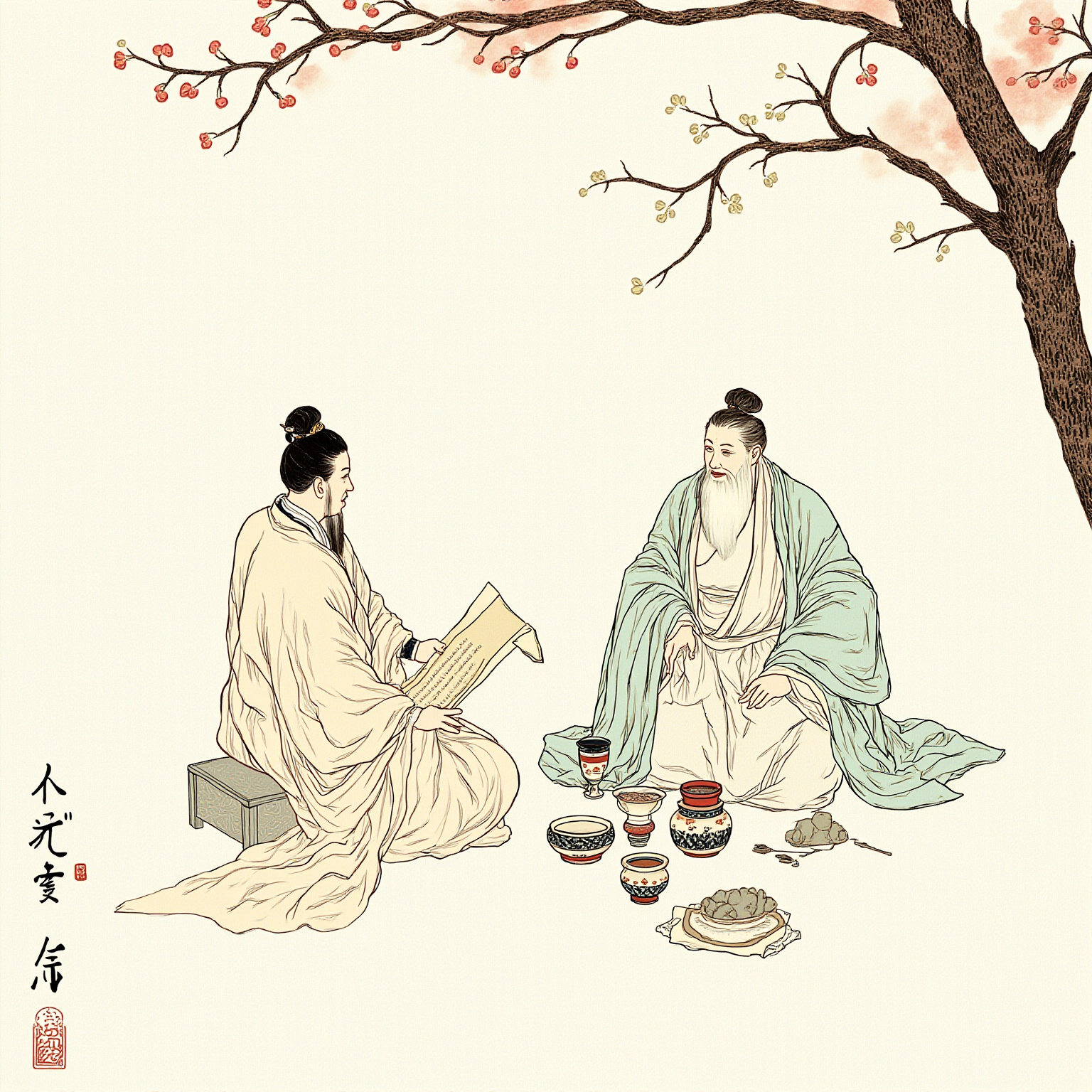
Of all the strange travels of this life, none outshines this one — the crown of all I have ever wandered.
兹游奇绝冠平生。
金句 · 儋州海南 · 题天涯海角
Five: Theme and Craft
The Dongpo Zhilin really has one theme: turning a ruined career into a joke told with grace. Imprisoned over the Crow Terrace case, battered again and again by the factional wars between the reformers and the conservatives, exiled to the deep south, exiled again to Hainan, Su Shi's answer to all of it comes down to the line from his own lyric: come rain, come shine, none of it matters. No protests of injustice, no breakdown, no laments. He writes about ghosts without turning them into gods, writes about enemies without gritting his teeth, writes about the worst place he's ever been and calls it the best trip of his life. Nothing else in the literature of the Chinese scholar-official reaches quite that height. Other exiles wrote their pain. He wrote scenery.
What makes it good? The looseness that never turns to sprawl. Each piece runs anywhere from a few dozen words to a few hundred, carrying no structural weight at all, and out of that comes a rhythm nothing else quite has. When he writes about health, he writes about health in earnest; when he records a ghost story, he records it straight, no embellishment. But behind every single piece stands the same man — someone who catches every fragment of his life and lets none of it go to waste. Visually it's made for ink-wash: a small boat on the river, a moonlit outcrop, a grove of lychee trees, a schoolroom lecture, spare compositions, plenty of blank space, suggestion rather than fine detail.
Six: Why Go Read the Original
This guide gives you the map. The text itself gives you the moonlight. From this piece you can learn how many times Su Shi was exiled and which famous works came out of it, but you can't feel, from a summary, the pause in the breath where the Rhapsody on Red Cliff drops the line grieving how brief my life is, envying the river's endlessness onto the page, and you can't get, from a paraphrase, how A Night Excursion to Chengtian Temple does an entire sleepless night in barely eighty characters. The rhythm of these essays, their blank spaces, the breath built into classical Chinese — no retelling gets that back for you. It's Song-dynasty moonlight, and you have to stand in the original text to let it fall on you.
Art Direction4 plates
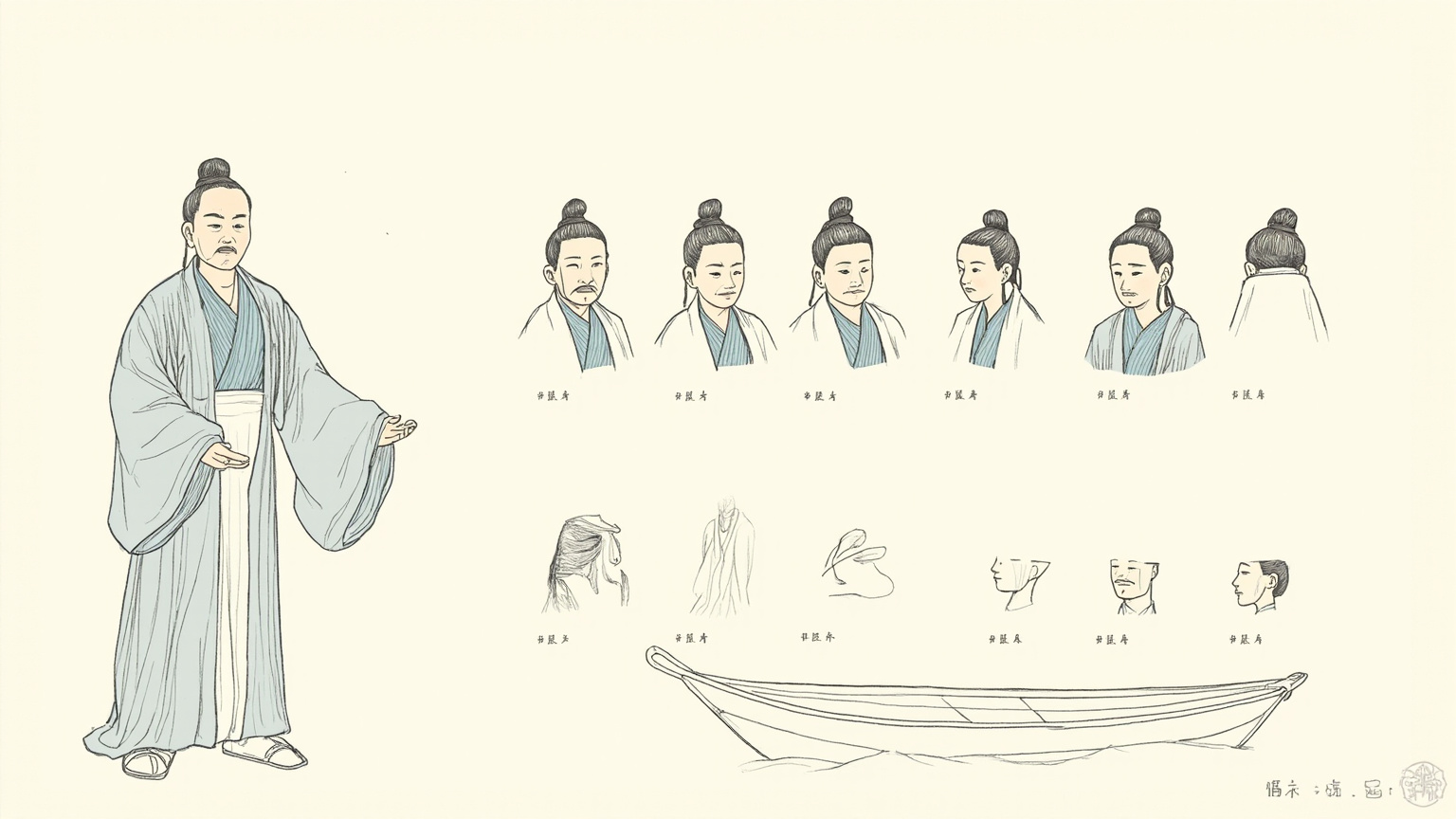
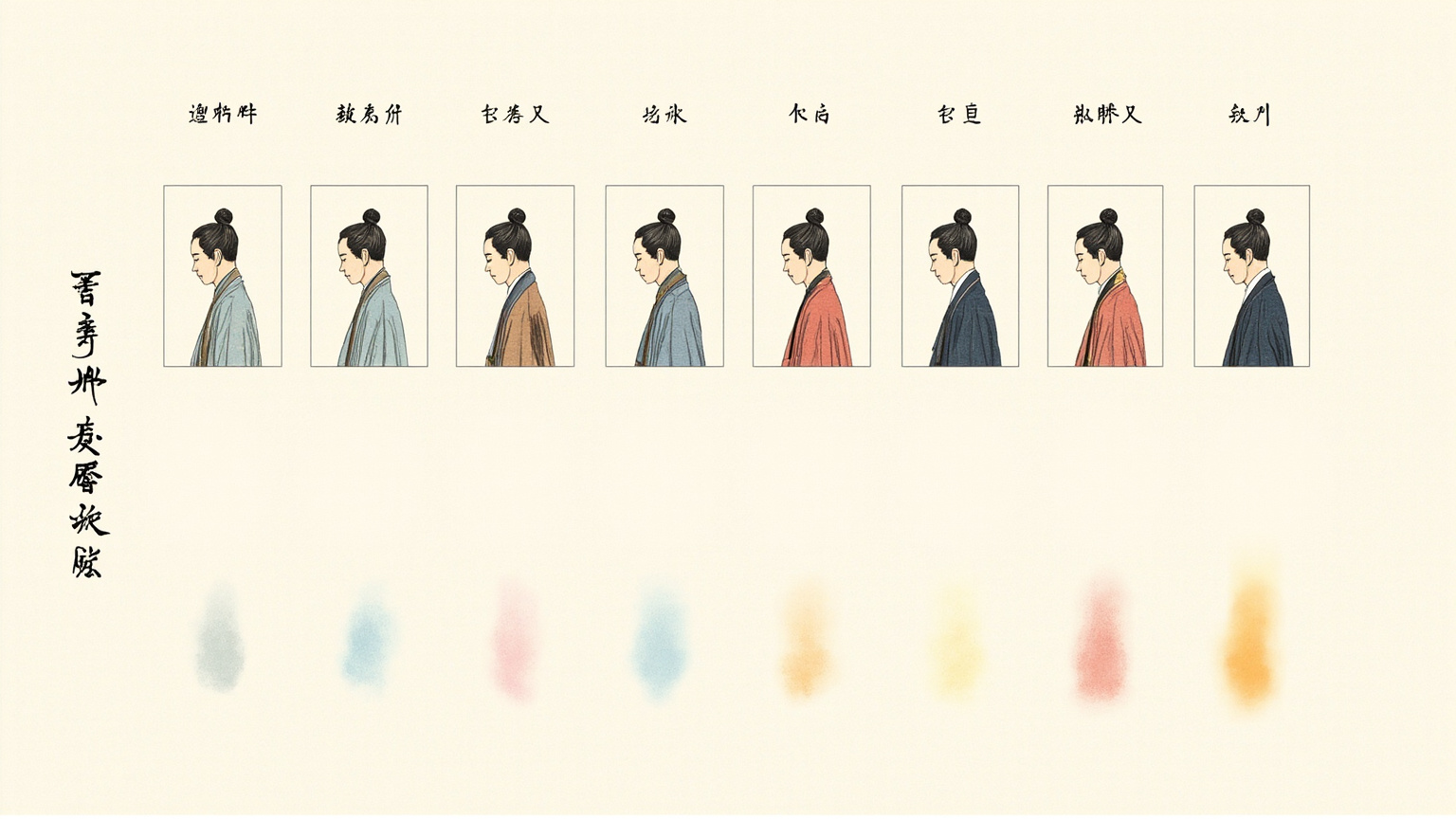
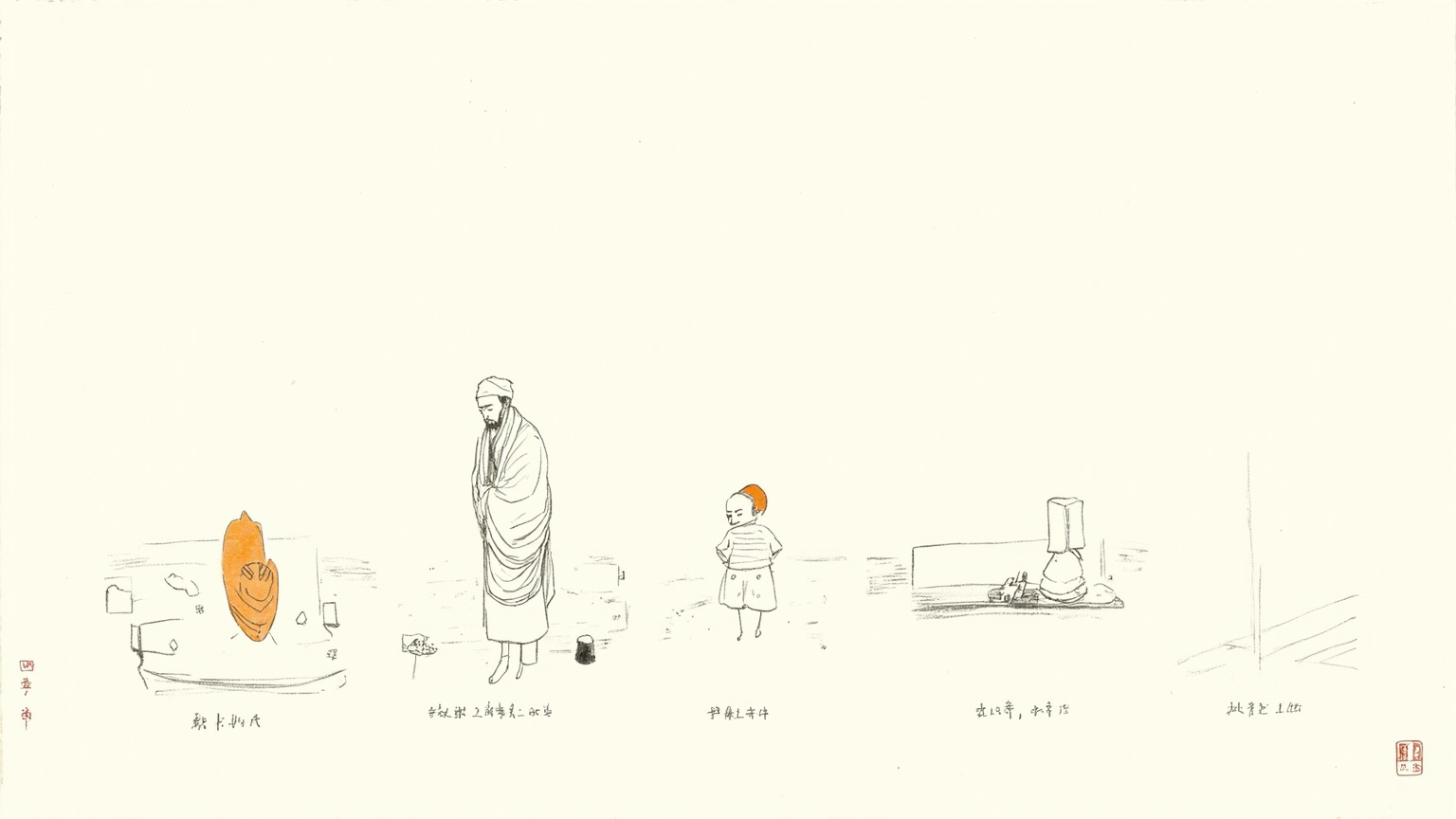
Before the guide was written, this book got a visual foundation — every illustration you just read grew out of it.