Sundiata: An Epic of Old Mali · Companion Guide
松迪亚塔
一个瘸腿王子被铁匠唤醒,凭一根铁棍拗成弓,走过七载流亡与一场破法血战,把曼丁哥人铸成一个帝国。
I. The Prince Who Stood on an Iron Rod
A seven-year-old boy still could not walk. His stepmother found him repulsive; his father grieved but could do nothing about it. The whole court watched him crawl, watched him humiliated in public, until a blacksmith forged him an iron rod. The boy seized it, hauled himself upright with a crack, and bent the rod across his knee into a bow. From that moment he was no longer the discarded wreck everyone had written off. He was Sundiata Keita.
Slow the picture down here. In the morning light of the palace courtyard at Niani, a thin boy stands at the center of the yard gripping the rod, still warm from the forge. Around him no one moves: his mother Sogolon half-kneeling a few paces off, Queen Sassouma Bérété standing in the shade, small Manding Bory tugging at his mother's robe. There is no cheering, only a very old kind of quiet, the kind that belongs to a prophecy finally keeping its word.
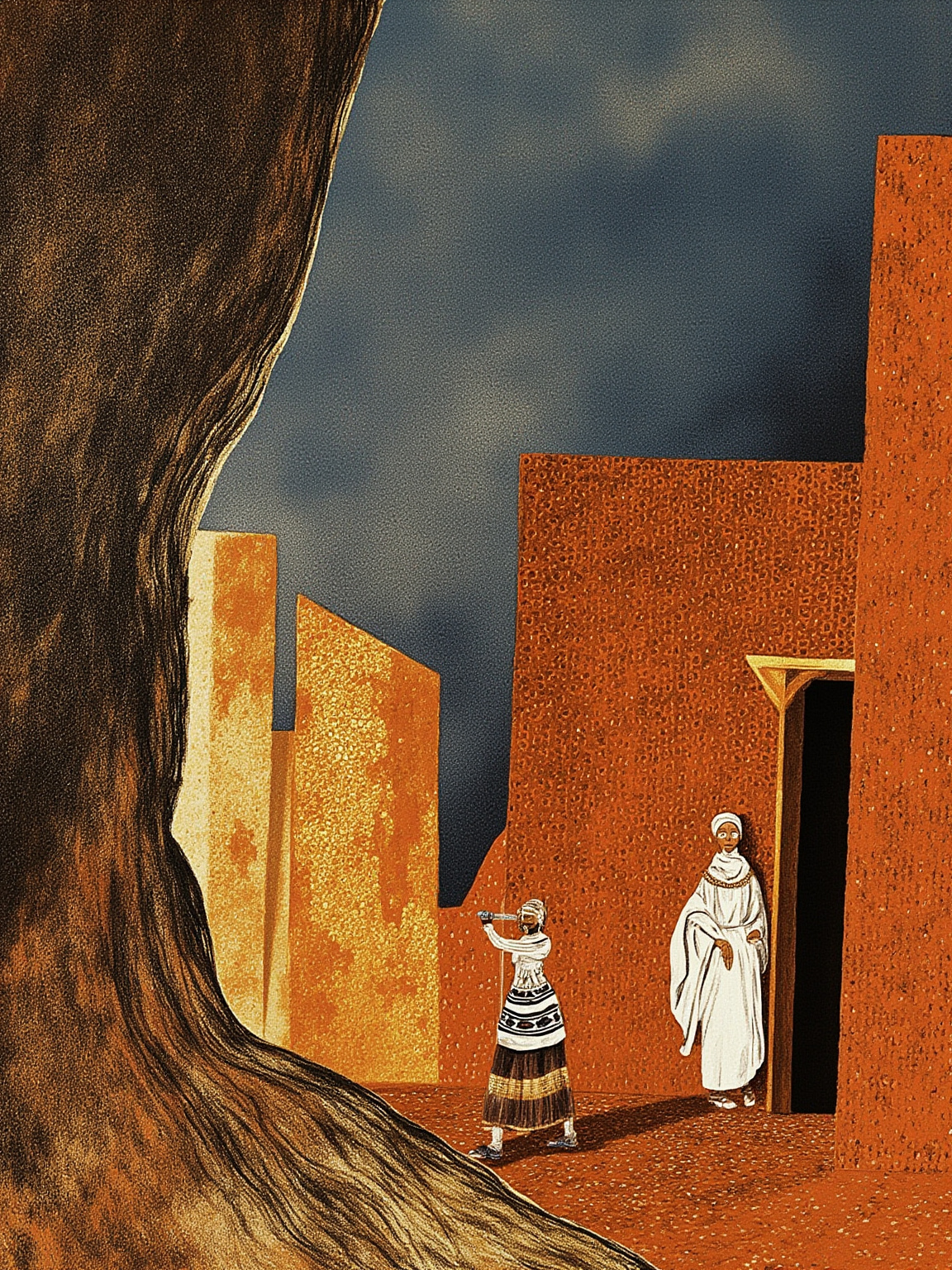
Sundiata, the son of Sogolon, child of the buffalo, child of the storm—his destiny was greater than that of any king before him.
索戈隆之子松迪亚塔,水牛之子,暴风雨之子——他的命运比此前任何一位国王都更宏大。
金句 · 第1章 · 索戈隆之子
II. An Epic With No Author
This book has no author. Its material was carried among the Manding people for centuries by hereditary performers called jeli, or griots in the usual English word: poets, historians, court diplomats, and family mediators all at once. The version we read today was recited from beginning to end, in the 1950s, by Djeli Mamoudou Kouyaté, a hereditary jeli of the Guinean village of Djeliba Koro, to a French-trained visitor. The Guinean historian Djibril Tamsir Niane later set it down in French and published it in Paris in 1960. The book was not written. It was recorded, a genuine oral text turned into paper only by passing through a historian's hands.
World-literature anthologies sometimes set it beside the epics of Homer, Virgil, and Vyasa, giving comparative epic studies an African pole to measure against the others for the first time. Put plainly, if you want to talk about how oral tradition becomes canon, you cannot go around this book.
III. The Oral Institution Is Part of the Story
Kouyaté does not open the epic with plot. He opens with his own credentials: I am Mamoudou of the House of Diabaté, a hereditary jeli, the latest link in a chain of tellers reaching back to Siyaman Dulu, and today it falls to me to tell you this. Scholars never read that opening as decoration. It states the epic's authority in plain terms: not a signature, but a mouth handed down from ancestor to ancestor.
That is exactly why the jeli is never mere background. The companion who stood beside young Sundiata, fought at his side, and later became his court griot, Balla Fasséké, belonged to the same Diabaté line as Kouyaté. In other words, the man telling the story is descended from the man who once stood beside its hero. The epic weaves that thread in on purpose: the oral institution itself is the story's second protagonist.
IV. The Hero Archetype of Seven Years in Exile
Standing up on the rod solved only half the problem. Sundiata's half-brother Dankaran Touman, backed by the new queen Sassouma Bérété, took the throne, and Sassouma, afraid the boy of the prophecy would one day come back and take it from her own son, simply summoned nine sorcerers to kill him. The prince had no choice but to flee that same night with his mother Sogolon and his brother Manding Bory. The flight lasted seven years.
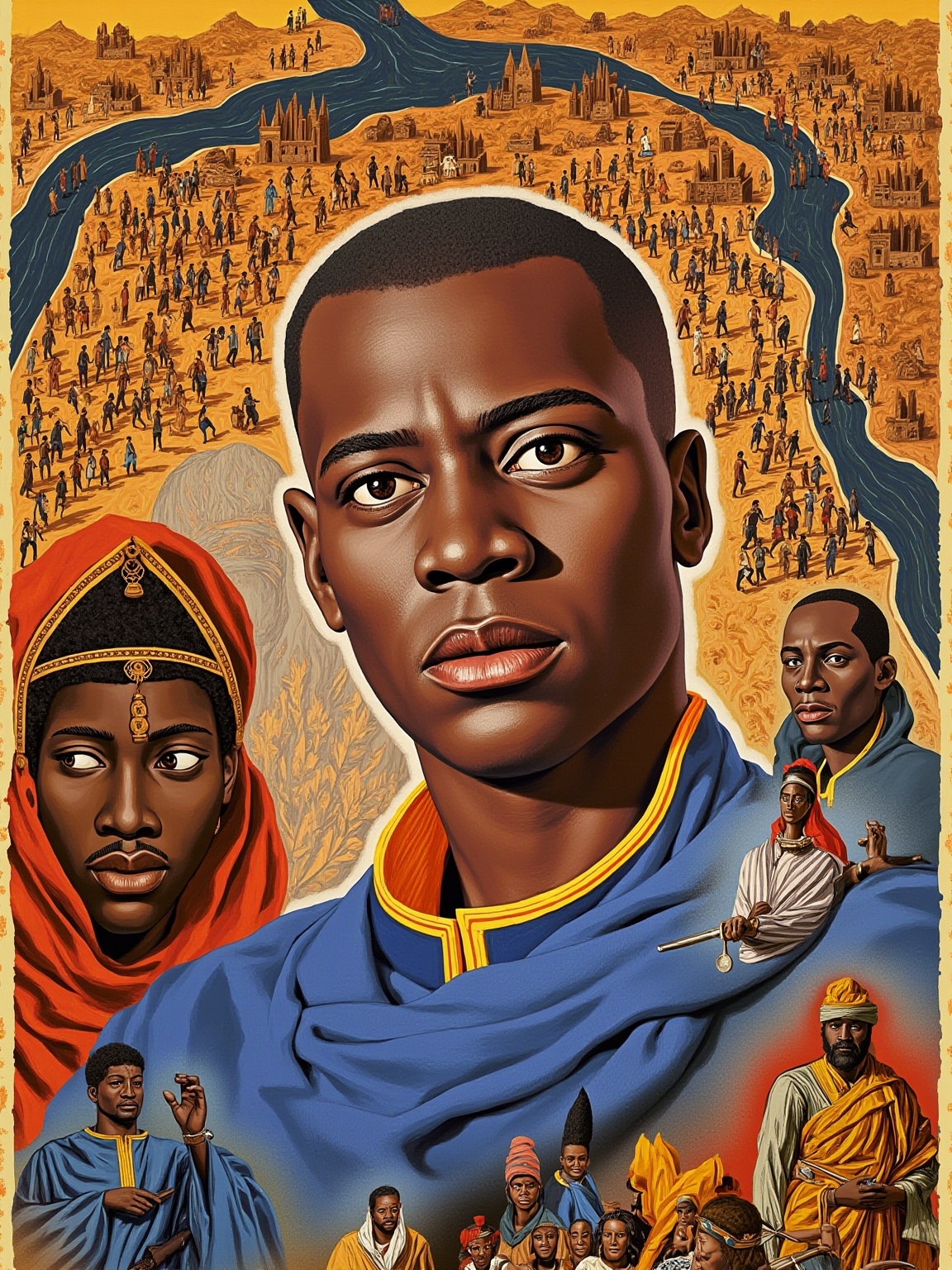
He was a prince, but he had no kingdom; he went from country to country, and everywhere people welcomed him, for destiny weighed upon him and greatness was written on his face.
他是王子,却没有国度;他从一个邦国走向另一个邦国,所到之处人们都热情接待他,因为命运压在他肩上,伟大写在他脸上。
金句 · 第4章 · 流亡七载
The epic unfolds the exile-apprenticeship-return pattern here. He is not simply chased off and left at that; he crosses several kingdoms in exile and settles for years at the court of Moussa Tounkara in Mema, learning the art of command from him. Tounkara loved the young man and was raising him as his heir, but when Sundiata chose to go back for his revenge, to save his mother and his homeland, the old king, sorrow and all, sent him off with a vassal army. This isn't the wandering hero's revenge you get in a wuxia novel. It's political fieldwork, a future founder training himself on the road.
Manding Bory deserves special mention here. He is Sundiata's half-brother, born to the same mother but a different father, and the epic gives brotherhood no thicker treatment than his. In the empire's later map, Sundiata made him his right hand, his deputy, and sent him south on a coming-of-age journey to open forest territory for the Mali empire. The design is entirely political: a brother here is not a supporting character. He is a partner.
V. The Sorcerer Tyrant and the Spell-Breaking Arrow
News that the old capital Niani had fallen arrived almost together with the delegation sent to bring him home. It was not only his family calling Sundiata back. It was all of West Africa, because Soumaoro Kanté of the Sosso empire was forcing kingdom after kingdom to submit through sorcery. Sundiata retraced his exile, visiting the kingdoms he had befriended along the way, and came home at the head of a coalition army.
The real difficulty showed up in the final battle: ordinary weapons did nothing against Soumaoro, who fought behind a shield of sorcery. The epic's answer is not a stronger blade but a sharper truth. On the battlefield, Manding Bory's mother, Nana Triban, used divination to uncover the secret of Soumaoro's totem, and Sundiata forged the spell-breaking arrow that finally brought him down. Soumaoro fled into a cave, where his own defected nephew Fakoli joined Sundiata in cornering him.
Readers of the epic tend to pause here. Sundiata and Soumaoro are a deliberate mirror pair: one builds a state on justice, the other rules by sorcery and terror; one wins through allies, and finishes the job through defection inside the enemy's own house. This is not the medieval European story of a lone knight slaying a dragon. It is African coalition politics: the side with more friends wins, and even an enemy's enemy counts as a friend.
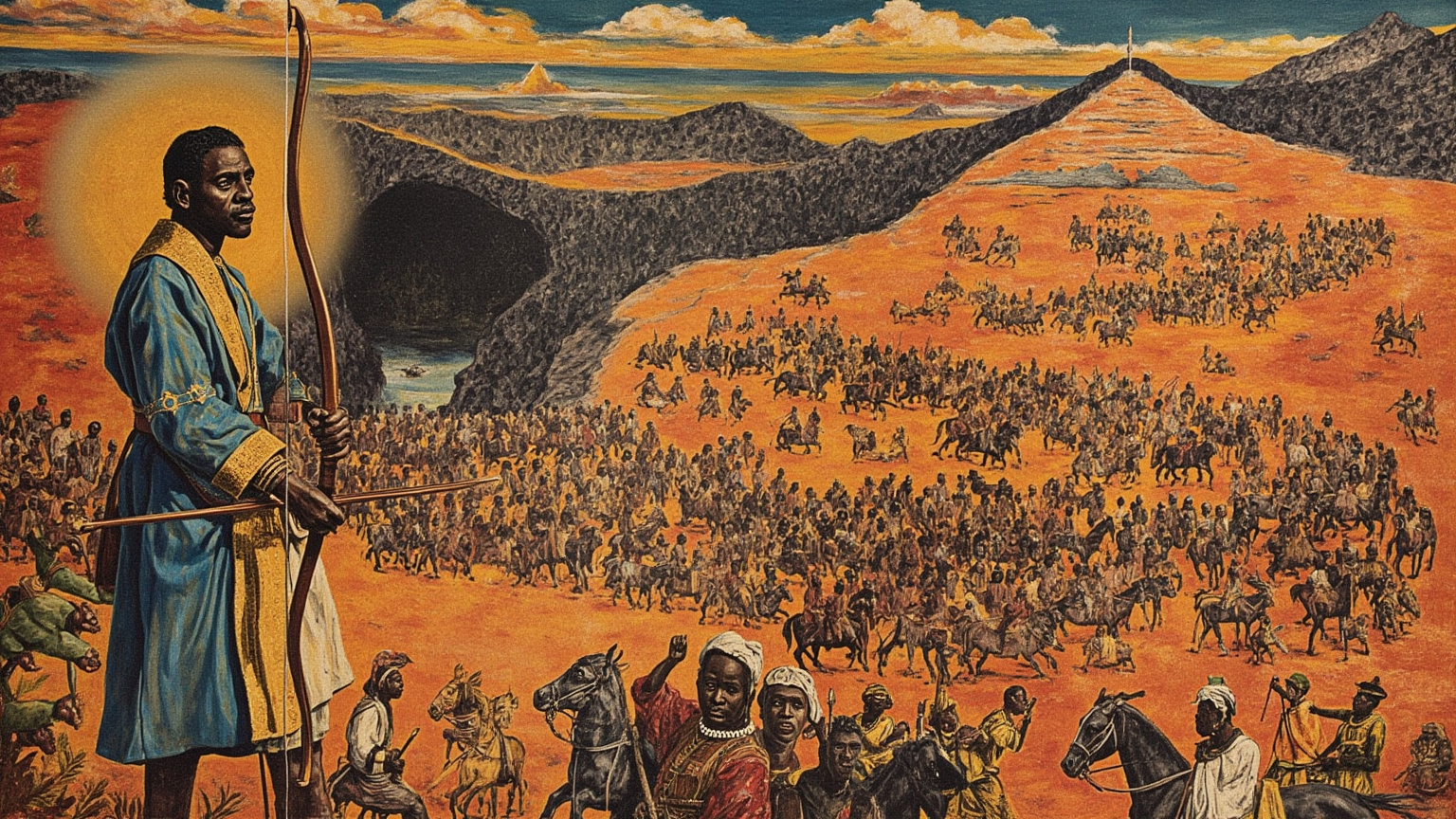
Sorcery, they say, does not kill a sorcerer; but the day a man breaks the taboo that protects his totem, that day the fetish will be silent.
人说巫术杀不死巫师——但到那人亲手打破护佑图腾的那一日,他的护法将归于沉默。
金句 · 第12章 · 破法之箭
VI. A Triumph by Canoe and an Oral Constitution
After the victory, Sundiata was in no hurry to be crowned. He and his men floated down the Niger in canoes back to Niani, villagers offering gifts along the banks, and he sacrificed a hundred head of cattle and sheep on the water in thanks. The epic slows down here, slow enough that you can almost watch the light flicker on the current. A founding king's return is not made on horseback through a city gate. It happens on the river, and that is an African memory in which kingship and river are bound together.
Back in Niani, the first thing he did was tear down the old walls and rebuild the capital larger, fit for a new empire. The second thing mattered more: he called a great assembly of kings and nobles from across the empire and swore them all to a common oath. Scholars later came to regard that oath as the oral root of the Kurukan Fuga, the Mande Charter. One of Africa's earliest oral constitutions, in other words, is buried inside this epic.
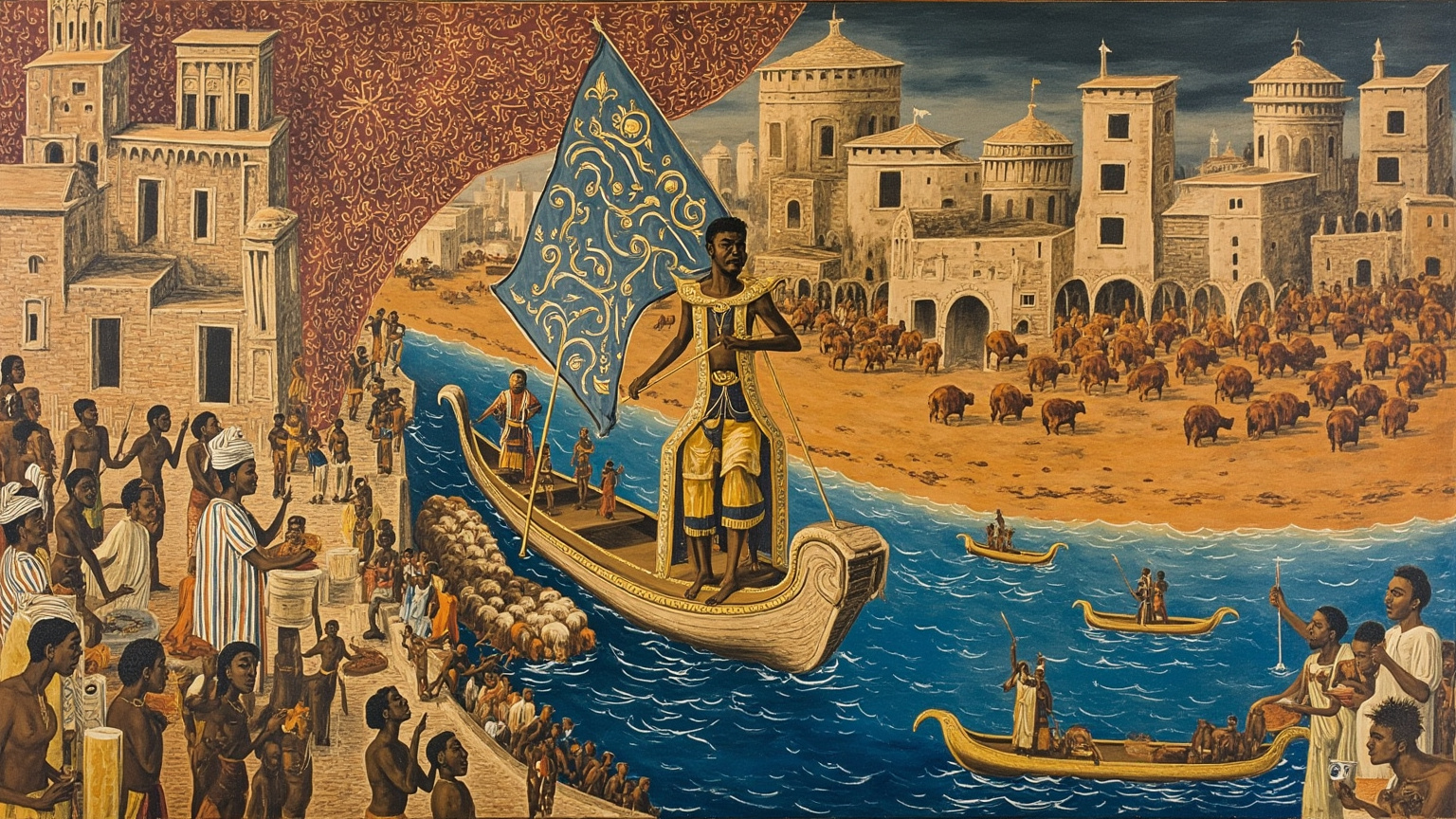
The waters of the Niger carried the victor home, and at every village the people lined the banks to acclaim him; a hundred oxen and a hundred sheep were sacrificed to the spirits of the river.
尼日尔河水载着胜利者归乡,沿岸每一处村寨都有人夹河而立迎他;百头牛、百只羊献给了河上诸灵。
金句 · 第15章 · 凯旋渡河
From then on the trade routes were safe and the villages prospered. The epic's closing praise places Sundiata beside Alexander the Great as one of the greatest conquerors of the ancient world. Hold onto that line: it comes from the griot's own closing praise-song, not from a later scholar's judgment, and not from some separate tribute the griot delivered outside the epic. It is the honor-grammar native to the jeli tradition, woven into the epic's final passage.
I am the griot; the story of Sundiata is my story, and Mali is eternal; the word of a griot outlasts the stones hewn by the masons of Niani.
我是格里奥。松迪亚塔的故事就是我的故事;马里是永恒的;格里奥的话语,比尼阿尼石匠凿出的巨石还要久长。
金句 · 第18章 · 永在的马里
VII. Why This Book Still Rewards Reading Today
If you think this is just a prince's revenge story, you have missed its hardest core. Its true protagonists are really two things: the hereditary memory institution of the jeli, and a political template for building a state through coalition rather than conquest. Those two things are the spiritual starting point of the wealth Mali would later reach under Mansa Musa. The title you see today, Africa's Homeric epic, is not a marketing line. It rests on an actual institution.
Another point people often miss is that Sundiata's disability is not decoration. His inability to walk as a child is the prophecy's built-in delay: he has to be humiliated and exiled first before he can become the king the country calls back. The moment he stands on the rod is a piece of body politics, flipping the humiliated into the sovereign. That runs opposite to Oedipus, cursed by prophecy at birth with no way to escape it. Here fate is not a curse. It is something that has to be redeemed through patience, courage, allies, and sacrifice. The two epics, set side by side, throw light on each other.
The true protagonist of this epic is the mouth that tells it, not the king — and behind that mouth, an unbroken line of ancestors who never let the thread drop.
VIII. Why You Should Read the Text Yourself
I can give you the skeleton of the plot, the outline of its themes, the reasons it matters. What I cannot hand you secondhand is the rhythm of jeli performance: the way Kouyaté breaks off mid-narration to greet his listeners, the way he drops a bit of folklore about lion behavior into the middle of a battle scene, the way a repeated phrase makes a place-name echo in your head long after you have read past it. These are traces of the spoken voice that the written version keeps on purpose, and you only run into them by reading it line by line yourself.
There's also the image of the iron rod bending into a bow, the moment Nana Triban casts her divination on the battlefield, the light on the river as the canoe fleet passes. You can hear me describe them ten thousand times and it still won't match the film that runs in your head the instant you read the actual sentence. And the epic is not long, eighteen chapters, a few hours to finish, but once you have, you will find your answers shift on a few questions: how oral tradition turns into canon, how African imperial history gets told, who else belongs next to Greece when we talk about heroic epic. That's a good trade.
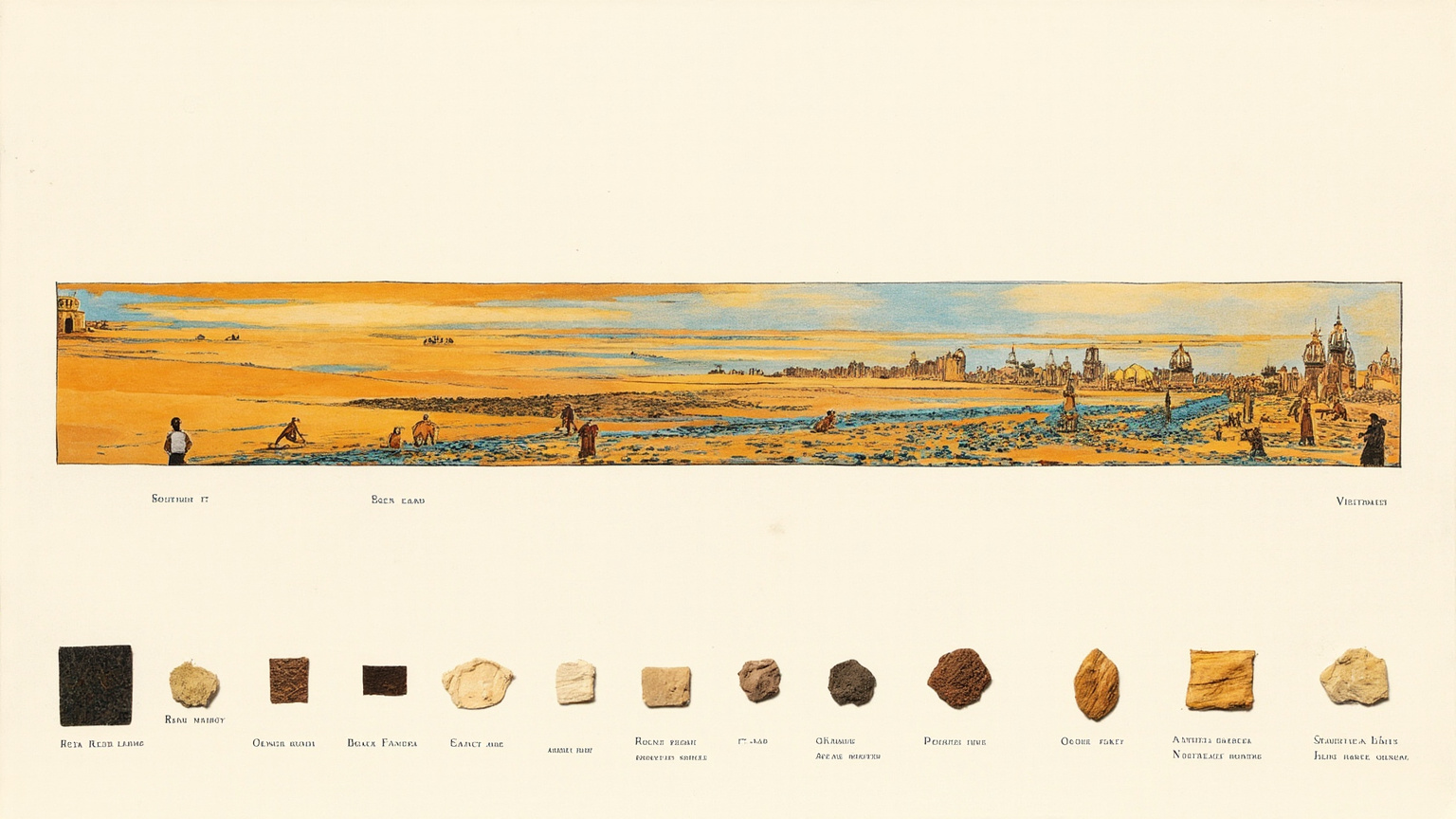
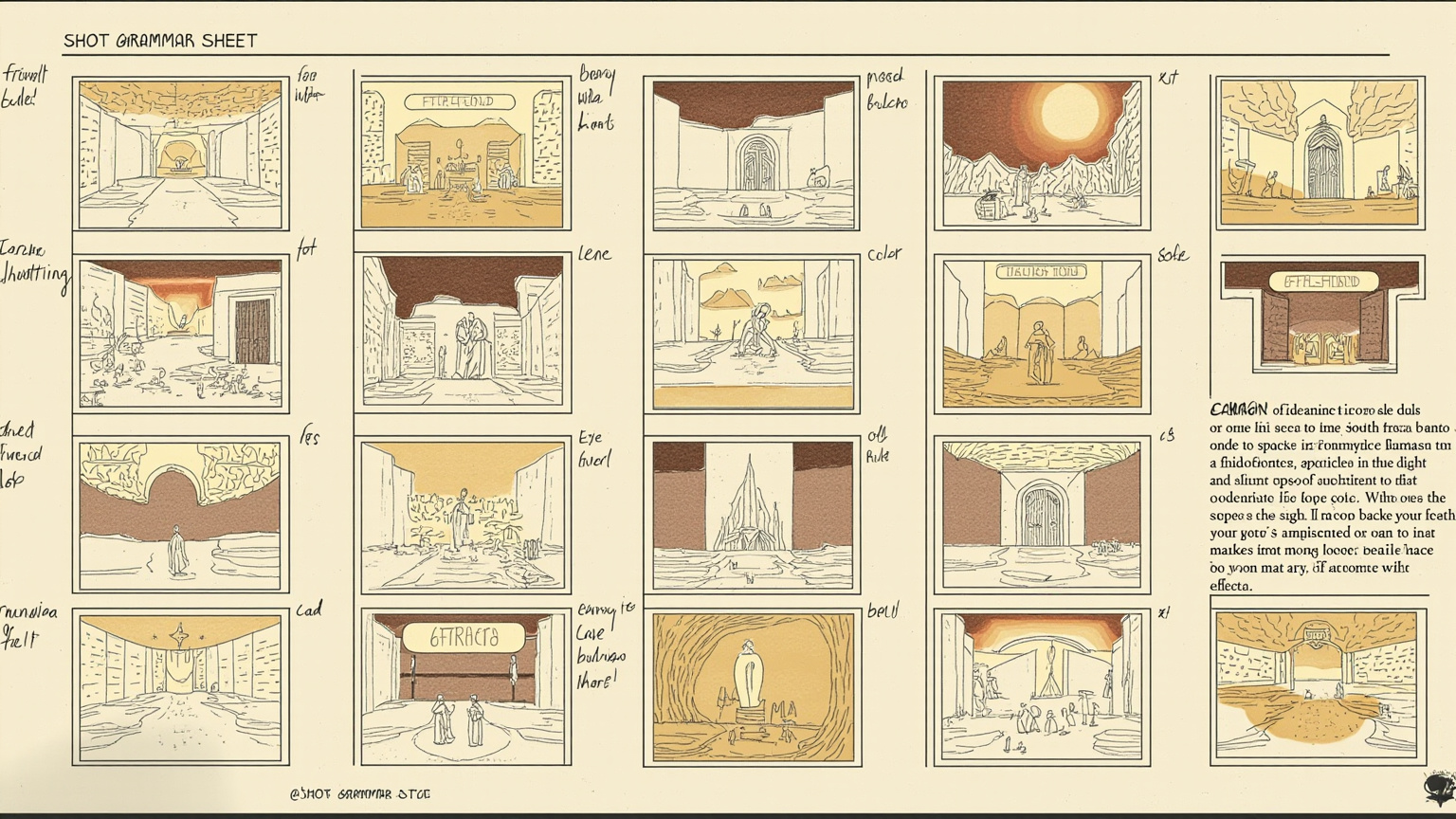
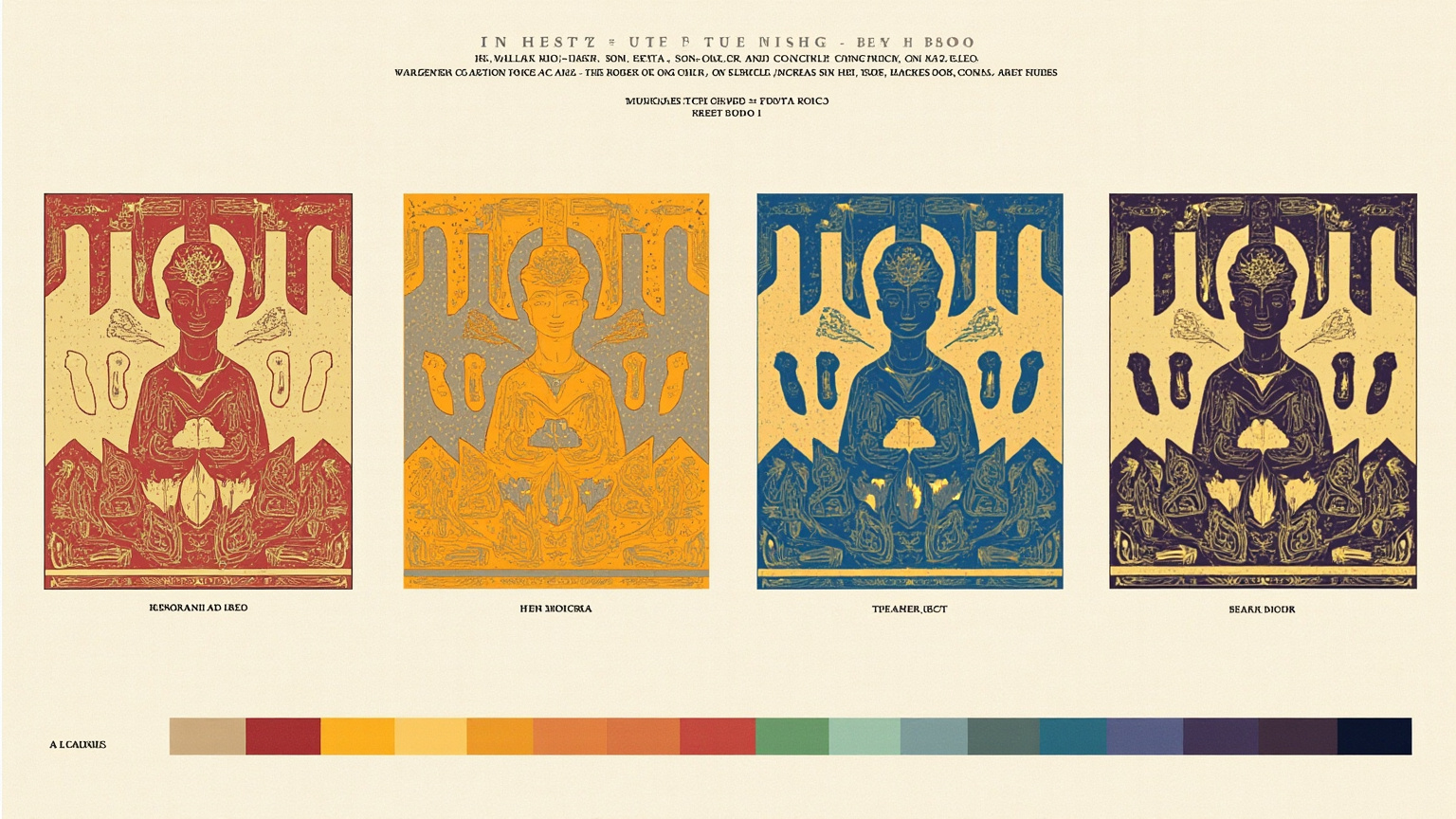
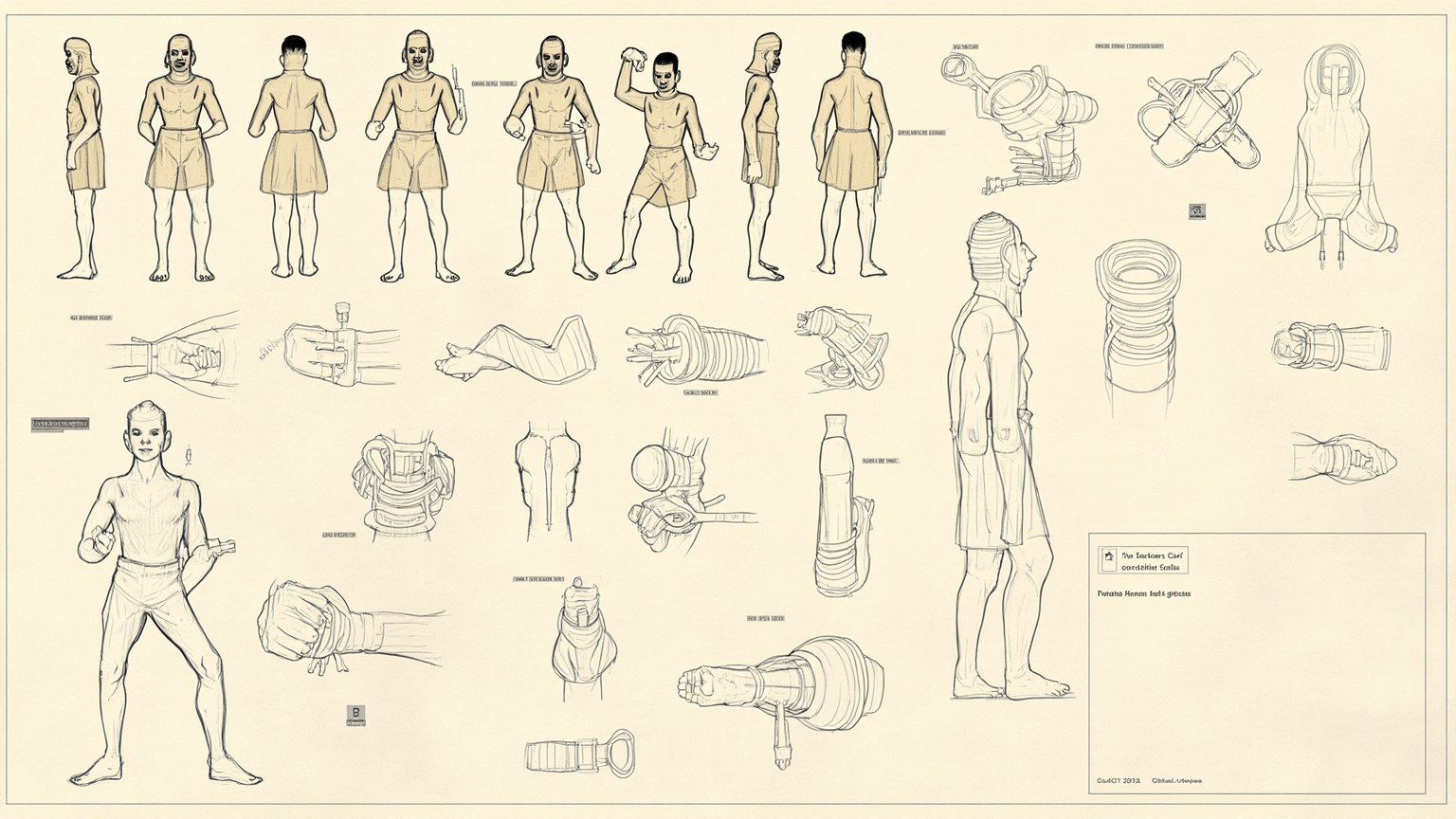
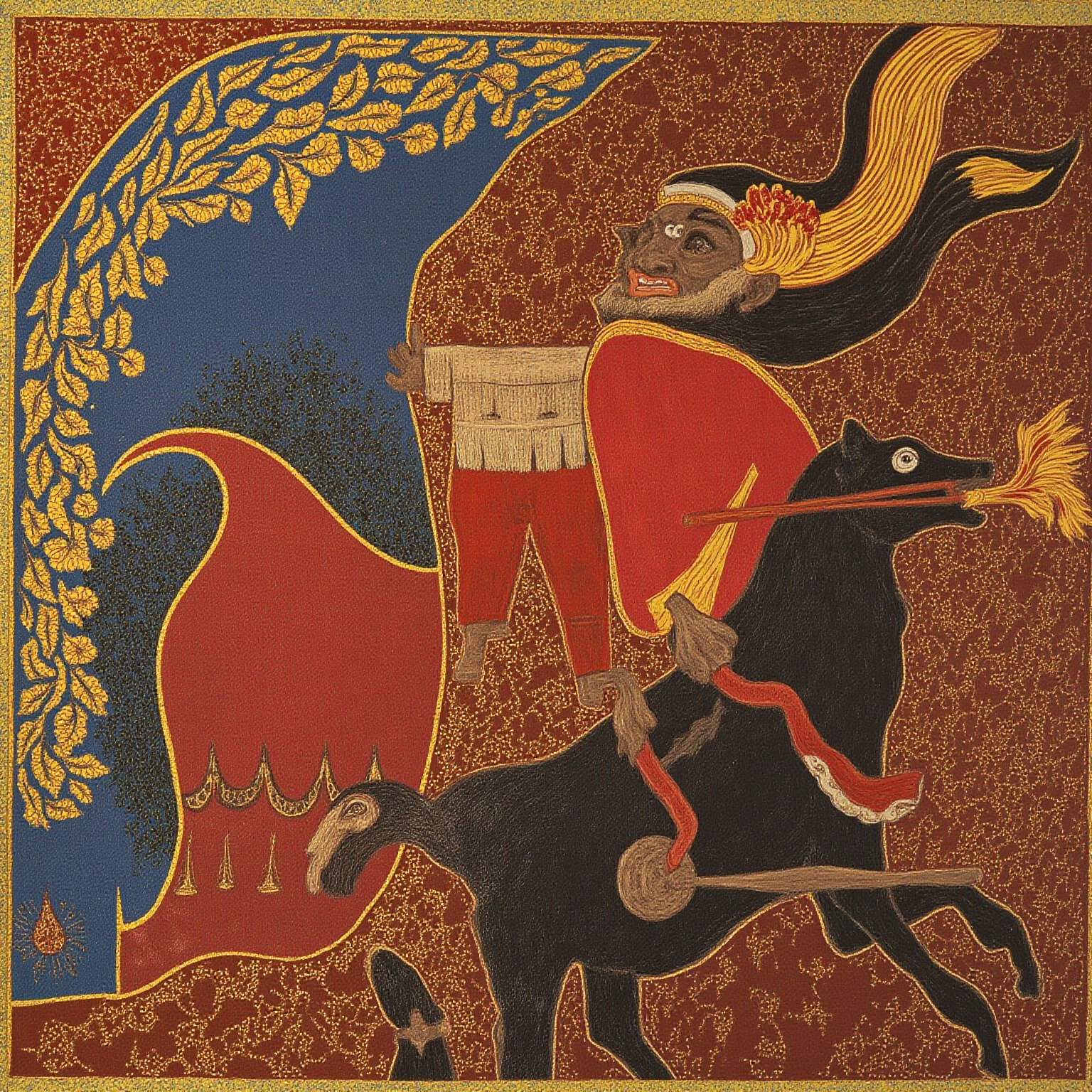
Art Direction4 plates
Before the guide was written, this book got a visual foundation — every illustration you just read grew out of it.