Takekurabe (たけくらべ) · Companion Guide
青梅竹马
吉原门外的四个孩子,在绰号还能叫出口的最后几个月里,谁也没说出那句想说的话。
A Red Sash Left Lying in the Rain
On a rainy day, the boy passed the door of the Daikokuya, the house by the quarter, and the thong of his clog snapped. He stood there, uncertain. The girl tossed a red sash out through the lattice door, then turned and ran back inside. He never picked it up. The sash lay soaking in the rain all afternoon, saying for two children what neither of them could say.
What Kind of Book Is This
Growing Up, known in Japanese as Takekurabe, is a novella Higuchi Ichiyo wrote in the mid-1890s, serialized in the magazine Bungakukai. It shook the literary world on arrival — Mori Ogai and Koda Rohan jointly declared it a masterpiece. Ichiyo was born in 1872 and died of tuberculosis in 1896 at twenty-four; Growing Up is the centerpiece of what later critics call her miracle fourteen months, the final burst of writing before her death. Her portrait now appears on the five-thousand-yen note, and the story is a fixture in Japanese school textbooks.
It is remembered because Ichiyo, writing with the utmost restraint, pushed the faint feeling between a girl fated for the pleasure quarter and a boy fated for the priesthood as far as it could go without a kiss or a confession. A red sash soaking in the rain and a paper narcissus of unknown origin are enough to break the reader's heart. Her prose carries a trace of classical Japanese cadence, and it gilds the old downtown streets with a melancholy of light and shadow.
Characters and World
The heroine, Midori, is fourteen. She lives in the annex of the Daikokuya, right next to Yoshiwara, and is the younger sister of the courtesan Omaki. The neighborhood calls her Midori of the Daikokuya — open, generous, unafraid to speak her mind. Her future was decided the moment she was born: she will follow her sister through that same dark gate. The hero, Nobu, is fifteen, the son of the head priest of Ryuge-ji temple. The neighborhood calls him Nobu of Ryuge-ji — quiet, withdrawn, a diligent student. He later puts on priestly robes and leaves to study, one of the few characters whose path the novella actually states, a silent counterpoint to the future already written for Midori.
Around them is a whole crowd of children. Shotaro, thirteen, comes from a pawnbroker family; both parents are dead, and his grandmother raised him. He leads the main-street gang and is Midori's closest playmate, the one she gets along with best. Chokichi, son of a master carpenter, leads the back-street gang — rough, quick to anger, the one who lay in wait to ambush Shotaro on the eve of the summer festival and failed. Sangoro, a rickshaw driver's son, tags along with Shotaro's gang and keeps getting dragged into Chokichi's trouble — the one who always takes the hit.
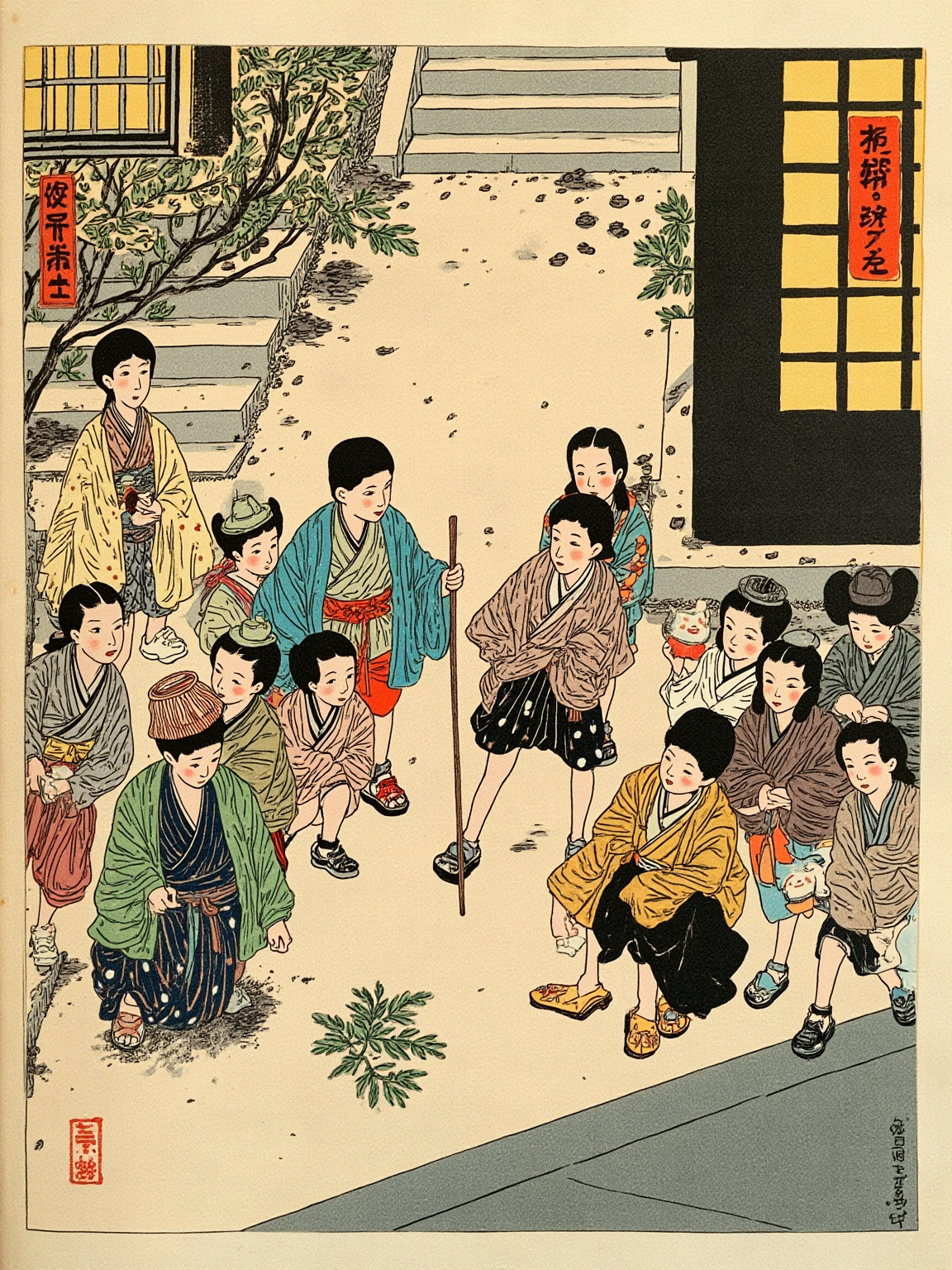
She was frank and open, yet she was already bound for the black-lacquered gate.
她落落大方,可那扇黑漆大门,早在她出世那年便已替她定下了去处。
金句 · 第一段 · 美登利登场
Clog-lined alleys, flagstone paths, the great portable shrine and the festival stalls at Senzoku Shrine, muddy lanes after rain and the plank bridges over the gutters — this is the whole of these children's world. Their neighborhood sits right against Yoshiwara, the licensed quarter that had stood there for close to three hundred years since the Edo period, and yet they do not live inside it. To be right next to it and shut out of it are the same fact.
The Night Before the Summer Festival, the Street Draws Its First Blood
In Shitaya Ryusenji-cho before the summer festival, Shotaro's main-street boys and Chokichi's back-street boys trade insults in the road. Chokichi lies in ambush all night hoping to catch Shotaro, misses him, and hits Sangoro instead — and hits Midori too, who is standing with Shotaro's side. A clod of dirt strikes her on the forehead.
It is the first time blood is drawn in these children's world. Ichiyo does not bother with who was right — she writes only the instant the dirt hits skin, and after that no one laughs again. It is only a clod, not a blade; it leaves nothing but a thin red scrape. But that night, all the excitement building toward the festival goes cold. From here on, the children's world carries a scratch it did not have before.
Ichiyo shows her hand here. She is not writing childhood innocence — she is writing the thin skin of violence just beneath it, ready to tear at any moment. She uses the children's playtime to measure the distance to the adult world, and that distance turns out to be far shorter than any adult would care to admit.
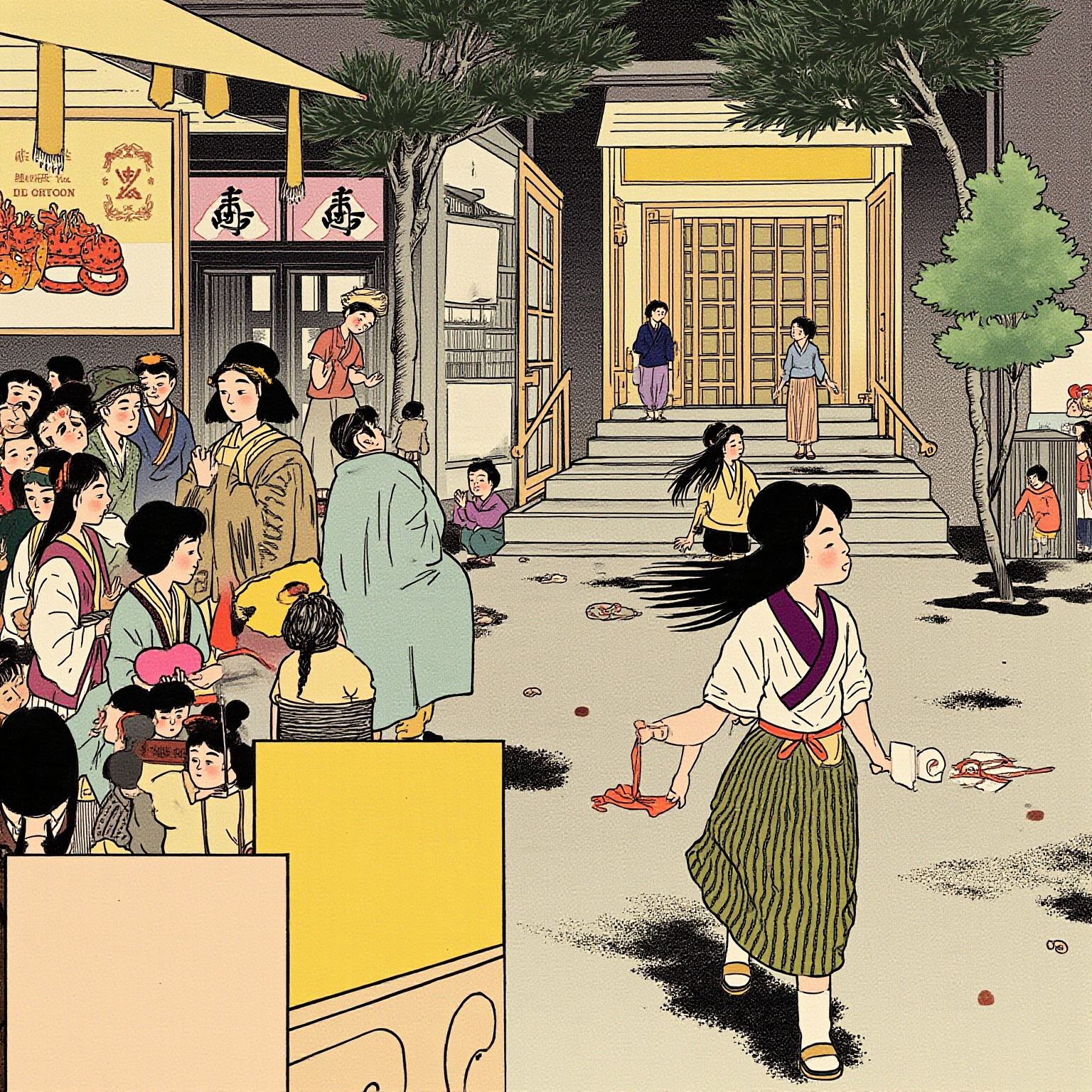
A single pellet of grit, and that night the whole festival went cold.
一粒泥沙飞过——这一晚,夏祭前夜的兴奋,就这样凉了下去。
金句 · 第四章 · 夏祭前夜
A Quiet Pull at the Ikuei School
Midori and Nobu attend the same school, the Ikuei School. She is open and easy; he is awkward and withdrawn. Through the months they sit in the same classroom, something passes between them — the kind of pull only children that age feel, never quite named. Midori answers out loud in class; Nobu grips his pen under the desk. It is not yet love, and Ichiyo writes that not-yet-love with more weight than most writers give the real thing.
The wooden desks at the Ikuei School sit through the day, the light shifting slowly outside the paper windows. The two children share the same classroom, the same textbook — and yet the story never once records a real conversation between them. This is where Ichiyo's skill shows: she writes the actions, never the thoughts; the two steps of distance between them, never the sentence neither one says.
She captures, in a handful of pages, the particular ache of wanting to reach out and never quite raising the hand. With the most restrained touch, she set an early template for every unspoken feeling that Japanese fiction would return to after her.
Festival Night, Between the Candy Figures and the Paper Masks
On the night of the summer festival, the children crowd around the stalls at Senzoku Shrine. Candy is molded into chicks and fish; paper masks hang in a row along a string; the great portable shrine is carried past through drums and shouting. Midori and Nobu stand together in the middle of it all — he stares down at the candy figure in his hand, untouched, and she stands half a step away, pretending to study the masks on the stall.
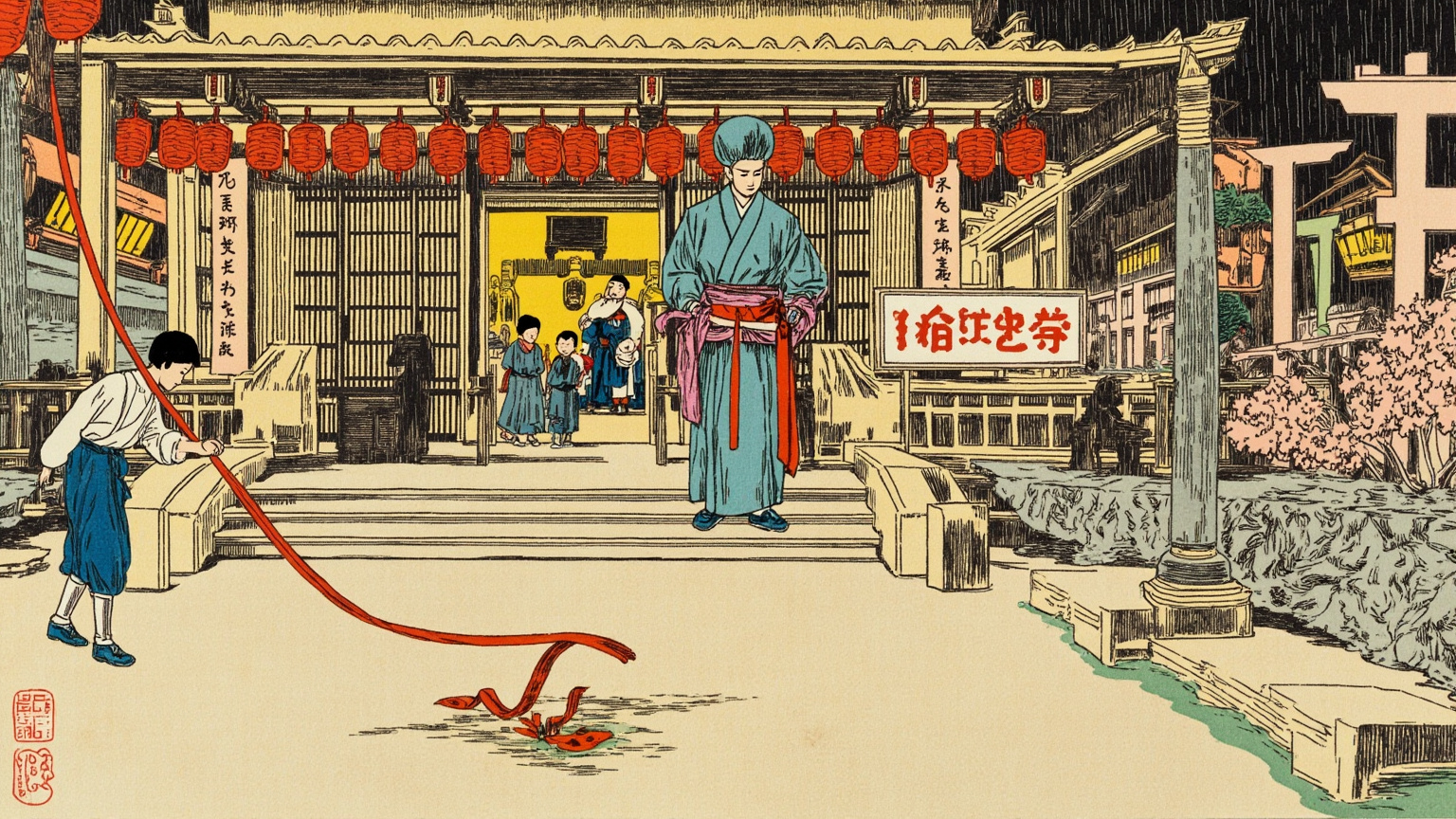
Half a step apart, in all that clamor, the silence between them grew louder than the drums.
那半步距离,比满街的锣鼓还要喧响。
金句 · 第六章 · 千束神社夏祭
Whatever they feel is smothered under the noise and their own shyness, and neither one speaks. Ichiyo writes the festival's noise with great restraint, leaving the reader to hear the silence underneath it. The more crowded the street gets, the more that half step between the two children stands out.
The lanterns of Senzoku Shrine throw their shadows, wavering, across the cloth of the stalls. One is a girl fated for the pleasure quarter, the other a boy fated for the priesthood — but tonight they are still only thirteen and fourteen, still running wild through the streets, still laughing over candy figures and paper masks. The brighter Ichiyo makes this night, the heavier the autumn and winter to come will fall.
That Rainy Day, the Red Sash Lying in the Rain
The rain comes and goes for several days. One evening Nobu passes the Daikokuya, and the thong of his clog snaps. His clog tips against the flagstones; he stands there under the eaves outside the lattice door, unable to go forward or back. Before he can say anything, there is a small sound from inside — a red sash flies out through a gap in the lattice and lands with a slap beside a puddle.
Midori never shows her face. The moment she throws the sash, she turns and runs back inside, her clogs clattering off down a long corridor. Nobu does not move. Rain drips from the eaves and soaks the sash, one corner and then another. He never bends down to pick it up — he is afraid that if he bends, the person behind that lattice door will hear his heart.
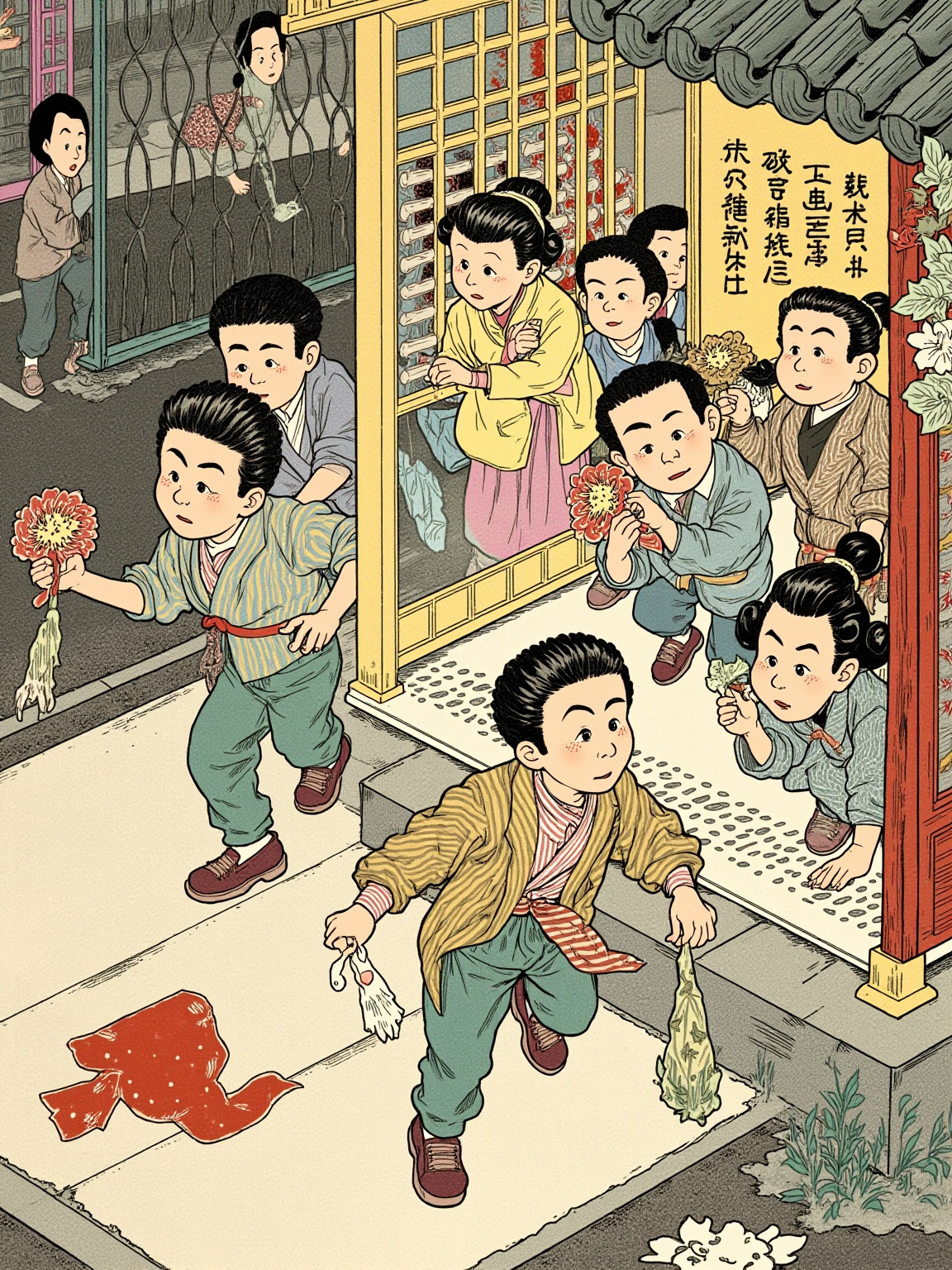
The crimson ribbon lay in the rain, soaking up everything neither of them dared to say.
红绸条躺在雨水里,把两个孩子说不出口的话,一句一句地都浸湿了。
金句 · 第七章 · 雨夜格子门前
The sash lies soaking where it fell. No one picks it up, no one puts it away. It lies there from evening into dark, and from dark into the next morning. Everything the two children cannot say to each other is pressed into that piece of cloth — the wetter it gets, the heavier the words become. Ichiyo closes out this whole stretch of a young heart in under a page.
Early Winter, the Cock Fair, a Moment at the Threshold
The noise dies down; the summer festival runs its course. The story slides into early winter and the Cock Fair, and the stalls in the Senzoku Shrine grounds put on a different face — vendors of lucky rakes hang them with little carved beckoning cats, and bamboo baskets are piled with dried chrysanthemums tied into bundles.
Midori picks up a paper narcissus someone has dropped there, folded from white paper, a crease still pressed into its stem. In her heart, she guesses it was him. The next day she hears that Nobu has already put on his priestly robes and left Ryuge-ji to study.
Nobu never comes back to the Daikokuya's door to say a word, and Midori never runs after him. Ichiyo sets down her pen right there: Shotaro will grow up to run the pawnshop, Chokichi will grow up to work under him, Nobu is already in his robes, and Midori's future was written the day she was born. The novella leaves its camera resting just short of the threshold the children still have to cross into the adult world, and it does not take one step further.
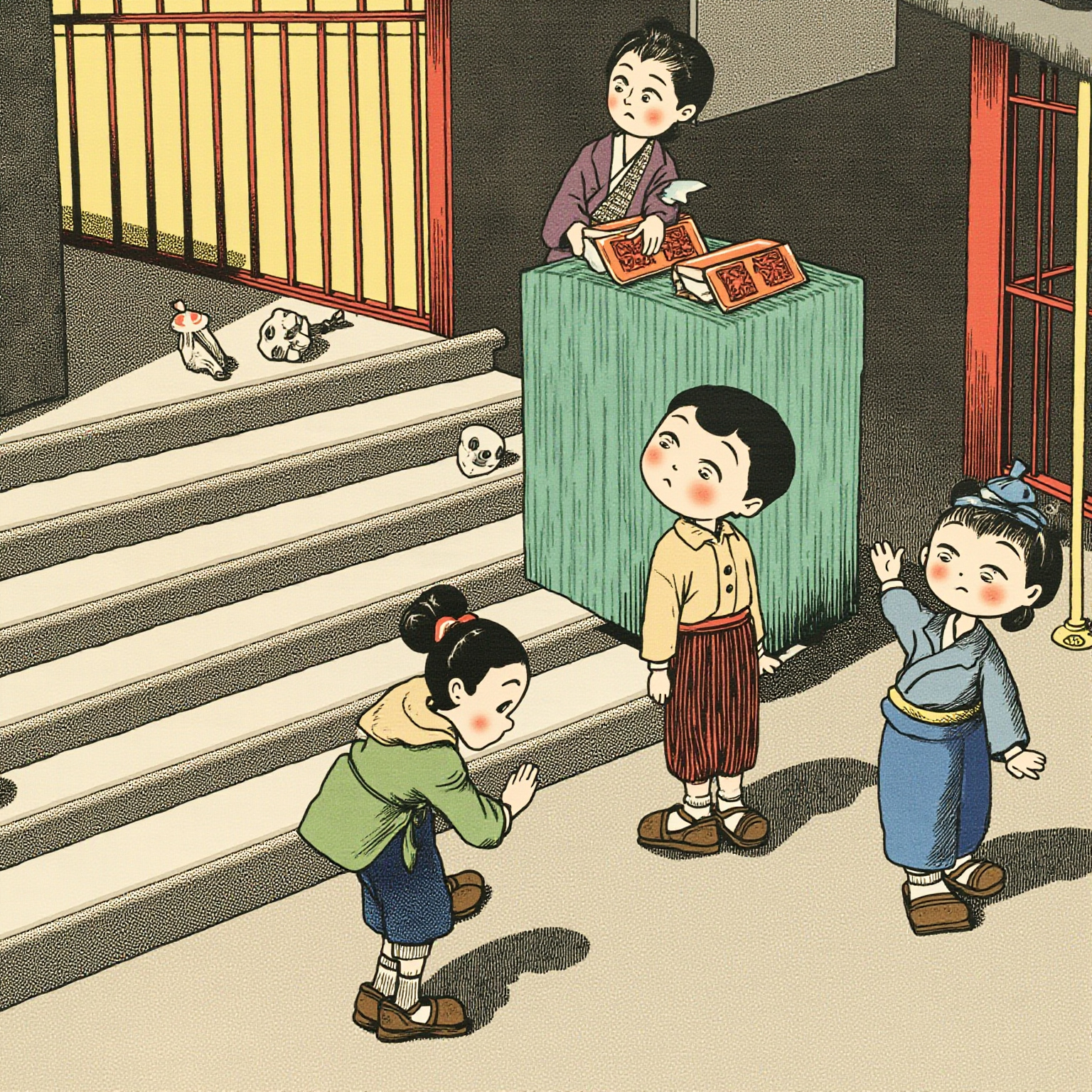
She picked up a paper narcissus and guessed it was from him — the next day, he was already gone in his priestly robes.
她捡起一朵纸水仙,心里猜着是他;第二天,他已披上了法衣。
金句 · 第九章 · 初冬大酉市
Readers often linger on that page — the paper narcissus lying there, flattened a little by its own crease, the only surviving evidence of a young heart, just like the red sash before it. What Ichiyo leaves behind is not an ending. It is a curtain that has not yet fallen.
So the real experience of reading this novella is not chasing what happens next. It is following Ichiyo's own touch, listening for the silence under the noise — the sound of a red sash lying in the rain, the sound of a paper narcissus being folded. She wrote it in her early twenties, and what she left behind runs to only a few dozen thin pages. But no one has ever written this particular ache of growing up with more weight than she did.
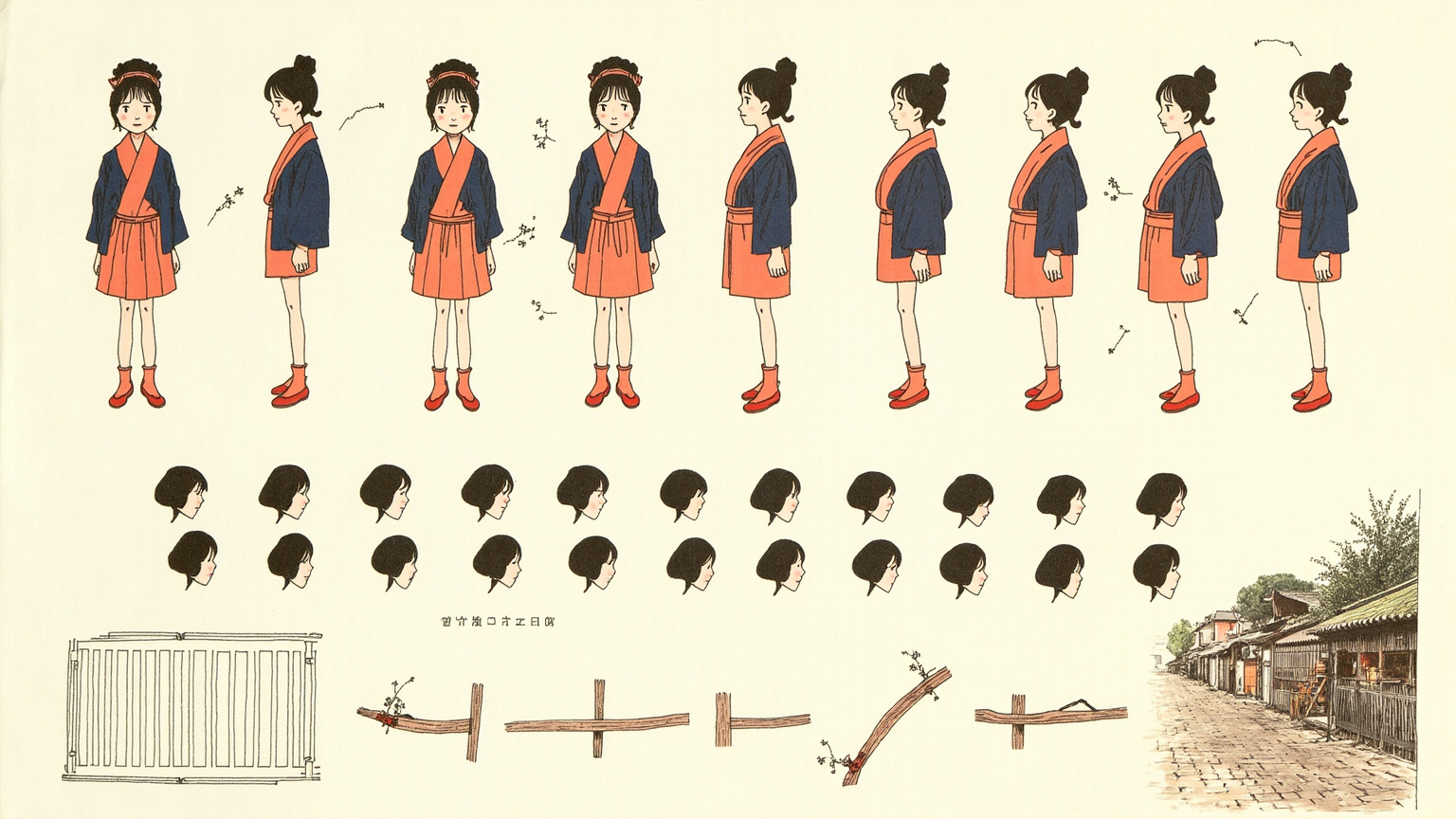
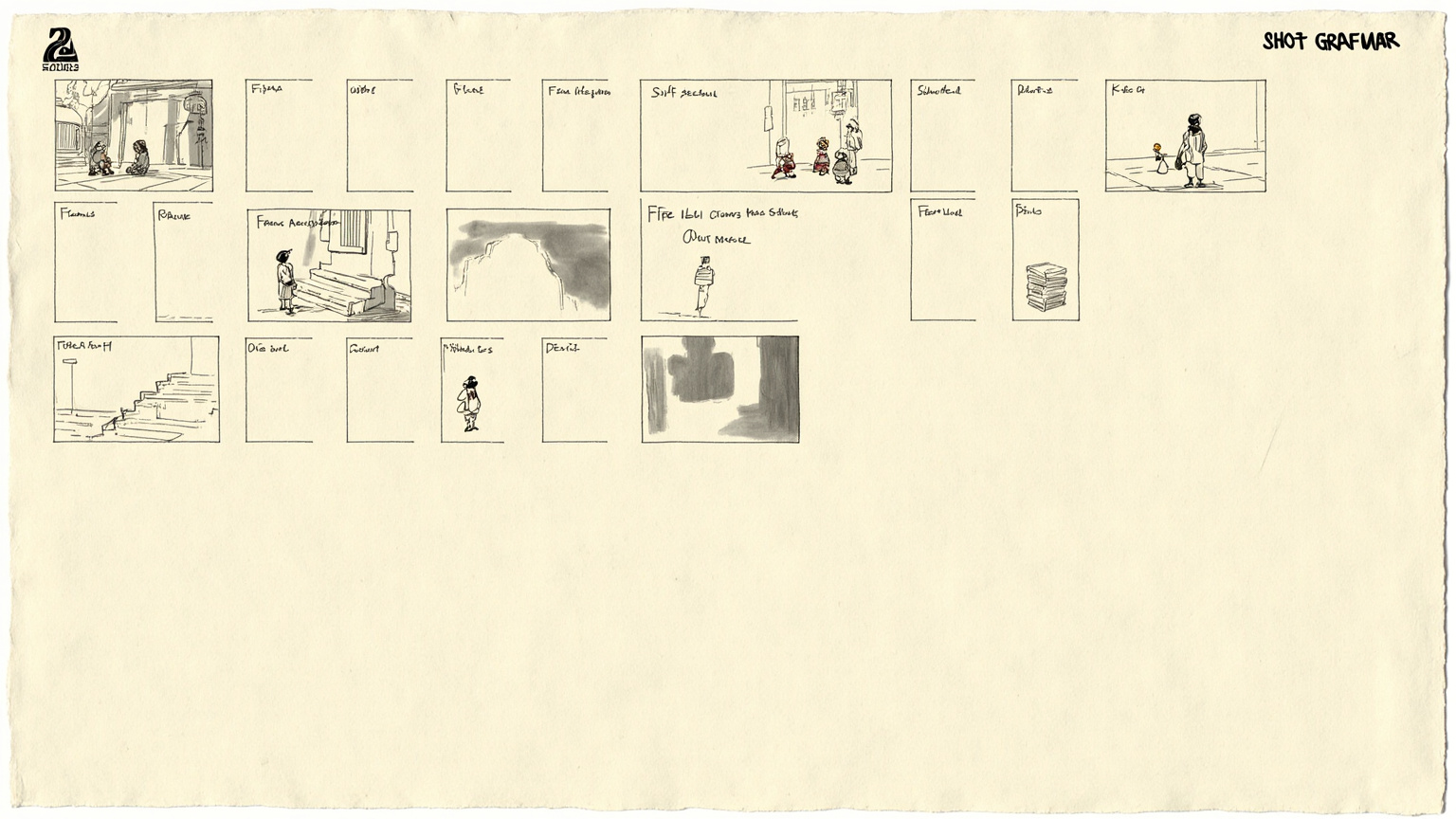
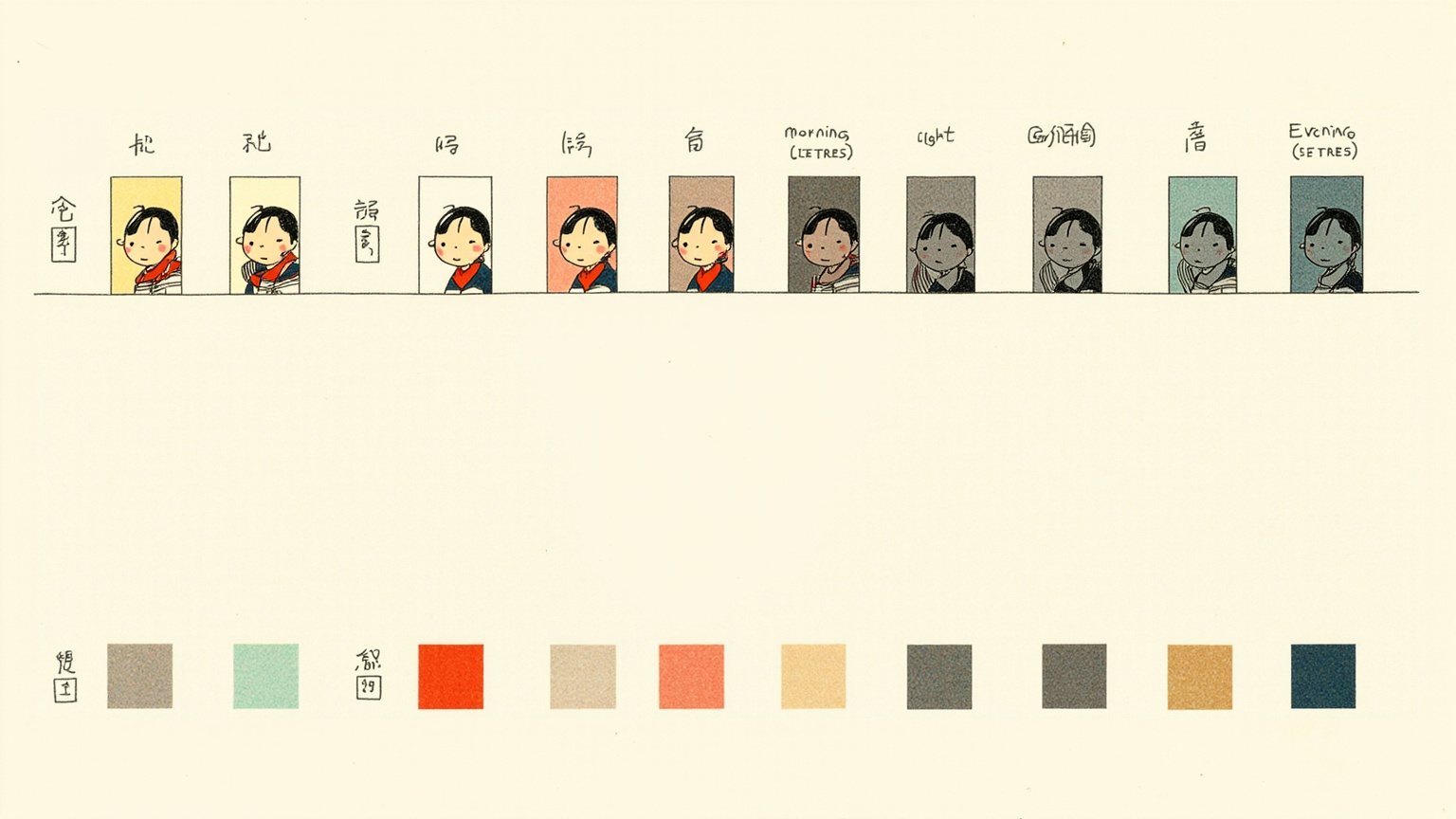
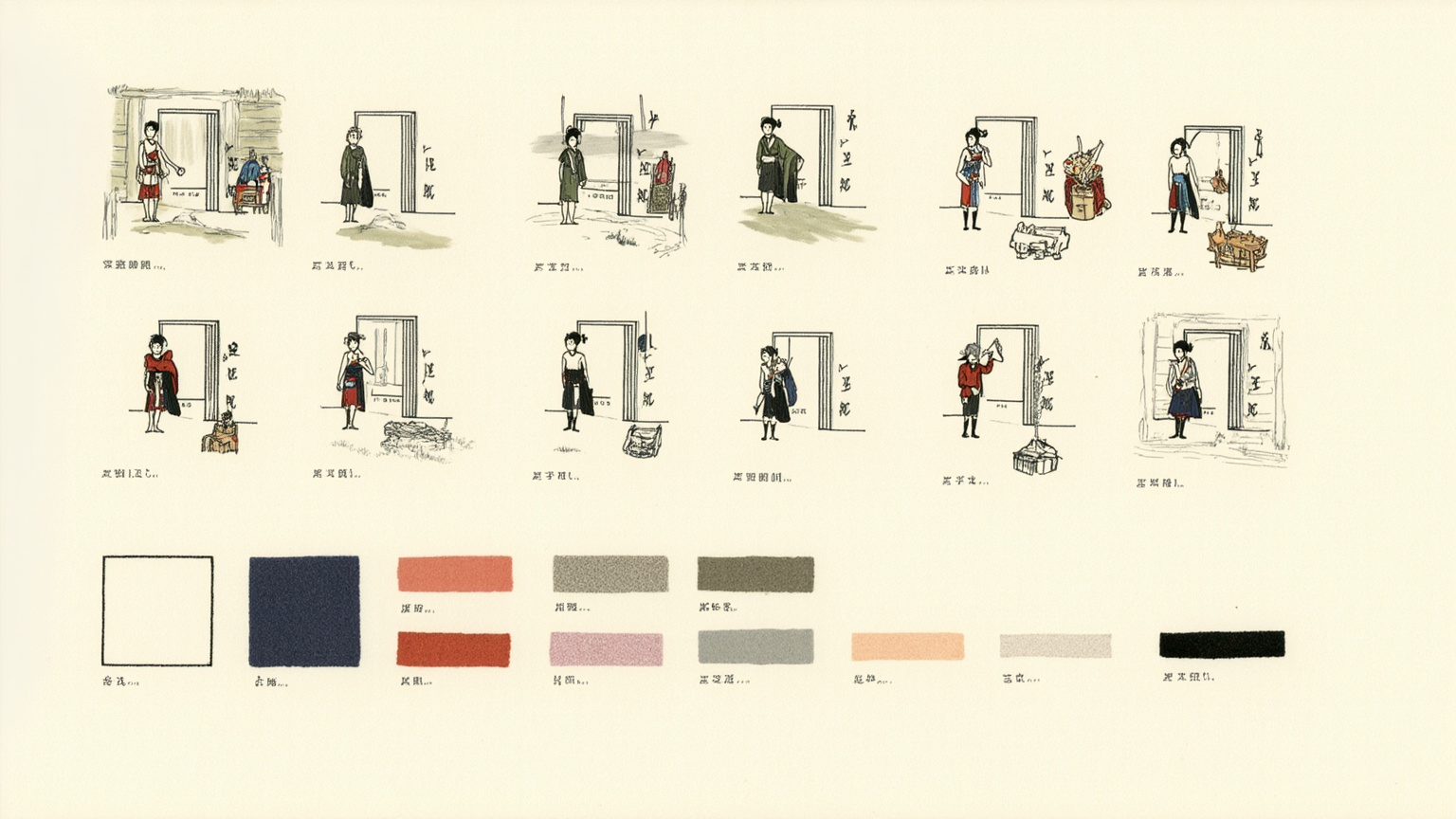
Art Direction4 plates
Before the guide was written, this book got a visual foundation — every illustration you just read grew out of it.