The Adolescent (also translated as The Raw Youth) · Companion Guide
少年
一个抱着铁盒闯入彼得堡的私生子,要用钱把自己铸成罗斯柴尔德——直到信与病榻逼他松手。
A Locked Iron Box
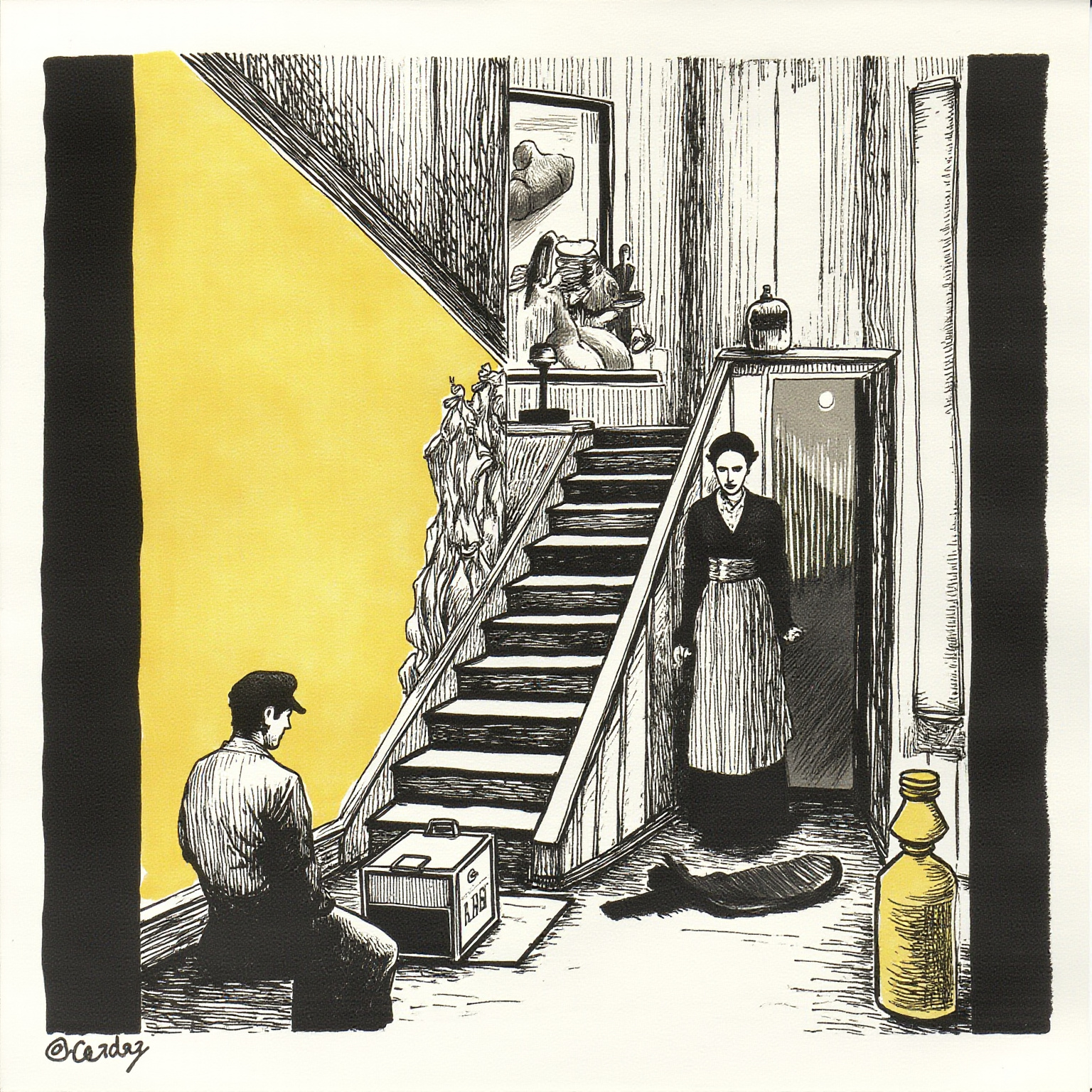
A Petersburg winter, before the sky has properly lightened. A boy leaps off a hired carriage, an iron box clutched tight to his chest. Inside it, every kopeck he has scraped together on the long ride from Moscow. He has not come to find relatives, nor has he come to study. He has come to this fog-choked capital with an 'idea': turn every kopeck into capital, claw his way up to the summit the Rothschilds occupy, and with that money buy himself absolute independence and power. Is the idea absurd? He knows it is absurd. But his knuckles are white around the box, and no one who tries to talk him out of it has any luck. The boy is Arkady Makarovich Dolgoruky, an illegitimate son with no lawful father and no respectable name to him. The whole book begins at the moment he sets foot on Petersburg's frozen stone steps, the iron box still in his arms.
That iron box is a brilliant piece of staging. On the literal level it is property; on the level of the boy's inner life, it is the posture of a boy locking his soul away — he believes that if the number inside gets large enough, the tangle of self-loathing, envy, and want beneath the lid will be hidden. Dostoevsky, characteristically, never lets him open it. Instead the boy has to let go of it inch by inch, across Petersburg stairwells, card rooms, and aristocratic drawing rooms.
Dostoevsky's Belated 'Book of Youth'
The Adolescent was first serialized in Notes of the Fatherland in the mid-1870s. It is one of Dostoevsky's late novels, sandwiched between Demons and The Brothers Karamazov, and one of the few he wrote in the first person. By the time he sat down to it, Dostoevsky was in his early fifties, and his own life had long since turned past its most turbulent pages. Yet he went back to the age of a boy and crawled back inside that swollen, overheating, ready-to-burst skull. That is the book's distinction: he is not putting youth on trial. He is using youth to put on trial the entire set of delusions held by his own generation, about money, about independence, about 'I deserve a better life.' There is no murder here as in Crime and Punishment, no patricide mystery as in The Brothers Karamazov. And yet it sits closer to the reader's skin, because anyone who has ever been convinced they were 'definitely going to make it' is somewhere in these pages.
Three Men, One Name Won't Hold Them
Arkady has several 'fathers' — physically impossible to have them all at once, but in his psyche they take turns at the wheel. His biological father, Versilov, is a Petersburg nobleman in decline, handsome, brilliantly spoken, who has spent the better part of his life drifting between European drawing rooms and gambling tables; back in Russia he has fallen in love with a young widow, Katerina Nikolaevna. He has lived with Arkady's mother, Sofia, for years, but will never give her a proper name for the relationship. Sofia is a former serf, gentle, devout, silently trailing the man and never complaining. The nominal father, Makar, is a wandering pilgrim who lives by begging along the road and is gone from home for months at a time, yet resembles a saint more than any respectable man Arkady will ever meet. The surname 'Dolgoruky' comes from Makar, which is itself the source of a bellyful of resentment in Arkady. Versilov is the father in his heart, but the law will not recognize it; Makar is his father in the eyes of the law, but he is neither a man Arkady can identify with nor one he can truly hate. This split has no 'solution.' It can only be carried until he grows the bones to hold it up himself.
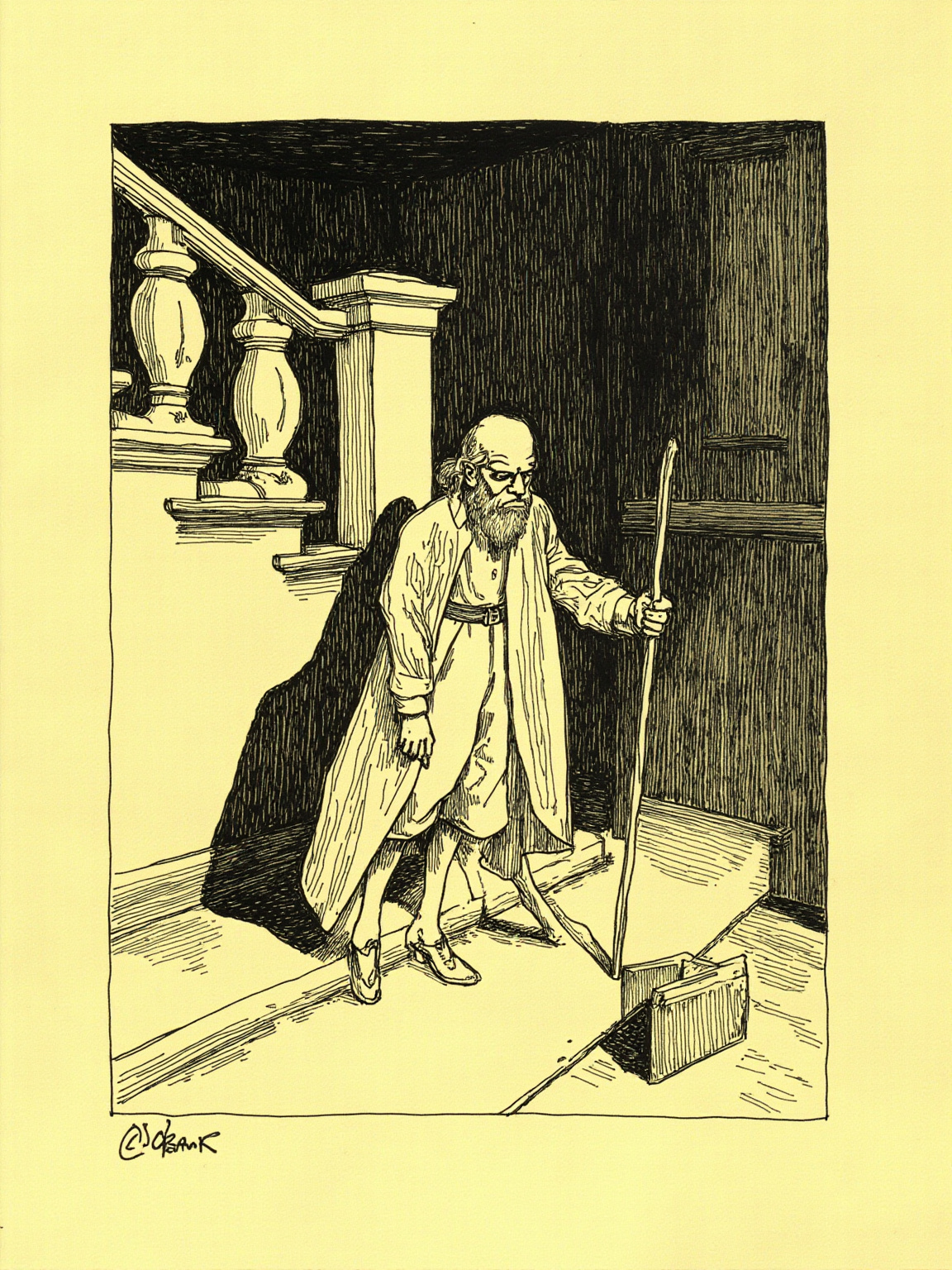
I had several fathers at once — and yet not a single one of them would own me.
我有好几位父亲,却没有一个肯认我。
金句 · 第1部第3章 · 三个父亲
Petersburg: The Iron Box Starts to Leak
The day after Arkady moved into Petersburg, he opened the iron box. He thought it was a beginning; it was the start of a collapse. Dostoevsky knew exactly how a boy drunk on new money would spend his first windfall: not in cautious investment, but at the gaming tables, trying his luck. Within a single night, most of what was in the box had evaporated. Arkady at the card table was a sorry sight. He wanted so badly to prove himself, to prove he deserved a place on the pyramid of wealth he had not yet begun to climb. After losing he did not stop, and a slippery speculator named Lambert latched on. Lambert was the mold that grows on the underside of Petersburg, the kind that feeds on anyone with a secret. He quickly figured out that Arkady was holding a letter, and that letter was the key that could destroy Katerina Nikolaevna.
Katerina was the first woman Arkady truly fell for in Petersburg — old Prince Sokolsky's daughter, young, clever, proud. She had written to a lawyer about her father's financial arrangements; the letter, falling into Arkady's hands, became a bomb. He loved and hated her at once: loved her beauty and her mind; hated that she belonged to her father's world, a drawing room he would never be allowed into. This tangle of love and hate is the book's most knotted stretch, and he almost did hand the letter over.
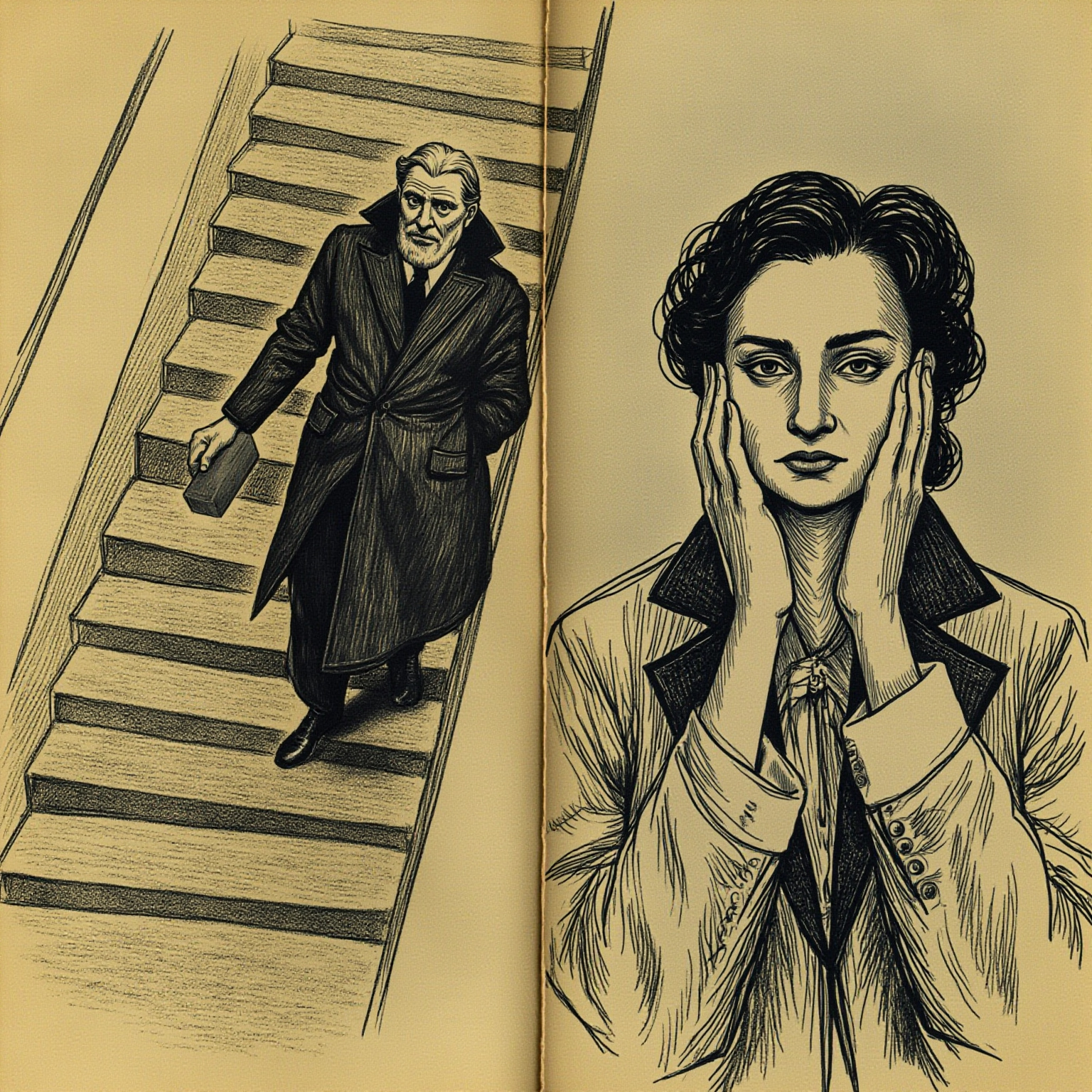
I could not tell whether I hated her or worshipped her — and that was itself a kind of burning.
我分不清是恨她还是敬她——而这份分不清,本身就是一场灼烧。
金句 · 第2部第5章 · 信的重量
The Two Faces of the Father
Versilov is the character in this book you most want to love and hate at once. Three sentences from him and a whole drawing room is charmed; turn around and he does something low: welches on a debt, lies, treats Sofia like a slab of cold stone. His love for Katerina is real, but the price of it is putting his own son on the opposing side, because Arkady, too, is in love with the same woman. Father and son pass each other on the Petersburg streets, barely greeting, eyes both averting. Dostoevsky has written many 'fathers', from Fyodor Karamazov in The Brothers Karamazov to Stepan Trofimovich in Demons, but none of them falls apart in quite the way Versilov does, right in front of you, like a living man. He is split; he wavers morally; he is lofty and base at once. That image of the 'perfect father' inside Arkady gets scraped away, layer after layer, in exactly this way.
Dostoevsky pulls off something mean but effective here: he lets Arkady keep making excuses for his father, again and again, only to be slapped down by the next event. The speed of Arkady's self-deception is astonishing. One chapter he is cursing Versilov in his head as a beast; the next he is moved by some elegant gesture. The reader loses their footing along with him, and that is why the book keeps hitting long after you have put it down.
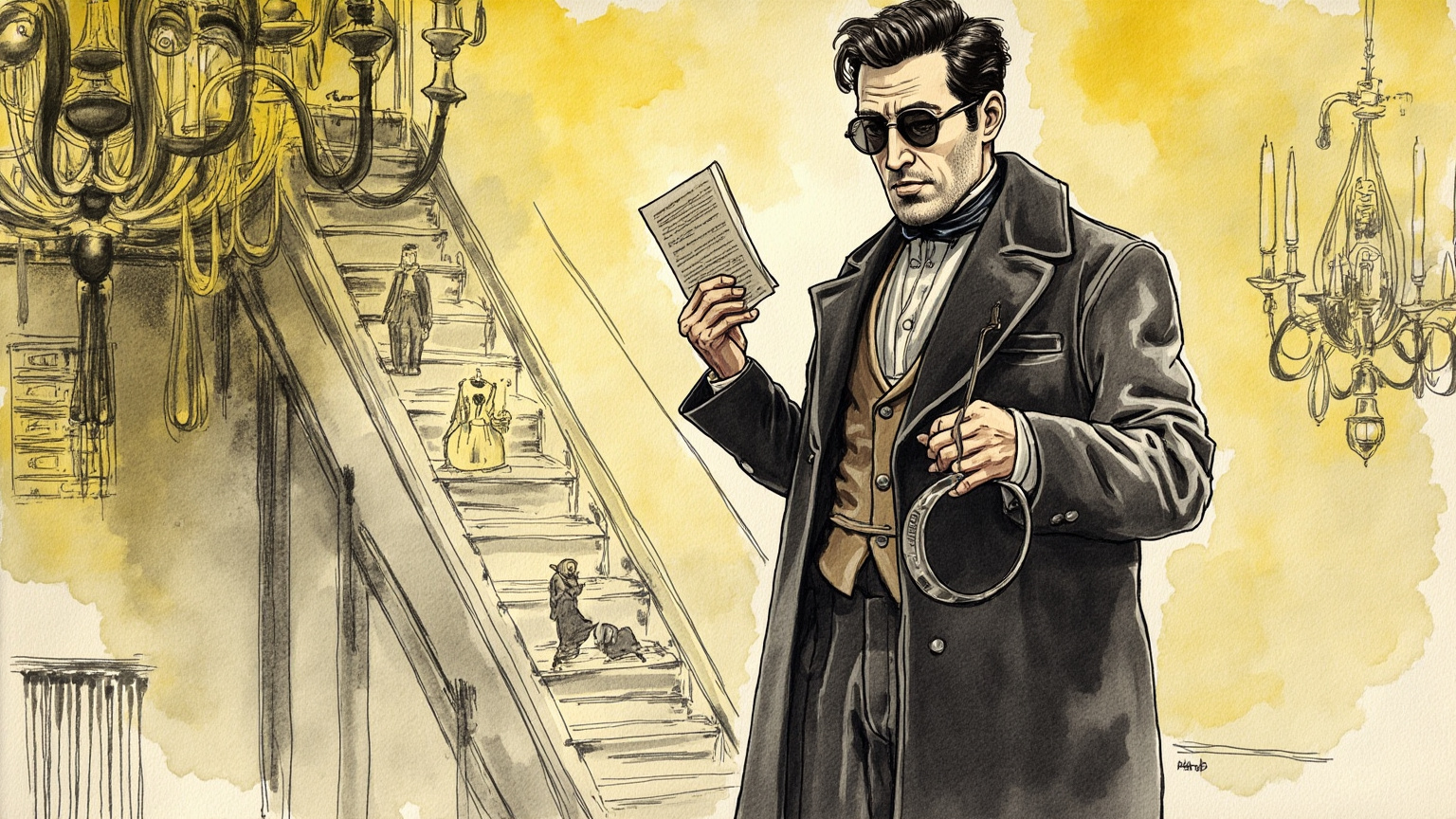
A quarter of an hour later I was again admiring him, and hated myself for admiring him.
一刻钟之后我又为之心折,并因这心折而恨透了自己。
金句 · 第2部第6章 · 父亲的两副面孔
At the Threshold of Blackmail, He Suddenly Withdraws the Letter
The plot tightens to its sharpest beat. Lambert has already laid the snare; he has links into Katerina's circle, and the day of the deal is fixed. All Arkady has to do is hand over the letter, and a great deal of money walks away with him, one large step closer to his 'Rothschild.' He tucks the letter inside his coat and goes to meet them. Dostoevsky does not let the moment turn heroic: there is no ringing moral speech from Arkady, no grand principle recalled; he simply shrinks back. Perhaps Lambert's face suddenly showed him what he was dealing with; perhaps he thought of what Katerina's eyes would look like once the letter went public; perhaps it was only that, for a single second, he was revolted. The result: the letter did not change hands, the snare fell apart, no money came his way. It was his first split with his own 'idea,' and far from the last. Dostoevsky is honest here; he does not let a boy grow up in a single refusal. This is only a crack, and the crack will be pried open several times more.
Pilgrims at the Bedside
Just as Arkady is being torn apart by "the idea," nearly coming apart at the seams, the "father" Makar, who is almost never home, is carried into his Petersburg lodging. He is gravely ill, nothing but skin and bone, but the moment he opens his mouth, what comes out is a plain, almost embarrassingly sincere piety, the kind that grows rarer with every Dostoevsky novel. He doesn't lecture Arkady. He just lies there, mumbling things he picked up on his pilgrim routes: about forgiveness, about letting things go, about what a person is supposed to want out of this life. Arkady is annoyed at first: who is this old man, on the road his whole life, to tell him anything? But Makar is the only person in the book without an agenda. Versilov has one, Sophia has one, Lambert has one, Katerina has one, even Arkady has one. Only this ragged old man, on his deathbed, offers the one thing in the book that doesn't come with a catch. Makar dies in Arkady's room. The scene is restrained, no wailing, no collapse, but Dostoevsky does something deeply un-novelistic: Arkady doesn't have an epiphany. He just goes quiet. Goes quiet first, and then months later, slowly, actually hears what the old man said. This is the novel's most memorable stroke: a boy's "growing up" is not a lightning bolt but a long, slow fever breaking.
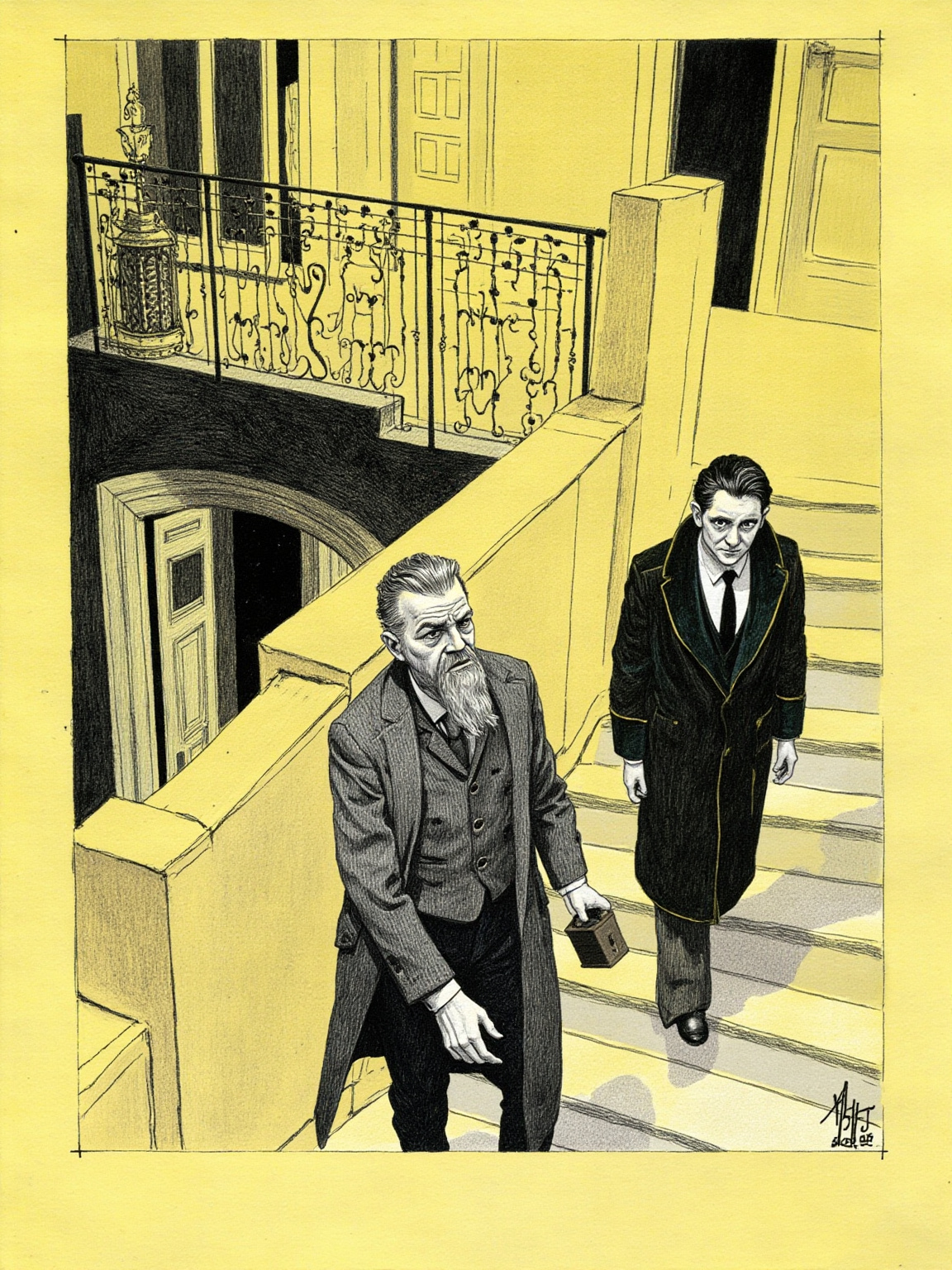
I took the letter back into my pocket. I do not know why I did it; my hand did it of itself.
我把信重新揣回口袋。不知道为什么这样做——是我的手替我做的。
金句 · 第3部第7章 · 临门一脚的收回
Lock the iron box again — but this time with something else inside
The ending has none of that "grand reconciliation" cliché. Arkady doesn't suddenly become a saint, and he doesn't embrace his father. He just sits down with Versilov at the same table one day, shares a cup of tea, and stops arguing. Makar is dead. The blackmail scheme has miscarried. The gambling debts are still there, and he is light-years from Rothschild. But he has stopped treating "becoming enormously rich" as a reason to keep living. The idea is still in his head, but it has stopped clutching at him. That feeling is something Dostoevsky writes better than anyone: the thing that plagued your entire adolescence, still there when you wake up one morning, but no longer hurting.
What's interesting is that Dostoevsky gave this novel a teenage first-person narrator, rather than the omniscient or third-person voice he usually favored. The choice came at a cost: many of the crucial events happen offstage, and the reader only learns of them through secondhand reports. But what Dostoevsky got in exchange was worth more. Arkady's neuroses, his self-pity, his clever little reversals of himself within a single second, all of it exposed to the reader, nowhere to hide. That's how you write a book that makes teenage readers blush and middle-aged ones fall silent.
He was dying, and he was radiant — and that radiance was not of this world.
他在死,却焕着光——那光不像属于这世上。
金句 · 第3部第11章 · 病榻前的朝圣者
What Dostoevsky was actually trying to say
On the surface, The Adolescent tells the story of a boy giving up an unrealistic fantasy. But the question it is really asking cuts deeper: what entitles a person with no legitimate place in society to believe they deserve dignity? Money is one answer: "wait until I'm rich and no one will look down on me." But Dostoevsky has Arkady smash that answer to pieces in Petersburg. Money can't buy dignity. What it buys is just a more expensive set of chains. The novel doesn't give an answer. It gives substitutes: Makar's kind of faith, Versilov's kind of self-scrutiny, even Arkady's own stubborn refusal to give up an idea he knows is absurd. None of them are clean answers, but they are the only ones that hold. Set against the wider backdrop of 1870s Russia, the book carries another layer of meaning. After Alexander II's reforms, the boundaries between the old aristocracy and the new money were loosening. Illegitimate children, households of mixed lineage, inheritance disputes — these were the daily embarrassments of a generation. Dostoevsky turned them into metaphysical crises. He offers no social prescription. He just turns a boy's face toward the reader and says: look, this is what we've become.
A boy's greatest enemy has never been the world. It is the unbroken shell around his own heart.
Why it's worth opening even when you know how it ends
A plot summary can tell you how the story goes, but it cannot give you two things. First, Dostoevsky's prose, which lays every nerve ending bare. Every one of Arkady's interior monologues is a fistfight with himself, the rhythm fast enough to steal your breath. That bodily quality only the original can carry. Second, the details. The whole book, soaked in Petersburg fog, gives off a very particular cold: cold stairwells, cold banisters, cold tea, cold exchanges between father and son. Even knowing the ending, walking into those rooms still sends a chill rising from the soles of your feet. It is a gift Dostoevsky's late work shares: he gives moral dilemmas a temperature, gives philosophy the slush underfoot. If you have read Crime and Punishment and want to take one step further but find The Brothers Karamazov too heavy, The Adolescent is the way station in between. Short, fierce, precise: a mirror Dostoevsky holds out to you. The boy in that glass may be more like you than you would like to admit.
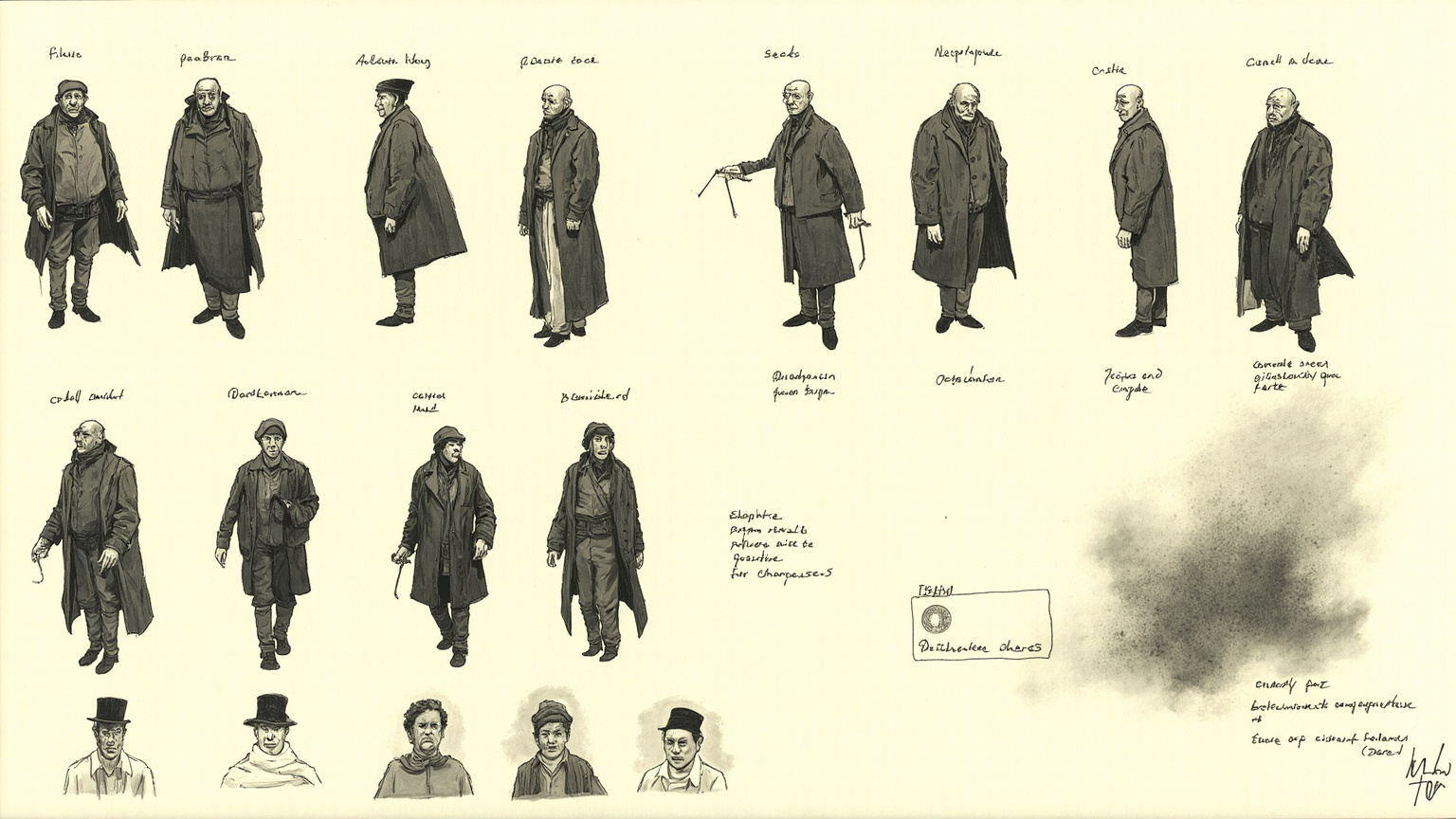
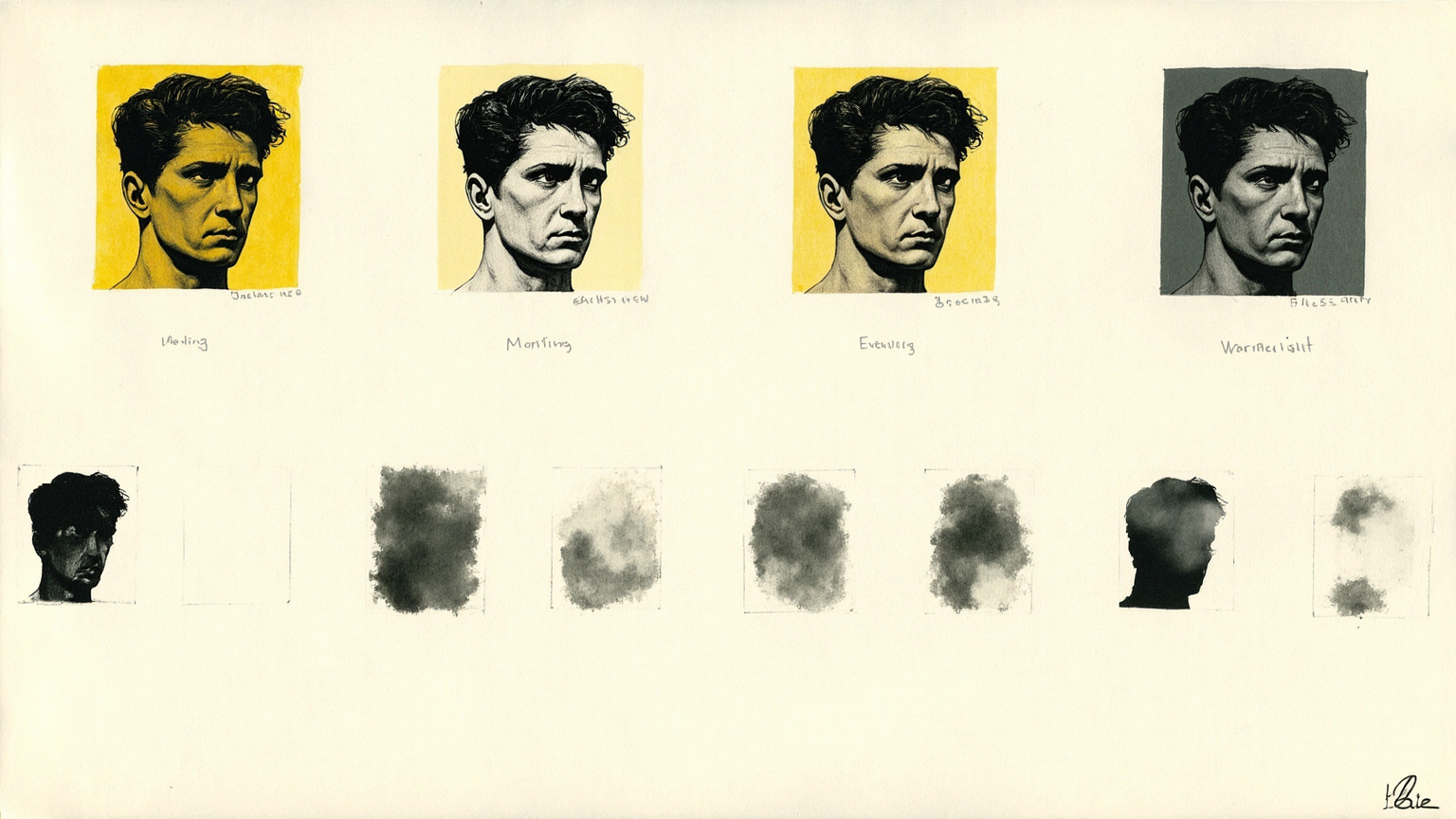
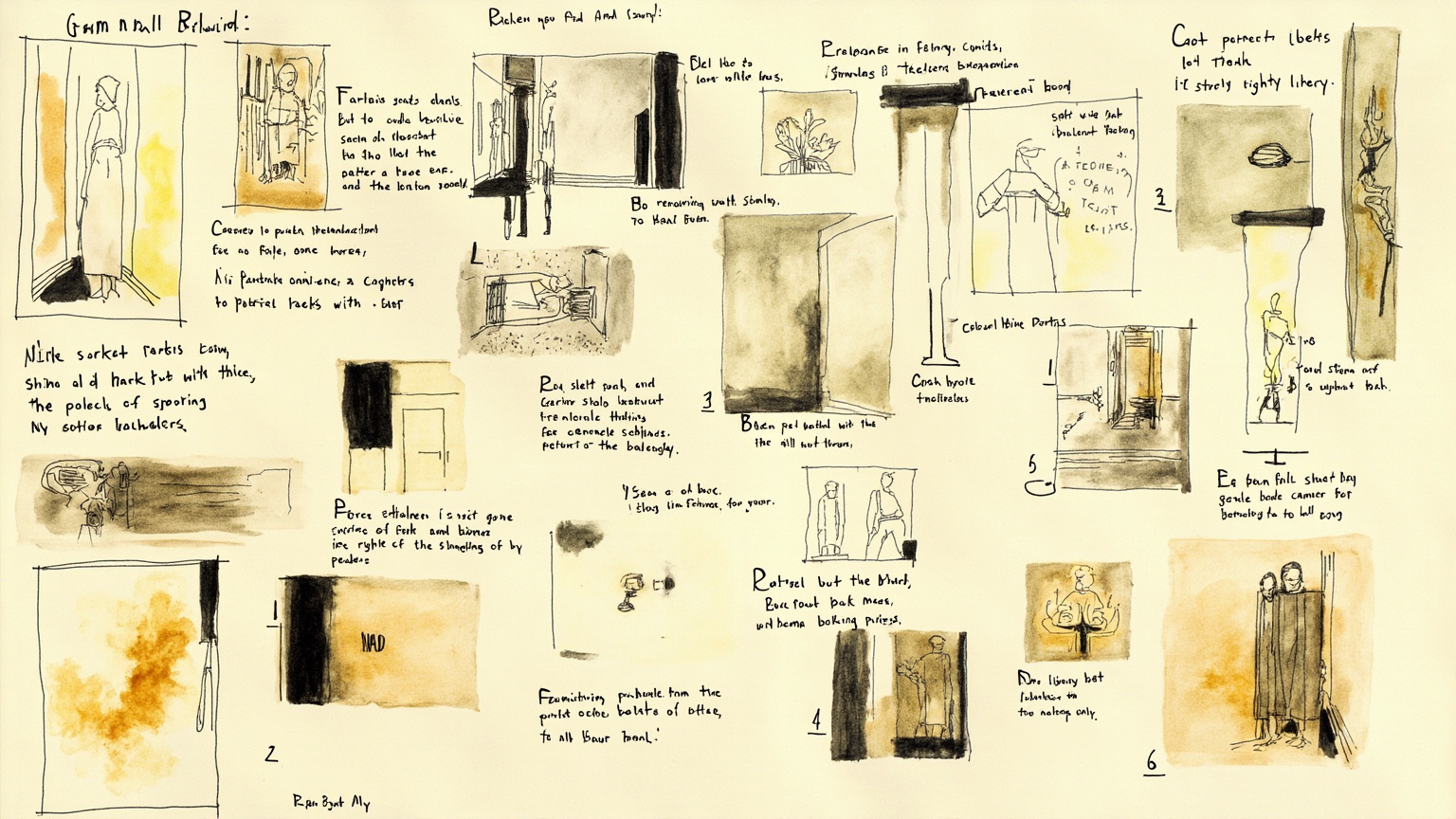
Art Direction4 plates
Before the guide was written, this book got a visual foundation — every illustration you just read grew out of it.