The Book of Dede Korkut (Dede Qorqut / Kitab-i Dedem Qorkut) · Companion Guide
先祖科尔库特书
一个说书人在火边把乌古斯部族的十二桩生死说成了不死的记忆——他每讲完一段,便为一个新生儿赐名吟唱。
Opening: A Red-Hot Nail
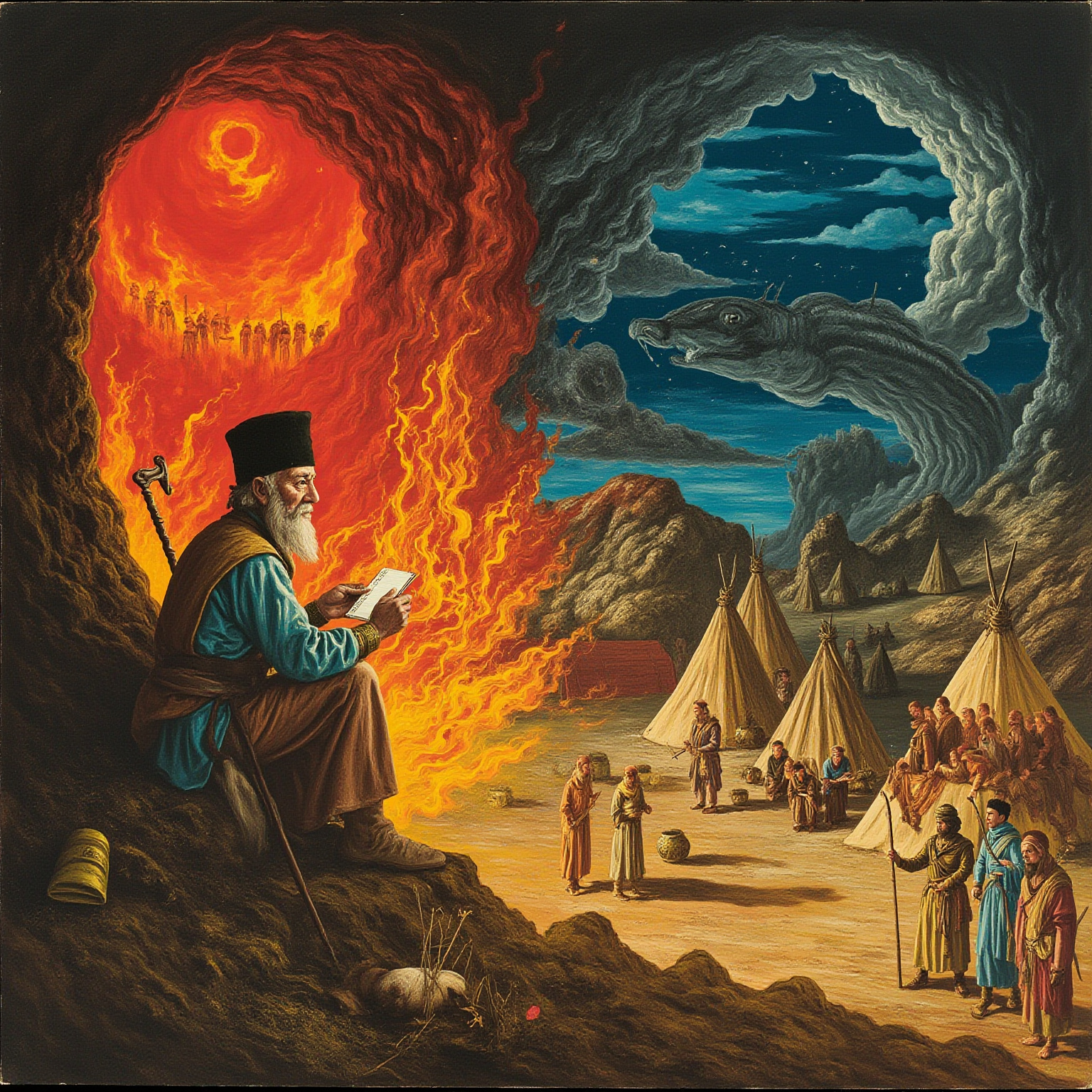
The hero grips the nail, its tip glowing white. What lies in the cave is not a man — a single eye set in the middle of a forehead, skin tougher than a bull's hide, and that eye is being driven through, inch by inch, by the nail. This is Tepegöz, a monster out of the Turkic steppe whose name simply means 'eye of the mountain.' He was born from a stone his mother swallowed, and for years he devoured livestock and people and extorted the tribe, until he died under a hot iron nail.
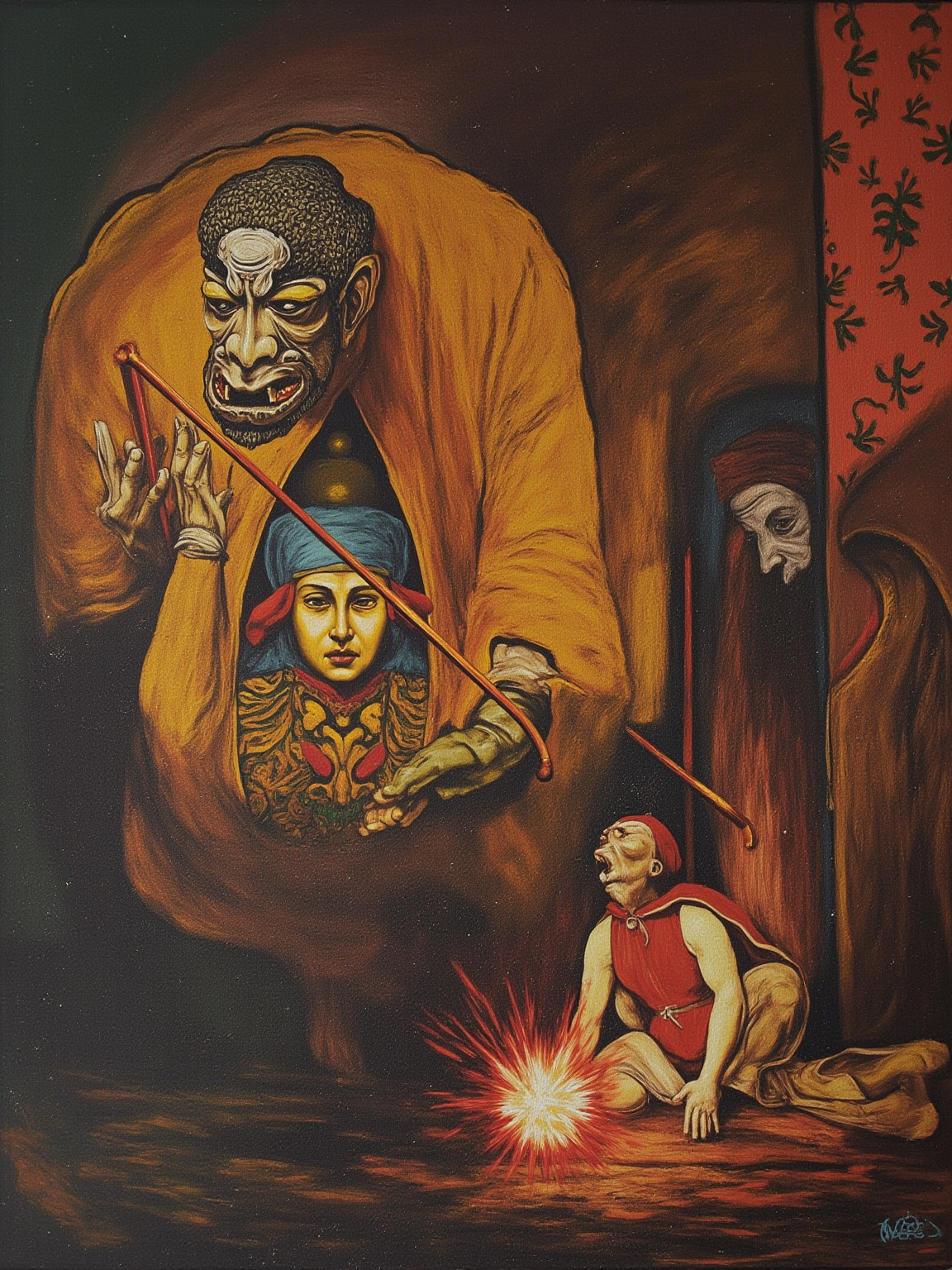
They took a iron spit, made it white-hot in the fire, and drove it into the single eye of Tepegöz — and the blind came forth like a black river.
他们取来一根铁签,在火里烧得白亮,钉进特佩戈兹眉上那只独眼——瞎血像一条黑河涌了出来。
金句 · 沸血洞 · 特佩戈兹之死
What This Book Is
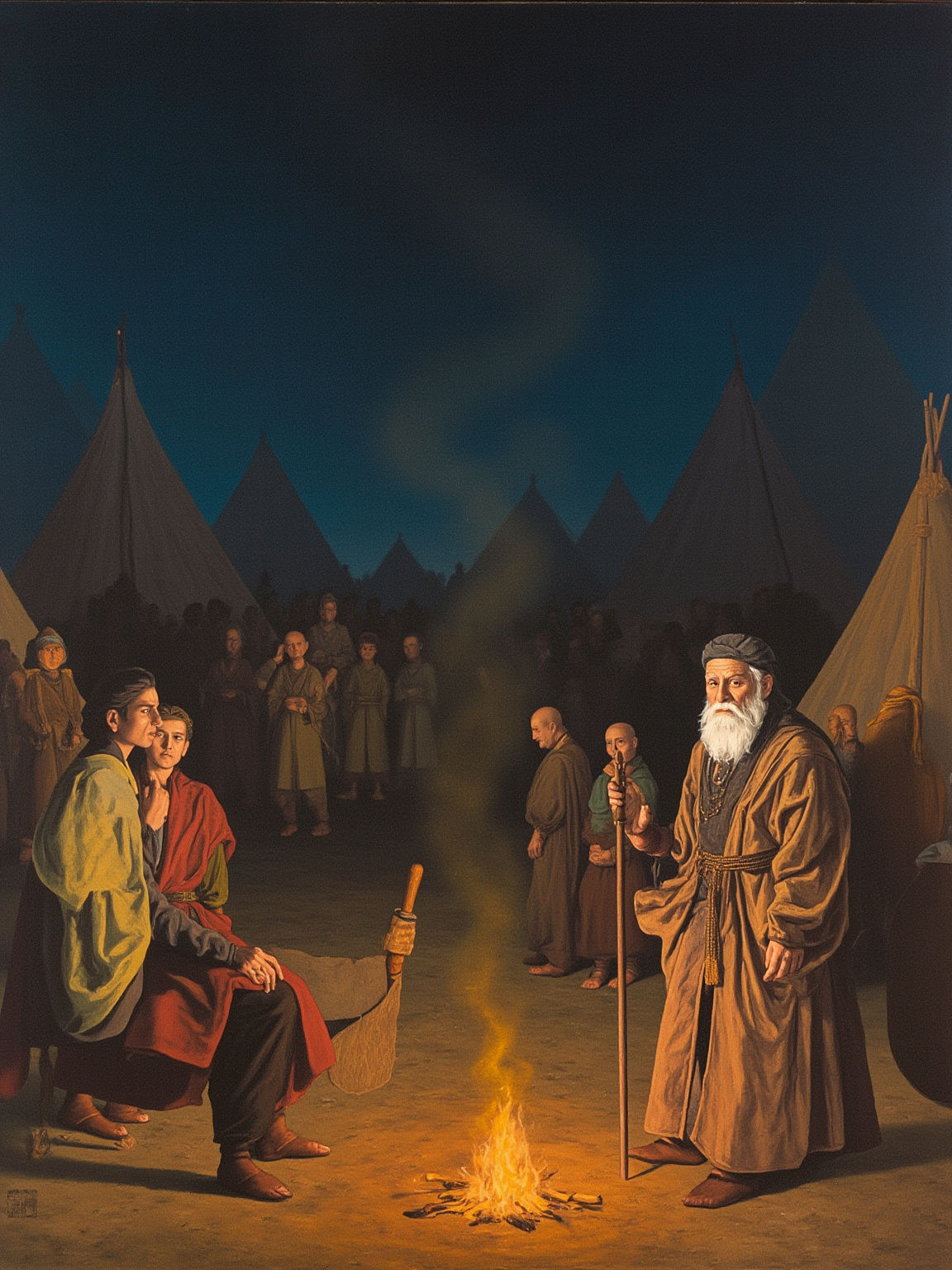
The Book of Dede Korkut was not written by anyone sitting at a desk. It is a living fossil of oral tradition — twelve mostly independent hero tales first sung around Oghuz campfires. The oral tradition reaches back to somewhere between the ninth and eleventh centuries, though the surviving manuscripts date only from around the fifteenth. Its author is listed as unknown, but the book has a narrator who runs through every page: a sage named Dede Korkut, 'Grandfather Korkut' as people called him, who appears as a character in the stories and is credited as the one telling them.
In world literature, it is one of the very few classical narrative collections rooted in the nomadic steppe culture of Central Asia. Turks, Azerbaijanis, Turkmens, Kazakhs, Uzbeks, Uighurs — nearly every Turkic-speaking people claims it as a shared epic foundation. It carries a Homeric sense of heroism alongside the plainest domestic ethics of a nomadic tribe, fathers and sons, husbands and wives. Being a hero and having a family are never pulled apart here.
The Characters and Their World
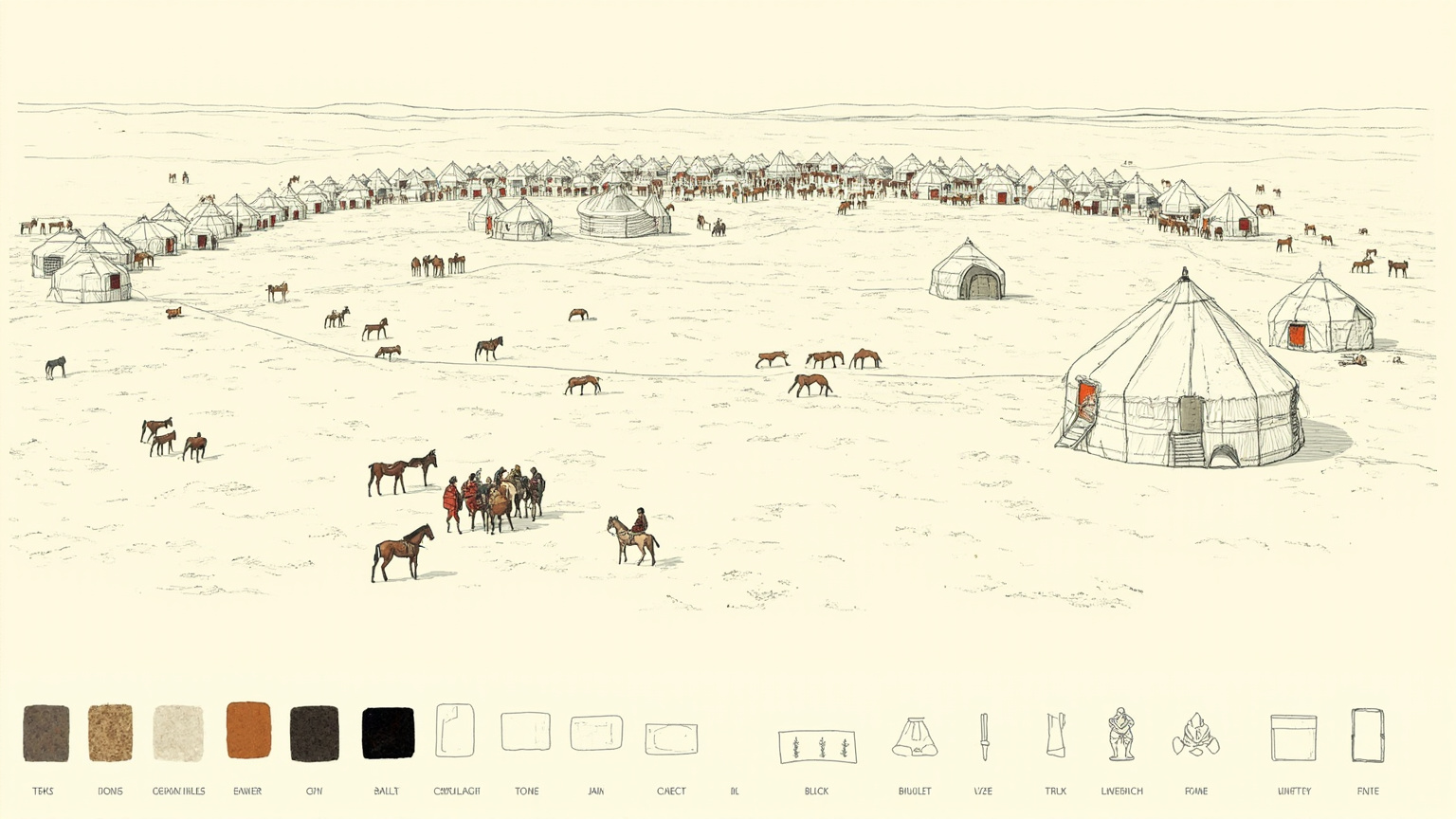
The story unfolds across a vast steppe stretching from Central Asia into the Caucasus, in the years before the Oghuz tribes moved west and settled, a world of felt tents and horse herds. The tribe's leader is Kazan Bey, and his son Bamsı Beyrek is the most fully realized hero in the book. Captured by a rival as a young man, he vanishes for fifteen years; when he returns he is a seasoned warrior who never lets go of his horse. Beyrek has a bride, Banu Çiçek, who has waited fifteen years for him, and in front of the whole gathering she recognizes her husband by his father's sword and a token only the two of them would know.
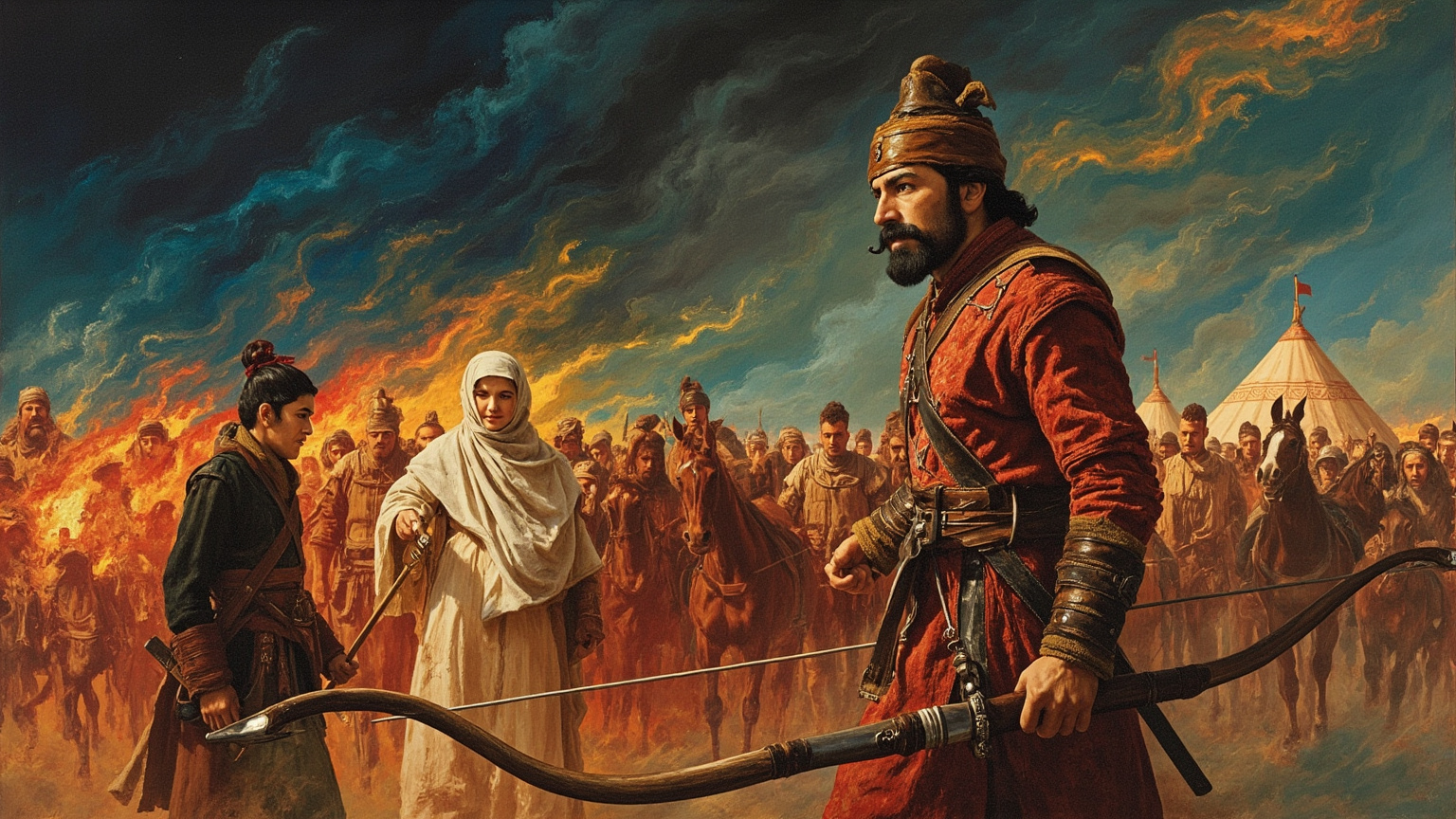
They brought out the swords of the boys who had vanished fifteen years before, and laid them at his feet — and his father's blade leapt to his hand.
他们把所有十五年前失踪男孩的佩剑一一取出,摆到他脚下——他父亲的剑,自己跳进了他的掌心。
金句 · 父剑归位 · 博汗查兀鲁克归来
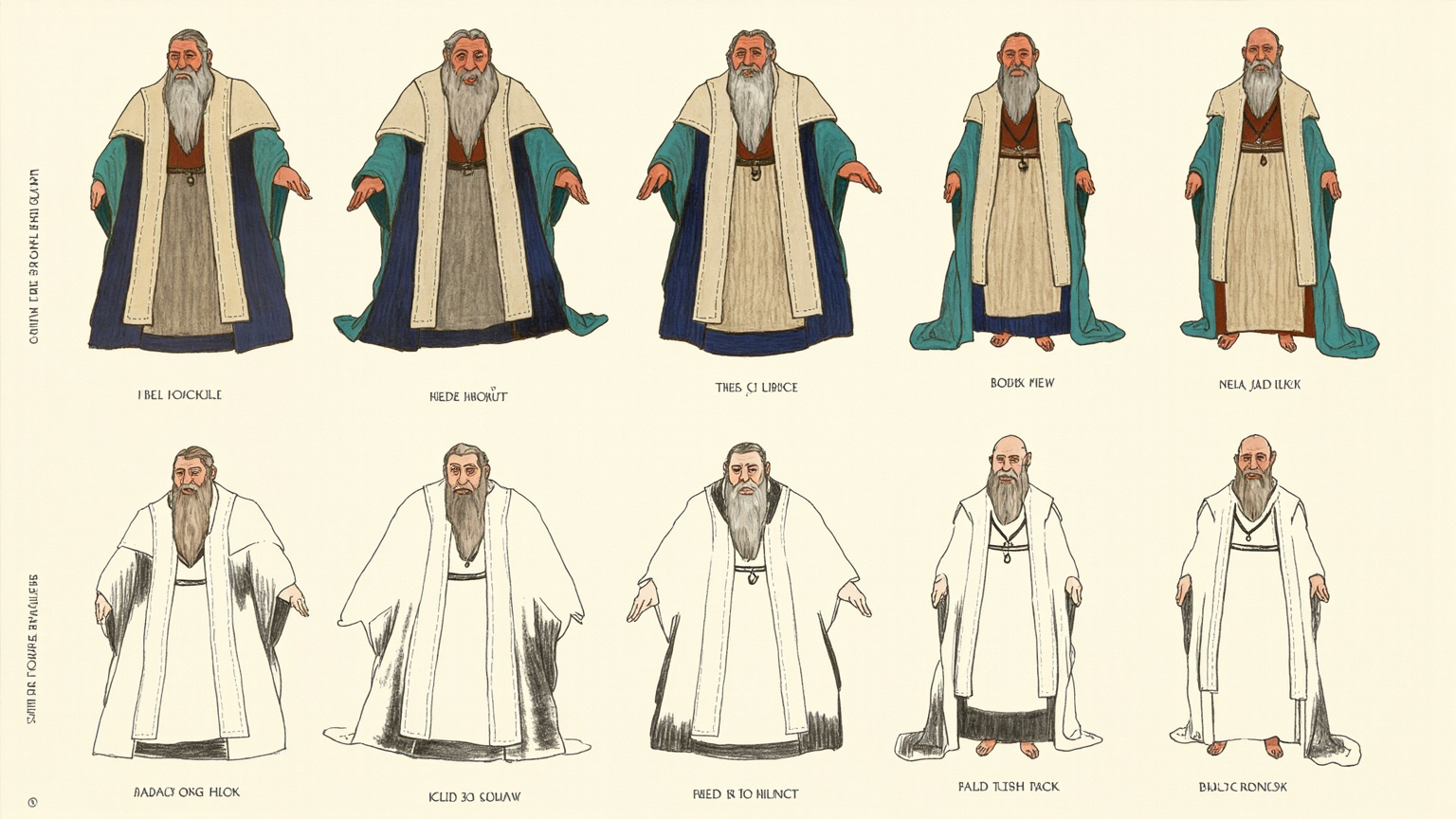
The tribe's spiritual elder is Dede Korkut himself, a name often read as 'lonely father' or 'ancestor who wards off evil through prophecy.' He is three things at once: sage, remnant of a priestly line, and bard. Old as he is, he guards the whole tribe through speech alone — he announces himself at the start of every tale, and at the end of each one he steps forward again, naming newborns and handing them their swords, singing laments for the fallen. This framing device, a storyteller who keeps stepping back into the story he is telling, is the book's most captivating structural invention.
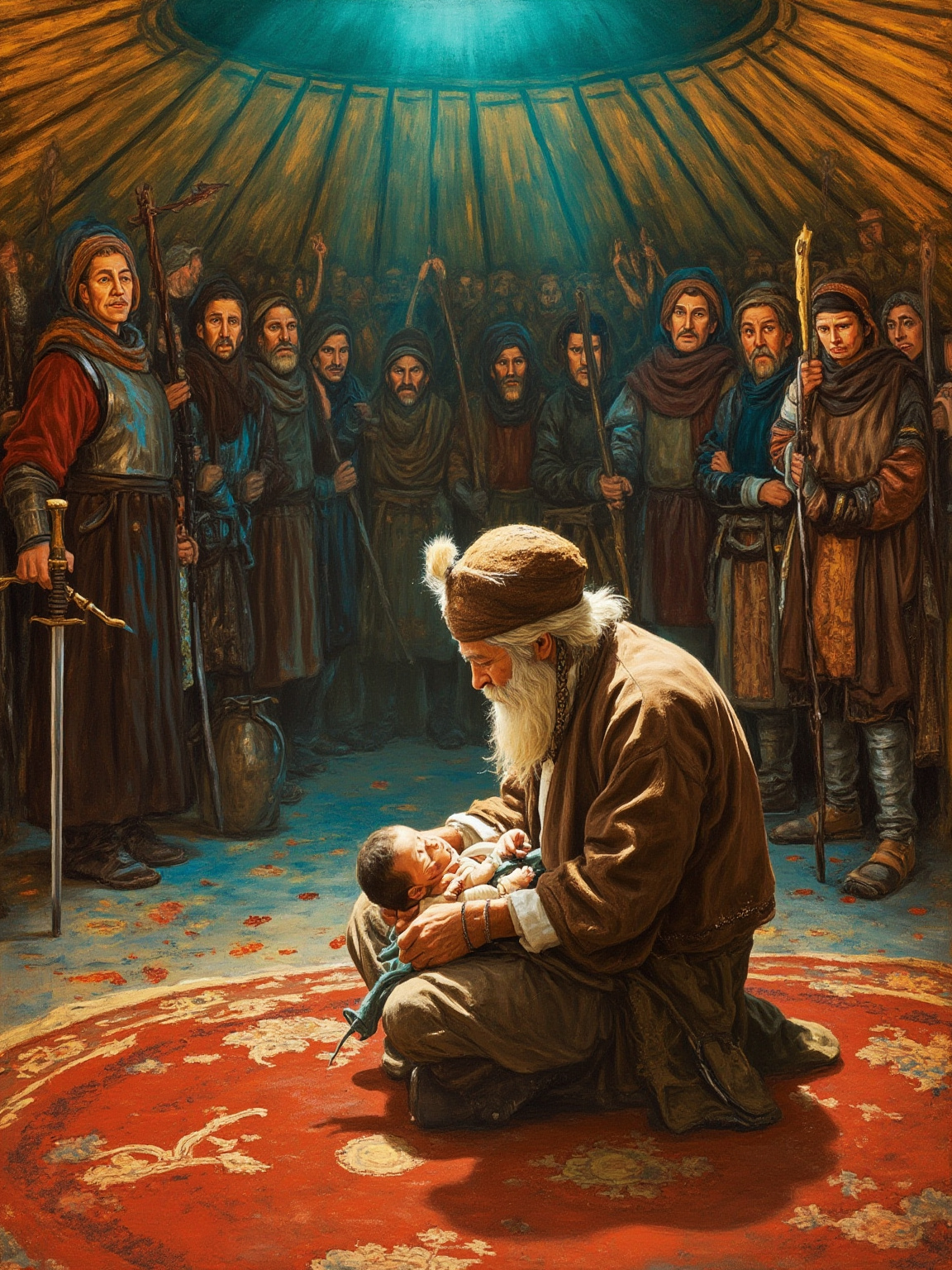
I am Dede Korkut, I saw with my own eyes the time of Oghuz Khan — I have no father, no mother, I am born of the wind.
我便是先祖科尔库特,亲眼见过乌古斯可汗的年代——我没有父亲,没有母亲,我是风中诞生的。
金句 · 开篇 · 说书人自报家门
The Shape of the Plot
The book opens with a prologue. Dede Korkut announces himself: 'I witnessed the age of Oghuz Khan.' He first tells the mythic origin epic of Oghuz Khan, who rose with sixty-two men and six tribes, before moving into the twelve independent tales. One clarification worth making: Oghuz Khan is not Genghis Khan. The two names sound alike but belong to different figures — Oghuz Khan is the ancestor-legend of the Turkic peoples and has nothing to do with the Mongol empire.
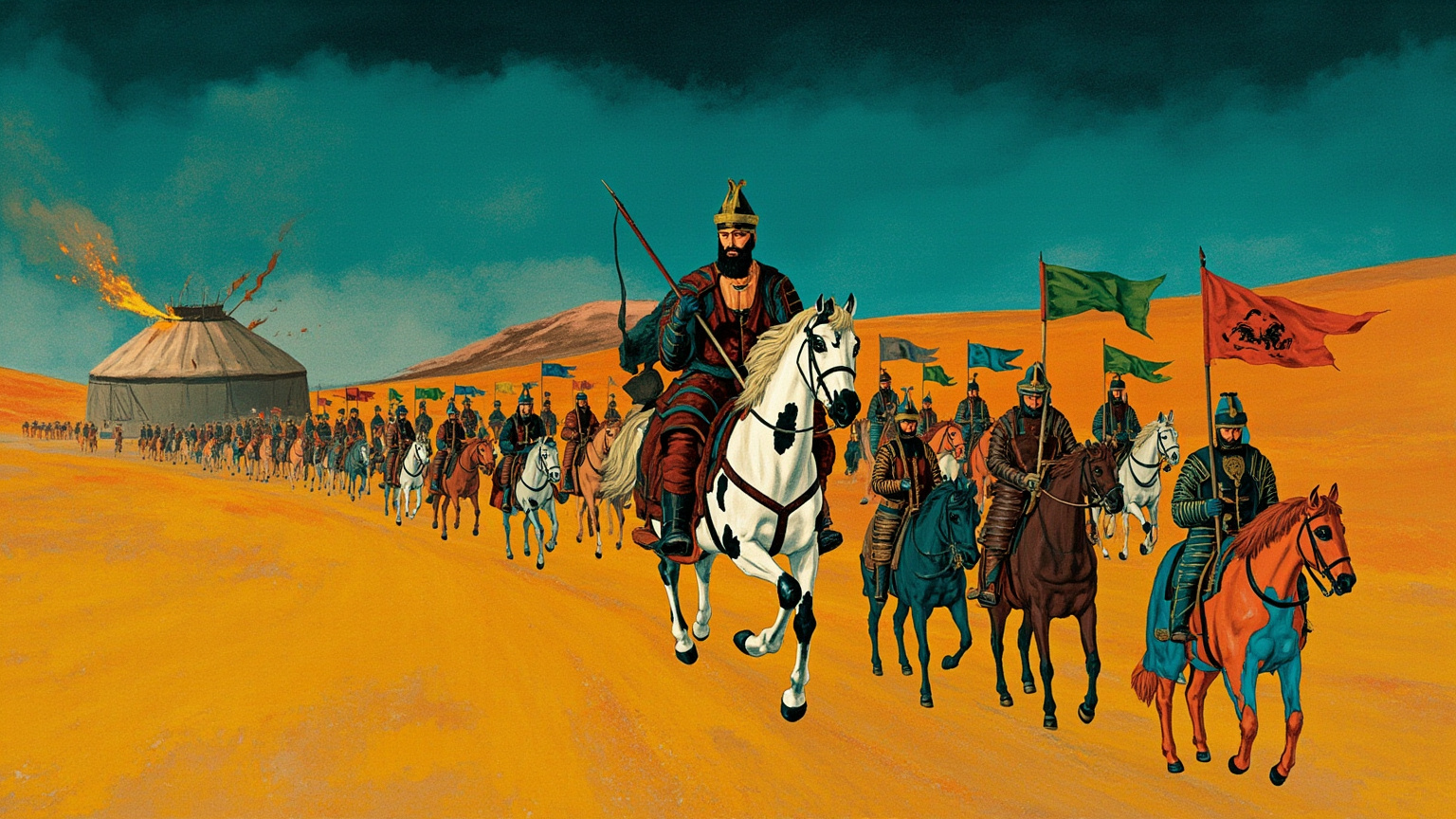
The first major story is 'The Tale of Bamsı Beyrek.' A young hero is seized by a rival, roped off his horse, and disappears. Fifteen years in captivity abroad turn him into a seasoned warrior. On the day he returns, the tribe stands face to face with him and no one knows who he is. He gives no name. He only asks that every sword belonging to a boy who vanished fifteen years earlier be brought out. When he draws his father's old blade, everyone kneels. He is Bamsı Beyrek.
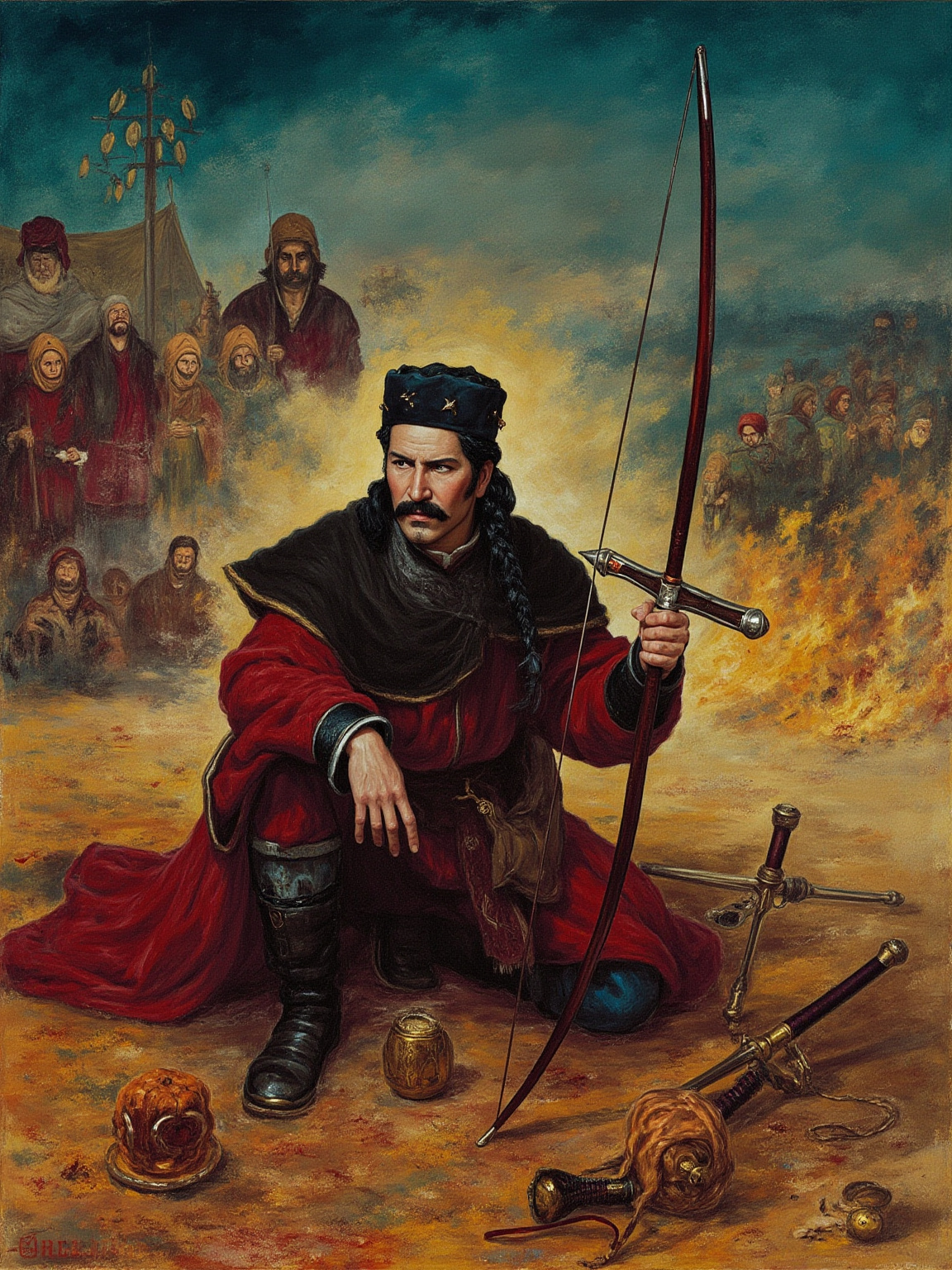
But the most moving recognition scene is not the one with his father. It is the one with his wife. Banu Çiçek had waited fifteen years for Beyrek. From the very night of their wedding, when he was roped and dragged off, she stitched herself into waiting. When he came home, he covered everyone's eyes and let her search by touch, by a token, by the memory held in her own hands, and she found him. The book spends no fine words on the moment. It simply tells us that her hand, in the dark, closed on a familiar old button.
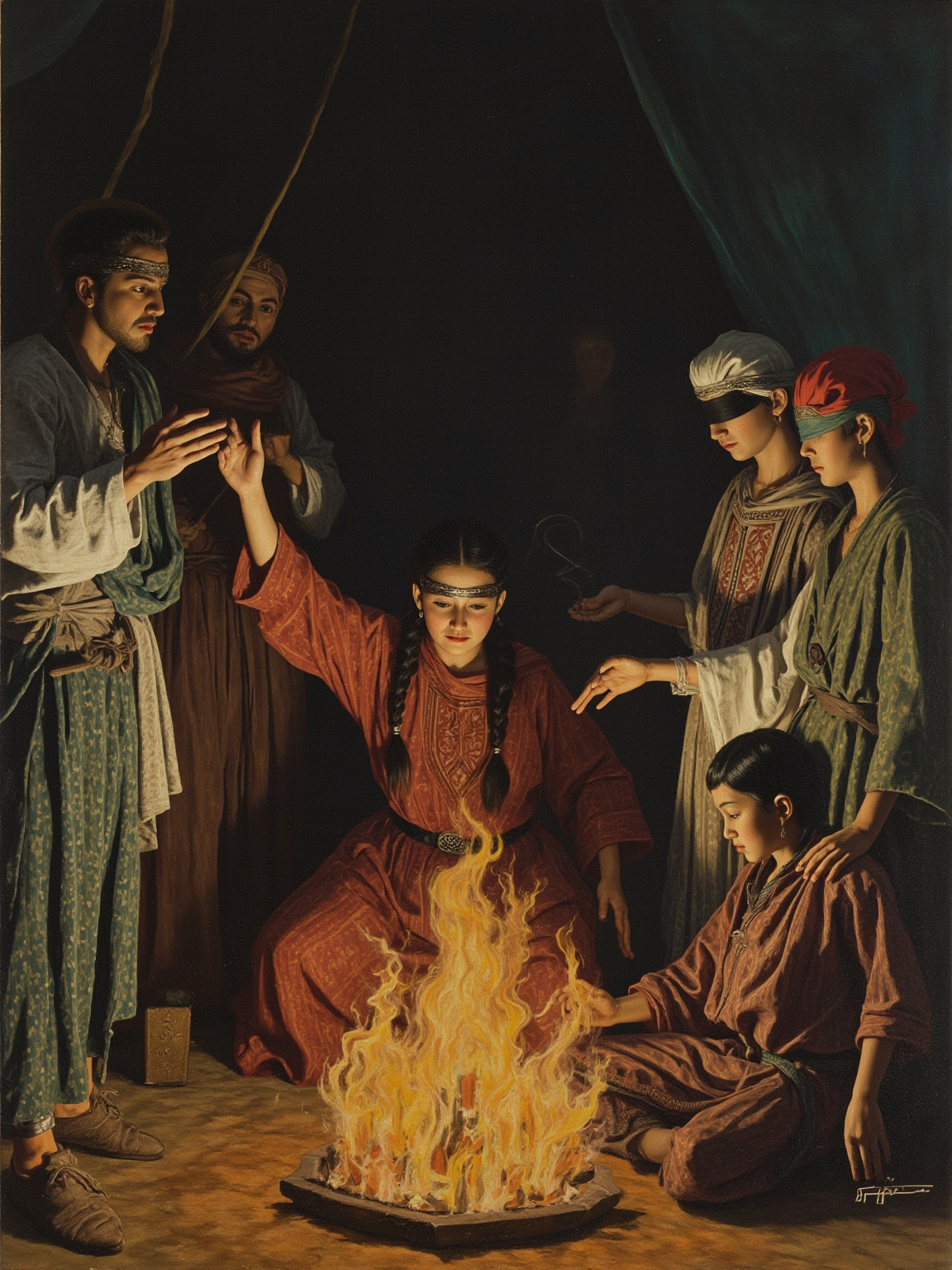
Bind my eyes, and let her find me by touch alone — she has waited fifteen winters for this hand.
替我蒙上所有人的眼睛,让她在黑暗里凭一双手认出我——她为这只手,等了十五个冬天。
金句 · 触认 · 巴努·奇切克十五年之约
The second major story is 'The Tale of Tepegöz.' A shepherd girl swallows a boulder and gives birth to Tepegöz, a one-eyed giant. He grows into a monster who devours people and livestock and extorts human sacrifice from the Oghuz. He is fought by Beyrek's son, or, in the telling of the same generation, the warrior Basat, and swords and spears cannot touch him; the only vulnerable spot is the single eye set above his brow. The killing, in the end, is pure steppe: a red-hot iron nail driven through that eye. The scene is grotesque and spare at once — this native Turkic lineage of mountain monsters is its own thing, not a borrowing from the Greek cyclops.
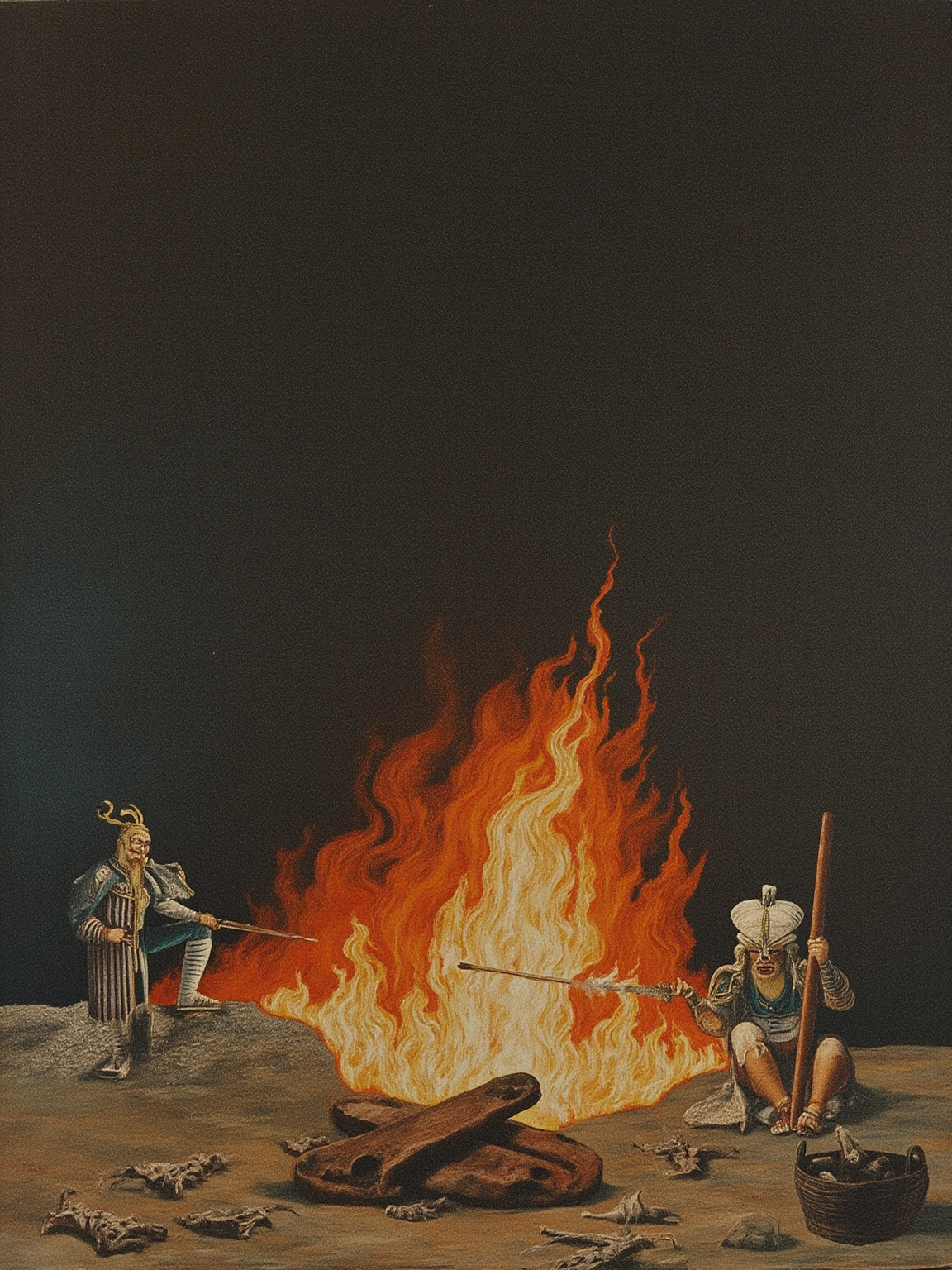
His mother swallowed a stone, and from that stone came Tepegöz — neither man nor jinn, but the appetite of a mountain.
他母亲吞下了一块石头,石头里便生出了特佩戈兹——他既非人也非精灵,唯是一座山的胃口。
金句 · 山之眼 · 特佩戈兹出世
The third major story is 'Crazy Dumrul' (Deli Dumrul). A tribal chief declares himself immune to death and challenges Azrael outright: 'I, Dumrul, no one takes my life.' Death takes him at his word and stands at his tent door that same night. Dumrul folds instantly, drops to his knees, and begs to find someone to die in his place. Death agrees, and he trades a black slave's life, or, in some tellings, a life freely offered, to buy back his own. It is a moment that stops you: a rare instance of Turkic narrative looking death straight in the eye, almost a steppe variation on Greek tragedy.
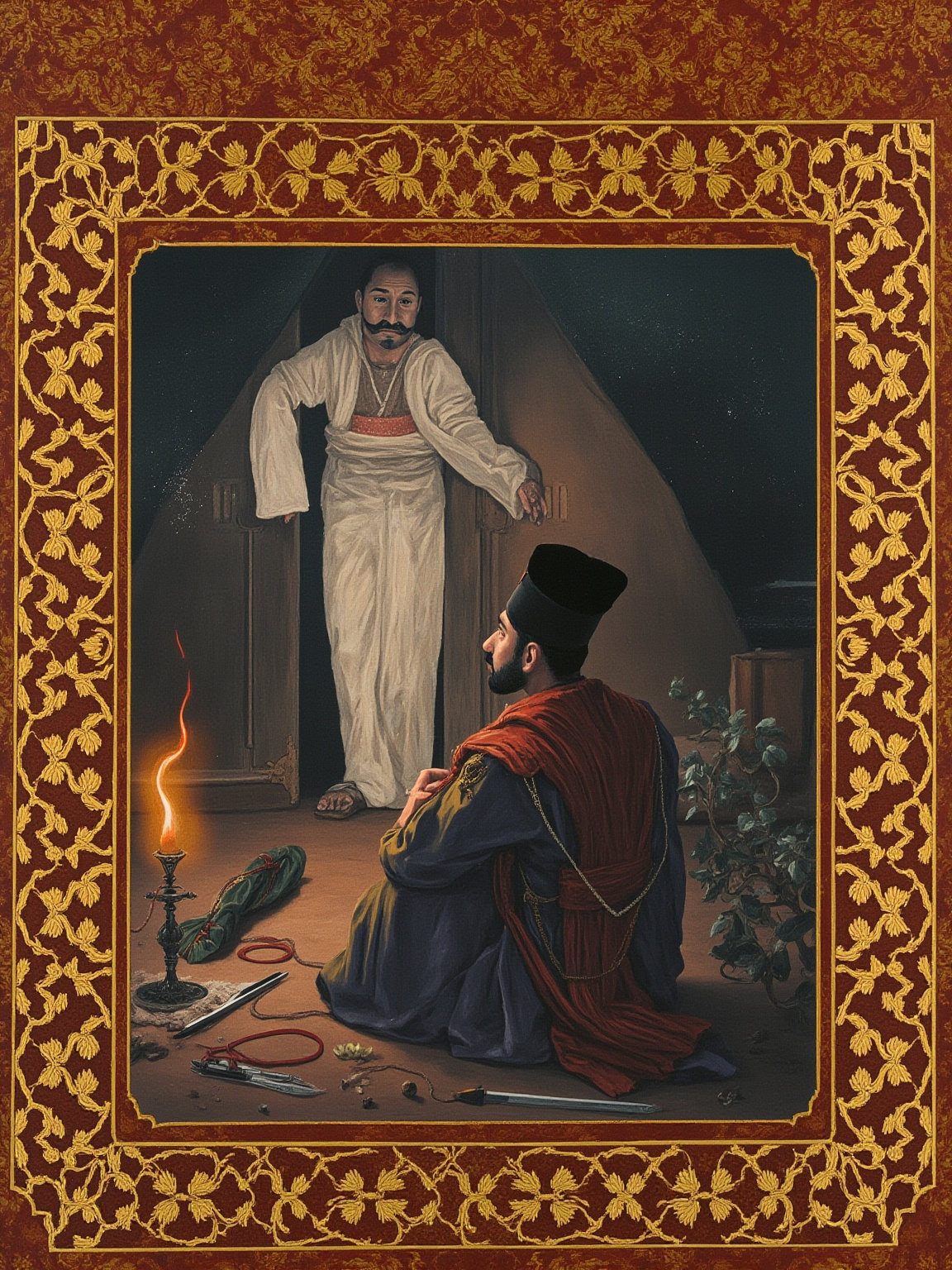
I am Delü Dumrul, and no soul may take me — and Death stood that night at the threshold of my tent.
我,杜姆鲁尔,我的命谁也拿不去——可那一夜,死神就站在我家毡帐的门槛上。
金句 · 疯王 · 杜姆鲁尔向死神叫阵
What holds the twelve stories together is not continuity of plot but a ritual. At the close of each tale, Dede Korkut steps forward again, naming a newborn Oghuz child and handing over a sword, or singing the lament, the yuğ, for a fallen hero. This is what turns twelve separate stories into the tribe's living memory: every birth, every hero's death, carries the old man's voice.
Two Motifs That Run Through the Book
The first motif is the triangle of father, son, and tribe. Nearly every story includes a scene of father and son recognizing each other, of an inheritance passed on, of a father handing his sword to his son. Beyrek comes home by his father's sword, Dede Korkut arms every newborn with one, Kazan Bey presides over the tribe's great occasions as its head. This domestic ethic of a nomadic people is the layer of the book that comes closest to ordinary life today.
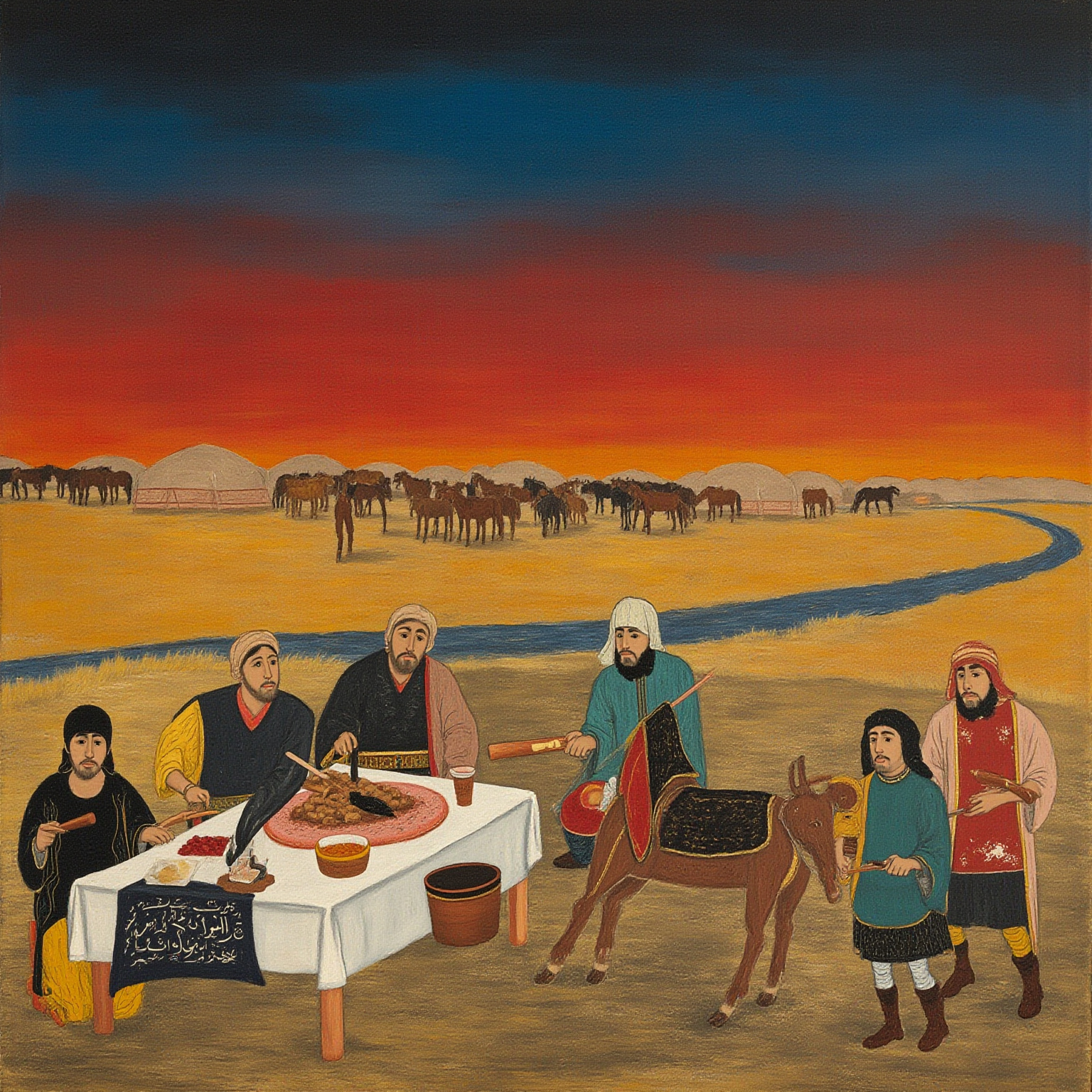
The second motif is what might be called the nomadic steppe's three fixtures: the felt-tent camp (yurt, or otağ), the feast of fermented mare's milk (sofra, koy), and the riverside camps with their laments. These three recur in every story and give the twelve tales one continuous backdrop. It is also the backdrop for an age caught between paganism and Islam, a pre-Islamic shamanic residue layered under the moral coloring of the new faith.
Why This Book Is Considered Great
Because it writes the act of storytelling into the text itself. Dede Korkut is not only the narrator; he is also one of the things being narrated. This nesting of teller inside the tale gives oral poetics a monument of its own. We usually keep the person inside a story separate from the person telling it. This book blurs that line on purpose.
Another reason: it works at once as national epic, family drama, and monster tale. It can tell you about a one-eyed mountain demon, a madman haggling with Death, a boy roped off his horse and missing for fifteen years, and after every one of those grand scenes it lands back on a newborn in a felt tent, a reunited husband and wife, a blessing spoken over fermented mare's milk. Heroism and household life are never pulled apart, and that is why Turkic-speaking peoples keep claiming this book as their shared foundation.
Why Go Read the Actual Text
A companion guide can give you the map: which characters, which motifs, which scenes. But there are three things only the text itself can give you. The first is voice — these stories were sung aloud, and every repeated line, every exclamation that opens with 'oh,' was built for a speaking voice. The second is rhythm: each story is short enough to tell in one evening, but the pull of tale ends, Dede Korkut steps forward, next tale begins only lands once you turn the pages yourself. The third is a restraint particular to the steppe: heroism here is never built out of piled-up adjectives. It rests on a nail, an old button, a figure kneeling at a tent door.
The single boldest move in the Book of Dede Korkut: it turns the act of telling a story into a story of its own.
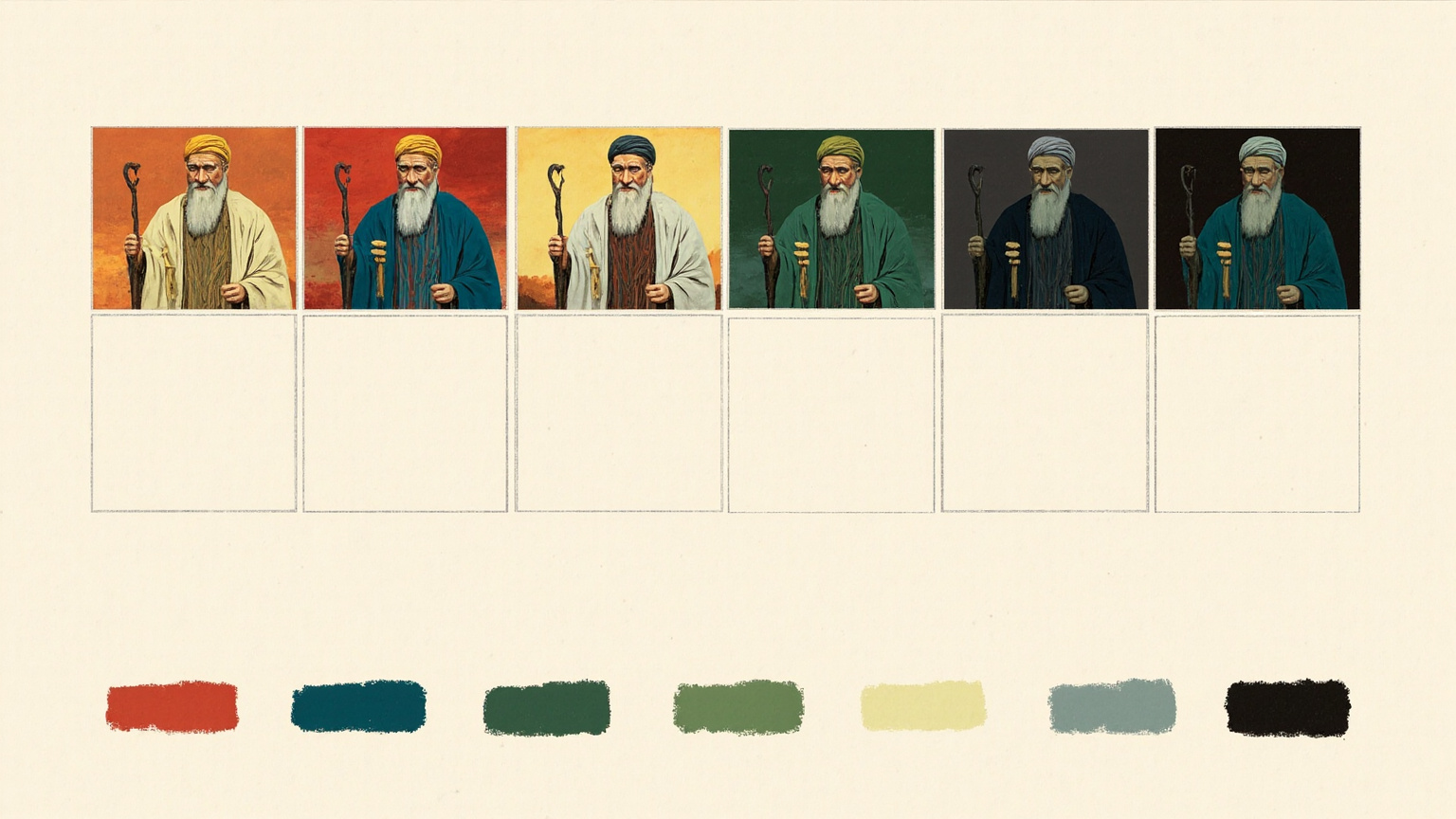
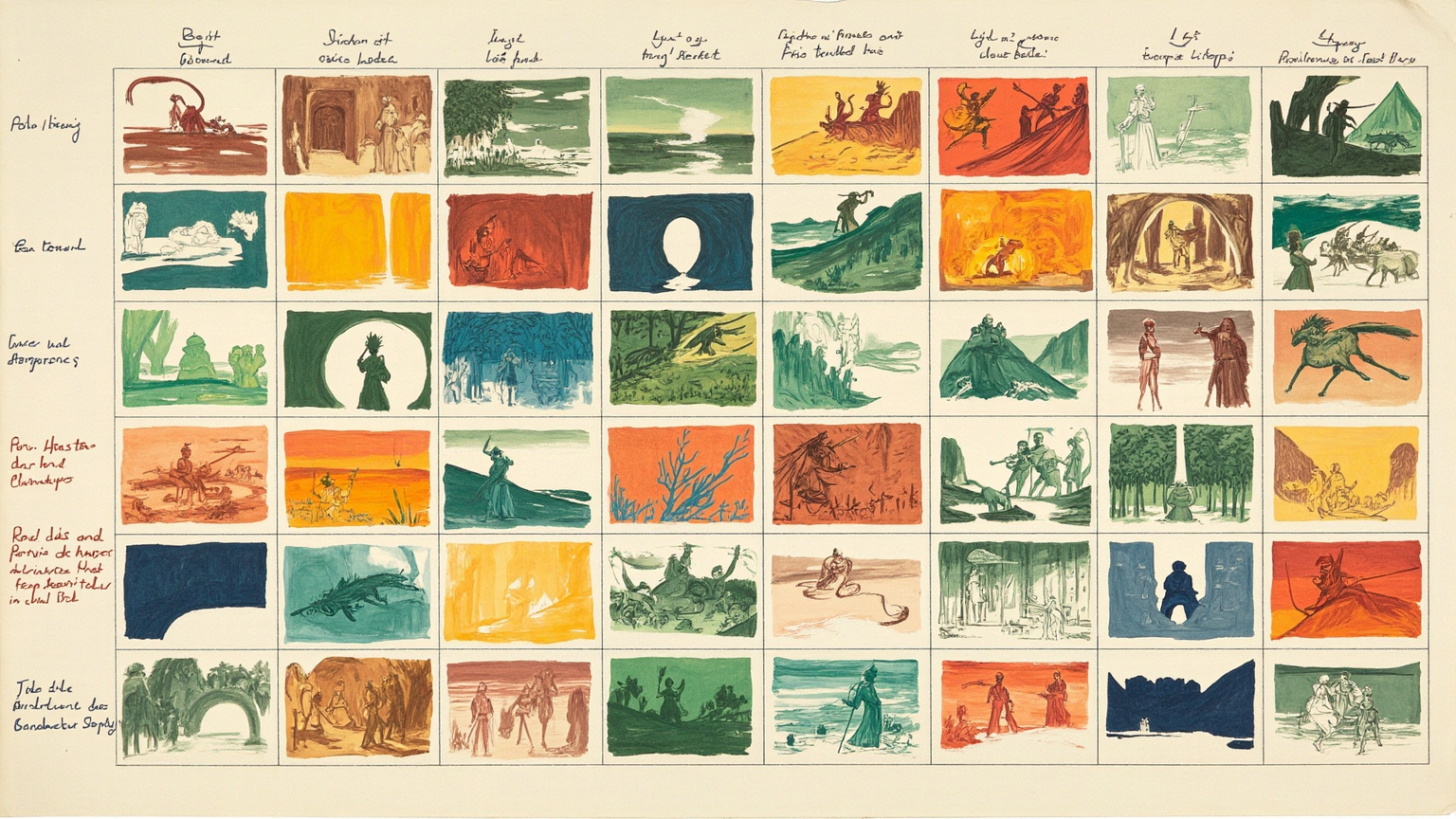
Art Direction4 plates
Before the guide was written, this book got a visual foundation — every illustration you just read grew out of it.