The Chess Master (Qiwang) · Companion Guide
棋王
一只舔得发亮的铝饭盒,一副无字象棋——饥饿年代里,一个瘦小的棋呆子用下棋把自己立住。
A licked-clean aluminum lunch box
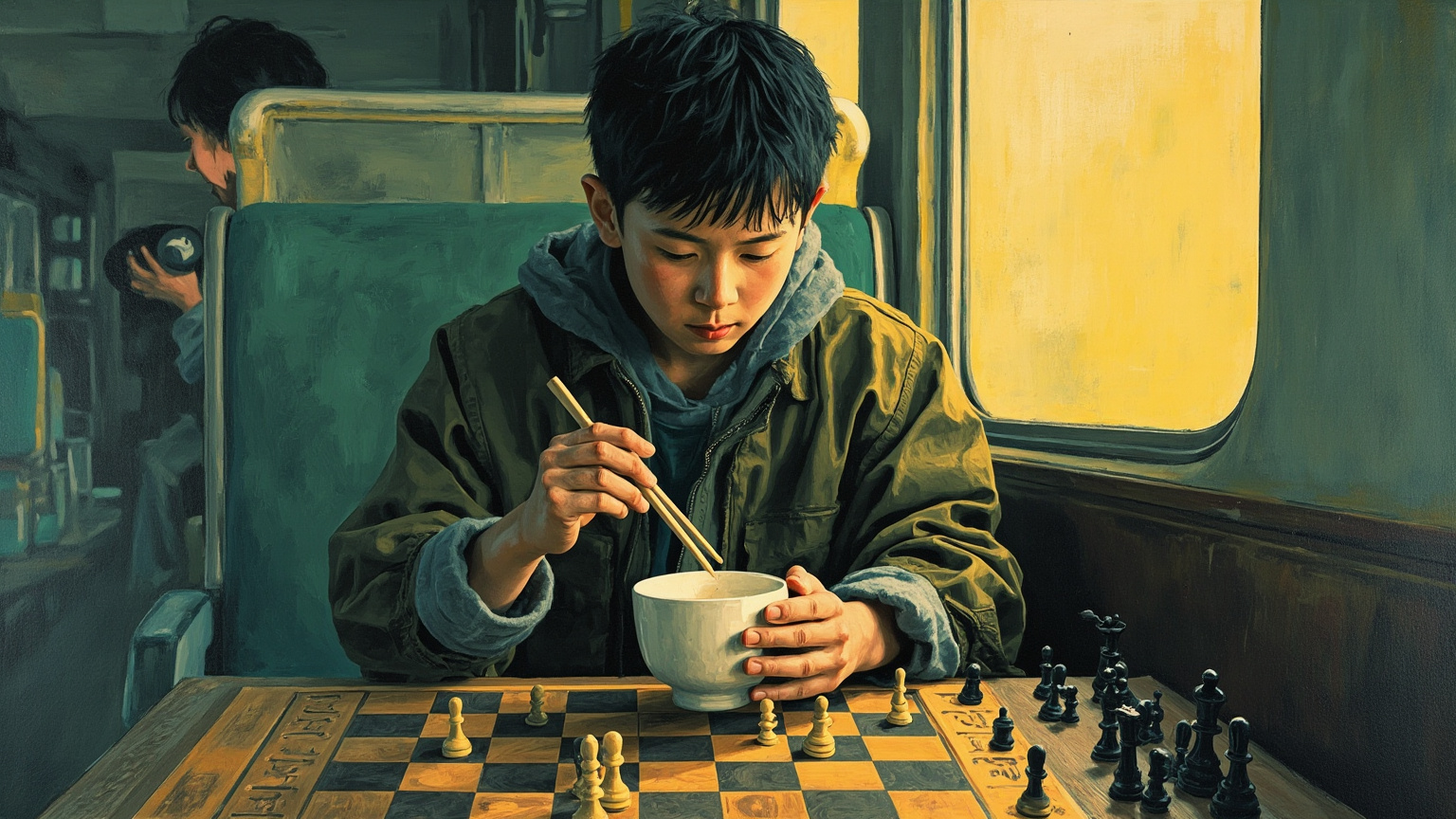
The train rocked into the mountain night. A thin young man took his lunch box from the overhead rack and pushed the rice into his mouth, grain by grain. When grains fell onto his legs, he picked them up and put them back. He tilted his head back and drank the oily soup at the bottom of the box, then wiped it clean with his fingers. The whole hard-seat carriage was silent except for the sound of chopsticks against enamel.
The eater was Wang Yisheng, nicknamed Chess Dolt. The narrator, a fellow educated youth, met him for the first time and was struck not by his table manners but by the intensity of his concentration. This was the 1970s, when educated youth were sent to the countryside, green trains carrying city children to the mountains. Others brought books and journals — he brought only a chess set and an enamel lunch box.
Who is Ah Cheng, and why this book endures
Ah Cheng, born Zhong Ahcheng in 1949. "The Chess Player" was first published in July 1984 in Shanghai Literature and won the National Outstanding Novella Award that same year. It belongs to the "root-seeking" movement — alongside Ah Cheng's later works "The Tree King" and "The Child King," Han Shaogong's "Papa Pa," and Jia Pingwa's Shangzhou series — which pushed Chinese fiction back toward folk culture, toward the ordinary world of food and clothing.
It endures because it's short — under fifty thousand words — and clean. A book that takes eating and chess to their extremes, with no political slogans, yet captures an entire generation's hunger, spirit, and way of living. From then on, Wang Yisheng and that wheel battle became names every Chinese reader stumbles across when flipping through books.
Three people, one game of chess
Wang Yisheng is the protagonist — thin, poor, with astonishing chess skill he doesn't recognize in himself. The narrator "I" travels with him and works at the same farm, a witness rather than a player, uninvolved in any romance. Ni Bin, nicknamed Egg, comes from a chess family. His ancestors left him a set of ebony chess pieces and a Ming dynasty manual — he becomes Wang Yisheng's most important chess friend at the farm and the one who indirectly pushes him toward the great battle. The old man who collects scrap paper sits beside the downtown chess tables, a scavenger who first teaches Wang Yisheng the way of chess: "Play for chess, not for livelihood. Chess cultivates the nature; one must not let it rise too high." And there is one person who never appears yet is always present: Wang Yisheng's deceased mother, illiterate, who spent her life polishing a chess set from a toothbrush handle, leaving him a chess board with no words.
The world of the story is narrow — a sent-down youth farm in the southern mountains in the 1970s: bamboo sheds, terraced fields, the commune cafeteria, open-air chess games. The rules are simple: material scarcity, no one has anything extra; chess is one of the few permitted private worlds. A Cheng doesn't elaborate on the movement, doesn't chant slogans — the frame contains only lunch boxes, chessboards, oil lamps, a thousand heads leaning in to watch.
The First Meal on the Train
"I" met Wang Yisheng in the hard-seat carriage. He watched Wang Yisheng eat — the sound of chopsticks scraping the inside of the lunch box was like someone scraping a pot. Wang Yisheng looked up at him, unembarrassed, and seriously began talking about the art of eating — a person must first understand eating itself, then do other things without panic. It sounded like a joke, but it was how he had survived.
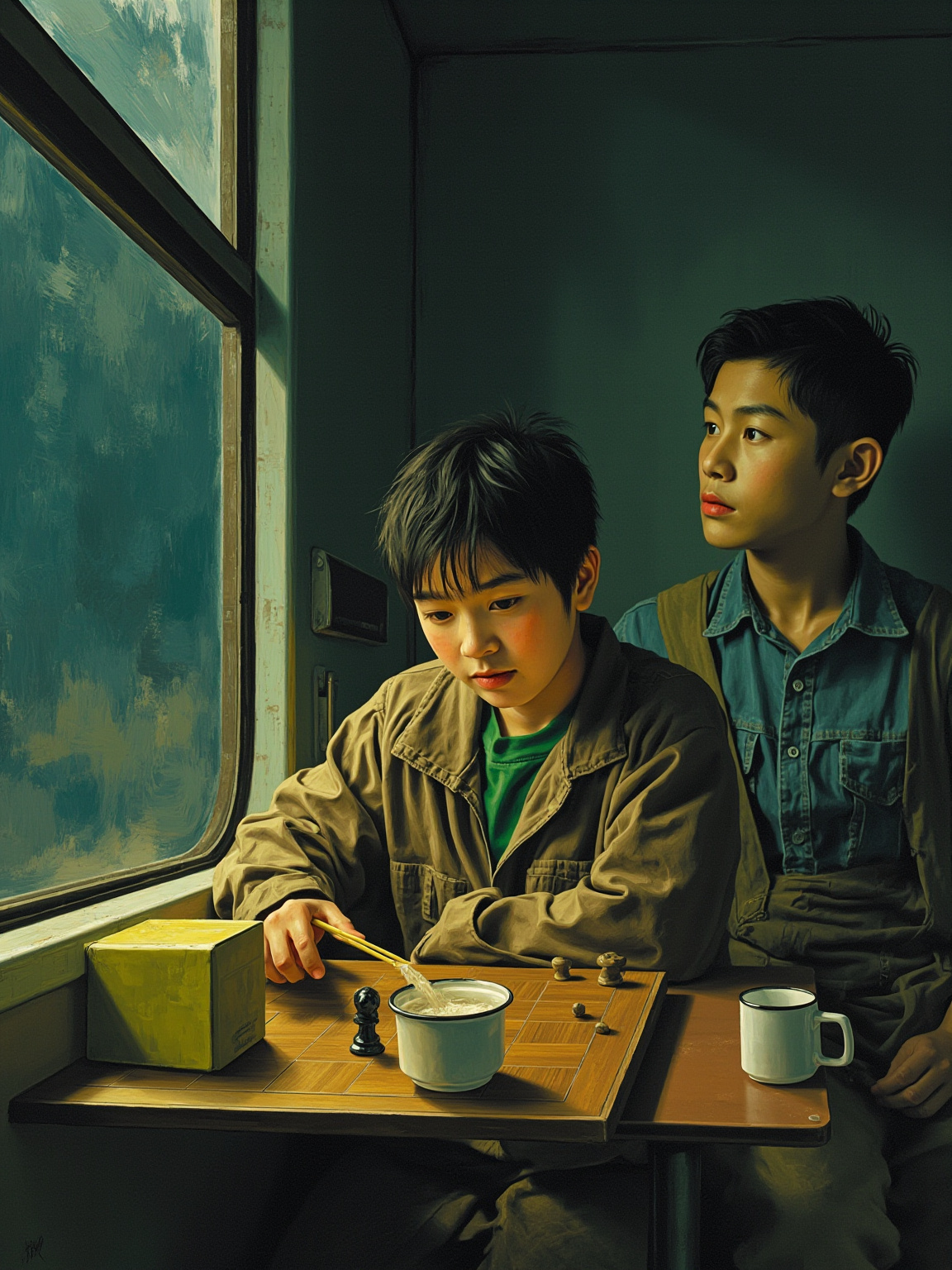
He picked up every grain of rice that fell on his lap and put it back in his mouth, then tilted his head to drink the last smear of oil from the bottom of the box.
饭粒掉在腿上,他捏起来送进嘴里;盒底那点油汤,他仰起脖子喝干,再用手指抹一遍。
金句 · 开篇 · 火车上的饭盒
Here's what to watch for in the writing: A Cheng doesn't have Wang Yisheng talk philosophy on the train — he has him talk about eating. A novel about the spirit opens with a lunch box. This displacement is A Cheng at his most clever — he wants you to believe that a man who licks his lunch box clean will play chess just as cleanly.
The Old Chess Stall and the Uninscribed Chess Set
The memory cuts back to the city. After school, Wang Yisheng doesn't go home — he crouches beside an old chess stall watching people play. The old paper-scavenger asks if he wants to learn. He crouches down and never moves away. The old man doesn't teach him tricks, only explains the rules — play for the game, not for a livelihood; chess cultivates the temper, it's not a way to make a living. Win with restraint, lose with acceptance. If your heart is too full, you're finished.
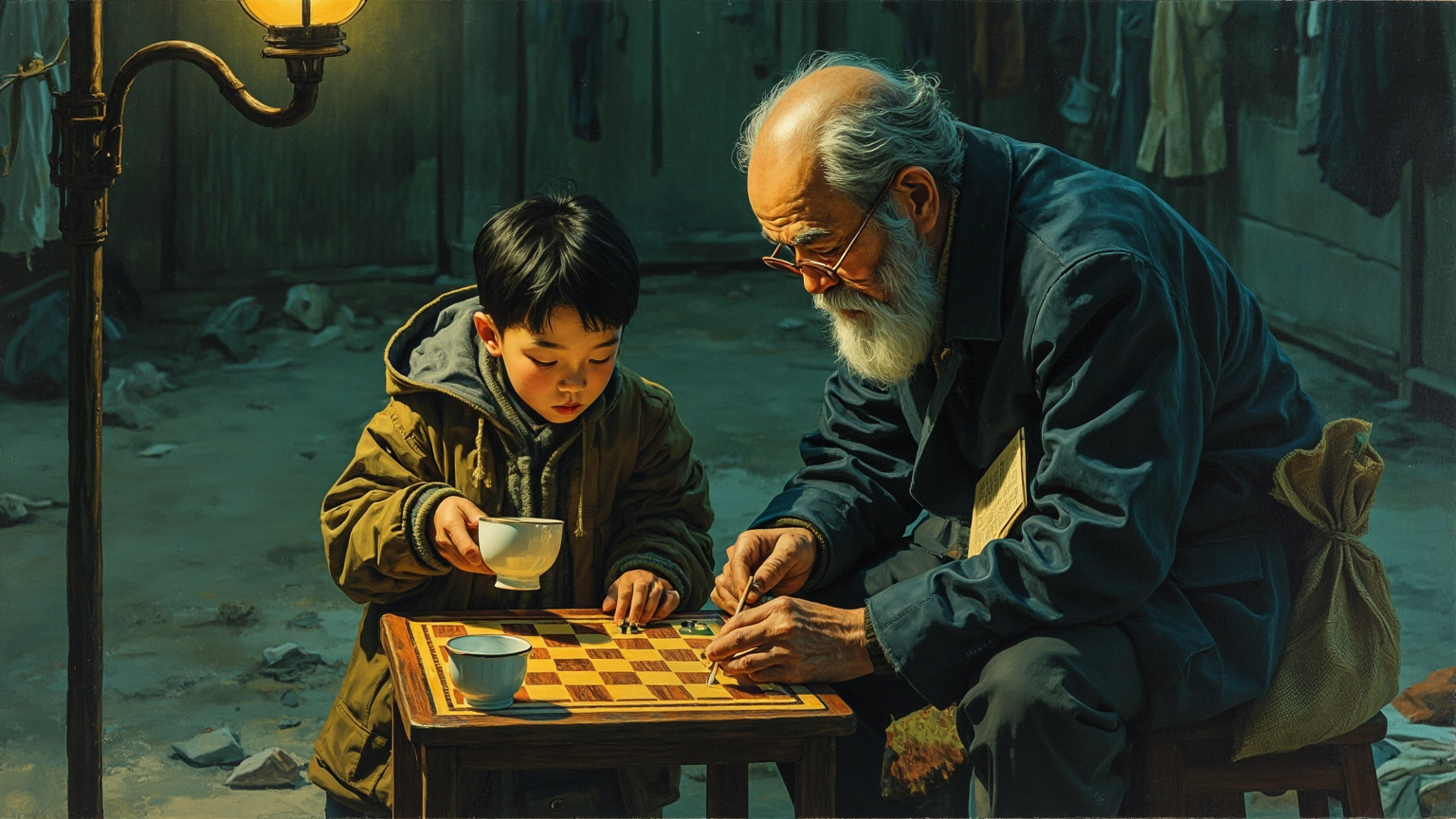
Play for the sake of the game, not for a living. The board is for the spirit, not the stomach.
为棋不为生。下棋是养性,不是谋生的饭碗。
金句 · 旧城回忆 · 捡烂纸老人的棋训
Another memory is shorter, and heavier: Wang Yisheng's mother couldn't read, had labored her whole life. Near death, she took an old toothbrush and wore away the wood over countless hours, grinding out thirty-two round pieces — a chess set with no characters, because no one knew how to carve them. This set never appeared in any competition. It only sat in Wang Yisheng's cloth bag, the heaviest possession of his life.
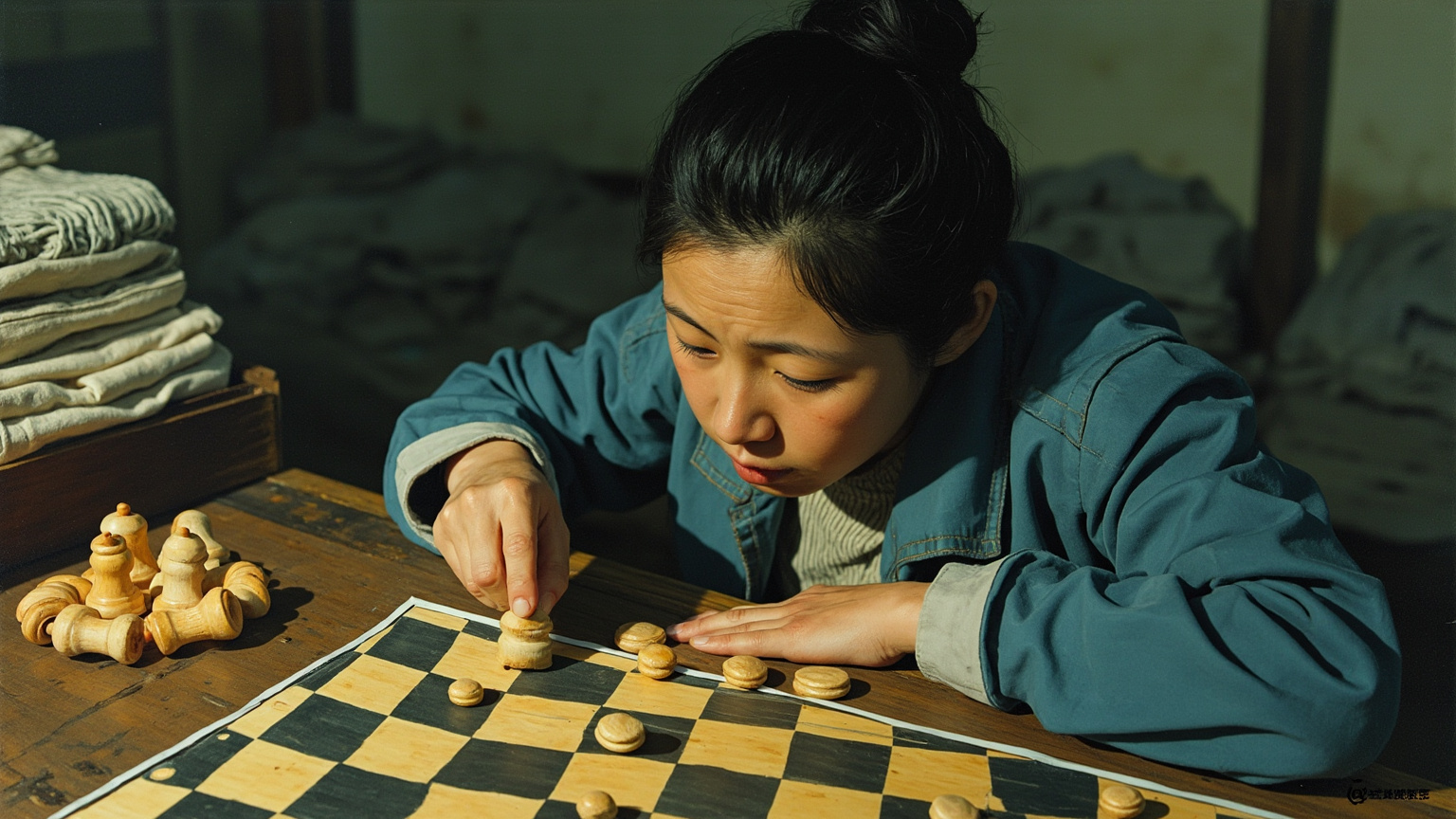
These two passages are the quietest places in the whole book, and A Cheng buried his two deepest hooks there: the old man's words and the mother's chess pieces. One explains "how to play," the other "why to play." The climax of the entire book is when these two sayings get plugged in together.
Chess at the Farm
At the farm, Jiao Luan showed up. His family had produced chess players for generations, and in his luggage he carried a set of ebony chess pieces and a Ming dynasty manual of ancient openings. He lent the manual to Wang Yisheng, who spent nights after nights studying it, setting up the positions, replaying the games — and soon there was no one in the whole compound who could beat him. Jiao Luan was a decent sort. He could see Wang Yisheng had the makings of something, and wanted to pull him into the regional tournament. But getting a spot required connections.
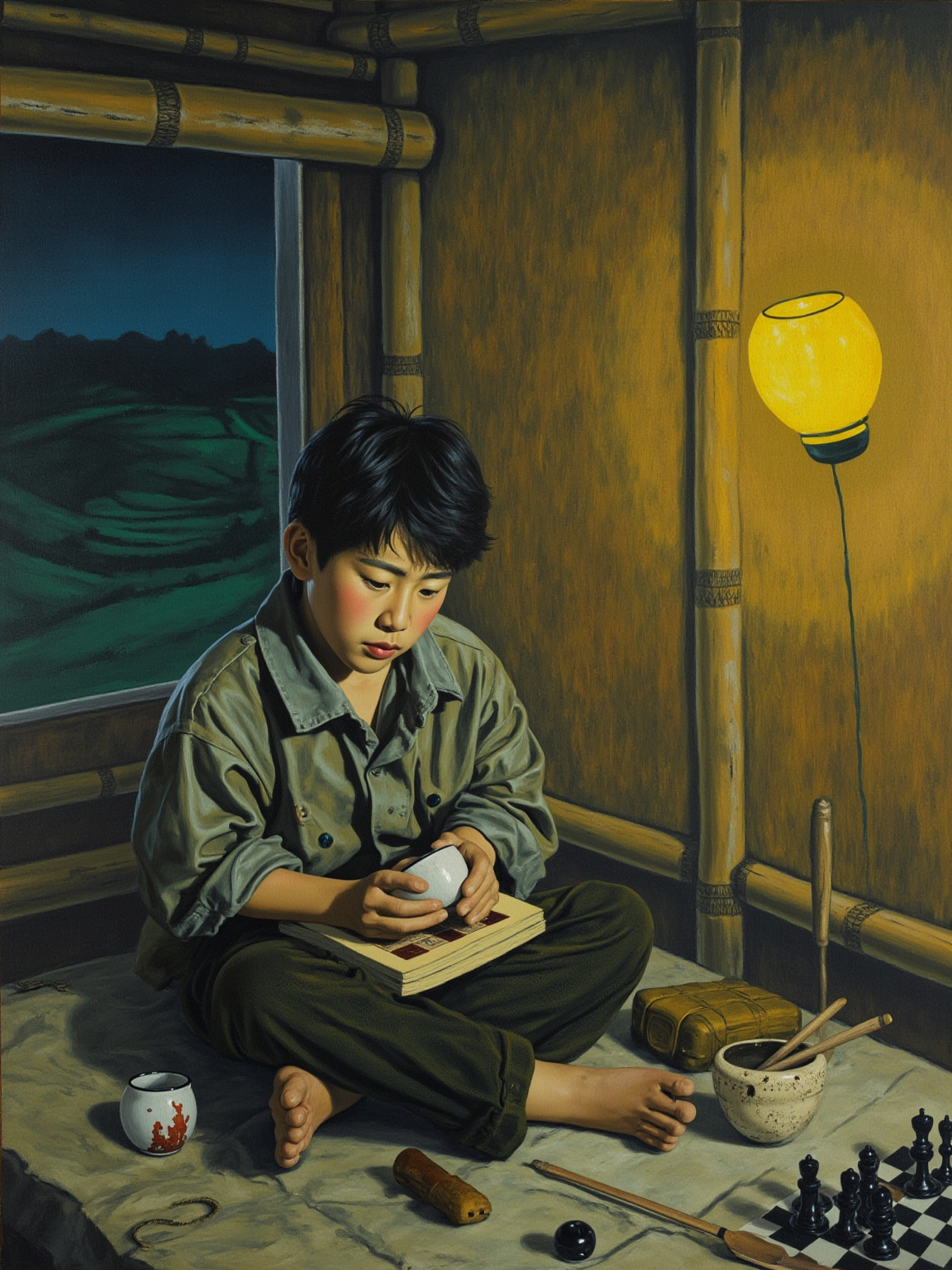
He stared at the old Ming-dynasty manual by lamplight all night long, replaying game after game, as if some fuse had been lit inside him.
他整夜整夜地看那册明代古谱,摆棋、复盘,一灯如豆,像是有人把一根引线悄悄点着了。
金句 · 农场棋事 · 王一生夜读古谱
Jiao Luan went to work his connections. He found the regional cultural secretary, who agreed to provide a spot but laid out his price: the inherited set of ebony chess pieces. Jiao Luan hesitated for days, then finally carried the wooden box over and presented it. When he came back, he told Wang Yisheng: you can compete.
That Sentence and That Move
Wang Yisheng heard the whole story and said nothing. He returned the ancient manual to Jiao Luan and said: I'm withdrawing from the tournament. Jiao Luan pressed him — this was a chance most people never get in a lifetime. Wang Yisheng wouldn't take the bait. He only said one thing: playing chess is playing chess. You can't trade pieces for it.
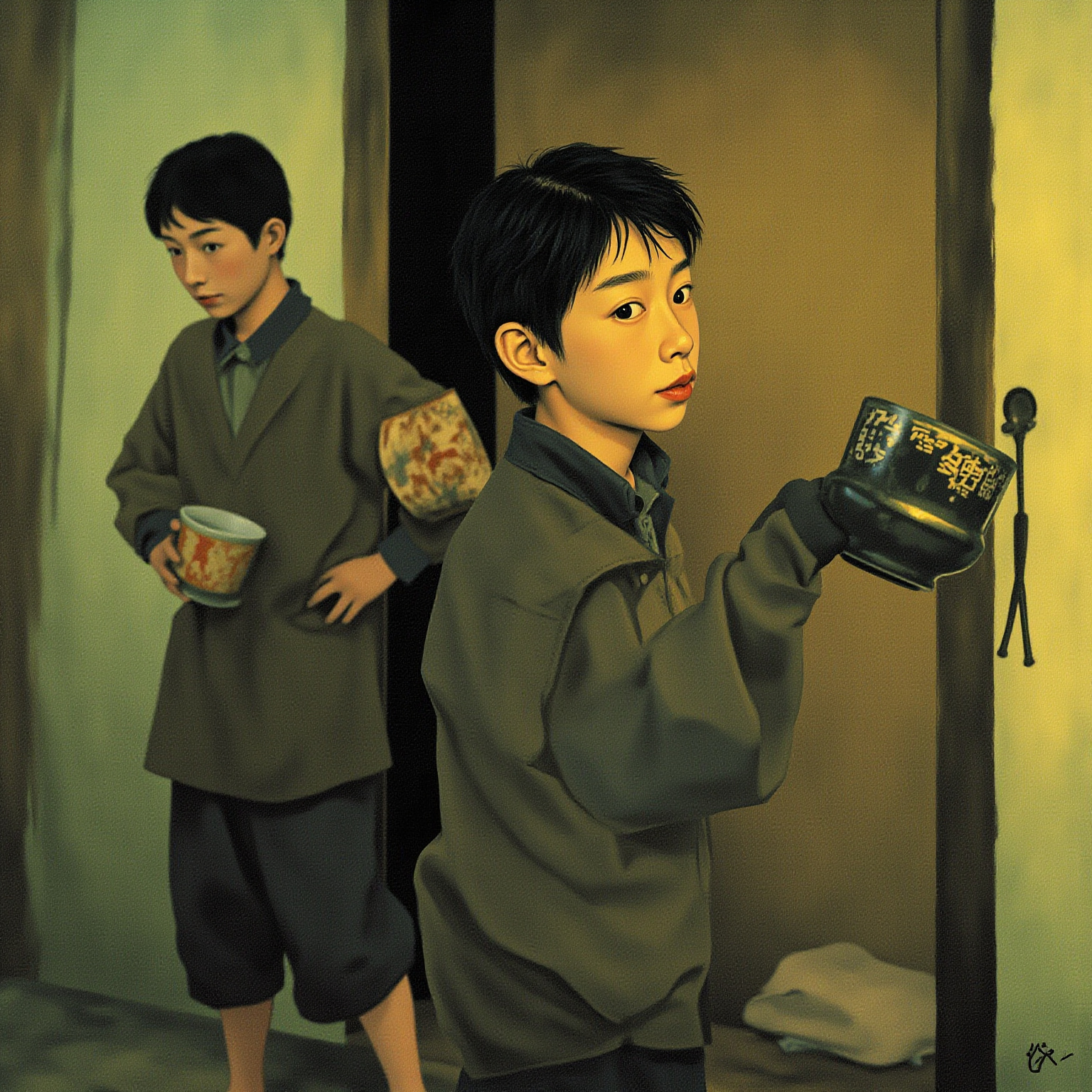
Chess is chess. You don't trade the pieces for a seat at the table.
下棋就是下棋,不能拿棋子换参赛的资格。
金句 · 转折处 · 王一生拒绝以棋换名额
This is the first real turning point in the entire book. Its weight isn't in drama — it's in Wang Yisheng's restraint. A sent-down youth from the mountains, voluntarily giving up what might be his one and only chance to be seen, simply because he won't let the pieces be tarnished. Ah Cheng writes this moment extremely short, short enough to fit between two sentences.
The Thousand-Strong Siege at the Athletic Field
The night the regional tournament ended, the company athletic field was cleared. The top three from the regional competition, plus a few masters — nine people in total. Word spread, and every sent-down youth and farmer from the entire branch and neighboring teams showed up. A black mass of over a thousand people stood there, the walls, trees, and roofs all covered in heads. Nine tables were laid out in a row, and Wang Yisheng sat at the innermost one, before him the set of blank wooden pieces his mother had made — not Jiao Luan's ebony.
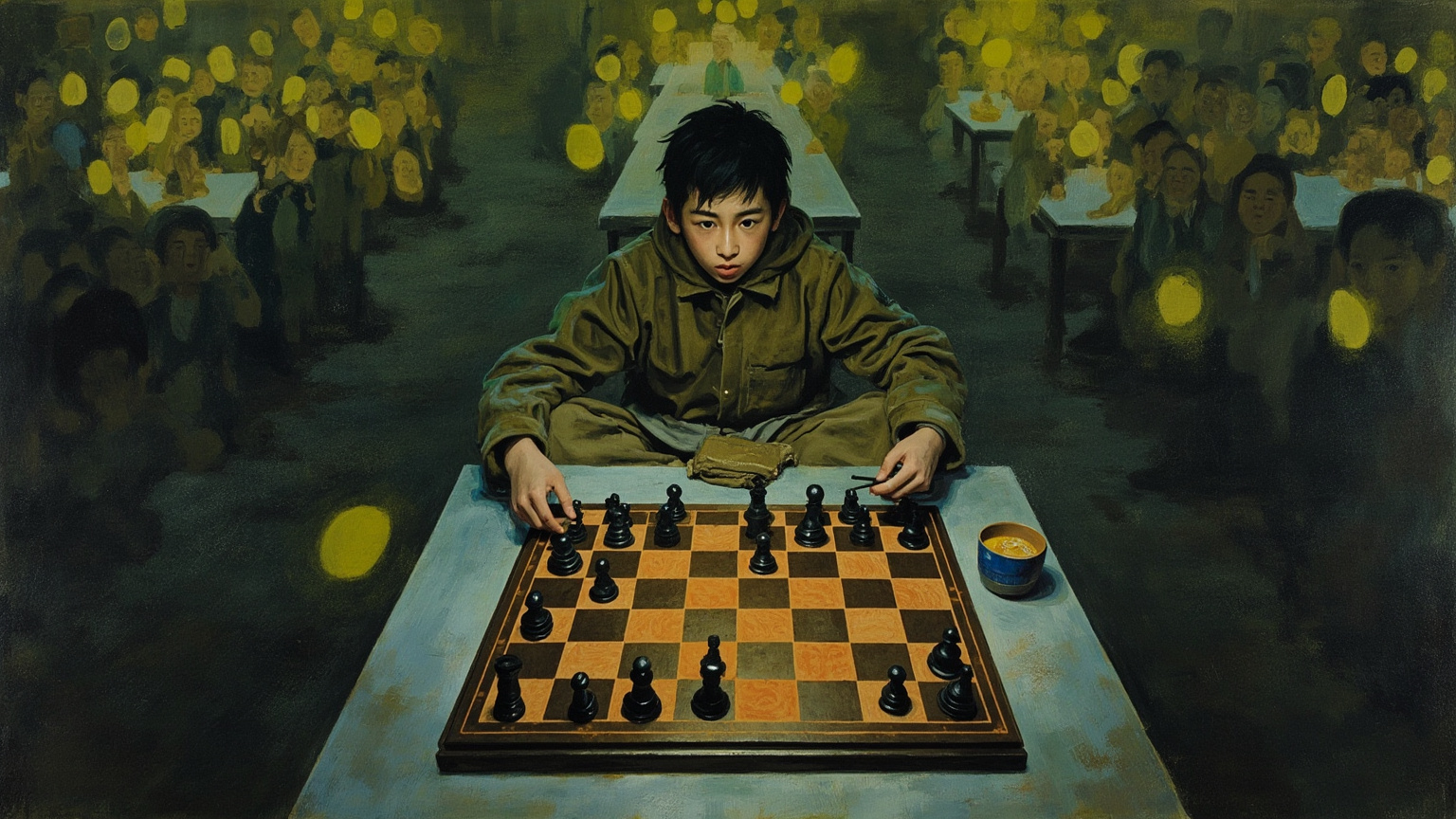
A thousand people pressed in from the walls, the trees, the rooftops; even a cough would have been too loud.
黑压压站了一千多人,墙头、树上、屋顶全是人,连咳一声都不敢出声。
金句 · 高潮 · 千人围观的车轮大战
The wheel battle format is one person against nine — lose one game and you're out. Wang Yisheng plays game after game. First game, win. Second game, win. Third game, win. The crowd presses tighter and tighter, not even daring to cough. By the eighth game, sweat has broken out on him, but his eyes are growing brighter — that brightness isn't excitement, it's the look of someone who's spent a lifetime at the board when they truly enter the game. The final game is against the regional champion, who finishes with a red face. Draw.
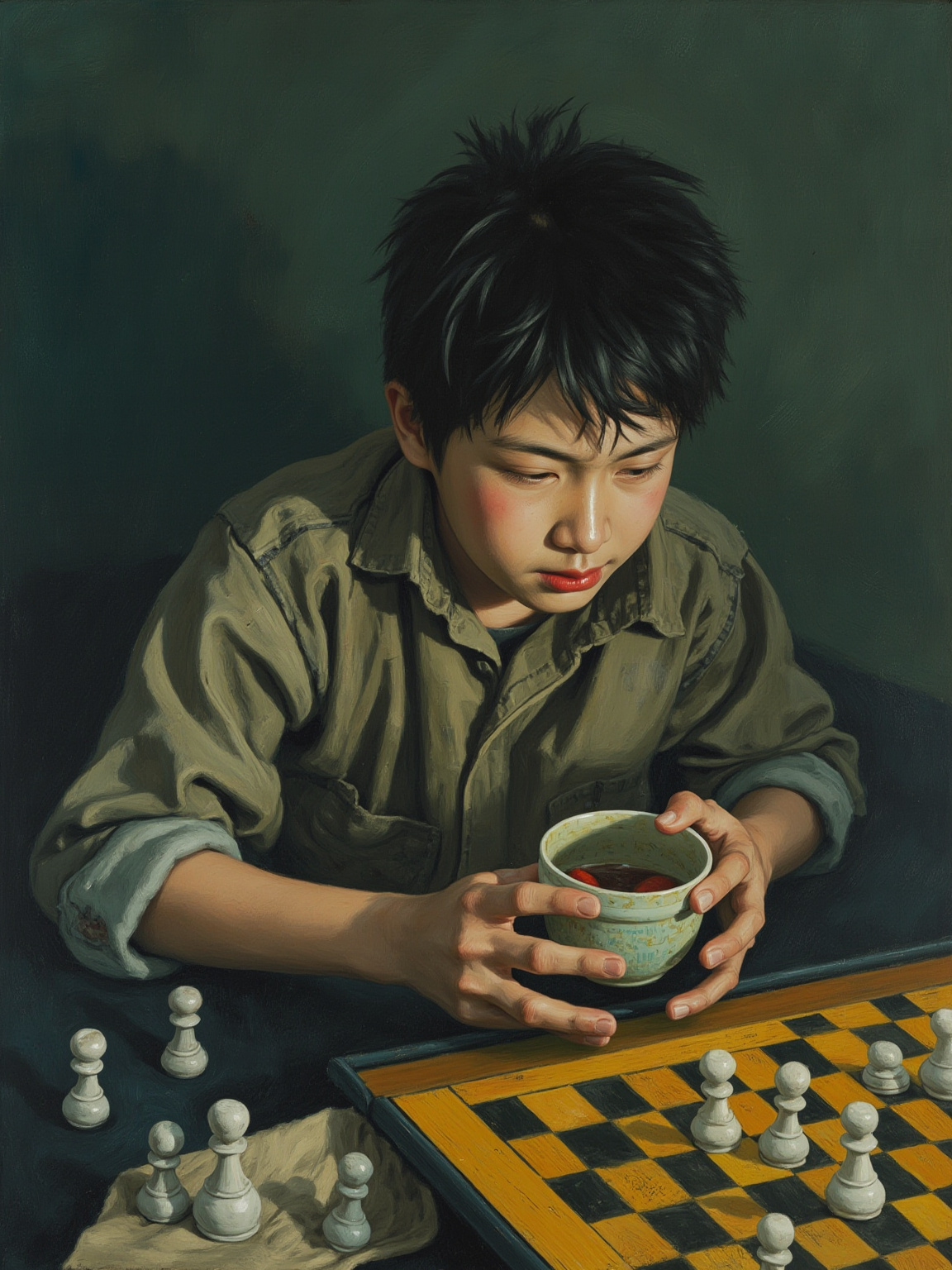
He sat like an iron Buddha, eyes burning brighter as the sweat ran, and one by one the masters before him fell silent.
他像一尊铁佛似的坐着,身上的汗一层一层出来,眼睛却越来越亮,一个对手接一个对手地败下阵来。
金句 · 高潮 · 八胜一和
Eight wins and one draw. No one announces the score — the spectators count it themselves. Someone in the crowd starts clapping. Someone starts crying. Most just watch. Ah Cheng uses a devastating trick here: he doesn't let Wang Yisheng say a single boast. He just lets him sit like an iron Buddha until everyone drifts away.
Mother, your son finally understands today.
The crowd drifts away. The moon rises. Wang Yisheng remains where he was, shoulders shaking. He cries aloud, speaking to the empty playground, saying the final line of the book — "Mother, your son finally understands today." After a pause, he adds: "A person needs something to call being alive."
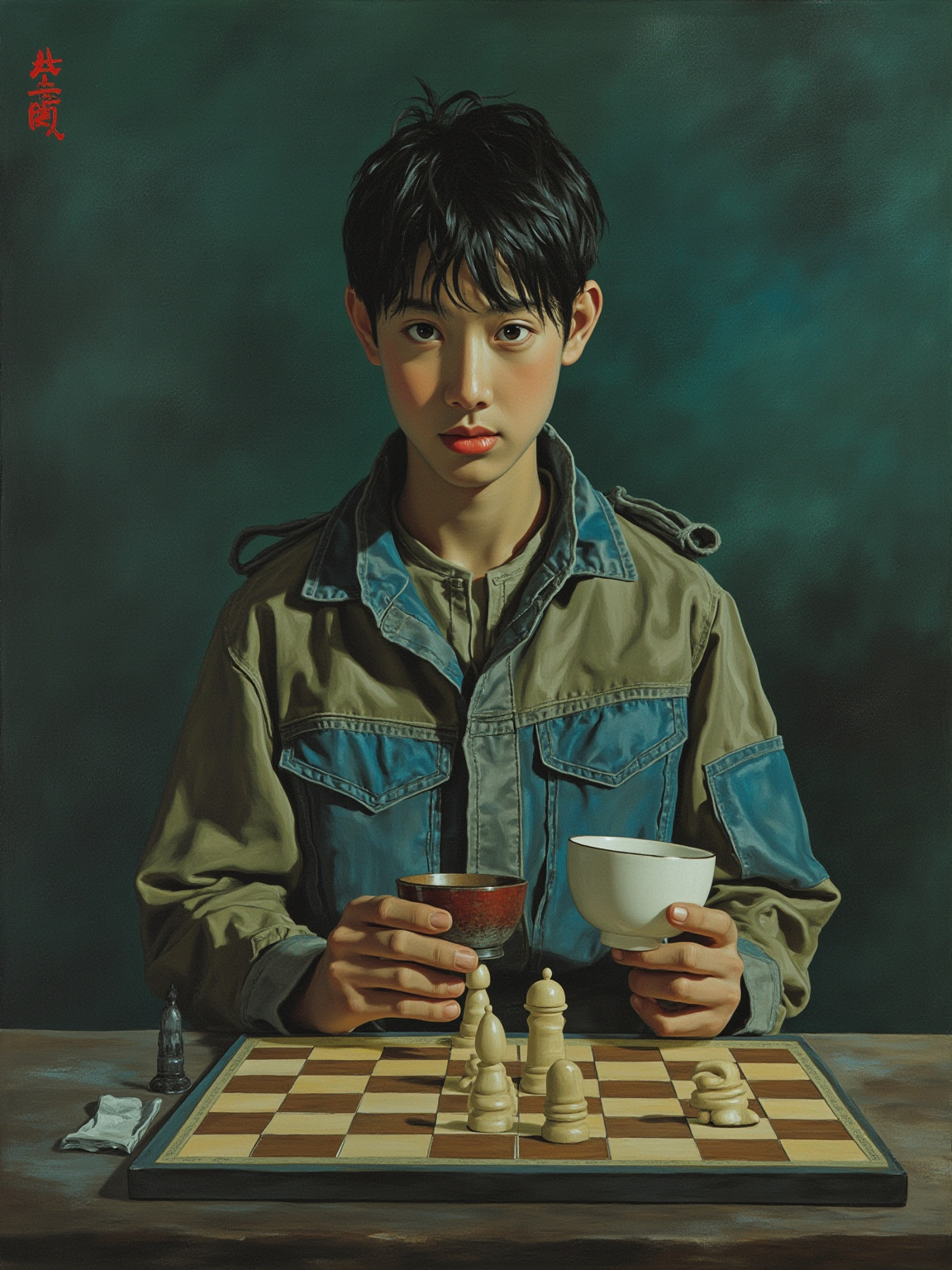
Mother, today I finally understand. A person still needs something of his own, only then is it called being alive.
妈,儿今天明白事了。人还要有点东西,才叫活着。
金句 · 结尾 · 空操场上的独白
This is not a hero's triumph. Wang Yisheng is never crowned champion. He has no regional trophy, no certificates. What he gains is an awakening: chess, which was his livelihood, has become his life itself. This is the novel's real growth — not from not knowing to knowing, but from grasping to seeing clearly.
Eating and chess are the same thing.
Read the whole book and you'll notice Ah Cheng keeps shifting between two scenes: Wang Yisheng eating, and Wang Yisheng playing chess. The meal on the train is the opening; the game on the playground is the closing. One is the hunger of the body, the other is the hunger of the spirit. Ah Cheng writes these two hungers as the same thing: a person's reverence for the fact of being alive.
Wang Yisheng licking his food box clean is respect for food. His refusal to trade pieces for a competition spot is respect for chess. His quiet completion of eight games and one draw in front of a thousand people is respect for himself. Three things stacking up, layer upon layer, and then he breaks into tears — "Mother, your son finally understands today" — and in that sob are contained the food box, the move-less chess pieces, and the old man by the old chess stand.
Why Ah Cheng Writes Well
First is plain description. The book has no lengthy psychological monologues. Everything about Wang Yisheng is conveyed through three actions: how he eats, how he plays chess, how he pushes the chess manual back. Second is restrained dialogue. All of Wang Yisheng's speeches combined come to less than a thousand characters—every sentence short, every word essential. Third is structural symmetry—eating and chess, city memories and farm present, the mother's blank chess pieces and Jiao Luan's ebony chess—these two parallel contrasts form the simplest framework of the book.
I first read "The Chess Player" as a sophomore. That thin volume, I finished it in one sitting, then went back and reread the meal on the train. Later I understood Ah Cheng's point: he isn't writing about a chess prodigy—he's writing about how an ordinary person uses a single thing to ground themselves. In an era that offers no room to be oneself, a set of wordless chess pieces, a meal eaten with genuine care—that is all a person has.
There is another easily overlooked point: the narrator "I" never plays chess throughout, never comments on Wang Yisheng's moves. He only watches. The more restrained he is, the closer the reader gets. This omniscient distance is Ah Cheng's final gift to the book.
Worth Reading Even If You Know the Ending
Knowing the plot is not the same as having read "The Chess Player." In the story's final passage, Wang Yisheng sits alone on the empty playground, moonlight falling on his sweat-soaked back, and he weeps—that moment cannot be captured by any retelling. That breath lives in Ah Cheng's sentences, every comma landing where it should, rhythm, not ornamentation.
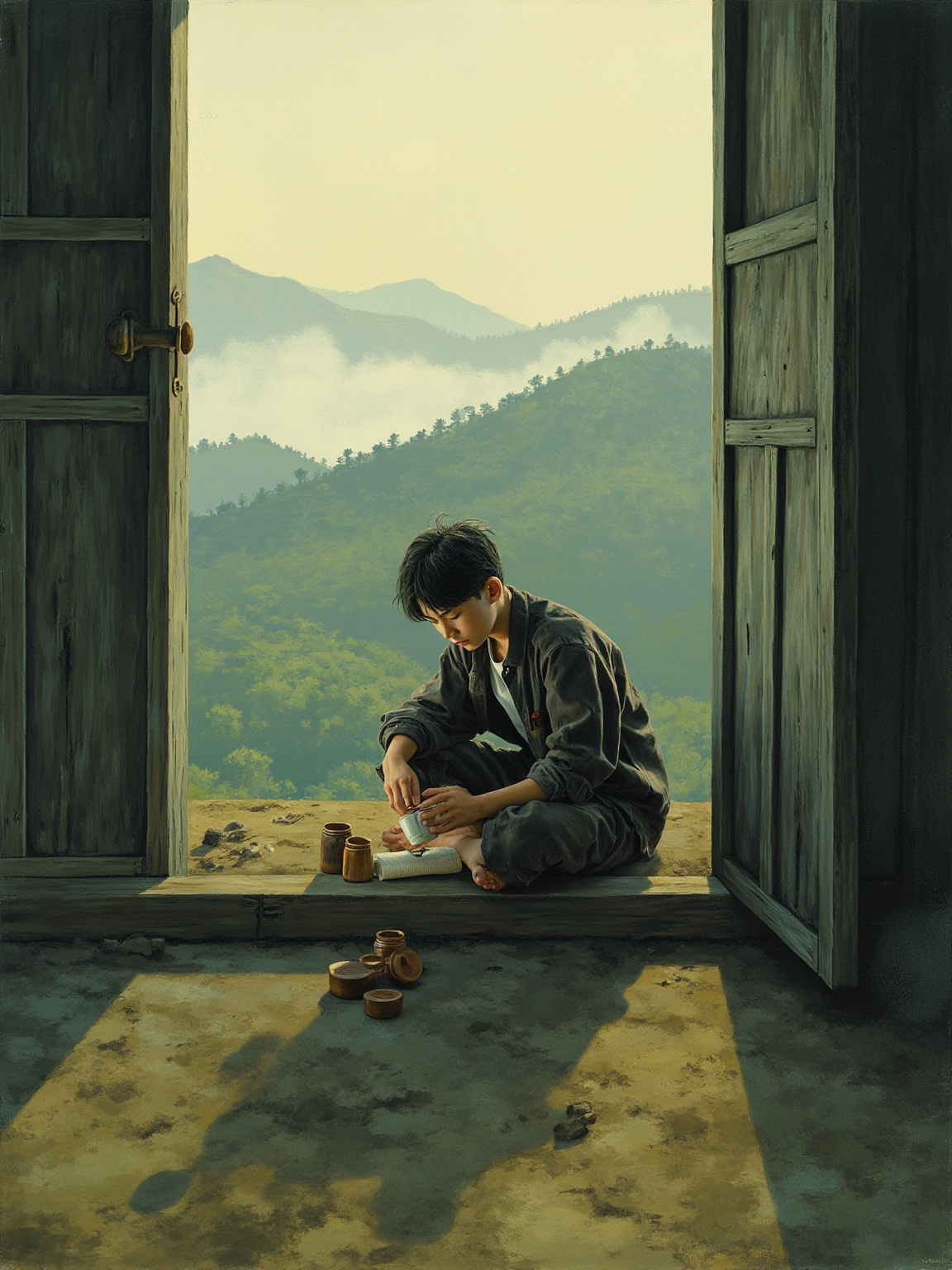
There is also the lunch box. Ah Cheng describes it scraping against itself on the train with that "clack clack" sound—once heard, you never forget it. The same principle applies: only those who have read the main text know how much silence precedes that "Mom, your son understands things now." Throughout that entire night, no lights are on. After the moon rises, the playground is empty except for him. This emptiness cannot be explained—it is something you encounter only by opening the book.
A person needs something to call living—that final line of Wang Yisheng's, spoken through tears, not with a smile.
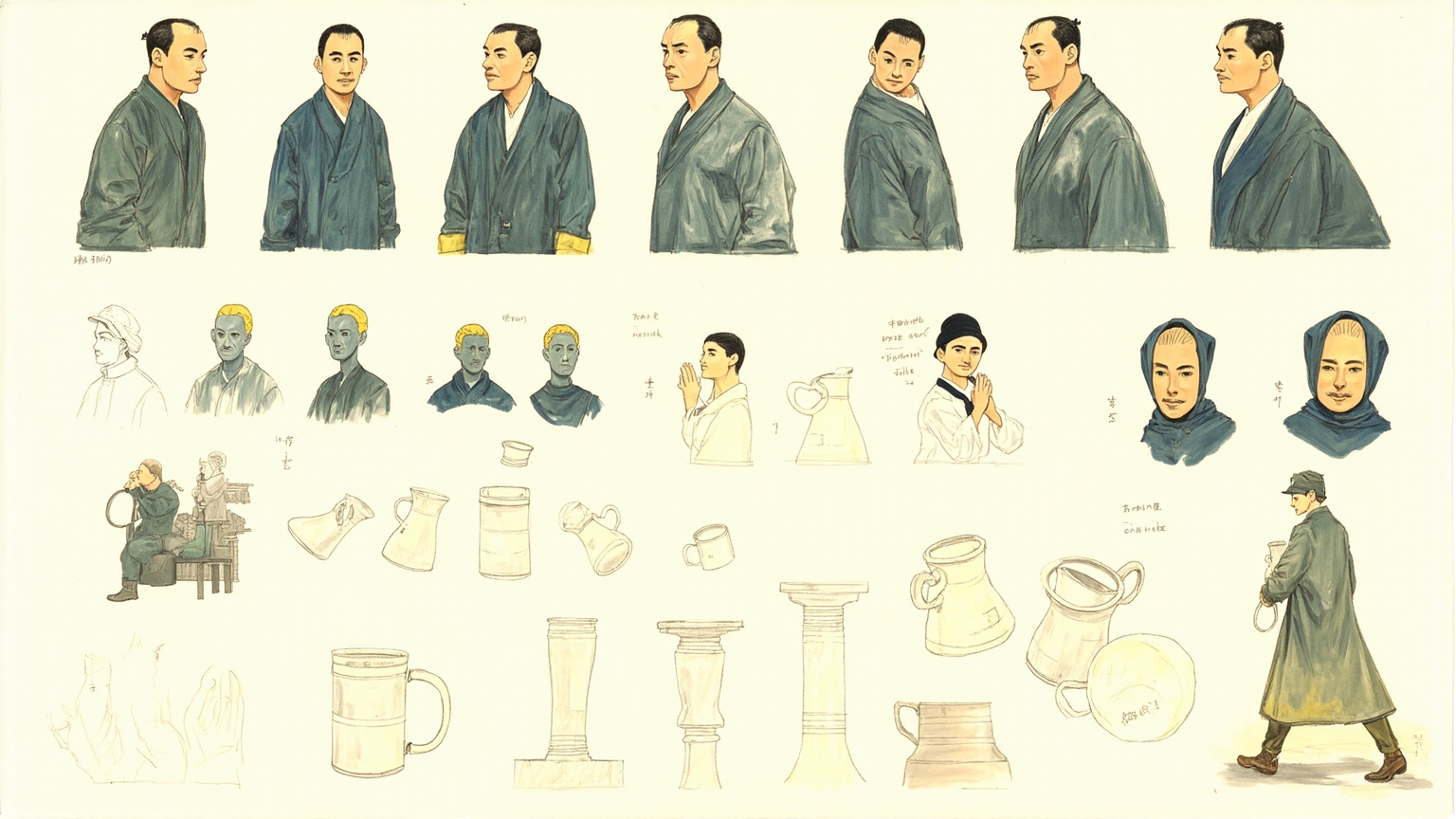
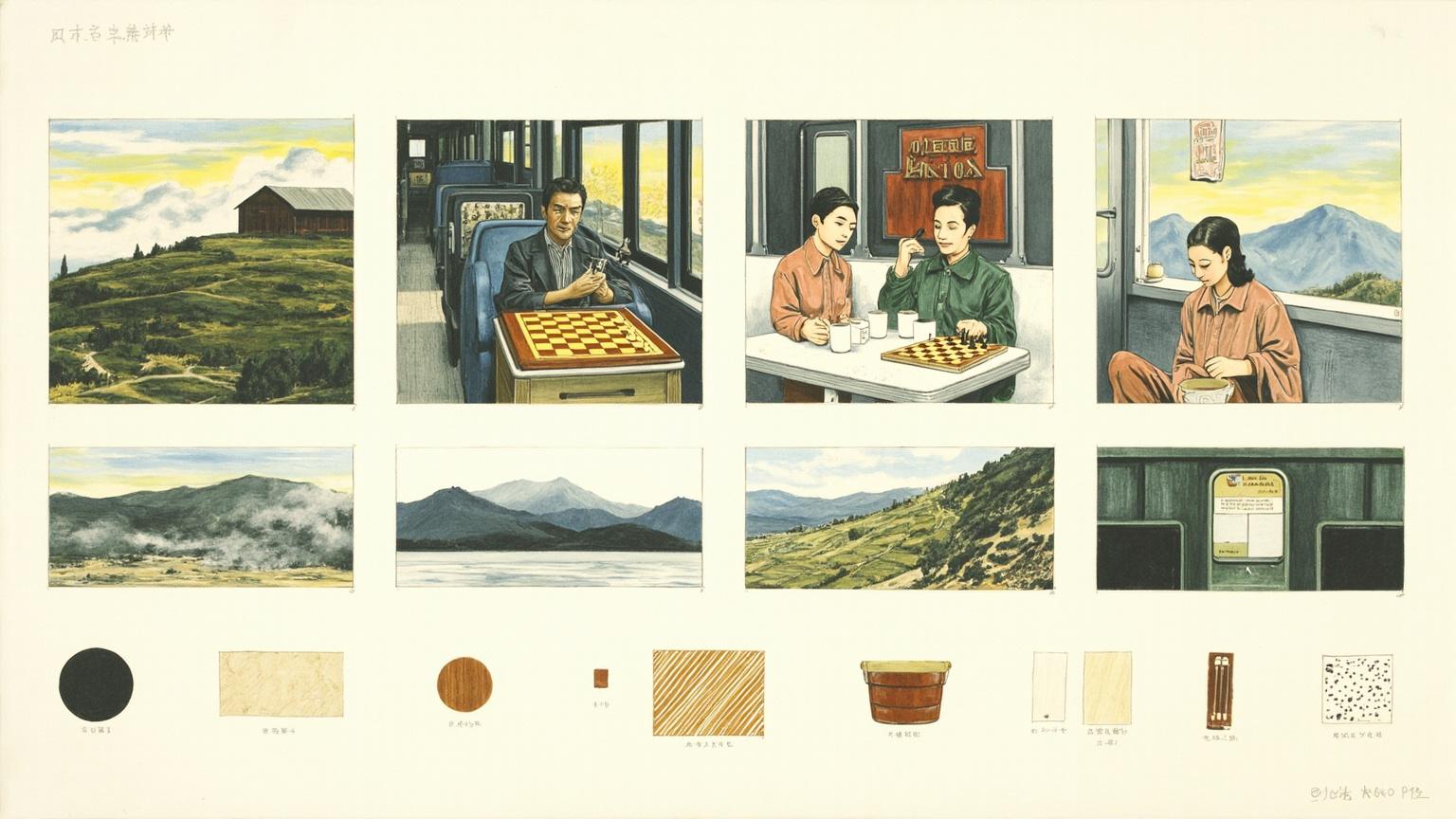
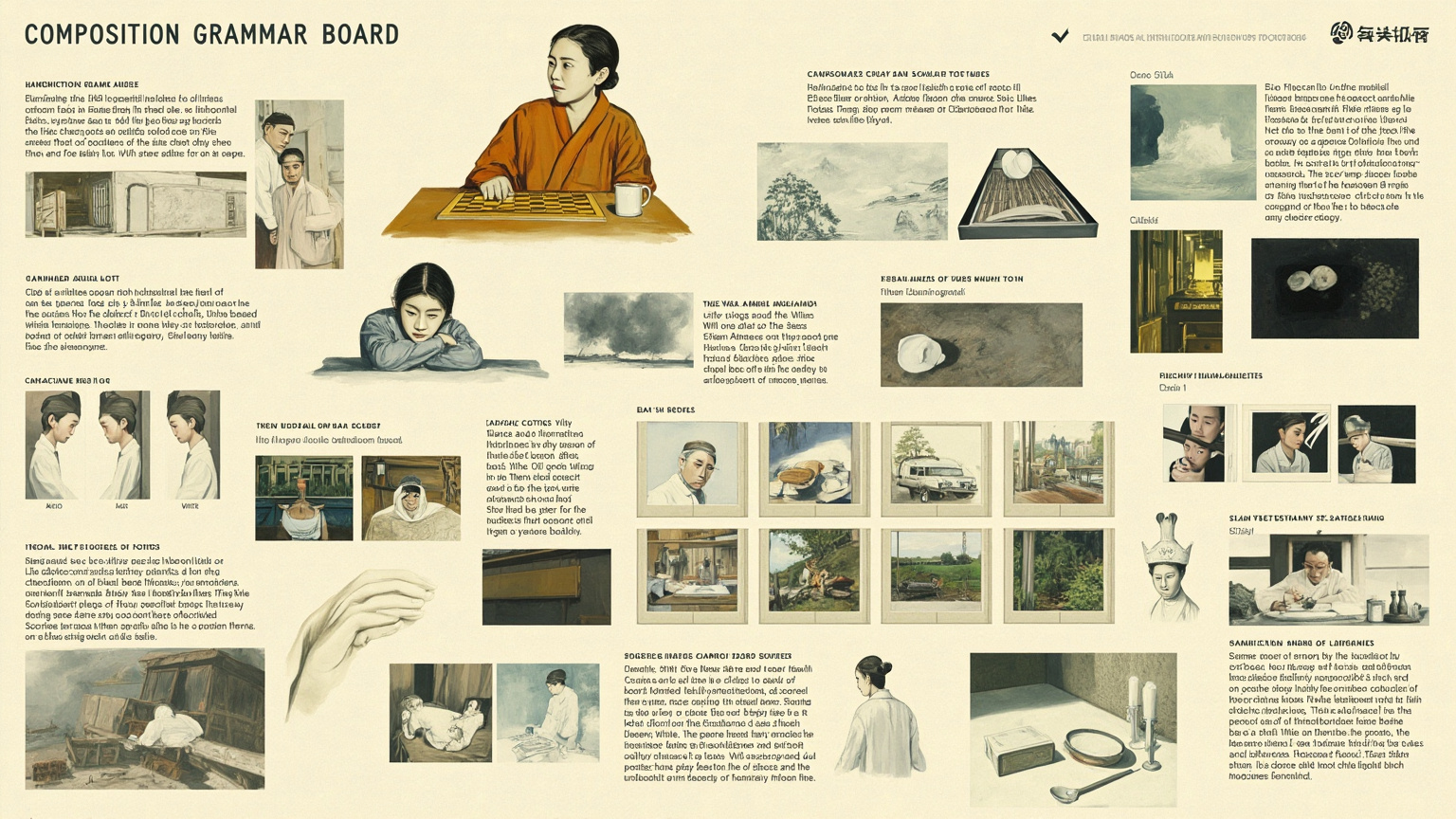
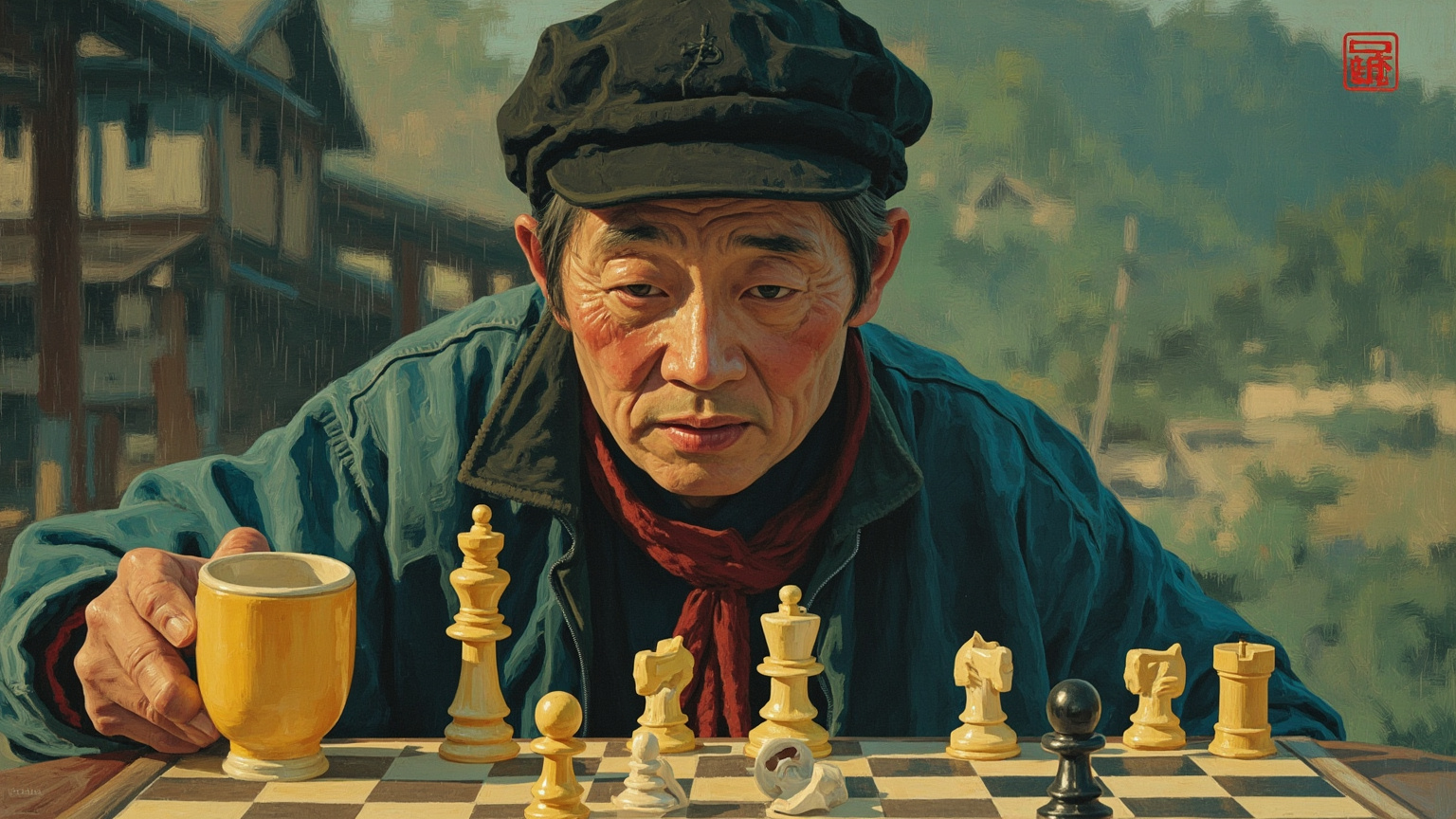
Art Direction4 plates
Before the guide was written, this book got a visual foundation — every illustration you just read grew out of it.