A love letter fifteen hundred years old, written along the path of a cloud
Text and illustrations produced by the pipeline

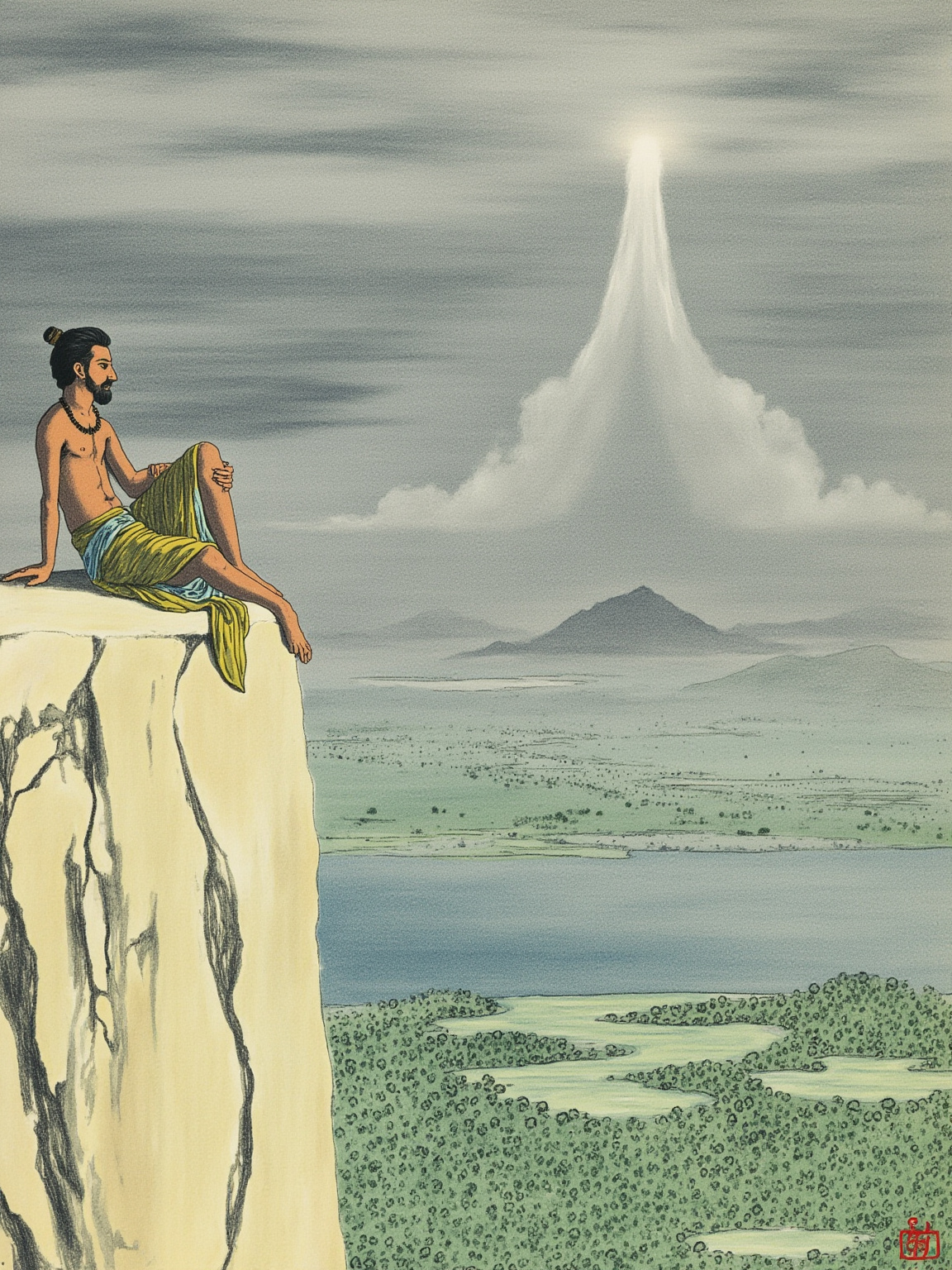
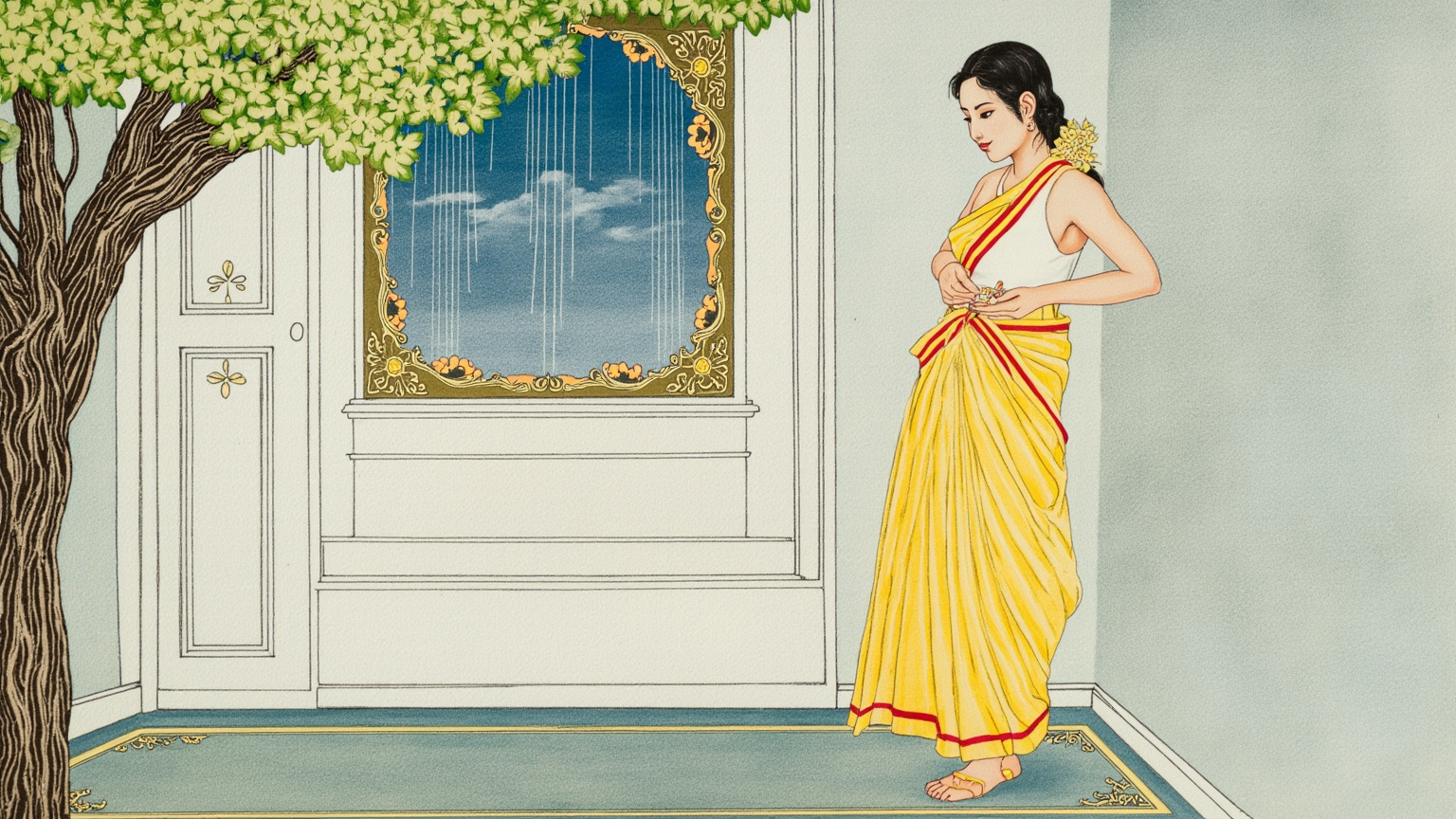
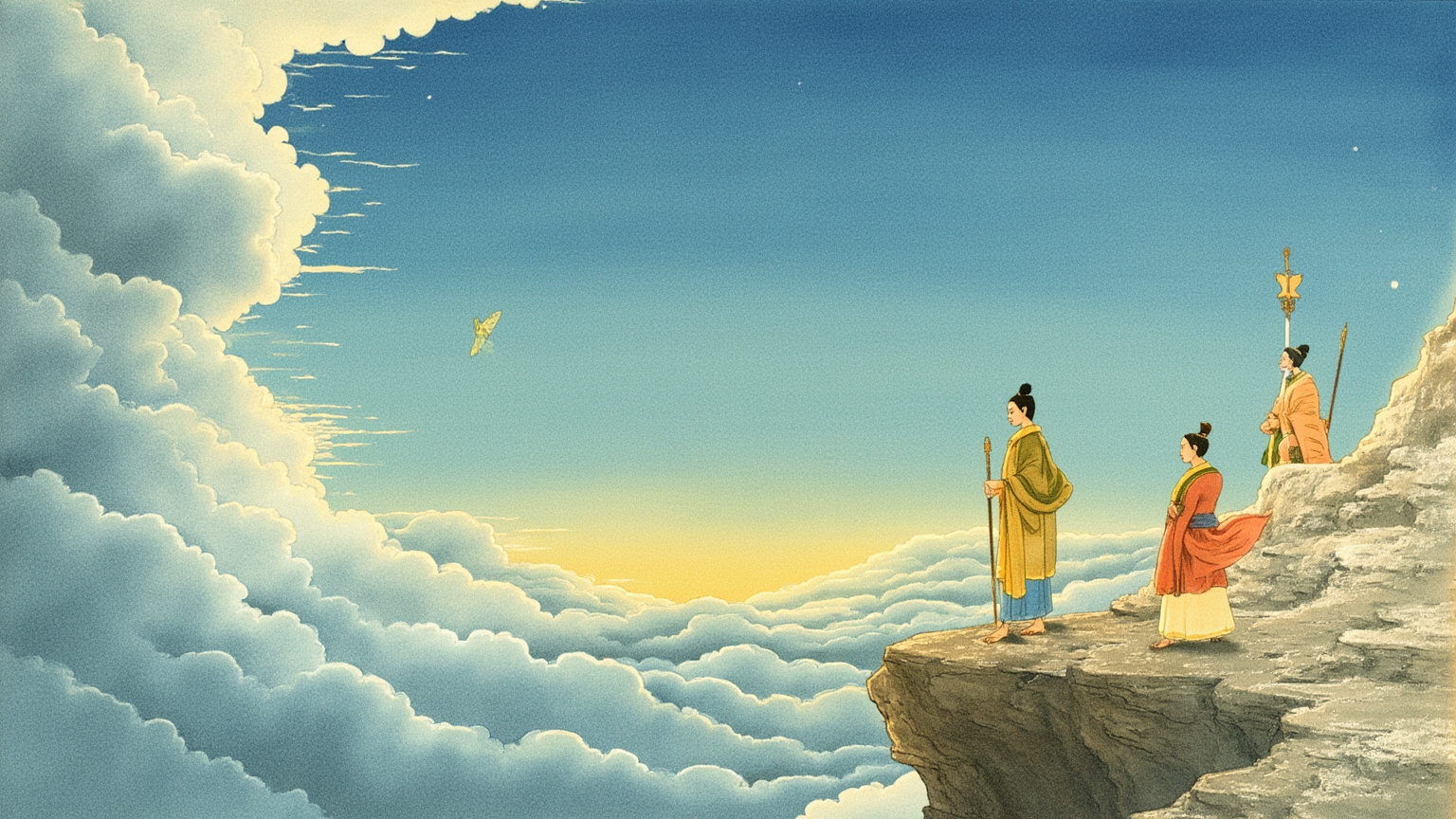
On Mount Ramagiri in central India, the rains have just begun. A minor attendant of Kubera's court, exiled here for a small offense, has already sat alone for twelve full months. He looks up and sees the season's first rain cloud drifting north — north, where his wife waits in Alaka, Kubera's own city. He calls out to the cloud: carry a message for me. Kalidasa's long poem opens on exactly that plea.
The Cloud Messenger — Meghaduta in the Sanskrit, literally 'the cloud as messenger' — is a long lyric poem by the classical Sanskrit poet Kalidasa, written around the turn of the fourth and fifth centuries. It survives today as just over a hundred verses. Kalidasa is not an unfamiliar name to Chinese readers, mostly through the play Shakuntala. But The Cloud Messenger is his purest lyric work: no dramatic conflict, no plot, only place names, rain, peacock cries, and color laid down line after line. Its standing in Indian literary history is singular — it founded the entire genre of messenger poems, which spawned more than a hundred imitations, from Wind Messengers and Crane Messengers down to court pastiches in the sixteenth century. Goethe's generation of European readers took it as the height of Eastern lyric poetry, because it unrolls the whole map of India into one long letter written in the rains.
Only three mouths speak in the whole poem. The first is the yaksha — a nature spirit out of Indian mythology, an attendant of Kubera's court, banished for a small fault to guard Mount Ramagiri alone for a full year. He is a geographer who can recite every road and city of northern India by heart, and also a husband gone half-mad with longing; he is the only one who ever speaks. The second is the cloud itself, conjured into a messenger — every 'you' in the poem is addressed to it, and it is both cloud and letter at once. The third is the wife, far away in Alaka. She never speaks; she only appears at the end, in her husband's imagination, fussed over across a thousand miles. She is where the poem's formal body-imagery lands most heavily — a convention of classical Sanskrit poetics, belonging to literary tradition rather than to any individual's desire. The poem belongs to longing, not to eroticism.


At the close, the yaksha turns suddenly gentle — he tells his wife, in turn, not to grieve too hard, not to let longing wear down her looks; the rains will end in the heat of late summer, and he will be home. That's the poem's final line, and its power isn't in 'I will come back' but in 'I am telling you, through a cloud, that I will come back.' The messenger hasn't even arrived yet, and the letter has already promised a date. Then Kalidasa simply stops. The poem ends there. Whether the cloud ever reaches Alaka, whether the husband ever really comes home — the reader is left to imagine it. This trick of the unfinished letter is a textbook move of kavya poetics, and far sharper than writing the actual reunion would have been: it leaves the whole cloud-road suspended at the fullest moment of hope.
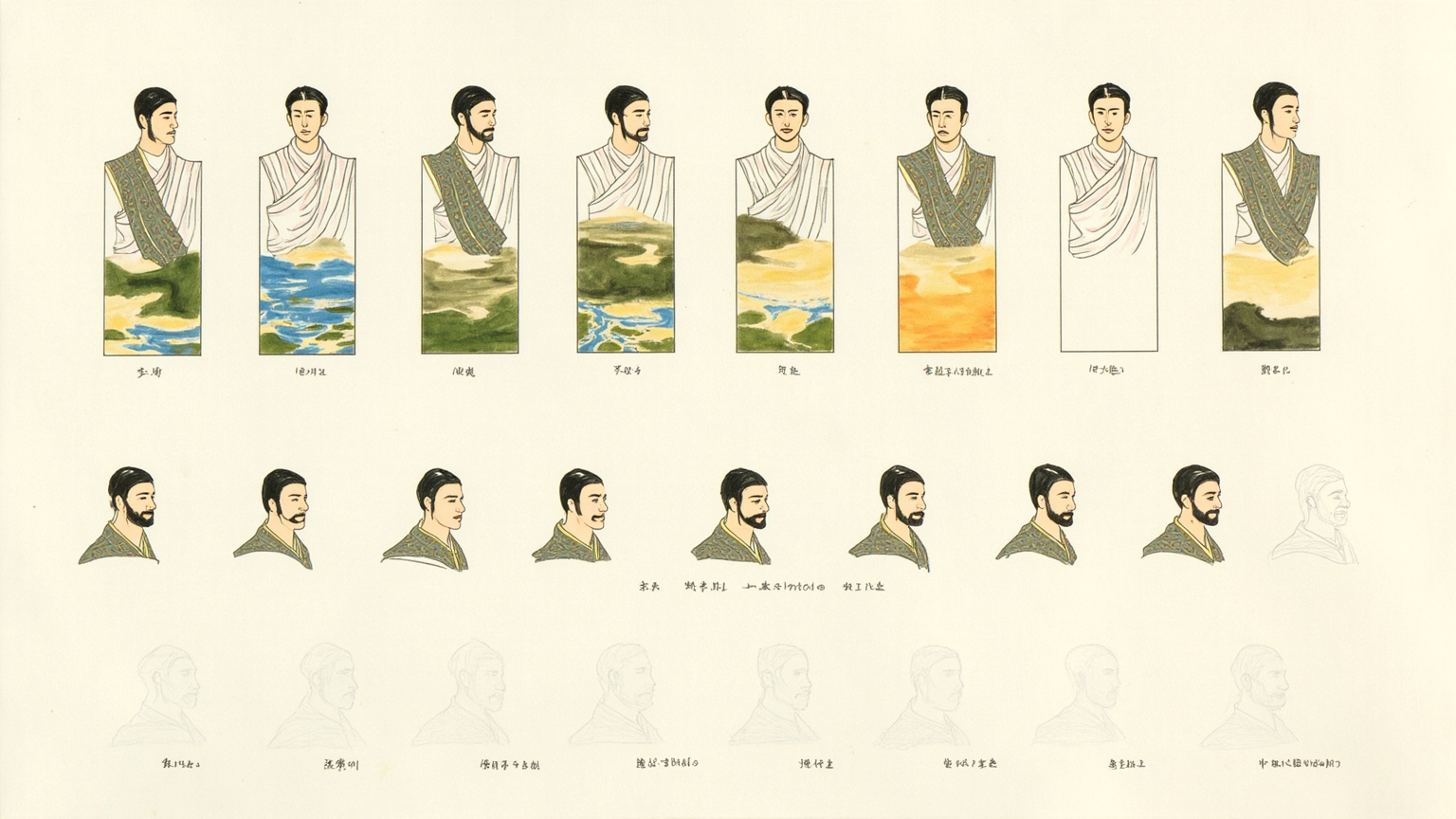
Before the guide was written, this book got a visual foundation — every illustration you just read grew out of it.
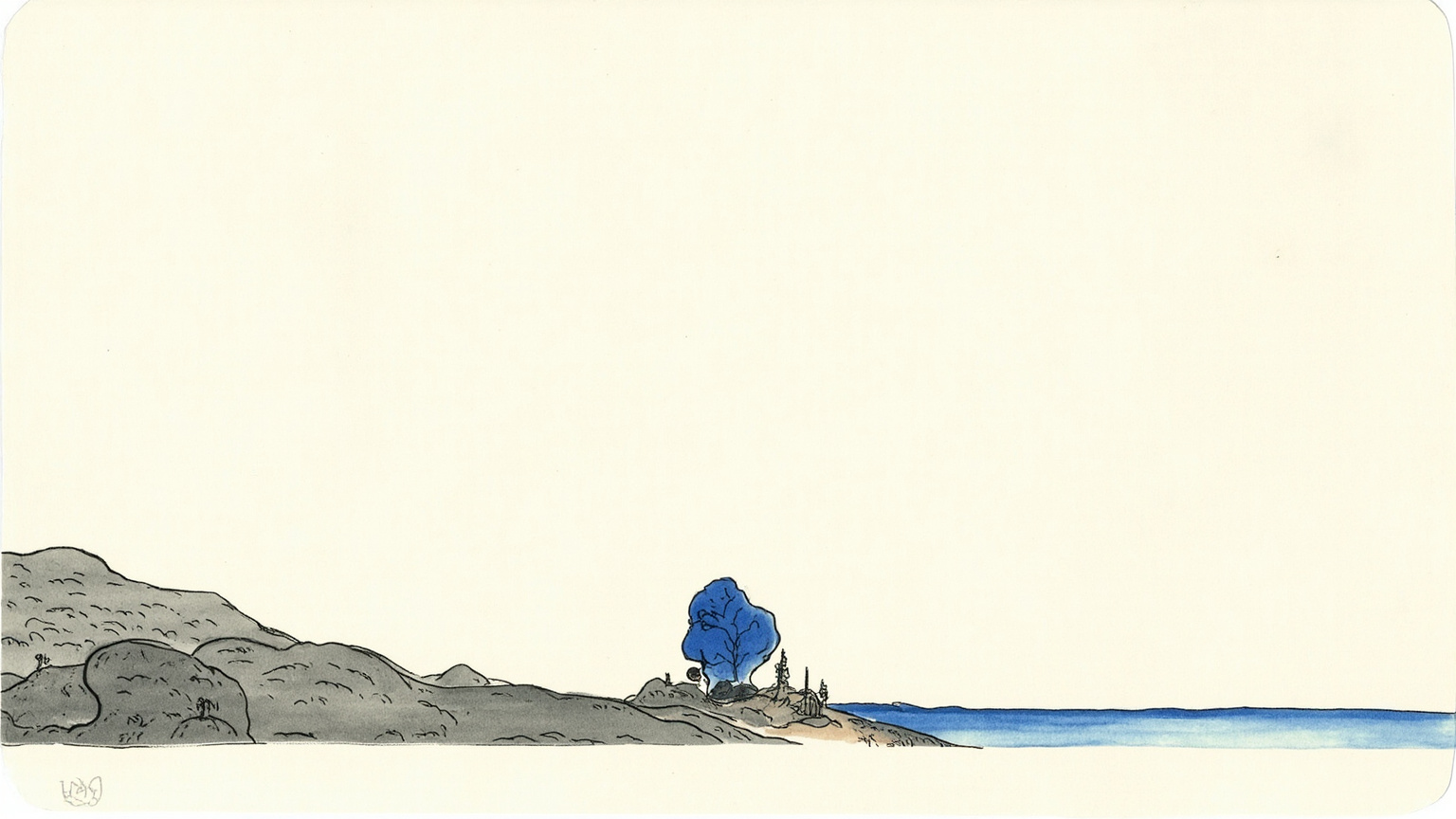
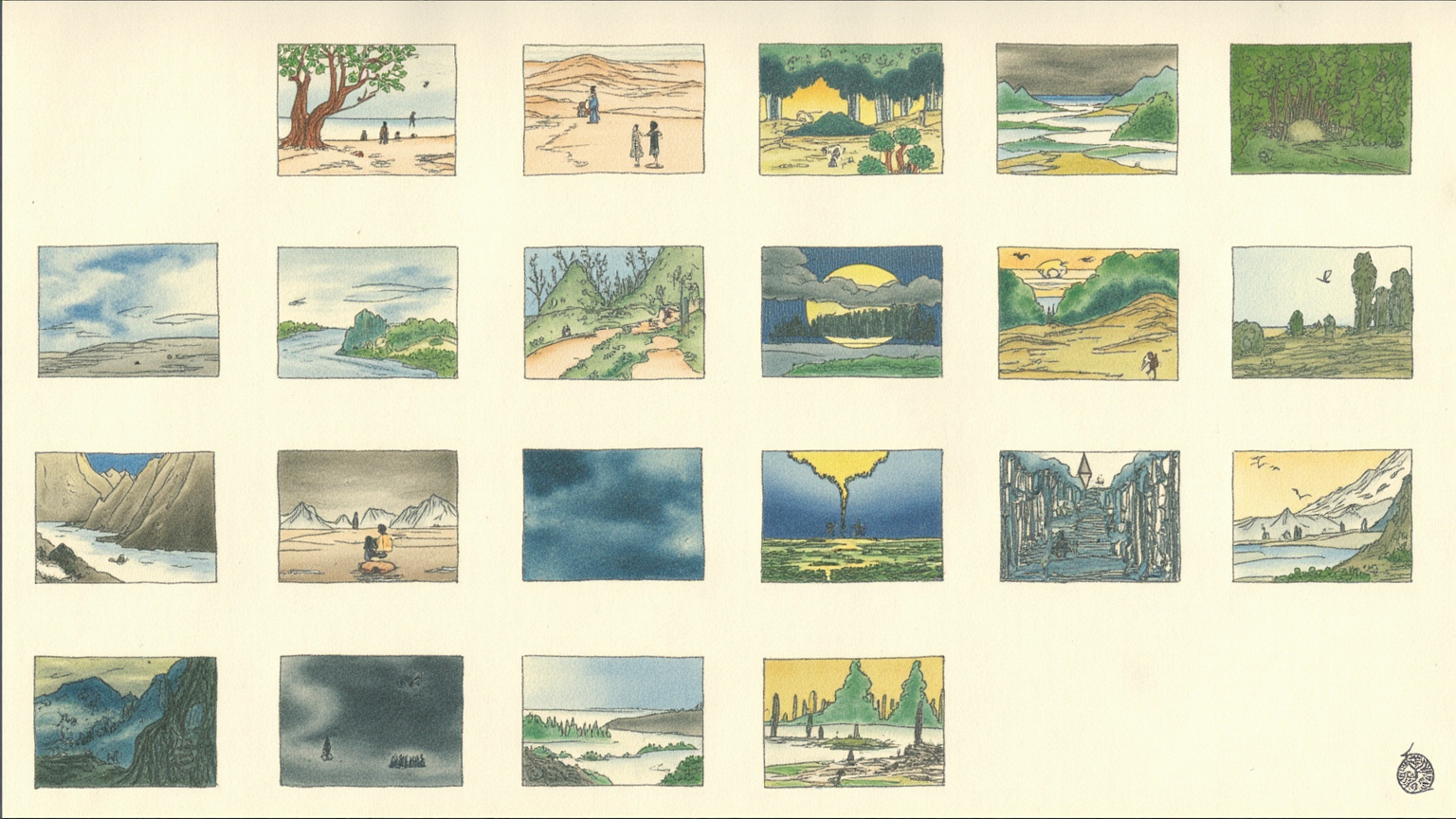
The poem drops the reader straight into the scene: rainwater pooling on the cliffs, peacocks fanning their tails in the forest, deer calling for mates somewhere off in the distance. The attendant sentenced to a year on the mountain has made it to the twelfth month, and the rain clouds have finally come. He watches one drift north and his eyes fill — not with self-pity, but with the thought of his wife, sitting alone in Alaka, staring at that same northern sky. He calls out to the cloud: you're going that way anyway, carry a word for me. What makes this opening work is the plea itself — a minor heavenly servant, already humbled by a small transgression, lowers what dignity he has left to beg a cloud to do what he cannot. The rains have barely started, and the whole poem already knows where it's headed.
Then the yaksha starts giving directions, like a guide who knows the north by heart, ticking off everywhere the cloud will pass. First, at the foot of Ramagiri, drink the mist off the mountain streams and let its eyes rest on the shrines scattered through the hills. Then over Mount Mandara and into Ujjain, the former Gupta capital, with its famous bell tower and the Shipra river running through it. Further north, past the city of Gaya, neighbor to Bodh Gaya, where the smoke of solemn rites is already rising. On the surface this reads like a gazetteer, but what it's really writing is longing — every place name comes with its own monsoon color attached. Ujjain's bell tower turns dark gold in the rain; the Shipra rises high enough to drown the landing steps; the incense smoke at Gaya goes damp with mist. It was only reading this section that I understood: he is seeing the north he once walked through again, through the cloud's eyes — the cloud's flight is his own journey, replayed.
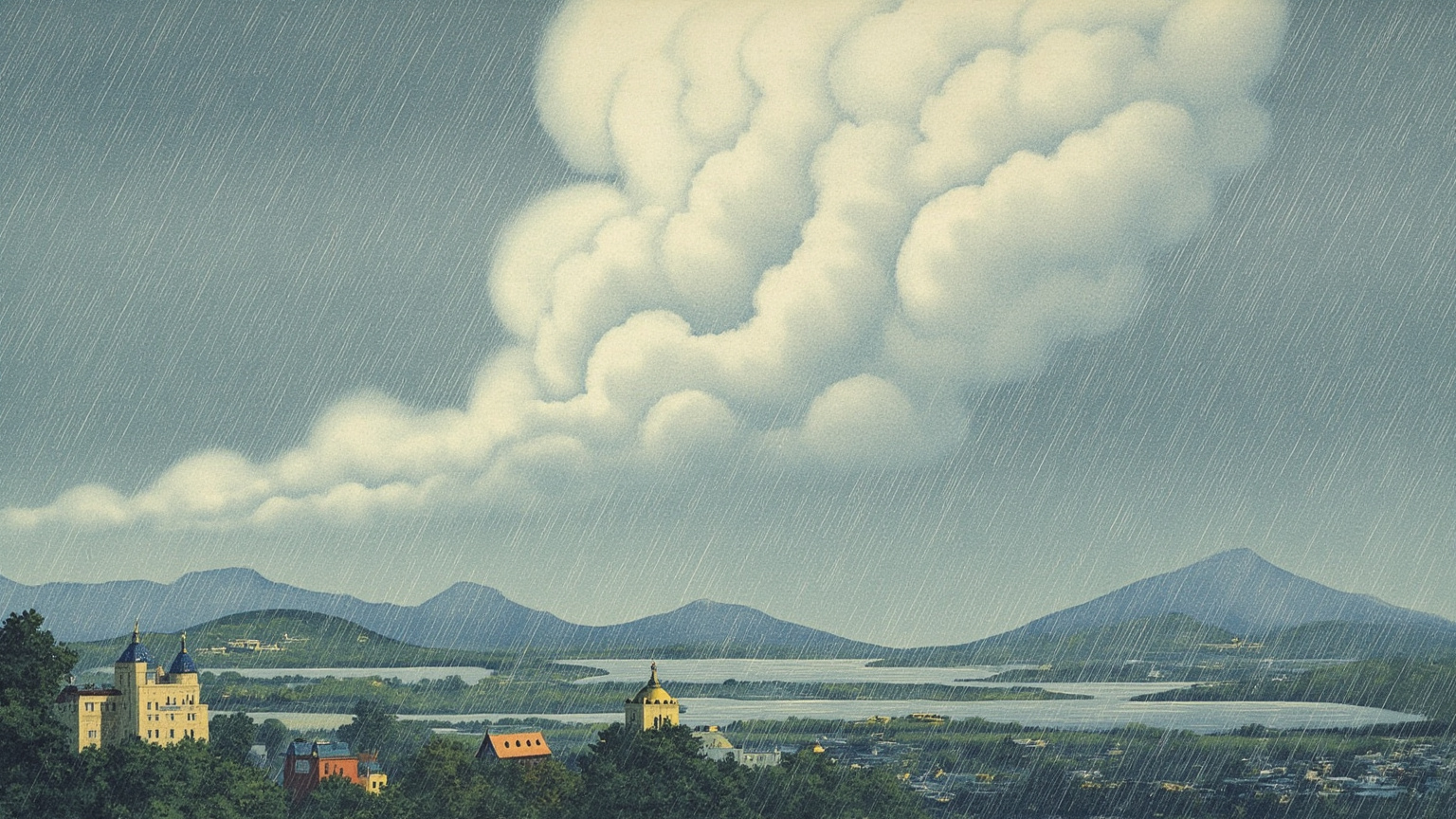
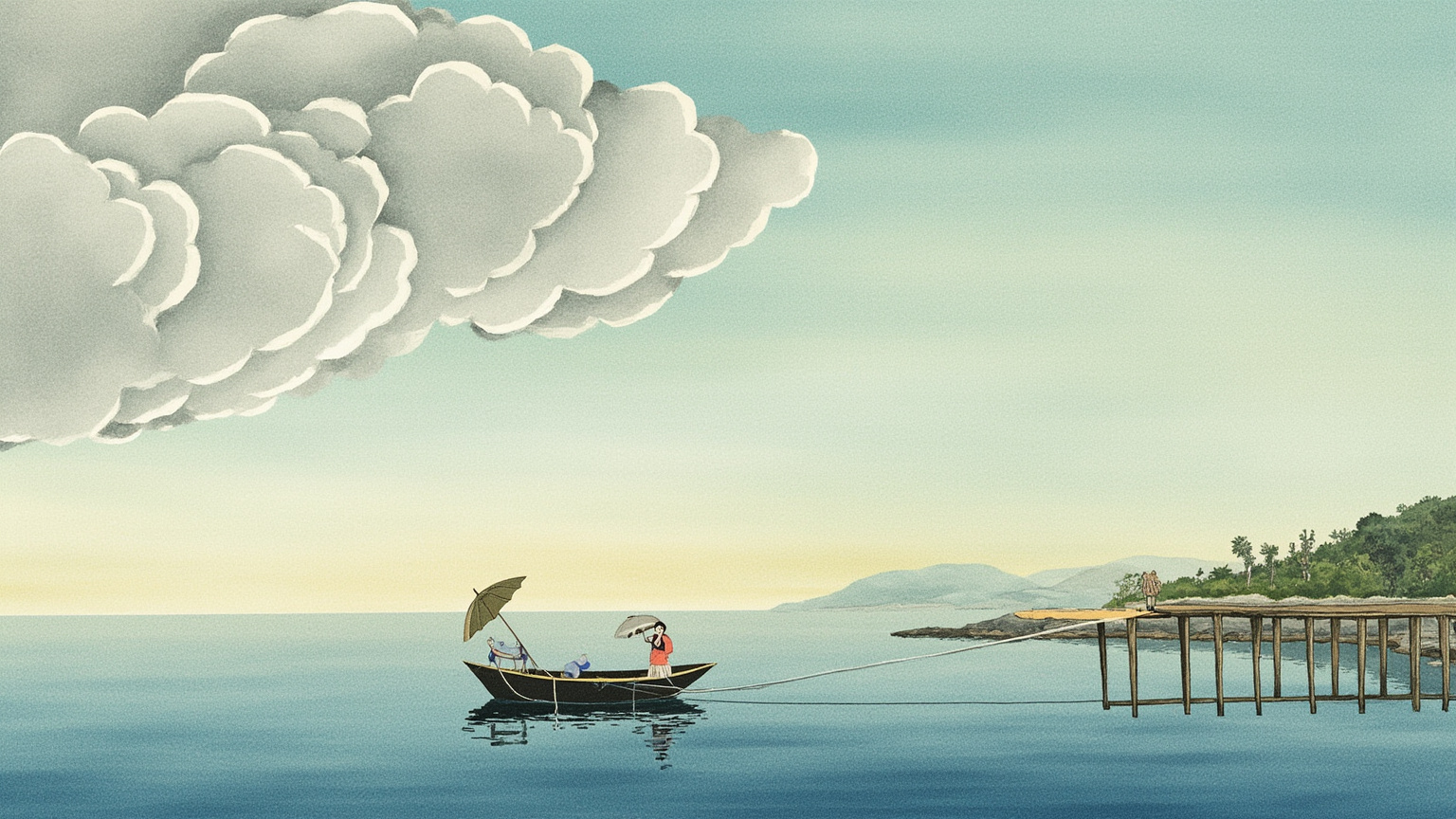
The cloud flies into the rain forest at the heart of central India. The yaksha tells it: cross this old-growth forest, where the peacocks are calling for mates; the monsoon river has risen over the ferry steps, and the women who mind the boats stand under umbrellas waiting for passengers — each of them keeping her own absent someone tucked away inside. What makes this stretch so good is its wetness: the whole Indian monsoon compressed into mist, mud, rising water, lightning. As the yaksha calls out directions, he keeps slipping in the small private worries of lovers along the way. He isn't describing scenery. He is writing the fact that everyone, all through the rainy season, is waiting for the same thing — word from the north, a return from the south. The cloud just happens to pass through all that waiting.
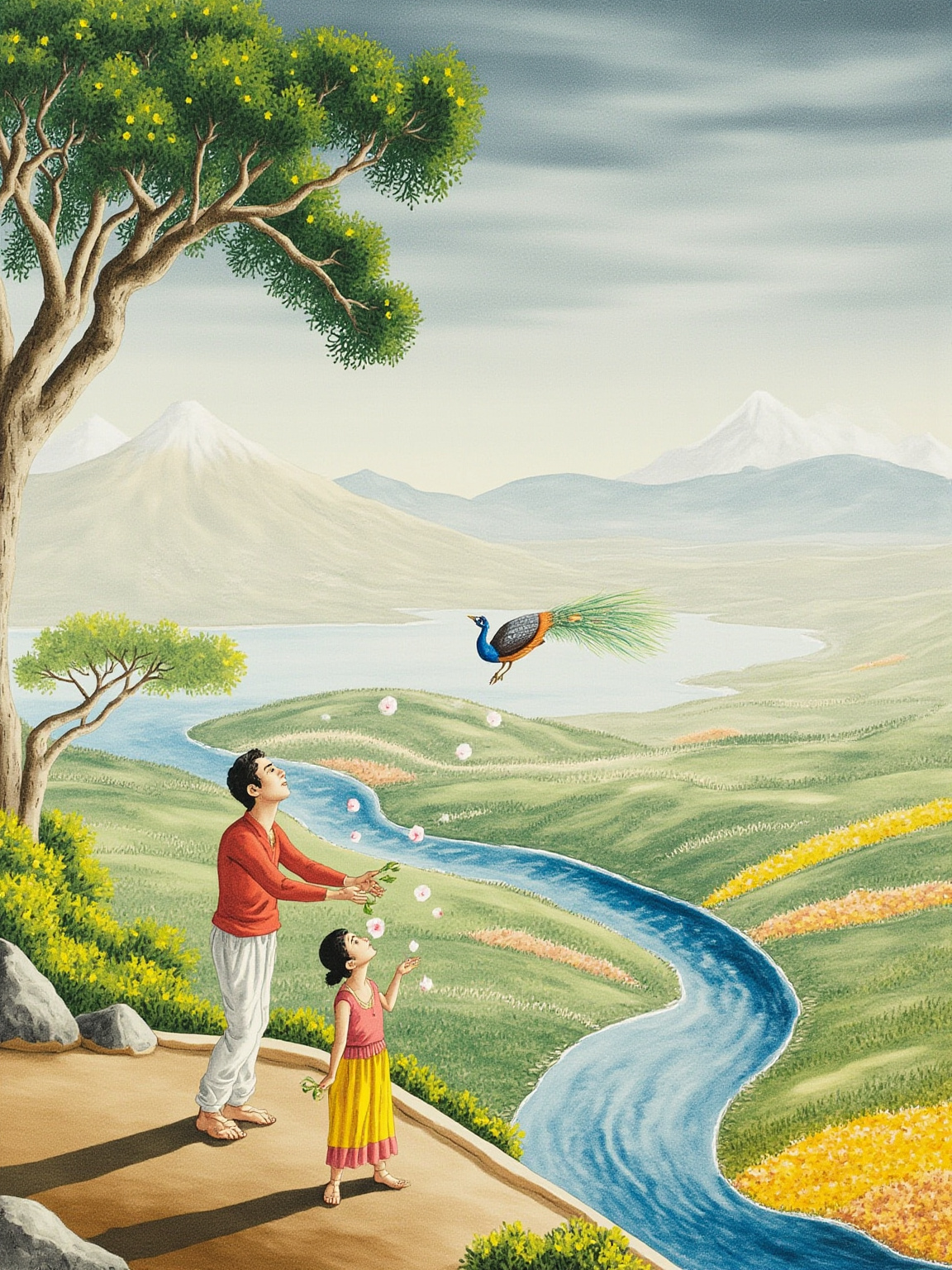
Further north lies Mathura, called 'the flower country' in the poem. Boys and girls race each other along the footpaths after the rain; a girl climbs a flowering tree to gather a branch, and a boy looks up to catch what she throws down. Beyond that comes a snow-rimmed range where the monsoon cloud, for the first time, has to reckon with snow. It climbs on, passing the far outline of Kubera's pleasure gardens, catching sight of the snow peaks of Mount Kailasa in the distance. The change of pace here is worth noticing: from the humid, flower-choked heat of central India to the cold white glare of the north, the whole cloud-road cuts India along its length, taking the reader from the plains up to the court of heaven.
Classical commentators split the poem into two halves: the first, the Former Cloud, covers the journey; the second, the Latter Cloud, has the yaksha speak directly to his wife through the cloud, as though the cloud were already hovering over Alaka. Tell her, he says, that the tree in her lonely courtyard must be flowering by now, that the sash at her waist has surely gone loose, that her eyes must be red from staring north at the clouds every evening. These formulaic descriptions of the body belong to the rhetorical convention of Sanskrit kavya — a literary tradition worth naming rather than transcribing line by line. What moves the reader here isn't the convention itself but the tone: he suddenly stops giving directions and starts rambling, repeating himself. The geographer disappears, and what's left is a husband who has forgotten he's supposed to be writing a poem.
Strip away the love-poem shell, and what The Cloud Messenger is really doing is painting India as one long letter written during the rains. The south-to-north axis from Ramagiri to Alaka, up toward the Himalayas, would be nothing but a line on a geographer's map — Kalidasa turns it into the path a cloud flies. Every stop extends the longing a little further; every stretch of mist thickens it. Love here doesn't depend on the two of them meeting — it depends on tokens and messages, on a husband in the south and a wife in the north brushing past each other through a cloud. The whole visual repertoire of the monsoon — slate-gray clouds, lightning, rain-washed forests, swollen rivers, peacocks fanning their tails — gets tied to a single image: the cloud is messenger, letter, and the shadow of the man coming home, all at once.
It turns India, fifteen hundred years ago, into a long letter drifting slowly across the whole country in the rains.
It founded a minor genre all on its own — the messenger poem. Everything that followed, from Wind Messengers to Crane Messengers down to sixteenth-century court imitations, walks in its footprints. Kalidasa manages a rare combination here: extreme minimalism and extreme abundance in the same poem. The minimalism is structural — one man, one cloud, one absent woman. The abundance is in the detail — every stop along the way is given its own sound, color, texture, myth, and local custom. Literary restraint holds up the skeleton; geographic abundance fills in the flesh. You can't skim this kind of poem — skim it and you lose the wetness of the rains. And you can't read it with a map open either — do that and you lose the lightness of the longing.
So much for spoilers. What you don't know yet: reading the line about the Shipra rising, you will suddenly catch the smell of an Indian monsoon fifteen hundred years gone. Listening to the yaksha ramble on to the cloud about his wife's body, you will realize, at some point you can't quite mark, that you've started hearing him as someone from your own family. And reading the poem's last word — return — you will find yourself still waiting for that cloud to come back. That's what no summary can give you: the rhythm of the actual text, softened all the way through by the rains, letting a longing fifteen hundred years old settle onto your shoulders today.