The Devil's Pool (La Mare au Diable) · Companion Guide
魔沼
一个鳏夫犁过贝里的秋天,一个牧羊女在田埂上认出他的同路人——犁沟与婚宴之间,便是整部法国乡土牧歌的弧线。
A Plow, and a Family Follows
September in Berry, and the sun has not yet cleared the treetops when Germain is already standing on the furrow. He presses the plow down an inch, and the strap bites into the old ox's shoulders; another inch, and the earth turns over, showing dark, wet soil underneath. Three children—Solange, Pierrot, and the youngest—follow behind the furrow gleaning wheat ears, none of them speaking, only the small sound of feet in the dirt.
This is when the old father-in-law arrives, trouser legs rolled to the calf, dew still clinging to his beard. He stands at the edge of the field for a while, watching how his son-in-law guides the plow, watching him glance back now and then to check on the children, before he finally speaks: you're still young, find another wife—there's a suitable widow in the next village.
What Kind of Book Is This
George Sand was a woman, and she wrote this book in the prime of her life. In mid-nineteenth-century Paris, the literary world had its eyes fixed on salons, on the city, on romance. She turned instead toward Nohant, the countryside where she lived, and made a widower's autumn of plowing into a novel.
The Devil's Pool appeared in 1846, and later generations came to see it as the founding work of French rural realist pastoral fiction. Together with Little Fadette in 1849 and François the Waif in 1850, it forms what is called Sand's pastoral trilogy, and this book is the first of the three. Put another way, the half of France that lay outside Paris had barely existed in literature's field of view before this. Sand was the one who turned the lens toward the fields.
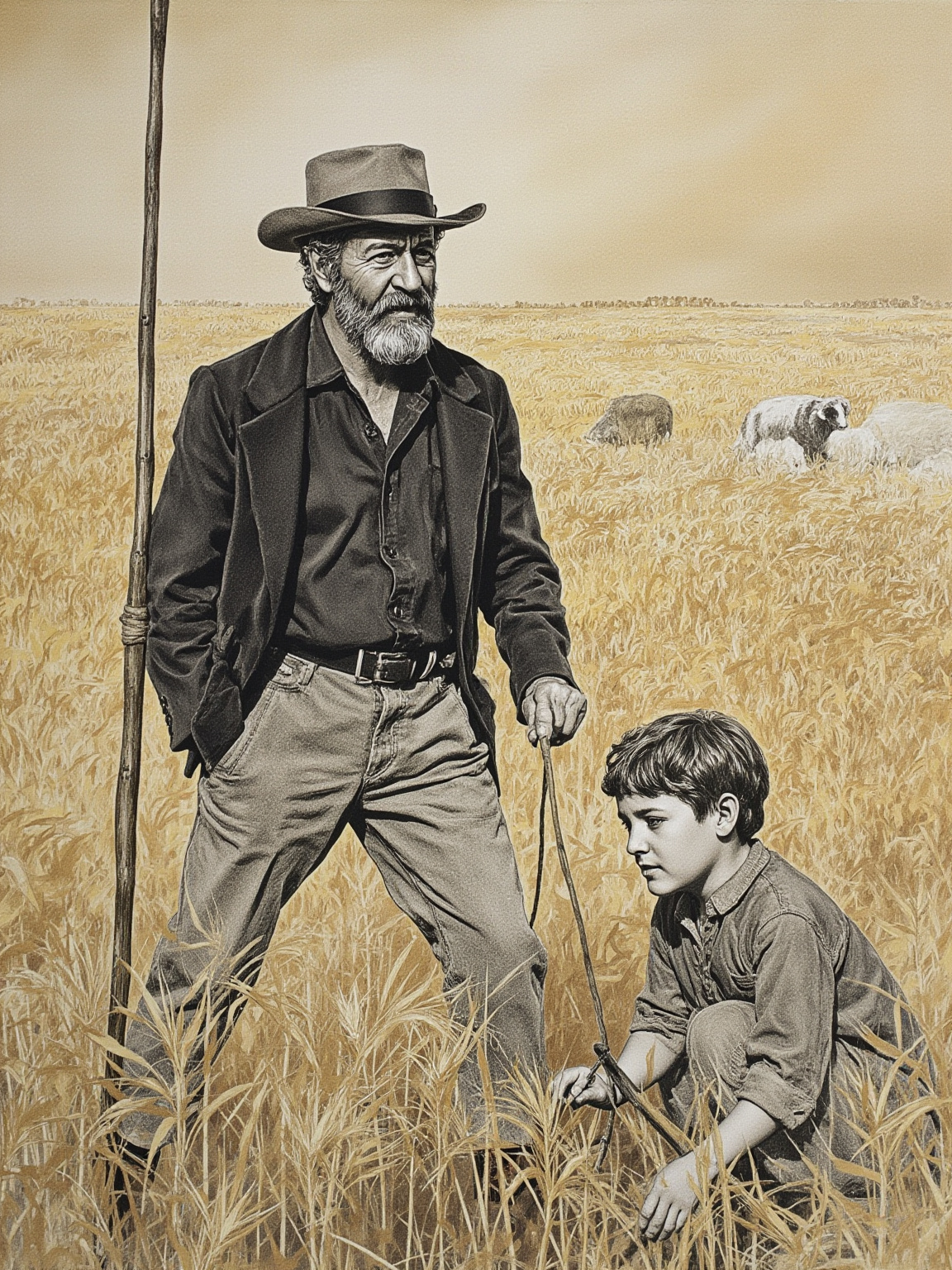
The earth is the friend of him who works it with respect.
大地从不辜负那些懂得敬重她的人。
金句 · 开篇 · 田垄上的扶犁人
The Cast: A Silent Man, a Stubborn Girl, a Talkative Old Man
Germain is thirty. His wife has been gone three years, and the household needs a woman who can look after the children. He is in no hurry; it's his father-in-law who is. Marie is about fifteen or sixteen, living alone with her widowed mother, earning her keep by tending a neighbor's sheep. She is sharp, stubborn, sharp-tongued but soft-hearted, and her greatest fear is being married off by her mother without a say in it. Along the road there is also an old carter, talking so much he might as well be a walking county gazetteer, unable to meet a soul without launching into a story or two.
Three figures come together: a silent man, a wary girl, a talkative old man—plus three children running loose in the fields—and that makes up the little party crossing the Berry countryside.
On the Road: Two Strangers and a Crying Child
The day Germain sets out with his eldest daughter Solange, she cries the whole way, wanting her mother, wanting to go home, and Germain has no idea what to do. At the edge of a field, Marie comes toward them driving a small flock of sheep, and Solange quiets down at once, staring at the animals. Marie breaks off a piece of bread for the little girl and wipes her nose clean.
So the three of them walk the same dirt road together. Marie is wary at first—a single man traveling with a child is not the sort of thing the countryside lets pass without talk—and Germain is stiff too, afraid of overstepping with a girl he barely knows. At noon they rest under an old elm and share a basket of dark bread and cheese, and Solange finally falls asleep leaning against Marie. Only then does Germain really look, for the first time, at this girl who tends other people's sheep.
The best part of how Sand writes this scene is that she never lets either of them say I like you. She writes only how a loaf of bread gets broken, how a little girl shifts to lean against a different shoulder, how the silence between two adults quietly grows shorter. Traveling the same road is already doing the matchmaking.
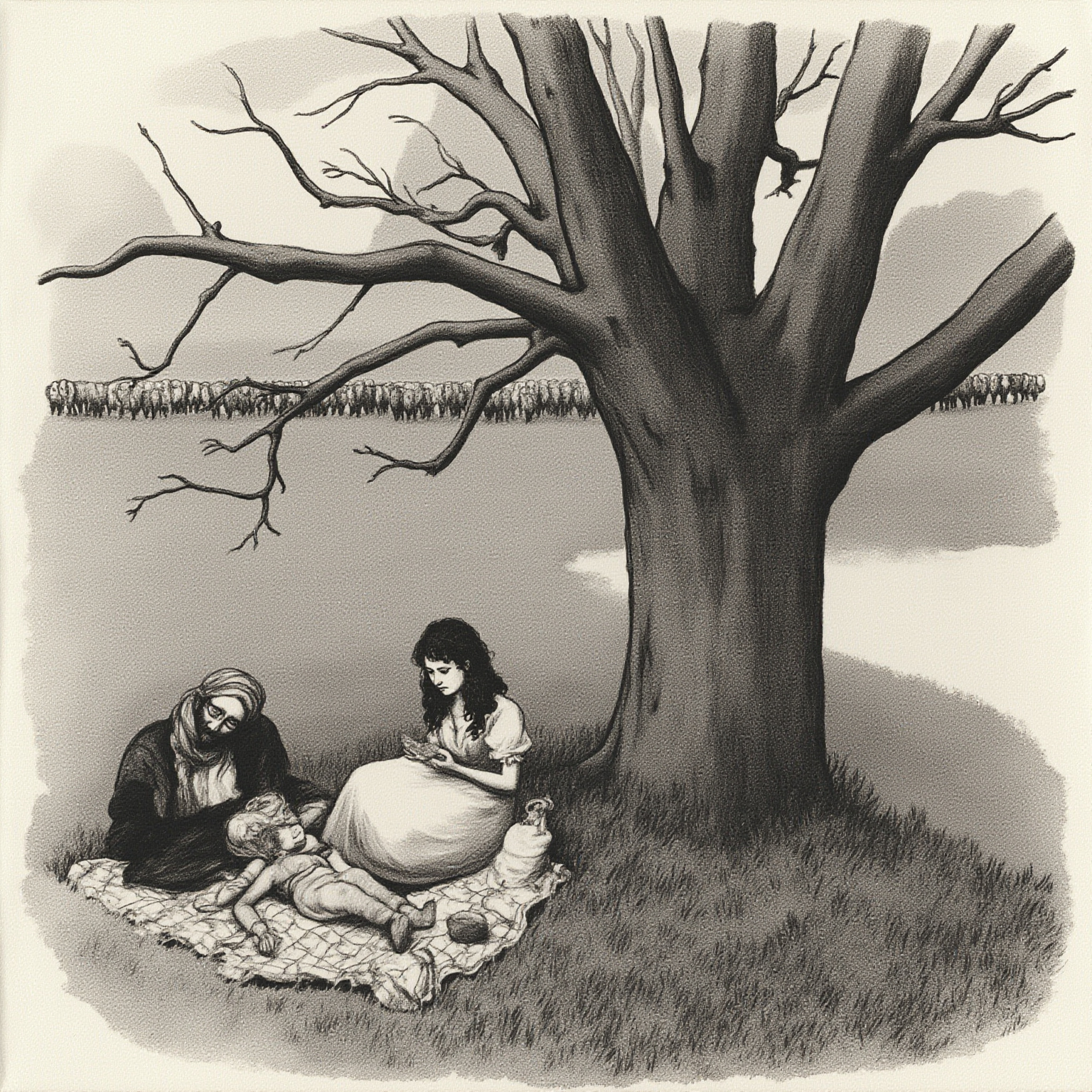
He who walks the same road need not speak to be understood.
同路的人,不必开口便已相知。
金句 · 第3章 · 田埂上的黑面包
A Night by the Devil's Pool
As dusk comes on, they reach a deep pool. The water is inky green, oak trees closing over it like a roof, and the locals call it the Devil's Pool—a country nickname for a deep pool, nothing more, no real devilry to it. The three of them build a fire in the oak grove by the water, and Solange curls up beside it and falls asleep.
An old carter comes walking up, a satchel on his back and a cattle whip hanging at his belt. He sits down as soon as he sees the fire and tells a story out of the Bible: how Ruth spent the night on the threshing floor with Boaz, and how after that night she went from a destitute foreigner to an ancestor of Israel's royal line. When he finishes, the old man brushes the dust off his knees and says this is exactly the night Germain and Marie are living through now.
In the firelight, Marie and Germain say nothing dramatic to each other. Marie only murmurs one line: If you're willing... let me go back with you tomorrow. Solange turns over in her sleep and grips Marie's sleeve a little tighter.
The first time I read this passage I sat there stunned. So love could be written this way: a Bible story for a foundation, an old man's rambling for a cue, a little girl's clenched fist on a sleeve for a footnote. Not one sweet word in it, and yet it lands harder than any declaration.
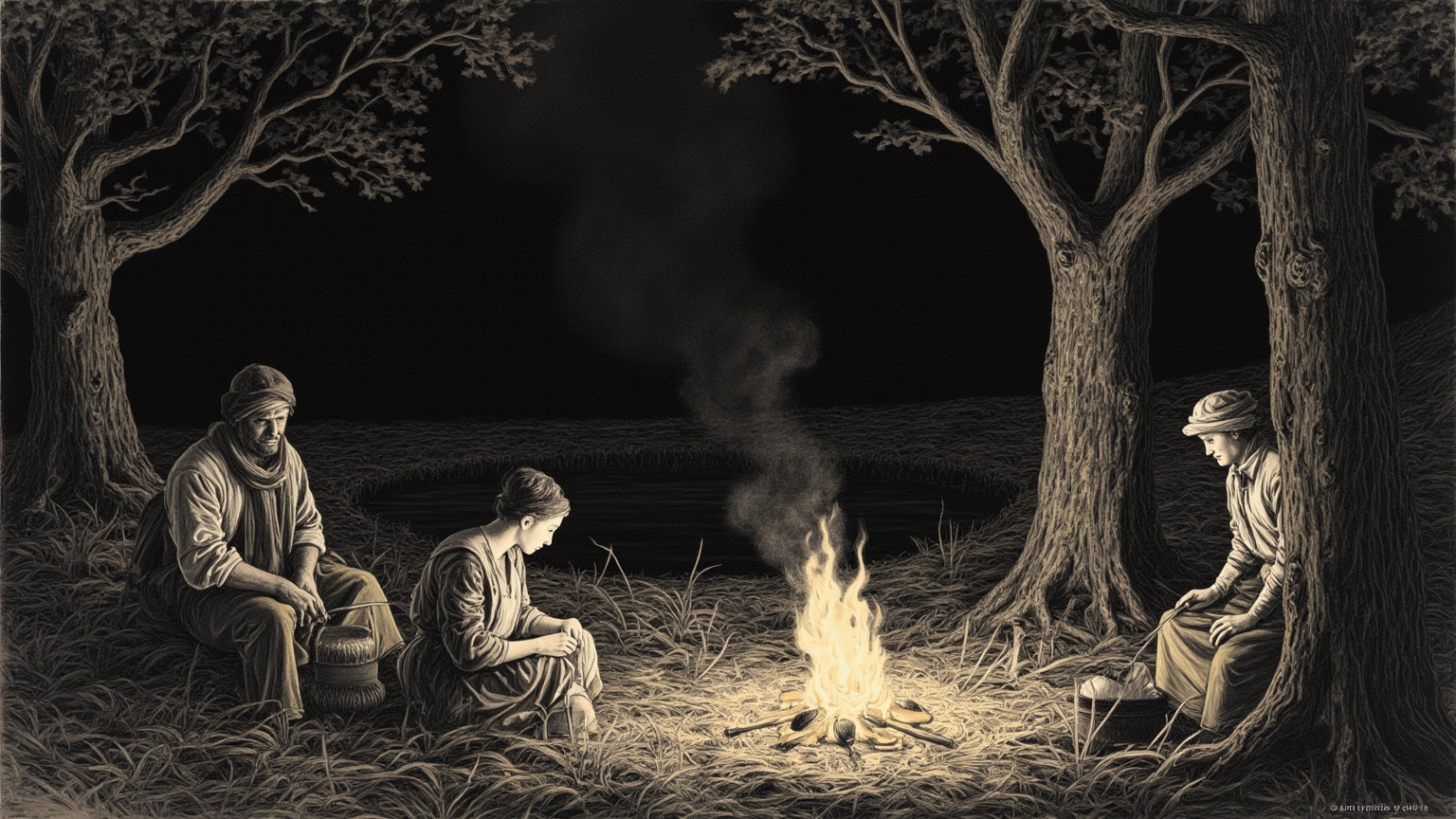
Love, when it comes at last, comes without words — only a child clutching tighter at a sleeve.
爱情到来时从不喧哗——只有孩子在梦中,把那人的袖口攥得更紧。
金句 · 第7章 · 魔沼旁的夜话
The Next Village: The Bride Turns Out to Be Her
The next day the three of them reach the neighboring village. Before they even enter the house, they hear hoofbeats in the distance—the son of a wealthy landowner from the village has ridden over on a tall horse to look over his prospective bride, a servant holding the reins while he stays seated, not bothering to dismount. Germain and Marie watch the whole scene from close by.
Once they're inside and seated, everyone finally puts it together: the suitable widow the father-in-law had picked out for Germain is Marie herself, and Marie had run off alone days earlier to escape the match her mother was trying to arrange elsewhere. The moment it comes out, the whole room bursts out laughing, and Marie sits with her head down, her ears red down to her neck.
Two strangers who had never met walked the same road for a day, ate the same bread, spent a night by the same fire, and then discovered that each was exactly who the other had set out to find. In a Paris novel this coincidence would feel contrived; in this golden wheat field it feels inevitable. September in Berry only lasts so long, there are only so many roads, and only so many people on them.
The Wedding: Lift the Lid on the Pot, Find a New Life
Sand gives this wedding the longest stretch of the whole book. The marriage customs of rural Berry are laid out one by one: the dinner course after course, arriving like a stream that never stops; then the soup-pot ritual, a big iron pot sealed tight, which the newlyweds lift together, and whatever lies inside foretells how the coming year will go; and finally the costume ball, where the neighbors dress up as all manner of characters and carry on until dawn.
The detail that catches at the throat: Germain's three children carry their father's wedding ring up to Marie, and Solange, speaking for her younger siblings, is the one who hands it over. Marie takes the ring, crouches down, and pulls Solange into a tight embrace.
That one embrace gathers the dead wife's children, the shepherdess who was a stranger not long ago, and a widower's house that has gone cold for three years, and brings them all under the same roof. Sand never writes the words happy ending. She writes one gesture, and leaves the rest for the reader to fill in.
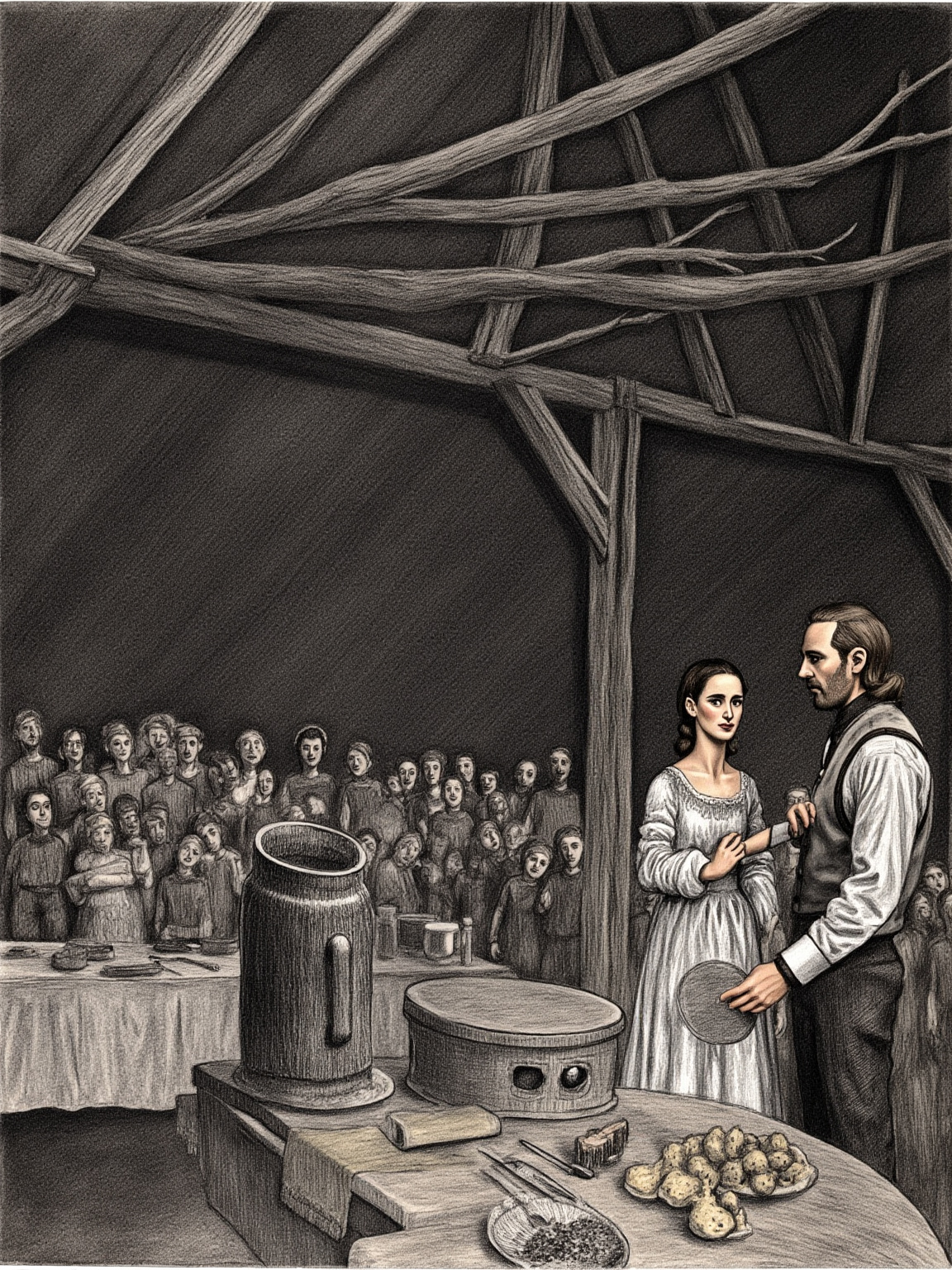
She bent down and gathered the child to her heart — and with that one embrace, the whole house began anew.
她弯下腰,把孩子紧紧搂进怀里——就这一个动作,整座屋子便重新有了家的模样。
金句 · 第14章 · 婚礼上的戒指
Why This Book Is Remembered
In nineteenth-century French letters, country people did not belong on the page. George Sand went and made a widower behind a plow her protagonist, a shepherdess her heroine, an old carter her guide, and let furrows, wheat ears, soup pots, and costume balls walk in through the front door one after another. The glitter of the Paris salons is set aside, and the rhythm of the fields becomes this book's pulse.
She was also one of the most influential women writers of the nineteenth century. With one gentle, plainspoken country novel, she quietly pulled an overlooked subject back to the center of literature. That kind of power doesn't shout. It comes from writing ordinary days so well that the reader can't put the book down.
Plowing to Wedding: The Rhythm Is the Answer
The book opens with a plow on an autumn furrow and closes with a soup pot lifted at a wedding. In between is a journey across the fields, three people moving from strangers to intimates, from wariness to open hearts. Plowing at the start, a wedding at the end—that arc quietly turns the rhythm of farming into a metaphor for love: seed goes into the ground, autumn brings the harvest, the bride comes through the door, and an old house gets a new mistress.
Plowing at the start, a wedding at the end. Sand turns how people live and how people love into a pastoral tune simple enough to hum along to.
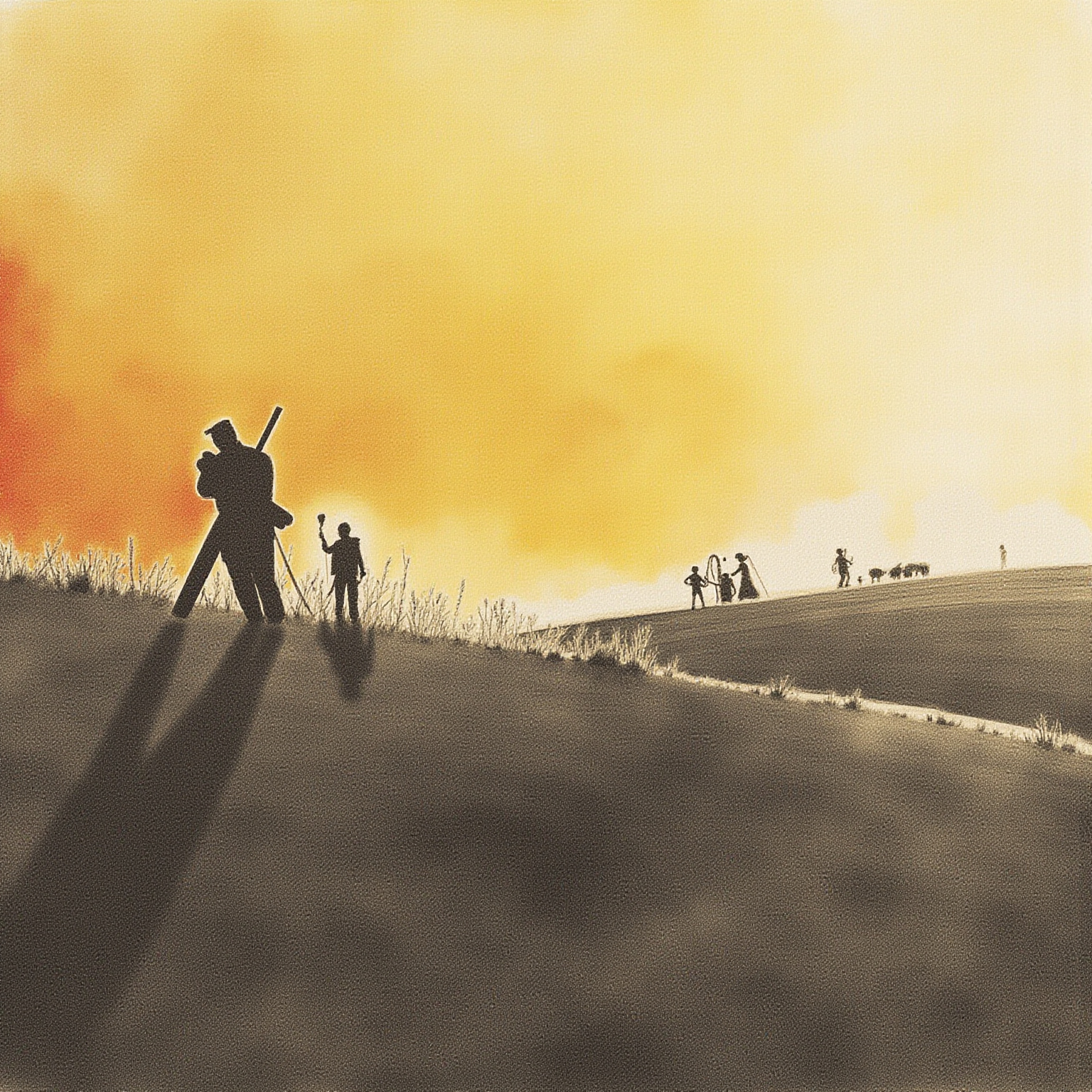
From the furrow where a plough begins its work to the pot whose lid the bridegroom lifts — there lies the whole rhythm of a life.
从一柄犁划开的第一道沟,到婚礼上合力揭开的汤锅盖——这之间,便是一生的节律。
金句 · 尾声 · 田园牧歌的弧线
Why It's Worth Reading Even Once You Know How It Ends
The plot of this book is not complicated, and knowing the ending first won't spoil it, because what Sand is really writing about was never whether they end up together. She writes what the turned earth smells like in Berry in September, how you break bread so the shares come out even, what shape the firelight throws across the pool, how a child grips a stranger's sleeve in her sleep.
A guide like this one can pass along the gist of those sensory details, but it can't give you the slow, unhurried scent of manure and wheat that the original carries. By the time you finish this guide, you already know how the story goes. Open the book itself, and you can walk through it more slowly, and actually smell that field.
Sand writes love without a single declaration: how a loaf of bread gets broken, how a silence quietly grows shorter, how a little girl falls asleep against a stranger's knee. Traveling the same road is the best matchmaker there is.
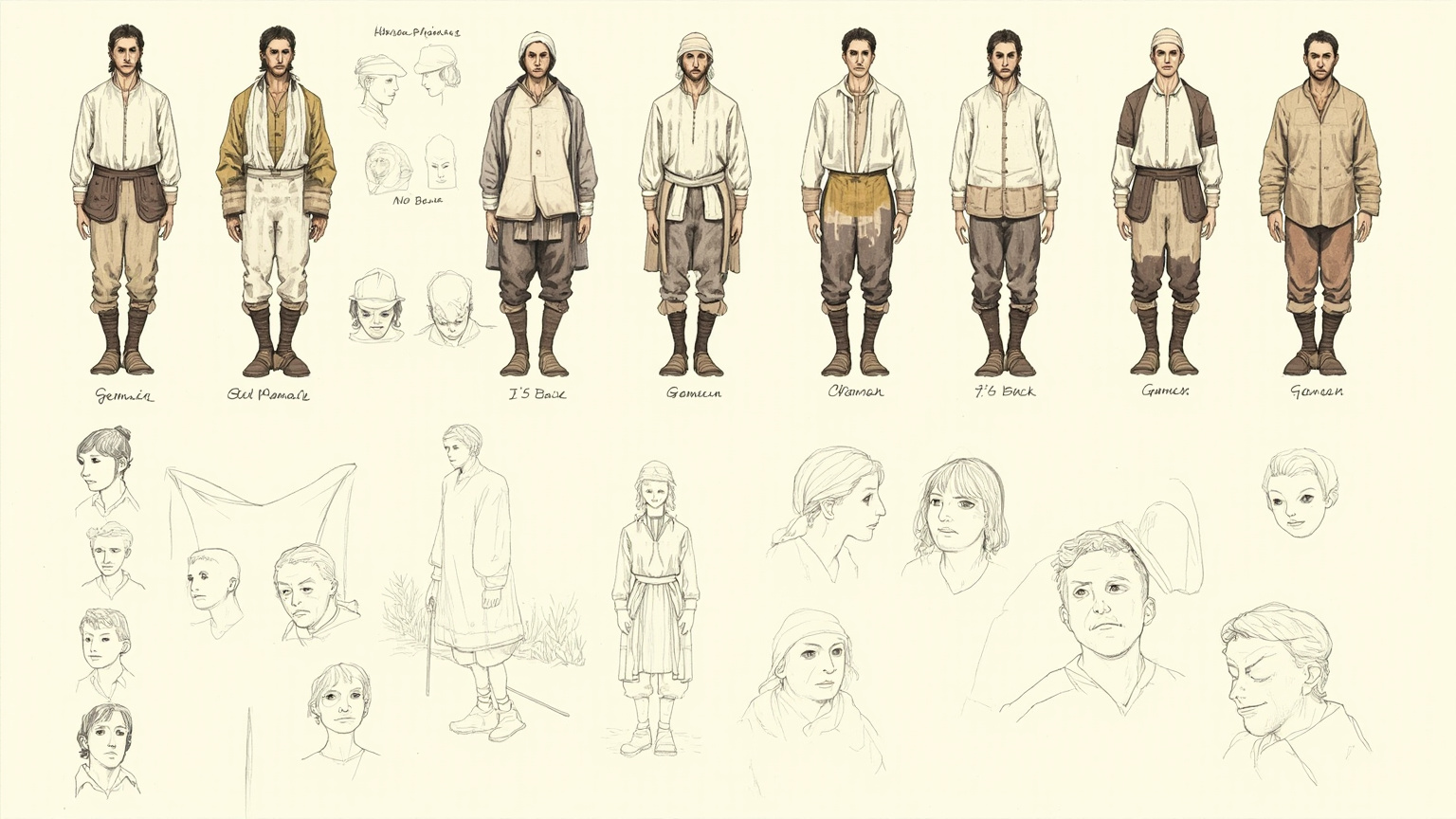
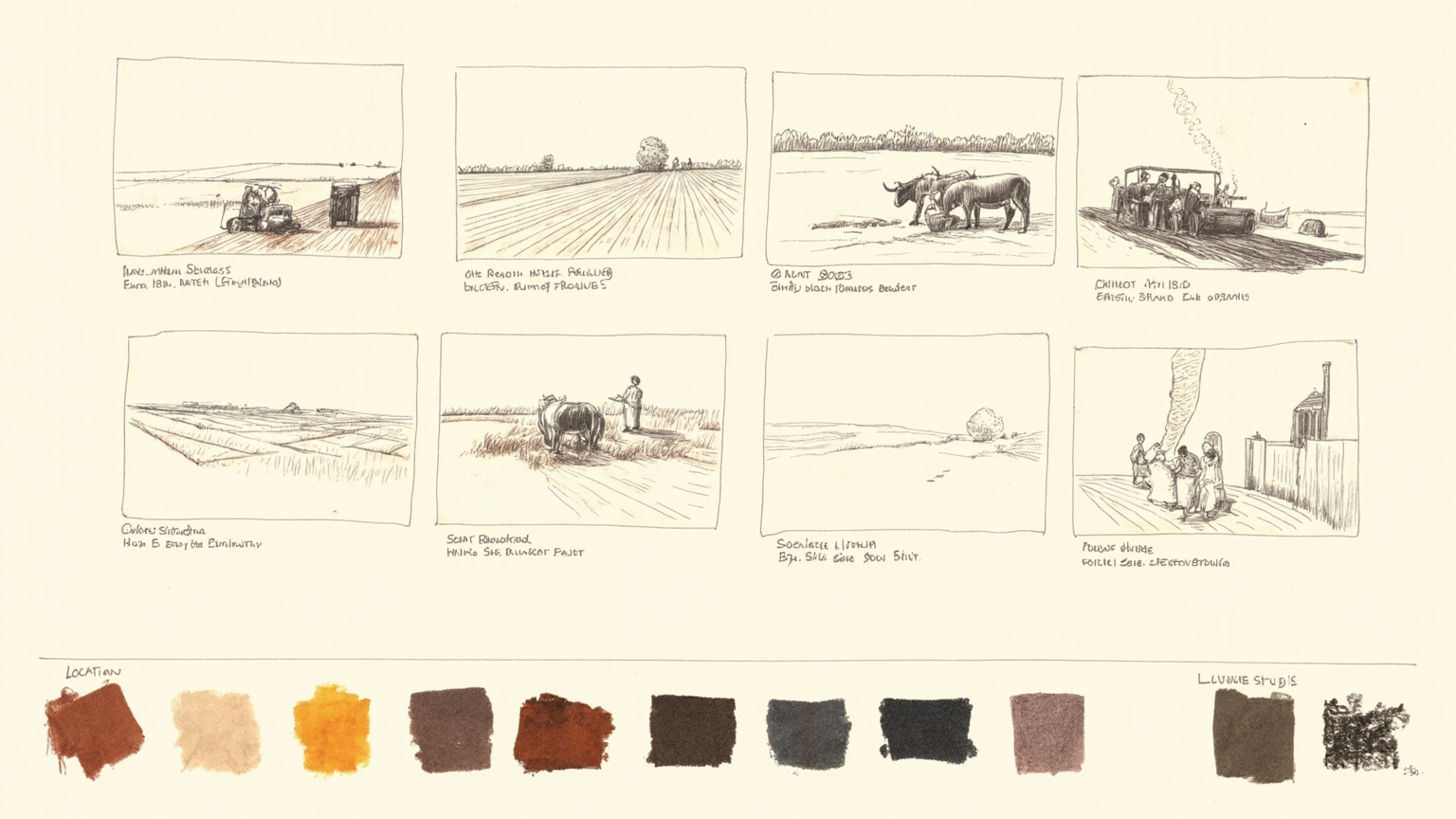
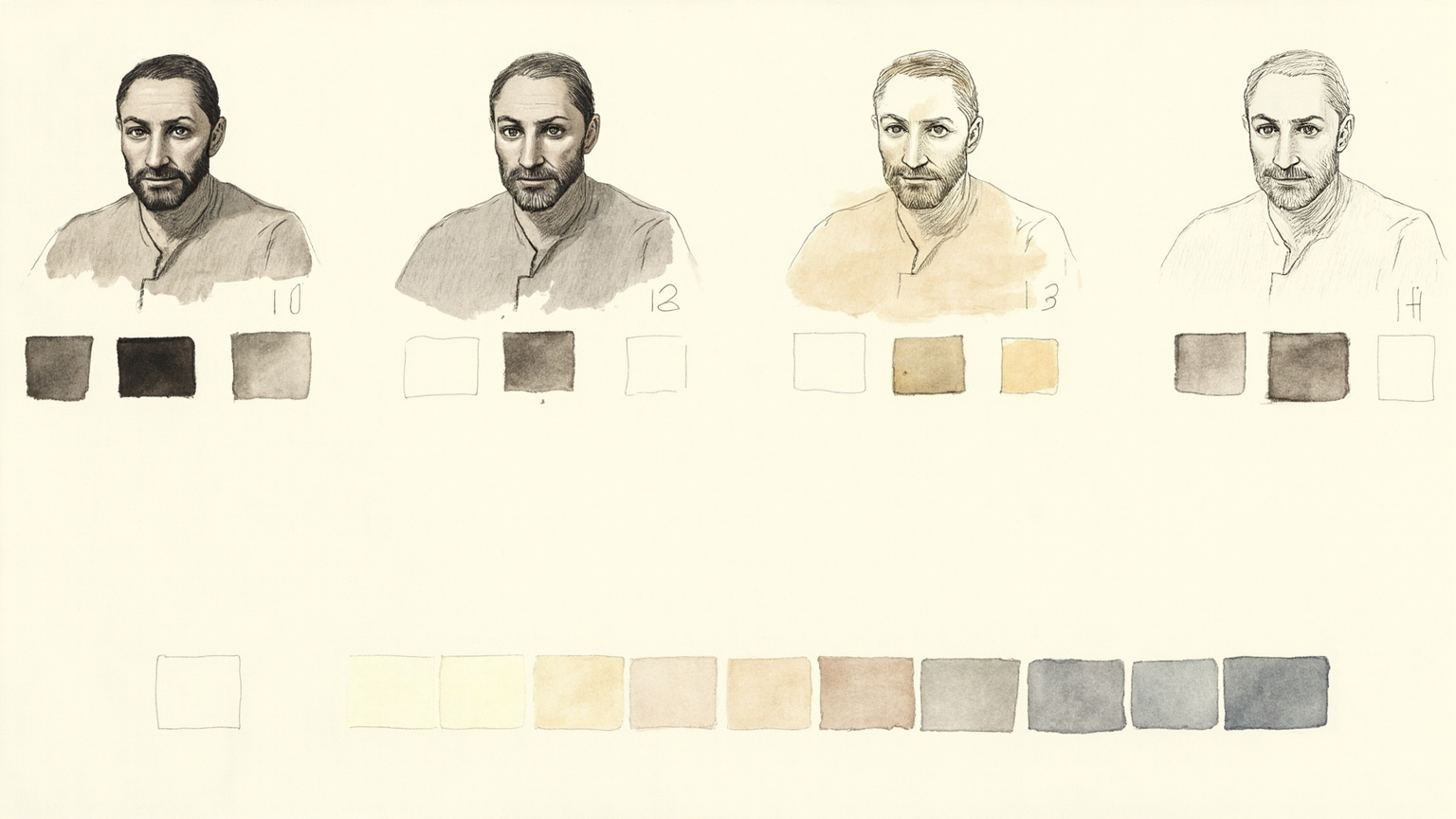
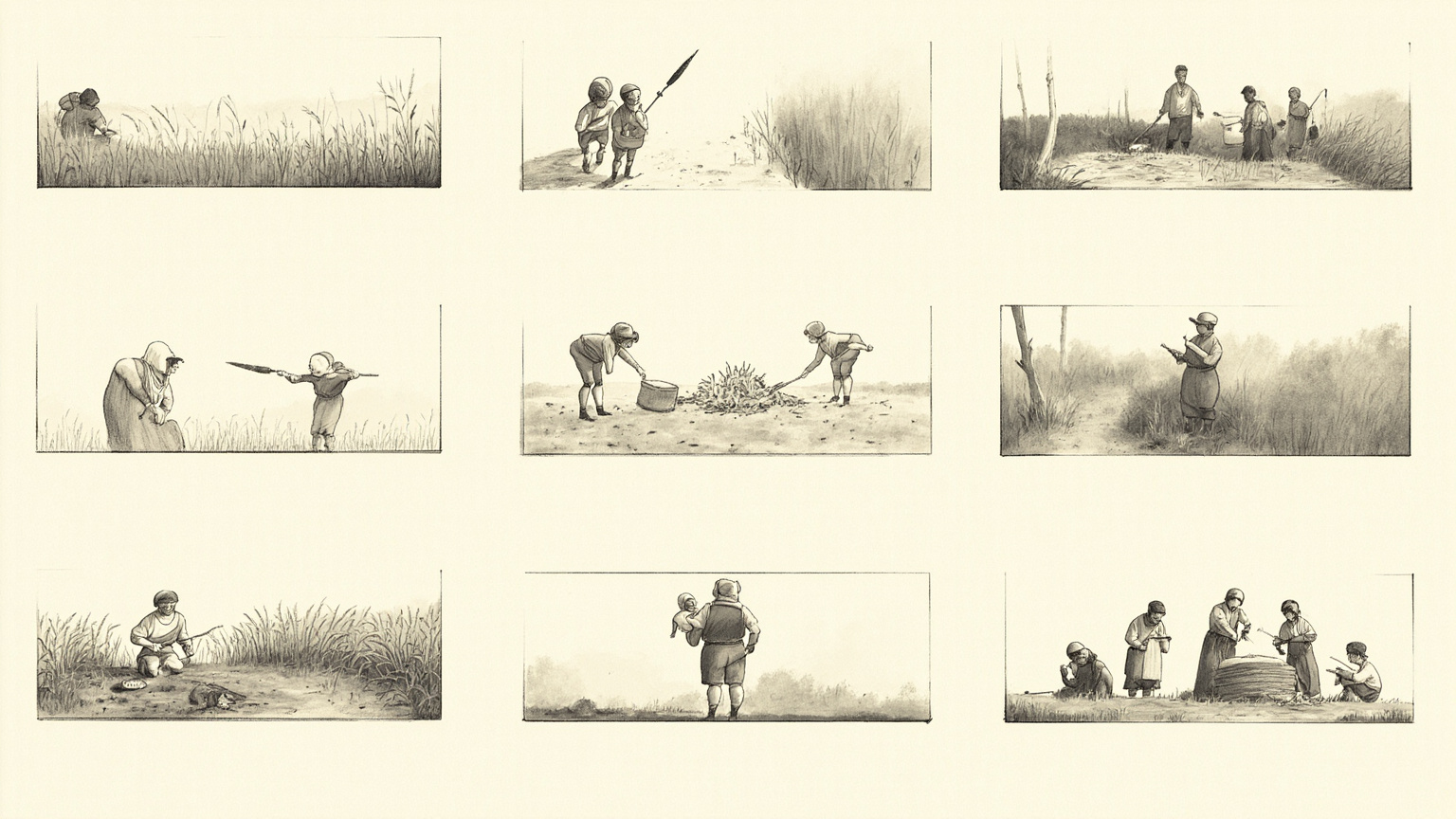
Art Direction4 plates
Before the guide was written, this book got a visual foundation — every illustration you just read grew out of it.