The Diamond Sutra (Vajracchedika Prajnaparamita Sutra) · Companion Guide
金刚经
一只木盆洗去脚上的泥,一卷麻纸承住五千年的问答——凡所有相,如何应无所住。
The setup fits in a single line
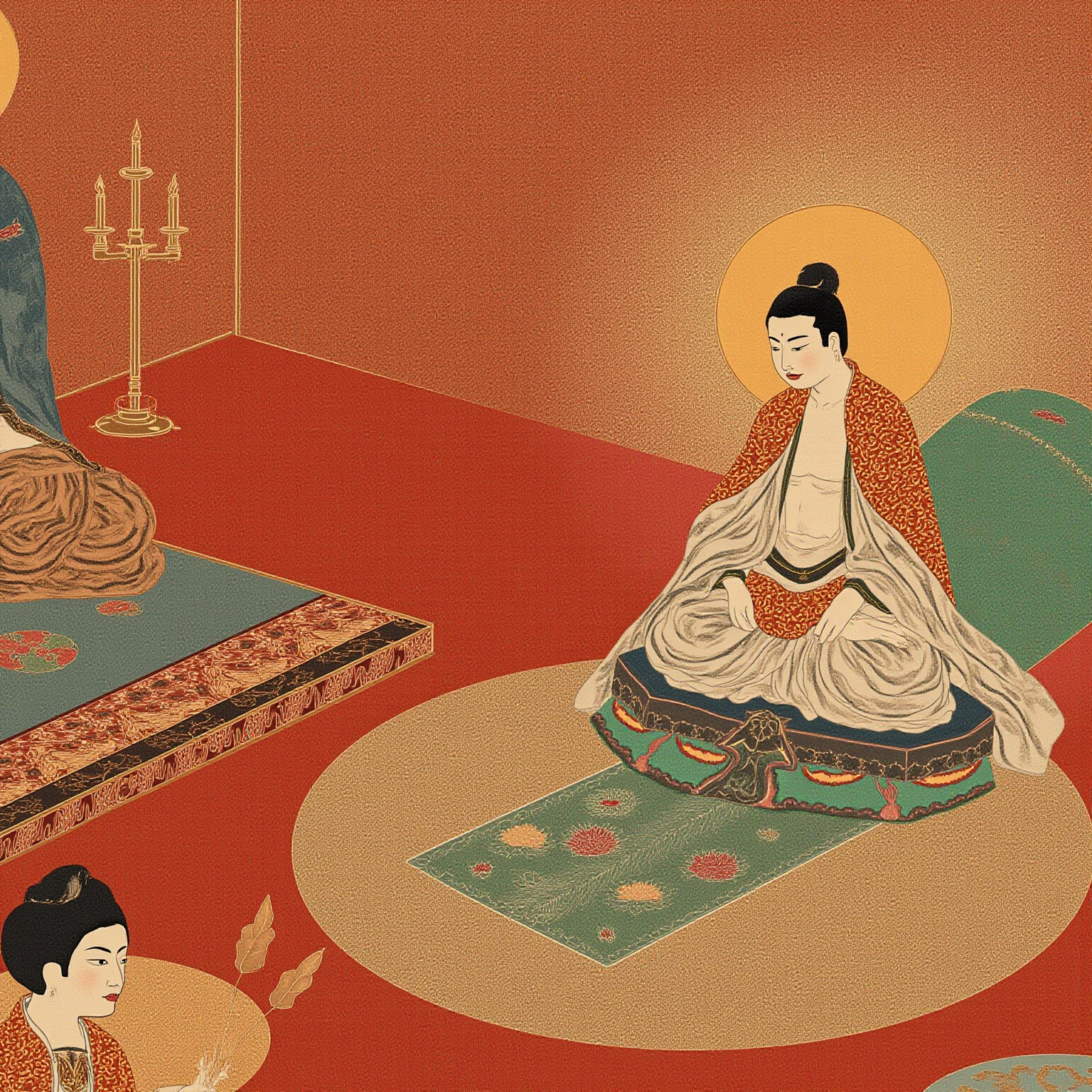
A hand around a begging bowl, bare feet in the morning mud — this is the first scene the Diamond Sutra shows the world. The Buddha has just returned from his alms round in the city of Shravasti. He sets his feet in a basin and lets the muddy water run off, spreads his mat on the teaching seat, and settles down. No miracle, no vision — just a monk's morning. Then Subhuti rises from his seat, bares his right shoulder, kneels on his right knee, presses his palms together, and asks the question that carries the whole text: for someone who has set their heart on the highest, complete awakening, how should the mind be settled, and how should it be subdued.
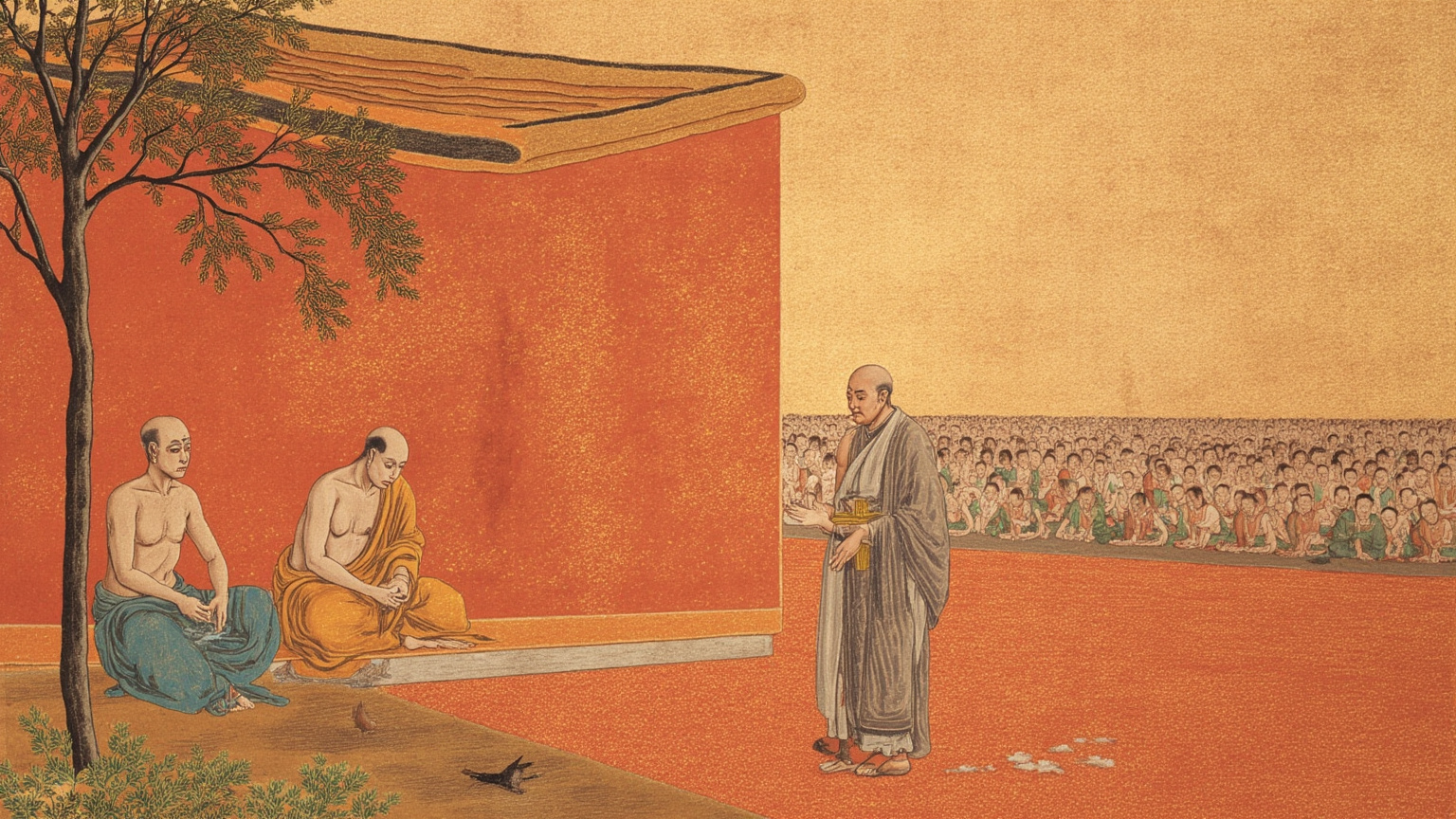
The Blessed One was dwelling at Jetavana in Śrāvastī, with a great Sangha of twelve hundred and fifty monks. At dawn he robed himself, took his bowl, and entered the great city of Śrāvastī to beg for alms.
一时佛在舍卫国祇树给孤独园,与大比丘众千二百五十人俱。尔时世尊——着衣持钵——入舍卫大城乞食。
金句 · 法会因由分第一
This isn't a book. It's a conversation.
No sutra in the Chinese Buddhist canon has been reprinted, copied by hand, carved into stone, and quoted as often as the Diamond Sutra. It has no author in the ordinary sense — tradition holds that Shakyamuni Buddha spoke it aloud, and his disciples compiled it afterward. The standard Chinese translation is Kumarajiva's, made in Chang'an in 403 CE, for the Later Qin court. The Sanskrit original had existed for centuries before that. At just over five thousand characters, the text is neither a narrative nor a treatise — it is a dialogue, question and answer, between the Buddha and his disciple Subhuti, circling a single subject: what emptiness is, and how to rest in it.
Two men, one bowl, one grove
Understanding the sutra takes remembering just three parties. The Buddha, who answers. Subhuti, who asks — celebrated as foremost in understanding emptiness, the one voice behind every how should one settle, how should one subdue in the text. And around them, twelve hundred and fifty monks, present the way a chorus is present, as background. The whole scene is fixed in one place: a monastery outside the ancient city of Shravasti called Jeta's Grove, the Anathapindika Garden, built jointly by Prince Jeta and the merchant Anathapindika as a dedicated site for the Buddha to teach. The setting matters because the entire five thousand characters unfold there and nowhere else, without a single scene change.
Breaking the form: a parable about giving
Subhuti asks his question, and the Buddha does not answer it directly. Instead he sets up a comparison that seems, at first, oddly matched. Someone gives away the seven treasures filling countless world systems — is the merit great? Yes, immense. But someone who keeps just four lines of this sutra in mind and explains them to another person earns more merit than that — the Buddha says so himself. It sounds backward: how could a few sentences outweigh treasure beyond counting? The answer comes later. What the Diamond Sutra is clearing away is not giving itself, but the thought I have done this much good. The moment giving takes on a form — a tally, a number to be proud of — it has already left the spirit of giving behind.
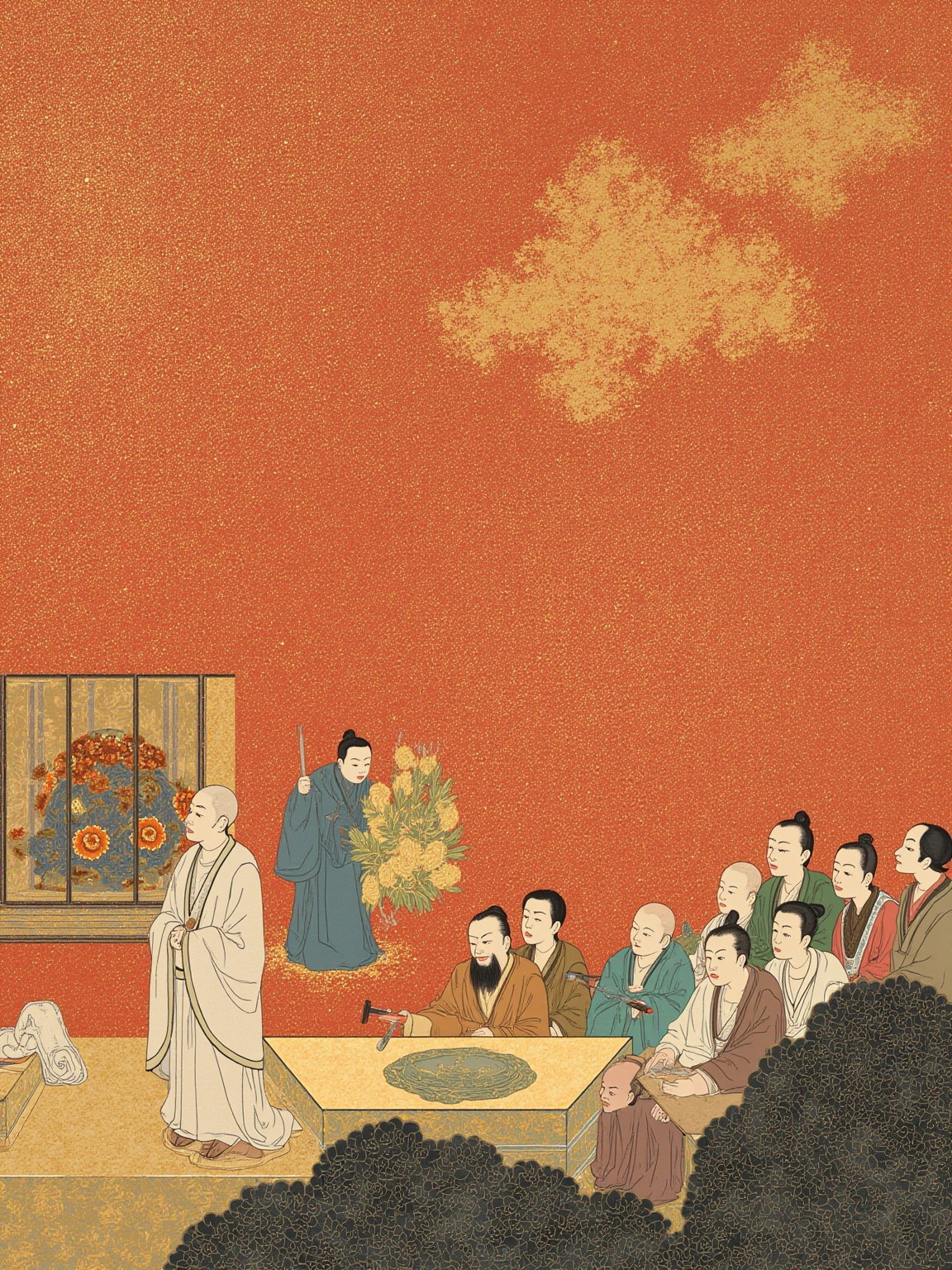
Subhūti addressed the Blessed One: 'How, O Lord, should one who has set out on the bodhisattva path abide, and how should one subdue one's mind?'
须菩提白佛言:「世尊,善男子、善女人发阿耨多罗三藐三菩提心者,云何应住,云何降伏其心?」
金句 · 善现启请分第二
Breaking the name: the thirty-two marks are not the Tathagata
Having broken the form of giving, the Buddha moves next to break the form of the Buddha himself. He asks Subhuti: can the Tathagata be recognized by the thirty-two physical marks? Subhuti answers: no, World-Honored One — the Tathagata cannot be seen through the thirty-two marks. Why not? Because every form is illusory. What you see in those thirty-two marks is a body of form; what you hear in that resonant voice is sound. To chase the Buddha through form and sound is to be looking in the wrong place. The face the Buddha wore in the world, the voice he taught with — those were what appeared in one time and one place. They were never the Buddha himself.
The core of emptiness: four lines
Of the five thousand characters, a handful have sunk deepest into everyday Chinese: every form is illusory — see that form is not form, and you see the Tathagata. Let the mind arise without settling anywhere. All conditioned things are like a dream, a bubble, a shadow, like dew or a flash of lightning — see them so. Three ideas run through those lines. Form is illusory, though not nonexistent — the mistake is grasping any particular shape as the real thing. The mind must still arise, but it should not anchor itself to anything. And everything with form in this world, seen properly, is as brief as a dream, a bubble on water, a shadow, morning dew, a flash of lightning — gone as soon as it appears.
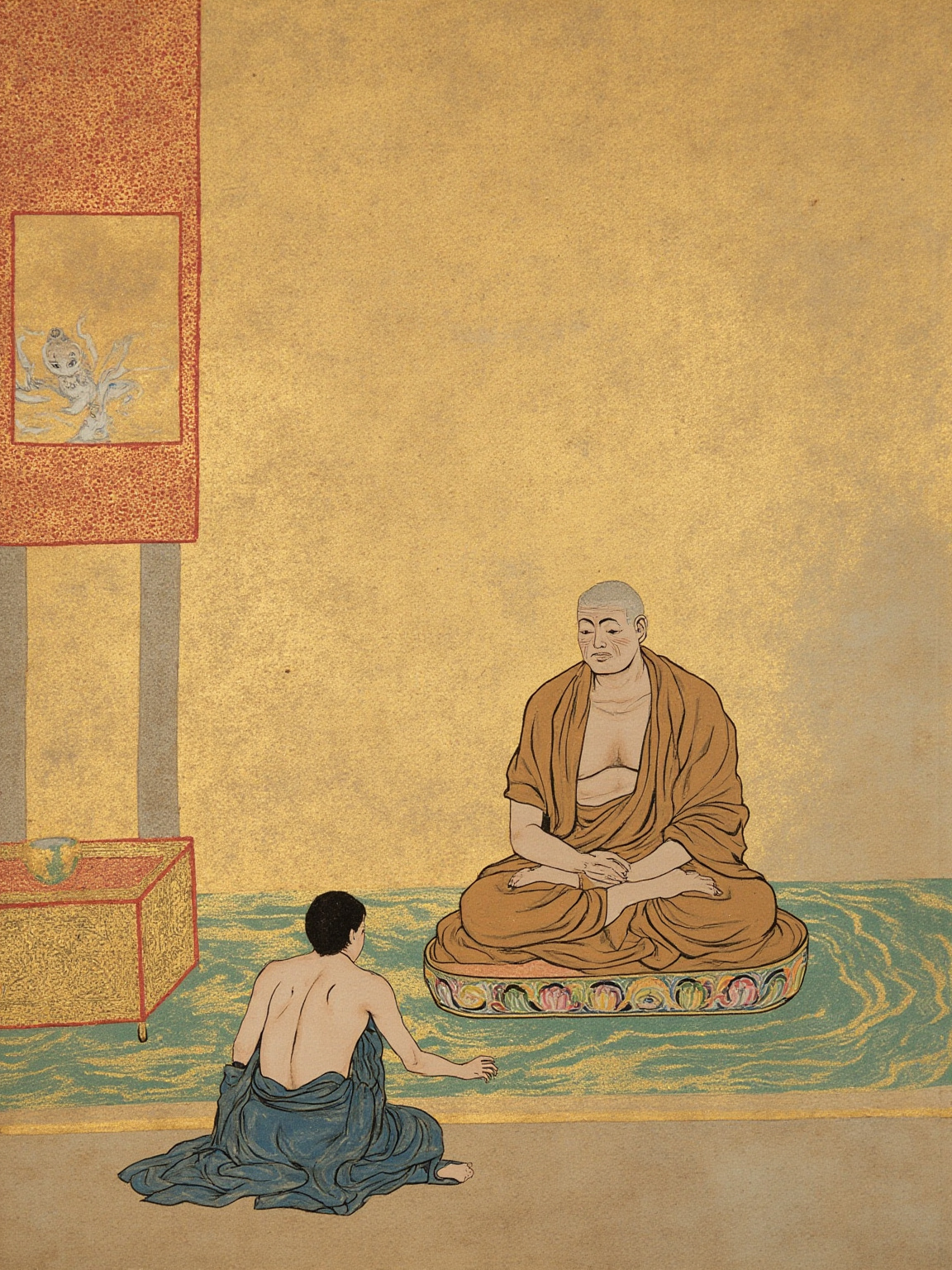
All conditioned things are like a dream, an illusion, a bubble, a shadow, like dew, or a flash of lightning — thus should they be regarded.
一切有为法,如梦幻泡影,如露亦如电,应作如是观。
金句 · 应化非真分第三十二
The formula: not X, therefore not X, called X
The sutra's most recognizable device is a formula that recurs again and again: X is not X, and is therefore called X. The Buddha says: what is called the Dharma is not the Dharma — that is why it is called the Dharma. This is not a claim that the Dharma doesn't exist. It is a warning against grabbing hold of something labeled Dharma and treating it as solid. The text breaks the notion of a self, a person, a being, a lifespan; it breaks the notion of merit, of the Buddha, of the teaching itself — one after another. Each time it breaks something, it leaves a door open, and that door is the word called: you may still call a thing by its name, just don't mistake the name for something you can hold onto. The whole sutra is one long gesture of prying your fingers loose, one form at a time, from whatever you thought you were holding.
The closing chapters: keeping this sutra is merit itself
Near the end of its five thousand characters, the sutra turns to something that looks, at first glance, transactional: it tallies up the merit of simply keeping and reciting the text. Give away a body as numerous as the sands of the Ganges in the morning, again at midday, again in the evening, for lifetimes without end — none of it matches the merit of holding this sutra. Why would a text built around not clinging to merit spend its closing pages talking up merit? Call it a skillful shortcut. For someone who has not yet grasped emptiness, put the scroll in their hands anyway — let them read it, copy it out, recite it. Recite it long enough, and the very idea of merit they started out chasing quietly falls away on its own.
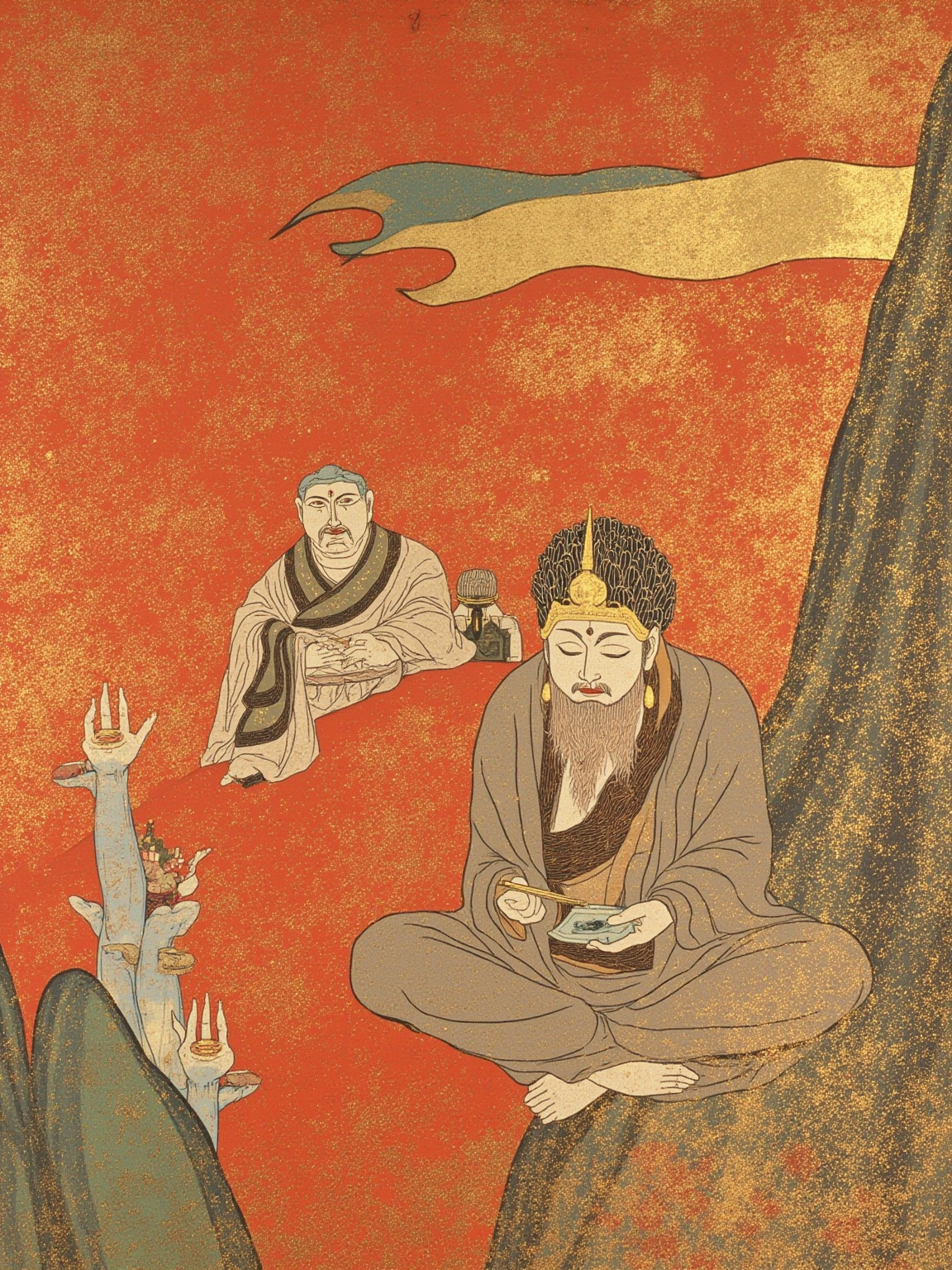
If, on each of the three watches of the day, one were to give gifts for measureless aeons as many bodies as the sands of the Ganges — yet to receive and hold this sutra, even a single four-line verse, and to expound it for others, the merit surpasses even that.
初日分以恒河沙等身布施,中日分复以恒河沙等身布施,后日分亦以恒河沙等身布施,如是无量百千万亿劫以身布施——若复有人于此经中受持,乃至四句偈等,为他人说,其福胜彼。
金句 · 持经功德分第四
Its name: diamond, not a weapon
To a modern reader, the Chinese title's word jingang can sound like it means a weapon. It doesn't. It renders the Sanskrit vajra, whose root sense is diamond — a stone hard enough to cut anything and be cut by nothing. The title is a metaphor for the wisdom inside the text: sharp enough to cut through every teaching, every attachment, while nothing can cut through it in turn. So reading the Diamond Sutra isn't reading a battle cry. It's coming to understand a kind of sharpness that no fixed form can ever pin down.
The other protagonist: a hemp-paper scroll from Dunhuang, 868 CE
Following the sutra only through the grove at Jeta's Park tells half the story. The other thread is the object itself. In 868 CE, in Dunhuang under the Guiyijun military governors of the late Tang, a man named Wang Jie carved a printing block and pulled a copy of the Diamond Sutra onto a scroll of hemp paper — a frontispiece showing the Buddha preaching, and at the end a line dedicating the work reverently to his parents. That scroll sat sealed in the Dunhuang caves until 1900, when it resurfaced as the world's oldest surviving printed book bearing a precise date, six hundred years ahead of the earliest comparable print in Europe. Once you know that, the Diamond Sutra looks different. It isn't only a set of lines asking you to see through appearances — it is itself the ink that was copied, printed, and passed hand to hand long before anyone got around to seeing through it.
Why it matters
Set inside the history of Chinese thought, the Diamond Sutra is a piece of ballast nothing else has replaced. In just over five thousand characters it framed out the skeleton of Mahayana wisdom teaching — emptiness, non-abiding, formlessness, no-self became, from then on, terms no Chinese thinker discussing existence or practice could work around. Centuries later, the Sixth Patriarch Huineng was struck into sudden awakening by that single line, let the mind arise without settling anywhere, and from then on the Diamond Sutra stood alongside the Platform Sutra of the Sixth Patriarch as the twin supreme texts of Chan — the root of the largest school within Chinese Buddhism. Layer on one more fact: the 868 woodblock print from Dunhuang makes this same sutra the opening page of the world's printing history. Put the two together and the Diamond Sutra is at once a way of seeing the world and the first photograph ever taken of that way of seeing, snapped the moment it was made.
Read it anyway: why knowing how it ends changes nothing
The whole sutra never raises its voice — it opens with washing feet and closes with a woodblock print — but every form you thought you had a grip on has, somewhere in those five thousand characters, quietly had its fingers pried loose.
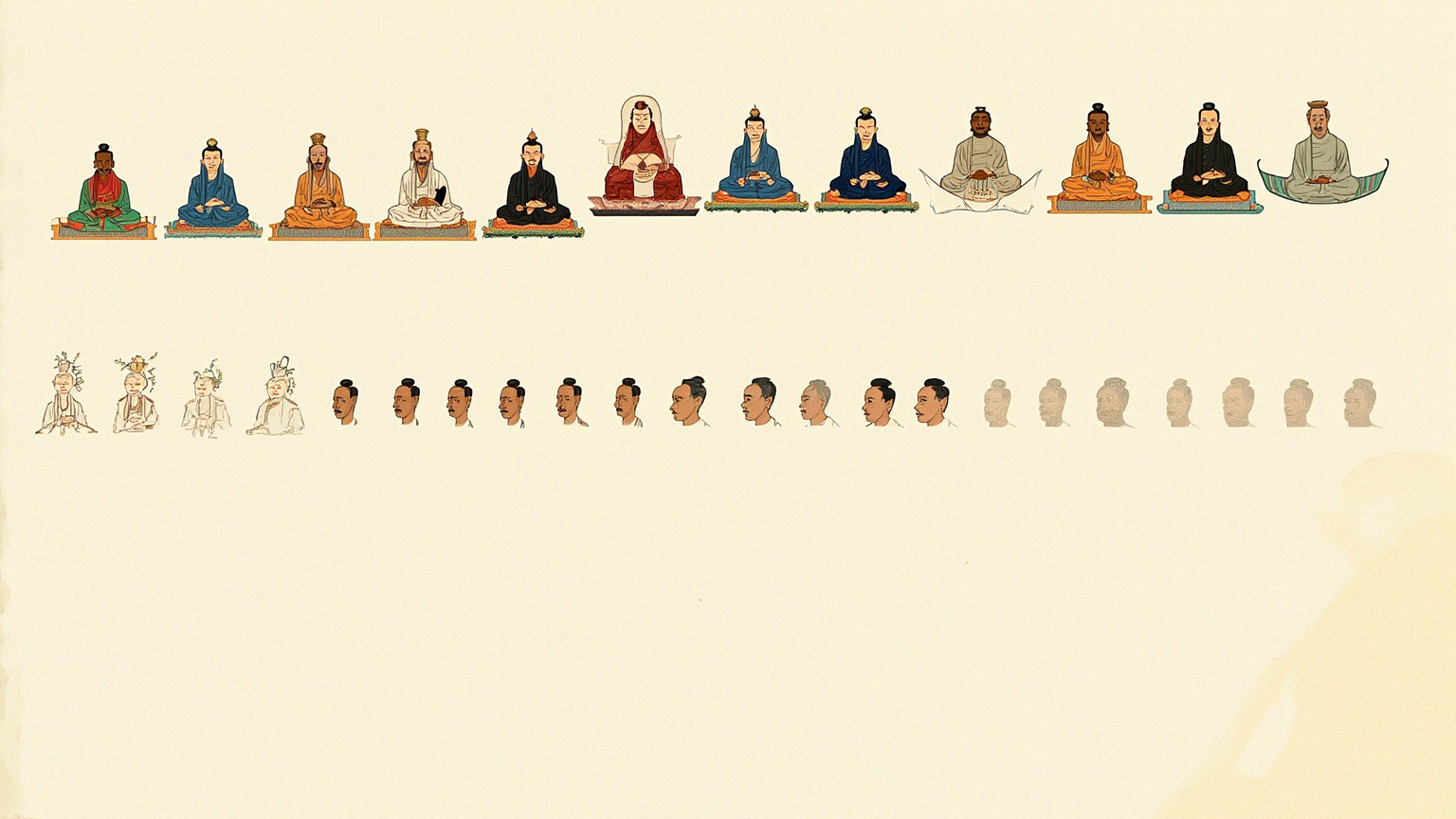
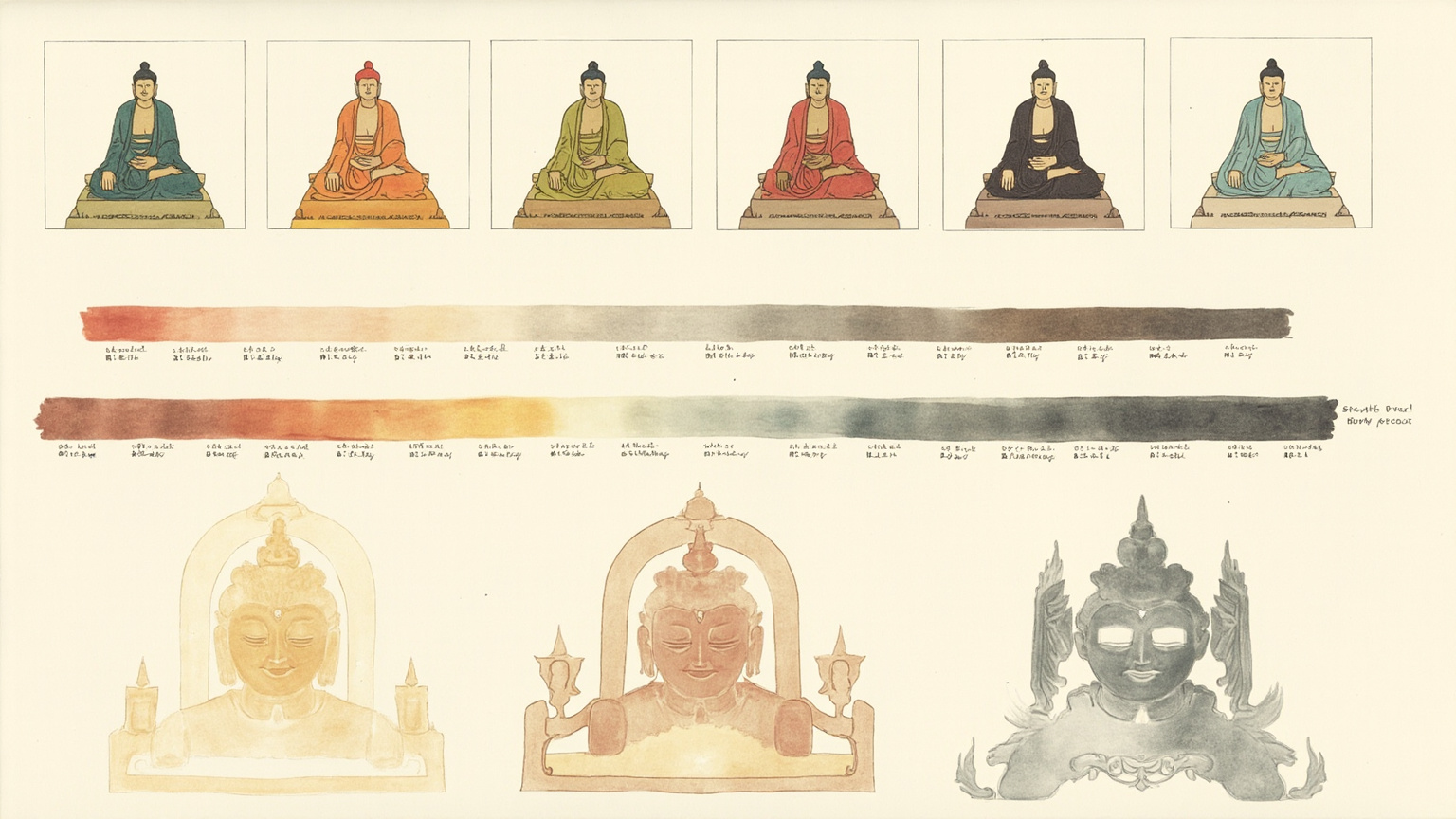
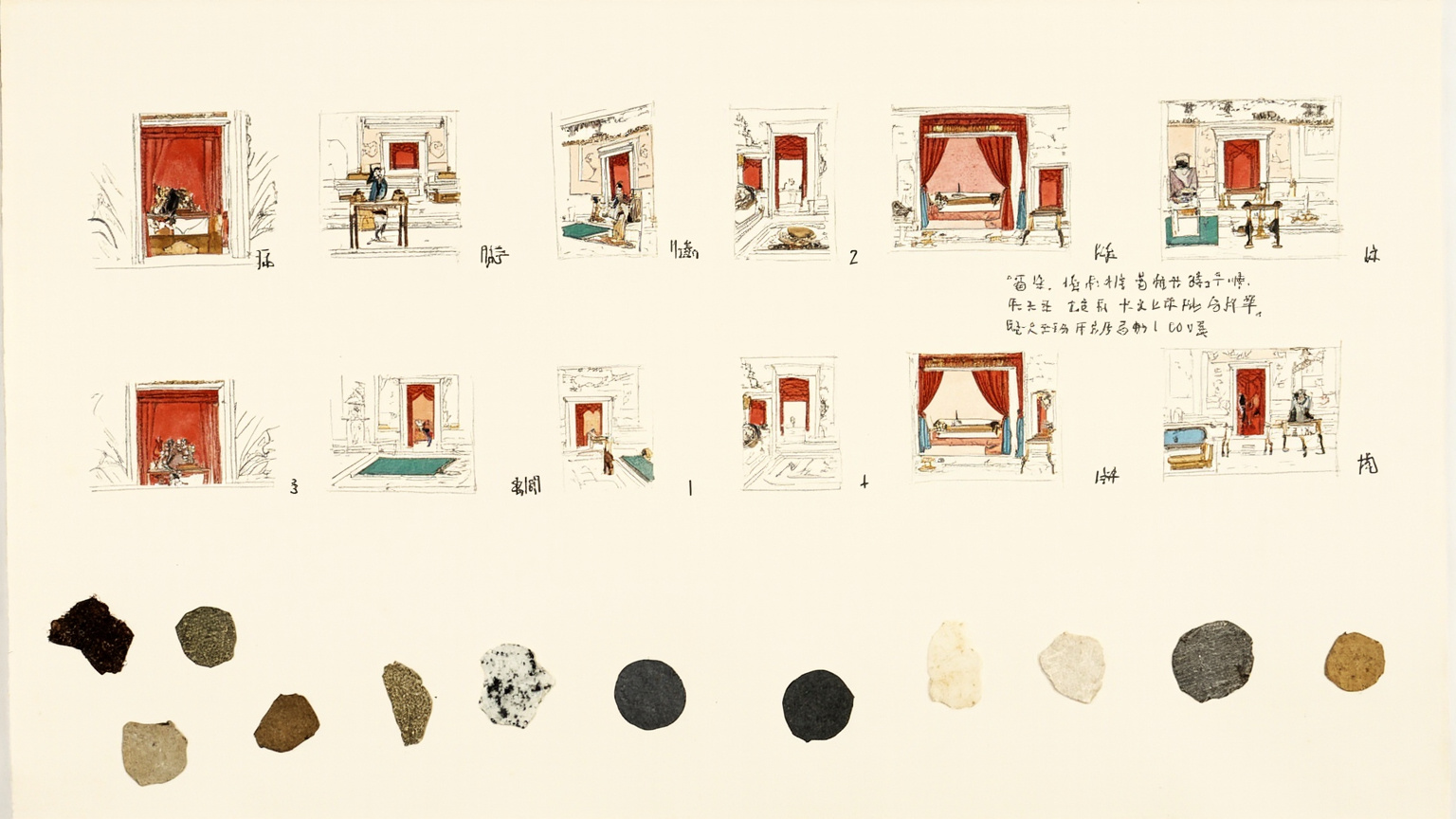
Art Direction4 plates
Before the guide was written, this book got a visual foundation — every illustration you just read grew out of it.