The Fall (La Chute) · Companion Guide
堕落
一个体面人用一生成就善意,又用一声未回头的落水,将自己推入没有出口的道德暗夜。
Opening
Eleven at night, a bridge over the Seine in Paris. A man hears a splash behind him — water exploding — then a heavy black silence. He doesn't look back. On the railing, a slowly spreading ring of water, like an eye blinking once and never mentioning it again. Camus turned this into an entire novel.
The Fall — Camus's final completed novel — is about this "not looking back." It tells in one sweep how a respectable man collapses, how he runs, how he wields confession as a weapon in a strange bar.
What This Book Is
Published in 1956, the French original is La Chute. It's a strange fit in Camus's own sequence — ahead of it stand three towering works, The Stranger, The Plague, The Myth of Sisyphus, all talking about "the absurd" and "revolt." The Fall shifts ground: the absurd has been argued, so what does a person do? Someone who has revolted — could he actually just be a more refined hypocrite? The book offers no neat answer; it just slices open hypocrisy layer by layer for you to see.
Camus himself died young, not yet fifty, a few years after finishing this book. Readers looking back often feel it reads like his own epitaph: don't trust someone who claims to have seen through the world — the thing he most needs to see through is himself.
Characters and World
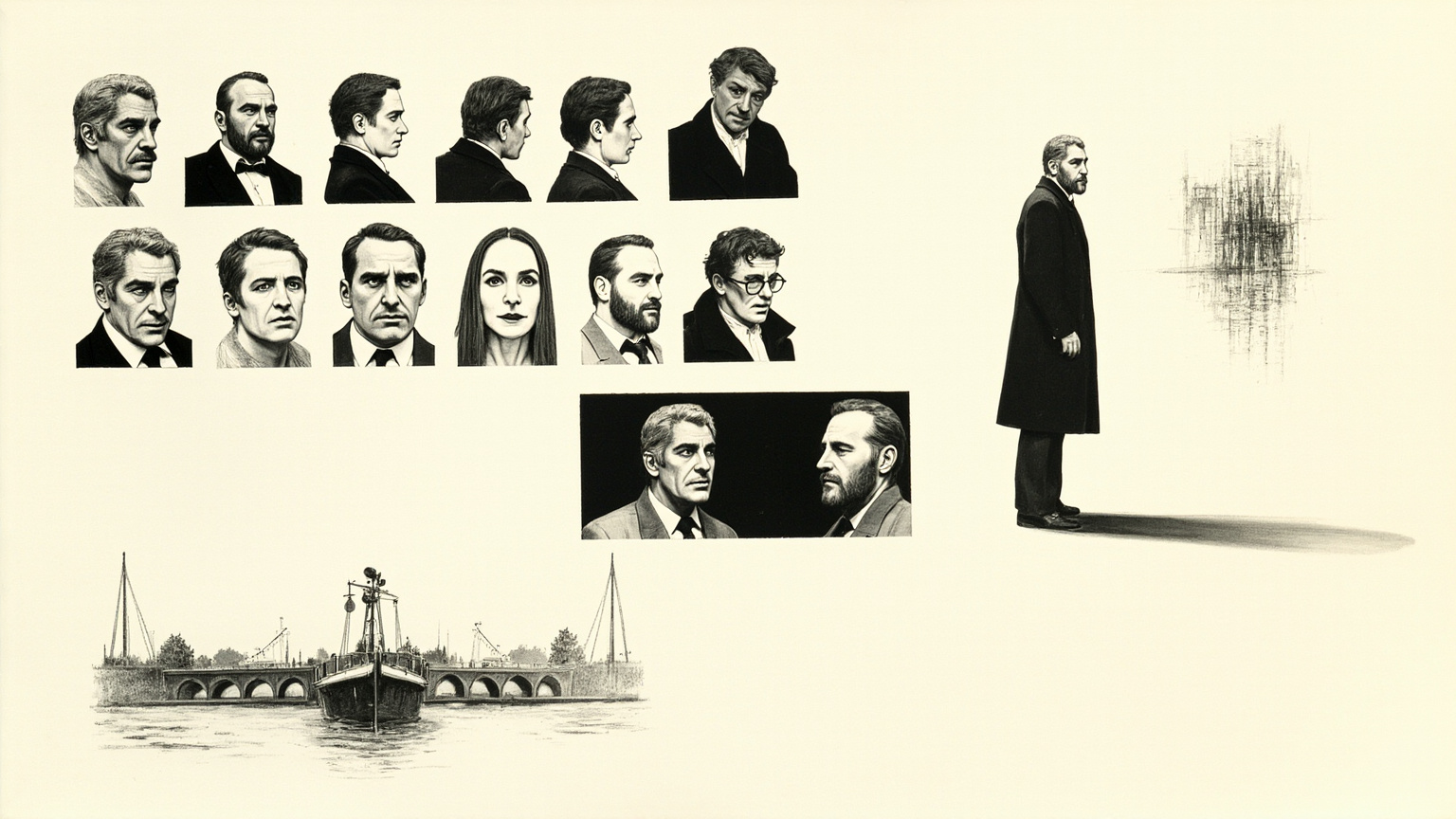
The protagonist is Jean-Baptiste Clamence, once a famous Paris lawyer who took cases for widows and orphans free of charge — already sounds a bit suspicious, doesn't it? Someone who speaks for the weak: genuine sympathy, or a love of standing in the spotlight? He never asked himself that question until the bridge.
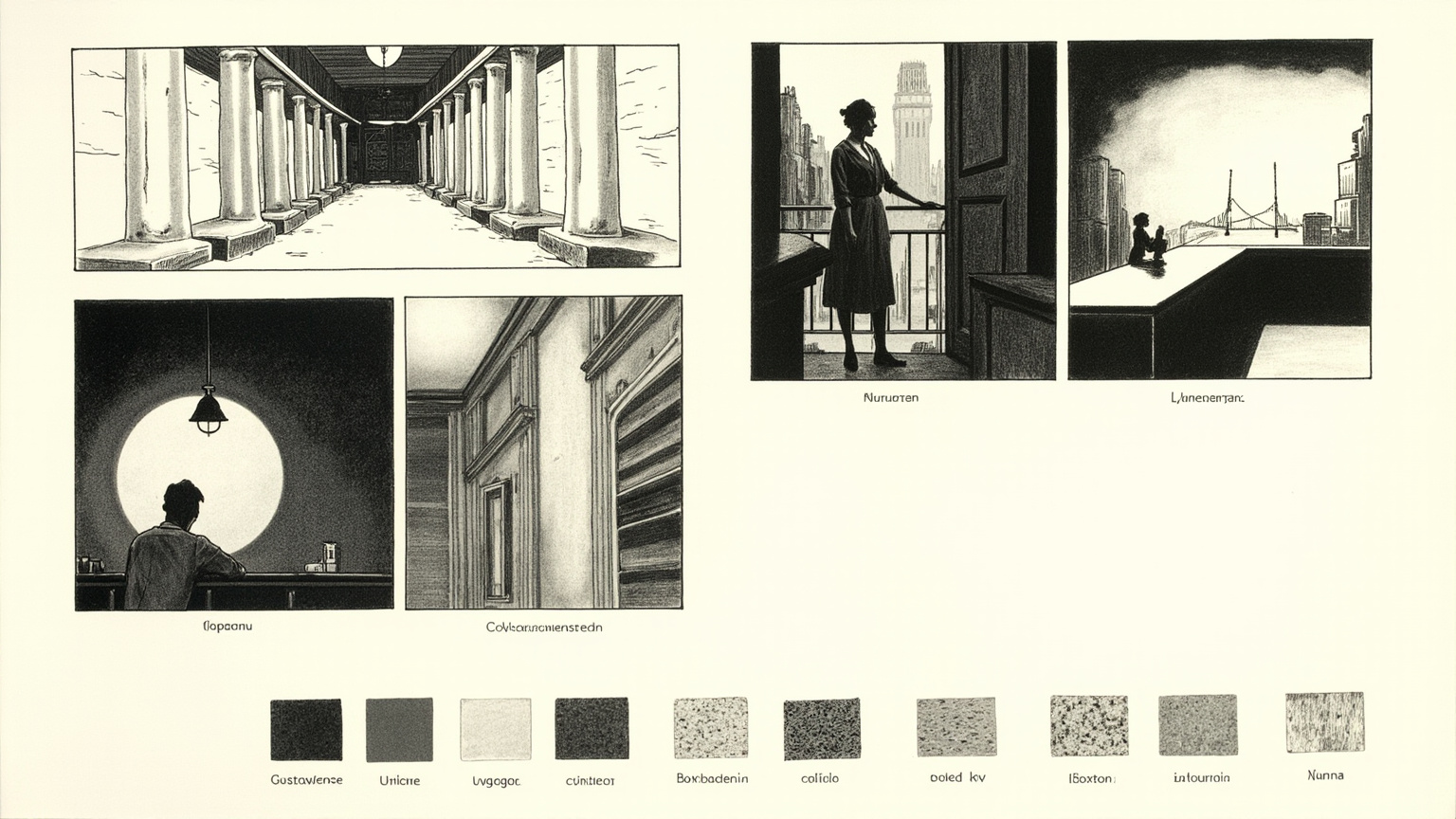
The story unfolds mostly in mid-1950s Amsterdam — a water city sliced by concentric canals, thick fog, sluggish light, bridges succeeding one another as if they'd grown into the city itself. Clément shelters in a sailors' tavern called "Mexico City" — don't let the name mislead you, it's a small canalside pub, not a Latin American metropolis. The other half of the memory is pre- and postwar Paris, the Left Bank around the Pont des Arts, cafés and riverbanks where lawyers prowl. A man adrift on water, leaning against the bar, facing a crowd of strangers, gradually dismantling himself.
Plot Line
I. The Gilded Aura of a Parisian Lawyer
In Paris, Clément wore a flawless mask: defending the poor, dubbed "the Voice of Justice" by the newspapers, attending upscale dinners where everyone gave him a wide berth of respect. What he savored was the admiration — not the money, not the fame, but that look in others' eyes. Camus handled this passage lightly, placing that self-satisfied man on display in a few lines: he smiles at you not because he likes you, but because you make him feel tall. Such a man fears losing money least of all; what he truly dreads is discovering he doesn't deserve that admiration.
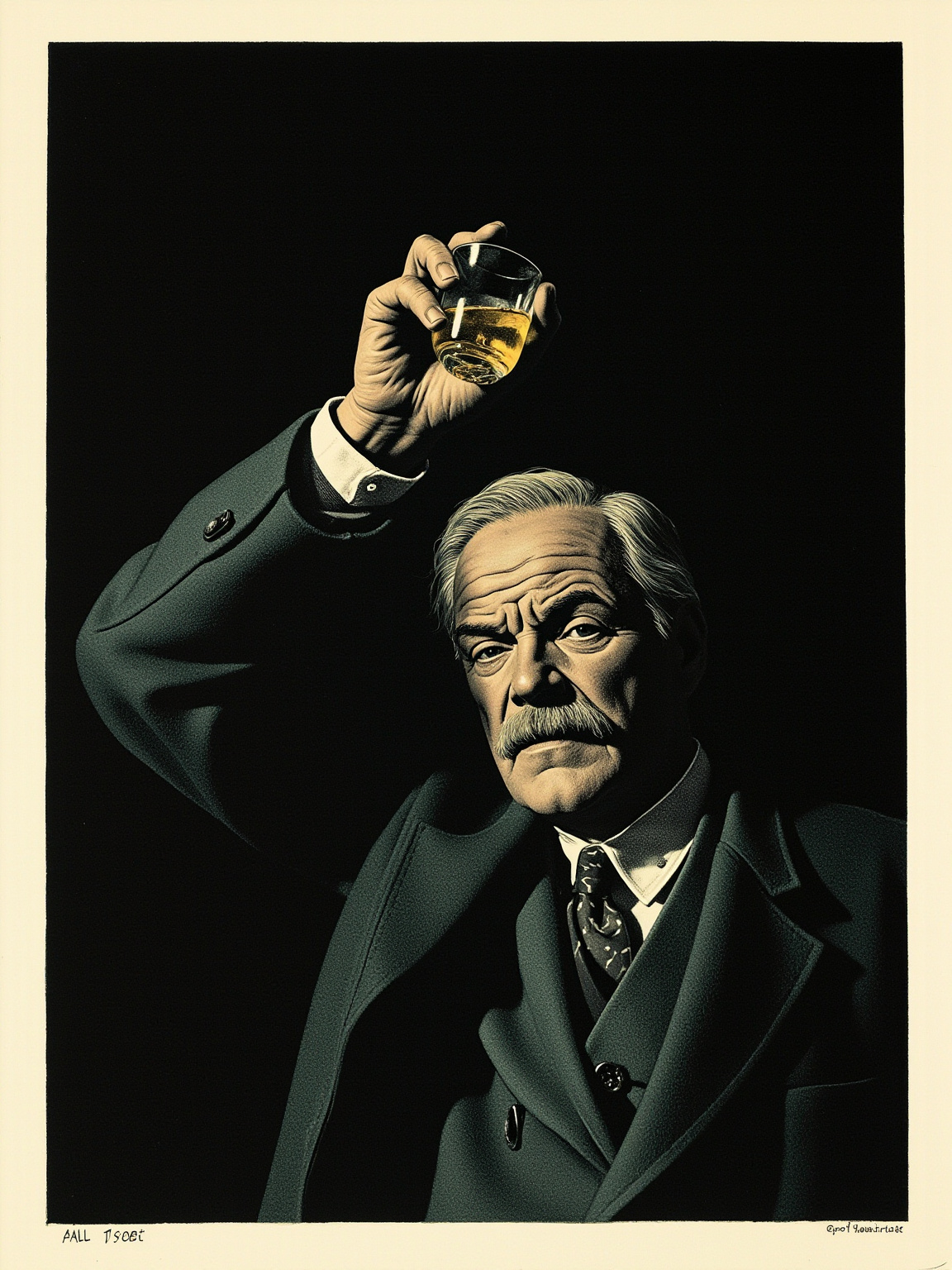
I was on the side of the angels.
我素来站在天使一边。
金句 · 巴黎律师的体面光圈
II. The Late Night on the Pont des Arts
On the bridge that night, Clément first heard laughter, then saw a young woman standing alone at the railing, looking down at the water. He didn't disturb her, didn't speak, didn't break his stride — kept walking. Then behind him came the splash, water spraying onto the stone. He stopped only after reaching the bridge's end. That single step of not turning back became the watershed of his entire life.
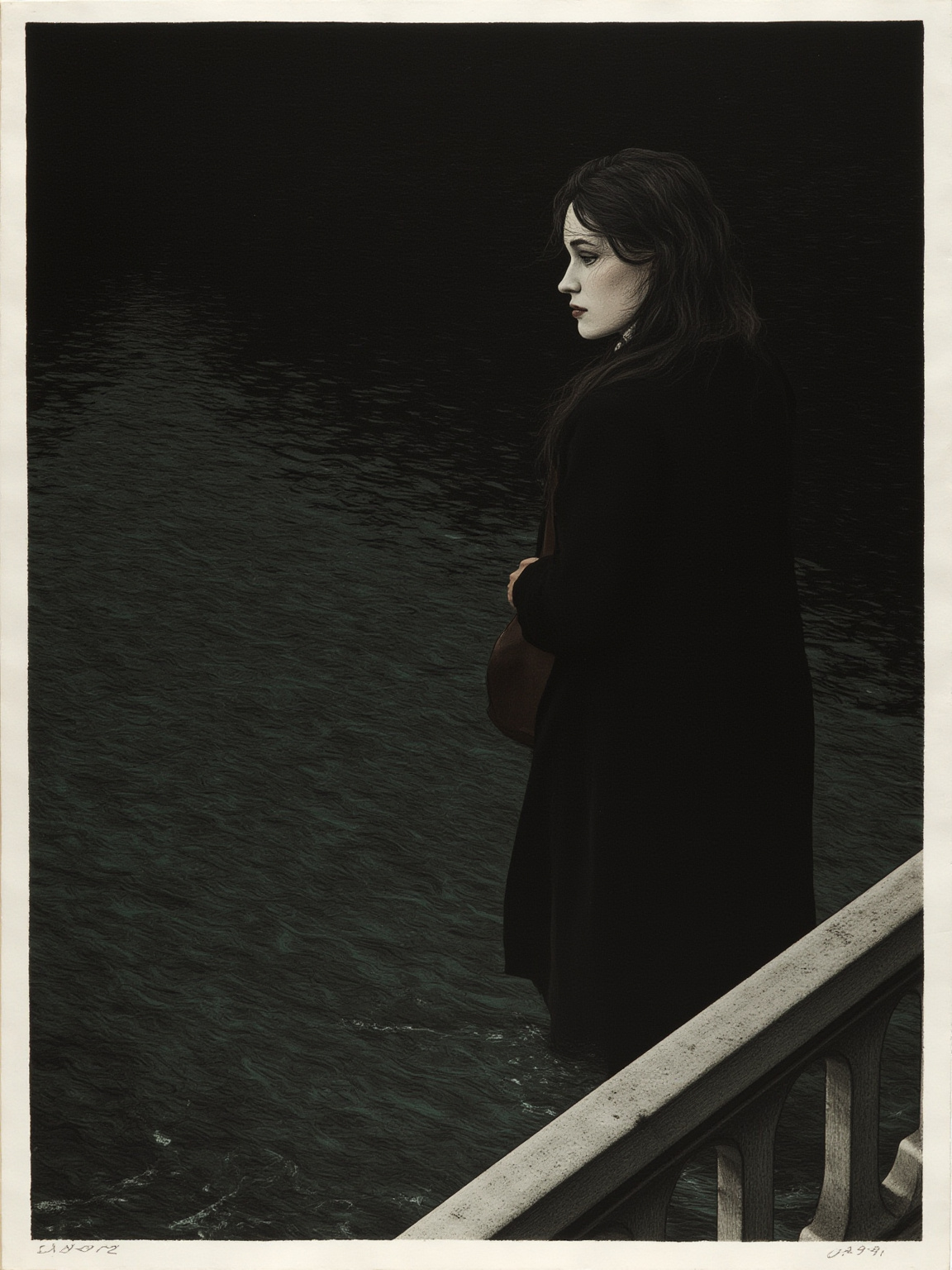
I had put off turning round, and now the night was complete.
我迟迟没有回头,而此刻,夜已 complete。
金句 · 艺术桥上的深夜
Camus never wrote how she fell — whether she slipped, took her own life, or jumped of her own accord — he deliberately left it unclear. This kind of omission cuts deep, because readers will fill in all sorts of reasons for Clément, will excuse him, and in doing so see one thing clearly: excuse-making itself is the sin. The water's mark on the bridge is evidence, but he lacks even the courage to look back.
III. The Laughter in His Ear
After that, he heard laughter—not knowing whether it was a woman's laugh, the water's laugh, or the laugh of some string in his own mind coming loose. He couldn't stay in Paris any longer, couldn't keep up the respectable act. Seeing his own reflection made him sick. A person propped up by "I'm a good person" — pull out the foundation and the whole thing falls apart.
I stopped for a long time the first time I read this passage. Not because Camus wrote it cleverly — but because that discovery of "I'm actually not that good" is the kind of pain that almost arrives only with middle age.
Four. Escape to Amsterdam
Clement ran to Amsterdam. Not to heal — to find a new role to play. He gave himself a new identity: "judge-penitent." Sounds like some medieval church ascetic, but he's really just a regular at the bar: at the sailors' pub "Mexico City" on the canal, drinking glass after glass, telling his sins to any compatriot willing to sit down.
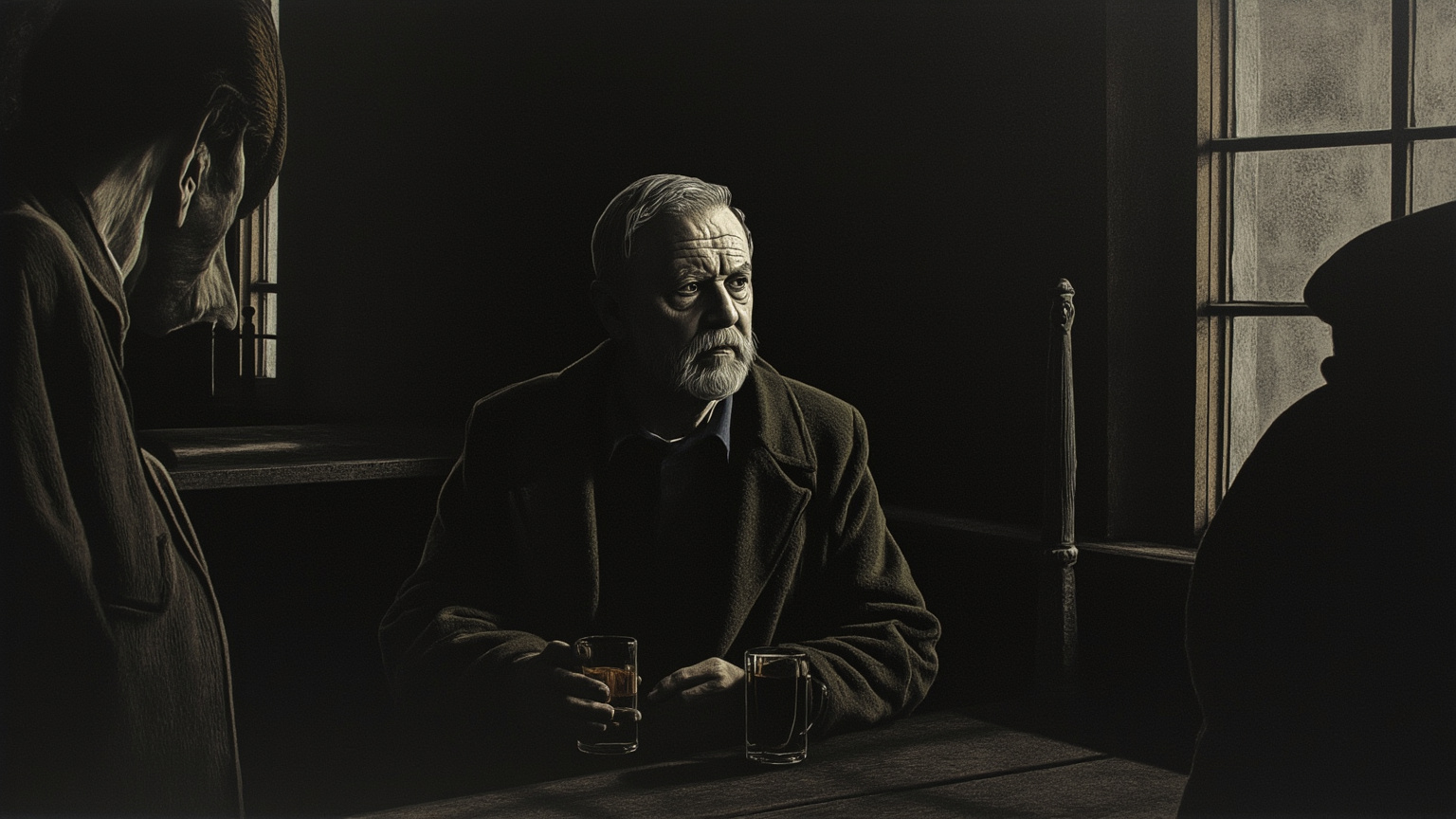
Have you noticed that Amsterdam is concentric like a maze?
你可曾注意,阿姆斯特丹的运河一圈套着一圈,恰似一座迷宫?
金句 · 阿姆斯特丹的镜像
Five. The Monologue as Play
The whole book is one person called "the interlocutor" sitting there listening. He hardly says anything — in this book he's almost mute — but by sitting there, Clement has someone to perform to. Confession doesn't work without an audience. The monologue unfolds over five nights, each night Clement peels off another layer of himself: from not looking back on the bridge, to how he used women early on, to how he savored being looked up to — layer after layer, spoken with a sincerity that makes you want to applaud.
But the eye of the play is in the last layer. Once you've heard too much, he suddenly flips: I'm this bad — so what about you? You're about the same, aren't you? You dare say you didn't laugh? You dare say that night you felt not one spark of relief — relief that the person thrashing in the water wasn't you? The moment he says this, confession becomes judgment, and the other person gets dragged into the same mud.
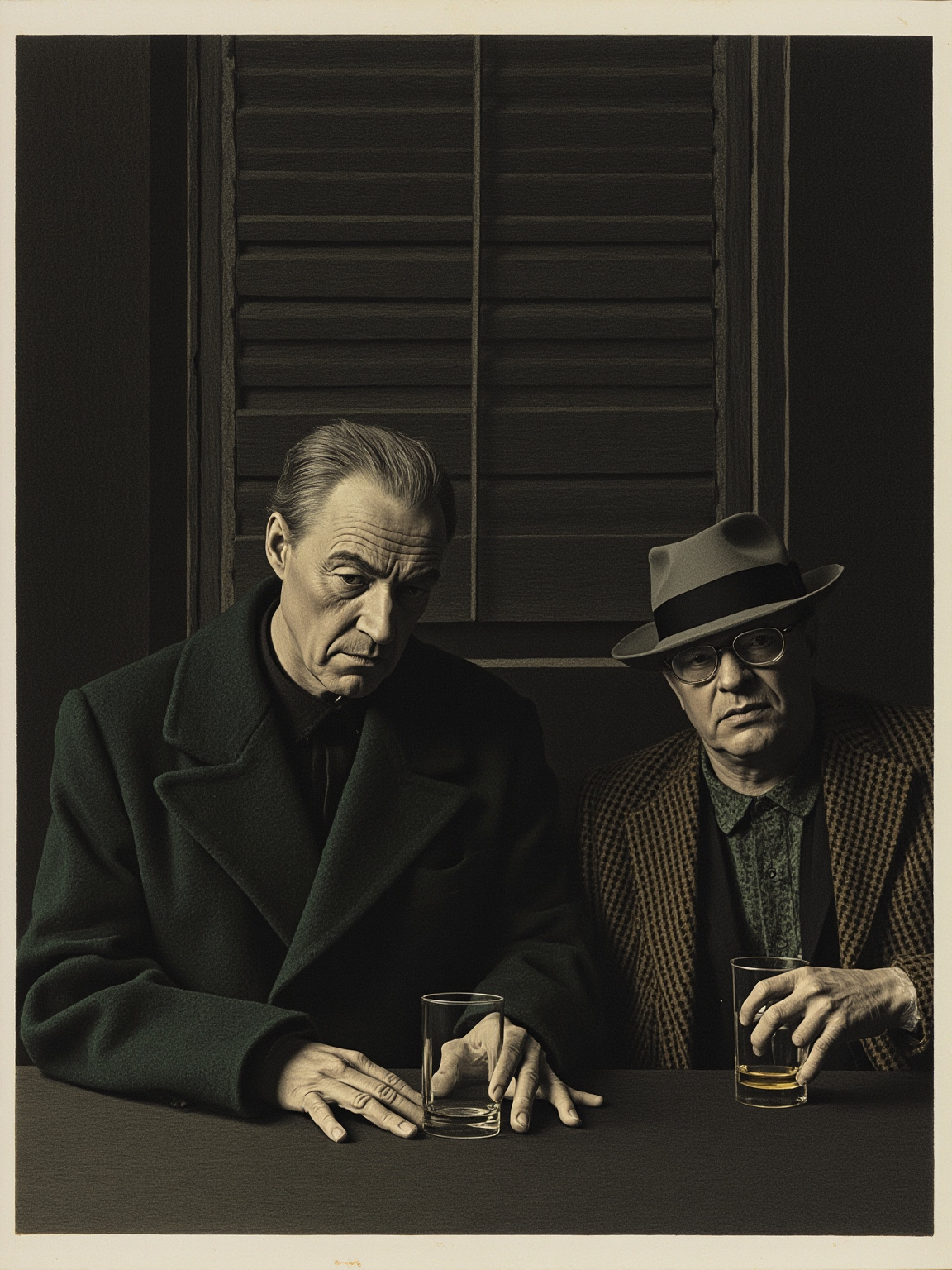
Don't think I'm climbing down. I am not climbing down. I am spreading out.
别以为我在贬低自己。不,我是在铺陈自己。
金句 · 独白这台戏
Six. Amsterdam's Mirror
Why Amsterdam? Camus chose this city with precision. Paris has the Seine cutting through it; Amsterdam has concentric rings of canals, water embracing the land like someone refusing to let themselves out. The fog never lifts, bridge after bridge — Clamence crossing each one is retracing that night on the art bridge. The city has no vista, no exit. It's the perfect exterior for his interior.
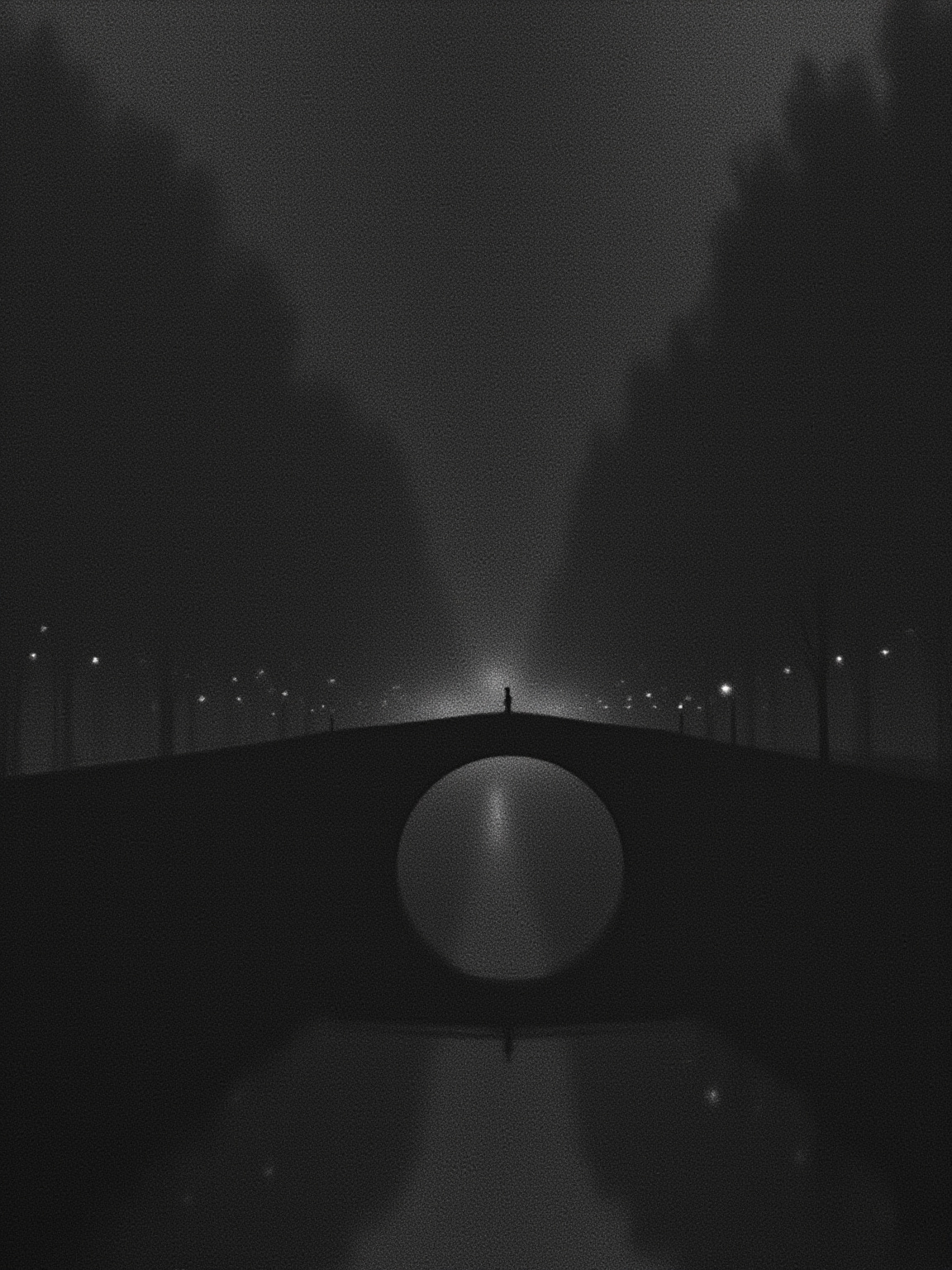
Seven: An Ending Without Redemption
At the end, Clamence is still in the bar. He hasn't changed, hasn't gone to the police, hasn't gone to church, hasn't contacted the woman's family, hasn't returned to Paris. He's simply moved from one silent listener to the next, keeps slicing, keeps waiting for the next compatriot he can drag down with him.
Camus's cruelest cut: he lets confession lead nowhere. In The Plague, the doctor still saves the city; in The Stranger, Meursault's death is at least an ending. Here, Clamence thrives, grows more alive, grows more pleased with himself. He's no longer the guilty lawyer — he's the judge who admits his crimes.
Theme and Technique
The entire Fall dissects one thing: the human need for "nobility" may itself be the greatest selfishness. You think you're sympathizing with the weak, but what you love is the self that sympathizes. Clamence sees this clearly, and after seeing it, he doesn't become kinder — he develops a new ability: by admitting his own evil, he makes others evil too. If you're as rotten as I am, you have no right to judge me.
Camus writes well, and the excellence is formal. The whole book is almost a single monologue, no plot progression, just shifts in tone and rhythm. To sit with it is to be pinned in the chair across from Clamence, listening as he peels away layer after layer. Want to interrupt him? You can't. Want to defend yourself? He says he confessed before you did. Want to leave? The door is in his mouth. When you finally close the book, you'll discover something uncomfortable: you sat there five nights listening to his confession, and you aren't much cleaner than he is.
Read this book today and you'll find it's a fable for social media. The person in your circle who best at self-analysis isn't necessarily the most sincere — they've just turned confession into a trade. The comments below are full of fellow travelers, none of them allowed to look cleaner than the rest.
Why the text itself is worth reading
The commentary tells you he's a hypocrite, tells you he uses confession as a weapon, tells you there's no redemption at the end—but it can't give you one thing: the feeling of being watched by Clémence. The hardest thing about reading this novel isn't the plot. It's the rhythm of his French monologues: elegant, lazy, constantly circling and then suddenly a blade. When you reach the opening of the second act, you'll find you can't put it down—not because you want to know what happens, but because his way of speaking is the trap itself, and you think you're listening when you've already started speaking. To shake that feeling, you can only turn back to page one and listen again.
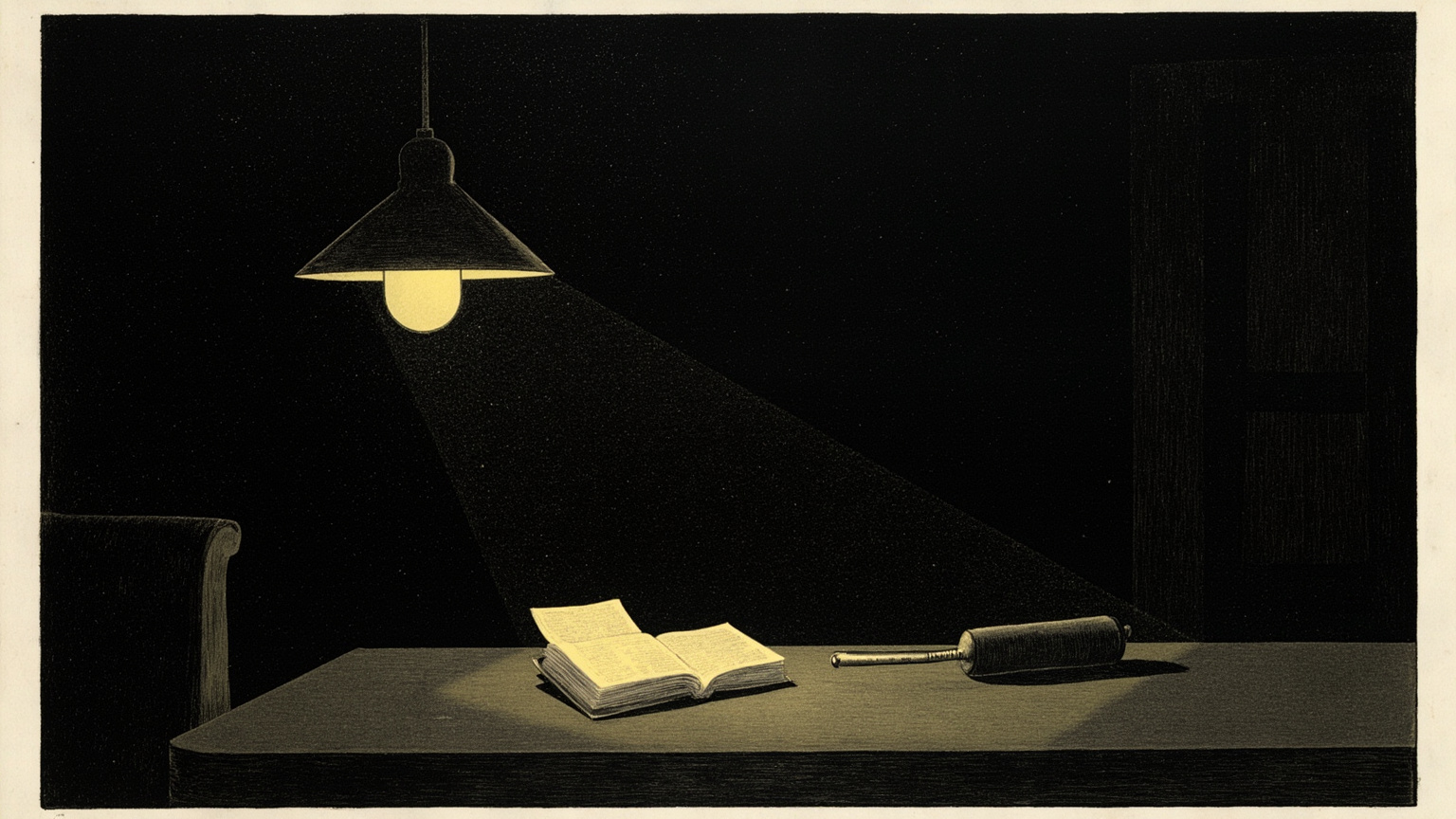
The most sinister version of confession is when the confessor wins the audience.
Art Direction4 plates
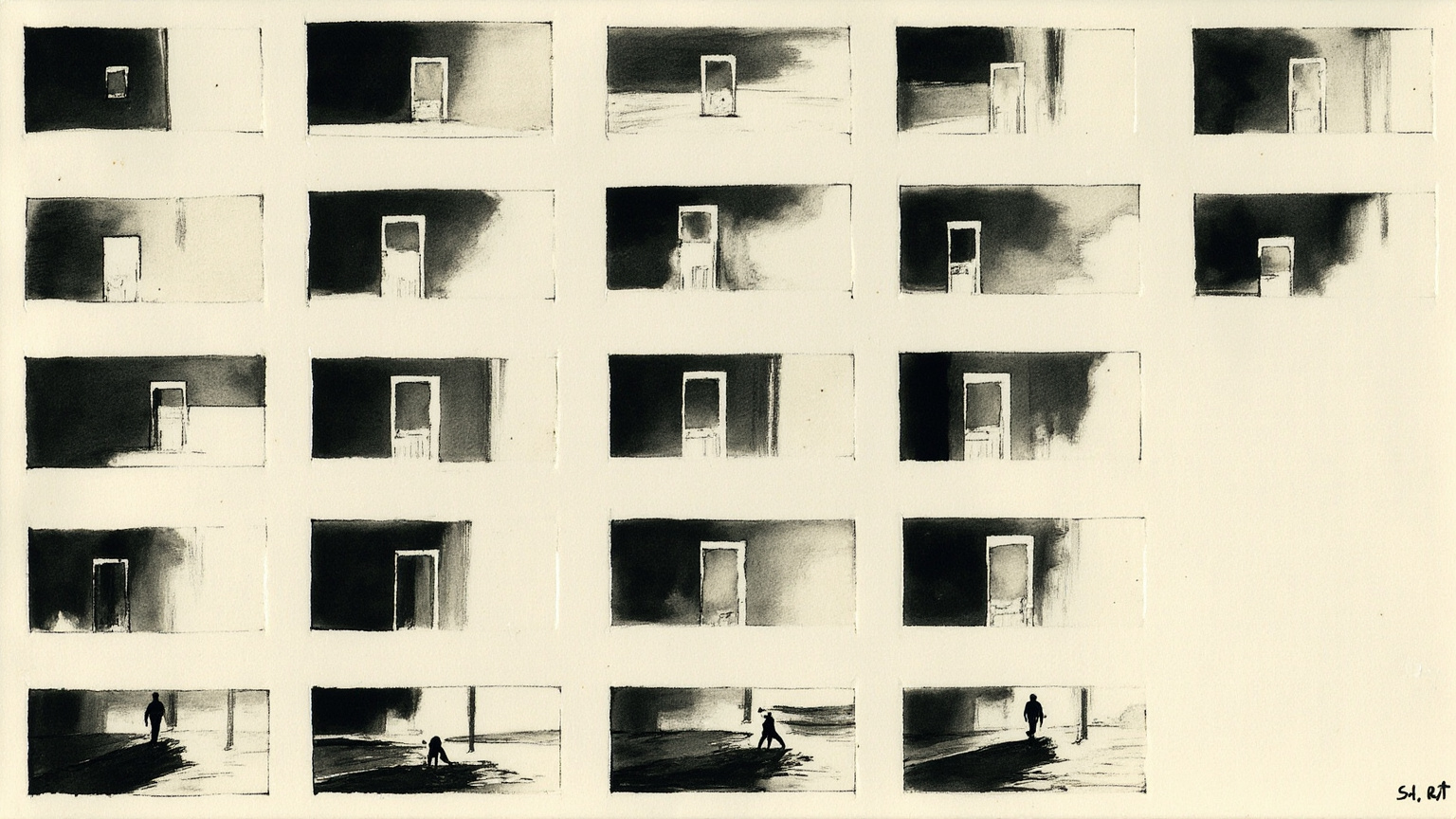
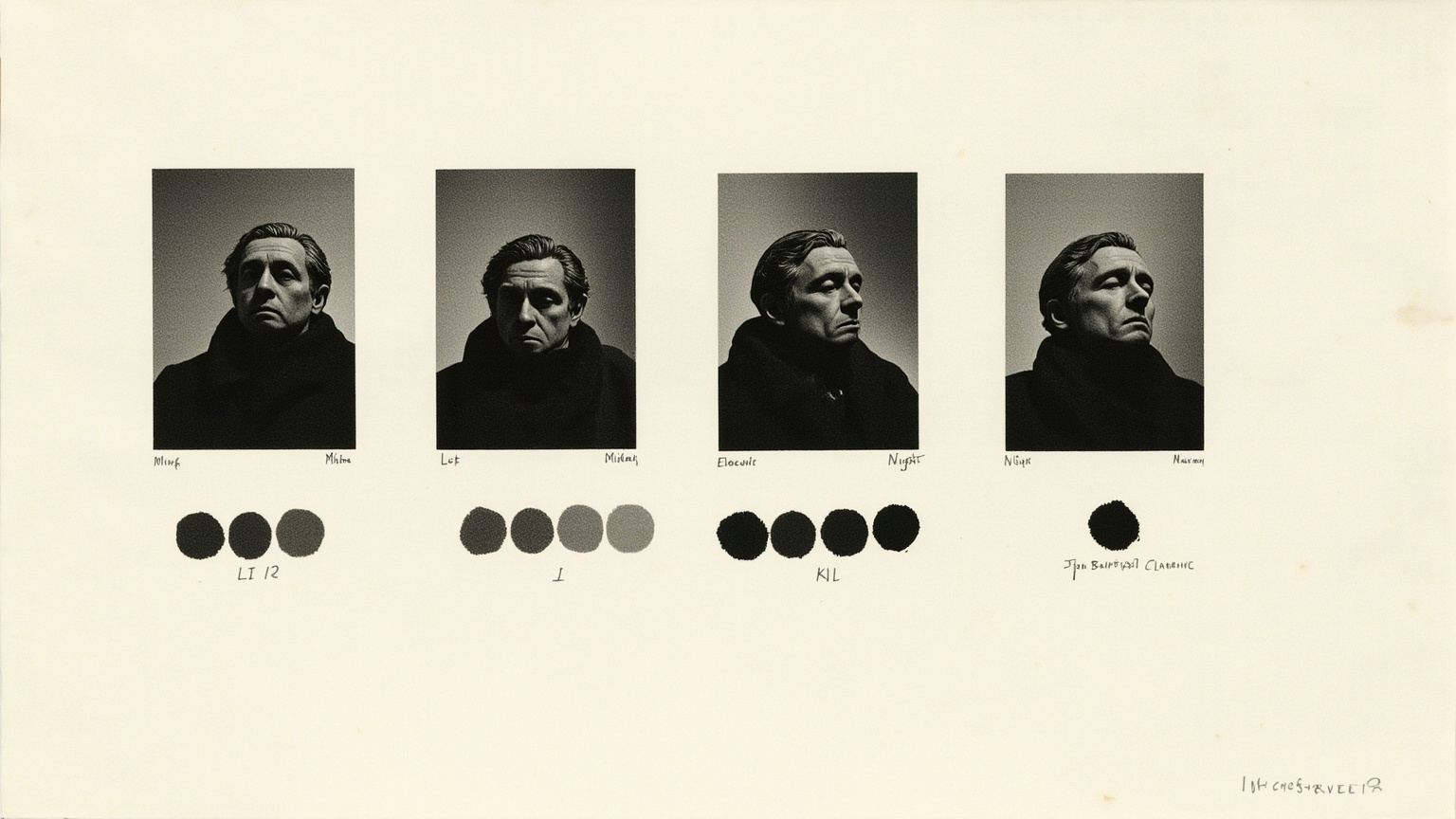
Before the guide was written, this book got a visual foundation — every illustration you just read grew out of it.