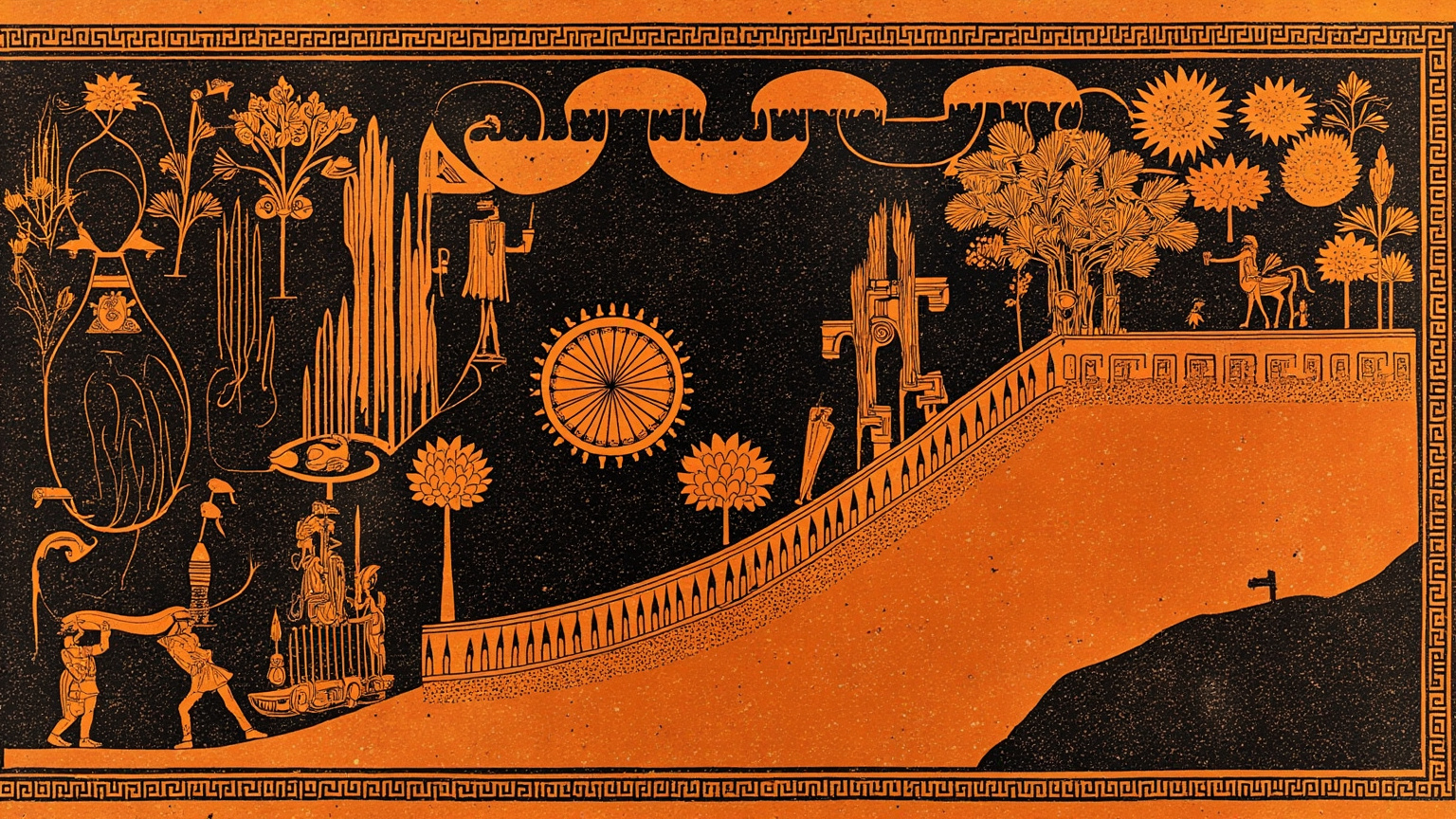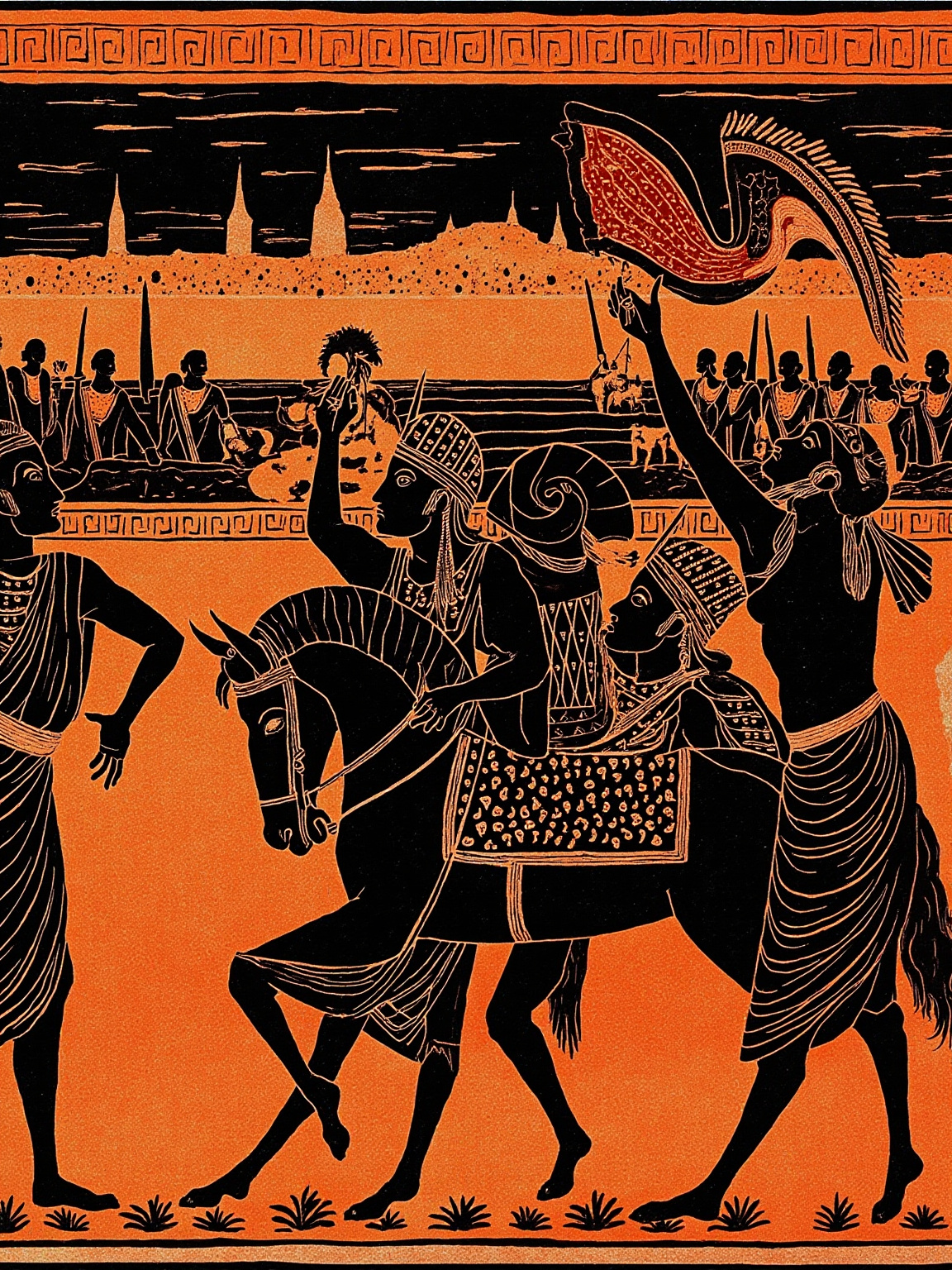
Earthworks, political propaganda, and Latin held deliberately in check
Text and illustrations produced by the pipeline
Open the first page and you get six Latin words: Gallia est omnis divisa in partibus tres — all Gaul is divided into three parts. No preamble, no rhetoric. The geography is nailed down in a single sentence. For two thousand years, nearly everyone who has learned Latin has started by memorizing this line.
It is a strange way to open a war narrative. No fighting yet, no characters, no motives — the narrator's first move is to turn the battlefield into a map. Over the next seven books, Caesar will push the borders outward on that map, stroke by stroke: past the Saône, past the Seine, then past the Rhine, and finally past the English Channel.
The Gallic War was written by Julius Caesar between 58 and 50 BC. It is not a history composed after the fact but a set of annual dispatches sent back to Rome from the field, written up year by year. The first seven books are Caesar's own work; the eighth, the Alexandrian War in the standard edition, was added later by Hirtius, who took over the account after him. Its place in literary history is unusual: it is both the founding model of classical Latin prose and the origin point for political self-narration in Europe. For two thousand years, anyone learning to write about politics with restraint, coolness, and plain fact has had to reckon with this book.
There is a colder reason it has lasted. It is the first firsthand ethnography of Celtic and Germanic societies on the eve of Roman conquest — the internal structure of nobles, Druids, and commoners, marriage customs, chariot and cavalry tactics, how these societies organized themselves. Archaeologists today still check Caesar's descriptions line by line against what comes out of the ground. Take this book away, and Gaul before the Roman era falls almost entirely silent.
There is only one narrator: Caesar, then Roman consul and governor of Gaul, in his early forties, holding full military and political command over the legions and the province. When he writes about himself, he insists on the third person — "Caesar did this," "Caesar judged that." The deliberate distance is not modesty; it is a political posture. He wants the decisions and the credit concentrated in one man without that man appearing to boast. The impression a reader takes away is of someone permanently calm and permanently in the right.


The coldest trick in this book is writing propaganda that reads like a map — calm, restrained, every sentence a fact, leaving the reader to draw the conclusion on their own.
A guide can lay out the map, but only the text itself puts you inside the rhythm of those short Latin sentences. Every one pins down a fact and never once turns lyrical, and that density of restraint is exactly what any retelling thins out. Then there are the concrete objects — the pile structure of the timber bridge, how the grappling hooks actually worked, the daily layout of a camp — which shrink to bare concepts once you step outside the original. And there is one experience nothing can substitute for: the paragraph where Vercingetorix walks out through the gates of Alesia, where Caesar's prose suddenly tightens until it almost stops breathing. That force only lands if you read it yourself. Knowing how it ends does not make it not worth reading, because what this book is really writing is a demonstration of how a political document gets made.
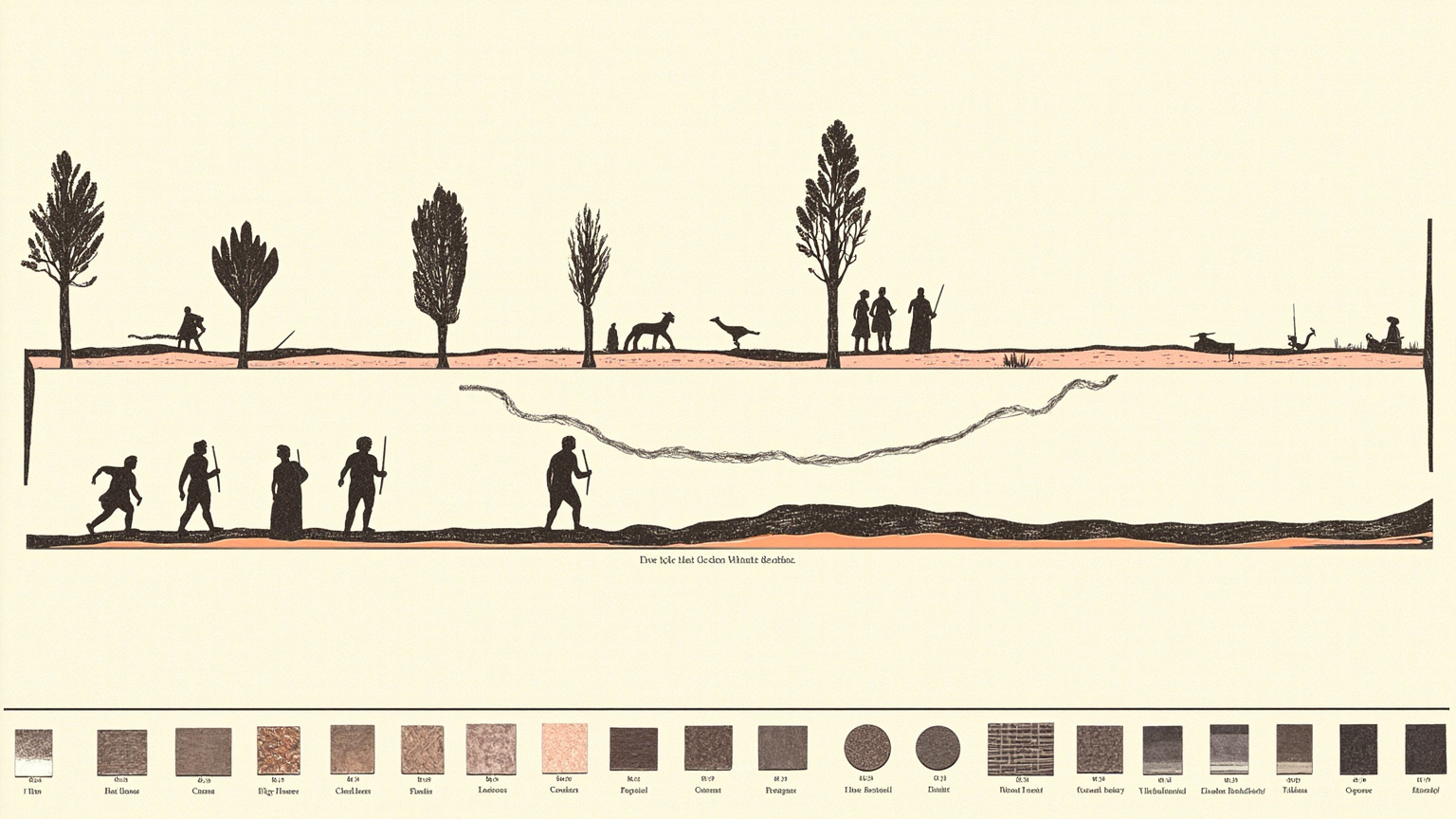
Before the guide was written, this book got a visual foundation — every illustration you just read grew out of it.
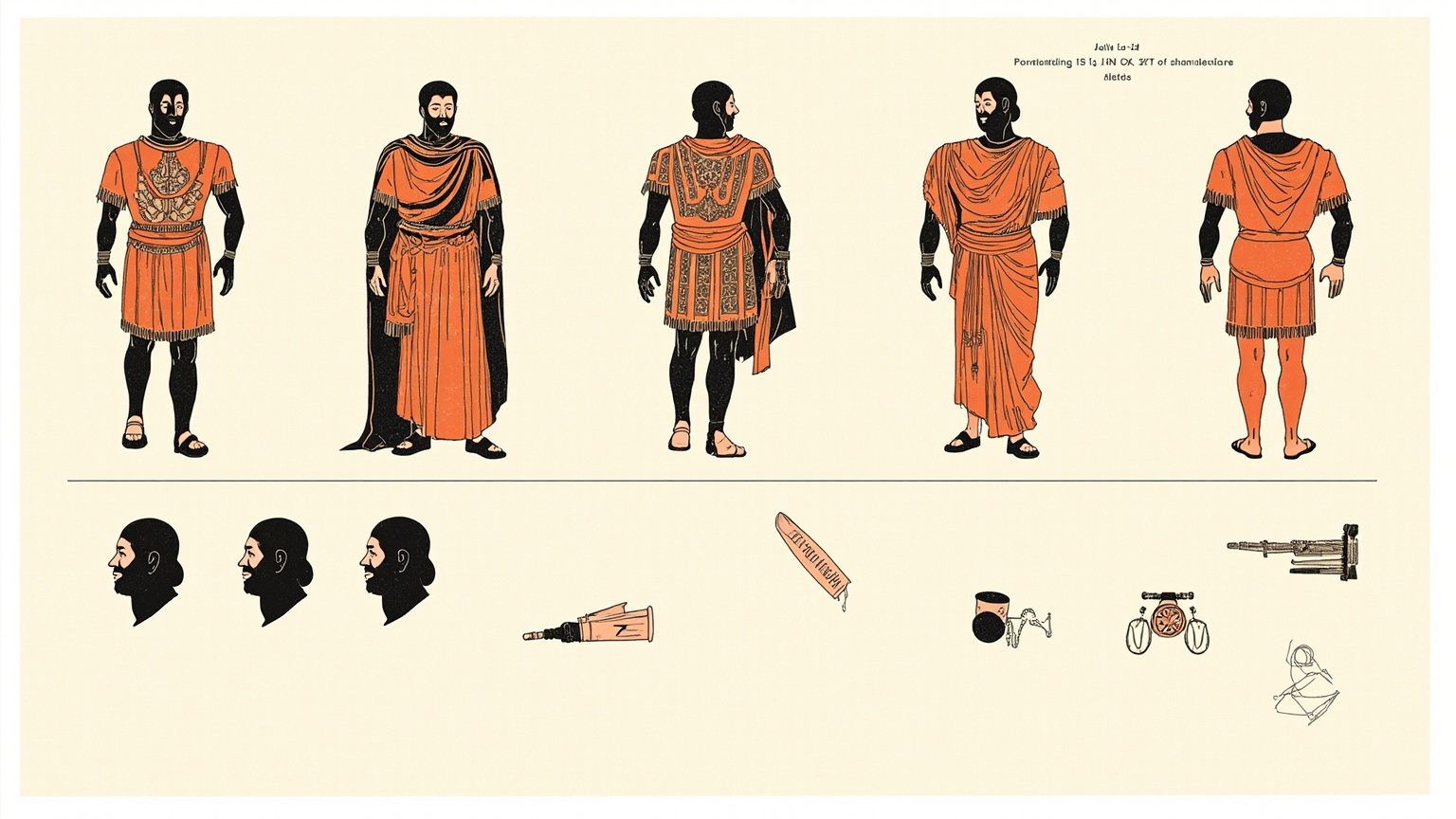
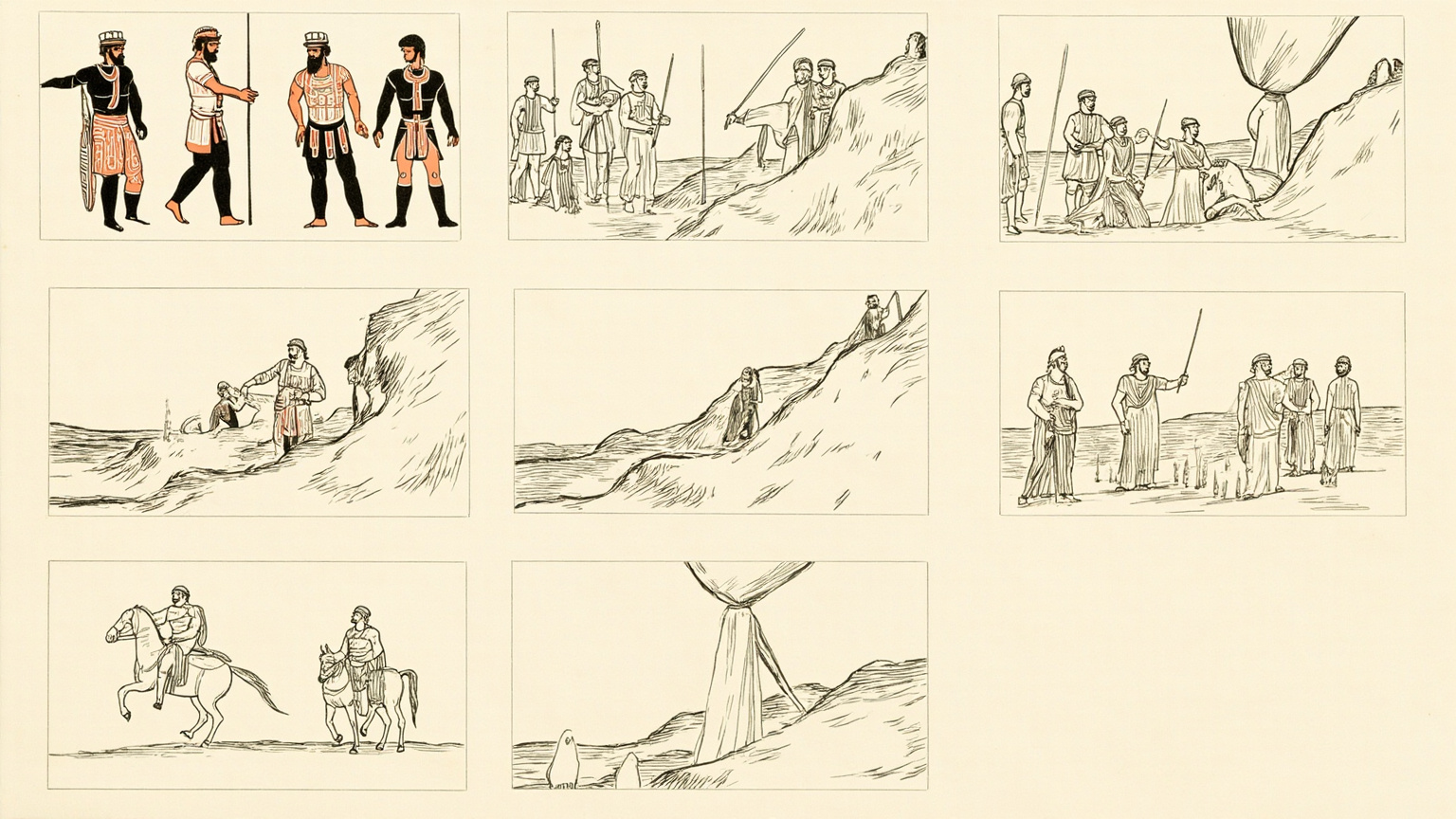
Facing him is Vercingetorix, the young leader of the Arverni. In 52 BC he did something no one had managed before: he twisted more than six hundred Gallic tribes into a single cord. His methods were brutal — centralize power, bind everyone by a shared oath, and burn the grain. He torched his own supplies first, cutting off Rome's food source and, at the same time, his own people's route back to surrender. He is the weightiest opponent in the whole book, and the most fully drawn figure in Caesar's telling. Watch for a key distortion of perspective: everything we know about Vercingetorix's motives and state of mind comes from Caesar alone. Vercingetorix has no independent voice here. He is not a protagonist with his own record — he is the adversary Caesar's pen decided was worth writing this well.
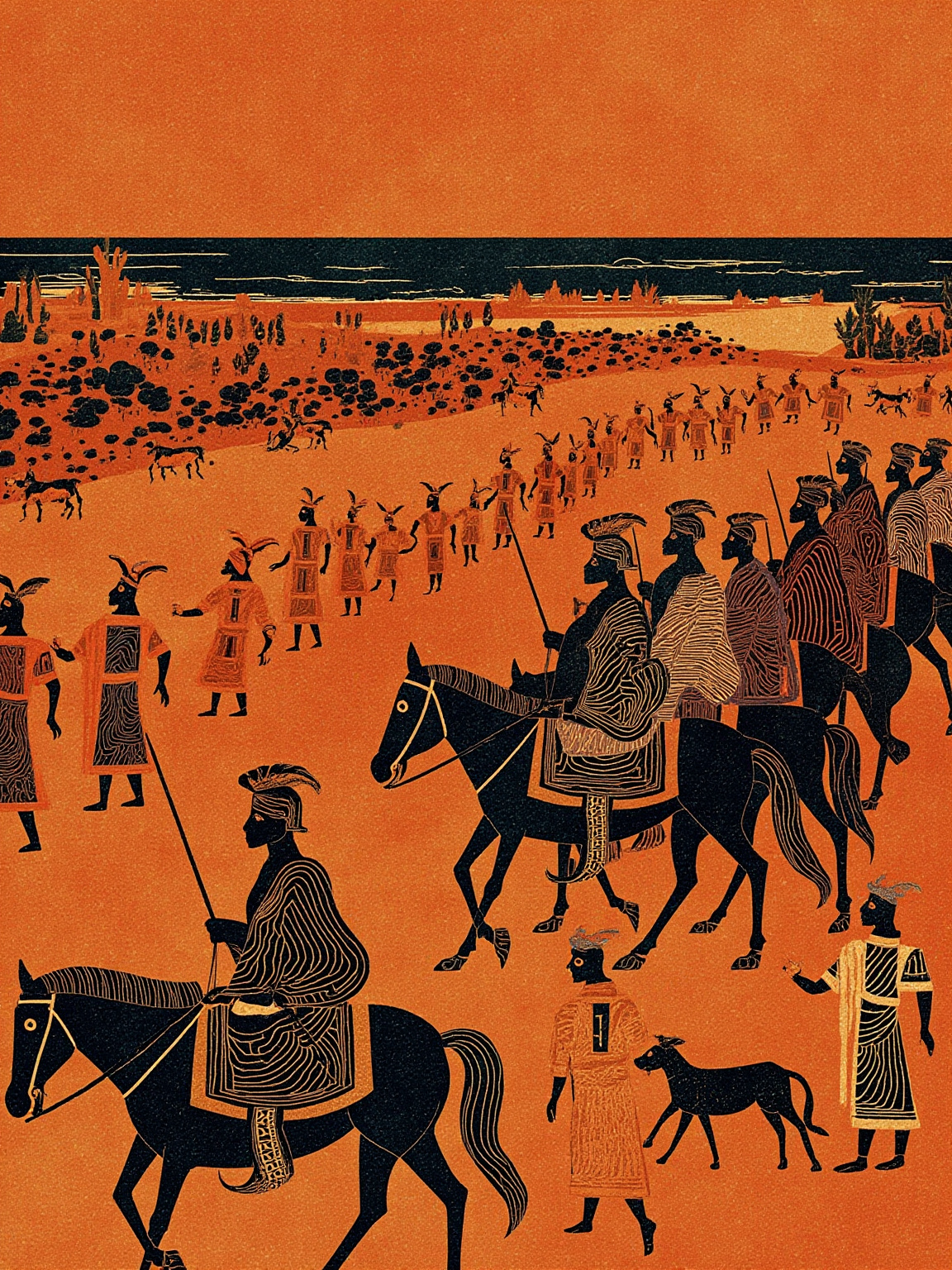
The story opens with the Helvetii. The whole tribe wanted to migrate west, crossing the Roman province to find new land. Caesar did not block them at the border. He let them go, let their column stretch out into a long line, then crushed them at Bibracte and forced them back to where they had come from. This first battle sets the logic that runs through the whole book: Roman peace does not mean stopping the barbarians in place. It means pushing them back.
Buried inside this campaign is the book's most dramatic diplomatic exchange. Divico, the Helvetian elder sent to negotiate, was an old warrior who had already beaten a Roman consul in battle, and he opened by throwing Rome's old wounds back at Caesar as a threat. Caesar's answer says everything about this book's temperament: he did not argue with history. He simply stated the fact — if you want war, then war it is. That is where brevitas, the extreme economy of the sentence, plants its feet.
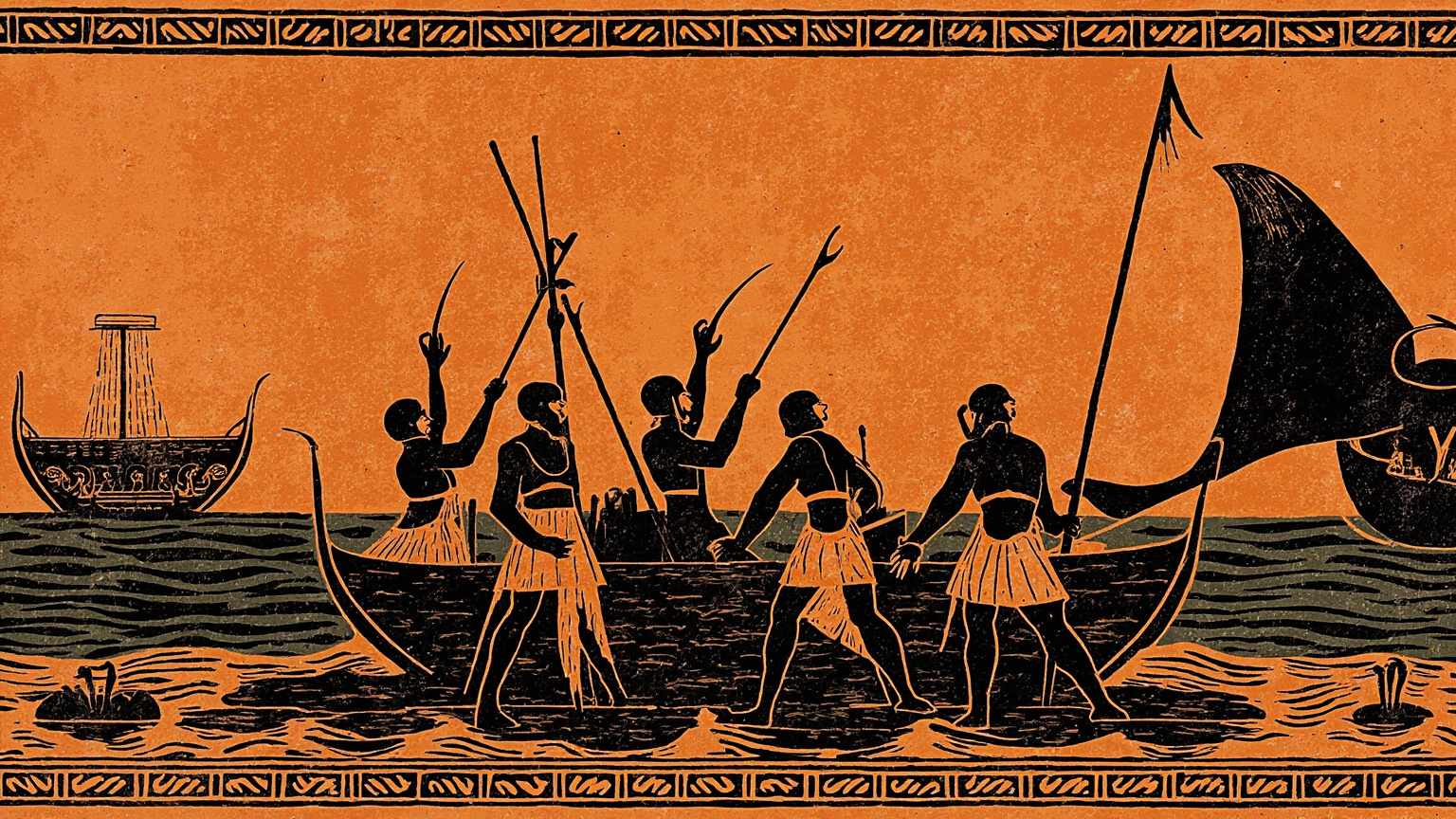
In 57 BC, Caesar marched fast enough that his enemies never caught up, and broke apart the Belgae — the northernmost, most numerous, and supposedly bravest confederation in Gaul. That same summer and fall, he split his forces to subdue the Aquitani, and off the coast of Brittany he sank Gallic armored warships with long-handled grappling hooks. Maritime Gaul entered Roman view for the first time.
What makes this year's writing worth noticing is not the fighting itself but the pace. Caesar disposes of the Belgae in a few short paragraphs, replacing every battlefield detail with three verbs: arrive, surround, force surrender. Clearing the north and the coast in a single year is exactly the compression he is after — he wants Roman readers to finish the passage thinking this man moves too fast to keep up with.
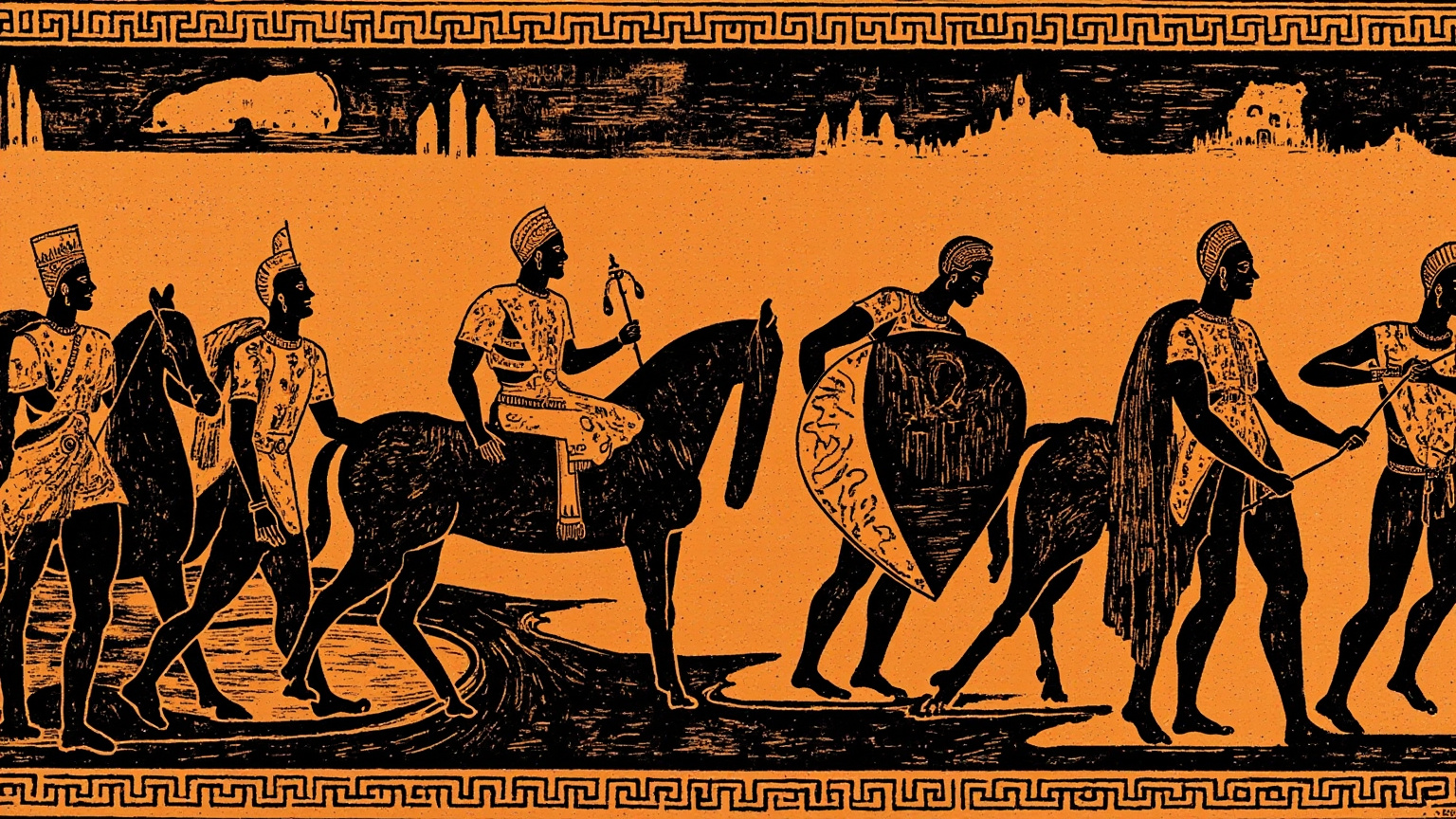
In 55 BC the book turns to engineering. The Rhine comes first. The Germanic king Ariovistus had already been driven back across the river, and Caesar's goal was not to chase him further but to prove that Rome could — he built a timber bridge across the Rhine in ten days, pushed the legions into Germanic territory, made his point, and withdrew. The bridge was burned afterward, but the border had already been redrawn for good.
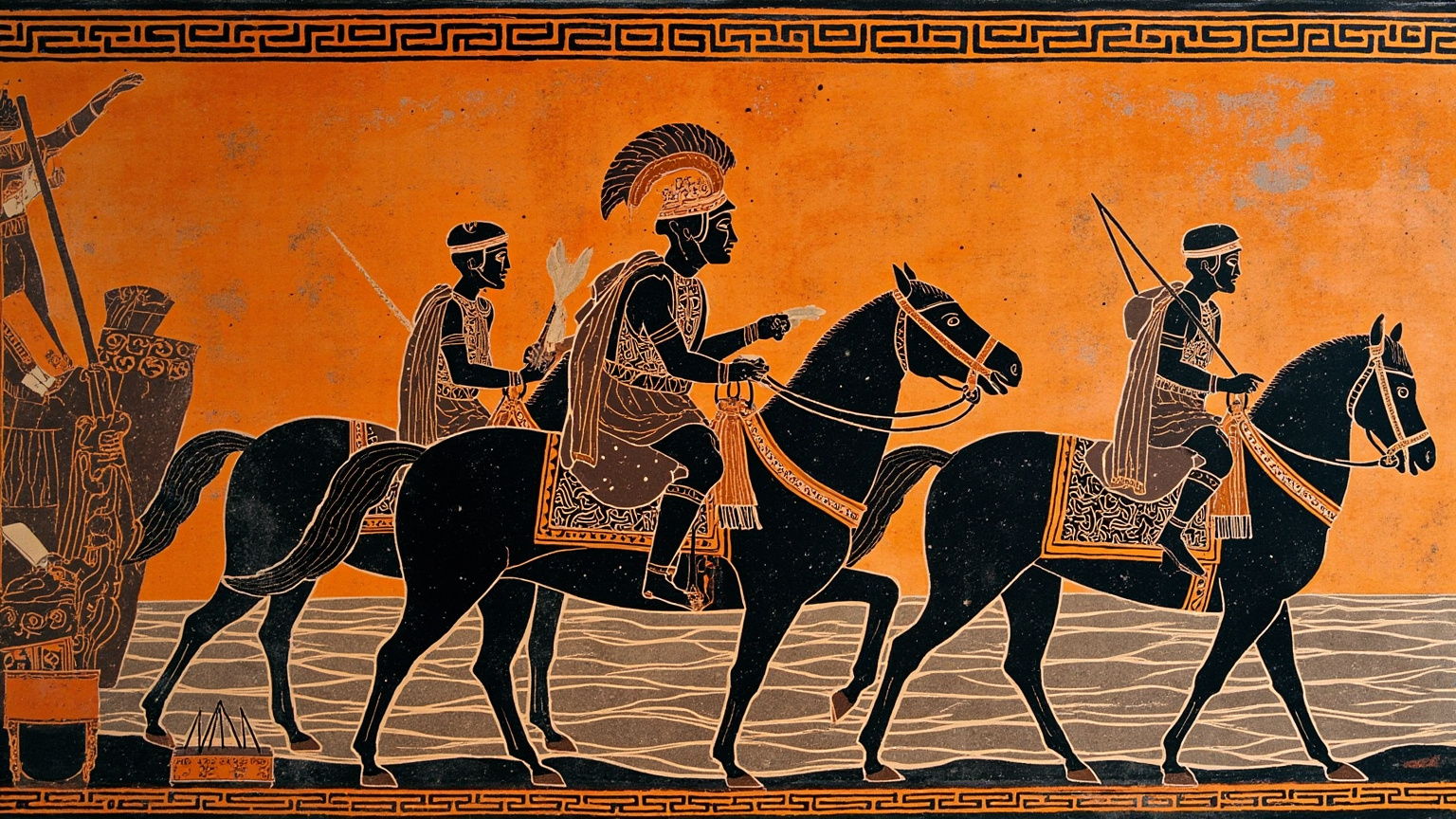
That year and the next, he crossed the English Channel twice. The first landing collected tribute and pulled back; the second pushed inland and dismantled Cassivellaunus's network of strongholds one by one. Neither crossing was really about conquest, any more than the ten-day bridge had been. What they did was redraw the map — the Rhine and the Channel stopped being treated as Rome's edge.
In the winter of 54 BC, Ambiorix, chief of the Eburones, did something that almost never appears in Roman histories: he faked surrender, circled around, and wiped out the commanders of two Roman legions wintering in their camp. It was a tactical win, but more than that it was a statement — it told every tribe in Gaul that Rome was not unshakable once winter came.
Caesar's response pushed the whole affair to an extreme. After relieving the siege in the snow, he did not pull his men back to camp; he ordered the annihilation of the entire Eburones people, burning villages, stripping their grain, driving the survivors east across the Rhine. It is a rare case of deliberate scorched earth in Roman history, but Caesar's own account stays almost entirely composed: the tribe was crushed, the whole territory put to the torch. Abstraction covers every step of the process. That is a standing convention of the Roman dispatch — it names outcomes and hides everything that produced them, and it is a distance worth keeping in mind here.
52 BC is the true turning point of the whole dispatch. Vercingetorix consolidated power inside the Arverni, then bound more than six hundred Gallic tribes to one banner through a shared oath. His harshest move was burning the grain — his own grain first, cutting off his own people's path to surrender, and as a side effect starving Rome's supply lines too. Two separate consequences, nailed together by one fire. This kind of self-inflicted scorched earth as political mobilization has almost no parallel among Rome's other opponents.
Vercingetorix's high point comes at Gergovia. Caesar suffers a rare defeat under its walls — too few troops to overwhelm the defenders, and a Gallic relief force that arrived faster than he expected. Caesar writes the defeat in almost no space at all, but it is the one moment in the whole book where a Roman reader realizes this man can lose too. Then Vercingetorix falls back to Alesia and hands the war over to engineering.
The siege of Alesia is where the book's engineering climax and its political climax land on the same spot. Around this last Gallic stronghold, Caesar built two walls — the circumvallation facing the town, sealing it in, and the contravallation facing outward, ready for any Gallic relief force that came. One wall to trap, one wall to defend against rescue, the whole structure laid out as cleanly as a blueprint. Caesar lists the distance between the two walls, the ditches, the towers, the number of traps, item by item, like an engineering inventory.
Then the climax arrives. The Gallic relief army launches its final assault from outside while the defenders inside press the walls at the same time, catching the Roman works between two forces. On the day of the decisive battle, Caesar's writing suddenly produces one concrete, physical image: as the line wavers, the standard-bearer of the Tenth Legion raises the silver eagle high, and as long as the standard stays up, the line holds. It is one of the most famous images in Roman military history, and one of the few moments in the whole book where an actual body does something. The relief force is broken. Vercingetorix walks out of the gates and lays down his arms before Caesar.
After Alesia, the two remaining books contain no more major battles. Caesar keeps mopping up scattered resistance across Gaul, folding territory after territory into Roman administration and taxation. This stretch is the most political part of the entire book. The dispatch form does not change — it is still Caesar arrived here, Caesar pacified this — but the map now fills in with tax districts, records of tribal assemblies being convened, and the appointment of pro-Roman local nobles.
The real protagonist of The Gallic War is not the sword. It is engineering. Roads, bridges, camps, the double wall at Alesia — Caesar's version of peace is a force held up by earthworks. Turning a siege into something that can be drawn, measured, and explained step by step is this book's most concrete legacy to later military writing.
There is a deeper layer underneath. Caesar fought the war and mailed the dispatches back to Rome at the same time, writing about himself in the third person, restrained, unemotional, every sentence a fact, letting Roman readers reach the conclusion this man should be in charge on their own. This is a brilliant piece of political writing, not a neutral history, and that is a lens worth keeping the whole way through. The third-person dispatch is this book's largest influence on two thousand years of political self-narration in Europe.
There is also a subplot easy to miss: the social organization, weapons, customs, and beliefs of the Gauls, Germans, and Britons. The internal structure of nobles, Druids, and commoners, how chariots and cavalry worked together, the rules of marriage and inheritance — for two hundred years, every book on the Indo-European tribes of that era has checked Caesar's account against the archaeology, line by line. Take this book away, and the first century BC in Gaul goes quiet.