The Gold Demon (Konjiki Yasha) · Companion Guide
金色夜叉
一枚钻石换一座宅邸,热海的松树记下未结的账——明治金钱吞食爱情,连载至死未写完的审判。
Opening
Under a pine tree on the Atami shore, a young man named Kan'ichi struck his fiancée. The ring flew from his fingers into the sand behind her, and behind her the Fujiya inn was lit up with the lights of a honeymoon already underway. What came out of his mouth wasn't words but a curse: a year from tonight, this same month, this same date, I will put a cloud of tears over that moon. Then he turned and walked away. The pine branch didn't move in the night wind.
That kick was not a romantic declaration. It was a crime scene. The most famous pine tree in modern Japanese literature exists because it kept that moment on record. Kan'ichi never became the hero of his own revenge. He became a clerk in a loan office, and the fire that had been in his eyes that night gave way to nothing but promissory notes.
What Kind of Book Is This
The Gold Demon is a novel Ozaki Kōyō began serializing in the Yomiuri Shimbun in the thirtieth year of Meiji, 1897. He was in his early thirties then, one of the central figures of the Meiji genbun itchi shift, the move away from classical written Japanese toward a prose that matched how people actually spoke. He wrote in a style that mixed old and new, and into his newspaper installments went the debts of feeling running through Tokyo's ryotei, the Western fashions crowding the streets of Ginza, and the cold moon over the Atami shore.
At the time it was read across the whole of Meiji Tokyo at once, not a work for the salon but one passed hand to hand in the street. Its circulation and the volume of reader mail outran every other serial running alongside it. It has since been adapted into kabuki, film, and radio drama more than a hundred times, and Atami still keeps a bronze statue of Kan'ichi and that same pine tree standing. What made it last wasn't the plot by itself. It took what looked like an ordinary love triangle and turned it into a moral autopsy of how money eats through a relationship.
People and World
Kan'ichi starts out as an earnest, bookish young man, the sort who worries about the nation and studies hard, waiting to marry Omiya, his childhood friend. Omiya is the daughter of the man who owns the Kōnoi, a Tokyo ryotei, poor but self-respecting, and she and Kan'ichi have grown up together and privately pledged themselves to each other. Both families have quietly accepted the match: an engagement not yet delivered on, but already signed like a contract.
Omiya's father is a stubborn old Edokko, a proud, old-style native of Edo, and he runs his ryotei on borrowed money. Her mother is gentle and long-suffering; she can see her daughter's pain but cannot stay her husband's hand. What brings it all down is Kan'ichi's uncle's family: they are the ones who lent the Kōnoi its money, and when the time comes to collect, no repayment is quicker than handing over a daughter. The man who takes Kan'ichi's place in the marriage is a shallow, spendthrift young man from a wealthy merchant family; he treats Omiya as a new acquisition and grows tired of her within the year.
The story's world spans two places. Tokyo is a modern city drowning in debt and neon-lit pleasure, where rickshaws run alongside gentlemen in Western suits. Atami is a coastline under a cold moon and black pines. An invisible chain of debt links the two: the Kōnoi owes money to Kan'ichi's uncle's family, that family uses the debt to pull Kan'ichi into its own loan office, and the money closes a loop running through relatives and lovers alike.
How the Plot Moves
The private pledge between childhood sweethearts opens like a small Meiji romance. The restaurant owner's daughter and the studious young man are fond of each other, both families look on and say nothing against it, and Kan'ichi reads by lamplight, waiting for the day he can properly claim her as his wife. Kōyō writes this part with restraint: lamps, playing cards, shadows on paper screens, nothing pushed toward sentimentality. This is where his craft shows. He never lets the happiness reach its peak. The engagement is broken from outside before it can be fulfilled, and the gap that leaves behind becomes the fuse for everything that tears apart later.
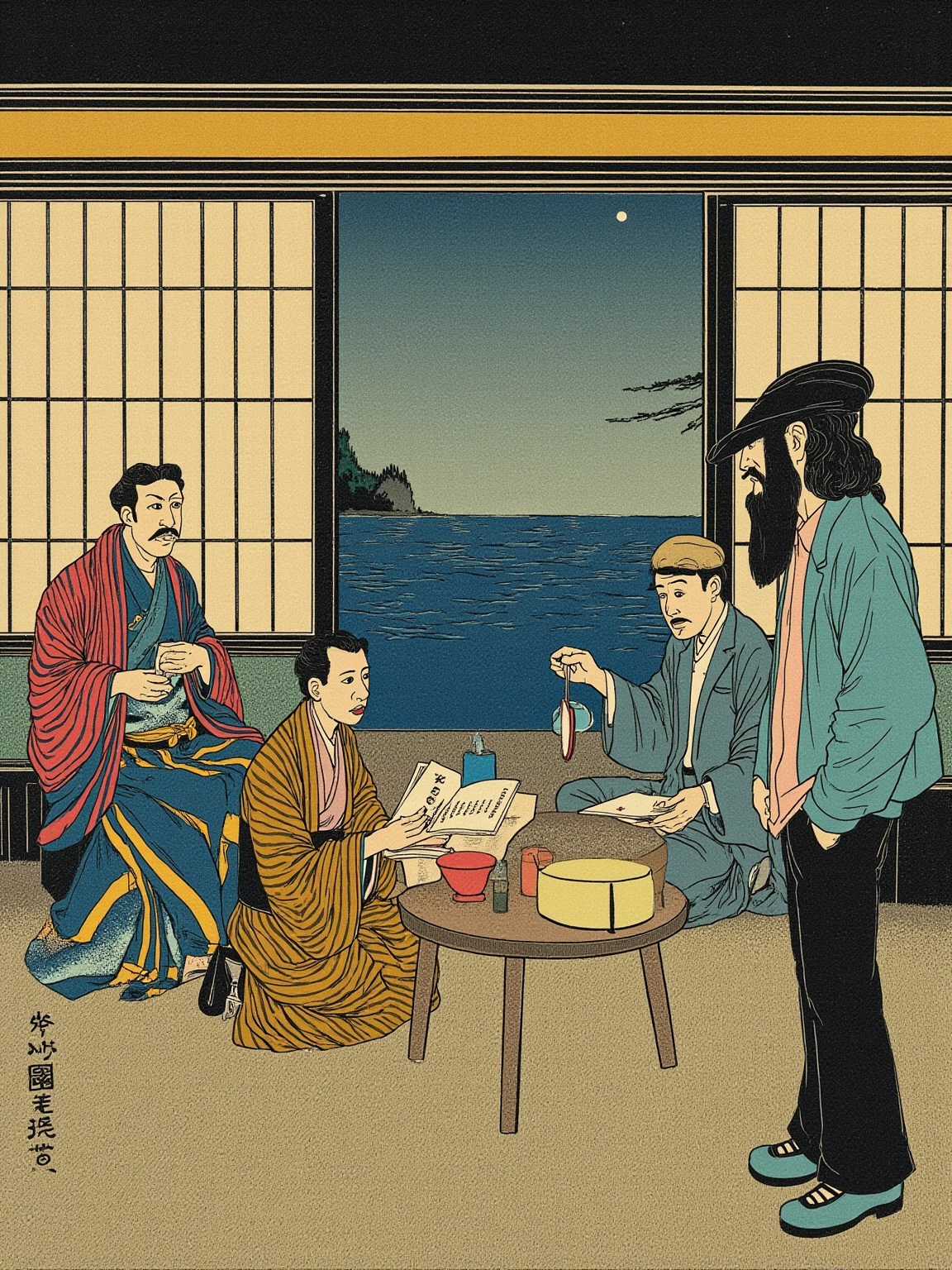
To live is to struggle, and a man's worth is set by how much of that struggle he can bear.
人生即是战场,男子之价值即在能耐几多辛苦耳。
金句 · 歌留多之章 · 贯一誓志
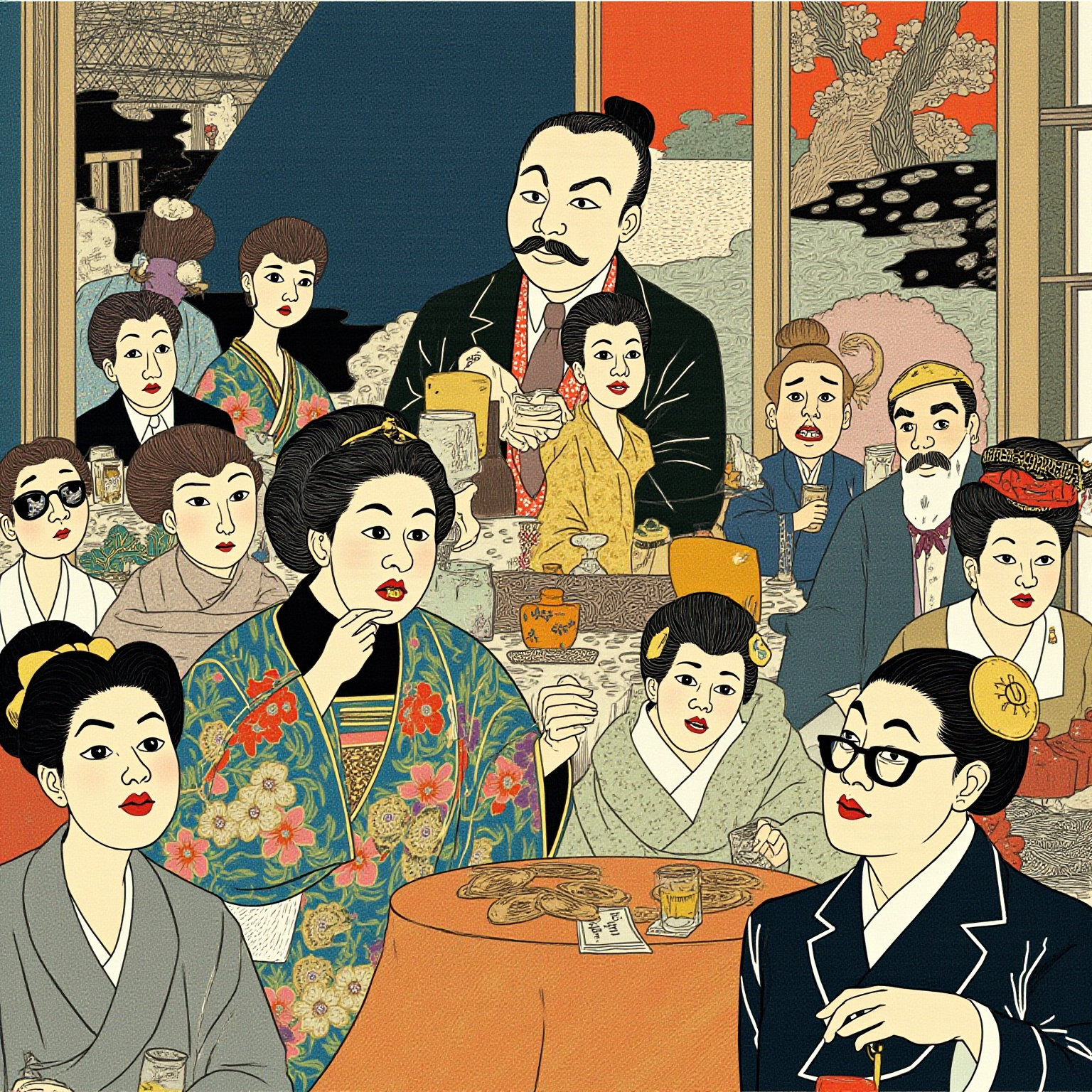
At a New Year's karuta party, Kan'ichi wins a prize: a diamond ring. He slides it onto Omiya's finger on the spot, a token of the marriage still to come. Cards fall on the table, the lamps flicker, the room fills with fashionable young men and women of the Meiji moment. This is the night the two of them come closest to a happy ending.
Sometime that year, the Kōnoi's debts collapse. The restaurant fails, the father owes Kan'ichi's uncle's family a fortune, and the creditors come to the door. He has no other way out, and he agrees to marry Omiya off to the merchant's son: one loan cancelled, one diamond traded for one estate, the engagement sold outright. The sharpest stroke here is that Omiya is never asked. Her father doesn't put the question to her even once; she is simply loaded into the wedding palanquin and sent away. Kōyō writes the whole arrangement through action, and what it shows is how a Meiji family disposed of its daughters: she doesn't choose to betray Kan'ichi, she is handed over like collateral.
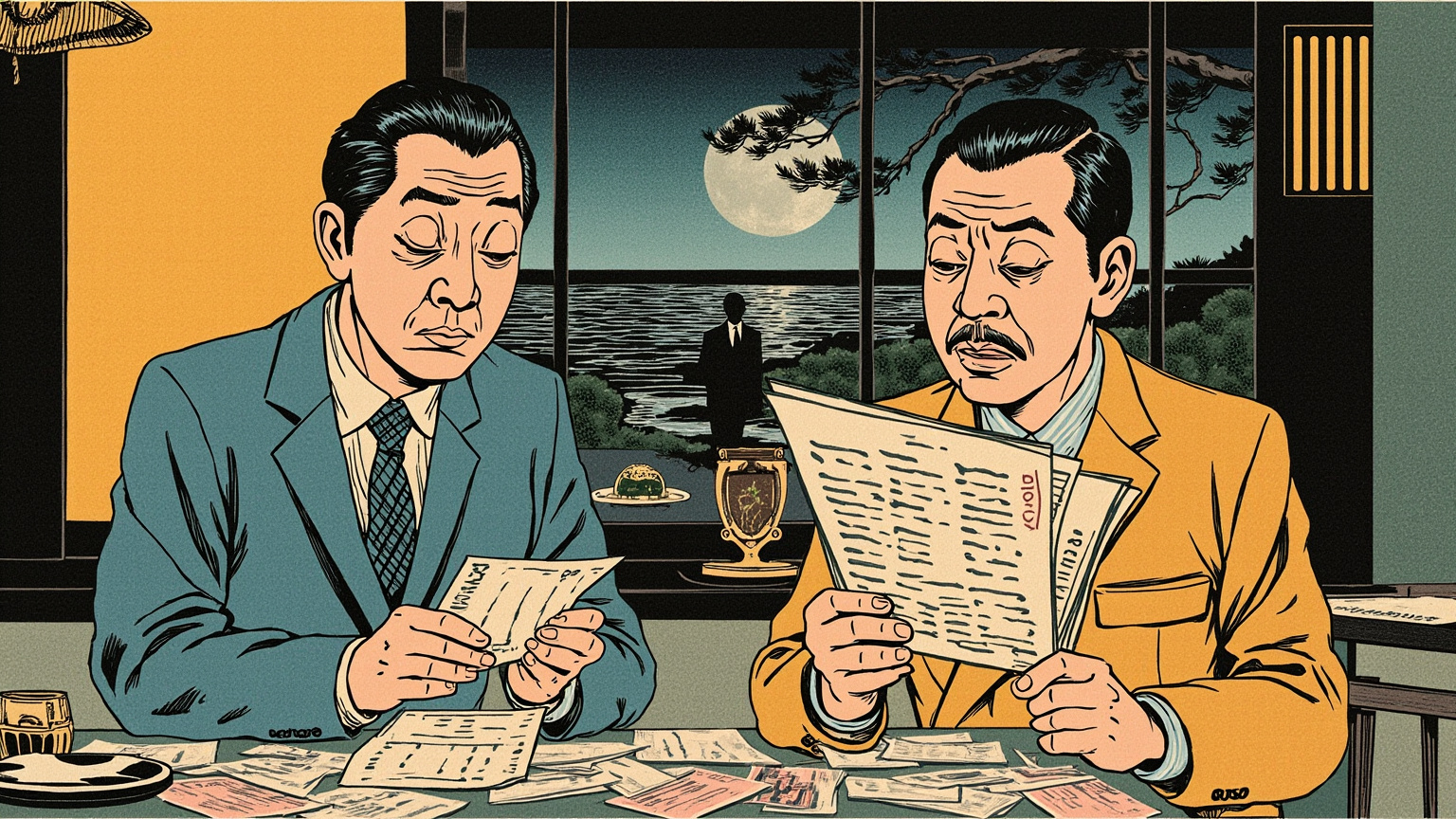
A debt unpaid is a chain that drags both lender and borrower into the same dark well.
借据不结,便是一条铁链,把放的人和借的人一起拖进那口深井里去。
金句 · 卖婚之章 · 鸿之井倒账
When Kan'ichi hears the news, he follows her all the way from Tokyo to Atami. In the corridor or the garden of the Fujiya inn, he stops Omiya just as she is about to go in. What happens next is the novel's most famous scene, and its most dangerous one.
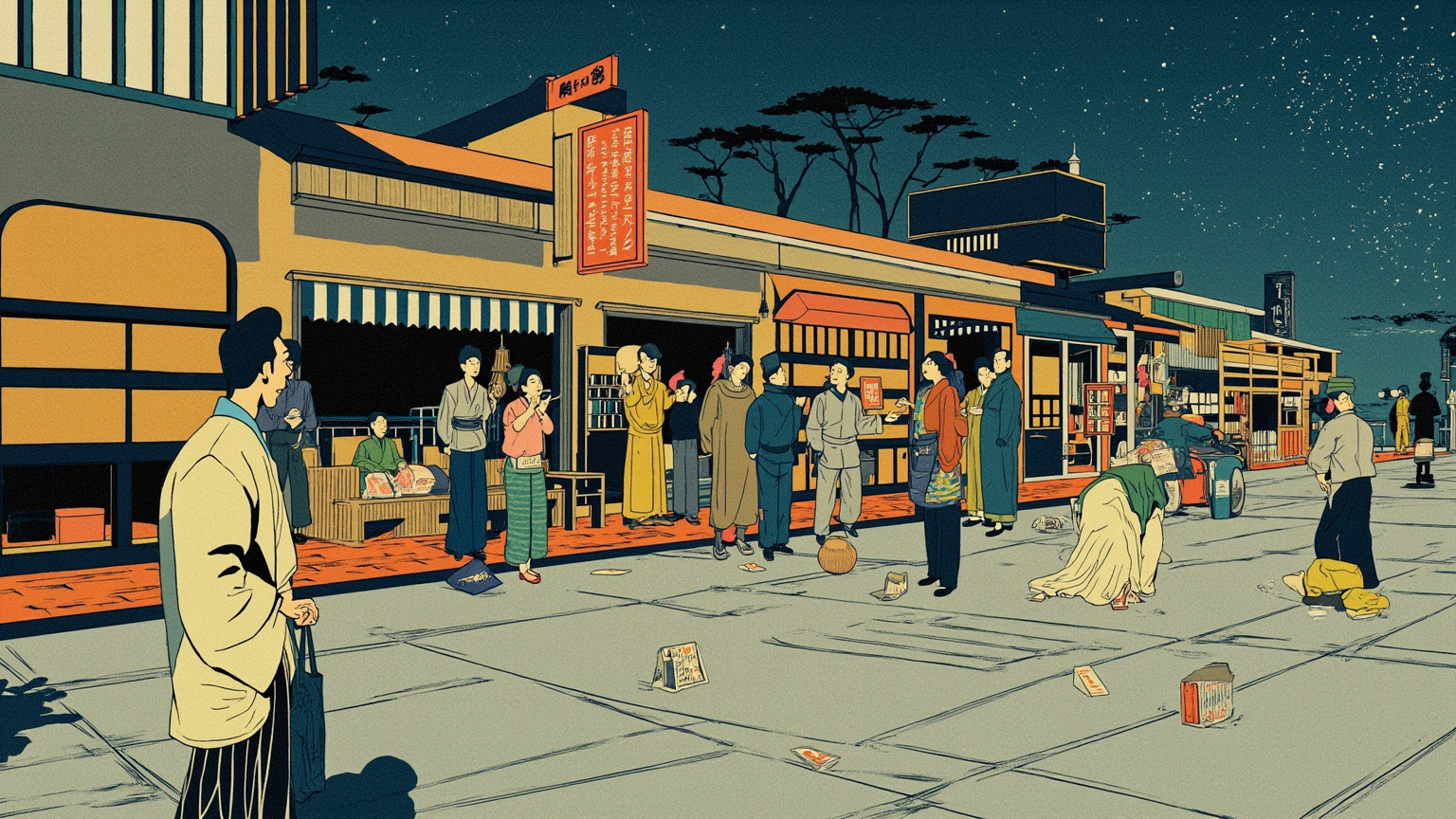
On this night, beneath this moon, I shall make these very clouds weep tears of blood.
明年今月今夜,我定要让这月色蒙上一层泪云。
金句 · 热海诀别 · 贯一誓咒
He strikes her, then speaks the curse: a year from tonight, this same date, I will put a cloud of tears over that moon. The moon doesn't move. The pine branch doesn't move. He turns and walks away.
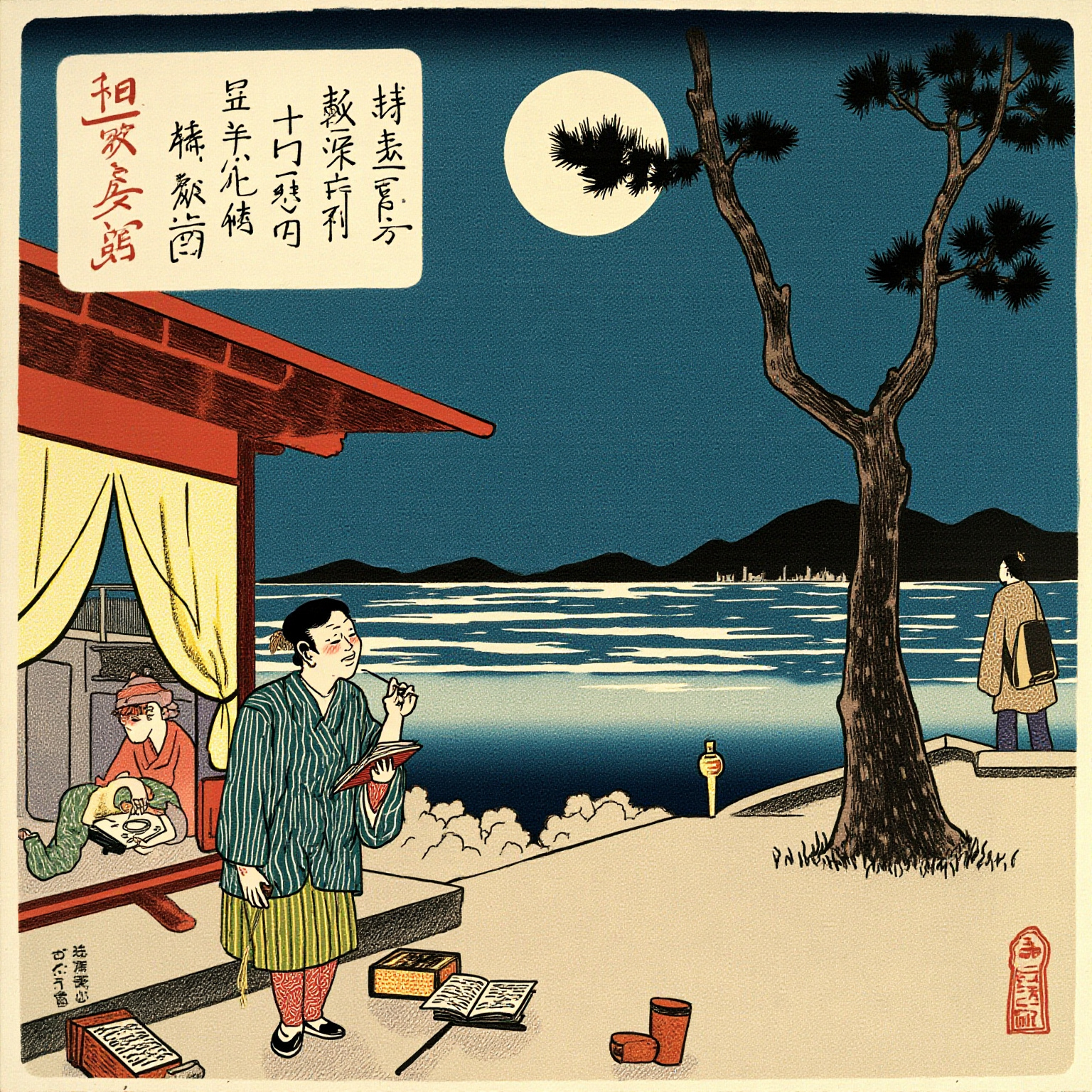
How that kick is written is the most important judgment in the entire book. Kōyō doesn't dress it up as a commanding farewell or an outburst of manly pride. Instead he answers it with consequence: from that kick onward, Kan'ichi becomes, step by step, exactly the kind of man he hates most.
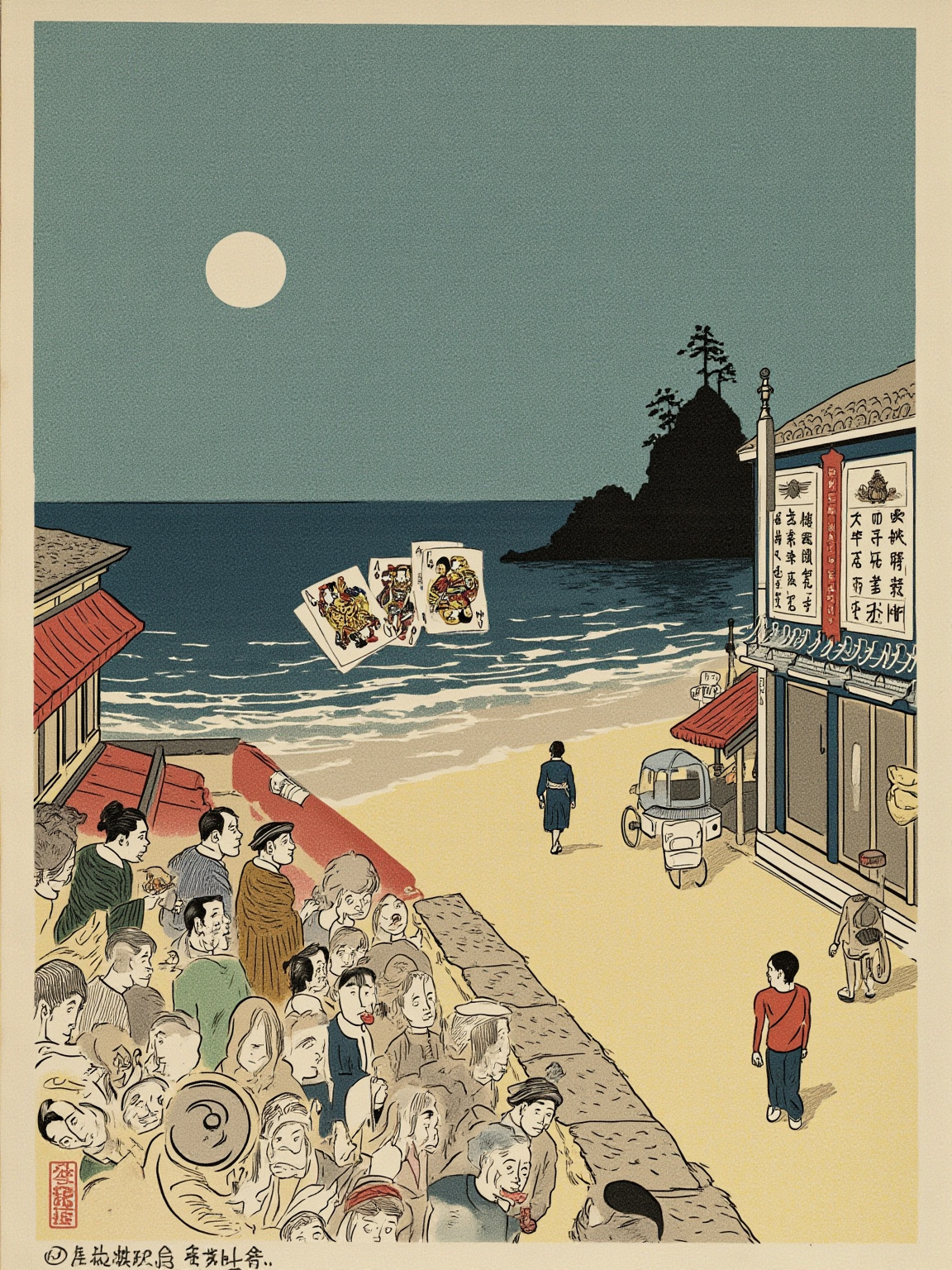
The hand that strikes a woman becomes the hand that counts another's ruin.
对弱女子举起的那只手,迟早要在别人的借据上按下指印。
金句 · 热海脚后 · 全篇报应之判
The fall isn't dramatic. It's clerical. After Atami, Kan'ichi gives up his studies and any hope of a career, and takes a desk in his uncle's loan office, sitting in a dim back room doing sums day and night. Ledgers, an abacus, rent books, and promissory notes pile up like small hills, and he turns into a cold, exacting creditor, the kind who drives down a price, presses for payment, and seizes collateral exactly when someone has nowhere left to turn.
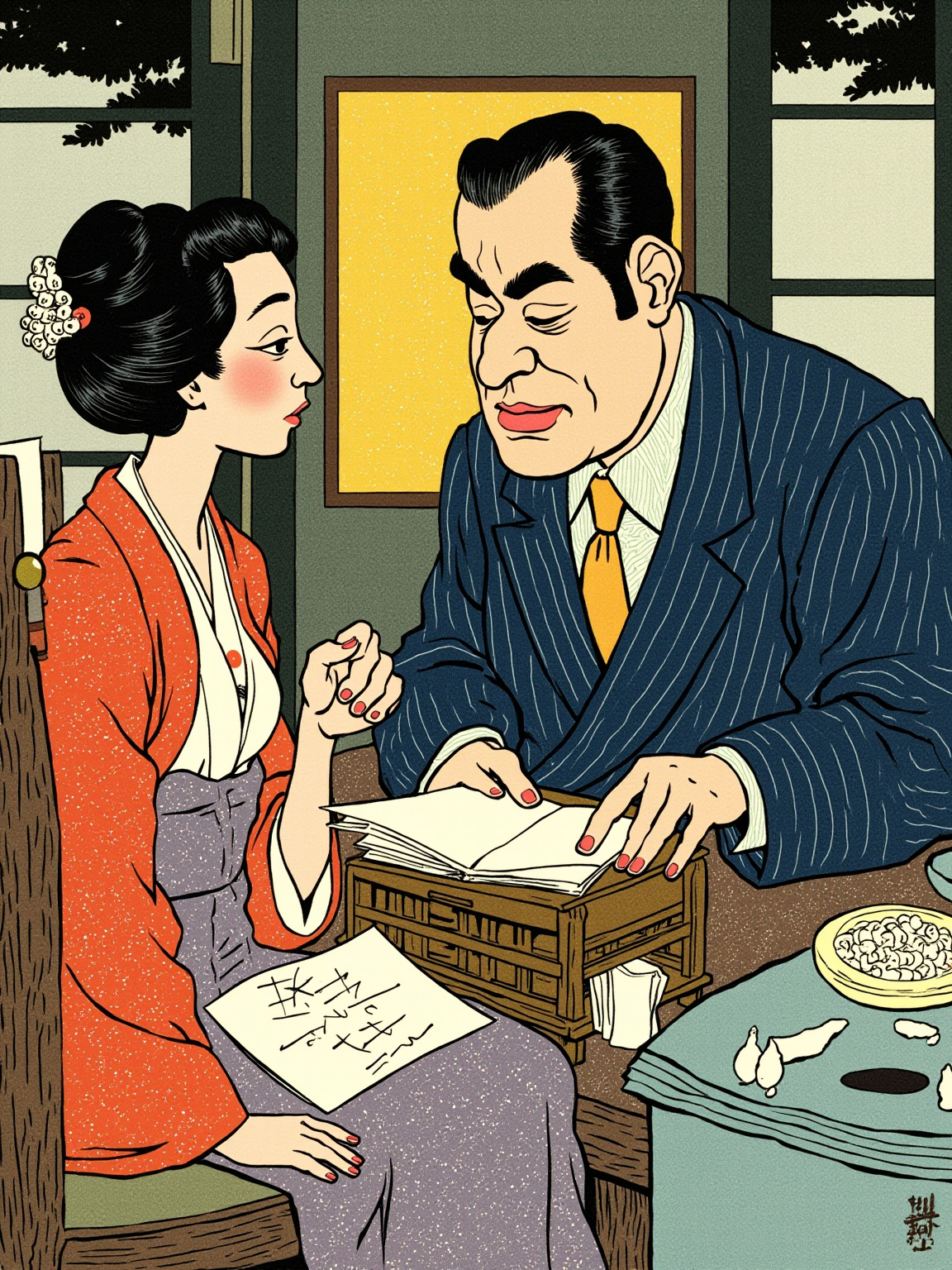
Gold makes a man a demon — and the demon forgets he was ever a man.
金欲附身,便成夜叉;夜叉久了,连自己也忘了曾是人。
金句 · 堕落之章 · 高利贷事务所
In the process of crushing other people with money, he goes dry and cold himself. The fire from that night is gone from his eyes; only calculation is left. This is where the title comes from: konjiki means gold, money, and yasha is a demon possessed by the hunger for it. That is the label Kōyō pins on Kan'ichi. It isn't how Kan'ichi sees himself, and it isn't praise. It's the thing the author is condemning.
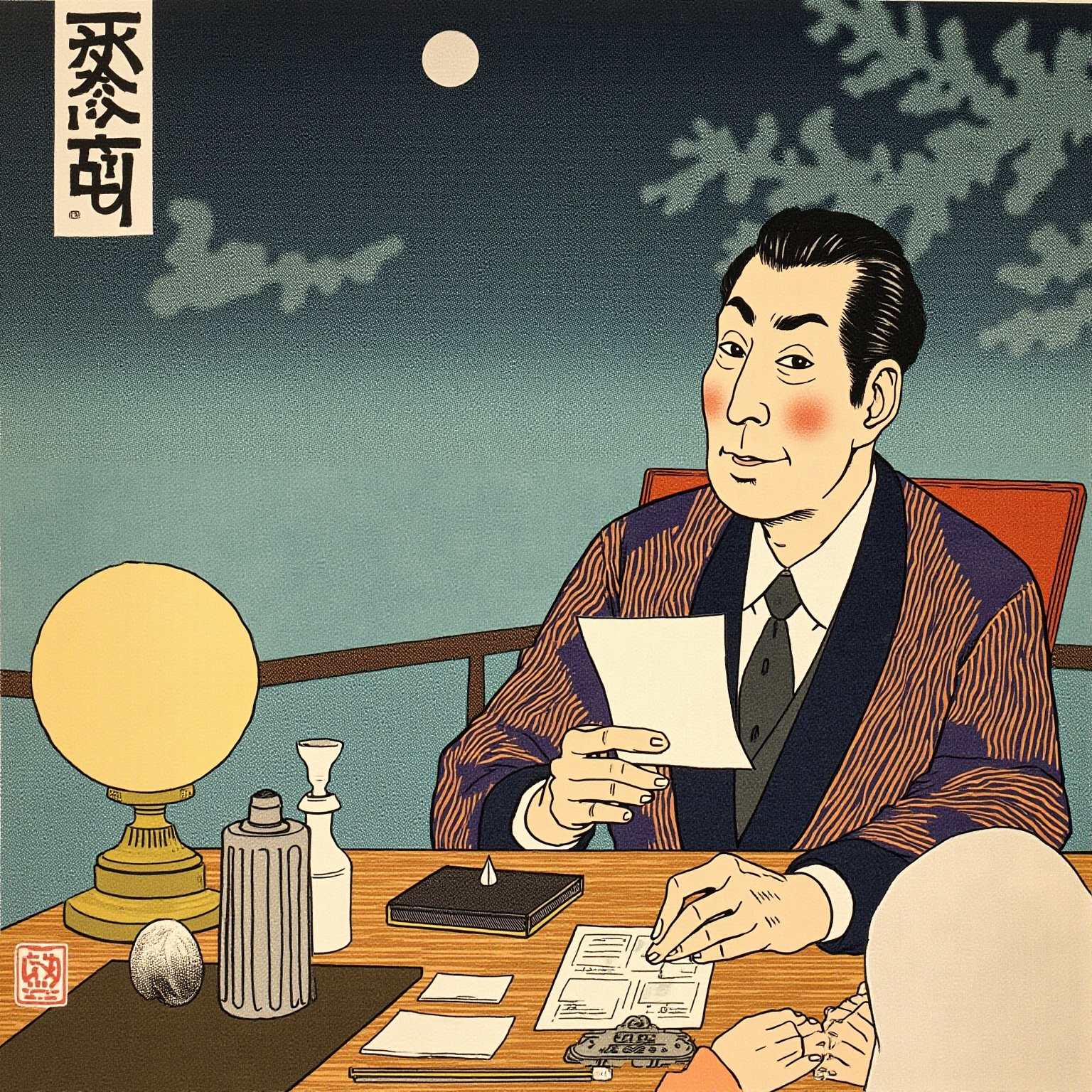
Omiya marries into the merchant's family and moves into a tatami room deep inside a mansion, the diamond still on her hand, the house grand around her. Her husband is a shallow, spendthrift son of new money, who treats her as a fresh acquisition and turns cold and neglectful within the year. The Kan'ichi she once knew, the one who read by lamplight, never comes back for her, because that Kan'ichi already died behind a ledger.
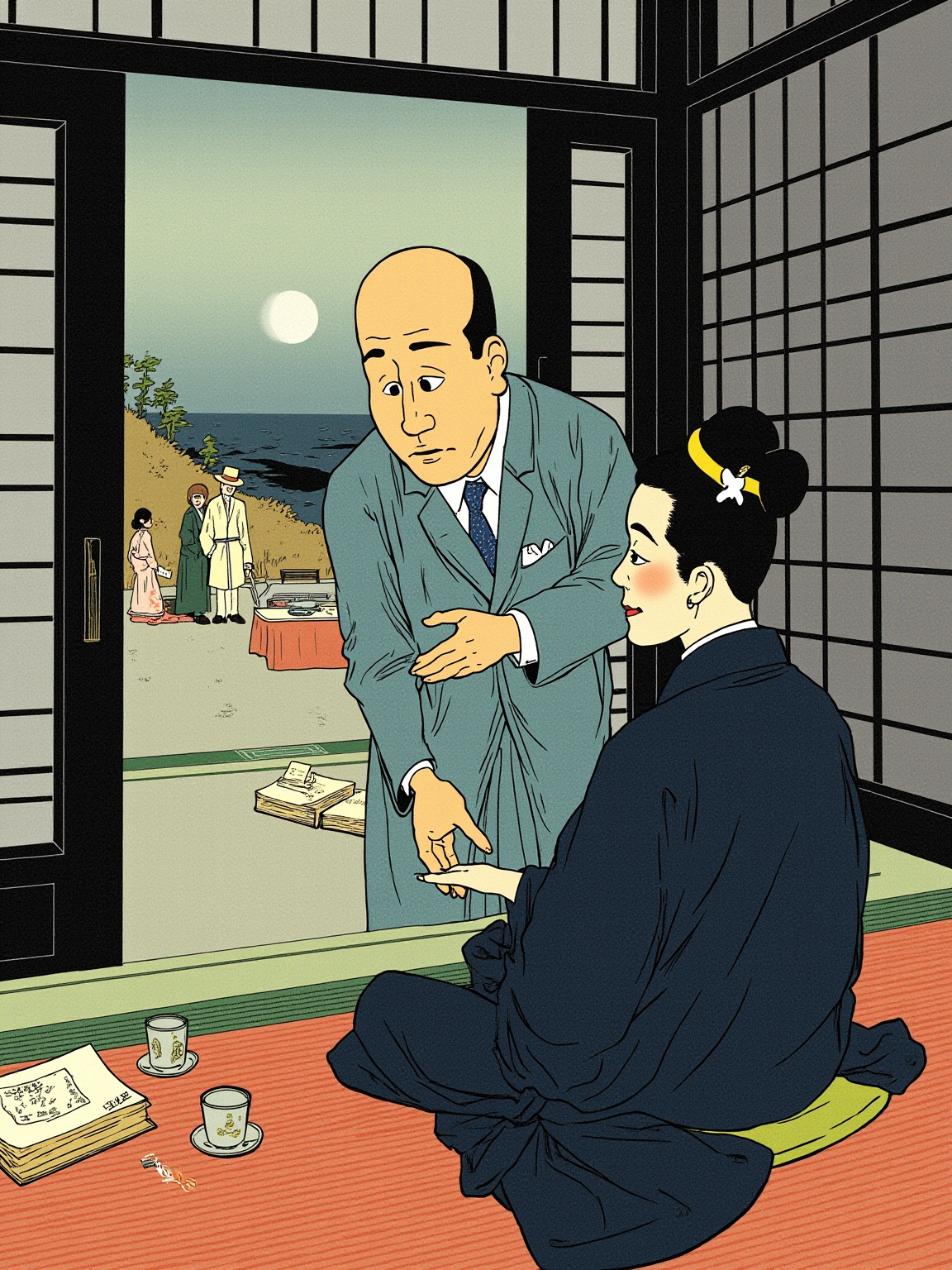
She wore the diamond still, in the deep room of a house that was not home.
她戴着那颗钻石,在那座不是自己家的宅子深处,独自坐着。
金句 · 冷宅之章 · 阿宫守钻
When Kōyō died of illness in 1903, the novel hadn't reached their reunion, and it hadn't reached the reckoning. The debt and the hatred between Kan'ichi and Omiya are left open, unsettled on the page. The pine at Atami, the one people now call the Kan'ichi pine, stands in for that unpaid account, and the prophecy of that same night a year later has still never come due. The most famous unfinished sentence in modern Japanese literature is still sitting there, between the pine branch and the shadow of the moon.
What It's Really About
On the surface it's a love triangle. One layer in, it's the capitalization of Meiji Tokyo: the shift from an old Edokko ryotei to the Western-style world of Ginza, from personal debts of obligation to organized moneylending, money rewriting every old network of human ties. An engagement gets bought out with a loan, love gets replaced by a diamond, a person gets pressed by his creditors into becoming a tool. The Gold Demon has no interest in the romance of love; it is dissecting how money eats away, inch by inch, at what two people could have been.
One layer deeper is a structure of consequence. Kan'ichi becoming a moneylender who ruins other people with his own hands answers directly to the violence he did that night in Atami to a woman who couldn't fight back. Kōyō isn't condemning hatred here. He's condemning the logic that violence can win back your dignity. Kick down someone who can't hit back, and you don't grow stronger. You just become the next creditor. The verdict readers keep handing down on Kan'ichi and Omiya in their own minds is the real work this unfinished novel leaves for them to do.
For readers today, the book still cuts. It isn't describing some special case from one era. It's tracing the sequence of moves that shows up whenever money's logic takes over a relationship: appraisal, collateral, transfer, indifference. It shows us that a relationship rarely ends with a fight. It ends with a ledger.
Why Read the Novel Itself
A guide can give you the map, but only the text gives you the land. Kōyō's Meiji style, that mix of old and new prose, can't survive being explained: the weight of his sentences on the page, the almost tangible picture he draws of lamplight and ledgers, has to be read to be felt. Omiya's restraint, Kan'ichi's coldness, the wind that moves through the corridor of the Fujiya inn — you won't get any of that from me. You'll only get it from Kōyō's own sentences. And then there's the pine tree, still standing on the Atami shore right now, the single hardest piece of real ground that modern Japanese literature has. You can't feel that silence unless you're standing there yourself.
The cruelest way a relationship dies is not in a quarrel, but in the closing of a ledger.
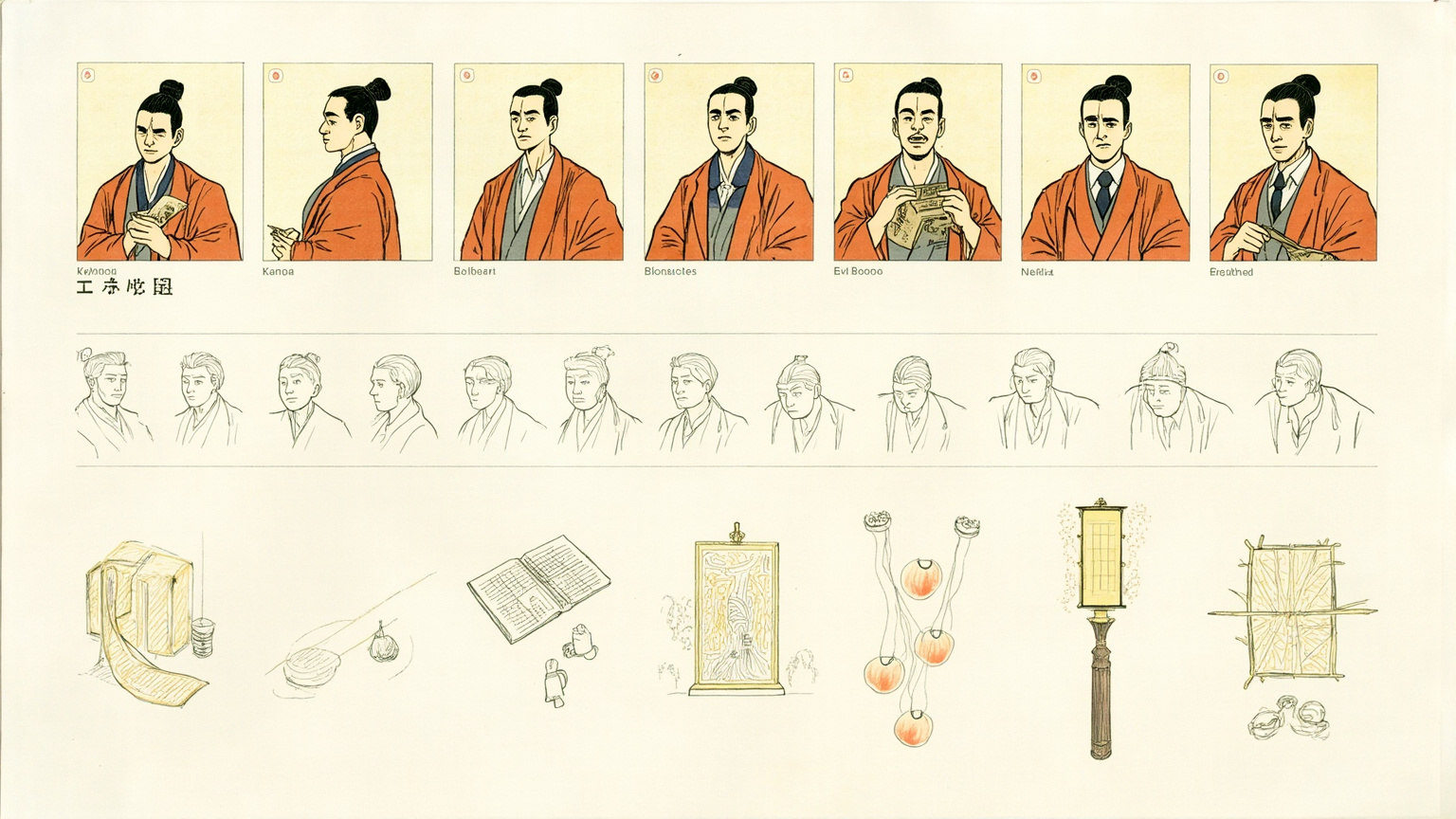
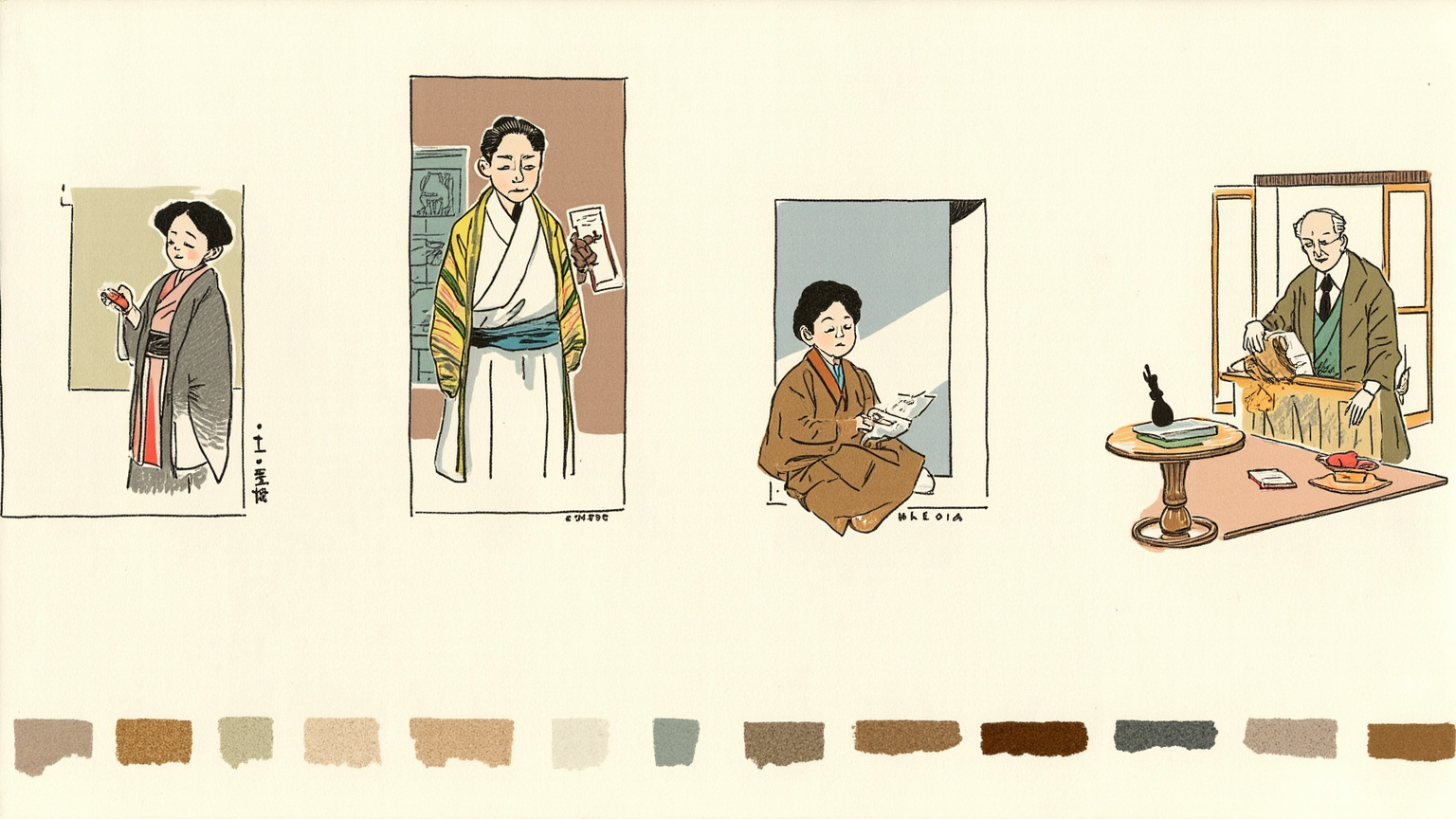
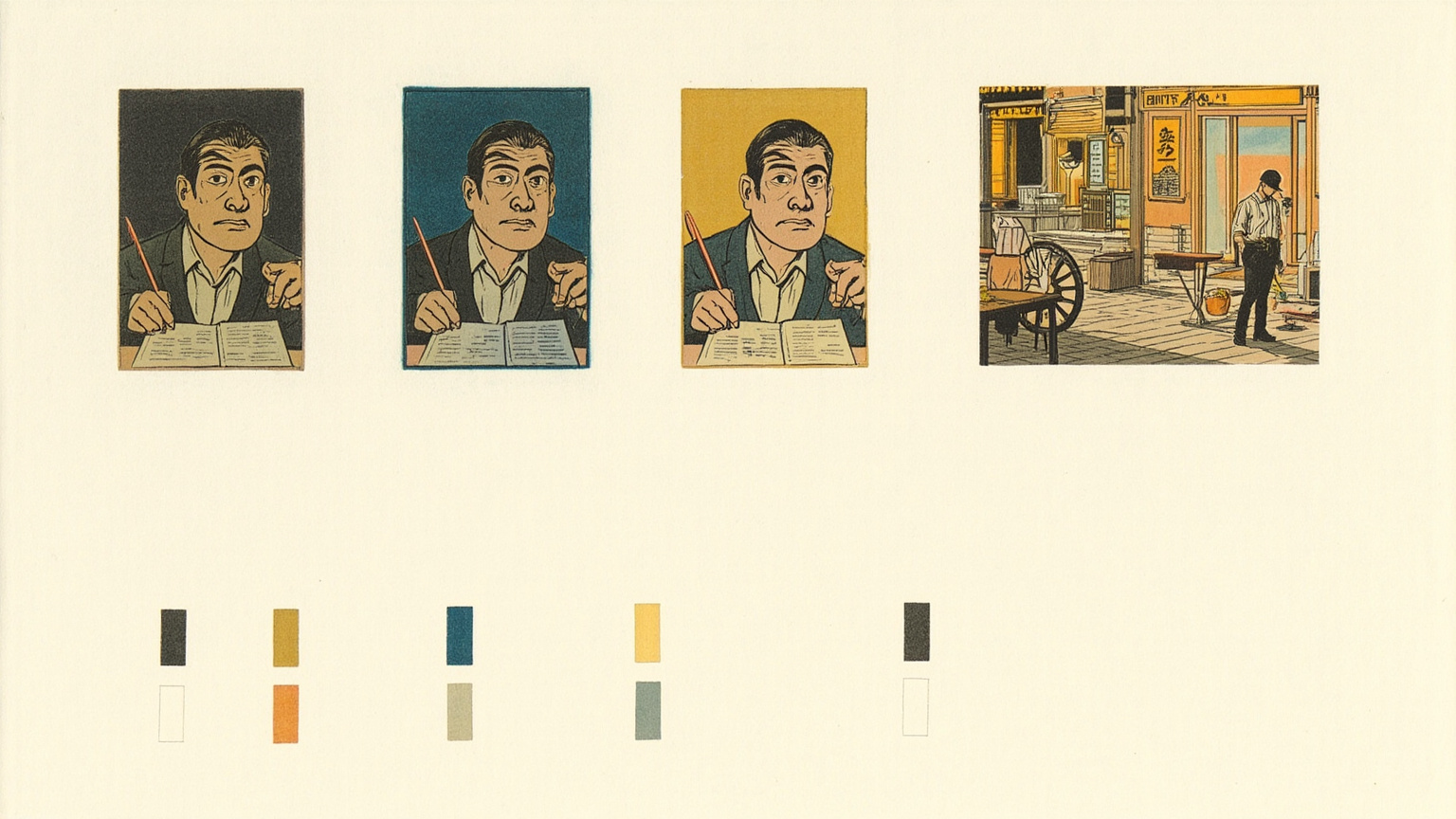
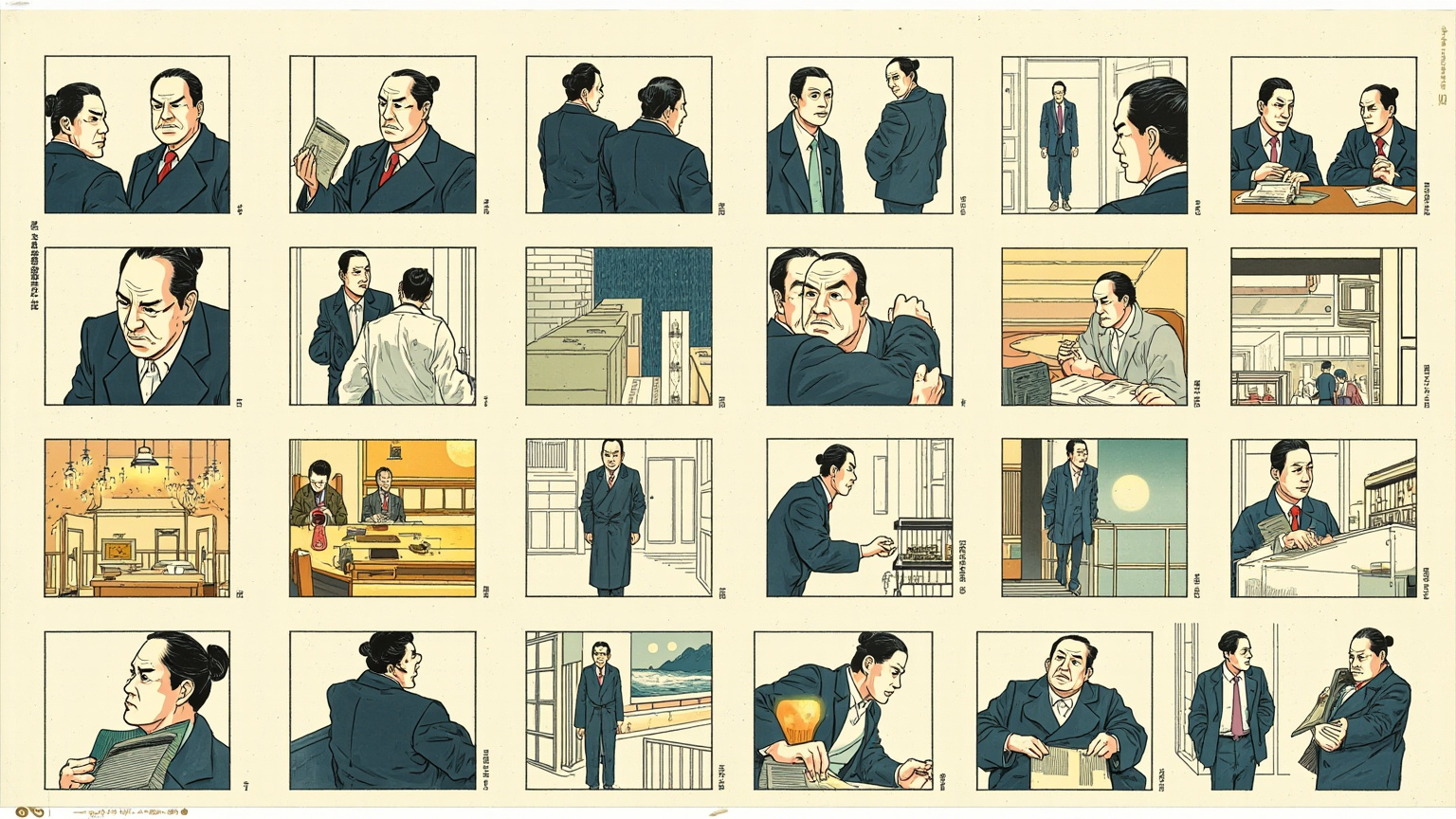
Art Direction4 plates
Before the guide was written, this book got a visual foundation — every illustration you just read grew out of it.