The Golem (Der Golem) · Companion Guide
魔像
一片雨后湿绿的犹太区,半梦半醒间你成了另一个人——镜中之人先眨了眼,而你已经分不清,谁替谁活了一生。
A Hat Throws Someone Into Someone Else's Life
A man with insomnia opens a book about the Buddha before bed, and somewhere between waking and sleep, swaps hats with an old man. When he opens his eyes again, he is a middle-aged gem-cutter in the Prague ghetto named Athanasius Pernath — a magnifying glass at his elbow, an unfinished ring on the workbench, and in his own head, nothing before the age of twenty. Thirty years are gone like a stack of negatives someone has pulled out of order, and all he can do is work backward, one frame at a time, from the alley he is standing in, the faces around him, the objects on the windowsill.
What Is This Strange Book
The Golem was published in Leipzig in 1915. Its author, Gustav Meyrink, was born in the late 1860s and spent years knocking around turn-of-the-century Prague, a contemporary of Kafka's circle of Prague German-language writers. When the novel ran as a serial in Die Weißen Blätter in 1913 and 1914, the illustrations running beside it came from the Expressionist painters of the day. There is no clay monster in the book that could be mounted like a specimen, and yet it became the founding text of German fantastic literature — the same lineage that later produced Kafka's man who wakes up as someone else, and his K. who never reaches the castle gate.
Who Is Who, and Who Is Living for Whom
Pernath is the nominal protagonist, but he is the least reliable thing in the book — amnesiac, once broken down and unable even to remember breaking down, the still center around which the novel's real question, who am I, keeps turning. He falls for Miriam, daughter of the scholar Hillel next door, but a darker thread has hold of him: the door-less room reachable only through a skylight, the heavy metal-bound book left behind by a visitor who vanished without a word, and the fragment of a chapter called Ibbur — in Hebrew, the impregnation of the soul — that pulls him, step by step, toward the twenty years of his own past he has never dared look at.
The people orbiting him are none of them harmless. His neighbor Wassertrum, a pawnbroker, is greedy and sinister, and frames Pernath for murder. Charousek, a medical student sick and broke, carries an old grudge with his eyes lit up like coals. His landlord Zwakh, a puppeteer, hauls the Purim masks out of his rooms and back in again. Laponder, his cellmate in prison, is a somnambulist who turns into half the ghetto in his sleep, and it is through him that Pernath keeps talking to the street outside. The Golem itself barely appears — a shape flickering behind a window, wet footprints in an empty room, a shaft of light falling through a skylight. It wakes once every thirty-three years.
The Ghetto Is the Real Protagonist
Meyrink isn't retelling the legend of Rabbi Loew molding a clay man out of Kabbalah to protect the Jews — that's only the hook that gets you in the door. What he's actually writing is the old Prague ghetto, being torn down inch by inch by late-nineteenth-century urban renewal: narrow cobbled lanes gone brown-green with rain, an old clock hanging on a pawnshop wall, a few carats of fire caught under a gem-cutter's loupe, the puppets and masks Purim carries out into the street, the fog that never quite lifts off the Charles Bridge. The clay man is just this neighborhood's centuries of fear and compression given a human shape — its face is the ghetto's own face.
The Metal Book the Stranger Left Behind
One day a visitor comes in without taking off his hat or offering a greeting, sits a while, then leaves — and leaves behind a book with a metal cover as heavy as a sheet of lead. Pernath turns to the fragment titled Ibbur, and finds the letters on the page shifting, vanishing, and his own reflection in the mirror blinking before he does. After that the hallucinations start coming: at night he dreams of tumbling through an attic, of being pushed off a roof; by day, walking the lanes, he can never shake the feeling of being watched. Charousek already has Wassertrum in his sights, and Pernath finds himself wedged between the two enemies.
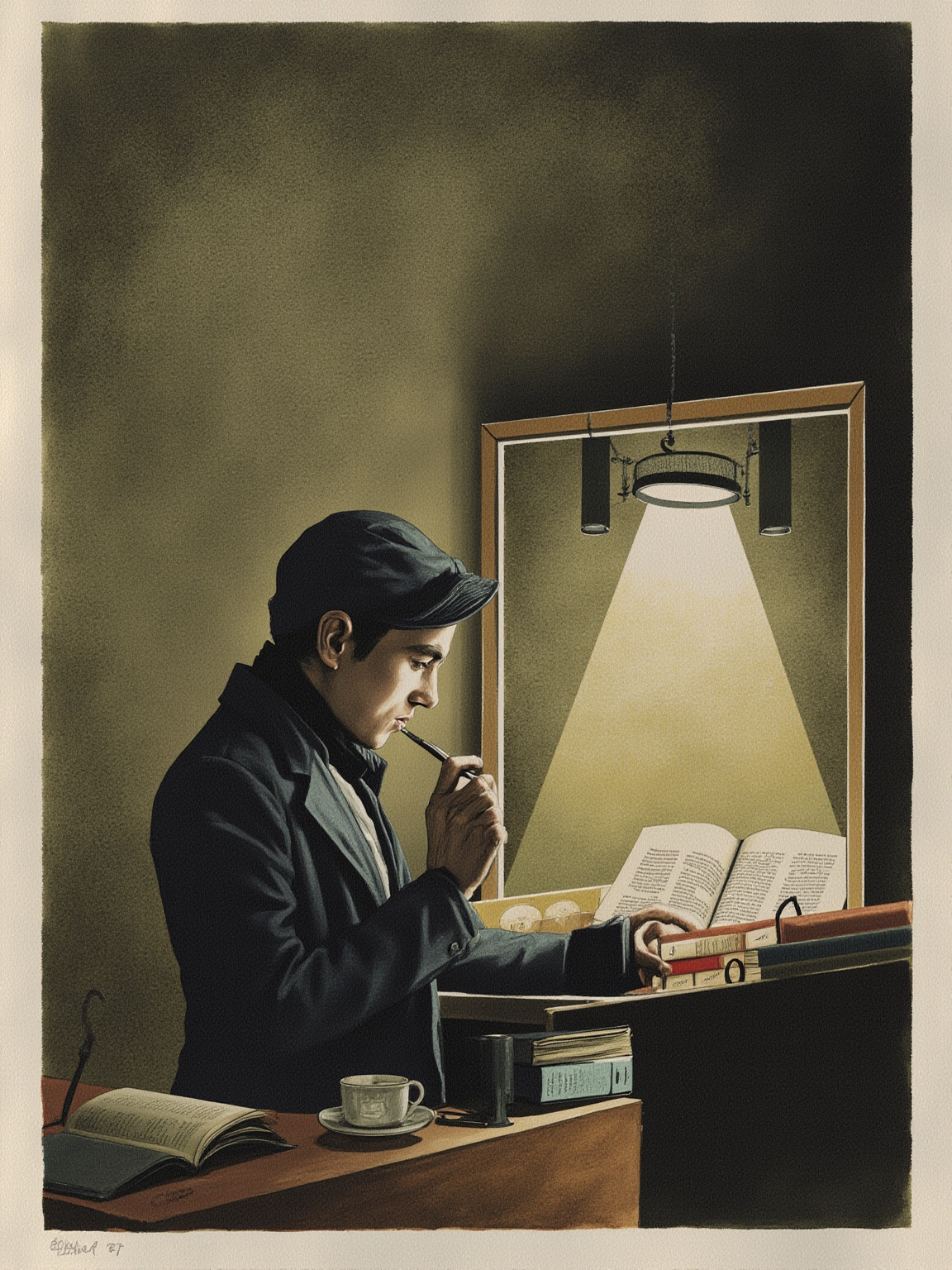
He sat down without raising his hat, without a word of greeting, and a strange book bound in metal lay open before him — and from that hour my life was no longer my own.
他坐下,不脱帽,不招呼,面前摊开一本金属封面的怪书——那一刻起,我的生活便不再是我的了。
金句 · 第4章 · 不速之客与金属书
Hillel and His Daughter: The Hand Pulling Him Up
Hillel, who lives next door, is a gentle, learned Kabbalist. Kabbalah in this book is never a spell book — there is no ritual you could follow, no Hebrew text to actually read, only a set of images meant to lead a person deeper into himself. That is how Hillel guides Pernath: stop looking for a god out there, and go find the door you locked yourself. His daughter Miriam, younger than Pernath, is the one light he wants to look back for in these dark lanes. The love story stays light here — light enough that it reads almost like the contrast the fire later needs.
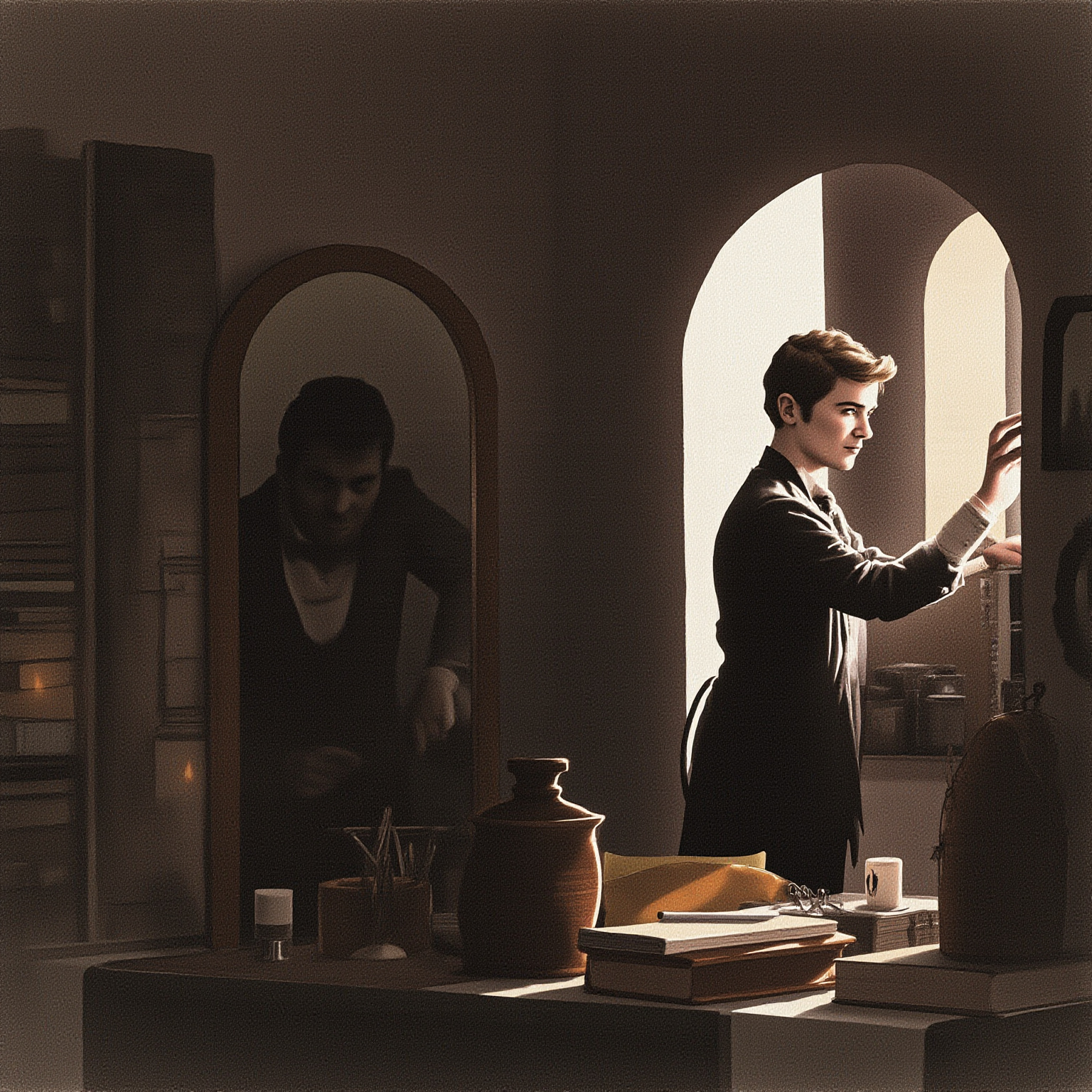
The Skylight Room: The Chamber Without a Door
Somewhere in the ghetto is a room the stories say has no door, reachable only through a skylight. Pernath actually climbs in — the room is empty except for a tarot card, the Pagat, that he painted himself more than twenty years ago, and a full-length mirror gone dusty. What sits in the mirror is not his face today; it is his face from years before. This is the moment the Golem coincides with him — not a clay monster lunging out to knock him down, but Pernath and his own double staring at each other through a pane of glass, and in that face he reads centuries of the neighborhood's accumulated suffering.
I looked into the dust upon the mirror, and the face that looked back at me was my own — only younger, only as I had been twenty years before.
我望进那面落灰的镜,望着我的人也望向我——只是更年轻,正是二十年前的我自己。
金句 · 第11章 · 镜中早年之我
Six Months in Prison, Still Walking the Streets in His Sleep
It is Wassertrum who single-handedly puts Pernath in prison. His cellmate Laponder is a somnambulist — asleep, he becomes one ghetto figure after another: Zwakh, Charousek, even Wassertrum. Through this sleeping man, Pernath keeps talking to the people he knows on the outside, asking after Miriam, watching the ghetto come down piece by piece, all of it in dreams. Meyrink layers prison and the world outside into a single image with this device — the body is locked up, but the mind never is.
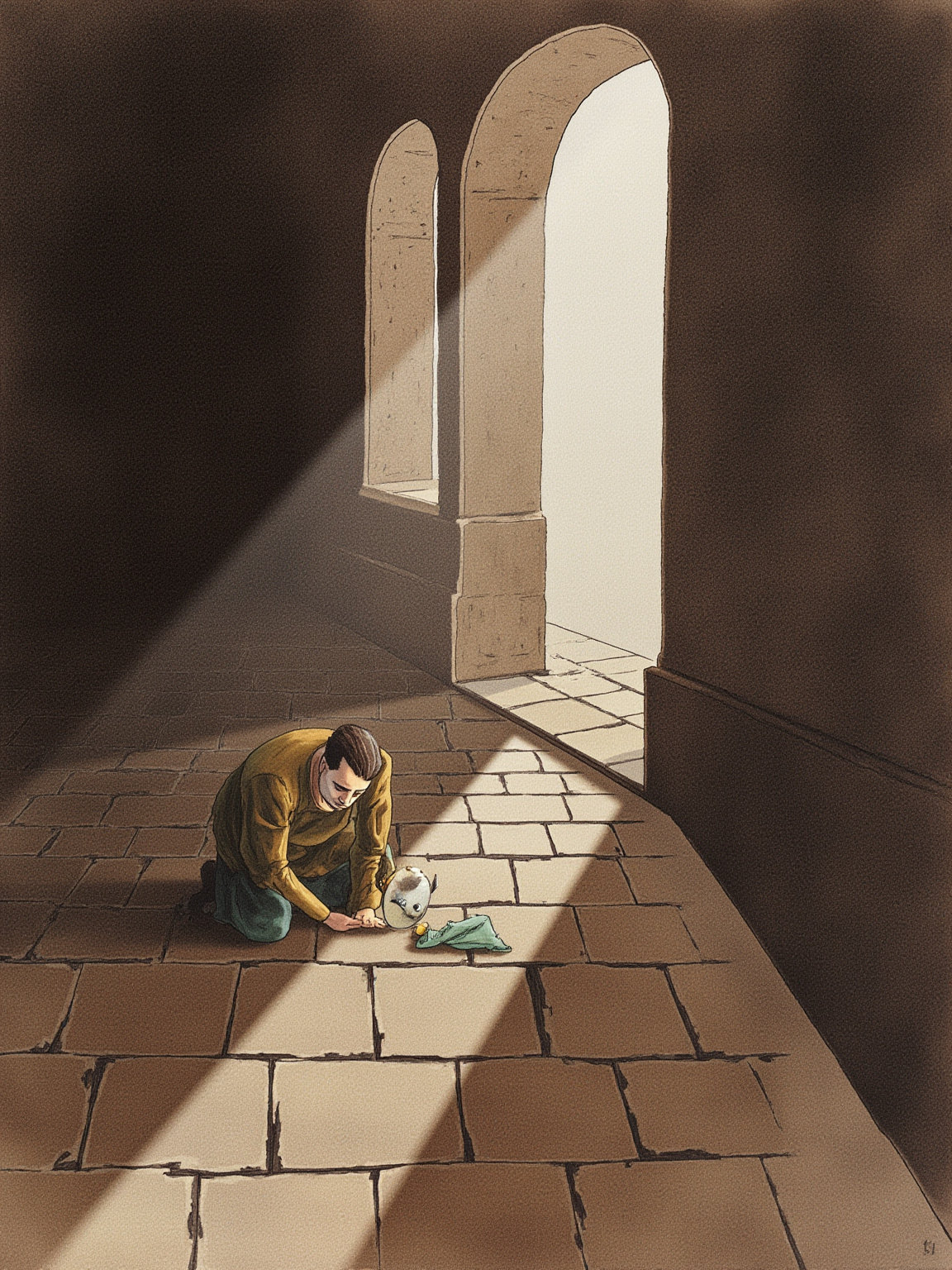
He sleeps — and his soul goes forth through the lanes of the Ghetto, wears the faces of strangers, and I listen to him as one listens to a sleeper's breath.
他睡着,他的魂便出了窍,游遍犹太区的窄巷,披上陌生人的面目——我听他,如同听一个梦游者的呼吸。
金句 · 第14章 · 梦游者拉庞德
Coming Back: The Neighborhood Is Already Gone
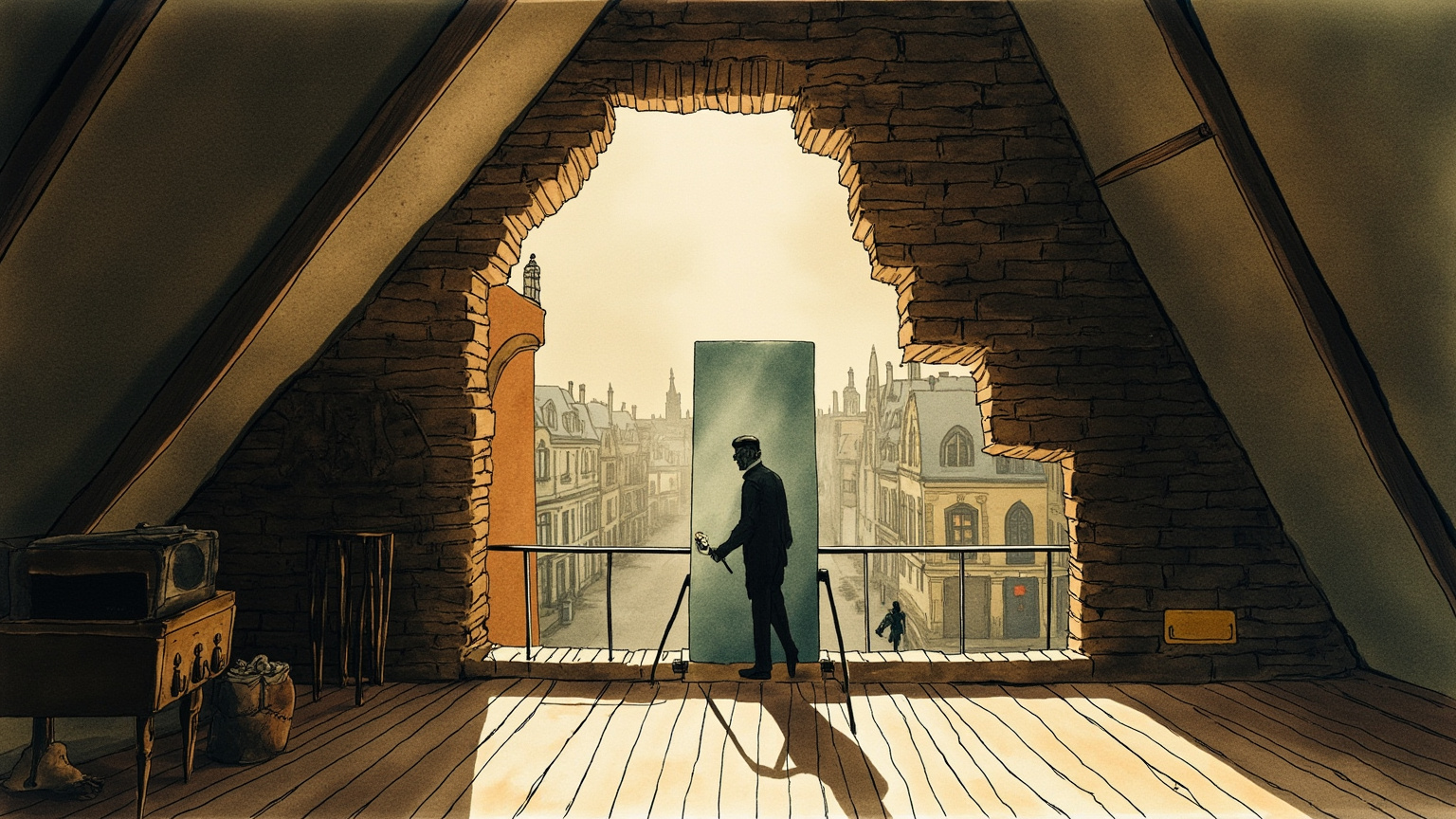
Six months later, Pernath is let out. The night he returns to the ghetto, the ground under his feet is no longer cobblestone but freshly laid mortar — the block where he lived has already been leveled. He asks about the skylight room, and the neighbors just look at him blankly: what room? There has never been one on this street. He no longer belongs to it.
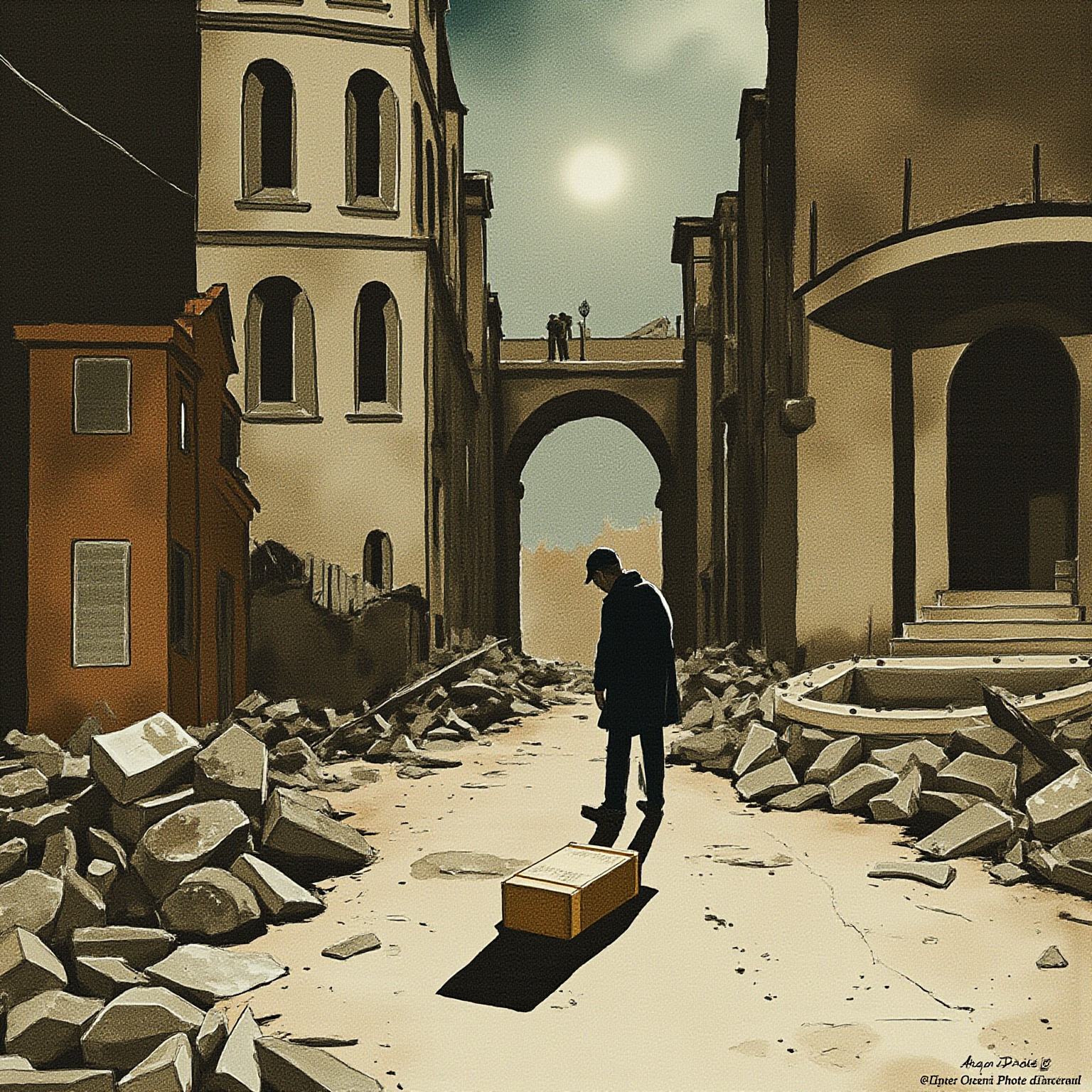
I walked through what had been our lane — the cobbles were gone, a smooth grey plaster stretched where the houses had stood; no one in the street knew the name I gave.
我走过从前那条巷——鹅卵石没了,旧屋的地基上是一片新铺的灰泥;我问起那个名字,街上竟无人知晓。
金句 · 第16章 · 街区已成平地
Fire, Fresco, and a Rope That Breaks
Pernath moves into a new building, on the site of the old skylight room. A fire breaks out one night, and he lowers himself down the roof on a rope to escape — halfway down, through a door frame painted with Osiris, the Egyptian god of the dead, he glimpses a middle-aged man who looks like him sitting inside, a woman who looks like Miriam leaning against him. Before he can call out, the rope snaps.
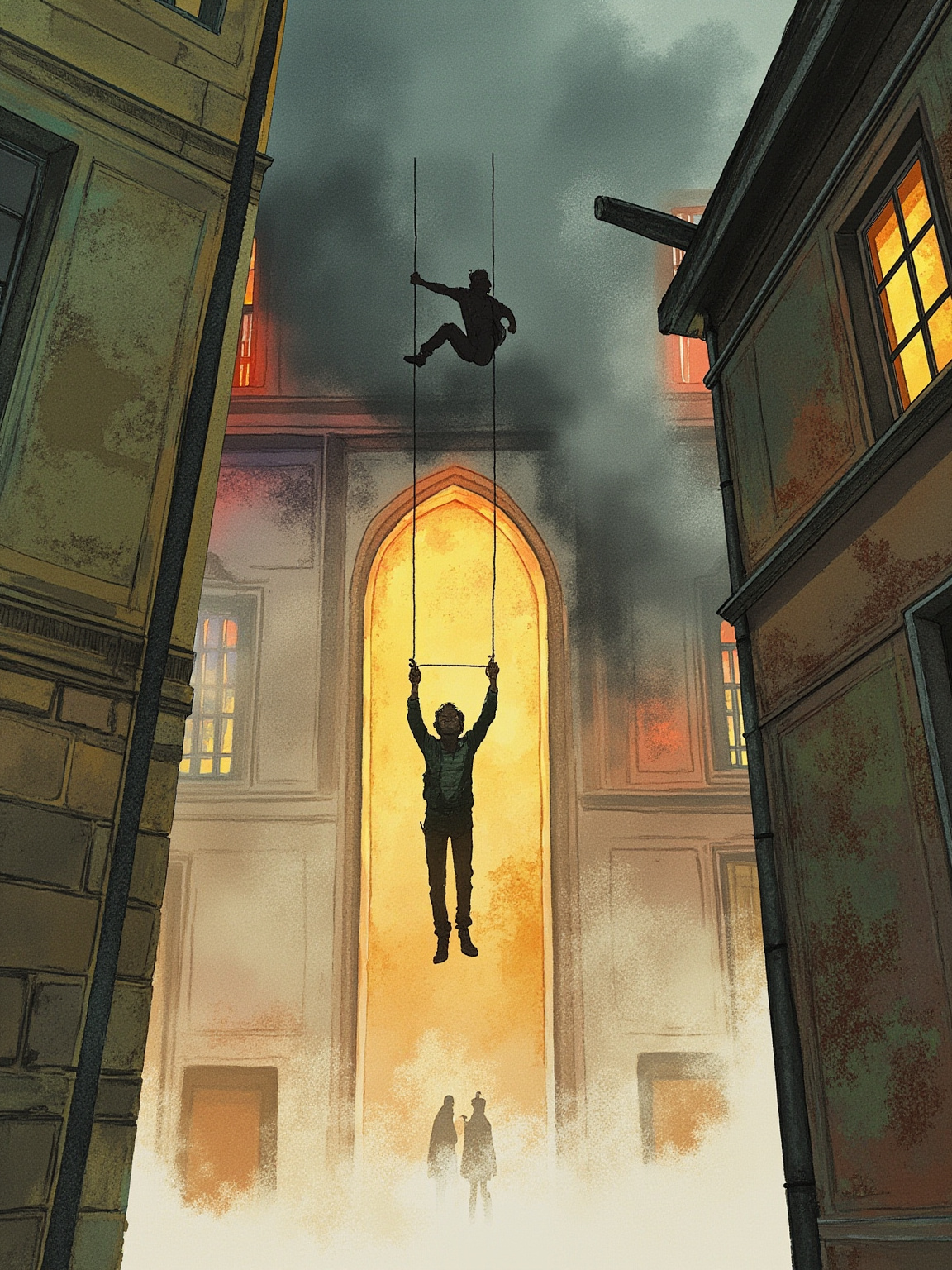
I slid down the rope, and through a doorway painted with Osiris I saw — myself, older, and a woman who was Miriam, and the rope gave way beneath my hands.
我顺着绳子滑下,从一扇绘着奥西里斯的门缝里望见——是我,更老的我,怀里的女人是米莉亚姆;绳子便从掌中断开。
金句 · 第17章 · 大火与壁画门框
The Ending Nobody Can Settle
It is not Pernath who hits the ground — it is the half-asleep narrator from the opening. He wakes with a start in a hotel bed, the mixed-up hat still in his hand, and inside it, stitched in gold thread, the name Athanasius Pernath. He checks against reality afterward, and finds that the book about the Buddha he read, the streets he walked, the people he met in his dream all leave traces in the waking world. Whose dream those thirty years really were, and who is whose shadow — Meyrink never settles a single word of it for you. The first time I reached the ending I just sat there. I went back through it again and found that every earlier clue could be read either way.
Why People Are Still Talking About This Book
It takes a folk tale about a clay man brought to life to save the Jews and pulls it, whole, into a modern novel about not being yourself. Frankenstein's monster turns on the man who made it; Meyrink's Golem does no such thing — it is the man who made it, a projection and a double of this neighborhood and its history. One half-step further down that road is Kafka writing Gregor waking up as an insect, writing K. who never gets through the castle gate. You could say the twentieth-century sickness of a person discovering he is not himself first ran a fever in this book.
There is no clay monster standing in The Golem, and yet it is more frightening than any monster — it makes you look in the mirror and lose track of which one blinked first, you or the reflection.
You Know the Plot Now — So Why Read the Actual Book
Plot is the map; Meyrink's sentences are the ground itself. He does not write the cobblestones after rain as wet, does not write the pawnshop clock as old, does not write the small spark of light under the gem-cutter's loupe as beautiful — for passages like these, if one translation fails you, try another, and if that fails too, go to the German. Read slowly, pencil in hand. Knowing the ending does not save you the text, because that vertigo of not knowing who you are only lands on you once you have walked the lane yourself, page by page. A guide like this does not sell the book — it only walks you to the corner. The last few steps, over slick cobblestones, you have to take on your own.
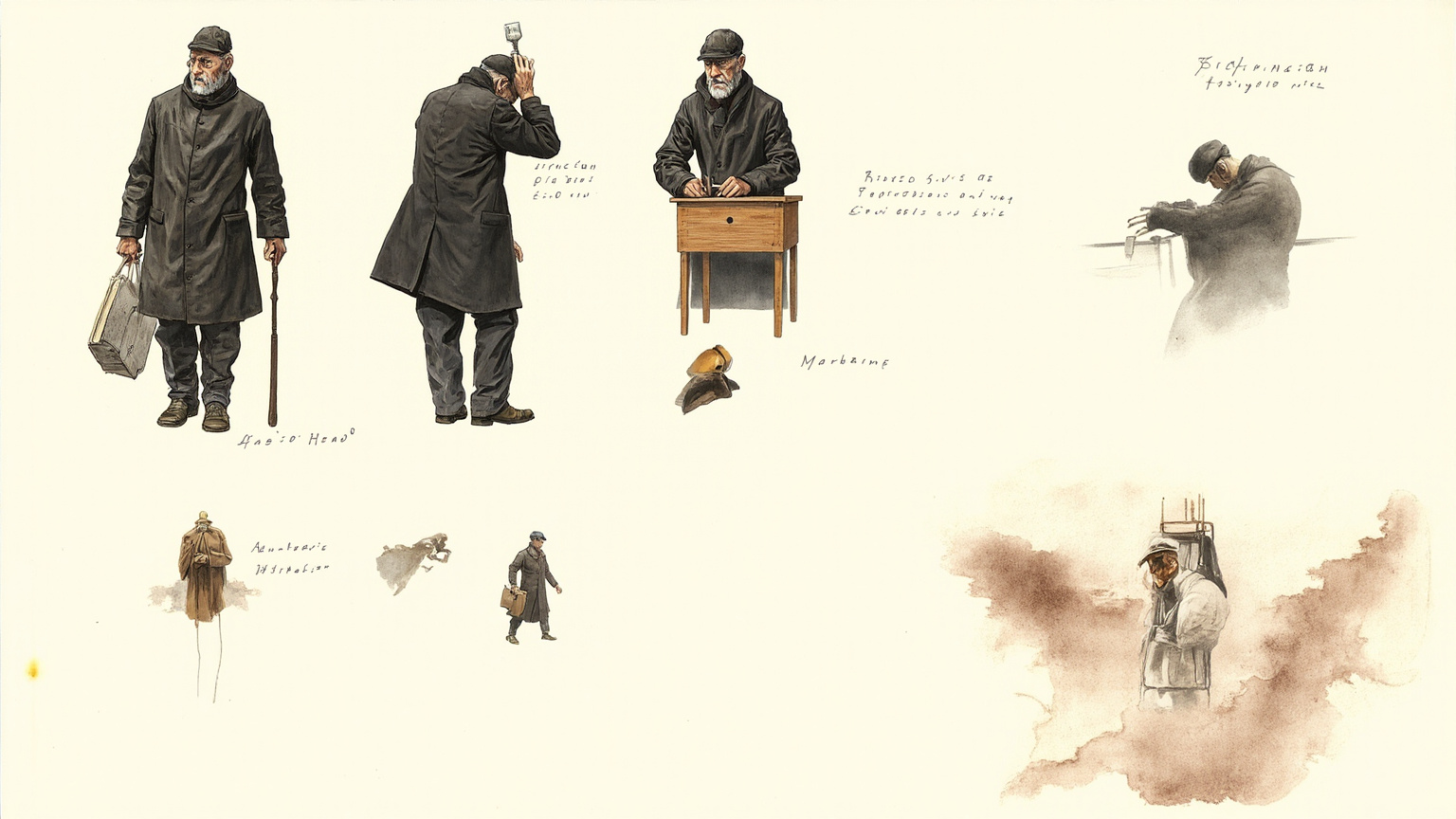
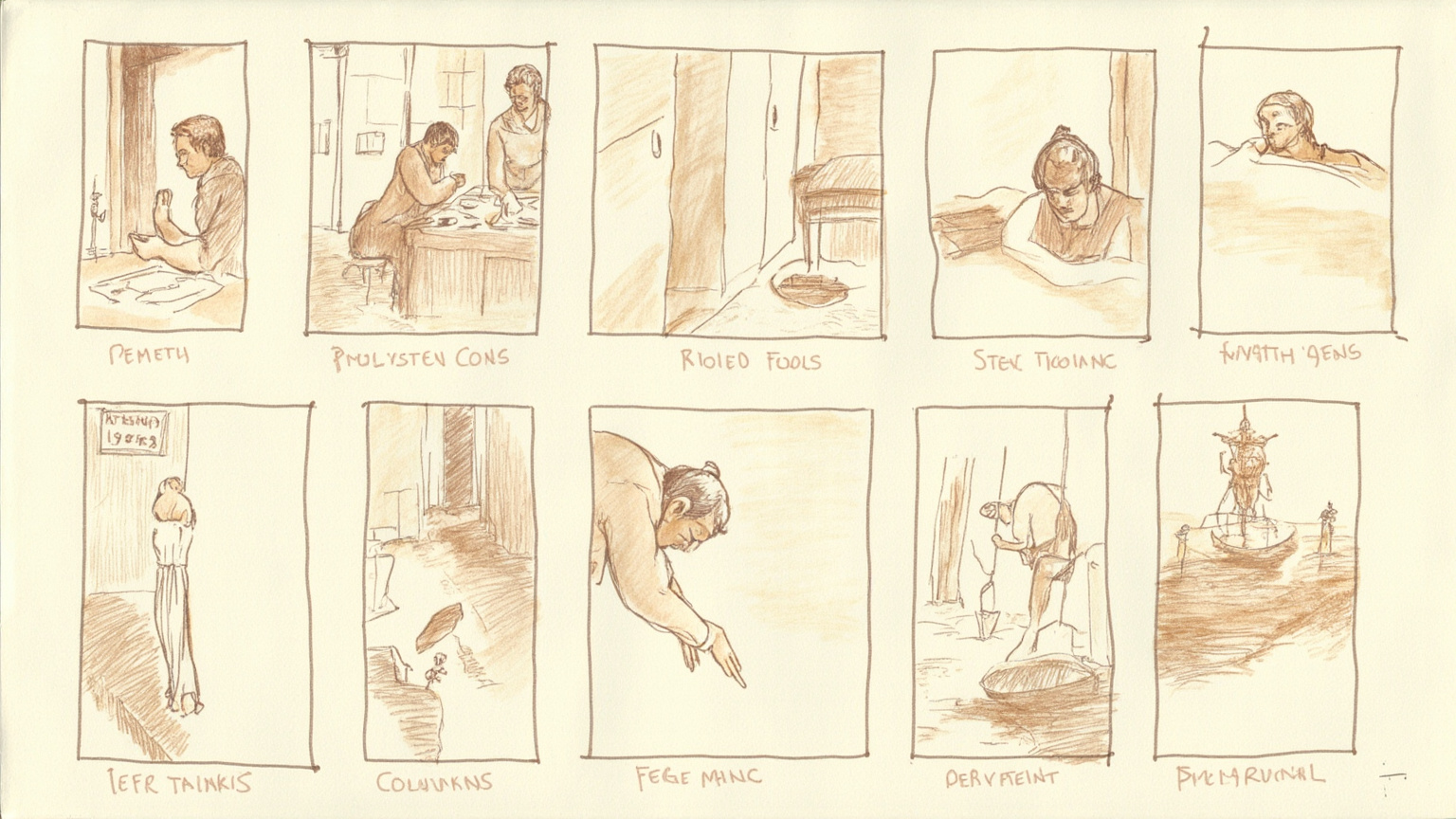
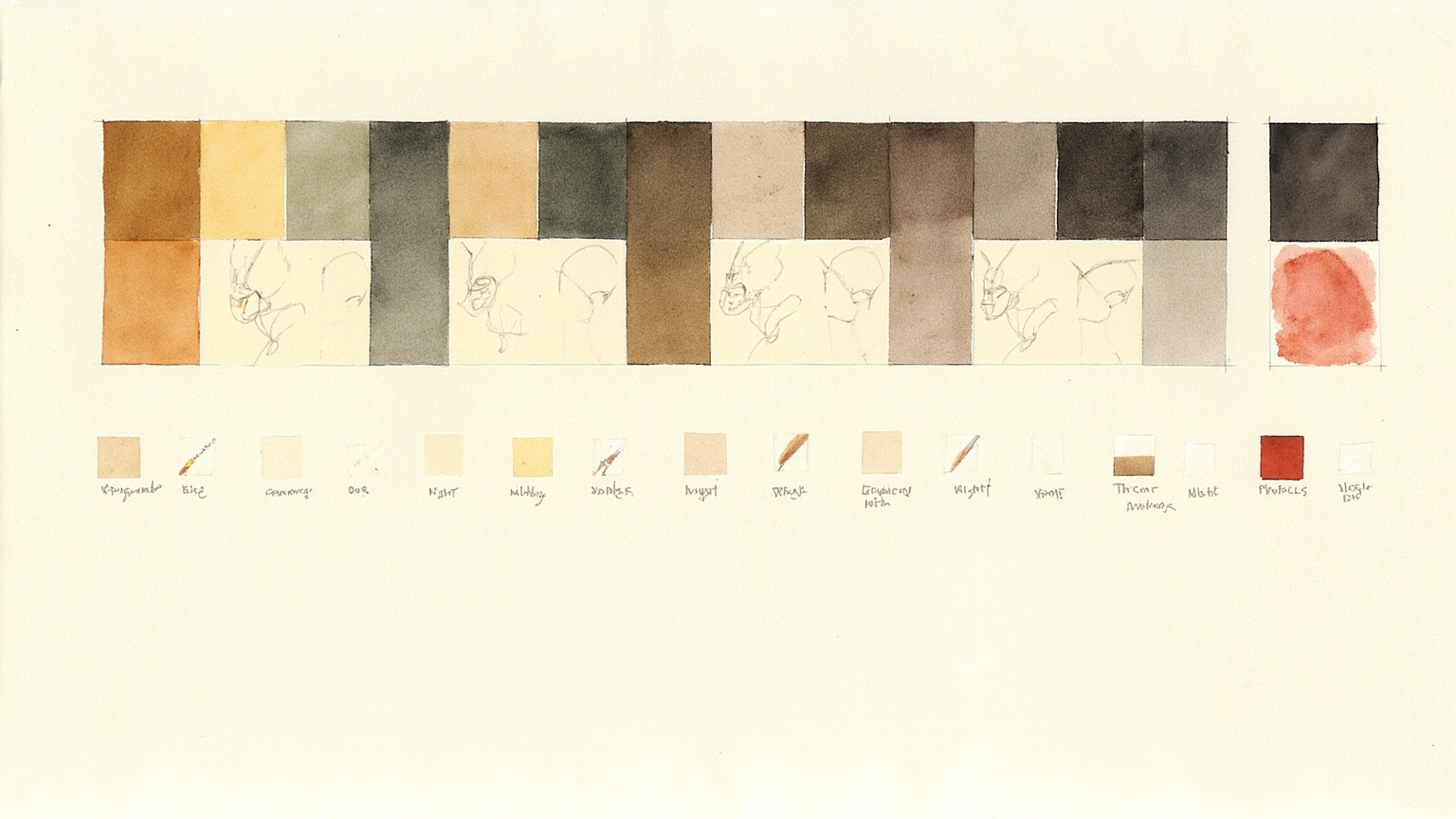
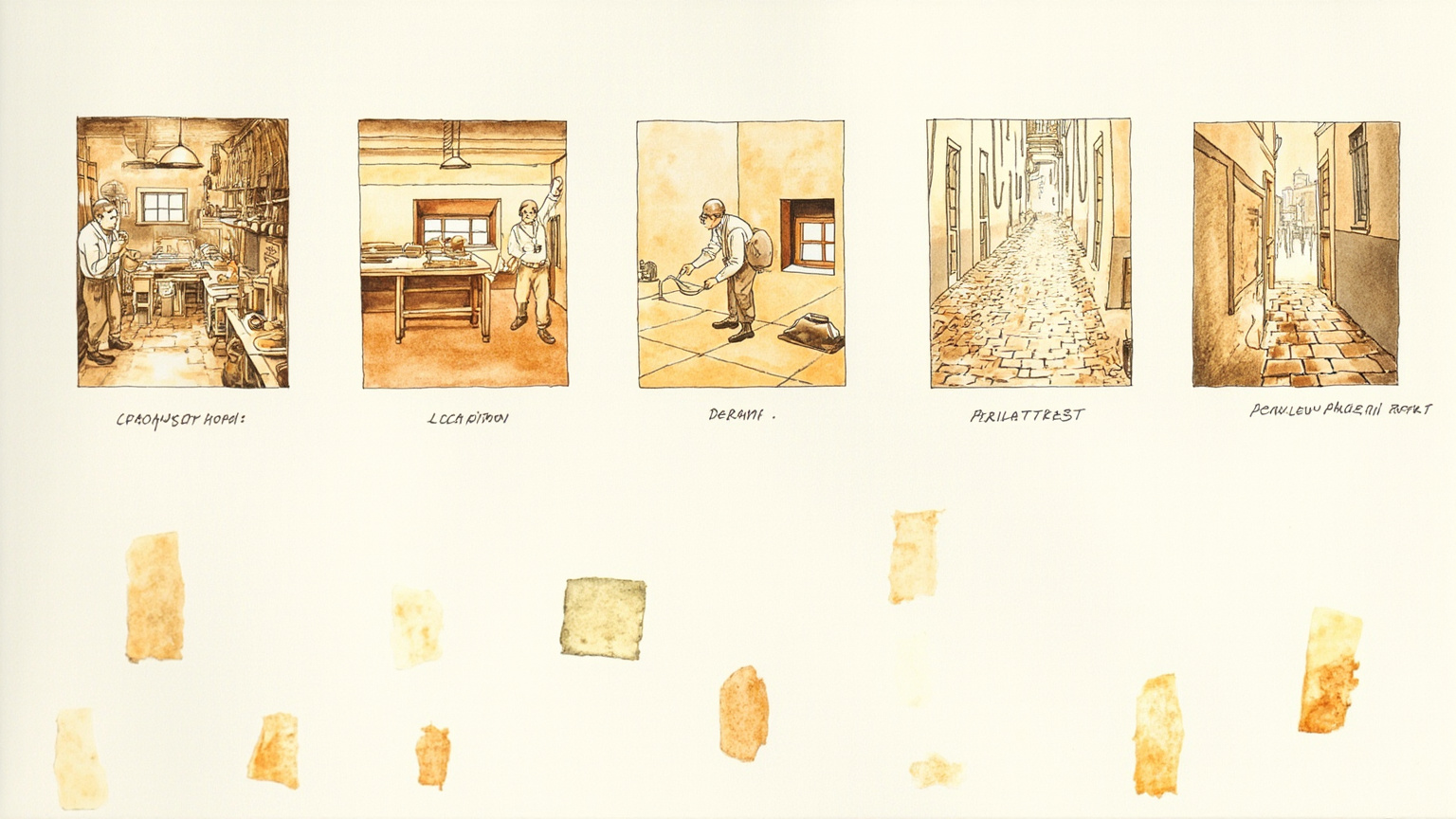
Art Direction4 plates
Before the guide was written, this book got a visual foundation — every illustration you just read grew out of it.