The Gulistan (The Rose Garden) · Companion Guide
蔷薇园
一个云游三十年的托钵僧,把帝王、隐士、乞丐、奴隶的故事一则一则摊在门徒脚前
Opening: A Hand Reaching Out of Chains
One spring in the mid-thirteenth century, the roses were blooming in a garden in Shiraz. An old man sat there with a traveler's bundle on his back, not to preach but to settle a debt — shaking out, one by one, the roads he had walked, the faces he had seen, the dust he had trodden through thirty years. The Gulistan is what happened in that garden that afternoon.
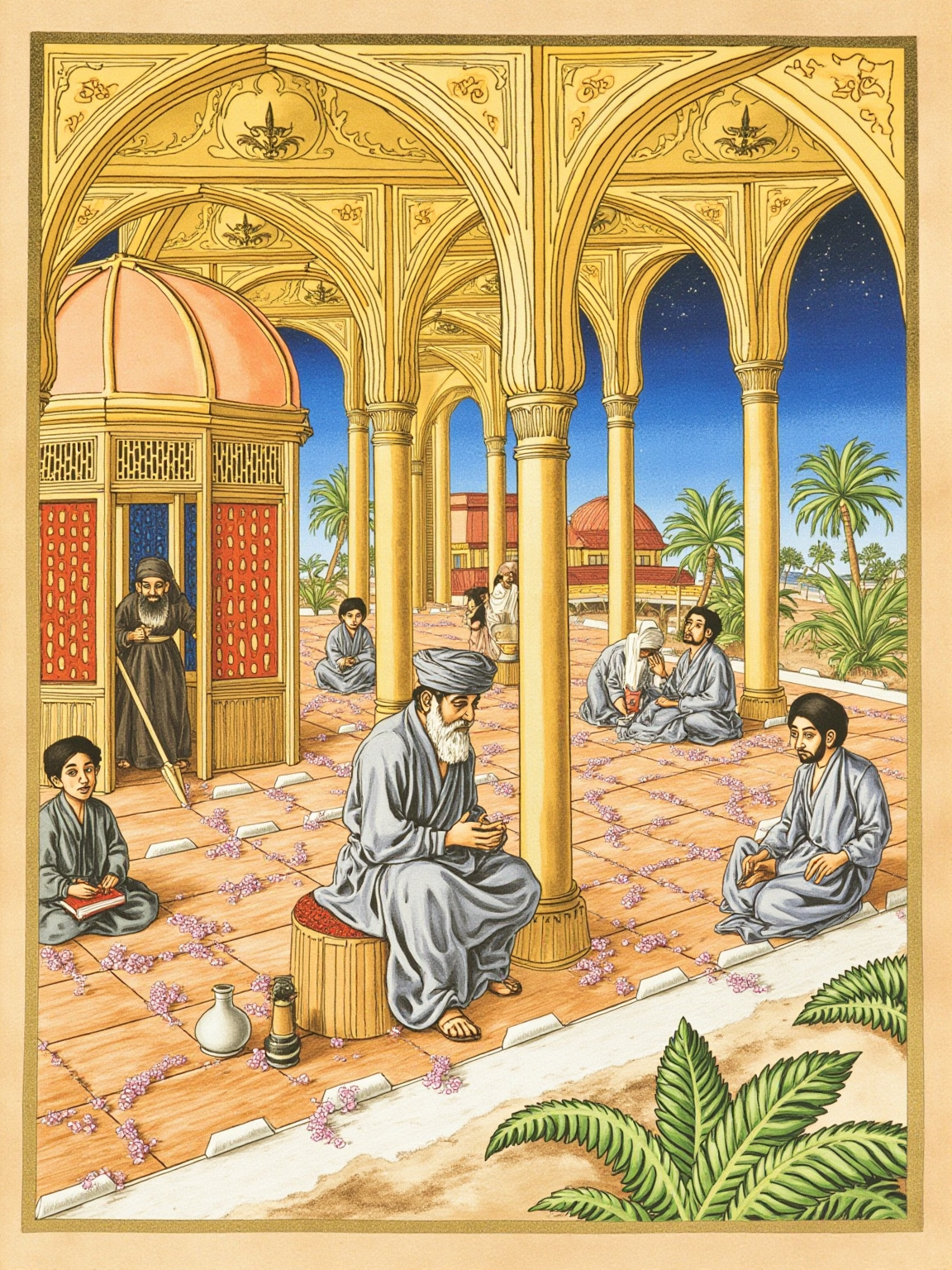
I have not spoken as one who has reached the goal, but as one who still travels the road.
我并非已抵达终点的人,我只是仍在赶路的人。
金句 · 序言 · 园中开讲
What Kind of Book Is This
The author, Saadi of Shiraz, born Musharrif al-Din ibn Muslih, lived roughly from the early to the late thirteenth century. In 1258, the year he finished the book, Mongol armies were laying siege to Baghdad. He sat under the rose trellis of his old garden and dedicated the book to a Mongol khan, asking him to deal gently with Muslims. So what you are opening is a book of moral counsel written to the sound of an empire falling, and also a compact encyclopedia of worldly wisdom peddled by a wanderer just home from the road.
Later readers have ranked it beside Montaigne's Essays and Japan's Tsurezuregusa and Hōjōki as a high point of the essay tradition. Goethe, Voltaire, and Rushdie all drew from it. In Persian mouths it has turned into proverb — "he who speaks the truth is saved," "the greatest fault is not knowing one's own faults" — and no one credits Saadi anymore, because the lines have become as natural as breathing.
Characters and World
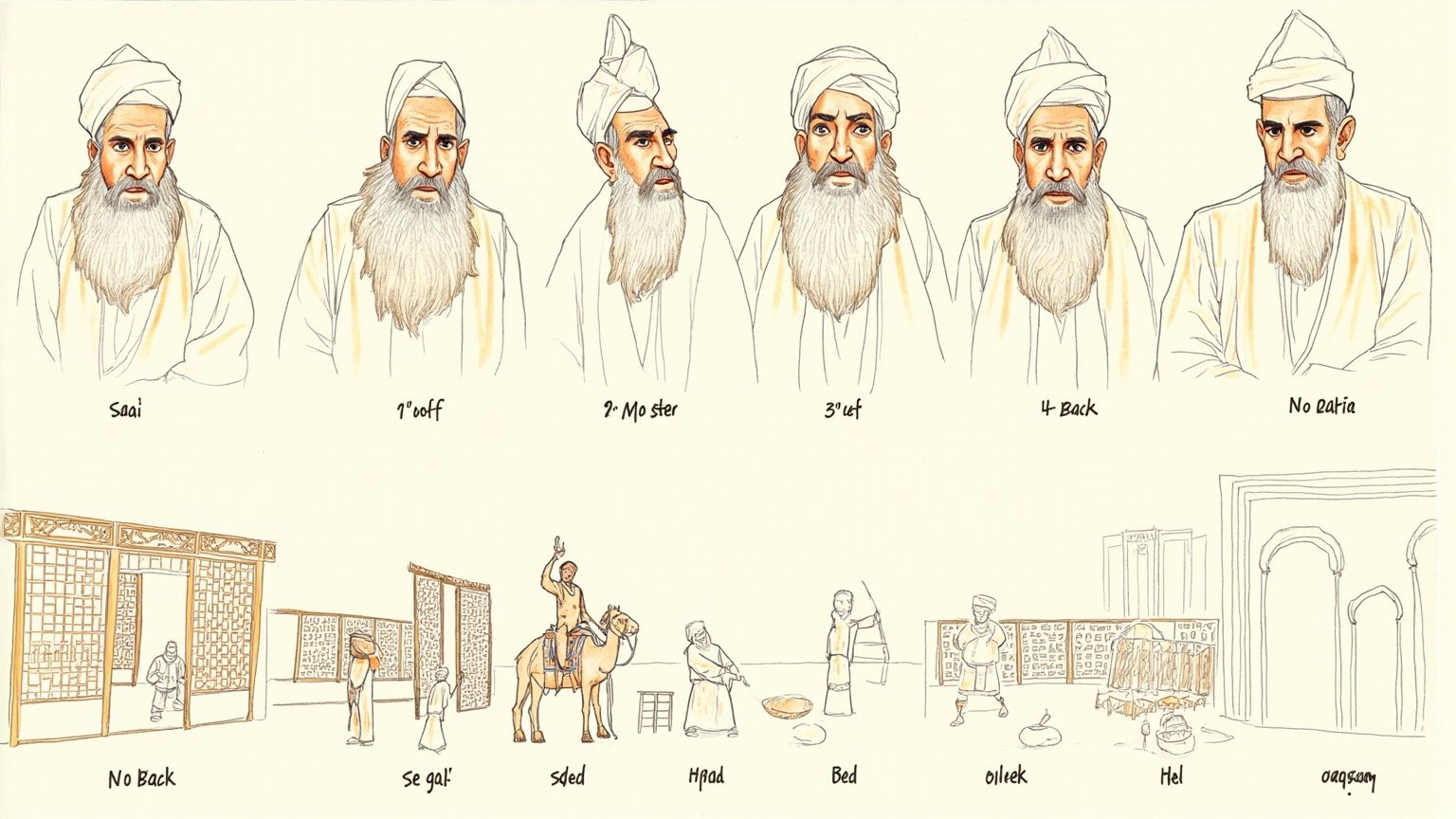
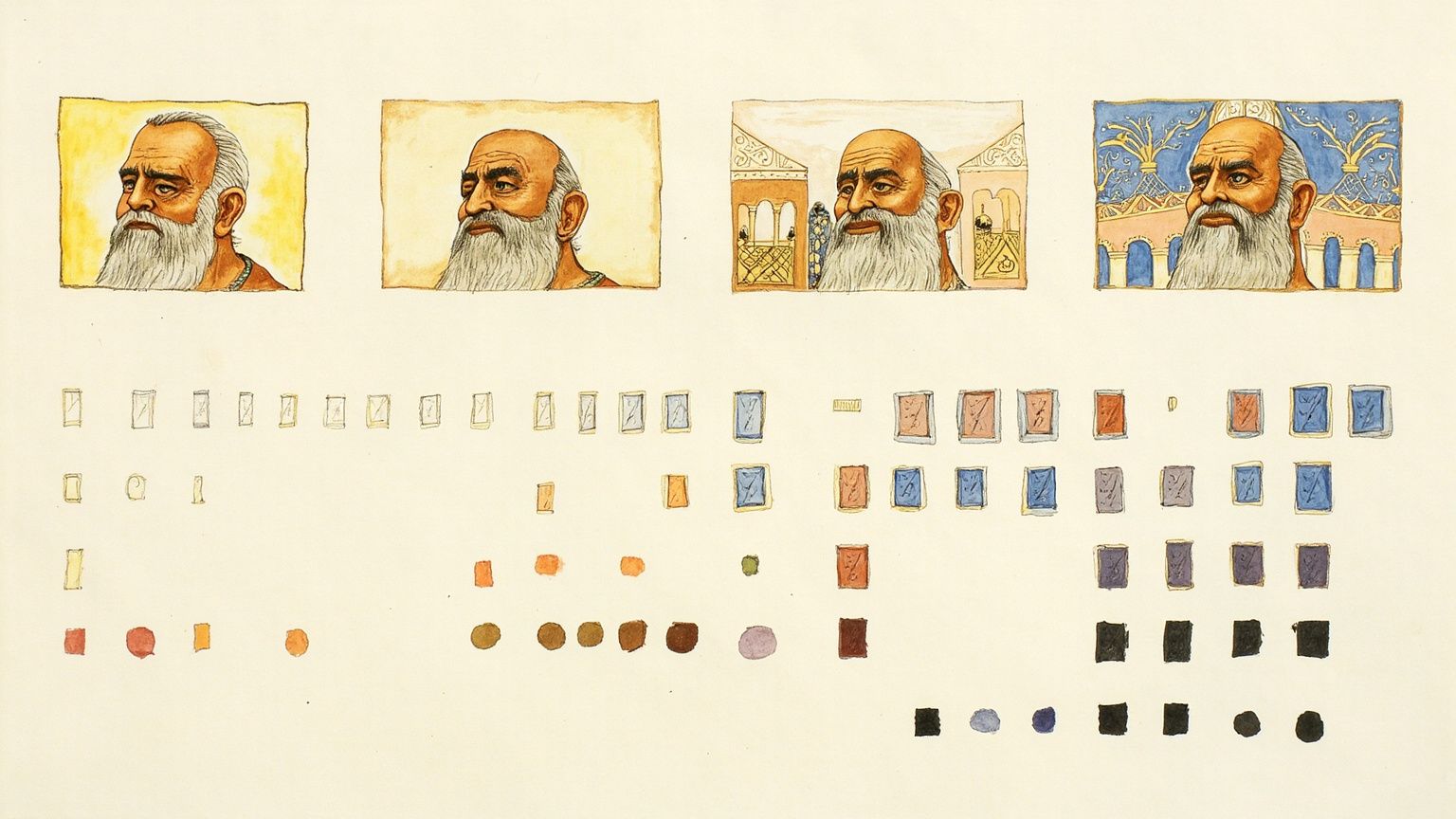
The main character is no one but the old man doing the talking. His disciples are a handful of young men crouched under the eaves, listening upward — merchants, students, travelers passing through. The supporting cast keeps changing faces: a sultan here, a judge there, a dervish, a trader at some desert caravanserai. Saadi never pins their names down; what he needs are faces that can be pressed onto any age.
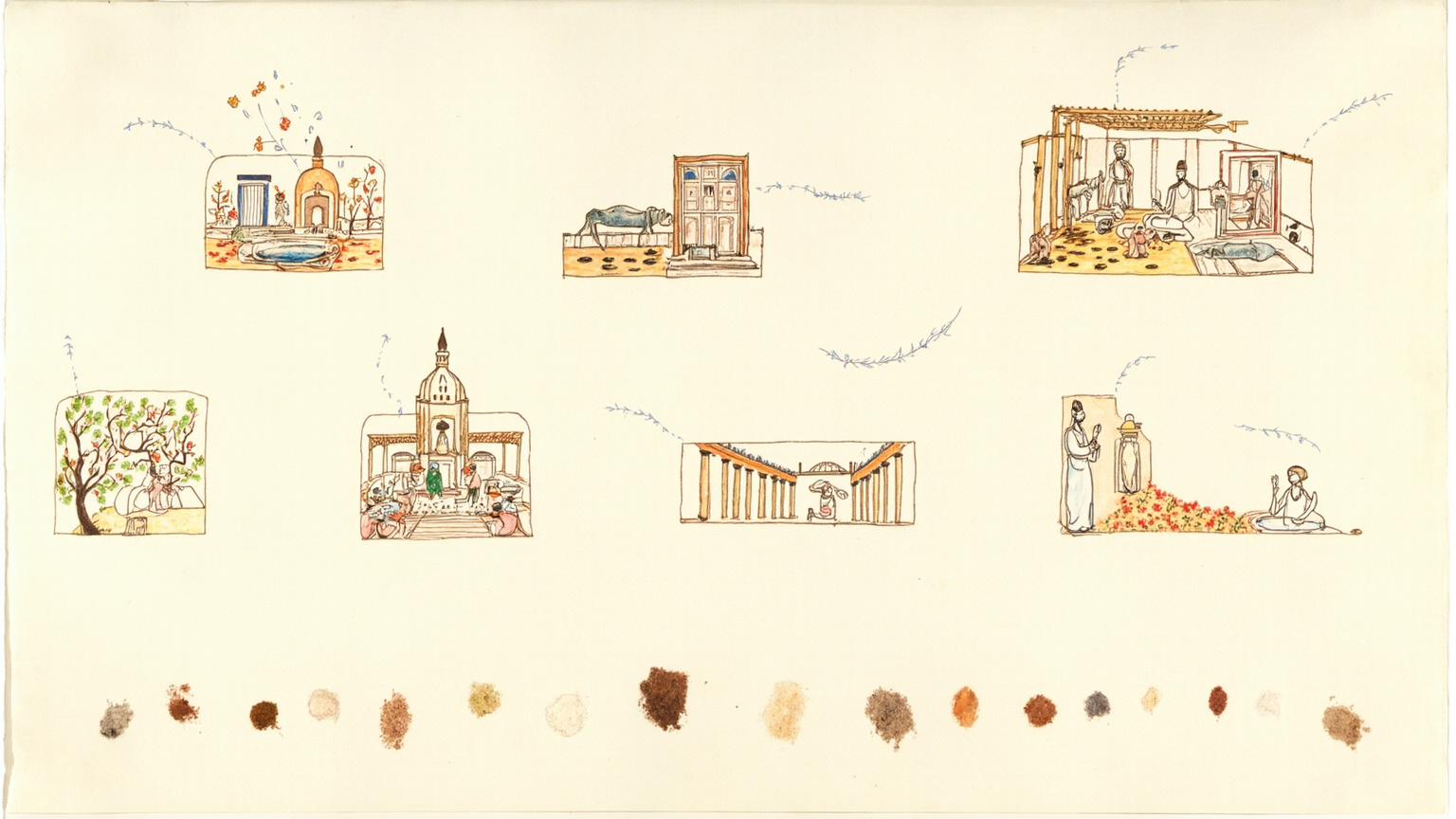
The world is the whole span of the Islamic world that Saadi wore down under thirty years of walking. A rose garden in Shiraz is one stop, a sultan's court in Baghdad another, a college in Damascus another, a ransom ledger in Aleppo another, a caravanserai on the trade roads to India another. There is only one rule: a man walks, and the words grow up out of the road.
King and Hermit, Mirroring Each Other
In the first two chapters, Saadi shows you the face of power first. A tyrant — deliberately left unnamed — hears a single sentence and suddenly pardons a man condemned to death; a vizier stays silent all night and so walks into court alive the next day. No sooner has he told one of these than he turns to a dervish sleeping on bare stone, who wakes and says only, "I want nothing more." Between the king's canopy and the beggar's rags, he leaves it to you to weigh which one is heavier.
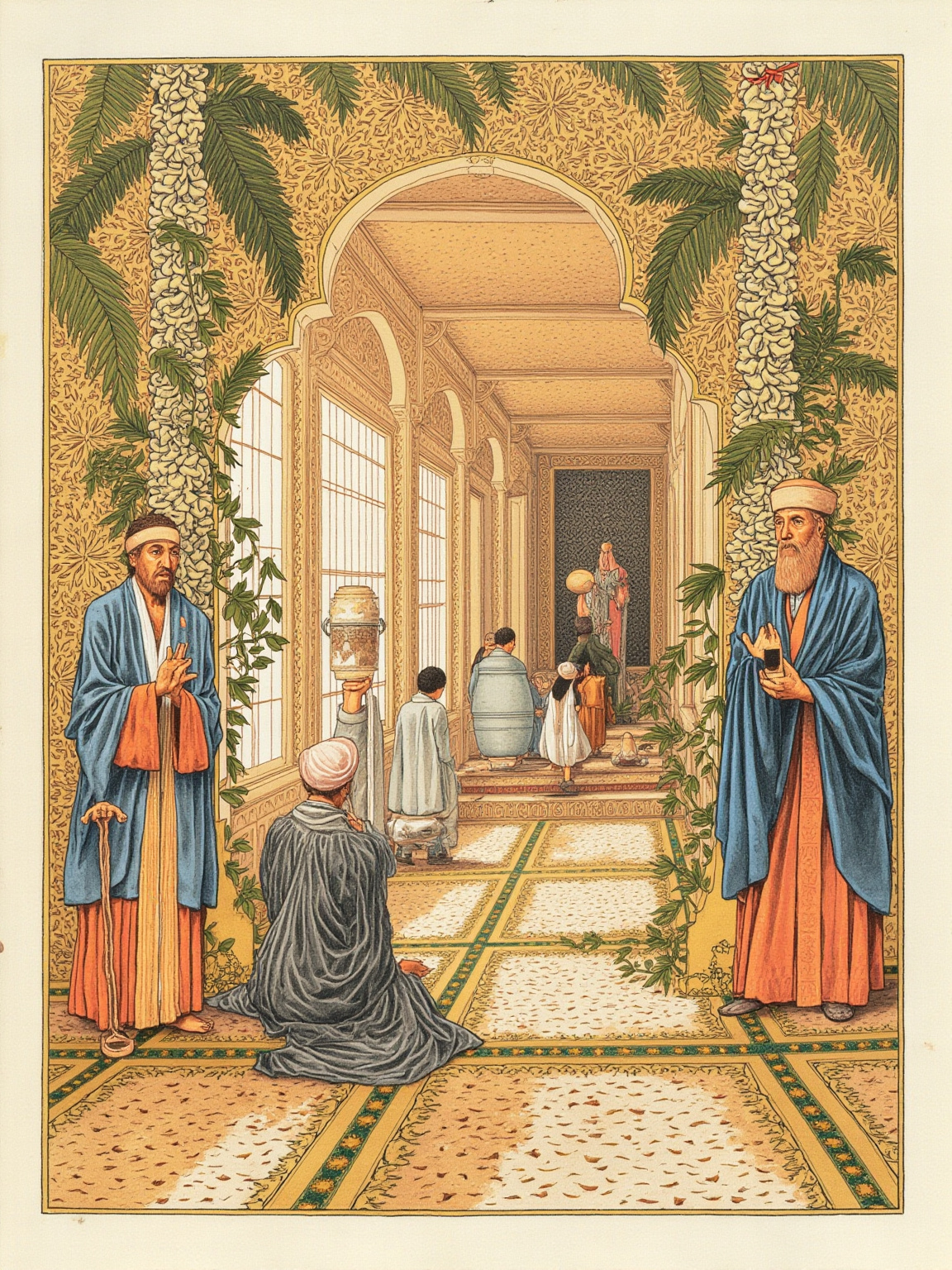
A king was saved by a single word, and a vizier kept his head by holding his tongue all night.
一个君王因一句话得救,一个大臣因整夜沉默而保住头颅。
金句 · 第一卷 · 帝王的轶事
The craft is in the shape: every tale is short, opening and closing in two or three lines. Whenever Saadi finishes a king's anecdote, a beggar or an ascetic is guaranteed to talk back, the two sides of a scale swinging against each other. Does this sound like a grandfather's storytelling, the kind where every tale ends with a "so, you see"?
Contentment and Silence: His Own Scar
In the third and fourth chapters the smile drops and he turns to his own story. He passes quickly over being taken captive by the Crusaders as a boy — where he was held, whose ledger he was entered into — and lingers only on the moment in Aleppo when an official paid to ransom him free. From then on he chose the wandering dervish's life. This piece of autobiography flashes back again and again through the Gulistan, like an old scar the book keeps running its finger over.
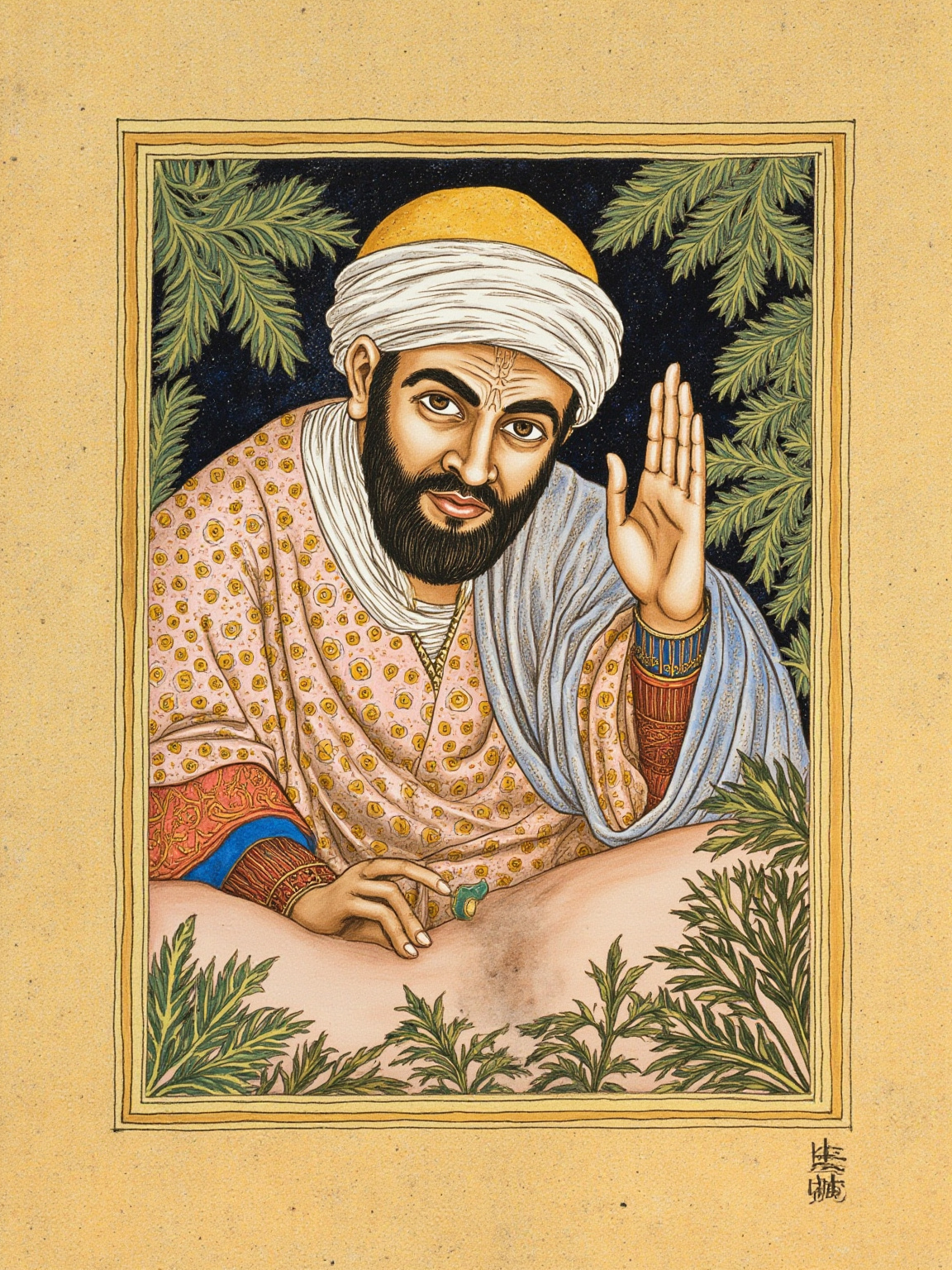
The captive bird would sooner starve than sing in a cage; silence, too, is a kind of freedom.
笼中之鸟宁可饿死也不肯开口鸣叫——不说话,也是自由。
金句 · 第四卷 · 静默之益
Right after it comes a fable: a bird locked in a cage would rather starve than sing. Saadi ties this image to the value of silence — staying quiet is not cowardice, it is saving your words for where they are worth spending. I stopped short the first time I read this one too: so this is how a Persian tells you to talk less, by starving a bird.
Old Age, Teaching, and the Work of a Disciple
The sixth and seventh chapters turn to daily life. An old man, near death, converts his whole estate into a string of prayer beads and a walking stick — his wealth zeroed out, his bundle down to nothing. That image is Saadi's gift to middle age. A teacher spends ten years grinding a slow-witted pupil into a learned man, and Saadi writes it without sentiment, simply setting down the plain weight of the words "ten years."
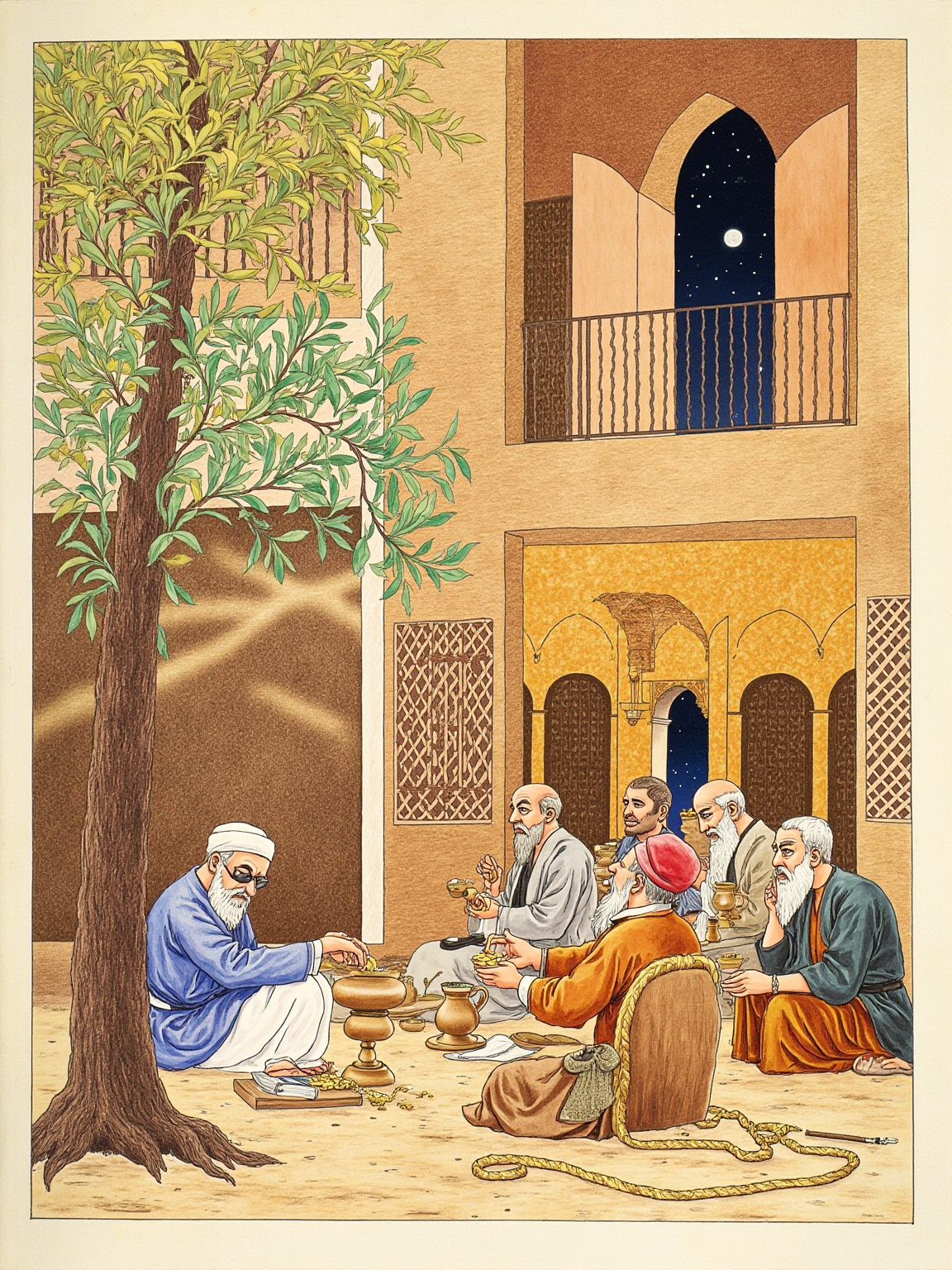
A beggar has slept without anxiety; the king has risen without sleep.
乞丐一夜安睡无梦,国王通宵未眠。
金句 · 第六卷 · 知足与匮乏
These two chapters are a practical manual for a disciple: how to face your own aging, how to choose a teacher, how to get through ten years without slamming the door. What makes Saadi good at this is that he never lectures from a height — because he grew up as that slow-witted pupil himself.
Friendship's Rules, Learned at a Desert Inn
The eighth chapter's story unfolds in the desert. A caravan loses its way, and the innkeeper steadies everyone with a single sentence — Saadi deliberately withholds the words themselves, leaving you to weigh it on your own. His conclusion, though, he states outright: a man is made by the company he keeps. Choose your friends wrong and it ruins a life; choose them right and it is like living twice.
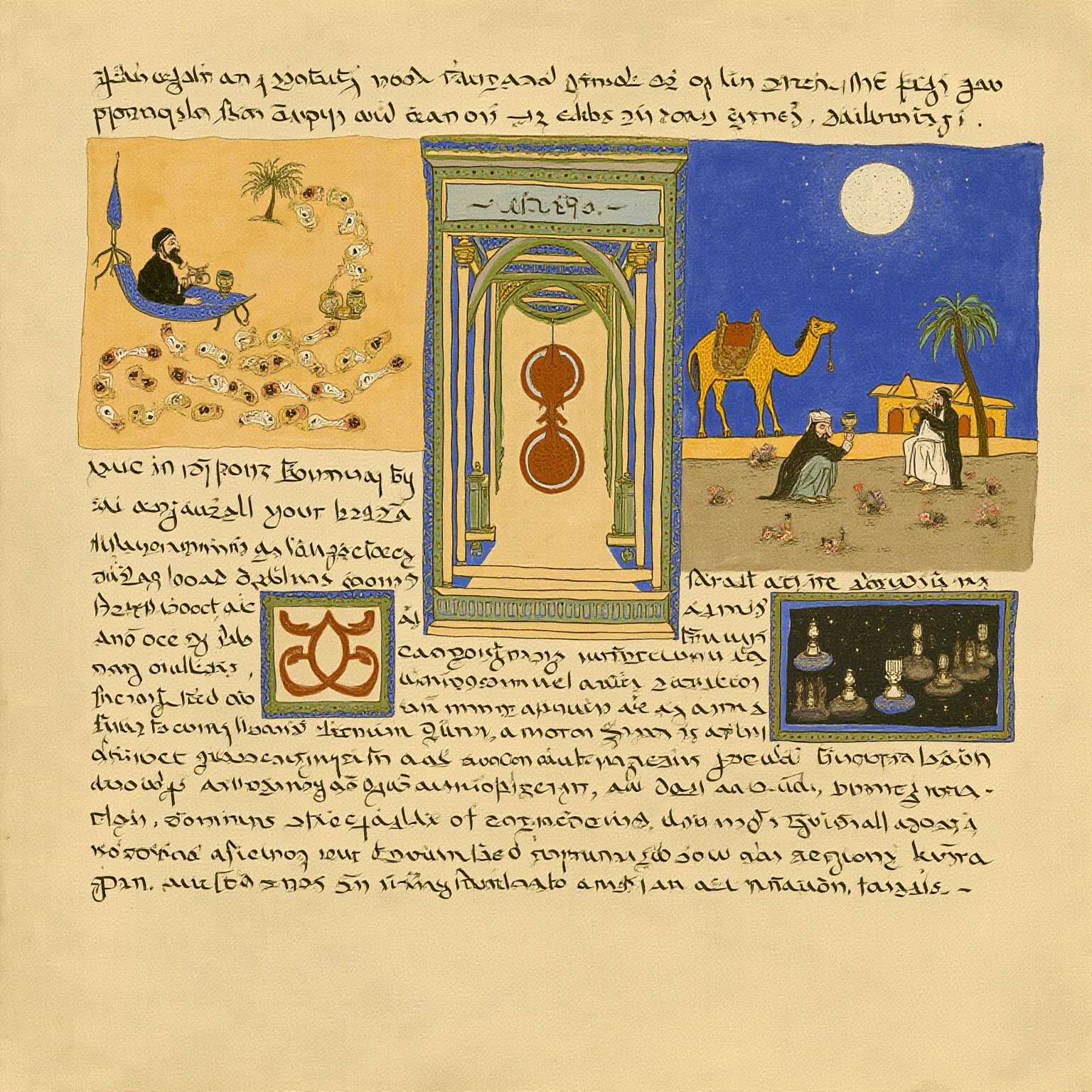
He who has no companion in the road is a man without a market in the world.
路上无同行者,便是世上无立足处。
金句 · 第八卷 · 交往之规
This is not comfort-book wisdom. It is caution distilled through war, plague, captivity, and thirty years on the road. Persians have read it as practical guidance for a thousand years, and they still do.
The Chapter on Love: Flowers and Light, No Faces
The fifth chapter, on love and youth, is handled in a thoroughly Persian way. Saadi writes love through roses, wine cups, a pair of eyes behind a veil — Sufi metaphor from start to finish. Desire is lifted upward into devotion to God, to one's neighbor, to beauty itself. One line carries the whole chapter: love is the willingness to change for the one you love.
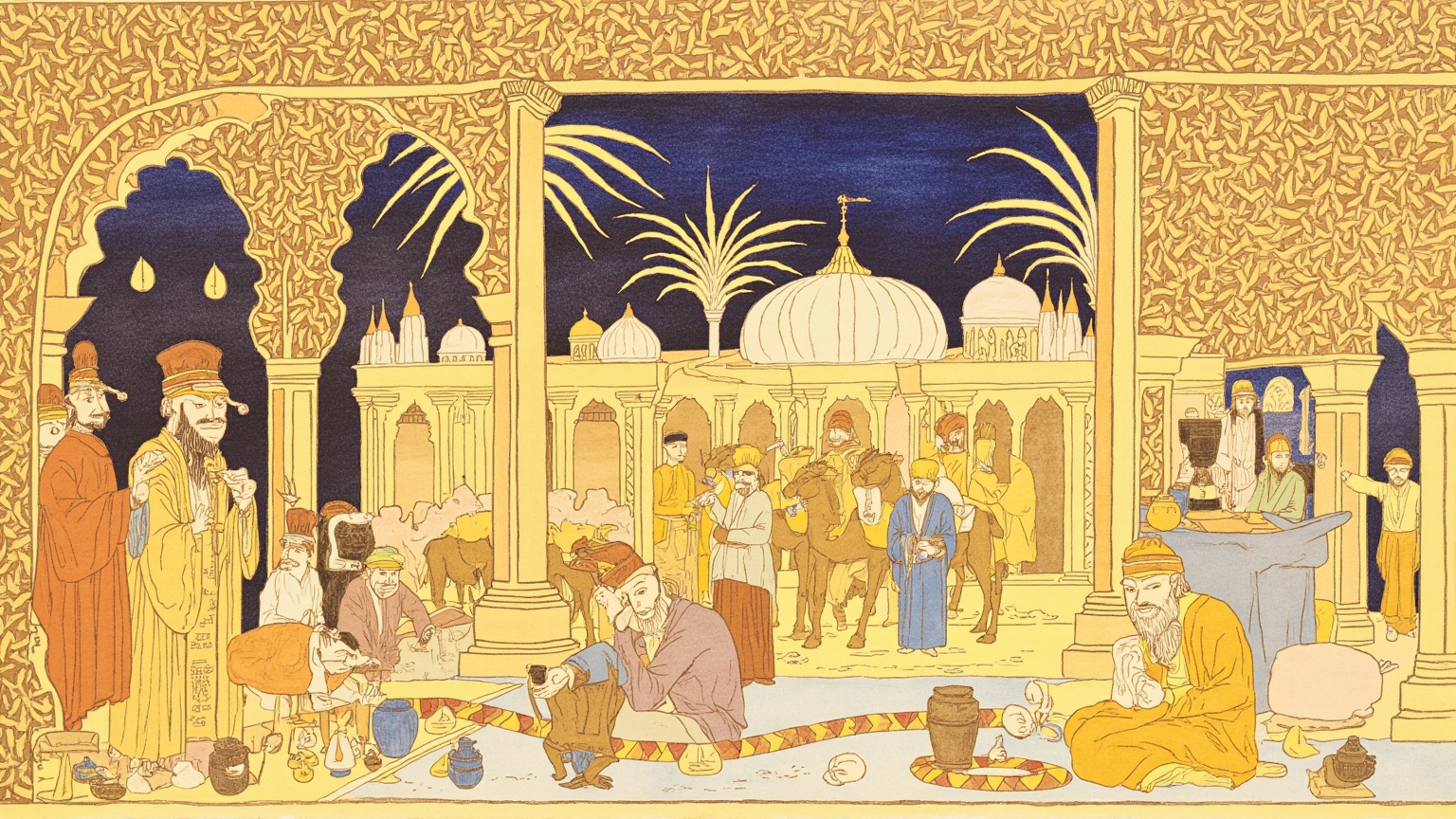
Love is the readiness to be changed by the beloved.
爱,便是甘愿为所爱者而改变。
金句 · 第五卷 · 爱情与青春
This is the shahed tradition familiar from classical Persian poetry: beauty is a door to heaven, not something to be stared at. So what you find in this chapter is flowers, lamps, wine — not anyone's love story.
Why It Is Remembered
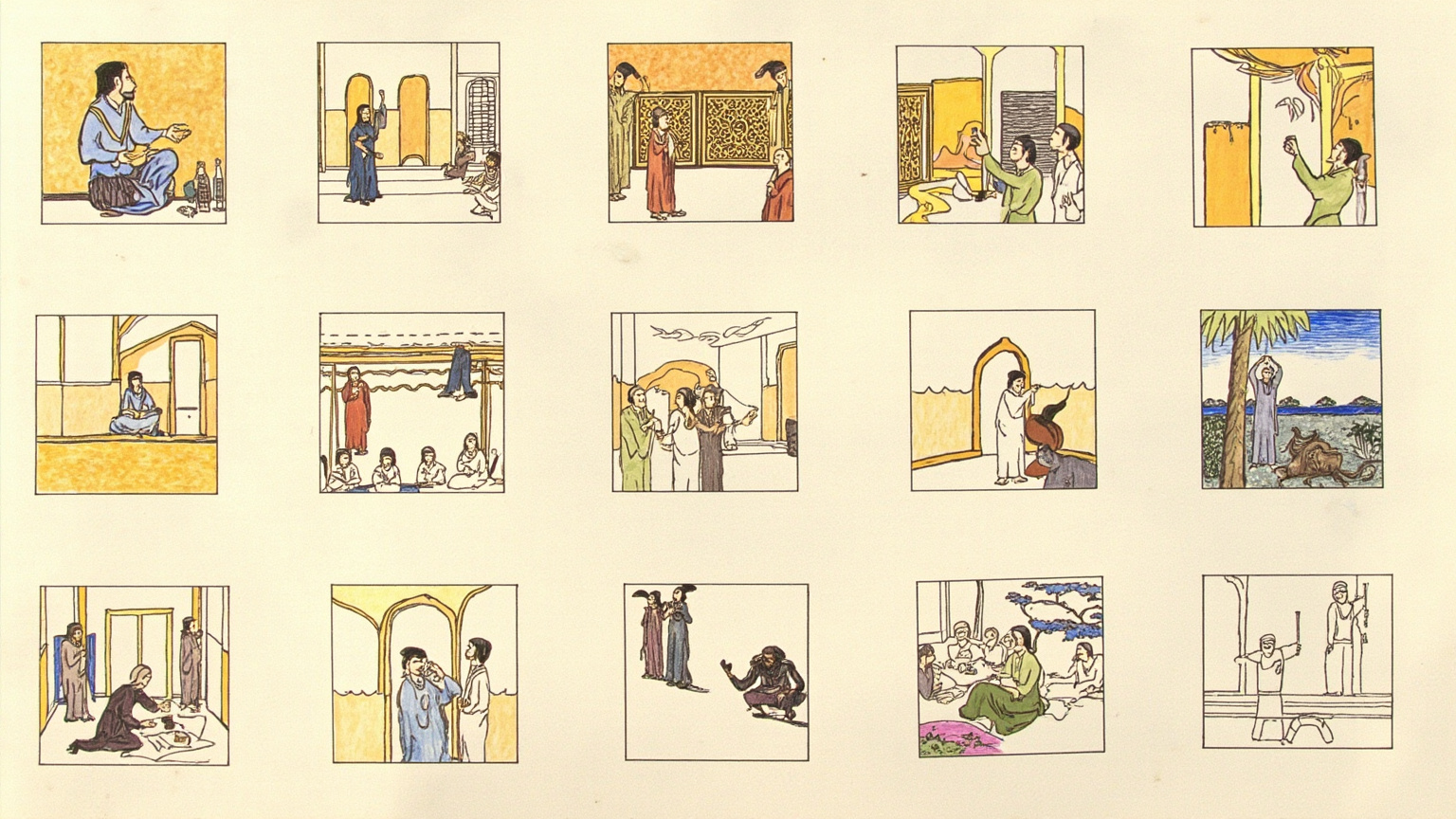
Three reasons. First, structure: each of the eight chapters is built from dozens of independent stories and maxims, the story wrapping the maxim, humor dissolving the hardship. Nearly everyone who has since tried to write a manual of life's lessons has borrowed this skeleton.
Second, voice: Saadi never lectures. He lets you laugh at a tyrant's story, then chokes you with one line from a dervish — humor and compassion are two edges of the same blade. Third, tone: in the very year Mongol armies were smashing Baghdad, he pleads with a khan in the preface while, in the text itself, writing power as something weightless. That tone only exists on top of ruins.
Theme: Distilling the Road Into a Garden
The name Gulistan is not scenery, it is structure: go out, walk, suffer, come home, tell it, and shake the dust out of your bundle until it turns to flowers. Thirty years of walking add up to a lifetime's practice, and the roads he walked teach more than the books he read — that is the sentence the whole book is built to say.
The things it talks about — contentment, silence, power, compassion, choosing a teacher, choosing friends — none of them is rare on its own. What is rare is that one man fit all eight into the same garden, and made the weight of it feel so light.
What makes Saadi remarkable is not that he understood everything, but that he could say all of it as lightly as breathing — a lightness earned only by thirty years of walking through dust.
Reasons to Read the Text Itself
A guide can give you the map, but the text gives you something else: the three seconds of silence Saadi leaves after a story ends, a rose petal blown under the eaves right as a maxim lands, the sudden whiff of sweetness inside the blood at the moment a tyrant repents. The Gulistan is full of moments like these, and none of them can be summarized. You have to sit in the garden yourself.
Art Direction4 plates
Before the guide was written, this book got a visual foundation — every illustration you just read grew out of it.