The Hungry Stones (Kshudhita Pashan) · Companion Guide
饥饿的石头
白昼是英属印度的棉花账房,夜半是大理石废宫里两百年未竟的莫卧儿幻象——税官的理智正在被石墙一寸寸消化。
A Ghost Story on a Train
A night train crawling toward East Bengal stops at some nameless station to take on water. Passengers waiting to change trains doze scattered through the carriage, when a stranger of about thirty, his identity unclear, suddenly sits up from his berth and tips his chin at two young men across from him, fresh back from a pilgrimage. He is Srijut, a civil servant posted by British India to a small town in the west to collect the cotton tax, and tonight he tells them something strange that happened to him ten years ago. He tells it strangely too: he never says it is true, never says it is a dream, just lets it sink, sentence by sentence, deeper into the dark. When the station bell cracks the air, he is already up, suitcase in hand, gone from the first-class carriage, and the two young men never hear the rest.
The Man Who Wrote Stray Birds Also Wrote a Ghost Story
The author is a household name in China: Stray Birds, The Crescent Moon, Gitanjali, the 1913 Nobel Prize in Literature. His name is Rabindranath Tagore, a Bengali who spent his life writing poems, songs, plays, and books for children, and almost nobody remembers that in 1895 he also tucked away a proper ghost story. It appears in the English collection The Hungry Stones and Other Stories, and it is the coldest cut this poet, famous for his tenderness, ever made.
A Ruined Palace, Working Two Shifts
The story is set in Barich, a small town on the banks of the Susta. There stands a marble palace built two hundred and fifty years earlier by the Mughal emperor Muhammad Shah II, converted under British India into the cotton-tax officer's combined office and quarters. By day the place is a government post: cane chairs, tin filing boxes, a hookah, ledgers of cotton duty. By night the same palace changes shift, and laughter two hundred years old seeps up from the base of the walls, along with a fountain and the sound of bare feet stepping into water. Two eras stack inside one space, like two slides taking turns on the same white wall.
Srijut is the cotton-tax officer the colonial government posts here. At first he is practical about it, treating the palace as an office by day and a place to sleep, grumbling about the night chill, looking for excuses to spend less time indoors. Inside a week he cannot sleep at all. Not from fear. Something else is pulling him in slowly: the stone walls listening, the carpet breathing, some unseen someone stirring the water until bangles chime against each other.
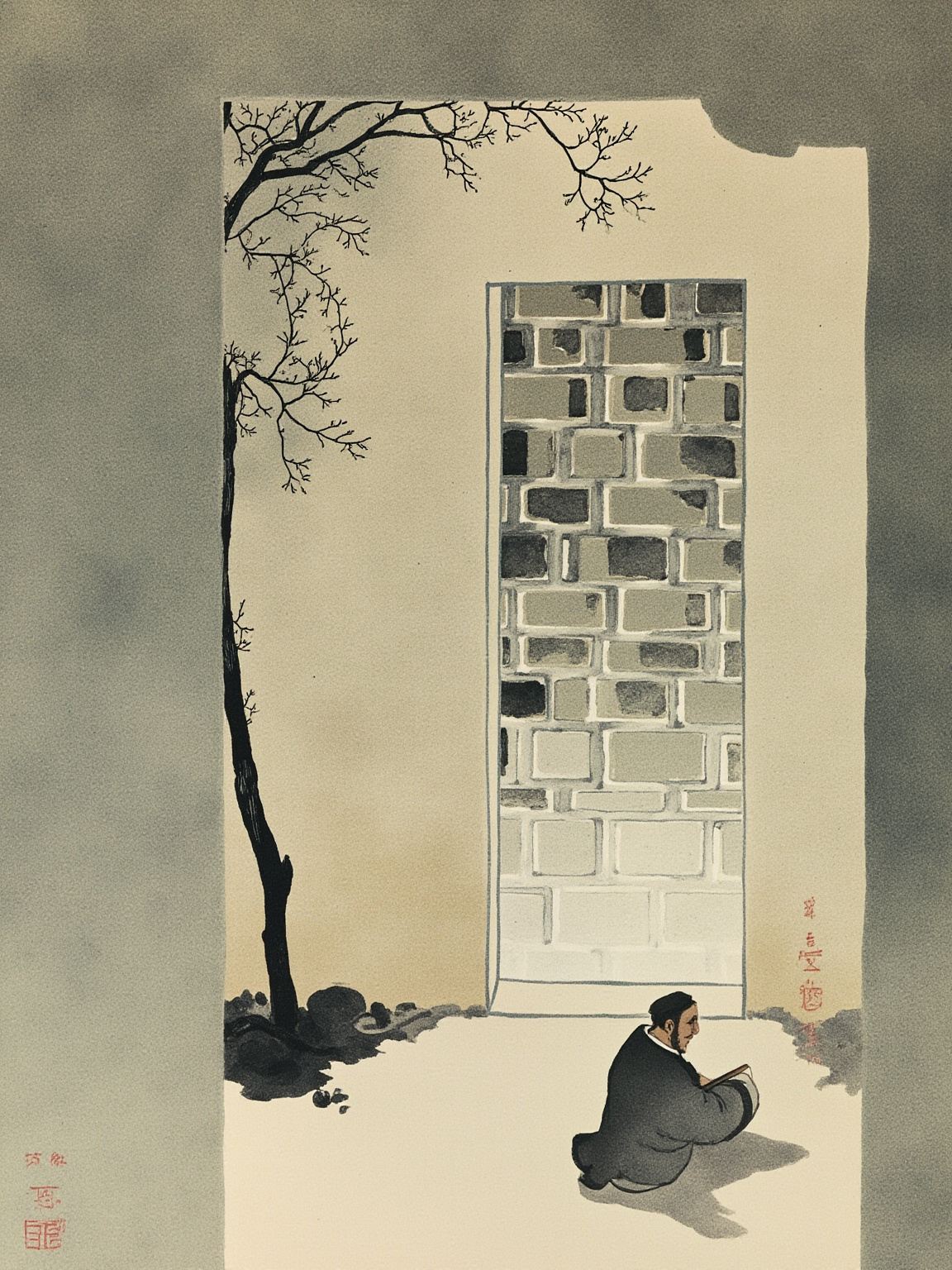
I used this palace as my office by day and my bedroom by night, and tried all I could to keep out of it as much as possible.
我把这宫殿白天当衙门,夜里当卧房,能不待就尽量不待。
金句 · 棉花税官初到废宫
The Stone Walls Begin to Swallow
The nights sink deeper, layer by layer. First comes laughter, young laughter, heard as if through a curtain of muslin. Then the splash of a fountain, then bare feet stepping into a shallow pool, water beaten into scattered silver. Saris rustle. Music drifts by, slow enough to be humming. At first Srijut can still tell himself, reasonably, that it is the wind, an illusion, boatmen on the river. But the sounds keep getting more specific: an arm ringed with bangles stirring the water, a girl's toes drawing ripples across it, until he has to admit it. This is not wind. This is a court two hundred years dead, coming back.
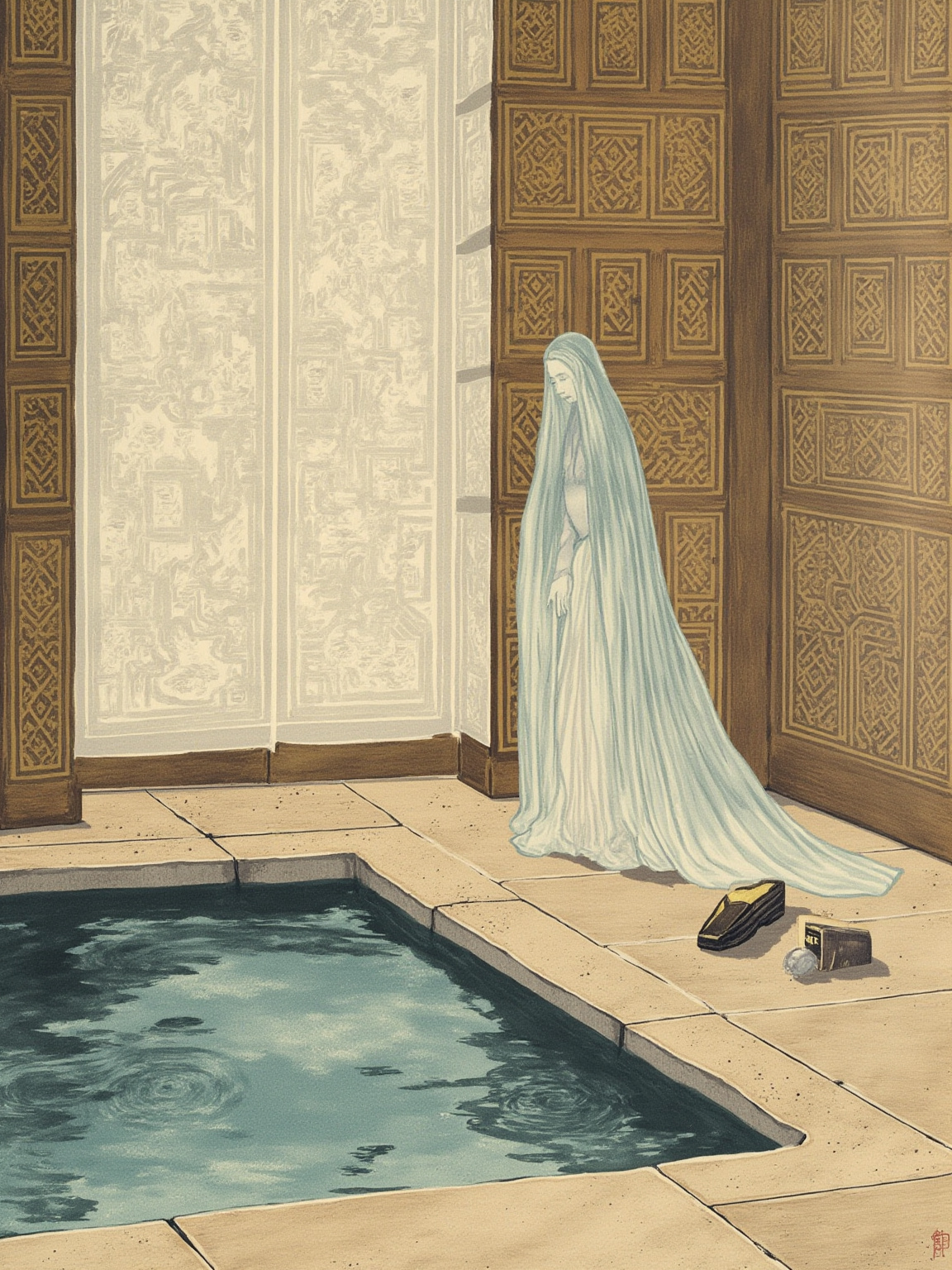
I could hear the splash of the fountain, the soft tread of feet on the wet marble, the rustle of silk.
我听见喷泉溅水的声响,赤足踩在湿大理石上轻柔的步子,还有绸缎窸窣的低语。
金句 · 莫卧儿幻象初次降临
Tagore never lets Srijut see an actual face, an actual person. The whole piece runs on sound, patches of light, wet footprints, damp air in an empty corridor. That is far more frightening than drawing a woman in a sari and calling her a ghost. What stays unseen takes up more room than what you can point to.
Worn down past bearing, Srijut turns to the one person left who might know something: Karim Khan, the old clerk who does odd jobs for him around the palace, probably the only man who knows the place well and has stayed anyway. Karim Khan tells him one thing: the stones are hungry because two hundred years ago some desire went unmet, hardened into a curse, and set itself into the walls. To undo it, you have to start with the name of a Persian girl.
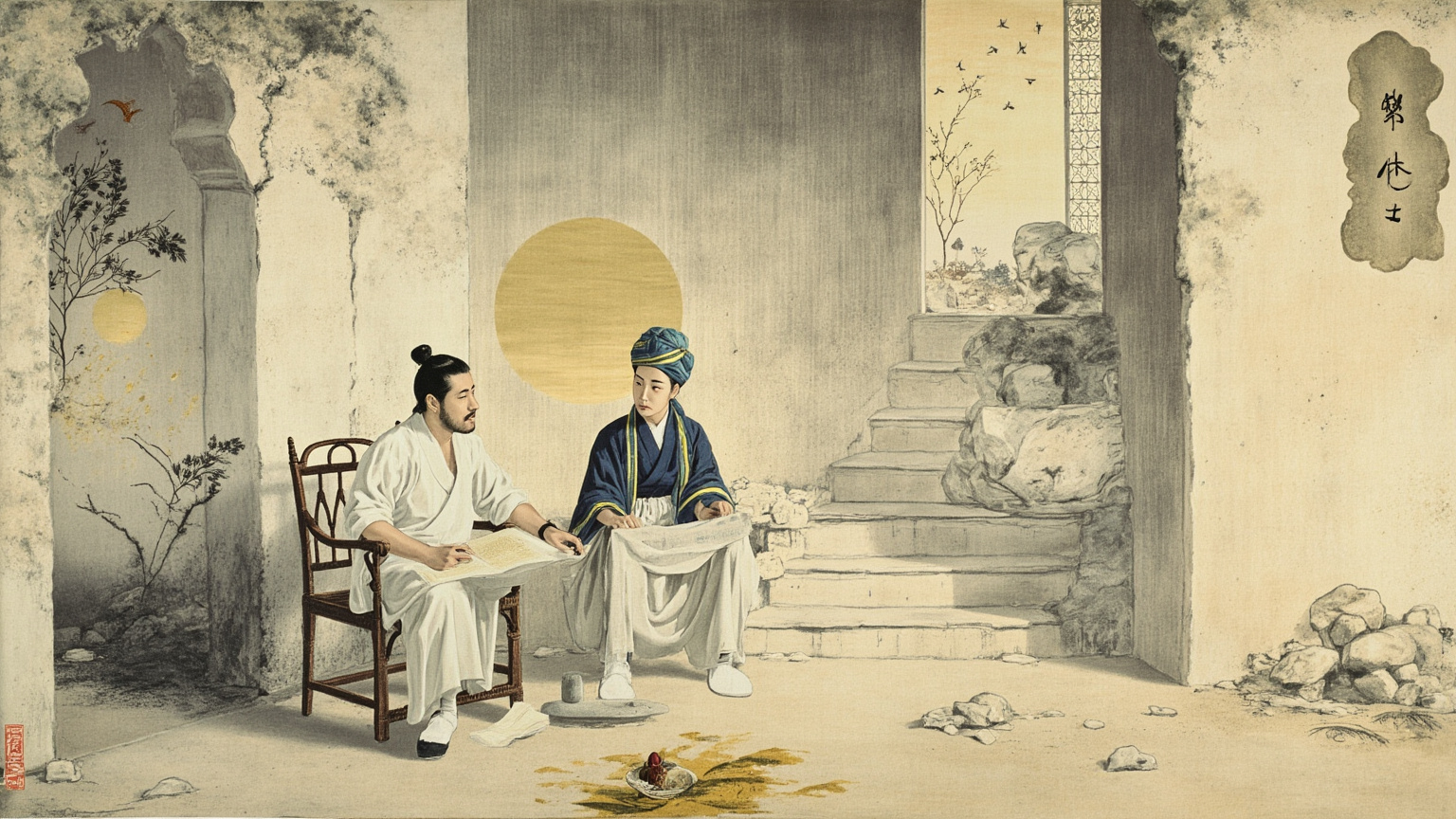
The stones are hungry because some desire, unfulfilled, two hundred years ago, has been caught within them and petrified there.
石头之所以饥饿,是因为两百年前某一场未得满足的欲望凝成了咒,结进了墙里。
金句 · 老文书 Karim Khan 解咒
Karim Khan is just opening his mouth to tell the story of the Persian girl, the real solution to this whole ghost story, when a whistle cuts through the carriage. The station has arrived. Srijut stands, nods politely to the two of them, and steps down with his suitcase as if drifting off the train. The narrator and his companion chase after him, but the train is already moving. The key to the story, and the man who held it, are severed in half by a whistle.
Two Eras, One Negative
The real cut lands once Srijut can no longer tell which era he is standing in. By day, signing cotton receipts in his cane chair, he hears what sounds like someone next door humming a court melody in Persian. By night, leaning in to catch the fountain along the marble corridor, he half believes he was a Mughal courtier in a former life. A clerk of British India, living as two eras printed on the same negative.
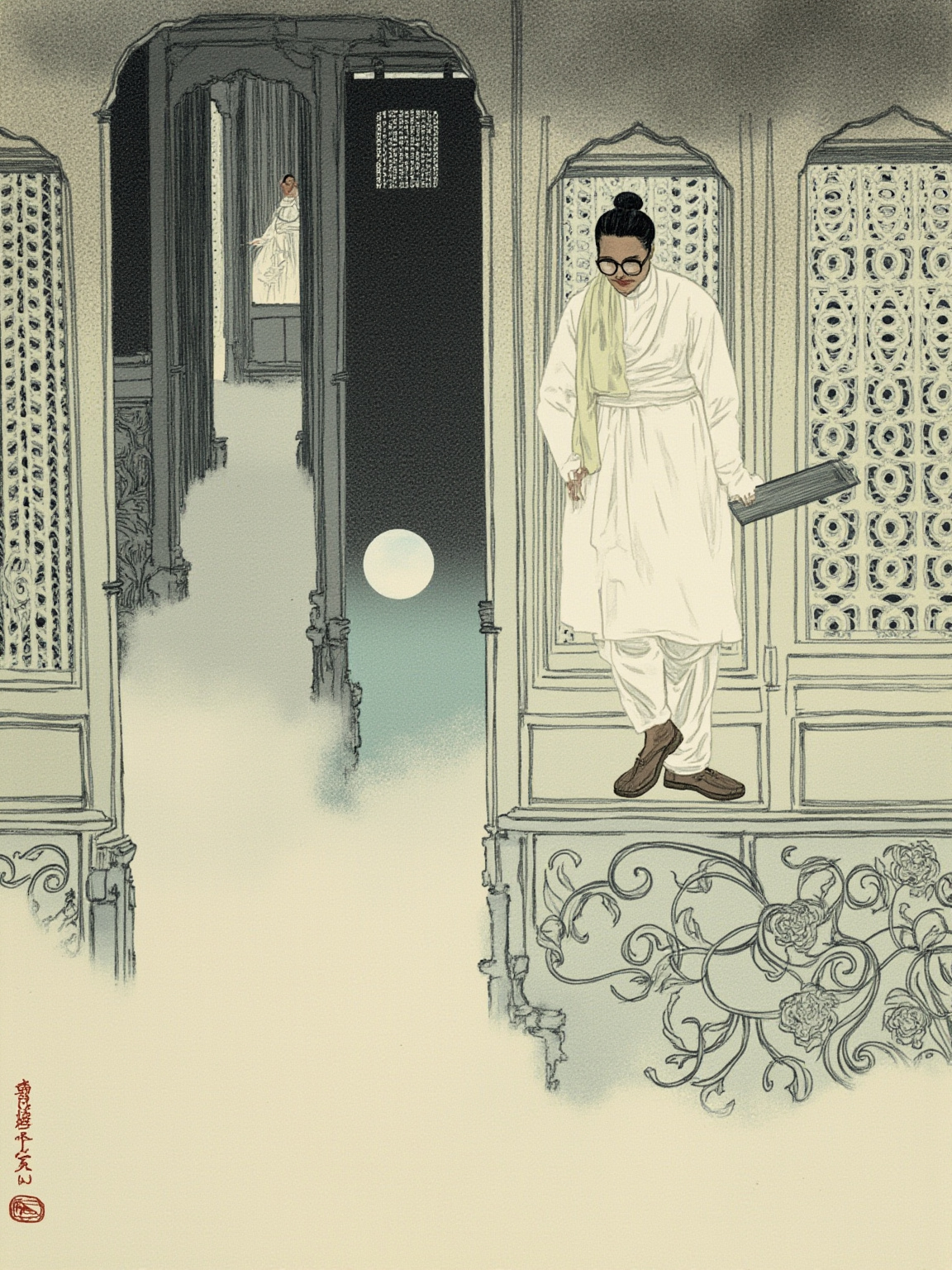
At times I could not be sure whether I was the cotton-tax-collector of to-day or some Mogul lord of two centuries back.
有时我也分不清自己究竟是今日的棉花税官,还是两百年前某个莫卧儿王侯。
金句 · 两个时代叠成一张底片
This is the real meaning of the title The Hungry Stones. It is not the stones going hungry; it is those two-hundred-year-old unmet desires that are still hungry, hungry enough to have gnawed themselves a stomach out of stone. The palace is not a ruin. It is a living thing digesting me, dissolving me a little at a time into itself with some kind of narcotic gastric juice. Srijut says this about his own situation just as the train crosses a bridge, the river beneath it black as ink.
A Madman Who Got There First
Only at the very end of his story, once he has told it down to the bottom, does Srijut mention the other man: Manhar Ali, who wanders the grounds around the ruined palace. He too was once posted to this palace, once pulled in by the voices in the walls, and somehow fought his way back out. But by the time he got out, he was already half mad. Whenever a storm breaks, he runs circles around the palace's outer wall, screaming through the latticed stone windows: It's all false! Get away! Srijut's voice drops when he reaches this part on the train. This madman, who has to scream himself back into being himself, is the warning of a step Srijut has not yet taken.
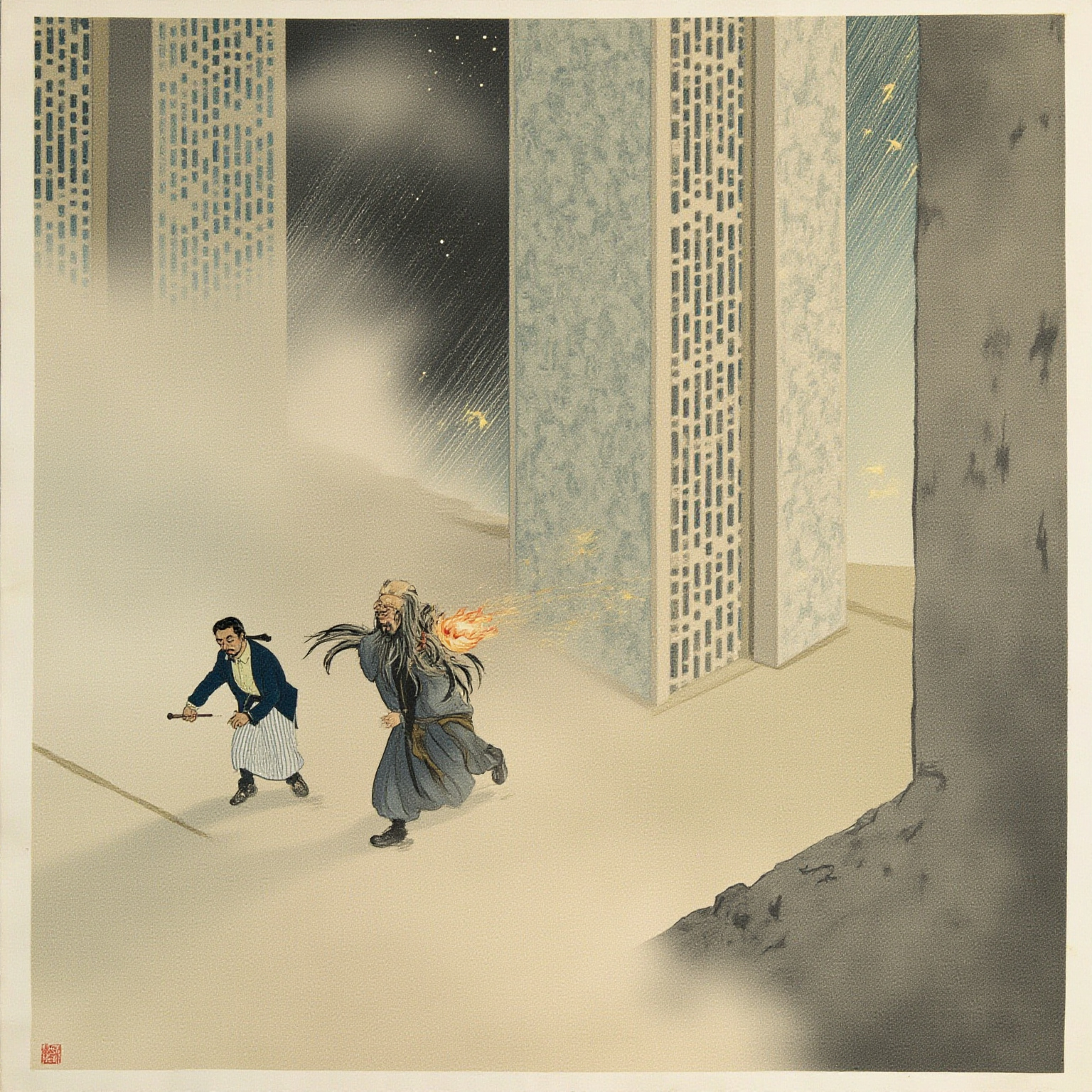
He has escaped out of the stone, but he has been unable to escape from himself.
他是从石头里挣出来了,可没能从自己里头挣出来。
金句 · 废宫外那个疯子 Manhar Ali
The Cold Cut That Never Resolves
The stones are hungry because two hundred years ago, a desire that never got what it wanted hardened into a curse and sealed itself into the walls.
Why It's Still Worth Reading Today
By now you probably know the ruined palace swallows Srijut, and you know the whistle cuts the ending in half. Read the story anyway. What makes Tagore genuinely good here is not the plot but the rhythm of it, the sense of a sound growing, slowly, inside the walls. He almost never writes what Srijut sees, only what he hears, how many degrees colder his skin gets, how one morning the cane chair has shifted three inches without explanation. None of that survives in a summary; it only lives in the gaps between the original sentences. Read that restraint for yourself, and you will understand what gentle horror actually means.
In 1960 the Bengali director Tapan Sinha turned it into a film, Kshudhita Pashan. In 1991 the Indian director Gulzar remade it in Hindi as Lekin.... Two adaptations across two languages are proof enough that the story's images can carry the weight of light and shadow. But a camera can only show you the palace. Only the original text can make you, after the lights go out, hear the wall in your own room breathing.
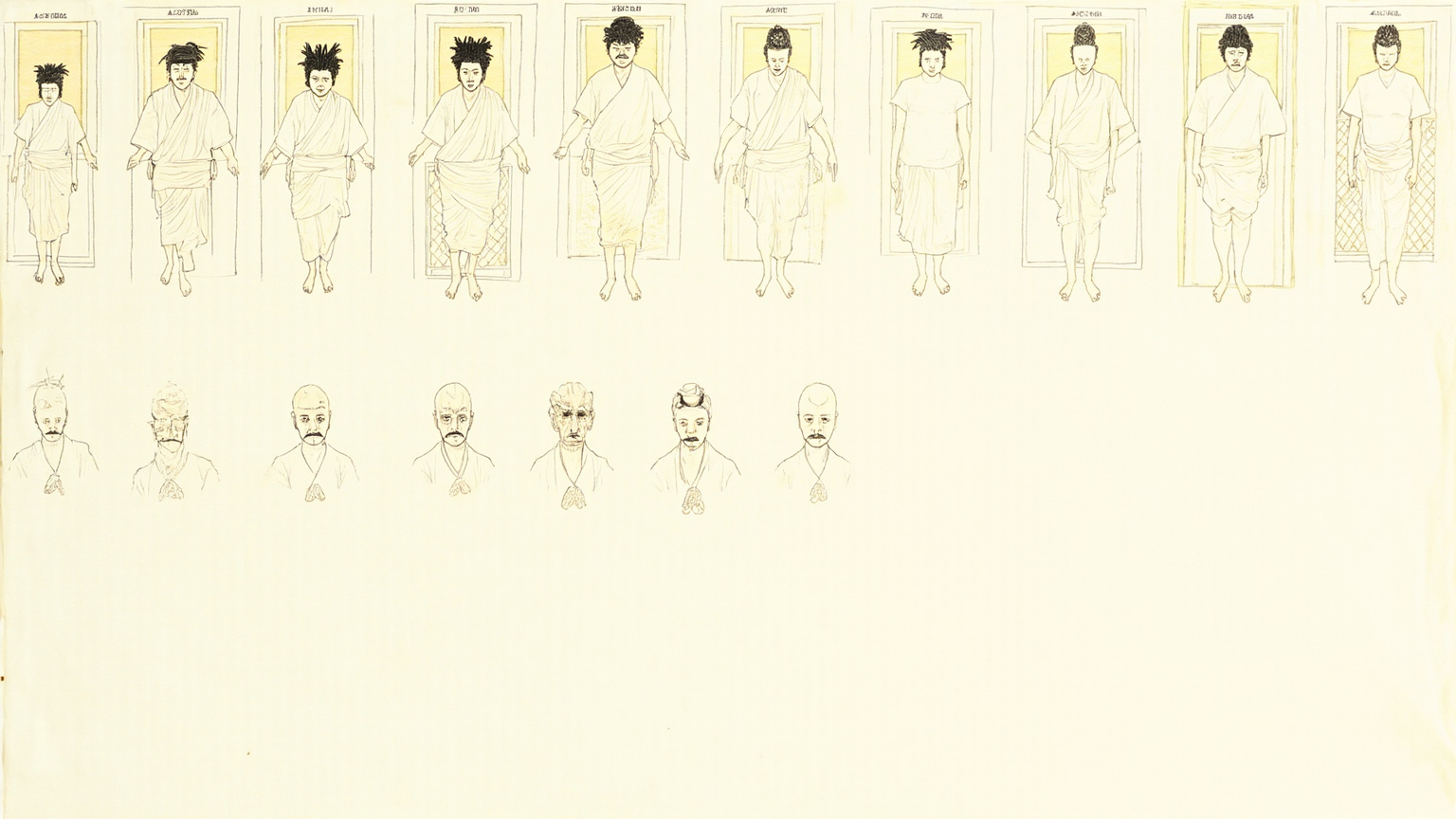
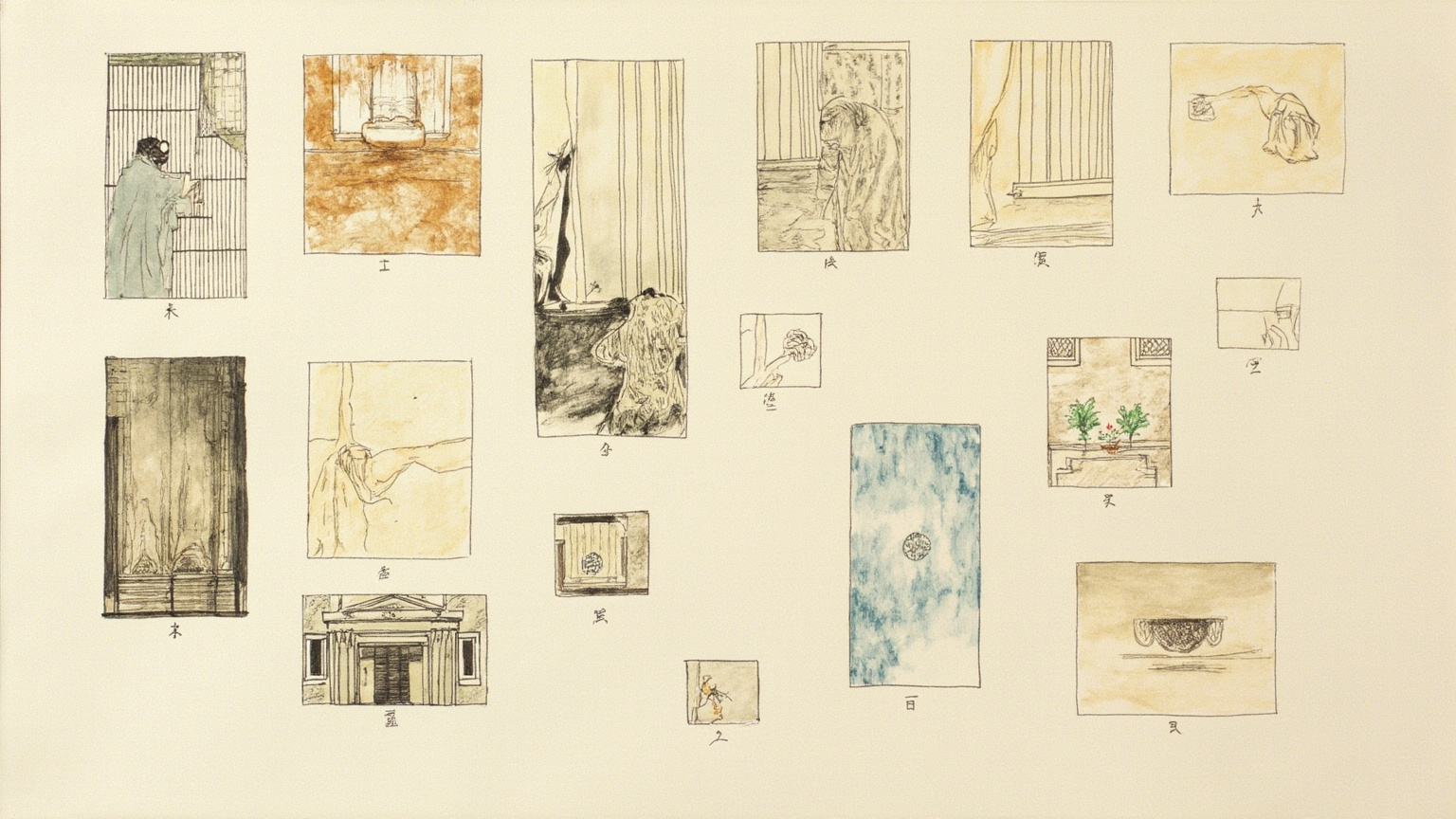
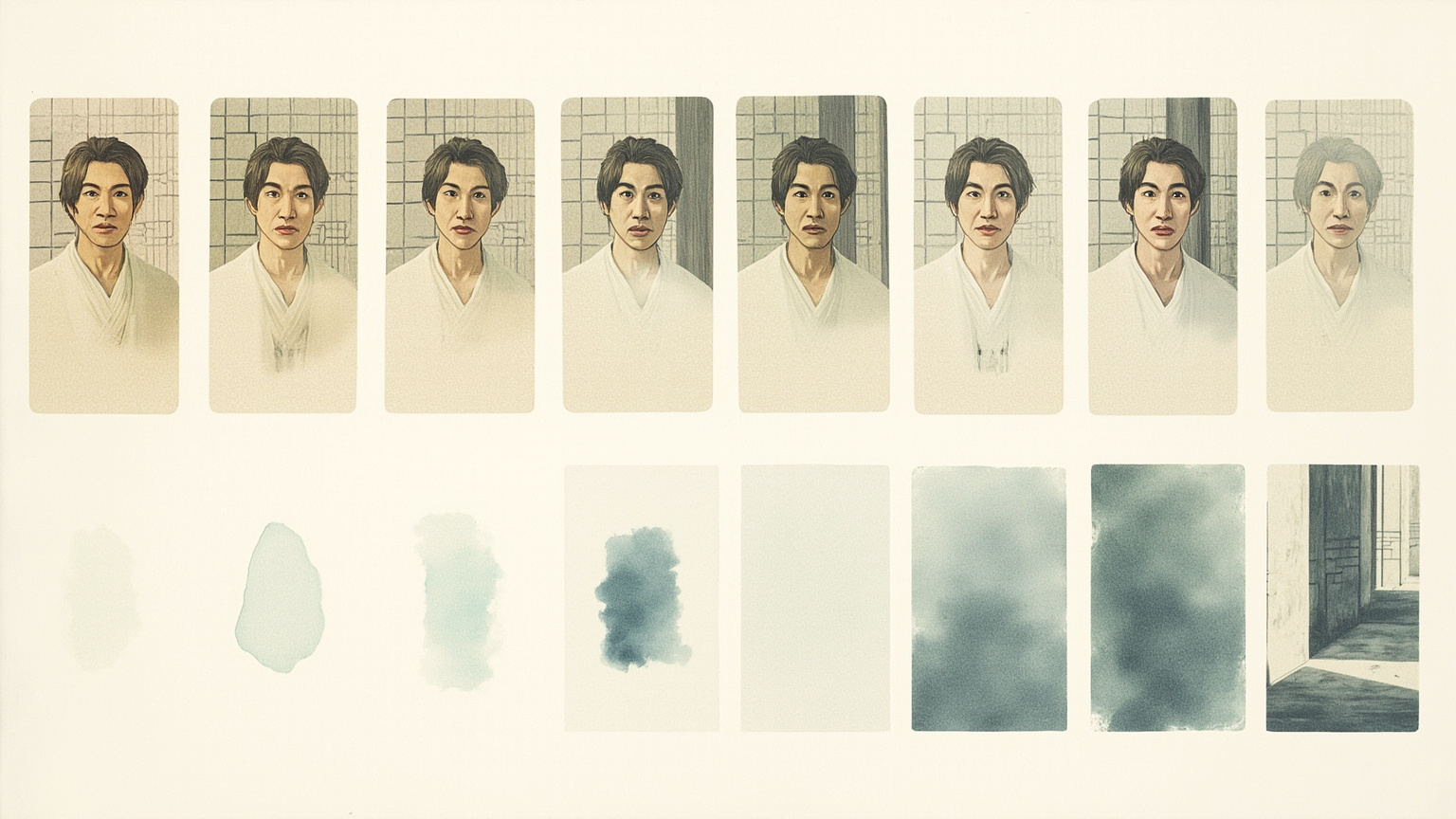
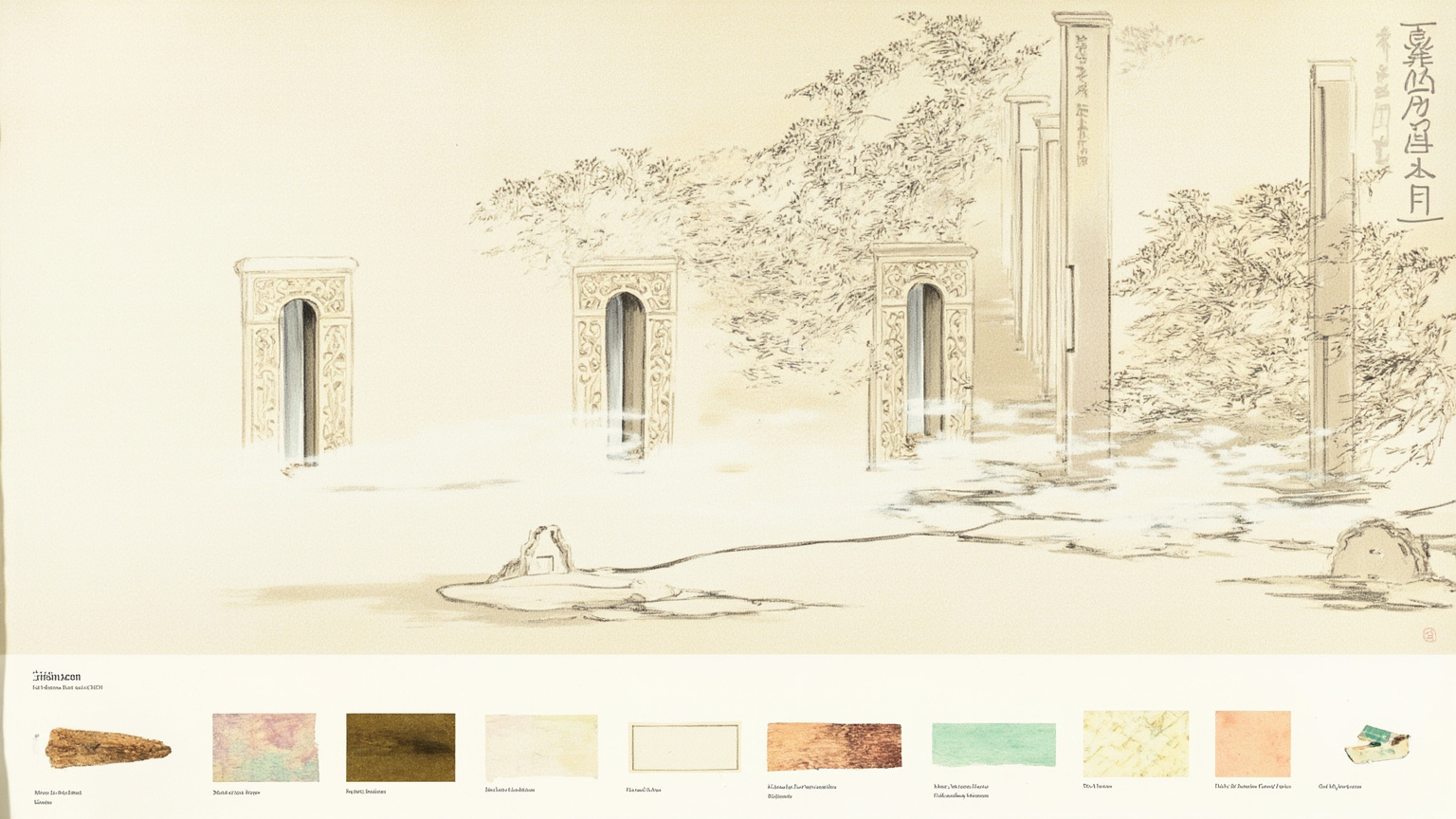
Art Direction4 plates
Before the guide was written, this book got a visual foundation — every illustration you just read grew out of it.