The I Ching (Book of Changes / Zhou Yi) · Companion Guide
易经
一根爻,三千年——从龟甲上的裂痕到汉宋案头的注疏,每一次重读都是一次再造
One Line, Two Thousand Years
Start with a single line. The unbroken one is a yang line; the broken one is a yin line. Just these two lines, and for three thousand years no Chinese reader has ever truly left them behind. Stack three yang lines and you get Qian, Heaven. Stack three yin lines and you get Kun, Earth. Pair heaven and earth against each other, two trigrams at a time, and you get sixty-four six-line combinations. Each one is a hexagram, and every line carries its own verdict — this is the hard core of the I Ching's classic text. The whole system runs to barely sixteen thousand five hundred characters, shorter than a novella. Its greatness isn't in the length. It's in turning a set of symbols into a container that can stack without limit.
What Kind of Book This Is
It is a divination manual and a philosophical anthology, both left behind by the people of Zhou. The core text took shape in the early Western Zhou, a decision-making tool for the royal diviners: they cracked tortoise shells over fire and counted out stalks of yarrow, then recorded the cracks and the counts as hexagram and line judgments, and over generations the record became this archive. From the Warring States period into the early Han, commentators added the Ten Wings, and the book turned from a manual for asking about fortune into a text for asking about the way of heaven. After Emperor Wu of Han it was set at the head of the Confucian classics, and Daoists ranked it first among their own Three Mysteries. In short, no single person wrote the I Ching — generations built it up. The old formula is that it passed through three sages across three ages, and that is exactly what happened: it accumulated, it wasn't drafted. From the start it wore two faces, a tool for making decisions and a model of the cosmos. Later it grew a third: a storehouse for the self-cultivation of the noble man.
Who Wrote It, Who Read It
Tradition strings four figures along this line. Fu Xi, in legend, drew the eight trigrams: he looked up at the patterns of heaven and down at the shapes of earth, and cut the world into eight basic configurations using nothing but a broken and an unbroken line. King Wen of Zhou, Ji Chang, spent his years imprisoned by the tyrant of Shang at Youli doubling the eight trigrams against each other into sixty-four hexagrams, and attaching a judgment to each. The word later ages use for his work, yan, meaning to unfold or work out, describes him scratching lines into the prison floor with a stick, arranging and rearranging them. The Duke of Zhou, Dan, carried his father's project further and filled in the line texts for all six lines of every hexagram. With that, the core text was complete, judgment and line alike, and what carried it forward was no longer one sage's inspiration but a whole generation of early Zhou diviners accumulating their casebook of hard decisions. Confucius and his followers were the last major hand: they turned the book from a manual on fortune into an inquiry into the way of heaven, and out of that came the Ten Wings. Legend says Confucius grew fond of the Changes late in life and read it so hard that the leather cords binding his bamboo strips broke three times over. That obsession is what the four-character phrase 'three broken bindings' still carries.
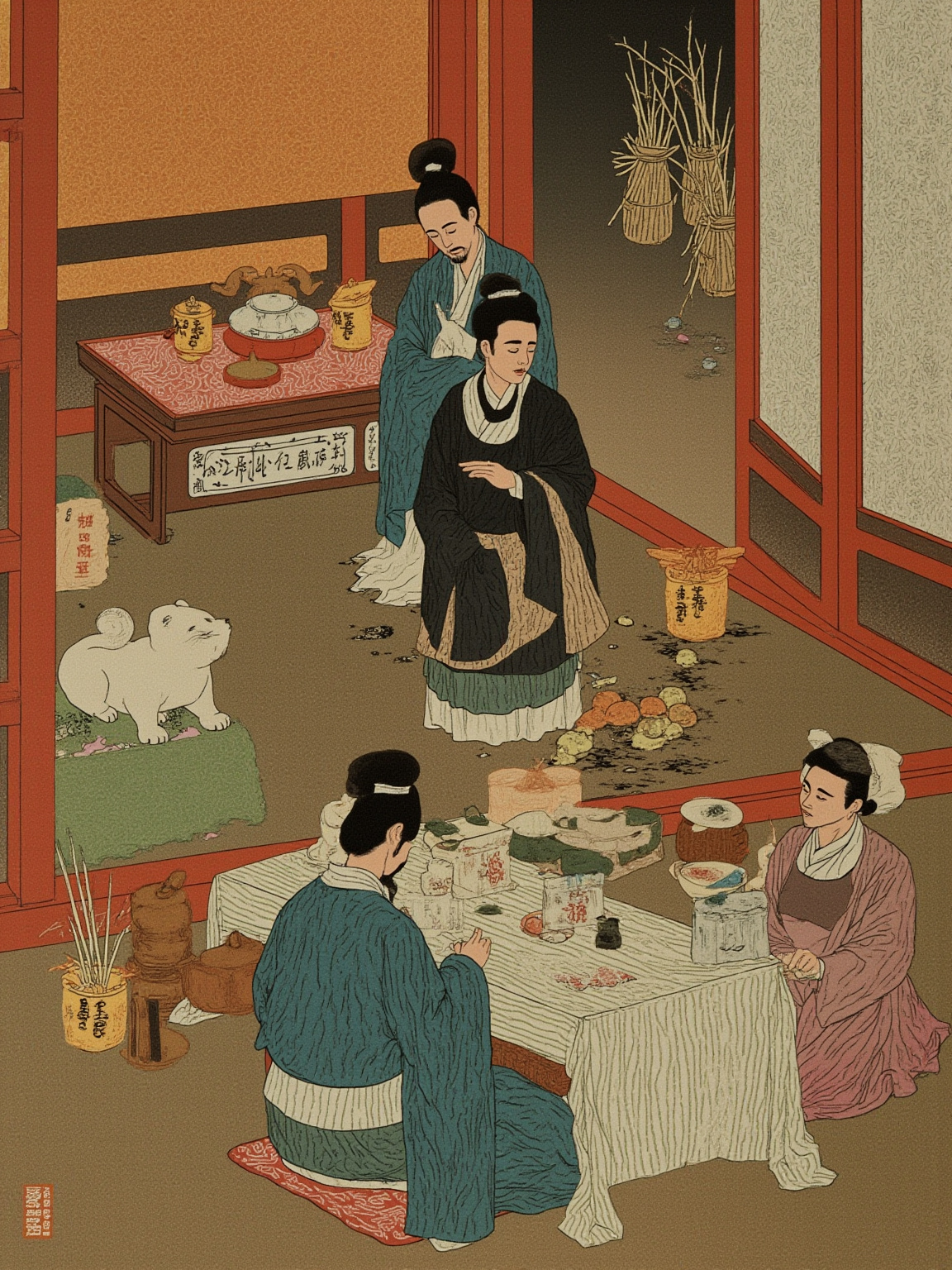
The line unbroken is the yang; the line broken is the yin. Two strokes, and three thousand years have not slipped their hold on any Chinese soul.
阳爻者,刚;阴爻者,柔。刚柔相推而生变化。
金句 · 起手篇 · 阴阳二爻
From Two Lines to Sixty-Four Hexagrams
The starting move is simple. One yang line, one yin line, stacked three high in every combination, gives eight basic figures — Qian, Kun, Zhen, Xun, Kan, Li, Gen, and Dui. These are the eight trigrams, the eight small three-line blocks the whole system builds from. Stack any two trigrams on top of each other, eight times eight, and you get sixty-four six-line combinations, the hexagrams proper. Each hexagram has six lines, each line carries its own line text, and the hexagram as a whole carries a judgment: sixty-four hexagrams, three hundred eighty-four lines, a complete set of verdicts. The Han dynasty fixed the naming convention still used today: a yang line is called Nine, a yin line is called Six, and the lines are counted from the bottom up, so the first line is Nine or Six at the Beginning and the last is Nine or Six at the Top. Qian and Kun alone carry an extra line each, the Use of Nine and the Use of Six, marking the point where the core text reached its finished form. The classic settled into two halves: the Upper Canon, thirty hexagrams running from Qian and Kun to Kan and Li, and the Lower Canon, thirty-four hexagrams running from Xian and Heng to Ji Ji and Wei Ji — After Completion and Before Completion, two unfinished hexagrams left hanging at the very end, as if to remind the reader that the world never actually reaches its finish.
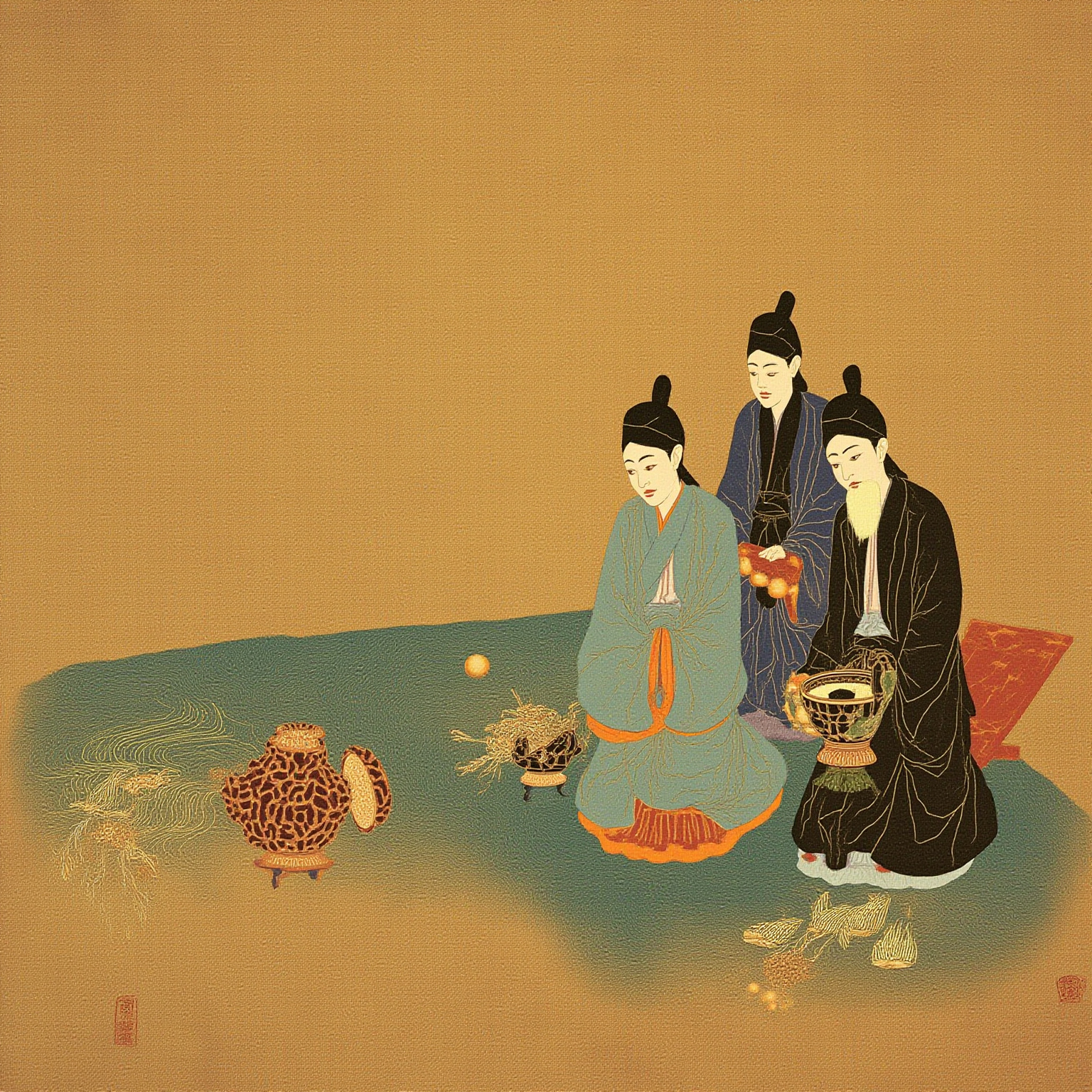
Stack the three yangs, and you have Qian, Heaven. Stack the three yins, and you have Kun, Earth. From Heaven and Earth, double them, and the sixty-four hexagrams come forth.
是故易有太极,是生两仪,两仪生四象,四象生八卦,八卦定吉凶,吉凶生大业。
金句 · 推演篇 · 系辞上传
When a Divination Manual Became a Work of Philosophy
The core text only ever solved how to cast the oracle. From the Warring States into the early Han, Confucius's followers wanted more: they used the shell of divination to say something about the great order of heaven and earth, and out of that came seven short texts, together known as the Ten Wings: the Tuan Zhuan, commenting on the judgments; the Xiang Zhuan, commenting on the images; the Xici, the Great Treatise; the Wenyan, glossing the words; the Shuogua, explaining the trigrams; the Xugua, ordering the hexagrams; and the Zagua, a set of miscellaneous notes. The Ten Wings lifted yin and yang out of divination and made them the smallest units of a cosmology. The Xici states that one yin and one yang together are called the Way, and that the Changes hold the Supreme Ultimate, which produces the Two Modes, which produce the Four Images, which produce the Eight Trigrams, running the whole generative chain of the book's symbols from the very top. The Xiang Zhuan draws two lines out of the images of Qian and Kun: from Qian, heaven moves with unceasing strength, so the noble man never stops strengthening himself; from Kun, the earth's nature is yielding, so the noble man carries the world with a broad and generous virtue. After those two lines, the noble man never has to look elsewhere for a model of self-cultivation: heaven and earth already stand as the pattern. Later ages called this project setting up teaching through the numinous way, fitting Confucian ethics and political philosophy inside the shell of divination. From then on yin and yang stopped standing for good and evil and became a pair of forces that oppose and complete each other, waxing and waning in turn: yin alone cannot generate, yang alone cannot grow, and there is always room left, between them, for one to turn into the other.
Every New Edition Was a Remaking
The most fascinating thing about an open classic is how it keeps changing clothes. Zheng Xuan, in the Eastern Han, folded the Tuan and the Xiang into the main text but kept each as its own section, so the classic stayed the classic and the commentary stayed the commentary, clearly separated on the page. Wang Bi, in the Wei-Jin period, did something whose effect still holds today — he broke the Tuan and the Xiang apart and attached each piece directly after the relevant hexagram and line text, and hung the Wenyan on its own after Qian and Kun alone. From that point on the I Ching took the shape it still has: open any hexagram and its commentary sits right there with it. Kong Yingda's Tang-dynasty Correct Meaning of the Zhouyi adopted Wang Bi's commentary, and the meaning-and-principle school overtook the image-and-number school as the official reading. Then Zhu Xi's Song-dynasty Original Meaning of the Zhouyi restored the old twelve-section structure, the Upper and Lower Canons plus the Ten Wings, and pulled the classic and its commentary apart again. One book, taken apart and reassembled across two thousand years, and every reassembly added another layer. The commentators were readers of the classic and continuers of it at once. This book has no single author in any real sense, only an unbroken line of co-authors.
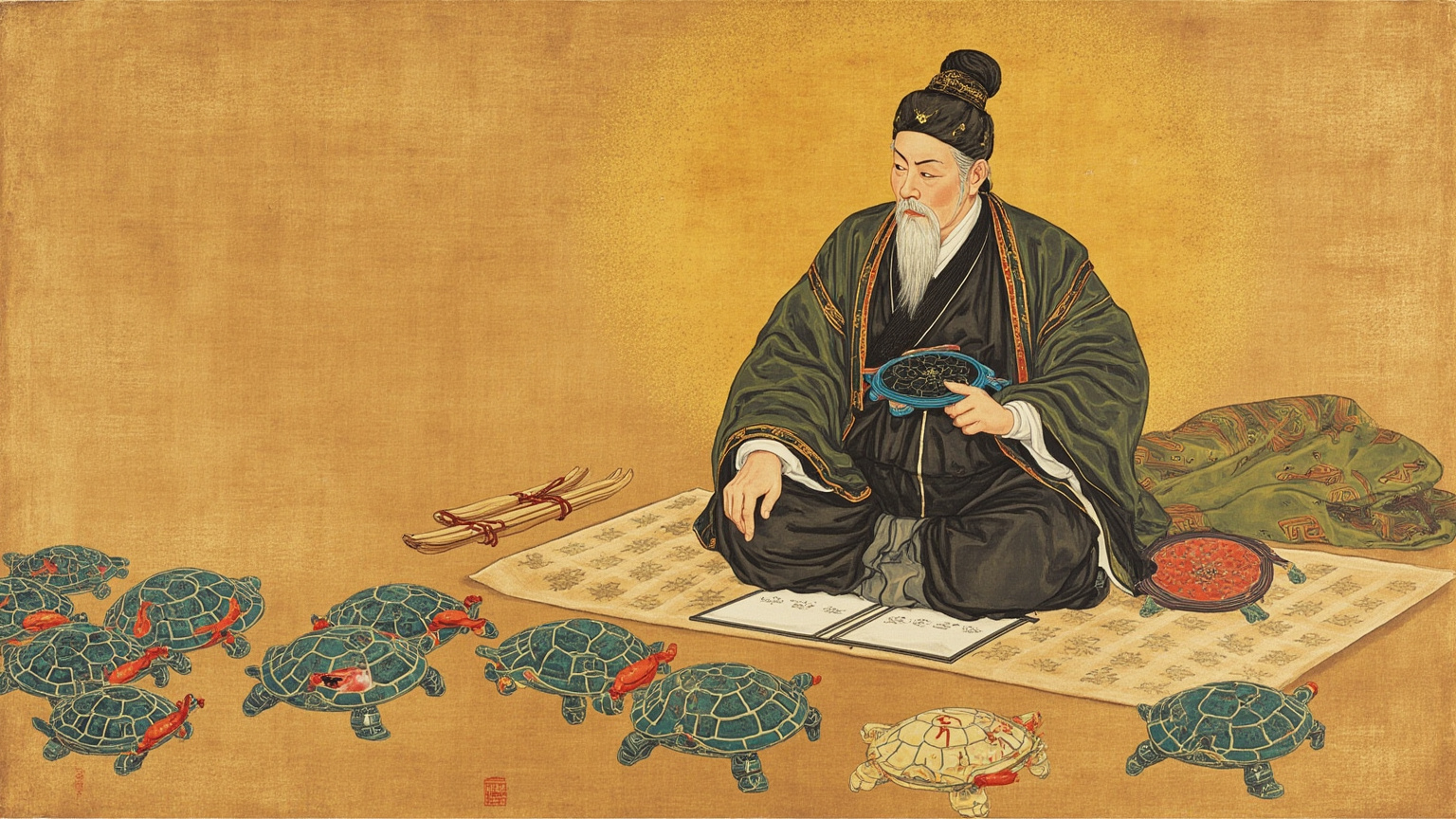
Thus it is said: one yin and one yang, this is called the Dao. The Dao that is followed is the nature of things.
一阴一阳之谓道。继之者善也,成之者性也。
金句 · 升格篇 · 系辞上传
It Sank Into the Bedrock of the Language
Once Emperor Wu of Han set it up as official learning, the I Ching stopped being merely a book and became a whole way of thinking. Its logic of yin and yang went into the organs and channels of Chinese medicine; the interplay of the direct and the surprising tactic went into the reasoning of military strategy; the rule that what peaks must decline went into the cyclical view of political history; strength paired with tolerance went into the basic character of the scholar-official. The proverbs that fall out of your mouth without thinking — extremes reverse themselves, the worst turns to the best once it bottoms out, when a path is exhausted you find a new one, the secure never forget danger, the surviving never forget ruin, the well-governed never forget chaos — all of them trace back to this one book. It isn't the book people read so much as the book that lives inside the language itself. After it reached Europe in the seventeenth century, missionary letters carrying its diagrams indirectly pushed Leibniz toward inventing binary notation: yin and yang, zero and one, meeting across two centuries. From the diviners' chambers at the old Zhou capital to Leibniz's calculating paper, the same structure kept getting recognized again, and it may be the deepest echo in the whole history of Chinese symbols traveling outward.
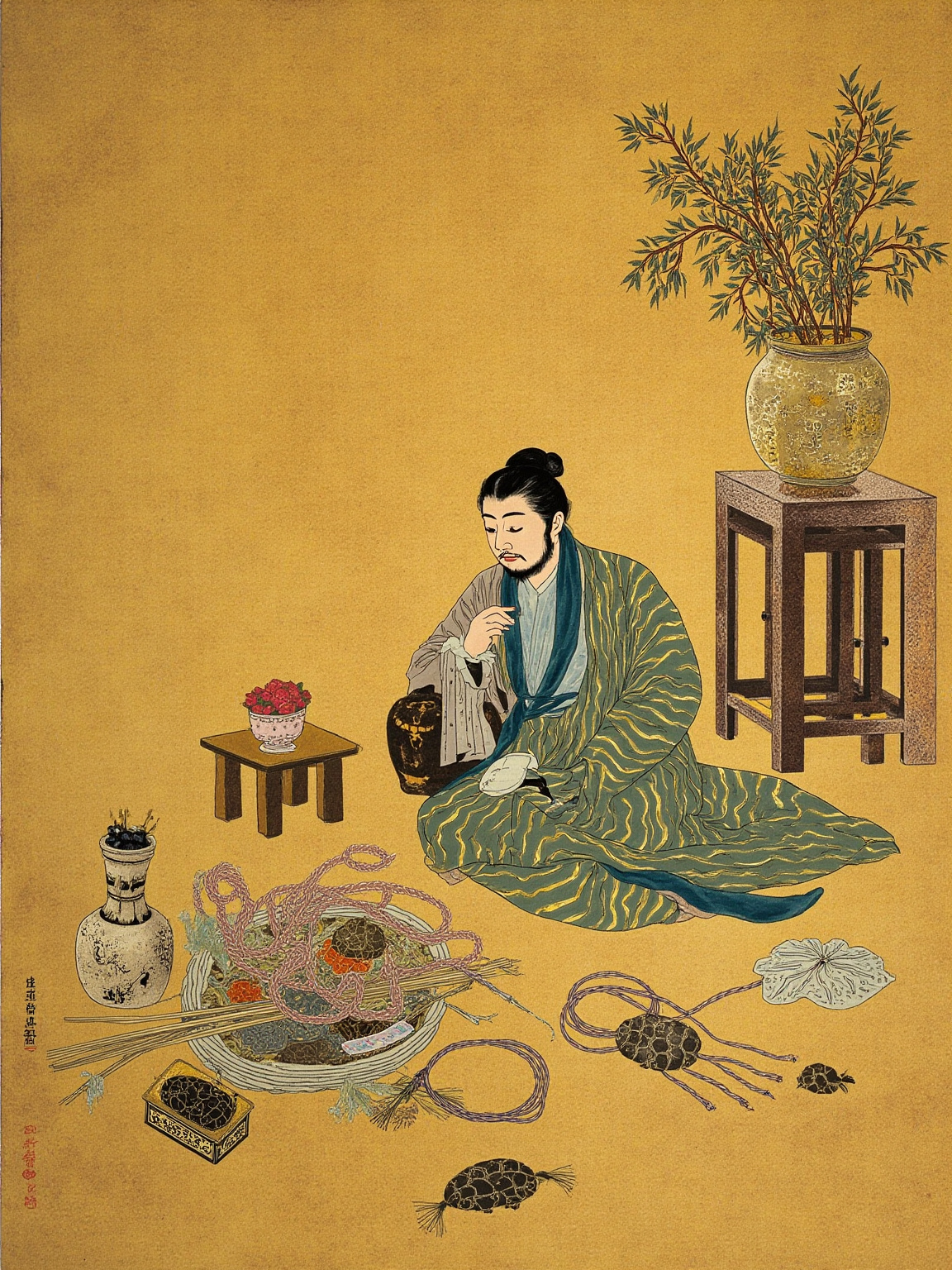
The movement of Heaven is full of power; thus the gentleman strives unceasingly. The terrain of Earth is receptive; thus the gentleman carries all things with generous virtue.
天行健,君子以自强不息;地势坤,君子以厚德载物。
金句 · 辐射篇 · 乾卦·坤卦大象
Two Thousand Commentaries, One Classic
Somewhere between two and three thousand people have written commentaries on the I Ching across the centuries, splitting into a handful of major lineages — the Confucian reading, the Daoist reading, the divination-craft reading, and within scholarship itself the image-and-number school against the meaning-and-principle school. The same sixty-four hexagrams let Zhu Xi draw out a theory of heavenly principle and let Wang Fuzhi argue for a monism of vital energy. The same book served as a working manual for a street-corner fortune-teller and as the daily study of a scholar-official cultivating himself in an academy. It could sit beside a Daoist's alchemical furnace explaining the ebb and flow of yin and yang, or sit inside a memorial to the throne explaining how to adapt to changing times. One book, dozens of ways of reading it: that openness is about as rare as anything gets among the Chinese classics. A real classic isn't something you finish reading. It's something you start up again, over and over. Open any modern edition of the I Ching today, and behind every page you turn stands a conversation that has been running for hundreds, sometimes thousands, of years.
Go Read the Text Itself for That Living Feeling
A guide can only hand you a map. The text itself is the land. What makes reading the I Ching genuinely interesting isn't learning what a judgment says — it's the moment, turning the pages, when you suddenly stop cold: how does this one line land so precisely, as if it were still talking about your day three thousand years later? Don't look up the commentary in that moment. Sit with it first. Only once you can't resist reaching for the notes will Wang Bi, Zhu Xi, and Cheng Yi line up to meet you there. This book won't teach you to tell fortunes, and it was never built to call which stock goes up or down, but it will leave you more patient with change itself, able to hear the thunder still gathering in good times and see the opening inside bad ones. That feeling can't be handed over secondhand. You have to run into it yourself, inside the lines.
The sixty-four hexagrams are just the skeleton; what gives it life is every generation, across two thousand years, that has opened the book.
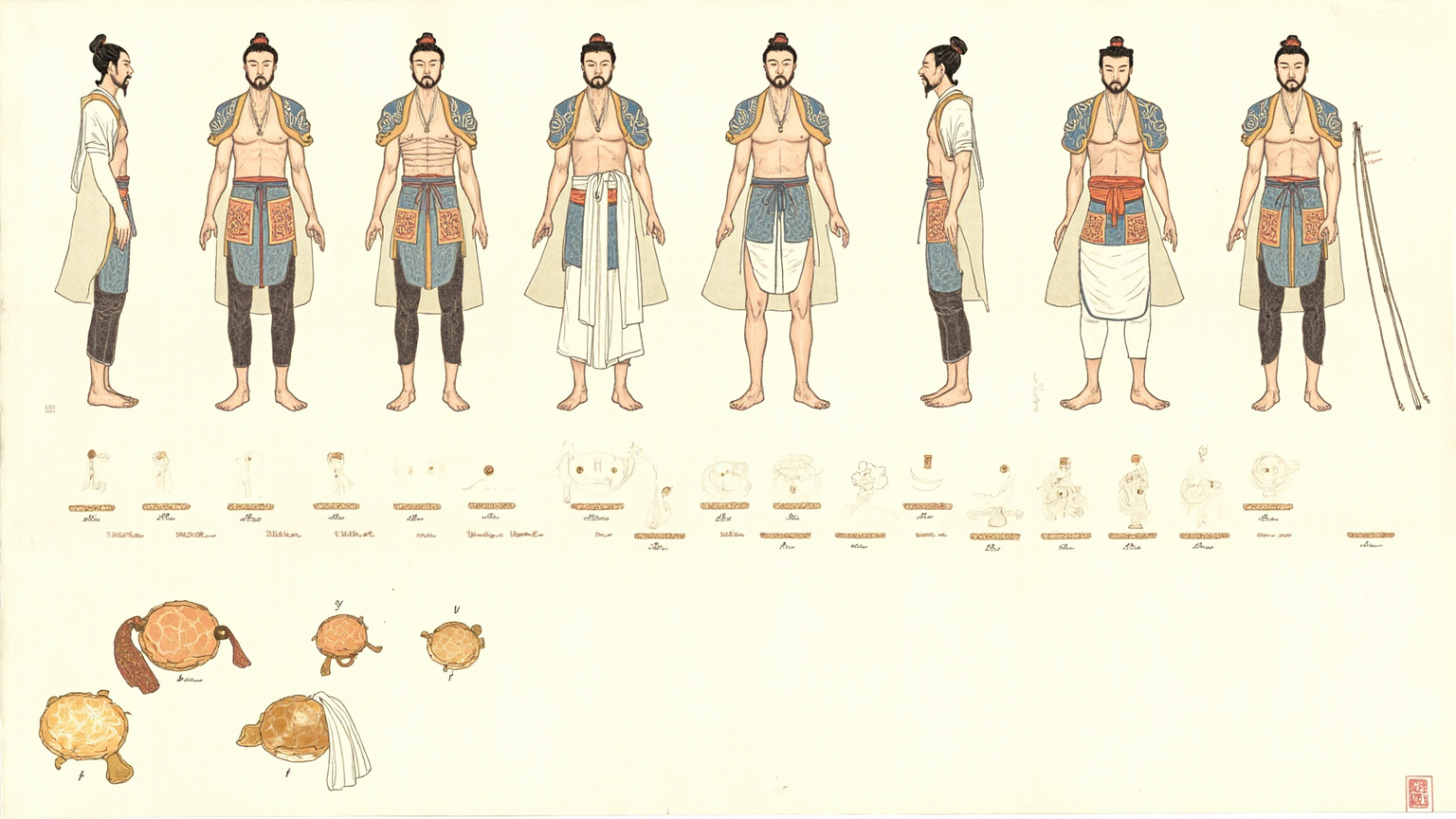
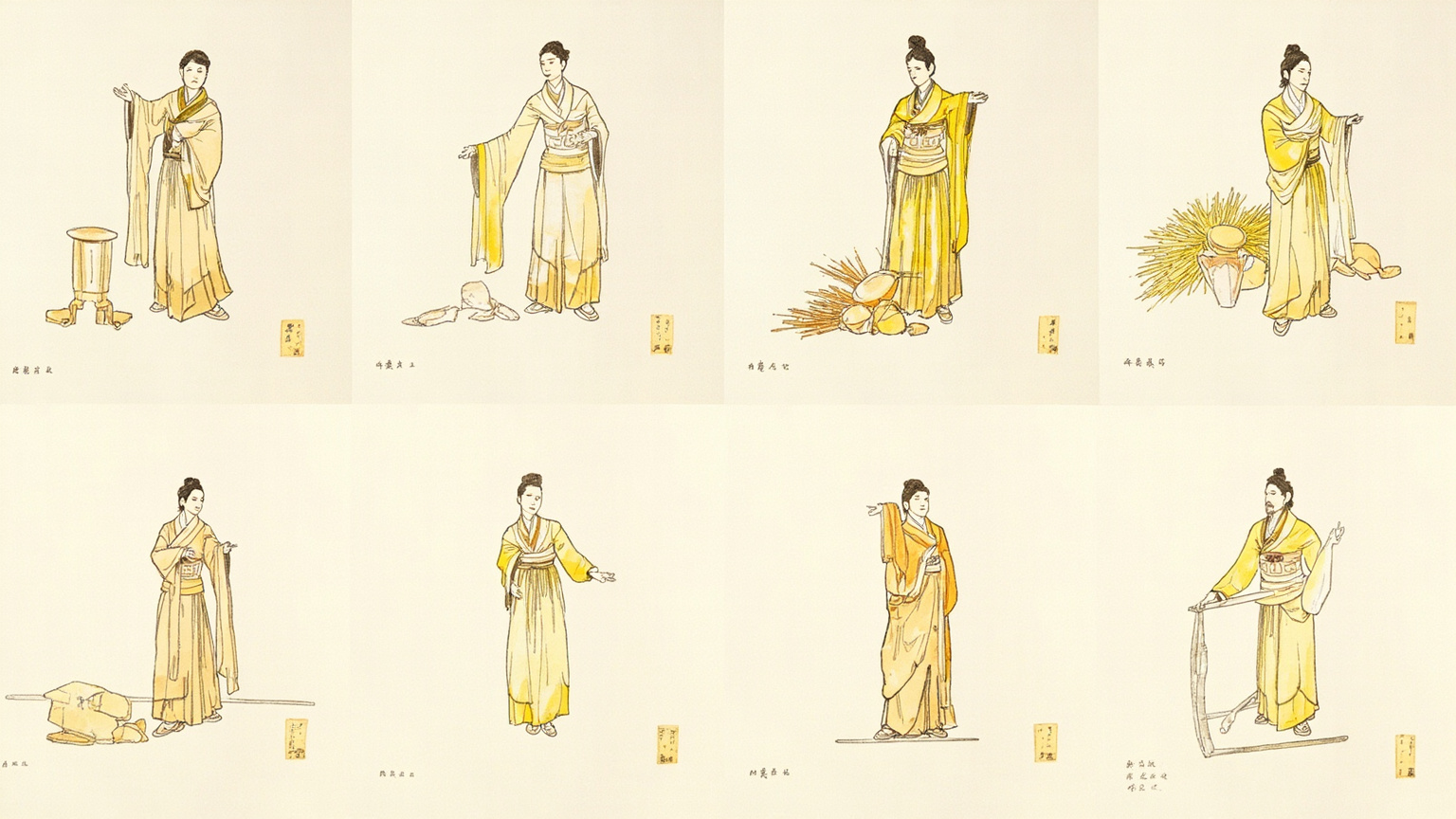
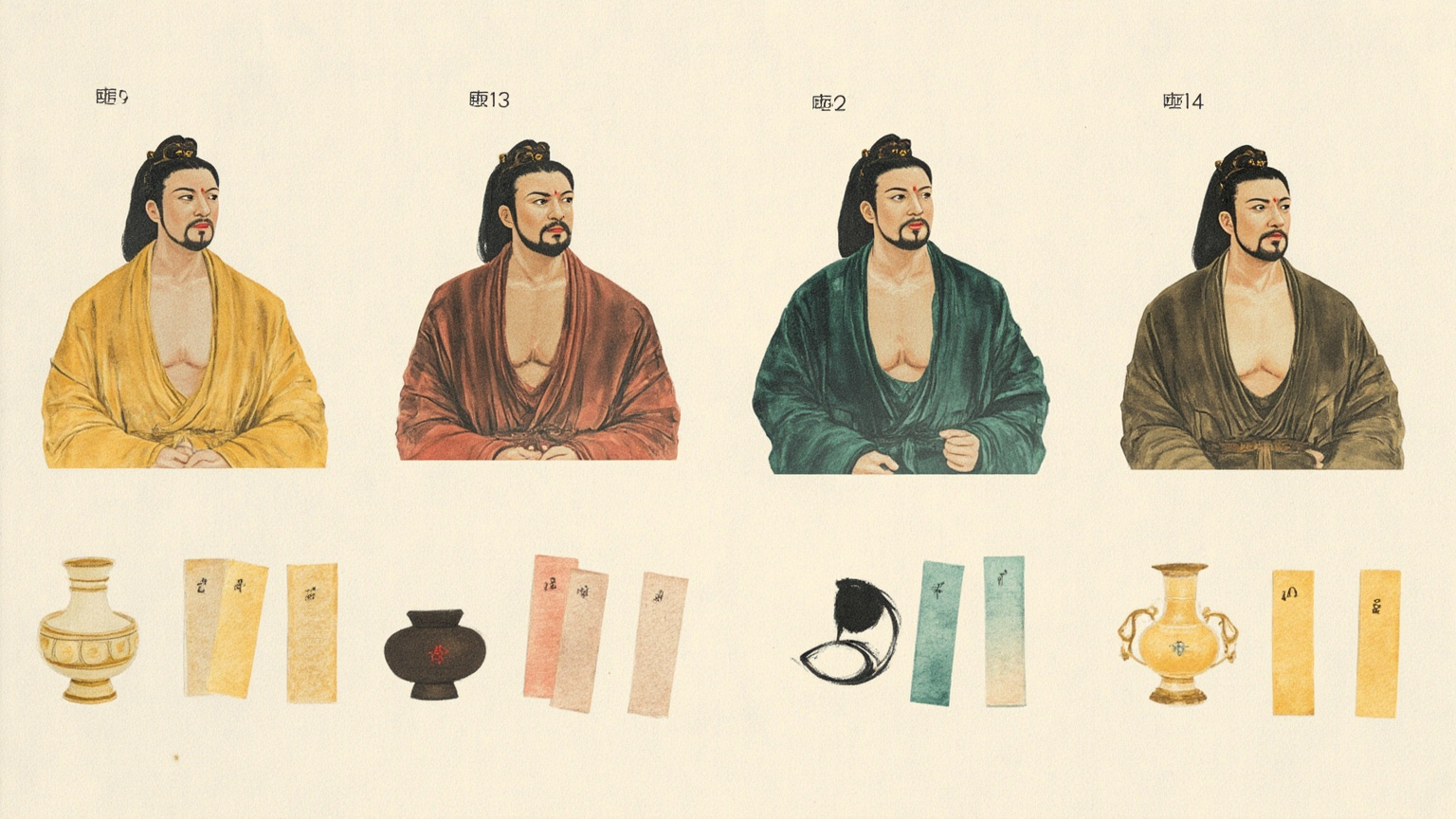
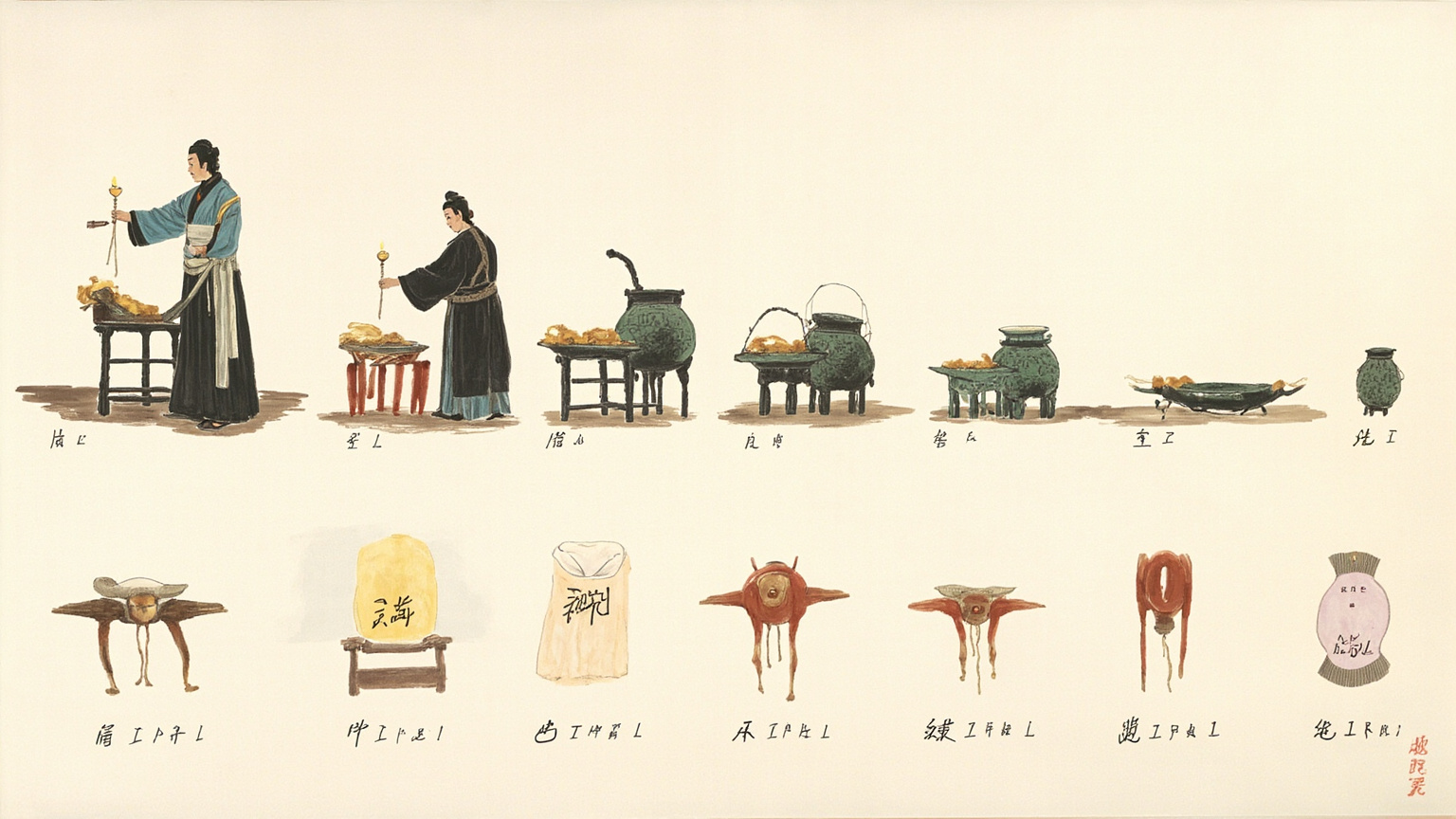
Art Direction4 plates
Before the guide was written, this book got a visual foundation — every illustration you just read grew out of it.