The Interior Castle (Las Moradas / Castillo interior) · Companion Guide
心灵城堡(七宝楼台)
一个五十多岁的赤足修女,手持一枝金矛的幻象,把灵魂画成一座需要赤脚走完七重的水晶城堡
Opening
A golden spear, its tip on fire, sank into her heart again and again, and every time it was pulled free it felt as if it dragged her insides out with it. The pain and the sweetness, she said afterward, were so knotted together that she could hardly breathe. One afternoon in 1559, beside the choir stalls of the Convent of St. Joseph, Teresa of Avila had a vision she had never asked for -- and years later she buried that vision inside the fifth dwelling place of The Interior Castle, a book written for a roomful of barefoot nuns in coarse wool habits who could barely read.
The book is not about how a nun stumbled into a miracle. It is about a castle -- transparent, cut from crystal or diamond, ring within ring, so dark at the outer wall you cannot see your own hand and so bright at the center it looks like a throne room. At the very middle live a dragon and a phoenix. Teresa wants her sisters to walk inward, room by room.
What kind of book this is
The author is Teresa of Avila -- Saint Teresa the Great, one of only four women the Catholic Church has named a Doctor of the Church, and the only one of the four who wrote in Spanish and who was personally investigated by the Inquisition on suspicion of heresy. She began writing in 1577; the book was first published in Salamanca in 1588. It was meant as an internal manual for the reformed Carmelite nuns, so she keeps the scholarly tone on a short leash -- in the prologue she even gets her excuses in early, telling her sisters her learning is thin and asking them not to read her as if she were writing a dissertation.
And yet this near-nagging little manual for nuns has lasted more than four hundred years. Psychology has borrowed from it, modern spirituality courses teach it, and alongside John of the Cross's Ascent of Mount Carmel it stands as one of the two pillars of Western mysticism. Its strength was never doctrinal precision. It is a single image -- the soul as a castle of crystal -- and the rare candor with which Teresa peels back her own interior experience, layer by layer, for the reader to see.
People and world
There are three kinds of people in this book. Teresa herself -- already past fifty, a reformer, the founder of an order, a guide who has walked the whole route before you. Her sisters -- the Discalced Carmelite nuns gathered at the Convent of St. Joseph, some just starting out, some dizzy from the sweetness of prayer, some wrestling all night with their own wandering thoughts. And a third group who never appear on the page but weigh on every one of them: the Church's inquisitors and canon lawyers, who suspected that Teresa's visions came from the devil and required that every experience of hers be examined by an approved spiritual director and submitted to the Church's judgment.
The physical world is Avila, a stone city on the Castilian plateau over a thousand meters up, where winters are long, cold, and dry. Inside the convent walls there are cloisters, spinning wheels, a kitchen, a confessional, a stone well -- the nuns go barefoot, wear coarse wool, sleep on straw, and fast often. But the real world of this book is not inside those stone walls. It is inside the crystal castle, from the lizard-crawling moat at the outer edge to the throne room at the center where the soul stands face to face with God. Teresa wants her sisters to believe something specific: your body has already moved into the convent, but your true home is somewhere deeper still.
The shape of the journey: seven doors into the castle
The introduction is short. Teresa says that she happened to read Peter of Osma's Rudiments of Prayer, then saw a few paintings of a crystal castle, found the image fitting, and decided to write a short book. She goes out of her way to tell her sisters: this is not a dissertation, it is her own account of experience, and what she is after is not learning but, in her words, a hint of what we shall become, a thing this earth has no words for yet. One sentence sets the posture for the whole book: I have been where you are going, I will walk you there, but do not believe what I believe -- believe the place we arrive at together.
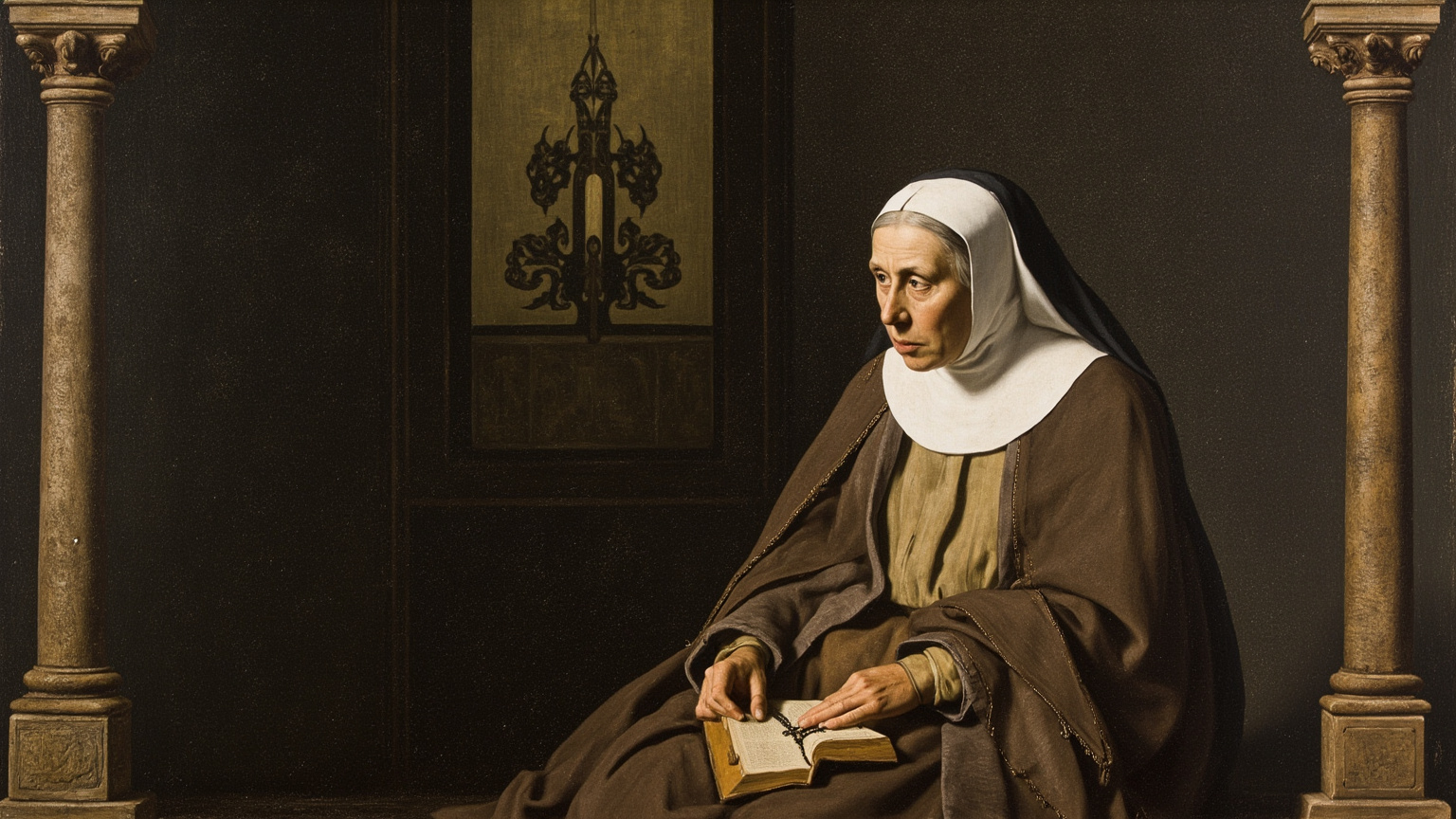
It pleased our Lord that I should see an angel in this way... and he had in his hand a long spear of gold, and at the end of the iron there seemed to be a little fire.
主乐意让我看见一位天使……他手中握着一枝金矛,铁尖上似有一点火光;他似乎用那矛向我心刺了几次,又拔出来。
金句 · 第五章(第五重住所)
The first dwelling place is called awakening. The soul has just realized it lives inside this castle, but it is still absorbed in worldly things -- lizards and vermin crawl through the moat, standing in for the intrusive thoughts and sins that keep breaking in. There is still light, coming from the candle at the castle's center, but by the time it crosses all those walls and all that crawling, only a faint trace reaches this far out. Teresa tells her sisters, over and over, to sweep out the house of the heart first and hold faithfully to contemplative prayer. The move here is a clever one -- instead of counting how much sin is in your heart, she counts how many lizards are at your feet. She made it visible.
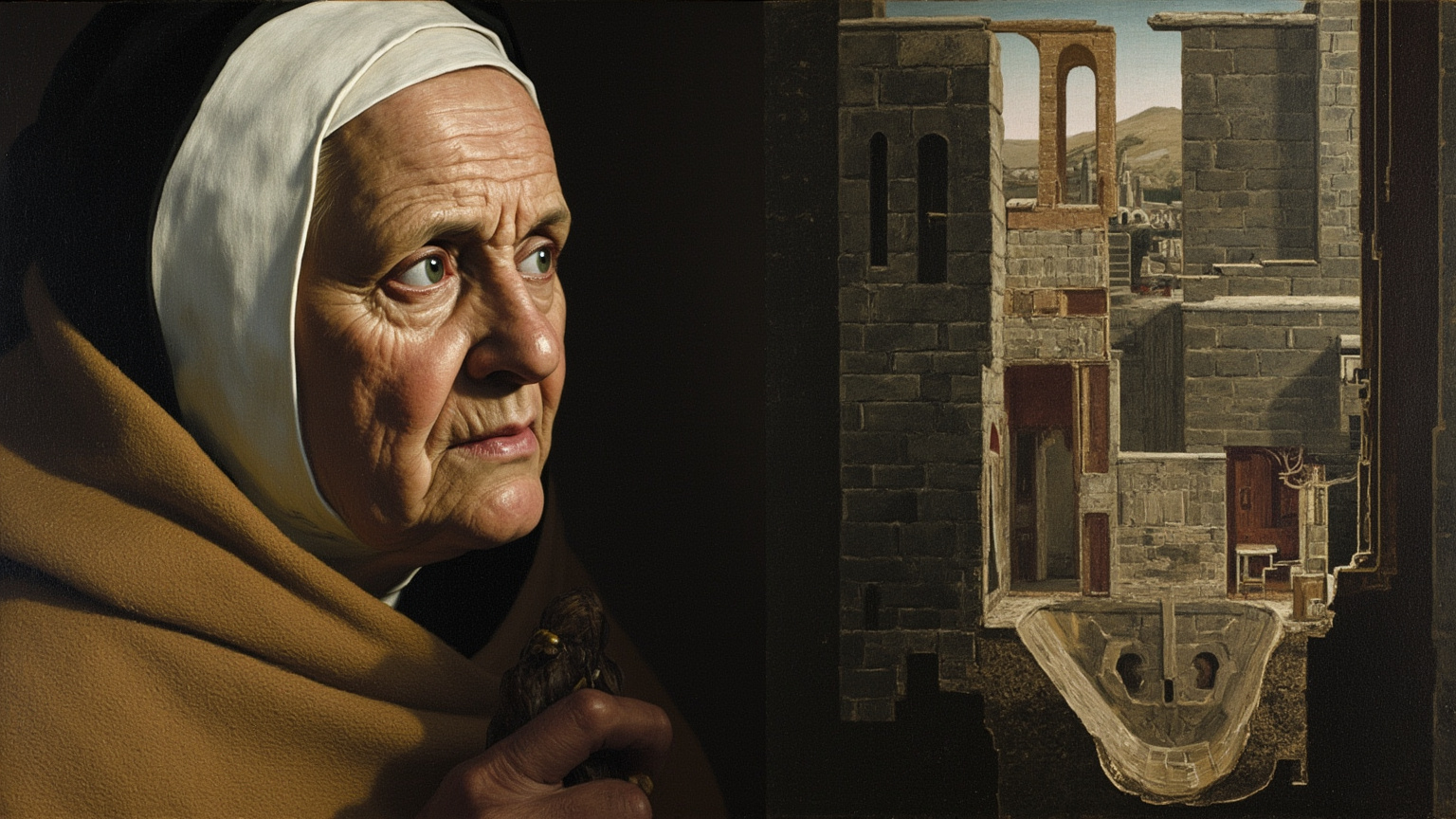
Consider what we are, and the great evil it is to be unaware of it. It is a great pity that we should be so much absorbed in the trappings of this life.
请想一想我们究竟是什么,却浑然不觉,是何等可悲。我们竟被这世间的一切外饰吞没了,实是可惜。
金句 · 第一章(第一重住所)
By the second and third dwelling places, prayer starts paying dividends -- what Teresa calls sweetness: birdsong-like sounds, strange fragrances, an inexplicable joy inside prayer. This section reads the most like field notes; she runs through case after case that nuns had described to her, and gives each one a verdict. But she warns immediately that these are seeds, not the destination, and that no one should linger here -- the whole will has to be nailed to walking alongside God's will instead. The first time I read this I stopped short: a nun who had lived through actual visions was telling her sisters not to get attached to miracles.
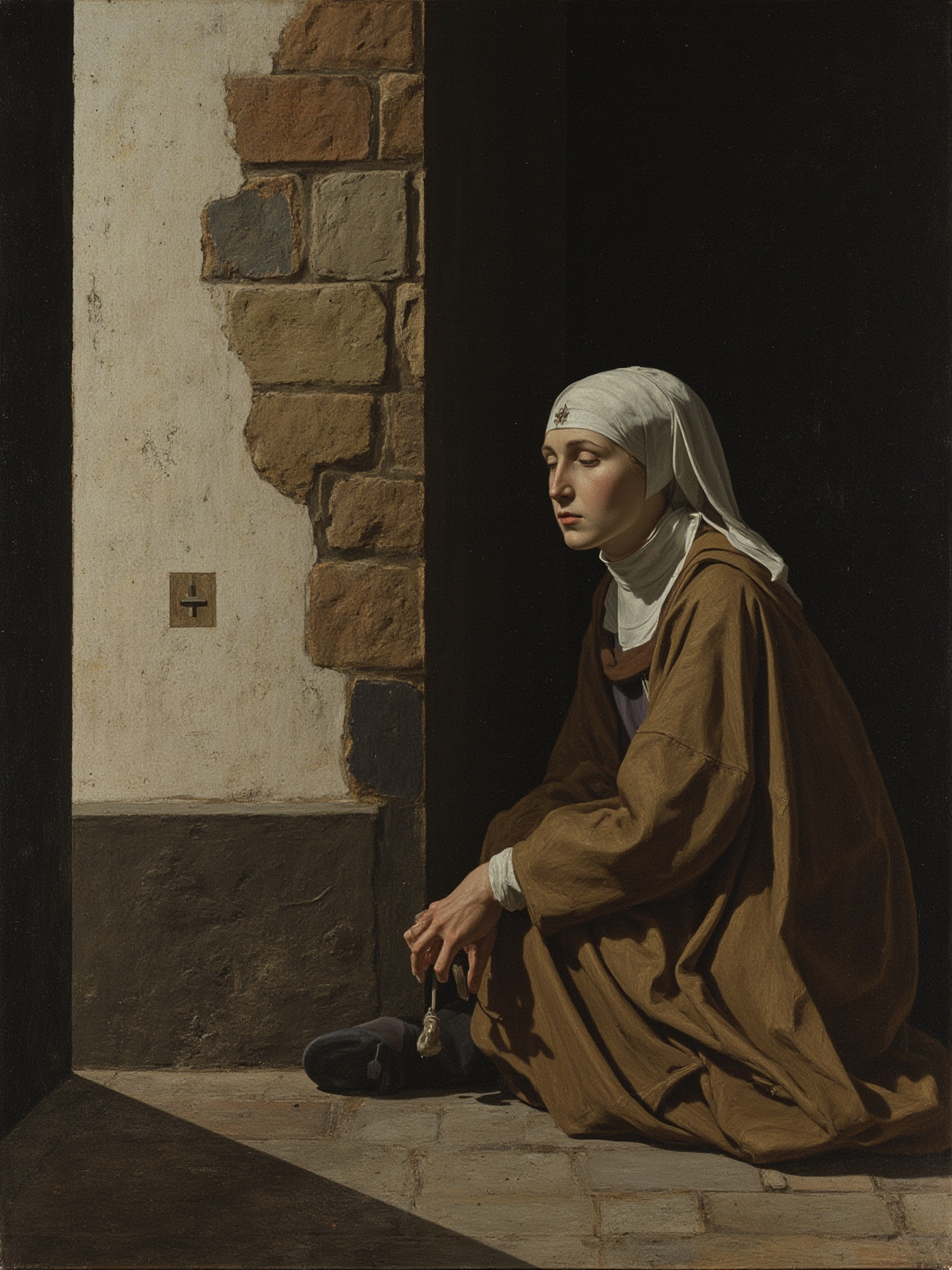
Let us be glad that there is a battle to fight, and that the soul can come out conqueror — for these favors are not given without labor.
得知尚有仗可打,且灵魂终能得胜,我们应当欢喜——因为没有一番工夫,是得不到这些恩惠的。
金句 · 第四章(第四重住所)
The fourth dwelling place is the turn. Prayer stops running on spoken words or on meditating through a scene step by step -- the soul simply rests, quietly, in the presence of God. Teresa reaches for an image here that makes you stop turning the page: a silkworm spinning its cocoon, sealing its own senses shut inside, and surrendering itself to be fed by something else. She keeps this section short, and admits as much herself -- this stage resists language. Watch what she does instead of describing or analyzing it: she switches images and lets a silkworm do the understanding for you.
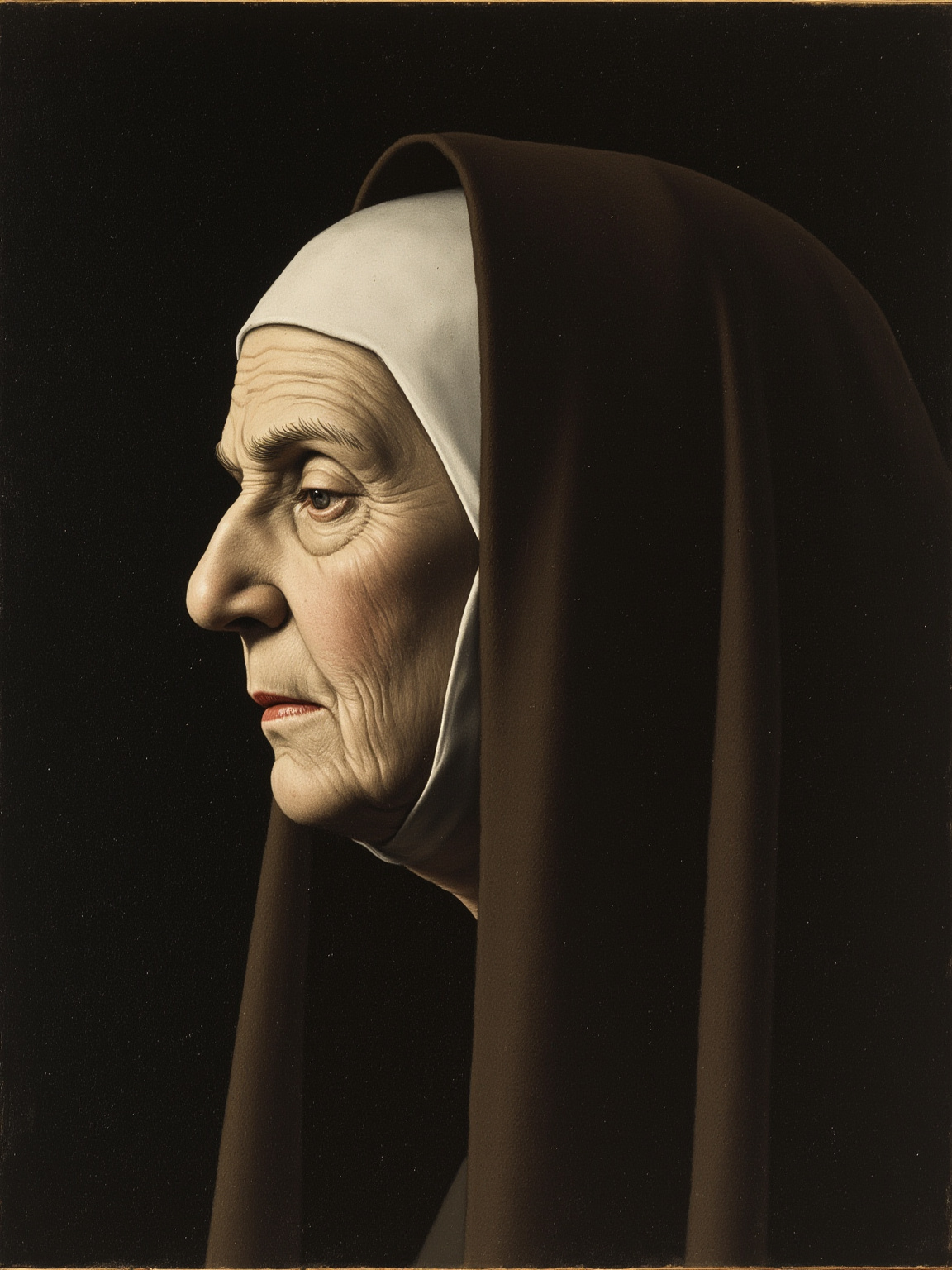
In the fifth and sixth dwelling places, the visions arrive. Teresa does not hide behind anyone else here -- she describes several involuntary visions of her own, including that famous scene of the golden spear through the heart from the opening of this guide. She insists none of these were things she called up herself, which is exactly why no one should go looking for them on purpose. Her sharper warning is that a vision is not the same thing as closeness to God. A nun might see a golden spear tonight and be sulking over some petty grievance the next morning -- and in that moment she has already fallen back out of the castle's inner rooms. The section moves in two beats: first she vouches for the visions as real, then she demotes them to a side effect.
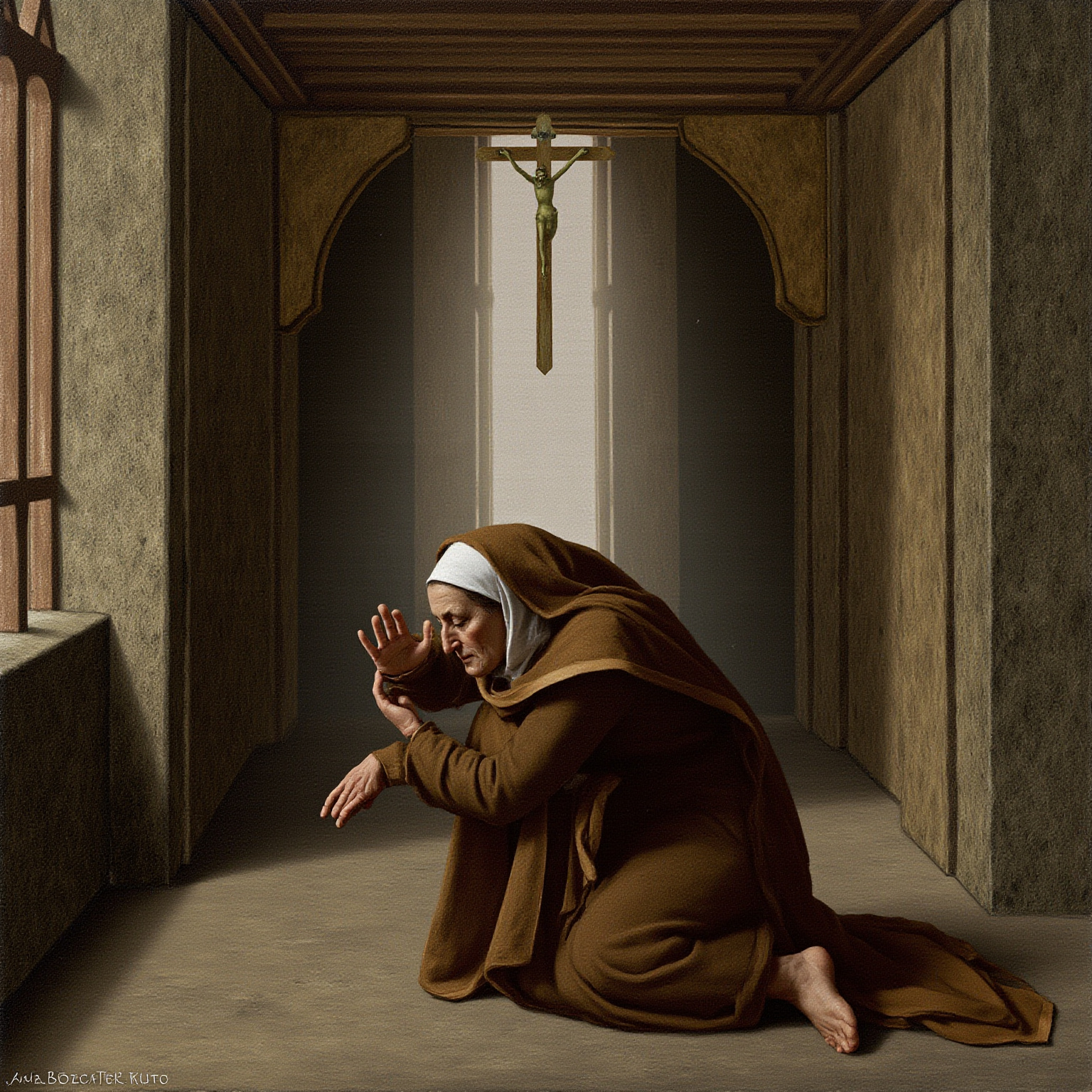
Let the silkworm die, since it can do no more good; for if it lives, it must be of new birth, and be as it were transformed into a white moth.
让蚕死去罢,它再做不出丝了;它若活着,便须重生,化作一只白色的蛾。
金句 · 第三章(第四重住所 · 蚕的比喻)
The seventh dwelling place is the book's high point, and the part Teresa admits she can barely put into words herself. The soul is completely united with God -- the intellect goes quiet, the will dissolves into God's will, and the whole castle fills with something like the glory of a throne room. But she insists this state can only be touched briefly in this life, and that reaching it has nothing to do with anything the person has done -- it is purely a gift. The central image is the dragon and the phoenix; she calls it the most fearsome of dragons, standing for the unfathomable depths of God. Teresa never means for you to fully grasp this level. She only wants you to know the room exists, and the door is open.
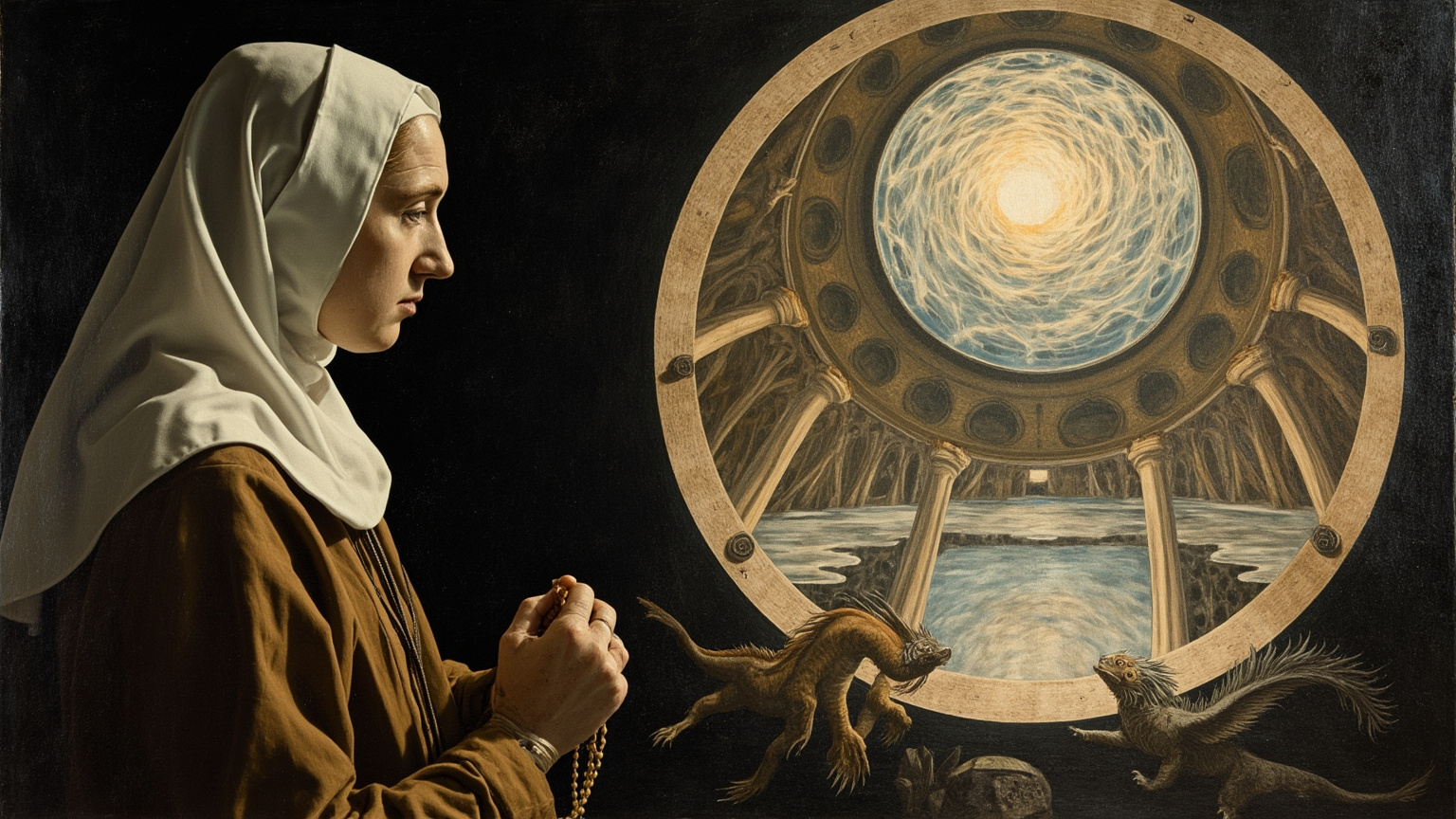
While we are on earth there is nothing of which we have a right to boast, nor any hope beyond the hope that comes from being regarded as a thing of nothing.
我们在地上,原无可夸;除了一事以外,也无可盼望——那便是甘愿被神视为无有。
金句 · 第七章(第七重住所)
At the end she returns to the daily life of the convent. In her closing lines she admits her learning is thin and her comparisons imperfect, and tells her sisters to take their remaining questions to an approved spiritual director. What she was after all along, she repeats, was never scholarly learning but that same thing she named at the start -- a hint of what we shall become, a thing this earth has no words for yet. One sentence brings the whole book back to where it opened: the experience is real, the metaphor is borrowed, and the road still has to be walked by you.
Themes and craft: mapping the interior life
What The Interior Castle is actually saying is not the seven stages themselves -- it is that prayer is a way of dwelling. You do not need to leave the castle to meet God; you only need to keep walking inward from where you already live. It is a theology of going deeper into the place you are already standing in. Teresa takes something as abstract as the inner life and turns it into a field report you can follow room by room, complete with symptoms, wrong turns, and the virtue that answers each one.
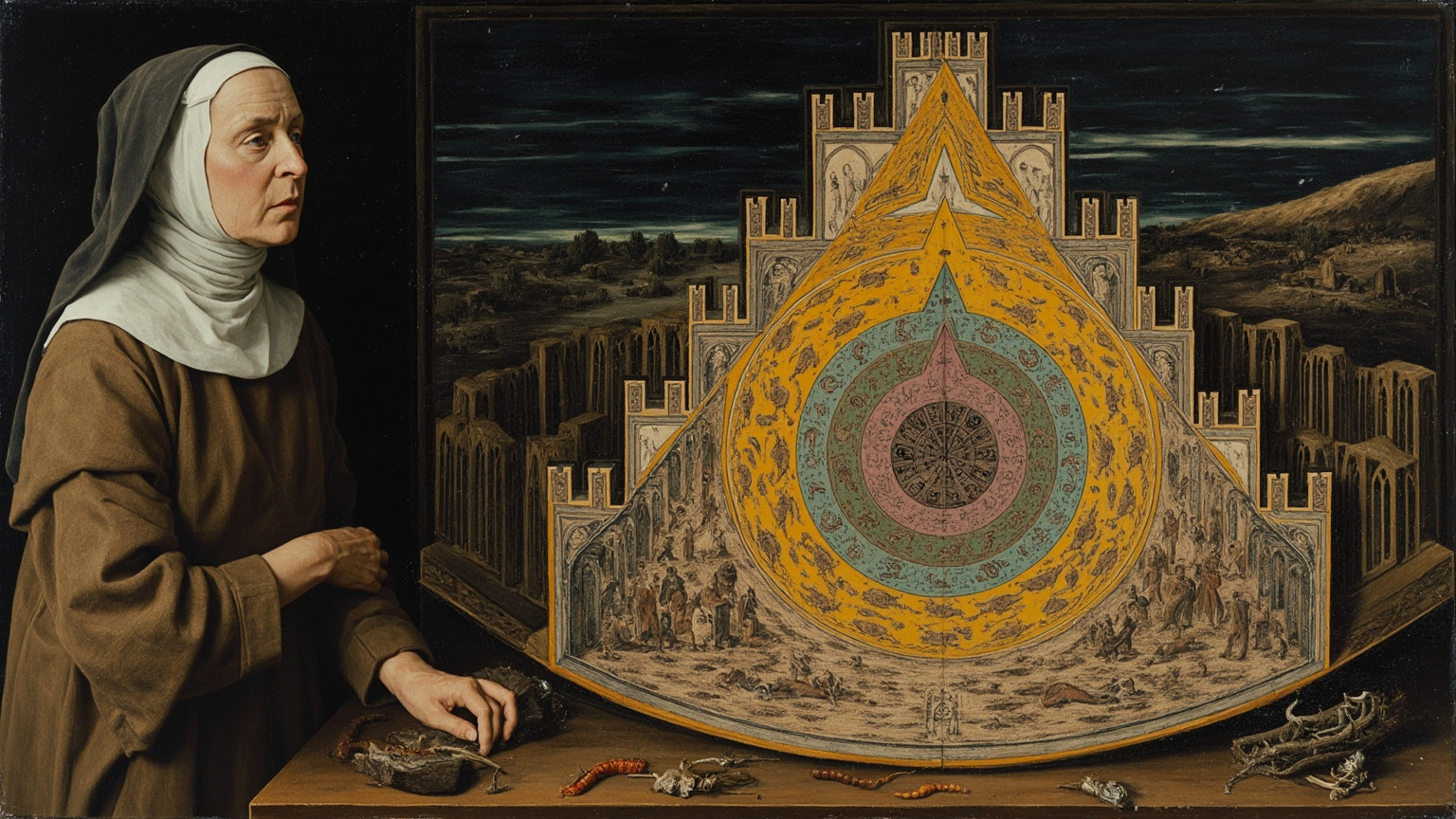
On craft, she gets several hard things right. First, she writes the finest classification system in the plainest spoken language -- most of her readers could barely read, so she nails every abstract claim to a picture: lizards, a silkworm, a golden spear, a dragon and a phoenix. Second, she places herself as a guide rather than a theological authority, speaking throughout in the register of sisters, you should know this, with authority that comes from experience rather than a degree. Third, and the most counterintuitive move of all, a woman who had lived through vision after vision keeps telling everyone else not to chase them, and ranks humility and obedience above every miracle. She makes it visible that what gets you into the seventh dwelling place is not what you have seen, but whether you can honestly finish this morning's prayers.
Why read the original
A guide gives you the map. The book itself is the ground. What you cannot take away secondhand from this book is Teresa's voice -- a Spanish nun past fifty, talking to sisters thirty years her junior, patient to the point of nagging and occasionally letting a strict teacher's impatience through; laying out the deepest theology while admitting her own learning is thin; writing the most interior experiences she has while warning you not to discuss them with anyone but an approved director. That voice lives only between the lines, and no summary can stand in for it.
Teresa does not want you to become someone who has seen a vision. She wants you to become a nun who can sit down quietly at the door of the seventh dwelling place -- and that quiet is harder to reach than any golden spear.
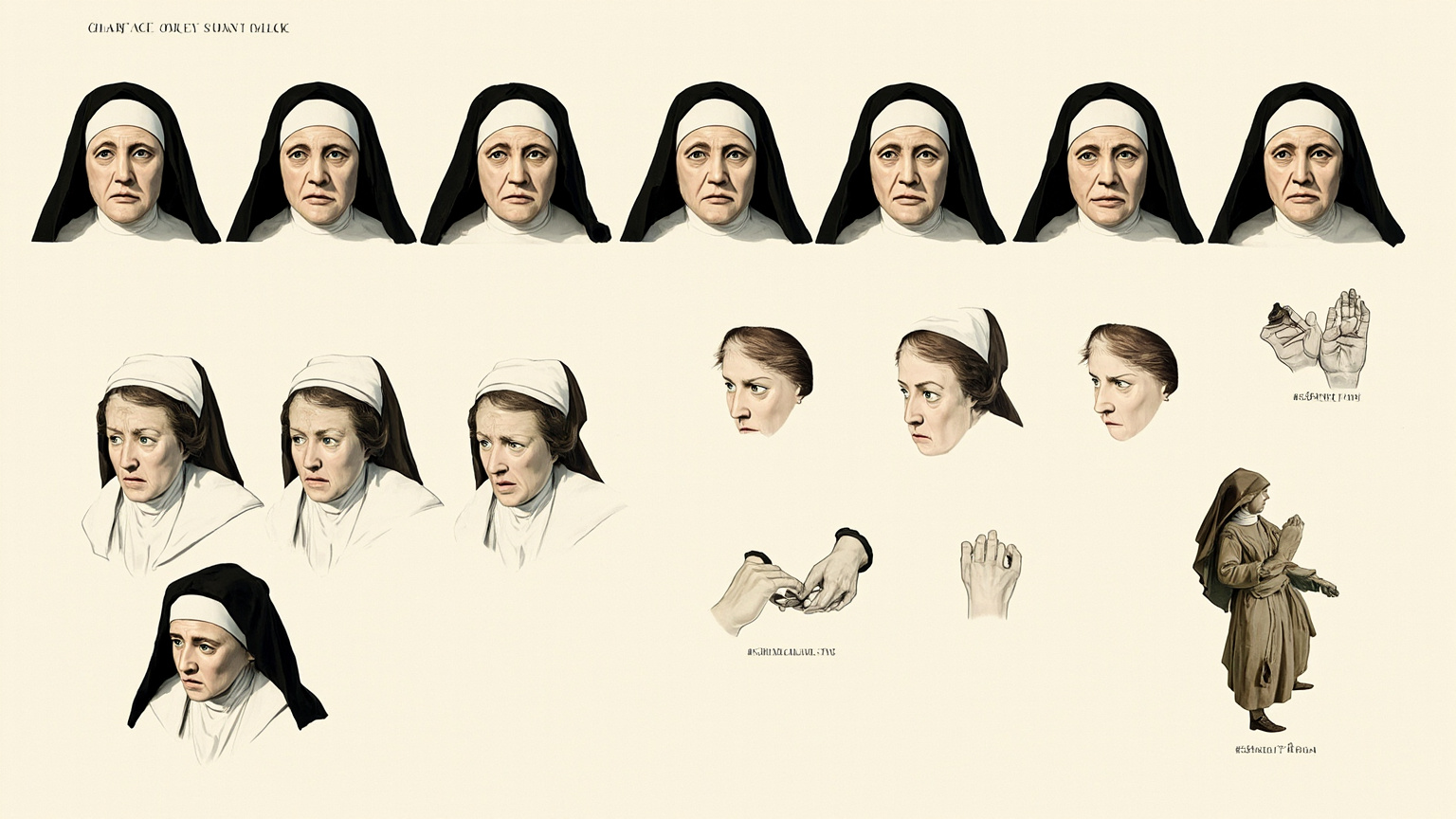
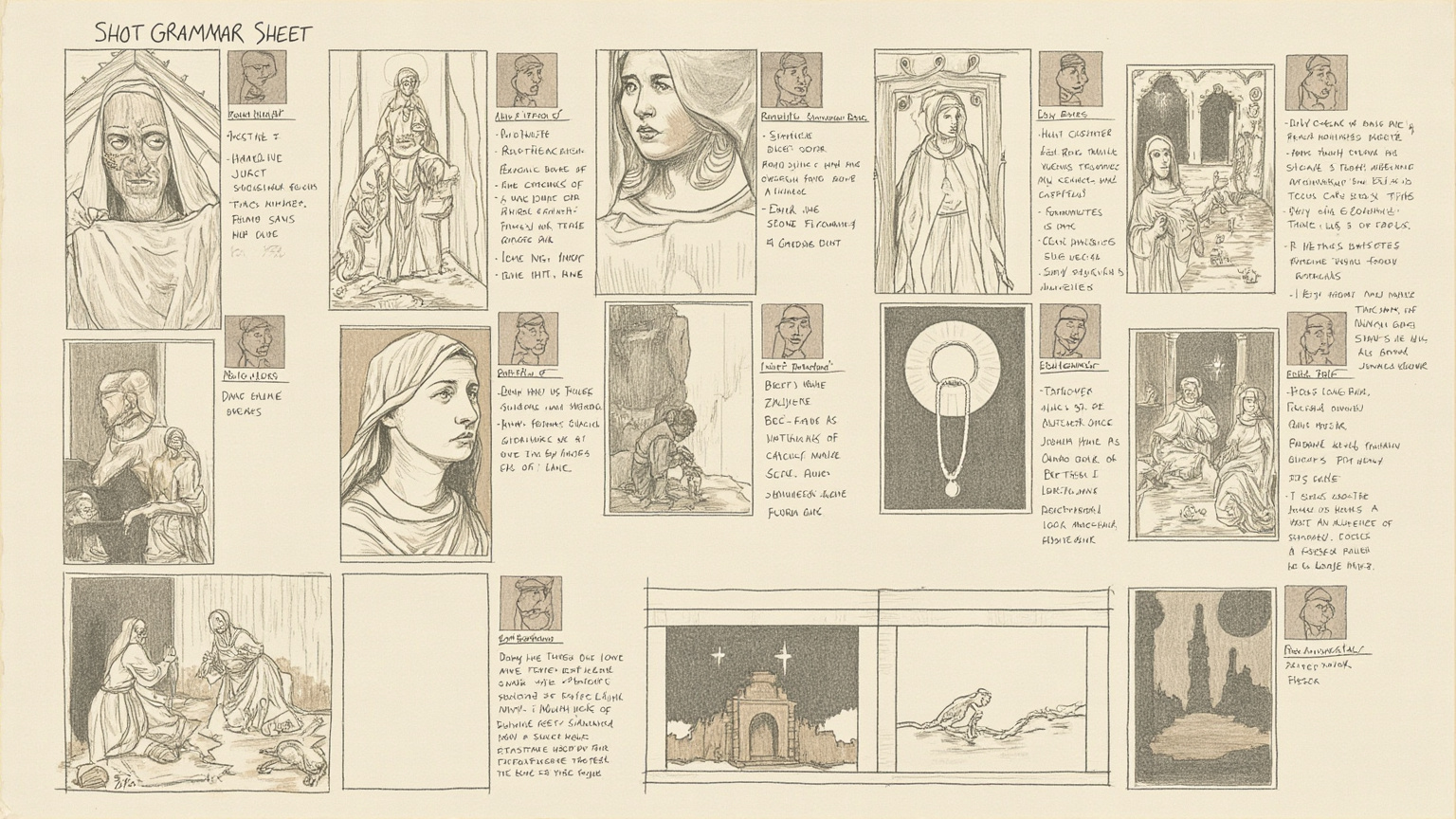
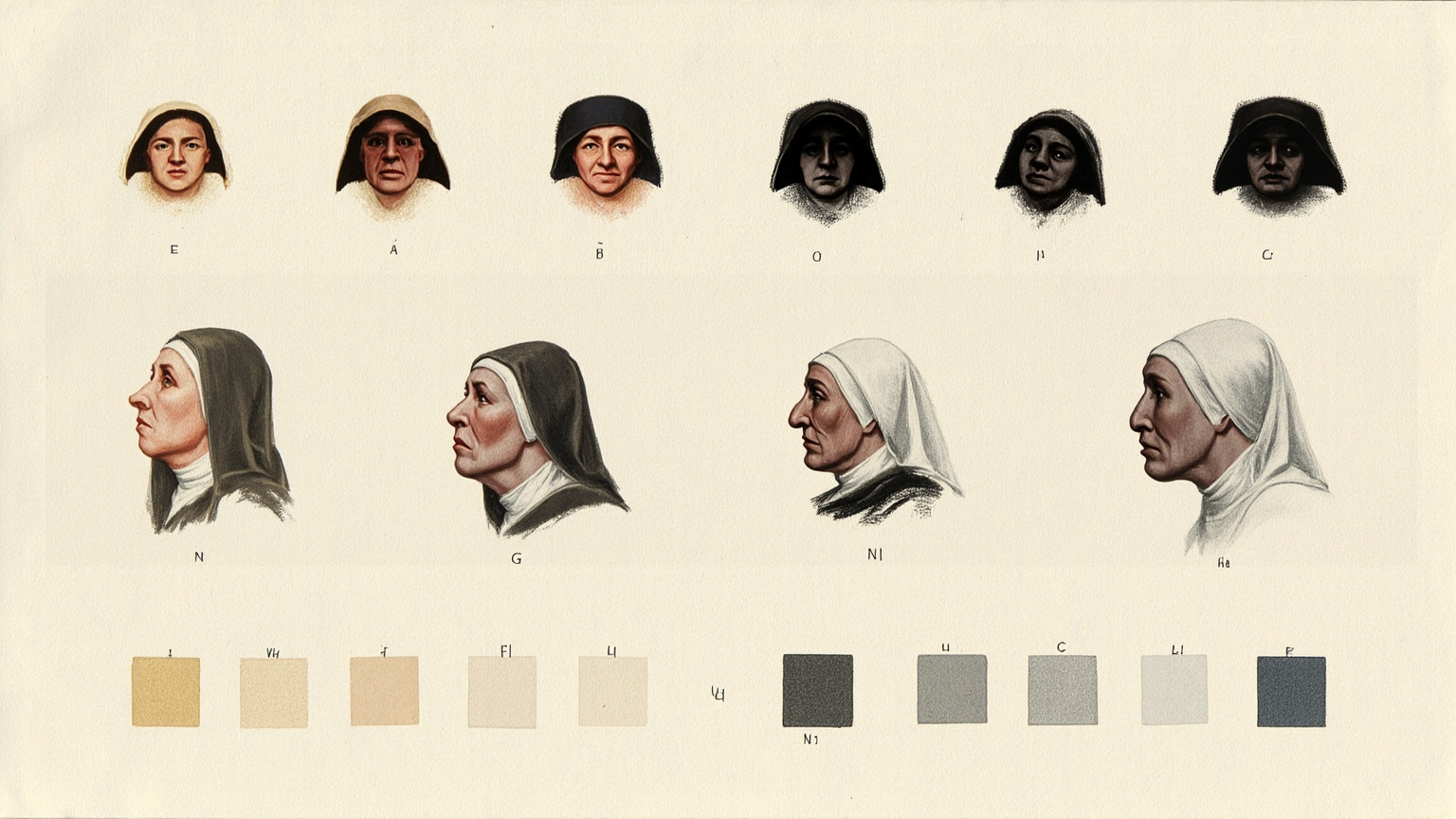
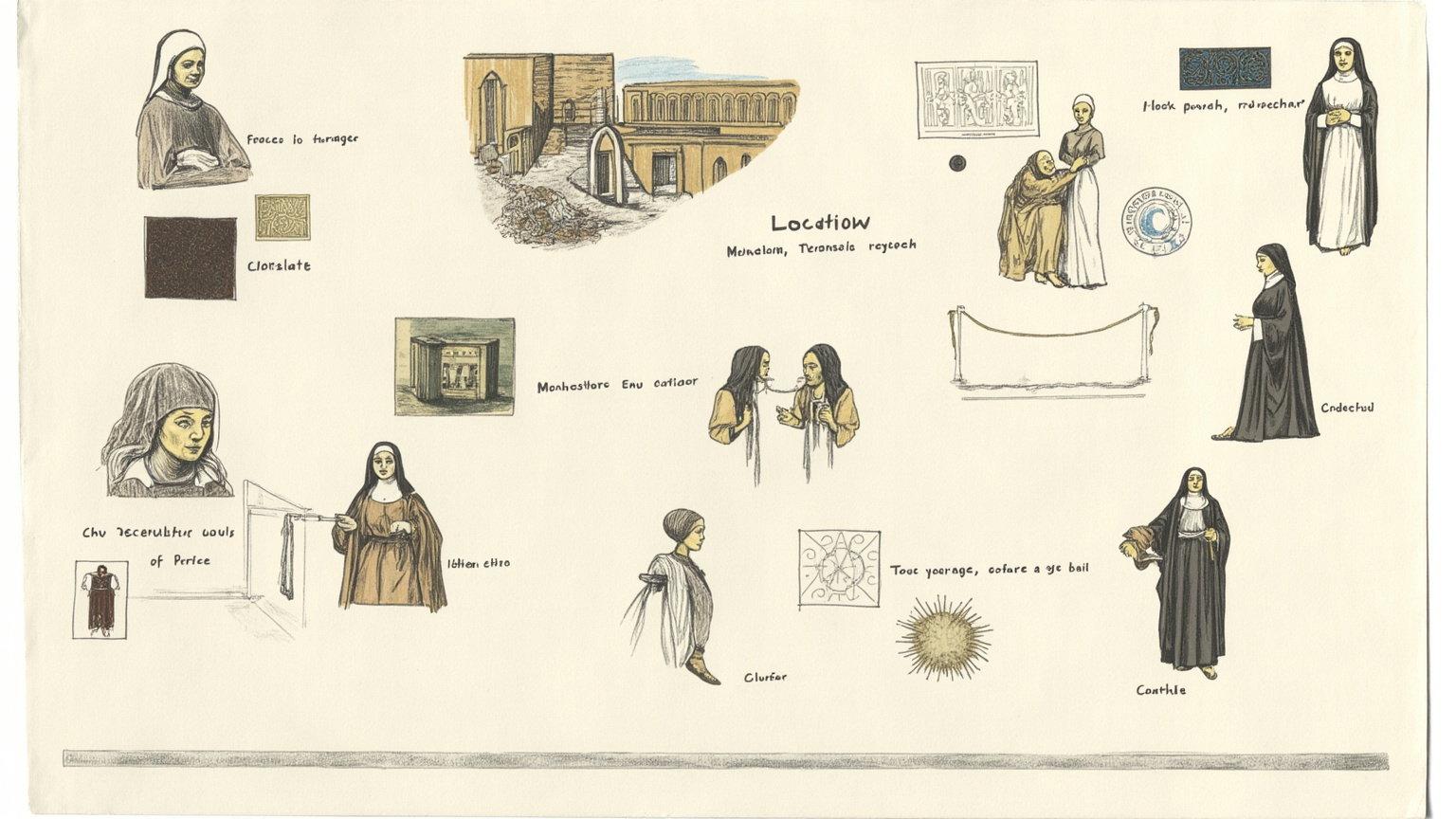
Art Direction4 plates
Before the guide was written, this book got a visual foundation — every illustration you just read grew out of it.