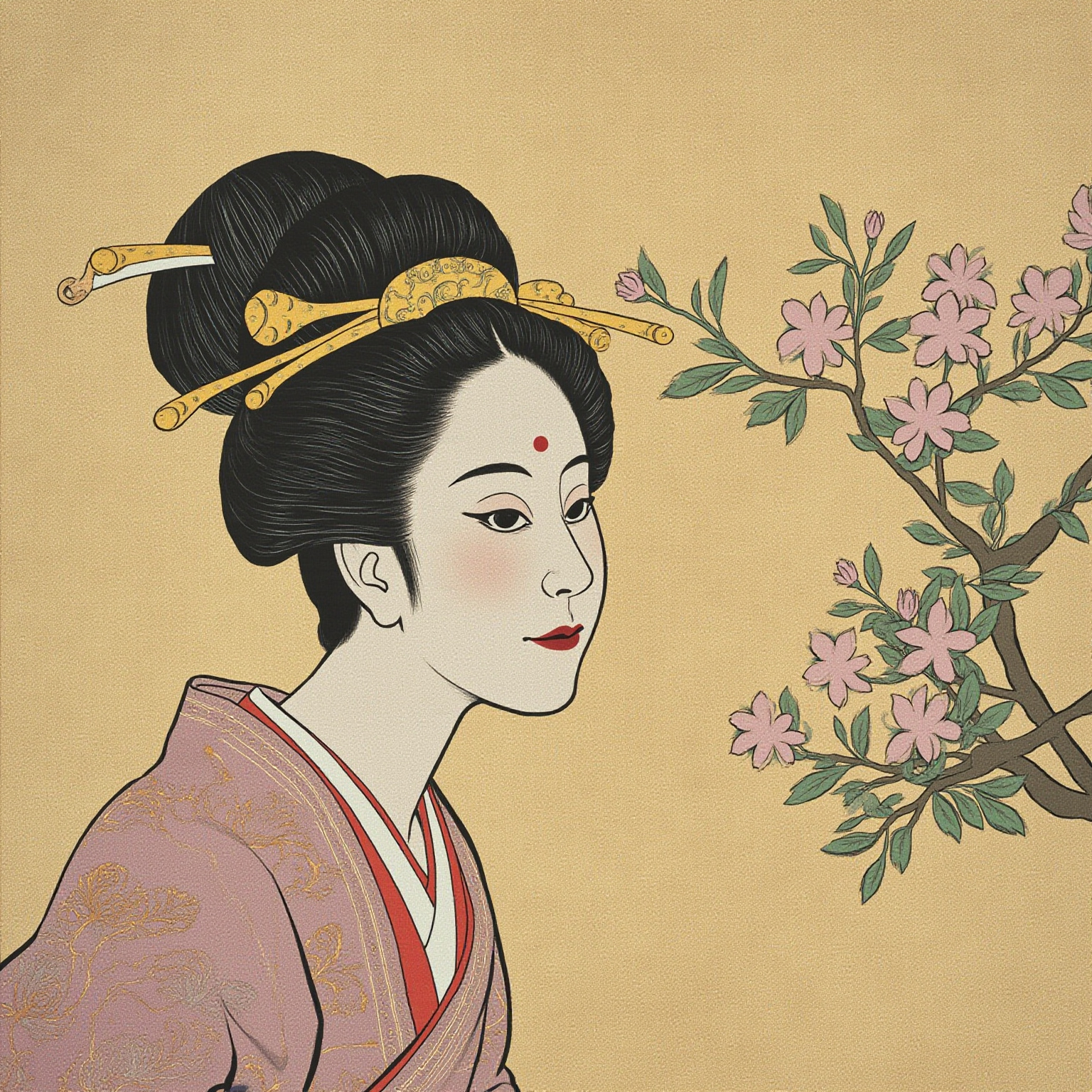
The frankest woman poet of the Heian court turned ten months of exchanged verse into a book
Text and illustrations produced by the pipeline

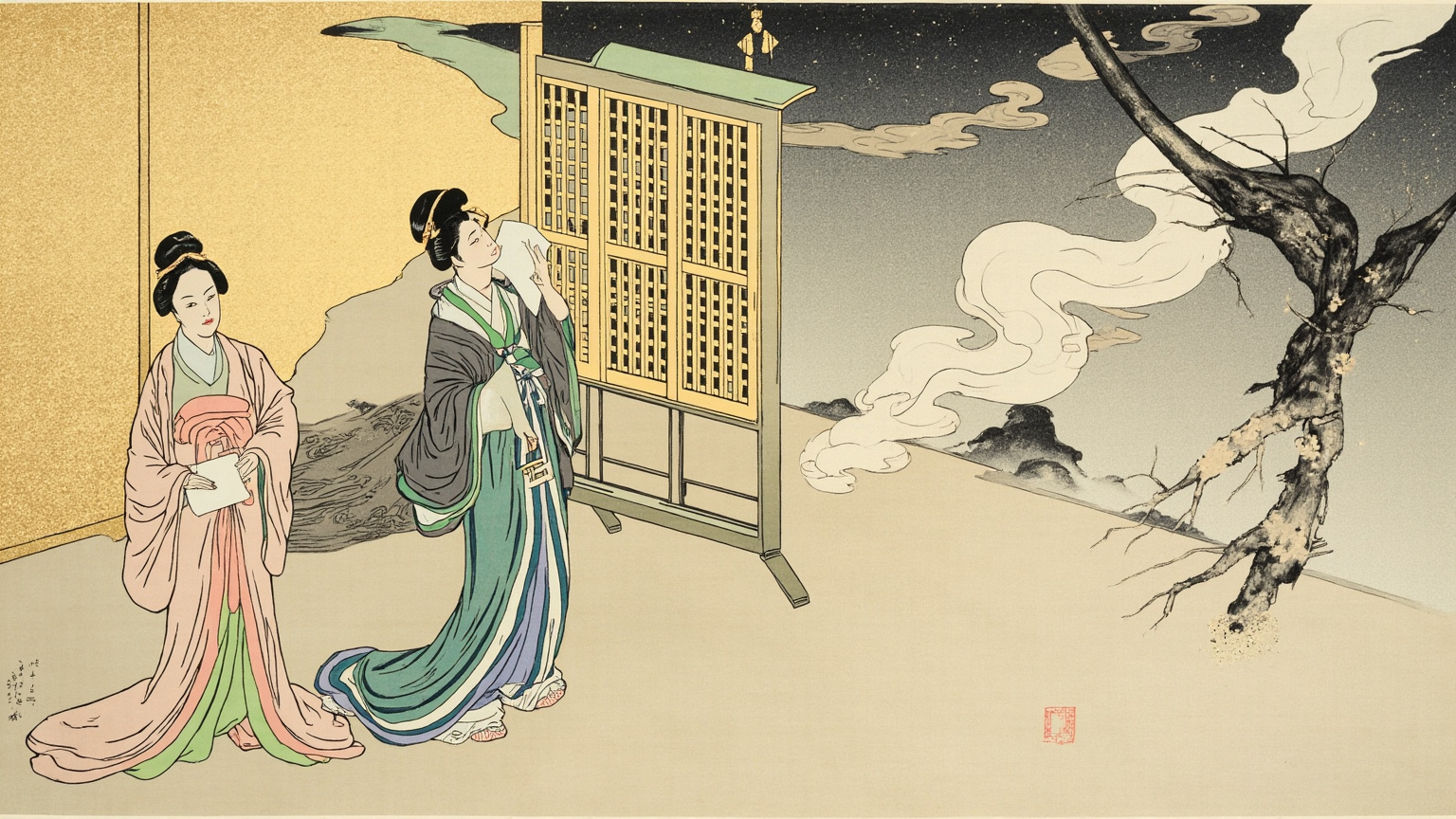
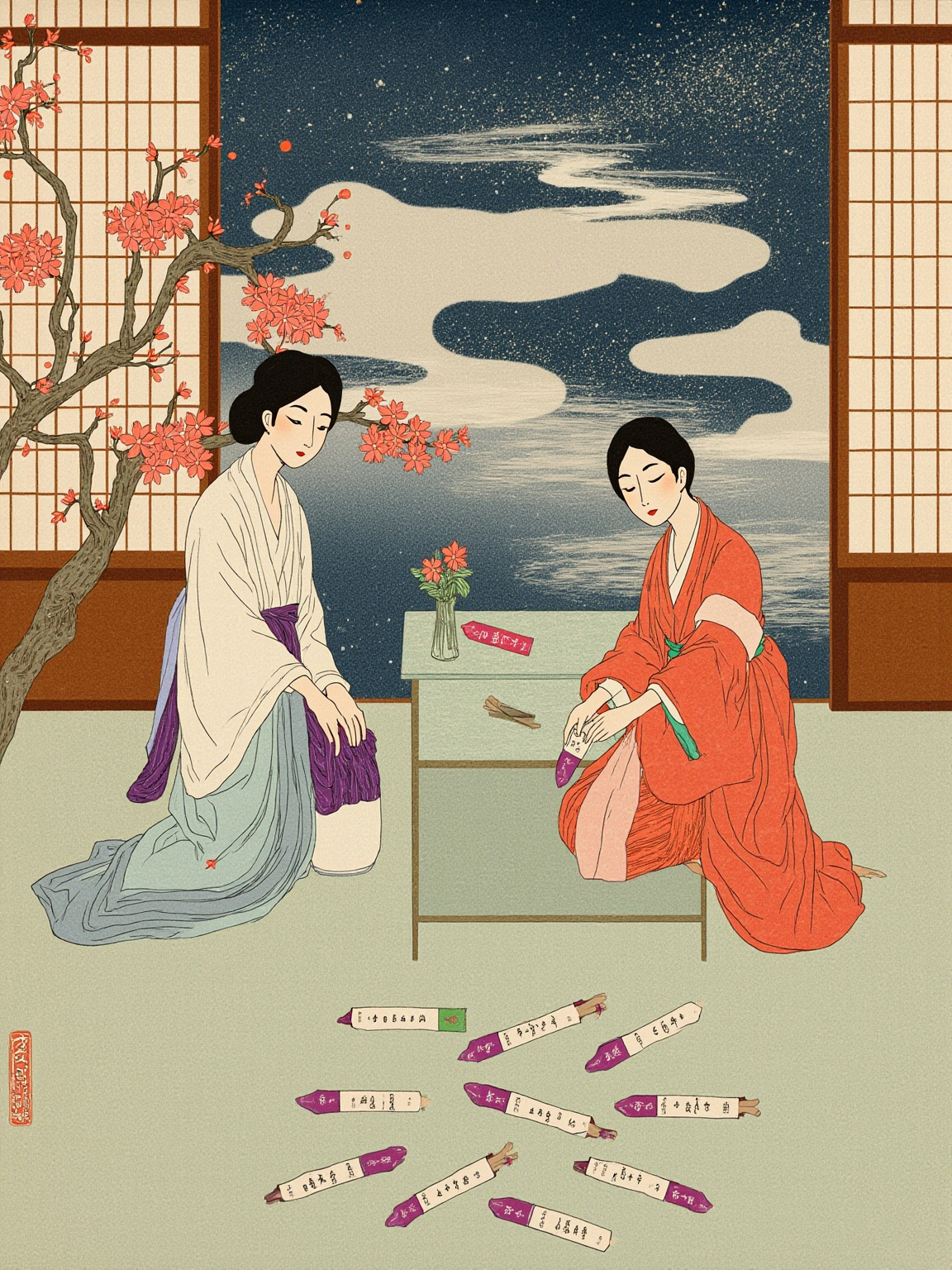
It is the fifth month, and the cuckoo will not stop calling. A page slips a broken branch of plum blossom through the blinds into Izumi Shikibu's rooms, a small violet note tied to it, a poem written on the note. She unties the note, unfolds it, grinds her ink, and sends back a poem of her own, branch and all. The next day another branch arrives, with another poem attached. The paper changes color, back and forth, for ten months without a pause. Those notes are the whole of this diary.
This diary is a firsthand record of a love affair, written by a woman poet at the height of the Heian period. The original is long lost; what survives was assembled later from scattered manuscripts and anthologies. What sets it apart is not the plot but the form: almost no prose, a skeleton built from more than a hundred and forty poems passed back and forth. Later generations have ranked it alongside The Tale of Genji, The Tales of Ise, The Sarashina Diary, and The Murasaki Shikibu Diary as a landmark of Heian women's writing, and within the diary genre it is the one that stays closest to the person who lived it, with the least polish applied.
The author, Izumi Shikibu, is by common consent the most celebrated woman poet of the Heian period, active into the early eleventh century. One of her poems was later collected in the Hyakunin Isshu, and it is the most quoted of all: before I leave this world, let me see you once more, so the moment can carry into whatever life comes after. That poem is signed in her personal collection, the Izumi Shikibu Shu, not in this diary itself, but it has become the line most often cited to place the author. When she began this diary she was just past thirty, recently widowed, living alone in the capital with the young daughter from her first marriage.


What this guide has given you so far is a map. But a map cannot draw certain things that only the original text holds: the feel of paper folded around a plum branch, ink bleeding into washi, the rhythm of a line read aloud in old Japanese. None of that lives in the plot; it lives in the words themselves. There is also the immediacy of a woman sitting alone behind her blinds a thousand years ago, writing. A guide can tell you what she wrote, but it cannot give you why she wrote it that way, how she wrote it, or what hour the sky had reached by the time she finished. That is what the text itself still has for you.
The skeleton of this diary is not prose. It is the hundred and forty-odd poems passed back and forth, and the prose is only the stitching that holds them together. Put differently, it is a collection of poems shaped like a love affair, wrapped in the shell of a diary.
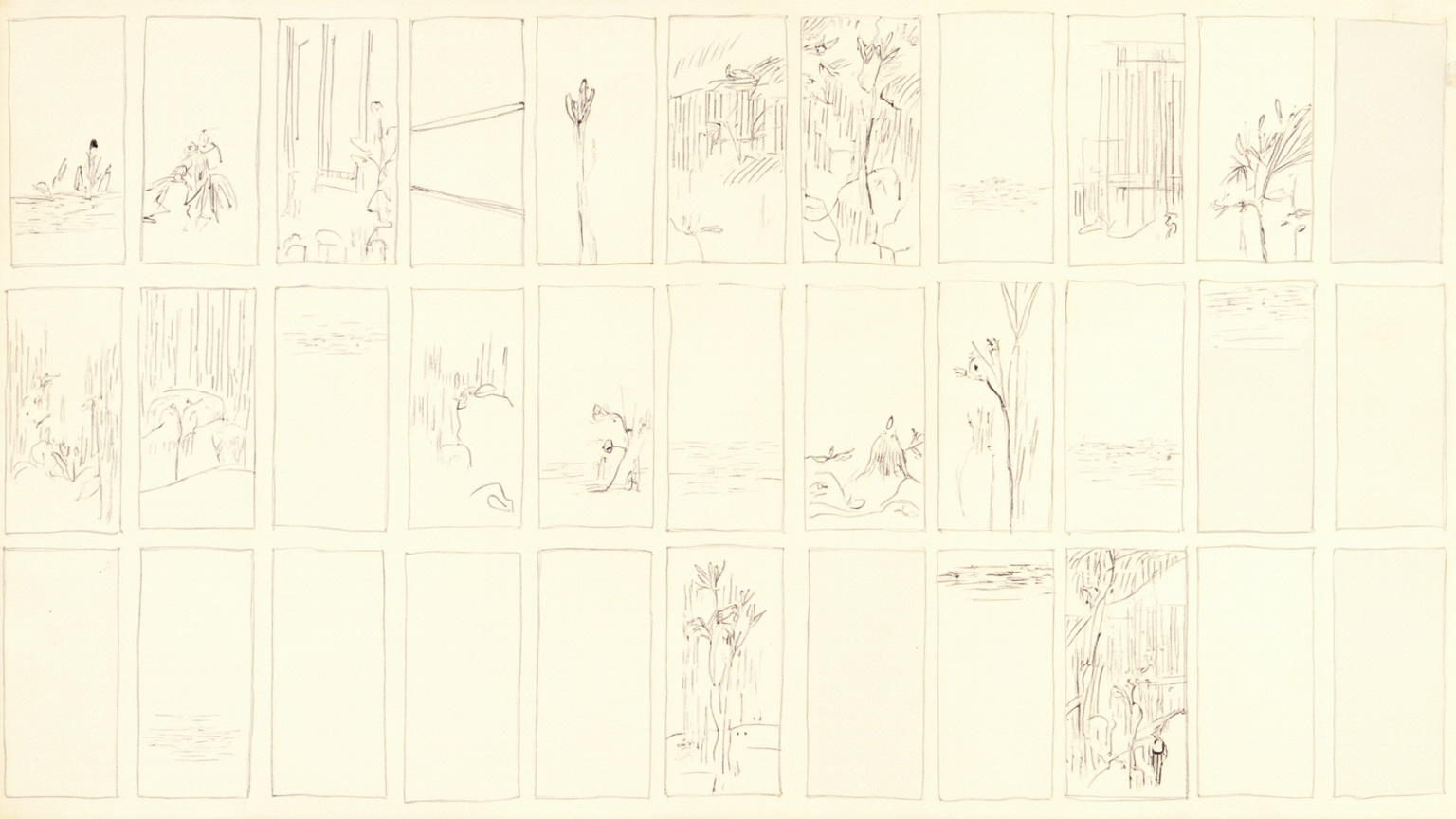
Before the guide was written, this book got a visual foundation — every illustration you just read grew out of it.


Her situation at the time was precarious. An earlier affair with Prince Tametaka, Prince Atsumichi's elder brother, had become common knowledge at court, and her father, who held the post of Governor of Izumi, cut her off in anger, all but shutting her out of the family. Shikibu could not go home, and she had no husband's house to depend on either; she kept a quiet residence with her daughter and filled the days with poetry. This is where the diary begins, not with moonlit romance but with a woman disowned by her own family, sitting alone behind the blinds. That starting point is what gives every poem that follows its weight.
The turn comes with a broken branch of plum. Prince Atsumichi, sixth son of the Retired Emperor Reizei and younger brother to Prince Tametaka, sent it near Shikibu's residence through a man going by the name Taikenmon-in. For the first few months neither of them meets the other face to face; they do not even confirm what the other looks like. The poems simply travel back and forth, the paper changing hands, exchange after exchange. Not knowing who is on the other side of the correspondence was, for Heian nobility, a form of caution built into courtship: test each other in verse first, and only then decide whether to meet.
On the craft: through the first several dozen poems, the diary barely describes a person at all, only paper and verse. A page's footsteps, how deep or pale the paper's color, how thick or thin the ink, whether the dew on the plum branch has dried, these details stand in for face and rank. The author lets the reader fall for a voice before ever learning the face behind it, the exact reverse of how modern romance stages a first meeting as fireworks across the page.
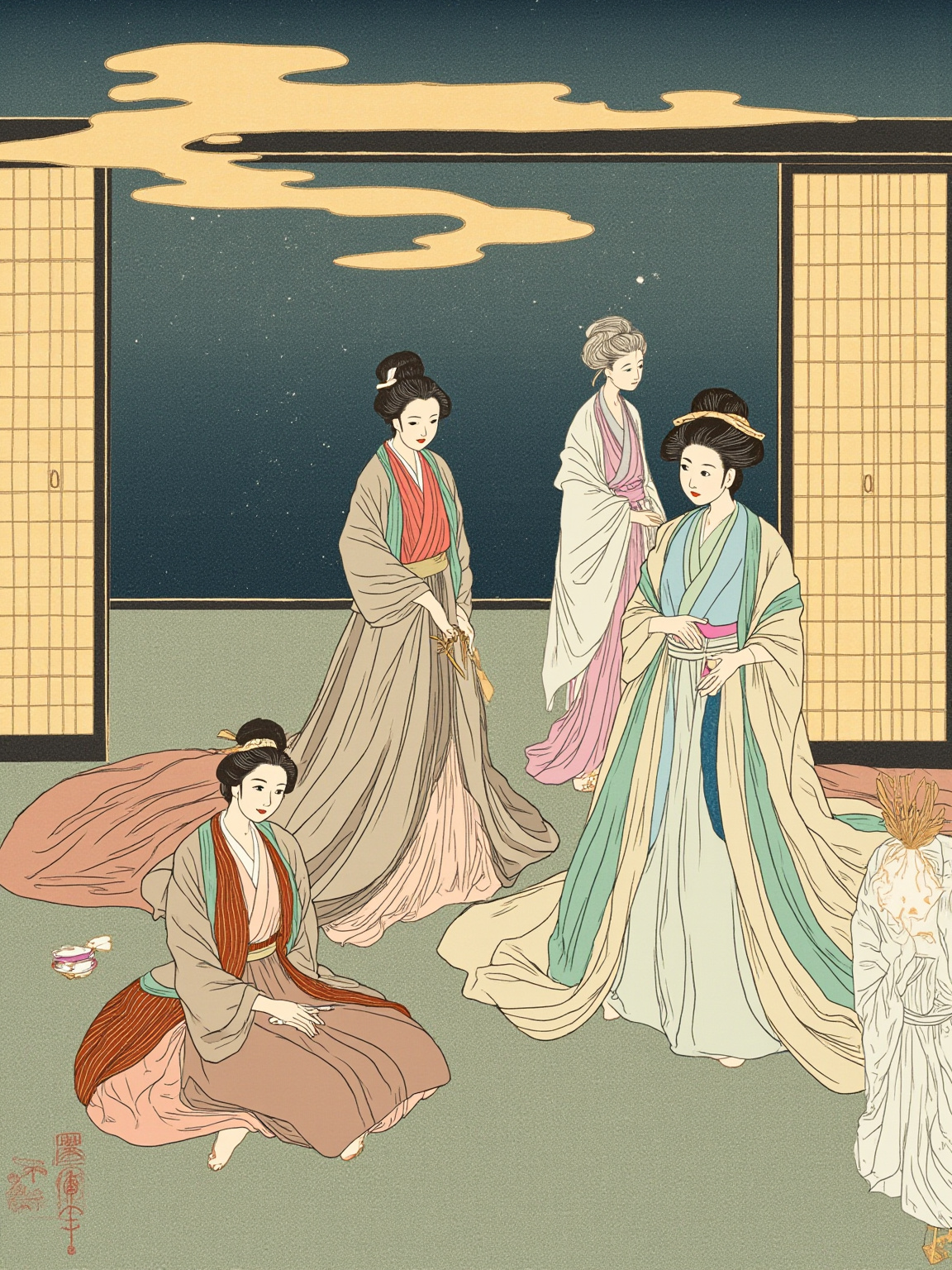
Once his identity is known, Atsumichi follows the custom of Heian courtship: an ox carriage to Shikibu's house after dark, gone again by morning. In this arrangement the woman does not move into the man's household, nor does he bring her into his own; the physical distance between them is always a curtain of blinds. Poems still cross it, words still pass through it, but the body is often not seen at all. That screen of blinds becomes the diary's defining image, half hidden and half exposed at once.
On the craft: the diary contains no scene of physical intimacy; the weight sits entirely in the language of the poems. A night passes, and what remains of it is a few exchanged verses. Shikibu does not write the love affair through the body; she writes it through voice. That choice is what puts real distance between this diary and the romance fiction that came after it.
A few months on, Atsumichi does something out of the ordinary: he sends a party to bring Shikibu to live with him at his residence. Among Heian nobility this was rare; most affairs stayed at the level of night visits, the woman remaining in her own household. Moving in meant the two of them were choosing to put the relationship in front of the world and accept whatever talk came with it. And talk came. The capital took up the story at once, and Shikibu's past was dragged back out along with it.
How Shikibu handles the talk is one of the most candid stretches of the diary. She does not defend herself and does not look away; she sets down what people are saying exactly as she hears it, then answers with a poem, in effect: what you hear is rumor, what you see is me. A thousand years ago, a woman under public scrutiny did not cry and did not make a scene. She wrote. That stance carries more force than any defense would have.
Read the whole diary through and what stands out is not the plot but the density. From the plum branch in early summer to the parting the following spring, ten months pass threaded with cuckoos, the Tanabata festival, the autumn moon, winter snow, every turn of season written straight into the exchange of poems. Plum in the fifth month, stars in the seventh, the moon in the ninth, snow in the twelfth: the season is both a poetic subject and the beat of the feeling underneath it, and a private love affair takes on the texture of a full year because of it. As for the prose, it does nothing but stitch the poems together. Often it is a single line, the prince came again that night, and the next line is already verse.
This is the key to reading the diary: its real protagonist is neither Izumi Shikibu nor Prince Atsumichi but the hundred and forty-odd poems passing between them. The prose is the stitching that holds the poems together; the poems are the cloth itself. Put another way, this is not a diary about a love affair. It is a collection of poems shaped like a love affair, wrapped in the shell of a diary.
There is another layer of structure in how plainly the diary records the eyes of the world on her. When Shikibu writes about her father's coldness, there is almost no anger in it. When she writes about the talk in the capital, there is almost no argument. She knows exactly what she is doing and exactly how it looks to others, and she puts all of it into the diary just as it is. That is what rewards a close reading more than anything else here: I know that you know, and I am going to live this way regardless.
Set against that is how rarely she and Atsumichi ever write I love you. She says it only through poems. Every exchange is a declaration: her hesitation, her resolve, her waiting, her testing of him. The function of poetry is pushed to its limit here. It is not decoration and not a display of skill; it is the only language the two lovers recognize as valid between them.
After several months living together, Shikibu withdraws from the prince's residence back to her own house, and here the diary closes. It was never the whole of Izumi Shikibu's life, only one true stretch of ten months within it. What comes after is not in this book: later in life she entered the service of Taikenmon-in as a lady-in-waiting, standing alongside court poets like Akazome Emon and Murasaki Shikibu, and her own poetry survives in the Izumi Shikibu Shu. Murasaki Shikibu even left a barbed line about her in the Murasaki Shikibu Diary, and being sharp enough to draw a rival talent's scorn is itself evidence of a reputation.
Read those ten months to the end and one thing becomes clear: this diary has kept readers a thousand years later not for its plot, which is genuinely simple, but because it turned a love affair into a language. A complete affair, with a beginning, a turn, and an ending, carried on entirely in verse. Within the genre of women's diary writing, its density of lived ten months and its skeleton of poems set it apart from the Sarashina Diary's late-life recollection and the Murasaki Shikibu Diary's view from inside the court. It is not a legend retold and not a courtier's observation from the sidelines. It is one woman's record of how she lived and how she wrote, in that single year.