The Joke (Žert) · Companion Guide
玩笑
一张明信片上的戏语,如何被历史反噬成一生的判决;一场精心策划的复仇,又如何在重逢的酒桌上发现自己也是棋子。
The Opening Hook
A postcard. Sent to a girlfriend, Czechoslovak blue sky printed on the front, and on the back a joke scrawled in a hurry, a parody of a Party slogan: Optimism is the opium of the people! Ludvik Jahn, a university student, was laughing at his own joke as he dropped it in the mailbox. What harm could one young Party member's little dig at a slogan possibly do? Ten years later he would learn that the card had spent all that time lying in a file, turning slowly into a verdict.
The absurdity is not the postcard itself. It is that the card never comes back to him. The title, The Joke, points straight at that thin scrap of paper, but by the end you notice that every deliberate act in the book eventually turns and bites the person who committed it. Kundera uses this story, cold to the bone, to show a young man repeatedly played for a fool by his own wit, his own revenge, and his own memory.
What Kind of Book This Is
The Joke is Milan Kundera's first novel, published in 1967, two decades before The Unbearable Lightness of Being made him famous worldwide. The Czech title, Žert, translates literally as joke. He was in his early thirties then, still living in his home country, still writing in his native language. Readers across Eastern Europe passed the book around obsessively around the time of the 1968 Prague Spring; it was later banned, translated, and unbanned, and it became the source text for the theme he kept returning to for the rest of his career: an individual crushed by the joke history plays on him.
It is a political satire, one that goes straight at how the purges and party rectifications after the Communist takeover of 1948 destroyed an ordinary young man, and at the same time it is a modern novel with an existentialist edge, using black comedy and a cold, flat narration to show how small a person becomes under the weight of history. Read it purely as comedy and you will not reach the bottom of it. Read it purely as tragedy and you will miss its bite. It is both, deliberately, and it wants you to swallow both at once.
Characters and World
The protagonist, Ludvik Jahn, is a young Party member and a committed materialist, living a puritanical, politically disciplined life alongside his classmates Pavel and Jaroslav. His girlfriend, Lucie, is sensitive and fragile, having come to him from a small provincial town. Pavel is his good friend at the time, the one who later, during the Party purge, reports the postcard that ruins him. Jaroslav is the most hard-line Party loyalist of the group back then, yet years later becomes the one who speaks up for Ludvik. In the labor camp, Ludvik meets Kostka, a religious older Czech intellectual, a former schoolteacher, and the coldest, most existentialist voice in the whole book.
Helena Zemánková is Pavel's wife, plain and sharp, raised on a Slovak farm, and later the target of what Ludvik calls his seduction experiment. The camp's political instructor speaks a saccharine language about purifying the soul, standing in for the state at the foot of every bed. The rules of this world are simple: a private joke can be classified as a crime against the Party, a marriage can be broken by a single file, and a young man can be reformed in a mine shaft until he believes in nothing at all.
The Prague Dormitory: How a Joke Becomes a Verdict
It all starts with what looks like a harmless dormitory joke. On a postcard addressed to Lucie, Ludvik scrawls a parody, flipping the Party's favorite optimism slogan on its head. Writing it down, he probably still thought he was being clever. Who would take seriously one young Party member's little dig at a slogan? The next day, some hand intercepts the card on its way through the mail and sends it to another office: the Party organization committee. Within days, he is standing at the podium of a disciplinary hearing.
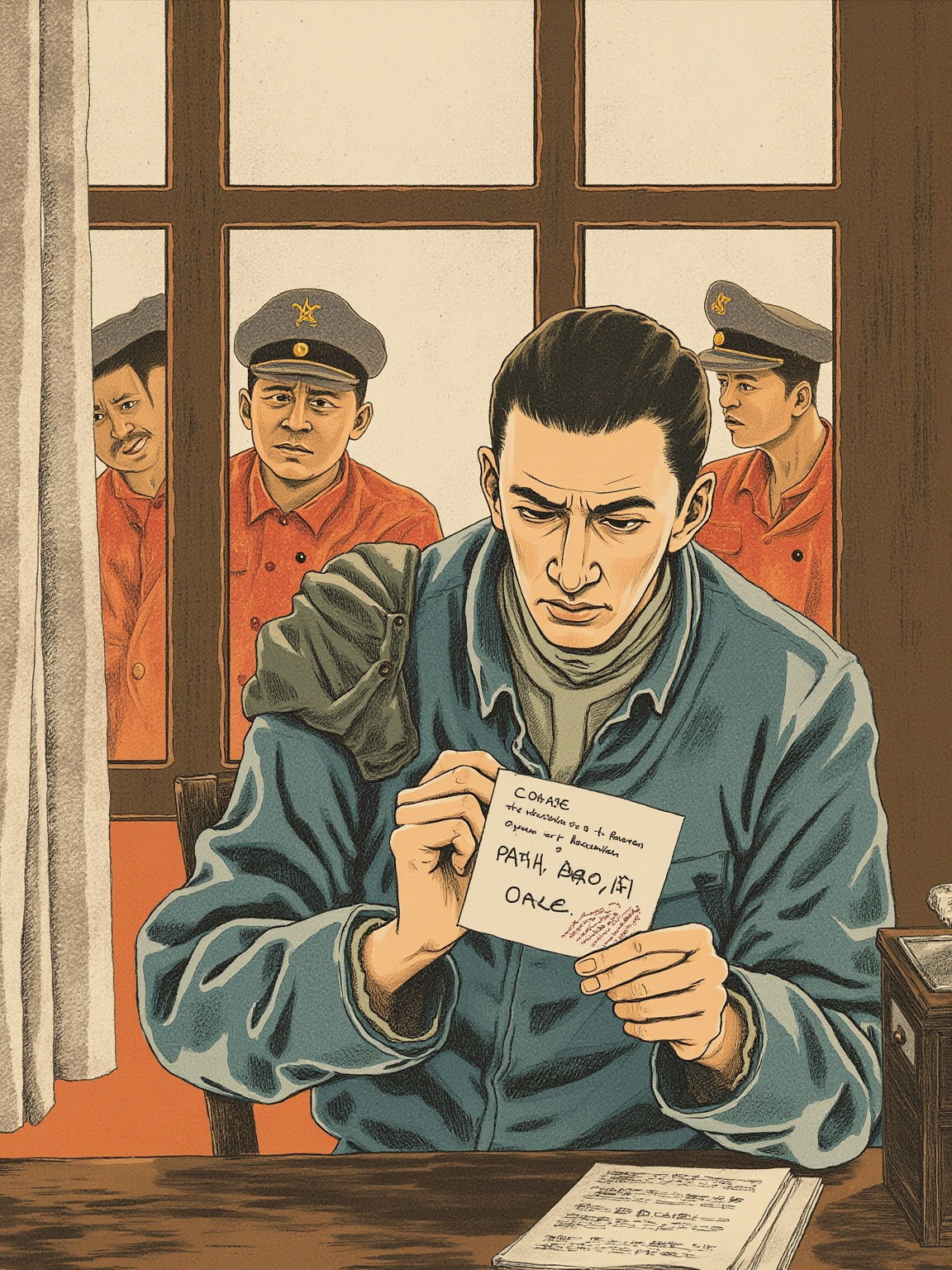
Optimism is the opium of the people!
乐观主义是人民的鸦片!
金句 · 第1章 · 路德维克寄给露西娜的明信片
The craft here lies in the contrast of pace. Kundera keeps the scene almost farcically light, one wisecrack, one small gesture, then drops it like a stone. Expulsion from the Party, public denunciation, expulsion from the university: the punishments pile up within a single page. The reader, like Ludvik, barely has time to react before it is already over. He pays for one joke with the whole of his youth.
The Moravian Coal Camp: Faith Collapses Between the Shovels
He is sent to a penal labor camp at a coal mine in Moravia. The barracks are grey-blue, shovels stacked neatly outside the tool shed, and the labor, the cold, and the constant mutual surveillance pack these former true believers under one roof. It is here that Ludvik completes his most important transformation, from committed faith to believing in nothing at all. It is not rebellion. It is not awakening. It is something colder: a blankness left behind once everything has been worn smooth.
His roommate is Kostka, a religious older Czech intellectual. While everyone else in the camp is busy informing on each other and performing loyalty, Kostka meets it all with a detached, almost indifferent stance, murmuring strange notions about God and sinners toward the fields outside the window. The sinner is king, he says, a line that barely means anything on its own, yet inside that regime of discipline it becomes a whole alternative set of coordinates. What Ludvik learns from Kostka is not another faith. It is the posture of no longer having to pretend to believe.
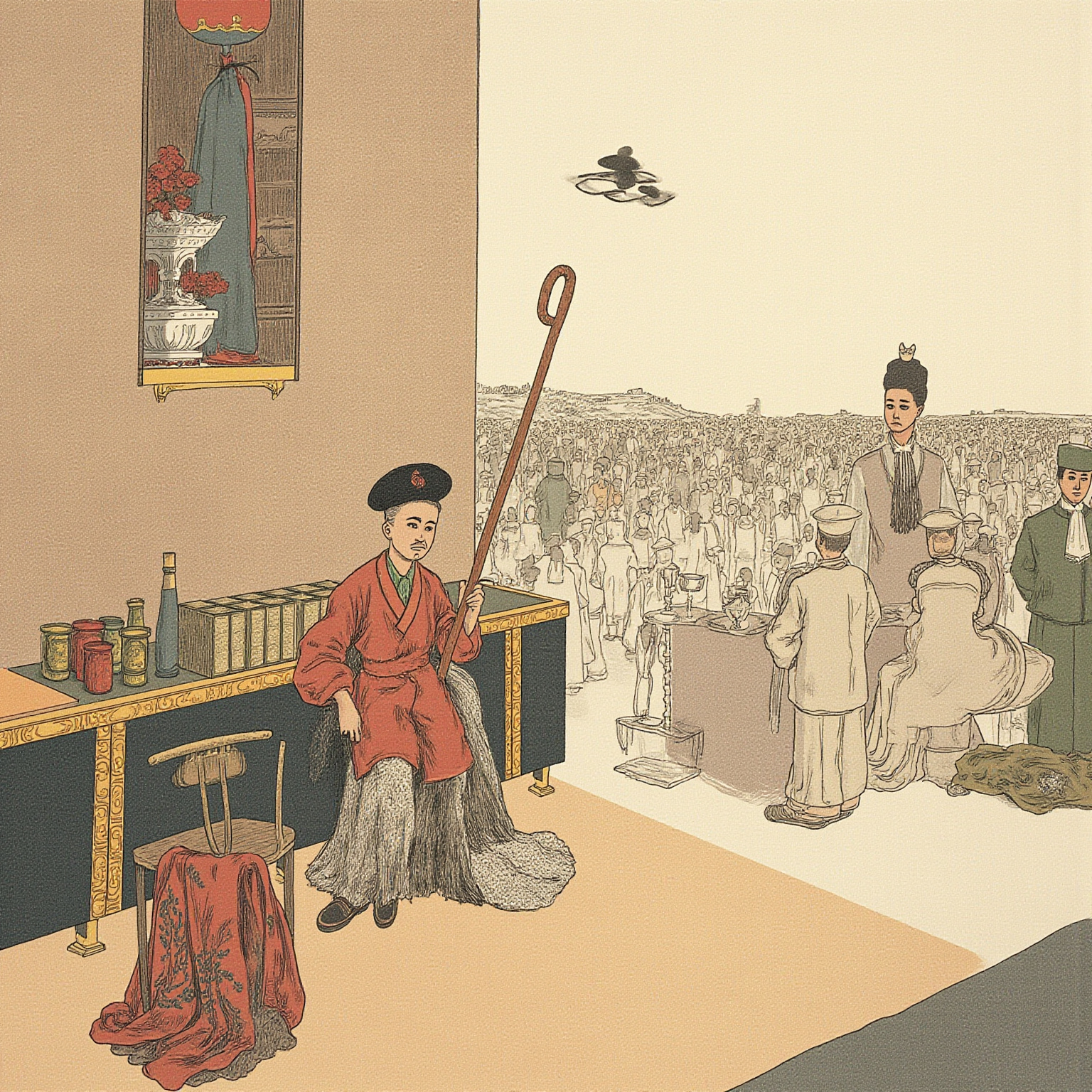
The sinner is a sinner only because he prays to God; once he forgets God, he ceases to be a sinner.
罪人之所以是罪人,只因他向上帝祈祷;一旦他忘了上帝,便不再是罪人。
金句 · 第3章 · 科斯特卡在窗边的絮语
What is clever here is that the barracks scenes barely depict physical punishment; Kundera avoids the most obvious kind of violence. Instead he uses cold, flat objects, a row of shovels, the minutes of a self-criticism meeting, a saccharine line about purifying the soul, to let readers feel discipline for themselves. The contrast of cold white daylight against earthenware red is a color scheme unique to that era in Eastern Europe.
The Returning Ludvik: Turning an Affair into a Revenge Machine
His sentence ends around 1957 or 1958, and Ludvik returns to Prague to finish the rest of his degree. The man who comes back is someone else: the puritan is gone, the idealistic young man is gone, and what is left is a cold-blooded man with no illusions left. He wants revenge. His target is Pavel, the old dormitory friend who once mocked dogmatic art alongside him while playing the choirboy, and who later turned around and wrote him up. The revenge is carefully engineered: get close to Pavel's wife, Helena, take her away from him, and settle the old account through the affair.
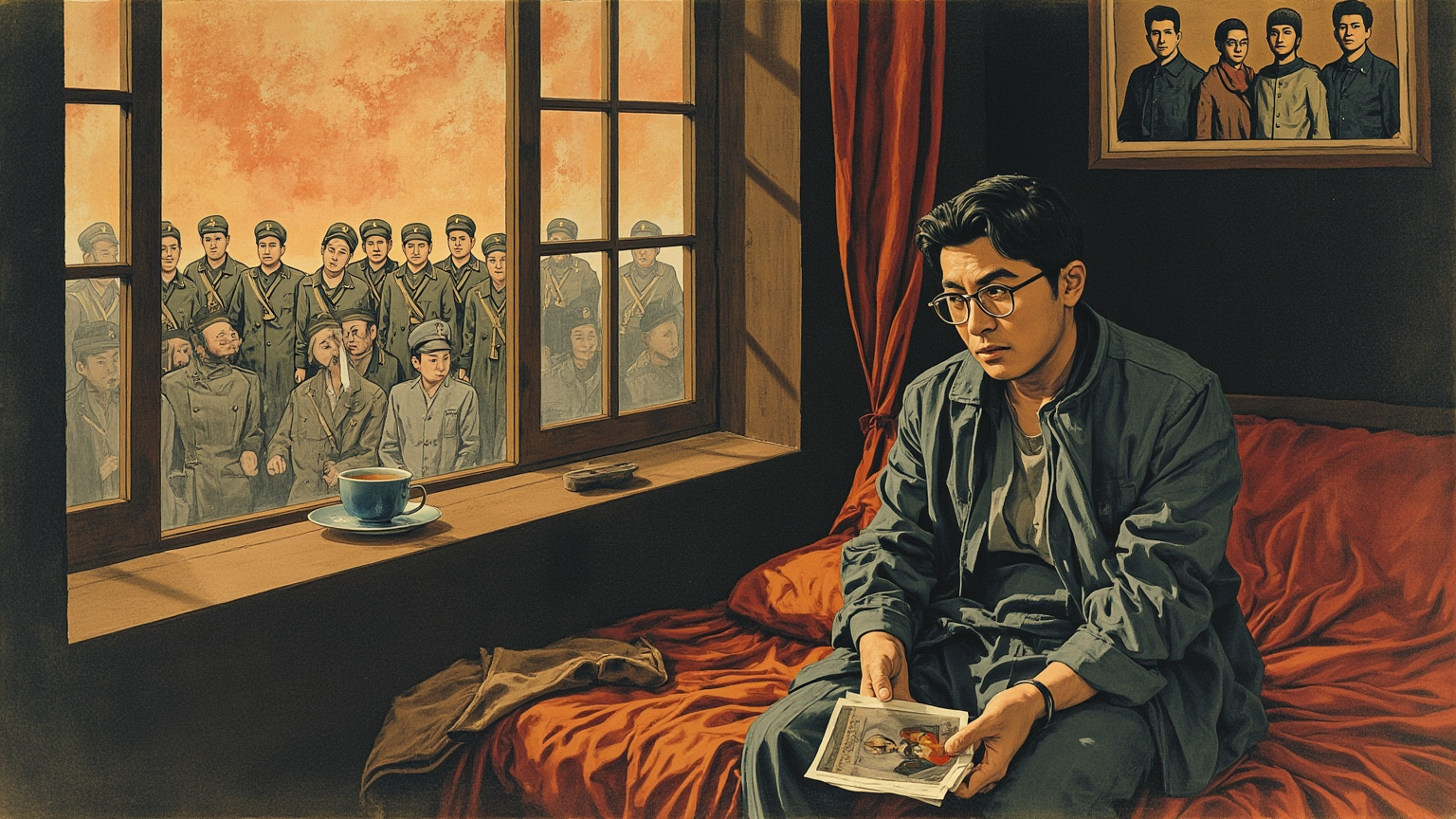
Nothing was left of the young zealot who had once been ready to sacrifice his life for the triumph of the proletarian cause.
那个曾准备为无产阶级事业献身的青年狂热者,已经荡然无存。
金句 · 第5章 · 路德维克归来后对雅罗斯拉夫的自述
In craft terms, Kundera pushes Ludvik's coldness to its limit here. He names the whole approach a seduction experiment, as if it were a piece of social science. This is a move Kundera is very good at: describing the least academic thing imaginable in an almost academic tone. The reader grows more uneasy the further in they go, realizing that the coldness itself is a kind of deformation.
Moravian Folk Ribbons: Cold Calculation in Warm Light
He approaches Helena at a folk ribbon festival in a small Moravian town. The festival itself is warm: May ribbons, bagpipes, freshly turned spring soil, the flush on the cheeks of Slovak girls. Helena, raised on a Slovak farm, is plain and sharp, nothing like the shallow woman Ludvik had originally pictured. She is alive, has texture, is real. But he has come with a mission, and he will not let himself be moved.
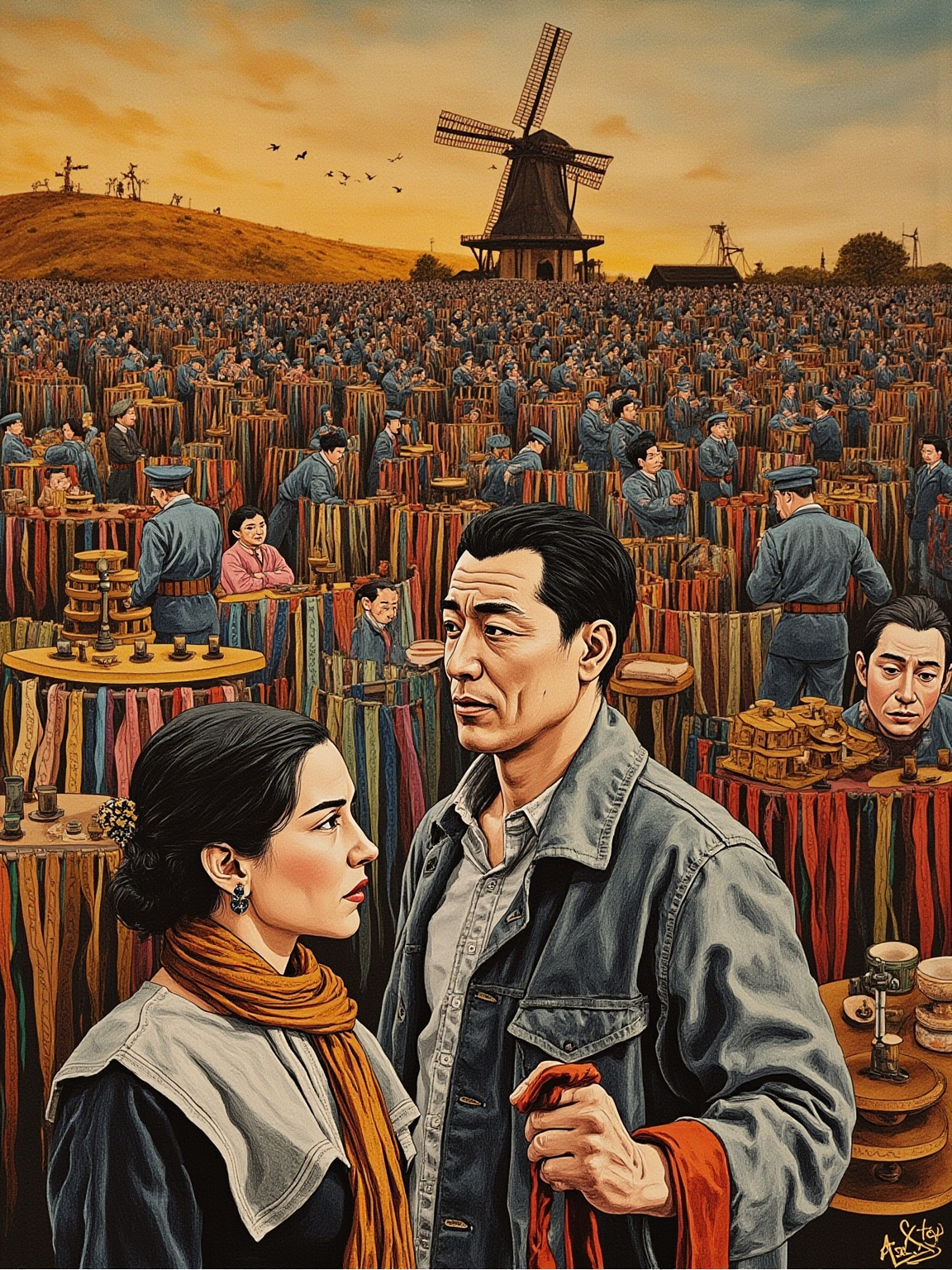
I conceived my project of seduction as if it were a scientific experiment.
我把那次勾引设想成一项科学实验。
金句 · 第6章 · 路德维克叙述接近海伦娜的计划
What makes this scene most interesting is the color contrast: the warm hues of the folk festival against the cold white of the barracks form two separate visual languages, and instead of forcing the comparison the author simply sets them side by side, leaving the reader to feel the dissonance alone. Amid the ribbons and the smiling faces, Ludvik carries out an affair he believes he can calculate down to the last detail. What he does not know is that the calculated can calculate back, and so can fate.
A Thaw-Era Prague Hotel: Two Unfinished Glasses of Wine
A few years pass, and it is now the early 1960s, Prague in the political thaw. Ludvik and Helena, who has by now left Pavel, meet again by chance in a hotel. Two glasses of wine sit unfinished on the table. Two coats hang separately over the backs of two chairs. He was supposed to be the man whose revenge succeeded, but once he sits down he discovers that Helena was never the role he had assigned her, and that he himself stopped being able to stay cold all the way through a long time ago. The joke he set in motion lands back on him, becoming one more tragedy that fate has mocked into being.
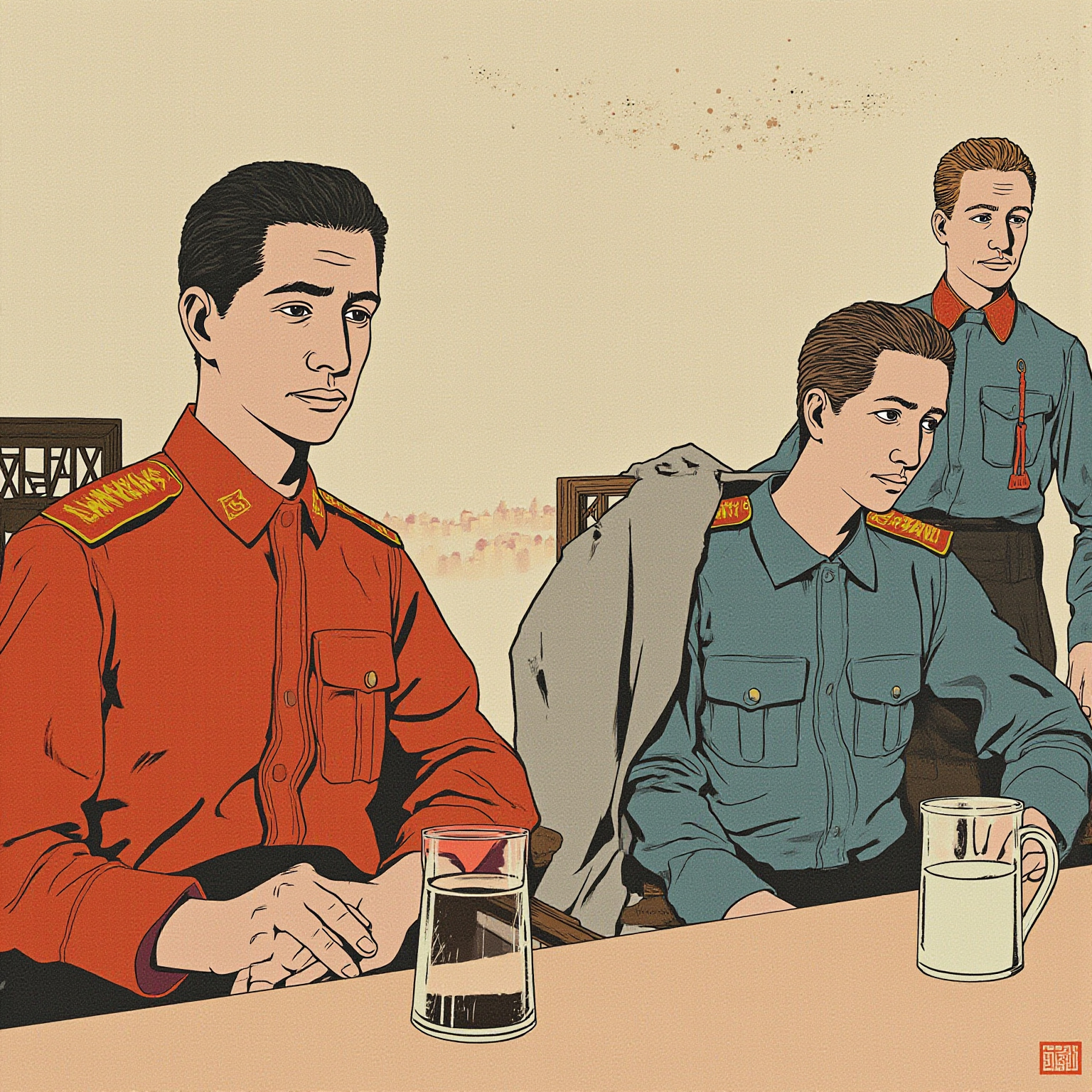
We had both become someone quite different from what we had been at the start.
我们都已变成与最初截然不同的人。
金句 · 第7章 · 布拉格旅馆重逢时的内心独白
This is the book's one moment. Two glasses of wine and two coats form a quiet, light image, heavier than any shouted argument could be. The author does not stage a long exchange of dialogue here. He lets the silence speak for itself. The core discovery of this reunion is that Ludvik thought he was the one playing chess, when all along he was also a piece on the board. The old debt of the postcard had already been settled by some larger force long before he ever designed his seduction experiment.
Multiple Voices, One Memory: The Same Event, Four Versions
The way The Joke departs furthest from an ordinary novel is that it is never only Ludvik's monologue. The whole book is woven from first-person narration that shifts between Ludvik, Helena, Jaroslav, and others, changing perspective chapter by chapter, so that the same stretch of time and the same event gets remembered from several different angles. Their memories of the same event contradict each other. Who spoke first, who betrayed whom first, who let go first: the versions never quite line up.
The structure itself carries Kundera's real point: memory is itself a joke. What you think you remember was never quite what happened. The game you think you are playing looks like a different game to everyone else at the table. The value of the multi-voice narration is not that it exposes who is lying. It is that it lets the reader see that every narrator is sincere, and still none of their pieces add up to the same picture. This was the book's real innovation in 1967, and it went on to become the signature of everything Kundera wrote afterward.
Epilogue: The Joke Has No Period
The story does not end with Ludvik executed or by his own hand; that was never Kundera's way. It ends in aftershocks: an old wound of Lucie's, one that took years to surface, finally comes forward at the very same time; Jaroslav and Helena later remarry, and their daughter becomes an extension of that whole tangled chain of feeling. Every thread that looks finished gets quietly pulled out a little further by the author. The postcard is still generating new debts a decade later.
To bring it back to the main thread: what The Joke is really saying is that no one ever gets to tell a joke that stays simple. The wisecrack on the postcard is tried as a capital offense by the machinery of the state. The calculated seduction gets mocked back by fate. The self-assured version of events held in memory gets overturned by someone else's angle on the same scene. Every time you strike first, a larger hand is waiting behind you to catch the blow and throw it back with different force. What Ludvik finally understands is not that he was wrong. It is that he never once won.
Why It Is Remembered
Set on a bookshelf today, The Joke still draws blood. It is more political, angrier, and more direct than the more cosmopolitan work Kundera wrote later. It confronts head-on how the purge years crushed ordinary people across Eastern Europe after 1948, rendering that black comedy in a flat, cold narration. The structure it pioneered, multiple first-person voices braided with a fractured timeline, is the source of nearly every polyphonic narrative that came after it.
For readers today, it still lands close to home: a line screenshotted and blown up on social media, a moment of speech officially classified by some institution, a carefully planned act of revenge that circles back on the person who planned it. You end up thinking of that one second when Ludvik drops the card into the mailbox. The lightness of that second and the weight of the ten years that follow are the same gesture.
He thought he was the one making the joke, and it stood behind him for ten years, until he turned around and found he was the one it had been made on.
Why It Is Still Worth Reading the Book Once You Know the Plot
A guide gives you the map. The text is still the land. This book's plot can be summed up in a few sentences, but no summary lets you hear the silence between those two unfinished glasses of wine, the quiet of everything that went unsaid, which only lands on you once you reach that page and sit with it. The line on the postcard is one sentence in a summary; in the book it is something you stare at for several seconds. Kostka's murmuring about the fields and about God in the barracks carries a coldness that goes down to the bone, and it cannot be paraphrased; you have to hear it yourself to understand why it is not comforting cliché. And the dislocation of the four versions of one event in the multi-voice narration: a summary can only tell you that it happens, while you have to turn the pages yourself, one by one, to be struck, little by little, by that uncertainty of memory. Knowing the plot only tells you how the game was played. Opening the book lets you hear every piece land on the wooden board.
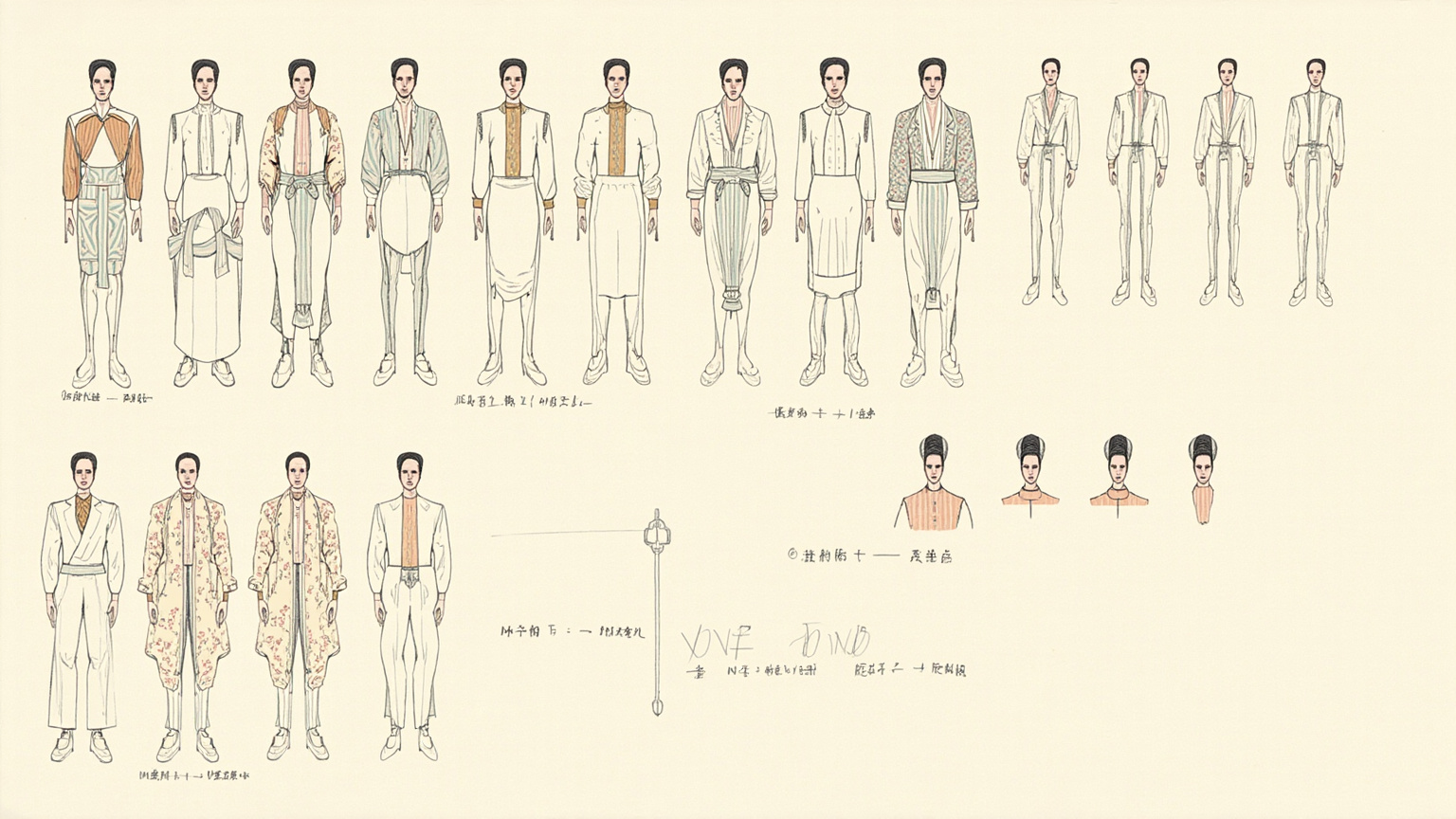
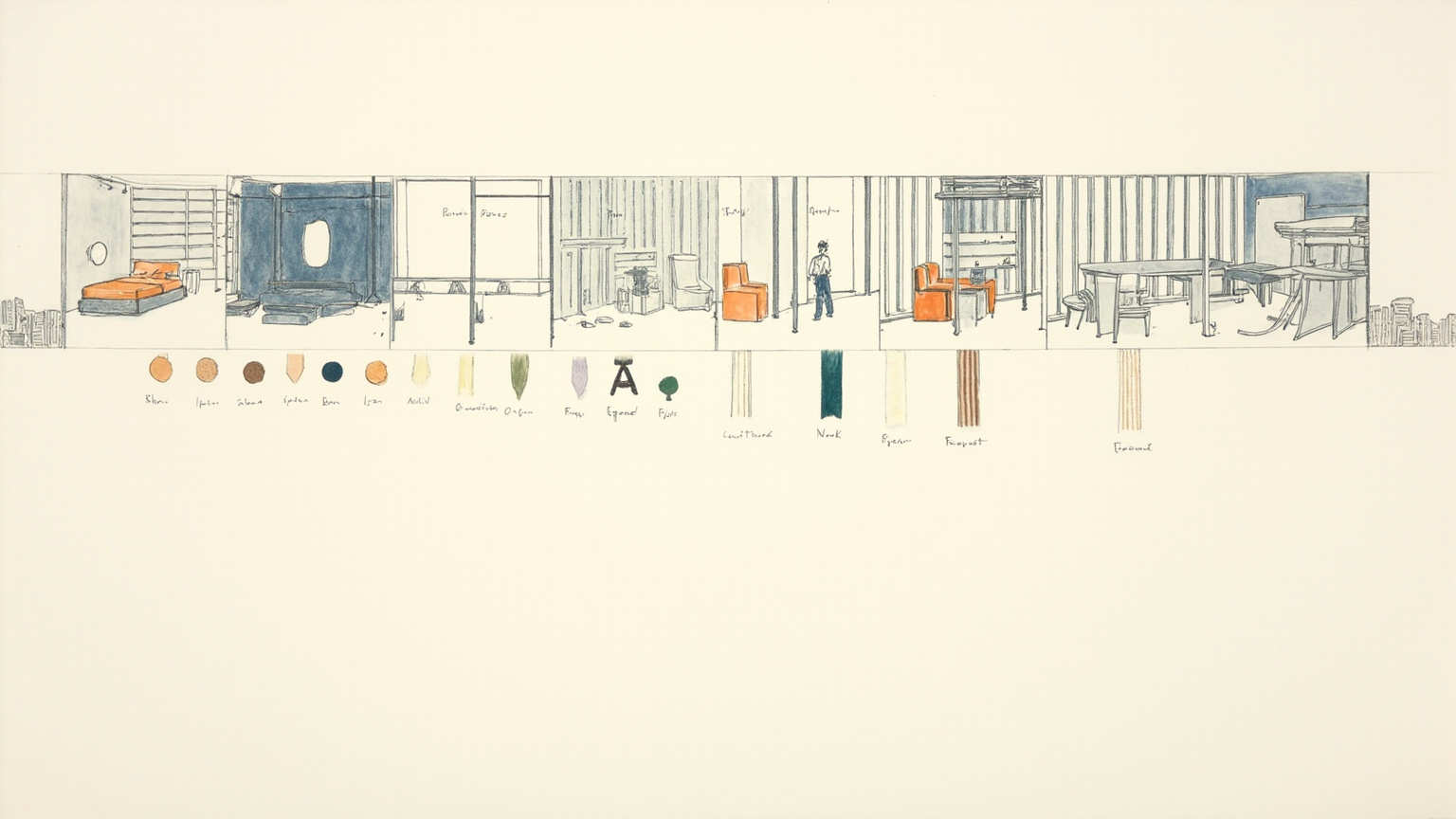
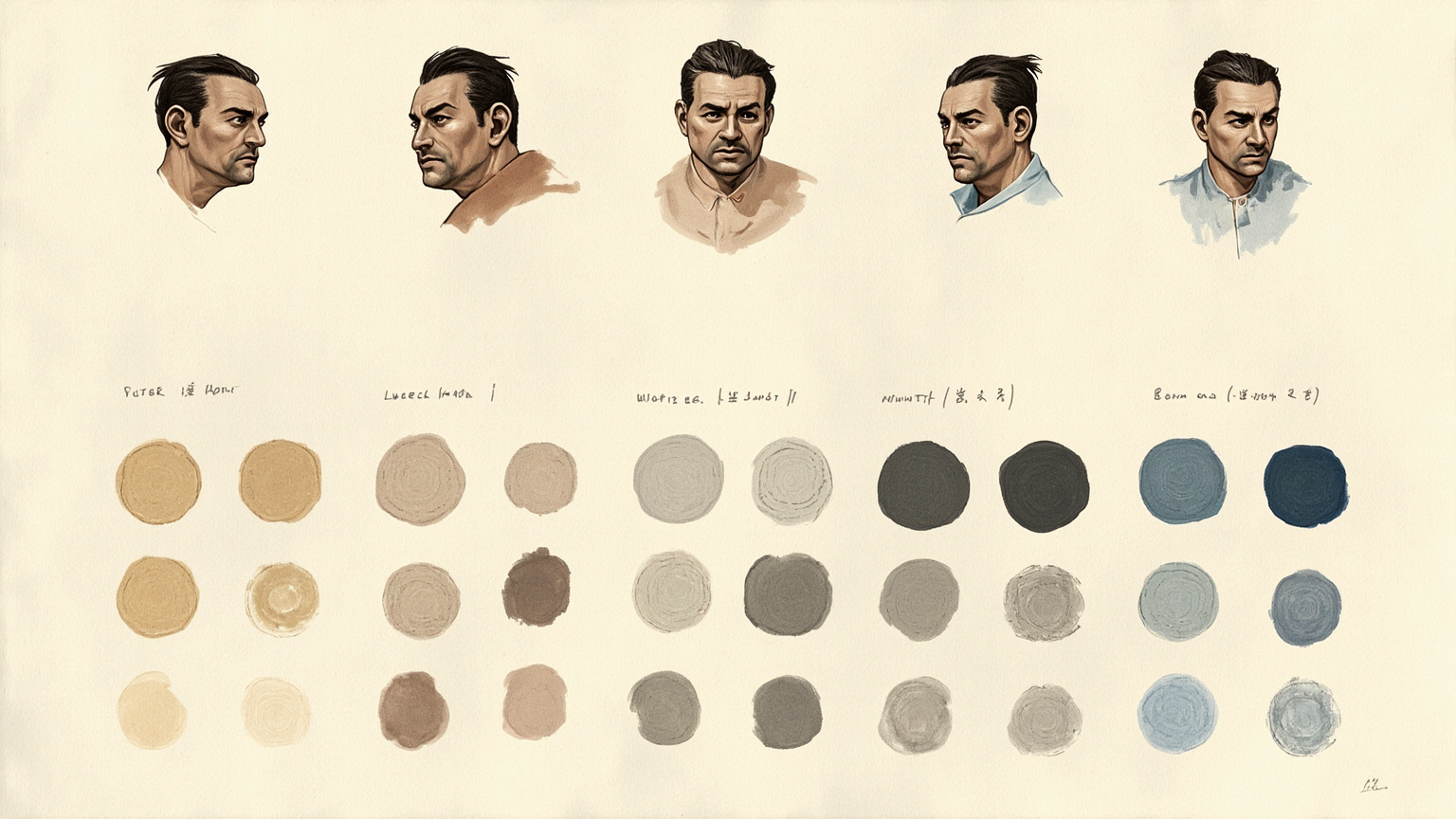
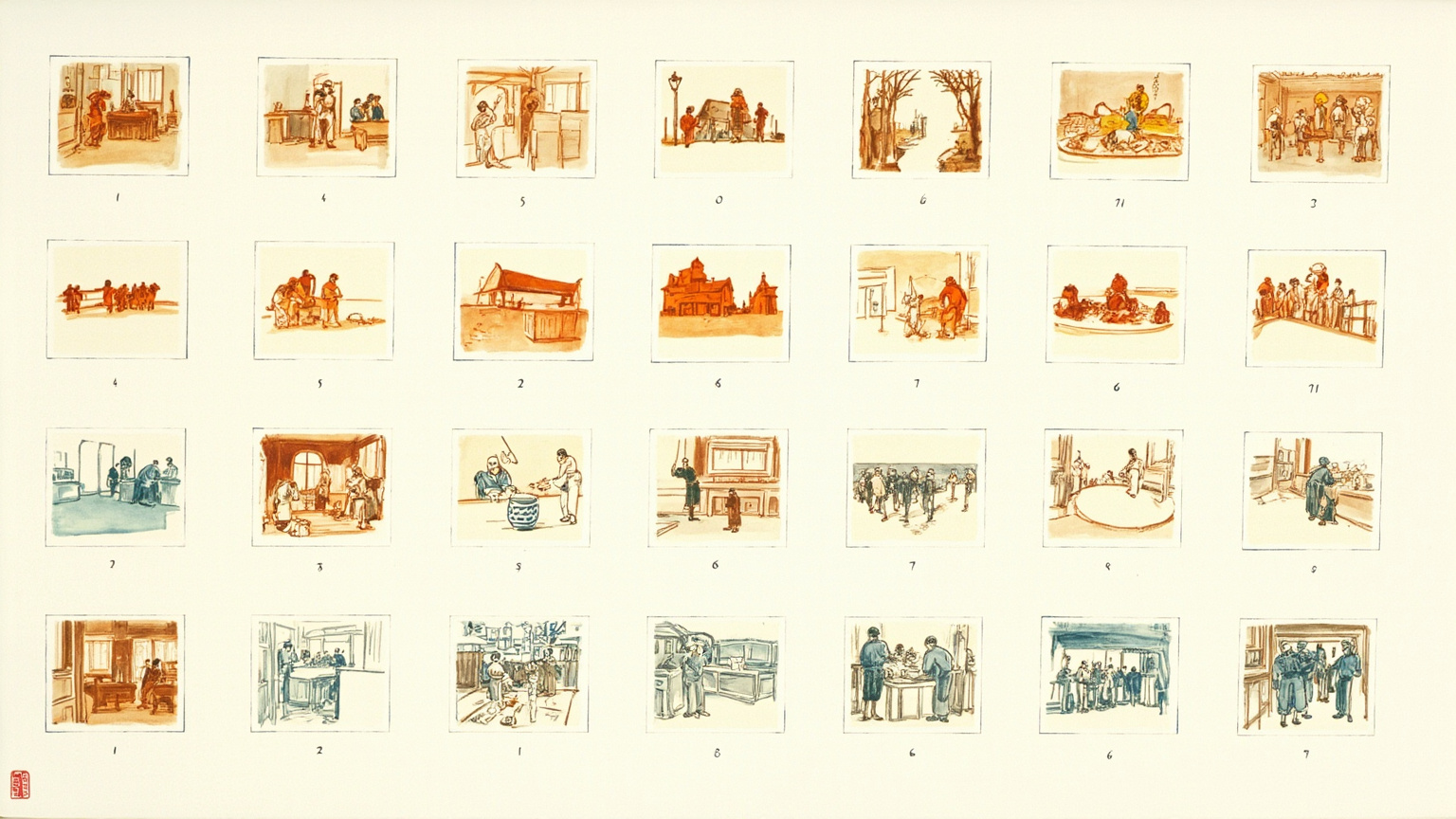
Art Direction4 plates
Before the guide was written, this book got a visual foundation — every illustration you just read grew out of it.