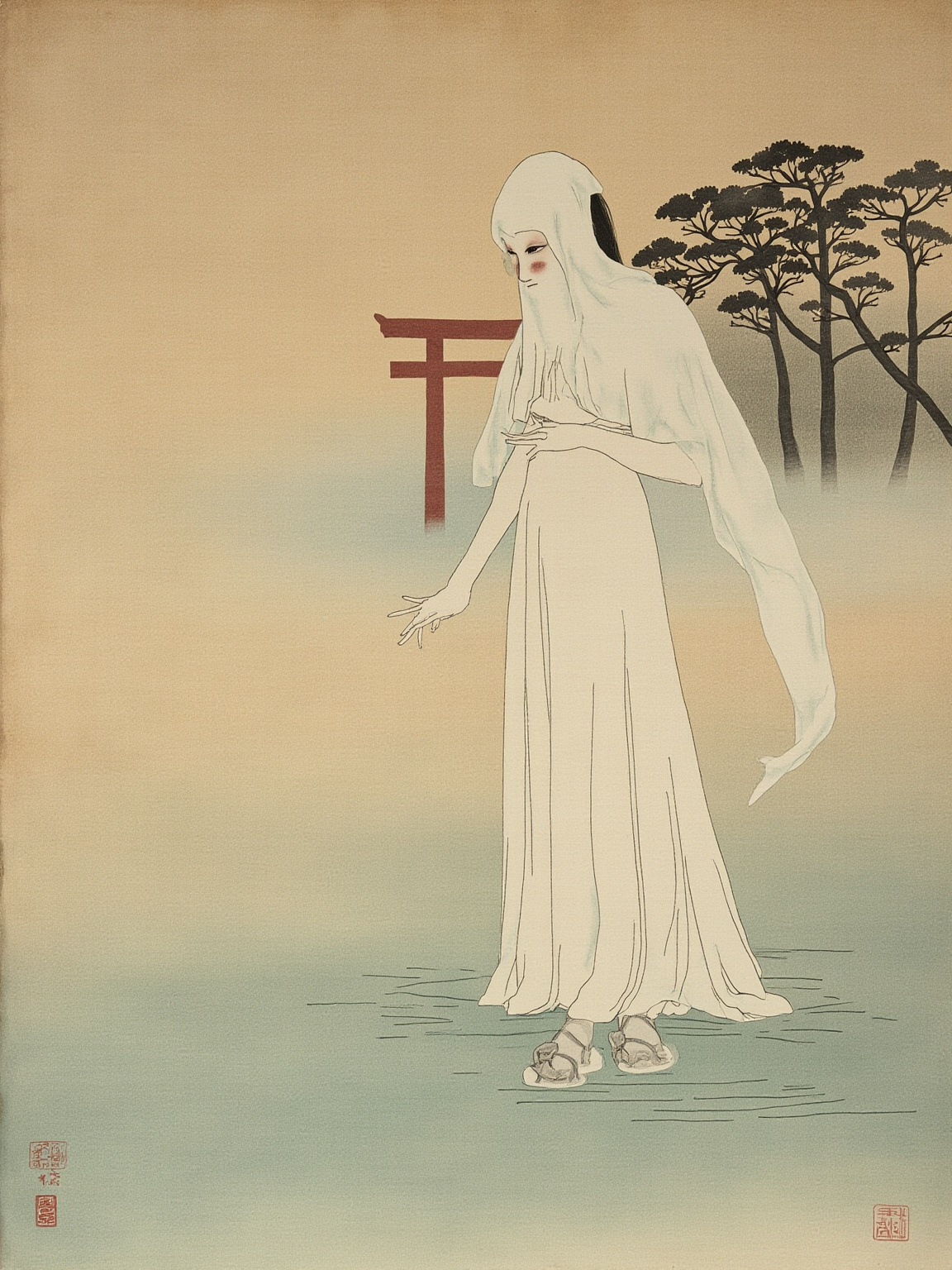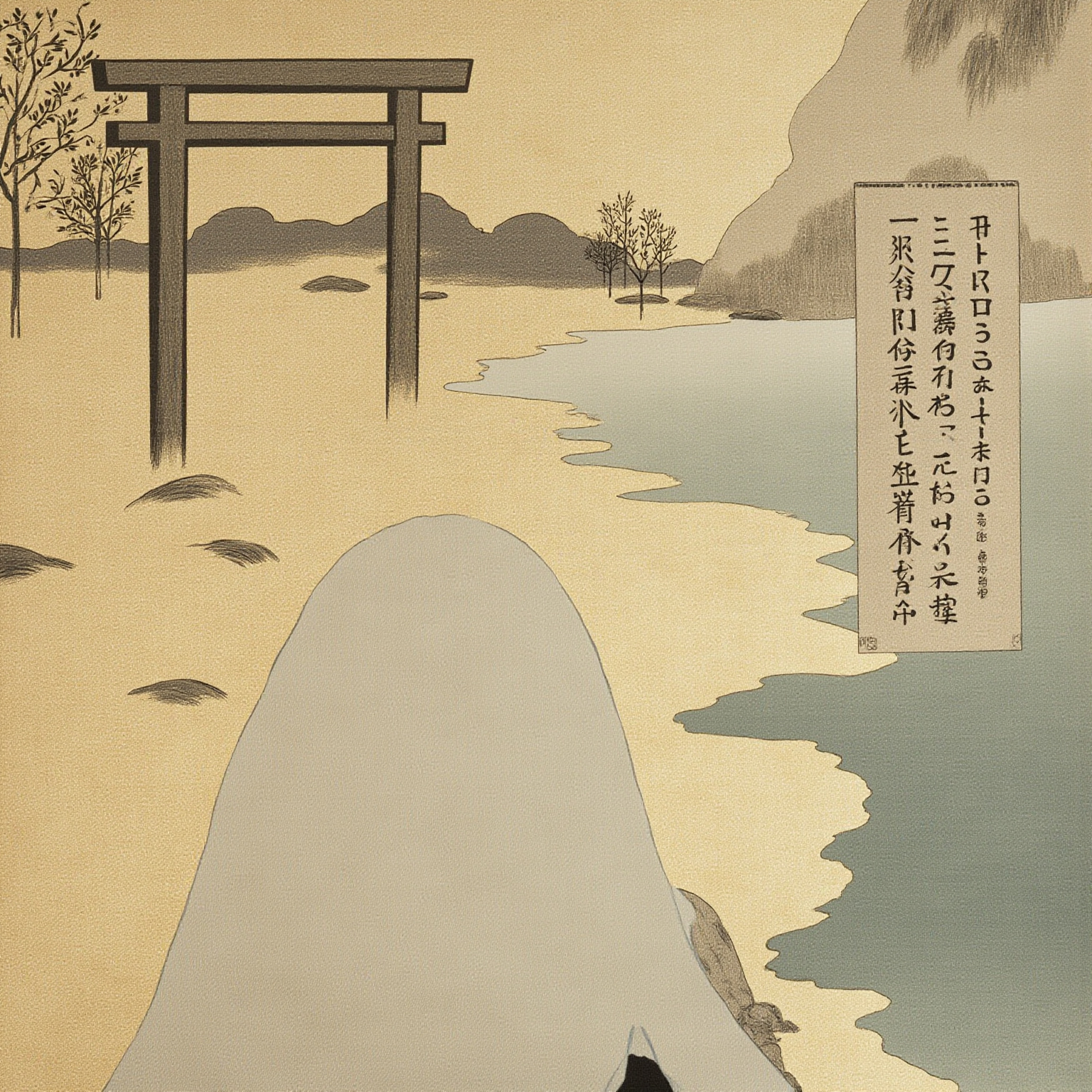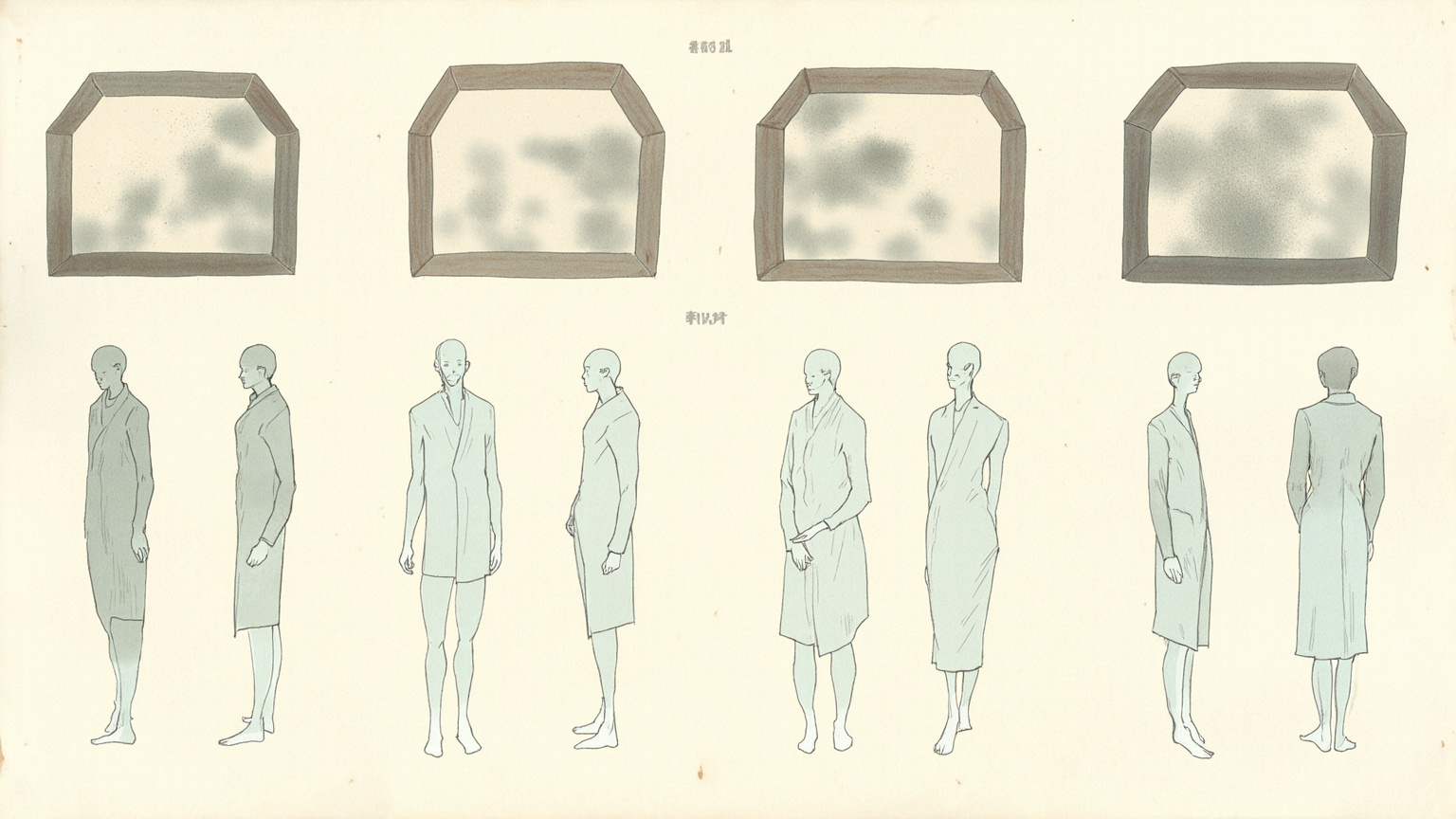
Kunio Yanagita wrote the telling down exactly as told, and produced one of the peaks of Japanese literature
Text and illustrations produced by the pipeline

An L-shaped house, black with smoke. The hearth fire has scorched the roof beams to charcoal; a horse snores at one end, a person sleeps at the other. From a corner comes a child's voice, answering softly to some unheard call — but this house keeps no child.
This is the image that settles first and deepest in a reader's mind at the opening of The Legends of Tono: the hearth fire, the beams, the horse and the person sharing one roof, the child heard but never seen in the inner room. It is not a scene built for a novel. It is what a young man from Tōno told a folklorist, and what the folklorist wrote down without changing a word. There is no protagonist here, no plot — only a hundred and nineteen brief reports, each one some version of in such-and-such year, in such-and-such village, this happened to this household. Readers are usually stopped cold by that flat, reportorial style first, and only afterward do they feel the mountains behind it grow heavier with every page.
The Legends of Tono, known in Japanese as Tōno Monogatari, was compiled and published by Yanagita Kunio in Meiji 43, 1910. Yanagita (1875–1962) would later be honored as the father of Japanese folklore studies, but this book was only his starting point: a collection of oral reports, closer to field notes than to literature. Its material came from Sasaki Kizen, a young man who had left the Tōno basin in Iwate Prefecture for the city and carried with him a head full of stories from home. He told them to Yanagita, and Yanagita set them down as spoken, arranging them by place and by type of tale. Mishima Yukio later called it one of the peaks of Japanese literature, and for exactly that reason: nothing in it has been worked over.
Its place in literary and cultural history rests on one thing: it was the first book to take yōkai out of the drawer marked superstition and set them on the table of scholarship and culture. There is no conclusion, no argument, only a hundred and nineteen reports — and that refusal to explain is exactly why every later account of Japanese folklore, of yōkai, of the imagined north of Japan, can be traced back to this one.


Further north still, the book reaches rumors from Sakhalin and Ezo. By the end, Yanagita has opened up the whole idea of Japan's north: from the Tōno basin to the Iwate coast to the northern territories, a three-part band of mountain, sea, and north surfaces on its own. But he takes it no further than rumor. These entries sit next to the local reports of Tōno with no geographic synthesis, no map attached. The book ends without ending.
What runs through the whole book is Yanagita's sentence rhythm, almost auditory in how it works. Most entries open with some version of in Tōno, such a thing happened, then name a place and a person's standing — so-and-so of Tsukumoushi, in Tsuchibuchi village — and move straight to the event: a household with a zashiki-warashi, a marsh with a kappa, a man who went into a mountain and never came back. A few close with what became of it after, or after that, it ceased. This spare, almost classical cadence is what makes all hundred and nineteen entries read like the transcript of a single ear, missing not one word.

A guide like this one can hand you the table of contents for all hundred and nineteen entries. It cannot give you the physical sensation of being told one report after another. Each entry in The Legends of Tono is only three or five sentences long, but by the end of the book, the feeling that something is in this house has settled into you, into your own inner room. That effect comes from the near-classical cadence and the spare sentences themselves. Retell it in plain paraphrase, and the feeling thins out.
More important still is the voice of that young man from Tōno. What Yanagita recorded was sound, not meaning. The original's repeated opening, in Tōno, such a thing happened, slowly retrains a reader's body to the time of the Tōno basin — not Tokyo's straight line of time, but a mountain time, a geological one, strung together out of snow and mist and hearth fire. Reading the text itself means letting that sense of time reshape you.
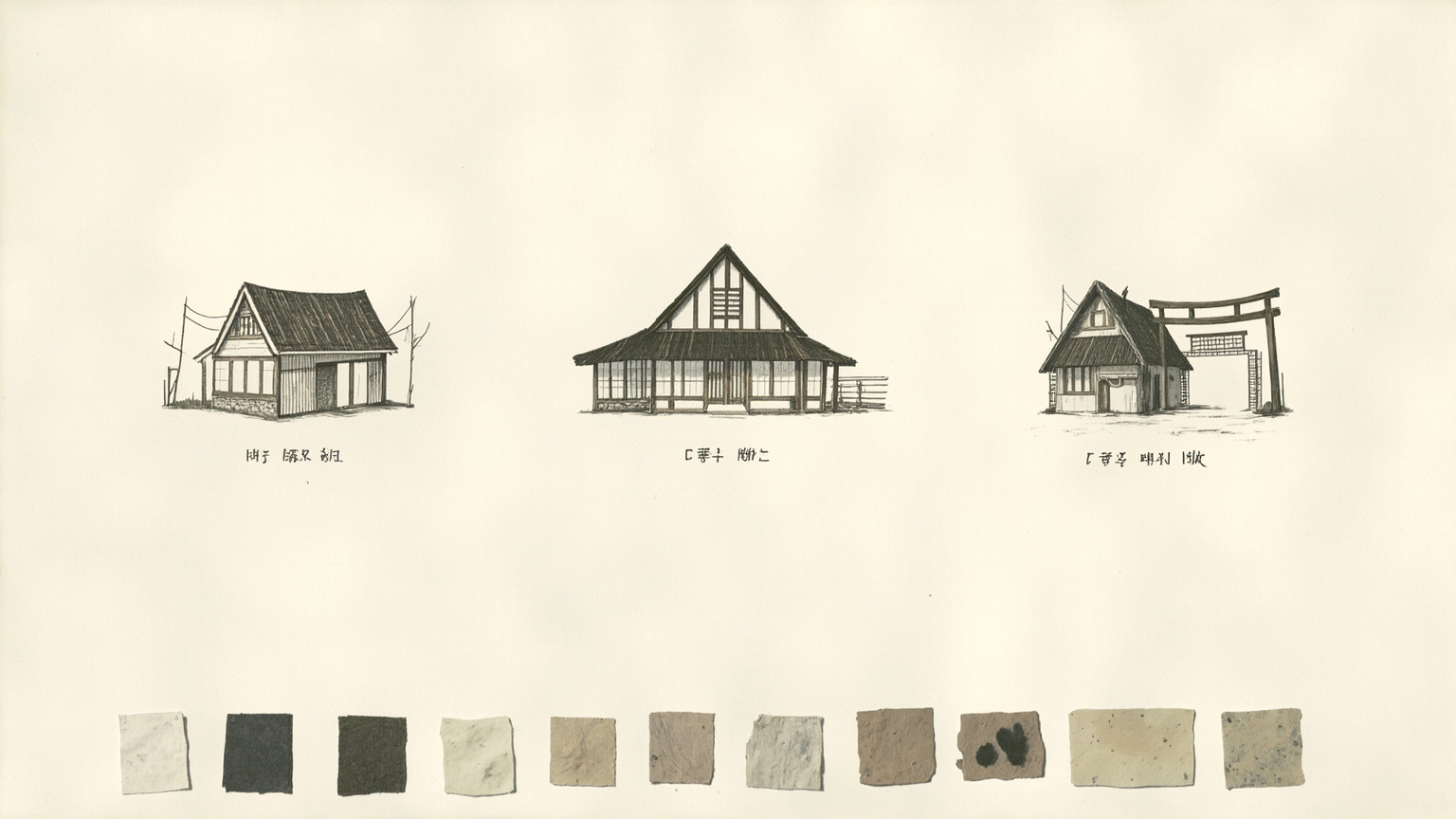
Before the guide was written, this book got a visual foundation — every illustration you just read grew out of it.
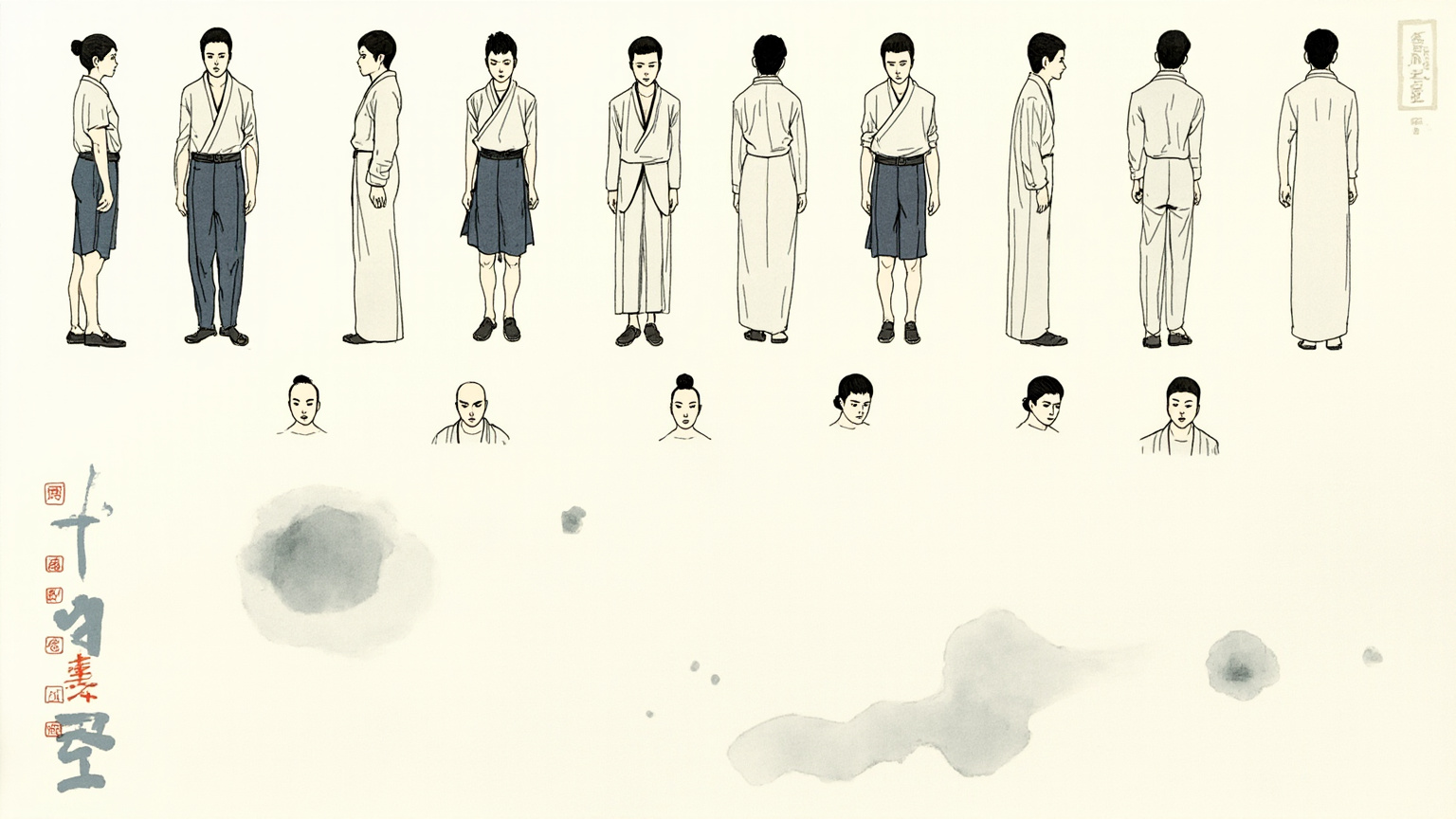
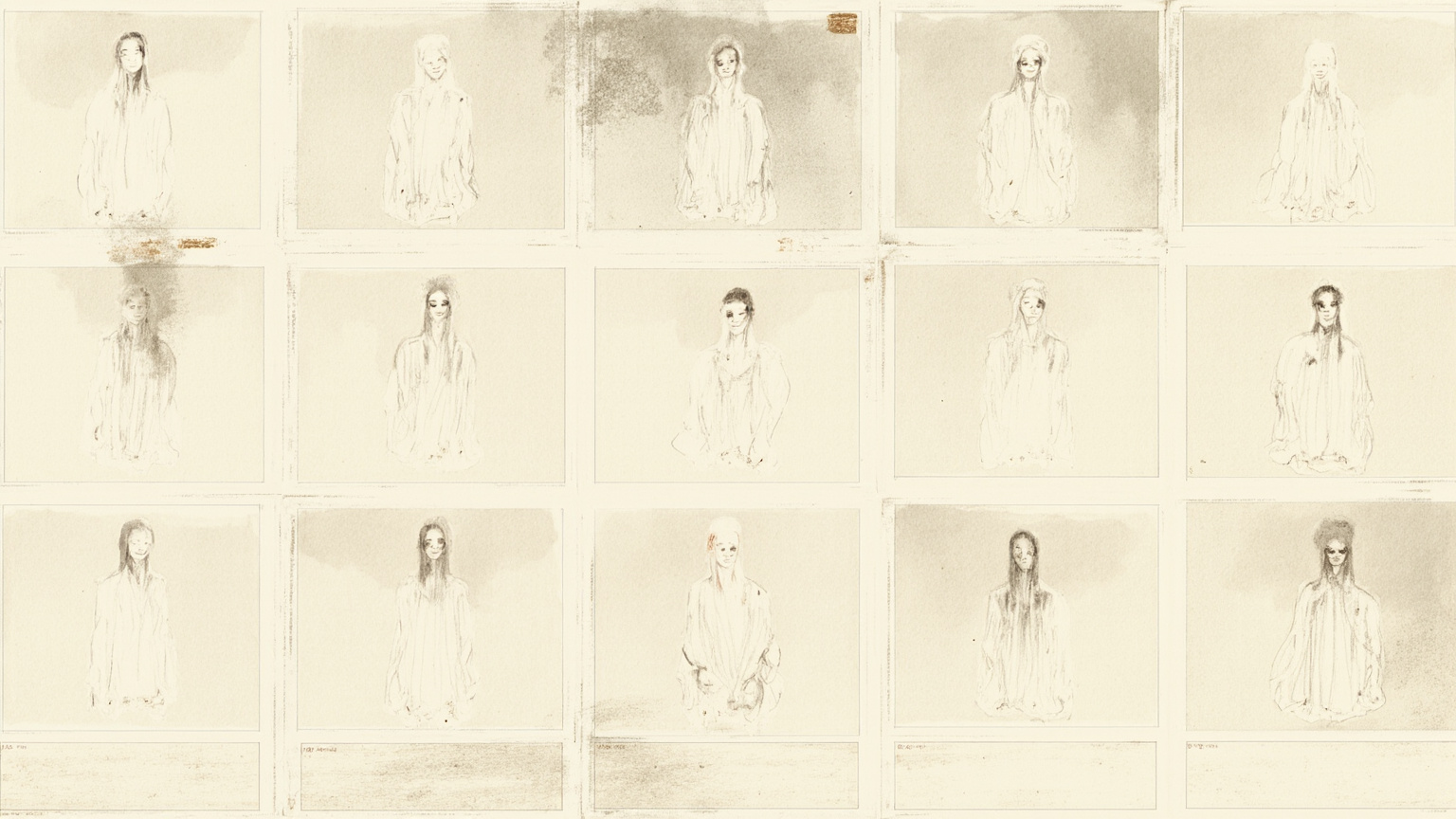
No face in this book earns the label protagonist. Only two kinds of people recur: the tellers of Tōno — farmers, farmwives, hunters, horse traders, shamanesses, the heads of old households — who barely appear as themselves, named only as so-and-so of Tsukumoushi or so-and-so of Yokota, credited as the source of a given report; and the things they meet — mountain men, mountain women, kappa, zashiki-warashi, and the dead wife who still walks the beach after the tsunami took her.
There is only one rule to this world: the gods and spirits are not creatures of some other dimension, they are everyday encounters. Against the physical backdrop of the Tōno basin — the L-shaped farmhouse, the horse and the person sharing one roof, the hearth fire that never goes out, the misted forest road by the mountain god's shrine, the deep pool along the riverbank where kappa live, the shallow stream where you can wash a horse — the unseen things simply drop by, sit a while, and move on. The people of Tōno are not afraid of them, and not especially reverent either. They just tell whoever passes through what happened.
It began around Meiji 40, with a chance meeting in Tokyo. Yanagita was already past thirty by then, deep into collecting the old customs of rural Japan; Sasaki Kizen was the eldest son of a Tōno family, gone to the city to make a living, carrying a head full of his hometown's strange tales. The two men met. Kizen talked, and Yanagita wrote. All hundred and nineteen entries flowed out of one young man's dialect and were caught by one well-trained ear — no polishing, no cross-examining, only the odd punctuation mark added.
The Tōno basin itself is established first. The floor plan of the L-shaped farmhouse, the hearth fire, the blackened beams, the room shared by horse and person: this is the physical backdrop of the telling, and it is the material world a reader is pulled into first. Yanagita never describes the scenery directly. He lets the shape of this mountain basin emerge on its own, report by report, each one anchored to some village, some household. The people who live here gain texture the same way: the kind of house they live in shapes the kind of story they tell.
From there the book climbs into the mountains. The mountain man, the mountain woman, the people carried off by the mountain and later returned, the girl claimed by the mountain god — these entries make up the coldest stretch of the book. The mountain has a will of its own. Whoever goes in does not always come back, and coming back does not mean coming back whole. Nowhere is Yanagita's restraint clearer than here: he never dramatizes the terror of the mountain, only lists it — in such a year, so-and-so went into the mountain and never returned; in such a year, so-and-so went in and was sent back three days later, no longer recognizing his own family.
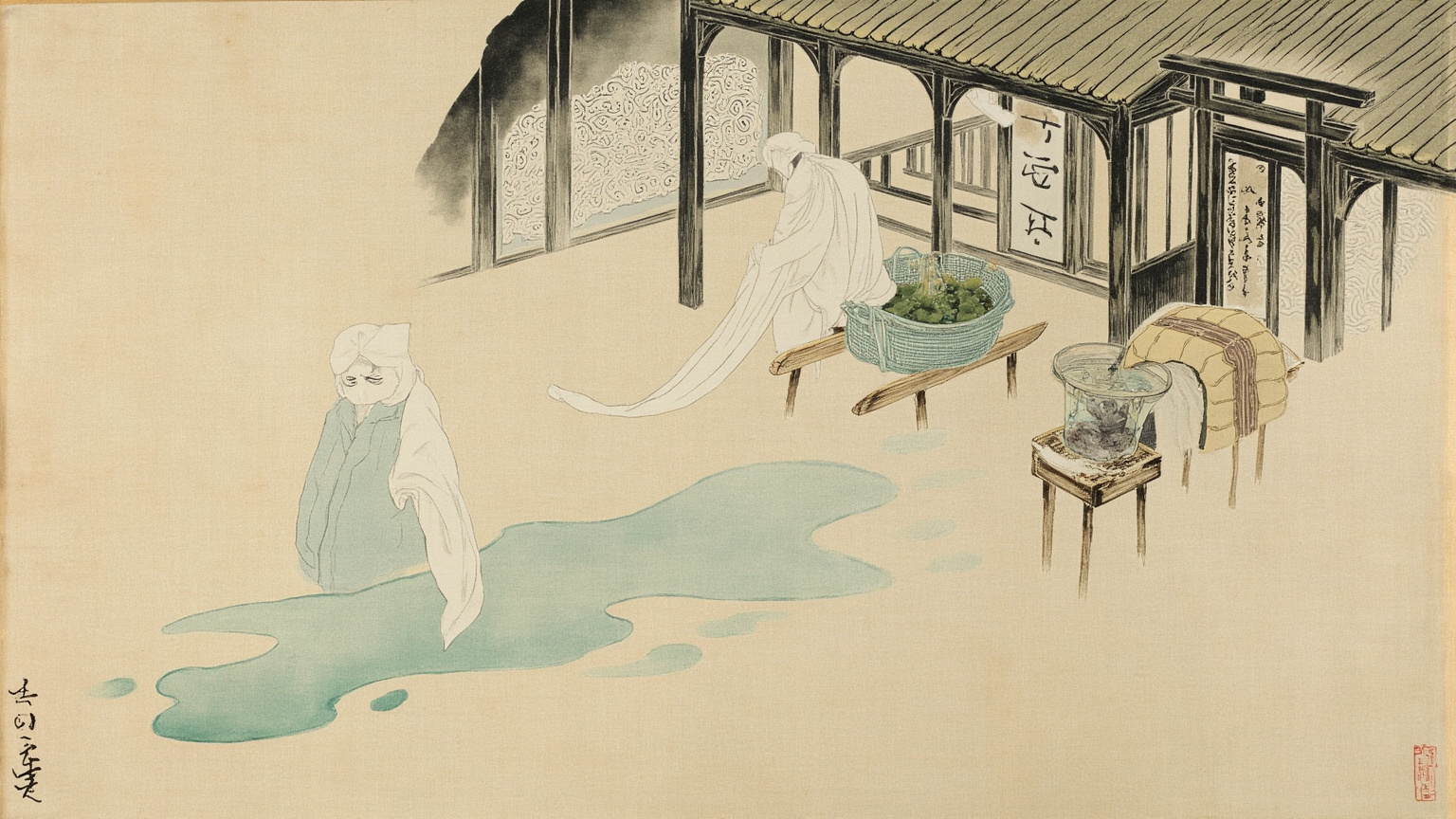
The water carries a different set of images. The deep pools along the riverbank, where kappa are said to live, come up again and again; the shallower stretches are where farmwives wash their horses. The two sit close together, and it is exactly this closeness, the pool where a kappa might be waiting just across from the water where you wash your horse every day, that forms the core of how the people of Tōno experience their world. The kappa in this book is never drawn as some specific green monster. It is a ripple on the water, a wet footprint on the bank, a flat head glimpsed once and gone. What a reader feels is always an encounter already in progress, and already interrupted.
The warmest part of the book belongs to the zashiki-warashi. In the three villages known locally as the home of the zashiki-warashi — Yokota, Nagate, Oguni — the women who head old households have passed down, generation after generation, the same report: there is a child in this house. The child is heard, never seen, or caught in a glimpse and gone the next instant. When the household prospers, the child stirs up mischief; when it declines, the child quietly leaves. These reports come from the women themselves, and Yanagita sets them down without asking how any of it works. The most tender presence in the whole book, the trace of a child, survives only in this form: as something reported, never explained.
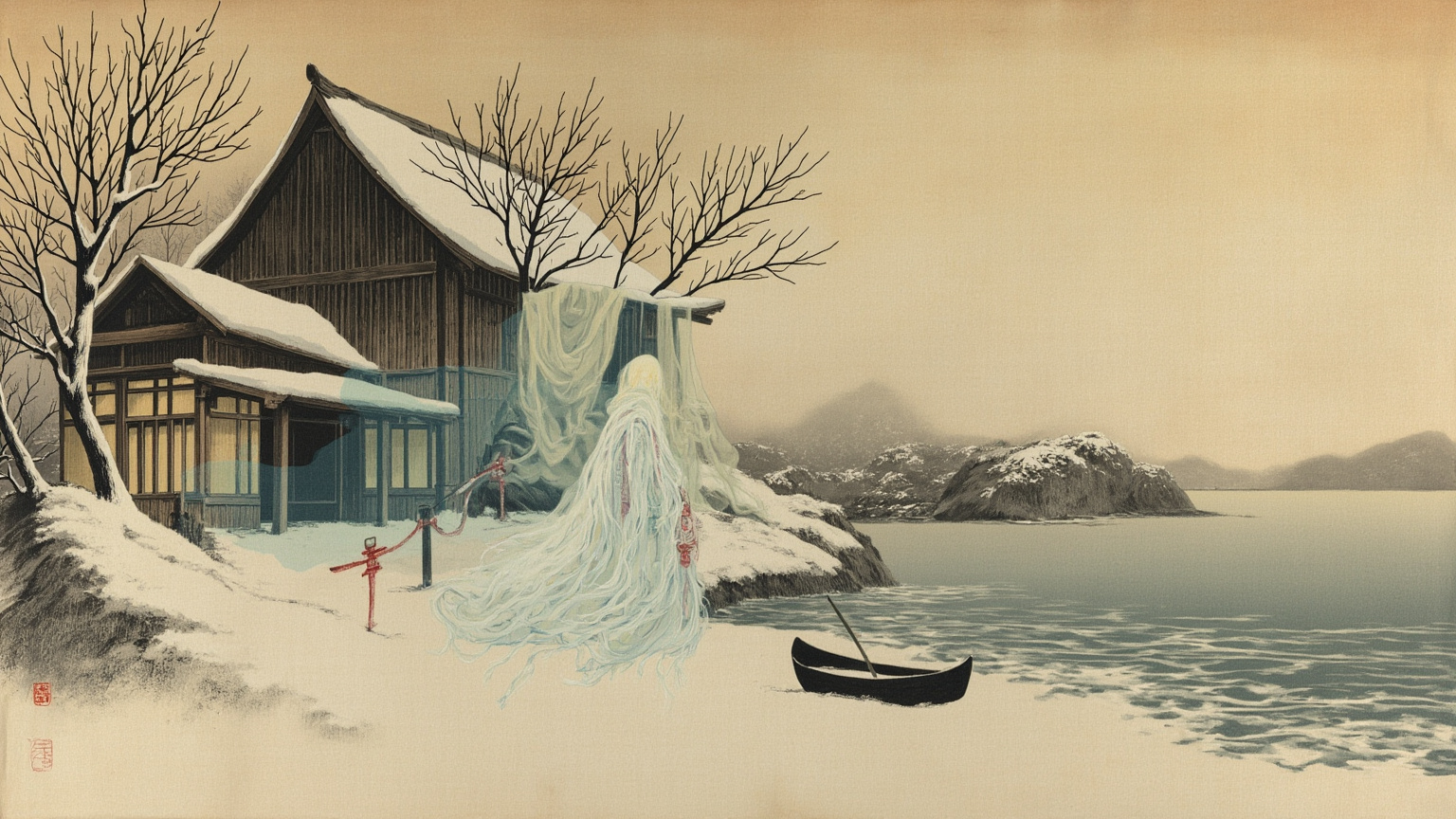
Toward the end of the book, the view widens. Some entries move to the coast north of Tōno, the Sanriku region, the Kesen district, and record what came after a tsunami. Surviving fishermen see, alone on the beach, the wife or husband a tsunami had already taken from them. These are the closest the book comes to what we might call a psychological account, and even here Yanagita offers no explanation: the dead wife's figure appears on the beach, the fisherman comes back with his nets, and the scene simply stops. No cause, no conclusion.
What this book is really about is not yōkai. It is the act of collecting without reshaping. Yanagita's refusal to explain, to polish, to map — that is why these hundred and nineteen short reports still get read today. The whole beginning of folklore studies sits inside that restraint: write down the voice first, ask what it means later. The Legends of Tono stops at the first step and goes no further, and that is both its power and its limit.
Tōno is Tōno because the unseen things here were never distant or set apart. They live in the inner room of the L-shaped farmhouse, in the deep pool along the riverbank, on the misted forest road up the mountain. This is the earliest imagined geography of northern Japan: a three-part band of mountain, sea, and north, running from the Tōno basin to the Sanriku coast of Iwate to Sakhalin. Every later folk image of Japan's north can be traced along that same line.
The first time I finished the whole book, what shook me most was one plain fact: there is no conclusion. The hundred and nineteenth entry just stops. No summary, no uplift, no closing line. We are used to every book owing us some kind of resolution. The Legends of Tono simply refuses, and that refusal is exactly why it is remembered.
This is not a book about yōkai. It is a book about someone willing to write down what he heard without changing a single word.
Read the original. By around the thirtieth entry, you will catch yourself scanning your own surroundings for a deep pool, an old paper door, a mist on the hillside. That is exactly the feeling the whole book leaves behind.