The Murder of Roger Ackroyd · Companion Guide
罗杰疑案
村医替你讲完整个故事,最后才发现,那个低声说“我看见”的证人,正是夜里从窗外把匕首送进去的人。
Opening: The Man Who Views the Body for You
The study light goes out. Dr. Sheppard, the village doctor, stands among the flowerpots outside the summerhouse window, holding his breath, peering in. The figure in the chair does not move. Another shape leans in from behind and drives a dagger home. The killer slips away, and the story begins right there. For the next several dozen pages you follow the doctor from crime scene to witness statement, at Poirot's elbow through every deduction, and every 'fact' comes out of his mouth. He is a reliable man, present for it all, seeing it, hearing it, right up until the last page of the book, when you learn the hand that struck the blow was his.
That is what Agatha Christie did in 1926. She did not invent detective fiction, but she gave every unreliable narrator who came after her a face.
What Kind of Book Is This
The Murder of Roger Ackroyd was first published in London by Collins Crime Club in 1926, and it is the most famous entry in Christie's Hercule Poirot series. In the history of detective fiction it occupies a spot nobody can route around: the textbook case for the first-person narration trick. Before it, 'who did it' was a matter of physical evidence and alibis. After it, 'can the telling itself lie to you' became a puzzle category of its own. Anyone who later wants to write 'I am the murderer in the story I'm telling you' has to open this book first.
Alongside the nursery-rhyme island murders of And Then There Were None and the stage-play scaffolding of Three Act Tragedy, it forms Christie's three most recognizable puzzle types, and this one is the trick-engineering branch.
People and Place: King's Abbot, Surface and Underside
The story is set in King's Abbot, a fictional English village in the mid-1920s. It has a church, a general store, a small pub. At one end of the main street sits Dr. Sheppard's surgery; at the other, the cottage a retired Belgian detective named Poirot has just leased, meaning to grow vegetable marrows. At the center of the village stands Fernly Park, home of the local squire, Roger Ackroyd. Its study is where the whole murder happens.
Keep a few names straight going in. The victim, Roger Ackroyd, a squire in his fifties who has been the target of blackmail. His adopted daughter Flora, a blonde beauty, is the one the blackmail is actually aimed at. His adopted nephew, Captain Ralph Paton, a gambler who goes missing the night of the murder and becomes suspect number one. Roger's daughter-in-law Cecil, young, the woman the village doctor privately admires. The doctor's sister Caroline, who assembles her intelligence from the maid's and the cook's gossip and runs the village's unofficial spy network. Then there is Hercule Poirot, short, egg-shaped head, waxed mustache, obsessed with symmetry, a Belgian brought in to work the case, and his old partner Captain Hastings, summoned to King's Abbot on his way back to England from South Africa, lodging just outside Poirot's marrow-growing cottage. Every one of these people reaches you through Dr. Sheppard's pen.
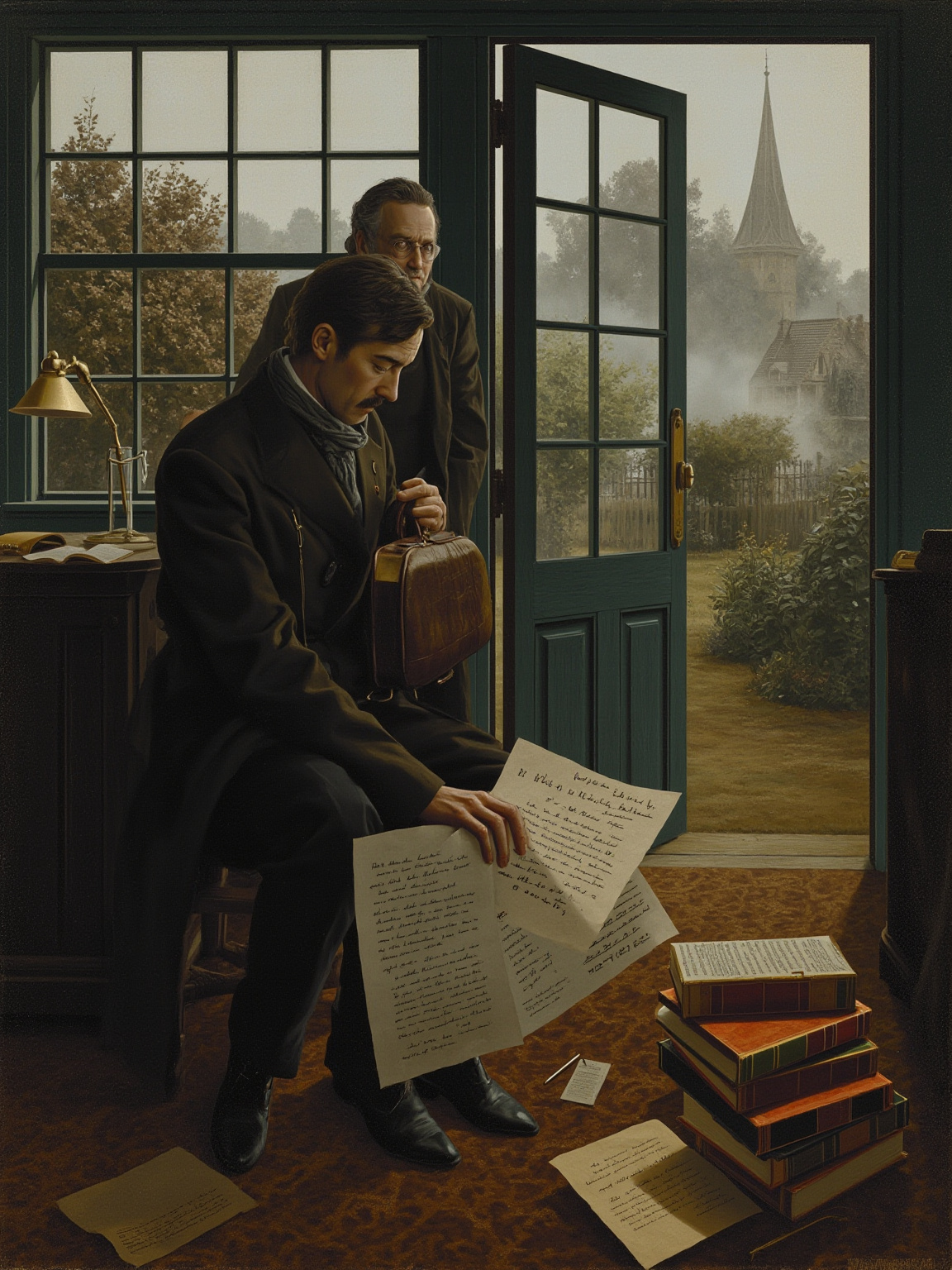
My sister, Caroline, has an unerring instinct for everything that does not concern her.
我姐姐卡罗琳有一种万无一失的直觉,对象是所有与她无关的事。
金句 · 第1章 · 村医的开门见山
The Night Before: The Loudest Goose
The story opens on an ordinary-looking morning. Caroline works her way around to telling her brother that a Belgian is coming to the village to grow marrows, and he can't really be here just for the vegetables. That same morning, Sheppard is called to the Ackroyd house: the former housekeeper, Mrs. Stiles, has been found dead in her bed, an apparent overdose of strychnine. Caroline's offhand line turns out to be a setup: the loudest goose has already laid her egg, and the next one won't take long.
The Long Talk in the Study: The Unopened Letter
After dinner that evening, Roger calls Sheppard into the study at Fernly Park. He admits he has been blackmailed all along, with his adopted daughter Flora as the real target, and hands the doctor a letter to read first, one that hints at some deeply buried secret. Sheppard locks the letter in a desk drawer and returns the key to Roger, and on his way out adds one more piece of advice: don't see anyone tonight, whoever comes. At the time it sounds like a friend looking out for him. Looked at again, it is exactly the alibi the murderer needed.
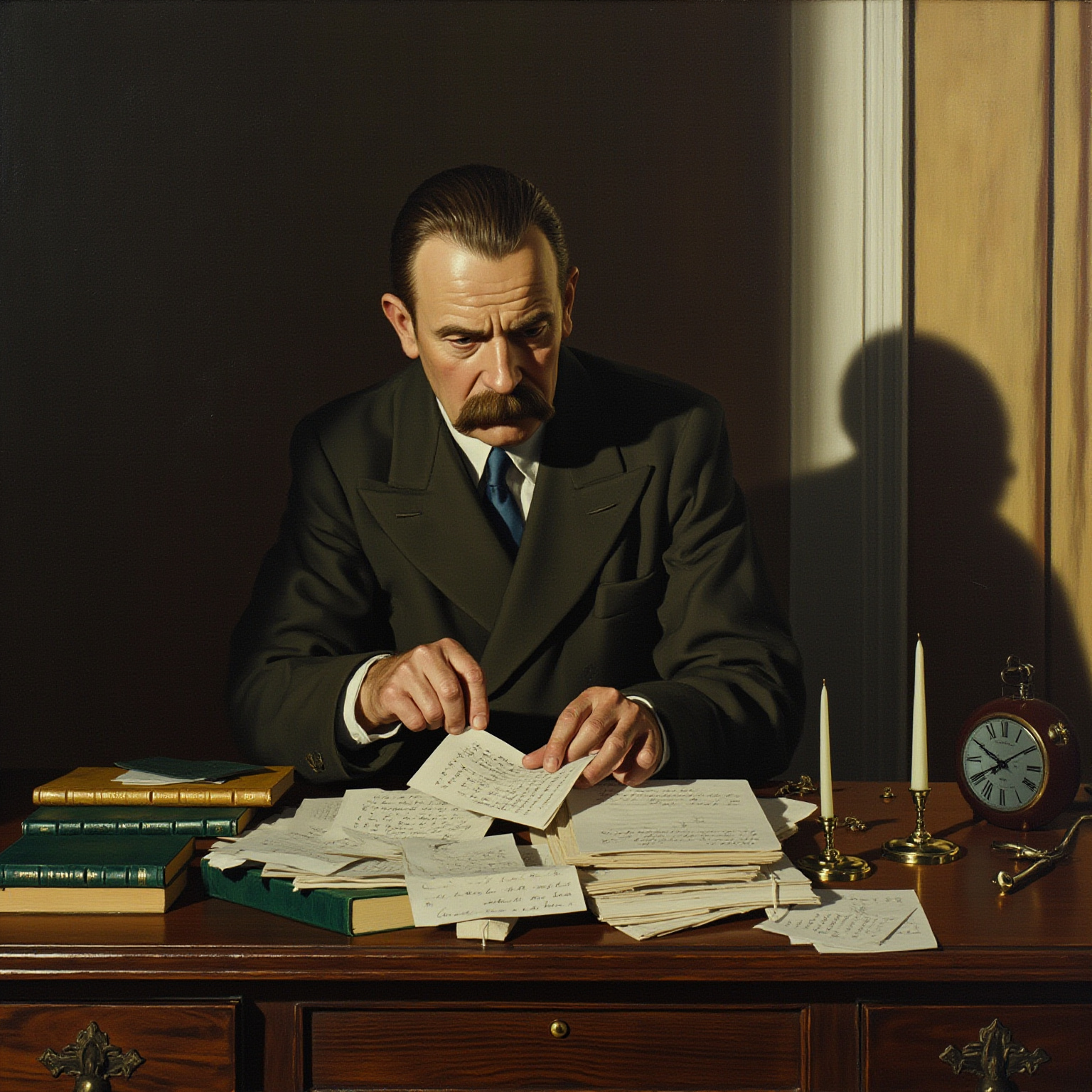
I was to see no one that night.
今晚谁来都不要见。
金句 · 第7章 · 书房里的嘱咐
The 'Witness' at the Window: The Man with the Golden Beard
Around eleven, Sheppard doubles back to Fernly Park for the walking stick he'd forgotten. He passes the drawing-room door and finds the study dark, then circles round to the summerhouse window and looks in, catching the outline of Roger in the chair, and a shape lunging in from behind with a knife, pulling it free, turning, slipping away: a man with a golden beard. Sheppard bolts in fright. Early the next morning he finds Roger's actual body below that same window, one stab wound to the back, and calls the police at once. This is the most famous stretch in the whole book: the doctor claims to have seen the killer with his own eyes, and the reader believes him.
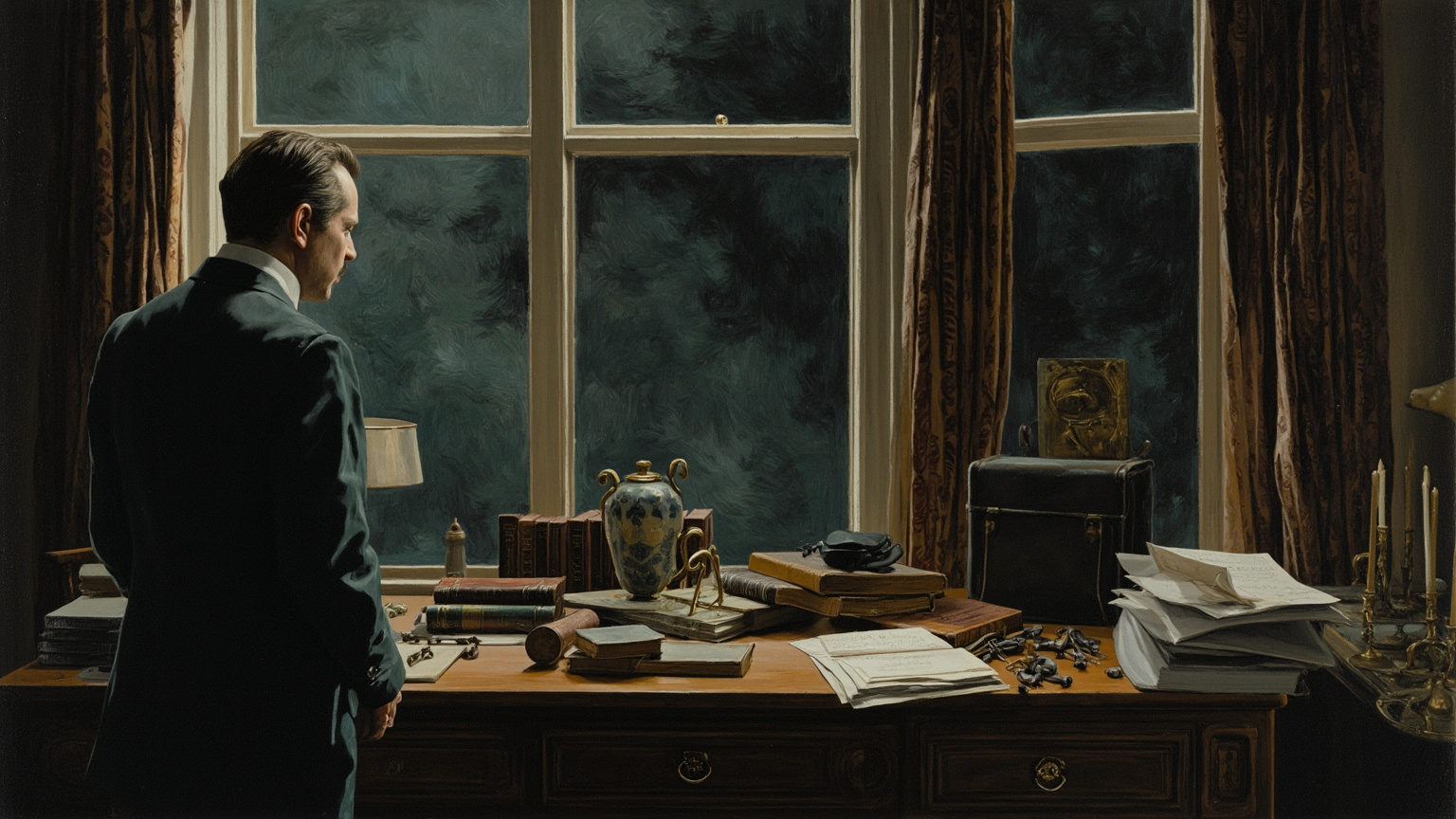
It was a man with a beard — a man with a beard of a gingery colour.
那是一个留胡子的男人——一个留着姜黄色胡子的男人。
金句 · 第13章 · 窗外一瞥
The Suspects Close In: A Missing Heir, a Drunk Stepfather Set Up to Take the Fall
Once the police move in, suspicion lands fast on three people: the missing Ralph Paton, unaccounted for since the night of the murder; Ralph's alcoholic stepfather, Colonel Stephens, apparently framed to take the fall for his stepson; and Mrs. Stiles, dead the night before. Sheppard cooperates with the investigation while quietly working himself off the suspect list. Poirot and Hastings arrive in the village and start going through the physical evidence in the study: a locked drawer, a chrysanthemum pot knocked askew, envelopes sealed with two different kinds of wax, a mantel clock set back, the position of a chair. Every small object is a nail waiting to be driven home later.
Poirot's False Close
Midway through the investigation, Poirot announces the case is closed and names Ralph Paton as the killer. He even calls a small dinner party to deliver the verdict in front of everyone. Every reader, including Sheppard himself, assumes the story is about to end here. This is Christie at her most cunning: she lets the murderer hear the detective about to name someone else, lets him exhale, lets him believe he has won.
The Dinner Reveal: The Narrator Is the Murderer
At the dinner, Poirot never says Ralph's name. Instead he turns the arrow, slowly, toward 'the man who looked at the scene for me.' The 'I' of the entire book, Dr. Sheppard the village doctor, is the murderer. The man with the golden beard seen through the window was just his own silhouette, thrown back at him by the summerhouse glass. The stab from behind was his own hand, reaching around the chair. Even the gap in time for doubling back for the walking stick had a purpose: it was the window he had built for himself, room enough to commit the murder and then stage the cover story. The most sensational killing this village has ever seen had, from start to finish, exactly one person present, the same person who has been telling you the story all along.
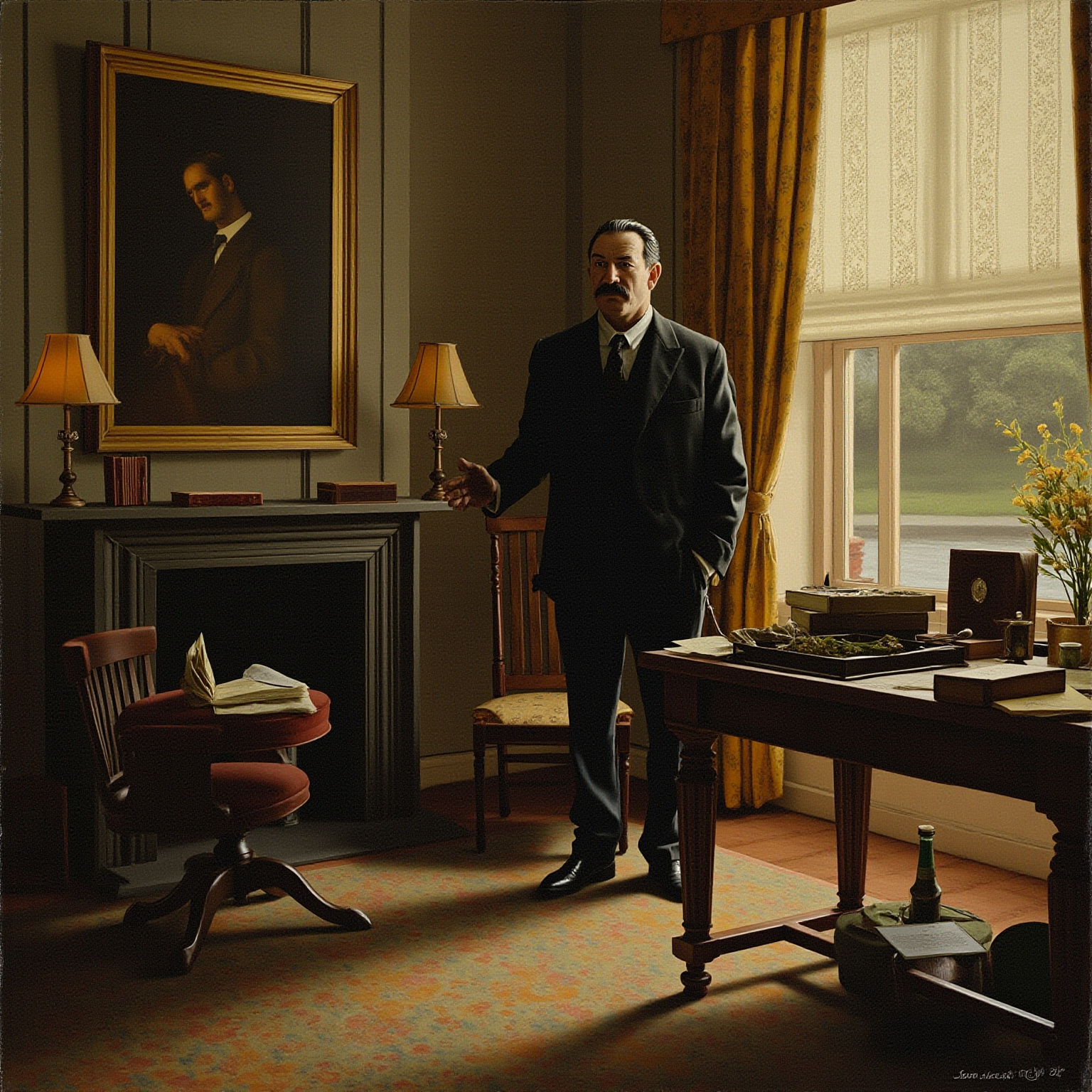
It was the man who was sitting there talking to me, who was the murderer.
坐在那里跟我说话的这个人,就是凶手。
金句 · 第27章 · 晚宴揭底
How He Did It: Time, Key, Shadow
Poirot doesn't solve the case with ballistics or fingerprints. He solves it with three small clusters of detail. The first is the timing gap between the drawer and the key: Sheppard locks the letter away, hands the key back to Roger, tells him not to see anyone, which leaves Roger sitting alone in the study all evening, waiting for his killer to arrive. The second is the misdirection at the window: seen from the summerhouse, the figure is really Sheppard's own silhouette, thrown off by a lantern behind him. The third is Ralph's death: Sheppard disposes of the missing Ralph separately, in a shuttered old locksmith's shop in the village, using a blunt weapon and faked facial wounds to make it look like a second, unrelated murder, and drags everyone's attention over to it.
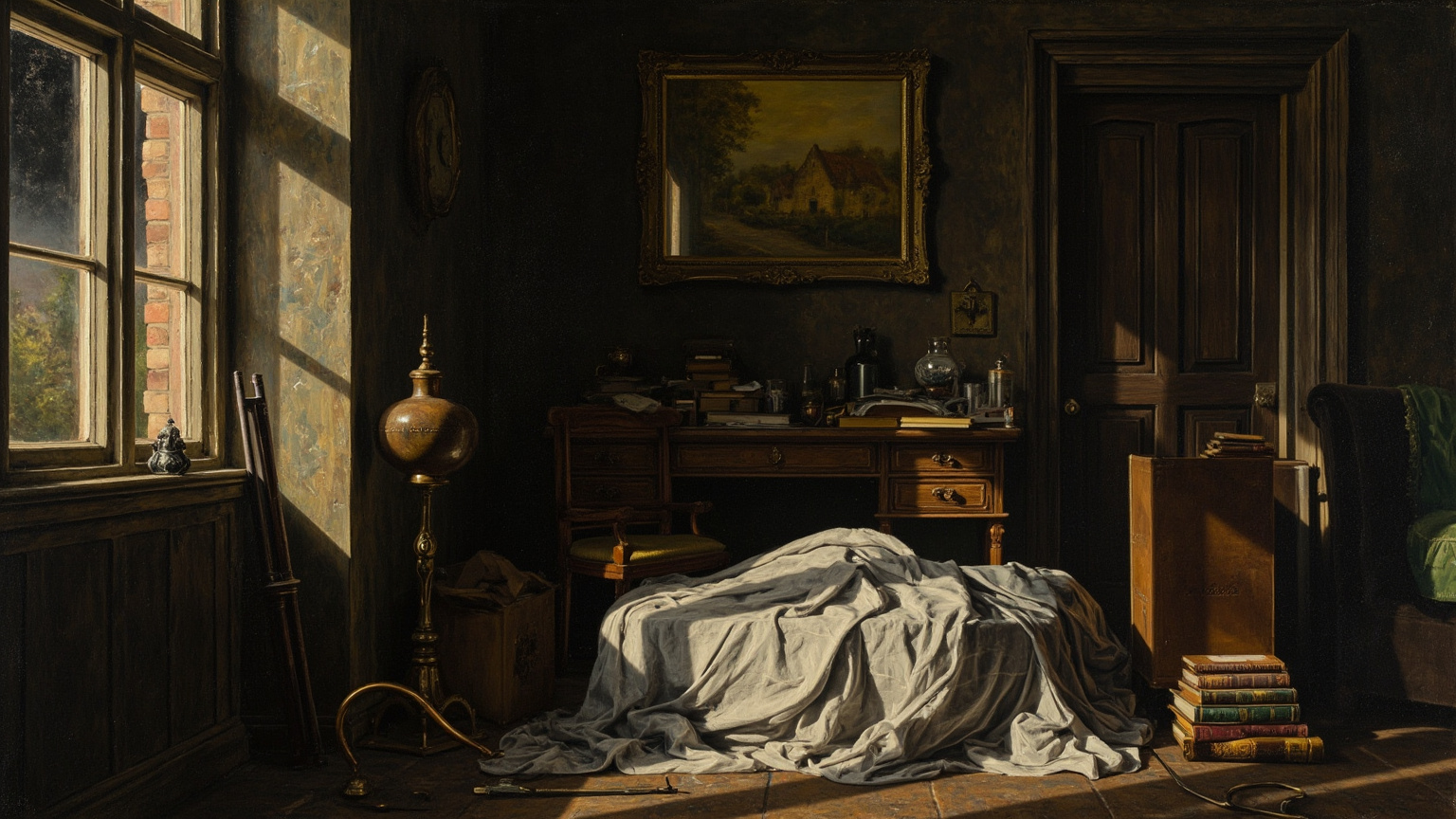
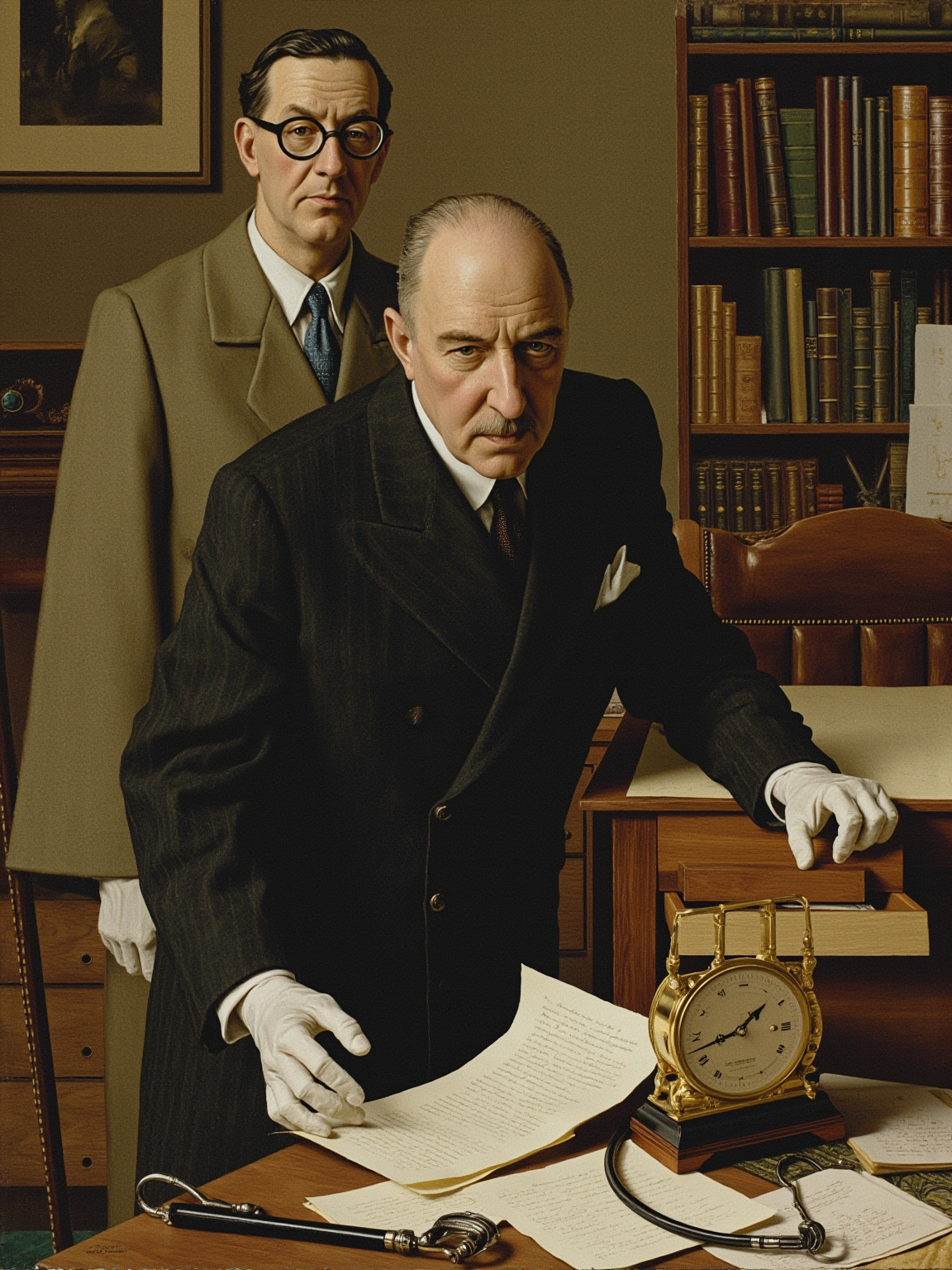
The little grey cells, mon ami — the little grey cells.
小小的灰色脑细胞,我的朋友——那小小的灰色脑细胞。
金句 · 第27章 · 现挂的结案陈词
What This Book Is Really About
This book is about more than one murder. Its real question is: when someone who looks entirely honest narrates the whole thing to you in the first person and ties it up neatly, do you still trust what I saw? King's Abbot looks calm on the surface, everyone knows the church, the gardens, the neighbors, but blackmail, an illegitimate daughter, a drunk stepfather, a former husband out of London's East End are all buried behind the fireplaces and porches. Christie uses one village murder to tear that surface open. The place where appearances hold together most completely is usually where the most is hidden.
Her other move is a challenge to detective fiction's promise of fair play. Classical detective stories run on an unwritten rule: the reader stands at the same starting line as the detective, the clues are laid out on the page, and a reread turns up every plant. This book keeps that promise. The key, the envelopes, the chrysanthemum pot, the mantel clock, the chair's position all show their faces in the text. But it adds one more layer: reread it, and you realize the very phrase I was there, I saw it has been tampered with by the murderer himself. This is the first time detective fiction turned the narrator into part of the puzzle.
Why It's Still Worth Reading Today
Every unreliable narrator that came after, from thriller to literary fiction, traces back to that village surgery in King's Abbot. This book is the source. Read the original before you take in the later variations, and you can tell which moves are genuine invention and which are just tribute.
There is also a restrained English humor running through Christie's prose: Caroline's gossip, Sheppard's mild irritation with his sister, Poirot's own praise for his little grey cells. That tone only comes through in the rhythm of the original sentences. However accurate the translation, however complete the retelling, some of that flavor slips through the cracks. It is a scent you only catch by reading the text itself.
The most perfect disguise isn't hiding. It's sitting down and telling you the whole story yourself.
Knowing the Ending Is No Reason to Skip the Book
What an explainer gives you is a map, not the land itself. Knowing that the doctor is the murderer, you still have to go back and reread it chapter by chapter, to see how he builds an airtight narrative out of an ordinary night's return to the village using nothing but the words I saw. The first time through, that's astonishing. The second time, it's craft. Only on the third do you understand why this slim book bent an entire genre. Plot can be told to a reader secondhand. Being deceived cannot, and that process is what this book is actually selling.
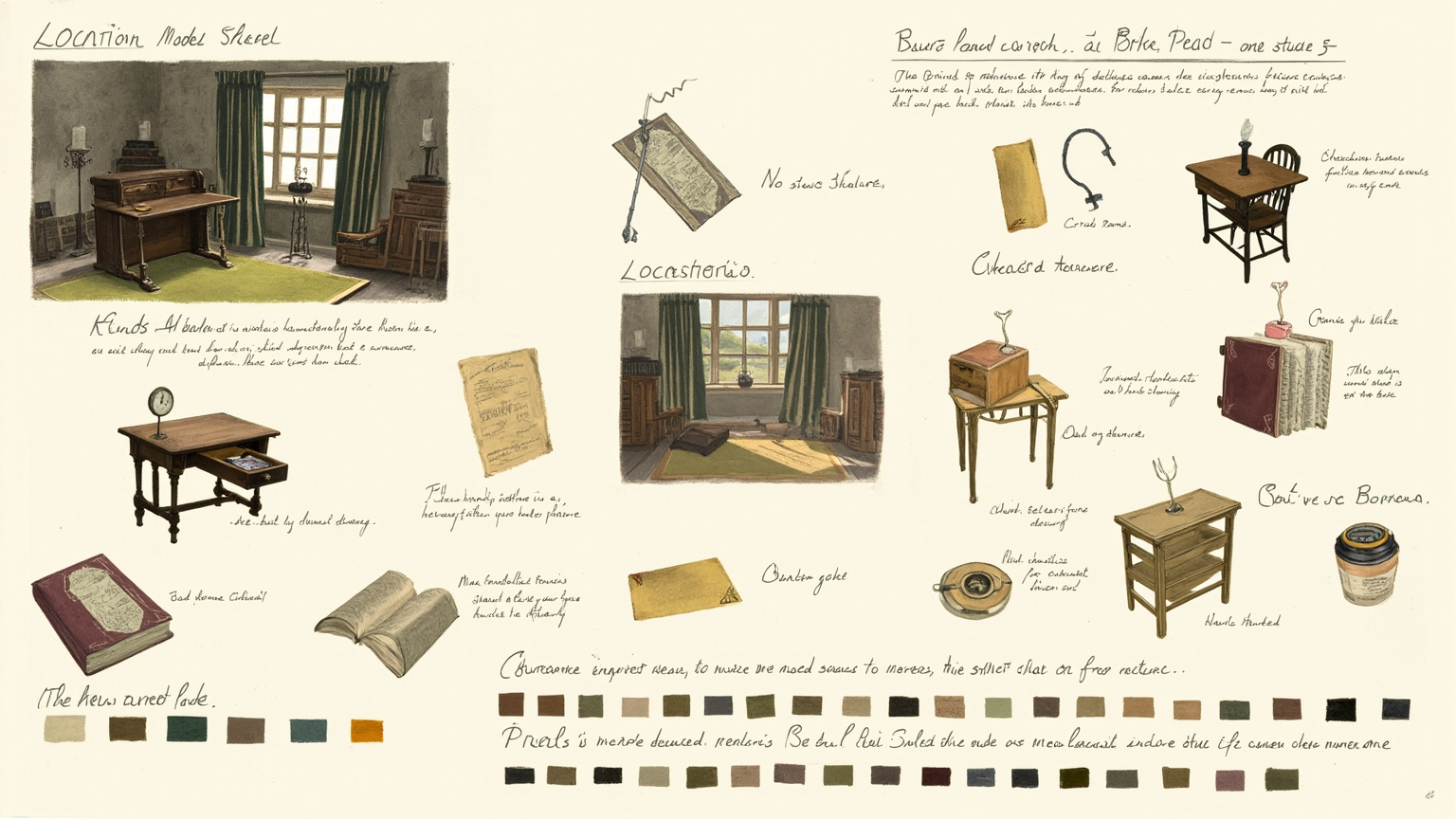
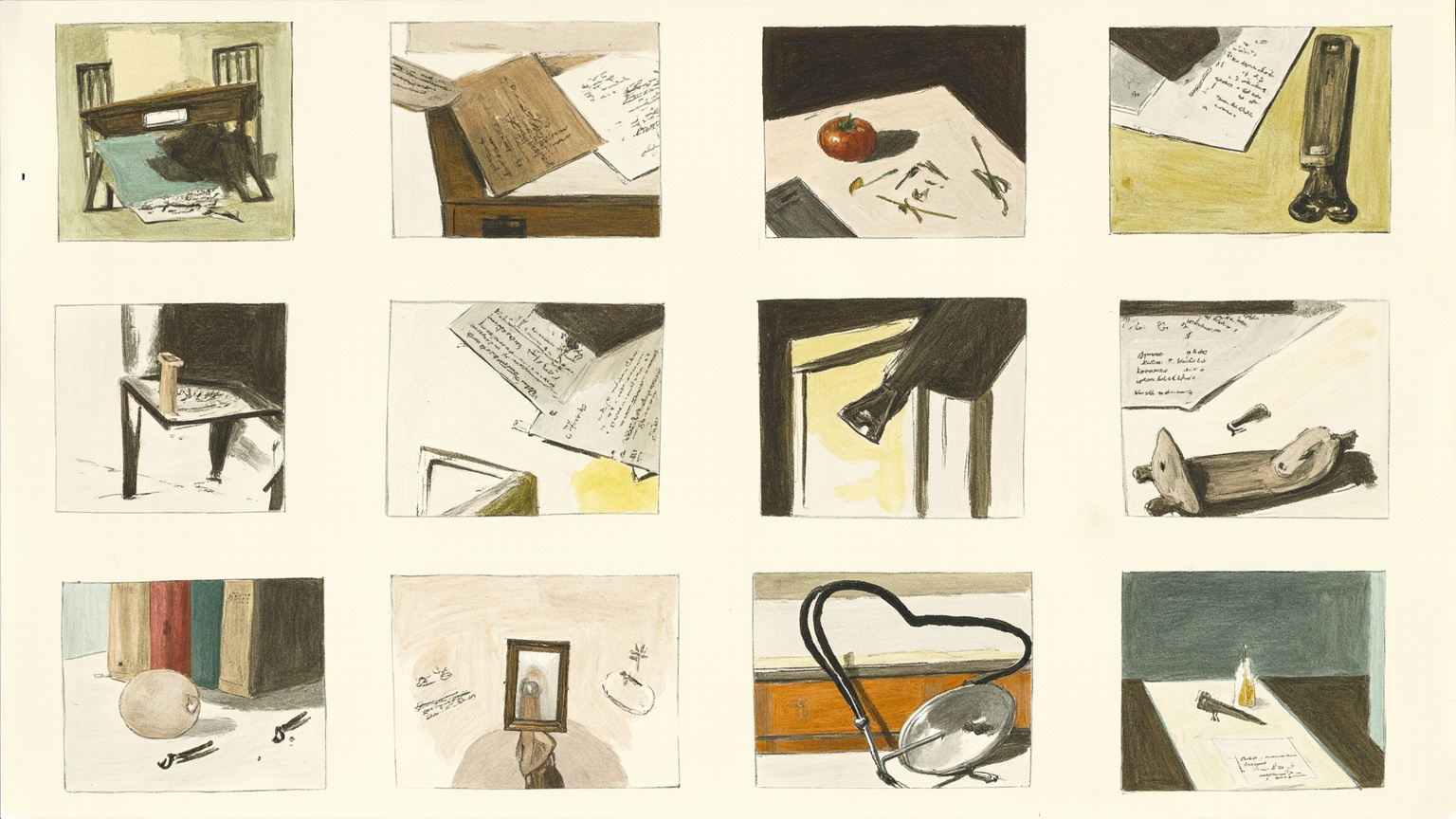
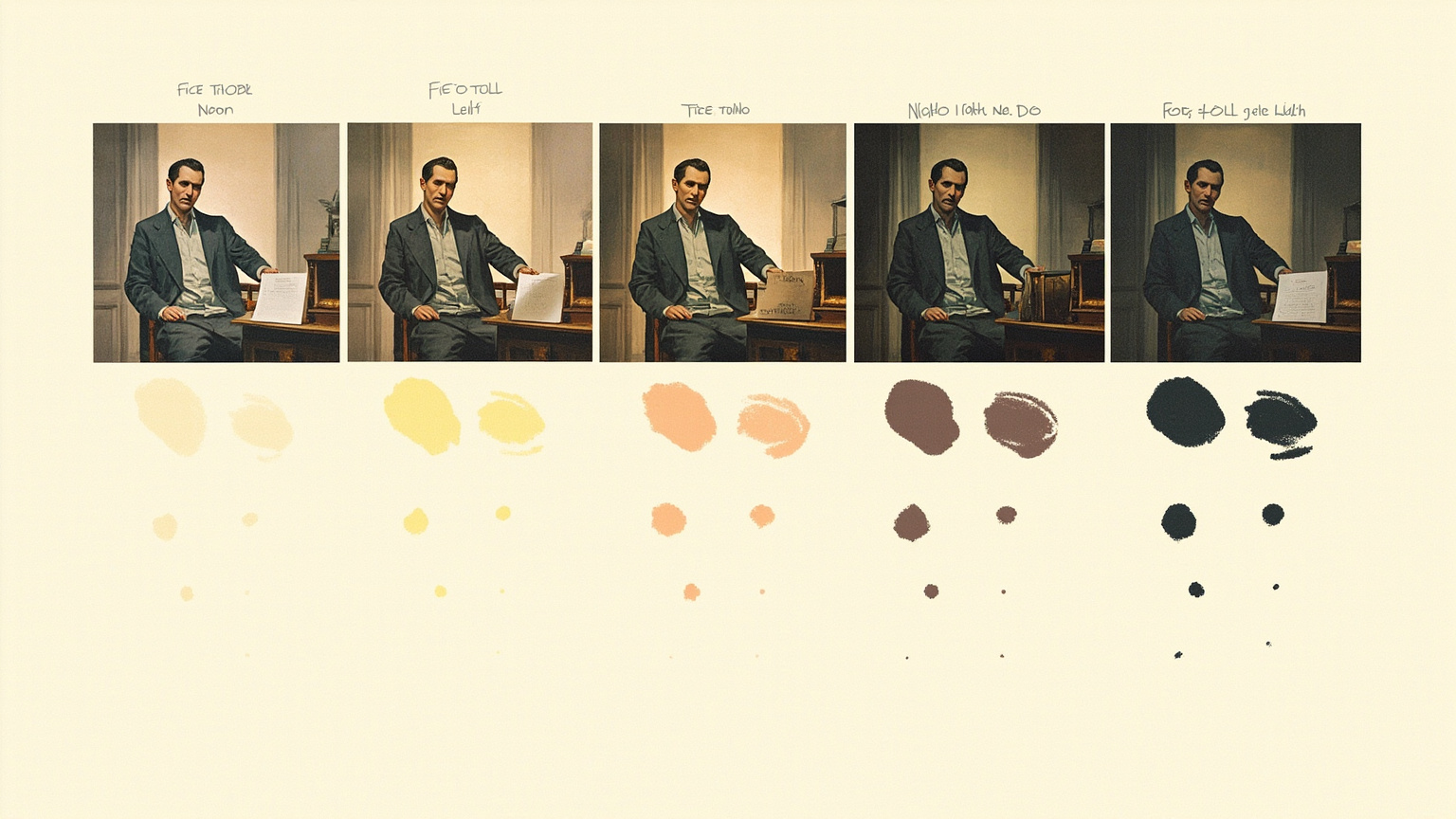
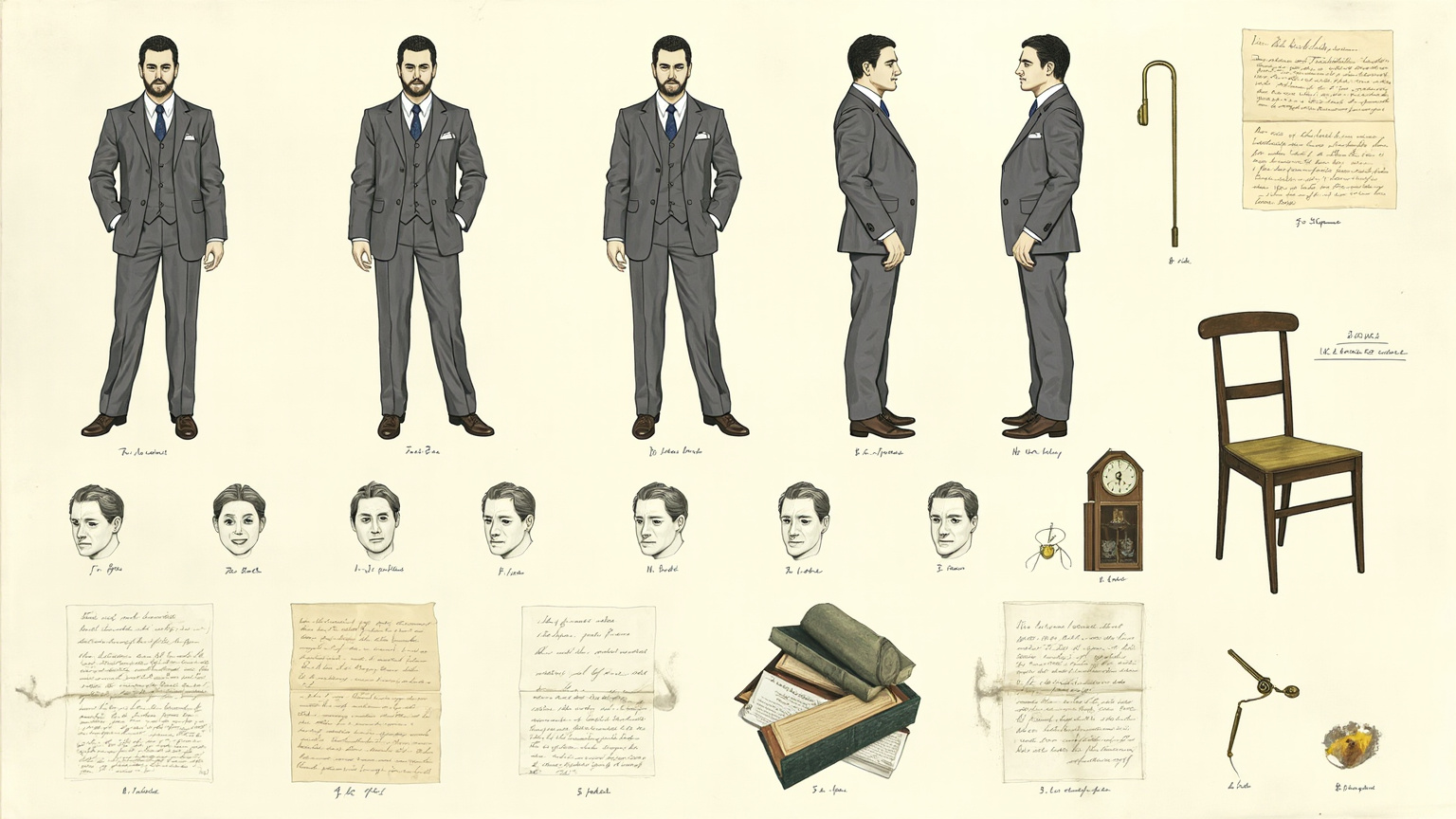
Art Direction4 plates
Before the guide was written, this book got a visual foundation — every illustration you just read grew out of it.