A ghost story that was spoken aloud, and became a foundation of written Japanese
Text and illustrations produced by the pipeline
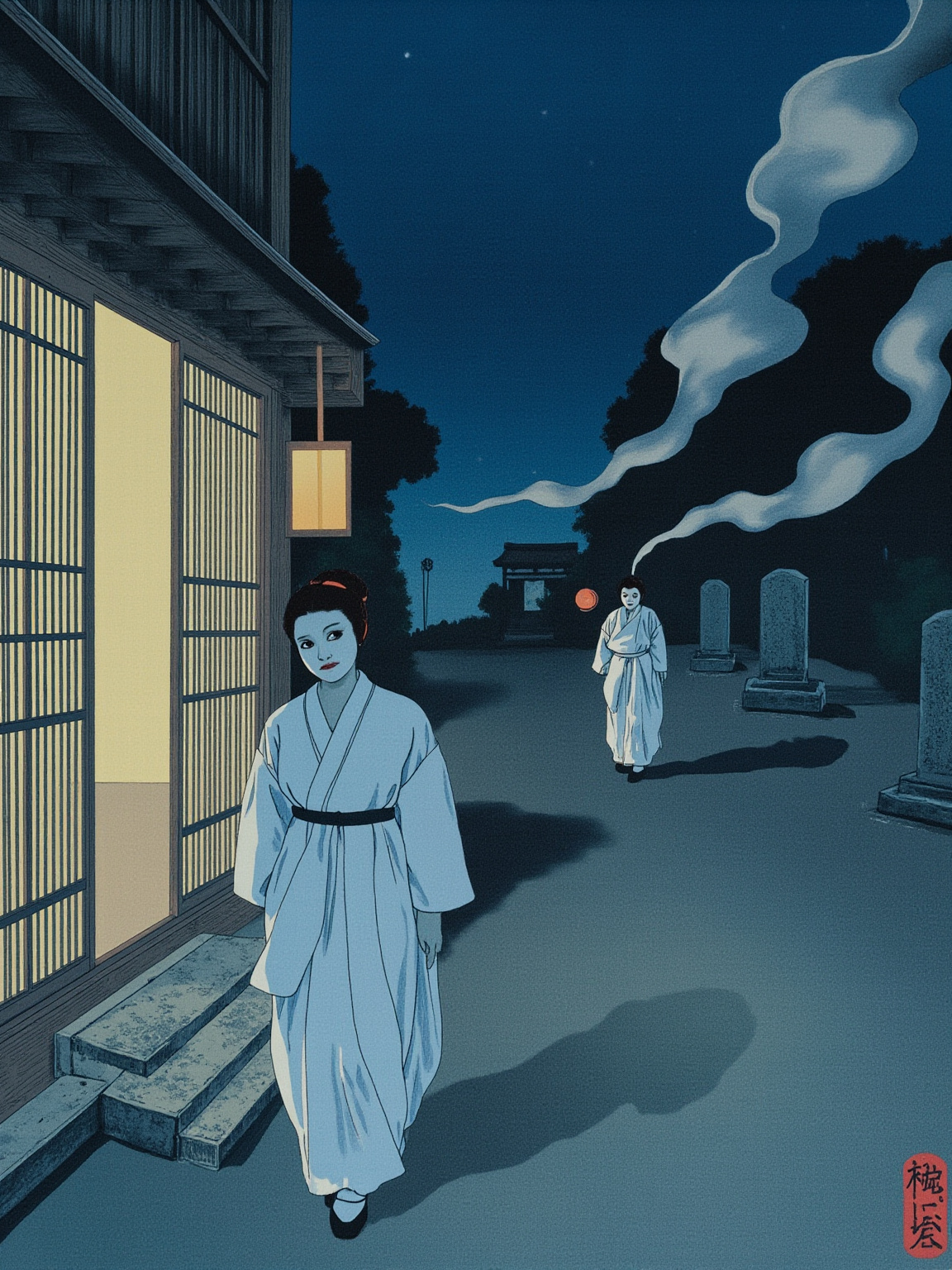
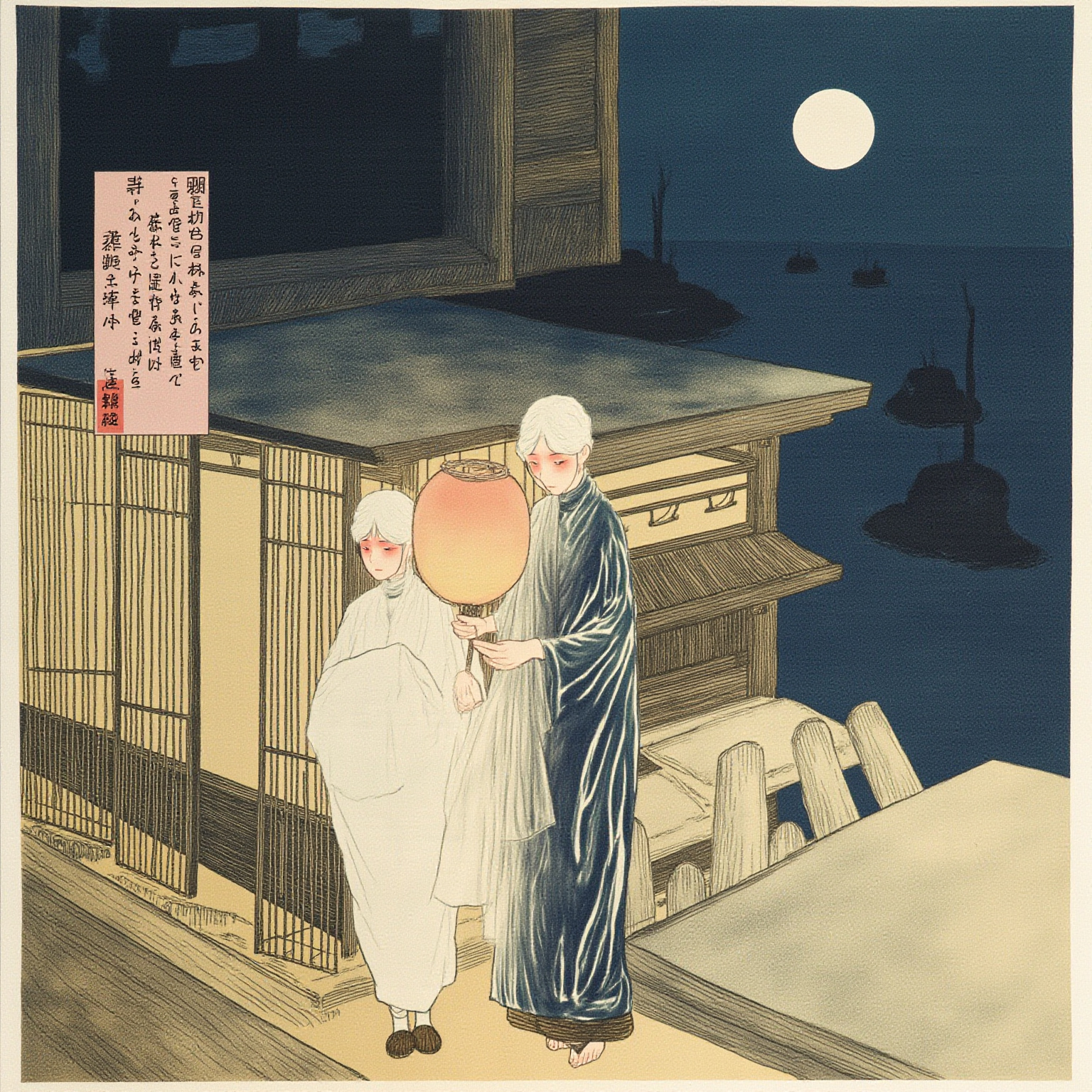
The sound of geta arrives before the people do. On an Obon night, a narrow alley in Edo's shitamachi fills with karan-koron — and anyone who hears it knows what it means: someone is coming. The door opens. First a peony lantern. Then a maid carrying it. Then a woman in a summer kimono, her hair done up with care. She looks exactly like the living.
She is not living. Her name is Otsuyu, and she has been dead for some time. A gravestone bears her name, standing beside another that bears her maid Oyone's. This is The Peony Lantern — told aloud on the rakugo stage in 1884 by the master storyteller San'yūtei Enchō and taken down word for word by a stenographer in the room. It is the quietest of Japan's three great ghost stories.
San'yūtei Enchō (1830–1885) was the towering figure of rakugo on the eve of the Meiji era. The Peony Lantern began life as a ghost story he told from the rakugo stage with nothing but a fan and a hand towel as props. In 1884 a stenographer followed him word by word and set it down as a shorthand storybook, Botan Dōrō, in two volumes. It stands among Japan's three great ghost stories, alongside Sarayashiki and Yotsuya Kaidan, but its importance runs past the genre. After 1887, when Futabatei Shimei wrote Ukigumo and helped fix the modern style of writing Japanese the way people actually spoke, he pointed to this very shorthand text as a model of that spoken language. So the book is both a landmark ghost story and a working draft of modern Japanese prose.
In other words: everyone who now hears karan-koron and thinks ghost owes that reflex to this book. Few popular ghost stories manage to stamp a single sound effect onto an entire language.
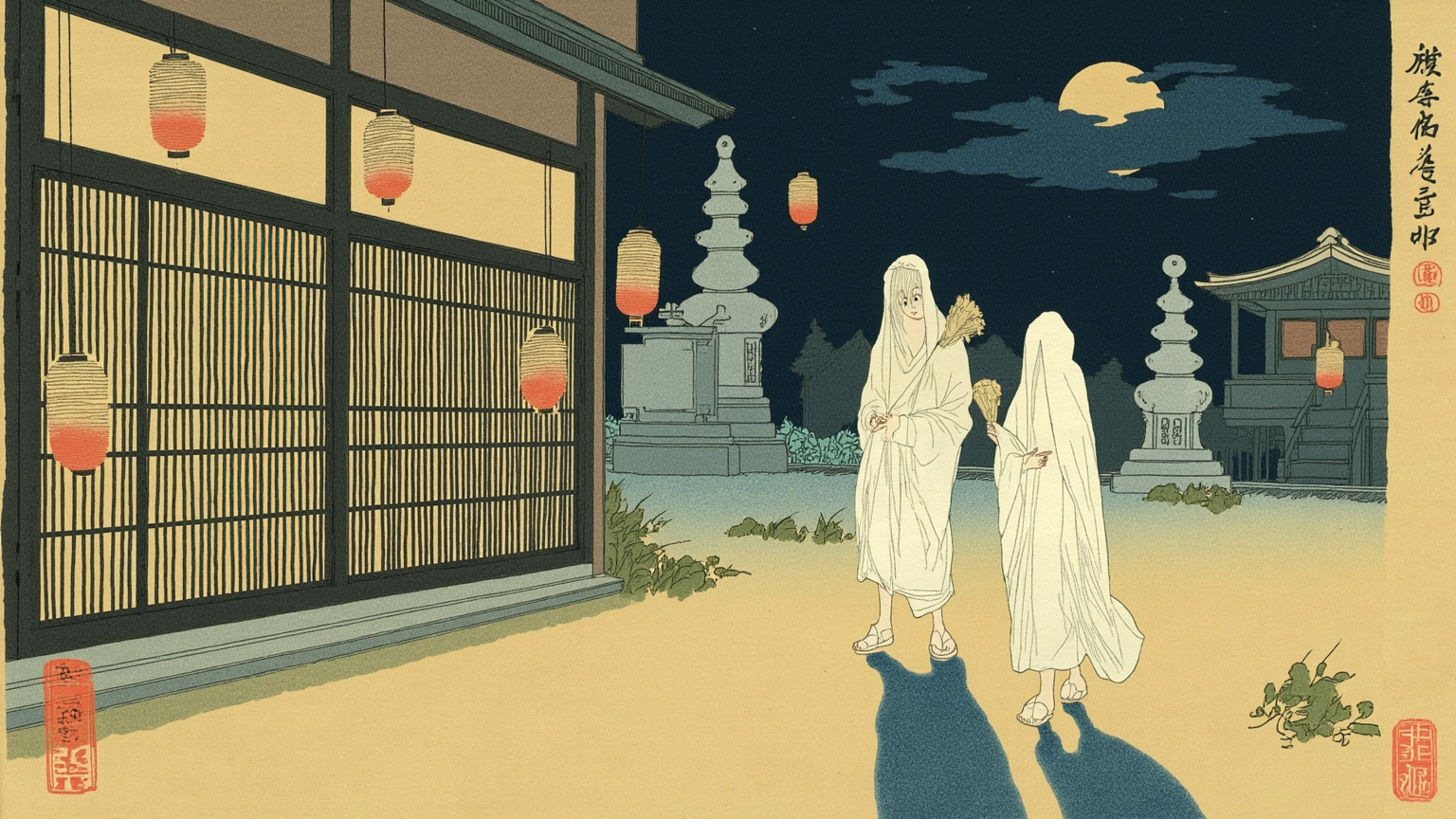
Only four people really matter here. Otsuyu, the late daughter of the Iijima Heizaemon household, returns after her death. Her maid Oyone, who died on the same road and walks ahead of her carrying the lantern, keeps serving her mistress even as a ghost — the two of them moving lantern-lit through a summer alley, one behind the other, is the single most recognizable image in Japanese ghost stories. The ronin Shinzaburō lives in a hut beside the old Iijima estate; he opens his door thinking he has found a lover. The second volume adds Banzō, Shinzaburō’s neighbour, who takes a hundred ryō to peel the protective charm off the door — after which Shinzaburō does not survive the night. Banzō himself comes to no good end.


Understanding this book means first understanding where it was born. Enchō sat on the rakugo stage with a fan and a hand towel as his only props — no set, no script, no music. The moment he opened his mouth, a few hundred people in the audience held their breath together, and that kind of live presence is a wholly different thing from a novel held open in your hands. The instant the two stenographers bent over their notebooks in 1884 is what fixed this book's language: living Japanese, caught the moment it fell from a mouth onto paper.
This ghost story was never written down first. It was spoken aloud, and that one fact sets it apart from every other ghost story in literary history.
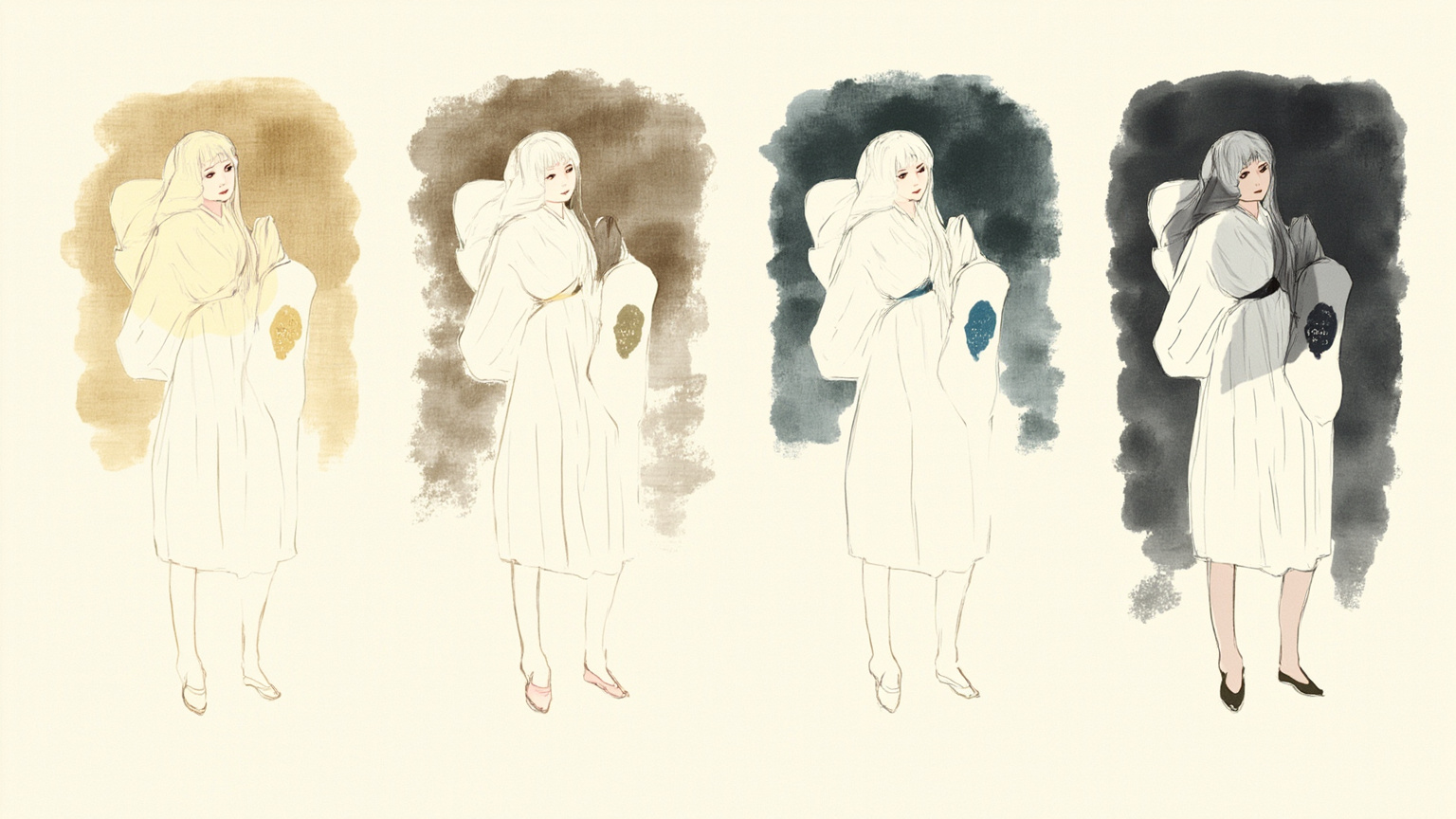
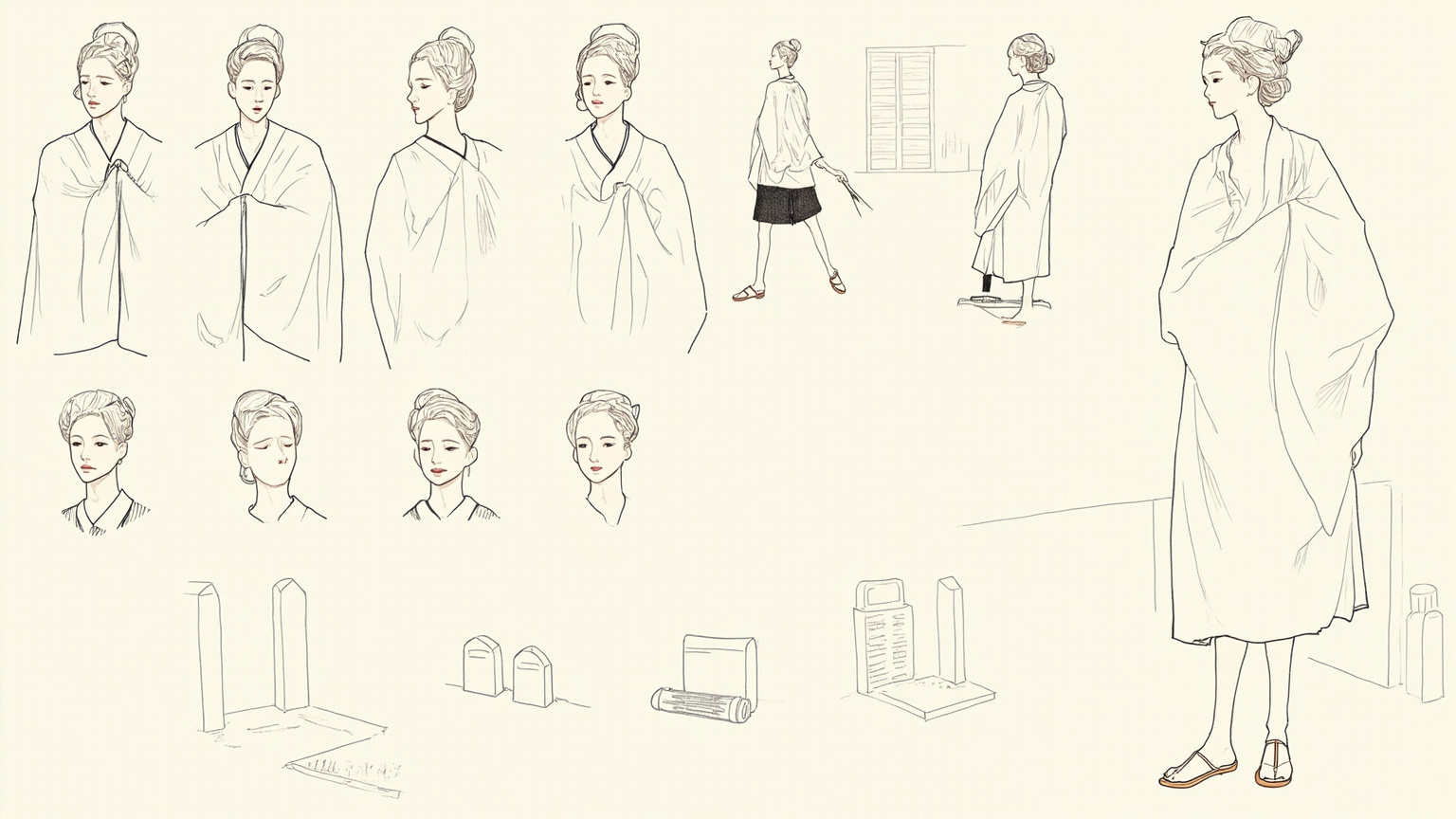
Before the guide was written, this book got a visual foundation — every illustration you just read grew out of it.
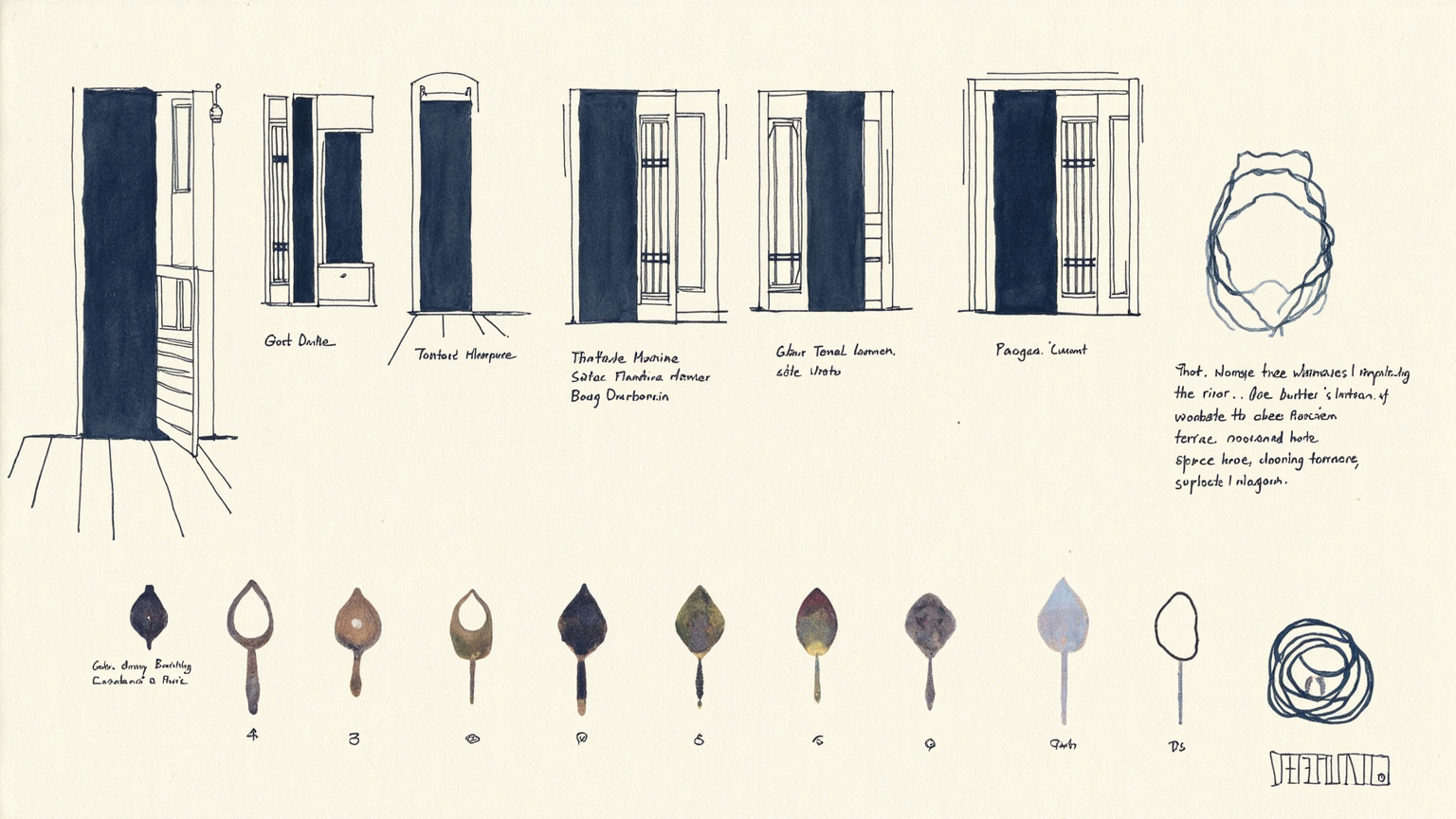
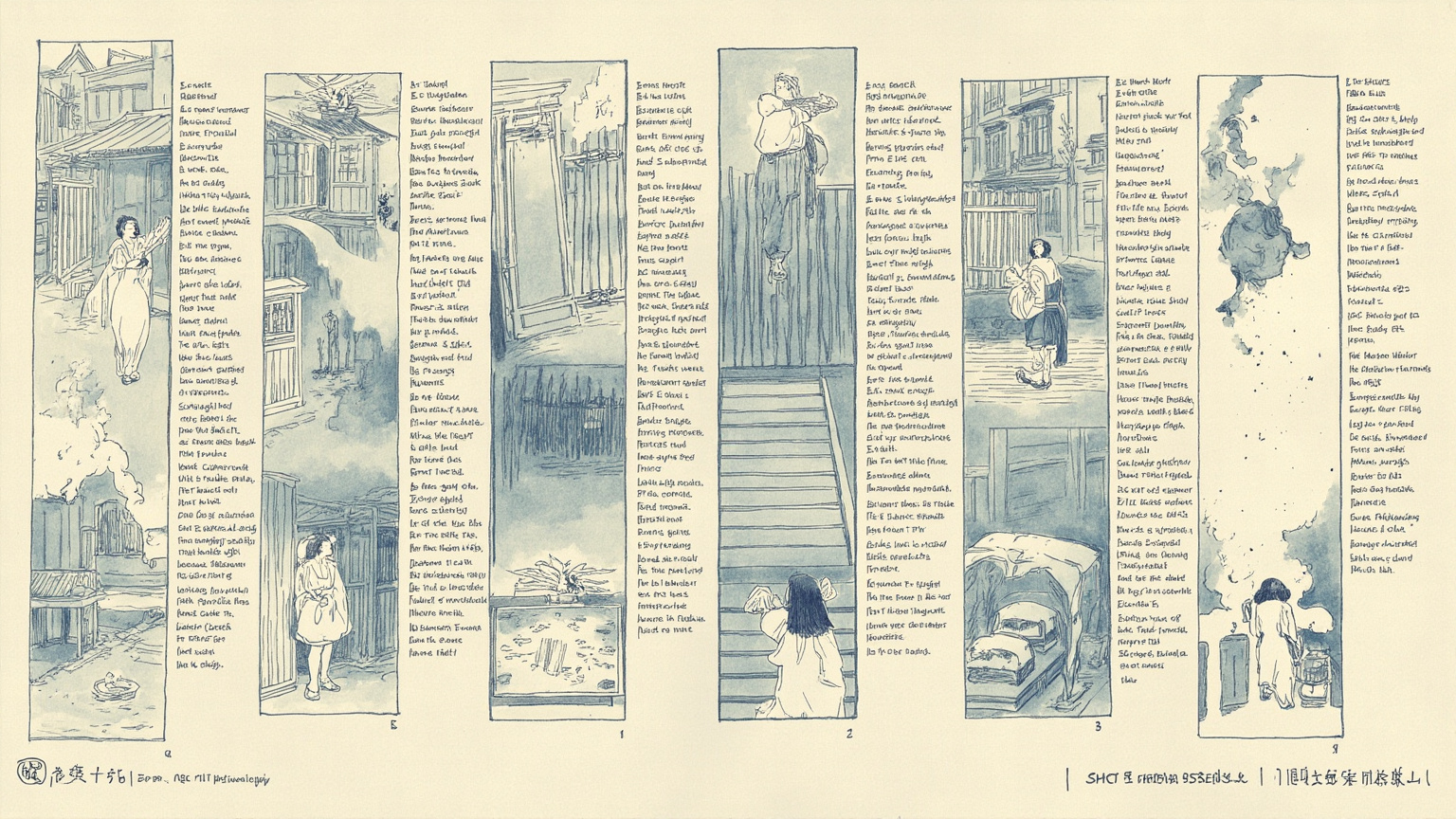
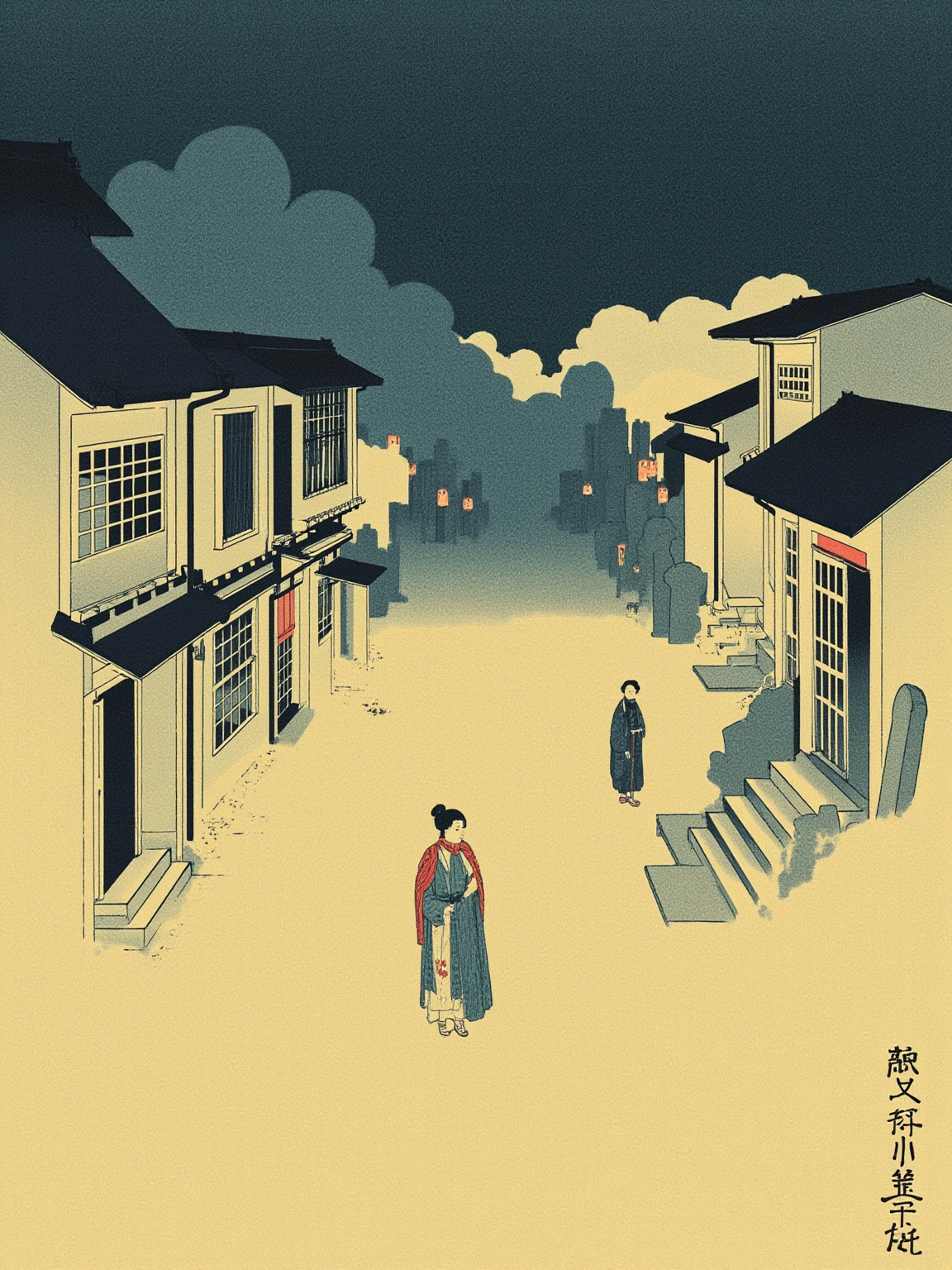
The story is set in the shitamachi of late Edo — row houses, back alleys, lattice doors, the smoke of mosquito fires, Obon lanterns drifting off down the river. This is the edge of the townspeople's world, home to masterless samurai, itinerant peddlers, and servants running errands for other people's households. The ghost story grows out of exactly this kind of dimly lit summer night.
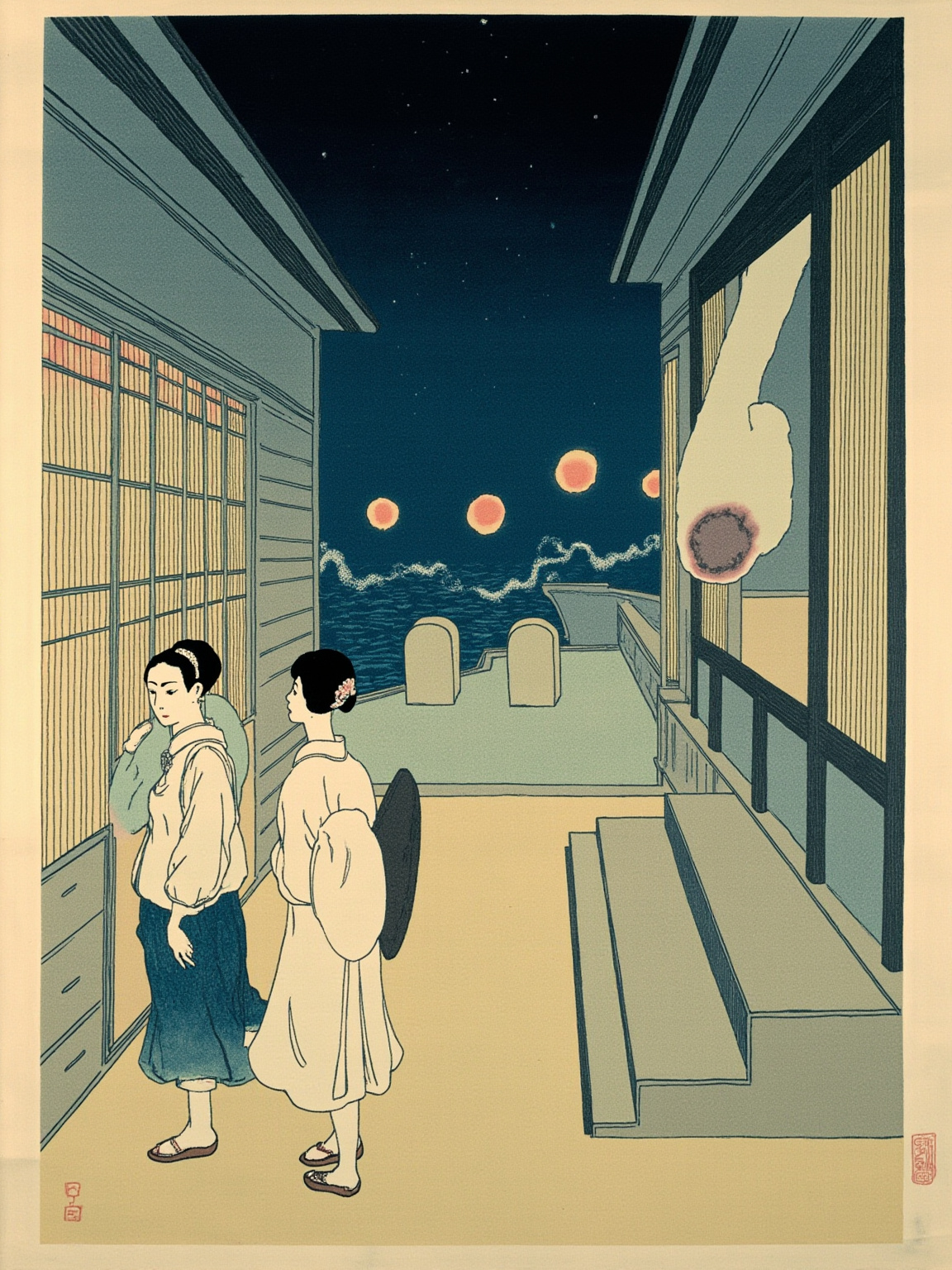
On an Obon night, the clatter of geta wakes Shinzaburō. He opens the door and finds Oyone standing there with the peony lantern, Otsuyu behind her, acting exactly as she always did. He notices nothing wrong. That night is followed by a second, then a third, and they sleep together every night after. Eventually someone catches sight of them and word gets out, ruining him. The next day, people go into his hut and find him already dead inside.
The story's sharpest cut isn't a scene of blood, it's Otsuyu's normalcy. No rotting face, no translucent outline, no wild hair. She wears her hair the way she did in life, wears the same summer kimono, comes in and exchanges pleasantries, takes off her sandals, sits down. The reader sits in the room with her and waits for the truth to creep up from behind — a dread that outlasts any scream.
As craft, Enchō withholds every supernatural cue. What Shinzaburō sees is indistinguishable from the living, and the narrator stays locked to his point of view. Only at the end is the reader forced, along with the living characters, to accept it: the whole time, only one person in that room believed the other was alive. That single fact reaches back through everything that came before it, and normalcy itself becomes the deepest horror.
By the time the story ends, Enchō always pulls back to a small, overgrown graveyard beside the old Iijima estate. Two stones stand there side by side, bearing the names Otsuyu and Oyone. Only here does the reader realize where the peony lantern, the clatter of geta, and the perfectly ordinary-seeming woman all set out from. These two gravestones, standing together, are the single most recognizable image in Japanese ghost stories, and no illustrator has ever painted The Peony Lantern without them.
The first volume is about love; the second is about money and what it costs. Banzō takes a hundred ryō to peel the protective charm off Shinzaburō’s door — and the next morning Shinzaburō is found dead inside his house. From there the money drags Banzō and his wife Omine down together: they flee Edo, come to distrust each other, and neither of them gets to keep it. On a second line, Kōsuke, the loyal retainer of the Iijima house, goes after the men who killed his master and does not let go. Enchō sets love and reckoning side by side and passes no judgement — which is exactly how rakugo works: you finish, you leave, and the verdict belongs to whoever was listening.
This part sounds like a separate case of intrigue, but at heart it echoes the first volume: the person standing closest to you, the most obedient one, is often the one who has come to collect a debt. The telling here follows the standard shape of an Edo revenge tale — Enchō spends no time on action — and the story's real weight stays on the logic of a death engineered from the inside.
On the surface it's a ghost story. Underneath, it's a motif on the move. The material traces back to China: in the second book of his Ming-dynasty collection New Tales Told by Lamplight, Qu You already tells a tale called The Peony Lantern with every part already in place — the love affair between the living and the dead, the Obon night, the lantern-bearing maid, the paired gravestones. Those parts traveled first to Japanese yomihon fiction, then to Edo-period theater, and finally, in 1884, onto Enchō's rakugo stage for another retelling. East Asian ghost-story motifs get renewed exactly this way, passed hand to hand, putting down new roots in each new place.
Go deeper and the real source of fear isn't the ghost, it's normalcy. The original draws its ghost identical to the living, and the reader ends up forced to wonder about the ordinary-looking people in their own life. That's where The Peony Lantern's real power as a genre-defining work lies. Countless later East Asian tales of love between the living and the dead learned this exact move from it: write the uncanny through normalcy, not through the uncanny itself.
A few years later, when Futabatei Shimei sat down to write Ukigumo and had to answer the large question of what kind of Japanese a novel should be written in, this is the shorthand text he turned back to. Every reader of contemporary Japanese fiction today still carries an echo of Enchō's voice in their ear. No one ever tells you that.
By this point in the telling, there's no suspense left in the plot. But what The Peony Lantern is really worth reading for isn't the plot, it's the pacing. Enchō's telling lays dread into the everyday one small increment at a time — from the first clatter of geta to the woman stepping through the door, from night after night together to the moment someone finally catches them, each beat carrying more weight than the one before it. A guide like this one gives you the map. Reading the text itself gives you that held breath.
And there's that sound, karan-koron. Reading it on the page is one thing. Knowing it has been nailed into the Japanese language as shorthand for the ghost has arrived is another. Reading it after you already know the plot actually works better, because the fear won't distract you, and you can listen closely to how Enchō pushes that one sound, step by step, toward its worst.