
The Portrait of a Lady · Companion Guide
一位女士的画像
一个以自由为名的理想,如何一步步走进自己亲手挑中的墙——亨利·詹姆斯把她的意识画成一座最精密的牢笼。
Opening: A Drawing Room in Florence
In a drawing room of a villa in the hills of 1870s Florence, Gilbert Osmond sits opposite his wife, across the entire tea table, and asks if she still loves her. She doesn't answer. This isn't a quarrel—it's something colder than a quarrel. A husband treats his wife's silence as an object to be cataloged in his collection, and the wife has just realized that this marriage, from the very first cup of tea, was not what she believed it to be.
Henry James wrote The Portrait of a Lady about a clever girl who personally chooses an invisible wall to entrap herself. The story begins at Garden Court, a manor by the Thames in England, moves through London and Paris, and ends in Florence and Rome—the story of a woman using her ideals as a key, step by step, to open a door that should never have been opened.
What Kind of Book This Is
The Portrait of a Lady, published in 1881, is Henry James's most recognized masterpiece. Born in 1843 and died in 1916, he spent his life living between Europe and America, writing in English about the fates of Americans in the Old World of Europe. This book marks a watershed in the history of English fiction, as the novel gradually moved from Victorian realism toward modern psychological narration—there is only one marriage and one death in the story, yet an entire soul's face has been painted.
It is remembered in literary history for two things: first, the narrative method is almost entirely locked within the consciousness of the heroine, Isabel; everything that happens outside is filtered into what happens inside her mind. Second, the ending gives you no answer—she can leave, she can stay; James only takes responsibility for painting her face at that moment with precision.
Characters and the World: Who Is Hunting, Who Is Watching
Isabel Archer, a young woman from New York, is smart and full of abstract notions about freedom and nobility. She has two suitors: Lord Warburton is British aristocracy—good man, good family, good looks, the most desirable match on the social scene; Caspar Goodwood is a businessman from Boston, America, representing another possibility—returning to America and living a pragmatic life with him. Isabel rejects both, saying she doesn't want to stake her entire life on convention.
She had two people around her who could see clearly. Her cousin Ralph Dupee, consumptive, theater-mad, who understood more about it than anyone and loved her more than anyone, but who knew he couldn't offer her marriage — so he only persuaded his father, old Mr. Dupee, to leave half his estate to Isabel, meaning to give her a free ticket to the world; and Aunt Dupee, independent and imperious, who spoke in telegrams, and who first brought Isabel into Europe.
The hunter is in Florence. Gilbert Osmond, an American long settled in Italy, with no real profession, calling himself a connoisseur, living with his daughter Pansy — raised in a convent — in a refined and reclusive life; and Madame Merle, a smooth American woman, an old acquaintance of Osmond, who arranges this marriage. Later the reader learns that Pansy is Madame Merle's illegitimate daughter with Osmond, raised under the name of his dead wife — and this relationship is the hidden thread running through the whole game.
Garden Court's Refusal
The story begins with Isabel arriving in the English countryside. Garden Court, by the Thames — the lawn, the old house, the tea service — and Aunt Dupee forever speaking like a telegram, giving only conclusions. She here first refuses Lord Warburton, then refuses Goodwood who has followed her from America, offering beautiful reasons — she won't live on tracks someone else laid, she'll walk her own way.
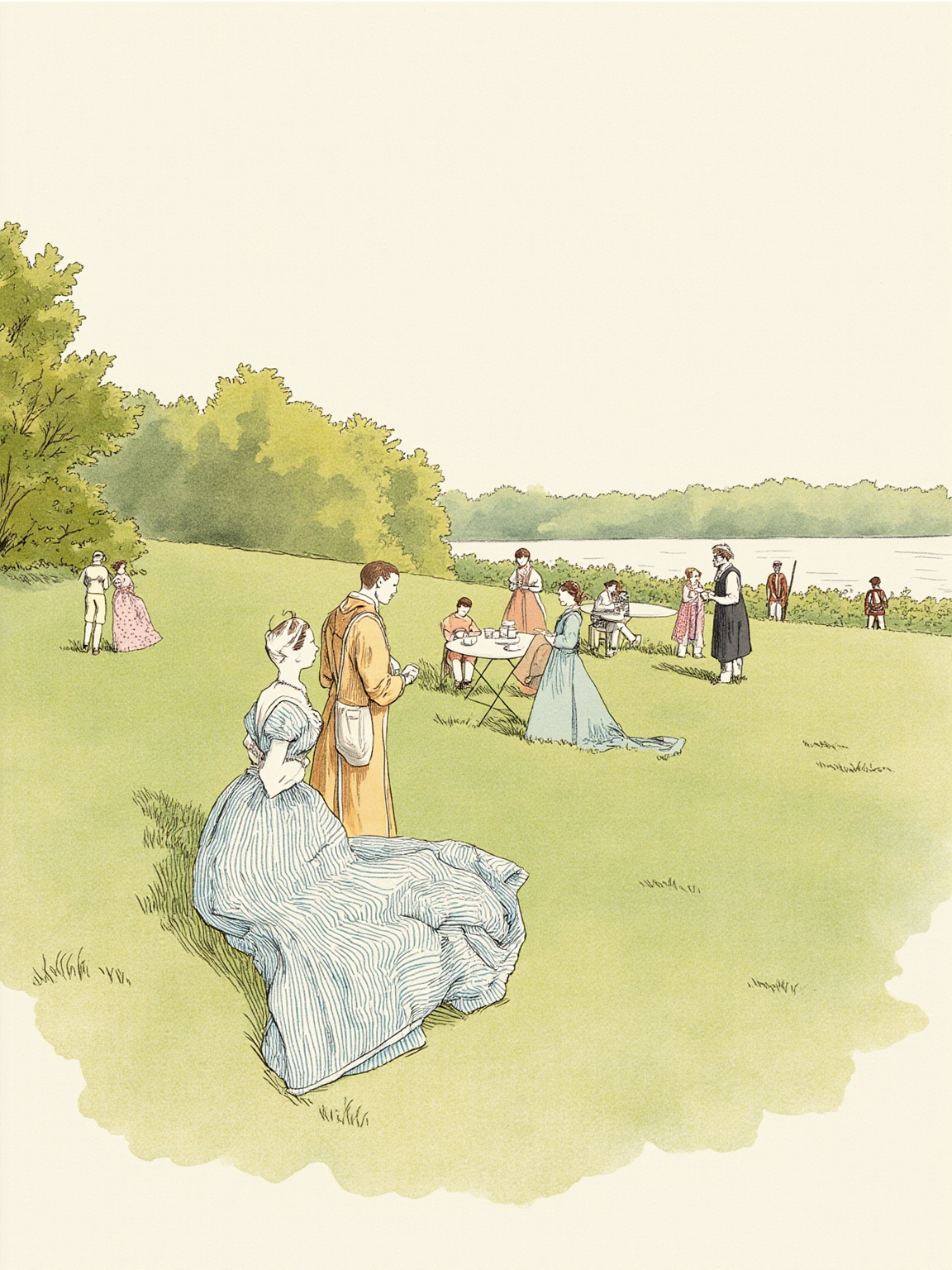
She had a great desire to be free, and she could only achieve that freedom by being very much herself.
她有一种对自由的深切渴望——而那自由,只能靠她完完全全地做回自己才能到手。
金句 · 第5章 · 加登科特之夜
In technique, James presses almost entirely into Isabel's inner world here — Warburton's goodness is calculated by her, stroke by stroke, in her head; Goodwood's goodness is what she avoids with her body. She's not choosing a person, she's choosing a way of life.
Ralph's Legacy: A Dangerous Ticket
Ralph Dupee loved her, but couldn't marry her because of his lung disease. He did something that seemed generous — persuaded his father to leave half his estate to Isabel. He thought: give her money, and she'll have real freedom. The money later arrived in Florence, like a fresh piece of meat, noticed by gloved hands.
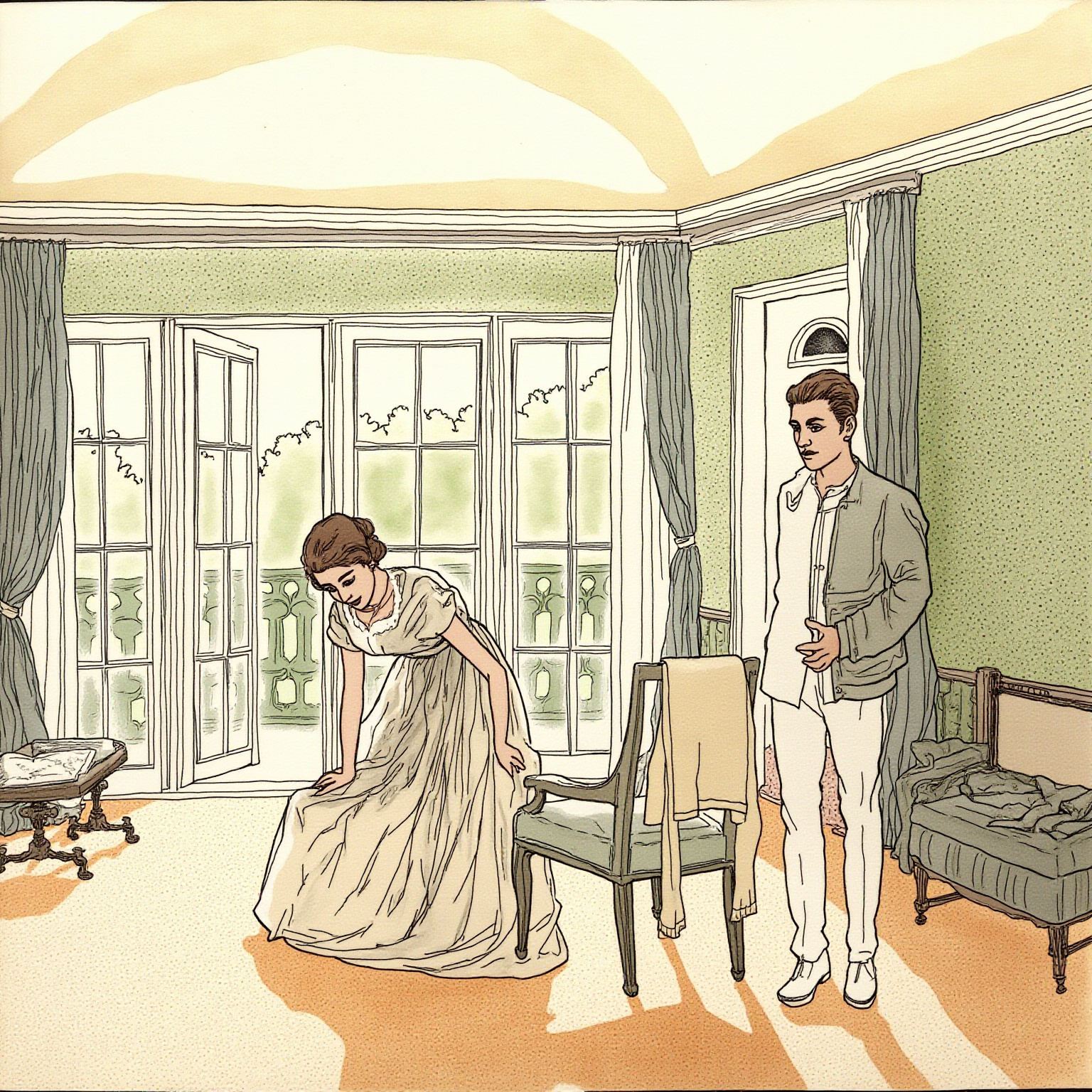
He had given her a larger portion of himself than he had ever given to anyone; but that was precisely what made her feel she must be careful.
他把自己的一块给了她——比曾给过任何人的都大;正因如此,她觉得自己不得不小心。
金句 · 第16章 · 杜歇家的礼物
The cleverness is that Ralph, when he did this, thought he understood freedom. He gave her a ticket, but didn't tell her that everyone on that voyage was waiting for her to disembark.
The Trap of Florence
Mrs. Touchett brings Isabel to Florence. In a villa covered in vines, she meets Osmond—cold, restrained, surrounded by porcelain and old paintings. Isabel reads his air of not caring about anything as noble detachment. She doesn't know that this too is a form of control, just one executed far more elegantly than a shouting match.

Osmond's manner had always been polite; it was the very perfection of politeness. It was only on certain occasions, as now, that it ceased to be itself.
奥斯蒙德一向彬彬有礼——那是礼节所能抵达的完美;只在这样的时刻,它才不再是它自己。
金句 · 第29章 · 别墅里的茶会
She listens to no one's advice—her aunt, Ralph, even her close friend Henrietta all urge her to slow down—she walks straight to a church in Rome and marries Osmond. She thinks she's making an independent choice, but what she's actually doing is completing a line someone else drew.
Rome's Spiritual Prison
After the marriage, Osmond's control involves no violence, no smashed objects. He simply treats Isabel like a piece of porcelain—positioned in his drawing room, forbidden to have her own guests, her own opinions, her own money. The Roman palatial apartment has furniture as beautiful as a museum, but the air feels like a glass cabinet. Pansy, that obedient daughter raised in the convent, is used by her father as another marriage token, pushed toward Lord Warburton, while what she truly loves is the gentle Edward Rosier.
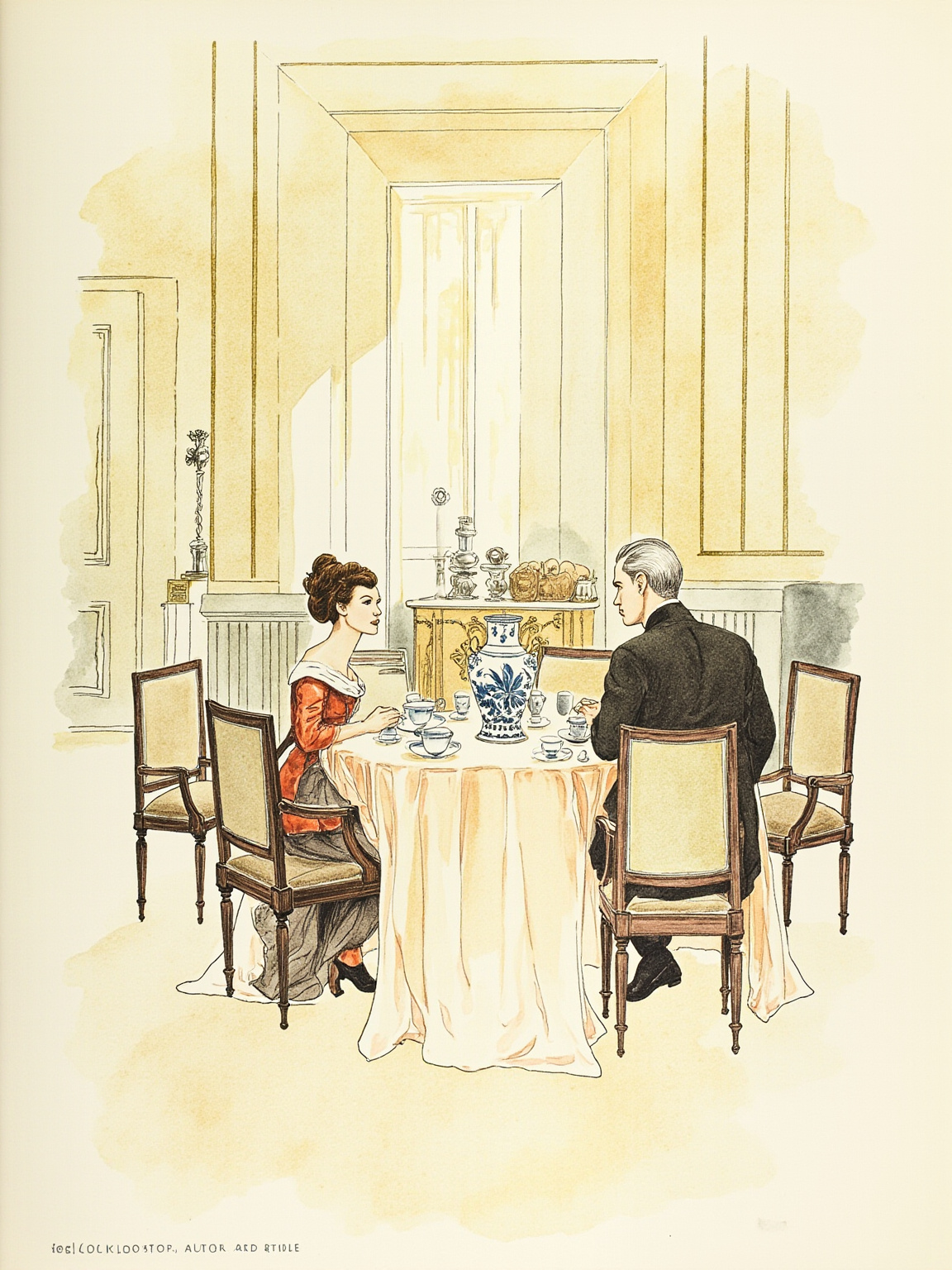
She had invented a happiness which she fancied he had given her, and she had married him with an idea of living at his centre.
她曾为自己编织出一种幸福,以为是奥斯蒙德给的;她嫁他,是以为能活在他世界的中心。
金句 · 第42章 · 罗马的客厅
This is the coldest chapter in the book. James doesn't let Osmond lift a finger—he simply lets the tea stay perpetually warm, keeps the doors perpetually closed, and lets Isabel watch herself become someone else's exhibit.
The Revelation of Truth
It begins with a chance encounter—Osmond's sister, Countess Gemini, after drinking lets slip a word she shouldn't have: Pansy is Madame Merle's and Osmond's illegitimate daughter. Isabel recalculates, and every step of that marriage now fits together: Madame Merle's enthusiasm, Osmond's coldness, the flow of the inheritance, Pansy's fate. She wasn't deceived by a single villain—she was outmaneuvered by an entire elaborate arrangement, and at the time she still thought she was free.

There was a horrible cruelty in her situation; she had married into it, and so she must abide by it.
她身处一种近乎残忍的处境——是她自己走进来的,所以也得自己撑下去。
金句 · 第54章 · 真相的余烬
The first time I read this, I turned back and read the previous page again. What James does so well is this: he lets you and Isabel understand at the same time — a half-beat late, which makes it hurt more.
What she fears most is being arranged for — yet every choice she makes has been arranged for her.
The Vigil at Gardencourt
Ralph is dying. Isabel returns to Gardencourt in England alone, defying Osmond's ban, to walk the final stretch with him. The book gives no deathbed close-up — only the flowers beginning to wilt on the windowsill, the empty wheelchair in the garden, the blanket smoothed flat. She is there when Ralph finishes speaking the word "freedom," then watches him stop speaking.

This passage barely moves. It only has Isabel stand in the middle of that room, realizing — the one who gave her the ticket is gone, and the ship won't return.
The Straight Road Back to Rome
Goodwood has followed her from America, demanding she leave Osmond and come back with him. She wavers, walks far along the country lanes, stops in the darkness of night — but does not go. She chooses to return to Rome, to Pansy, to that drawing room, to face the contract she signed with her own hand. This is not weakness, not forgiveness, not reconciliation — it is her determination to finish walking the path she herself chose.
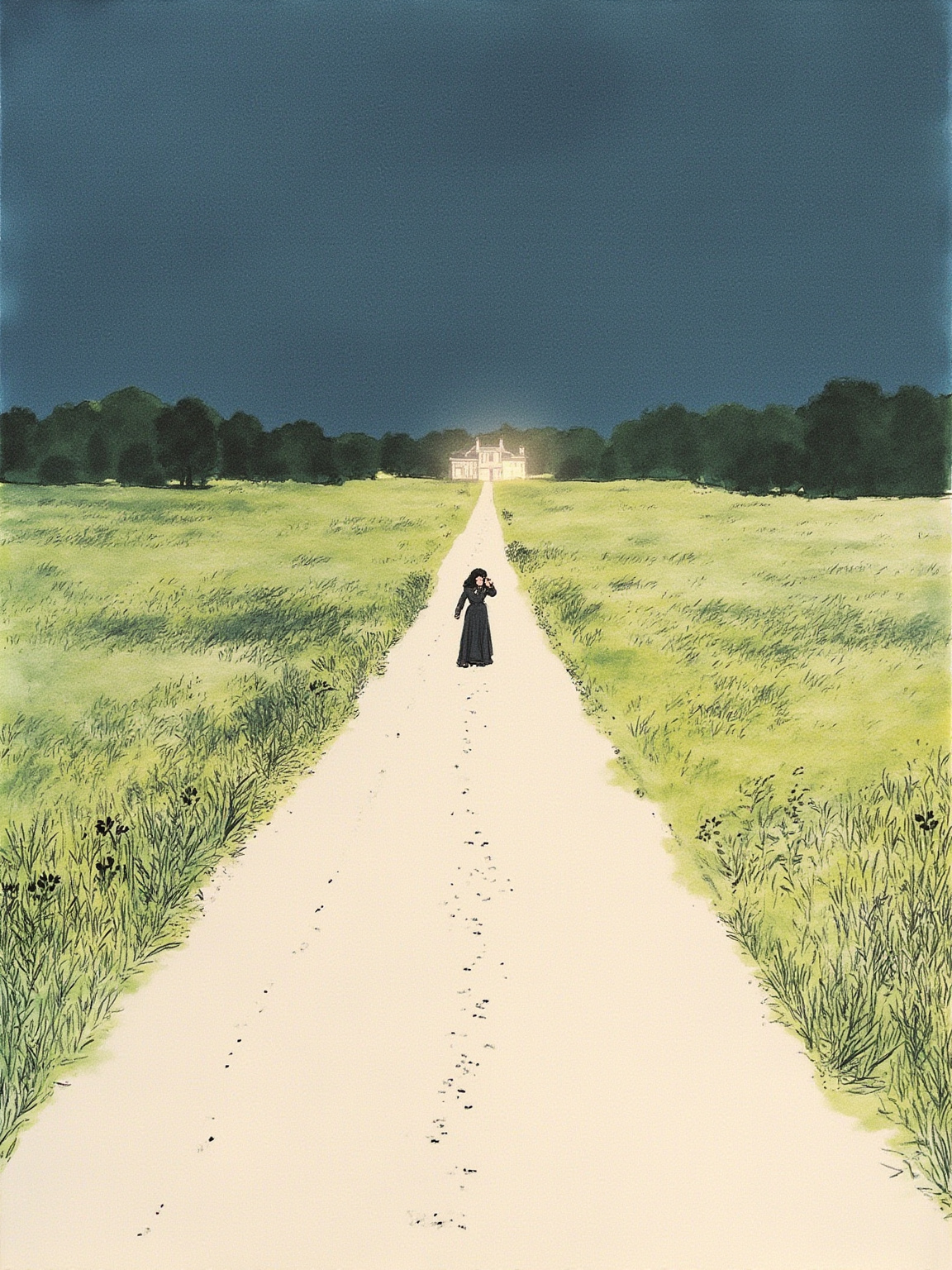
She had only to choose, after all, between being herself and being her friend's mother; the rest of the question was but a scene.
说到底,她只须在『做自己』与『做潘西的母亲』之间做一次选择;其余的一切,不过是场景。
金句 · 第55章 · 回去的路
The ending is left open. James gives no answer, only a face: a woman who knows what she has lost, deciding to stay. This clarity weighs more than any rebellion.
What It Says, Why It Stays
James uses Isabel to tell an irony about freedom—what you fear most is being disciplined, yet all your choices are prearranged by property, gender, the old world's rules. The noble ideals of the new American continent collide with the old European continent's cunning; innocence is not a virtue but a condition easily hunted. Almost all the control in the book is quiet: the tea in the drawing room, the porcelain vase on the long table, the daughter forbidden to meet—chilling in a way no violence can match.
It stays in memory mainly because of its narrative method. James locks us almost entirely inside Isabel's limited perspective; everything outside is compressed into what happens inside her mind—which is why later modernist novels grow roots from this book. Reading it, you can see the shadows of those who wrote The Great Gatsby a hundred years later, or the sequels to Anna Karenina.
For today's readers, it still cuts. Anyone who has been told 'this is your own choice' can hear a different echo in this book.
Why Knowing the Plot Still Means Reading the Text
The companion gives you a map; the text is the territory. The real difficulty of this book—and its real pleasure—lies in James's slowness, his restraint, the way he burrows layer after layer into Isabel's consciousness. The hand with which Madame Merle lifts her teacup, the tone in Osmond's casual 'I thought you liked quiet,' the moisture on Goodwood's coat as he waits for her in the rain—none of this is in the plot. It's in the sentences. You don't read it yourself, you never get that key.
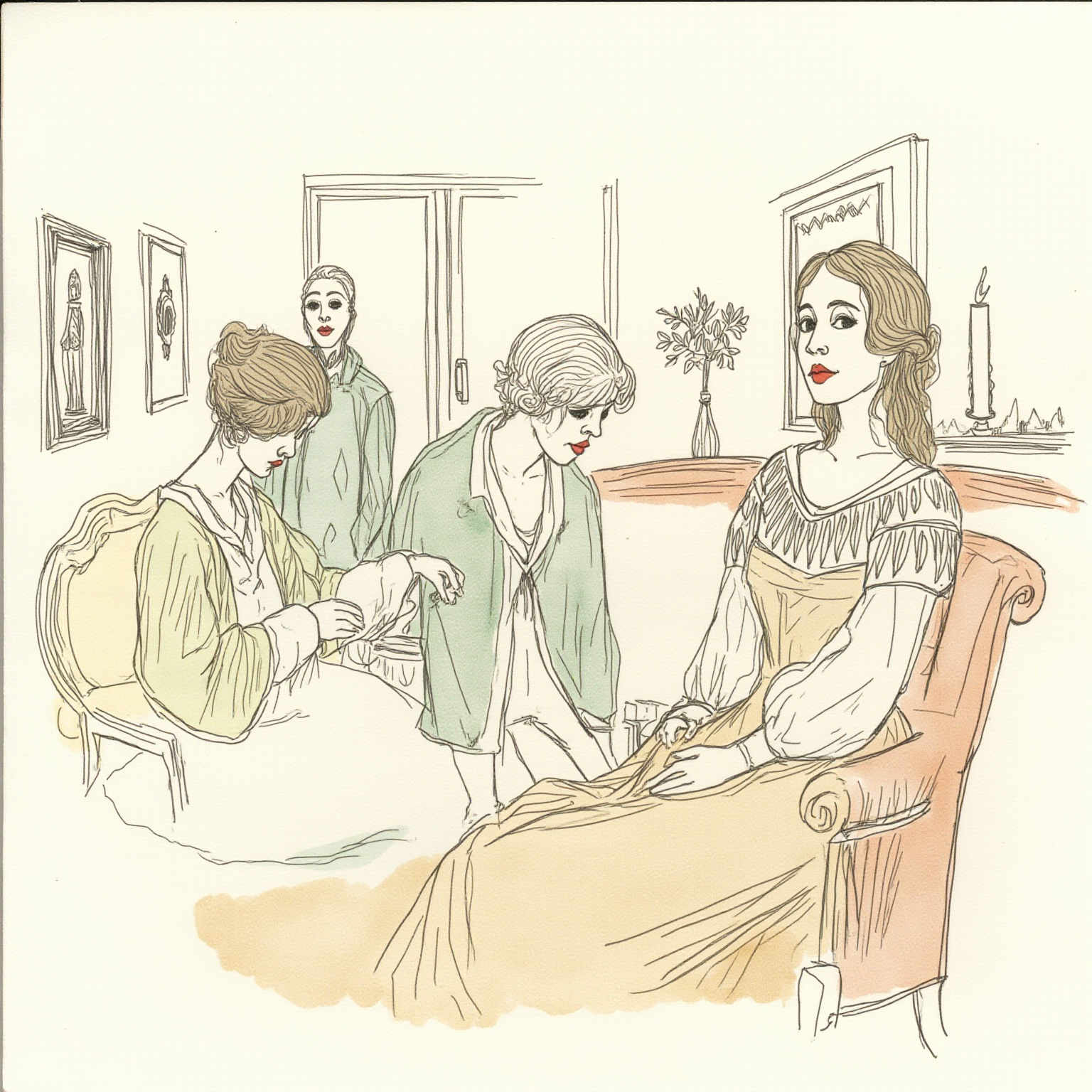
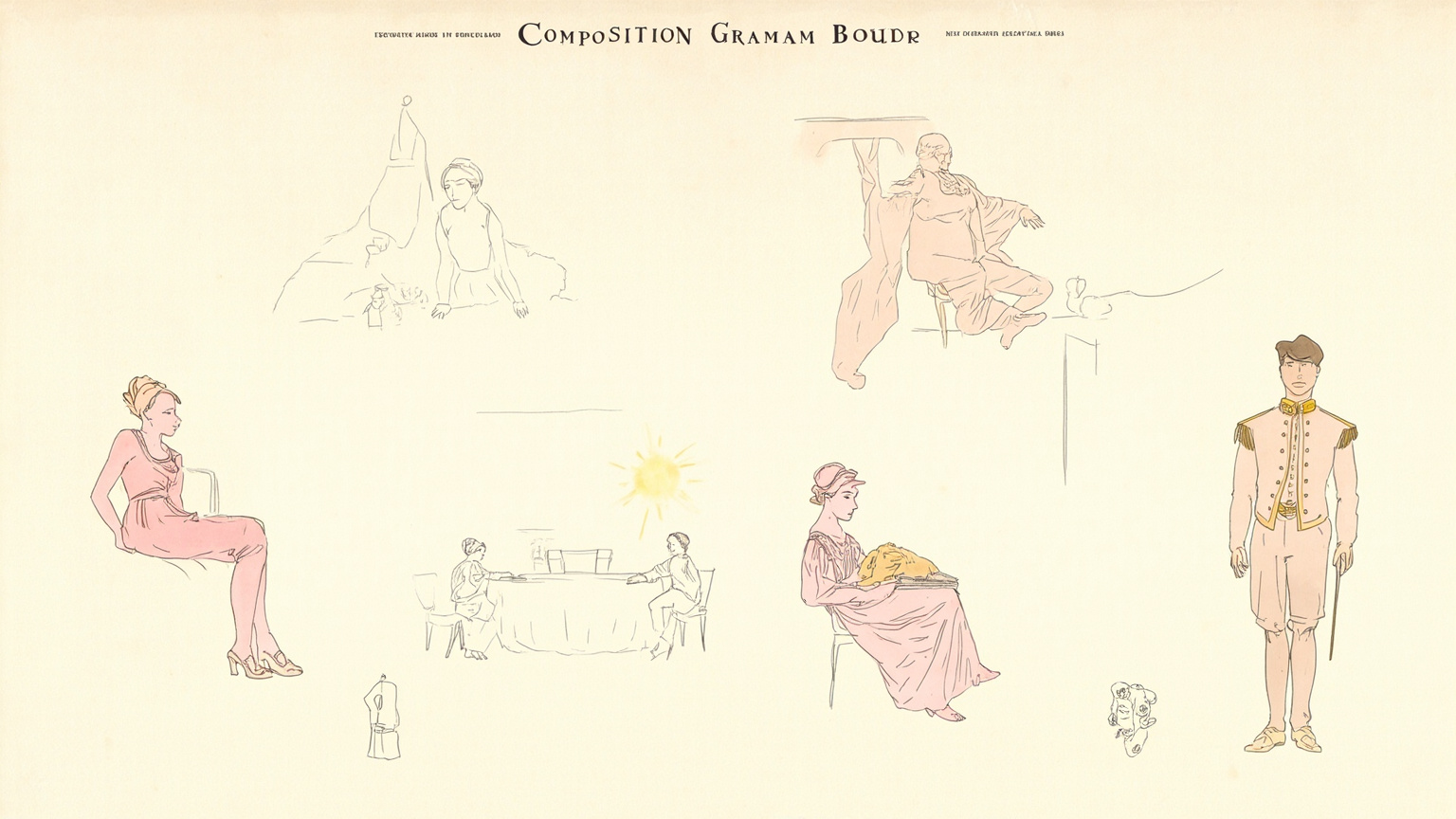
Art Direction4 plates
Before the guide was written, this book got a visual foundation — every illustration you just read grew out of it.


