The Power and the Glory · Companion Guide
权力与荣耀
一个酗酒烂牙的逃亡神父,在墨西哥雨林的泥路上被追捕;正因他的失败与软弱,恩典才得以传递。
Opening
A worn straw hat lies in the center of the plaza, its shadow pressed flat by the midday sun. A few hours ago, the man who wore it was shot—a Catholic priest, alcoholic, rotten-toothed, in rags. No one came to claim his body.
Graham Greene wrote this ending in 1940, and it sounds like cruel irony. But reading the final page, you realize that the straw hat isn't a period—it's a baton pass. Another priest has quietly walked into this dust, continuing the work he did. This book is about why this broken priest had to go back to die.
What Kind of Book This Is
Greene was just over thirty when he wrote it, and he was already the most restless pen in English Catholic fiction. When The Power and the Glory came out in 1940, it was seen as a landmark of twentieth-century Catholic literature—later made into a movie, and then read as a bedside book by generations. What's good about it? It turns a police chase into a head-on collision between two faiths.
The title comes from the Lord's Prayer that Catholics recite daily—"thy kingdom come, thy will be done, on earth as it is in heaven." A man dragged through the dirt, dead in a square, talking about glory: this is the first thorn Greene throws at the reader.
Characters and World
The protagonist has no name. He's known as the "whiskey priest"—the last Catholic priest in southern Mexico still secretly performing the sacraments. The government's orders were clear: get married or get out. The other priests obeyed. He, on the other hand, hid in the jungle by day and crept into villages at night to say mass and hear confession. Bad teeth, short, reeking of cheap brandy. He has an illegitimate daughter named Brigita, living proof of his old sins—small, dirty, calling him "father" without a trace of warmth.
His pursuer is a young police lieutenant, clean, self-disciplined, clear-eyed. He genuinely believes religion is ignorance and opium. He burns churches and seizes hostages not to climb the ladder but to stamp out superstition and lift the poor out of where they are. He is no villain—he is another man of faith.
Pressed in between them are a few characters who cannot be left out. The mestizo, a wiry, yellow-toothed, barefoot informer, baits his trap with the line about an American fugitive on his deathbed needing to make his confession, and uses it to drag the priest in. Coral Fellows, the daughter of an American banana planter, sharp, cool, irreligious, helps the priest along his flight with an altogether secular good sense. Mr. Tench, a British dentist stranded in a Mexican port town, hosts the priest at the novel's opening, pours him a brandy, and stands for a life without any faith at all.
There is one quiet contrast easy to pass over: Padre José, an old priest the same age as the whisky priest, who under those same pressures also married and changed into plainclothes. He is now retained by the government and drifts around town under the title "former priest," a living exhibit of the shame the anti-clerical campaign has produced. The fugitive priest catches one distant glimpse of him on the run: one man gave up his vocation to stay alive; the other would rather rot in a muddy road than take off his collar. One dies with his honor; the other lives on in disgrace. Padre José is the mirror the whisky priest cannot bear to face. The moment he steps back, he has become that man.
The world is 1930s southern Mexico: tropical rainforest, muddy roads, the ruins of whitewashed churches, banana plantations. Not Europe, not the Spanish Civil War, but the scars left by Mexico's real anti-clerical campaign.
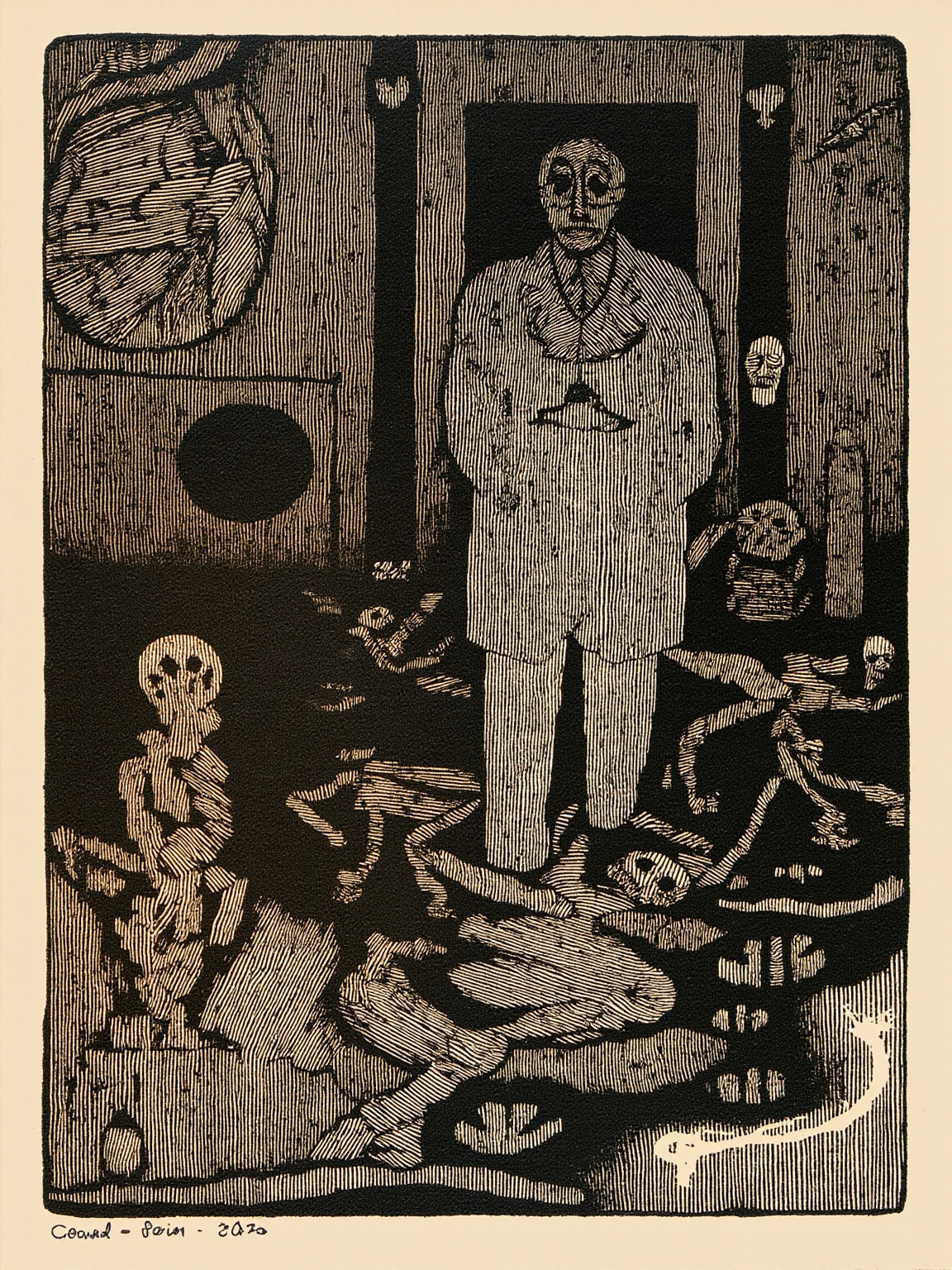
All the churches stood open and empty, like barns after the harvest.
所有的教堂都敞着门,空空荡荡,像收割过后的谷仓。
金句 · 第一部 · 雨林之国
The Plot
The story opens with Mr. Tench, a British dentist stranded in Mexico. At his clinic in the port town he receives a stranger. The priest, curled into a chair, asks for a brandy, wants a boat to the next state. The next state has not yet been touched by the anti-clerical campaign; its churches are still open. The priest means to go there and live under a different name.
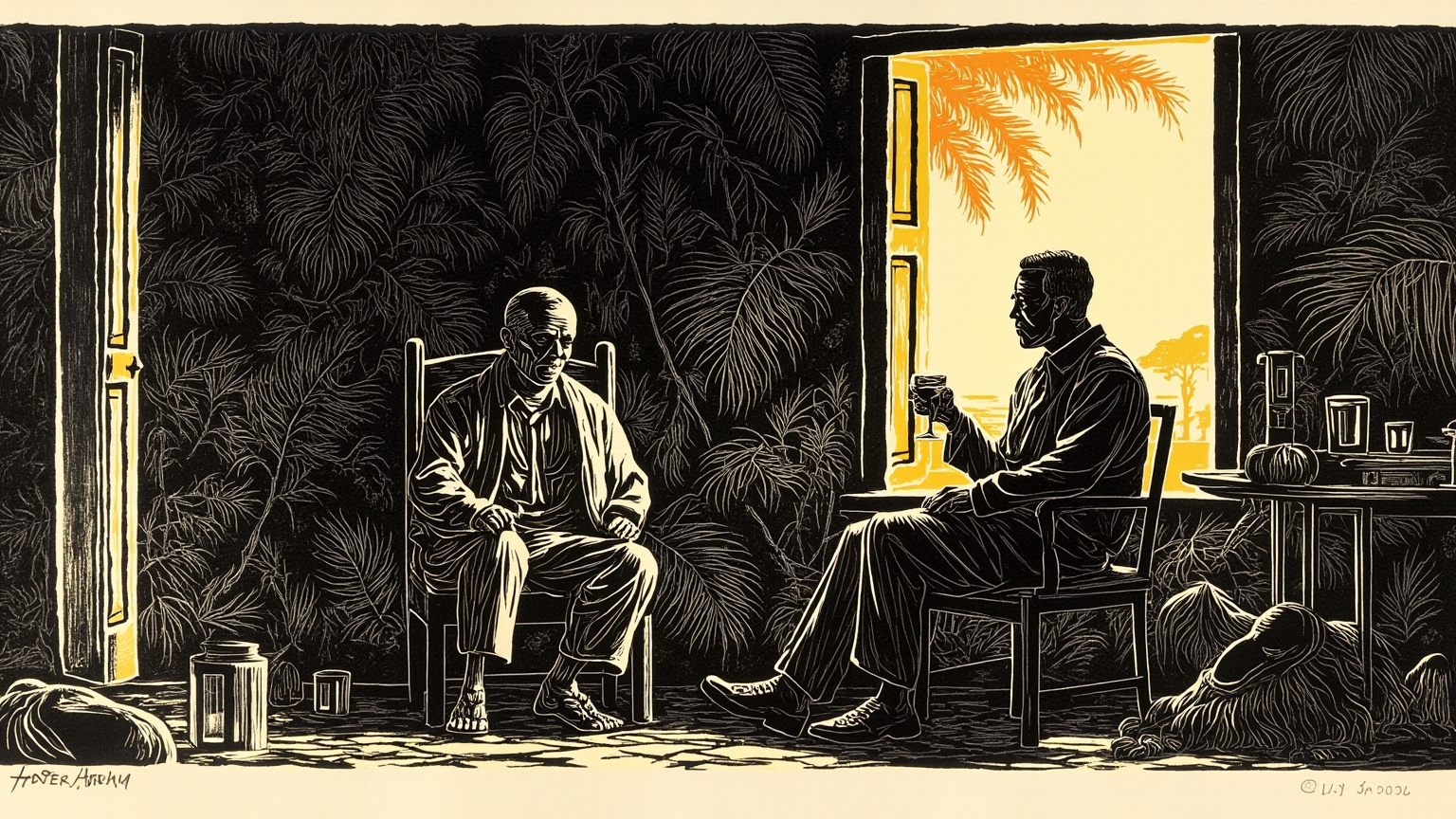
He had the look of a man who had been running for years and could no longer remember why.
他脸上带着一种跑了多年、却已记不清为何而逃的神色。
金句 · 第一部 · 牙医椅
The boat does not come. The priest turns back inland, back to the place he has no business returning to. The first thing he runs into is his daughter Brigita, whom he has not seen in years. She stands in the doorway of a broken-down house in the old parish and looks at him with no pleasure and no hatred, only an unnervingly grown-up indifference. She calls him Father the way one calls a familiar nuisance. He wants to reach out and touch her head, but his hand stops. He cannot manage to be a father; he cannot manage to be a priest; between the two, he is locked in place.
Now the pursuit comes. The lieutenant leads his soldiers upriver, village by village, burning the whitewashed church in each one and seizing villagers who refuse to cooperate as hostages. Greene writes the lieutenant with something close to respect: clean uniform, a life run to a schedule, his belief held without a flicker of doubt. The priest, by contrast, is forever turning in the fumes of liquor, mud, and bad teeth. One is a clean terror; the other, a dirty sacrament. The two move toward each other down the same road.
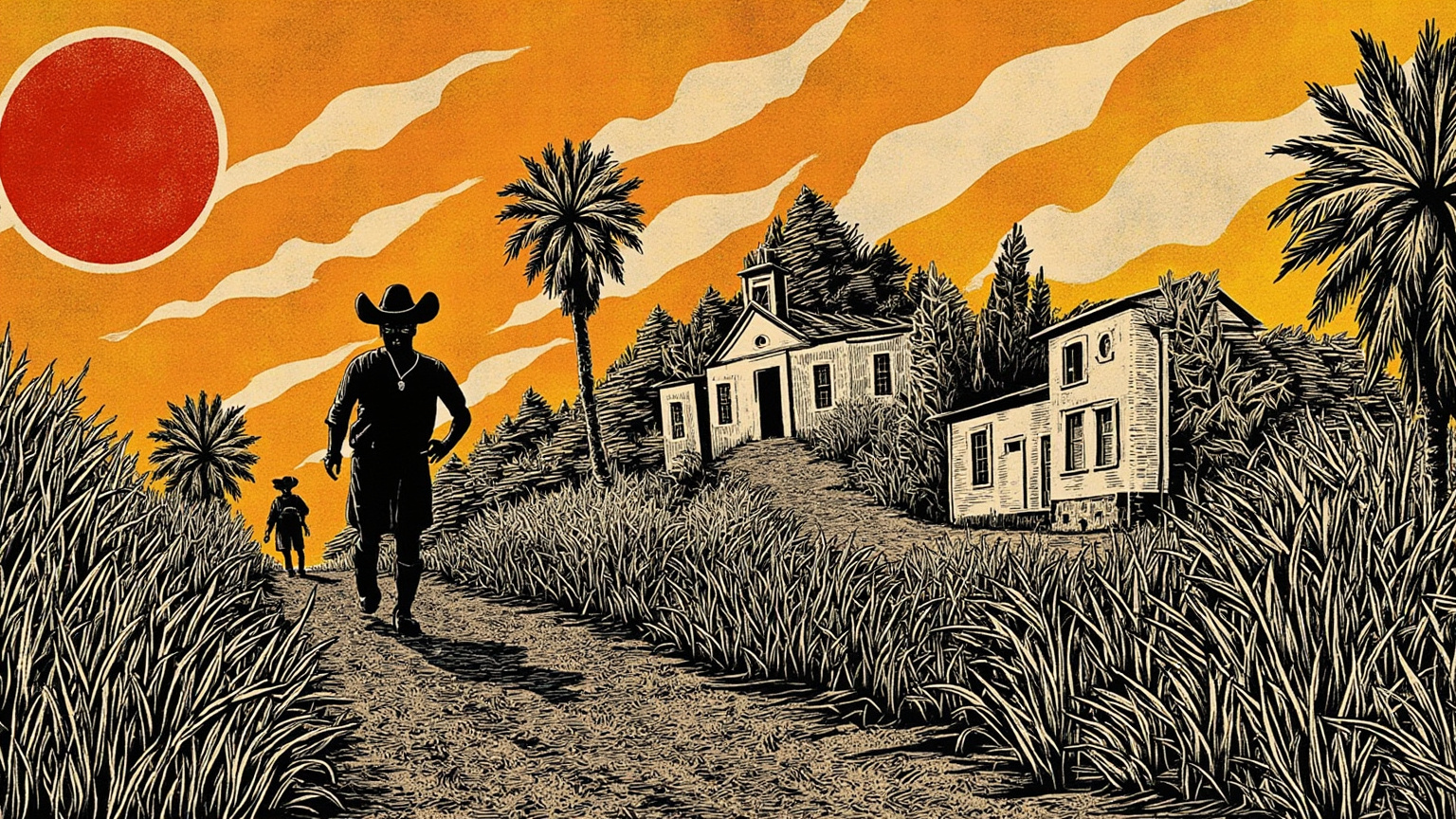
There was no hatred in him, only the patience of a man who keeps a timetable.
他身上没有仇恨,只有那种按时刻表行事的人才有的耐心。
金句 · 第二部 · 中尉的耐心
The mestizo has latched on. This scrawny little informant trails behind the priest like a fly, turning the same words over and over in his mouth: "There's a dying American fugitive who wants to make his confession. I know where he is." The priest can hear the bait — the moment he stops, he's caught. But confession is something a priest cannot set aside. He promised God, promised every dying man, even when that man turns out to be an enemy, a spy, a trap. He follows the mestizo. He knows it means death, and he turns back anyway. This stretch is the most tangled in the whole book.
On the road he passes an American banana plantation and meets Coral Fellows. She has no faith, was raised on a secular education, and regards the priest's predicament with a sympathy held at arm's length. Yet it is this unbelieving girl who, at his most dangerous moment, uses her wits to shield him for an instant. She lets him glimpse a possibility — that morality does not have to lean on faith, that someone untouched by belief can still carry a clean courage. The writing stays restrained, almost free of tenderness, but when you finish you let out half a breath of relief for the priest.
In the end the priest escapes across the border into another state. Here the churches are still open, the police leave priests alone, and he could slip off his collar, change into plain clothes, and live out the rest of his life as an ordinary old man. He really could. But he cannot sleep. He sits for days in a small house by the sea, and the longer he sits, the clearer one thing becomes — if he stays, another priest in that state will be hunted in his place, and that state will become the next target of the anti-clerical campaign. He has to go back.
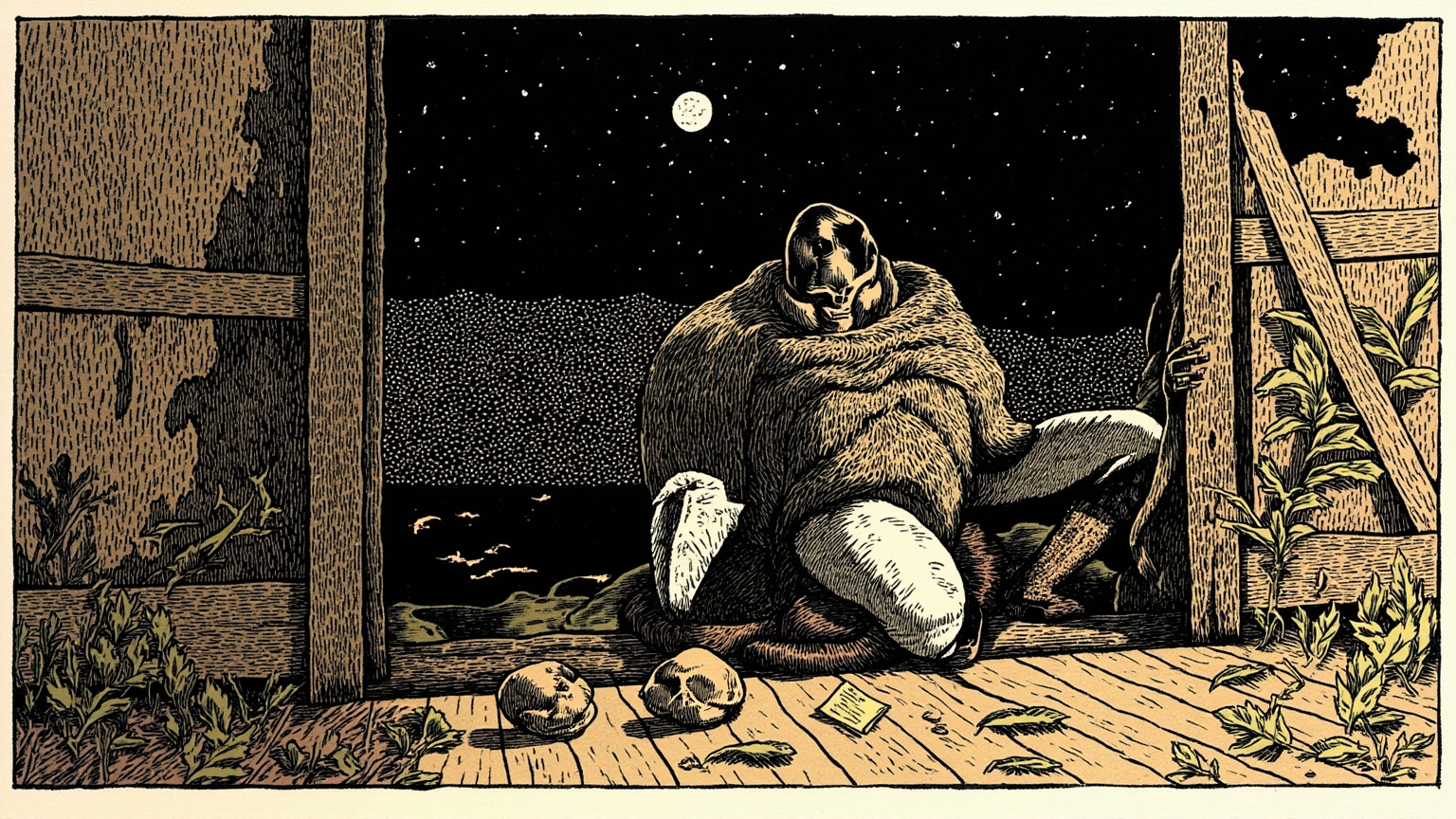
He knew that peace was a thing he had no right to keep for himself.
他心里清楚:平安这东西,他无权独自留下。
金句 · 第三部 · 边境的失眠
To go back is to die. The mestizo sells him out almost at once. The night conversation in the prison cell is the spiritual core of the whole book — the lieutenant sits across from him and lays out at length how the Church has bled the poor for centuries, how the priest himself has fallen short of his vows. The priest does not argue back. He admits he is a fraud, a drunk, unfit to wear the black cassock. But he says he cannot let God be dragged down with him. Each man takes a step back, then a step forward. Neither convinces the other.
Execution at dawn. Greene writes no gunshot, no falling body, no blood. He writes what comes after — an empty square, a straw hat dropped on the ground, a shadow stretched long by the noon sun. Far away, in the ruins of a church in another village, a new priest has already begun baptizing children. Power and glory pass from one broken priest's hands to the next, unseen, unbroken.
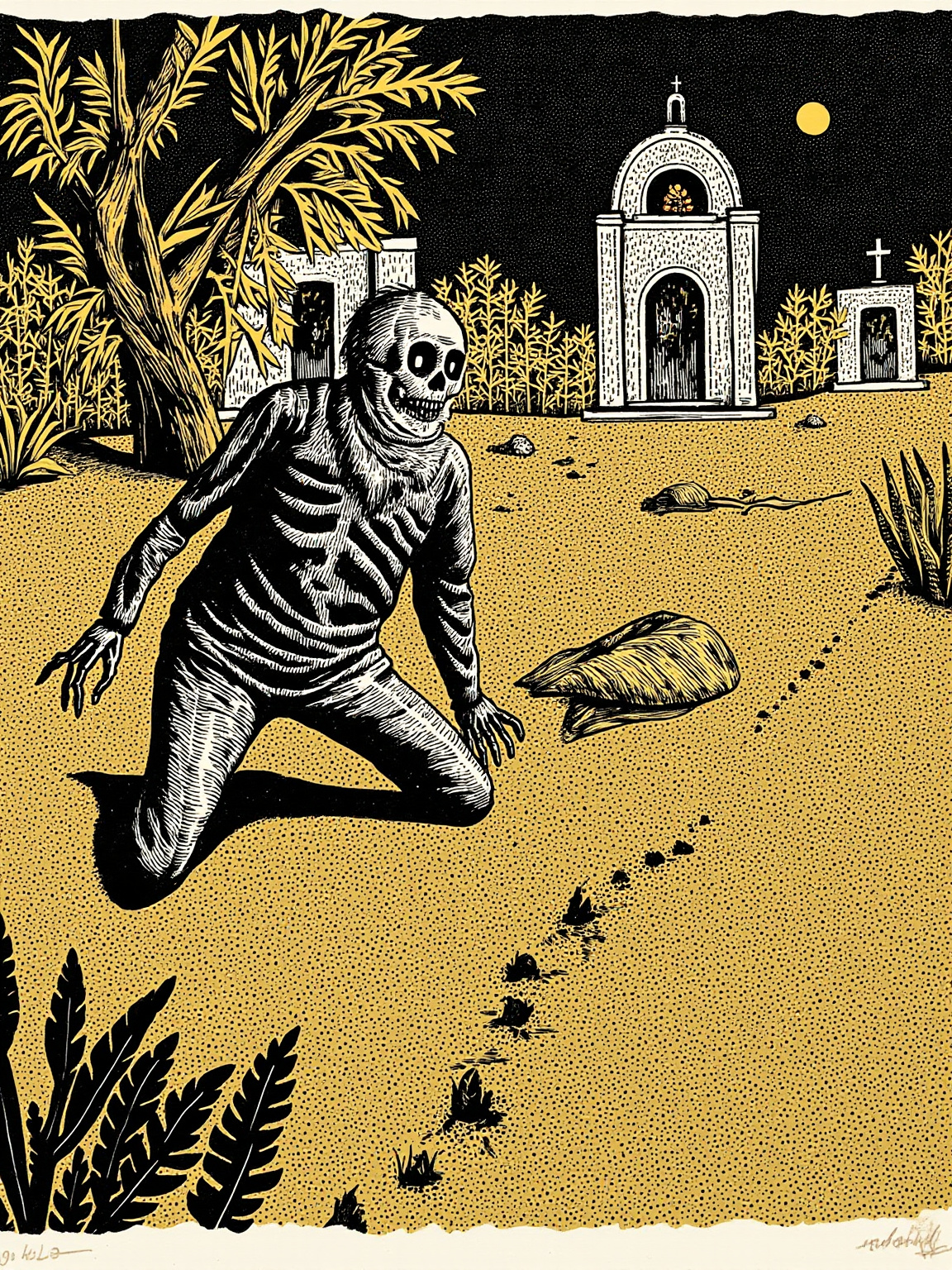
The hat lay on the stones where the body had fallen. Nobody picked it up.
草帽落在尸体倒下的石板上。无人弯腰去捡。
金句 · 第四部 · 广场上的草帽
Theme and Method
Greene's method works in reverse: the more broken the saint, the truer the faith. The Whisky Priest is no hero — he is a coward who cannot rid himself of himself. Which is exactly why he cannot be flattened into the cardboard good man of a moral fable. All he has is choice. Every time he has a chance to run, he turns back; each turning back adds another layer of shame, and each layer of shame carries him one more step down the road. Nor is the lieutenant a villain. He is another would-be savior of the world, except that in his eyes salvation means tearing out the old by the root. Two faiths collide on the same muddy track; neither converts the other. This is the reality Greene wants to hold onto.
In form Greene borrows the shell of a thriller — pursuit, spies, flight, assassination — but at its core the book is a theological essay. He crams a page of theological speculation into a single nighttime conversation, presses an abstract proposition between the priest's rotten tooth and his daughter's unwashed face. Many have copied the hybrid since, but in Greene's hands it never feels showy. Chinese readers actually face little barrier entering this work — you think you're watching a Latin American crime film, and halfway through you find yourself asking what on earth could make a death worth dying for.
One broken priest, turning back, is closer to faith than a hundred saints' biographies.
Reasons to Read the Novel
I've spoiled the ending above, but you'll still hold your breath for the priest when you read the novel. That is the power of the writing. Greene writes a manhunt and you can smell the sweat on the priest's back; writes the tropics and you feel the mud sucking at every step; writes a father and daughter in five lines, her standing at the door, that one look, and your heart churns for hours. Plot is the bone; this is the flesh. Then there is the theological argument running underneath, faint, never raising its voice; you have to read it line by line to feel what it costs when two kinds of faith meet head-on, the restraint almost glacial. Knowing the ending, you read it faster, and slower at once.
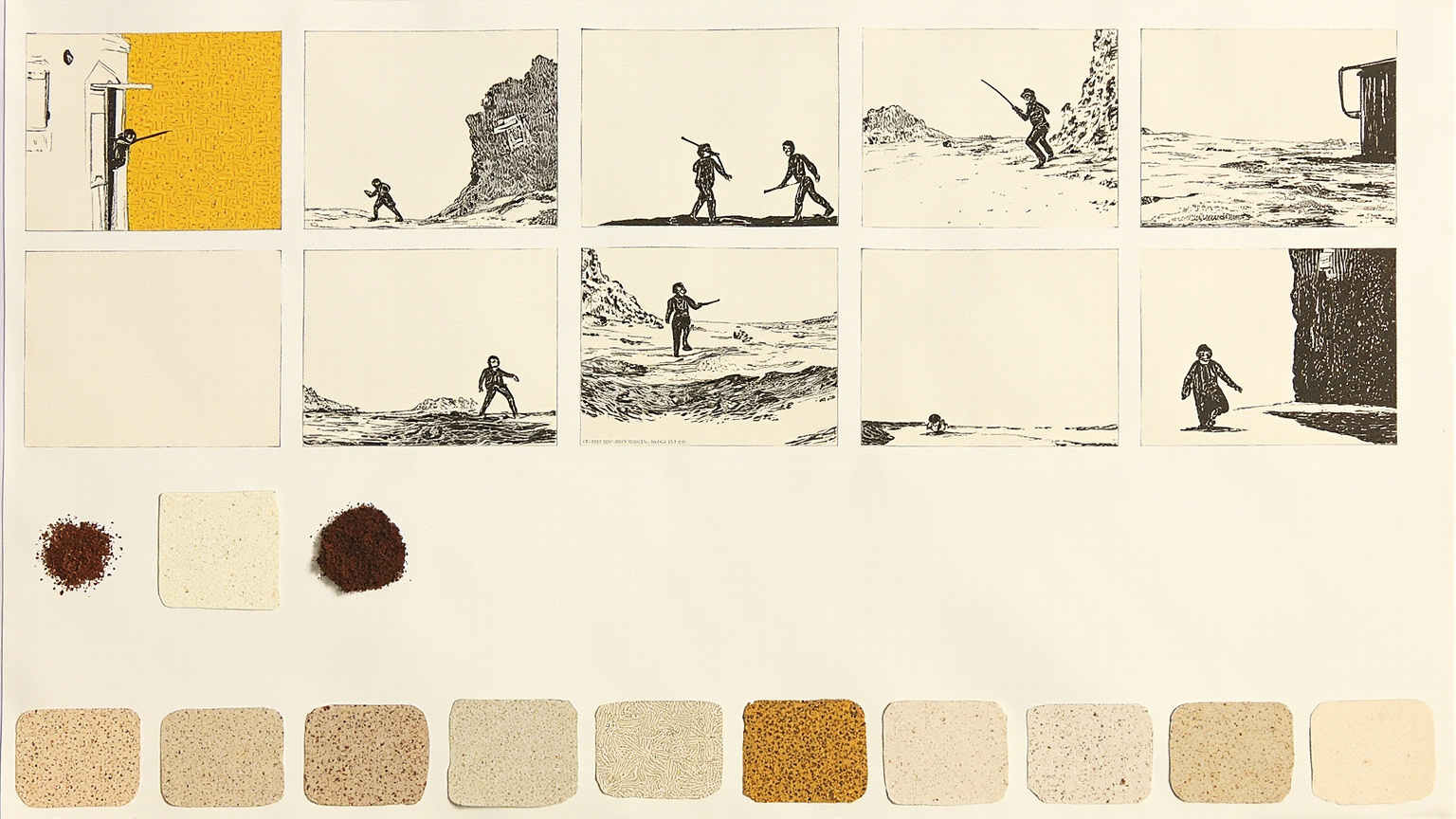
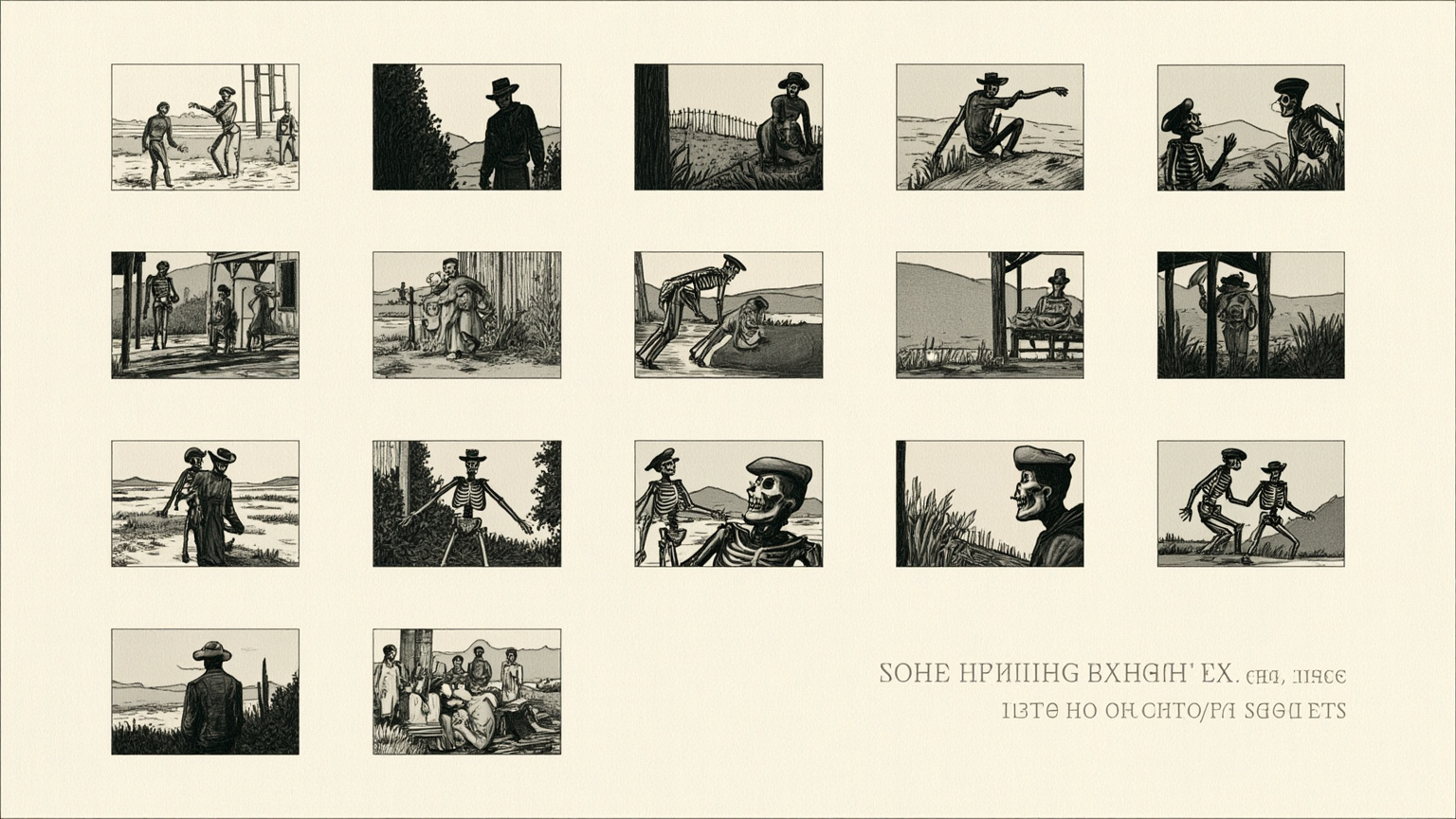
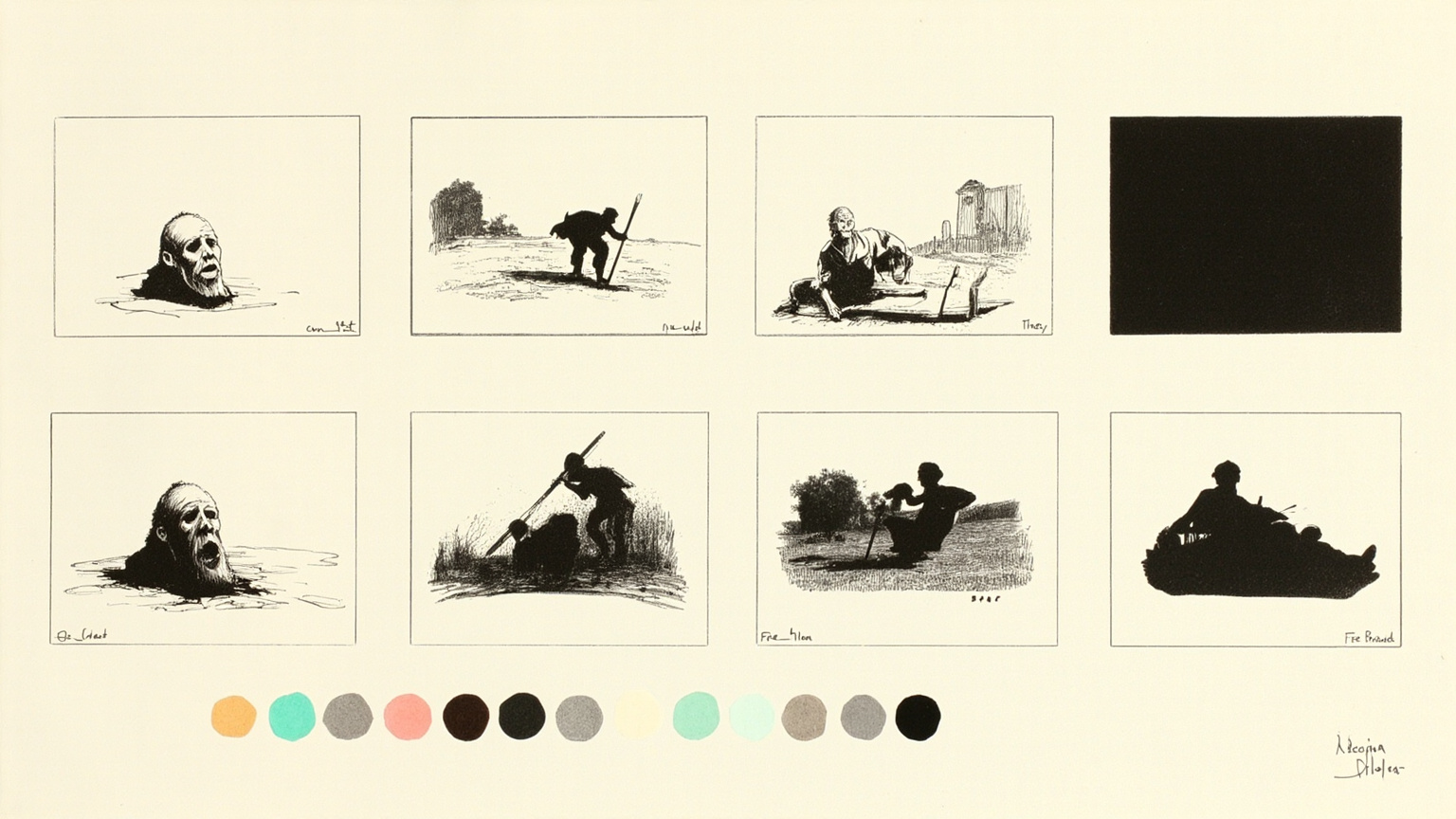
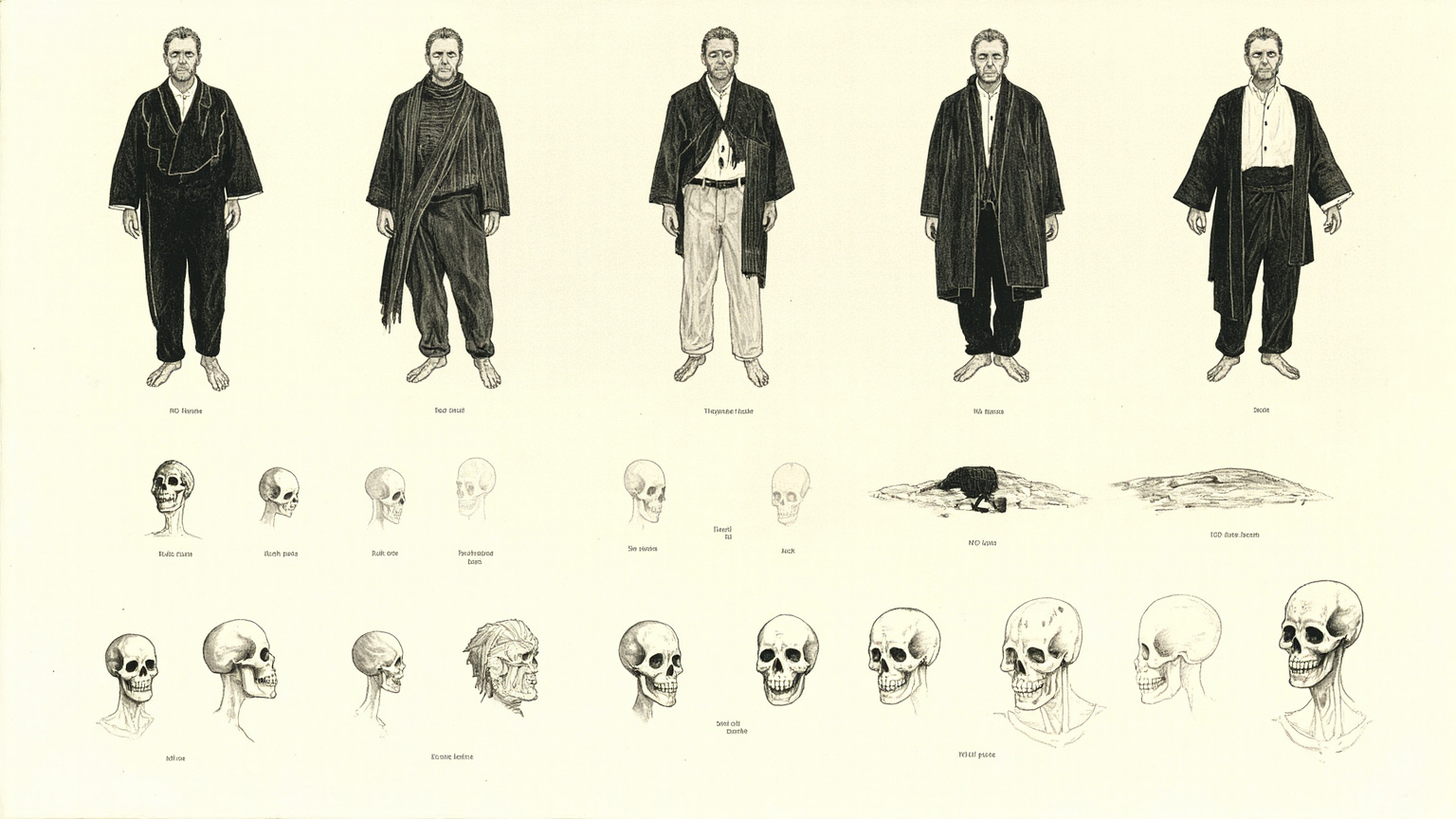
Art Direction4 plates
Before the guide was written, this book got a visual foundation — every illustration you just read grew out of it.