The Ring of the Dove (Ṭawq al-Ḥamāma fī l-Udafa wa-l-Ullāf) · Companion Guide
鸽子的项圈
一千年前科尔多瓦的闺阁之中,隔着屏风与字条,爱如何把人悄悄拆解——一位扎希里派法学家亲历的三十种心动。
One Ring, Thirty Kinds of Love
The book remembers a Córdoba legend of two lovers who sent messages by white dove, and its very title comes from that image: trade the cord for a ring. Tying a cord to the dove's leg was just a private signal that a letter was coming; slipping a ring onto its leg told the whole street the bird had an owner. A thousand years ago in Córdoba, love letters left the house on wings like that.
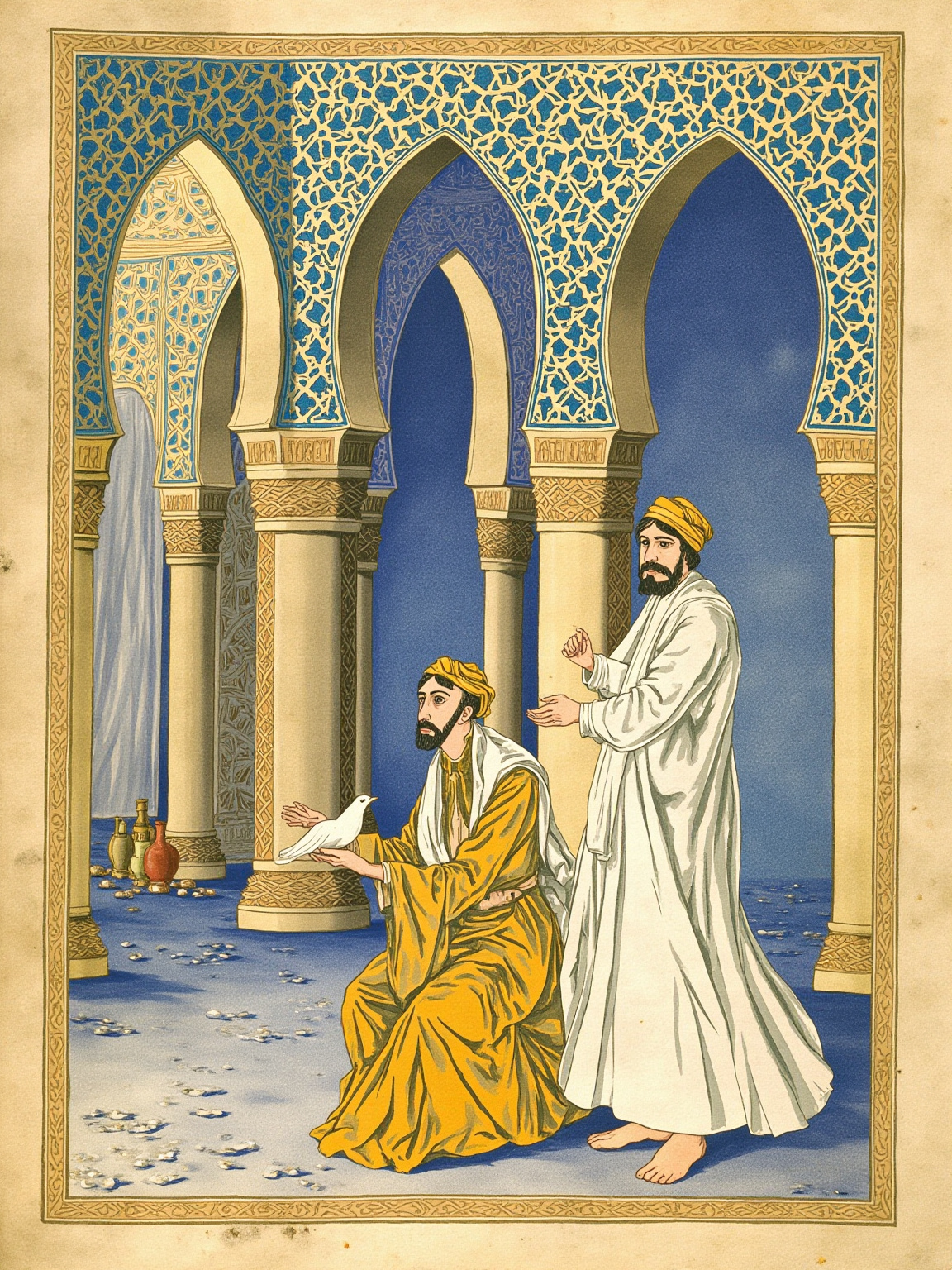
Love, at its first assault, strikes without warning; the soul surrenders before the heart consents.
爱初次进袭时从不预告,魂魄先于心意便已归降。
金句 · 开篇告白 · 亲历者的信用
What Kind of Book Is This
The Ring of the Dove was written in Córdoba by Ibn Hazm, who was twenty-eight at the time and already known across the Umayyad caliphate of Córdoba as a child prodigy and an authority of the Zahiri school, Islam's strictest school of literal scriptural interpretation. He spent his life as a scholar and a poet, and just as much of it caught up in political intrigue, exile, and imprisonment, dying at last as a scholar far from home. But this book is not about law, and not about politics. It is about love: the love he witnessed, the love his friends lived through, and the love that left him bruised himself.
It is a hybrid of thirty essays and real anecdotes. Each chapter takes up one category of love's psychology: what a glance can do, how a messenger threads two households together, how parents keep watch, how affection curdles. Each one is backed by a story the author or a friend actually lived. Later generations came to treat it as the founding text of Arab love aesthetics, dissecting love as a phenomenon nearly three centuries before the European courtly love tradition got around to it.
People and World
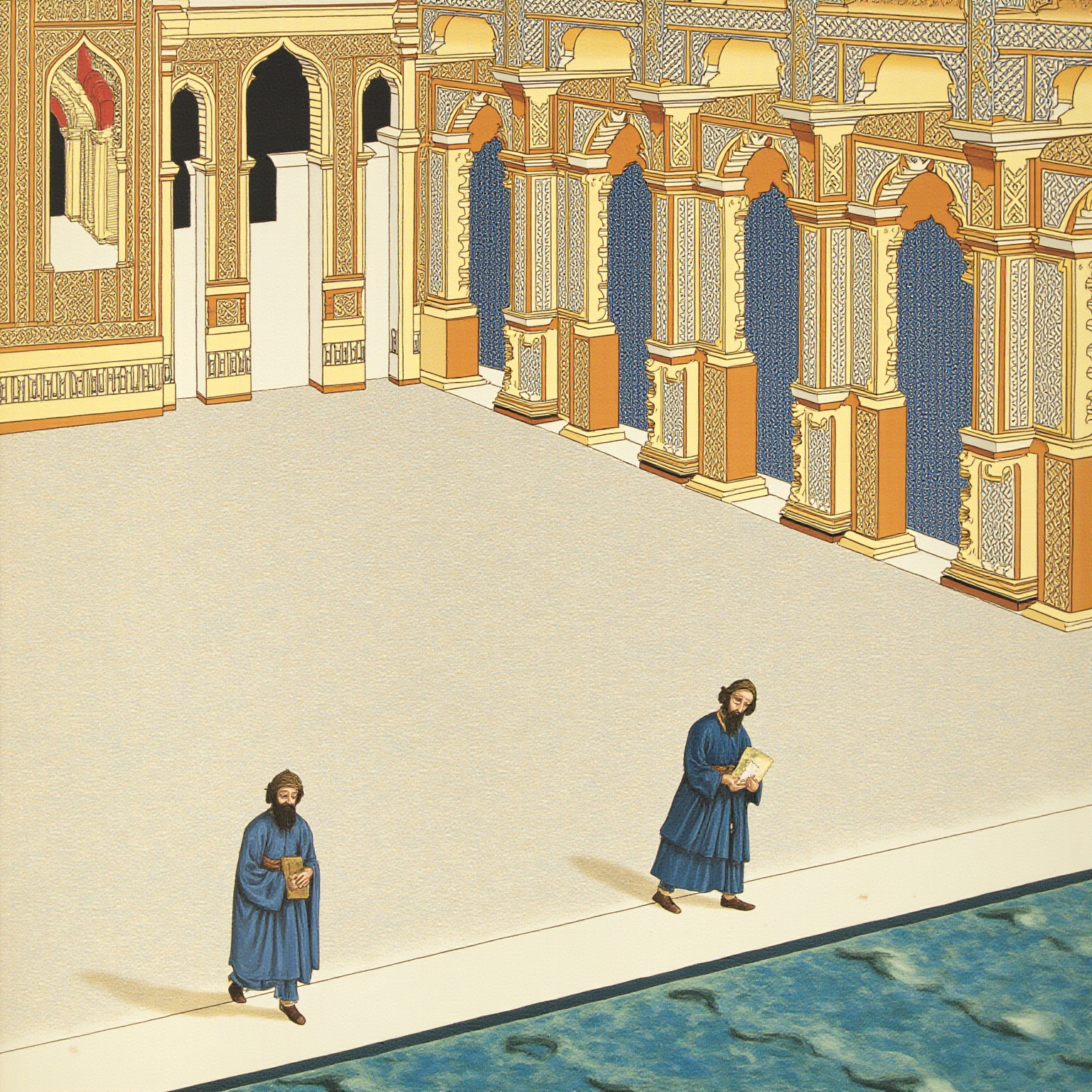
Ibn Hazm the author is the implied narrator here, and also the book's most central case study. As a boy he grew up inside Córdoba's upper-class women's quarters, watching noble sons and highborn women fall in love across a curtain, and falling himself, for a slave girl or a cousin who was later seized, sold off, and gone for decades. That episode is the heaviest undercurrent in the whole book.
Nasr is the young friend who recurs throughout the book, an official's son in love with a woman of higher birth, and the book's model lover. The daughter of Wahid, kept nameless, is the recurring object of longing, a highborn girl hidden deep in the women's quarters, glimpsed only as fingertips behind a screen. The messenger is the most distinctly Arab figure in this love literature, whether a maid's manservant or a master's page, caught between two lovers, cutting through back alleys, garbling messages, taking bribes. The aging mother or nurse is both the guard of the women's quarters and, once won over by pleading and gifts, the most crucial ally. And then there are the caliphate's guard officers and night patrols, the Córdoba watch that lovers dodge after dark, the concrete face of love's enemy.
How the Book Moves
Opening Confession: The Authority of a Witness
The book opens with a declaration: I write this, the author says, because I have seen love and lived it. He grew up inside Córdoba's upper-class women's quarters and watched countless secret love affairs unfold, and that experience alone is his credential. Then comes a warning to the reader: this book does not teach vice, it teaches an understanding of human frailty. That opening sets the tone for everything that follows, not an erotic manual and not a moral sermon, but a man who has been through it laying his own creases open for you to see.
Glances and Screens: Years Behind a Curtain
Nasr falls for a highborn girl. For years the two of them communicate only through a screen, by glance and by letter, the book's most typical opening scene. How does love begin? The author offers several mechanisms: love at first sight, a glance that carries a message, the beloved who appears in dreams, a hint dropped in a letter, each backed by a case. The reader follows a long infatuation advanced by a misdelivered love letter, an accidental meeting of eyes, a curtain lifted by a gust of wind.
This passage is close to one root of the later European courtly-love motif of lovers separated by a lattice window, except it comes almost three hundred years before the troubadours of Provence, and the author writes it more coolly, more like someone dissecting the wings of a butterfly.
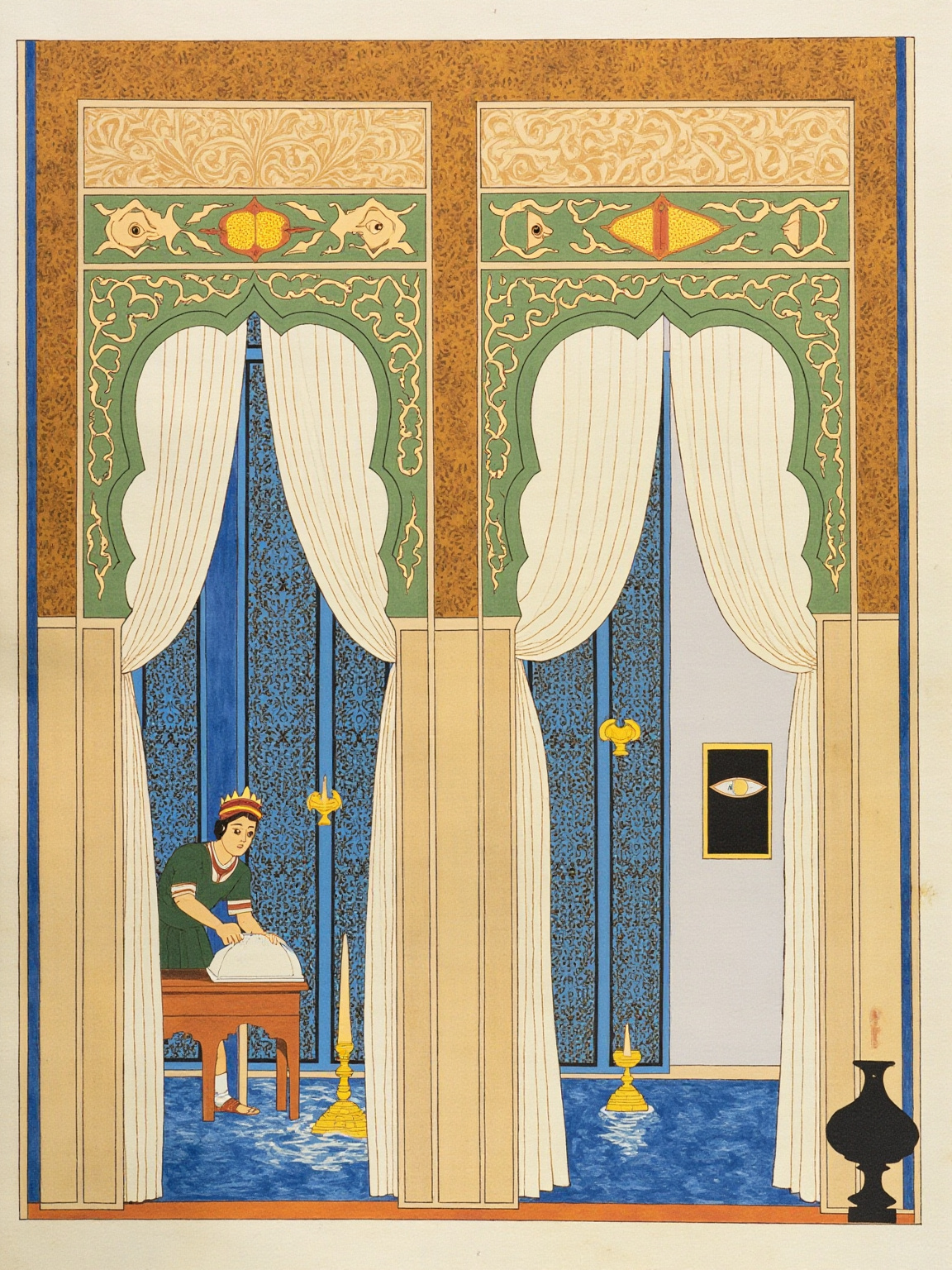
He loved her behind the veil, in glances only; his year were counted in letters slipped beneath a door.
他隔着一层纱爱她,年岁只以掖在门缝里的信笺来计算。
金句 · 目光传情章 · 隔着屏风的相看
The Messenger's Back Alleys: The Boy Caught in the Middle
Chapter Fifteen is devoted entirely to the messenger. He is the most distinctly Arab figure in this love literature: the master cannot leave the house, so the messenger threads the needle for him. The author writes at length about him cutting through back alleys, garbling messages, taking bribes, forging replies, nearly ruining his master more than once. Every temperament of messenger gets its own case: the loyal one, the quick-witted one, the greedy one, the one who gets caught, the one who gets bought.
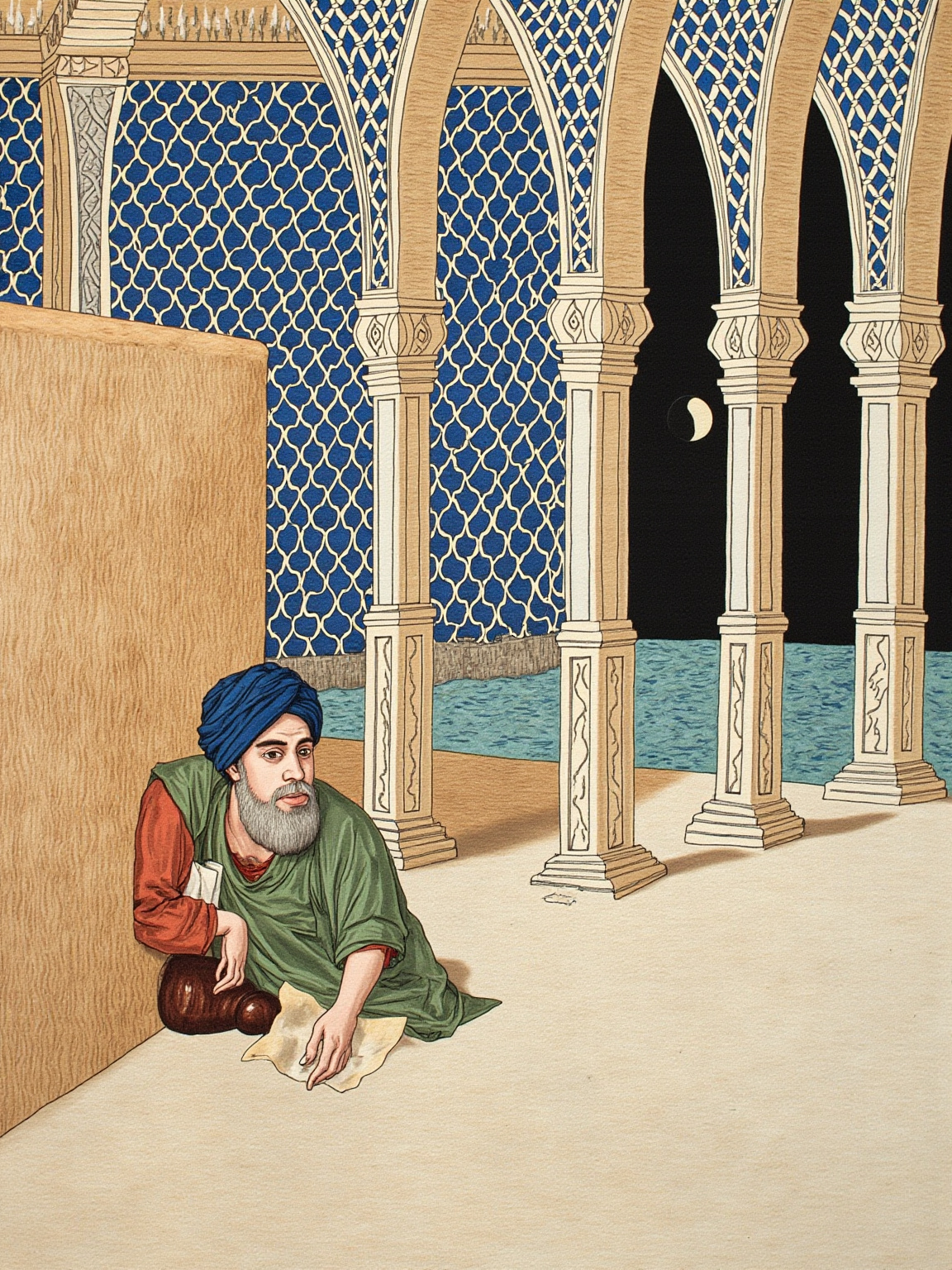
A messenger carries more than words—he carries the lover's life in the folds of his cloak.
信使怀中所携的不是言辞,是情人交付的一整条命。
金句 · 信使章 · 暗巷的少年
What makes the writing work is that the author never lets the messenger be a mere functional side character. He gives him his own ethics: he may understand where the affair is headed better than the master does, knows when to push and when to hold back, and stands caught between the master, the beloved, and the bribed old nurse, his position more tangled than either lover's.
The Old Nurse Switches Sides: From Guard to Ally
The household guardian who keeps recurring in Chapters Seven and Ten is the book's best-drawn villain and its best reversal. The aging mother or nurse guards the women's quarters fiercely, the lovers' greatest obstacle, until she is won over by pleading, gifts, and tears, and becomes their most crucial ally. She holds the key, messages pass through her hands, and cover is arranged at her word.
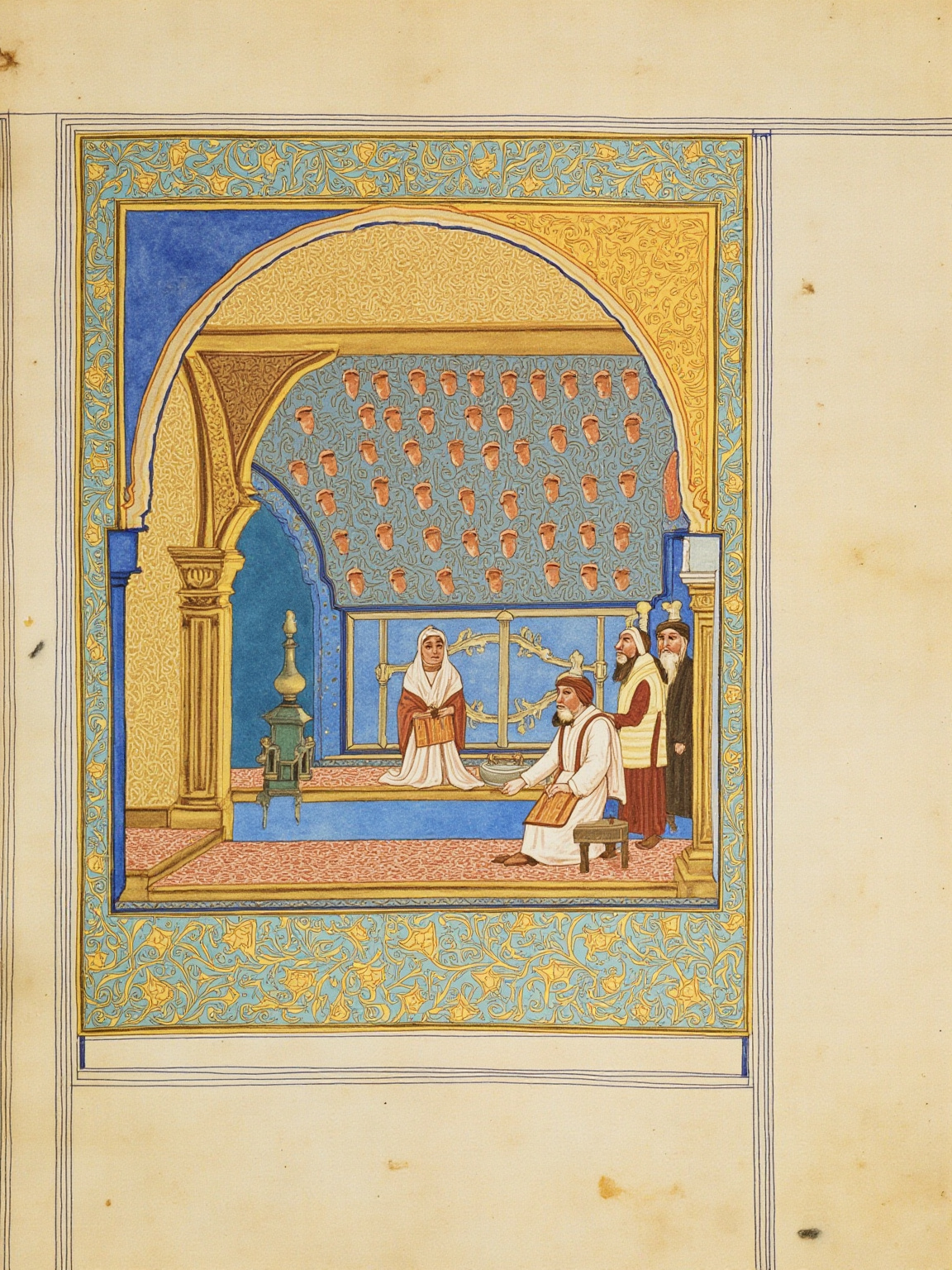
The doorkeeper, once won, becomes the true sovereign of the house of love.
一旦被收买,那看门的老妇便成了情场真正的主人。
金句 · 监视章 · 从看守到同盟
What makes this passage work is what it reveals about how power actually moves. A woman with no standing of her own is forced into keeping her master's secret, and in that position she becomes the true seat of power in the whole affair.
Law Against Desire
The chapters on the dangers of adultery and on love and the law are the tautest in the whole book. The author, an authority of the Zahiri school, does not flinch from the fact that carnal desire is a sin under Islamic law; no one knows this better than he does. But he also knows, just as clearly, that law cannot hold back the human heart.
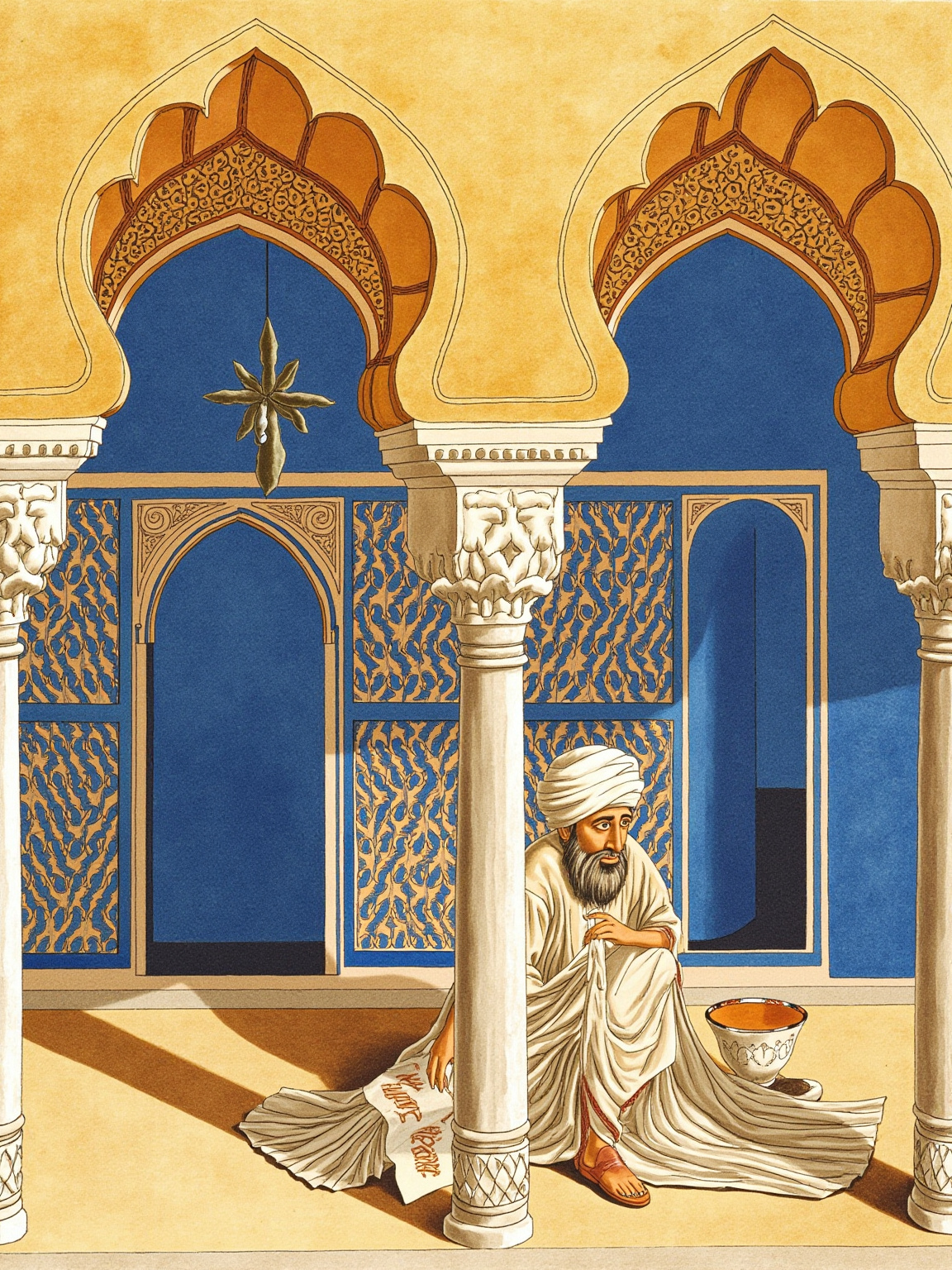
Law forbids what the heart has already done; the jurist merely testifies to its defeat.
律法所禁的,正是心早已犯下的——法学家不过是为这场落败签下证词。
金句 · 通奸的危险章 · 律法与欲望
That tension between the jurist and the man who writes about desire runs through the whole book. He betrays neither his school nor his own experience, so the only honest place left to stand is between them: love is both a gift from God and a punishment from God, and that line is the only truce he can find.
Loving Without Distinction: The Other Side of Arab Love Aesthetics
The author takes apart a man's love for a woman and a man's love for a boy with the same tools and no moral discount for either, the single most contested and most argued-over feature of the book in the modern world. On his page, a boy beloved is watched from behind the same kind of screen, courted by the same glances and letters, placed under the same surveillance, served by the same kind of messenger.
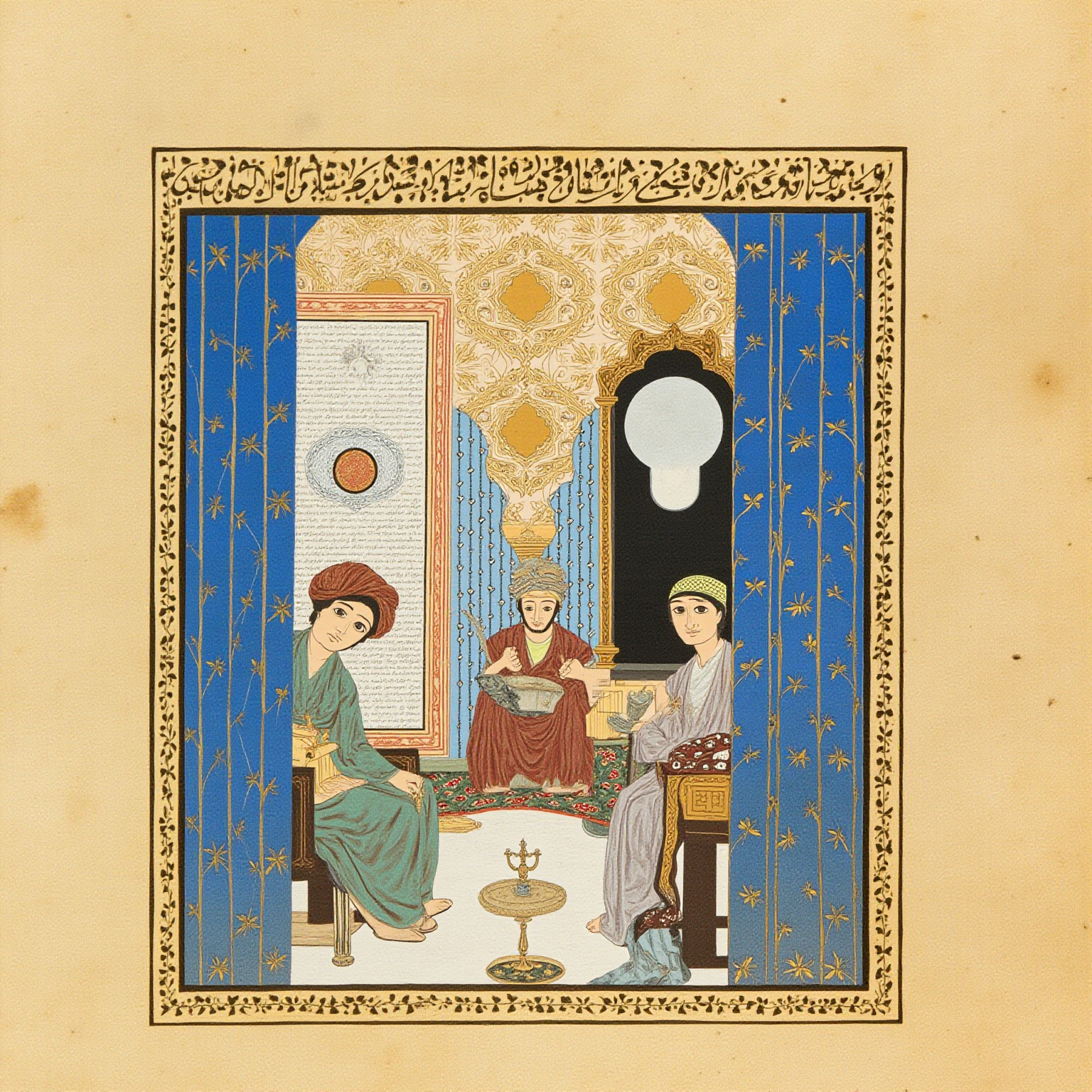
What makes the writing work is that the author holds to a single vocabulary and a single method for both cases. He draws no moral line between them, and he does not file the boy beloved into a separate drawer. That refusal alone makes the book more honest than its European contemporaries, and it is exactly where any illustration must not flinch.
The Closing Elegy: One Last Look Before Farewell
As the book's thirty chapters near their end, the author remembers the woman he once loved. She had been seized, sold, and gone for decades; decades later he saw her once more, and not long after, both of them died. It is a closing passage that comes close to elegy, and it pushes the whole book from essay toward an al-Andalus lament.
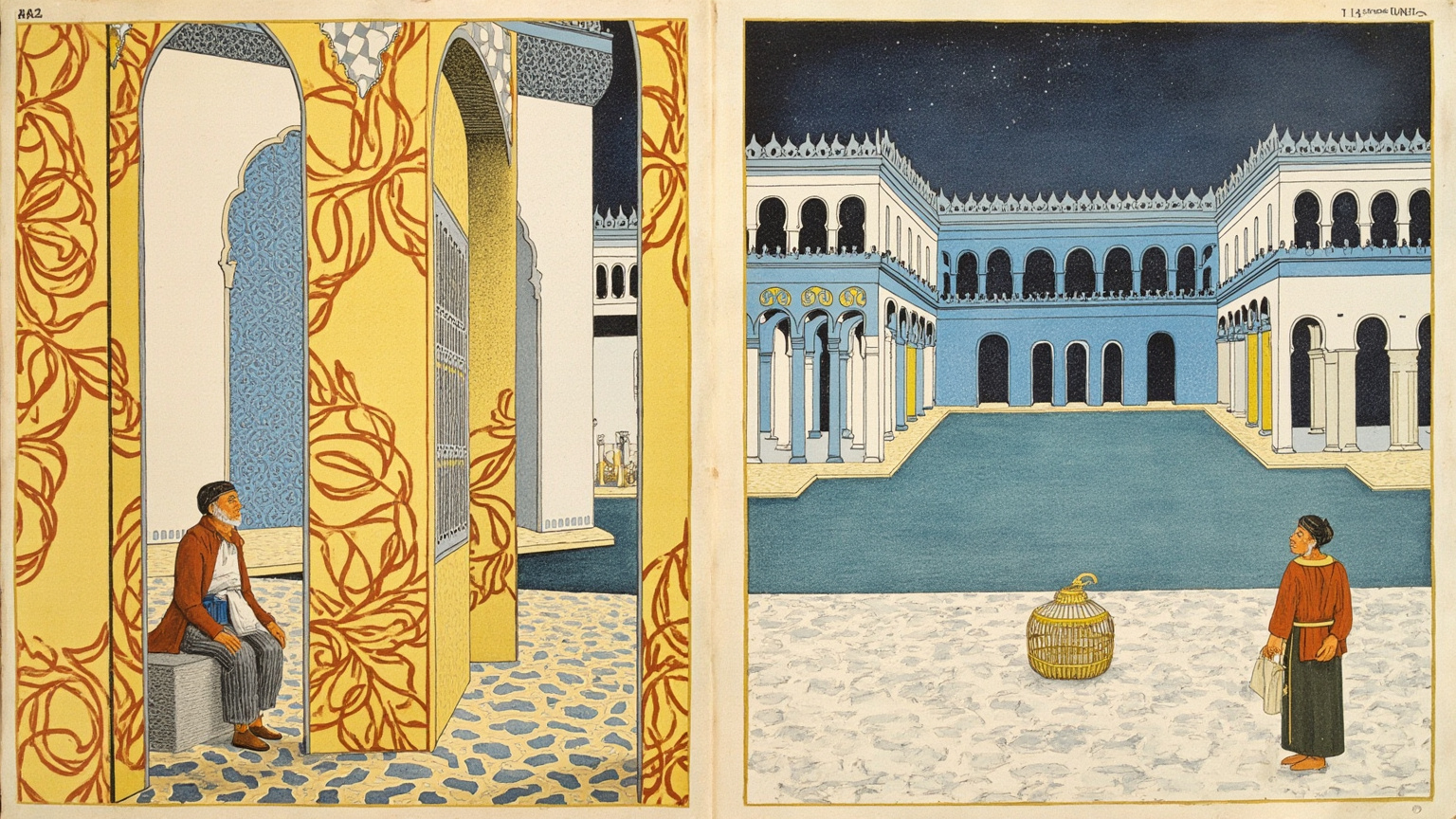
I beheld her once more after the years had taken everything; the next dawn, the world was lighter by two souls.
岁月已将一切卷走,我却再见她一面;翌晨拂晓,这世间少去了两缕魂。
金句 · 压卷挽歌章 · 诀别之前的一面
Themes and Craft
What this book is actually doing is turning love into a branch of anthropology. Seven centuries before Europe got there, Ibn Hazm broke love down into dozens of psychological forces: the glance, the imagination, memory, habit, self-projection. Each one is backed by a case, each one given a characteristic anecdote. It is the founding text of Arab love aesthetics, and later al-Andalus and North African love poetry, Hebrew love poetry, even the courtly love tradition that reached Europe through Provence, all extend its line.
He wrote desire as anthropology, wrote the theologian in himself as a case study, and wrote farewell as civilization's last sigh before it fell.
Why Go Read the Real Thing
A companion guide can only hand you a map; the book itself is the land. What no explainer can give you is the author's rare voice, caught between a jurist's authority and a witness's memory. He never hands down a moral verdict, and he never hides behind romantic flourish, quoting scripture on one line and writing his beloved's face into the very same page. That kind of honesty was almost unheard of in the Arab world a thousand years ago, and it only reaches you once you open the thirty chapters yourself and work through a full turn of love alongside him.
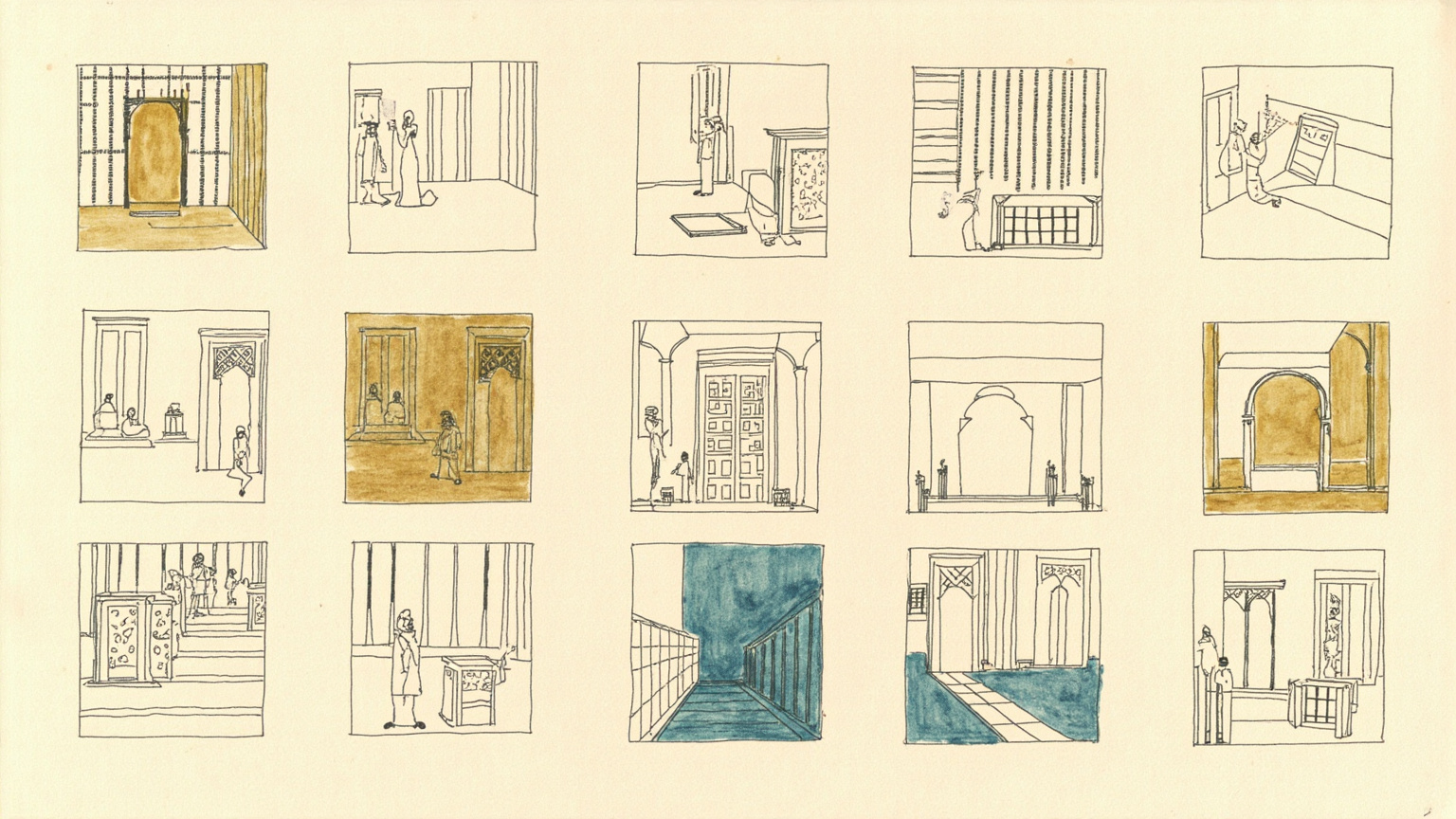
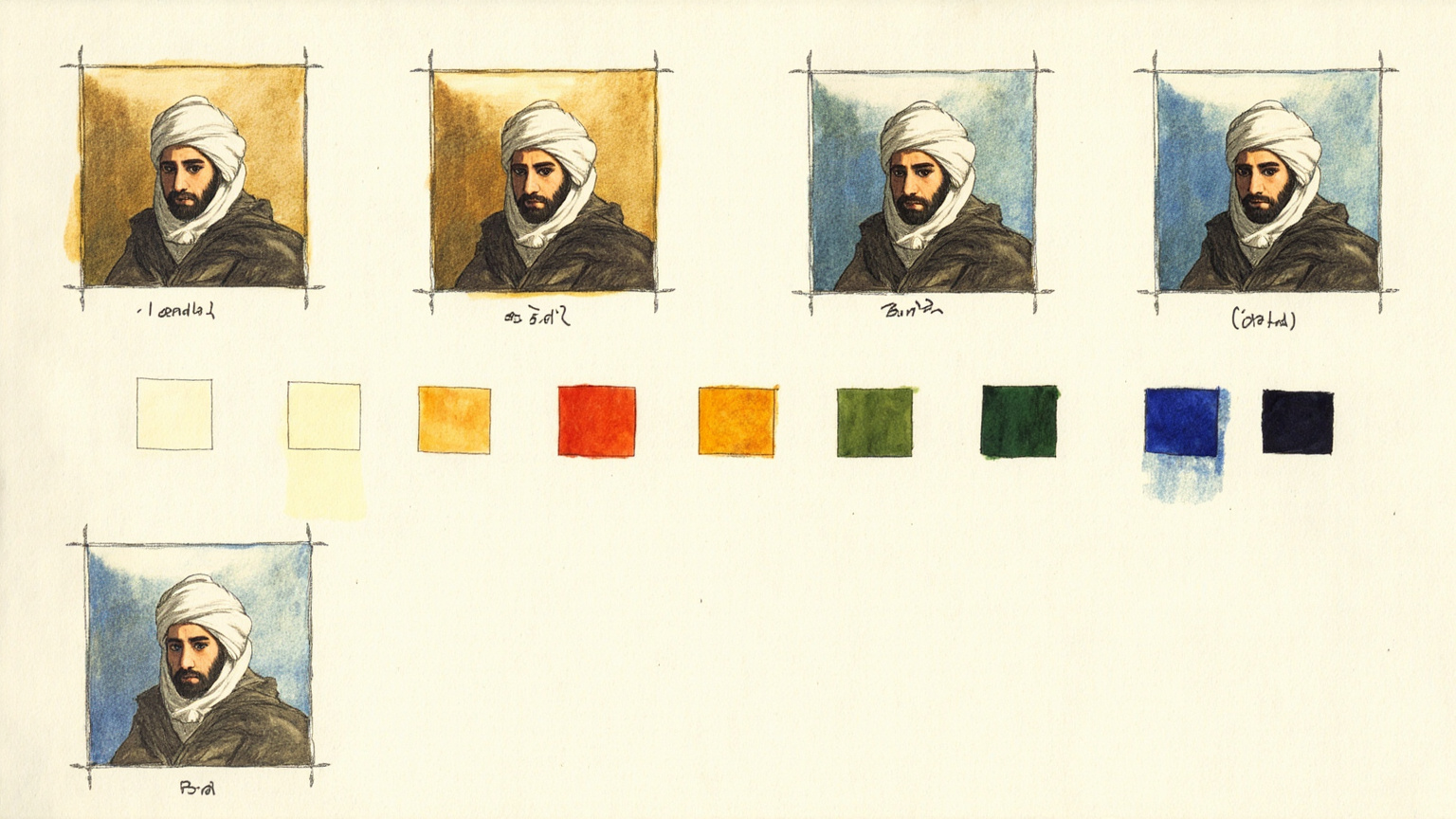
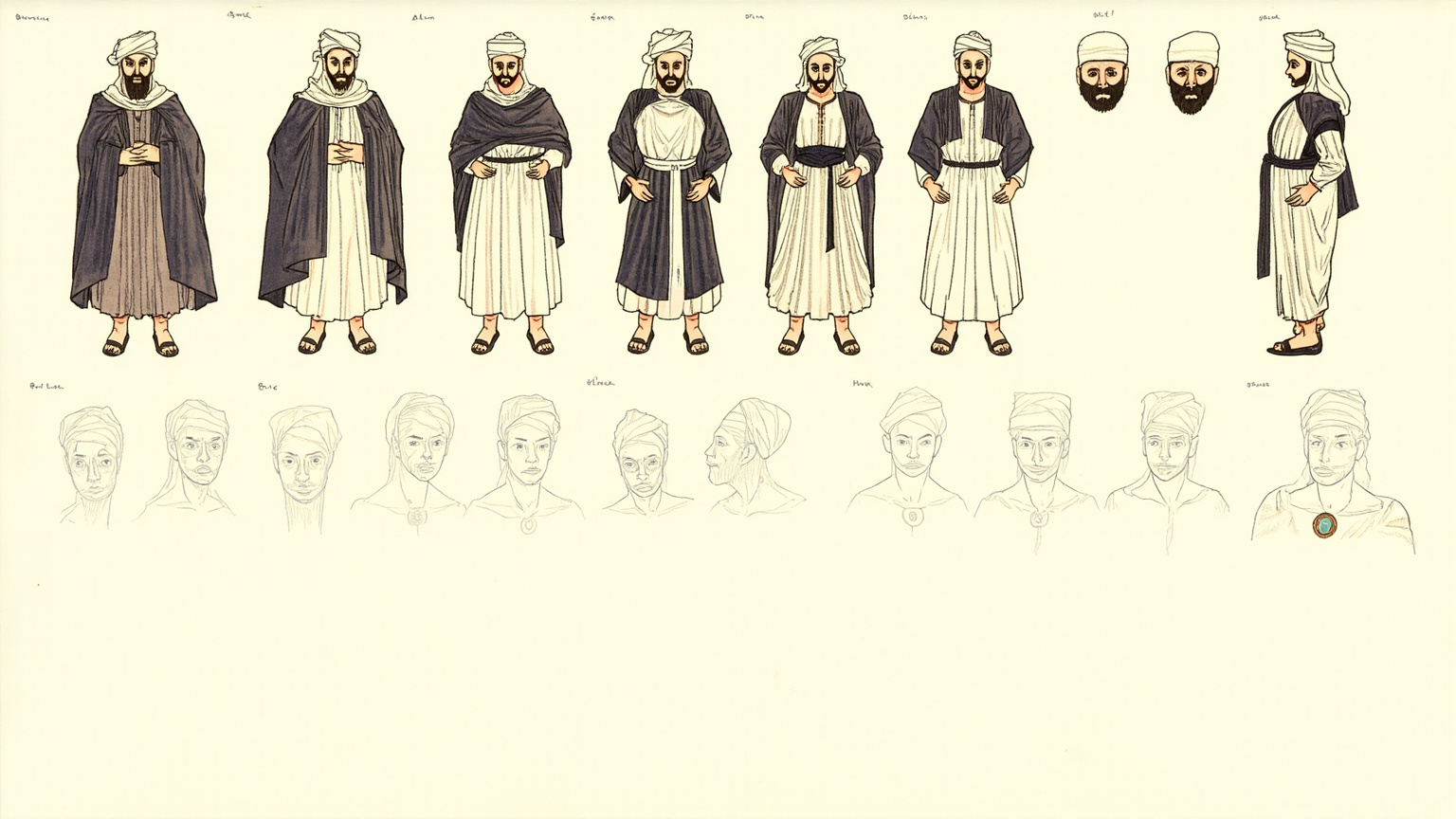
Art Direction4 plates
Before the guide was written, this book got a visual foundation — every illustration you just read grew out of it.