A seventy-three-chapter timetable that has been running for fifteen hundred years
Text and illustrations produced by the pipeline


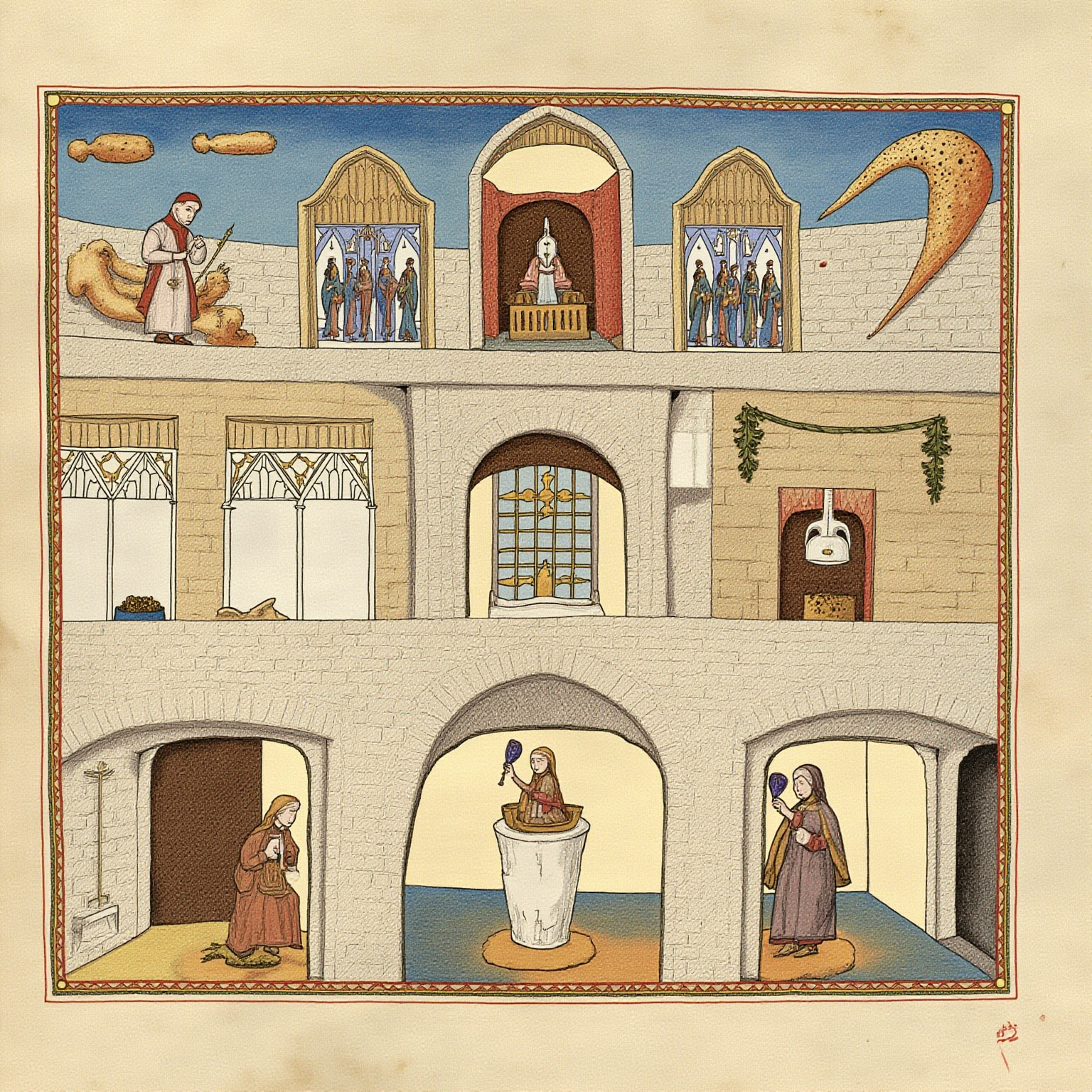
A quill scrapes across a slanted desk, its ink dark with iron gall. The monk touches the nib to his lips, then sets it back on the parchment. A line of Latin letters is becoming a psalm. The scene plays out in a stone room on Monte Cassino, in central Italy, in the sixth century AD. Sharing that room: a miller, a baker, a beekeeper, a porter, and a handful of boys sent by their families to grow up there. Every day, from Vigils to Compline, the bell rings seven times, locking the whole community into a single schedule. This is the Rule of Saint Benedict — not a book urging people toward virtue, but a written charter that lets a group of people live together for the long haul without falling apart.
It runs seventy-three chapters. No narrative, no scenery, no interior monologue. Head count, the hours of the day, tools, the dinner table, the doorbell, even the angle of a guest's bow at the gate — all of it gets written into statute. Fifteen hundred years later, designers of management theory, organizational culture, even addiction-recovery programs still keep coming back to this sixth-century document to copy its answers.
The author is Benedict of Nursia, a young man from an old Roman family. He first abandoned his studies in Rome and shut himself in a cave at Subiaco, east of the city, to live as a hermit. Three years in, his fellow monks pulled him out to be their abbot, then drove him off again because his discipline was too harsh. Toward the end of the 520s, he climbed Monte Cassino in central Italy, tore down the pagan shrine standing there, and built a stone monastery. Founding and governing the house came first; only afterward, in the day-to-day running of it, did he gather up the scattered monastic traditions he had absorbed from Cassian, Saint Augustine, Saint Basil, and the Gospel of Matthew, cut them down, and write them into a rule of just seventy-three chapters that a mid-sized community could actually live by. He wrote it sometime between 530 and 540; the earliest complete manuscript would not surface for another three centuries. In Latin it is called the Regula Benedicti. Its most influential early English translation is credited to the nun Edith Mary Sharpe.


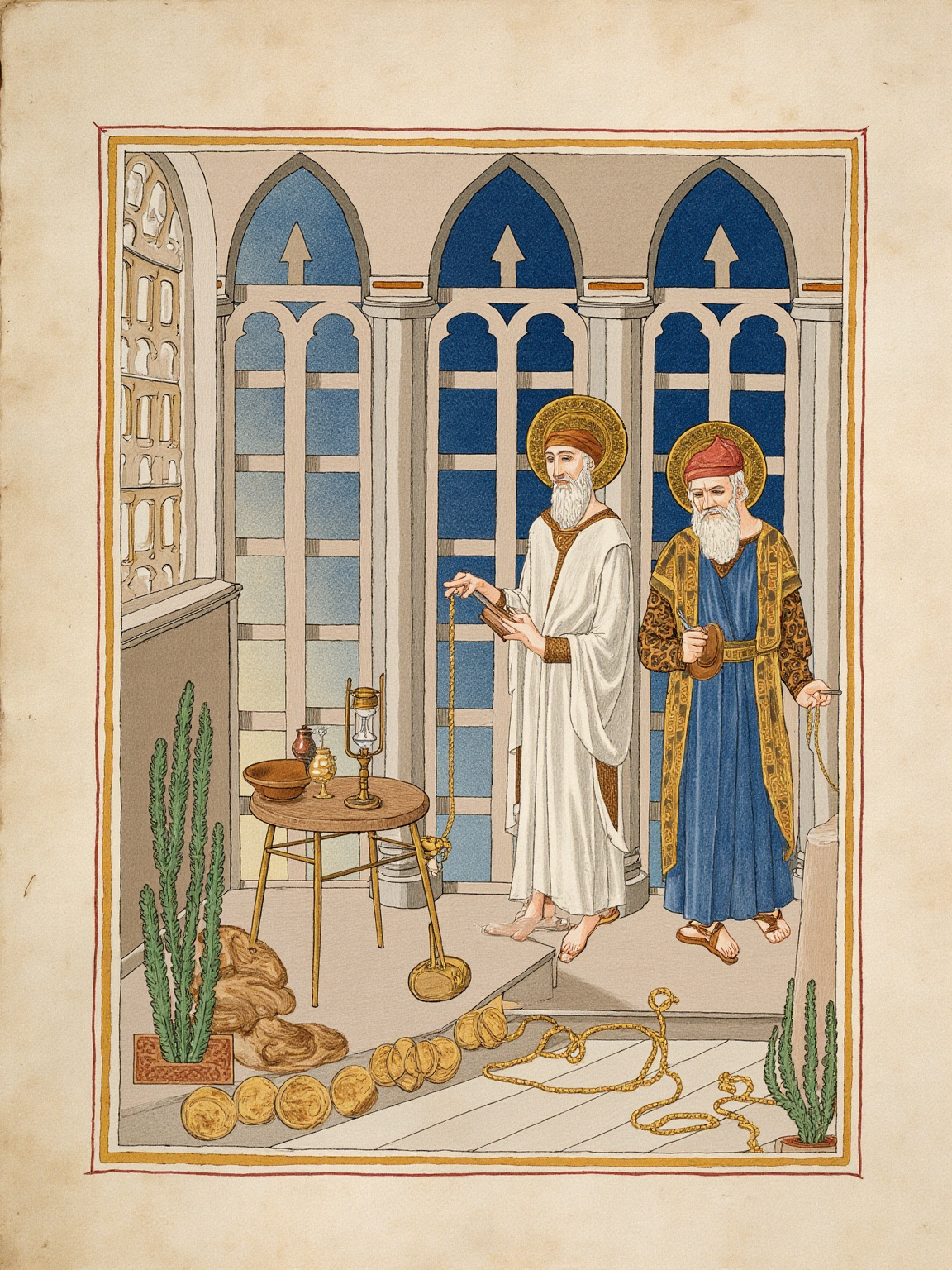
Open Chapter 53 of the Rule, "On the Reception of Guests," and this is the kind of clause you find: after the guest is led into the church to pray, the porter takes him first to wash, then hands him over to the guest-master. The plain provisions the house keeps ready must be complete down to the oil and the lamp: bowl, basin, bedsheet, towel, a lamp enough to read by until bedtime, all itemized in the text. The abbot eats at the same table as the guest, an older monk stands by to pour the wine and serve the food, and the resident monks keep their eyes down and stay silent, as the Rule requires. A closed door, a shared table, a single lamp — one specific act of welcome at some doorway in the hill country of sixth-century Italy, pressed into a sentence of Latin.
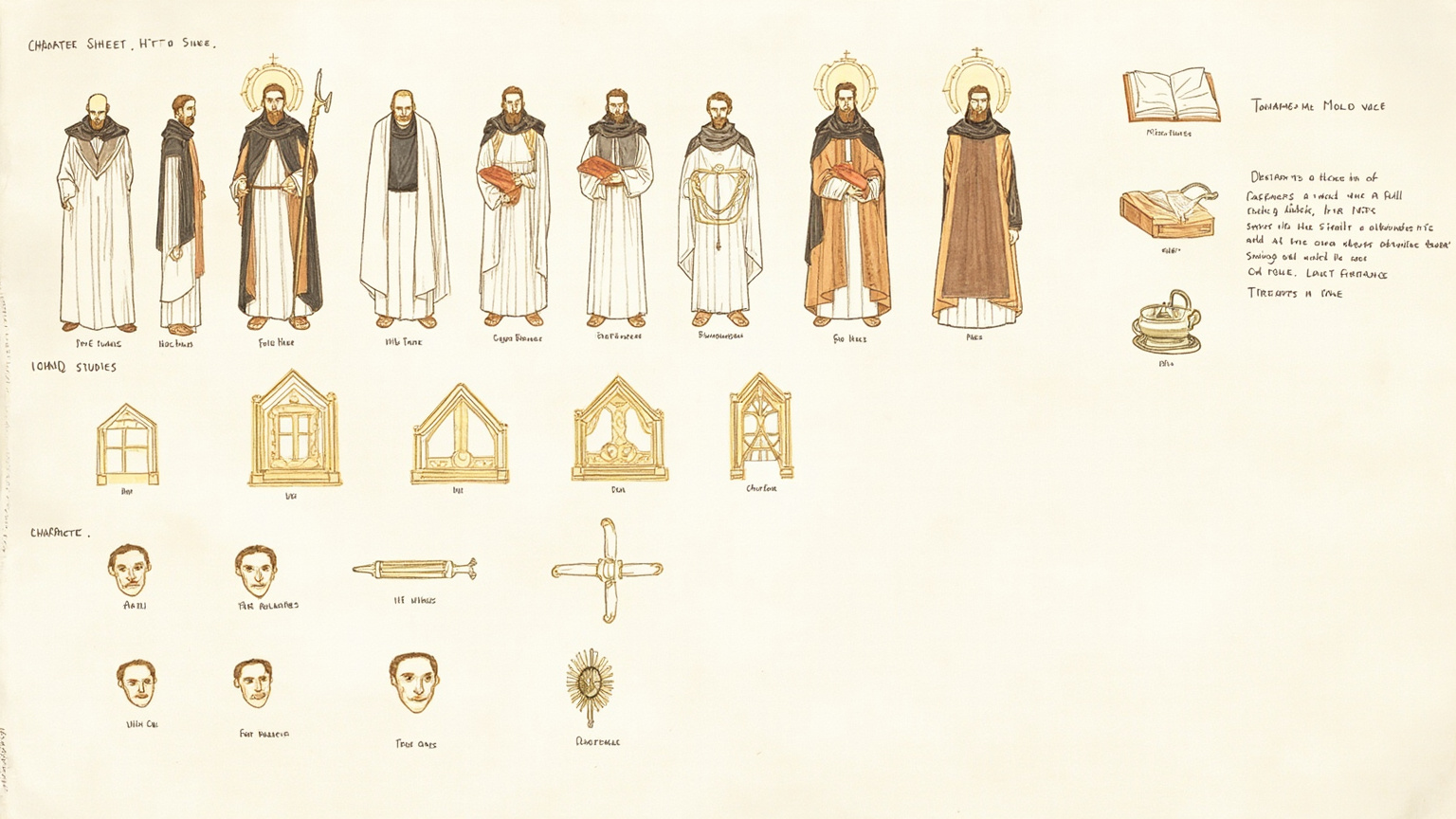
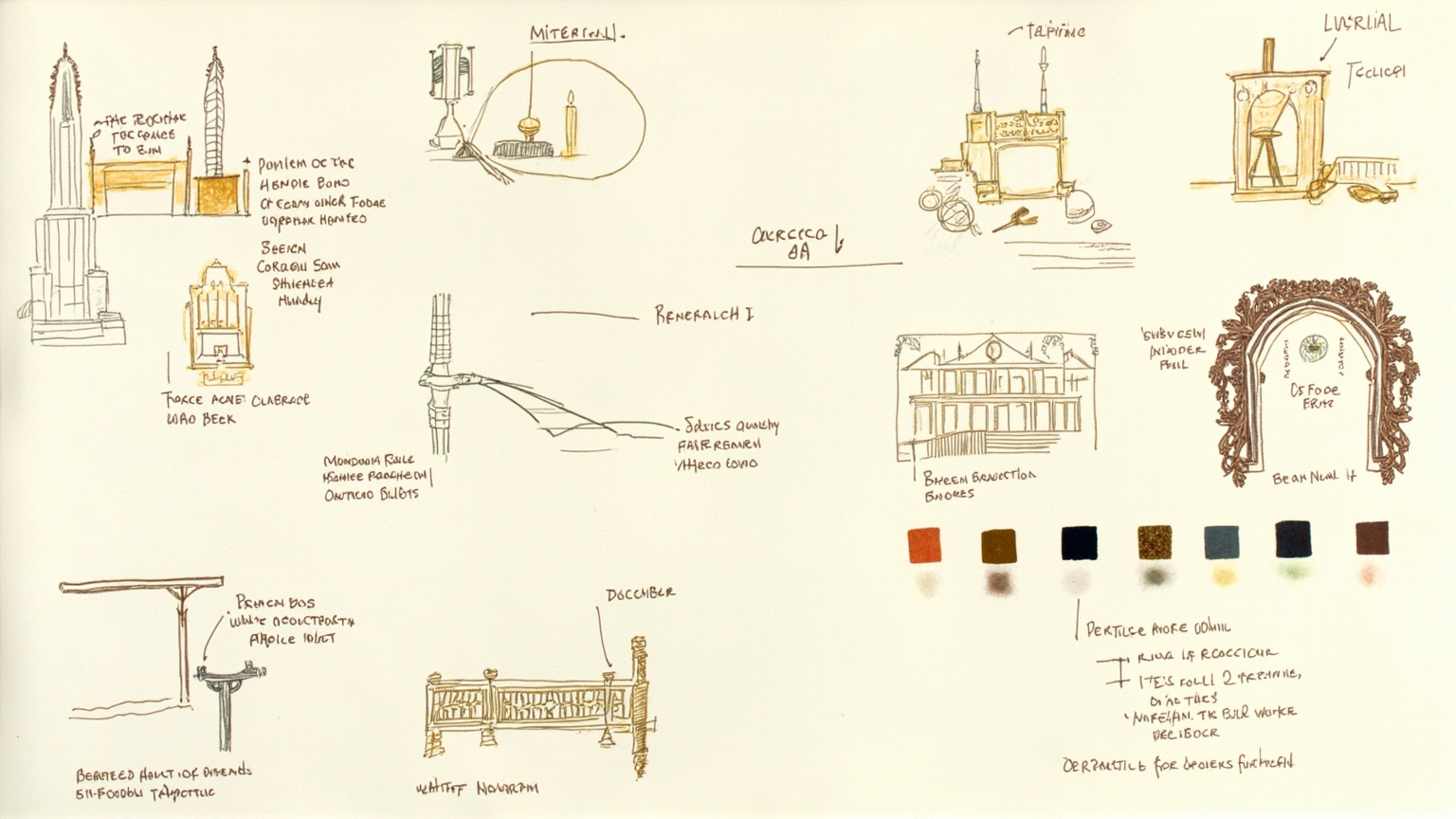
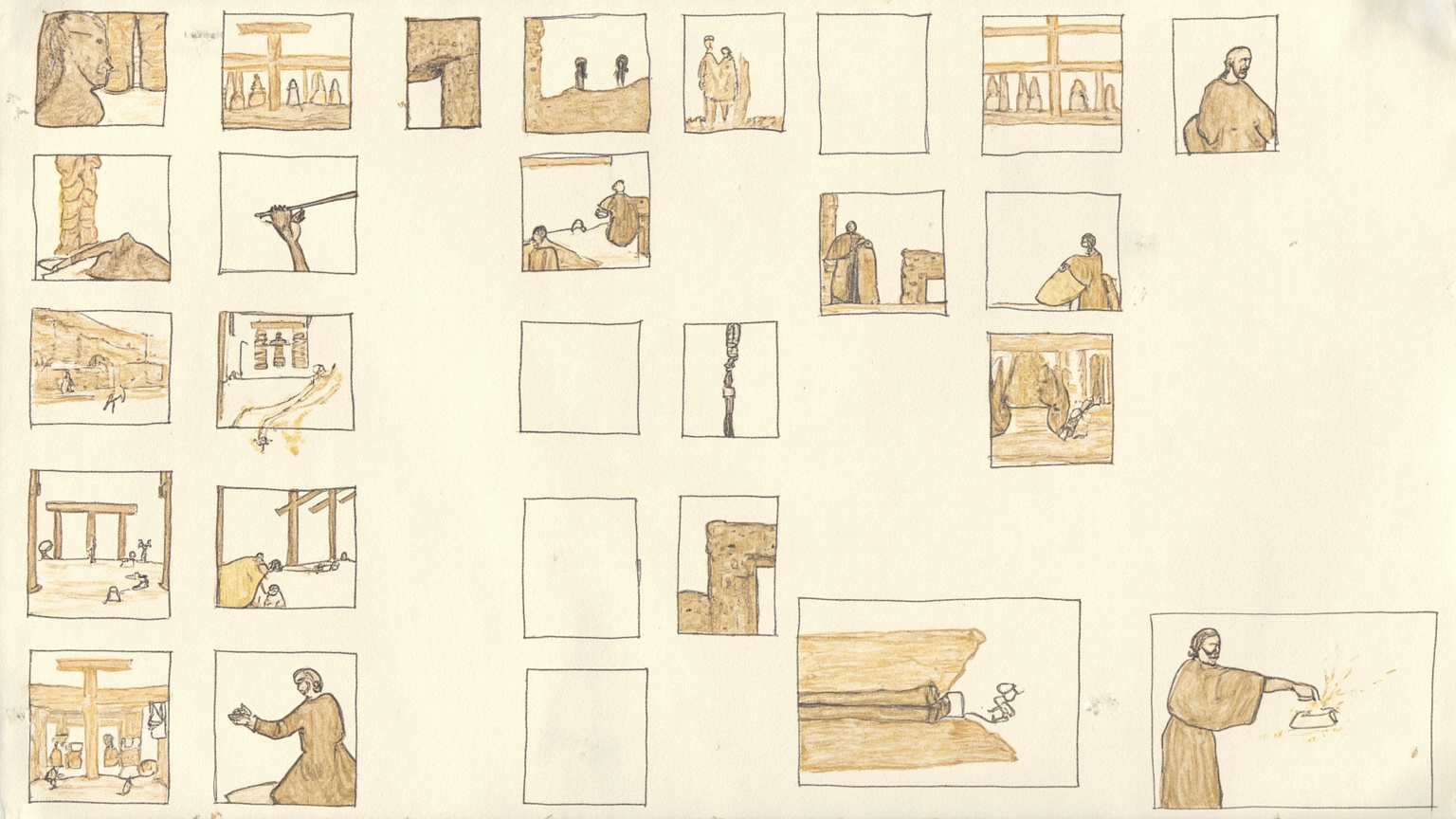
Before the guide was written, this book got a visual foundation — every illustration you just read grew out of it.
In literary history it is not read the way a novel is read; it is used the way a constitution is used. The medieval library, farm, hospital, inn, and school of Western Europe all grew out of this one charter. Cluny, the Cistercians, the Carthusians, and the Carmelites each reformed it in turn, and each reform circled back to the same text. Later ages grouped it with what came before it — Cassian's Institutes, the letters of Saint Augustine, the precepts of Saint Basil, the tradition of the Desert Fathers — as the foundations of Western monastic life.
This world has no protagonist, only roles and posts. The abbot holds the Rule's highest authority: the father of every Benedictine house. Chapter 2 fixes his place: he stands for Christ within the monastery, and what he teaches he must do. Chapters 7 and 8 then require him to hear out even the youngest monk, because, in the Rule's own words, the Lord often reveals the better idea through the younger brother. Fatherly love and the rule of law are cast into a single person — one of the earliest internal checks and balances ever put into a written document in the West.
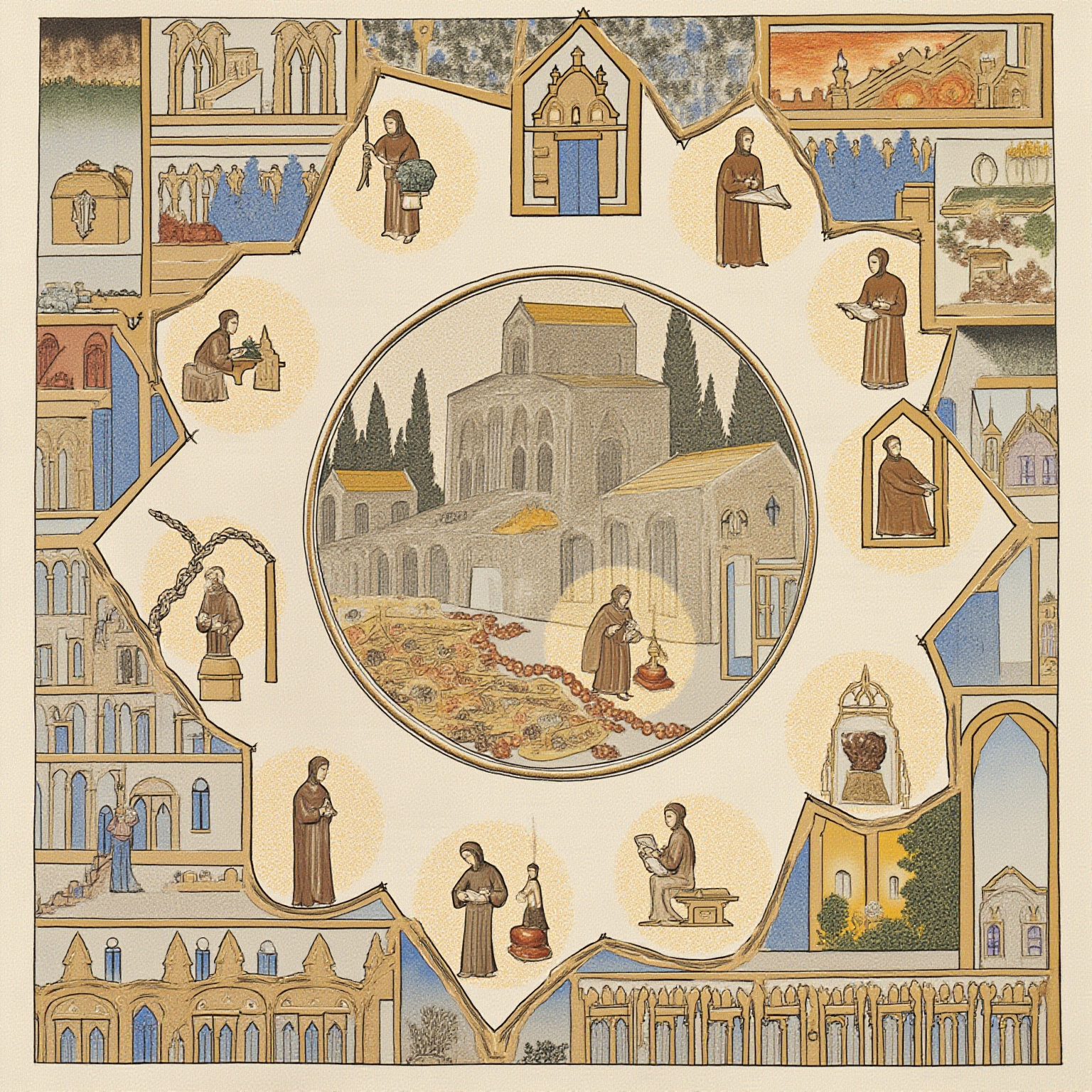
The scribe sits in the scriptorium, copying scripture and the Rule page by page in quill and iron-gall ink; he is the reason West European monasteries later became libraries and keepers of culture. The porter stands watch at the gate, and the moment it rings, the whole reception of a guest begins with him: first to the church to pray, then to wash, then to the guest quarters, then to the refectory, where the abbot dines with him. The monks of the mill and the bakehouse grind flour, bake bread, brew, press oil, tend the garden, and keep the bees — the most literal body the slogan pray and work ever took.
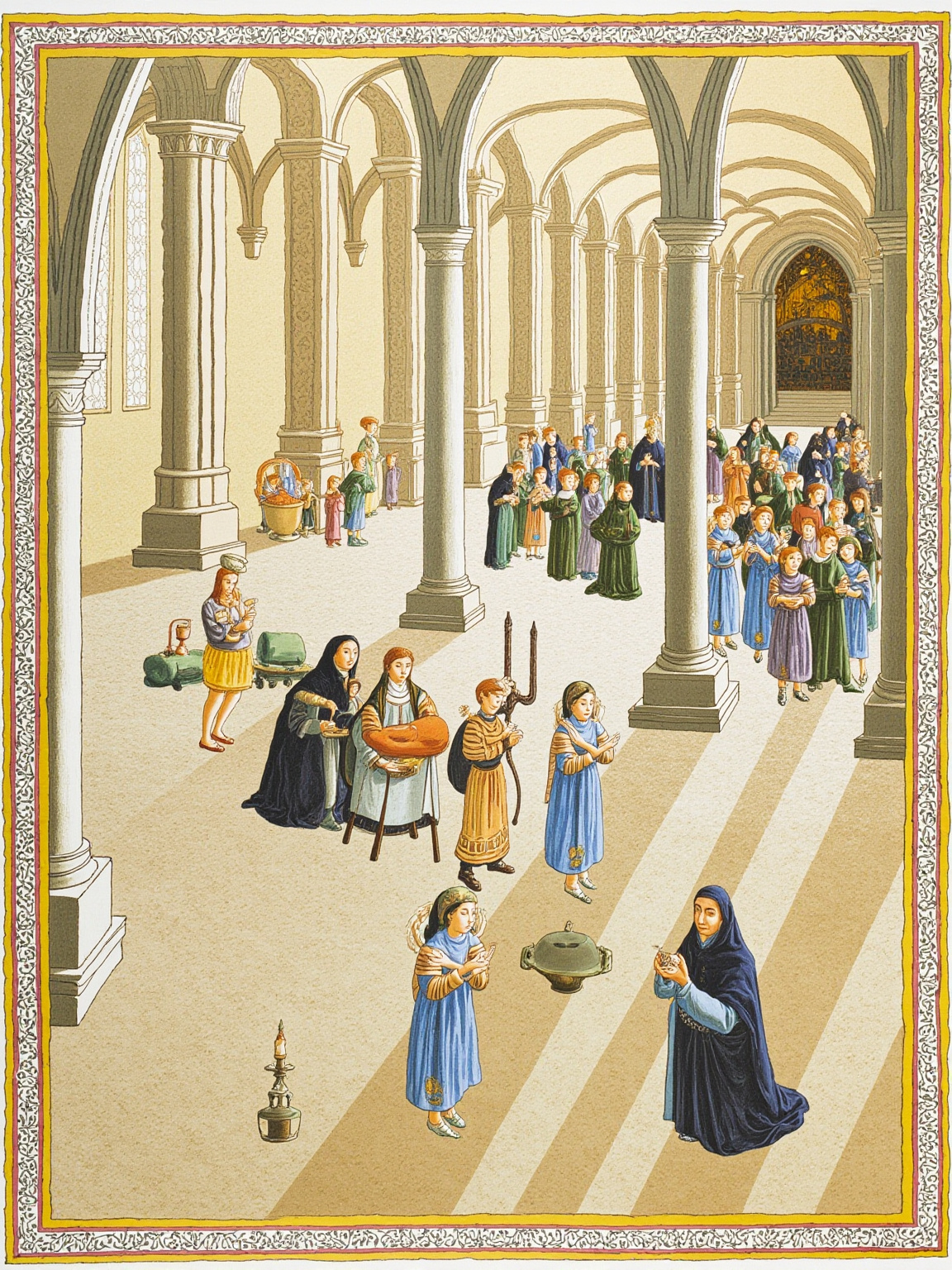
There is one more category: the oblates, boys given to the monastery by their families while still children. The Rule devotes a whole chapter to their education and daily life, and it spells out punishments for them in plain language. Judged by today's standards of human rights, that discipline is indefensible. But as a fact of institutional history, it stands beside "even the youngest has a voice" and "receive the guest as Christ" in shaping this Rule's peculiar character: strict, and at the same time, a family.
It did something no one had done before: it cut time into order. The night office of Vigils and the day hours of Lauds, Prime, Terce, Sext, None, Vespers, and Compline — the sevenfold round of the Work of God, Opus Dei — form the skeleton of the day; the hours between belong to reading, Lectio Divina, and to labor, Labora. Monks copy scripture in the scriptorium, and between the garden and the beehives, at the mill and the bread oven, they carry out the farming and handwork that stamp pray and work into every monk's body. The monastery becomes, in this way, the clock of medieval Europe.
It writes authority and the voice of the youngest into the same clause. The abbot stands for Christ, yet he must still hear out the newest monk; the rule of law, humility, and listening are all cast into one document. It writes hospitality into statute too: every guest is led to the church to pray first, then to the guest quarters, dined with by a monk, and given the plain provisions the house keeps ready, which is how the monastery becomes, all at once, Western Europe's earliest library, farm, school, and inn. And it turns discipline, the hours, tools, silence at table, even the bow a guest makes at the door into enforceable rules rather than exhortations — the point where this book is least like a book and most like a charter.
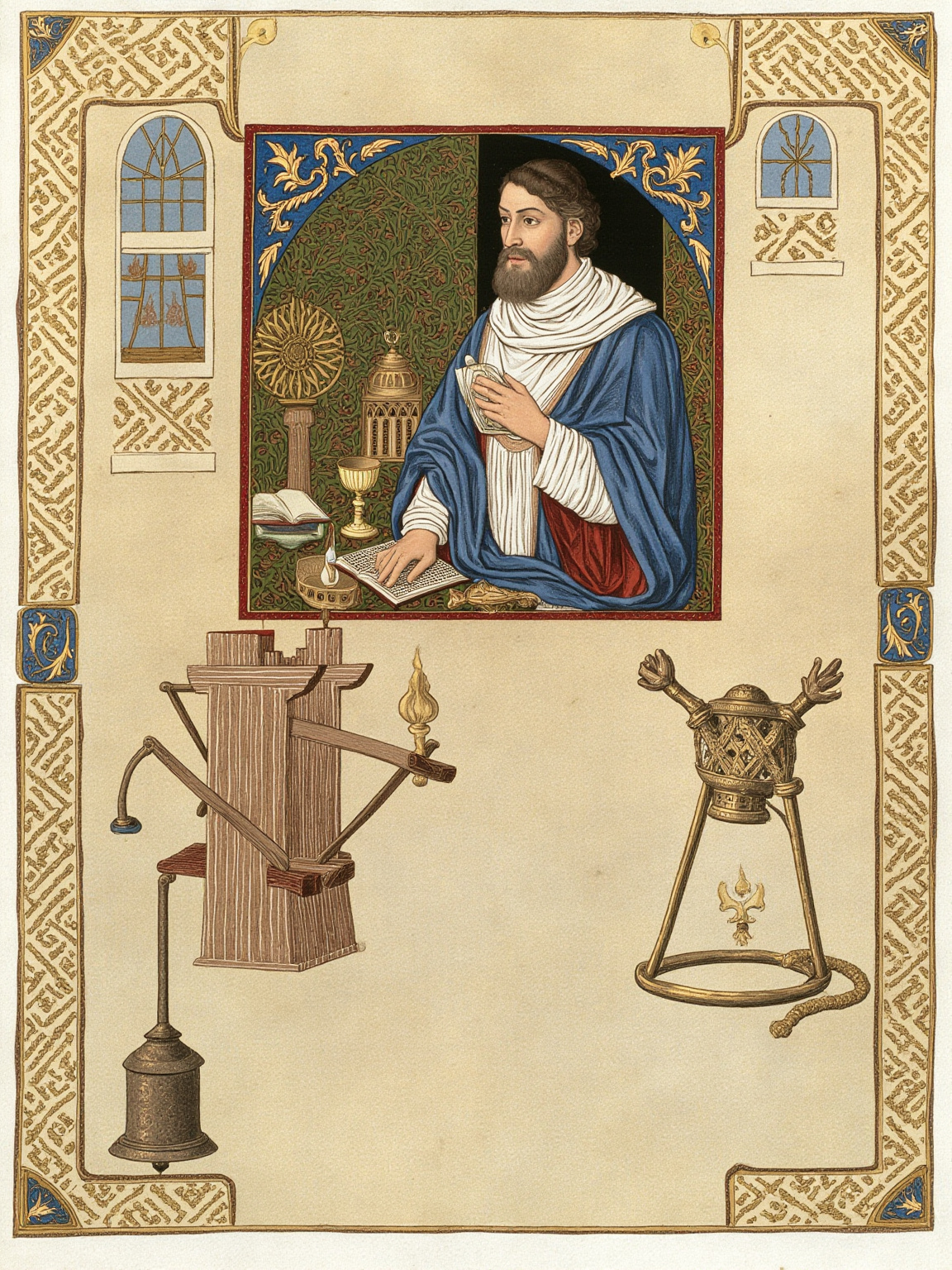
Turn to Chapter 48, "On Daily Reading and the Tools of Copying," and you run into something smaller than a clause: Benedict specifies exactly how a monk draws pen and ink, the hour by which he must return them to the scriptorium, even where the quill and the paring knife sit on the desk. The force of this chapter is not in preaching; it is in tying what a monk read to what he read it with, in the very same set of rules. Only here do you really start reading this sixth-century document — not its story, but how it let a group of people live together for the long haul without falling apart.