Ignatius of Loyola translated one private conversion into a teachable technology of attention
Text and illustrations produced by the pipeline

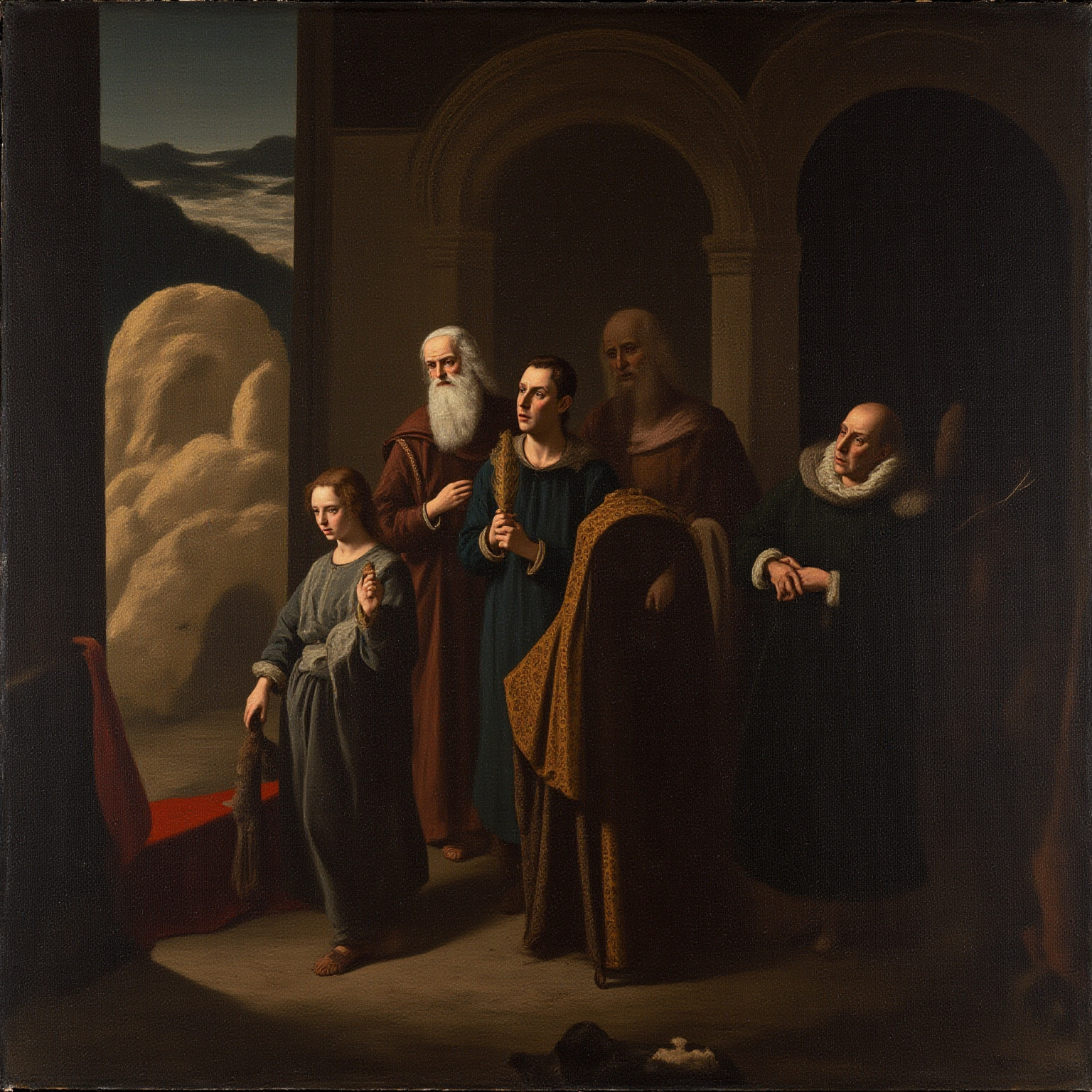
A candle stands on a stone ledge, wax running down the iron holder and hardening beside the open notebook on the table. Across from it sits a man, speaking today's two examens aloud, slowly. This is the smallest unit of The Spiritual Exercises — one who leads and one who walks, circling the same candle for thirty days.
The manual is called The Spiritual Exercises, Exercitia Spiritualia in the original Latin, published in Rome in 1548, one of the few books Ignatius of Loyola ever put his own hand to. It matters today not because it is old but because it sets down a technique that has been borrowed for centuries: enter an absent scene through the five senses, then judge whether the stirring inside you is good or bad.
The Spiritual Exercises is not a novel, not a theological treatise, and not devotional prose meant for the person being trained. It is a coaching manual, addressed to a trained director, someone who will accompany another person through meditation after meditation, examen after examen, night after night, for roughly thirty days. Every instruction takes the form you, the director, should guide the other person this way; every you points at the one leading, never the one walking. Reading it as a devotional book for ordinary believers is the most common misreading it has suffered, and the most wrongheaded.
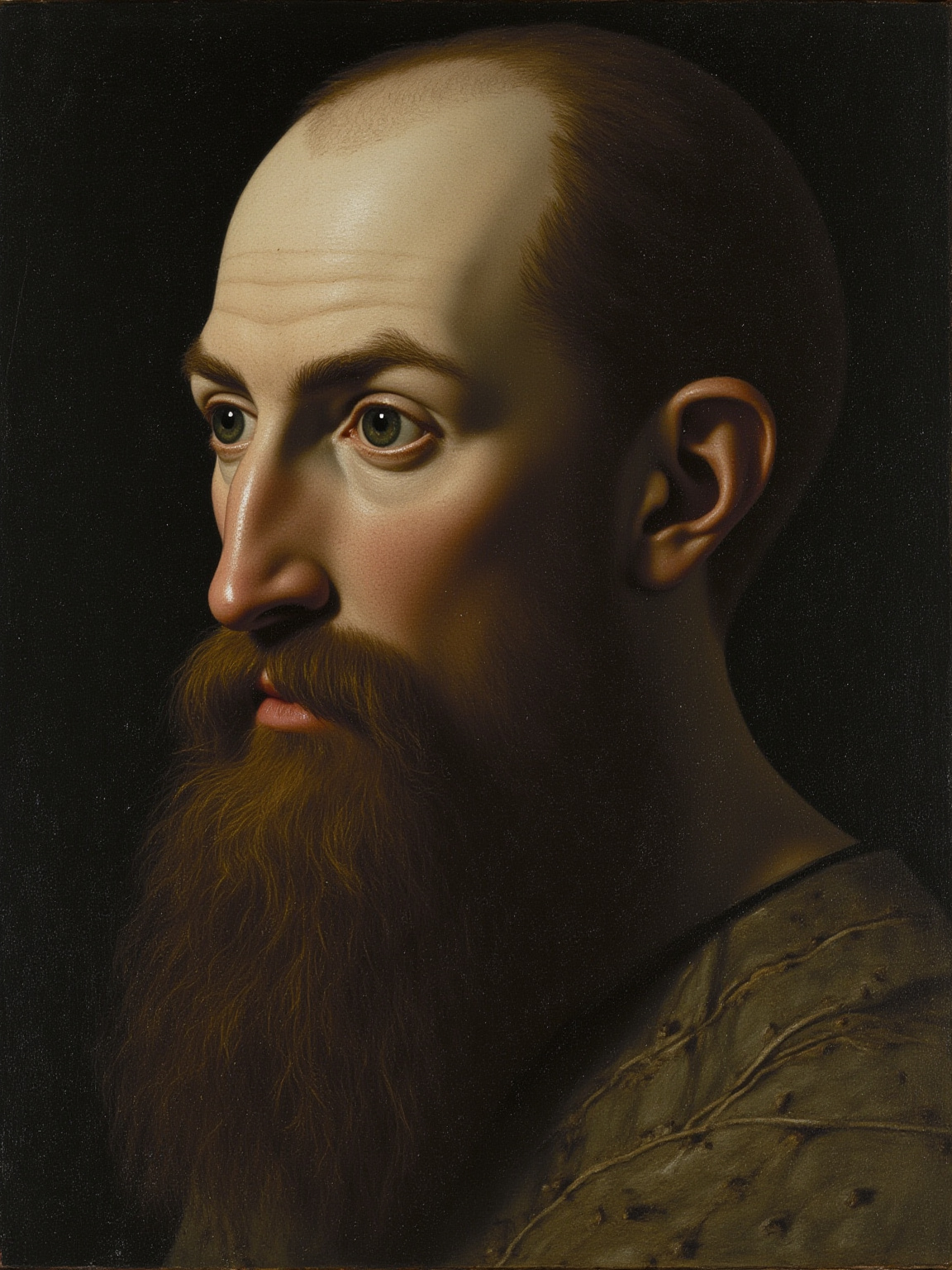
The author, Ignatius of Loyola, was born into Basque nobility and served as a soldier. The wound that changed everything came in the early sixteenth century, in his early thirties, when a cannonball shattered his right leg at the Battle of Pamplona. In 1541 he was elected the Society of Jesus's first Superior General, and in 1548 The Spiritual Exercises was formally published in Rome, its printing pushed through by Diego Laínez, the second Superior General. The book is remembered because it translated one man's private turning into a training program anyone could repeat, and that toolkit, more than four centuries later, is still being borrowed by psychotherapy, corporate coaching, and leadership training.


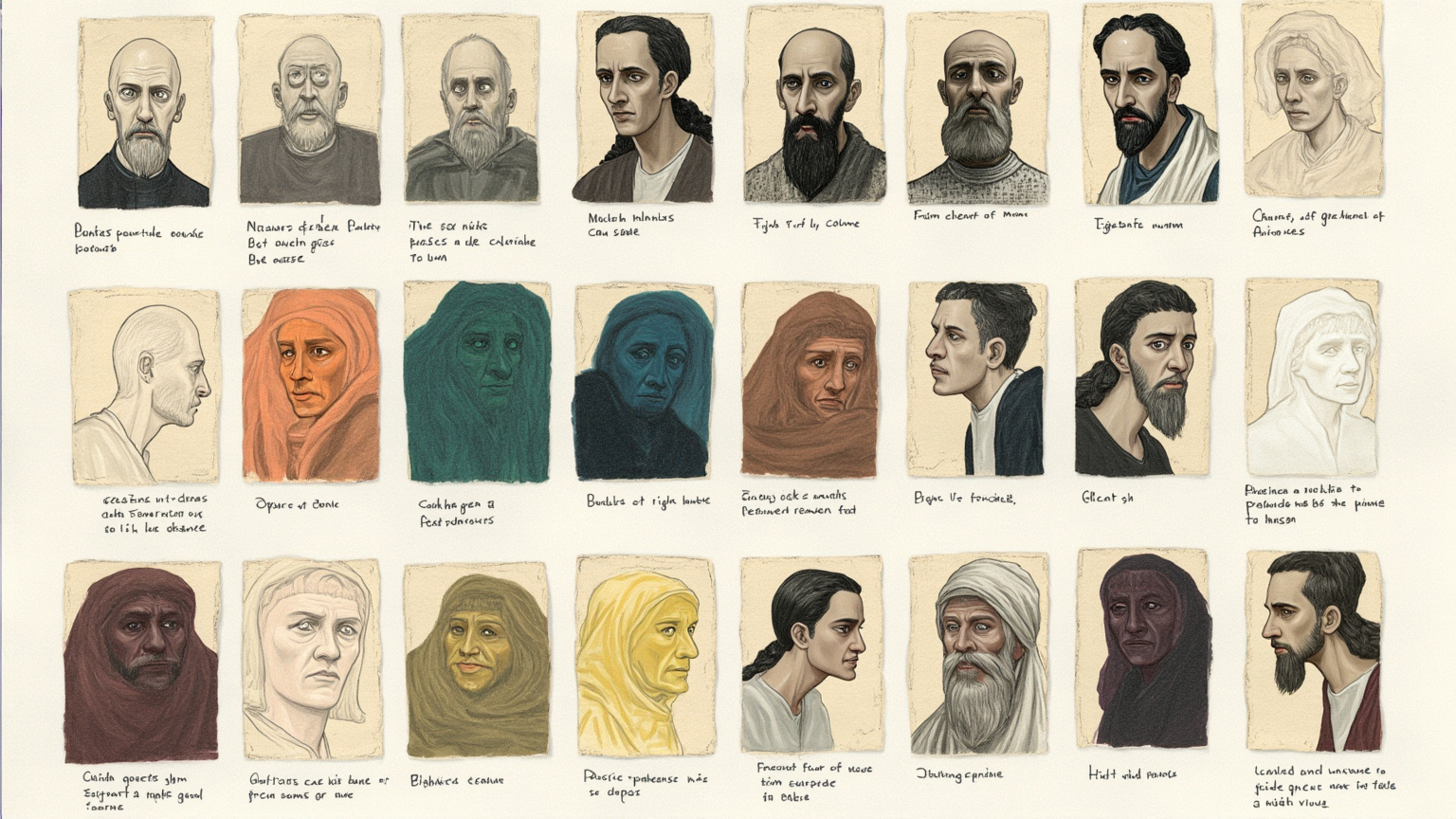
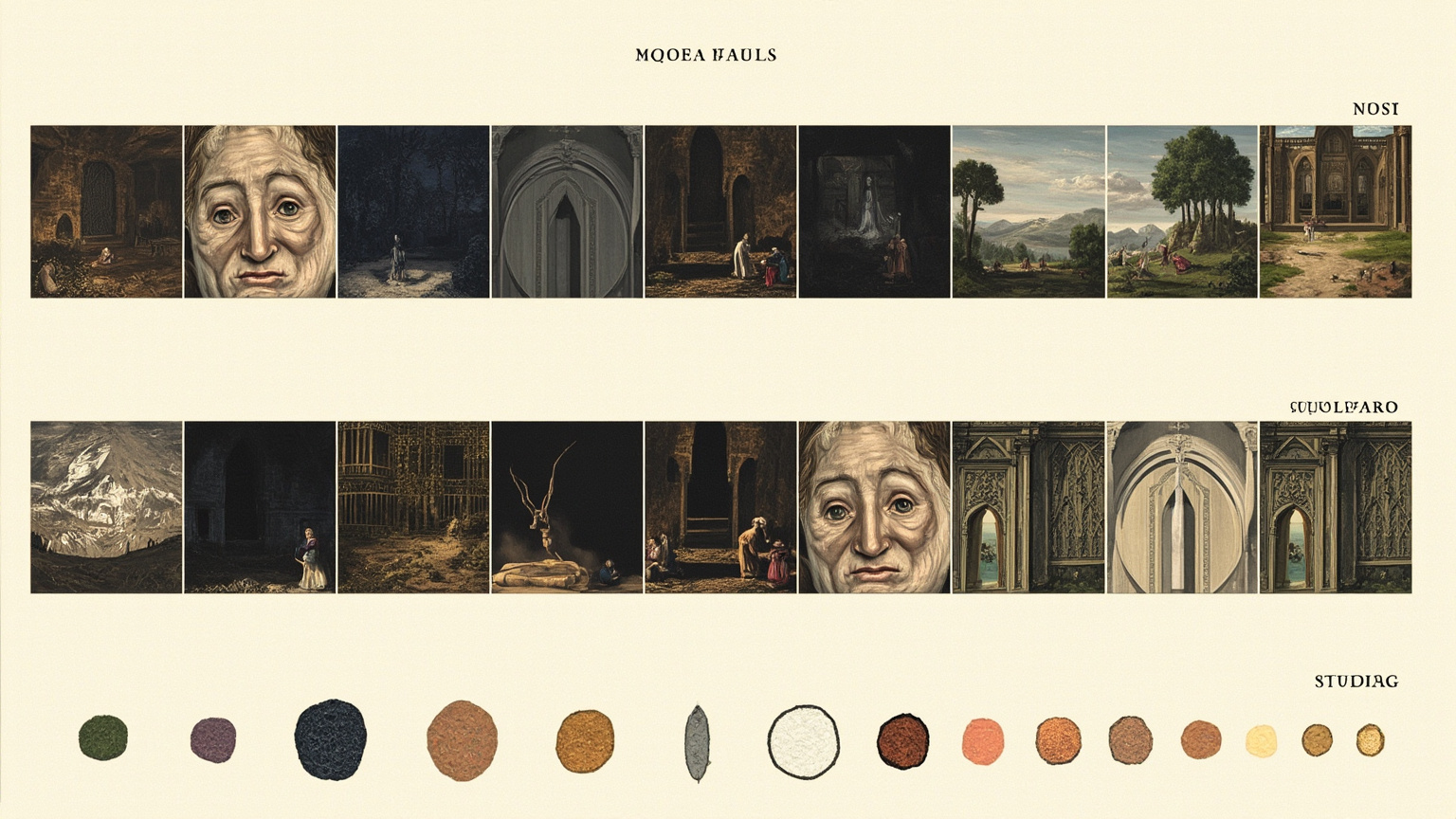
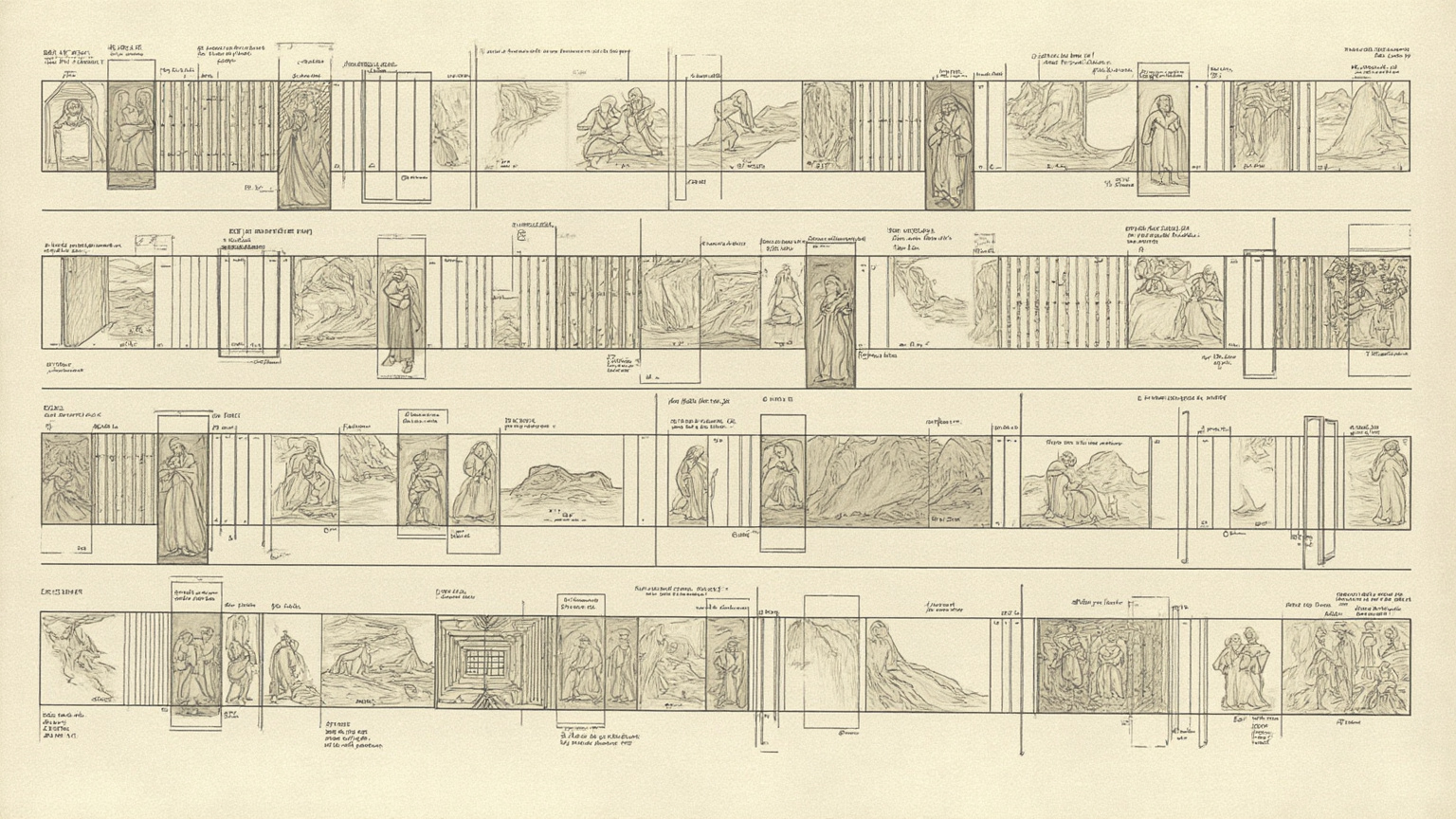
Before the guide was written, this book got a visual foundation — every illustration you just read grew out of it.
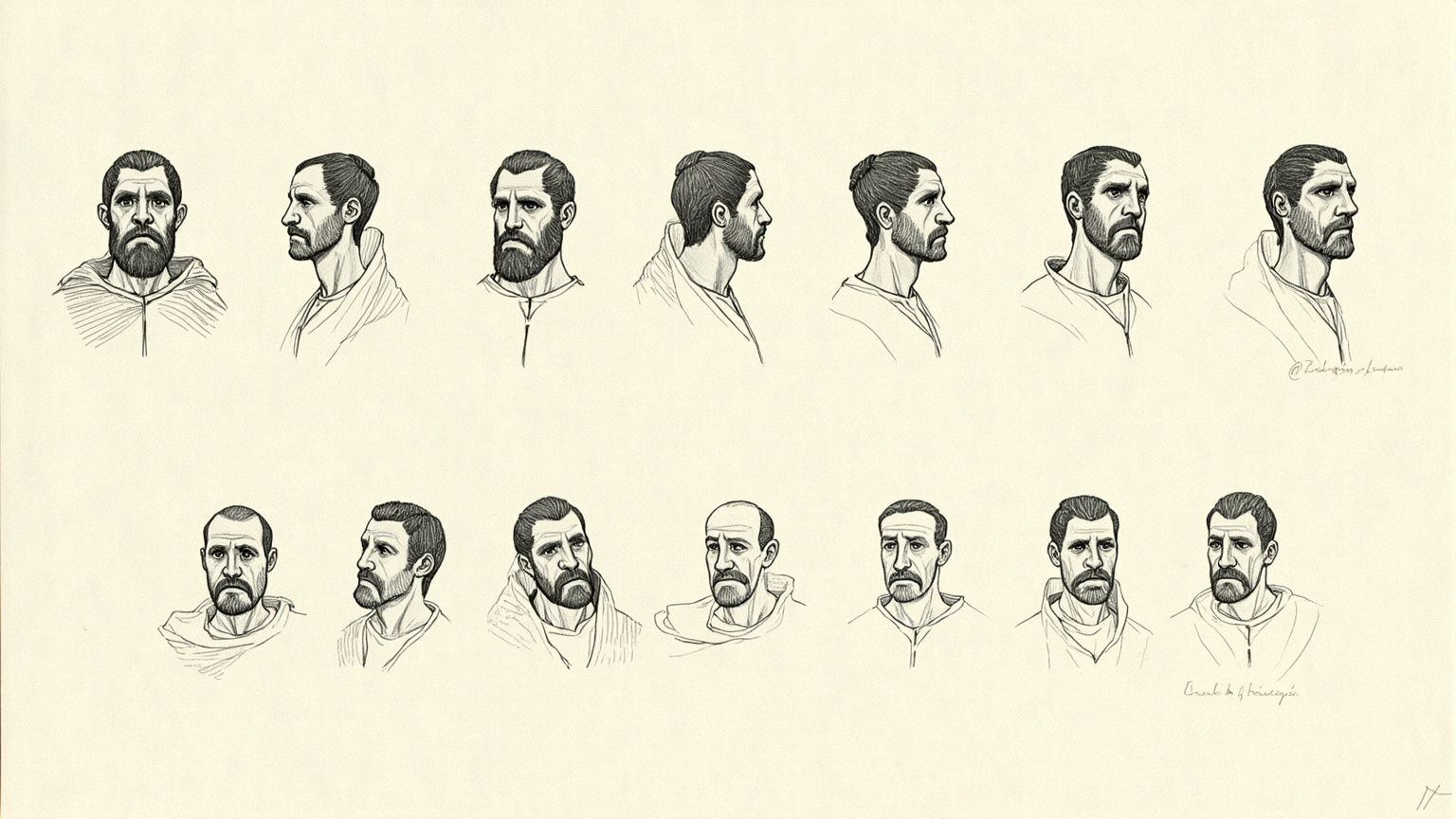
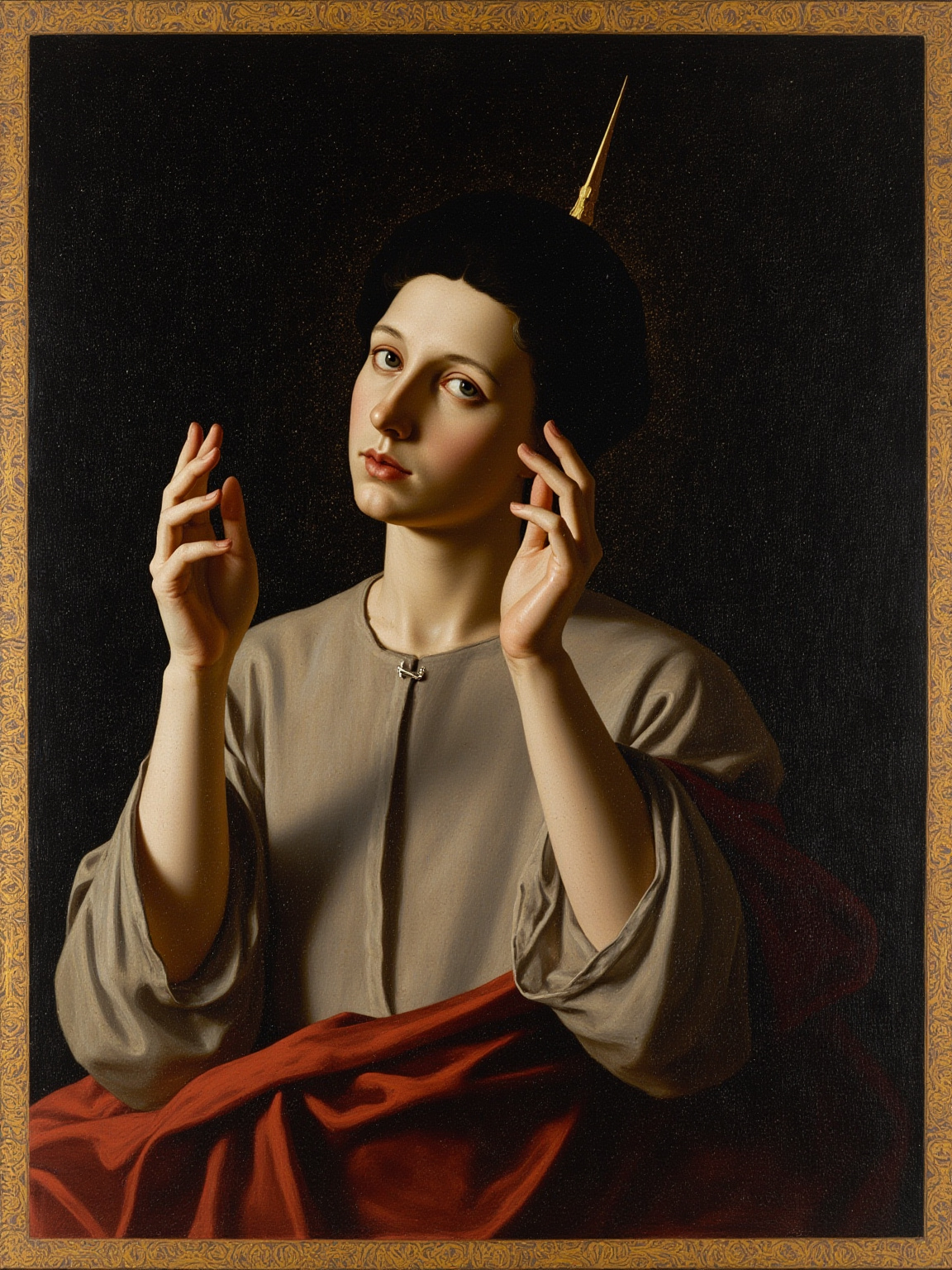
The book has two real protagonists, and both are anonymous. One is the director, the trained party, whose job is to step back, leaving the conversation and every decision about direction to the person across from him, keeping his own role to method and material. The other is the retreatant, addressed throughout in the second person, whose work is to look back twice a day, morning and evening, at the rise and fall inside him, and to rebuild the Gospel scenes in his mind with his own eyes, nose, and ears. The two of them, seated across from each other, a candle and a notebook between them: that is the smallest physical unit in the whole book.
The wider world is sixteenth-century Europe: from the serrated peaks of Montserrat, to the cave at Manresa and the dusty little town along the Cardener River; from the crowded lecture halls of the Collège de Montaigu and the Collège Sainte-Barbe at the University of Paris, to the stone chapel of Notre-Dame on the hill of Montmartre. In the small hours of August 20, 1534, Ignatius and his first six companions kept vigil in that chapel and took vows of poverty and chastity together. There was no name yet for the Society of Jesus; it would not be formally founded until 1540, by a bull from Pope Paul III. The Jesus the retreatant is asked, again and again, to contemplate is a man who walks straight out of Nazareth's carpenter shop, the wedding at Cana, the garden of Gethsemane, and Golgotha, not out of abstract argument, but out of a scene you can see, hear, and smell.
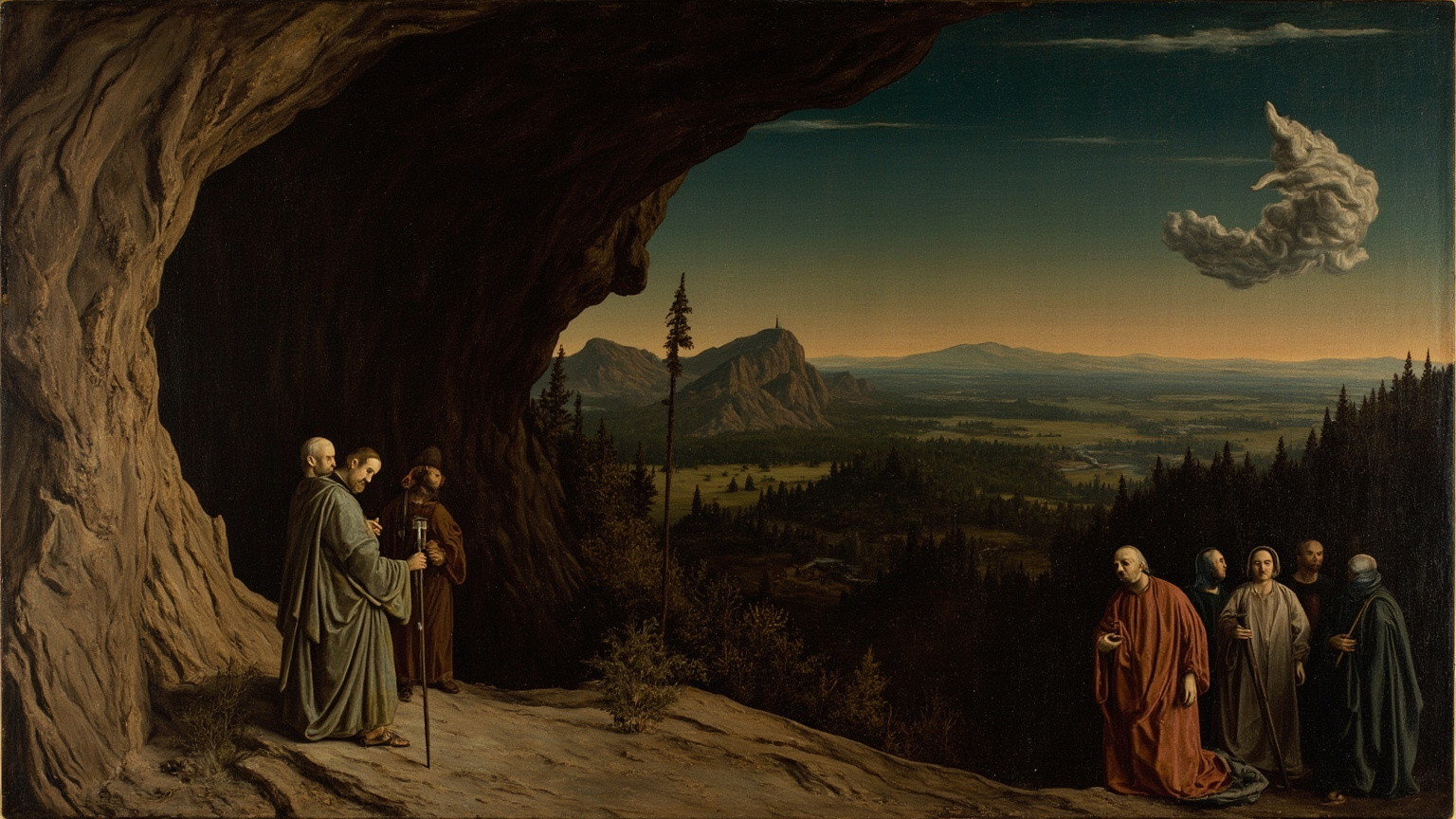
The story runs more naturally from a cave. After his convalescence turned him around, Ignatius withdrew to Manresa, a small town in northern Catalonia, and spent the darkest stretch of his life in a cave and a riverside hut, days that nearly broke him under his own severity, and the source of every method he built afterward. The man in that cave took the whole spiritual weather of his own journal, the fear of guilt, tears breaking loose, a sudden calm, despair in the long hours of the night, and translated it into a program someone else could administer. That act of translation is the moment this book was born.
The program is cut into four weeks, roughly thirty days. The first week deals with sin and the fear of hell, but its actual function needs stating plainly: it is not there to dwell on scenes of hell, it is there to teach a technique, how to pick up the weapon of sense-present contemplation. The retreatant is guided to build the scene with the senses first, what the ground looks like, what the room smells of, what the people there are saying to each other, and only then to look, listen, ask, and answer inside that imagined scene. The first week starts the engine. From the second week on, it runs at full speed.
The second week turns to the real matter: meditation on the life of Christ. Its high point is the meditation on the Two Standards, one banner for wealth and comfort, glory and pride, the other for poverty and hardship, humility and endurance. Ignatius sets the two banners side by side and lets the retreatant see for himself which one to follow. The choice belongs to the retreatant, not the director; the director only holds up the banners and asks, what do you see. It is the quietest moment in the book, and the most ruthless piece of coaching ethics in it.
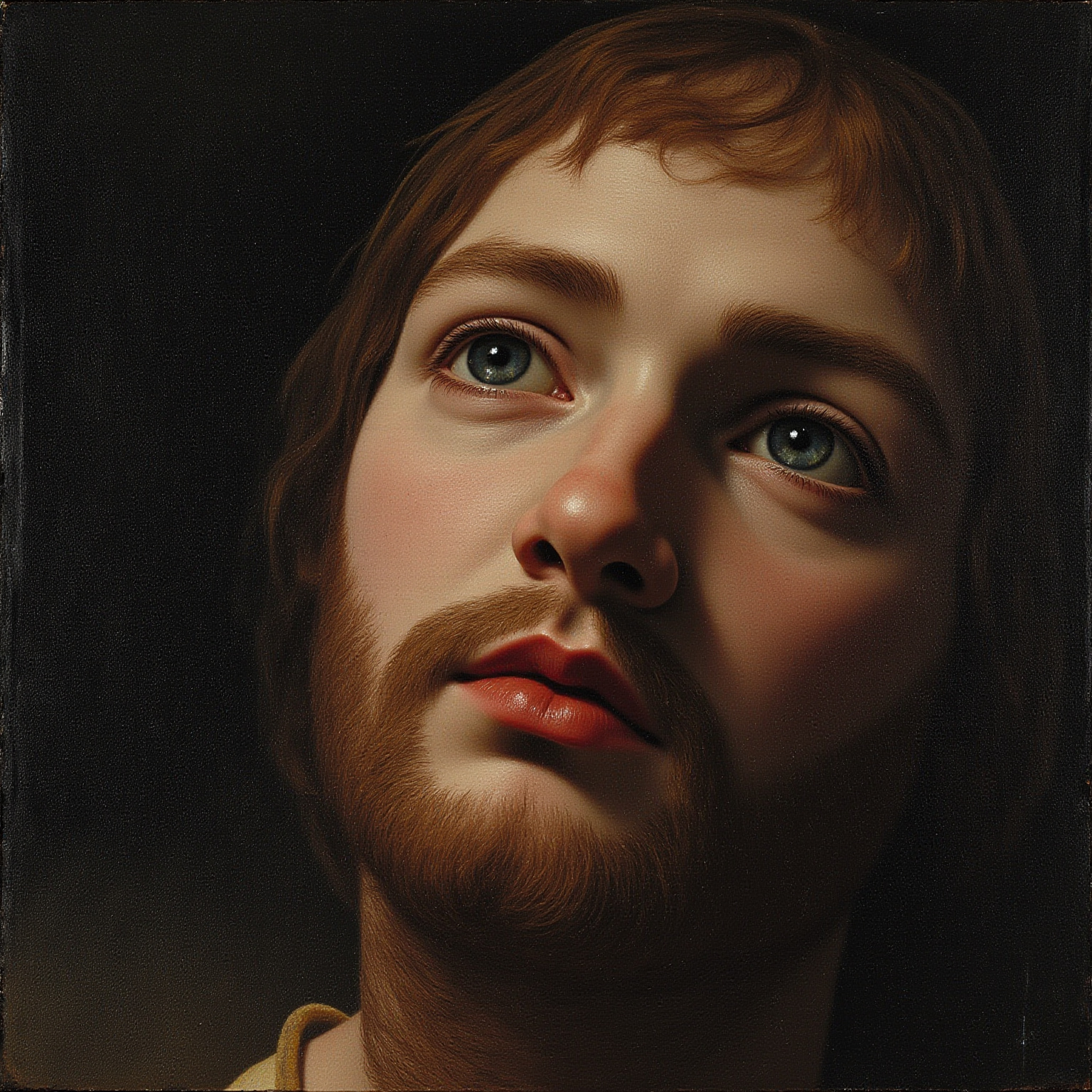
The third and fourth weeks turn to the Passion and the Resurrection. The rhythm drops hard, then lifts hard. Neither week offers spectacle or showmanship, just the same technique of contemplation applied, scene after scene, to different ground. You hear Christ's sweat fall like blood onto the dirt in Gethsemane, you see the grain of the stone on the morning of the Resurrection, you feel the tightness in the disciples' chests as shock turns to recognition. Contemplation does not work through concepts. It works through presence.
The engine that runs alongside it is the Examen. Once at midday, once in the evening, the day is cut in two and looked back over: gratitude first, then an accounting of sin, then a sorting of which stirring came from the good spirit and which from the bad. Two passes a day, unchanged for four and a half centuries. The technique of cutting a day in two and looking back over it has since been borrowed by psychology, by corporate coaching, by mindfulness training, and the borrowers have mostly forgotten where it came from.
The system's diagnostics for the inner life go by consolation and desolation. Consolation is not happiness; it is a stirring, a moment when love, faith, or peace rises up. Desolation is its opposite, discouragement, agitation, darkness, doubt. But the same surge of feeling can come from the good spirit or be counterfeited by the bad one, and telling them apart runs on four empirical rules. This is the earliest systematic account of discernment of spirits in the Western tradition. When Jung and the psychologists who followed him later spoke of the shadow and of integration, of asking where does this stirring come from, one of their sources traces back here.
The night at Montmartre is the spiritual ground note of this whole book. In the small hours of August 20, 1534, Ignatius and his first six companions, Francis Xavier, Peter Faber, Diego Laínez, Alfonso Salmerón, Nicolás Bobadilla, and Simão Rodrigues, kept vigil in the chapel of Notre-Dame and took vows of poverty and chastity together. That night the Society of Jesus had no name yet. Six years later, in 1540, it was formally founded by papal bull; fourteen years later, in 1548, The Spiritual Exercises was formally published in Rome. Between the vow spoken by seven men in a stone chapel at Montmartre and a small book printed in Rome lies the birth of an entire institution.
The ambition of The Spiritual Exercises is not doctrine, it is method: how to let a person be shaped, quietly and without announcement, by what stirs inside him. At the close of each week, the retreatant has to make a clear decision about which road to take, not chosen for him by the director, but reached inside that rebuilt scene, where he hears his own stirring and only then decides which banner to follow. This coaching ethic, handing the decision about direction to the person living it, is the book's most underrated side.
The larger claim is that the seeking itself is the method. Every technique in this book traces back to one man's personal turning after a battle wound, not to abstract theology. It demonstrates something specific: how a person can translate his most private experience into a program someone else can use. Four hundred years ago that was revolutionary. It still is. The therapists, mindfulness teachers, and corporate coaches who came after are doing the same thing, only with the language swapped for a more contemporary shell.
An explainer gives you the map. The text itself is the land. Finish this piece and you can probably recite the shape of the four weeks, compositio loci, the Examen, consolation and desolation, the Two Standards, but what you cannot recite is the moment you read a short line of Latin, hold that scene in contemplation for ten minutes, and then, in that evening's examen, actually feel something stir inside you. That stirring is what The Spiritual Exercises is actually made of, and it cannot be summarized, only done. If you open the text, spend the full thirty days doing it. Do not read it as a book to finish, run it as a program instead. Only then will you understand why Ignatius writes the retreatant in the second person, why he writes the director in the second person too, and why, in the final week's contemplation on love, he takes every method back and leaves just one person sitting there.
This is a coaching manual written by the man he used to be. It does not ask what you think, it only holds up a banner and lets you choose which side to walk.