The Sutra of One Hundred Parables (Bai Yu Jing) · Companion Guide
百喻经
九十八则蠢事,九十八面小镜——贪与痴与慢的过犹不及,笑着笑着就照见了自己
Opening: A Greedy Diner Shoves a Fistful of Salt Into His Mouth
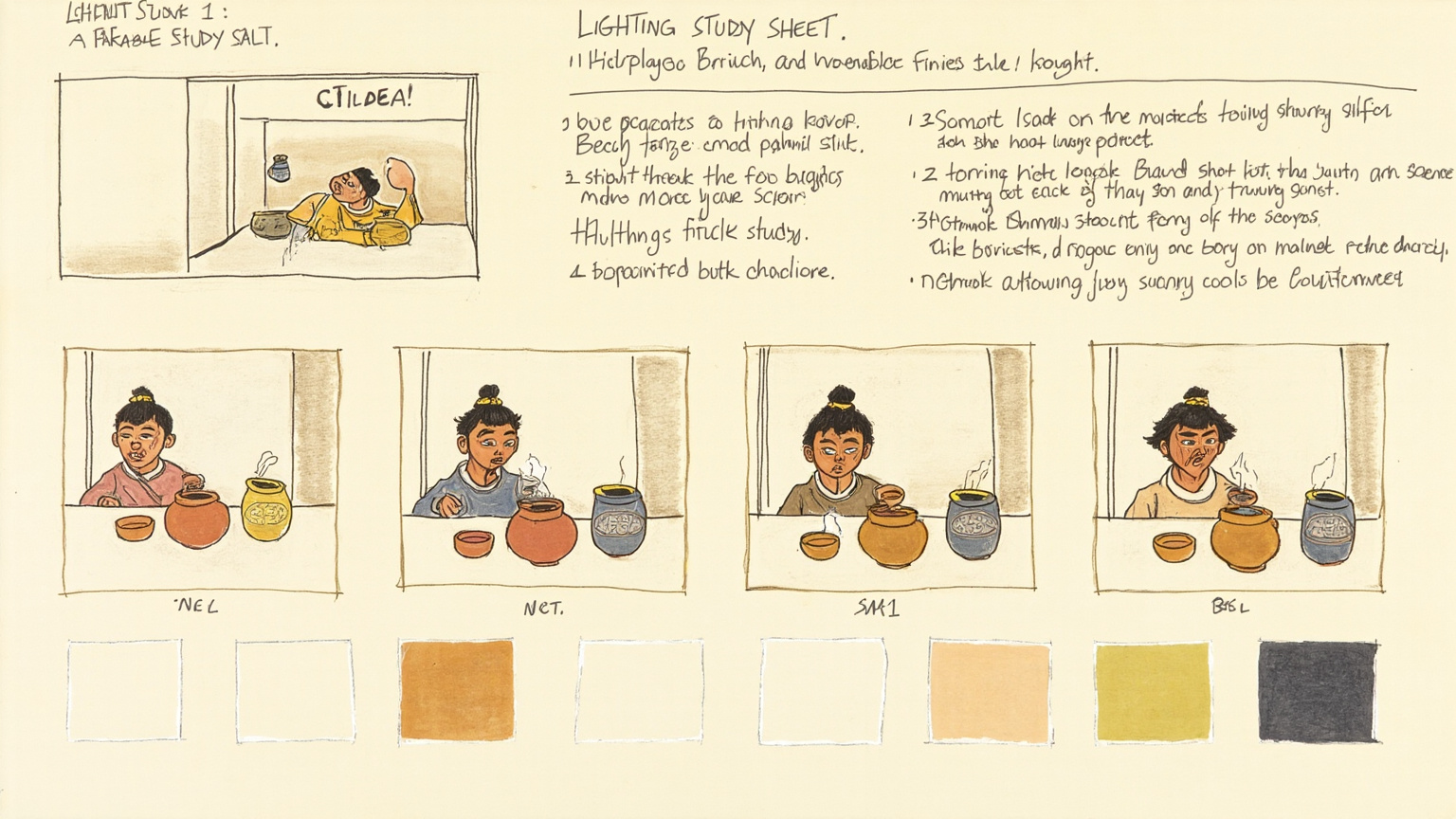
Dinner is on the table, and a guest finds it bland. He pinches a bit of salt into the dish, and it tastes better. Another pinch, and it's better still. His eyes light up, his hand goes into the jar, and he shoves a whole fistful straight into his mouth. A second later his face crumples like a dried plum. That is the opening image of the first parable in the Sutra of One Hundred Parables, "The Man Who Ate Salt," and it is the book's signature move: make the reader laugh first, then translate the laughter into a line of Buddhist teaching.
What Kind of Book Is This
The Sutra of One Hundred Parables was compiled in ancient India by Saṅghasena and translated into Chinese by Guṇavṛddhi in 492 CE, during the Southern Qi dynasty. The title promises a hundred; the standard Chinese text delivers ninety-eight, which is itself a small joke about excess and moderation. It is widely considered the most accessible and the funniest sutra in the Buddhist canon: ninety-eight independent parables, each barely a hundred characters long, each opening on some foolish act and closing on a verse that names the lesson. Modern Chinese readers have given it outsized weight — the only sutra Lu Xun ever paid to have carved and printed in his lifetime was the 1914 Jinling woodblock edition of this book. Several Chinese idioms trace back to its parables — the three-story house, swallowing something whole without understanding it — though few readers today know they all come from the same text.
Characters and World
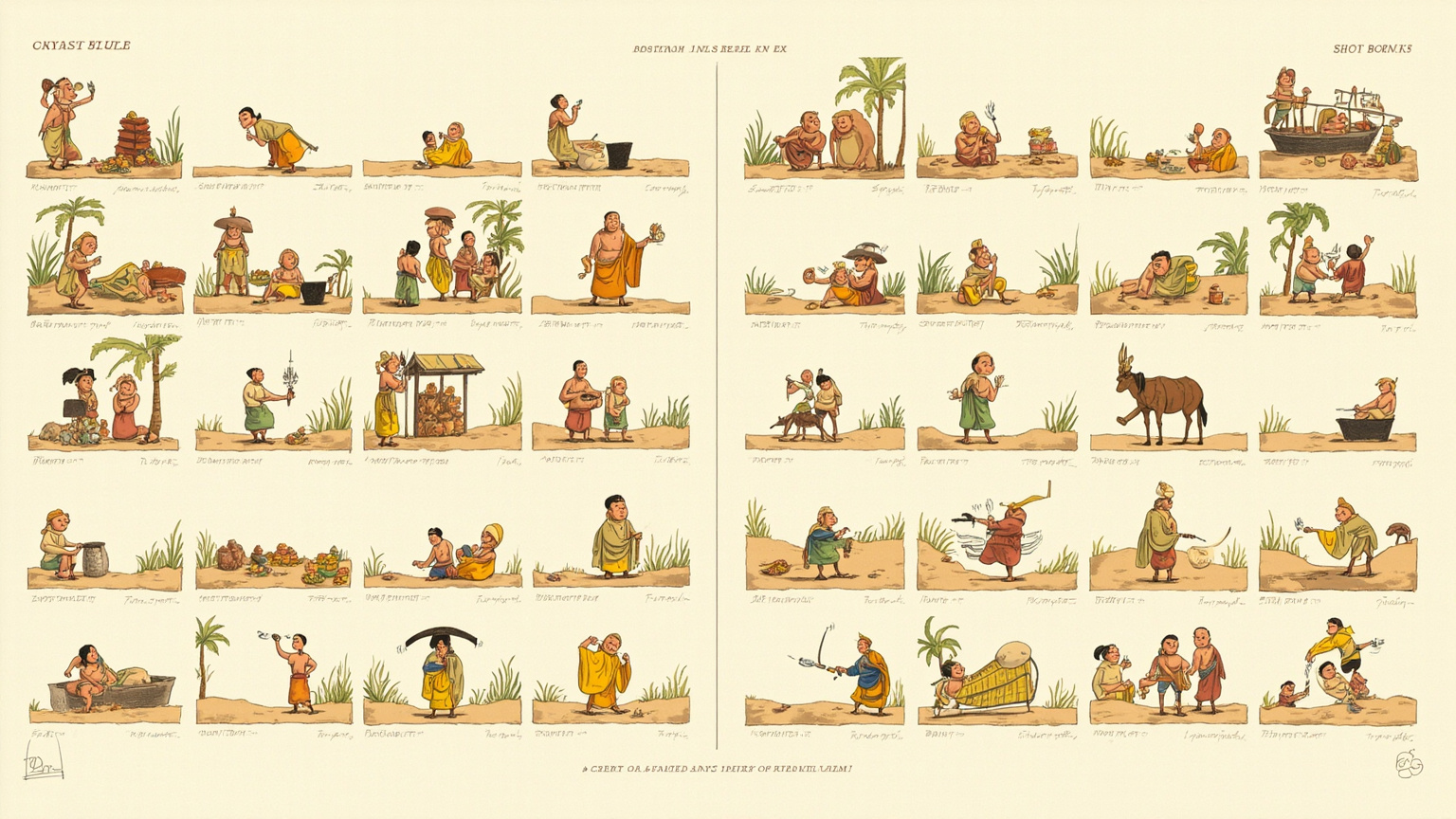
There is no protagonist with a name. Two kinds of figures recur across the ninety-eight parables. One is the fool, in his many costumes: the greedy diner, the dim-witted rich man, the hungry traveler, the thirsty wanderer, the man who mistakes a stranger for his own brother. The other appears only at the end — the Buddha or a monk, who never takes part in the action and speaks just one or two lines of verse once the damage is done. So the real protagonist of this book is a set of types: greed, anger, delusion, pride, and doubt, each given a specific, ridiculous body. Open any parable at random, and you already know what's coming: somebody is about to make a fool of himself.
The setting is the marketplaces and villages of ancient India: clay jars, ox carts, mango groves, river crossings and boats, merchants haggling in the square. There is no continuous timeline and no single place the story moves through — each parable is its own small picture, built from a handful of props, one absurd action, and a comedy of manners. It has none of the sweep of an epic and none of the solemnity of a book of precepts. It reads more like a pocket joke book where somebody trips on every page.
The Arc: Five Foolish Acts, Five Kinds of Delusion
The first parable: the man who ate salt. Dinner is bland, so he adds a pinch — good. Another pinch — better. A third. Finally he just grabs a fistful and stuffs it in his mouth. His face knots up from the taste, and he goes off to complain. The Buddha's verse cuts straight through it: the wise cultivate the mind, not the mouth. The salt was never the problem; the greed was. Mistaking a seasoning for a meal is delusion made visible, a failure to find the middle way. What makes this parable work is its pacing — the first three pinches are almost weightless, and then the fistful arrives and the story crashes before the reader has time to brace for it.
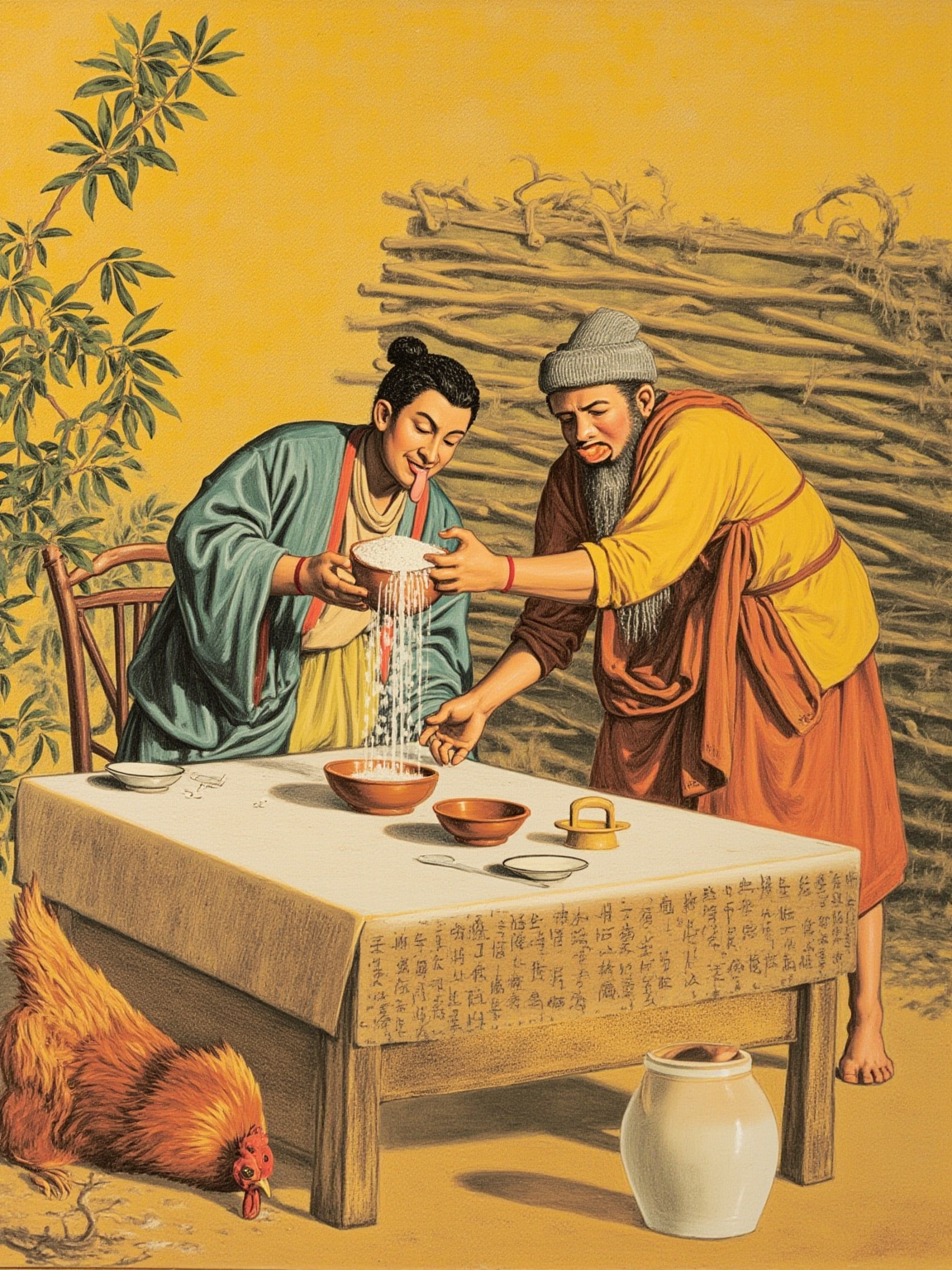
He took the salt as his food, and so it came to pass that the flavor was lost.
愚人不知常法,径取食盐并食之,于是味都失尽。
金句 · 食盐喻 · 贪味反失味
The second parable: the three-story house. A rich man listens to a builder describe a house with three floors, then slaps the table: I only want the top floor. Skip the first two; build me the third floor first. The builder just stands there; a floor cannot hang in the air with nothing under it. The parable is aimed at people who want the fruit of enlightenment while refusing to do the work that produces it, like pointing at the sky and demanding a house with no foundation. What makes it land is how it turns an abstract point of doctrine into an absurd argument between a client and his contractor — the reader laughs, then recognizes the same demand in himself.
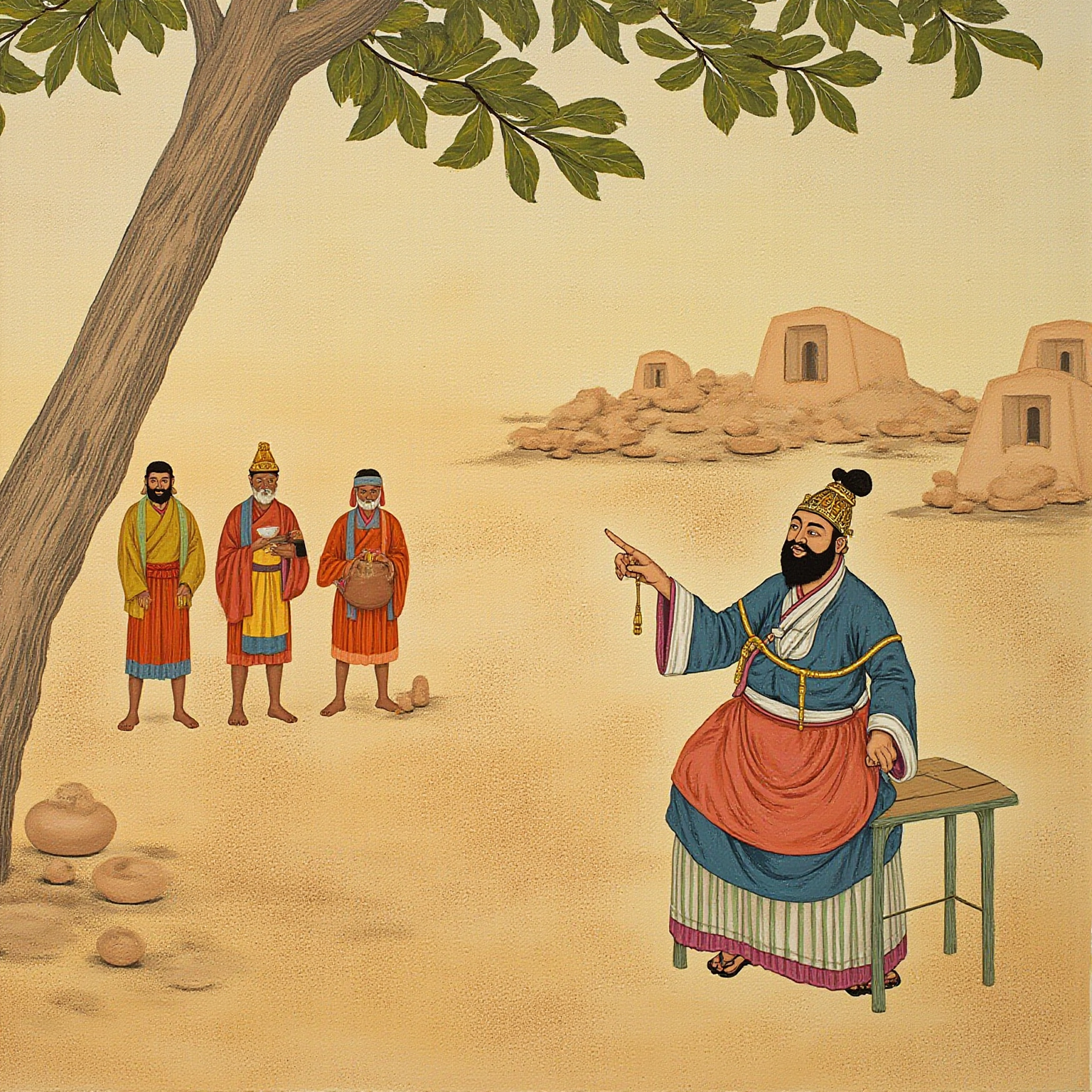
Build me the upper story first; the two below I have no need of.
我不欲下二重屋,唯为我作最上重者。
金句 · 三重楼喻 · 不要底两层
The third parable: tasting the mango. Someone on the road tells a hungry man that mangoes are wonderfully sweet. He grabs one and bites in, swallowing skin and pit along with the flesh, and doubles over in pain. He never thought to ask how it's meant to be eaten. What makes this one sting is how ordinary the mistake is — we take endless recommendations at face value and never ask the follow-up question, how do I actually use this. Hearing a teaching is not the same as practicing it, and listening is not the same as understanding. This is the parable behind the Chinese saying about swallowing something whole, skin and all, without stopping to understand it.
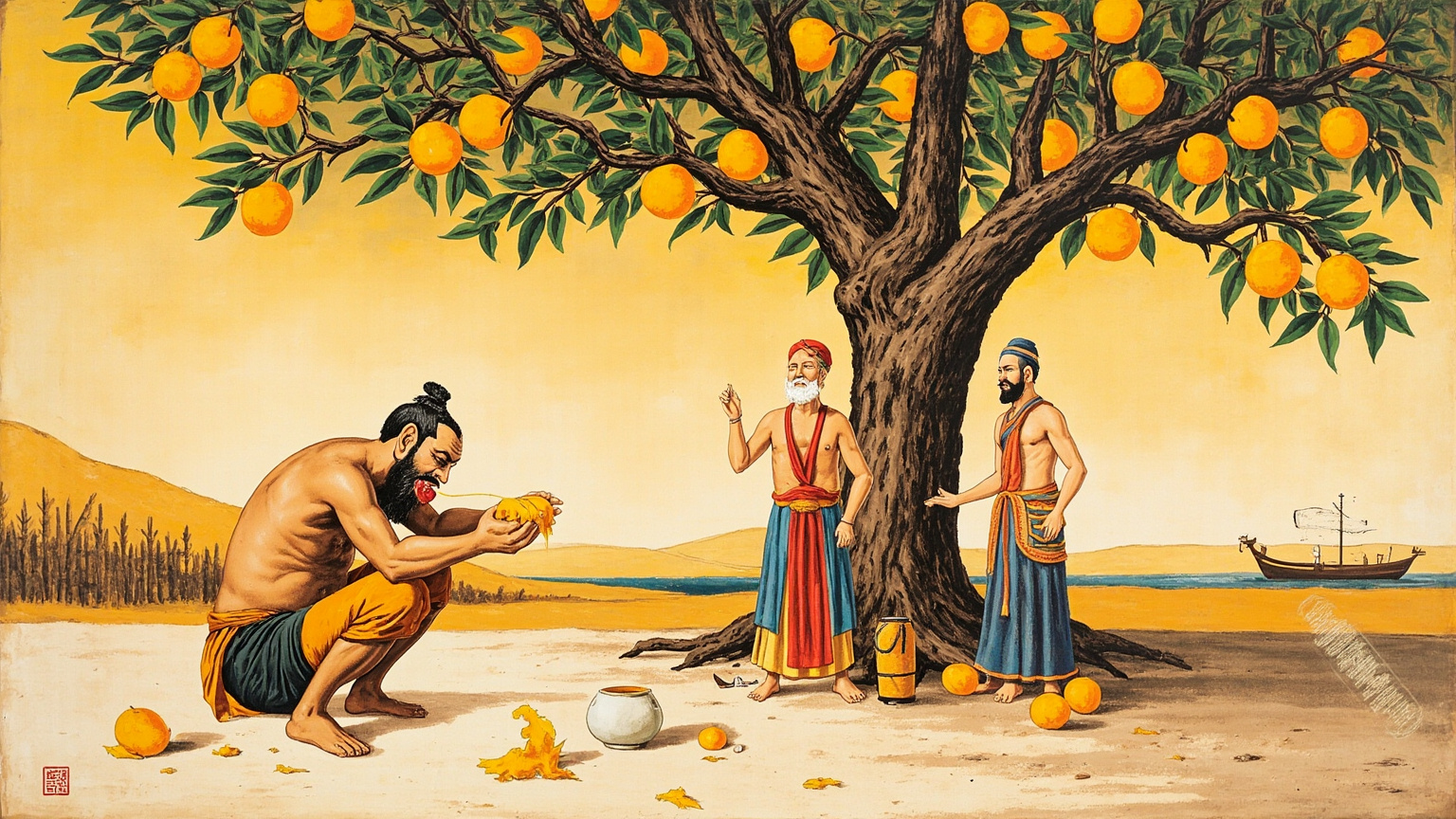
Having heard that the mango was sweet, he ate it whole—pit and all—and fell groaning to the ground.
闻其香美,便即取食,并骨而咽,五脏翻搅,卧地呻吟。
金句 · 尝庵婆罗果喻 · 囫囵吞枣之祖
The fourth parable: chasing water. Under a blazing sun, a thirsty traveler sees shimmering heat in the distance that looks like a stream and runs for it. When he gets there, it's gone. He looks again, spots another shimmer, runs again, and finds nothing again. Each chase leaves him thirstier and weaker, until he finally collapses by the road. The parable reads the five aggregates the same way — people mistake an illusion for something real and spend a lifetime chasing what was never there. This is the most visual parable in the whole collection: that stretch of water that never existed is the closest the book comes to painting a hallucination.
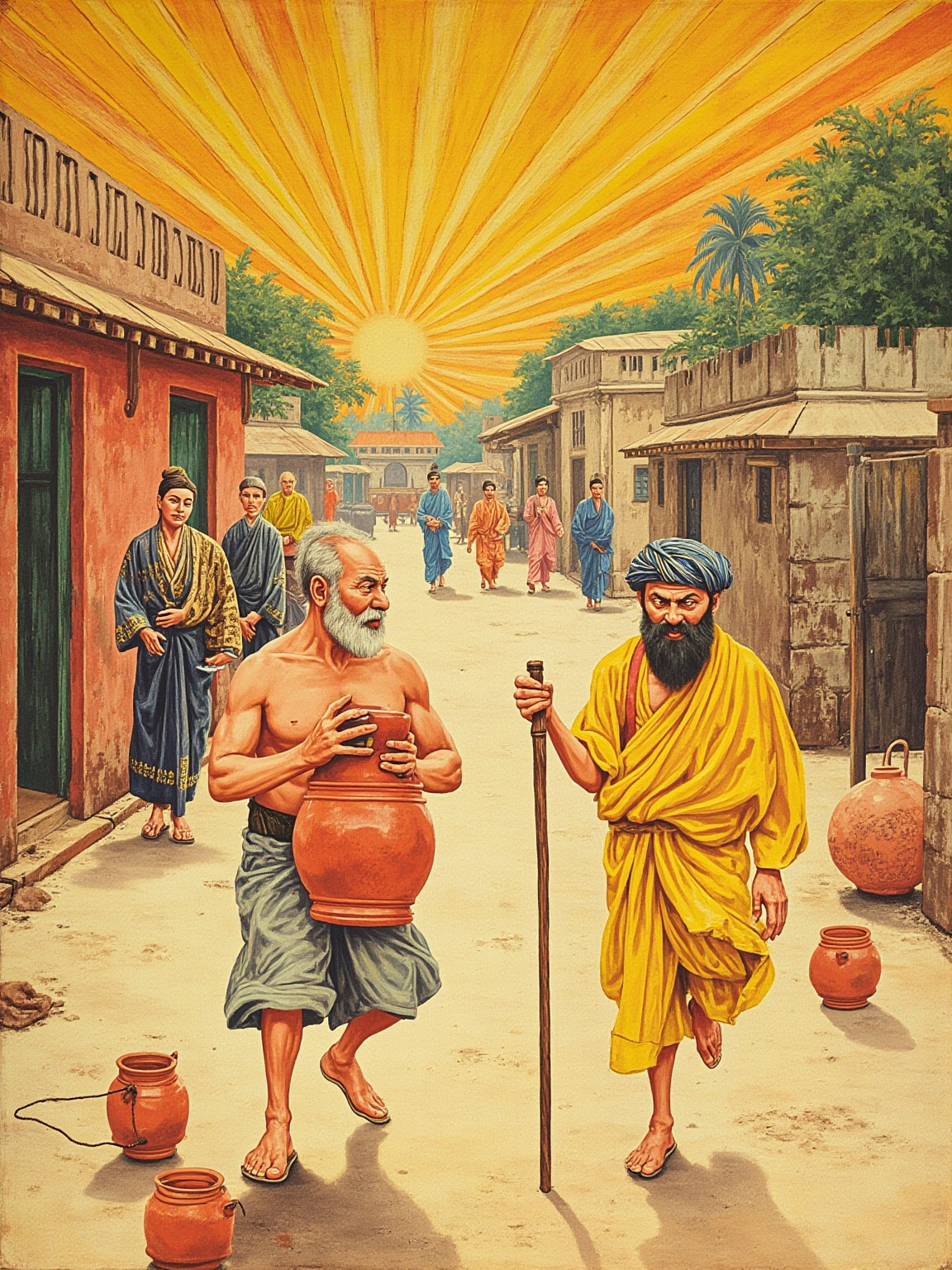
Seeing the shimmer of heat afar, he thought it water and ran toward it; but when he came, there was no water.
见热气谓为水流,奔走趣之,及至其所,都无有水。
金句 · 渴见水喻 · 驰逐幻相而亡
The fifth parable: mistaking a stranger for a brother. A man meets someone on the road who shares his family name, and he lights up, thinking this must be my own brother, and gives him the whole welcome: bowing, offering gifts. He goes home and gets an earful from his actual brother: plenty of people share a name. The parable is about clinging to a label instead of checking the real relationship behind it. This is the one with the loudest modern echo — we still feel a small thrill scrolling past a post about someone who shares our name or our school, as if that meant something, and it's the same confusion as the fool on the road.
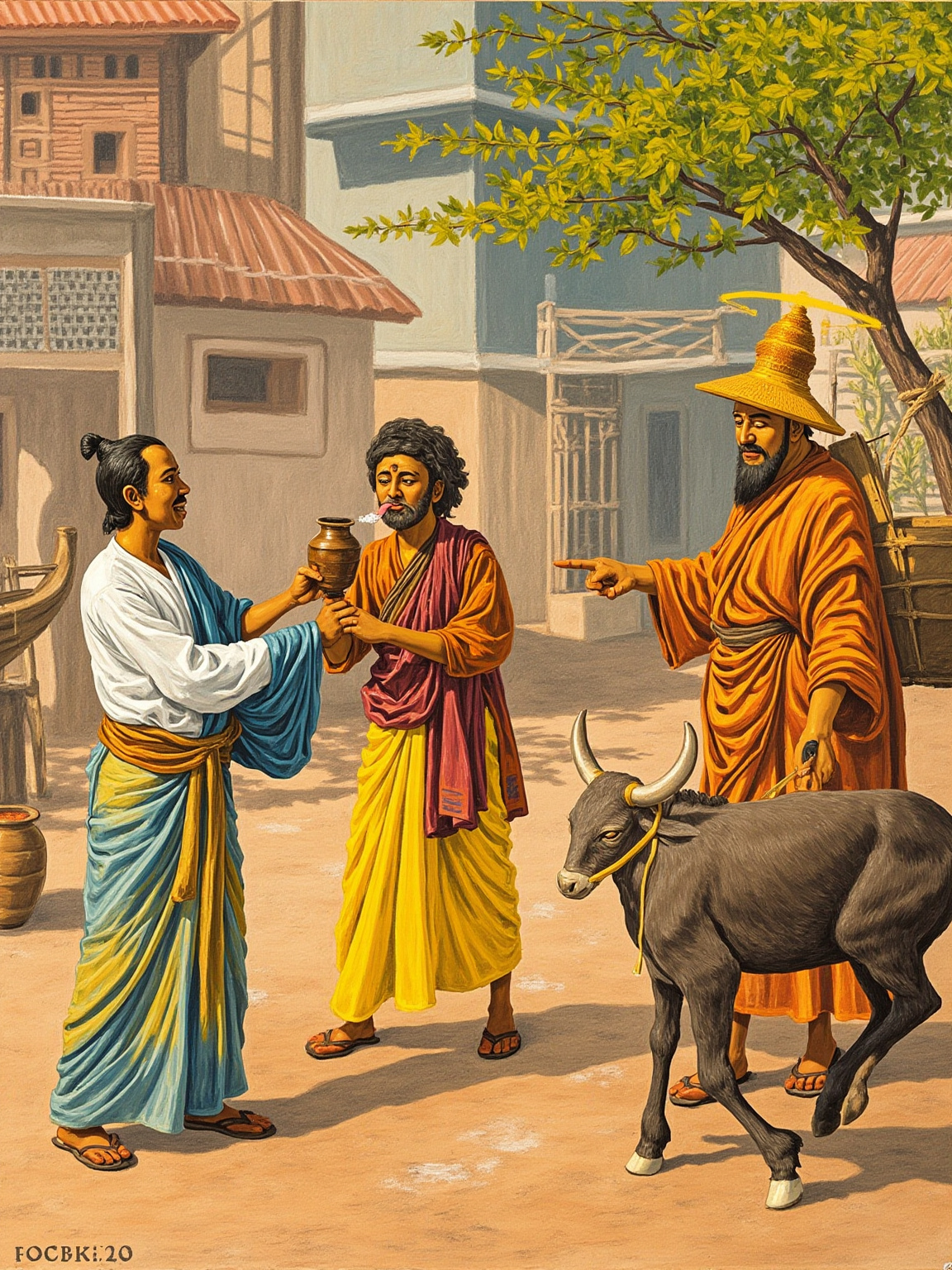
Read all five together and a pattern emerges: each story ends the same way, with the Buddha or a monk stepping in for a line or two of verse that translates the folly into doctrine. The Buddha himself never acts within the story; he only arrives at the end to name what happened. The structure of the whole book is this clean: laughter first, insight second. By the moment the reader is laughing, the lesson is already on its way.
Theme and Craft: Why This Sutra Makes People Laugh Out Loud
All five parables point at the same idea: too much of a good thing becomes a bad thing. Salt tastes good, so eat salt by the fistful. A fruit tastes good, so bite in without asking how. If water might be real, sprint straight at it. If a name matches, call the stranger family. Greed, delusion, and pride all take the same shape here — excess. What makes the Sutra of One Hundred Parables unusual is not its argument but its method: it teaches through laughter. The canon has no shortage of sutras that are solemn, that lay out precepts, causation, and emptiness in careful terms. Few of them use market-town foolishness to get a reader laughing before the lesson lands. The comedy here isn't filler; it shows the reader his own reflection first, and only then asks how exactly he ended up with a fistful of salt in his mouth.
The joke is the door into this sutra, the verse is the key — it makes you laugh, then makes you see, then makes you realize you're the one who kept adding salt until you were eating it by the fistful.
The other thing about this book is its structure. Because the ninety-eight parables are fully independent, any single one can be lifted whole into a comic panel, an illustration, or a short video. It is one of the richest source veins for illustrated fable-making that exists: one panel, one laugh, one small realization. Many of the short videos now circulating about a young monk having a moment of enlightenment are, structurally, modern descendants of this book, with a Zen master standing in for the Buddha and a phone standing in for the salt.
The Hook to Go Read It Yourself
A companion guide can give you the map, but it can't hand you the salt itself. When you actually open the Sutra of One Hundred Parables and reach the rich man slapping the table over his top floor, you'll find yourself silently filling in the builder's response before he says it — and that moment of writing your own punch line is something no summary can give you. This piece picked out five of the gentlest, funniest parables from ninety-eight. The other ninety-three hold darker jokes, sharper reversals, and follies that leave you genuinely stunned. Knowing the plot in advance won't cost you any suspense; it will only let you see, more clearly, how much edge is packed into each hundred-word parable.
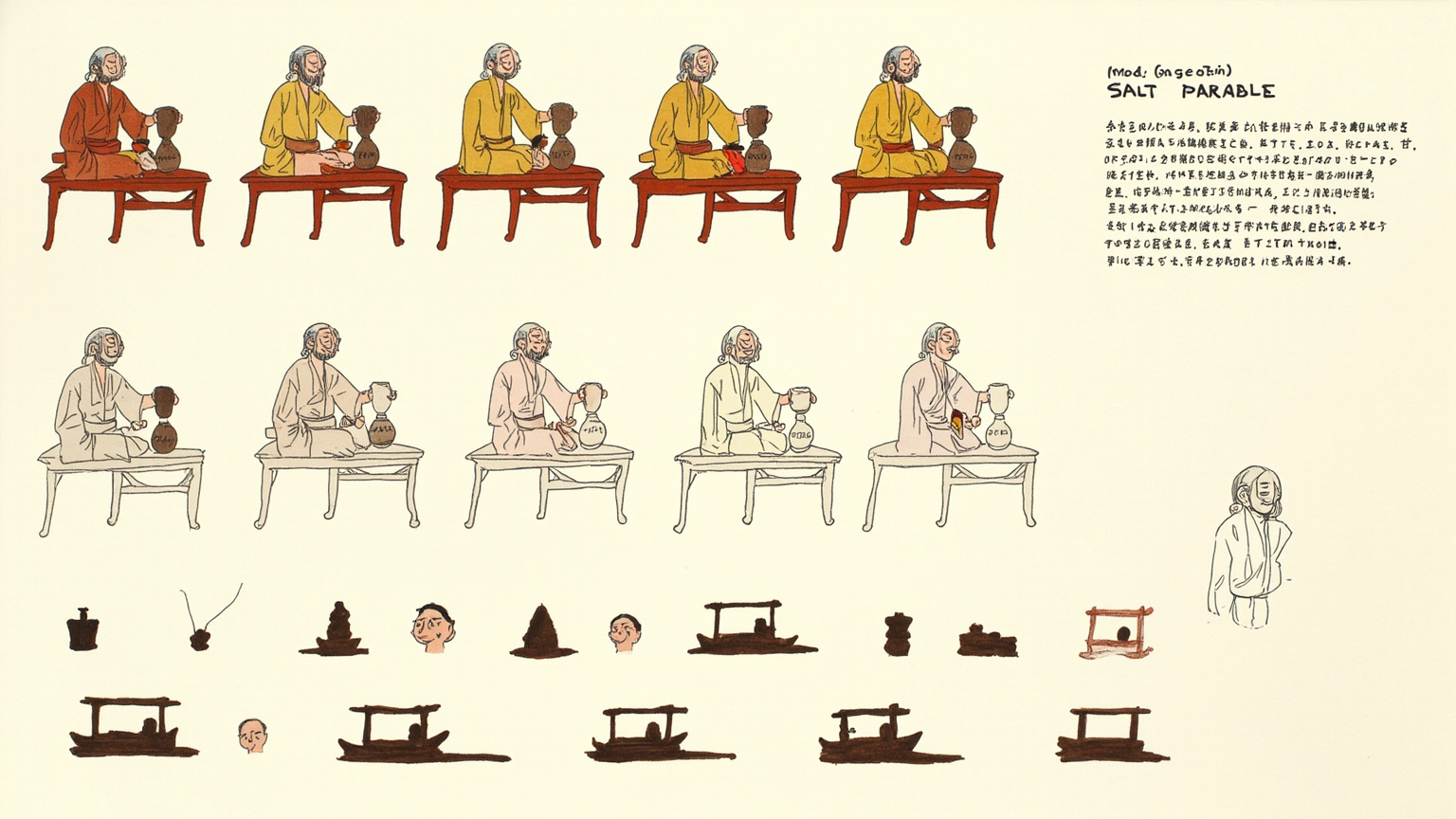
Art Direction4 plates
Before the guide was written, this book got a visual foundation — every illustration you just read grew out of it.